News
Gallery 1
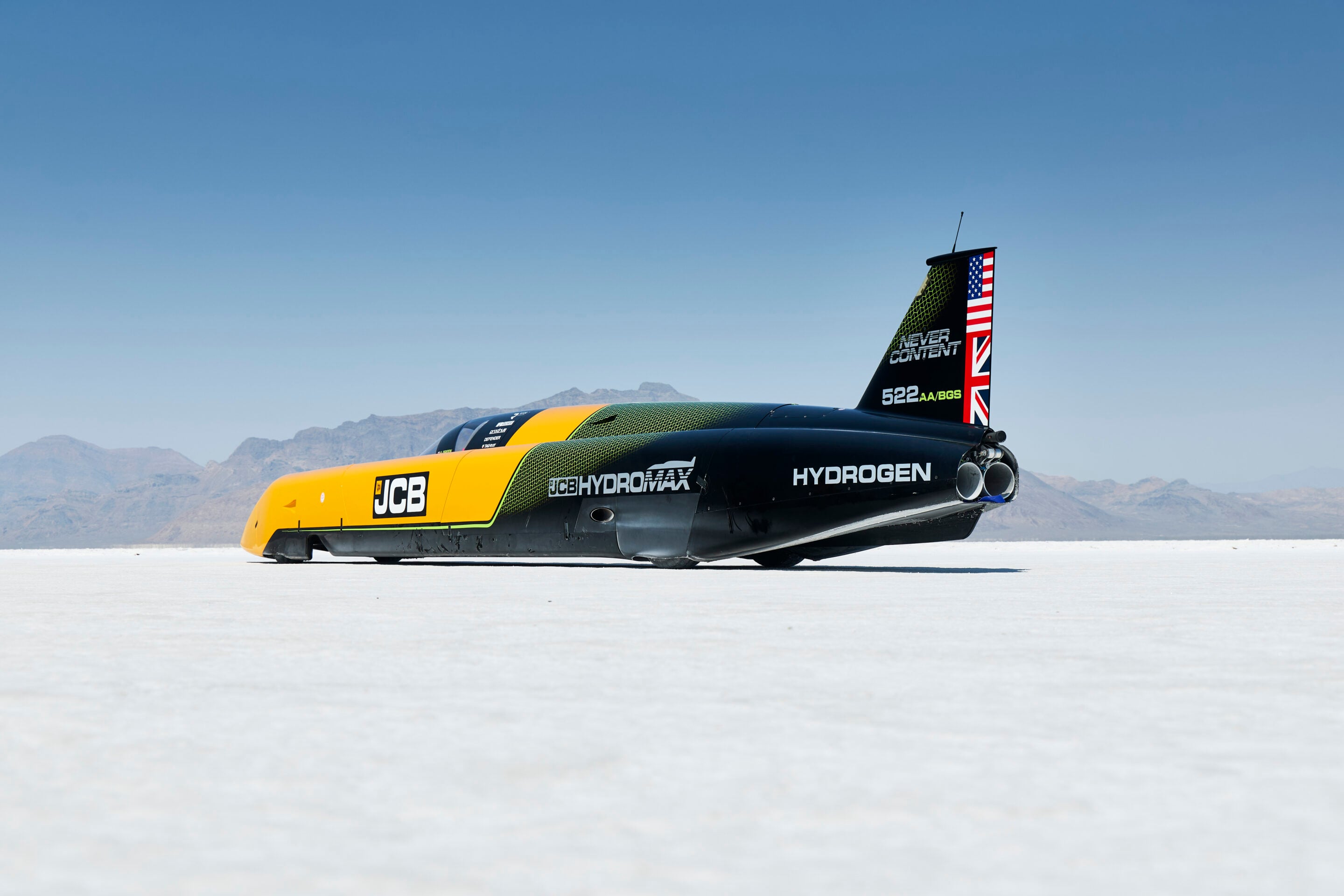
JCB may not be a household name for the average Australian, but chances are you’ve passed its equipment in a roadworks zone or in a paddock somewhere. The company specialises in hard-working low-speed equipment, and it now also holds a land speed record for the world’s fastest hydrogen-powered vehicle after hitting 653.9km/h.
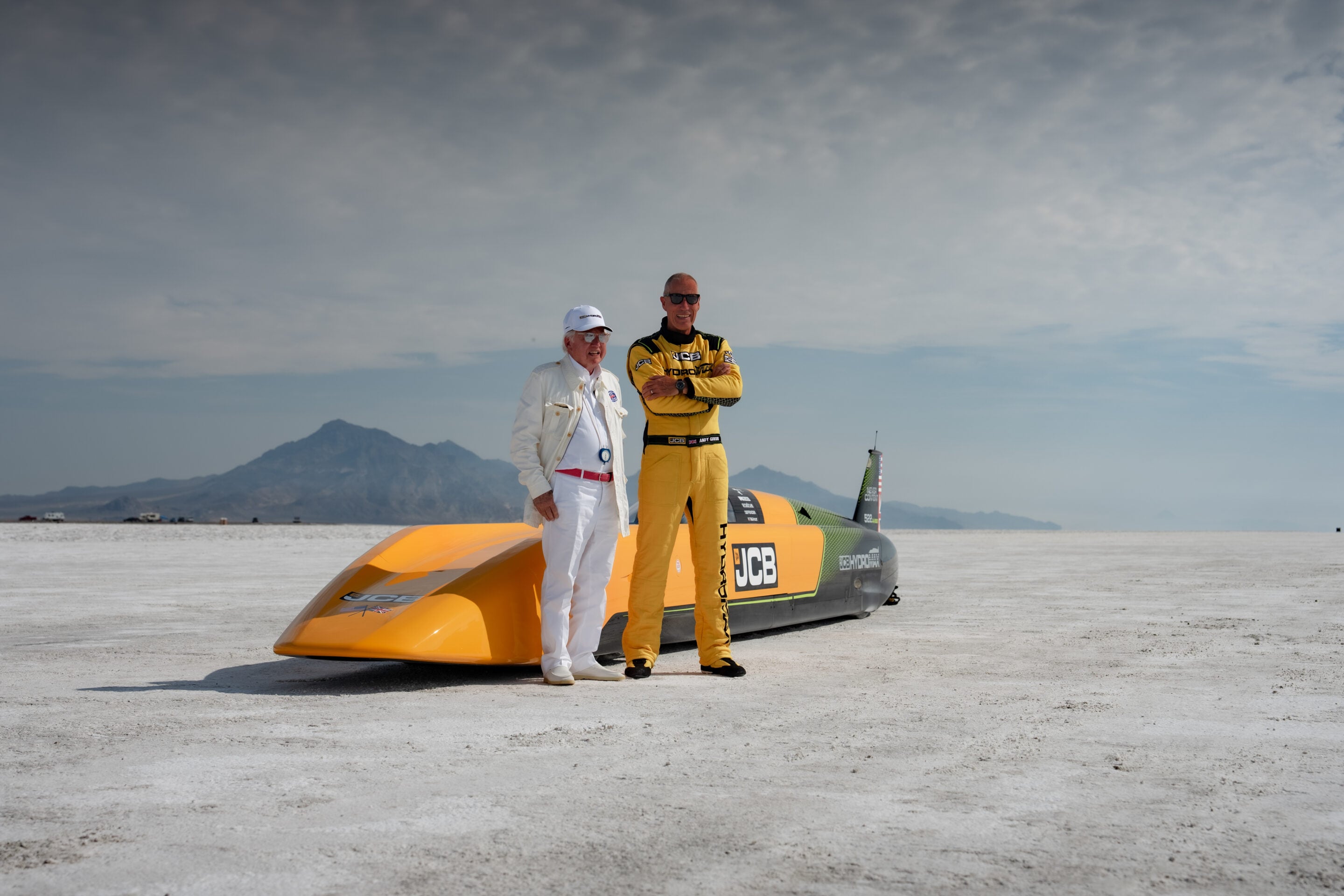
The JCB Hydromax is powered by a pair of 4.8-litre, four-cylinder hydrogen combustion engines, one for each axle. The base engines themselves are related to a JCB production engine, but they make around 600kW each in the Hydromax – just a little more than their usual 56kW output.
3
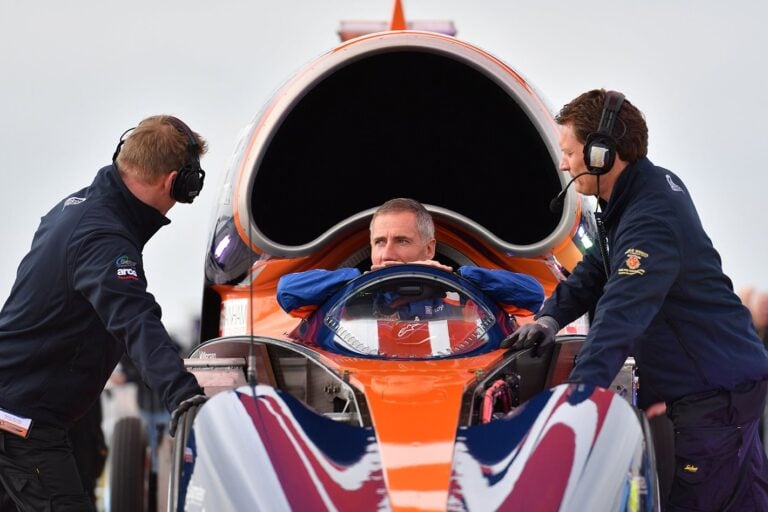
The 9.8-metre-long Hydromax was driven on its record-setting run by Andy Green OBE, who has set diesel land speed records and is the only person to break the sound barrier on land. While Green’s personal V-max is a barely believable 1227.986km/h, set in the ThrustSSC in 1997, the JCB’s record is by no means less significant.
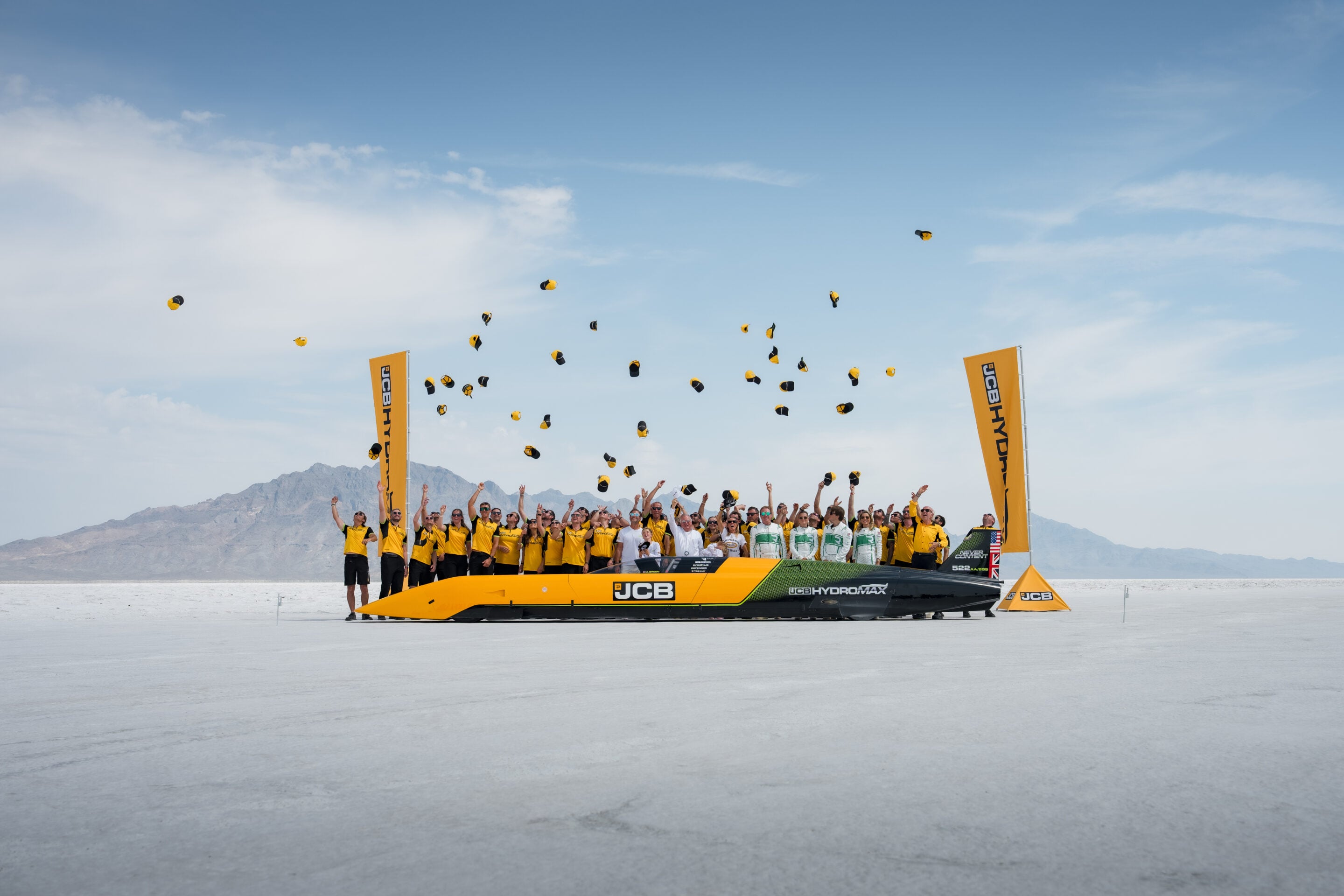
The official record run for the Hydromax puts it at 653.909km/h (406.320mph), set across two runs under FIA regulations at the famous Bonneville Salt Flats in Utah. The first saw reached an average speed of 644.74km/h (400.623mph), and the second reached 663.267km/h (412.135mph), with the average between the two constituting the record.
That velocity saw JCB surpass its own diesel land speed record of 563.418km/h (350.092mph), set in the JCB Dieselmax with Green at the helm in 2006. JCB’s hydrogen speed record also eclipses both the previous hydrogen-combustion speed record of 298.833km/h set by the BMW H2R in 2004, and the hydrogen fuel-cell record of 487.672km/h set by the Venturi Buckeye Bullet 2 in 2009.
3
JCB also has the record for the world’s fastest tractor in its trophy cabinet, with the specially prepared JCB Fastrac Two setting a 217.57km/h pace at Elvington Airfield in England in 2019.
JCB Chairman Anthony Bamford said of the new record, “Twenty years ago we came to Bonneville with JCB Dieselmax and showed what British engineering could do with diesel power. Today we have done it again, this time with engines powered by hydrogen.
“This record was set by production-based engines, the same engines powering JCB diggers right now… It shows hydrogen works, and it works today at the highest level with zero emissions.”
Follow WhichCar/Wheels on Google
Click the button below to make WhichCar by Wheels a preferred source for your news.

We recommend
-
 News
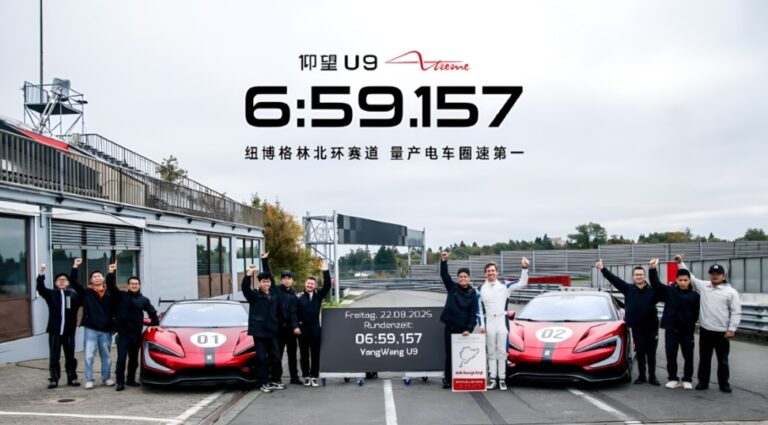
NewsBYD’s premium brand Yangwang sets new Nürburgring production car speed record with U9 Xtreme
China’s high-performance electric supercar becomes the first production EV to lap the Nürburgring in under seven minutes in another record for the marque...
-
 Features
Andy Green - How to prepare yourself to drive at Mach 1.3
The world’s fastest man reveals how he mentally prepares to pilot a four-wheeled vehicle faster than a fighter jet