Reviews
Gallery 1
There is a certain expectation in Australia when you slap an EVO badge on the back of a new model. Think about the Mitsubishi Lancer and the Lamborghini Huracan, just to get the wheels turning. They are both special speed machines thanks to their EVO tweaking.
But things are obviously different in China, which has just given Aussies the BYD Atto 3 EVO. So it’s a new speed machine? Well, no …
3
Its best effort in the 0-100km/h sprint is a relatively pedestrian – for a battery-electric car – time of only 5.5 seconds. Although it does have a claimed top speed of 180km/h. So we need to look at the new Atto in a different way. And dive into the small print. And there it is – “rear-wheel drive”. So the Atto update in 2026 is more than just visual tweaking and some extra frippery in the cabin.
“The EVO name is to signify that this vehicle has evolved. It’s a mid-cycle update. Calling it a facelift alone would not have done it justice because most of the changes are under the skin,” the chief product officer for BYD ANZ, Sajid Hasan, told Wheels.
What’s that? Hidden tweaks? So it could be a real EVO after all? Again, that’s a yes with a no.
2
How much does the Atto 3 EVO cost?
The basic EVO continues as a value-first, mid-sized, front-drive SUV, with battery-electric power, priced from $41,990 with the Dynamic trim grade. Where it gets interesting is the Atto 3 EVO Premium, which gets more than just a trim upgrade to justify a price jump up to $46,990. It has the rear-wheel drive package. And grippier Continental tyres. With Aussie tweaking of the steering.
“It’s for a customer who wants a more sporty, engaging drive. When the opportunity came up we jumped on it. I much prefer rear-wheel drive cars,” said Hasan. “It has two different architectures happening. But they are both Atto 3. It’s an evolution in the design of the car.
“It’s about driving. A bigger battery, longer range and more performance in the Premium. It’s a classic big-engined, rear-drive Aussie car with a modern electrical architecture.
“We’ve gone to Continental ECOcontact 7 tyres, which are brand new. It’s the European suspension specification, but we made some adjustments to the steering feel for Australia. We actually lightened the steering, but still tried to keep the feedback. I think it will bring new customers to the Atto range.”
So the Atto 3 is now split, literally down the middle, with the front-drive Dynamic and the rear-drive Premium. That’s great news for Wheels people, who prefer to drive and not just sit as a passenger.
5
How practical is the Atto 3 EVO?
The Atto 3 first landed in Australia in 2022 and has been a solid sales performer, making space in the mid-sized melee and also pushing BYD’s objectives in electrification. Four years is a little late for a mid-sized update from a Chinese brand, since they are now trumpeting their ability to do an all-new model, from scratch, in little more than 18 months.
But there it is, and the EVO package begins with the front-drive Dynamic, which promises 150kW and 310Nm for a driving range of up to 420 kilometres – in WLTP testing – with its 60.48kWh Blade battery with lithium-iron-phosphate chemistry. It has a 400-volt architecture with 100kW charging, and its 0-100 sprint time is 7.3 seconds.
The numbers change dramatically for the EVO Premium, starting with a larger 74.88kWh blade battery, power of 230kW and torque of 380Nm, translating to a sprint time of 5.5 seconds. The EVO goer uses BYD’s e-Platform 3.0 EV architecture, which also means the system voltage is doubled to 800, with a DC charging ability of 220kW. So the claim is 10-80 per cent charging in 25 minutes
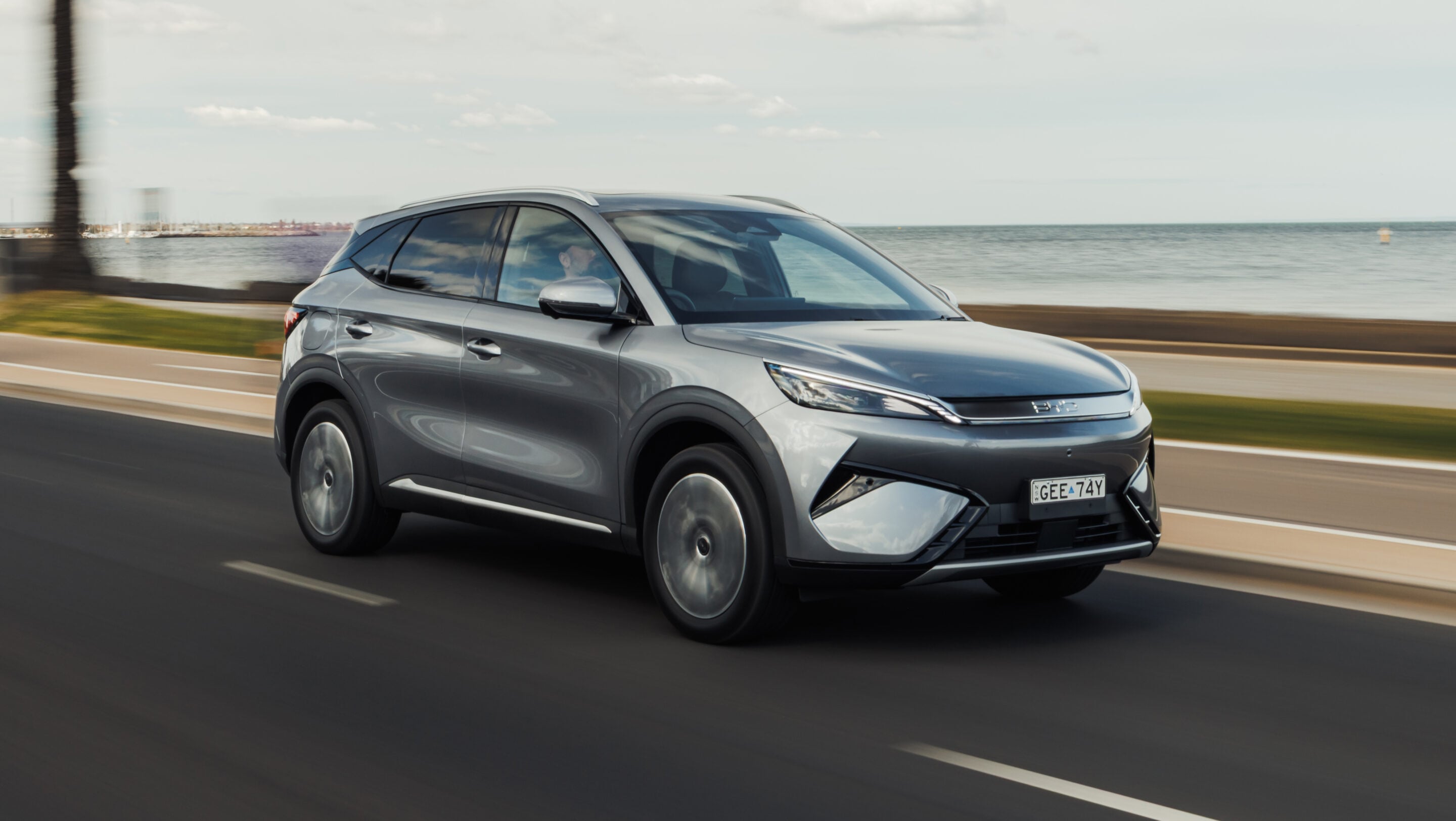
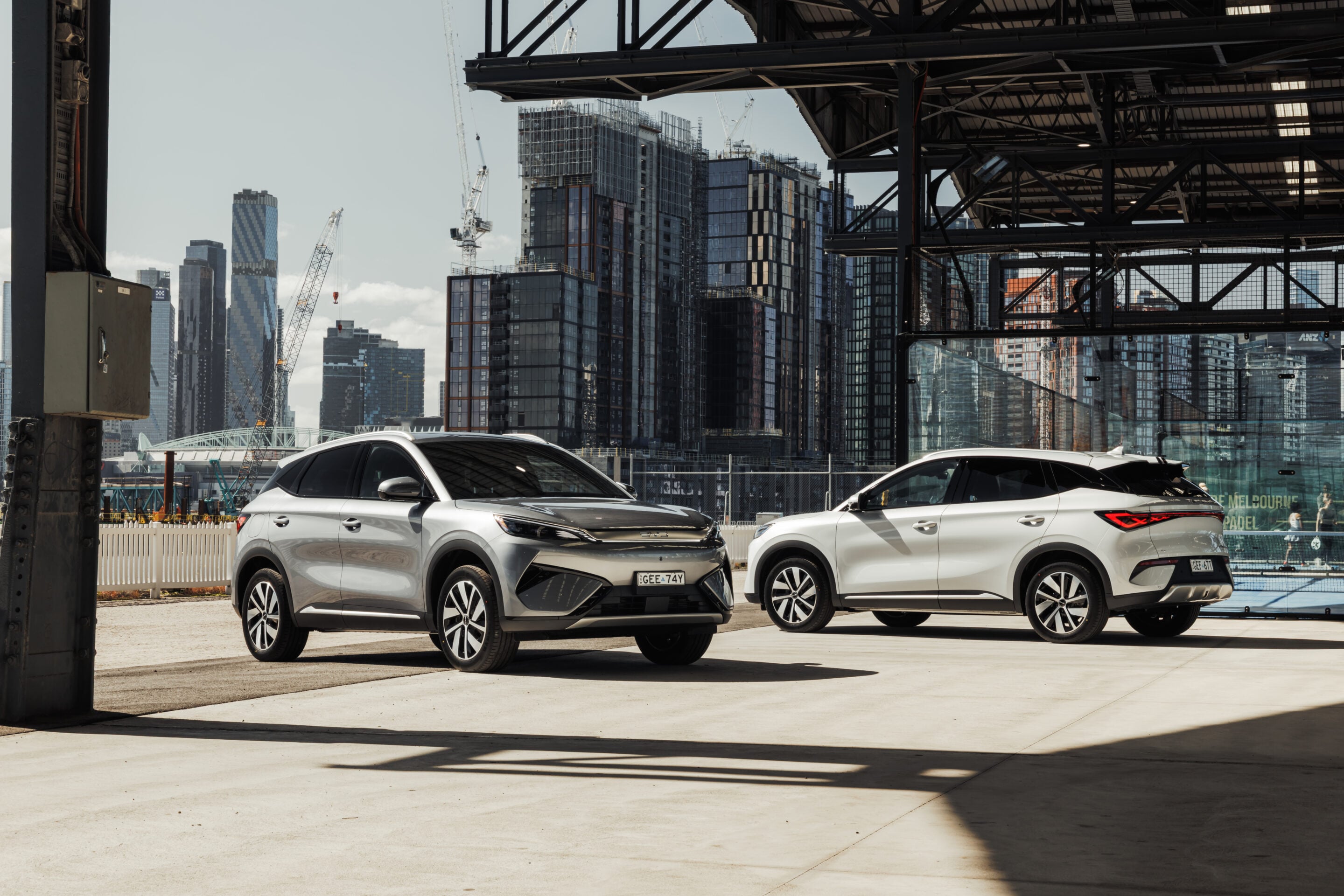
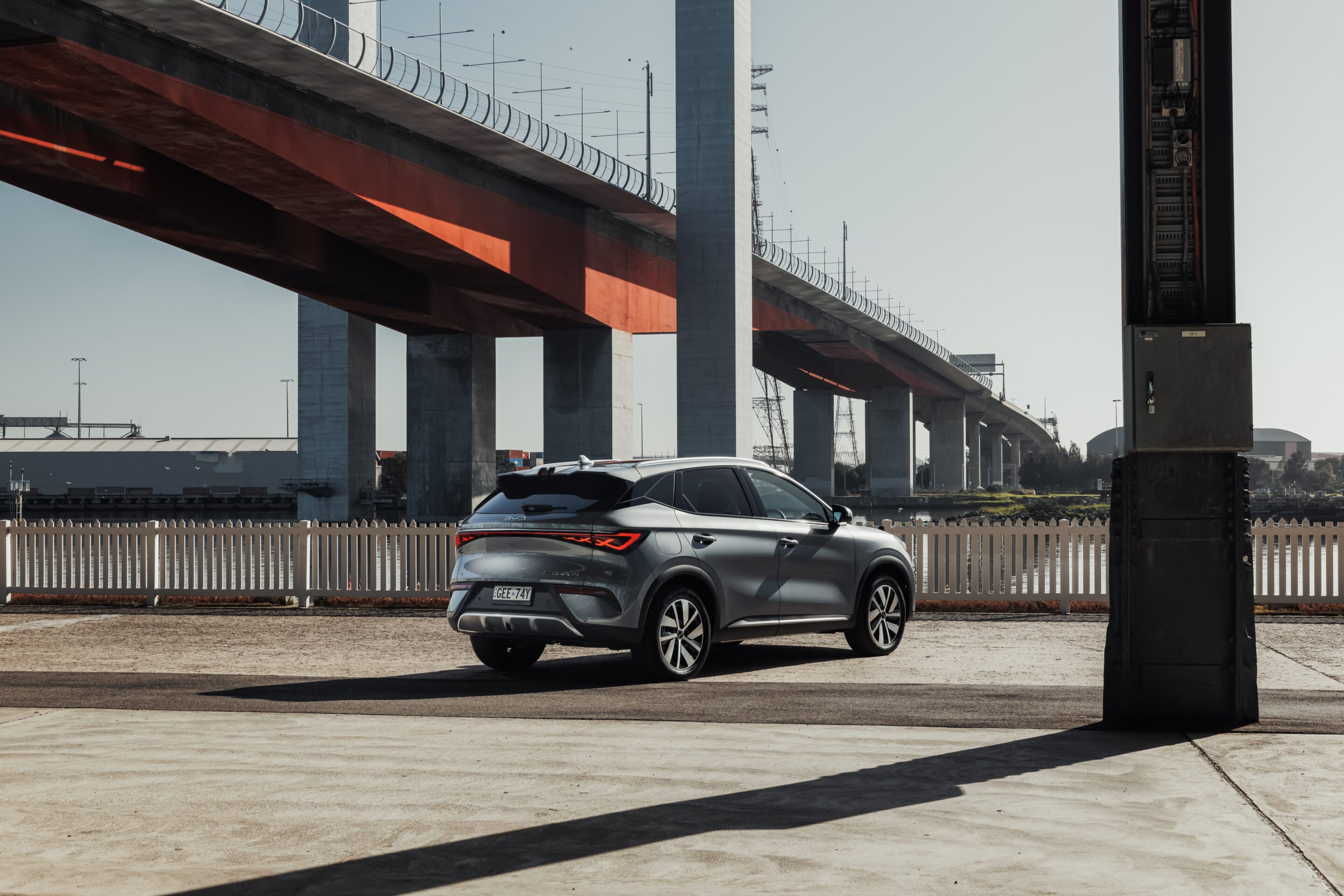
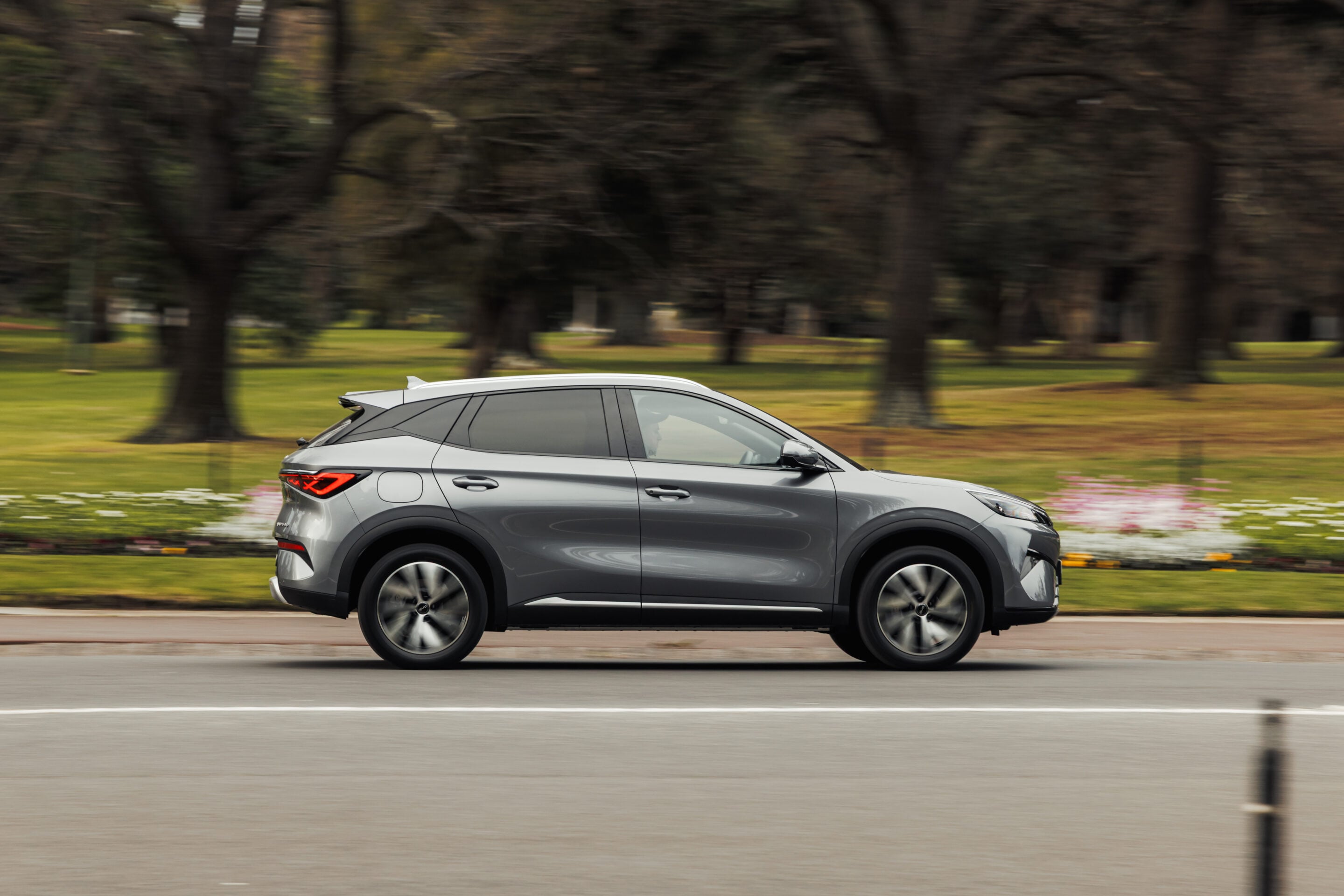
Nothing changes in the size and style of the EV SUV, but the Chinese design team has given the Atto EVO a tougher look in the front with sharper lines and a full line of LEDs across the nose. The side view is same-same apart from slimmer side skirts, and the rear end also gets full-width LED tail lights with tweaking to the roof spoiler including twin vertical stripes for the stoplight, then a revised rear bumper with a swept-up ‘duck tail’ and a revised number plate recess.
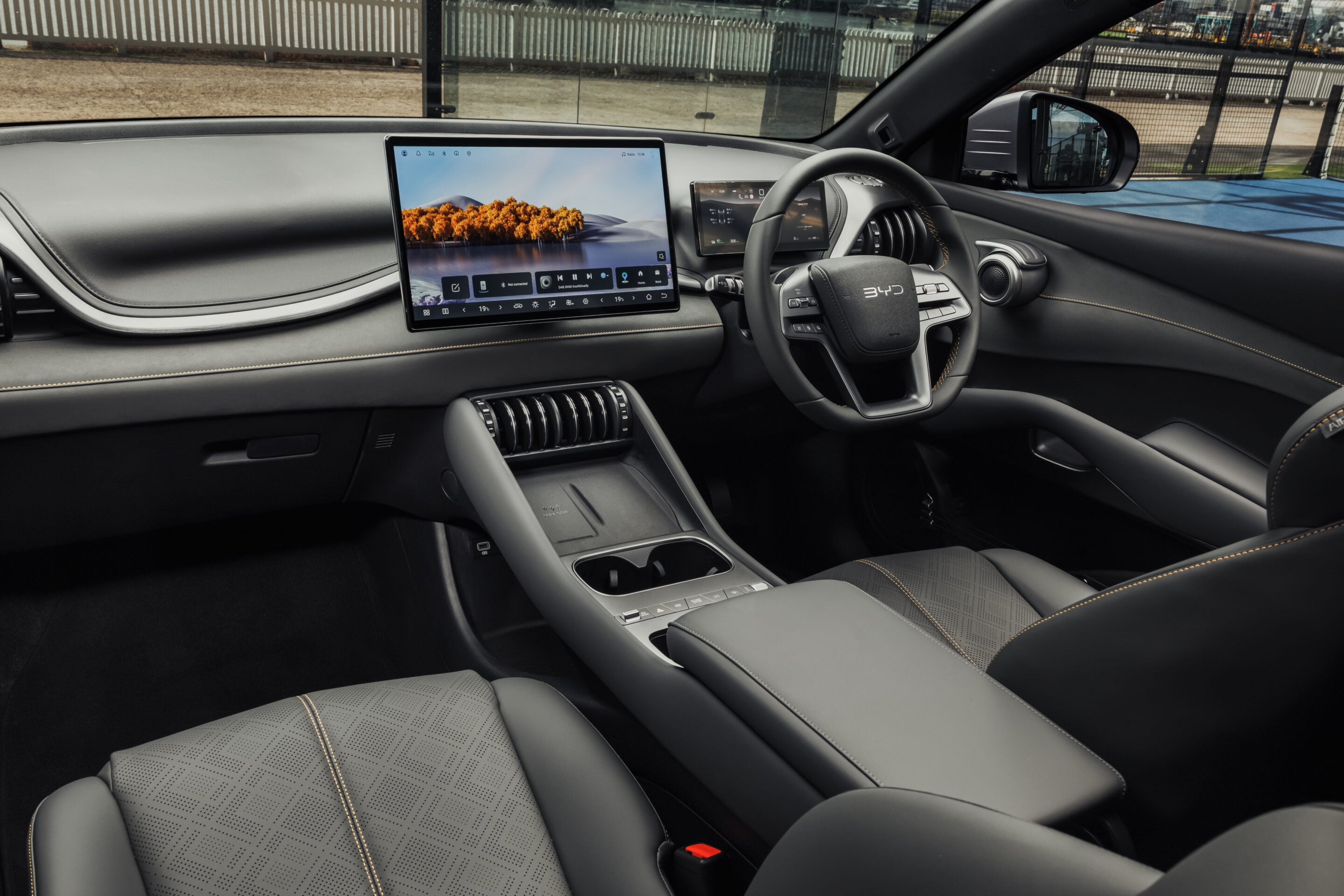
Both versions of the Atto EVO have 18-inch alloys, but in a slightly different design. Cabin changes start with a gearshift that’s migrated from the centre console to the steering column, moving to the latest corporate style, with a new design for the tiller and a dashboard screen that’s grown from five to 8.8 inches. The door panels are new and there is multi-colour ambient lighting. The list goes on with a sunglass holder, rain-sensing wipers and wireless phone charging boosted to 50 watts.
The Dynamic grade offers a six-way electric driver’s seat, heated and ventilated front seats, eight stereo speakers and dual-zone aircon. Upgrading to the Premium package brings a surprising boost with an extra 56 litres of boot space and a 101-litre frunk for carrying capacity in the nose, which is freed from the motor package. Its towing potential is also lifted to 1500kg.
Both models have 3.3kW of vehicle-to-load (V2L) capacity, which makes them a mobile power source for power tools, camping gear and coffee machines. On the safety front, there is no ANCAP score yet, but BYD points to seven airbags – including the centre front position – as well as the 360-degree camera, the usual ABS/ESC/adaptive cruise, traffic sign recognition and rear cross-traffic braking. On the calibration front, the Atto EVO is good without being great, tugging the wheel on narrow roads and sounding too many unnecessary warnings.
The sales rate for the Atto 3 is expected to nearly double with the double-edged approach for the Atto. Numbers averaged just over 300 cars a month through 2025, although sales have improved with the higher visibility of the BYD brand and the expansion of its dealer network in 2026.
“We think around 500 to 600 a month. An important part of the line-up,” said BYD ANZ chief operating officer Stephen Collins.
8
What is the Atto 3 EVO like to drive?
A brief introductory drive in Sydney, but dipping into the hills and twisties on the way to Wiseman’s Ferry, shows the new rear-drive EVO is a sweet little fun runner. It’s not a hiss-and-pop combustion hero, but it’s a car that could work – and work well – for an EV shopper who still craves a little fizz in their day.
Firstly, a warning that the Sydney preview drive was spoiled by over-inflated tyres, a mistake down to the BYD technical crew. Even so, the design changes make the car a little bolder in traffic and – even without a Dynamic front-driver for comparison – an extra 80kW and 70Nm would be obvious to any driver. The updated cabin feels slightly more open and welcoming. It’s nothing big, but enough to provide bragging rights.
BYD naturally provided the rear-driver Premium for evaluation, and it was nicely responsive in traffic and away from stop lights. It would be better with more regenerative braking, or a driver-adjustable retard system like Kia and Hyundai, instead of the three-level system hidden in the infotainment screen.
Onto the driving roads, the EVO Premium is a rewarding and enjoyable package. Unlike run-of-the-road front-driving SUVs it gives more feedback and more chance to play in the twisties.
Instead of turning the wheel and relying on the outside-front tyre for grip, the rear-drive BYD opens the door to balance and response. It’s not a Mazda MX-5, and most drivers will never dip into its playful potential, but people who know will find their driving a touch more enjoyable. One dipping-then-rising tight-ish corner was all it took to confirm it as an eight-pointer in a class filled with underwhelming SUVs in the 3-7 range.
Is it worth the extra $5000 to step up from the Dynamic? If your friends and family are not into driving, then open the frunk to grab the bragging rights.
Follow WhichCar/Wheels on Google
Click the button below to make WhichCar by Wheels a preferred source for your news.

We recommend
-
 News
NewsBYD Shark 6 ute breaks new ground as it goes on sale in massive market for the first time
Originally an export-only model, the Shark 6 is now heading into showrooms in its homeland.
-
 News
NewsBYD boasts that the Atto 3 EVO matches Aussie muscle cars for performance as SUV gets a big upgrade
The BYD Atto 3 Evo switches to rear-wheel drive with a 0-100km/h time of 5.5 seconds as it gets a significant freshen-up.