Classic Wheels

Gallery 1
McLaren praising Aston Martin?
It’s not likely today, especially given the latter’s supercar ambitions with the Valkyrie. But go back to Bruce McLaren’s 1964 autobiography, From the Cockpit, and there it is from the man himself: “I took out the Aston on a drying circuit and found it one of the best-handling cars I have ever driven.”
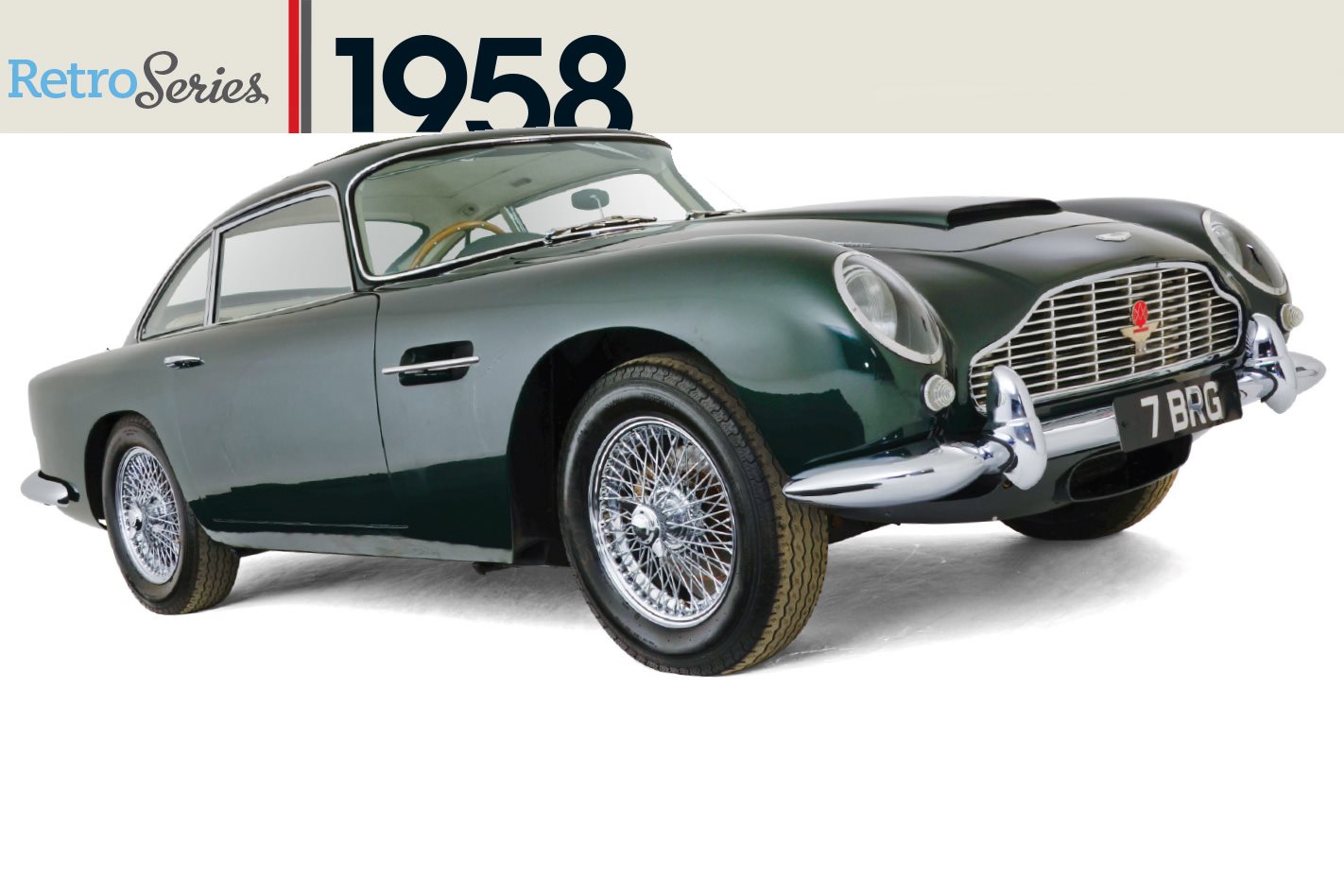
McLaren was referring to his 1963 Le Mans test in the Aston Martin DB4 GT, the production-class racing variant of Aston’s already five-year-old DB4 road car. If the GT had been a revelation to this three-time grand prix winner, the DB4 itself had been the same among grand touring coupes.
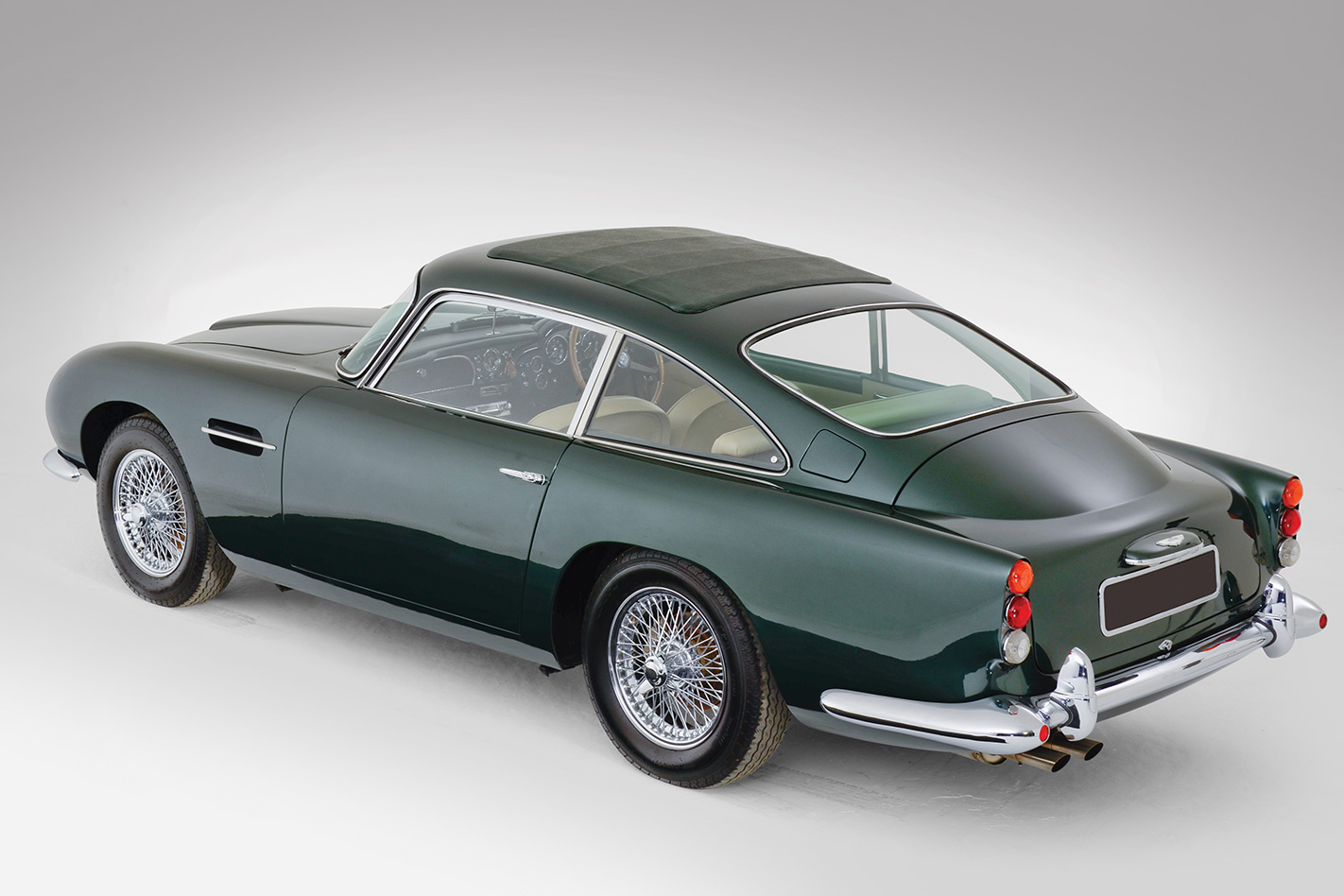
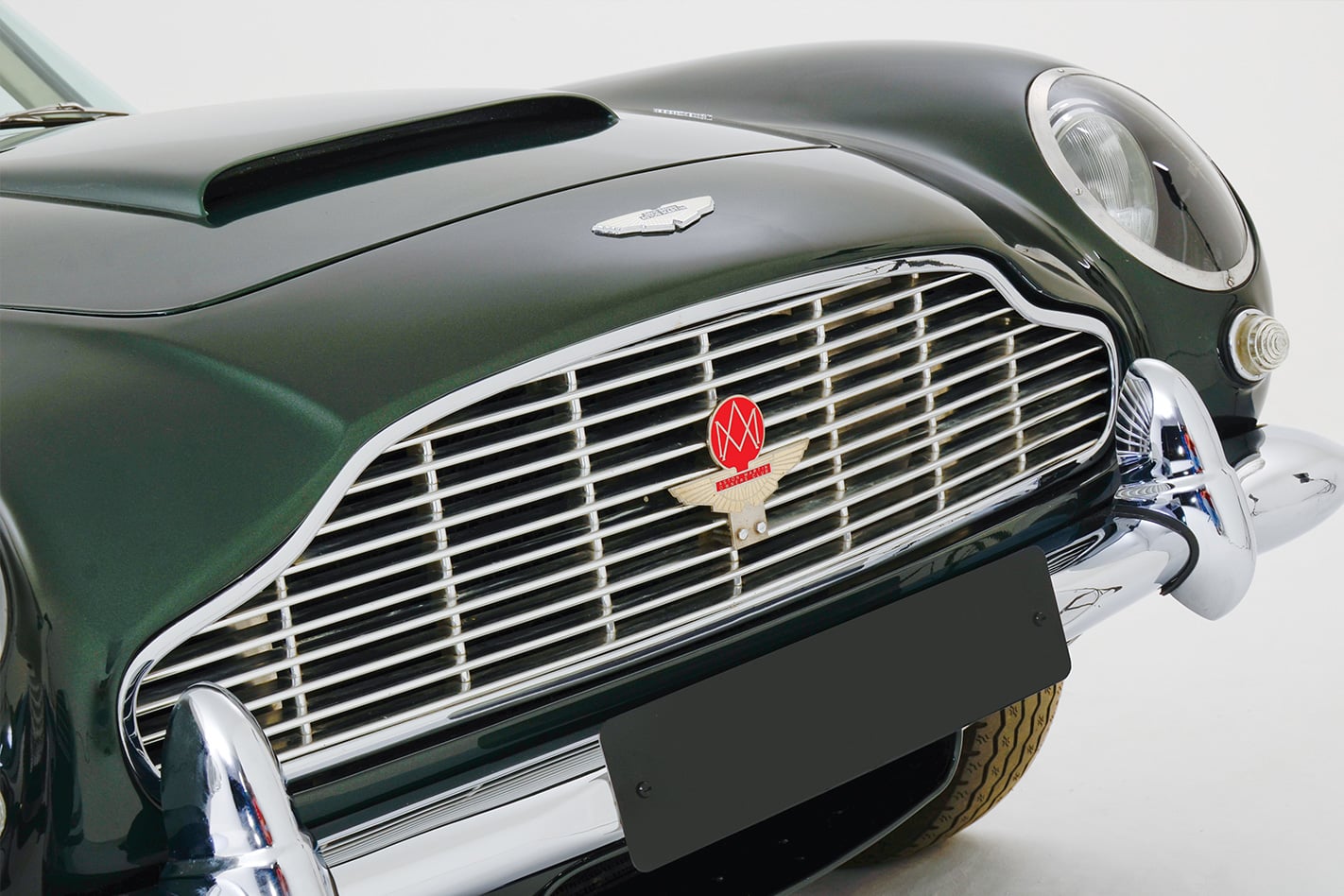
That car paved the way for the more revolutionary DB4. It was faster, more graceful and more advanced in (almost) every way. Its beautiful bodywork was designed and constructed by Touring of Milan, in that firm’s superleggera method of a fine framework of steel tube, supporting hand-formed aluminium panels.
The gorgeous body sat on a steel platform chassis designed by Harold Beach, all new but carrying over the Mk.III’s antiquated rear suspension. Under the bonnet was a new 3.7-litre, inline six-cylinder engine. Along with four-wheel disc brakes, it enabled this 1308kg 2+2-seat grand tourer to become the first production car to go from rest to 100mph and then back to standstill again in under 30 seconds.
In total, 1040 DB4s had been built when construction ended in 1963 to make way for the DB5.
Hammered by hand
The labour-intensive DB4 chassis was a platform of sheet steel inner panels, topped with a thin framework of steel tubing, supporting aluminium outer panels. Front suspension was double wishbones, coil springs and telescopic dampers, while the coil-sprung, live rear-axle had antiquated lever-arm dampers. Rack and pinion steering and four-wheel Dunlop discs were top-notch stuff.
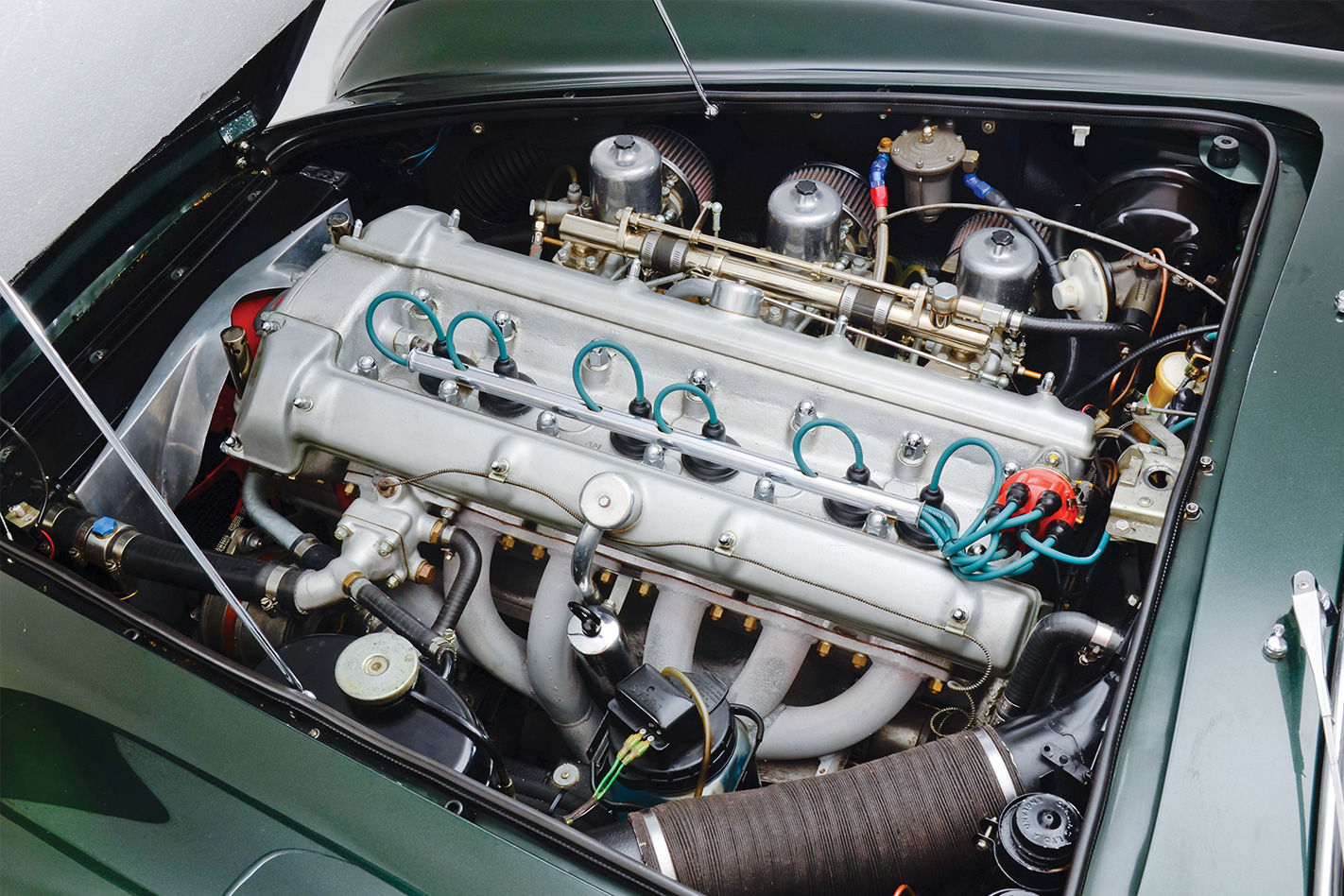
The all-alloy, 3670cc inline six was designed by Aston legend Tadek Marek. The new 3.7-litre, dohc, 12-valve unit premiered in the DBR2 racer (1957), and in standard guise had twin SU carbs and 179kW at 5500rpm. Vantage gained triple SUs and 198kW, while GT made 225kW at 6000rpm. Drive was via an in-house four-speed manual, with optional overdrive.
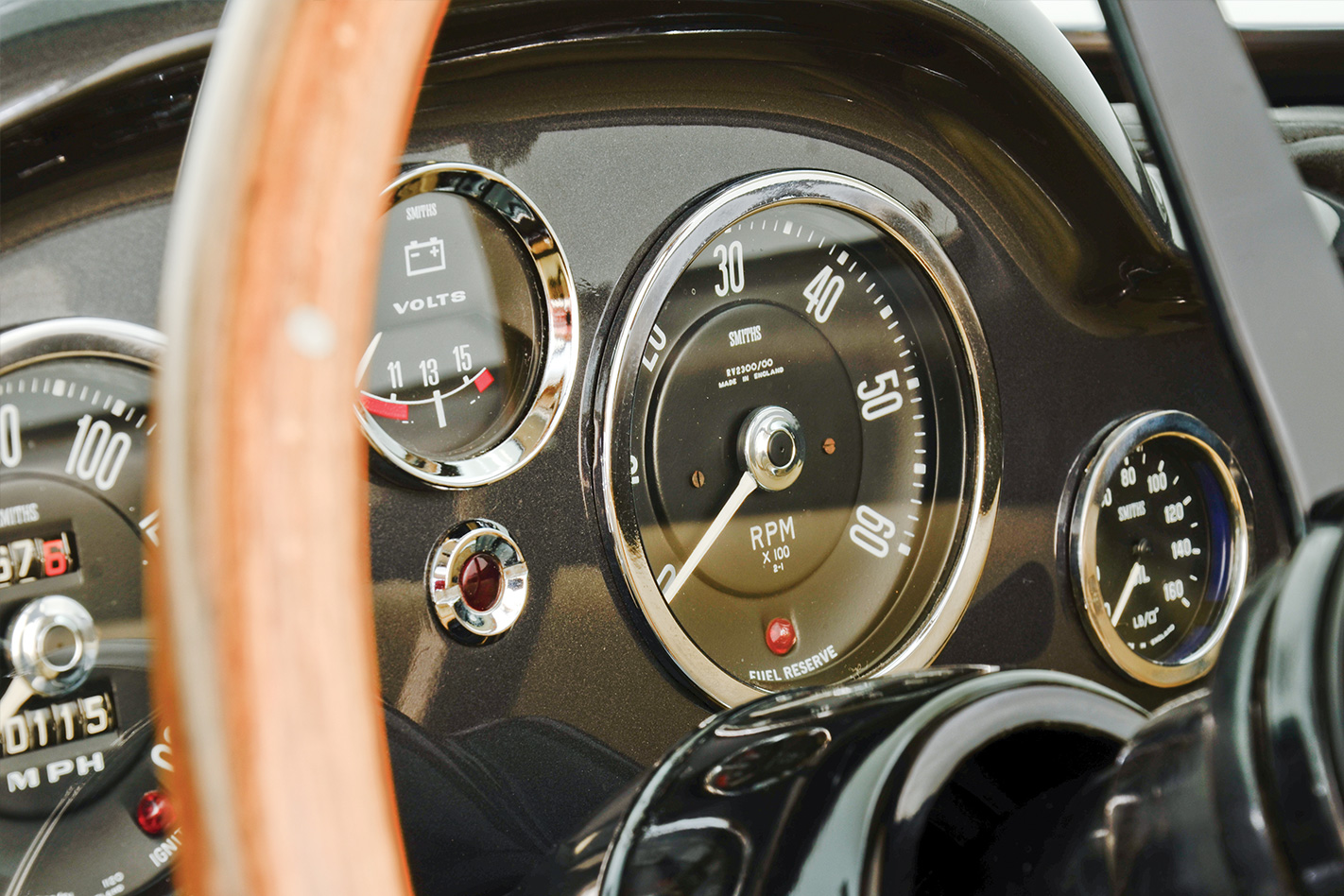
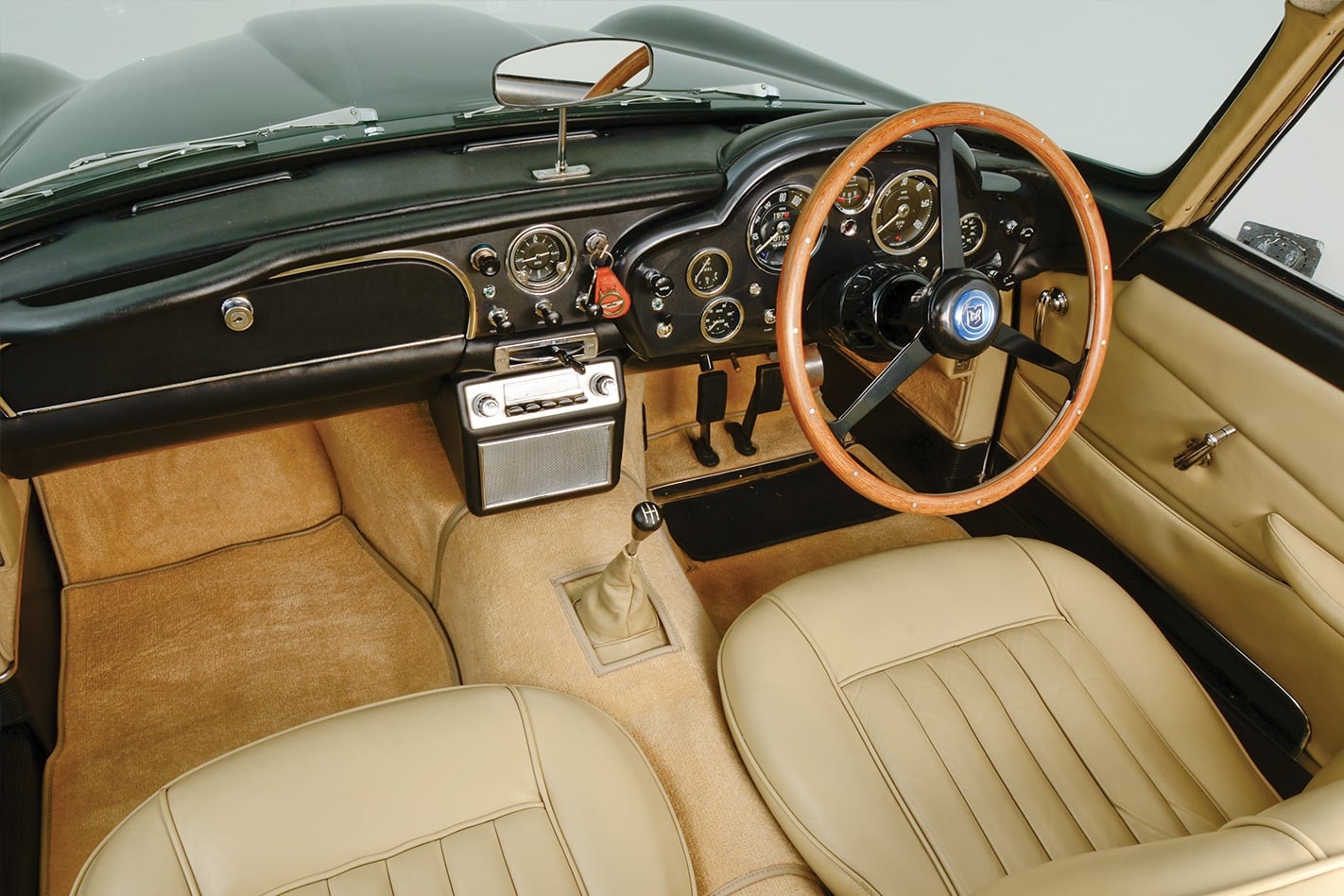
The DB4 was a new breed of gentleman’s GT, bringing higher performance and greater comfort. All-new dash design mimicked the grille’s shape in its instrument cluster, at full expense of ergonomics. Upholstery was in rich Connolly leather, surrounded by deep pile carpet. Wipers had two speeds, horn had two tones. Rear accommodation improved with Series IV’s 90mm wheelbase stretch, carried into DB5.
1
Follow WhichCar/Wheels on Google
Click the button below to make WhichCar by Wheels a preferred source for your news.