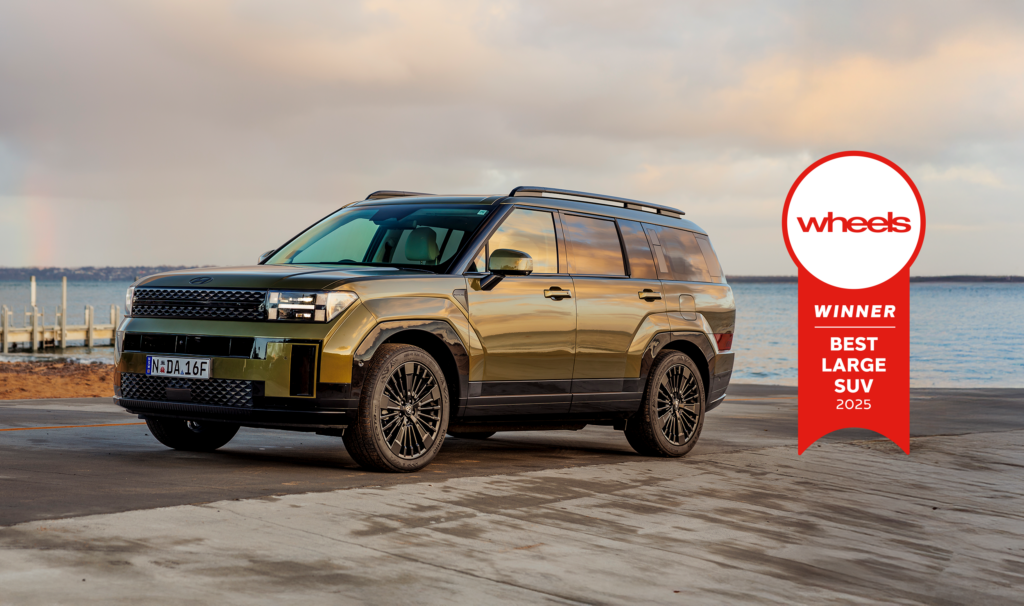
Best Large SUVs

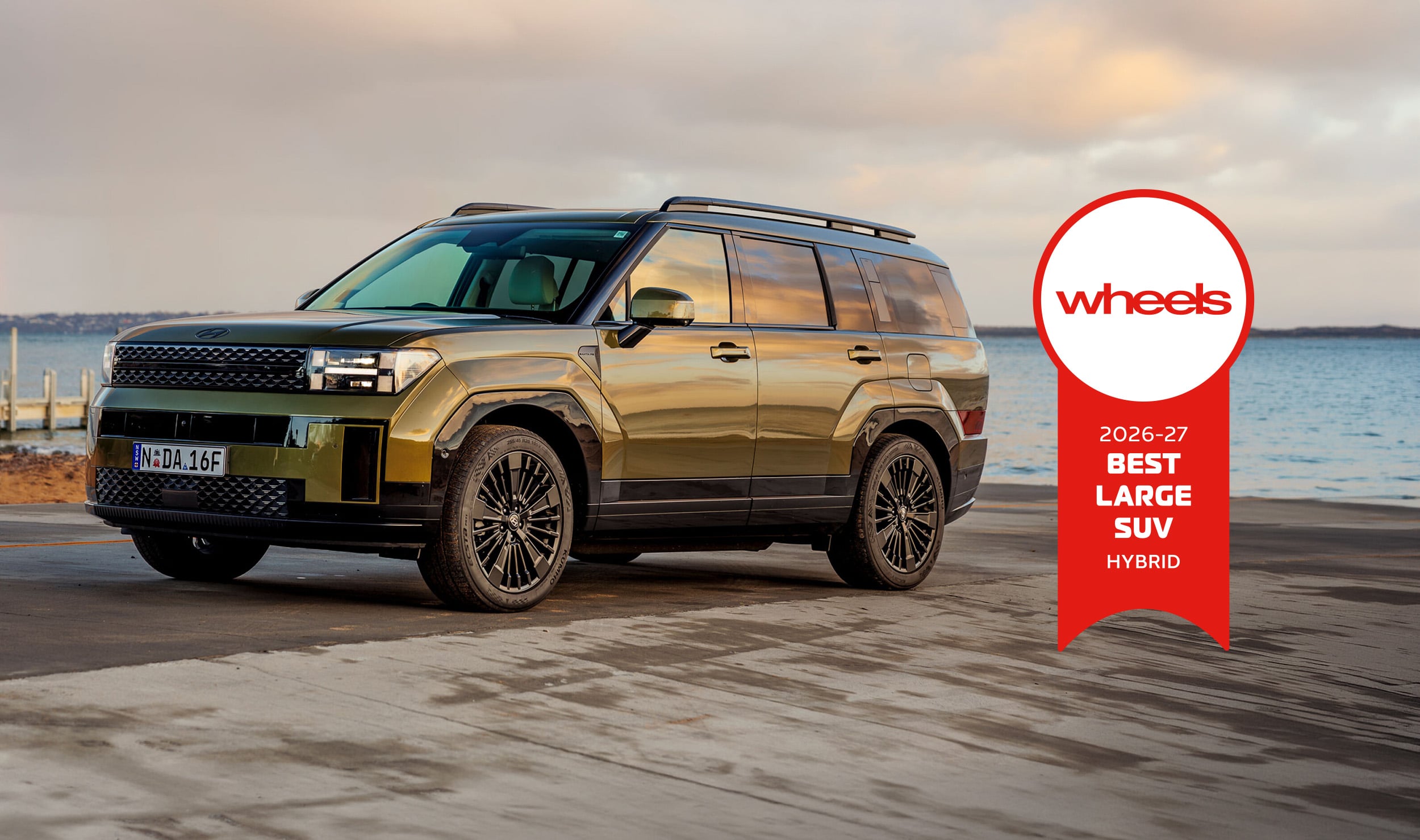
Gallery 1
Contenders
- BYD Sealion 8
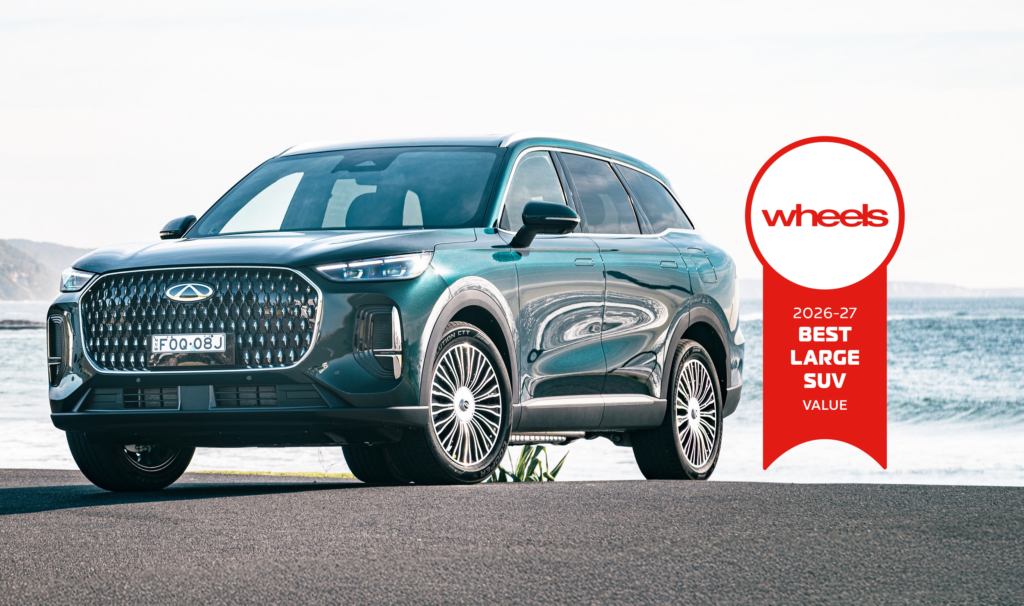
- Chery Tiggo 9
- Hyundai Palisade
- Hyundai Santa Fe
- Jaecoo J8 SH
- Kia Sorento Hybrid and PHEV
- Skoda Kodiaq PHEV
Winner: Hyundai Santa Fe
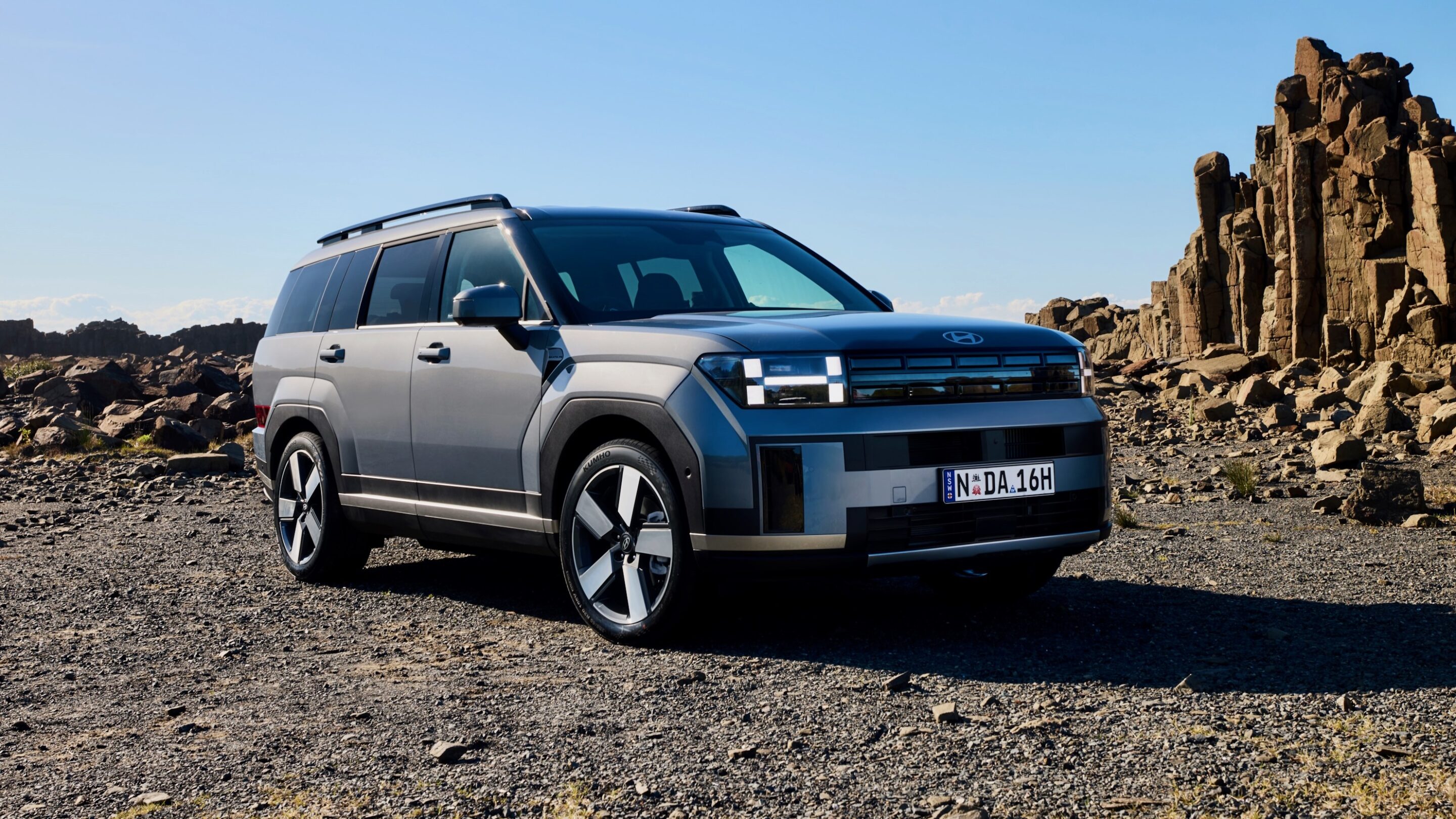
1
Price: From $57,650 plus on-road costs (hybrid)
Drivetrain: 1.6-litre turbocharged four-cylinder hybrid, front- or all-wheel drive, six-speed automatic
transmission
Outputs: 173kW/367Nm
Claimed combined fuel consumption: 5.6L/100km
Warranty: Five-year/unlimited km (car) extendable to seven years with dealer servicing, eight-
year/160,000km (hybrid battery)
Five-year service cost: $2627
| Driving | |
| Interior | |
| Practicality | |
| Overall value | |
Strengths
- Distinctive styling
- Boxy shape makes for a very practical cabin
- Well equipped across the range
Weaknesses
- Calligraphy model is loaded but expensive
- Drivetrain could be a bit more powerful
- Interior quality could be improved
The Hyundai Santa Fe is the benchmark by which every other hybrid large SUV in this year’s field
is judged, and that’s why it takes out the Wheels Best Large Hybrid SUV 2026 award. It won the
Wheels Best Large SUV in 2025 and even 12 months later, with more competition than ever, it’s still
an excellent option for a hybrid large SUV.
Completely reinvented from the ground up for its latest generation, the Santa Fe combines a funky
and distinctive design with a very practical interior, an efficient hybrid powertrain and strong value
for money, delivering the sort of all-round capability that families expect from a modern large SUV.
It’s difficult to identify a proper weakness, and that breadth of ability ultimately sets it apart from an
increasingly competitive field.
Priced from $57,650 before on-road costs with the hybrid drivetrain (a turbocharged petrol engine
is also available from $54,000 +ORC), the Santa Fe offers impressive value from the outset. Even
entry-level models feature dual 12.3-inch displays, wireless Apple CarPlay and Android Auto, a
wireless phone charger, a powered tailgate and Hyundai’s exhaustive SmartSense safety
suite.
Climb through the range and buyers are rewarded with luxuries including Nappa leather upholstery,
heated and ventilated seats, a panoramic sunroof, premium Bose audio, a head-up display and
even an ultraviolet sanitising tray. Regardless of specification, the cabin feels modern and
thoughtfully designed, though material quality could be higher.
Under the bonnet is Hyundai’s proven 1.6-litre turbocharged petrol-electric hybrid powertrain,
producing a combined 172kW and 367Nm. While outright performance isn’t the class’s
strongest, the hybrid system is smooth and responsive while returning excellent fuel
economy for a vehicle of this size. It’s rated at 5.6L/100km, a figure that is
reasonably easy to achieve in the real world with a variety of driving.
Combined with its polished ride and handling balance, the Santa Fe is equally comfortable tackling
the daily school run or long distance family holidays, making it one of the easiest large SUVs to live
with. Importantly, its active safety features are well tuned and won’t annoy you like some rivals’
systems can.
However, practicality is where the Santa Fe truly shines. Featuring seven seats as standard, it
provides generous accommodation across all three rows, while its boxy new shape unlocks a
noticeably larger luggage compartment with up to 1949 litres of space with all the rear seats folded,
and excellent interior packaging. Clever storage solutions, an abundance of USB charging points
and easy access to the third row reinforce its family-first design.
Ultimately, the Santa Fe wins the Best Hybrid Large SUV for 2026 because it ticks so many boxes.
It offers excellent efficiency, strong refinement, generous standard equipment, outstanding
practicality and a premium cabin at a competitive price. In a segment packed with talented
contenders, no rival delivers such a complete balance of comfort, value, usability and day-to-day
appeal. That’s why the Hyundai Santa Fe is the deserving winner of the Wheels Best Large Hybrid
SUV 2026 award – and the large hybrid SUV we’d recommend above every other competitor.
BYD Sealion 8
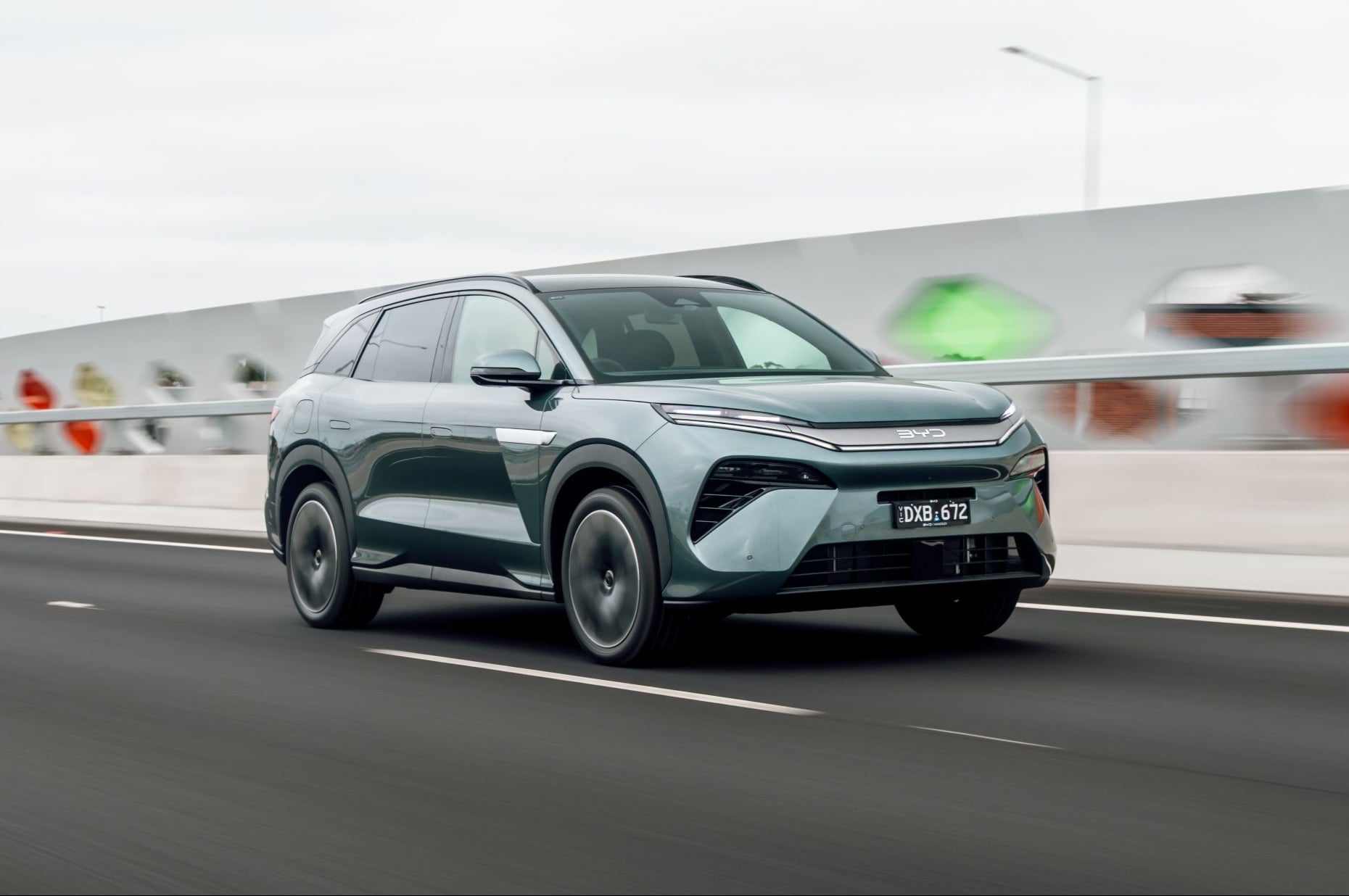
1
Price: From $56,990 plus on-road costs
Drivetrain: 1.5-litre turbo-petrol plug-in hybrid with either one (FWD) or two (AWD) motors, single-
speed hybrid transmission, 19kWh (FWD) or 35.6kWh (AWD) battery
Outputs: 205kW/315Nm (FWD); 359kW/675Nm (AWD)
Claimed combined fuel consumption: 1.1L/100km (FWD) or 1.0L/100km (AWD) above 25% battery
charge, 5.3L/100km (FWD) or 6.3L/100km (AWD) below 25% battery charge
Claimed range (NEDC): 103km (FWD); 152km (AWD)
Warranty: Six-year/150,000km (car), eight-year/160,000km (hybrid battery)
Five-year service cost: $2927 (FWD); $2978 (AWD)
| Driving | |
| Interior | |
| Practicality | |
| Overall value | |
Strengths
- Impressive electric driving range
- Cabin space is solid
- Clever tech that works
Weaknesses
- Third row difficult to access
- No spare wheel and tyre
- Complex touchscreen for simple tasks
As BYD goes from strength to strength in the Australian market, its Sealion 8 is another
sign of how quickly the large SUV market is changing. Combining a sophisticated plug-in hybrid
powertrain with seven-seat practicality and aggressive pricing, it delivers the sort of overall
package that was once reserved for far more expensive vehicles. It also reinforces BYD’s
reputation for packing its products with value, giving buyers a compelling alternative to more
established Japanese, Korean and European rivals.
Pricing for the Sealion 8 starts at $56,990 before on-road costs and standard features include a
15.6-inch infotainment touchscreen, leather-appointed upholstery, heated and ventilated front
seats, wireless Apple CarPlay and Android Auto, a panoramic sunroof, power tailgate and a
full suite of active safety systems. The Sealion 8’s cabin has a clean design with
quality materials, giving buyers a more premium interior than they may have expected for the price.
Power comes from BYD’s latest-generation ‘DM-i’ plug-in hybrid system, which pairs a
turbocharged 1.5-litre petrol engine with either one or two electric motors and either a 19kWh or
35.6kWh battery for up to a claimed 152km of electric driving range (NEDC). Charging statistics
are reasonable, as it can be DC fast charged at up to 40kW for the front-drive model and 74kW for
the all-wheel drive, with a 30-80 per cent claimed charge time in as little as 20 minutes for the larger battery.
Even in the less-powerful 205kW/315Nm front-wheel drive model, acceleration is punchy, but the
359kW all-wheel drive models hit 100km/h in just 4.9 seconds, which is very quick for a large SUV.
The Sealion 8’s driving experience is reasonable, and it’s more dynamic than the Tiggo 9, but its
oversensitive active safety features can grate.
As you’d expect for a large SUV, practicality is one of the Sealion 8’s greatest strengths. It offers
seven-seat accommodation capable of seating adults in the rear for short periods of time, while the
second-row space is plentiful. There’s also plenty of storage throughout the front cabin, while the
large boot is another big selling point as it offers up to 1960 litres of cargo space with the second
and third rows folded. The central touchscreen is sharp and quick, though its menu structure could
be easier to use as it makes even smaller tasks more difficult than they should be. However, it’s hardly
alone in that aspect in 2026.
Overall, the BYD Sealion 8 brings together all the ingredients buyers increasingly expect from a
modern family SUV like strong performance, low running costs from a long electric driving range, a
lot of standard equipment and good practicality, all combined in a polished package that represents excellent value for money. For families wanting to embrace plug-in hybrid technology, the BYD Sealion 8
shapes as a compelling large hybrid SUV.
Chery Tiggo 9
1
Price: From $52,990 plus on-road costs
Drivetrain: 1.5-litre turbo-petrol plug-in hybrid with either two (Elite FWD) or three (Ultimate AWD)
e-motors, three-speed hybrid transmission, 19kWh (Elite) or 34kWh (Ultimate) battery
Outputs: 225kW/450Nm (Elite) or 315kW/580Nm (Ultimate)
Claimed combined fuel consumption: 1.5L/100km (Elite); 1.4L/100km (Ultimate)
Claimed range (NEDC): 90km (Elite); 170km (Ultimate)
Warranty: Seven-year/unlimited km (car), eight-year/unlimited km (hybrid battery)
Five-year service cost: $1595
| Driving | |
| Interior | |
| Practicality | |
| Overall value | |
Strengths
- Value pricing with a long list of features
- Healthy EV range, especially in Ultimate trim
- Good quality and spacious cabin
Weaknesses
- Overactive active safety features
- Third row of seats only for kids
- Not especially good to drive
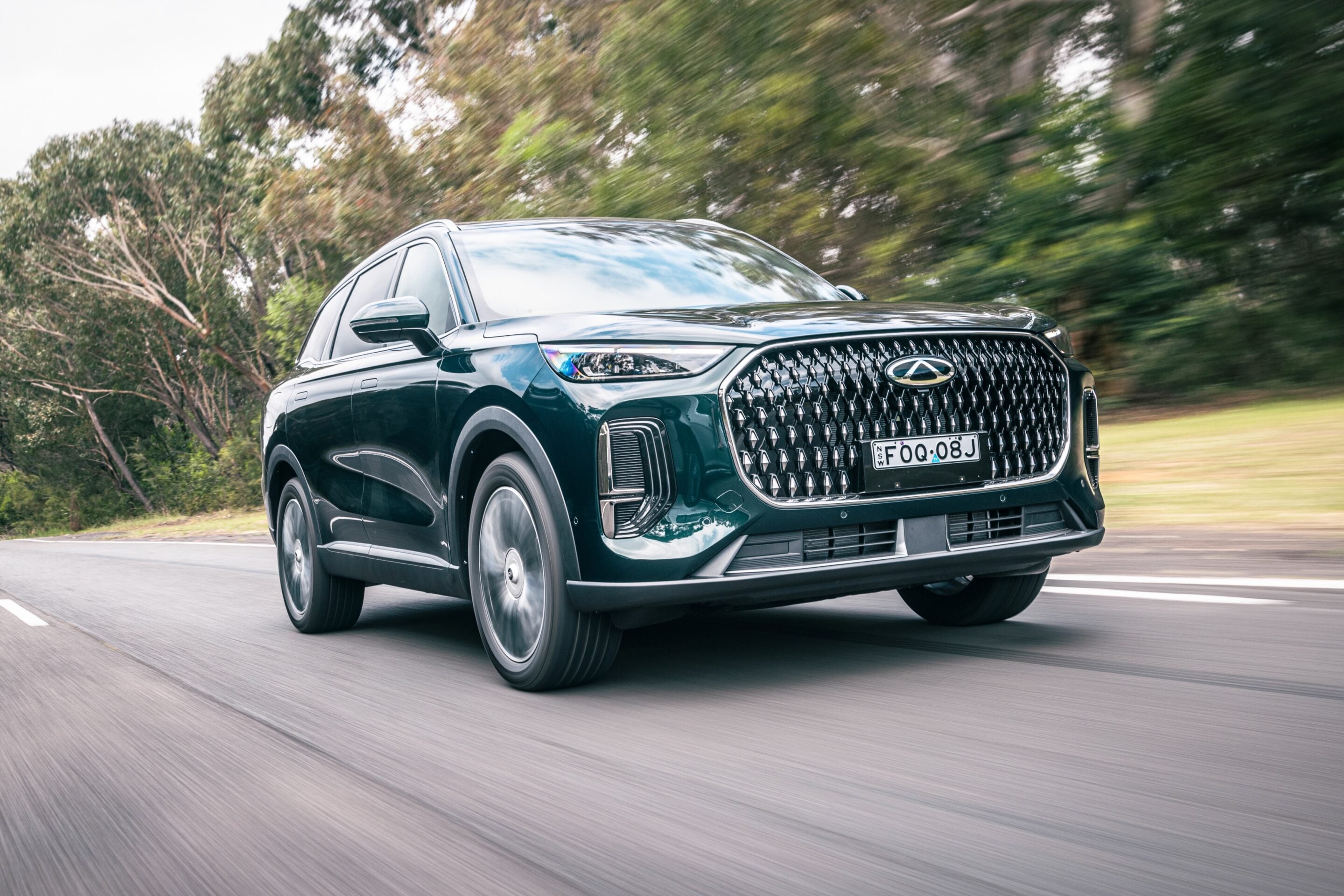
The Chery Tiggo 9 enters the large SUV segment with a clear mission: deliver premium levels of
technology, performance and family practicality at a price that undercuts many established rivals.
As the brand’s new flagship SUV, the Tiggo 9 combines an excellent plug-in hybrid powertrain with
a spacious seven-seat cabin and an impressive standard equipment list, making it one of the
strongest value propositions in the hybrid large SUV market.
Priced from $52,990 before on-road costs and offered in two specification levels, the Tiggo 9 Super
Hybrid offers a lot of standard equipment for the money. Even in the entry-level Elite model, buyers
receive a 15.6-inch touchscreen, leather-appointed upholstery, heated and ventilated front
seats, wireless Apple CarPlay and Android Auto, a panoramic sunroof, premium Sony audio, a 360-degree camera and a comprehensive suite of advanced driver assistance technologies. The
cabin has a modern feel, with quality materials and a clean dashboard layout, and its
touchscreen features sharp graphics too.
Power comes from Chery’s Super Hybrid System, combining a 1.5-litre turbocharged petrol engine
with either two or three electric motors and either a 19kWh (Elite) or 34kWh (Ultimate) battery to
deliver strong performance and impressive efficiency. The system provides smooth, effortless
acceleration and plenty of torque for overtaking or carrying a full load of passengers, while
remaining quiet and refined in everyday driving. On top of that, the Ultimate model is surprisingly fast with ample performance everywhere thanks to its 315kW of power and 580Nm of torque.
The Tiggo 9 also offers an impressive electric-only driving range of up to 90km (Elite) or 170km
(Ultimate, both on the lenient NEDC cycle), and can be DC fast charged at up to 70kW for a
claimed 30 to 80 per cent charge in as little as 30 minutes. It’s a comfortable car to drive and ride
in, though it doesn’t offer too much fun for whoever’s behind the wheel thanks to light steering and sensitive active safety features that can feel invasive.
Family buyers will also appreciate that the Tiggo 9’s excellent practicality. It features seven-seat
accommodation with generous second-row space and a usable third row for kids, though larger
passengers won’t be too happy back there and access to the third row isn’t easy either. The
luggage compartment is spacious, however, offering 819 litres of space with the third row folded
and over 2000 litres with the middle row folded, and the seating is quite comfortable as well.
The Tiggo 9 is a very complete package, and shows just how capable Chery is as a car marker. It
blends generous electric driving range, strong performance, a lot of standard features and part-
time seven-seat practicality into an SUV that represents outstanding value for money. Of course,
it’s not perfect, as the driving experience shows, as it’s just too soft and the active safety features
annoy, and the third row of seats is only for kids. If you want to embrace plug-in hybrid technology without paying an arm and a leg for it, the Chery Tiggo 9 is a convincing large hybrid SUV option.
Hyundai Palisade
1
Price: From $76,500 plus on-road costs
Drivetrain: 2.5-litre turbocharged four-cylinder hybrid, six-speed automatic transmission, all-wheel
drive
Outputs: 245kW/460Nm
Claimed combined fuel consumption: 6.8L/100km
Warranty: Five-year/unlimited km (car) extendable to seven years with dealer servicing, eight-
year/160,000km (hybrid battery)
Five-year service cost: $2630
| Driving | |
| Interior | |
| Practicality | |
| Overall value | |
Strengths
- Premium design inside and out
- Punchy new 2.5-litre turbo-hybrid drivetrain
- Pleasant and relaxing to drive
Weaknesses
- Short 10,000km service intervals
- No front-wheel drive availability for those who don’t need all-wheel drive
- Getting up there in price
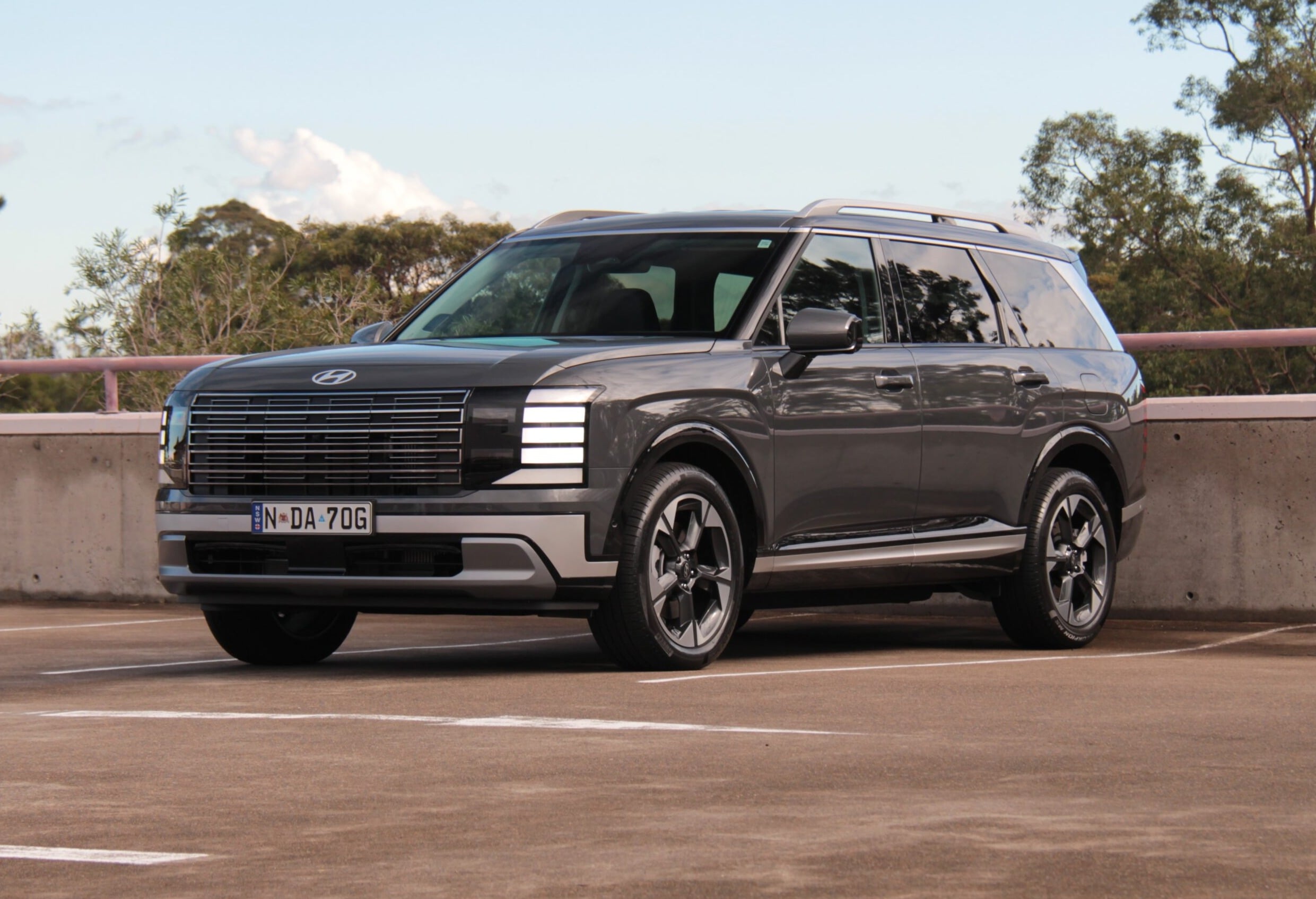
Now in its second generation, the Hyundai Palisade has been one of the best choices for a large SUV since it originally came onto the market in 2020 thanks to its huge cabin, good value for money and pleasant driving experience – and it’s safe to say that the second-generation model is even better.
Now featuring a new hybrid drivetrain as standard, replacing the former diesel and petrol V6 options, the new Palisade is also more upmarket in both its appearance and interior quality, and presents a cut-price Range Rover vibe that we think will appeal to many. It retains everything that has made the Palisade so popular while significantly reducing fuel consumption and feeling more special throughout, making it a smart choice in the segment.
Priced from $76,500 plus on-road costs, the new Palisade is not cheap, but it is well equipped. Three trim levels are available, and even the entry-level Elite is generously appointed with dual 12.3-inch displays, wireless Apple CarPlay and Android Auto, tri-zone automatic climate control, keyless entry, adaptive cruise control and Hyundai’s extensive SmartSense safety suite. Higher grades add features including Nappa leather upholstery, ventilated seats, a panoramic sunroof, Bose audio and a head-up display, giving the Palisade an unmistakably premium feel.
Power comes from Hyundai’s new-generation 2.5-litre turbocharged petrol hybrid system, producing a combined 245kW and 460Nm outputs, which gives it significantly more grunt than previous drivetrains but with less fuel consumption, which is rated at just 6.8L/100km. The new drivetrain has smooth acceleration and impressive refinement, while its strong torque makes the Palisade feel responsive whether you’re cruising on the highway or carrying a full load of passengers. It’s also very comfortable on the road, and impressively refined too.
Practicality remains one of the Palisade’s greatest strengths. Available with either seven or eight seats, depending on the model, it offers generous accommodation in all three rows, with enough space for adults to travel comfortably in the rear. The wide-opening doors make child-seat access easy, while clever storage solutions, numerous USB charging points and a large luggage compartment with up to 2081 litres of space ensure it is well suited to busy family life.
The addition of hybrid power only strengthens the Palisade’s position as one of the standout large SUVs on the market, and its newfound level of luxury also adds to its overall appeal. Yes, it will hit your hip-pocket nerve, but it combines strong performance, impressive efficiency, generous equipment and great practicality in an accomplished package. For families wanting a genuine seven or eight-seat SUV that will lower fuel bills without compromising comfort, space or long-distance capability, the Hyundai Palisade Hybrid is one of the most complete and convincing options in its class.
Jaecoo J8 SHS
1
Price: From $59,990 plus on-road costs
Drivetrain: 1.5-litre turbo-petrol plug-in hybrid with three e-motors, three-speed hybrid transmission,
34kWh battery
Outputs: 315kW/580Nm
Claimed combined fuel consumption: 1.2L/100km
Claimed range (NEDC): 169km
Warranty: Eight-year/unlimited km (both car and hybrid battery)
Five-year service cost: $2315
| Driving | |
| Interior | |
| Practicality | |
| Overall value | |
Strengths
- Excellent value for money
- Attractive inside and out
- Loaded with features
Weaknesses
- Tight third row of seating
- Too-soft driving experience
- Sensitive active safety features
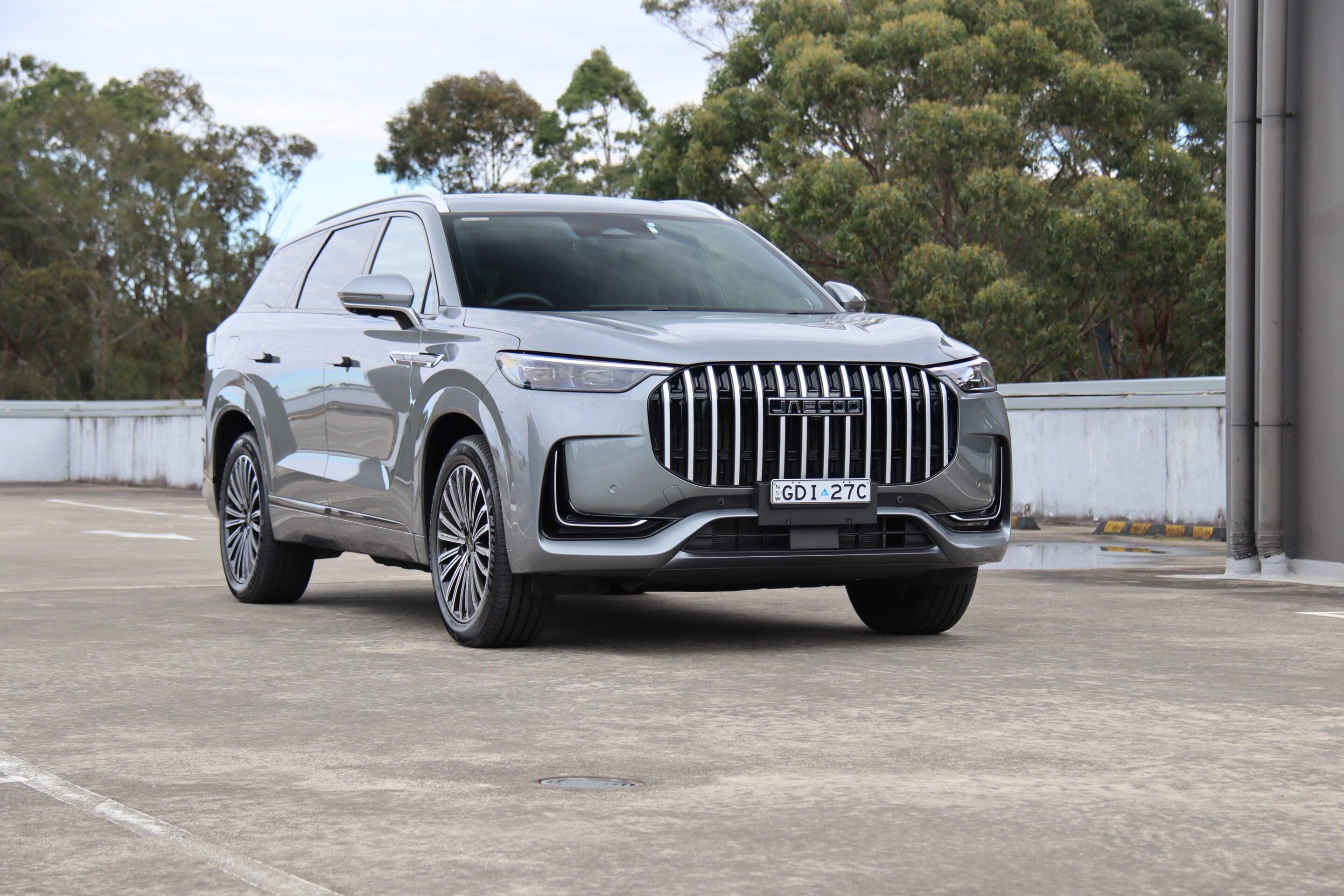
You may not have heard of Jaecoo before, but as the more premium arm of Chery and offering
popular smaller SUVs like the J5 and J7, we think it’s a brand to watch. Its J8 large SUV arrived in
2025 armed with keen pricing, a 2.0-litre turbo-petrol engine and a five-seat layout, and now it’s
added a new plug-in hybrid version that’s finally equipped with seven seats. It uses Chery’s
excellent Super Hybrid system – the very same one you’ll find in the related Chery Tiggo 9 also in
this field – but fits a higher-quality cabin for a more luxurious vibe inside.
Priced from $59,990 before on-road costs, or the same as the top-spec Tiggo 9 Ultimate, the J8
SHS Summit is very well equipped. Standard features include 20-inch alloy wheels, twin 12.3-inch
displays, quilted leather trim, heated and ventilated front seats, a panoramic sunroof, a 12-speaker
Sony audio system with speakers in the driver’s headrest, an inbuilt fragrance system and a long
list of active safety features.
The cabin of the J8 has a distinctly upmarket feel, while the clean dashboard design and
quality materials make it feel like a more expensive product. We like the 12.3-inch
touchscreen because it’s better integrated than its Chery cousin, which plonks a larger 15.6-inch unit smack bang on the dashboard. The Jaecoo’s layout is more aesthetically pleasing, even if the Chery’s
screen is sharper and quicker to use.
Importantly, unlike the petrol J8 models, the SHS features a third row of seating. Like the Tiggo 9
– and a number of other competitors – the third row is best kept to kids as adults certainly will not
fit back there. But as a back-up, it’s useful to have. The J8 SHS’s boot space is large too, with
200 litres behind the third row, 738 litres (to the roof) once the third row is folded and 2021 litres
with both rear rows put down.
The J8′ features Chery’s ‘s Super Hybrid System combines a 1.5-litre turbocharged petrol
engine with three electric motors to produce remarkable combined outputs of 315kW and 580Nm. It makes the J8 one of the most powerful large SUVs on the market, capable of a 4.8-second 0-
100km/h time. We doubt many owners will be timing their 0-100km/h runs, so that means that there’s definitely enough grunt for just about any sort of everyday driving, and it’s also a very refined system with little in the way of engine noise and vibrations.
A substantial 34kWh battery provides a claimed electric-only driving range of up to 169km
(NEDC), which is one of the longest EV ranges of any plug-in hybrid on the market. That will allow
many to complete days of commuting without having to charge up, and when they do, its DC fast
charging peak speed of 70kW means that a 30-80 per cent top-up can take as little as 25 minutes.
On the road, the J8 SHS isn’t the most dynamic SUV, but it is very refined and quite comfortable,
though its active safety features are sensitive.
The J8 SHS is a statement of intent from Jaecoo and reminds us of the brand’s talent. It’s not
perfect, as its third row isn’t massive and it could be better to drive, but it combines strong
performance, a generous electric driving range, premium-feeling equipment and great practicality
in a package that is excellent value for money. If you’re searching for a hybrid large SUV, the
Jaecoo J8 SHS should certainly be on your list.
Kia Sorento Hybrid and PHEV
1
Price: From $56,675 plus on-road costs (hybrid), from $71,175 +ORC (PHEV)
Drivetrain: 1.6-litre turbocharged four-cylinder hybrid or plug-in hybrid, six-speed automatic
transmission, front- (hybrid only) or all-wheel drive, 13.8kWh battery (PHEV)
Outputs: 168kW/350Nm (hybrid); 195kW/350Nm (PHEV)
Claimed combined fuel consumption: 5.4L/100km (hybrid); 1.6L/100km (PHEV)
Claimed range (PHEV): 68km (WLTP)
Warranty: Seven-year/unlimited km (car), seven-year/150,000km (hybrid battery)
Five-year service cost: $3009 (hybrid); $3409 (PHEV)
| Driving | |
| Interior | |
| Practicality | |
| Overall value | |
Strengths
- Both hybrid and plug-in hybrids on offer
- Australian tuning gives it an edge on the road
- More hybrid models now available across the range
Weaknesses
- Small third row of seats
- Expensive PHEV’s range is lacking compared to rivals
- Shorter battery warranty than most brands
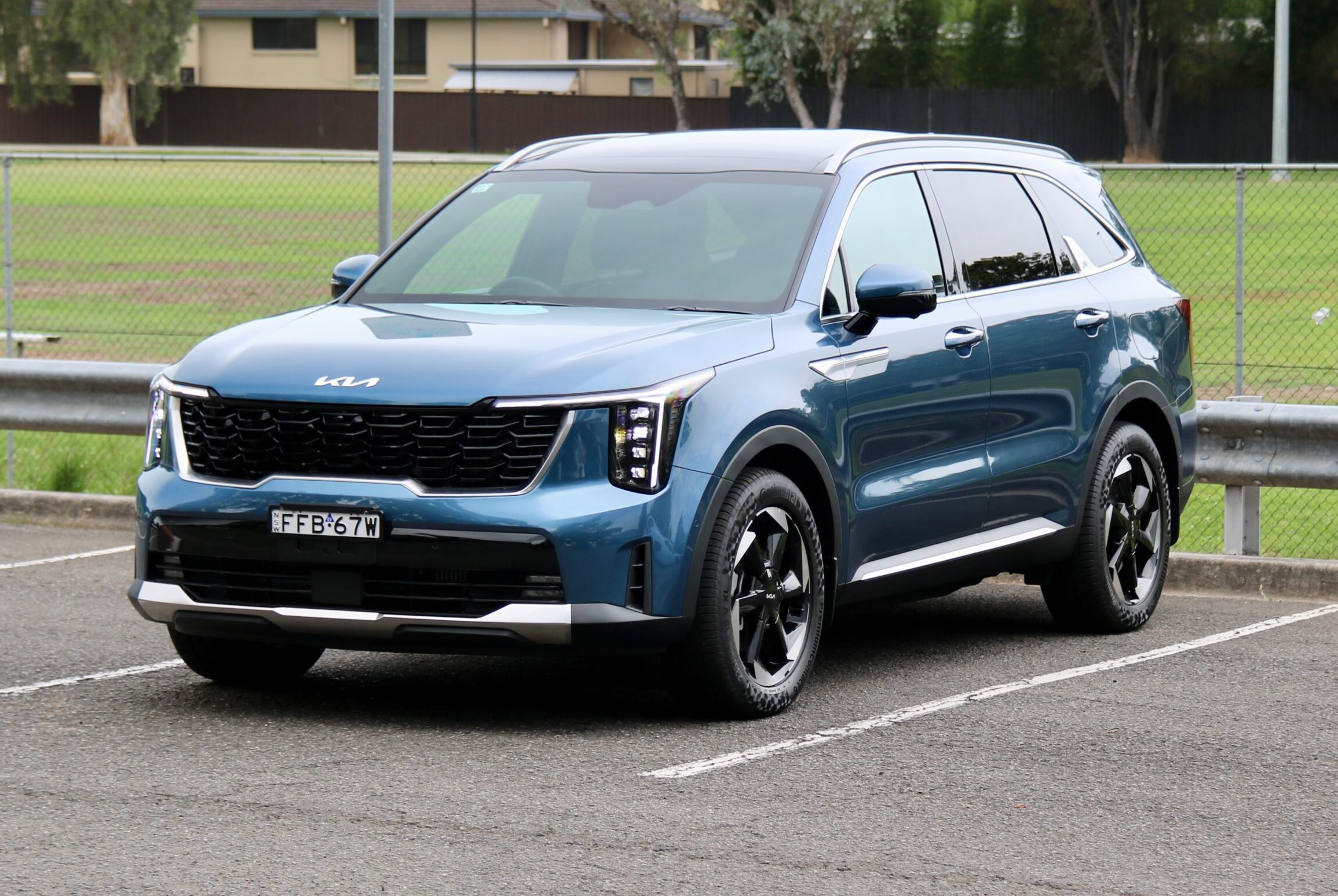
Kia’s recent roll continues in 2026 with excellent new vehicles like the K4 small car, and while the venerable Sorento large SUV might be getting on a bit in age, it still proves that Kia knows how to make a very good product. Offering both hybrid and plug-in hybrid drivetrains, the Sorento is an attractive large SUV for those who want seven-seat practicality but low running costs.
Pricing for the hybrid starts at $56,675 plus on-road costs for the entry-level S, while the plug-in hybrid is a lot more expensive and starts $14,500 higher at $71,175 +ORC. Choose the top-spec GT-Line, and regardless of the drivetrain, equipment is extensive and includes leather trim, heated and ventilated front seats, a panoramic sunroof, Bose audio and a head-up display. But it’ll cost you more than $75,000 including on-road costs – and the plug-in hybrid is currently on special for $85,990 driveaway.
Under the bonnet of both hybrid drivetrains is a 1.6-litre turbocharged petrol engine paired with an electric motor, and in the plug-in hybrid, paired to a 13.8kWh battery. The hybrid makes 168kW/350Nm outputs, while the PHEV is stronger with 195kW of power. In both drivetrains, performance is smooth, quiet and effortlessly strong, while the six-speed automatic transmission delivers a more natural driving experience than the continuously variable gearboxes found in some hybrid rivals.
The Sorento PHEV’s claimed electric-only driving range of up to 68km is lower than many rivals, but it’s enough to cover daily commuting for many Aussies. Annoyingly, the PHEV cannot be DC fast charged, leaving AC top-ups of only up to 3.3kW. Given the choice between hybrid and plug-in hybrid variants in the Sorento range, we’d choose the hybrid every time because it’s still quite efficient and it’s also much cheaper to buy.
Importantly, the Sorento remains a very family-friendly SUV, offering a comfortable second row and a usable third row that’s ideal for children or occasional adult passengers. The Sorento’s cabin is good quality, thoughtfully designed, storage is plentiful and with almost 2000 litres available with the seats folded, the boot remains highly practical, giving the Kia the space expected of a large SUV.
We think that breadth of ability is what makes the Sorento such a compelling contender in the hybrid large SUV category. It combines good performance and fuel efficiency, lots of standard equipment across the range and excellent practicality into a polished package that’s easy to recommend. While the PHEV’s charging speed is slow, the third row of seating is small and Kia’s battery warranty is shorter than many, it’s still a great option in this market.
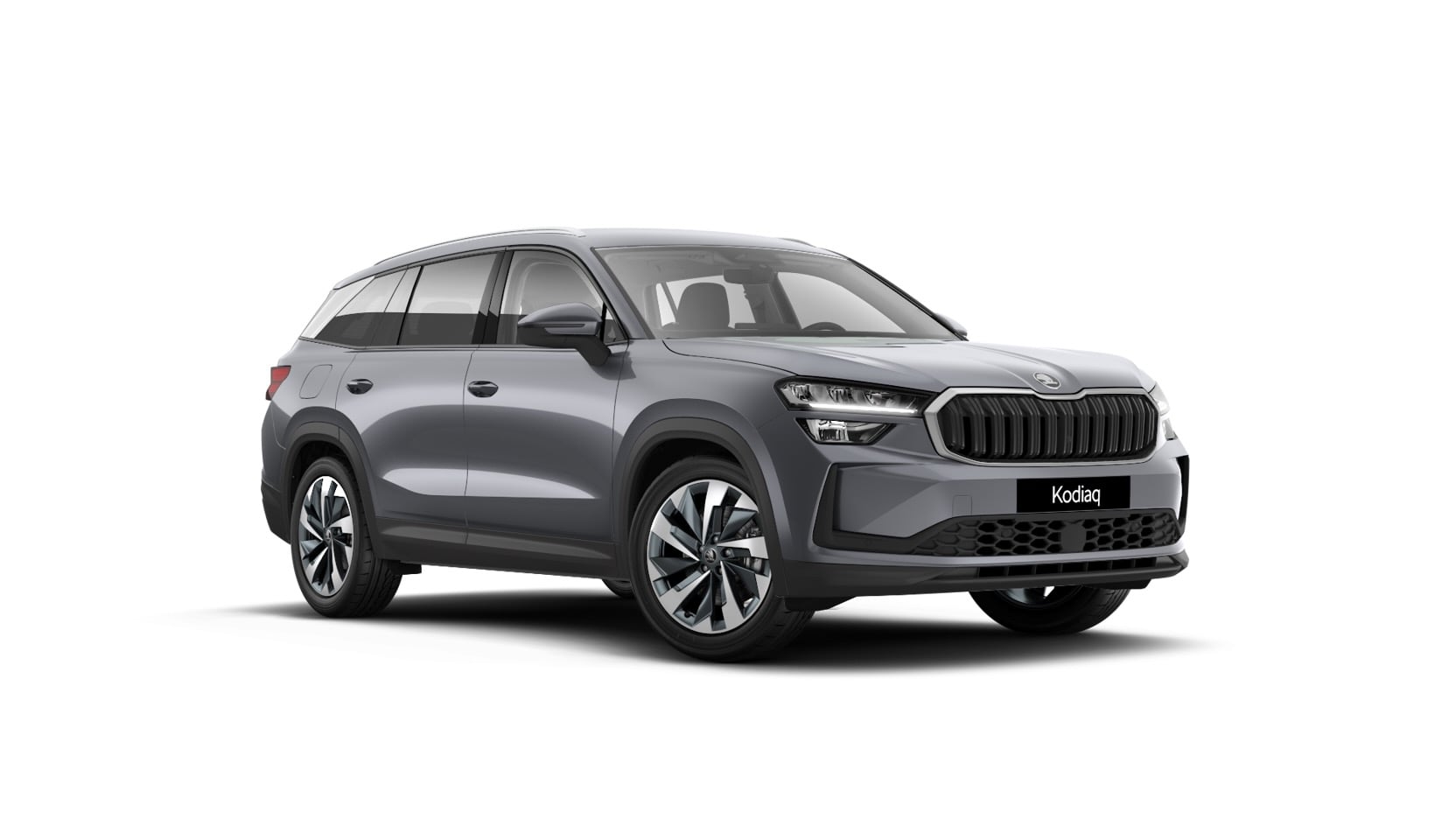
Skoda Kodiaq PHEV
1
Price: From $59,990 driveaway
Drivetrain: 1.5-litre turbocharged four-cylinder plug-in hybrid, six-speed dual-clutch transmission,
front-wheel drive, 25.7kWh battery
Outputs: 150kW/350Nm
Claimed combined fuel consumption: 1.9L/100km
Claimed range: 110km (WLTP)
Warranty: Seven-year/unlimited km (car), eight-year/160,000km (hybrid battery)
Five-year service cost: $2990
| Driving | |
| Interior | |
| Practicality | |
| Overall value | |
Strengths
- Excellent cabin practicality
- Mature driving experience
- Good driving range for a PHEV
Weaknesses
- PHEV is FWD and five-seat only
- No spare wheel, reduced boot capacity due to PHEV battery
- Some desirable features part of expensive option package
The Skoda Kodiaq has long been one of the smarter large SUVs on sale, combining smaller exterior dimensions with impressive interior space, and the recent arrival of a plug-in hybrid version only strengthens its appeal. The Kodiaq PHEV combines impressive electric driving range with the typical space, comfort and versatility that has made the Kodiaq such a good large SUV. It also presents a compelling value proposition, offering solid technology and the potential for remarkably low running costs for owners who charge regularly.
Priced currently at $59,990 driveaway, the Kodiaq PHEV is well equipped as standard, including leather upholstery, a 13-inch infotainment touchscreen, tri-zone automatic climate control, heated front seats, a power tailgate and safety kit like nine airbags and adaptive cruise control. Annoyingly, however, features such as electric front seats, Matrix adaptive high beam, a 360-degree camera and Canton audio are bundled into an expensive optional $6500 Signature Package.
Power in the Kodiaq PHEV comes from a 1.5-litre turbocharged petrol engine paired with an electric motor and a 25.7kWh battery, producing reasonable combined outputs of 150kW and 350Nm, which are enough for a claimed 8.4-second 0-100km/h time. Performance is smooth and refined, with the instant response of the electric motor making the Kodiaq feel particularly spritely around town.
More importantly, the large 25.7kWh battery delivers a claimed electric-only driving range of up to 110km on the WLTP cycle, which should keep a lot of owners away from the bowser for extended periods. The Kodiaq PHEV can be DC fast charged at up to 50kW for a claimed 10-80 per cent charge in as little as 25 minutes, but a full charge on a 11kW AC wall charger still only takes two and a half hours.
While the PHEV doesn’t feature the seven seats of other Kodiaq models, the cabin remains spacious, with generous accommodation for adults in both rows, excellent visibility and the thoughtful storage solutions that have become a Skoda trademark, like a cubby space in the middle of the rear floor. The 745-litre cargo capacity is also impressively large, making everything from the weekly shop to family holidays easy to accommodate.
The Kodiaq PHEV is a solid entrant to the hybrid large SUV segment because it blends a long electric-only driving range, excellent refinement, a lot of standard equipment and a family-friendly interior into a well-rounded package. Sure, it doesn’t feature the extra row of seats or all-wheel drive system compared to other Kodiaq models, there’s no spare wheel and some desirable features are part of an expensive optional package, but it will go a long way to convincing buyers who want to reduce their fuel bills without giving up the flexibility of a petrol-powered SUV.
Follow WhichCar/Wheels on Google
Click the button below to make WhichCar by Wheels a preferred source for your news.