
Best Large SUVs

Gallery 1
Contenders
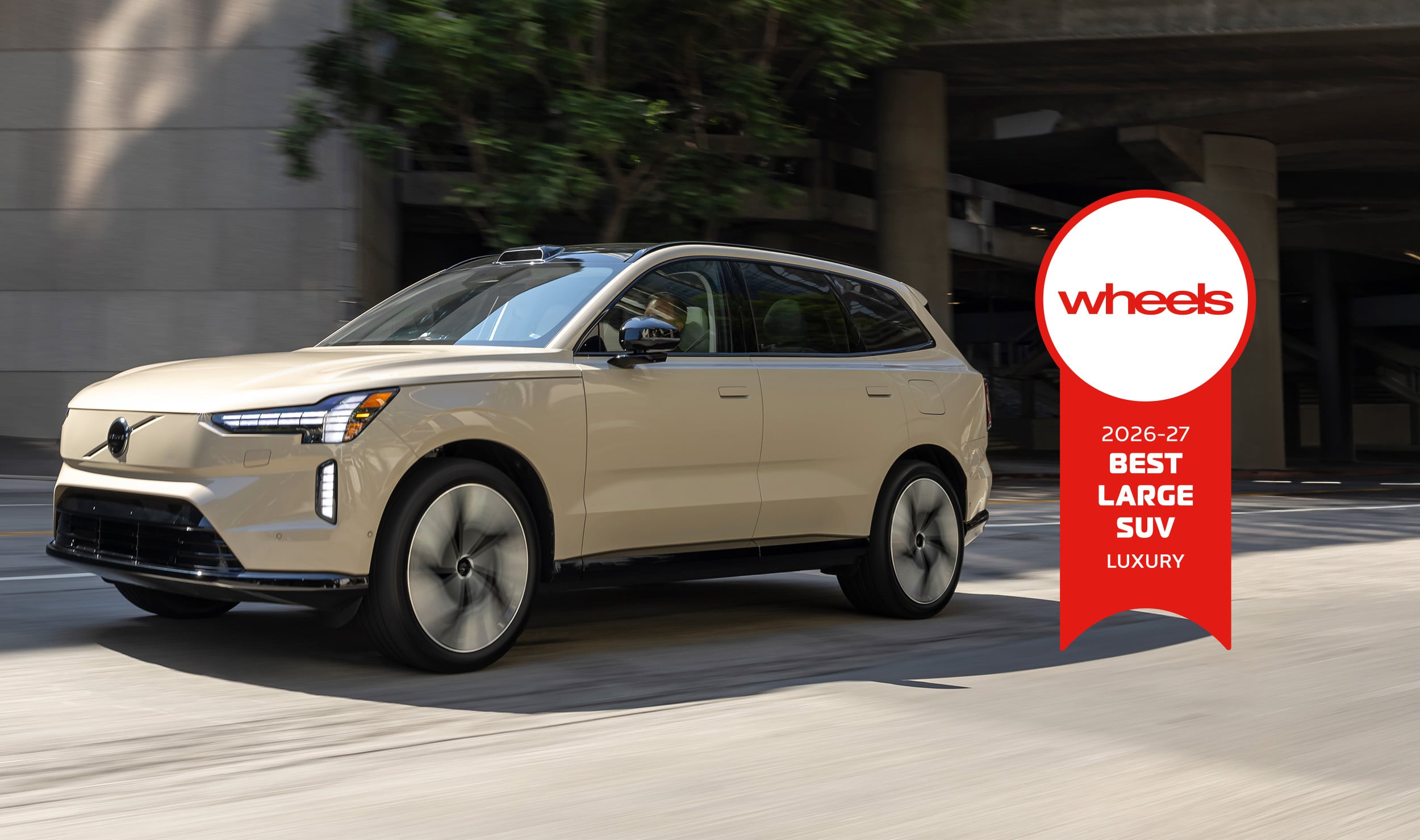
Winner – Volvo EX90
6
Price: From $106,990 plus on-road costs (Plus Single Motor)
Drivetrain: Single-motor RWD or dual-motor AWD, single-speed transmission
Outputs: Up to 500kW/870Nm (Ultra Twin Motor Performance)
Electric range: Up to 521km WLTP
Warranty: Five-year/unlimited km; eight-year/160,000km battery warranty
Five-year service cost: Included in the price
| Driving | |
| Interior | |
| Practicality | |
| Overall value | |
Strengths
- Superb refinement and comfort
- Spacious, genuinely useful seven-seat interior
- Strong performance and impressive EV range
Weaknesses
- Still expensive against mainstream rivals
- Touchscreen-heavy cabin controls
- Large wheels can compromise ride quality
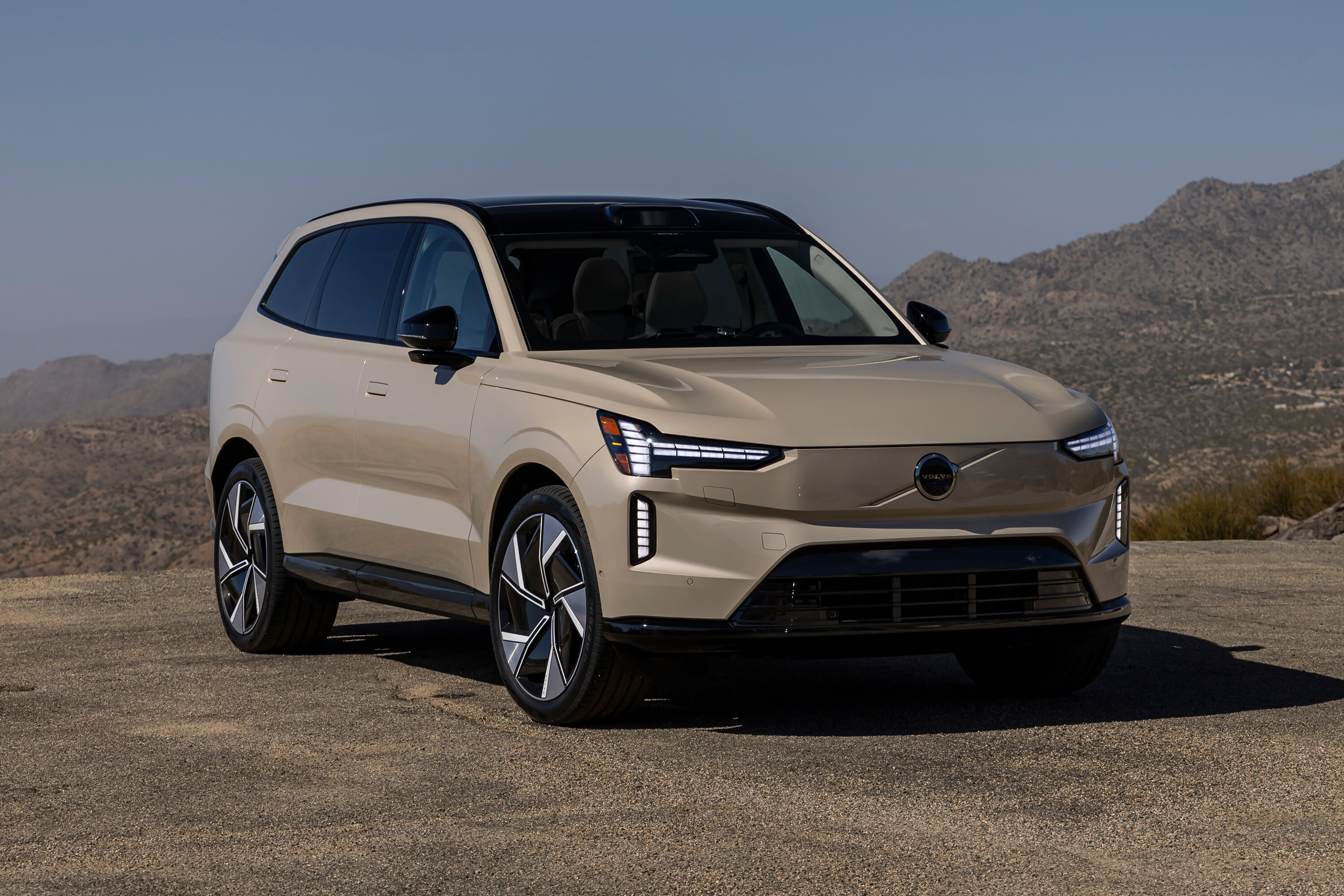
The Volvo EX90 takes the familiar virtues of the long-serving XC90 and successfully translates them into the electric era. Big, beautifully refined and packed with technology, it combines genuine seven-seat practicality with the effortless performance expected of a modern premium EV.
For 2026, the Australian range starts at $106,990 before on-road costs for the rear-wheel-drive Plus Single Motor, with the Plus Twin Motor priced at $124,990 and the flagship Ultra Twin Motor Performance at $134,990.
At just over five metres long, the EX90 is a substantial vehicle, yet its clean Scandinavian styling disguises its bulk. Inside, the minimalist approach continues with a 14.5-inch central touchscreen, Google-based infotainment and high-quality materials. The Ultra adds luxuries including ventilated and massaging front seats, an electrochromic panoramic roof and superb Bowers & Wilkins audio.
Importantly for a large SUV, the EX90 works as a family vehicle. Seven seats are standard, the sliding second row makes third-row access straightforward and there is 384 litres of luggage capacity with all seats upright, plus useful underfloor storage. Fold the rear seats and cargo capacity expands considerably.
It’s also surprisingly enjoyable to drive. Adaptive air suspension delivers impressive comfort and body control, while the twin-motor Performance model’s torque-vectoring rear axle gives it agility that belies its considerable weight. The biggest criticism is that the Ultra’s 22-inch wheels can occasionally introduce a sharp thump over poor surfaces.
The 2026 Performance flagship is particularly potent, producing 500kW and 870Nm and reaching 100km/h in 4.2 seconds. Its updated electrical architecture allows DC charging at up to 300kW, with a 10–80 per cent recharge taking around 24 minutes. WLTP range is 521km.
Ownership credentials are equally strong. Volvo provides a five-year/unlimited-kilometre vehicle warranty, an eight-year/160,000km battery warranty and five years of scheduled servicing at no additional cost.
Expensive though it remains, the EX90 succeeds because it doesn’t sacrifice the fundamentals of a great large SUV in pursuit of electrification. Comfortable, spacious, exceptionally quiet and unexpectedly engaging, it’s a convincing electric flagship.
BMW X7
1
Price: From $167,900 plus on-road costs (xDrive40i)
Drivetrain: 3.0-litre turbo petrol or diesel six-cylinder, or 4.4-litre twin-turbo V8 petrol; 48V mild hybrid, eight-speed automatic, AWD
Outputs: 280kW/540Nm (xDrive40i), 259kW/720Nm (xDrive40d), 390kW/750Nm (M60i)
Claimed combined fuel consumption: From 8.0L/100km (xDrive40d)
Warranty: Five-year/unlimited km
Five-year service cost: Five-year/80,000km Service Inclusive package available
| Driving | |
| Interior | |
| Practicality | |
| Overall value | |
Strengths
- Superb ride and refinement
- Luxurious and genuinely spacious three-row cabin
- Excellent range of powerful engines
Weaknesses
- Expensive, particularly with options
- Enormous dimensions aren’t city friendly
- Polarising exterior styling
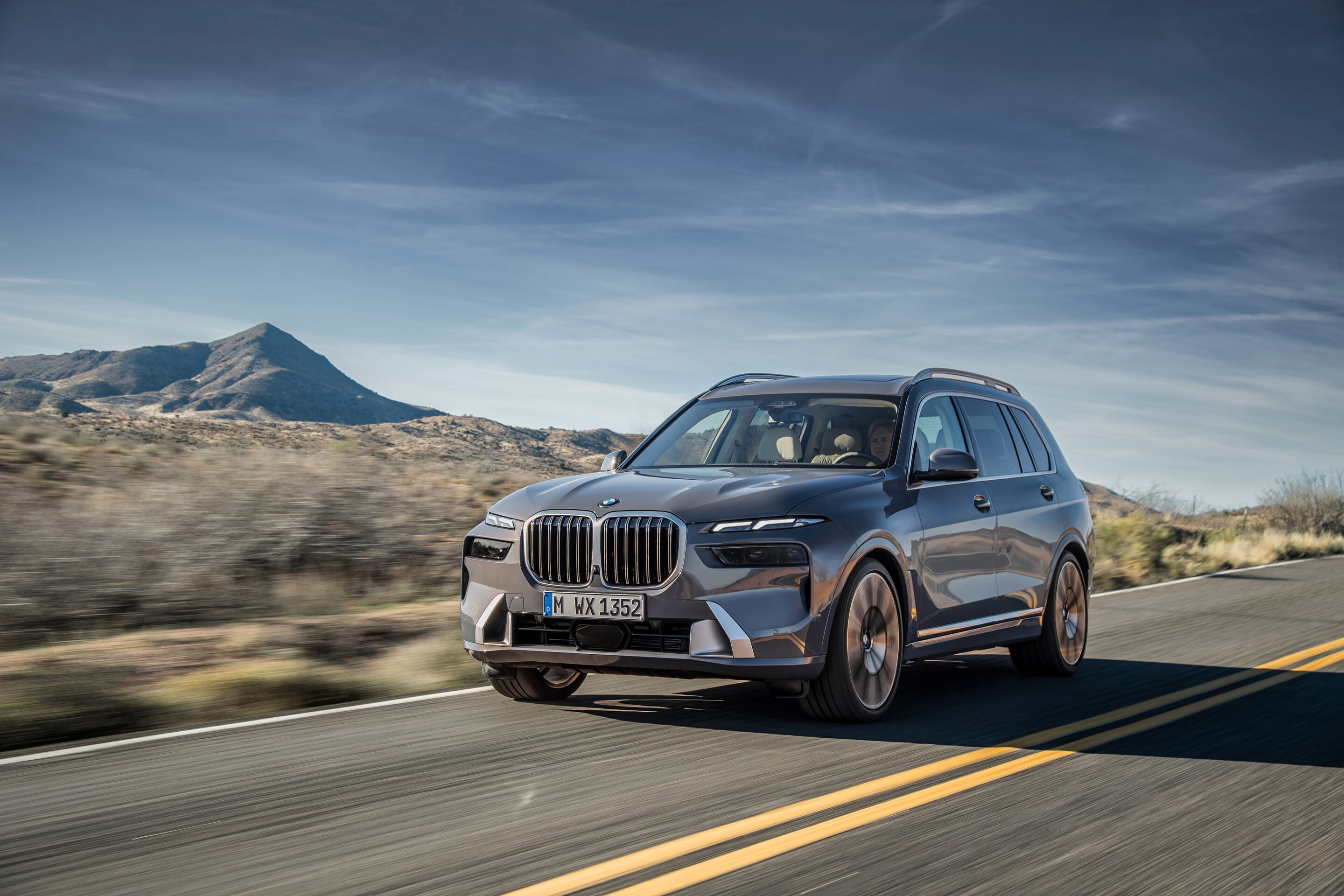
The X7 sits at the summit of BMW‘s conventional SUV range and, despite having been around since 2019, remains an impressively complete luxury family flagship. It’s enormous, lavishly equipped and surprisingly capable dynamically, while providing three genuinely useful rows of seating.
The Australian range offers three powertrains. The xDrive40i starts from $167,900 before on-road costs, followed by the diesel xDrive40d at $174,900 and muscular M60i at $205,900. All use an eight-speed automatic, all-wheel drive and 48-volt mild-hybrid assistance.
Even the xDrive40i is hardly short on performance. Its 3.0-litre turbocharged straight-six produces 280kW and 540Nm, launching this near-2.5-tonne SUV to 100km/h in a brisk 5.8 seconds. The xDrive40d’s 259kW/720Nm diesel remains the long-distance choice, while the M60i’s 390kW/750Nm twin-turbo V8 adds serious performance.
Yet it’s the X7’s breadth of ability that really impresses. Air suspension provides the appropriately plush ride expected of a flagship SUV, yet body control and handling are remarkably accomplished for something this large. The M60i goes further with Executive Drive Pro suspension and four-wheel steering.
Inside, the X7 feels suitably special. Standard equipment includes Merino leather, a panoramic glass roof, five-zone climate control, a head-up display, Harman Kardon audio and BMW’s curved digital display. Driving Assistant Professional and Parking Assistant Professional add an extensive suite of driver assistance technology.
Seven seats are standard, while an optional six-seat arrangement substitutes second-row captain’s chairs. Unlike many three-row SUVs, the X7 provides enough space for adults in the third row, while electrically operated seats make switching between passengers and luggage relatively painless.
It’s not inexpensive, and options can quickly push the xDrive40i towards $200,000 – as current 2026 dealer stock demonstrates. But few luxury SUVs combine this much passenger space, refinement, performance and dynamic polish so convincingly.
The X7’s ability to behave like a limousine one moment and a surprisingly agile BMW the next makes it one of the most accomplished large luxury SUVs on sale.
Genesis GV80
1
Price: From $120,000 plus on-road costs (2.5T Signature AWD)
Drivetrain: 2.5-litre turbo four-cylinder or 3.5-litre twin-turbo V6 petrol, eight-speed automatic, AWD
Outputs: 224kW/422Nm (2.5T), 279kW/530Nm (3.5T)
Claimed combined fuel consumption: 10.4L/100km (2.5T), 11.9L/100km (3.5T)
Warranty: Five-year/unlimited km
Five-year service cost: $0
| Driving | |
| Interior | |
| Practicality | |
| Overall value | |
Strengths
- Beautifully finished, feature-packed interior
- Refined and muscular twin-turbo V6
- Outstanding ownership and servicing package
Weaknesses
- V6 is thirsty
- Third row better suited to children
- No longer the bargain it once was
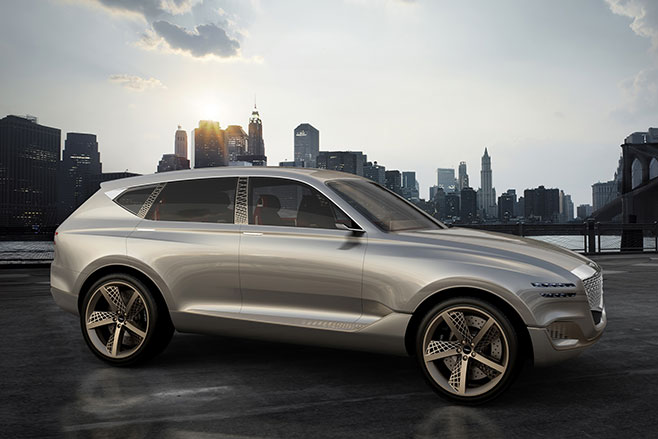
Genesis may still lack the badge recognition of the established German luxury brands, but the GV80 makes a compelling argument that it no longer needs to compete on price alone. Handsome, beautifully finished and loaded with equipment, it combines genuine luxury with the practicality expected of a large family SUV.
The 2026 range starts at $120,000 before on-road costs for the seven-seat 2.5T Signature AWD, with the 3.5T Signature priced from $132,000. The flagship GV80 Black costs $136,000 in seven-seat form, while six-seat configurations and the separate five-seat GV80 Coupe provide further choice.
The Black is the visual standout, adding black 22-inch wheels, brake calipers, exterior trim and G-Matrix grille. Inside, there is quilted Nappa leather with suede inserts, Black Ash wood and darkened trim, complementing an already sumptuous cabin.
Technology is equally impressive. A sweeping 27-inch OLED display incorporates instrumentation, multimedia and navigation, joined by a 12-inch head-up display, wireless smartphone connectivity and an 18-speaker Bang & Olufsen audio system. Heated and ventilated seating, massage functions and three-zone accommodation reinforce the sense that Genesis hasn’t skimped on equipment.
Seven-seat practicality is good rather than outstanding. Five adults are accommodated comfortably, but the third row is tight for taller occupants. Luggage capacity is 328 litres with seven seats in use, expanding to 727 litres with the third row folded and a substantial 2147 litres with the rear rows down.
The flagship 3.5-litre twin-turbo V6 produces a healthy 279kW and 530Nm, driving all four wheels through an eight-speed automatic and electronic variable-torque AWD system. It’s smooth, responsive and impressively quiet, with performance strong enough to push the sizeable GV80 from 0-100km/h in less than six seconds.
Ride comfort is another strength. Predictive electronically controlled suspension reads the road ahead to prepare the dampers, while new fluid-filled front suspension bushings further isolate occupants from vibration. The GV80 handles its considerable mass confidently, even if it lacks the ultimate steering sharpness of some European rivals.
Its biggest weakness is consumption, with the V6 officially using 11.9L/100km. But the ownership package fights back strongly: five-year/unlimited-kilometre warranty coverage and five years of complimentary scheduled servicing.
Lexus LX
1
Price: From $164,200 plus on-road costs (LX 500d Luxury)
Drivetrain: 3.3-litre twin-turbo diesel V6, 3.5-litre twin-turbo petrol V6 or petrol-electric hybrid, 10-speed automatic, full-time 4WD
Outputs: 227kW/700Nm (500d), 305kW/650Nm (600), 341kW/790Nm (700h)
Claimed combined fuel consumption: From 8.9L/100km (500d)
Warranty: Five-year/unlimited km
Five-year service cost: $7950
| Driving | |
| Interior | |
| Practicality | |
| Overall value | |
Strengths
- Outstanding luxury combined with serious off-road ability
- Powerful diesel, petrol and hybrid drivetrains
- Overtrail is superbly equipped for Australian conditions
Weaknesses
- Expensive to buy and service
- Overtrail restricted to five seats
- Heavy fuel consumption, particularly petrol models
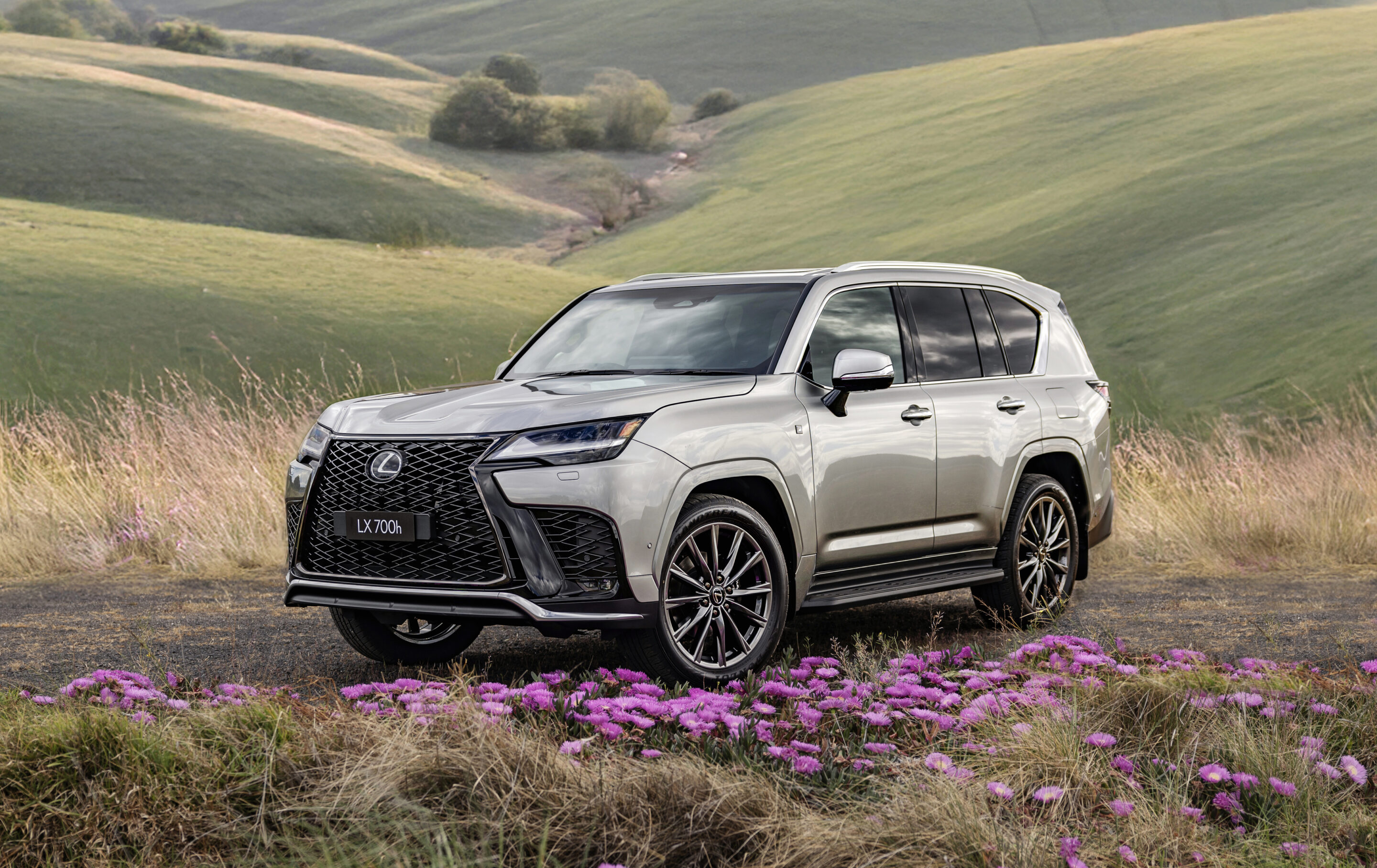
The Lexus LX has long offered a more luxurious interpretation of Toyota’s formidable LandCruiser, but the latest range pushes that formula further than ever. With the arrival of the off-road-focused Overtrail and powerful LX 700h hybrid, there is now an LX for almost every kind of premium 4WD buyer.
Pricing starts at $164,200 before on-road costs for the seven-seat LX 500d Luxury, with the equivalent LX 600 petrol costing $167,700. Sports Luxury, F Sport and Overtrail variants sit above these, while the new LX 700h hybrid starts at $196,000 and tops out at $202,000 for the F Sport.
For serious adventuring, though, it’s the five-seat Overtrail that stands out. Available as the $182,300 LX 500d or $185,800 LX 600, it combines 18-inch wheels and Toyo Open Country all-terrain tyres with front and rear locking differentials, Multi-Terrain Select, Crawl Control and Active Height Control suspension. There’s also a useful 110-litre fuel capacity and 3500kg braked towing ability.
Despite those rugged credentials, the LX remains convincingly luxurious. A 12.3-inch multimedia display, wireless Apple CarPlay and Android Auto, head-up display and superb 25-speaker Mark Levinson audio are complemented in Overtrail by leather upholstery and heated, ventilated and massaging front seats.
The LX 500d’s 3.3-litre twin-turbo diesel V6 produces 227kW and 700Nm and remains our pick for touring and towing. It’s smooth and muscular, while the 10-speed automatic makes excellent use of its considerable torque. The LX 600’s 305kW/650Nm petrol V6 provides stronger outright performance, while the new 341kW/790Nm LX 700h adds electrification for the first time.
On-road refinement is impressive, with Active Height Control delivering a composed, comfortable ride while allowing additional clearance off-road. The smaller-wheel Overtrail also rides rough surfaces convincingly and provides substantially greater tyre protection than the low-profile rubber fitted elsewhere in the range.
It’s expensive and undeniably thirsty, but few SUVs combine this degree of luxury, towing capacity and genuine bush-going ability. For buyers wanting LandCruiser toughness without sacrificing first-class surroundings, the LX remains a serious contender.
Mercedes-Benz GLS
1
Price: From $191,200 plus on-road costs (GLS 450d 4Matic)
Drivetrain: 3.0-litre turbo-diesel inline-six with 48V mild-hybrid assistance, nine-speed automatic, all-wheel drive
Outputs: 270kW/750Nm
Claimed combined fuel consumption: 7.8L/100km
Warranty: Five-year/unlimited km
Five-year service cost: Pre-paid service plan available
| Driving | |
| Interior | |
| Practicality | |
| Overall value | |
Strengths
- Exceptionally spacious and luxurious cabin
- Strong, efficient six-cylinder diesel
- Superb ride and long-distance refinement
Weaknesses
- Expensive entry price
- Huge dimensions can make city driving challenging
- Some desirable options add significantly to the price
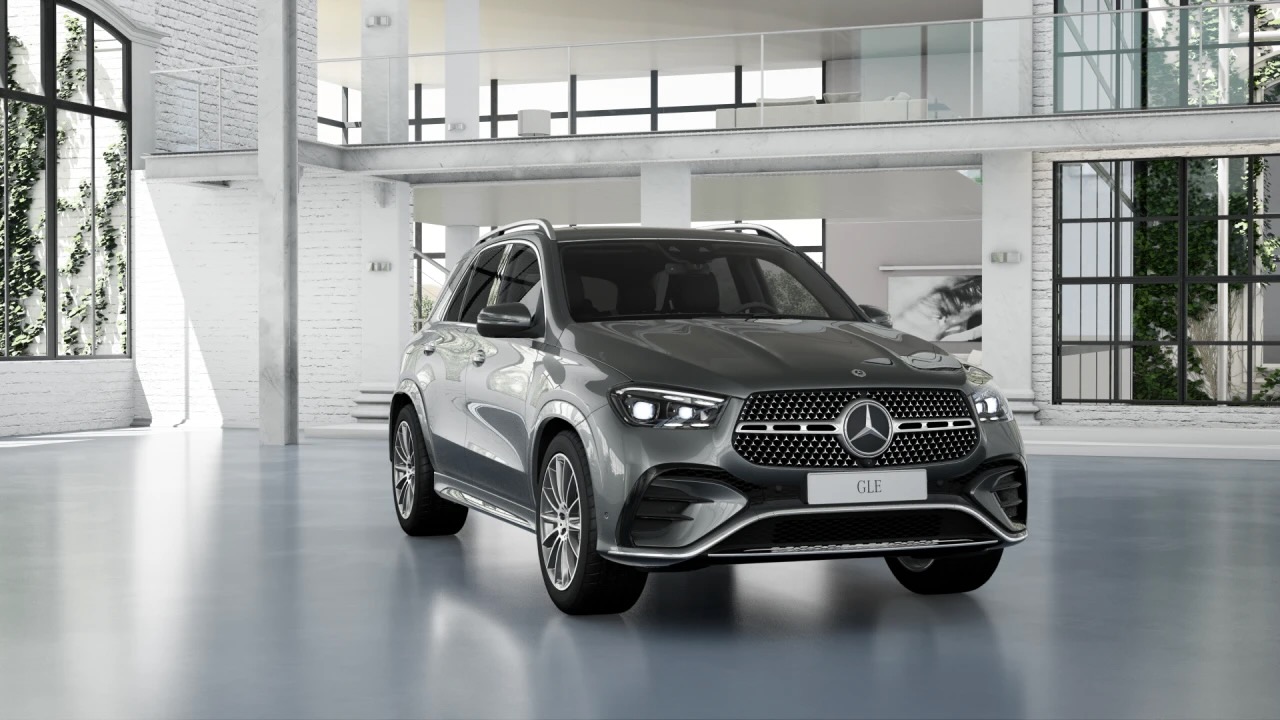
The Mercedes-Benz GLS is essentially the S-Class of the SUV world: big, luxurious and engineered to make long-distance travel remarkably effortless. At more than 5.2 metres long, it’s also one of the largest luxury SUVs available, but that size translates into genuine seven-seat accommodation and impressive luggage capacity.
For 2026, the core Australian range is headed by the GLS 450d 4Matic, priced from $191,200 before on-road costs, while buyers seeking substantially more performance can step up to the AMG GLS 63 4Matic+. At the very top sits the ultra-luxurious Mercedes-Maybach GLS 600, although its four- or five-seat configuration gives it a rather different brief.
For families, the 450d makes the most sense. Its 3.0-litre turbo-diesel inline-six produces 270kW and a muscular 750Nm, channelled through a nine-speed automatic and 4Matic all-wheel drive. Performance is effortless rather than dramatic, with 0-100km/h dispatched in 6.1 seconds despite the GLS’s considerable mass. Better still, claimed consumption is only 7.8L/100km, giving it impressive touring ability from its 90-litre tank.
AIRMATIC air suspension is central to the GLS experience, providing the plush ride expected of a flagship Mercedes while keeping its substantial body under control. Refinement is outstanding, with excellent suppression of road, wind and engine noise making this an exceptionally relaxed highway cruiser.
The cabin delivers a similarly convincing luxury experience. High-quality materials, large digital displays and extensive comfort equipment create an appropriately upmarket environment, but it’s the sheer space that really separates the GLS from smaller luxury SUVs.
Seven seats are standard on the GLS 450d and, unlike many three-row rivals, the third row is genuinely useful. There’s 355 litres of luggage capacity with every seat occupied, expanding to 1350 litres with the third row folded and a cavernous 2400 litres with both rear rows down. It can also tow up to 3500kg braked.
At close to $200,000 before on-roads, value is relative, but the GLS delivers an exceptional combination of comfort, performance and practicality. Few premium SUVs make transporting seven people over big distances feel quite so effortless.
Porsche Cayenne
1
Price: From $144,900 plus on-road costs
Drivetrain: Turbo-petrol V6 or V8 and plug-in hybrid options, eight-speed automatic, all-wheel drive
Outputs: From 260kW/500Nm; up to 544kW/950Nm (Turbo E-Hybrid)
Claimed combined fuel consumption: From 1.9L/100km (E-Hybrid)
Warranty: Three-year/unlimited km
Five-year service cost: No capped-price servicing program
| Driving | |
| Interior | |
| Practicality | |
| Overall value | |
Strengths
- Class-leading dynamics for a large SUV
- Broad choice of petrol and plug-in hybrid powertrains
- Excellent balance of performance and everyday comfort
Weaknesses
- Expensive options can dramatically inflate the price
- Three-year warranty trails most rivals
- Strictly a five-seater
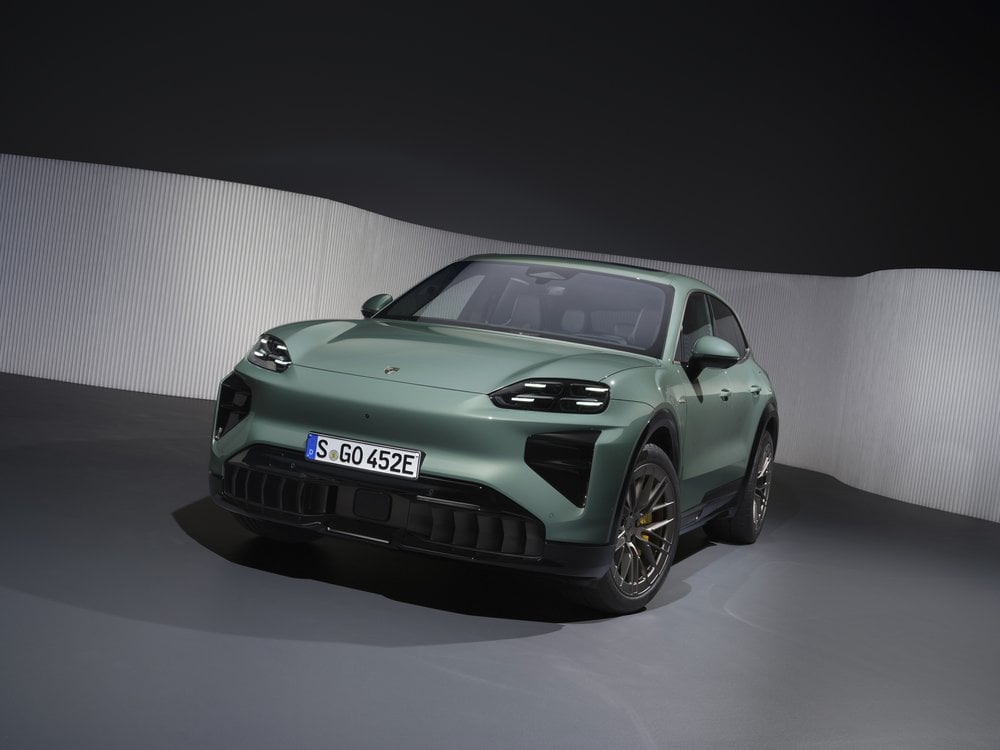
Few vehicles have done more to prove that a large SUV can genuinely deliver sports-car DNA than the Porsche Cayenne. More than two decades after the original caused controversy among Porsche traditionalists, today’s third-generation model remains one of the most accomplished luxury SUVs available.
The range is extensive, opening with the $144,900 Cayenne and stretching through E-Hybrid, S and GTS variants to the formidable Turbo E-Hybrid. Coupe versions provide a sportier alternative, although they command a premium and sacrifice some practicality.
Even the entry model’s 3.0-litre turbo V6 produces a healthy 260kW and 500Nm, reaching 100km/h in around six seconds. But the Cayenne becomes more convincing further up the range, where V8 power and sophisticated plug-in hybrid systems better exploit its excellent chassis.
The E-Hybrid is arguably the sweet spot. Its 3.0-litre turbo V6, electric motor and 25.9kWh battery combine for 346kW and 650Nm, with up to 86km of claimed electric range and 0-100km/h in 4.9 seconds when equipped with Sport Chrono. It can tackle much of the daily commute electrically while retaining effortless performance for longer journeys.
Driving remains the Cayenne’s defining strength. Steering is accurate and beautifully weighted, body control is excellent and the chassis disguises the SUV’s considerable size and mass. Optional adaptive air suspension broadens its talents further, delivering impressive ride comfort without diluting its sporting character.
Inside, Porsche’s Driver Experience brings a curved digital instrument display and 12.3-inch central touchscreen, while an optional 10.9-inch passenger screen adds another layer of technology. Cabin quality is suitably premium and there’s generous accommodation for five, although unlike some large SUV rivals there is no third row.
The catch is cost. Porsche’s vast options catalogue can add tens of thousands of dollars, while its three-year warranty is disappointing in this company.
Yet judged on sheer breadth of ability, the Cayenne remains exceptional. Few large SUVs combine family practicality, long-distance comfort and genuine driver engagement so convincingly.
Range Rover
1
Price: From $271,700 plus on-road costs (D350 HSE SWB)
Drivetrain: 3.0-litre six-cylinder diesel mild hybrid, petrol-electric PHEV or 4.4-litre twin-turbo V8; eight-speed automatic, full-time AWD
Outputs: From 258kW (D350); up to 452kW/750Nm (P615 SV)
Claimed combined fuel consumption: From 1.6L/100km (P460e PHEV)
Warranty: Five-year/unlimited km
Five-year service cost: Pre-paid service plans available
| Driving | |
| Interior | |
| Practicality | |
| Overall value | |
Strengths
- Outstanding ride comfort and refinement
- Beautifully executed, spacious interior
- Exceptional on- and off-road versatility
Weaknesses
- Extremely expensive
- Options can push prices dramatically higher
- Huge dimensions make city driving challenging
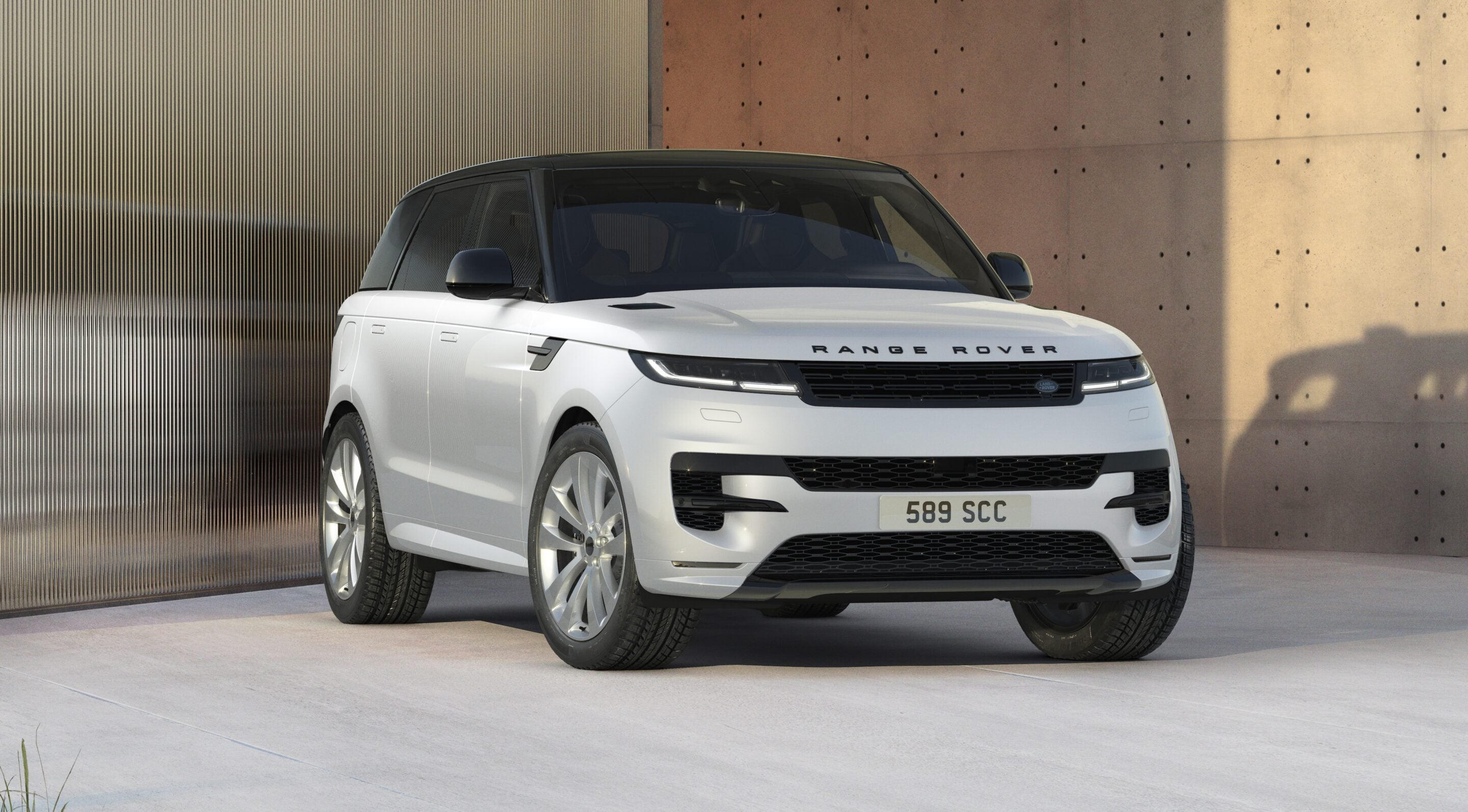
Few vehicles have defined the luxury SUV quite like the Range Rover. More than 50 years after the original combined serious off-road ability with an increasingly upmarket cabin, the latest generation remains the benchmark for buyers wanting limousine comfort without sacrificing genuine all-terrain capability.
The price reflects that position. For 2026, the Australian range starts at $271,700 before on-road costs for the D350 HSE short-wheelbase, while Autobiography versions climb beyond $300,000 and the flagship P615 SV Ultra reaches $472,400. Short- and long-wheelbase bodies are offered, with selected LWB versions providing seven seats.
The entry D350 is arguably the sensible choice, combining a 3.0-litre six-cylinder turbo-diesel with mild-hybrid assistance to produce 258kW. Buyers can also choose the P460e plug-in hybrid, which combines a 3.0-litre six-cylinder petrol engine with a 160kW electric motor and provides up to 126km of electric driving range. At the opposite extreme, the P615’s 4.4-litre twin-turbo V8 develops 452kW and 750Nm, dispatching 0-100km/h in just 4.5 seconds.
But outright performance isn’t what makes the Range Rover special. Its electronic air suspension and Adaptive Dynamics deliver exceptional isolation from poor surfaces, while all-wheel steering gives this enormous SUV an impressively tight 11-metre turning circle. The result is remarkable composure and manoeuvrability for something of this size.
Off-road, it remains the real deal. Full-time all-wheel drive, a twin-speed transfer case, Terrain Response 2, All Terrain Progress Control and hill-descent control provide capability far beyond what most owners are ever likely to require.
Inside, the Range Rover feels every bit the flagship. Beautiful materials and superb seats combine with a minimalist digital interface, four-zone climate control and available Executive Class rear seating. Long-wheelbase seven-seat versions can accommodate adults across all three rows, rather than treating the rearmost seats as occasional extras.
It’s hugely expensive, but few rivals combine luxury, comfort, space, performance and genuine off-road ability so convincingly. The Range Rover remains one of the world’s most complete luxury SUVs.
Follow WhichCar/Wheels on Google
Click the button below to make WhichCar by Wheels a preferred source for your news.

We recommend
-
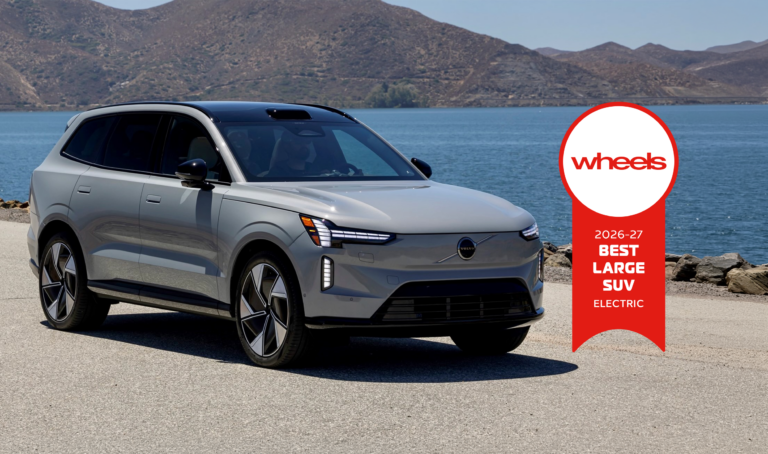 Best Large SUVs
Best Large SUVs 2026 – Electric
From family-friendly seven-seaters to high-performance luxury flagships, these electric large SUVs showcase the best battery-powered choices available in 2026.
-
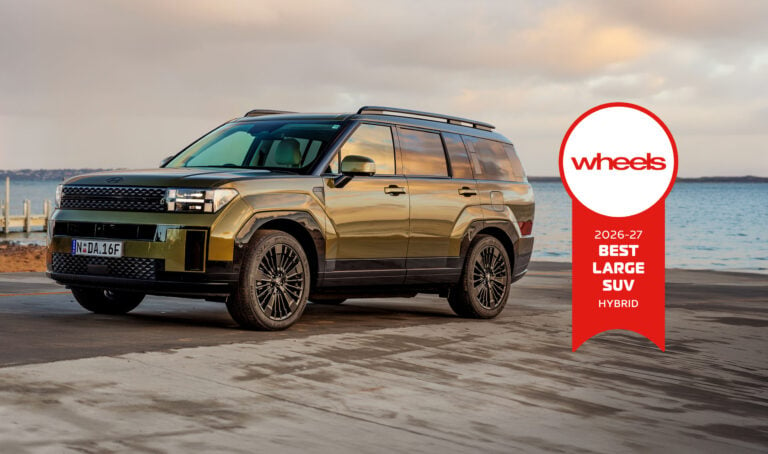 Best Large SUVs
Best Large SUVs 2026 – Hybrid
Efficiency, electrified performance and family practicality come together as we assess the standout hybrid large SUVs of 2026.
-
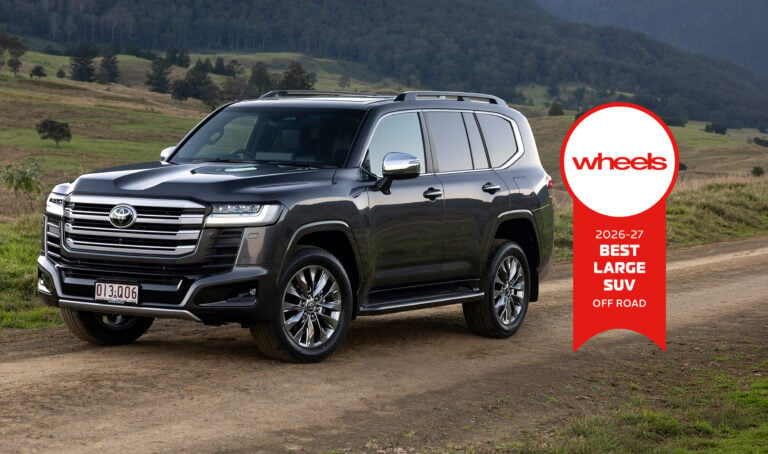 Best Large SUVs
Best Large SUVS 2026 – Off-road
Serious off-road hardware meets family practicality, towing muscle and modern luxury in our toughest large SUV contenders for 2026.
