
News
Gallery 1
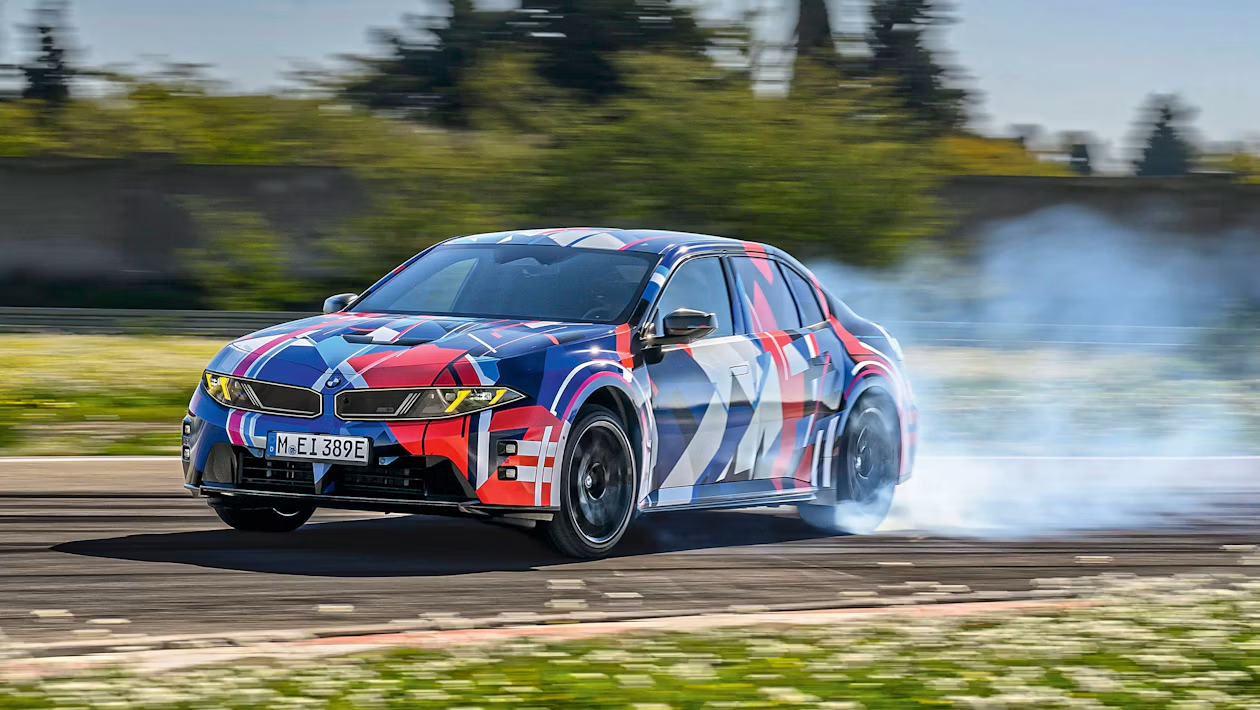
The first all-electric BMW M3 is on the verge of being unleashed, and early impressions suggest the brand’s efforts make sure its sports sedan delivers all the thrills expected of the famous M badge have had spectacular results despite the lack of pistons, cylinders and real gearshifts.
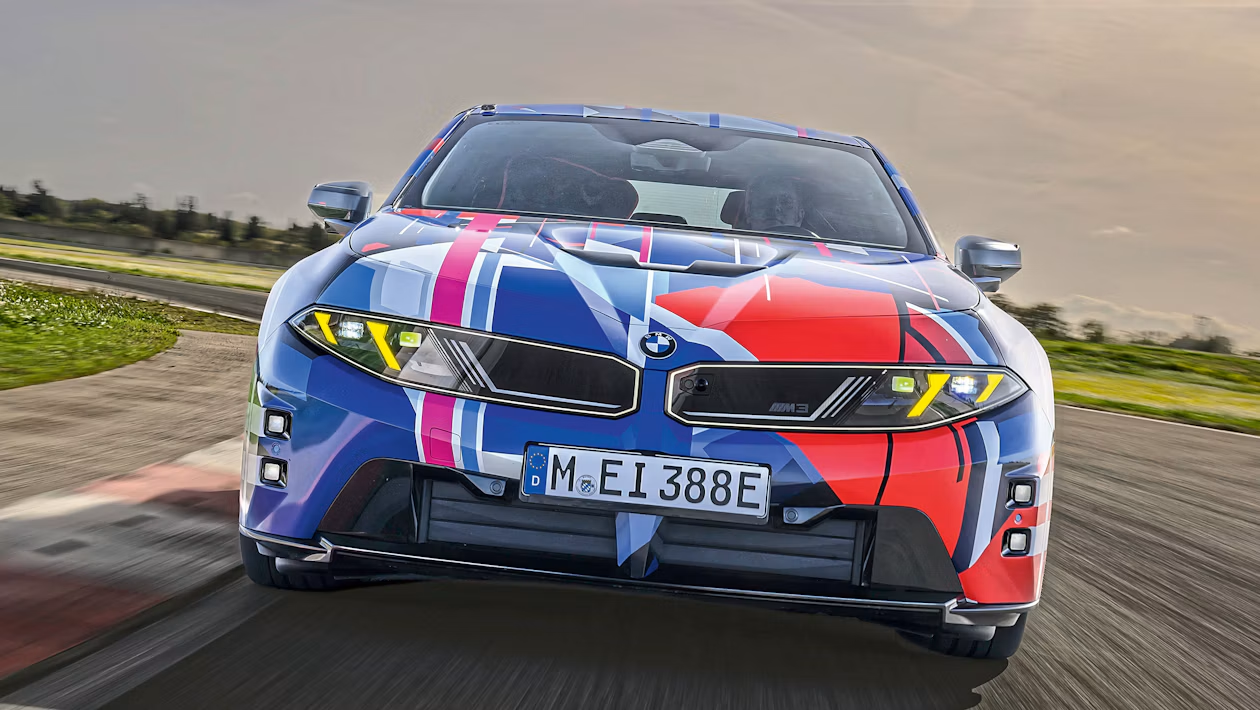
A camouflaged prototype has been put through its paces on the track ahead of the car’s official unveiling in early 2027, and it combines the expected immense power with some clever technology designed to make electric performance about more than just tyre-frying 0-100km/h times.
6
BMW is developing two versions of its next-generation M3, with the electric model expected to arrive before its petrol-powered sibling, which will retain a six-cylinder engine. And the headline numbers for the EV are impressive enough to give even the most die-hard internal combustion fans pause for thought.
Four electric motors – one driving each wheel – combine to produce almost 630kW and an immense 1200Nm of torque. The sophisticated drivetrain also enables regenerative braking at up to 540kW, while a 100kWh battery is expected to deliver a WLTP driving range exceeding 640km.
BMW is keeping several important specifications to itself for the minute, including acceleration figures and weight, although the latter is expected to exceed 2100kg. Engineers have focused heavily on body rigidity, battery cooling and braking performance, with a choice between conventional steel anchors and carbon-ceramic discs.
It doesn’t take long behind the wheel to learn the electric M3 is about far more than straight-line speed. During an early track demonstration, the prototype revealed an unusual feature intended to recreate some of the involvement of a conventional performance car. BMW calls the system ‘stages’, with steering-wheel paddles triggering simulated interruptions in power delivery that mimic gear changes.
It’s a similar concept to the virtual gearbox found in Hyundai’s high-performance electric models, with each artificial shift accompanied by a noticeable jolt. Adding to the theatre is the artificial engine sound, which mimics a synthesiser from the 1980s. The combination provides drivers with additional sensory feedback, making it easier to judge speed while adding another layer of entertainment.
Sophisticated electronic controls also manage the four motors independently, helping the sedan maintain excellent composure through corners despite its hefty weight. BMW claims the system will even allow drivers to indulge in controlled drifting.
5
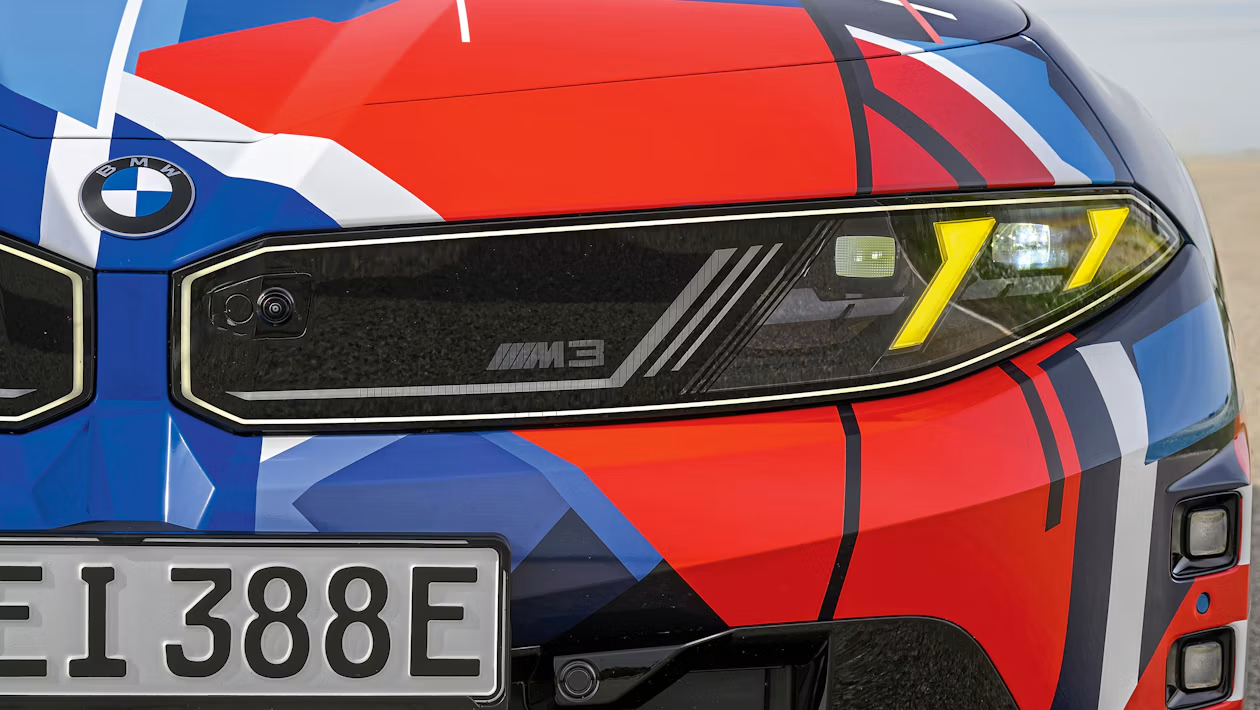
Despite the camouflage, the prototype provides clues about the electric M3’s aggressive styling, with its muscular wheel arches, a prominent rear diffuser and the yellow daytime running lights that have become a signature of modern M models.
Inside, much of the dashboard remains concealed, although BMW’s Panoramic iDrive display and a high centre console are visible. There’s also a distinctive two-spoke steering wheel featuring prominent red M1 and M2 buttons for accessing configurable performance settings.
The full production car is expected to be revealed in early 2027, when BMW will finally learn whether it has given the electric M3 the goods to live up to the considerable reputation of its petrol-powered predecessors.
Follow WhichCar/Wheels on Google
Click the button below to make WhichCar by Wheels a preferred source for your news.

We recommend
-
 Reviews
BMW iX5 review: Huge battery, huge on-road ability and great driver tech elevate all-electric SUV
Our mates at AutoExpress were mightily impressed with the BMW iX5, which packs all the space of a big SUV with the road manners of a car far smaller.
-
 News
All-electric BMW i3 sets charging efficiency record on 6000km trip – beating the old mark by a staggering seven hours
The BMW i3 went from one of Europe's northernmost points all the way to the southern tip of Spain.
-
 News
BMW iX3 M60 is revealed as high-performance Neue Klasse SUV with 450kW of power
BMW has unveiled a performance M60 version of the iX3 with 450kW of power, a 0-100km/h time of just 3.9 seconds and yet, still 754km of range.
