
Features

Gallery 1
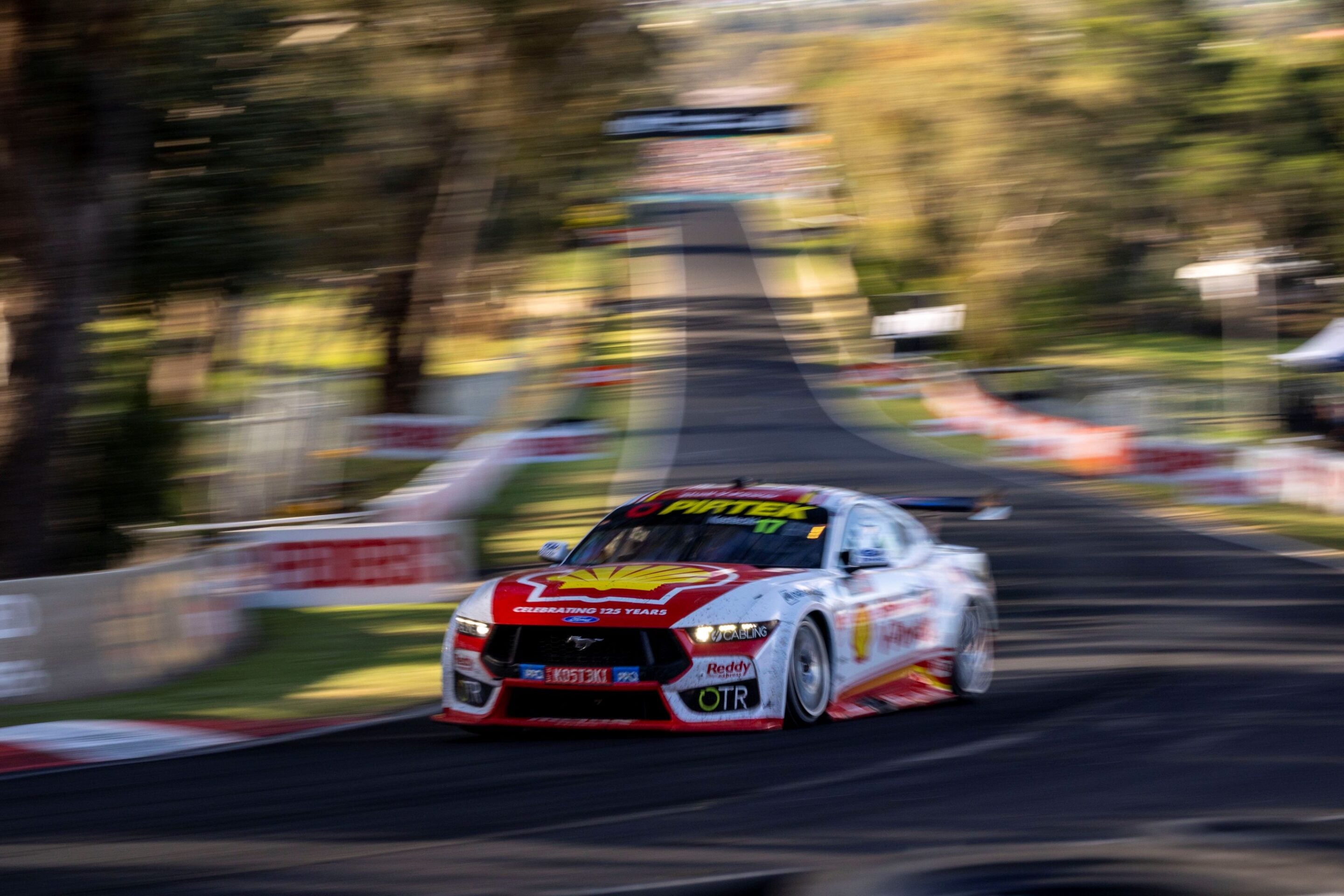
Brodie Kostecki is a beast. So, too, is the Ford Mustang he and Todd Hazelwood hustled to a stunning come-from-behind victory in the 2026 running of the classic Bathurst 1000.
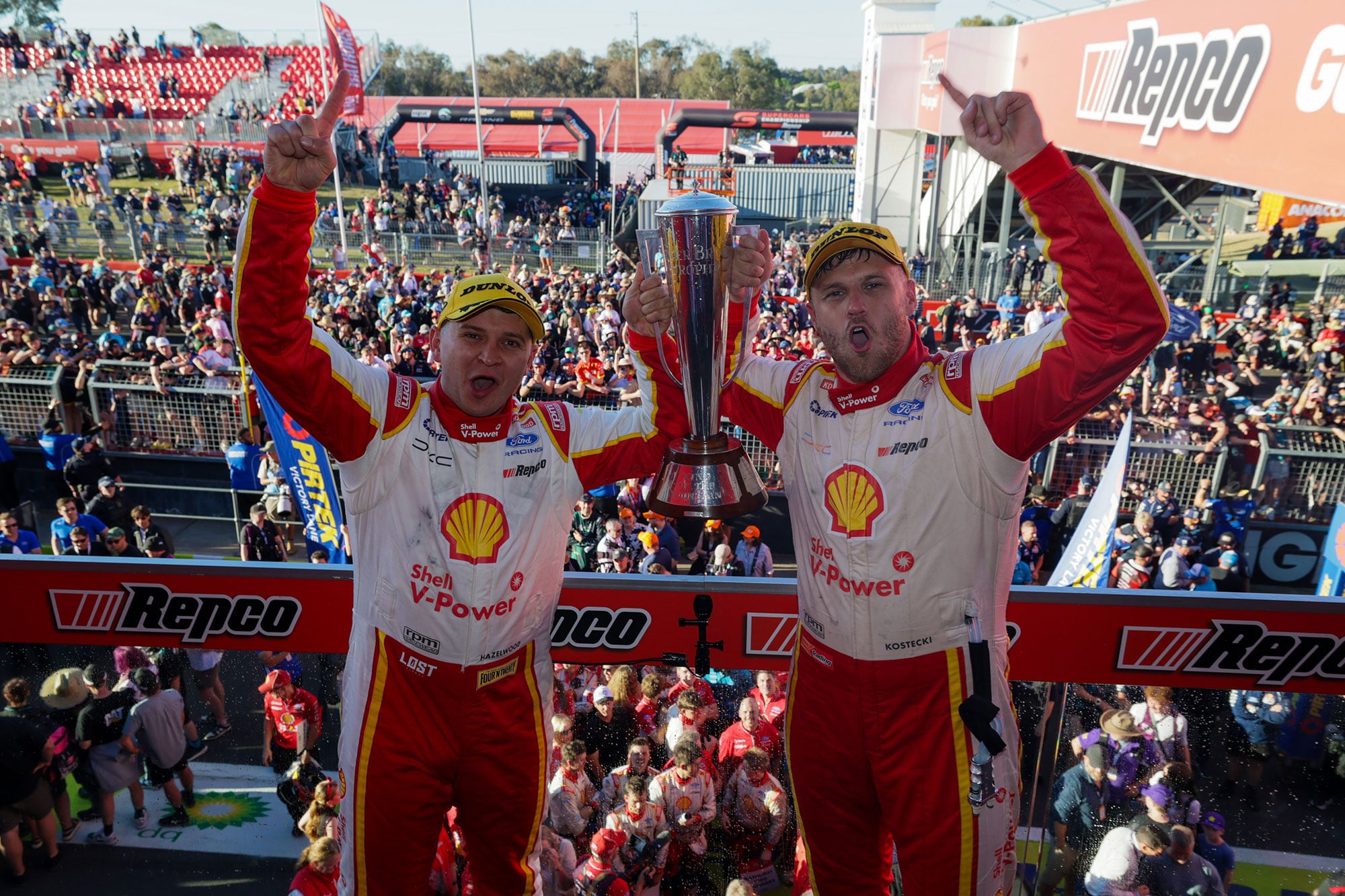
When Kostecki got a sniff of victory just four laps from the finish of the Great Race, he had a full tank and fresh boots for a full send. He unleashed everything the Mustang could muster as he stormed from fourth place to first in one of the most exciting finishes in the history of Mount Panorama.
The crowd erupted and Dick Johnson burst into tears as he realised his team had scored its fifth victory at Bathurst with a car wearing his historic #17.
1
These were tears of joy and relief, the total opposite of the tears of bitter disappointment and despair in 1980 when he crashed his XD Falcon while leading the Great Race.
Johnson rebounded in ’81 with funding from fans and Ford Australia, scoring his first win at the Mountain with a Falcon, which was followed by a single success in the fire-breathing Ford Sierra before follow-up wins with a Falcon and an earlier Mustang.
The euphoria this time was contagious as Dick and his wife Jill joined their drivers on the podium with Dr Ryan Story, the Brisbane brainiac who had saved the team from bankruptcy and then planned and executed its comeback drive through season 2026.
Part of that plan means the Bathurst winner – chassis DJR-09-MR – will never be sold, instead headed for a life in the spotlight as the centrepiece of a new DJR museum at the team’s race base on the Gold Coast.
Before then, there’s also the question of the Supercars championship chase with Kostecki, culminating at the Grand Final on the streets of Adelaide in the final days of November.
1
It’s an action-packed program for the whole Dick Johnson Racing squad but things were much quieter, and very different in almost every way, a few weeks before the Bathurst showdown.
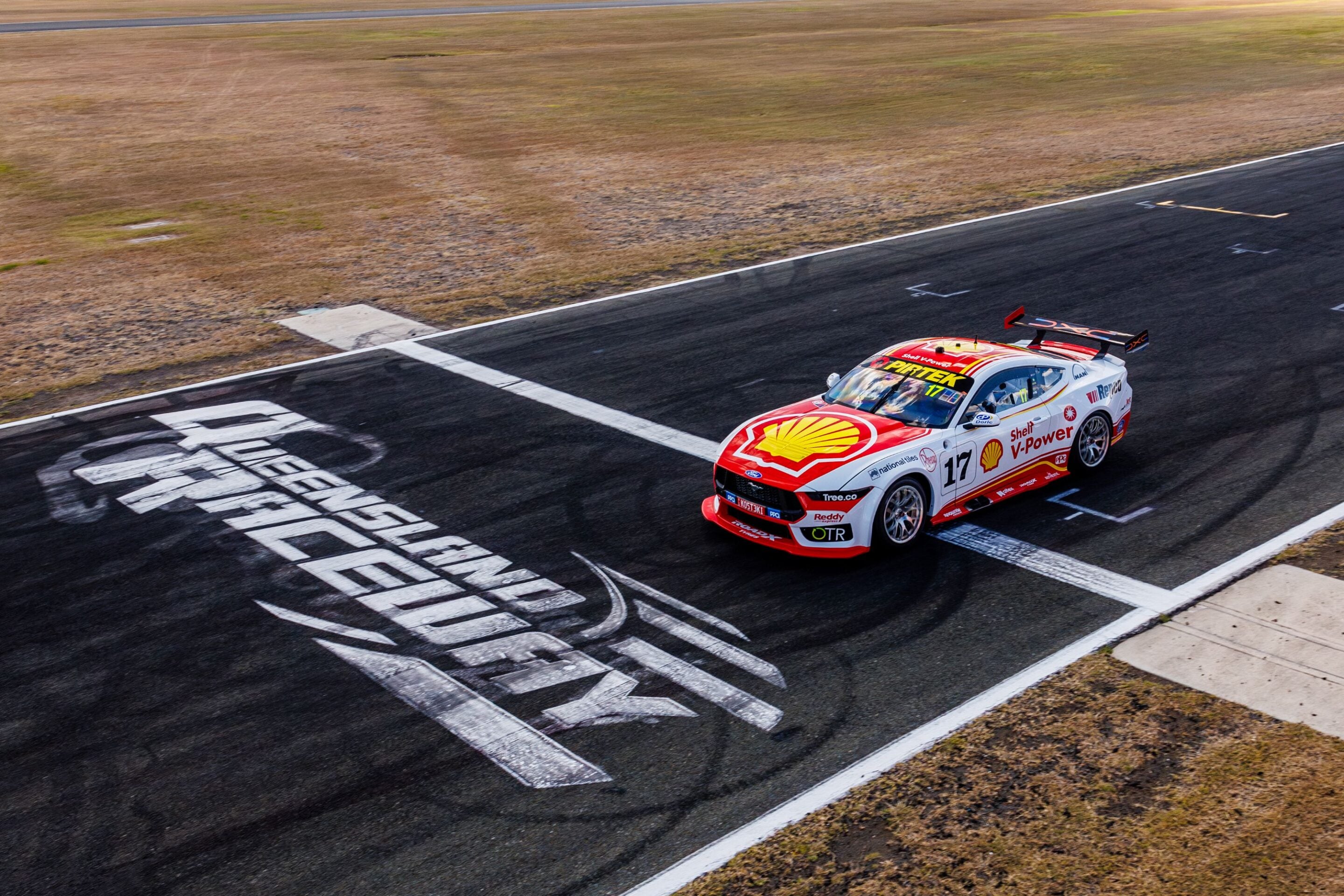
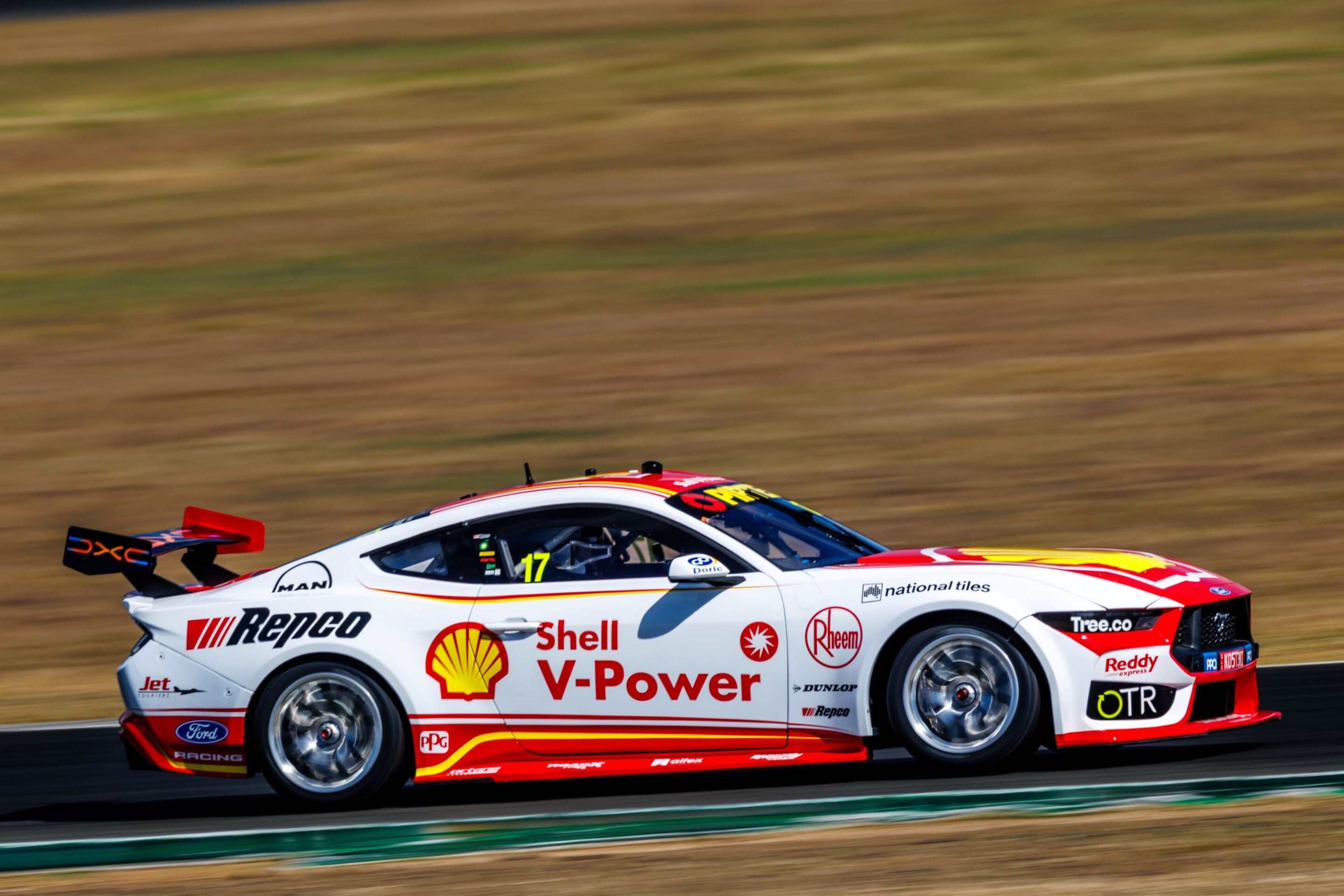
The focus was still on a Shell Mustang wearing the historic #17, but this was a private test day at Queensland Raceway with a skeleton crew and a couple of invited amateur drivers.
One – me – was set to taste the car for Wheels, as part of a fingers-crossed cunning plan for a ‘We drive the Bathurst winner’ feature.
We drove, DJR won, and so here we are…
Ironically, the Mustang track test came nearly 40 years after I first strapped into one of DJ’s touring car racers. Back then, when I was young and considerably slimmer, it was a Ford Sierra Cosworth RS500 at Lakeside Raceway in Queensland.
Some of the details have faded, but I can still remember Johnson’s briefing on the proper way to lap his home track. “Don’t worry about taking a line around the back, just stay in the middle of the track. The road is all off-camber and you will get into big trouble,” was his advice.
The look on his face, as he strapped me into the car, said all I needed to know about “big trouble”.
Firing out of the pits, the Sierra was a pocket rocket with an evil temperament. There was dreadful turbo lag from the 2-litre four-cylinder, and I also experienced the tyres ‘going off’ for the first time as the Dunlop racing rubber wilted and produced a feeling like driving on ice.
2
But, boy-o, was it fast. It was my first time in a whistle-and-pop turbo rocket, long before the days of Audi RS road cars, and the whole experience was sensory overload. I can clearly remember the way the Sierra demanded the next gear and responded every time with a fresh thrust of power on the blast past the pits.
Two years later I did it again, this time at Winton in Victoria, with even more power, speed and scariness. The engine was now making over 500 horsepower in a car that was designed for sales reps in Britain with one-third of the go. But now it’s 2026 and #17 is a Ford Mustang V8.
Just before we get going, there is one thing…
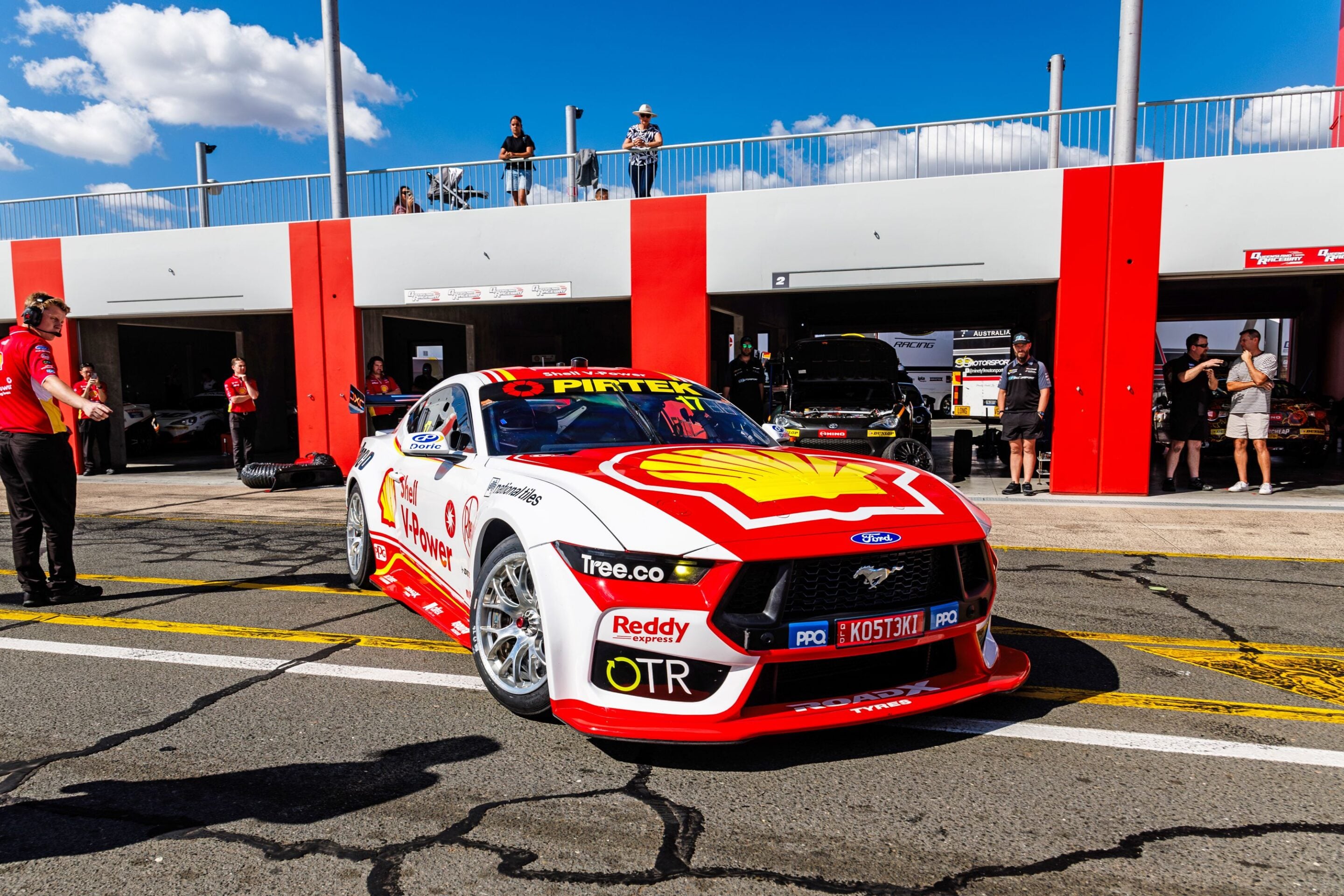
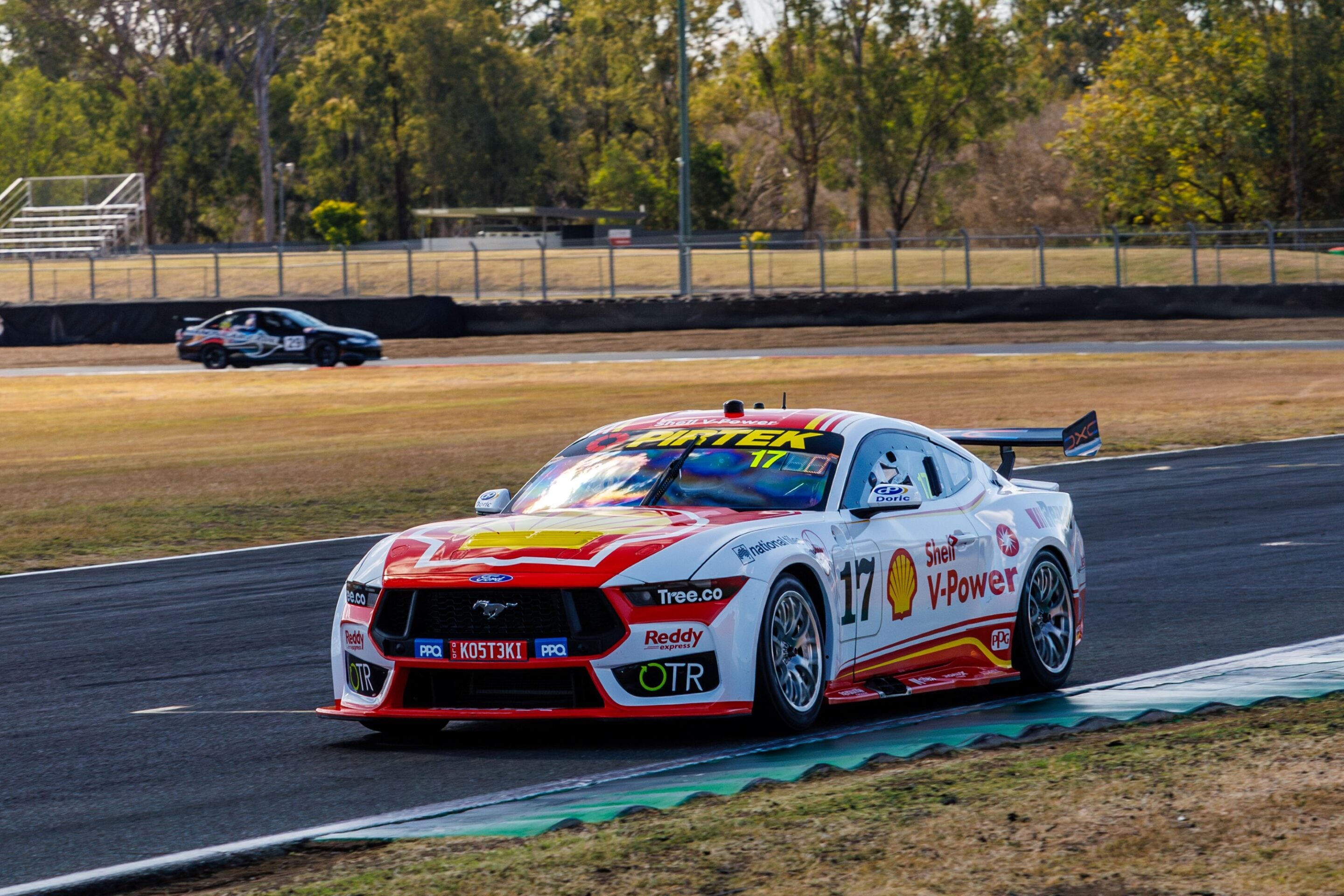
For the record, ‘my’ Mustang was not the actual car that claimed the King of the Mountain crown on October 11. But it was identical in every detail to the Bathurst racer, right down to the wide-body seat used by The Beast when giving his best.
So, what’s it like?
Scary and scary fast. It’s scary because you cannot afford even the slightest mistake with the engineers monitoring their laptops in the pit garage. They will know in digital detail about every single error, almost before it happens. And it’s scary fast because it is so much Mustang, yet so much more.
The biggest and best impression?
2
It has to be the muscular punch out of the final corner at QR, and the three rapid-fire upshifts that follow, with the raced-tuned 5.4-litre Coyote V8 thundering and the Mustang hooking up for maximum drive without worrying about a 100km/h sign or a cop with a speed camera.
There are plenty of other Mustangs in Australia, but not like this Supercars racer. It’s the apex predator in a pride of apex hunters, built for just one job – winning.
There is no boot and no parking radar, lane keeping is entirely down to the driver, and the radio has a single channel with no need for a USB port or a cupholder. Although, air-conditioning would be nice.
It has the signature race-tuned V8 engine, a six-speed manual gearbox and rear-wheel drive, but none of the running gear is the same as you would find in a Ford showroom. Just look at the size of the six-piston brakes.
Bodywork? It’s a lookie-likey Mustang, but sculpted entirely in carbon fibre with more wings and things than any Mustang needs for a 110km/h highway cruise.
That’s because the #17 speed machine needs to make grip for braking, corners and traction at all times and all speeds.
1
To get back to the basics, the current Mustang is a Gen3 car in the Supercars world. It gets that name because the current cars – Ford Mustang, Chevrolet Camaro and Toyota Supra – are all designed, engineered and built to a ‘parity’ formula that is intended to completely equalise their on-track performance. So everyone gets a winner.
Except it’s nearly impossible to ‘paritise’ the bodywork on the three rival coupes, even when you head to a super-expensive wind tunnel in the USA, and the same is true of the three V8 engines. The Mustang has a 5.4-litre with twin-overhead camshafts, the Chevy has a single-camshaft with 5.7 litres, and the Toyota uses a quad-cam 5.2-litre engine.
So there are snakes-and-ladders performances for the various badges, depending on the day and the track, without worrying about the variations between individual teams.
The pecking order in 2026 is dominated by Mustang squads, after the benchmark Triple Eight team defected from Chevrolet, and Toyota is still in the early stages of its involvement. But all that is background noise as the countdown begins to my track laps with DJR.
A new Stilo helmet has arrived, I’ve rediscovered my old fireproof gloves and boots, and DJR has promised a suitable fireproof suit – let’s not get into sizing – for the day. Then I take a quiet trip into the workshop to ensure I can actually fit into the Brodie-mobile.
1
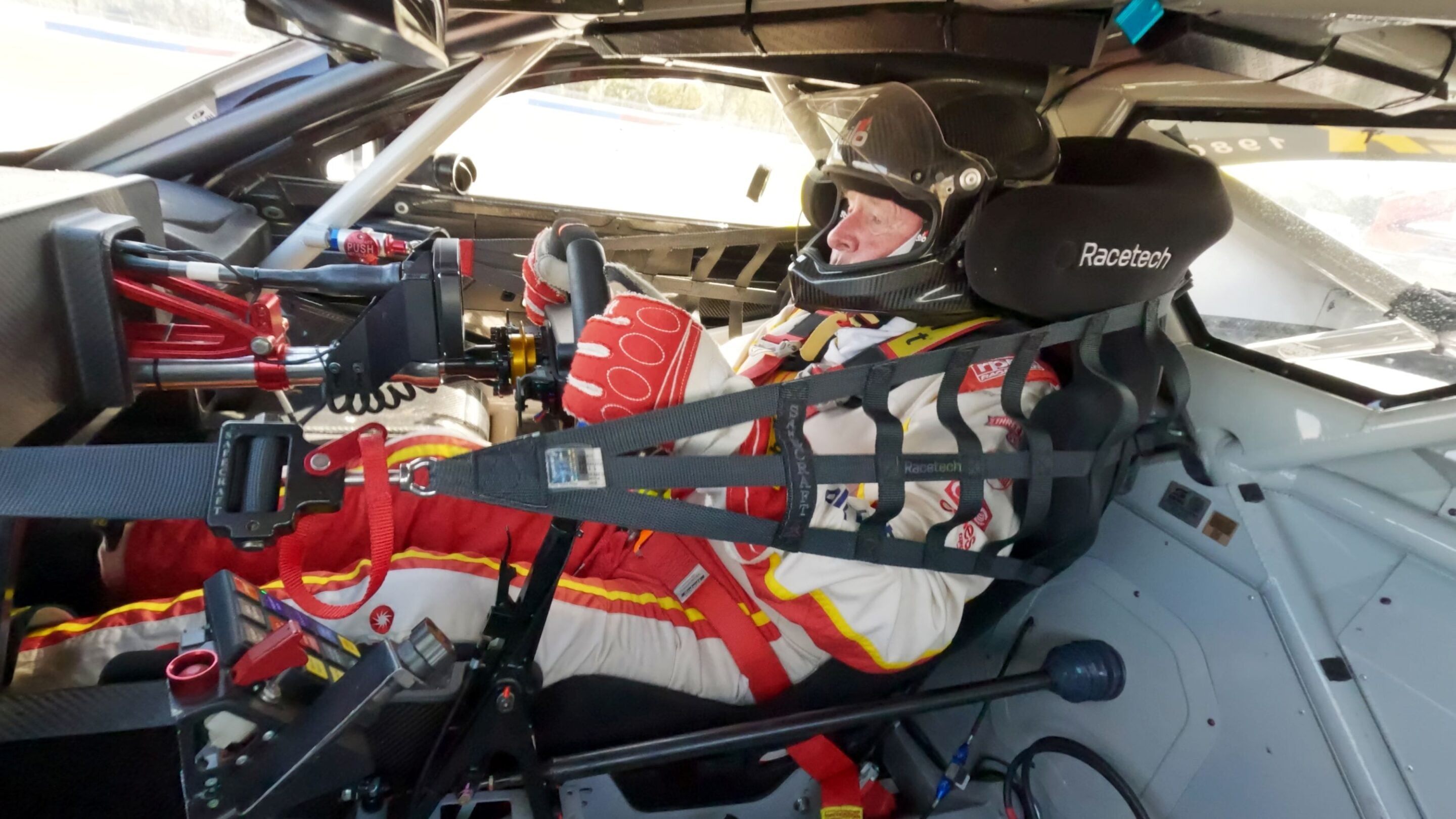
On that front, there is good news and less-good news. I fit, and fit nicely, into the carbon-fibre bucket seat. But getting in and out is genuine torture. Supercars drivers seem to have flexible joints where I have old-timer flab. Getting into the Mustang is actually, and honestly, the hardest thing about driving it.
While I’m in the shop I take a peek around and discover there are five Supercars, in various stages of preparation and restoration. There is apparently quite a market for secondhand race cars, particularly ones from top teams or with matching trophies. A tasty group of four Bathurst-winning Holden Commodores recently sold to a single collector for an estimated $6 million.
The DJR cars reflect the latest Gen3 rules set with their tube-frame chassis and ‘control’ components, which cover everything from the suspension and brakes to the driver’s seat and steering wheel.
Not much is carried over from the Mustang road car, beyond the badge and the reputation, and even the parts that look like the showroom runner are likely made from carbon fibre or some other exotic material.
“The car you’re driving is our fully built spare car, ready to go. And it’s also our pitstop practice car, because it’s the most-current spec,” says team manager Tom Moore. “It’s the same as the car that Brodie is racing at Bathurst.”
And he would know. He was also the winning engineer at Bathurst, after Kostecki’s regular race mate – George Commins – fell off his mountain bike just days out from the biggest race of the year.
Getting to the bottom line, what does a ready-to-race Mustang cost? The best estimate from Supercars insiders is $850,000. And that’s without a truck to transport the car, or the personnel to get it running.
An annual budget for a two-car team is around $6 million for 14 race weekends including Bathurst, but times are tough and few – if any teams – are making money. There have been various ownership changes in recent years, but those purchases have likely come with added commitments to budget top-ups.
With all the preparation done, and the date and time set, things are getting serious. Very serious.
I will have 20 minutes running on a day when an open public track session means sharing QR with a rag-tag bunch of high-speed fun runners. None, theoretically, should be anywhere near as quick as the Brodie-mobile.
“I didn’t know what to expect. Someone told me it wasn’t your first time in this sort of car,” says Moore.
He runs me through the controls I will need, ignoring the others including the buttons across the steering wheel, starting with the master electric switch – which is permanently on to keep the electronics alive but will need to be off if there is a shunt – the start button, radio button, pitlane speed limiter, gearshift and pedals.
1
He also confirms that this is chassis #06, not the #09 Kostecki-mobile that would go on to win Bathurst.
I am the second person allocated laps at QR and it’s highly educational to watch the first roll-out. Things do not run entirely smoothly, but eventually car 17 is up and running and returns without any damage.
“Okay, jump in,” says Moore.
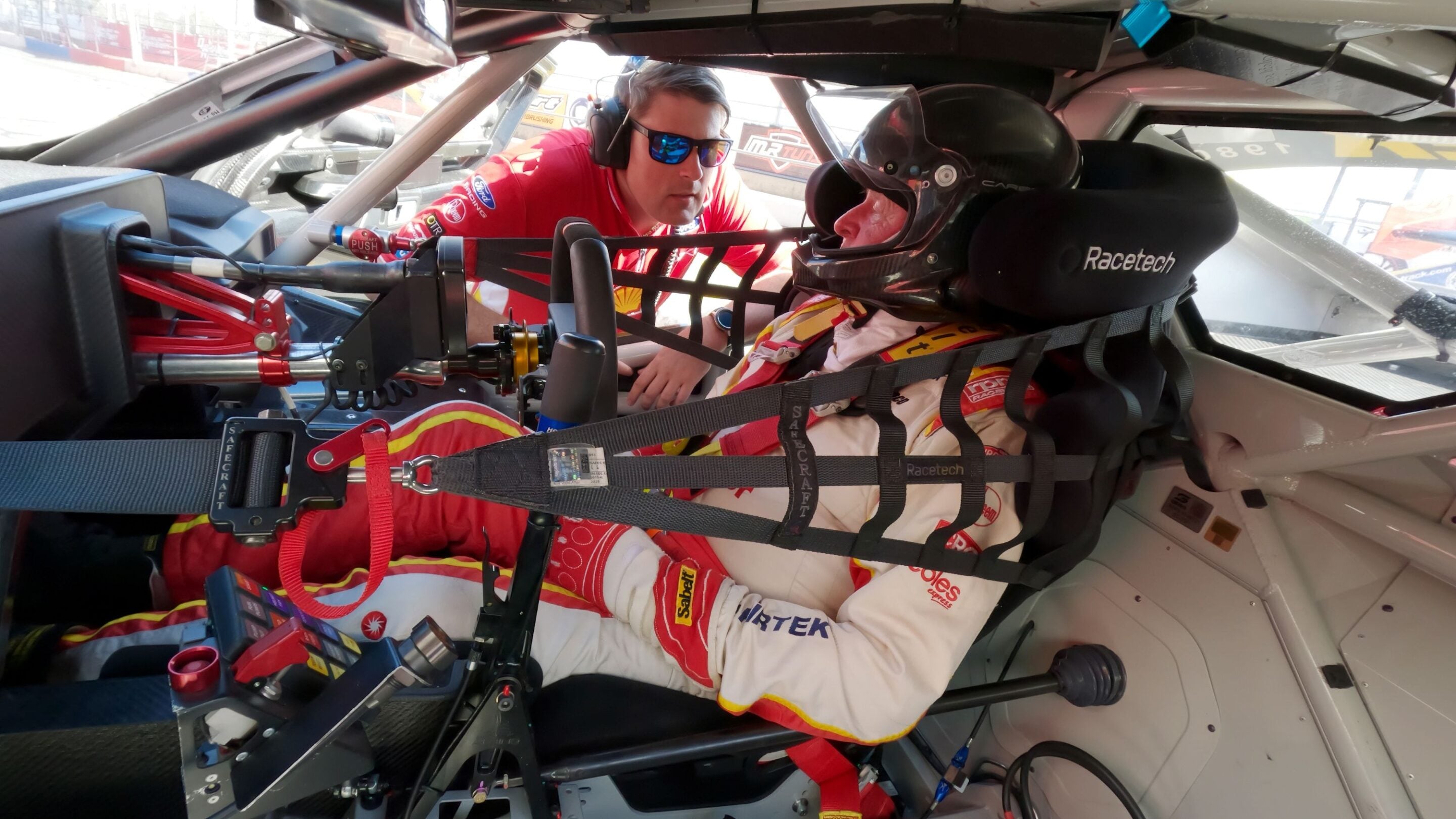
It was more like a wriggle, and a twist, and another bruising encounter with a cockpit designed for driving fast and nothing else.
“We did pitstop practice the other day, and I ended up covered in bruises,” reveals Hazelwood, who is on over-watch for the day at QR. So, thankfully, it’s not just the tubby old-timer in trouble.
Once I’ve – literally – dropped down into the seat, the six-point safety harness is clamped down tight, and my helmet is plugged into the radio. So I sit. And I wait. And wait some more.
A DJR mechanic fires up a leaf blower and there is some welcome fresh air to keep me from boiling.
Then Mr Moore – always show respect for the team chiefs – tells me to fire the engine and things get real.
The steering feels surprisingly light, a tickle on the accelerator brings an instant ‘whoomp’ in response, and then I push down on the long-travel clutch and reach for the shifter.
The action is heavier than any paddle-shift road car, completely mechanical with a pronounced ‘clunk’ as I pick up first gear. It takes a little jiggling, releasing the clutch to the bite-point before tugging on the billet-alloy lever, but I’m ready to go.
“I was pleasantly surprised. When the mechanics are driving the cars around they often stall,” admits Moore.
“Once you were at the pitlane and underway I knew it would be alright. Some skills never leave you.”
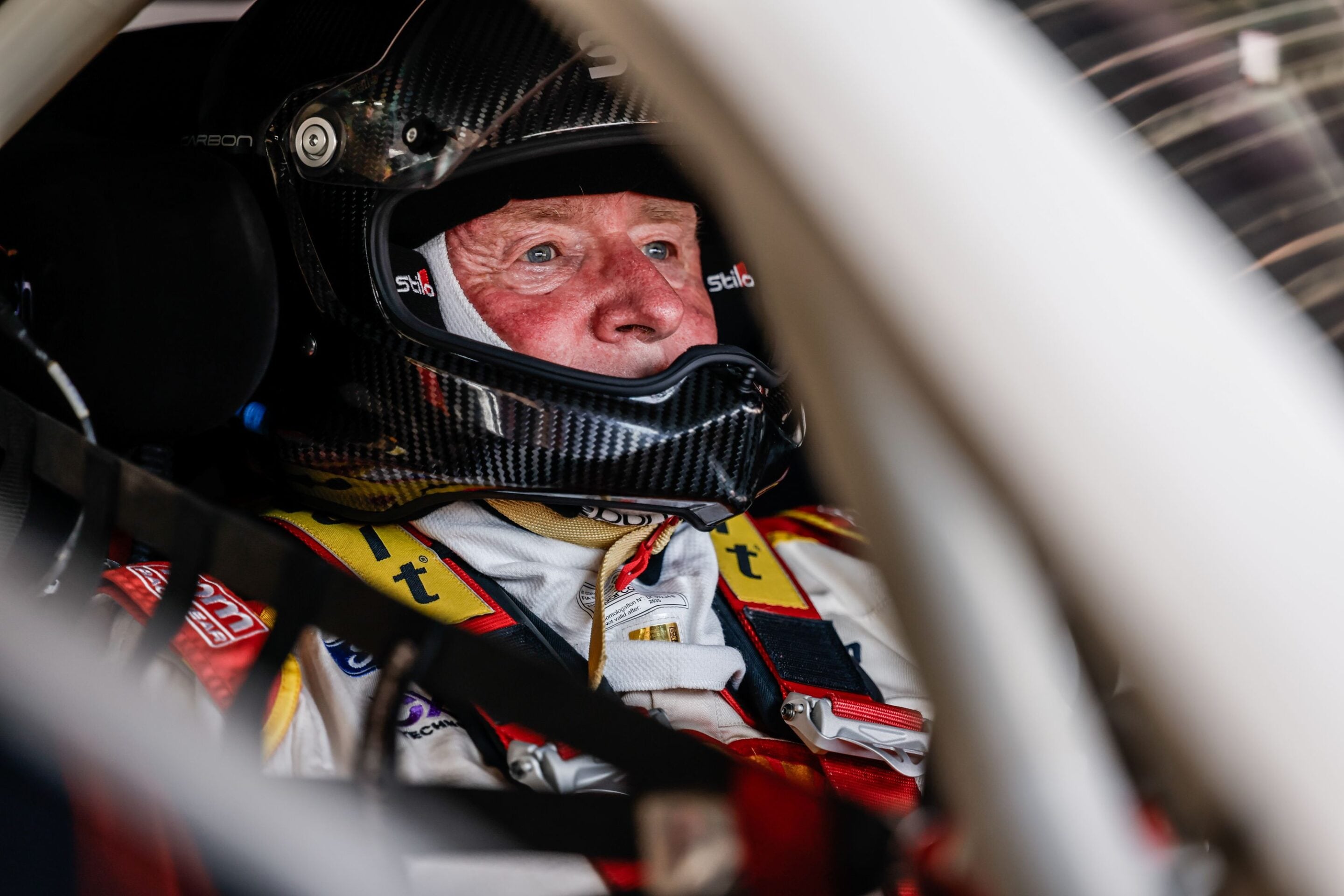
That’s not how I was feeling as I trundled down towards the green light that marked the end of the pitlane and the start of my 20-minute countdown. I was hot and flustered, apprehensive and concerned that old age had overtaken my skill set.
1
Then it was go time and everything extraneous to driving dissolved.
The satisfaction of starting the car, driving out of the garage without stalling, and then unleashing the beast at the end of the pitlane, is hard to explain.
It’s the absolute reverse, inverse and obverse of my recent time in a battery-electric Porsche Taycan GT Turbo. It can rearrange your internal organs on a straight-line sprint, and confuse your grey matter with its ability to compress time into motion, but…
The Brodie-mobile is on another level. It’s a beast with a brilliant V8 soundtrack, instant response to even the lightest touch on the controls, and the feedback is immediate and dazzling. The steering is light but meaty, the shift feel is positive and meaty, the brake response is meaty, and the acceleration is addictive.
The accelerator has far more travel than I expected, probably to make it easier for smooth applications of power to the road, and the brake pedal is firm but not as rock-solid as some other racers I have tasted in the past.
The first handful of laps pass very quickly, including a front-right lock-up while braking from around 250km/h into Turn 3, and I’m worried about my use of the shifter. A Supercars racer has a system that allows ‘flat’ changes, where you keep your foot nailed on the accelerator and just pull back for a higher gear. In reverse, you can also ignore the clutch but you have to be positive and accurate to match the straight-cut gears on downshifts.
My technique is clunky. Positive, yes, but not timed right. So I radio back, hit the pitlane limiter, and dribble in for a chat.
But the mechanics lift the bonnet, do a fiddle, and I’m sent back out. They clearly know what is happening – likely from the data trace.
This time around, and after a few quiet minutes, I’m more in-synch with the car and my brain is not chasing to catch up. It’s even time to do a little of that race-driver stuff, feeling what the car is doing.
Straight away, I can feel that it’s wriggling more under brakes than my previous experience with Gen2 Supercars. Through the high-speed right-hander at Turn 2 it also feels, to me, a little more nervous than I remember. One of the drivers at Bathurst told me later it was the change to the aero package to reduce downforce on the Gen3 cars.
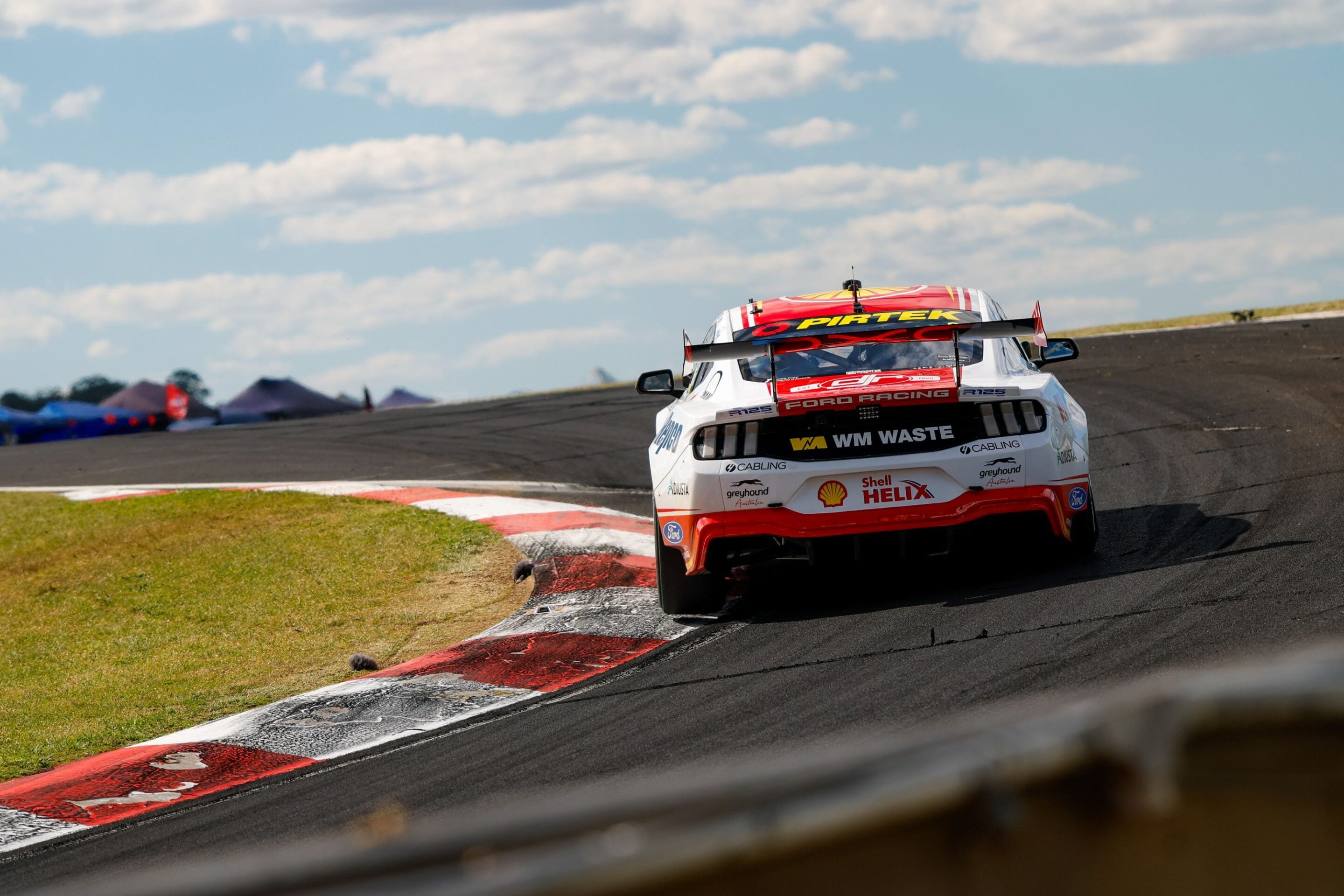
So now I can enjoy things. Turning earlier, getting into the throttle sooner, and waiting longer for braking. The grip is great, with just a touch of oversteer out of the slower QR corners. The car feels like it’s wrapped around me and willing to do my thing. It’s a level way beyond any road-going Mustang, even the punchy Dark Horse.
Then the session ends and I have one last full-throttle blast down the back straight, with a giant smile, before enjoying the cool-down run back to the pits.
It’s been a challenging and rewarding drive, in equal amounts, with the well-earned sweat trickling out from beneath my fireproof balaclava.
2
Talking of challenges, the crew are on standby in case I need to be dragged out of the tiny door slot. But I make it – just – and sit quietly in the corner for a few minutes.
“I was pleasantly surprised. It was cool to see someone stretch the car’s legs, and be able to appreciate what the Mustang could do,” says Moore.
It’s been one of those epic drives that stays with you forever, just like my track time in the Sierra. Right now I can close my eyes and re-run the personal highlights reel, right down to the feel of the shifter, the sound of the cracking V8, and the feel through the seat.
Also on the reel, but hardly a highlight, are the braking mistakes that have me visiting DJR once again with a couple of slabs of beer – the agreed penalty payment for any on-track errors. It’s gone, but never forgotten.
So, would I like to strap in again and drive the ’stang around Mount Panorama at Bathurst? You betcha. But would I like to line up on the grid with Kostecki and the rest of the Supercars hooligans?
Not even for the Peter Brock trophy…
This story first appeared in the December 2026 issue of Wheels magazine, now on sale. Subscribe here and gain access to 12 issues for $109 plus online access to every Wheels issue since 1953.
Follow WhichCar/Wheels on Google
Click the button below to make WhichCar by Wheels a preferred source for your news.

We recommend
-
 Reviews
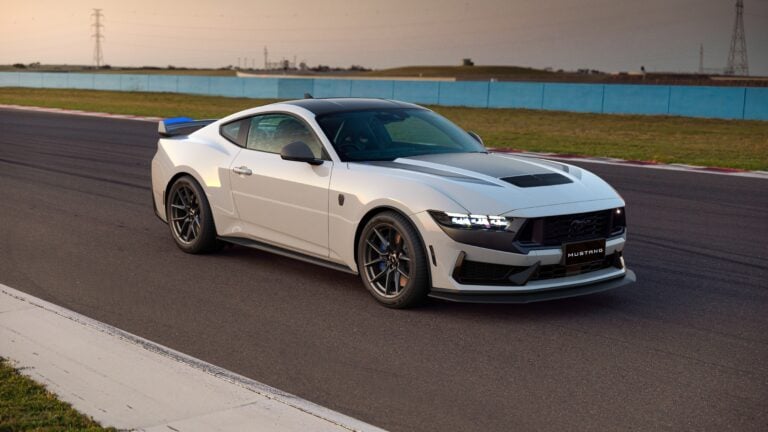
Ford Mustang Dark Horse T8-Spec review: One of the greatest driver's cars to ever wear the blue oval
The Mustang Dark Horse T8-Spec is a million miles away from being a run-of-the-mill performance upgrade for the pony car.
-
 News
Supercars legend Jamie Whincup reveals Triple 8 will give more Ford road cars the high-performance treatment
Triple Eight honcho, Jamie Whincup, is eyeing off more road car collaborations with Ford
