News

Gallery 1
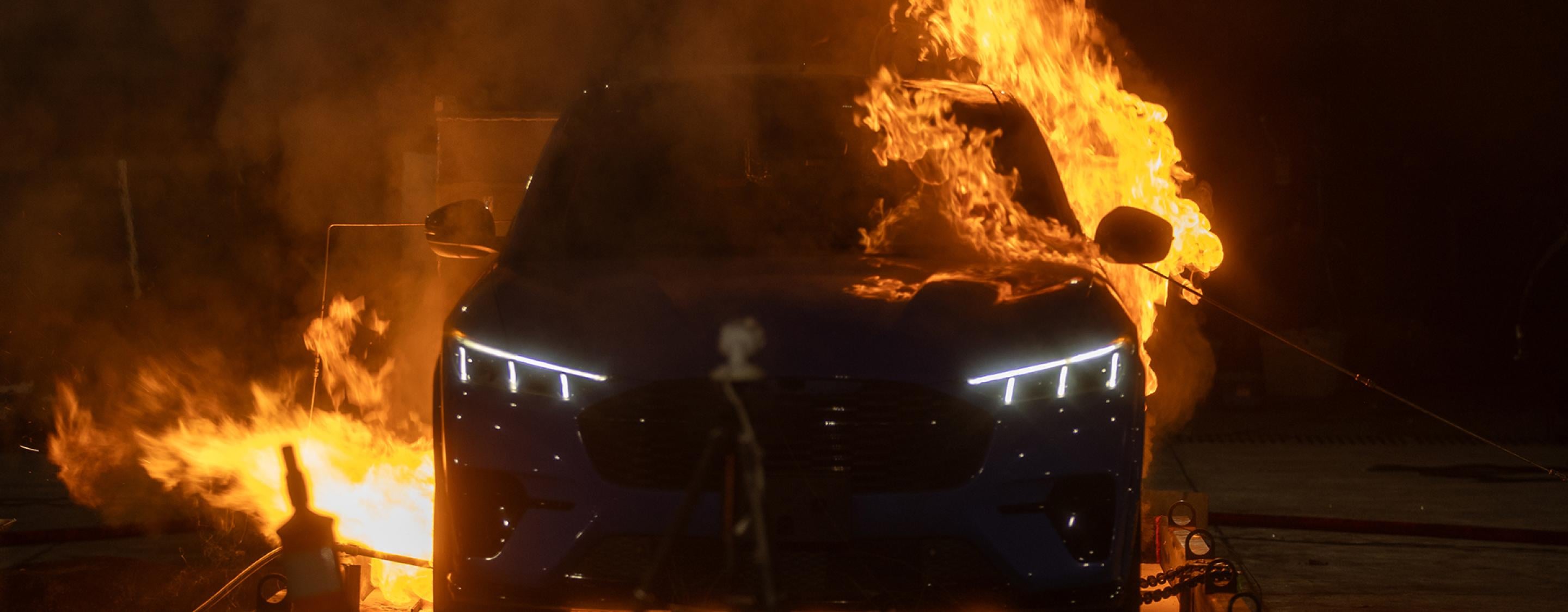
New research from the US has provided fresh insight into how electric vehicle battery fires should be tackled, finding that contrary to widespread perceptions about EV blazes, they are not significantly more intense, large or hard to put out than fires in internal combustion cars.
The Fire Safety Research Institute (FSRI), part of leading American independent safety science organisation UL Research Institutes, has released findings from a research program examining EV fires and the effectiveness of different firefighting techniques. During the study, the FSRI conducted tests using six electric vehicles and three internal-combustion cars, with the EV batteries fully charged before the fires were started.
3
Researchers measured factors including fire growth, heat release, burn duration and the contaminants firefighters could be exposed to, with each vehicle burning out within approximately 90 minutes. The fires were found to be similar in growth rate, peak size and duration, regardless of whether they were from an EV or an ICE car.
Because of that, researchers recommend that firefighters continue using water as their first-choice suppression method with no specialised equipment or additional suppression agents necessary for the initial response. However, researchers found that the vehicles’ construction can make it difficult for water to reach the battery cells undergoing thermal runaway.
The research from FSRI has also raised questions about the use of specialised EV fire blankets. Testing identified a potential explosion hazard when blankets are used on vehicles experiencing an active battery fire, particularly indoors or within confined spaces.
Researchers also detected elevated levels of substances including nickel, manganese, cobalt and copper, which led them to advise firefighters to approach EV fires from upwind, maintain distance where possible and wear full protective equipment and breathing apparatus.
Extinguishing the visible flames doesn’t necessarily mean the danger is over. FSRI recommends treating an EV battery as a continuing re-ignition risk unless it has clearly burned out. A minimum five-metre quarantine distance is recommended once the vehicle reaches a tow yard.
“Lithium-ion battery-powered devices and EVs are already changing how we move, communicate, and enjoy our leisure time,” said Adam Barowy, principal research engineer for the Fire Safety Research Institute.
“This research moves us closer to understanding how batteries change the fire environment and helps equip first responders to adequately address fires involving this new source of fuel. Our findings demonstrate that when it comes to EVs, first responders can effectively manage the hazard with familiar tools and tactics.”
Follow WhichCar/Wheels on Google
Click the button below to make WhichCar by Wheels a preferred source for your news.


We recommend
-
 News
NewsNew-look Volvo XC60 and XC90 hybrid SUVs get dramatic electric-only range lift thanks to battery upgrade
The Volvo XC60 and XC90 now sport batteries that wouldn't be out of place on some entry-level EVs.
-
 News
NewsBYD drops the price of its Atto 1 to a stunning $19,990 driveaway – making it the cheapest new car in Australia
BYD has lopped an incredible $4000 off the driveaway price, with the special offer applying right across the country.
-
 News
NewsFiguring out how much you could save by switching to an EV just got a whole lot easier
The WeMoney app has introduced a feature that significantly simplifies the process of breaking down what you'll save by moving away from a petrol or diesel vehicle.