Reviews
Gallery 1
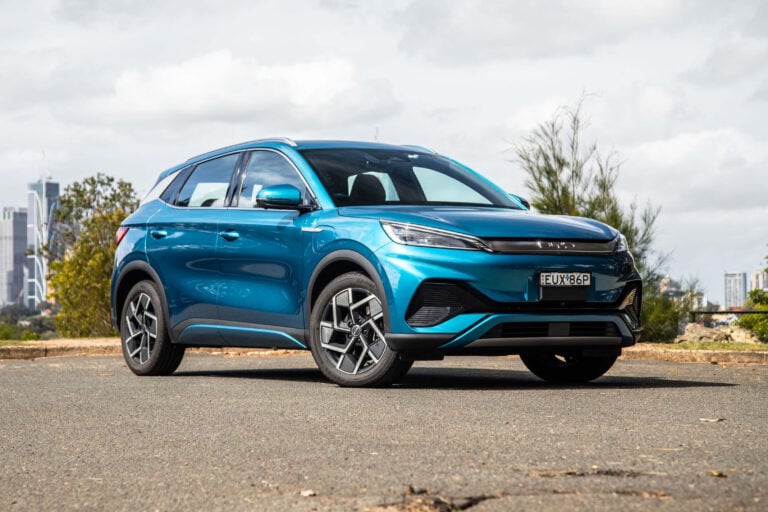
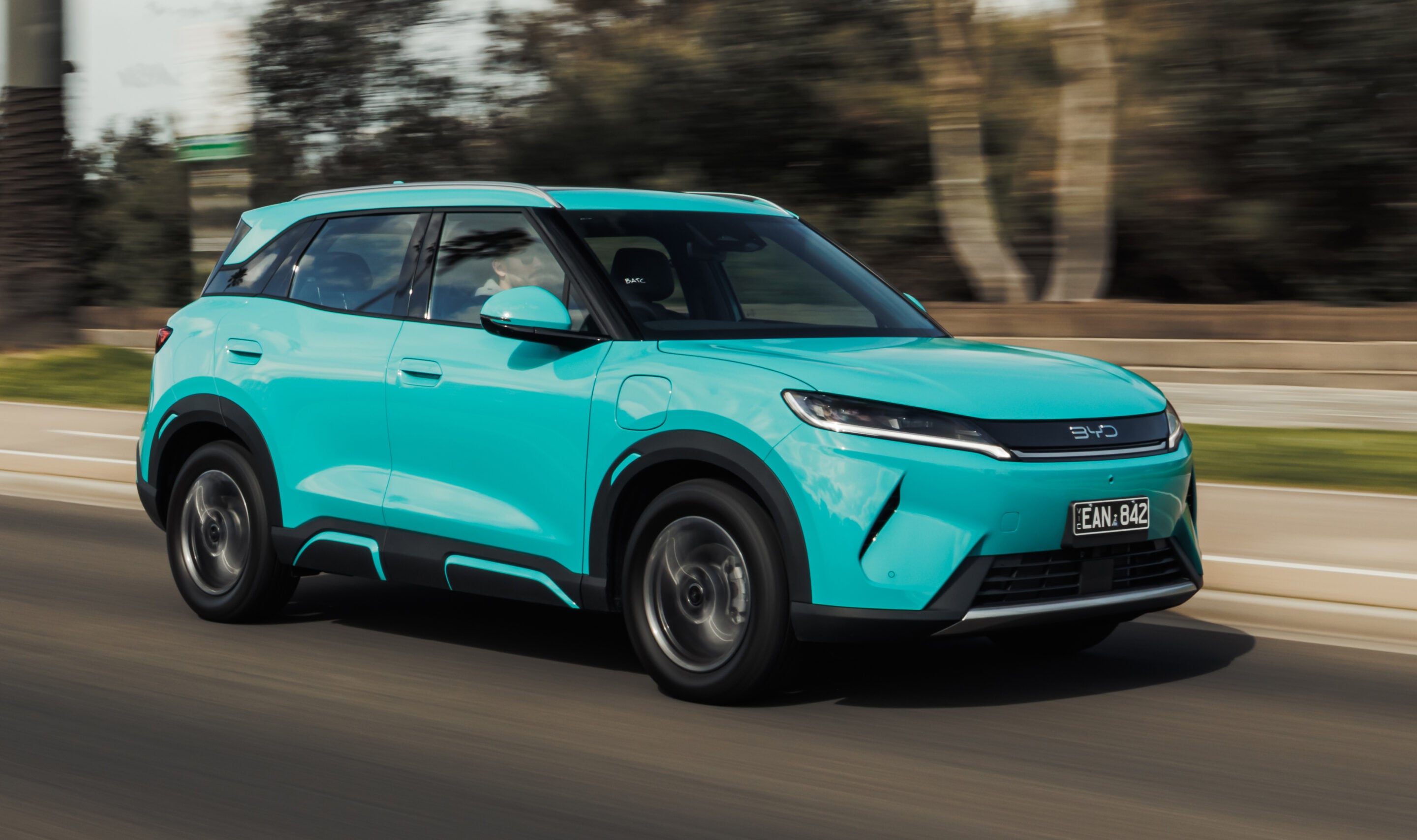
Having the best of both worlds just got easier and cheaper thanks to BYD flicking the switch on Australia’s most affordable plug-in hybrid car as the stablemate to its battery-electric Atto 2. The Atto 2 DM-i Dual-Mode 2.0 is part of a giant product push by BYD that has already seen it run Toyota close for market leadership in June, as well as offer sharp deals that position it as Australia’s cheapest new-car brand thanks to a $19,990 drive-away deal on the Atto 1 EV that lasts until December.
Things have not been entirely positive for BYD in 2026, though, as the brand has faced its first major safety recall, questions over cybersecurity, and a three-star slap by the Australasian New-Car Assessment Program for failing to make the expected five-star grade with its Sealion 5.
3
How much does the Atto 2 DM-i Dual-Mode 2.0 cost?
The newcomer hits showrooms priced from $24,990 and will take to the road with an impressive package for a small SUV, even more so on value, and it has some of the better driving manners in anything yet to emerge from China.
It’s not a match for a Corolla Cross for overall refinement or driving enjoyment, but it massively undercuts the Toyota’s starting price of $37,440 and comes with the next-generation hybrid development that Chinese brands insist on calling ’Super Hybrid’.
The Atto 2 first landed in Australia as a full battery-electric car, with prices from $31,990 to $35,990, in a super-crowded small SUV field that runs alphabetically from the Alfa Romeo Tonale to the Zeekr X. The full EV model continues as BYD chases buyers and simultaneously tests the appetite for a small plug-in hybrid. “Not everyone wants to make the full leap to EV. It’s a good solution,” the chief operating officer of BYD Australia-New Zealand, Stephen Collins, told WhichCar by Wheels.
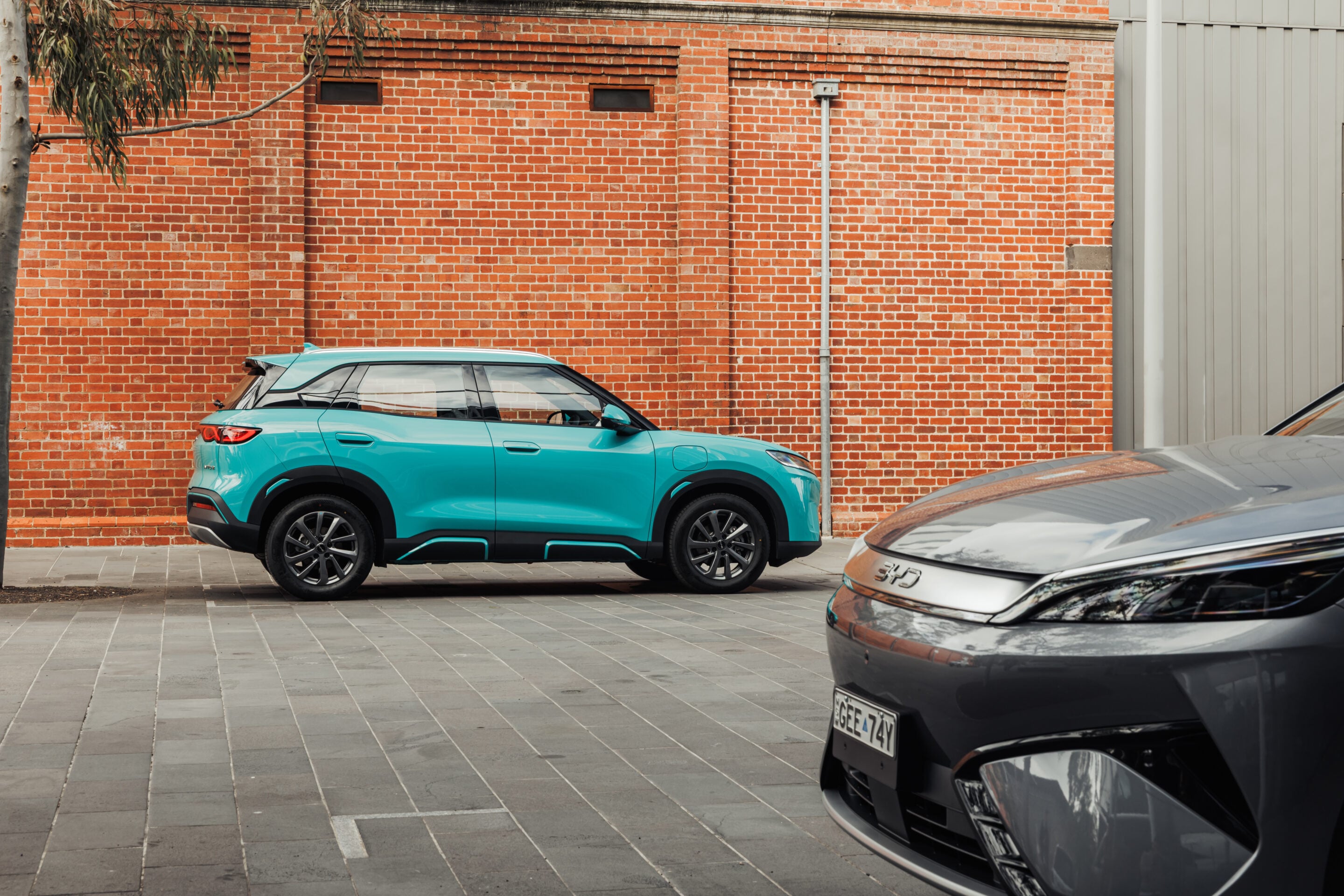
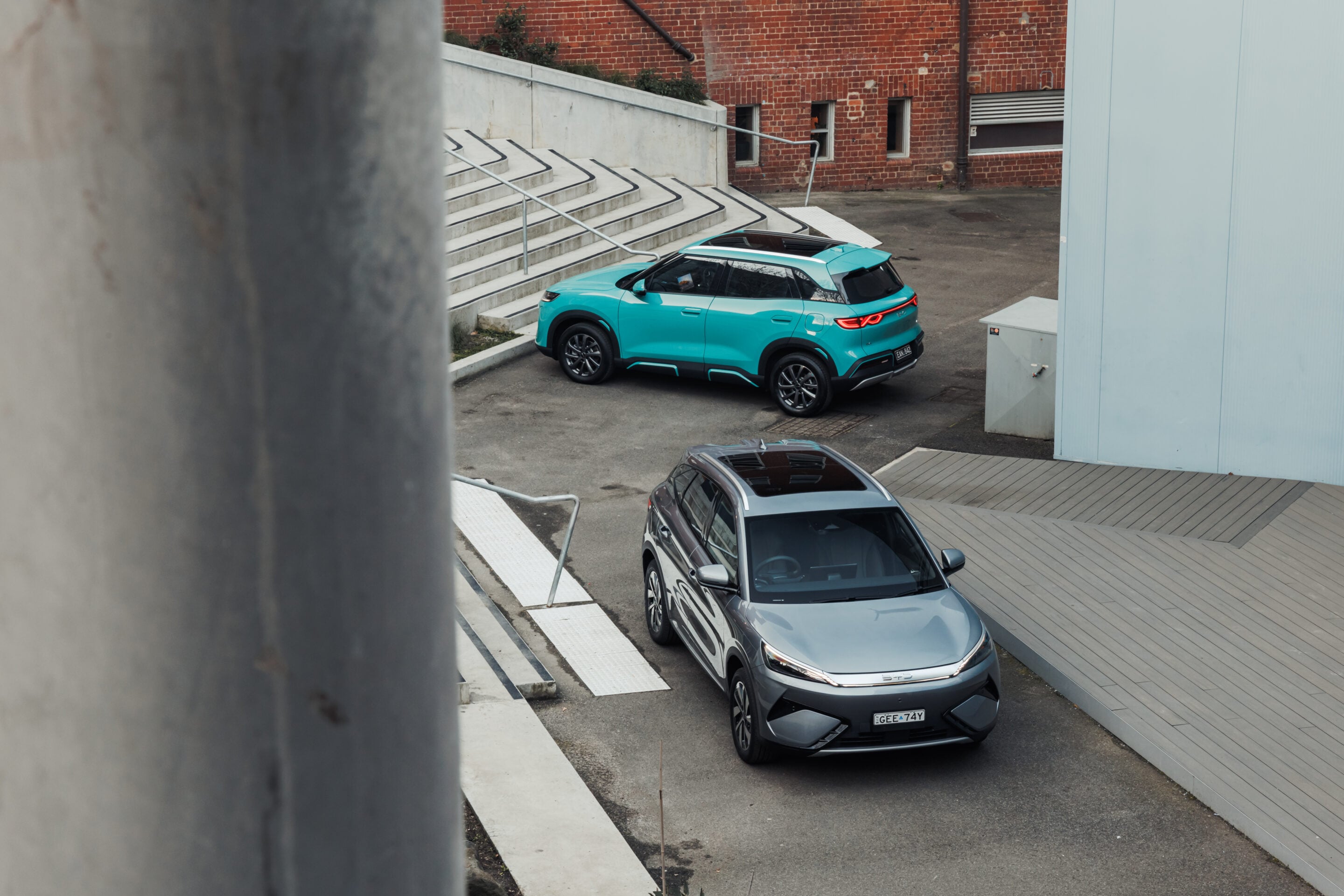
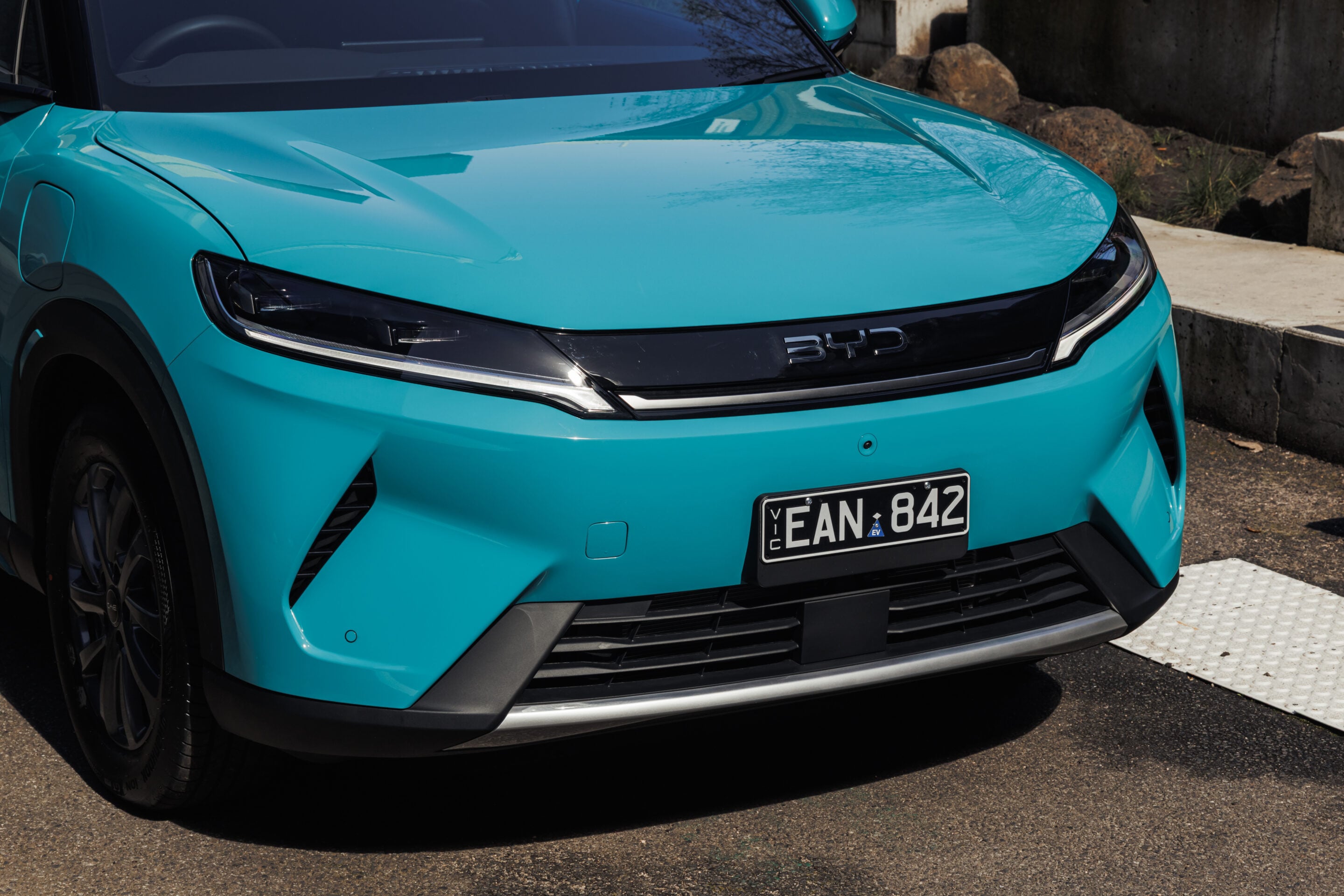
So BYD is promising plenty from the PHEV model, even if the only obvious visual change is a real grille to feed the combustion engine, and the brand sees plenty of opportunities for conquest sales.
“We’re using PHEV to appeal to people who would have traditionally only purchased a full ICE (Internal Combustion Engine) vehicle,” the chief product officer for BYD ANZ, Sajid Hasan, told us.
5
How far can the Atto 2 DM-i Dual-Mode travel on a full tank and battery?
The new mechanical package in the Atto 2 picks up a 1.5-litre naturally aspirated engine making 72kW and 122Nm for the front-wheel drive package. It has a 400-volt architecture. Then things split, as the Essential grade gets an extra 122kW from a permanent magnet synchronous electric motor and the Premium bumps that up to 156kW. Both e-motors have 300Nm of torque.
The grade split also affects the battery, as the base model gets a 7.85kWh Blade battery with 39 kilometres of pure EV range and the Premium scores an 18.03kWh unit with 90 kilometres. In both cases the chemistry is lithium-iron phosphate, claimed to be more thermally stable and, as BYD said, “far less prone to thermal runaway, the chain reaction that can lead to battery fires”.
So the all-up numbers – on the WLTP test cycle – are 845 kilometres of total range for the Essential and 895 for the Premium. Total power is 145 or 156kW depending on the variant.
For people who want more technical detail, BYD said energy consumption is rated at 14.70kWh for the Essential DM-i and 15.00kWh for the Premium on the WLTP test cycle, with combined fuel consumption (above 25 per cent state of charge) measured at 1.8L/100km for Essential and 0.7L/100km for Premium. Both Essential and Premium have a 3.3kW on-board AC charging port, with the 15-100 per cent charging time claimed at 2.7 and 6.1 hours respectively.
Away from the electrics and electronics, there is little visual change to the PHEV. The front bumper is tweaked to provide extra cooling for the combustion action and there is a new alloy wheel design and the Premium gets a roof rails and a sunroof.
4
What sort of features and warranty does the Atto 2 DM-i Dual-Mode bring?
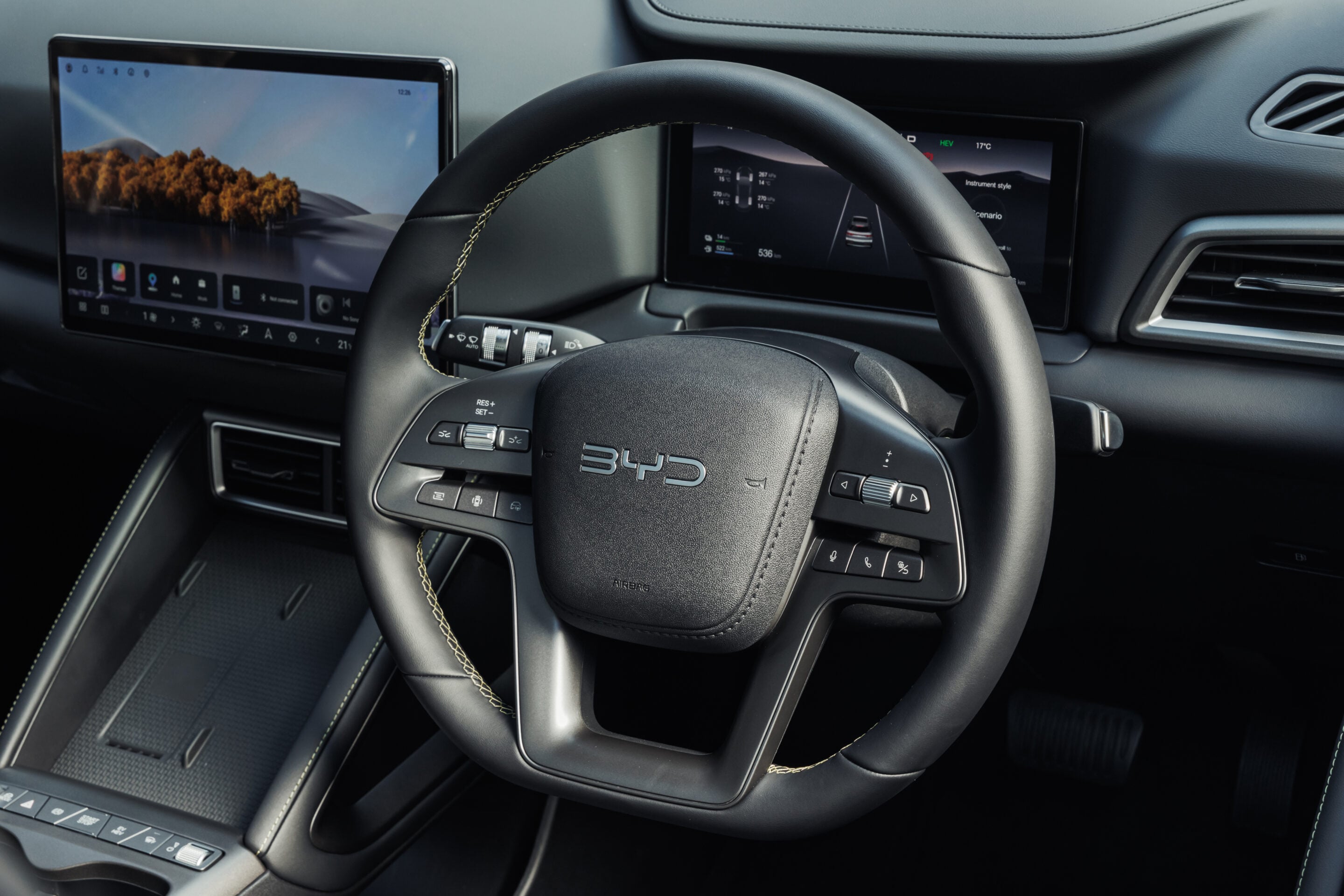
Inside, the PHEV continues with an 8.8-inch LCD instrument display, with a 10.1-inch central touchscreen that grows to 12.8 inches in the Premium. It has both wired and wireless connectivity, 60:40 split back seat, and 425 litres of luggage space, expanding to 1335 with the backrest folded down.
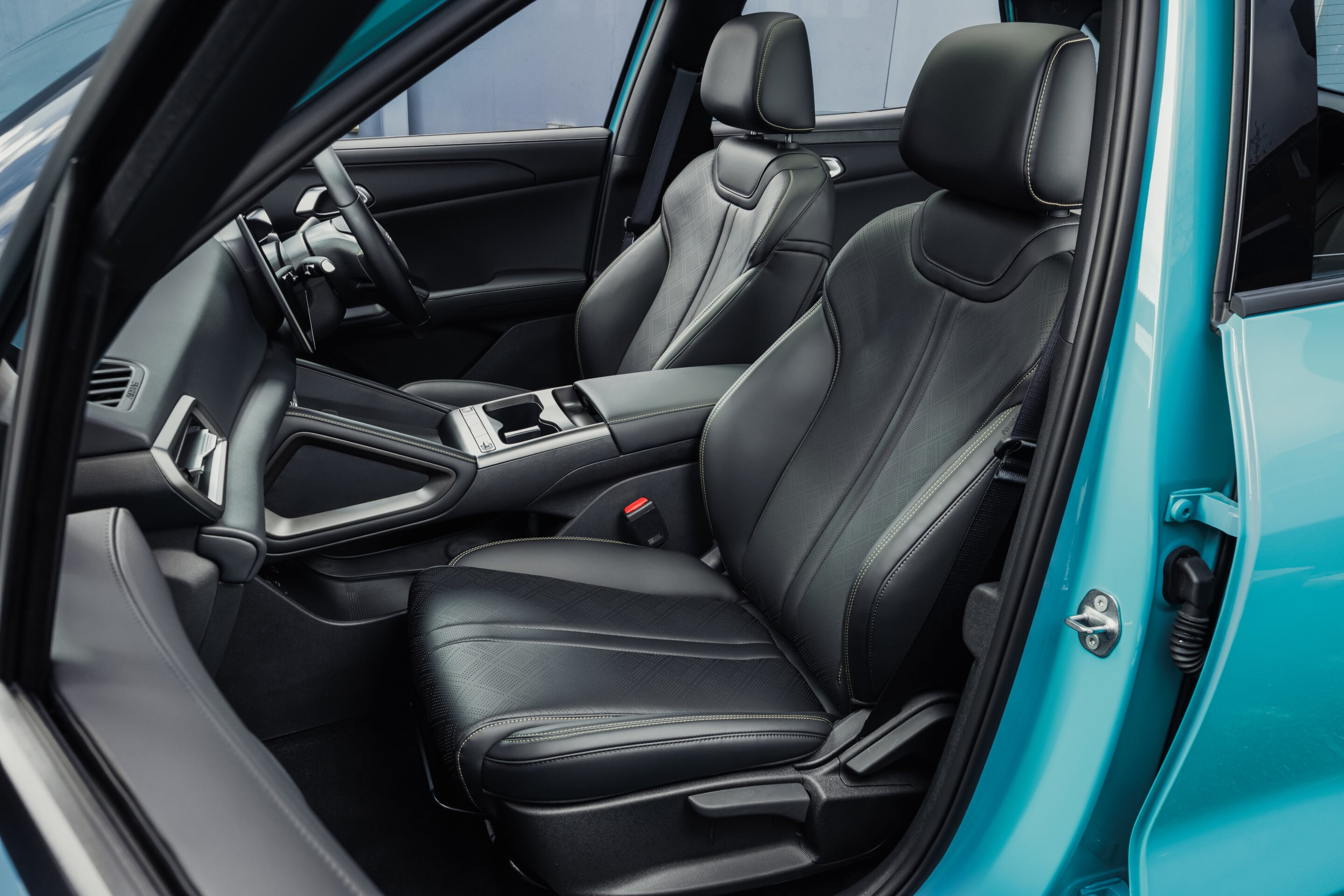
Premium buyers will also get synthetic leather seats with a six-way powered driver’s seat, heated front seats, ‘ambient’ lighting, six-speaker sound and a smartphone charger – with cooling.
But the car comes with a six-year/150,000 kilometre warranty, with eight years/160,000 for the high-voltage battery and eight years/150,000 for the drive unit. The first service is free with the most costly at $930 after 4 years/80,000.
There is no ANCAP safety score for the PHEV but BYD points to a full suite of active and passive equipment, from six airbags and reminders for front and rear seatbelts to a 360-degree camera, adaptive cruise control, traffic sign recognition, rear cross-traffic braking and lane-keeping assist.
4
What is the Atto 2 DM-i Dual-Mode like to drive?
Switching to the driving side, there are three modes – electric, series mode and parallel mode. A lot of work has gone into BYD’s latest arrivals, with Collins highlighting the presence of 36 Chinese engineers in Australia at the time of the Atto event. So, what’s it like on the road?
Firstly, a disclaimer. Unusual but true. The technical team from BYD muddled the tyre pressures for the Atto launch event – which combined inner-city running in Sydney and then a loop out into the countryside – by over-inflation. So it’s impossible to be accurate on the ride-and-handling front.
One of the PHEVs felt good on the city run, but another had a brittle feel over small bumps in the country. So the Wheels jury is still out, and that affects the launch-event scoring. It rates highly for value – where it sets the PHEV bar at a new high as a genuine price leader – and could be better than experienced, so we’re starting low at a 7.3 with plenty of room to improve. It could easily settle in the 8/10 range.
BYD naturally provided the Premium model for the preview, and the sunroof and 17-inch alloys are nice. The cabin is roomy, well designed and inoffensive. Materials and finishing are good for the price, but perhaps a bit below the GWM Ora we drove recently.
The technology side is easy to use, although one pairing attempt with the infotainment took a couple of goes, and the advanced driver assist package was good-ish with room for local improvement. The controls are simple and easy to use. But there was no need for the heated seats.
6
The step-off in traffic is not particularly spritely, even with the full 156kW, but that’s also judged against other BEV runners. It’s quiet, as expected, and moves along easily with city traffic. Further into the drive, with the hybrid system doing its work in the background, the only hint of the various powertrain modes was some distant grumble from the combustion engine. But there was no giant kick-in or surge of power.
The handling is secure, but there was no need for a sports car attack, with decent feel through the steering and brakes more than adequate for the job.
So, all-in-all, it’s a nice little runabout that is properly excellent value and could be the ideal solution for people who want a compact SUV and like the idea of electrification, but are not ready to go all-in on battery power.
Overall rating: 7.3
Follow WhichCar/Wheels on Google
Click the button below to make WhichCar by Wheels a preferred source for your news.