
Features
Gallery 1
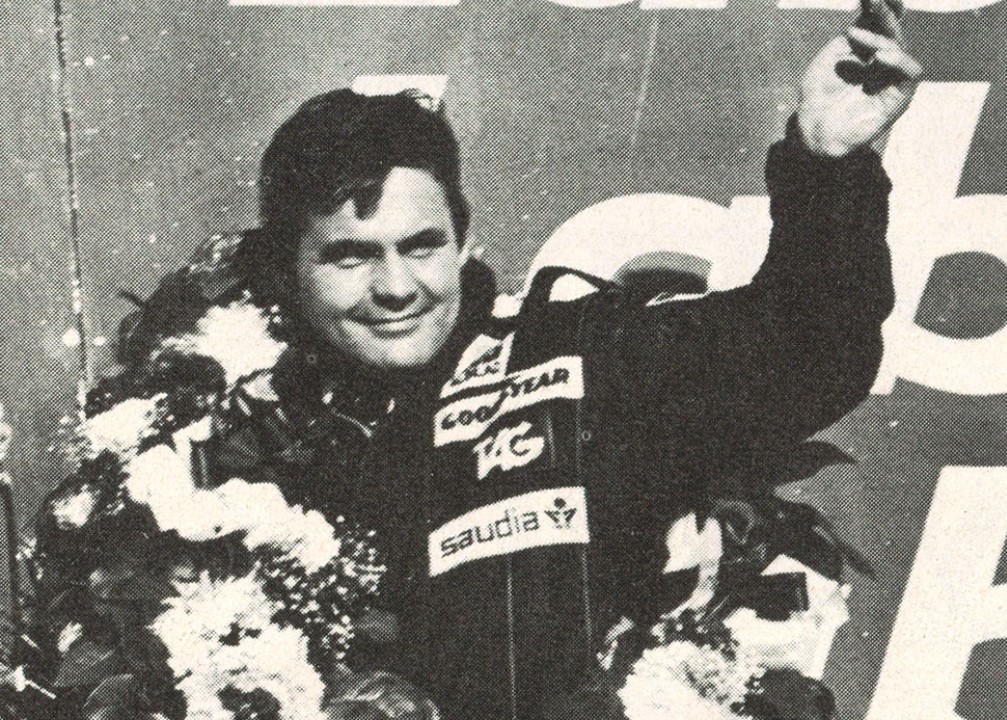
As we celebrate the life of Australia’s most recent F1 world champion, Alan Jones, who died this week age 80, we revisit a classic Wheels interview by Phil Scott with the man who ‘set the standard’ for the Williams team.
First published in the July 1985 issue of Wheels magazine, Australia’s best car mag since 1953. Subscribe here and gain access to 12 issues for $109 plus online access to every Wheels issue since 1953.
The big black Mercedes coupe glides into the courtyard, tyres crunching expensively on washed gravel. The driver is a strongly-built man with the body of a boxer and the neck of a bull. Broad shouldered, thick set, with sharp brown eyes and greying temples. Gold watch. European loafers. A powerful, successful man.
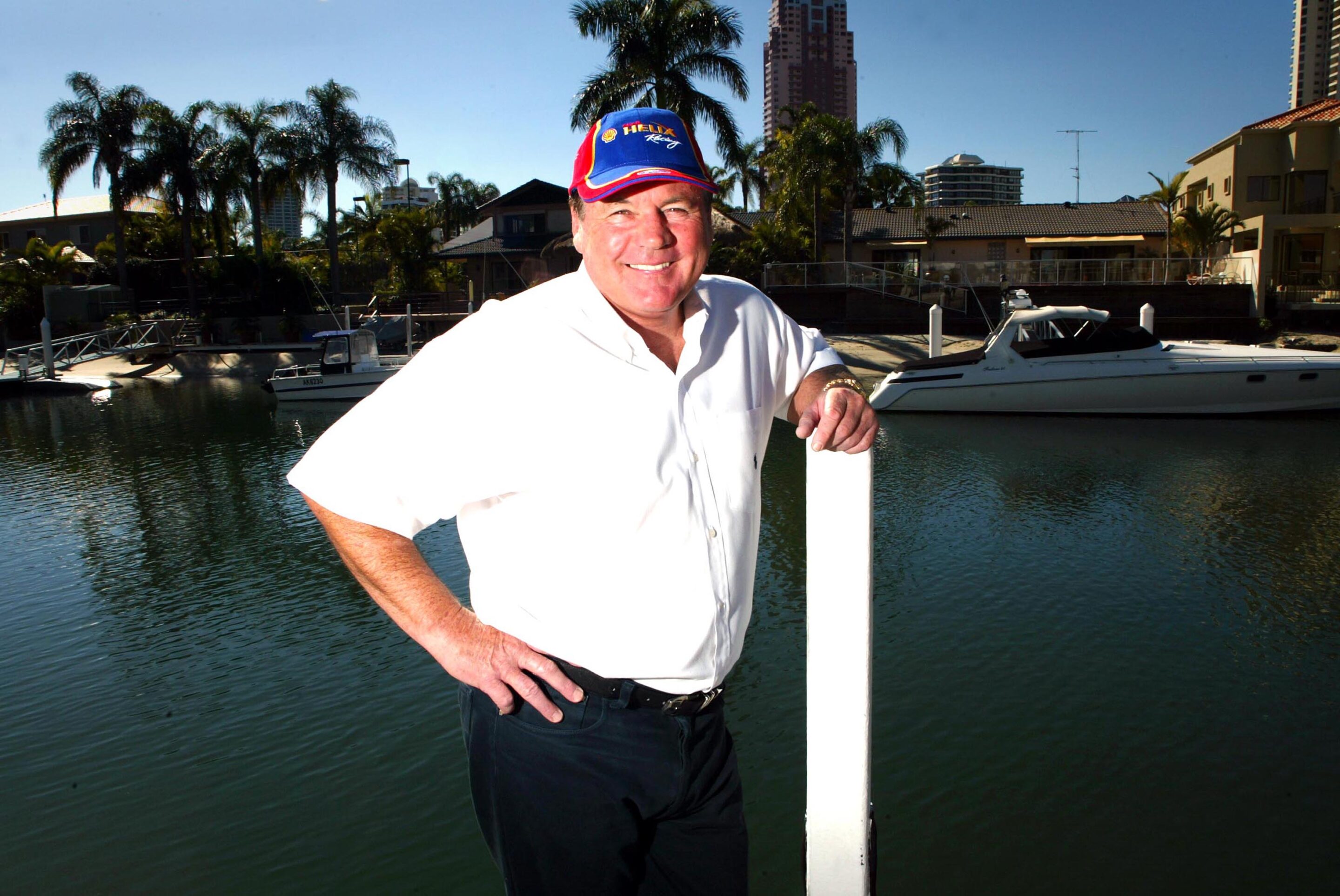
We are on a private, man-made island in the heart of Surfers Paradise. One-point-one acres of prime river frontage, the sort of real estate that money alone cannot buy. You need luck and a little influence to own it, for it’s one of only four… and on the canals around the Isle of Capri there’s a millionaire on every street corner.
1
“We’re going to put double gates out the front there, on the other side of the bridge. We’ll pave this whole area, put a retaining wall in here and re-do the boat shed. The house we’re completely renovating and adding another storey. It’ll be somewhere nice to come home to after I’ve done my Nellie Melba…”
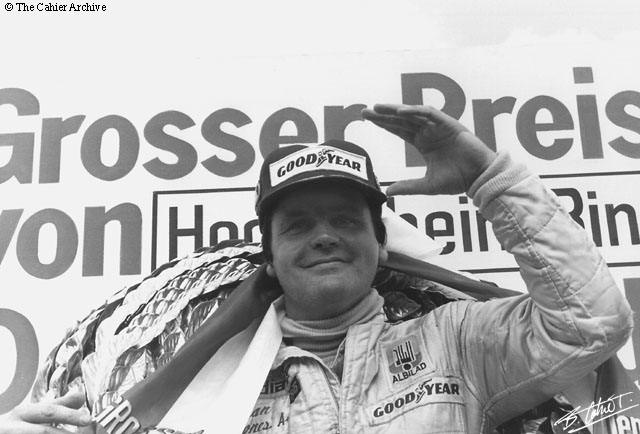
The man in the Lorinser Mercedes 500SEC is Alan Jones. Very much the son of Stan, veteran of 97 Formula One Grands Prix, winner of 12… the World Champion of 1980. A man who proudly, but not pretentiously, points out his penthouse on the beach, talks about his other home just a kilometre down the Nerang River, shows you through his tyre retailing business and his three prestige car lots, his motorcycle franchise, his factory complex, his inflatable boat outlet…
Alan Jones is not short of a quid. At 35, he walked away from motor racing a rich man.
And he walked away largely unscarred; just slightly flatfooted, the legacy of a badly broken instep during his wild and woolly Formula Three days. Jonesy — A.J. to his confidantes — is entitled to feel he’s beaten the system. He started his racing career with fifty quid and ended it with millions. He survived 11 years in a sport that hands out no long service pension schemes; a sport where the driver is an expendable resource; a sport where death brings few tears. Yes, A.J. played for high stakes for a long time. And won big.
Yet, like Dame Nellie, he’s going back. Back to the roulette table to chance his hand. He doesn’t need to. Not by normal standards, anyway. But the thought of being a “normal”, successful businessman bores the life out of Alan Jones, Grand Prix driver.
Why the comeback?
“Because I want to, because I realise that’s what I want to do with my life. There are still a few years left in me and I’m going back to make the most of them. That’s it. There’s no other explanation.”
1
The Jones boy’s infatuation with the dollar is well known, and the cynics were quick to suggest the lure of Beatrice Foods’ millions was his primary motivation.
“It could never be just money. I don’t think any Formula One driver would be in there strictly for the money, because it’s a very serious involvement; something where you can get hurt.
“In the past four years I’ve learned a lot. I found out that I’m good at motor racing and that I have to go back.”
I have to go back.
Just five words that express so much, for Jones the Grand Prix driver has never really had any choice. Like a combat jet pilot when the war is over, the coals still glow in the belly. All it needed was the right fuel and A.J. was on fire.
Charlie Chrichton-Stuart, a close friend from the Williams days and now with the new Carl Haas/Beatrice outfit, fanned those competitive coals. He did it last Christmas over a few beers and a contract he knew couldn’t fail. The upfront details are well documented, but there’s more — much more — that won’t be announced until July 20 in Detroit.
When it becomes public, Jones’ decision will seem more logical. When, at the end of the year, yet another announcement is made regarding the acquisition of a new designer/engineer for the team, we will understand why A.J. said yes. He rates only three designers in Grand Prix racing — Patrick Head, Gordon Murray and Gerard Ducarouge. He won’t say who it is — even if it’s one of those three — because that’s not his place. But his eyes sparkle.
“I’ve been offered terrific personnel, fantastic machinery and more important, a challenge.”
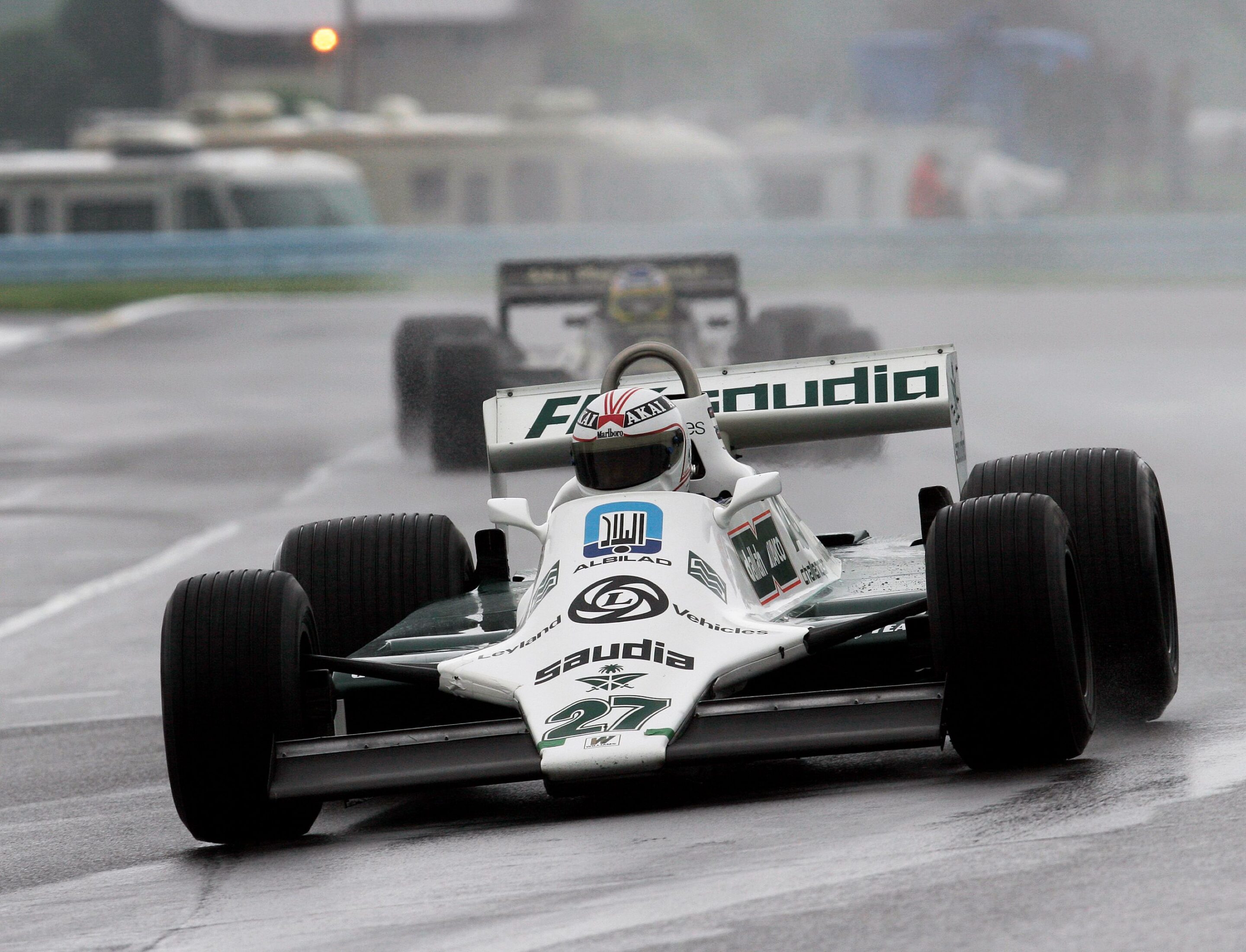
The challenge is to win not just the World Championship in 1986, but the back-to-back title in ’87.
1
“I’d love to be world champion again. Better still, back-to-back world champion. If this deal is as good as I think it is, then I have to give it a go.
“Niki’s taken the fun out of it a bit, but no-one’s been back-to-back champion for a long time.”
This is the Alan Jones you don’t see at the racetrack. Gone are the curt, sarcastic one-liners; the suspicion — no, contempt — for most bearers of a press pass. This is the private-school educated, well-heeled, well-travelled businessman. The articulate, thoughtful Mr Jones, Alan the Nice Bloke. It’s one of many roles he plays; one he admits gives him a charge.
“There’s an old saying, life’s a stage, and I do enjoy changing my roles and playing around a bit.”
To meet him for the first time, you would doubt the accuracy of stories that paint him as a likeable larrikin, a bloke not averse to using his fists when his dander’s up. But the man admits he’s a different person when he’s got a race to win.
“I do get aggressive before and after a race. My wife will back that up substantially. She says she now understands it better because it’s something I subconsciously get myself into. I’m very short around a racetrack because I believe I’m being paid a lot of money to do a job. And I will do that job to the best of my ability. I try not to let anything or anybody stand in the way of that. I’m cold-blooded in that respect. I think I’d do pretty much anything to win a race.”
But Monza, and his start-line appointment with a Hart-engined Lola and a Superteam fuelled by a budget of around $46 million, is three months away as we stroll through the new house. Like a toy, it has generated tremendous enthusiasm in the man. He is bubbling with it, as he points out the modifications he’ll make.
He chats to the workmen and unfurls the architect’s drawings. It’s not done to impress. It’s his latest acquisition and he wants to share it.
A few hours earlier, fresh from the daily gym workout, we’d chatted in his office — the one with A.S. Jones engraved on the door — at the headquarters of the Alan Jones Corporation in Bundall, inland from the Gold Coast.
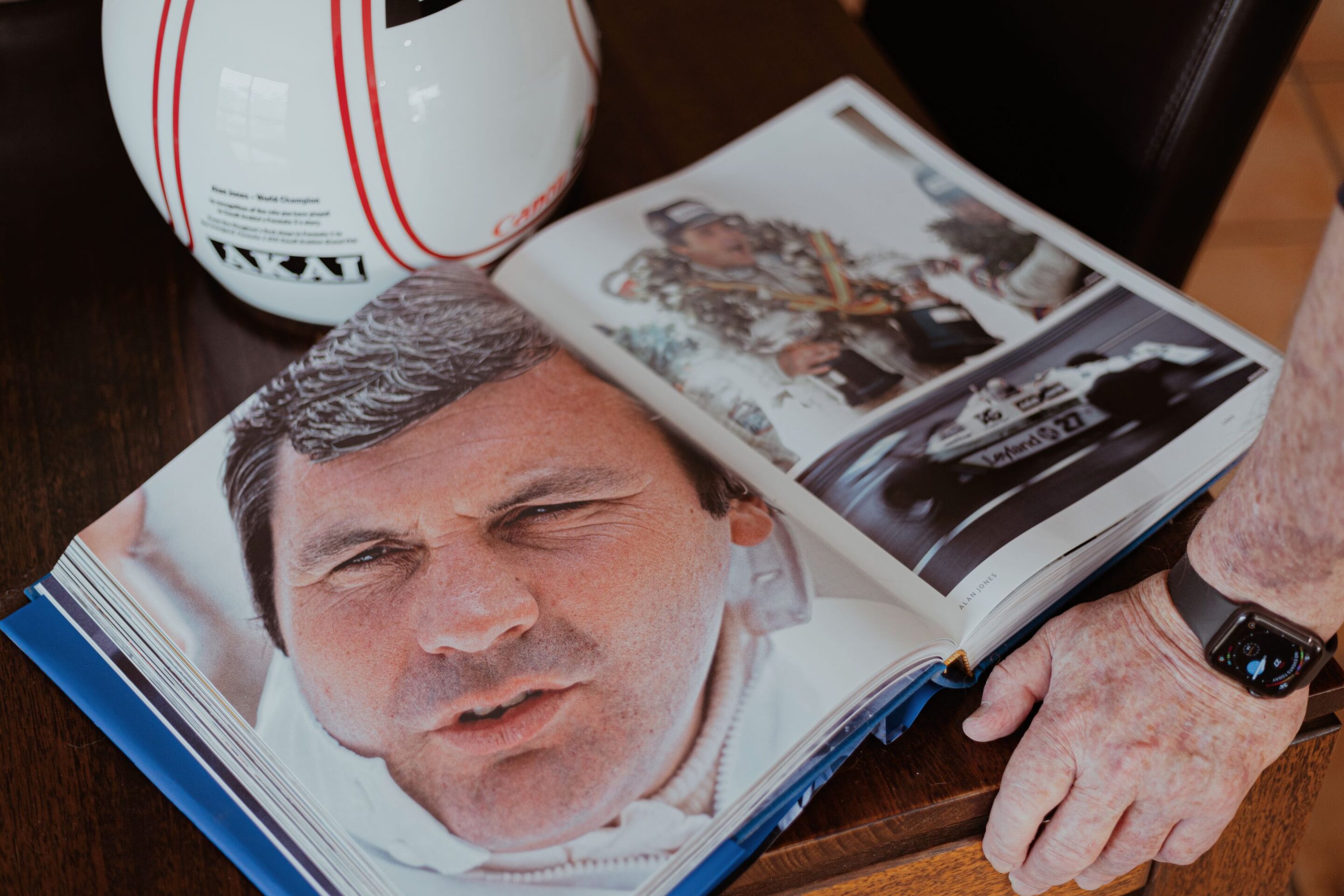
The desk is big. On it, a large metal sign says Do It Now. The walls are panelled in black lacquer. It is the office of a senior executive — except for the scattered trophies.\
1
Yet, like the memorabilia of a past career, much of the Jones business empire will soon be dismantled, in anticipation of a new one.
“The last thing I want to do is walk out of my home in England with my helmet bag and have the phone ring to tell me about some business drama in Australia. I don’t want to be preoccupied with it while I’m driving. I’m going back to be a professional, to give it 10/10ths and that means I’m going to scale down.” He stabs at the air with a letter-opener, emphasising each point.
Scaling down means franchising his Pit Stop tyre chain, selling the Alfa, Porsche and Honda dealerships (but retaining the freehold) and diversifying into bricks and mortar.
“The return is not as spectacular as business, but it’s income producing, there’s capital gain and it takes care of itself.” The delivery is straight out of Harvard Business School. If Jonesy doesn’t read The Financial Review, he does a pretty good impression.
Dollars again. It’s a hunger. His father went broke in the credit squeeze of the early ’60s and Jones is determined he will never be left short of money. In that respect, as in many others, the late Stan Jones is a figure to be loved, but an example to be avoided.
“Absolutely. I mean, that’s what dads are all about. They teach you, and hopefully you learn from their experience. I admired my father’s sense of humour, his generosity, his love of motor racing. He liked his good time, but he was, I think it’s fair to say, irresponsible with his money. He lived very much for today. I saw all that and I’ve learned from it. His experience taught me to diversify, taught me always to leave a few bob in the bank and always to pay my bills on time.”
1
By his own admission, there’s a lot of the father in the son. And that in itself is a gnawing concern, too.
“Obviously I must have certain of my father’s characteristics — quite a lot really. He died at 51 with hardening of the arteries; he had strokes and heart attacks and God knows what. I don’t know if it’s hereditary or not, but you never really know when it’s your turn to go.”
The last line is delivered to sound like a footnote, an afterthought, but it’s too forced, too deliberate: Alan Jones believes he will die young.
“I’d really hate to give up motor racing — you know — then get run over by a bus or die of cancer three years up the road. I’d be thinking, shit, what was that all about? I live for today and I give everything a go. Some things work out, some don’t. Whatever will be, will be. But I don’t think I’ll live to be 70, no way!”
Jones’ retirement and triumphant return to Australia at the end of 1981 came at a time when, he says, he was burnt out, sick of Formula One.
“A lot of people say I retired too early and I suppose in hindsight I may agree with them, but if I didn’t think it was the thing to do at the time I wouldn’t have done it. It was a self-imposed rest. I was starting to dislike Formula One to a certain degree and I went through that first year in retirement without even bothering to read a copy of Autosport. Now I’m down at the newsagent’s all enthused again. I don’t know how long this enthusiasm’s going to last, because I spoke to Niki Lauda and he said that for the first three or four races it’s great — a novelty. But then after five or six you start remembering all the things that made you retire in the first place: the living out of a suitcase, leaving your family for great lengths of time, the politics…”
And, unspoken… the danger.
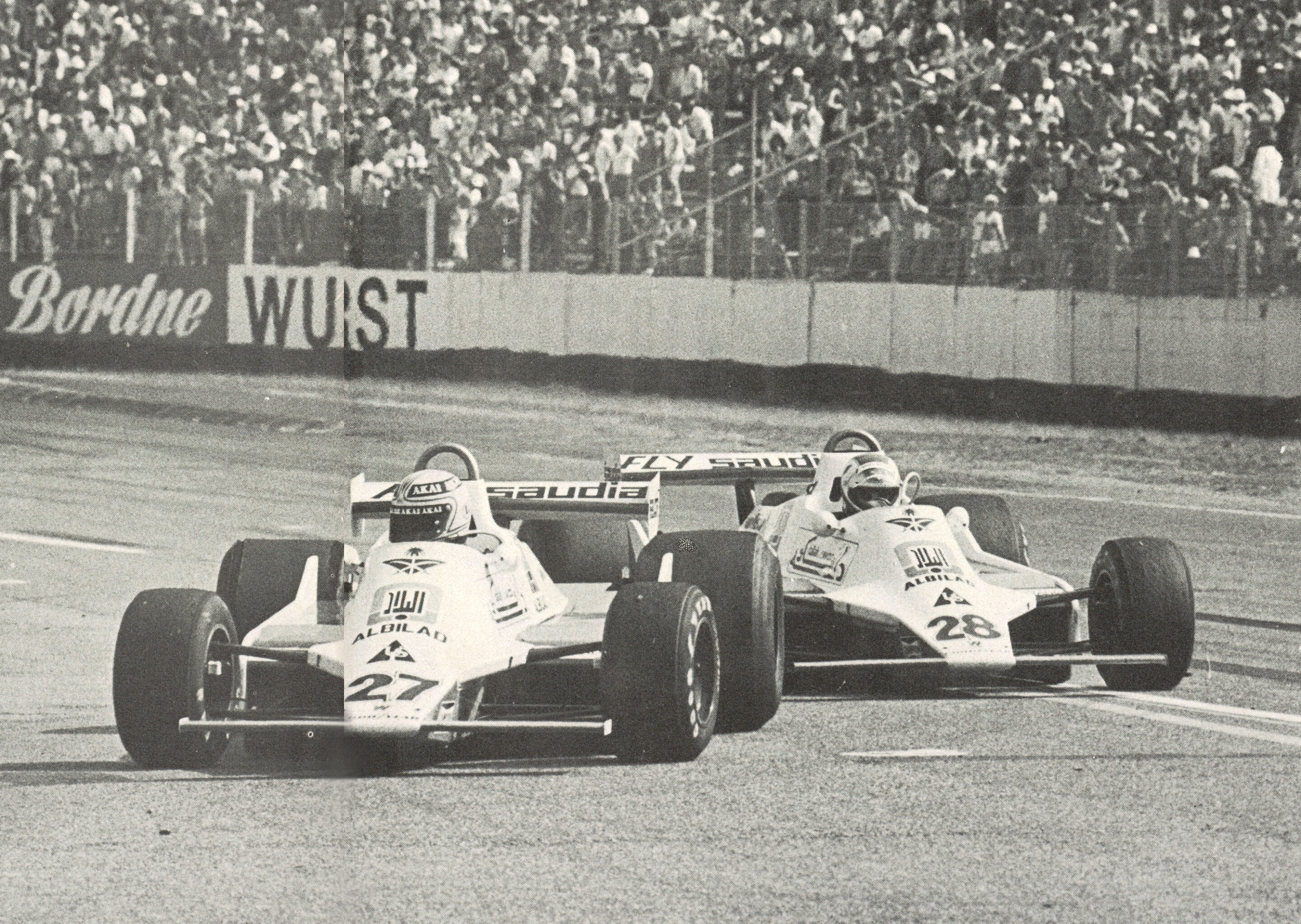
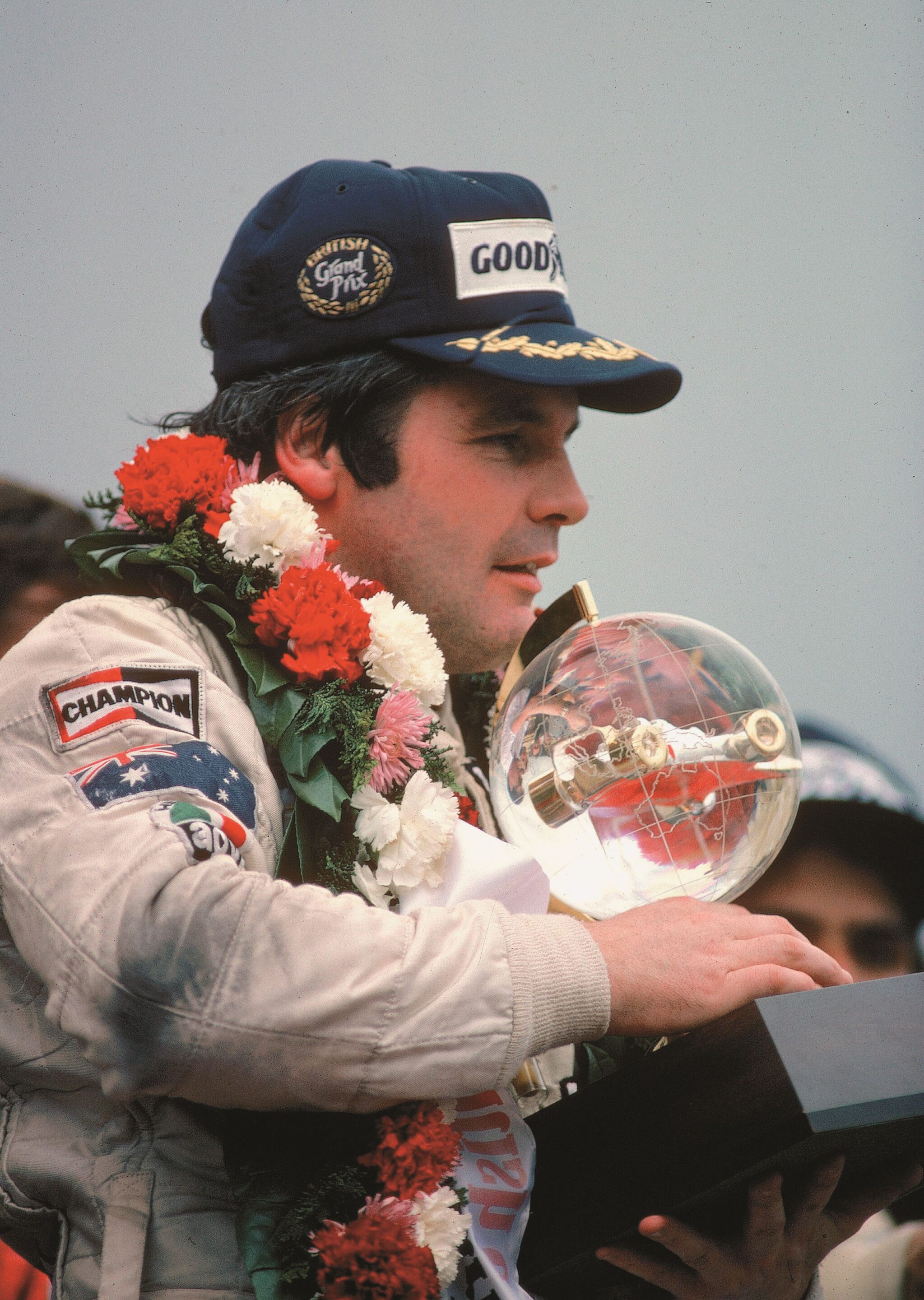
Jones has been restless since he unzipped his Nomex for the last time as a Formula One driver, after winning the 1981 Las Vegas Grand Prix. It was his final appearance and he departed a winner. Back in Australia he entered a series of ventures that began with typical Jones enthusiasm, but ended with disenchantment. There was the farm, the driving school, the touring car team.
1
“I go with the wind. I please myself what I do, and for that I have my critics. But that’s me. I mean, I went mad on the farming bug for a while.
“I had 650 sheep in my shed and champion Simmental cattle. But I woke up one morning and thought: no, farming isn’t for me. It’s giving me the shits. It’s boring and I want to get out.”
He still smarts over media response to his short-lived touring car team:
“What I should have done is come home and done nothing for six or eight months. Felt the current, tested the temperature and then gone for a swim.
“But as I am prone to do — and I am a fickle man — I was back four days and jumped in head first. I rushed into it without knowing the touring car scene. I had various people working for me who, now, I wouldn’t have cleaning my shoes. Then the press turned. There’s nothing better than an up and coming Aussie, but when he gets there, he’s a mongrel, or a capitalist or whatever. He’s the man then to be beaten.”
There’s more than a little truth in that. One motorsport magazine, in particular, went for the jugular at every opportunity, and Jones can just about recite a newspaper article from the Sydney Sun which particularly upset him. “It was the most malicious, vicious article I’ve ever seen.”
Maybe that accounts for the hostility Jones feels towards the press. I recall asking him a question on a press day at Sandown several years back when the Arrows deal was being brewed. His answer, and I’ll never forget it: “Listen, what difference does it make what I say? You guys will print what you want to print anyway.”

1
Or at last year’s WEC race in Melbourne. Jones had qualified officially third, although the Porsche team had him on pole. A simple query brought a hostile response:
“I’m an Aussie, so I must have used a bigger engine,” he snarled.
But he’s going back, he says, a more mellow, more philosophical man.
“I know the will to win, the drive for success, is still there; but if I don’t get pole I’ll be a little more philosophical, a bit kinder to those around me. To be truthful, I think it would be impossible to be more hungry than I was in 1980. But I think my hunger has changed.
“I’m going motor racing for me, not for anyone else. Whilst the people think highly enough of me to keep paying me the money they are, and while I’m enjoying myself, everyone else can go to buggery.”
He says it with a broad grin. But it evaporates when he’s asked if he has everything to lose and nothing to gain.
“I think that’s right, particularly in Australia. If I win then I bloody should have won, with all that money behind me and my experience and the people I’ve pinched from other teams. If I don’t win, whether through my fault or not, then I’m over the hill, finished, should never have gone back.”
A risk then, in more ways than one. Yet his chances of success, on paper at least, look strong.
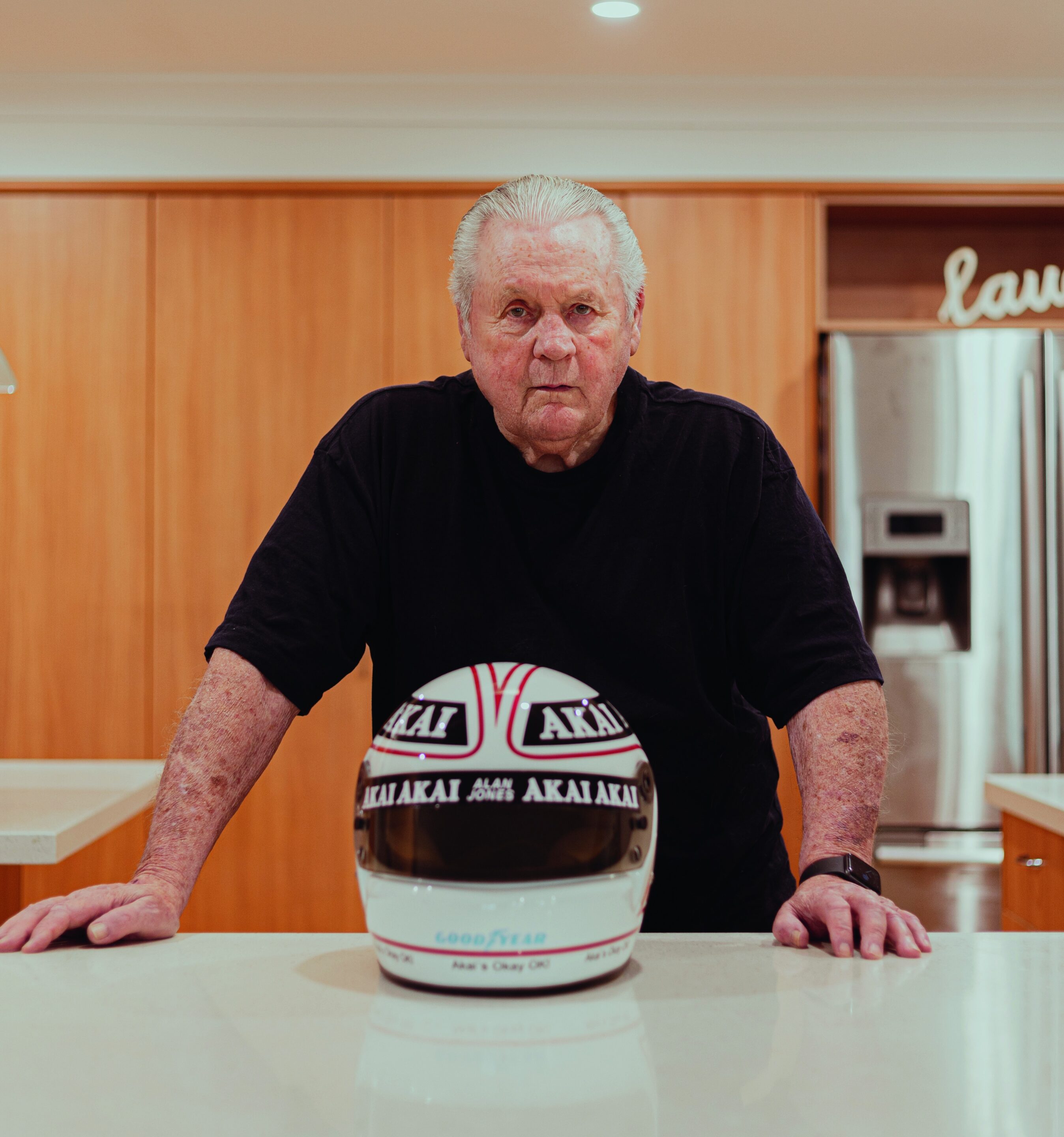
Physically, he’s a different Alan Jones to the burly 15-stoner of 1983. Daily workouts on the Nautilus machines at the nearby Pindara gym, lots of miles in the pool and a crash diet have pared him to just over 13 stone.
3
He raced at 12.5 during his championship years but pigged out on chocolate milkshakes, dim sims and Chiko rolls during the off-season back home, when he’d blow out to 13. He’s critical of himself these past three years, saying he’s relaxed mentally as well as physically.
“I’m glad I’m going back,” he says, “because it’s made me realise just what an animal I’d turned into. I was at a stage where if I was hungry, I’d eat. Didn’t matter what. I’d just eat. And instead of consuming great litres of normal beer, I’ll now have a light one. And not much of it.”
That bull neck has given him trouble, the right side being overdeveloped from years of supporting head and helmet against outrageous G-forces on predominantly clockwise circuits. Those muscles lost tone and pinched a nerve. Now he’s under treatment from a chiropractor, doing sessions on a stretching rack and enduring some tough neck exercises to restore equilibrium. He’ll go to Monza at 12.5 a lean and hungry 38 year old, but still Formula One’s biggest man.
Back in the Williams days, there’s no question Jones intimidated some of his rivals. He’s a physical man and he’s punched a few noses. He can bristle like a blue heeler and exude aggression. In a sport where most of combatants are wispy jockey-sized men, he’s used that to advantage. But he is also a very intelligent man, a masterful tactician, and conserver of a car. In the art of psyching-out the opposition — the professional sledging that used to get Ian Chappell into so much strife — he was, and probably still is, without peer.
“You’ve really got to play it by ear,” he says with just a hint of glee. “If you see a driver putting on a tracksuit and going for a run, you tell him you’re going to the bar for a few beers. Or it might pay you to act dumb. Be breezy and nonchalant and they’ll think you’re light-on for grey matter. It’s role playing and I enjoy it, really I do. I remember in Las Vegas in ’81, my last race, Reutemann got pole and I got second fastest. I talked him into swapping places — I couldn’t believe it. I told him it was very dirty on the inside left and that he’d just sit there wheelspinning while everyone went past and that if it was me and I had pole I’d have a word and exercise my right to choose a starting position. Before I knew what was going on, he was up there demanding to be on the other side of the track… which meant I was on pole. They’re the sort of things I believe are my craft.”
The postscript to that story is indicative of the Jones cunning. In the warm-up session he studiously drove over his grid position till the Williams’ wheels had swept it clean. He won the start. And the race.
Anyone who saw Jones in this year’s Group A races will vouch for the fact that every one was run at 10/10ths; Grand Prix practice for the man. His car was set-up so stiffly that team mate Colin Bond reckoned he couldn’t drive it. Bondy was prone to admiration for A.J.’s car control, determination and eerie concentration.
Behind the wheel of the Alfa, Jones was slipping into that acutely aware state that characterised much of his Grand Prix driving.
If that sounds like hot air, perhaps Jones should explain the phenomenon he calls “driving through the window of my helmet”.

1
“I think what happens is you delve into that 90 percent of your mental capacity you don’t normally use. After 10 laps or so you can feel it and everything your body does becomes automatic. You see things, you smell things, you change gear. Your awareness factor is fantastic. You’re aware of oil on the track, you’re aware of every little deviation. If the car steps out of line you’ve caught it before you realise it has moved.
“Actually you can’t feel your body as you normally would. I’ve often come in with my knuckles bleeding and not been aware that I was losing skin everytime I changed gear. In the Alfa I’ve always got pins and needles in my arm for a day or two after a race. I can’t feel it at the time, but what I’m doing is leaning against the door to support myself and cutting off the circulation. I don’t know how I get into that state. If I did, I’d do it before I got into the car.”
We are back in the black Benz, the one with the engraved ASJ gearknob and the personalised plates. We are en-route to the Jones car dealerships, but we detour to see Paradise Waters, the new millionaires row. Jones drives, pointing out who owns what and what it’s worth. The land alone is $250,000 a block. Some of the houses are built on three blocks. Jones points to one:
“I could have nicked that — absolutely nicked it — last year,” he says with a shake of the head.
We arrive at the Porsche showroom. There is a man looking at cars. Jones scurries around looking for his salesman: “There’s a head on the lot, will someone grab him?” But the head gets away before the salesman can be found. Jones chastises the AWOL whiteshoe:
“See. What’s going to happen when I’m not around to ride them?”
Back in the car we say goodbye. I ask the question again. Why go back, with all this and the lifestyle it allows? Why risk your neck?
“I’ve discovered it’s very hard to replace Formula One racing with something that gives you the same buzz. I have to do it.”
And the words of Mark Donohue come crashing back. In December 1974 he told Road & Track why he was returning to motor racing.
“It’s what I want to do . . . what I have to do.”
Kindly republished with the permission of Phil Scott.
Follow WhichCar/Wheels on Google
Click the button below to make WhichCar by Wheels a preferred source for your news.


We recommend
-
 News
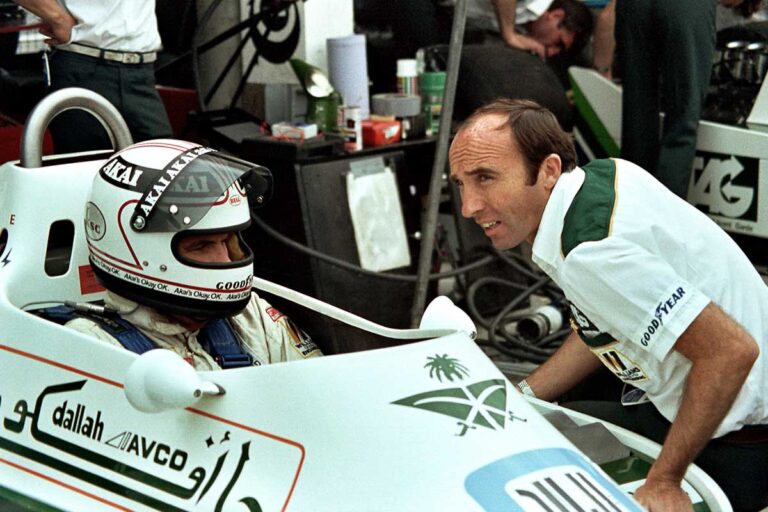
Williams and Oscar Piastri pay heartfelt tributes to late F1 legend Alan Jones: ‘He set the standard’
Alan Jones won the 1980 F1 driver's title in a Williams. Now the team – and the current boss of the sport – have lauded the Aussie icon.
-
 News
Aussie motorsport loses an icon: F1 legend Alan Jones dies aged 80 after a short battle with illness
Alan Jones, who won the 1980 F1 world championship, passed away just three days after his birthday.
