Features


Gallery 1
When Robert Opron stormed out of the offices of Flaminio Bertoni, little did he know that within two years he would have the legendary Italian designer’s job at Citroën.
Opron, responding to an advert in Le Monde, applied for a job in the design studio – headed by Bertoni – of the French carmaker. The man who had been responsible for the styling of the Traction Avant, 2CV and the greatest Citroën of them all, the DS, looked through Opron’s portfolio at the interview before throwing it on the ground and declaring it “no good at all”.
Far from cowed, as he later recounted, Opron told Bertoni that “I didn’t agree at all with his manner and told him so”.
Perhaps chastened, perhaps feeling a little guilty, Bertoni helped pick up the scattered drawings before telling the young hopeful that he was “interested” in him.
It was too little too late. Opron gathered his creations, stormed out of the office with words to the effect of “well, I’m not interested in you” and with the thought that “I could never work for this guy”.
1
And that should have been the end of Opron’s Citroën dream. Except it wasn’t. Just three weeks later the young Frenchman received an offer of employment from Bertoni, an offer he accepted, starting work under the Italian legend at Citroën Styling mere weeks after that first tempestuous meeting.
Just two years later, the now 32-year-old Opron replaced Bertoni as Director of Citroën Styling after the Italian’s sudden death following a stroke.
Opron went to work. In quick succession he extended the life of Bertoni’s DS masterpiece (it was Opron who conceived the DS’s swiveling headlamps and then encased them behind smooth glass lenses that lent later models their distinctive and aerodynamically enhanced shape), penned what remains unarguably his masterpiece, the Maserati-powered Citroën SM grand tourer, and styled the mid-size GS, intended to fill the gap between the brand’s 2CV small car and flagship DS.
But his biggest challenge came in 1969. Tasked with coming up with a successor for the DS (The Goddess), a car widely recognised today as one of the most beautiful of all time, must have seemed daunting. After all, how do you replace the national icon that was the DS, that most French of all French cars?
1
Projet L, as it was dubbed internally, needed to be all-new. And that meant starting with a clean-sheet design. Opron eschewed the idea of modernising the DS’s curvaceous profile, believing – rightly – that the new flagship needed to forge its own identity while still being unmistakably a Citroën.
Instead, Opron looked to his own designs for inspiration. Up front, Projet L borrowed styling cues from the smaller Citroën GS, most notably the headlight and grille treatment. But the overall dimensions and low-slung almost-wedge shape came from the SM.
Aerodynamic efficiency was at the heart of Opron’s modernist approach, a design that, like its predecessor, was unmistakably Gallic.
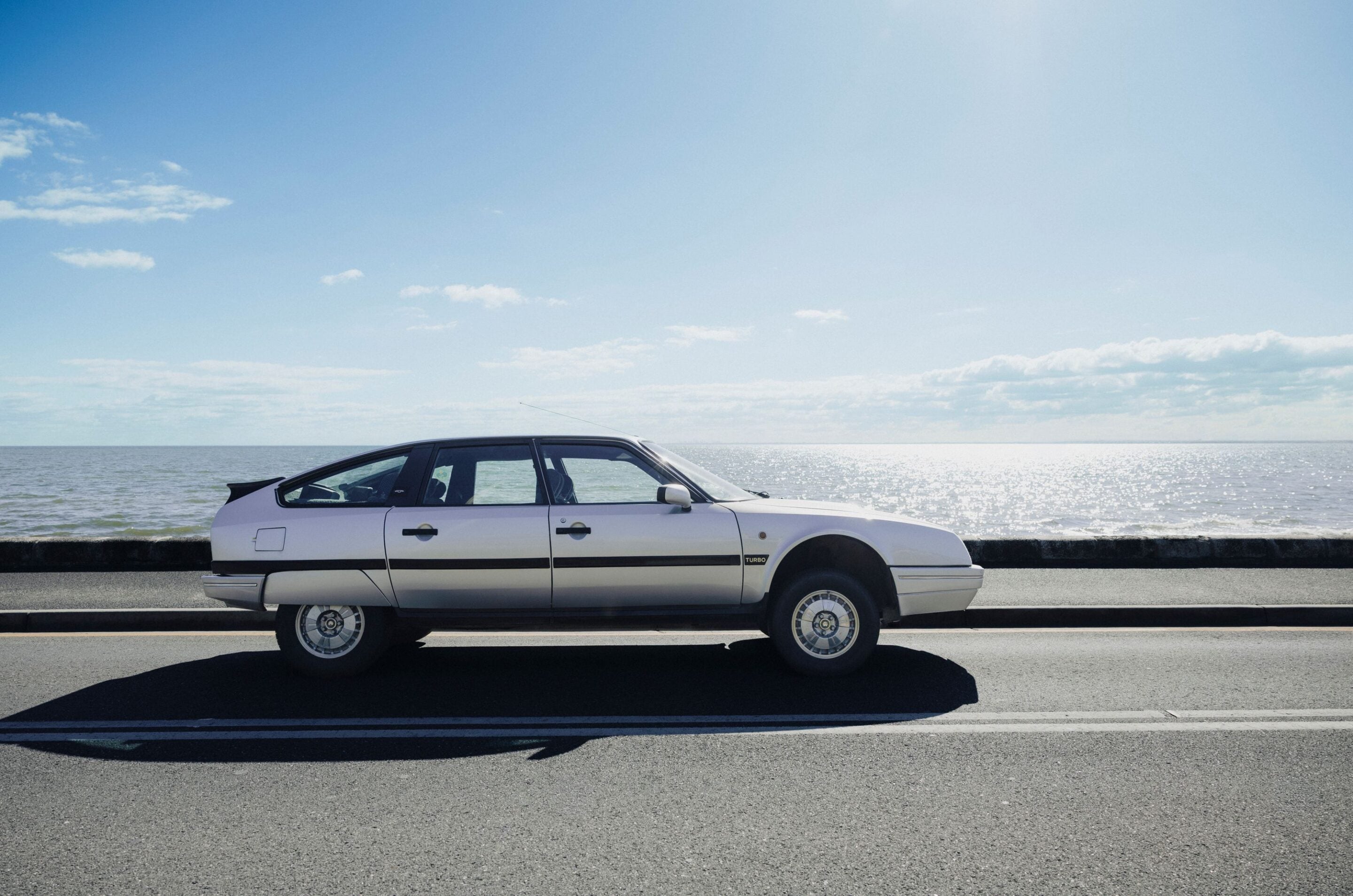
Shorter in length than the DS by a substantial 21cm, and significantly lower too, by over 10cm, Projet L’s most striking design element was its Kamm tail and concave rear glass. The latter’s shape, more than just a decorative talking point, served a functional purpose, channelling the flow of air over its surface to clear away any water, eliminating the need for a rear windscreen wiper.
Like they were on the DS, the rear wheel arches were covered by spats, and to help maintain optimal brake temperatures, ducts located underneath the car channelled air to the brakes. Radical aero engineering for the time.
The rear wheeltrack was narrower than the front, improving airflow over the sides while simultaneously softening the visual transition to the rear of the car.
Wind tunnel testing proved the efficacy of Opron’s radical design, with a drag coefficient of 0.36 mirroring that of the DS. The focus on aero efficiency gave the new flagship its name – CX – the French notation for drag coefficient, what we know more commonly as Cd.
2
To maximise interior space, Citroën’s engineers opted for a transversely mounted engine and newly developed gearbox. Normally the domain of hatchbacks and smaller cars, mounting the engine transversely in a large flagship sedan was considered radical for the time.
Having spent big money developing the CX’s transverse gearbox (money which it partially recouped by selling it on to Lancia and fellow French carmaker, Talbot), Citroën amortised costs by using derivatives of the 2.0-litre and 2.2-litre four-cylinder units from the DS, but tilted forward by 30 degrees to maintain the CX’s low bonnet line. They made 76kW and 84kW respectively. There were also plans for a range-topping variant powered by a 1.5-litre rotary engine, while rumours of a flat-six and even a V6 continued to swirl, even after the car’s launch in 1974.
As Wheels reported in its October issue of that year, “There was pre-release speculation about the CX’s engine. Educated guesses went as far as a Maserati-based V6, a GS engine with two cylinders added to make a flat-six, and a third generation rotary. They were all wrong, totally wrong.”
The CX’s chassis was underpinned by an evolution of Citroën’s by-now famous hydropneumatic suspension. More than just bringing unparalleled levels of refinement and road comfort, the CX’s system, like it did in the SM and the DS before it, also ran the brakes, steering and self-levelling off a central hydraulic accumulator.
Likewise, the CX’s hydraulic power steering system was an evolution of the DIRAVI (DIrection à Rappel AsserVI, French for ‘power-assisted steering with controlled return’) first seen in the SM. Regarded as the first variable power-assisted steering system, DIRAVI brought progressive steering – lighter at low speeds, but firming up as speeds increased – to the mainstream.
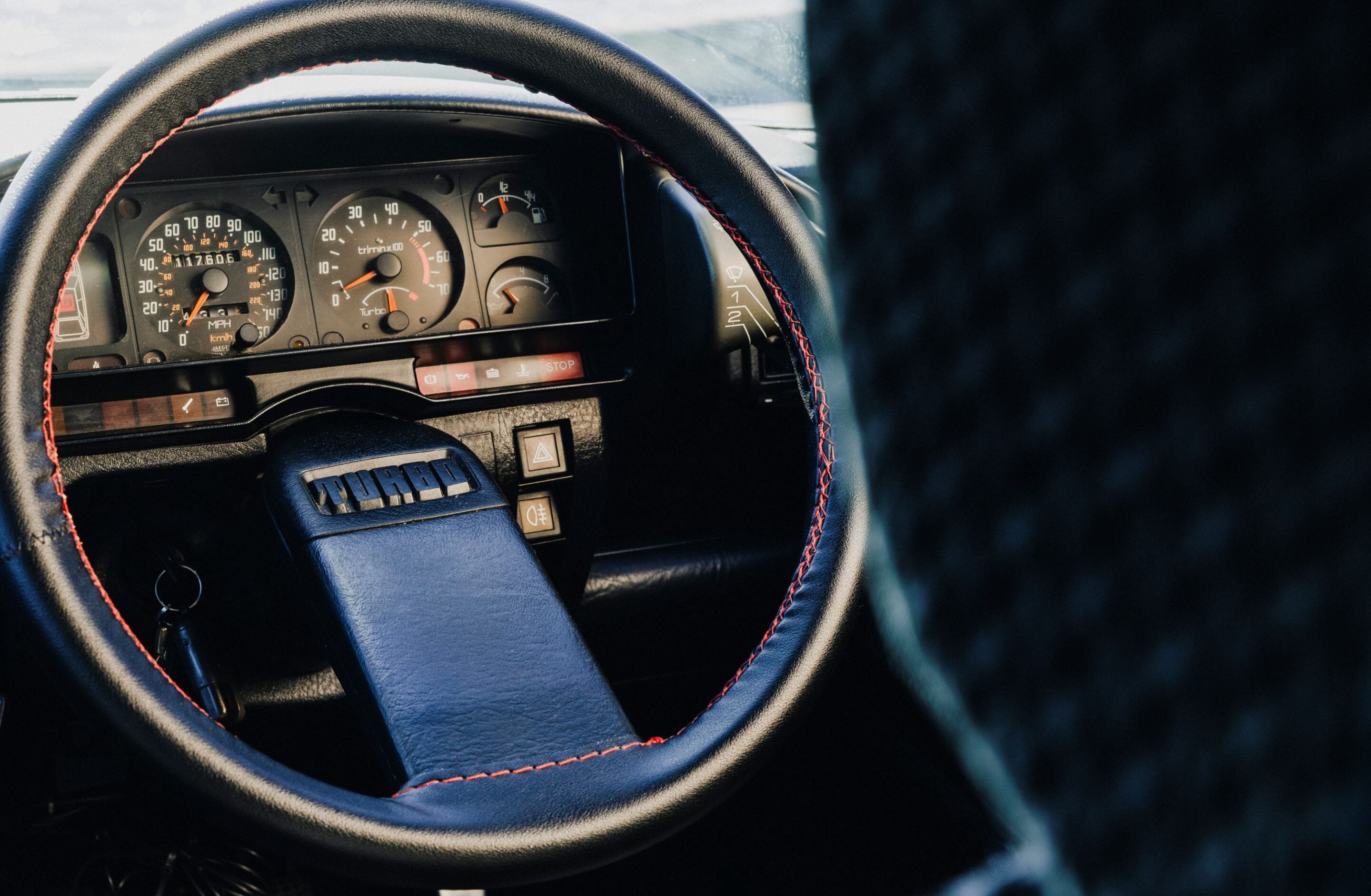
The CX’s avant-garde design continued in the cabin, with an instrument cluster that looked like nothing else the world had seen. Traditional dials were out. In their place, two rotating drums festooned with painted numbers scrolled through speed and engine revolutions. Citroën believed in the ergonomics of the driver’s eye being able to read car and engine speed in a single moment without having to follow the sweep of a needle on traditional dials.
The steering wheel was lifted straight from the DS and with its single-spoke located at six o’clock, afforded an unimpeded view to the instrument cluster.
1
Steering column-mounted stalks were consigned to history and in their place, two pods – one on each side of the instrument cluster and within fingertip reach – activated indicators, lights, windscreen wipers and even the CX’s horn without the driver ever having to take a hand off the wheel.
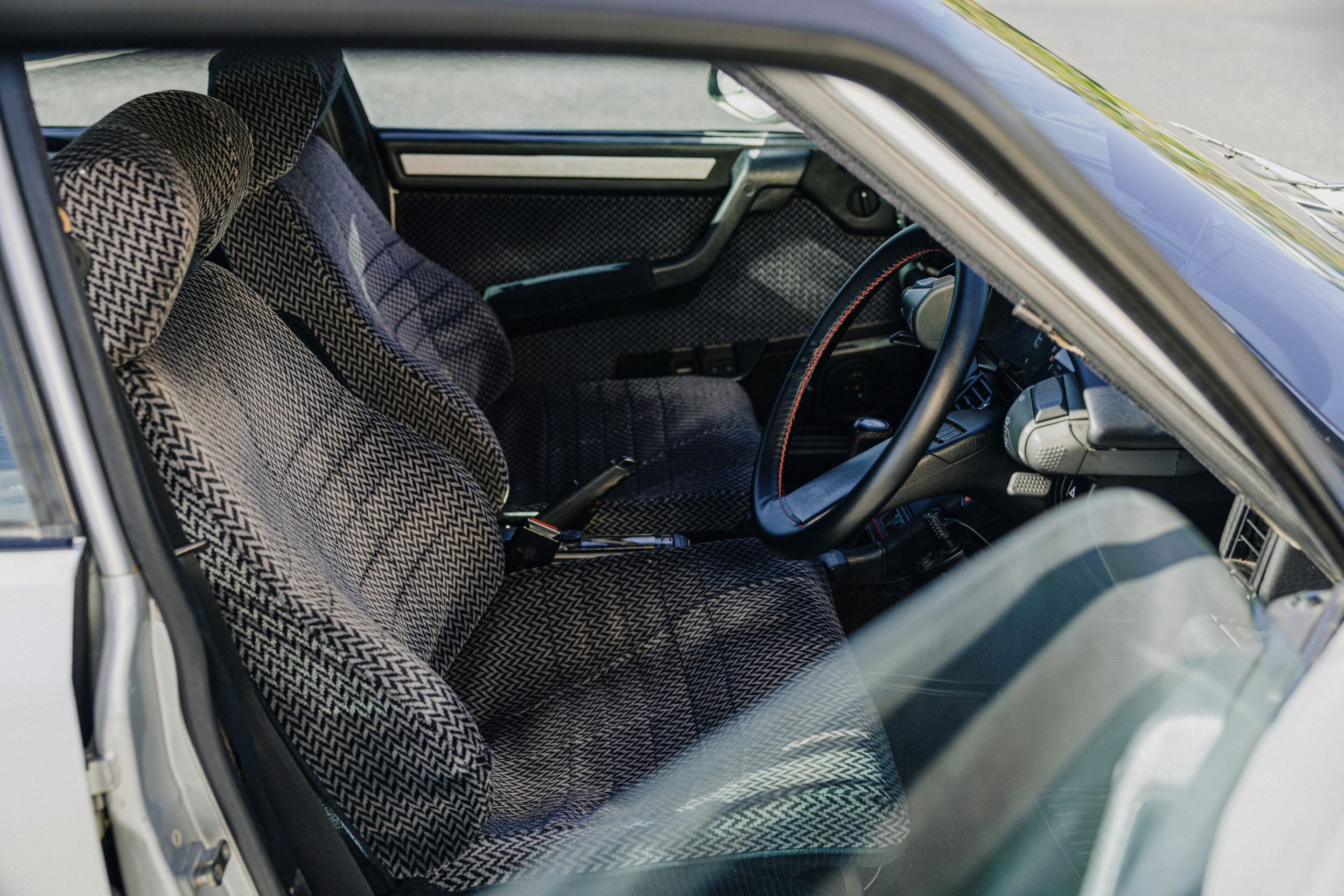
Material quality erred on the side of soft, with plump quilted seats redolent of the era. The door cards deserve special mention, blending futurism and functionality in a design described by Wheels at the time as “sculptures in their own right”. Looking back at it now, we weren’t wrong.
The Citroën CX officially launched on August 28, 1974 ahead of its debut at the Paris Motor Show in October that year. It was the star of the show, and the centrepiece of Citroën’s stand. Citroën needed a hit and in the CX, found it.
Just a few months earlier, and facing imminent bankruptcy, the French carmaker was forced to sell a 38.2 per cent stake to arch-rival Peugeot. By April the following year, Peugeot had increased its stake to almost 90 per cent.
Like so many carmakers around the world, Citroën’s fortunes had floundered in the face of 1973’s oil crisis. With fuel security on shaky grounds globally, sales of its Maserati V6-powered SM bottomed out.
Add in the money pit that was Citroën’s development of a twin-rotary engine (Birotor) for the GS, an engine that not only proved hopelessly unreliable but also enjoyed an unquenchable thirst for fuel, and the ingredients were in place for a financial bailout. So bad was the Birotor engine, co-developed with German carmaker NSU, that just 847 cars were built before Citroën pulled the pin. To erase the memory of bad decisions – and to avoid lengthy and costly warranty claims – Citroën attempted to buy back and scrap the Birotor-afflicted cars.
1
It was into this financial climate that the CX hit dealerships. It was an instant commercial and critical success. Citroën had rediscovered its mojo.
Wheels enjoyed an early first taste of the CX ahead of the car’s public unveiling. And we were immediately smitten, writing in our October 1974 issue that “Citroën has done it again with the CX range – a new four-door sedan which slots between the GS and the D series. It’s a car totally attuned to today’s motoring needs and is already being acclaimed as the best two-litre car in the world. After driving it we can understand why.”
It wasn’t just Wheels who saw the CX’s virtues, the long, sleek liftback sedan awarded the European Car of the Year gong in 1975, beating the Volkswagen Golf and Audi 50 into second and third respectively. It was the second time in four years Citroën had won the award with the non-rotary GS taking home the trophy in 1971.
Citroën wasted no time expanding the CX line-up, filling dealerships with a range of engines, transmissions, and bodystyles including the Prestige, a long-wheelbase (by 25cm) version that became the favoured ride of French government officials and, somewhat incongruously, East German leader Erich Honecker.
The same extended platform formed the basis for the CX Safari, a seven-seater station wagon that looked like nothing else on Earth at the time.
Always a little underpowered from launch, the CX finally got the engine it needed – and thoroughly deserved – in July 1976 when the 2.4-litre (2347cc) fuel-injected engine from the final DS found its way under that low, wide bonnet.
1
More than just added grunt, the CX 2400 GTI added a sporting demeanour to the comfortable flagship. With 96kW and 197Nm, the sportier CX impressed from the outset, contemporary reviewers praising its generous torque band and “the extraordinary flexibility of the engine, especially when it is remembered that it only has four cylinders”.
More than just a power bump, the GTI also scored cosmetic enhancements including blacked-out window frames, alloy wheels, fog lamps and a front splitter that lent it a more purposeful profile.
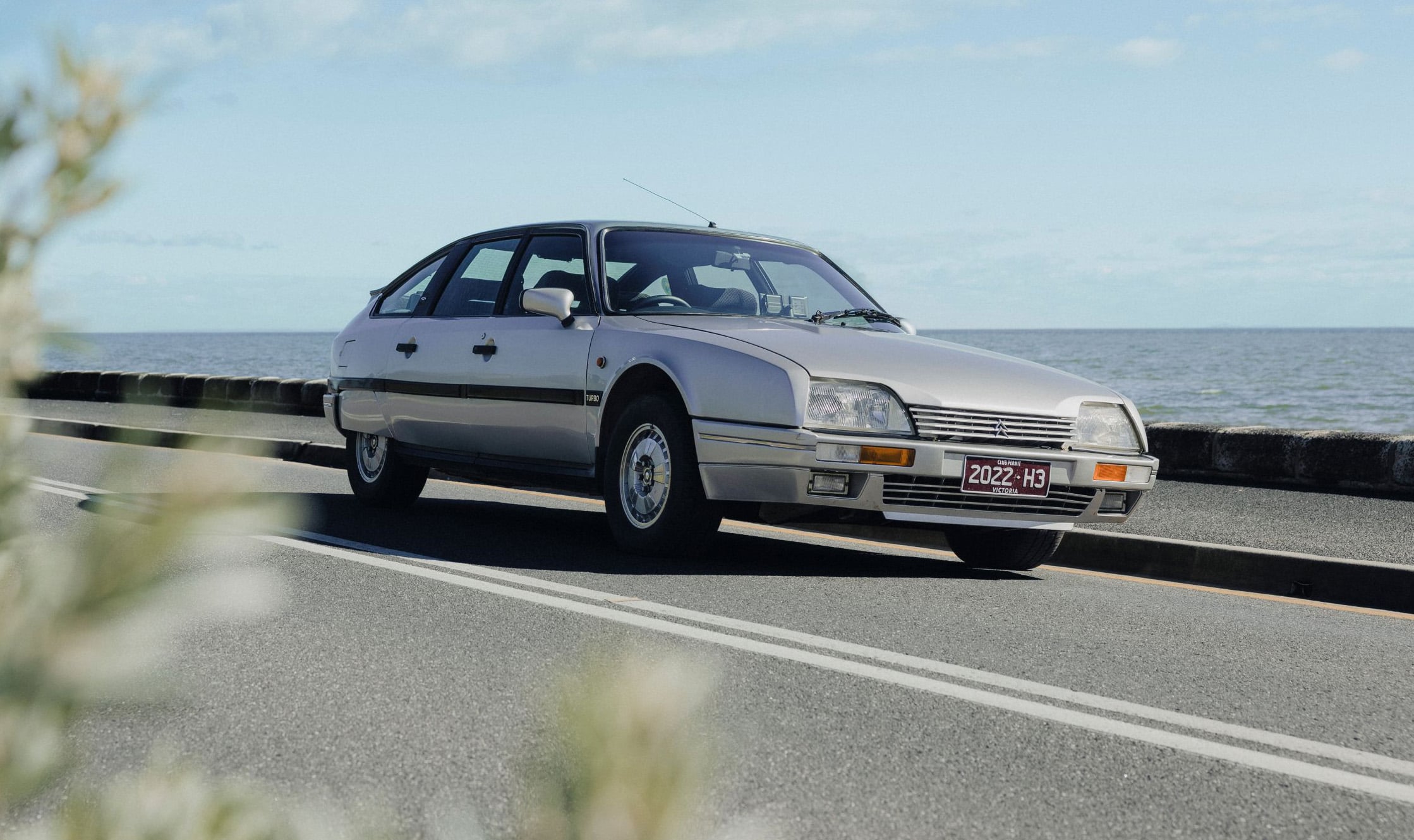
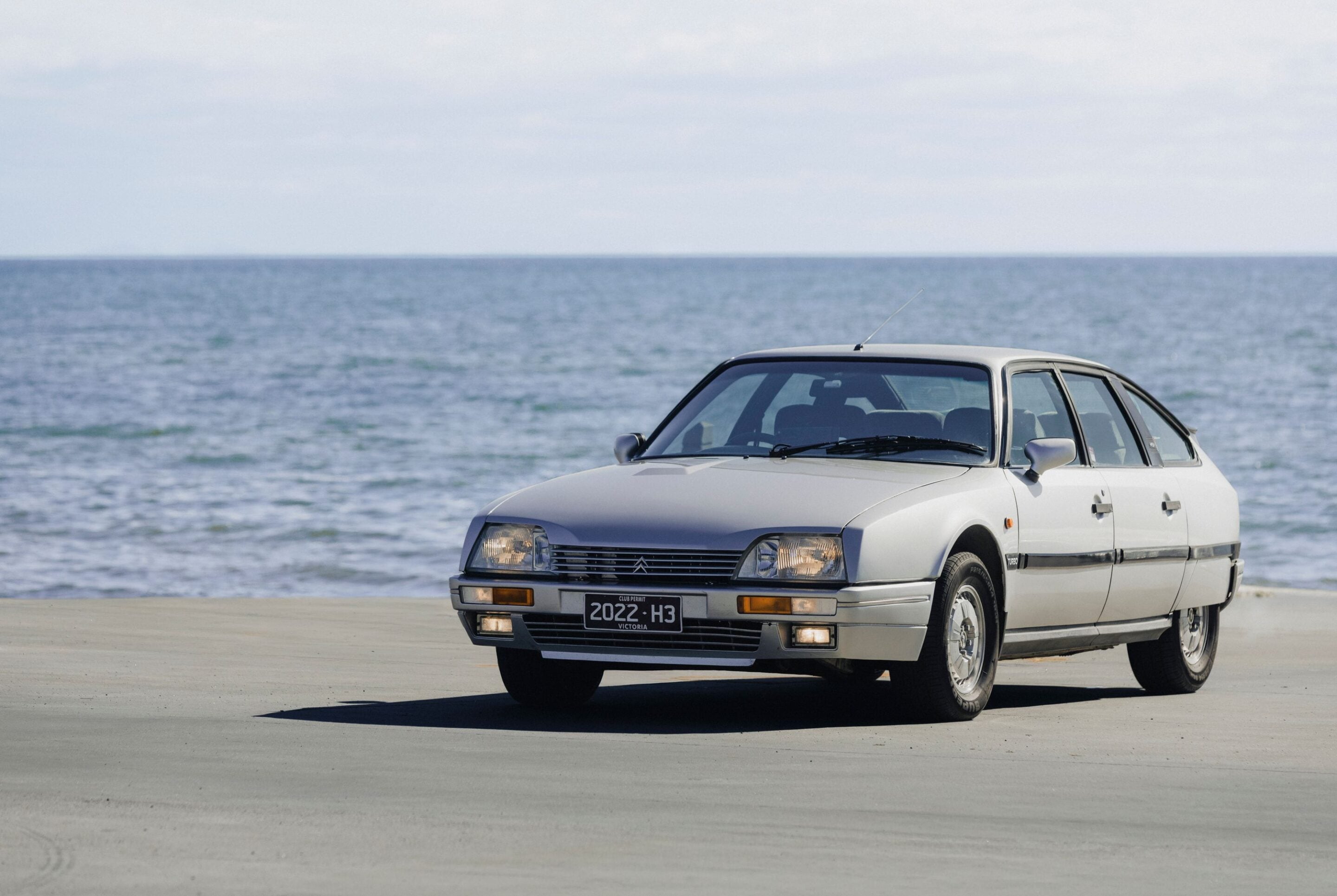
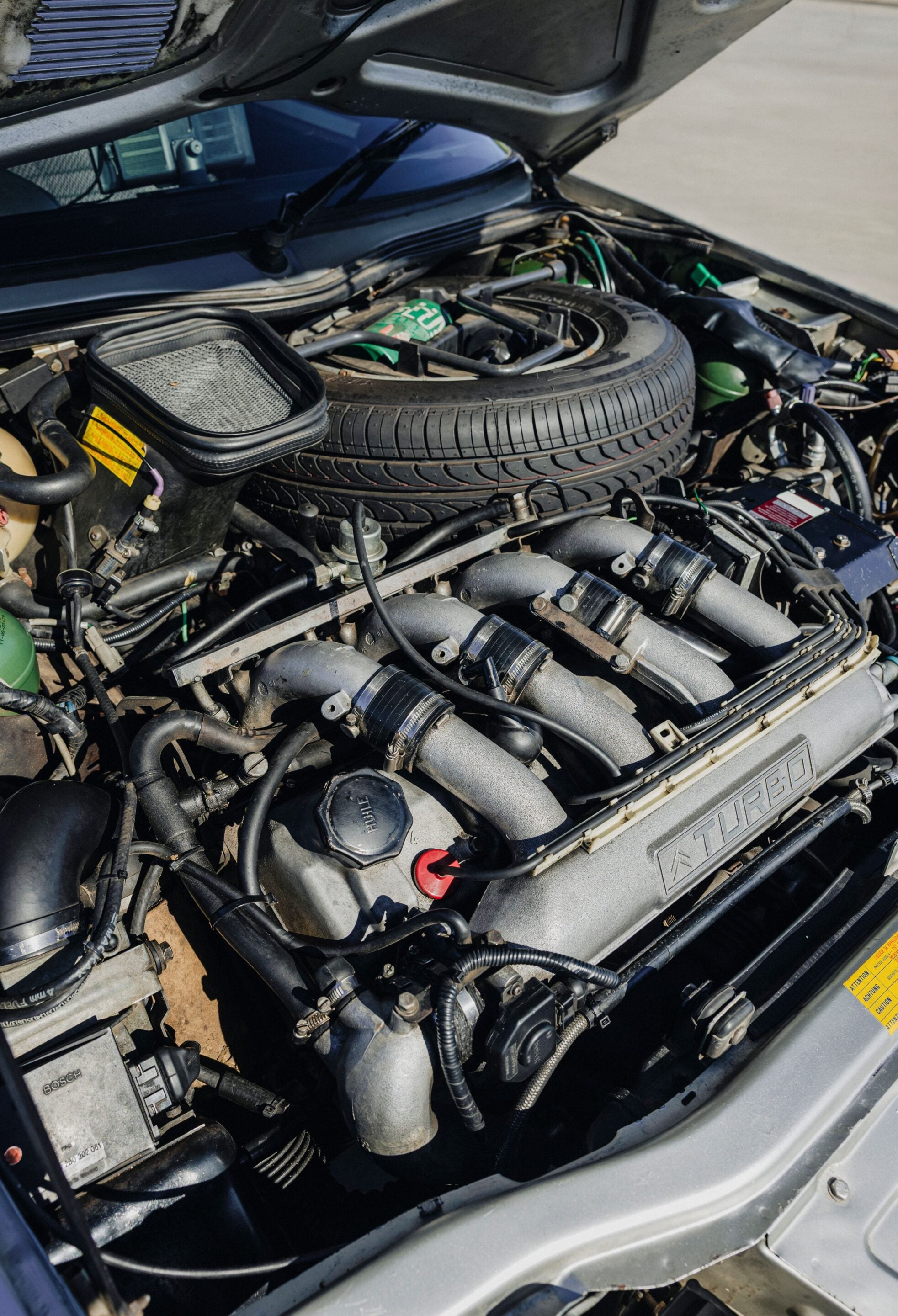
Engine displacement increased to 2.5 litres in 1984 and the addition of a turbocharger transformed the CX into something else altogether. Now making a more than respectable 124kW and 294Nm, the svelte liftback was subtly distinguished by new alloy wheels and rear spoiler.
The hero, however, was the 2.5-litre turbo-four under the bonnet which helped propel the CX from standstill to 100km/h in around 8.0 seconds. Rather than hunting outright acceleration, however, Citroën’s engineers tuned the GTI Turbo to be more responsive through the gears, making good use of all that available torque from low down in the rev range. The Garrett T3 turbocharger, running 8psi maximum boost, was well calibrated prompting one contemporary reviewer to remark “there is no obtrusive throttle lag to make life tedious: in fact, there is only a slight whine from the turbine to indicate that this is not a normally aspirated machine, even though the performance very definitely suggests otherwise”.
The GTI Turbo became the fastest French sedan in history, although its reign was short-lived, the updated CX GTI Turbo 2 introduced in 1986 upping top speed to 223km/h while simultaneously reducing fuel consumption. It was a triumph and a fitting performance flagship for the Citroën CX as it neared the end of its life cycle.
The Citroën CX sedan was the first to bid adieu, phased out in 1989, to be replaced by the XM. The CX station wagon remained in production until 1991 and when the tricolour flag finally came down, some 1.16 million CXs had rolled out of Citroën’s factory.
The end of CX production closed a chapter in the French brand’s grand and storied book, the last ‘real’ Citroën to be designed and engineered entirely in-house without Peugeot’s oversight. The same can’t be said for the models that followed, every new Citroën imbued with Peugeot’s amortisation, slowly diluting the very essence of the brand. Citroën’s DNA runs deep in the CX, the last ‘true’ Citroën and a worthy successor to The Goddess.
6
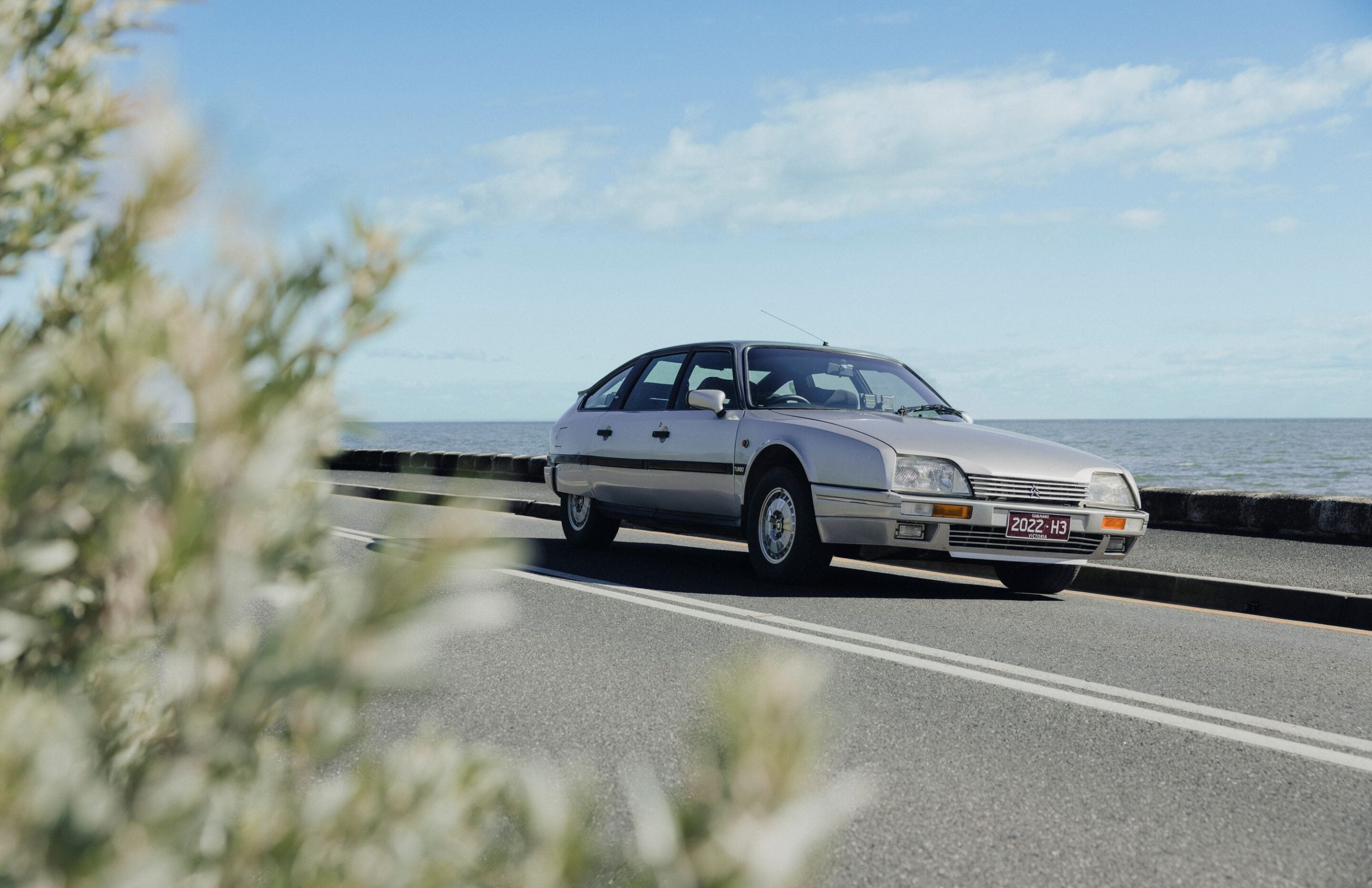
Our Citroën CX GTI Turbo
“I first saw one in the Champs Élysées when I was in my mid-20s (I’m now 68) and was struck by its futuristic design,” recalls Wheels reader Peter Moloney. “Even today at 40 years old, it doesn’t look out of place on the road.”
Peter bought his 1986 Citroën CX GTI Turbo 2 around four years ago. The privately imported model (Australia did not get the GTI Turbo), an ex-UK car, has around 108,000 miles (173,809km) showing on the odometer and remains as strikingly handsome as it did when first launched.
It’s been a reliable runner, according to Peter, who does most of the servicing on it himself – “just the odd electronics gremlin” – because “no one else will touch them. Chickens!”
The CX isn’t the only Citroën in Peter’s garage. He confesses to also owning a 1974 DS de Pallas, the last iteration of The Goddess before it made way for the CX. He also has a quirky, but utterly beguiling Citroën Acadiane, a small commercial van based on the Dyane.
Peter’s other cars include his daily driver Mercedes-Benz CLE convertible and a 1984 Mercedes-Benz 500SEL.
“Yes, I know it’s an eclectic group of cars but I try to get cars I have admired over the years,” he admits. “The Citroëns attract me the most for their futuristic design and great engineering. I particularly like the comfort of the hydropneumatic suspension.”
Specs
| Model | 1986 Citroen CX GTI Turbo 2 |
|---|---|
| Engine | 2499cc turbocharged inline four-cylinder |
| Power | 124kW @ 5000rpm |
| Torque | 294Nm @ 3250Nm |
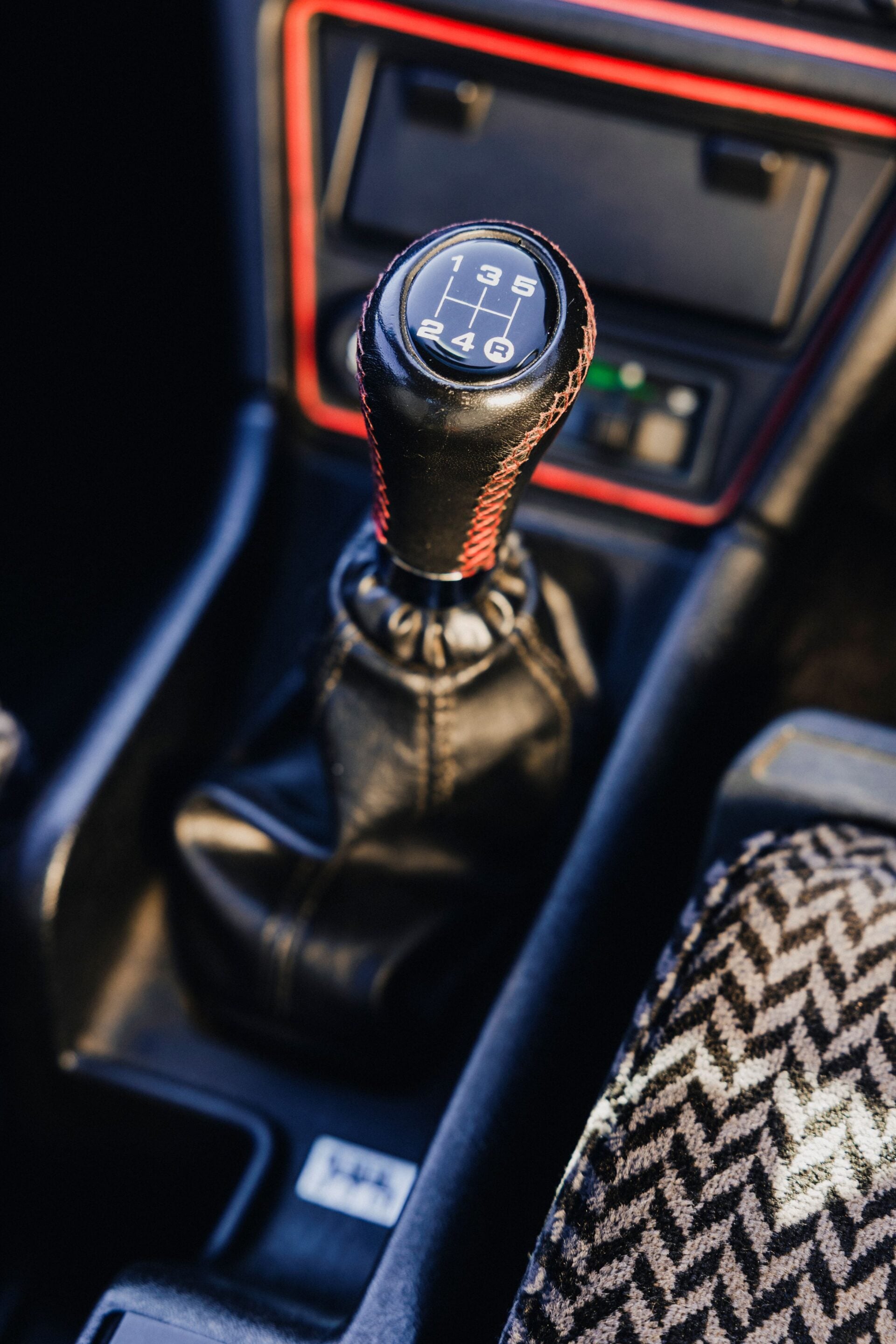
| Transmission | 5-speed manual, front-wheel drive |
| 0-100km/h | 8.0 seconds |
| Top speed | 223km/h |
| Wheels | 15-inch alloys, Michelin TRX tyres |
| Dimensions (l/w/h/wb) | 4660/1770/1360/2840mm |
| Kerb weight | 1385kg |
| Suspension | Hydropneumatic with self-levelling and variable ride height |
| Brakes | Hydraulically assisted ventilated front and solid rear discs |
| Price when new | 137,800 French Francs (approx. A$34,000 in 1986 money) |
This story first appeared in the November 2026 issue of Wheels magazine, now on sale. Subscribe here and gain access to 12 issues for $109 plus online access to every Wheels issue since 1953.
Follow WhichCar/Wheels on Google
Click the button below to make WhichCar by Wheels a preferred source for your news.