
News

Gallery 1
Artificial intelligence is about to shift up another gear in Australia, this time with nothing to do with the technology fitted to new cars.
Instead, AI will be used to help manage Brisbane traffic under a $15 million trial aimed at cutting congestion, improving travel times and reducing crashes.
Brisbane City Council will install the technology at 37 intersections – 22 along Logan Road and 15 on the Kelvin Grove Road corridor – with the six-month pilot scheduled to begin in early 2027. More than 62,000 vehicles use Kelvin Grove Road each day, while Logan Road carries another 30,000.

1
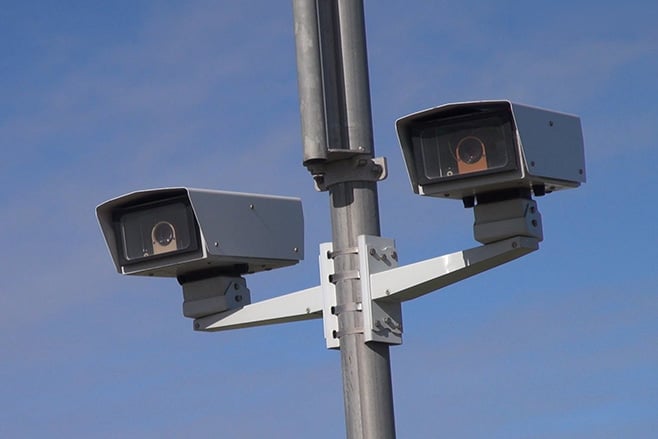
The system will use existing traffic cameras, edge computing and AI to recognise cars, trucks, buses, pedestrians and cyclists, determine traffic volumes and queue lengths, and calculate the most effective traffic-light sequence in real time.
It will connect to the council’s existing SCATS traffic signal network and operate at both council and state-controlled intersections, replacing the conventional phase-based approach that has been used for decades.
Council modelling suggests the technology could cut average travel times by up to 15 per cent and intersection queue lengths by 22 per cent. Safety improvements are also predicted, including a 12 per cent reduction in rear-end crashes and an 18 per cent drop in red-light violations.
The system can also respond to changing circumstances including weather and major events, while the council will be able to set priorities for individual corridors. That could mean favouring pedestrian movements in some locations, public transport in others, or freight traffic at particular times.
Brisbane City Council transport chair Ryan Murphy described the technology as fitting onto existing infrastructure “like a top hat”, but said human operators would remain in control.
“The system will learn over time and will be able to suggest different interventions to the operators,” Murphy said.
Privacy safeguards will include automatically blurring faces and number plates. Data will be retained in council-owned and managed data centres at four Brisbane locations and will not be sent offshore.
The project will be delivered by a consortium comprising Australian company J1-LED, engineering consultancy WSP and Intelligent Traffic Control.
If successful, the technology could eventually be extended across Brisbane’s 5000km road network and approximately 1000 signalised intersections.
Neighbouring Moreton Bay is also preparing an AI traffic-light trial at a single intersection in Petrie.
Follow WhichCar/Wheels on Google
Click the button below to make WhichCar by Wheels a preferred source for your news.


We recommend
-
 News
NewsAI-generated vehicle repairs on the increase in alarming new trend
Car owners are turning to generative AI for solutions to car maintenance issues, but could be running up bigger repair bills in the process.
-
 News
NewsAustralia's first AI-powered traffic lights are on the way with a promise to reduce waiting times
A Queensland council will begin the traffic experiment later this year, and the company behind the tech says there's more interest down under.
-
 News
NewsAI traffic cameras lead to surge in road fines across Australia
Automated enforcement technology is lifting fine revenue nationwide, with most offences now detected by cameras rather than police.
