News

Gallery 1
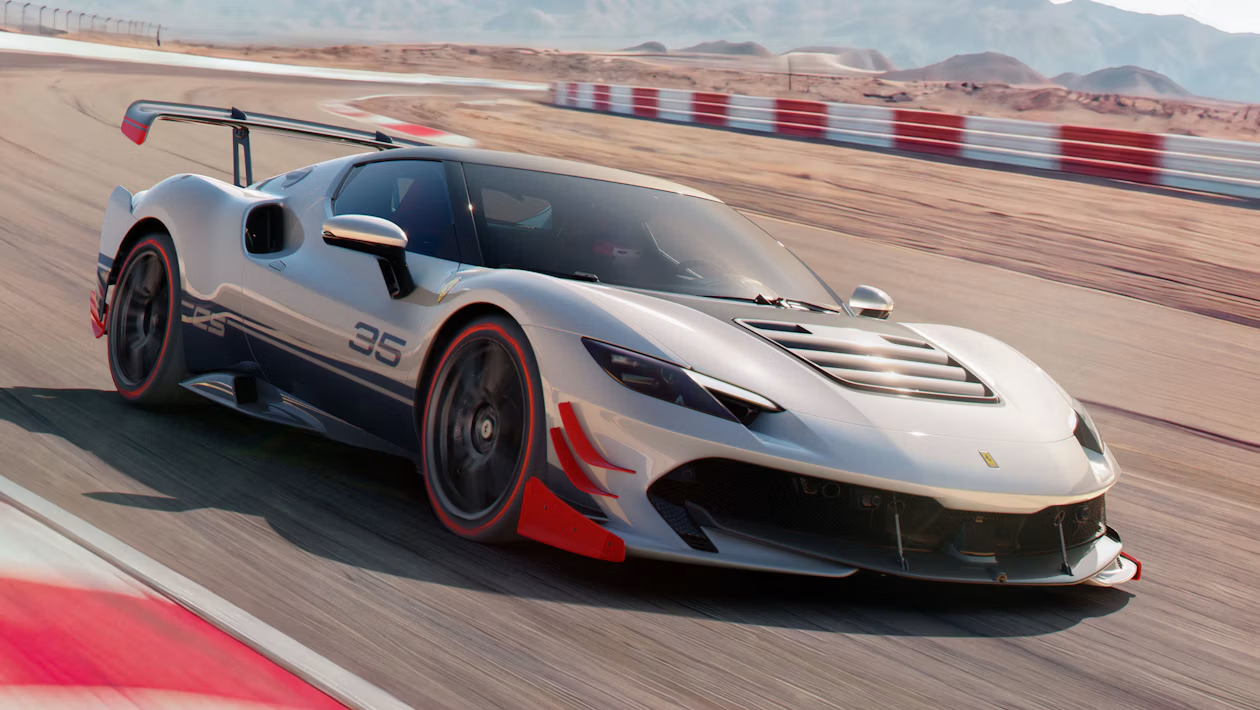
Ferrari has revived one of its most celebrated performance badges after 22 years, unveiling the new 296 Challenge Stradale as a lighter, more focused alternative to its existing mid-engined supercars – and the big surprise is what it removed.
Revealed at the 2026 Ferrari Finali Mondiali event in Barcelona, the newcomer follows in the tyre tracks of the 2003 Ferrari 360 Challenge Stradale, which became famous for bringing race-car technology and an uncompromising driving experience to public roads.
5
Unlike the regular 296 GTB and its more aggressive Speciale sibling, the Challenge Stradale abandons plug-in hybrid assistance altogether. Instead, it relies exclusively on a revised 3.0-litre twin-turbocharged V6 producing 493kW and 740Nm, with the engine spinning to 8500rpm. Power is sent exclusively to the rear wheels through an eight-speed dual-clutch automatic transmission.
Although the Challenge Stradale gives away almost 120kW to the hybrid 296 GTB, it compensates by shedding 140kg, bringing its dry weight down to just 1330kg. That translates into a 0–100km/h sprint of 2.8 seconds, matching the 296 Speciale and beating the standard GTB by one-tenth of a second.
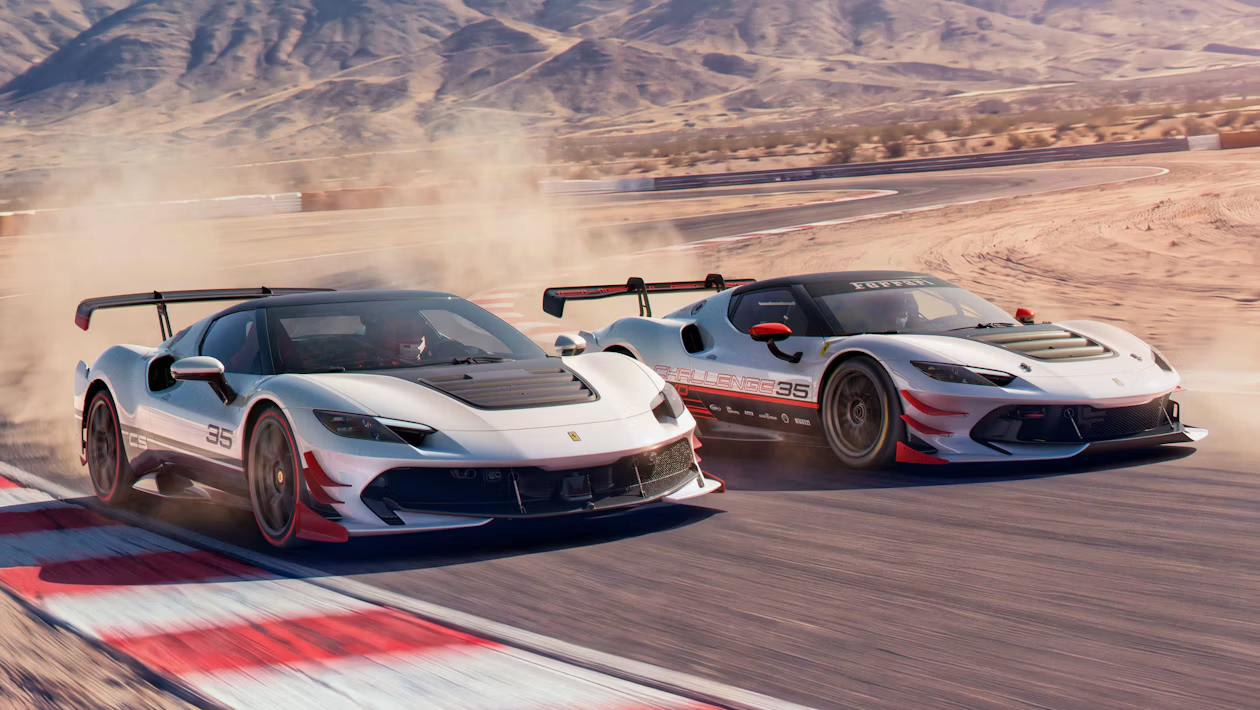
Ferrari says the Challenge Stradale has the closest connection to a racing car of anything in its current road-going line-up. To underline that relationship, the company unveiled it alongside the track-only 296 Challenge EVO, with both machines developed in close collaboration.
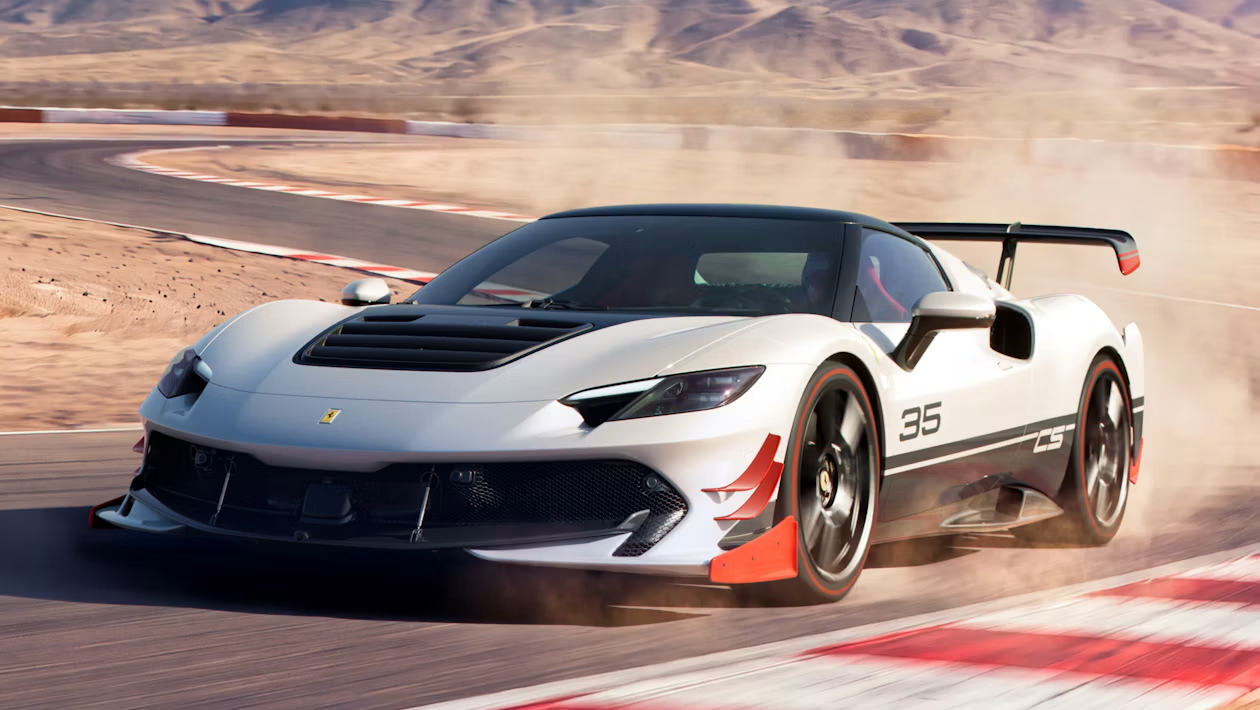
The racing influence is impossible to miss. Up front, the Challenge Stradale gains a massive splitter, prominent aerodynamic vanes ahead of the front wheels and a redesigned bonnet incorporating an outlet for hot air from the radiators.
A towering fixed rear wing dominates the tail, while a completely enclosed underbody and enormous rear diffuser help generate 617kg of downforce at 250km/h. That’s a substantial 72 per cent increase over the regular 296 GTB.
6
The rear also features a mesh panel inspired by the original 360 Challenge Stradale, with larger exhaust outlets designed to reduce back-pressure and emphasise the V6’s high-pitched soundtrack. Semi-active dampers are fitted, while buyers can choose between Pirelli P Zero R and more track-focused Trofeo RS tyres.
Inside, Ferrari has taken a similarly ruthless approach to saving weight. The familiar 296 dashboard remains, but the centre armrest, storage pockets and much of the carpeting have disappeared. Some sections of the chassis are deliberately left exposed, while carbon-fibre door panels and optional lightweight carbon-fibre seats further reduce mass. But despite the minimalist treatment, Ferrari has retained a cup-holder and wireless phone charging.
The steering-wheel-mounted Manettino driving-mode selector has also been upgraded with predictive slip control, designed to deliver less intrusive electronic intervention during hard driving.
Working alongside the ABS Evo braking system, the technology helps the Challenge Stradale lap Ferrari’s Fiorano test circuit in 1min 18.5sec, half a second quicker than the 296 Speciale.
Australian pricing and availability remain unconfirmed, although the Challenge Stradale is expected to command a substantial premium over the already expensive 296 Speciale. Production is expected to begin in 2027, and you can bet your house that demand will comfortably exceed supply.
Follow WhichCar/Wheels on Google
Click the button below to make WhichCar by Wheels a preferred source for your news.