
News

Gallery 1
Ford CEO Jim Farley has talked up the brand’s upcoming Universal Electric Vehicle (UEV) platform, boasting that it will be around 30 per cent more efficient than products from BYD – and allow the Blue Oval to run with smaller batteries in models like the upcoming Fathom pickup truck.
Farley (pictured below) was speaking at the carmaker’s third-quarter earnings call when he went into some detail about how Ford has pulled out the advantage over BYD, which has beaten it to second place on the Australian sales charts this year.

2
“There’s another area that we really found to be quite advantaged relative to BYD, and that is the efficiency of our motors, gearbox and inverters, which are about 30 per cent more efficient than their and allows us to design a battery that’s much less. I think that’s really critical,” Farley said.
The CEO was referring to Ford being able to drive down costs and weight by installing a smaller battery in vehicles built on the UEV platform. Although the company hasn’t revealed the size of the battery in the first of those cars, the Fathom, reports have placed it at around 50-50kWh, and batteries are the biggest single cost for an EV.
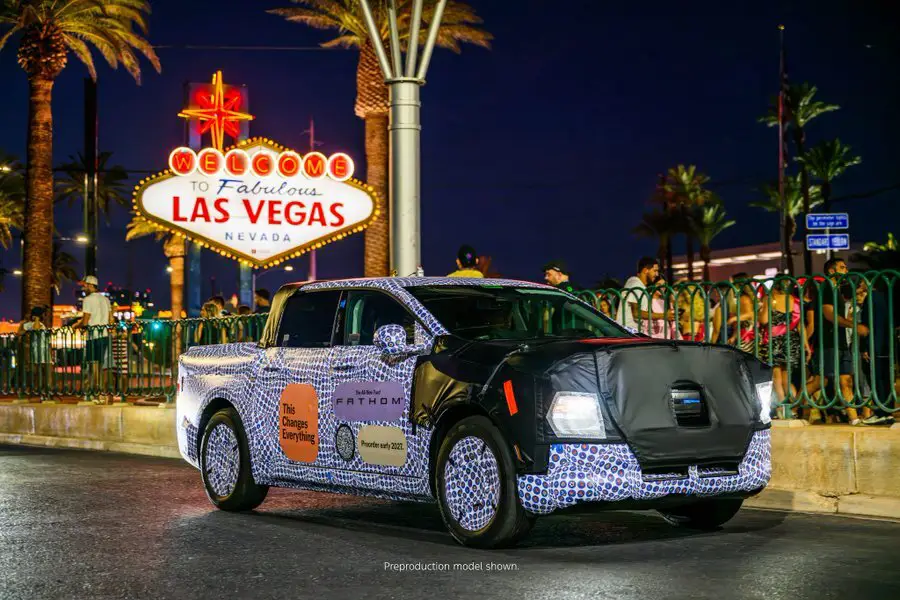
The Fathom (pictured below in official Ford images) will sell for approximately $40,000 in the USA when it officially launches late in 2027, with Ford aiming to sell 100,000 of them in the first year, according to a report in the Wall Street Journal. Should it hit that mark, it would become one of the best-selling EVs in the States.
2
Gains from the tech going into the UEV platform won’t be restricted to battery-electric vehicles, either, with Ford chief operating officer Kumar Galhotra saying the efficiency increases will also be shared with the brand’s hybrid cars.
Farley has previously called the UEV program “the most radical change on how we design and how we build vehicles at Ford since the Model T”, and Alan Clarke, the brand’s vice president of advanced development projects, said, “If we succeed, we will have a family of vehicles that we expect to compete on price with the best in the world, including gas [petrol] vehicles.”
Follow WhichCar/Wheels on Google
Click the button below to make WhichCar by Wheels a preferred source for your news.

We recommend
-
 News
VFACTS September 2026: Ford Ranger's stunning turnaround takes it back to No.1 as the EV tide shows no signs of slowing
VFACTS September figures show Australia's new-car market had 108,778 sales in September, up 0.9 per cent from the same month last year.
-
 News
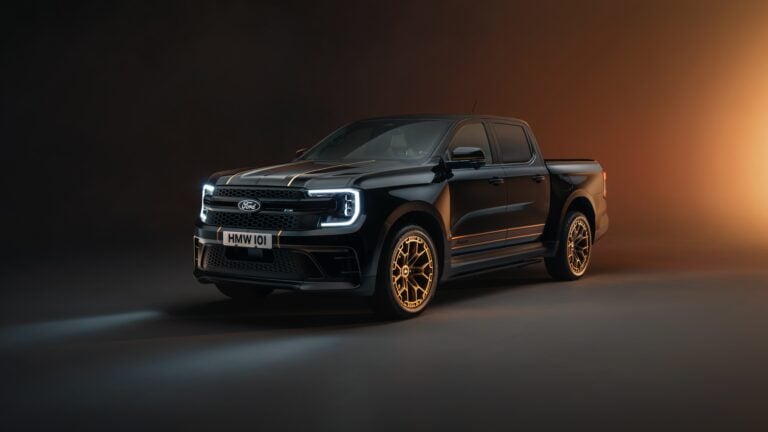
Ford unveils the new, sportier Ranger MS-RT – but don't hold your breath for an Aussie release
Ford has unveiled an even sportier version of its Ranger MS-RT at the Paris Motor Show, complete with gold wheels, racing stripes and lowered suspension.
