News
Gallery 1
Honda is developing technology that could allow electric vehicles to recharge while driving, potentially reducing the need to stop at conventional charging stations.
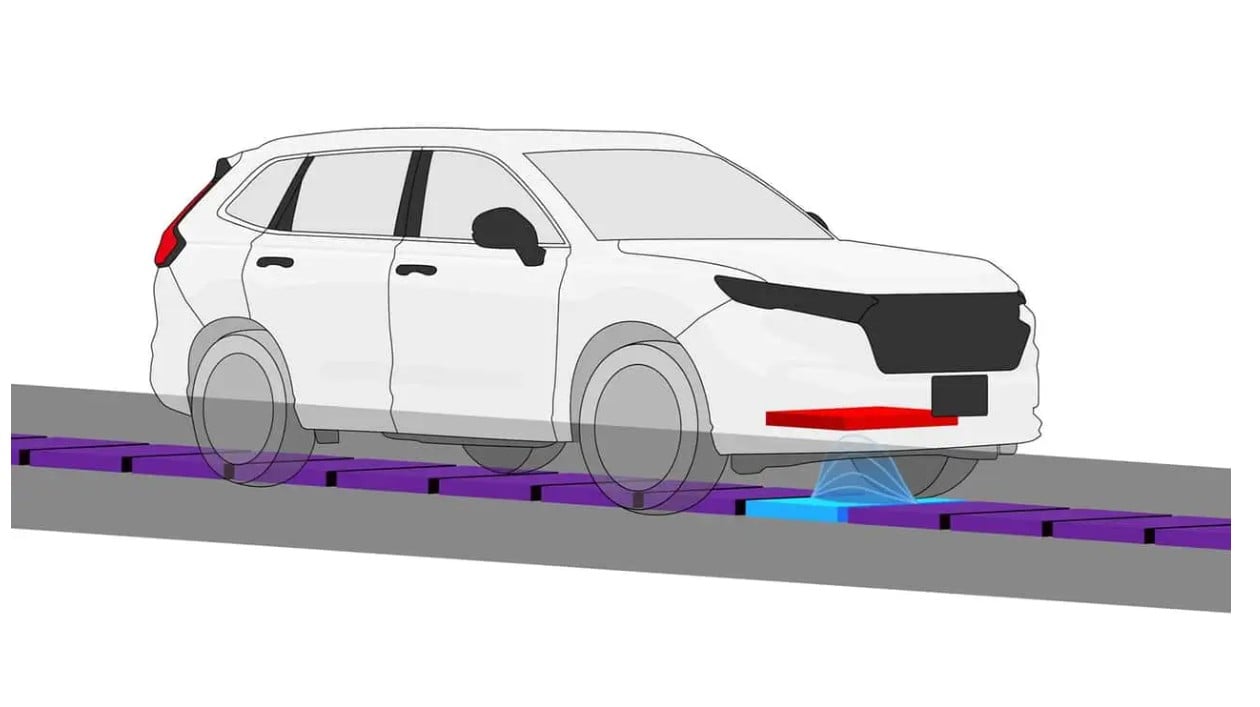
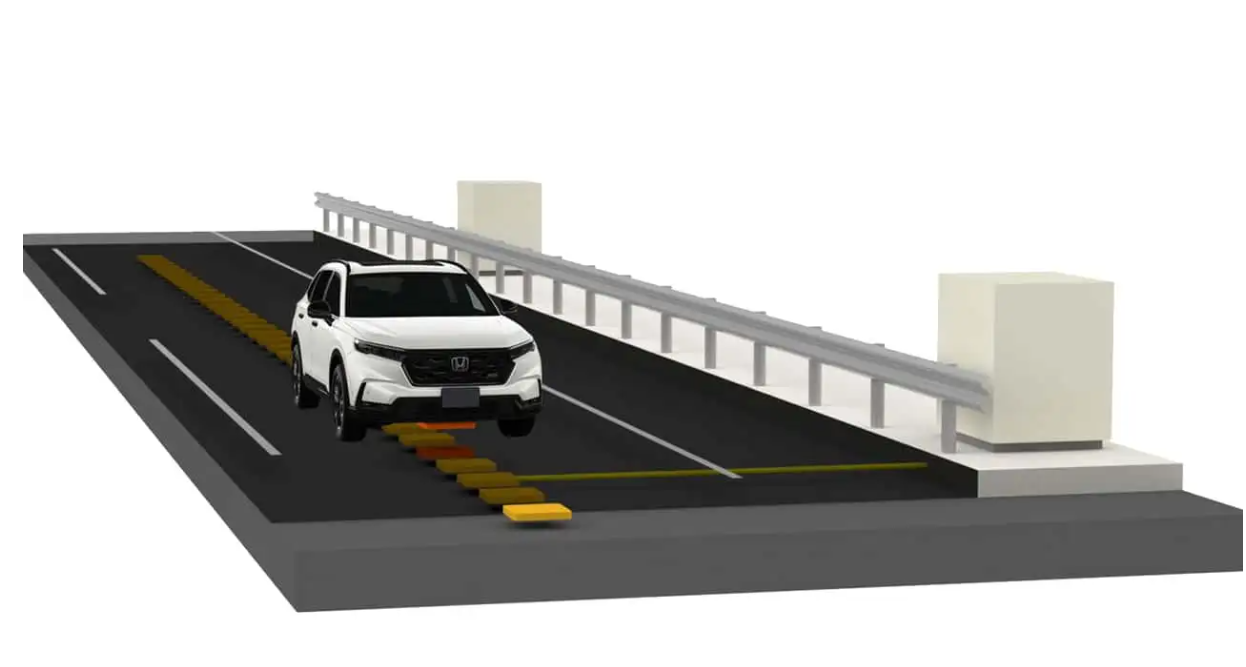
The Japanese manufacturer has joined construction companies Taisei Corporation and Taisei Rotec to develop a wireless charging system that places power-transmitting equipment beneath the road surface. Honda has been researching the broader technology since 2021.
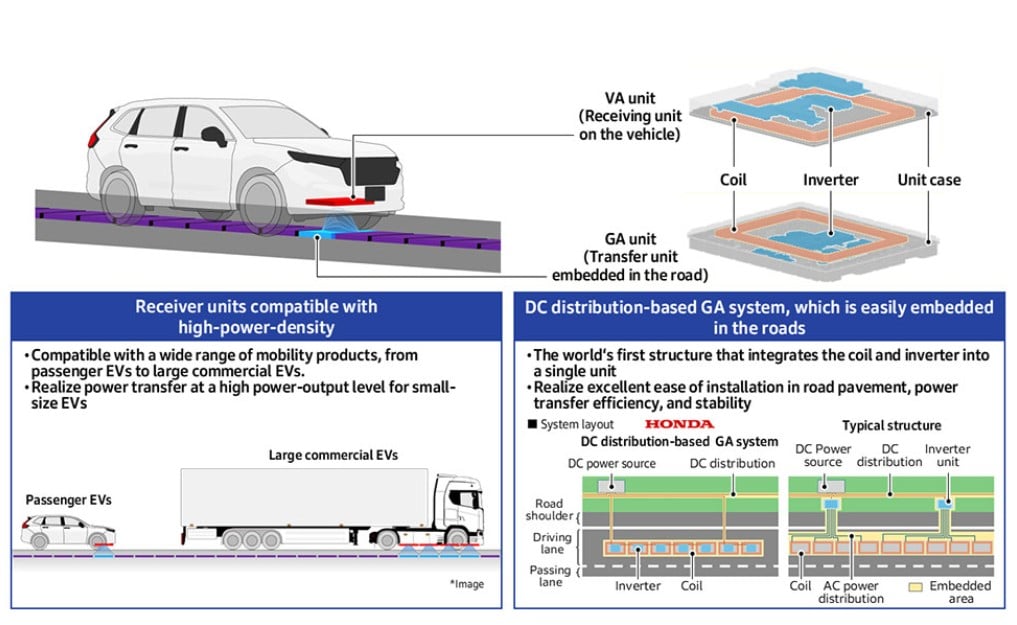
Rather than plugging in, a compatible EV would receive electricity wirelessly from equipment embedded in the road as it passes overhead. Honda says the technology could eventually work with vehicles ranging from passenger cars to large commercial trucks.
1
The concept could reduce how often EV drivers need to stop for charging, while potentially allowing vehicles to use smaller batteries because they could receive additional energy during a journey.
Honda is initially concentrating on commercial transport and logistics, where vehicles travel predictable routes and can spend long periods on the road.
One challenge is making the equipment tough enough to survive beneath busy roads. Testing has therefore included pavement designed to withstand repeated use by commercial vehicles weighing around 20 tonnes.
The system uses a series of power-transmitting units installed beneath the road, matched to a receiver fitted to the vehicle. Honda says the design has also been developed so equipment can be installed in existing roads and more easily replaced or upgraded later.
1
A new test road is scheduled to be built in Japan from late 2026, where durability, wireless charging performance and electromagnetic leakage will be assessed. Testing will simulate one million wheel loads using actual vehicles.
Honda and its partners will subsequently test charging outputs of up to 150kW and assess whether the system can reliably transfer power to vehicles travelling at higher speeds.
The technology is then scheduled to move onto public roads from Japan’s 2027 fiscal year. Honda, Taisei and Taisei Rotec will participate in a trial on the Tateyama Expressway in Chiba Prefecture.
For now, the technology remains experimental, with no timetable announced for widespread commercial use.
1
Follow WhichCar/Wheels on Google
Click the button below to make WhichCar by Wheels a preferred source for your news.

We recommend
-
 News
NewsHonda explains why it won’t join the price-war "race to the bottom" as cheap Chinese cars flood Australia
Honda has hit back at new brands that are piling into Australia with sharp prices and long equipment lists.
-
 Reviews
2026 Honda ZR-V VTi X review: Updated SUV is the 'Goldilocks' of the segment
The Honda ZR-V straddles the gap between small and medium SUVs. But is it too large? Or too small? Or is it just right?
-
 Reviews
2026 Honda Super-One review: Forget 500kW, this is entertainment
Honda’s first Australian EV is tiny, expensive and short on range, but the Super-One proves that electric cars don’t need huge power to entertain.