Reviews

Gallery 1
7.4
/10
Score
Score breakdown
6.0
Safety, value and features
7.0
Comfort and space
7.0
Engine and gearbox
9.0
Ride and handling
8.0
Technology
Things we like
- A big grin-maker all the time
- Surprisingly practical for its size
- Easy to use in-car tech
Not so much
- Not without compromise
- Expensive compared to rivals
- Short range is always noticeable
In my opinion, the past decade or so hasn’t exactly been a golden era for the global automotive industry. The shift towards SUVs, the lack of physical buttons and same-same styling across the market are some of the biggest offenders, but at the top of the list for me is the loss of fun. Most car manufacturers have gone boring and, sure, that’s where the money is, but hey, us enthusiasts are still here, strict emissions laws or not.
Appeasing emissions laws is easy to do with EVs, and many of them are entertaining in an insane-acceleration sort of way, but after you’ve recovered from the initial stomach-churning novelty, there’s generally little engagement left. Thankfully, Honda – a brand with a storied history of making fun-to-drive products – has decided the industry needs a little more entertainment. Enter the Super-One.
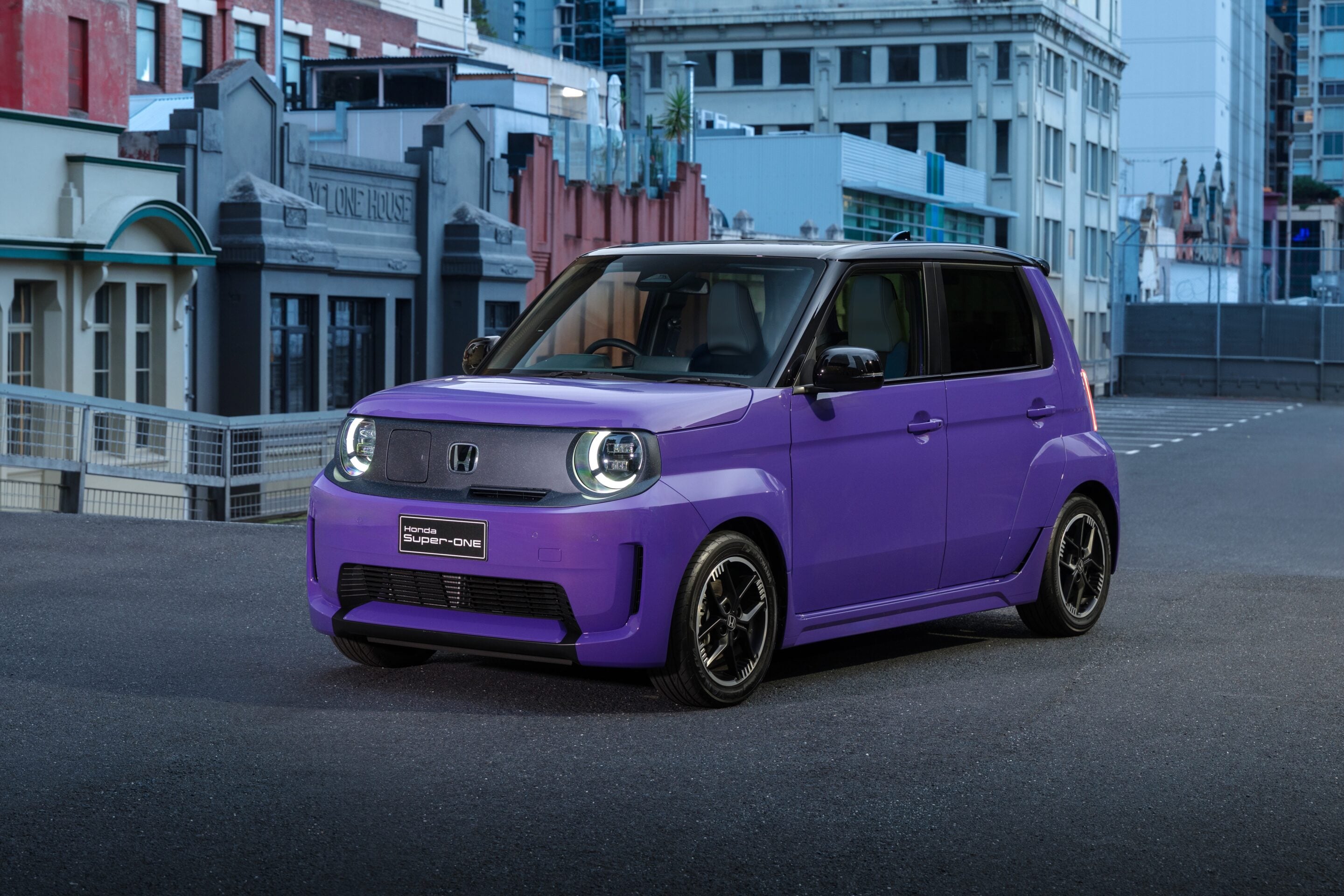
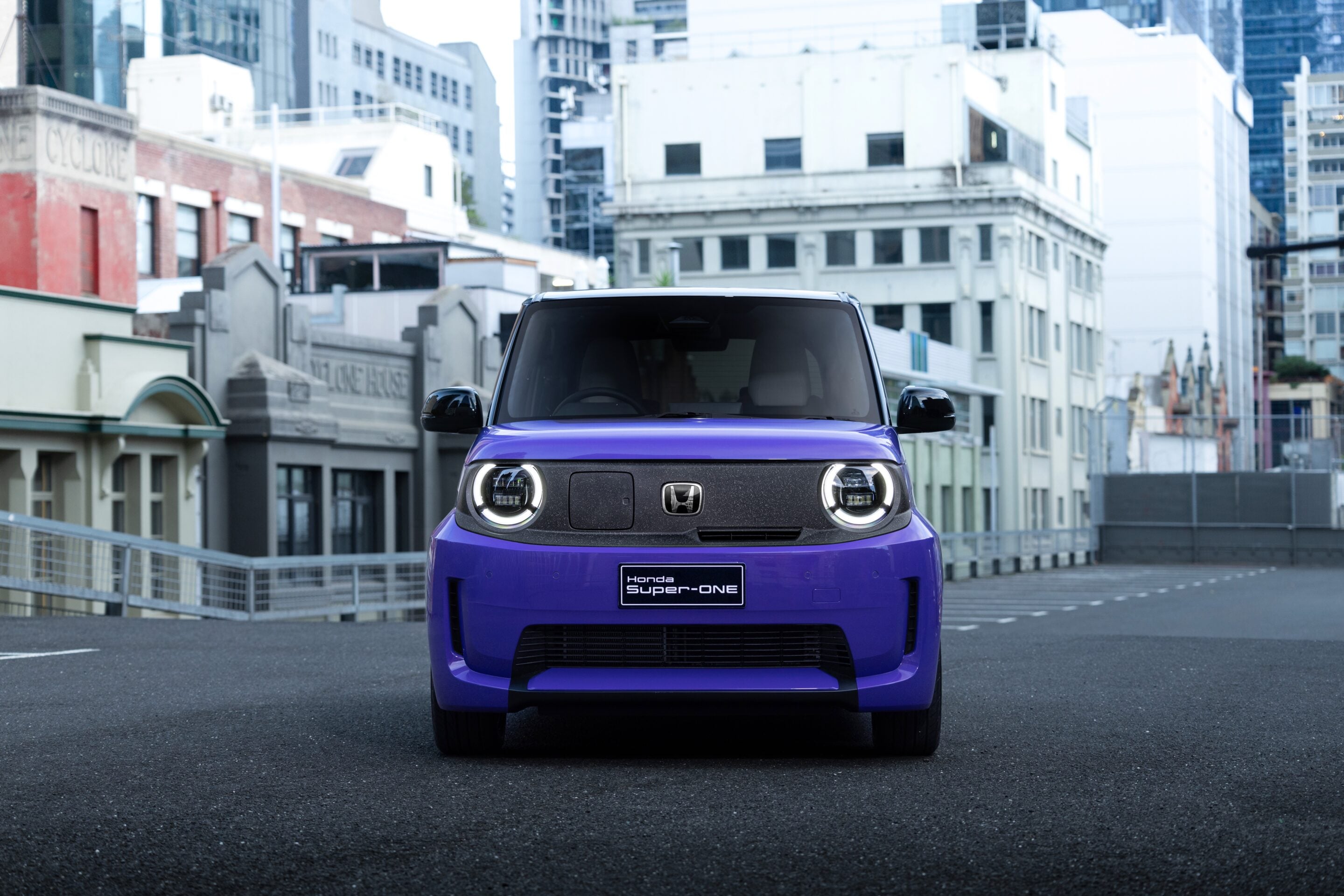
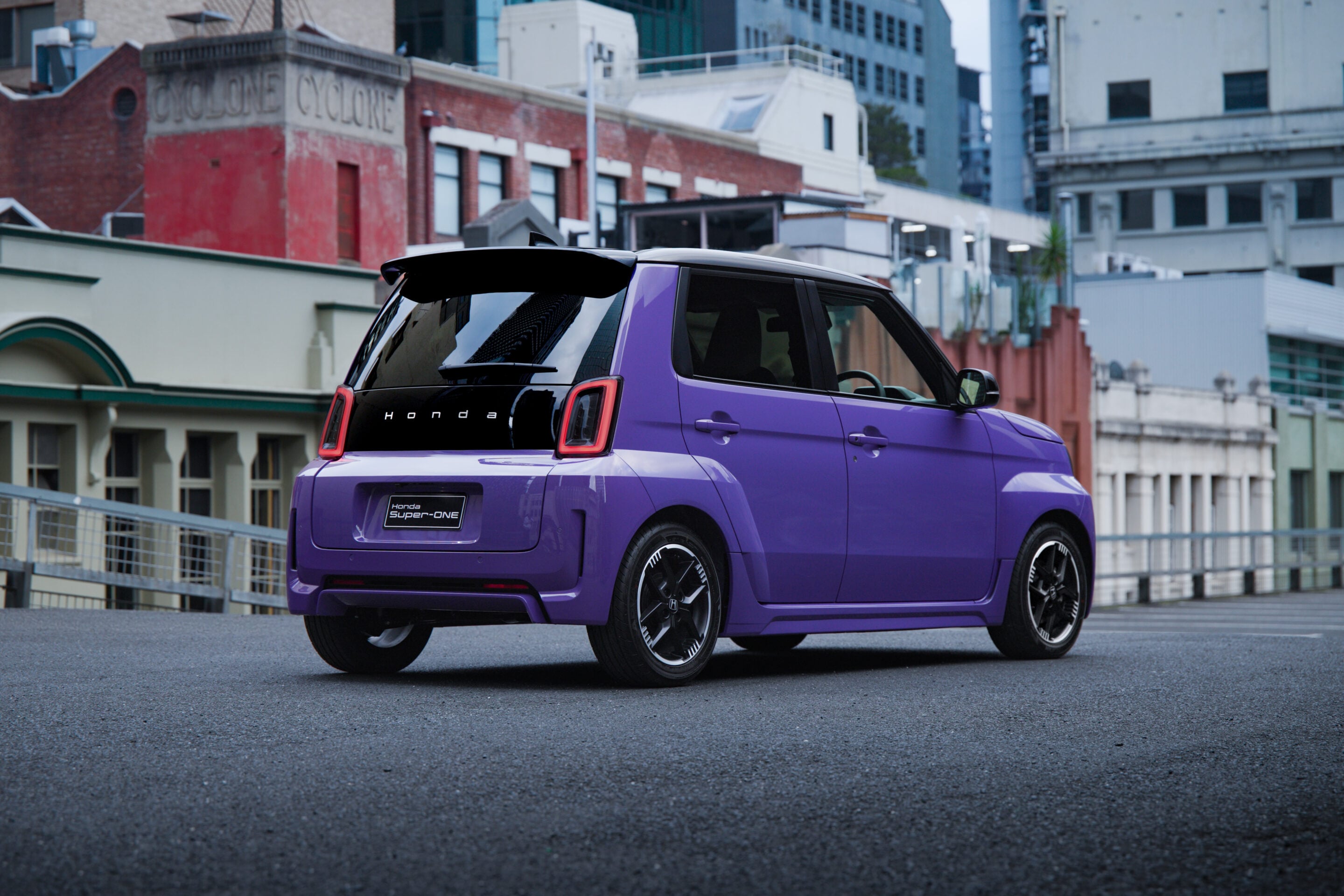
Surprisingly given the current new car market where seemingly every brand offers an EV, the Super-One is Honda’s first EV to be sold in Australia. Because it’s only produced in right-hand drive, it’s only available in select markets globally such as ours, New Zealand, the UK and, of course, Japan. Its donor car is the N-One e, but it’s been pumped up with a 50mm-wider track and more aggressive styling. Yet it’s still undeniably cute. I mean, just look at it. If I owned one, I’d grin every time I walked out to it.
How much does the Super-One cost to buy?
Just a single spec of Super-One is available in Australia: the, uh, Super-One, and it’s priced from $36,900 drive-away nationwide or $37,400 if you want the purple and black two-tone paint. Chances are that you do want the two-tone option because, according to Honda Australia, that colour combination is sold out for the next 12 months. A purple car sold out in 2026’s sea of grey? Maybe the Super-One really is the return of fun motoring.
5
Yep, that pricing makes the Super-One seem expensive compared with rivals like the BYD Atto 1, but it does offer a reasonable amount of standard equipment. Highlights include 15-inch alloy wheels, heated sports front seats, a 7.0-inch digital driver’s display, 9.0-inch touchscreen, wireless Apple CarPlay and Android Auto and eight-speaker Bose audio. Safety equipment includes autonomous emergency braking, adaptive cruise control and adaptive lane guidance.
How far can the Super-One travel on a charge?
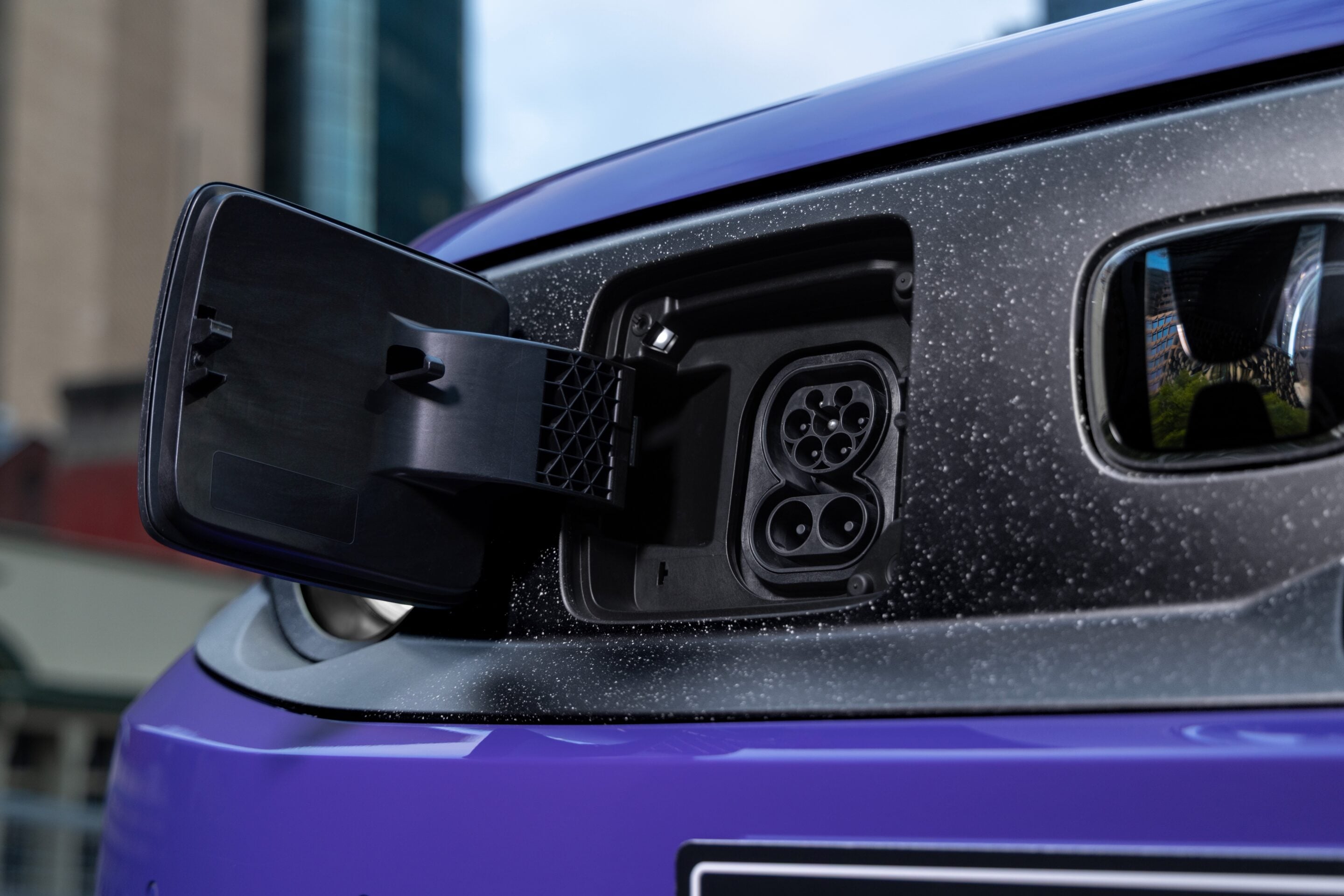
Well, it’s rated at just 202km on the WLTP cycle, which is the shortest quoted range of any EV currently sold in Australia. It uses a 29.6kWh NMC lithium-ion battery that can be charged at up to 50kW, which sounds slow in 2026, but a 15-80 per cent charge takes only 30 minutes… because the battery is so small. A great road-tripper the Super-One ain’t, but its limited range matters less because it will likely be used solely in town.
The local launch was based in Melbourne’s CBD, giving us the perfect opportunity to sample just how well it copes in tight areas. Naturally, being based on a kei car, it excelled. Its tiny dimensions – just 3582mm long and 1573mm wide – make it easy to slide through Melbourne’s tight laneways, squeeze into small parking spaces and dart through traffic. Its boxy dimensions and big windows give great visibility as well, though no blind-spot monitoring or rear cross-traffic alert are odd omissions for a city-focused car.
5
Grunt comes from a single front-mounted electric motor that makes just 47kW of power but a healthier 162Nm of torque, both of which feel perfectly adequate in an urban environment thanks to the Super-One’s low 1093kg kerb weight. The instant response means it steps away from traffic lights with more enthusiasm than 47kW might suggest, and there’s enough punch to dart into gaps around town. Honda Australia doesn’t quote a 0-100km/h time, but overseas figures suggest around 14.5 seconds.
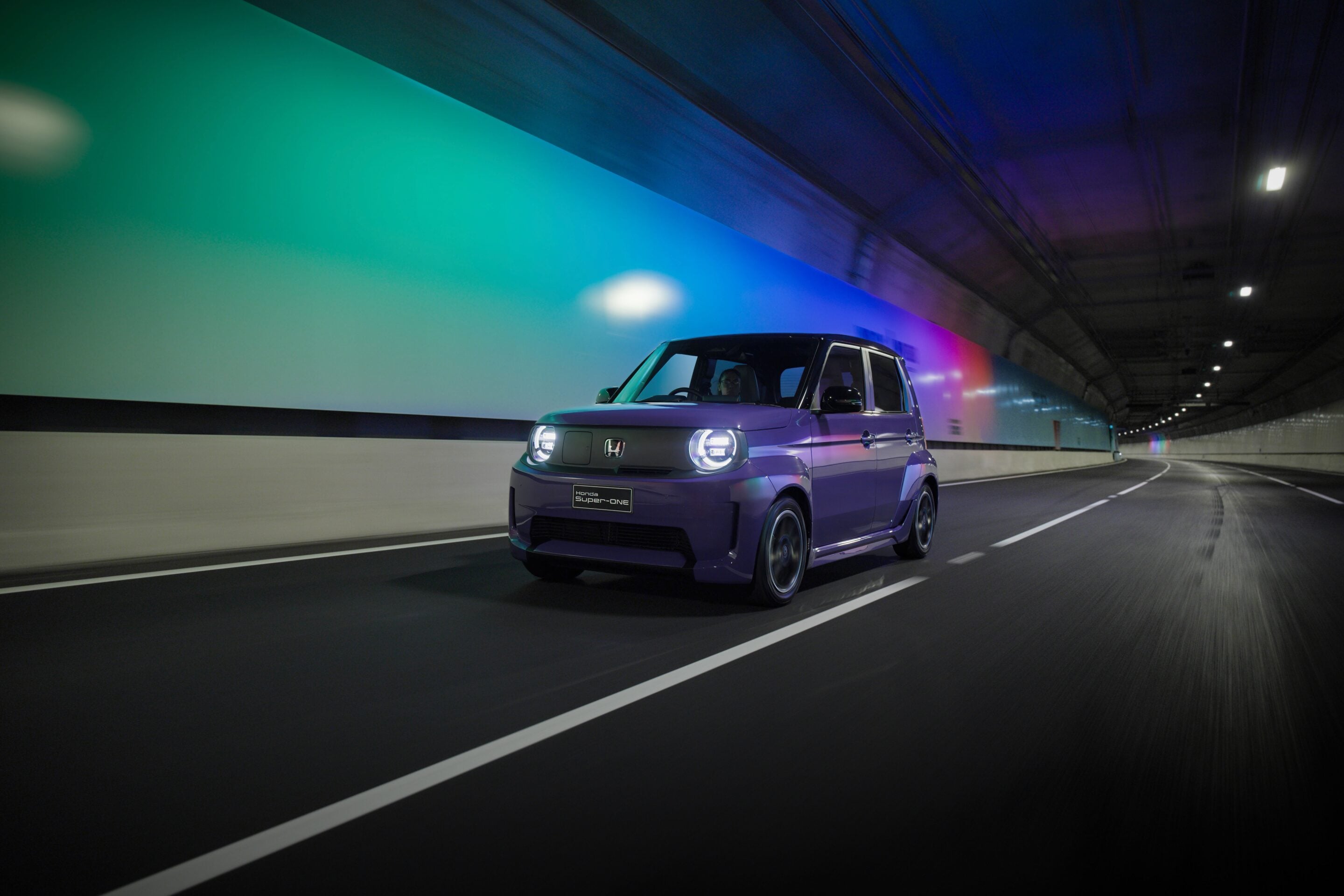
However, push the purple Boost Mode button on the steering wheel and things become considerably more interesting. Power jumps to 70kW, the 0-100km/h time drops to around 10 seconds and a seven-speed synthetic gearbox is activated, with the paddle shifters – otherwise used to adjust regenerative braking – controlling the fake ratios. It’s more subtle than the same sort of system used in cars like the Hyundai Ioniq 5 N, but it’s still remarkably effective and adds genuine driver engagement to an EV.
5
The chassis is equally entertaining. The quick steering offers real feel – something I thought had died years ago in new cars – while the chassis is wonderfully chuckable and the Yokohama Advan tyres provide plenty of grip. Importantly, the Super-One doesn’t need enormous power or ridiculous speeds to be entertaining.
Its low weight, tiny footprint and modest performance mean you can actually exploit what it has on a public road, and there’s something refreshing about that in an era of absurdly powerful EVs. Yet despite the small 15-inch wheels, it can be surprisingly firm over even smaller bumps and around Melbourne CBD’s tram lines and broken surfaces, we got a sense of what it’s like to ride a pogo stick. Still, it’s a riot from behind the wheel.
How practical is the Super-One?
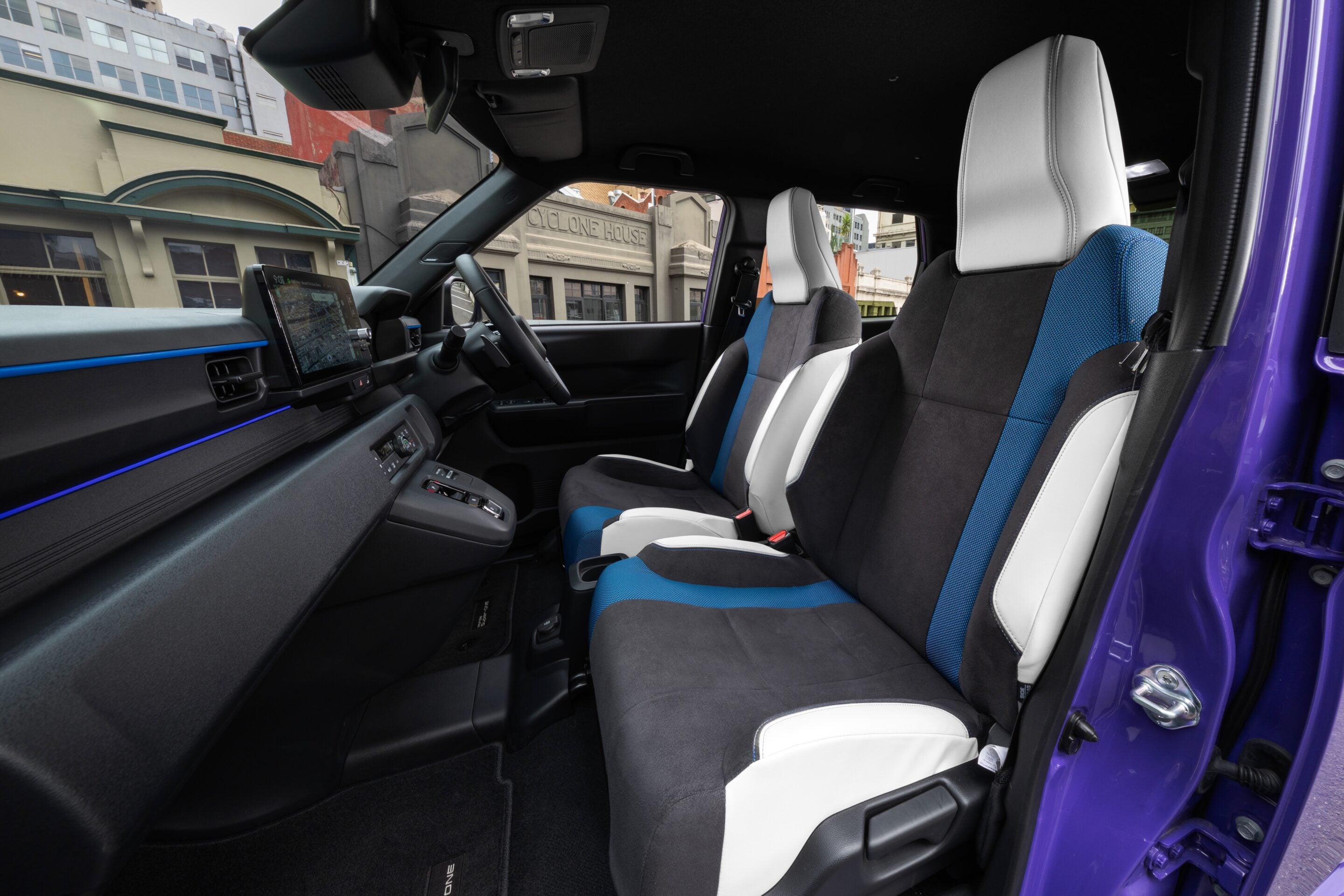
Based on the Honda N-One e: kei car, the Super-One is not what you’d call massive on the outside, but it’s surprisingly spacious inside. Honda’s packaging smarts are on show yet again because even as a six-footer I can comfortably sit behind myself. The cabin feels surprisingly airy and thanks to Honda’s excellent Magic Seats system, you can carry an unexpectedly high amount of cargo.
The rear seat bases fold up against the backrests so you can carry taller items and the rear doors open almost 90 degrees, so I was able to literally walk through the car. Importantly for trips to Ikea, the seat bases also drop into the floor with the backrests folded, unlocking an almost entirely flat load area.
With the seats up, cargo capacity is 162 litres, with a deep underfloor section, expanding to 967 litres with the rear seats folded. For something barely 3.6 metres long, that’s impressive.
6
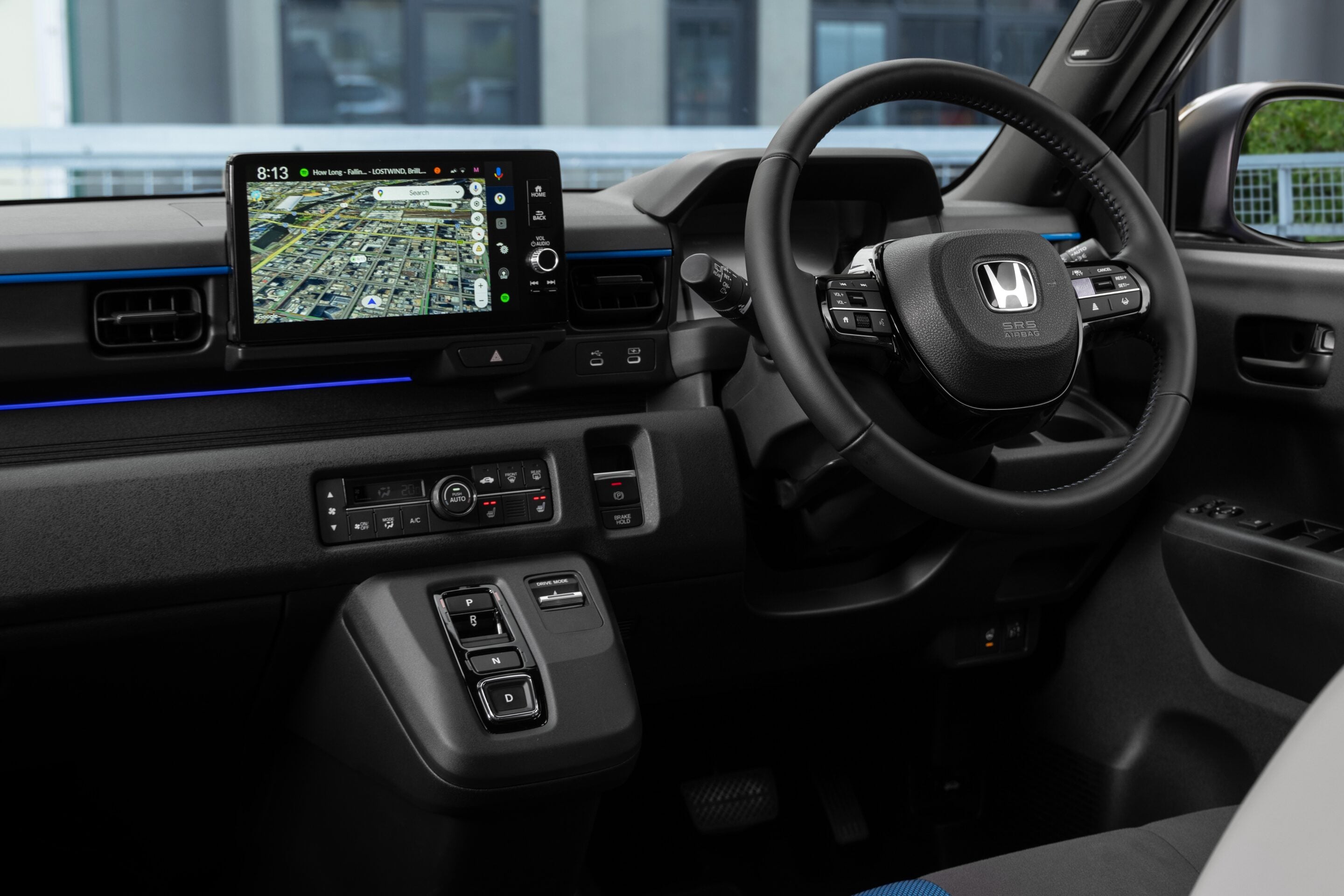
The front cabin is loaded with switchgear from other current Honda models, including the 9.0-inch touchscreen with Honda Connect live services, and although all the plastics are hard to the touch, the switchgear feels good quality.
The front sports seats hold you in place well and the Bose audio is appropriately punchy. Annoyingly, there’s no covered storage anywhere, with unlined open sections between the seats and on the dashboard fascia, so whatever is stored there goes flying as you’re having fun through the bends. Ask me how I know…
How much does the Super-One cost to service?
Honda covers the Super-One with a standard five-year/unlimited km car warranty with a separate eight-year/160,000km warranty for the EV battery, plus five years of roadside assistance as well.
6
If you service your Super-One at a Honda dealership for the first five years – and with pricing set at just $199 per year for that period, why wouldn’t you? – you can unlock up to eight years of vehicle warranty coverage.
Should I buy a Honda Super-One?
So sure, the Honda Super-One isn’t cheap, it can’t travel very far on a charge, it isn’t amazingly well equipped and it’s not the most comfortable car ever made either. Judged purely by the numbers, plenty of EVs offer more range, equipment and metal for your money.
But I can’t remember the last time I had this much fun behind the wheel of a relatively affordable new car. At a time when EVs are becoming increasingly powerful, heavy and large, it’s so refreshing to see a tiny Honda that doesn’t need 500kW or a sub-four-second 0-100km/h time to put a smile on your face.
Enthusiasts have been crying out for a new vehicle with genuine personality, and Honda has delivered exactly that with the Super-One. No wonder the 2026 allocation is already sold out.
4
Honda Super-One standard features:
- 15-inch alloy wheels (with tyre repair kit)
- Dusk- and rain-activated LED exterior lighting
- Intermittent manual wipers
- Keyless entry with push button start
- Auto-folding mirrors
- Single-zone automatic climate control
- Leather-wrapped steering wheel with paddle shifters
- Heated sports front seats
- Cloth, suede and synthetic leather upholstery
- 7.0-inch digital driver’s display
- 9.0-inch touchscreen
- Honda Connect live services
- Google In-Built, including Google Maps sat-nav and access to the Google Play Store to download apps such as Spotify and Amazon Prime
- Wireless Apple CarPlay and Android Auto smartphone mirroring
- Eight-speaker Bose sound system (including 13.1-litre subwoofer)
- AM/FM/DAB+ digital radio
- Bluetooth phone and audio streaming
- 2x USB ports
- Interior ambient lighting
- Econ, city, normal, sport and boost driving
- 6x airbags
- Autonomous emergency braking
- Adaptive cruise control with low-speed following
- Traffic jam assist
- Lane keeping assistance with adaptive lane guidance
- Post-collision automatic braking
- Front and rear parking sensors
- Reversing camera
Super-One specifications:
| Price | From $36,900 driveaway |
|---|---|
| Powertrain | Single e-motor + 29.6kWh NMC battery |
| Power | 47kW (70kW in Boost Mode) |
| Torque | 162Nm |
| Transmission | Single-speed automatic with seven synthetic stepped ratios in Boost Mode, front-wheel drive |
| Claimed WLTP range | 202km |
| Peak DC fast charging speed | 50kW |
| Claimed 15-80% fast charge time | 30 minutes |
| Dimensions (L/W/H/WB) | 3582/1573/1616/2520mm |
| Kerb weight | 1093kg |
| Boot capacity | 162 litres (rear seats up), 967 litres (rear seats folded) |
| Warranty | 5-year/unlimited km (car – extendable to eight years with dealer servicing), 8-year/160,000km (EV battery) |
| Five-year service cost | $995 |
| On sale | Now |
7.4
/10
Score
Score breakdown
6.0
Safety, value and features
7.0
Comfort and space
7.0
Engine and gearbox
9.0
Ride and handling
8.0
Technology
Things we like
- A big grin-maker all the time
- Surprisingly practical for its size
- Easy to use in-car tech
Not so much
- Not without compromise
- Expensive compared to rivals
- Short range is always noticeable
Follow WhichCar/Wheels on Google
Click the button below to make WhichCar by Wheels a preferred source for your news.

We recommend
-
 News
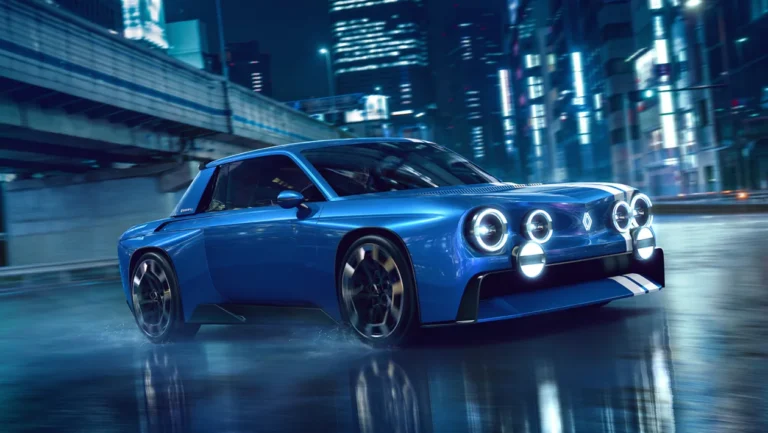
NewsThe only thing wrong with the new Renault 8 Gordini is the fact you can't buy one
Renault would likely demand crazy money if the Gordini 8 ever went into production. It would be worth every cent.
-
 News
NewsAre grilles unnecessary and 'dishonest' on EVs? Designer for top Chinese brand says yes – and blasts rivals for using them
To grille or not to grille? A top designer for Xpeng is firmly in the latter camp.
-
 News
NewsAttention, Z car fans: Nissan has turned the clock back to the '90s with the Kaze concept
You can almost hear the sound of Japanese aftermarket tuning fans petitioning Nissan to make this one a reality.