
News
Gallery 1
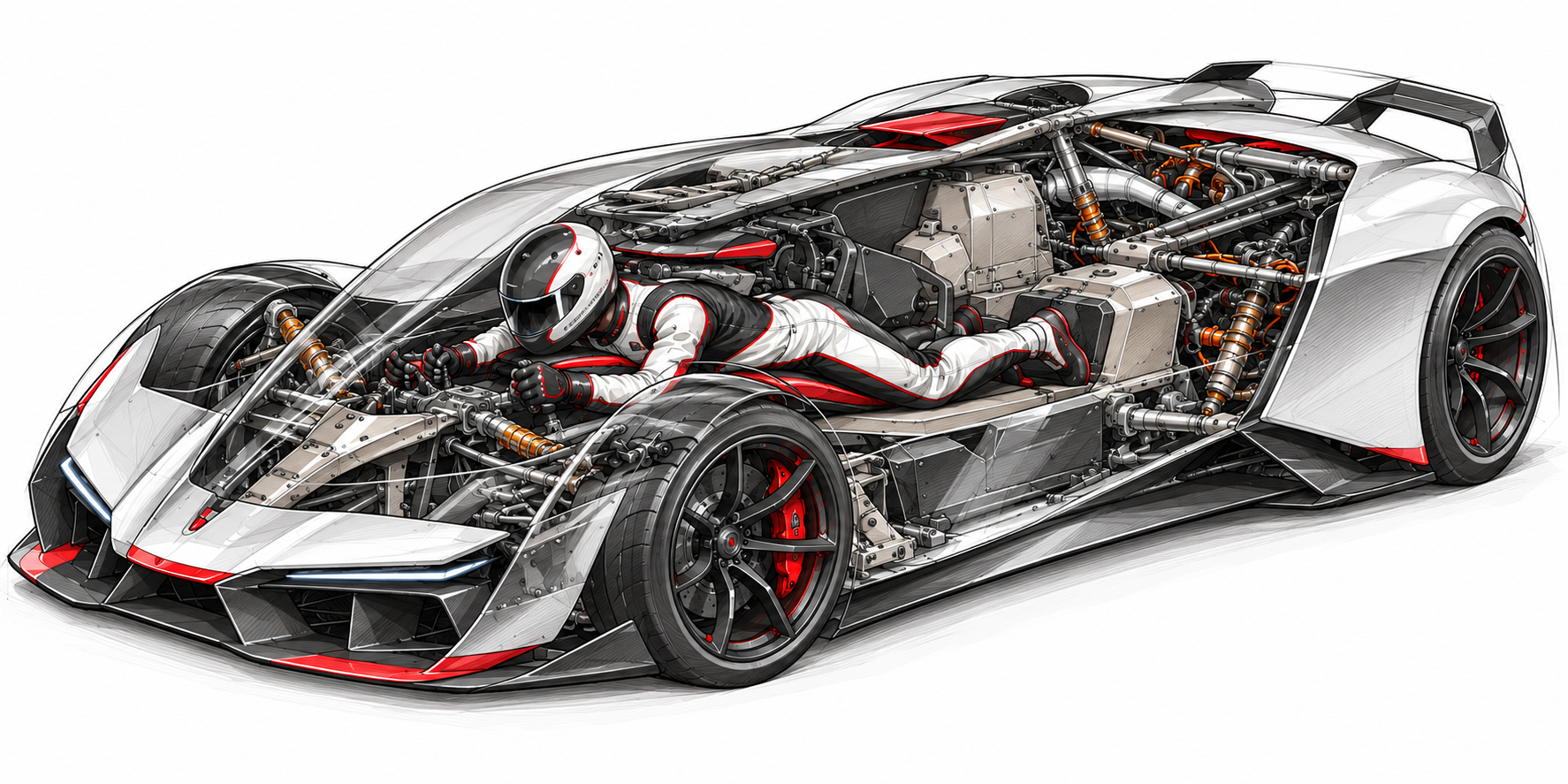
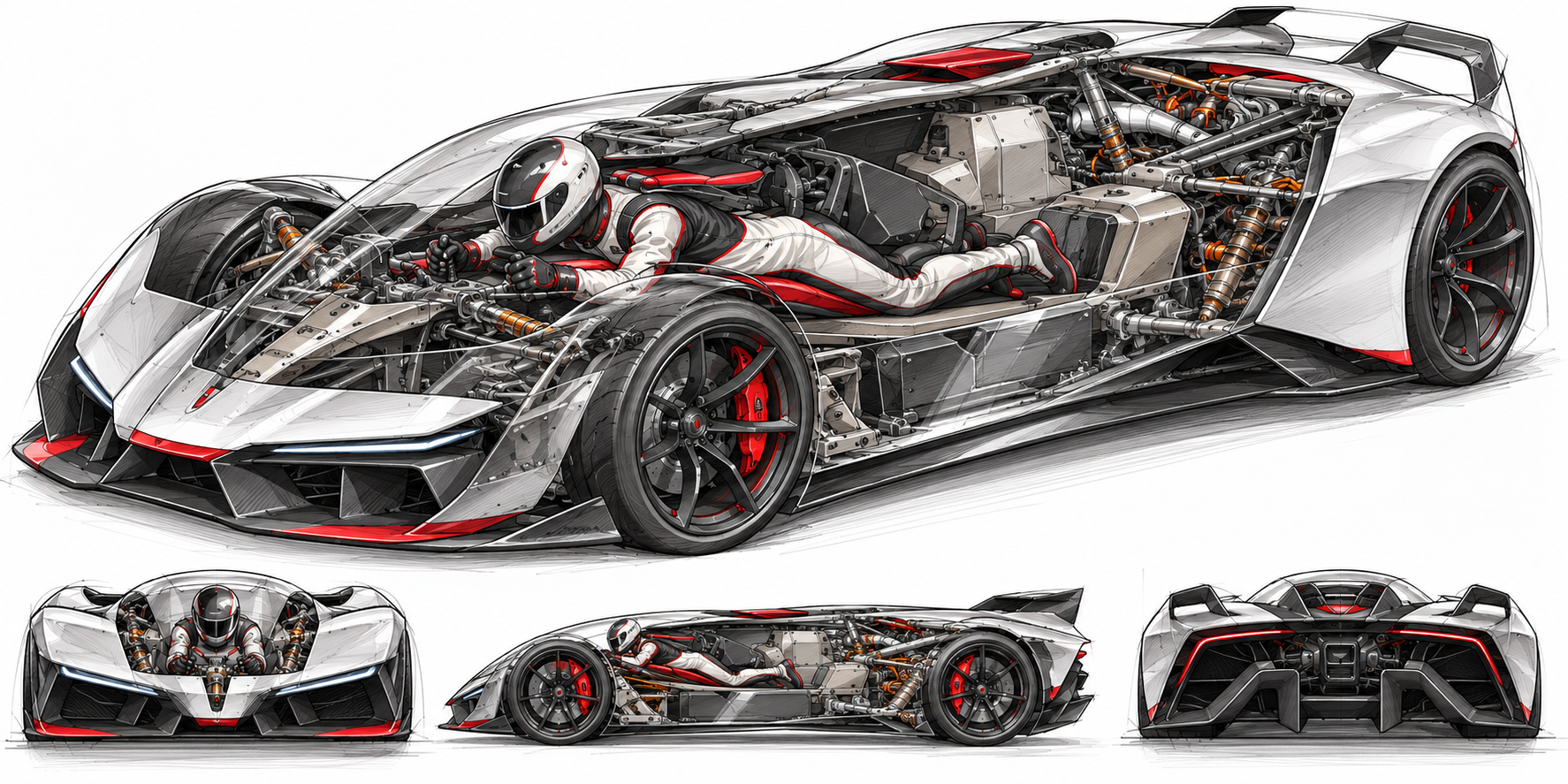
Just when you think supercar manufacturers have pushed the envelope about as far as it can go, along comes Sanrivatti. The Netherlands-based company will launch its first car on November 13, and while there are only sketches about at present, they show it will be as radical as anything on the market thanks to the driver position.
Called the ‘apex position’, which sees the driver adopt the sort of pose associated with motorbike racing: leaning forward with their head roughly over their hands, knees looking like they’re touching the floor of the vehicle and their eyes far closer to the front axle.
2
A look at Sanrivatti’s website reveals some of the thinking behind the radical rethink. “Performance has evolved. The relationship between driver and machine has not. Sanrivatti starts with posture, line of sight and control. The driver becomes the reference point,” it says.
Sanrivatti believes the change will result in “an extended field of vision, more precise placement on the track and a deeper physical connection to the car”.
In an email to WhichCar by Wheels, Sanrivatti expanded on how the apex position has panned out so far: “In simulation at Corner Three at Silverstone, it let the driver see on average 3.2 times more of the circuit than ten benchmark hypercars and track cars.”
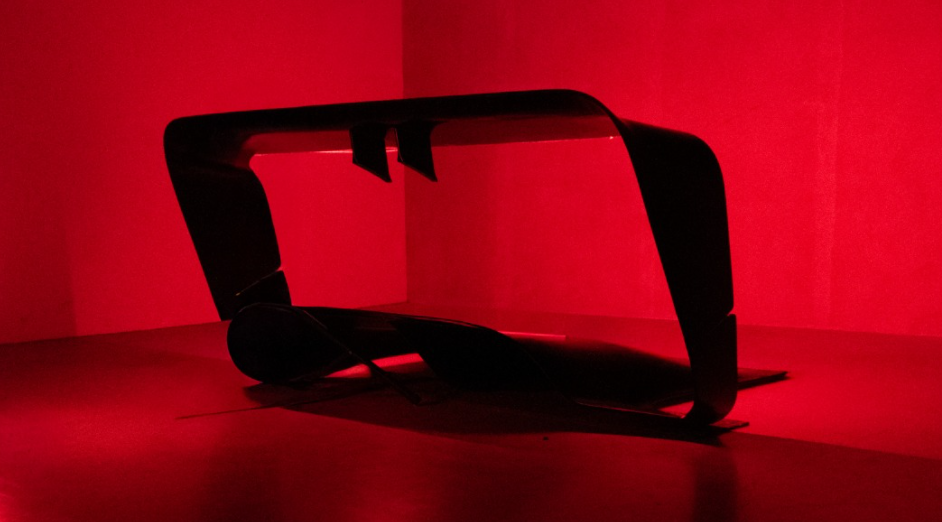
We’ve used artificial intelligence to produce a rough look at what the fledgling marque could show the world at launch, and you can see two very cryptic previews of the real thing in the gallery below. While our creation doesn’t quite nail the driving position from Sanrivatti’s sketches, which is more upright, it gives you some idea of what the result could be.
4
Sanrivatti, which is run out of Cleantech Park in Arnhem, was founded by its CEO, Santiago Sánchez Rivero, who was previously with hypercar specialist Donkrvoort. Its upcoming supercar will be a mid-engined single seater… if seat is even the right word.
Rivero said high-performance motorcycles get the rider and machine to “move as one”, whereas “even the world’s most capable performance cars frequently separate driver and machine through layers of architecture, packaging, systems technologies and convention”.
He has been focussed not on how to extract more power and speed from the supercar, but “how to create a deeper connection between driver and machine” – and throwing the conventions surrounding driver position into the bin is crucial to that.
Follow WhichCar/Wheels on Google
Click the button below to make WhichCar by Wheels a preferred source for your news.

We recommend
-
 News
Gordon Murray S1 channels McLaren F1 spirit into 507kW V12 grand tourer
Just 64 examples of the manual, V12-powered GMSV S1 will be built, combining a central driving position with a sub-1000kg weight target and more road-focused character than the S1 LM.
-
 News
Tesla Roadster flies upside down and barrel rolls in the wildest car debut in memory
Elon Musk said it's "better than any James Bond car" and the mind-altering launch of the Tesla Roadster actually proved him right.
