Features
Gallery 1
Some of the most memorable icons from Australian motoring history came with top-tier performance, courtesy of legendary V8 engines.
But, for the brands competing Down Under, the ‘big Aussie six’ was where the money lay. Holden and Ford cornered that market for almost 70 years, and over the decades, plenty or rivals tried to grab a slice.
Some failed spectacularly, like Leyland, who fumbled the ball so badly with its large car rival in 1973 that when Wheels awarded the coveted Car of the Year trophy, it was explicitly for the V8 version only.
From families to fleets, travellers to taxi drivers, the six-cylinder engine was the driving force behind Australian traffic for decades.
Not all were legends, but some carried extra spice, be that horsepower, handling or styling. Here is a list of 10 of the best six-cylinder Aussie cars that you might have overlooked.
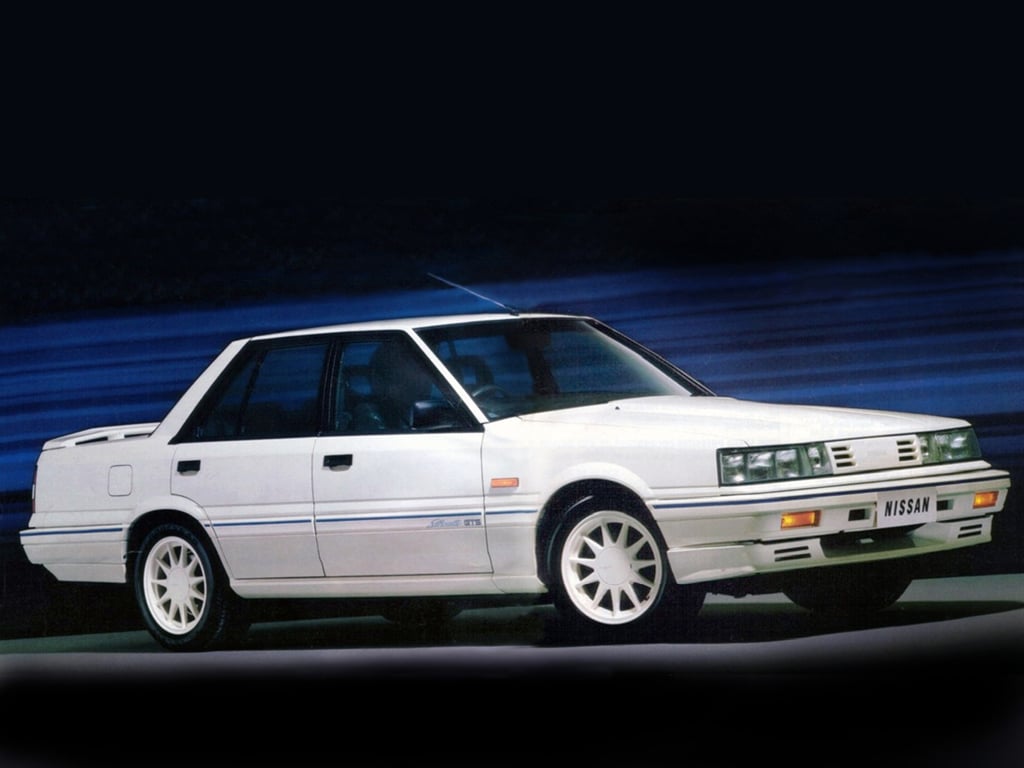
Nissan R31 Skyline Silhouette GTS
1
Only one generation of Nissan Skyline was assembled in Australia, and as was so often the case for cars from foreign brands, some of the more high-tech components (like four-wheel steering) were swapped for more reliable, hard-wearing items better suited to Australian conditions.
Local production also meant local development, and Nissan Australia created a Special Vehicles Division tasked with honing the Skyline Silhouette GTS into something to cause Ford and Holden some sleepless nights.
While the smaller Skyline couldn’t match the Falcon or Commorore for size, it went after them on styling and sophistication, with upgrades like a limited-slip differential, bigger brakes, Bilstein dampers, 16-inch wheels, sports seats by Scheel, and an exotic Momo steering wheel.
Under the bonnet, Nissan turned up the wick, bumping power from the 3.0-litre six-cylinder engine from 114kW to 130kW in the first run, and 140kW after that, almost enough to catch the 150kW turbocharged version of the same basic 3.0-litre in the VL Commodore, but without a turbocharger in sight.
Holden EH S4 Special
1
While it may look tame by modern standards, Holden’s EH S4 was a very specifically race-prepped homologation special. Sold to the public in line with racing regulations of the era, but designed to withstand the pressures of endurance racing.
A ban on motorsport participation by Holden’s parent company, General Motors, meant the S4 project needed to be handled delicately. Holden had to use what was already available.
The EH already had a new engine compared to the EJ before it, so starting from scratch there was out of the question, but specially selected internals like cranks, rods, and pistons were hand-assembled and balanced to give sharper throttle response. The Stromberg carburettor was also fine-tuned.
A bigger radiator, heavy-duty clutch, and a strengthened transmission were all equipped to withstand the high temperatures and hard use demanded of racing. A shorter diff ratio improved acceleration, a larger fuel tank reduced the need for time-sapping pit stops, and a range of other detail changes were made to make the S4 fit for racing.
Mitsubishi TJ Magna Ralliart
1
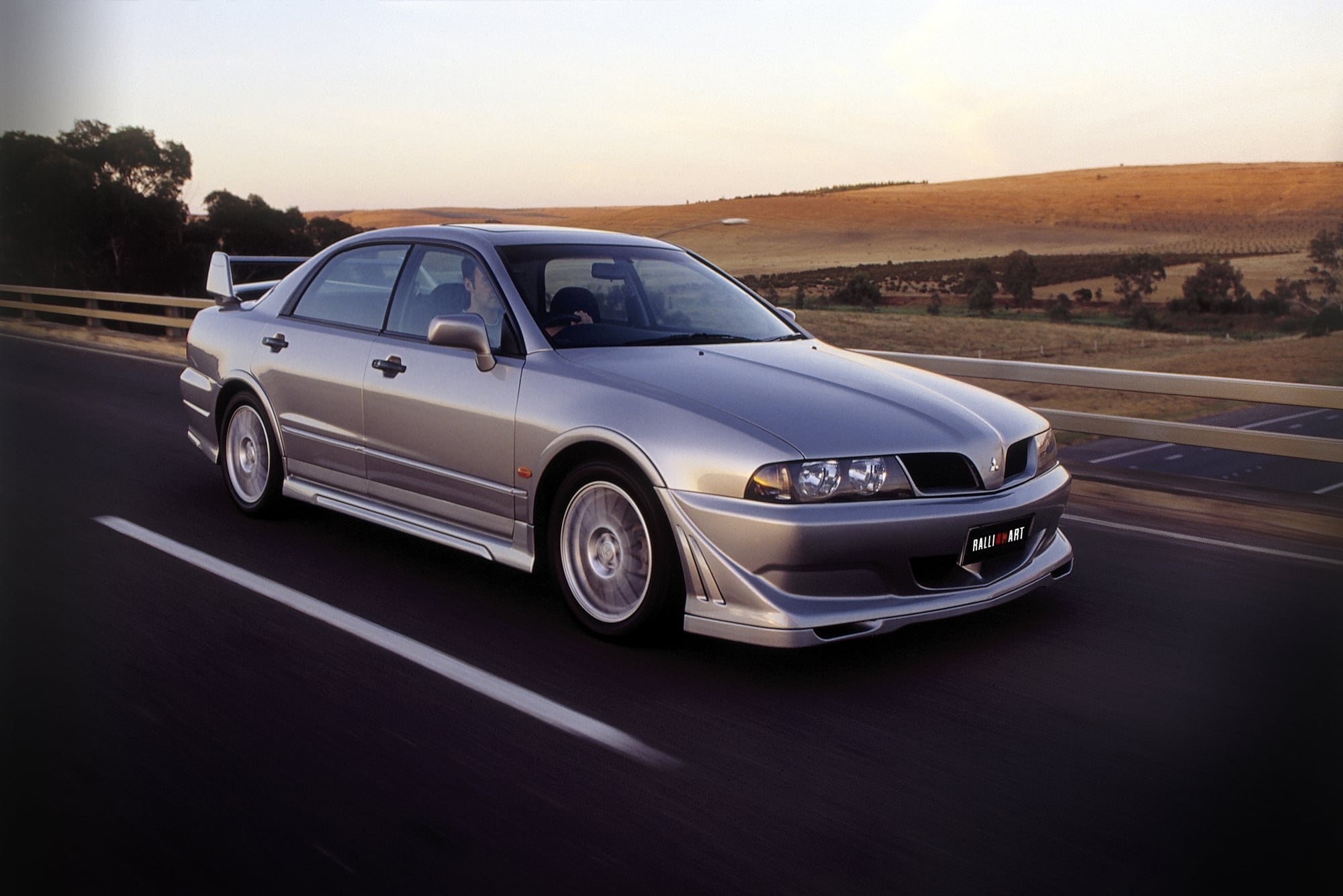
The Mitsubishi Magna was always seen as competent and subtle, but never particularly adventurous or aspirational. That is, until Mitsubishi took its first real crack at the performance market with the WRC-inspired Magna Ralliart.
Designed to look as close as possible to the Lancer Evolution, but engineered in a very different way. A naturally aspirated 3.5-litre V6 did the heavy-lifting, tuned up to 180kW over the regular 163kW Magna VR-X thanks to a remapped ECU to work with changed to the heads, cams, and exhaust.
Goodies included 17-inch Enkei alloy wheels, Pirelli tyres, a massive bi-plane rear whing, Koni dampers, and on manuals a torque-steer-taming limited-slip differential. As good as the Ralliart Magna was, its showcar progenitor also had all-wheel drive, a supercharger, and Recaro seats that left the eventual production version looking a little timid.
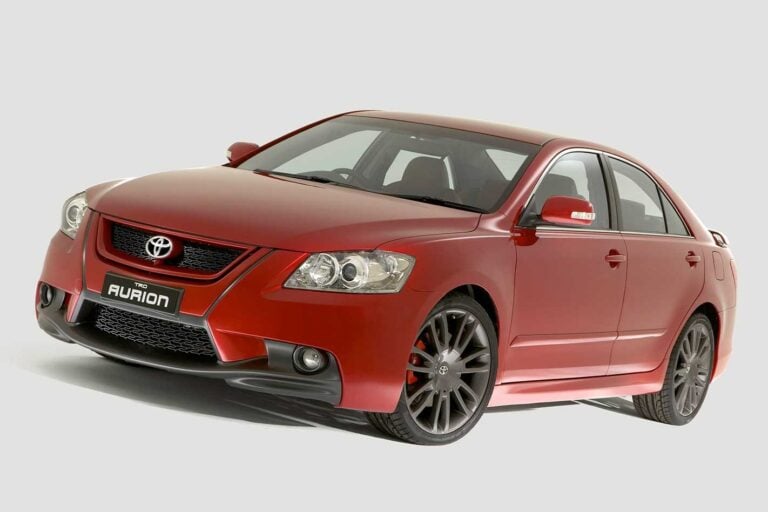
TRD Aurion 3500
1
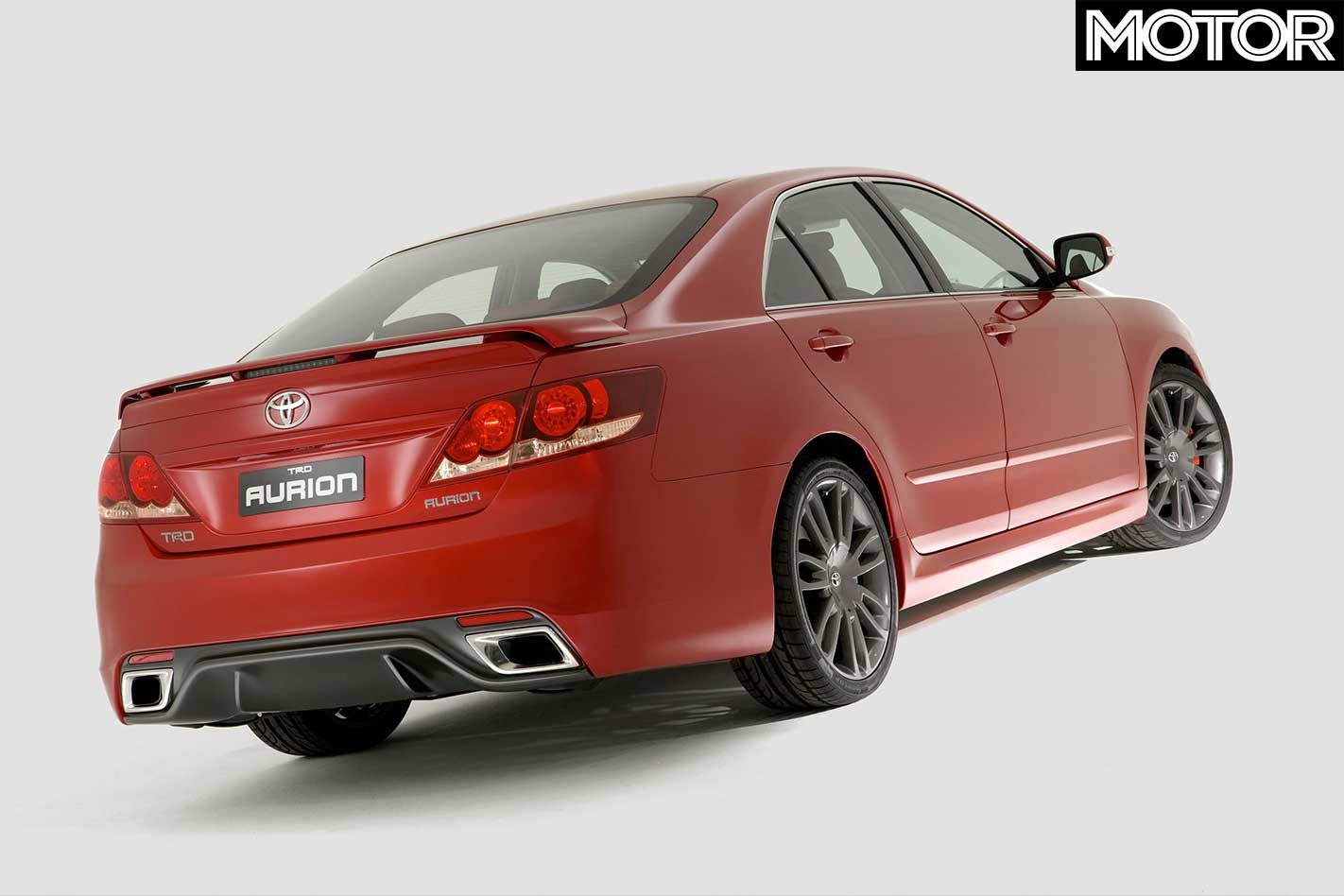
Toyota was not prepared to watch HSV and FPV corner the Aussie performance car market, and in 2007 launched TRD, Toyota Racing Development, as its local hot shop.
Like the local rivals, Toyota took its big sedan, the star bowls clubs parking lots, and made it go much, much faster. The 3.5-litre V6 Aurion was treated to the usual upgrades: bigger wheels, bigger brakes, and buttoned-down suspension.
Oh, and an Eaton supercharger to take the 200kW/336Nm Aurion V6 up to 241kW and 400Nm.
The handling upgrades worked incredibly well, and the supercharger whine incentivised rigorous use of the accelerator, but while it was the best of the Aurion’s breed, its front-drive underpinnings and open differential made it a hard sell to Aussie enthusiasts, not to mention the availability of cheaper V8 alternatives.
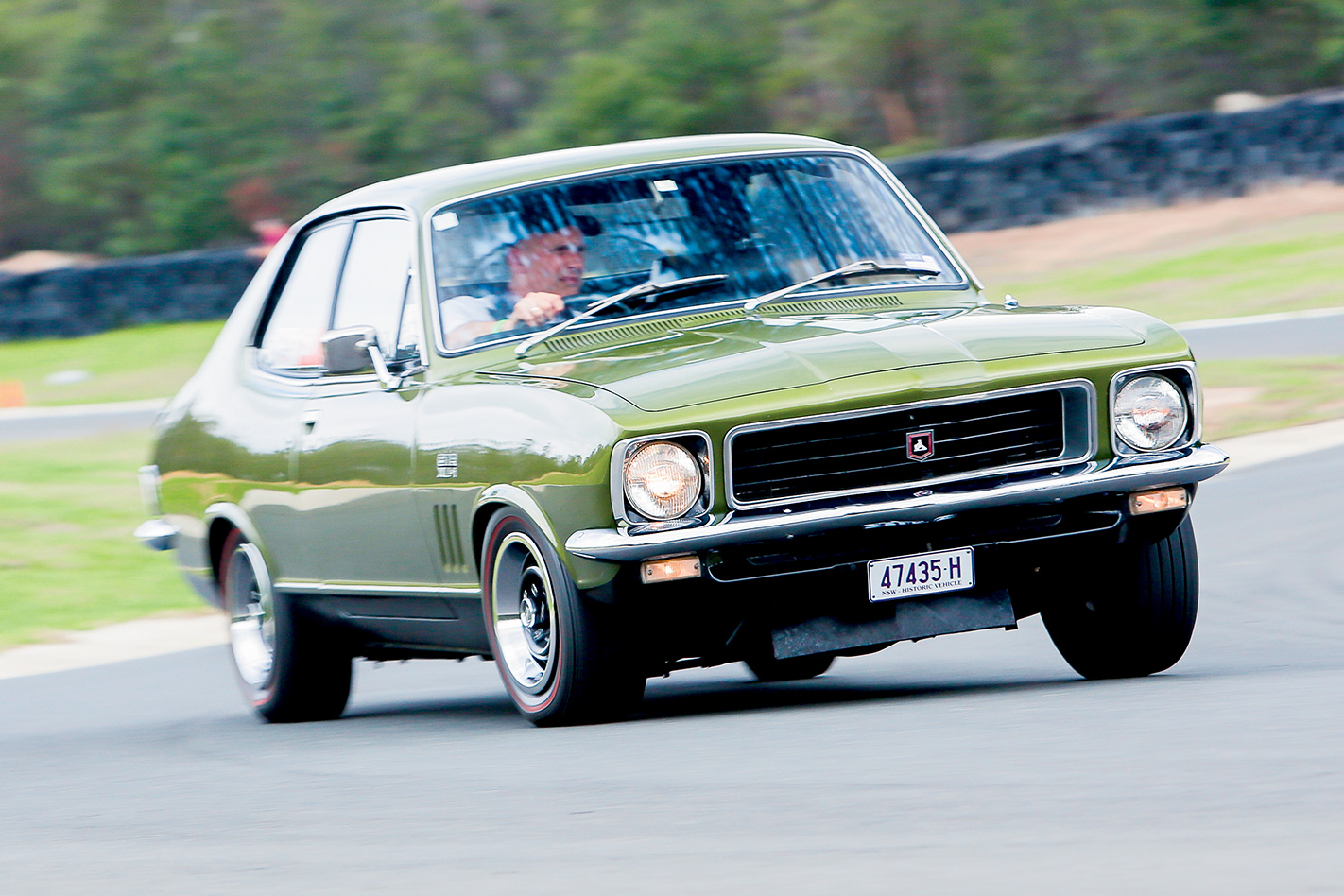
Holden LJ Torana GTR XU-1
1
The small car, big engine format has seen many a lightweight sports car punch above its weight. At a time when V8s were seen as the ultimate option for conquering Australian touring car racing, Holden’s much smaller Torana, with a potent six-cylinder was a surprise option.
Power-to-weight became the obsession. If Holden couldn’t outgun Ford’s thunderous GT-HO Falcons, it could outmanoeuvre them with a lighter car that handled better and used less fuel, saving on downtime in the pits.
The LJ Torana XU-1 was the culmination of years of track development of the Torana GTR. A bigger 3.3-litre six-cylinder engine, aggressive cams, a higher compression ratio, upgraded Stromberg carburettors, and a close-ratio gearbox were part of the package.
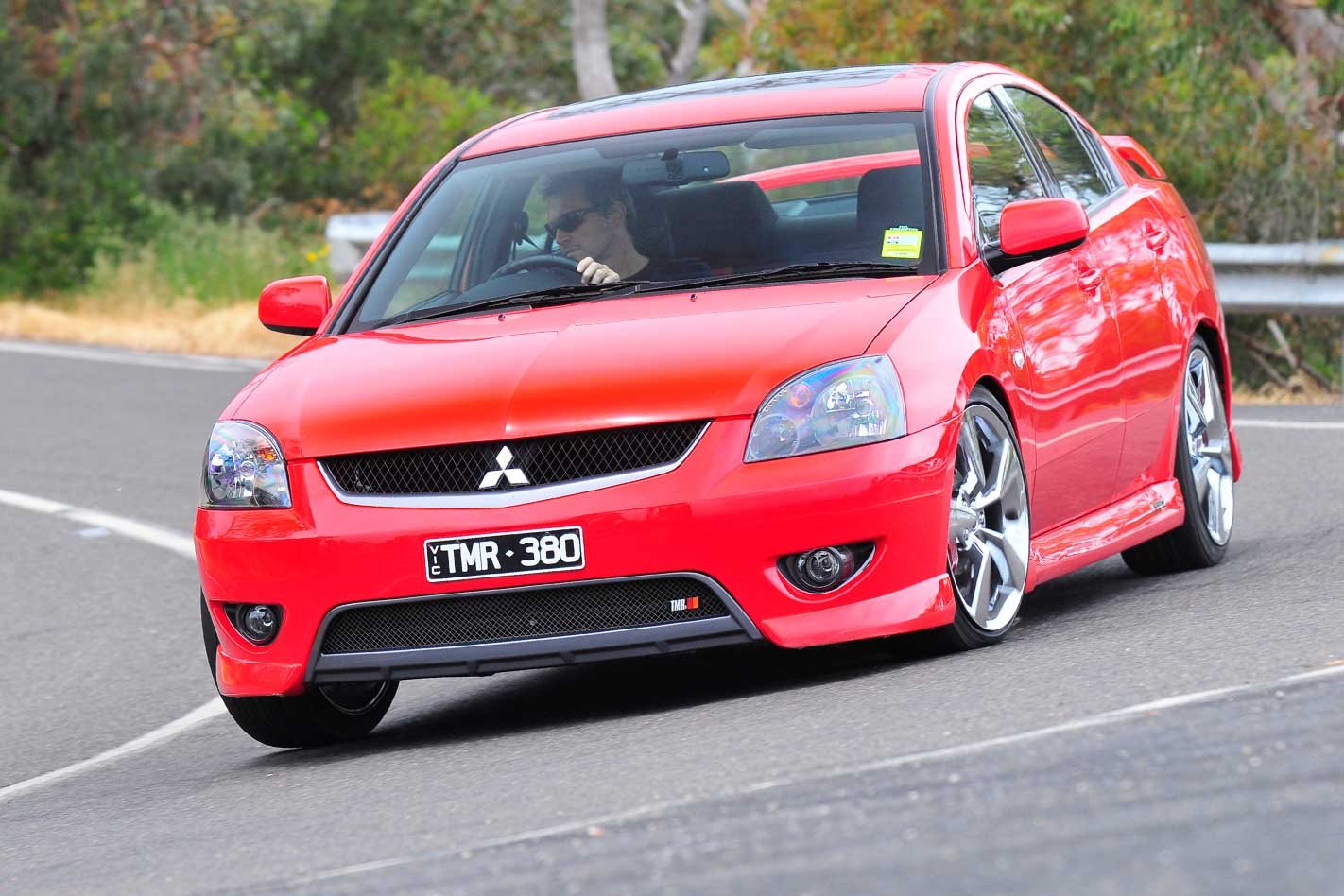
Mitsubishi TMR 380
1
In 2008, Mitsubishi decided the front-wheel-drive supercharged V6 market was not Toyota’s to keep, and launched its response: The Team Mitsubishi Ralliart 380.
While the Magna-replacing 380 itself had been on sale for a few years, its performance hero was slow to catch up, but when it did, it came with huge six-piston front brakes, overhauled Koni suspension, a free-breathing exhaust, and a Sprintex supercharger to boost the 380’s 3.8-litre V6 from 175kW/343Nm to 230kW/442Nm.
Styling was relatively tame for the era, but if you knew, you knew. Shockingly, in the same year Mitsubishi Australia launched the TMR 380, its Japanese parent company pulled the pin on local production, leaving just 20 production examples in the wild.
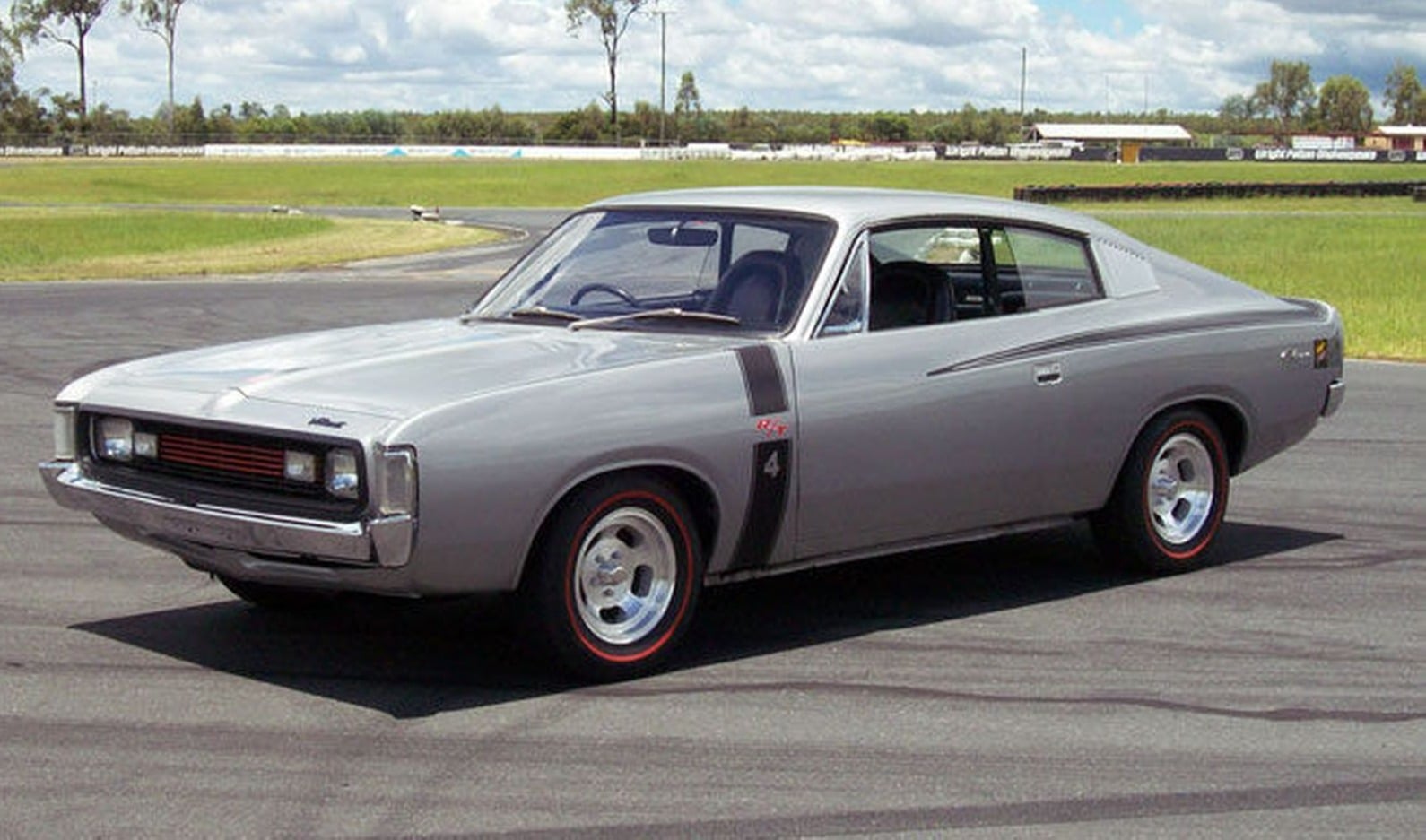
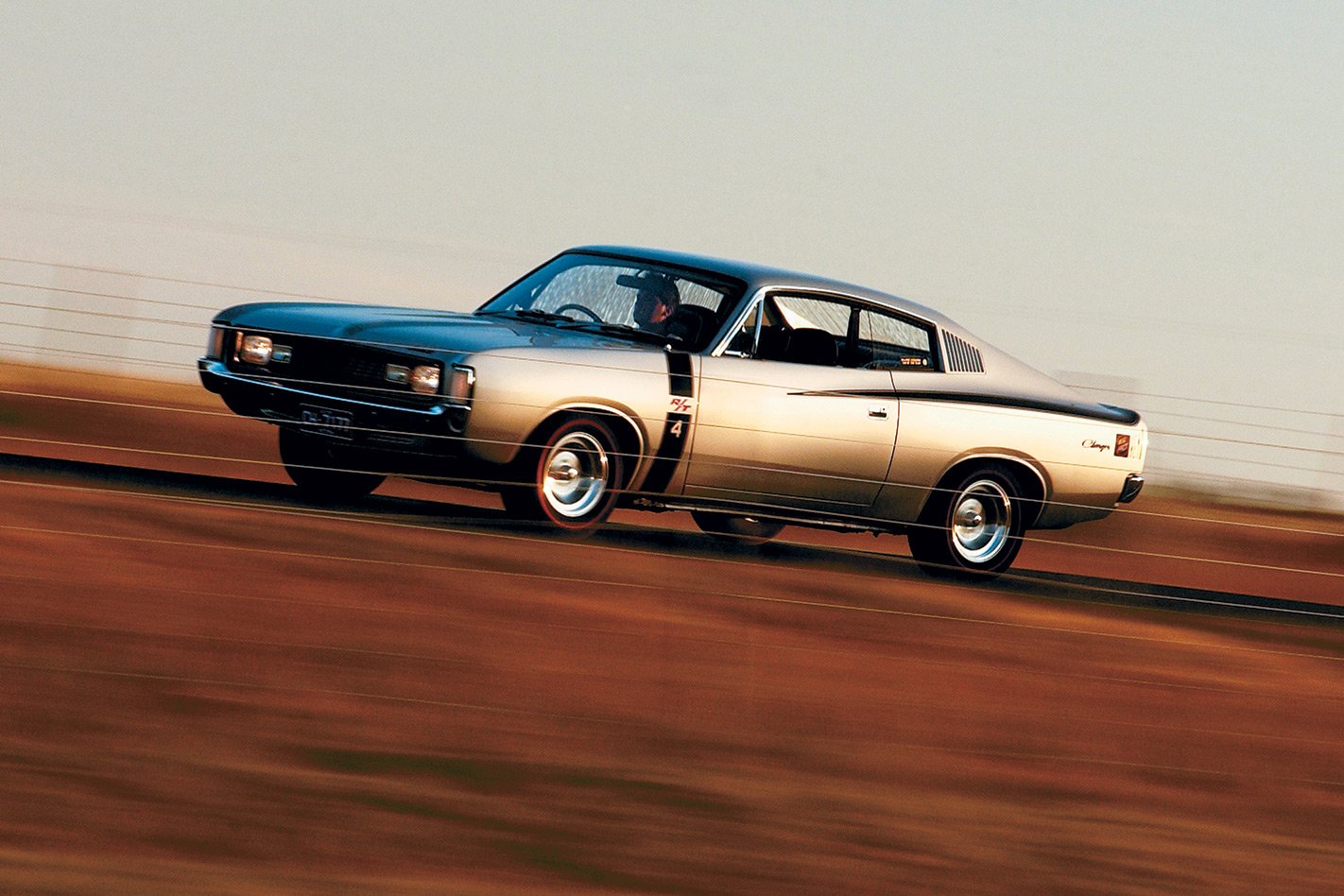
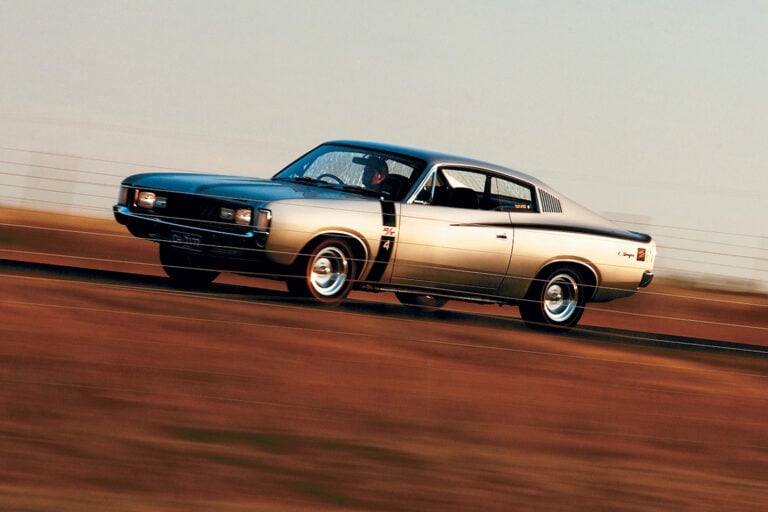
Valiant VH Charger R/T E49
1
You could option the arresting Charger coupe with a V8, but Chrysler’s six-cylinder engine was the powerhouse. More powerful, lighter, and cheaper than the V8s it sold alongside.
Hardly small, at 4.3 litres, the potent Charger E49 Six Pack with its trio of Weber carburettors pushed out an impressive 225kW and added a four-speed manual, giving it an edge ove the 210kW, three-speed E38, and elevating above even the most powerful 205kW V8 Charger at the time.
In 1971, the Charger was awarded Wheels Car of the Year, and in testing, Wheels declared the E49 the fastest-accelerating Australian muscle car to date, outpacing the Falcon GT HO Phase III. A shorter wheelbase than the Valiant sedan it was based on, plus quicker steering and more roll-resistant suspension, helped things along on the track, but despite this, the E49’s best finish at Bathurst was a third-place in 1972.
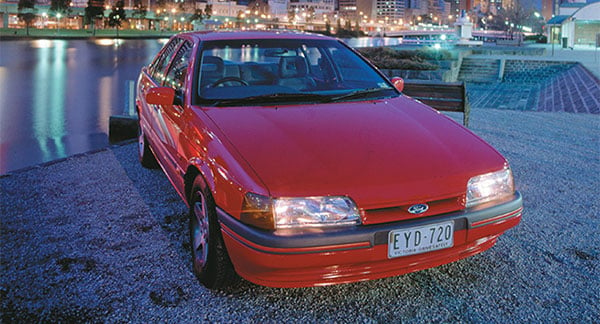
Ford EB Falcon S XR6
1
The return a V8 engine to he Falcon line-up after a nine-year absence overshadowed one of the EB series’ hidden gems, the high-output XR6. Launched as part of the Series II EB update, the XR6 saw the 4.0-lite Falcon six spit out 161kW, 13kW more than the standard six, and just 4kW shy of the 5.0-litre V8.
Tickford-tuned handling helped deliver a more planted package, coupled with range-wide improvements to the EB over its EA predecessor. A shorter diff ratio made the extra urge even more urgent, and meant that, off the line, the XR6 was quicker than the XR8.
Visually, the EB S XR6 is as tame as you’ll find, with standard alloy wheels the key difference, plus the subtlest front bumper and rear bootlid lips to set it apart. It wasnt until the ED came along that the iconic XR quad light face, and more concentrated effort to give the XR6 and XR8 either own identity, was established.
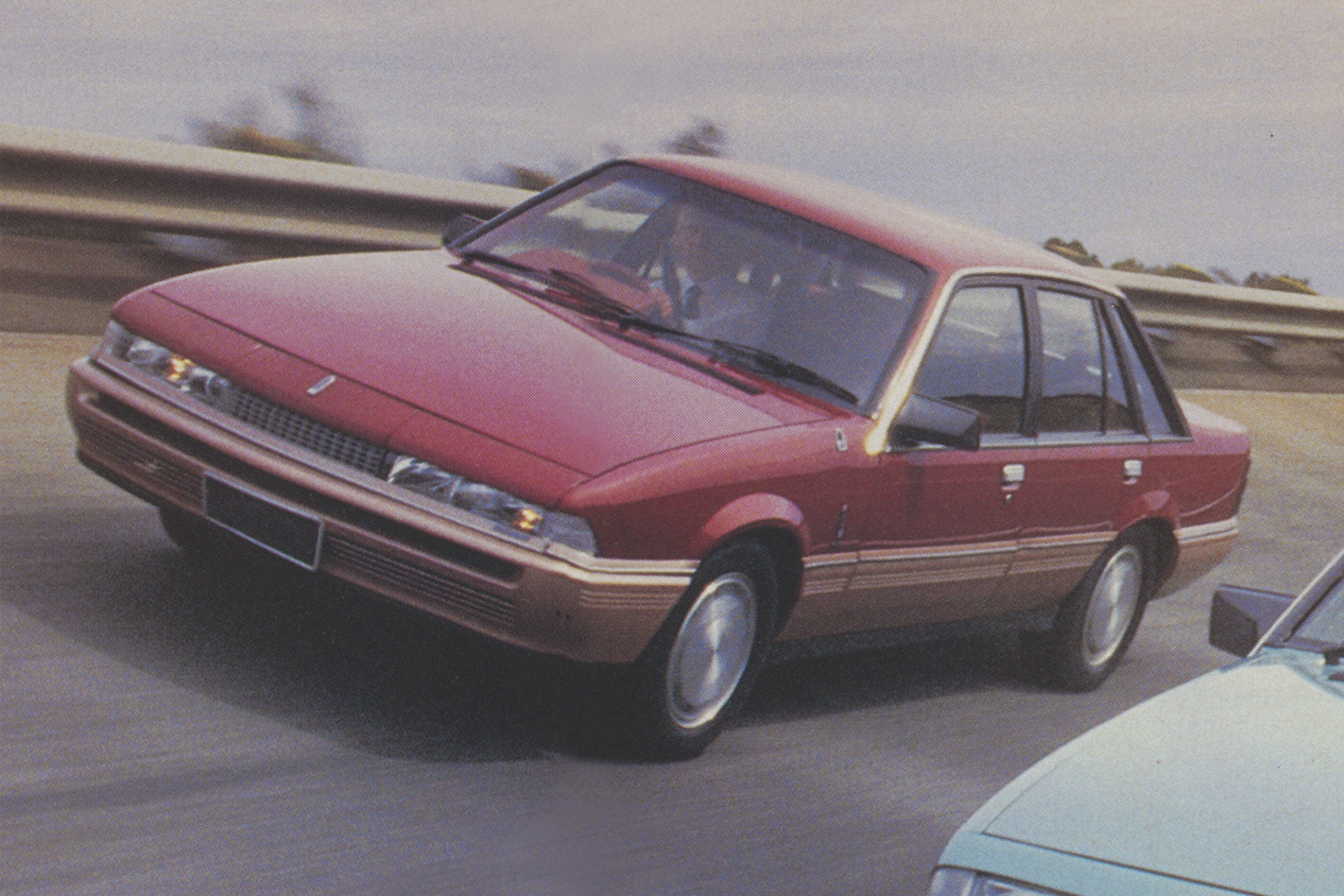
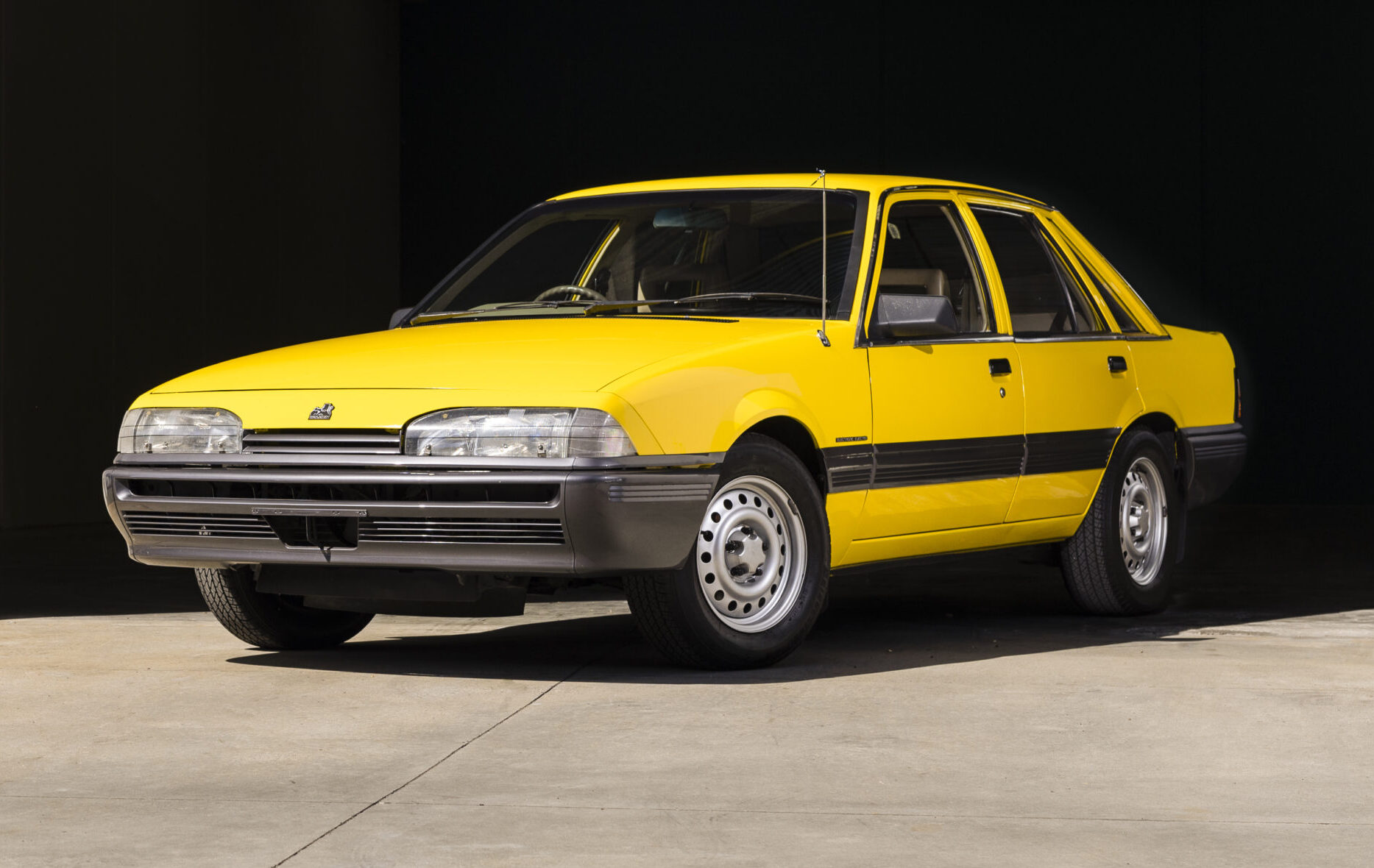
Holden VL Commodore and Calais Turbo
1
1
In the mid-80s Holden faced a decision to pour money into its ageing inline six-cylinder engine, with a basic design that stretched back to 1963, to make it unleaded compatible – or find an alternative.
The alternative won, and a Nissan-supplied 3.0-lite six shared with the Skyline appeared under the bonnet of the VL, and with it, a Holden-only version with a turbocharger. With 150kW it outgunned the available V8 with 122kW, but held back on torque, rated at 296Nm, compared to the V8’s 323Nm.
For the buyers who could see past displacement as the only option, the VL Turbo – available on everything from a fleet-pack Sl to a highline Calais – also bundled-in bigger brakes and firmer suspension to keep things pointing in the right direction. This wasn’t always the case as the Turbo unlocked power the first-generation Commodore platform was never really designed to cope with.
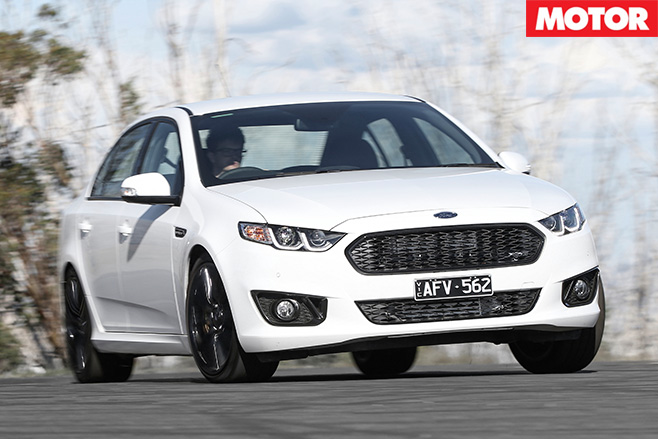
Ford FG X XR6 Sprint
1
Pic: https://media.whichcar.com.au/uploads/2025/02/39819dfd-ford-falcon-xr6-sprint-front-driving.jpg
After Holden’s short-lived VL Turbo, Ford gave Australians the BA Falcon with a turbocharged Barra 240T, starting a wave of increasingly more powerful versions across the Ford and FPV line-up from 2002 until 2016, culminating with the final FG X XR6 Sprint.
Essential an FPV engine in a Ford wrapper, after the performance division was wound up, the XR6 Sprint’s 325kW/576Nm turbo tune was a healthy 55kW more robust that the startard XR6 Turbo and G6E Turbo, with the ability to reach 370kW/650Nm with a ten-second overboost function.
Acceleration was a claimed 4.6 seconds to 100km/h, and Sprint upgrades saw wider staggered Pirelli P Zero tyres and bigger six-spiston Brembo brakes join the package as Ford farewelled its local sixc-ylinder hero with a subtly-styled send-off that packed a ferocious punch. All the more impressive when you consider Ford’s inline six family tree can essentially trace a straight line back to its 1960 origins.
Just 550 FG X XR6 Sprints were built for Australia and New Zealand, and seeing one that’s not tucked away for the sake of collectabiloty can be a rare sight on the road.
Follow WhichCar/Wheels on Google
Click the button below to make WhichCar by Wheels a preferred source for your news.

We recommend
-
 Features
Top 10 classic Australian muscle cars
Australia’s golden era of V8 thunder and Bathurst glory lives on with our definitive Top 10 classic muscle cars from 1967 to 1986 — legends, all.
-
 Features
Top 10 modern Australian muscle cars
Part II of our series on homegrown muscle cars focuses on the modern marvels, from Holden's VN SS Group A to the Ford FG X Falcon Sprints.
-
 Features
Top 10 Australia-only special editions
The best of special editions created especially for the Australian market by some of the most famous marques on the planet.