Features


Gallery 1
It’s the early 1990s and German carmaker, Porsche, is haemorrhaging money. Having gambled – and lost – on an expanding line-up of front-engined, transaxle sports cars (think 924, 944, 928 and 968), the German brand’s bank balance was in a parlous state.
Global sales had been in steady decline since the glory days of the mid-1980s when 50,000 of Zuffenhausen’s finest found new homes. By 1993, worldwide sales had dropped to just 14,000, a victim of the twin tempests of a weak global economy and outdated and inefficient production processes.
A lifeline came via fellow Stuttgart native, Mercedes-Benz, which had contracted the production of its V8-powered W124 500E E-Class to Zuffenhausen, allowing Porsche to keep the lights on. But building hi-po Mercs for your neighbour was never going to be a long-term solution. Something else was needed, something new and fresh to keep the cash registers busy and the accountants busier.
2
Porsche’s new CEO, Wendelin Wiedeking, already had firm ideas on how to fix the ailing company when he inherited the top spot in 1993.
Improving production efficiency was at the top of the list and to do that he contracted the same Japanese consultancy firm that had been responsible for Toyota’s lean and keen manufacturing processes.
But he had, alongside fellow Porsche board members Dieter Laxy and Horst Marchart, identified that the German brand’s line-up of cars didn’t share many common parts, inflating manufacturing costs which impacted the bottom line.
Scrapping what was to be Porsche’s first four-door, the ill-fated Type 989, the management team instead conceived a smaller and cheaper-to-build car that utilised many of the 911’s existing components.
As Marchart later recalled, “We did not believe that the four-seater Type 989 being developed at the time would rescue us from our difficult financial situation as the expected sales figures would be too low for the company and the dealer organisation, and the vehicle would also not allow any common parts with the 911 model series because it was an independent product line,” said Marchart.
“The idea was to create an additional product line from the vehicle concept and components of a new 911. It was to be a two-seater with a front end close to that of the 911 to guarantee clear identification of the car as a Porsche. In addition, the new car should cost around 70,000 Marks and also appeal to younger customers. My concept was accepted.”
2
That concept was the Boxster, the mid-engined roadster that made Porsche ownership more accessible than ever before, helping the German manufacturer stave off bankruptcy.
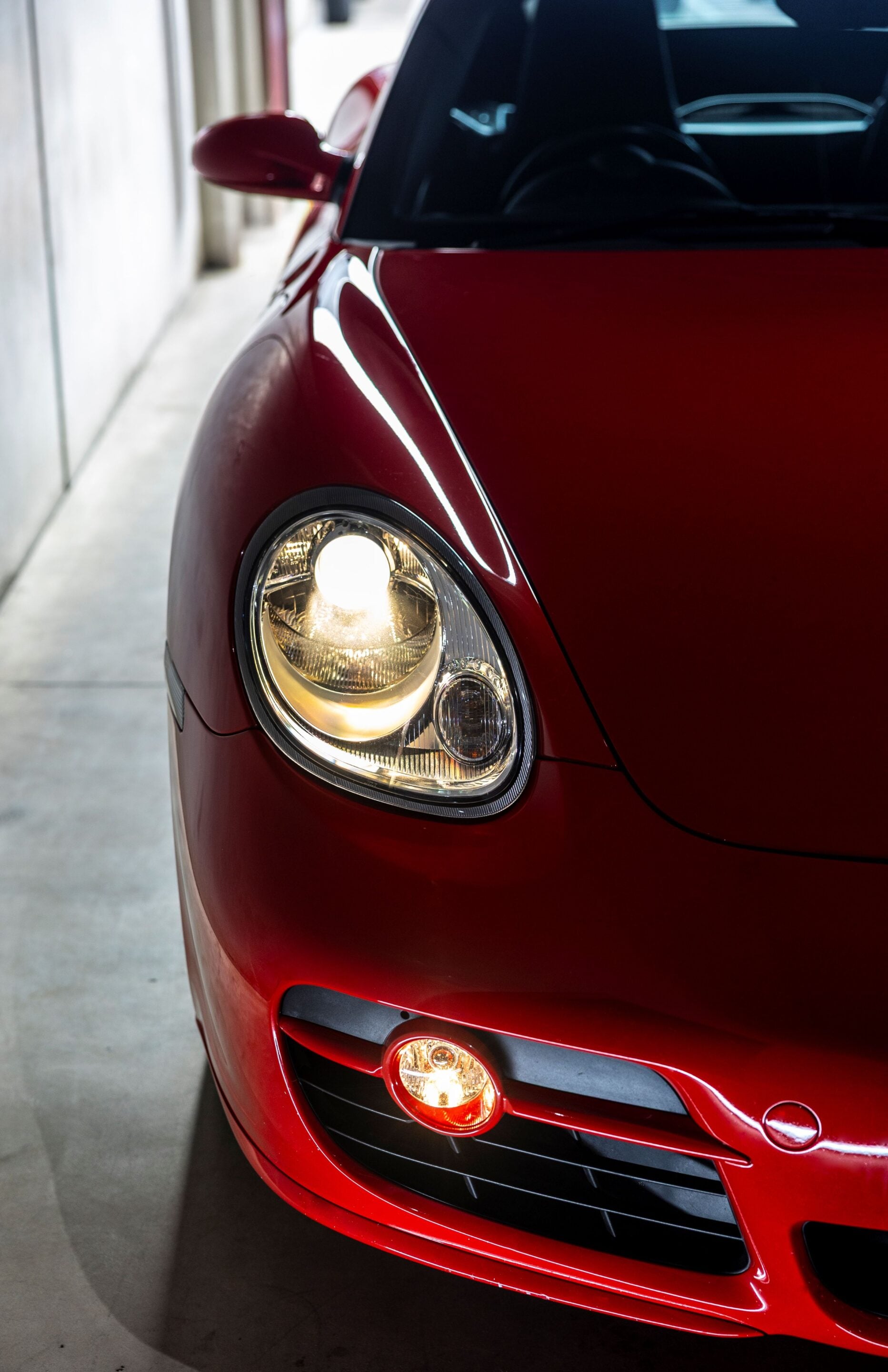
True to the vision of Wiedeking, Laxy and Horst, the Boxster shared around 40 per cent of its components with the 996 generation 911, a rationalising of production that shored up the future of the company. Everything from the doors, front fenders, bonnet lid and those polarising ‘fried egg’ headlights were completely interchangeable between the two models.
It was a similar story inside where everything from the dashboard, gauges, switchgear, steering wheel and seats were shared across the two model lines.
Launched in 1996 and with a tantalising price of DM76,500 in its domestic market, the Boxster proved significantly more affordable than the DM135,610 Porsche 911.
That played out in Australia as well, the Boxster priced at $109,900 when it launched here in 1997. The most affordable 911 was almost double the price, asking for $199,900 in manual Carrera trim.
It was a global success, Porsche shifting over 164,000 of the first generation Boxster between 1996 and 2004, heralding a financially secure future for the brand.
So why does a story about the Porsche Cayman begin with the Boxster? Because without the Boxster there would be no Cayman.
2
The Cayman story starts officially in 2005 with the launch of the first-generation model for the 2006 model year. But, rumours of a fixed-roof second-gen Boxster, which had launched the previous year, had been floating around for a while. ‘Spy photos’ of a Boxster with a roof proliferated before Porsche finally fessed up with official photographs in May 2005. No one was shocked.
More than based on the 987 second-generation Porsche Boxster, the Cayman was essentially – as Wheels described in our June 2005 issue – “a Boxster in a steel Stack Hat”. And that was true enough.
Designed by the deliciously named Pinky Lai, the Hong Kong-born designer whose Porsche tenure covered four decades from 1989-2014 and included penning the 996-gen 911, the Cayman adhered to Wiedeking’s earlier principles for rationalisation.
Sharing its platform and much of its architecture with its soft-top sibling, the Cayman nevertheless differentiated itself – apart from the obvious roof and hatchback – with wider rear fenders, gills (or strakes) inside the side air intakes, and body-coloured ribs, festooned with foglamps, across the front bumper intakes.
Common to both models were the headlights, front fenders, bonnet and doors, while even the rake of the windscreen remained identical.
Inside, the cockpits of both – certainly forward of the B-pillar – were identical although thanks to its positioning between the Boxster and 911, the Cayman’s list of interior finishes edged slightly more premium than its soft-top counterpart’s.
Underneath, Porsche’s engineers had tweaked the Cayman’s suspension to counter the extra weight of the steel roof, despite the same A-arm front and multi-link rear geometry. Stiffer springs and dampers, along with bigger anti-roll bars compensated for the tin lid.
Porsche wanted to ensure its new sportscar hit the ground running as a ‘driver’s car’, available at launch only in Cayman S trim. An entry-level Cayman, with Porsche’s smaller 2.7-litre flat-six engine, would follow in due course but right from the outset, the Cayman S impressed with its bigger, beefier and more powerful 3.4-litre flat-six.
As Wheels perhaps a little unkindly described it, “the engine is a Porsche parts-bin special: a Boxster S block with a 78mm stroke and Carrera’s 96mm bore. The cylinder heads are Carrera, with two camshafts per bank and Carrera S-spec Variocam-Plus on the intake side. The crankshaft, main bearings and pistons are unique to Cayman, while the conrods are lifted from Boxster.”
2
With outputs of 217kW and 340Nm, driven to the rear wheels via a six-speed manual, the Cayman S could sprint from 0-100km/h in 5.4 seconds, plenty quick for the time, and not that far shy of the 4.9 seconds Wheels achieved in the 911 Carrera. And all for $148,500 when it launched here in 2007, almost 50 grand more affordable than its $198,100 Carrera 911 garage mate. Put another way, buyers of the 911 were spending an extra $8266 for every tenth-of-a-second gain over the Cayman.
Of course, a Cayman was never going to hold the same street appeal as Porsche’s flag-waving 911 poster child. It was a fact not lost on purists and enthusiasts who quickly gave it the unflattering sobriquet of ‘poor man’s Porsche’, missing the point entirely.
But, unencumbered by preconceptions, the Cayman proved a hit with contemporary reviewers, praised for its handling and ‘Zen-like balance’ even if, as almost every review of the Cayman S shouted, it could have done with more power.
But asking for more power was missing the point of the Cayman which was designed to straddle the gap between the open-topped Boxster and flagship 911. Yes, the Cayman’s 3.4-litre mill could easily have been tuned to provide even more grunt, but that would have pushed it perilously close to the edge of matching the 911. And the boffins at Weissach were never in 911 years going to agree to that.
As Wheels noted in its first drive of the mid-engined coupe, “The Cayman nails the bullseye of opportunity, but in so doing becomes more a marketing coup than a fully realised performance coupe.
“It’s time for the 911 to move up a level – a big one – and give the Cayman S the room it needs to become truly desirable; a coupe in which horsepower is limited by the chassis, not limited to protect the 911.”
US publication Motor Trend went one step further, writing in August 2005 that “the new Porsche is actually everything the 911 has not been for most of its career: confidence-inspiring, super-stable, totally balanced, quite forgiving, a gifted storyteller that is equally good at listening.
“[It] certainly feels more solid than a Boxster, like a jigsaw composed from fewer parts, and it is more balanced than the 911. It is also less of a challenge to drive hard than the rear-engined supercar.”
High praise for the ‘poor man’s Porsche’.
1
The 987-generation Cayman received its power bump late in life, the strictly limited Cayman R upping outputs to 243kW and 370Nm, dropping 0-100km/h to five seconds even in manual trim, or an even pacier 4.9s for seven-speed dual-clutch equipped variants. A heavy weight loss program saw the Cayman R tip the scales some 55kg lighter, thanks to lighter alloy wheels, adding aluminium doors lifted from the 997-gen Porsche 911 GT2 and GT3, and swapping out the Cayman S’s regular sports seats for carbon buckets. Creature comforts such as air-con, a rear wiper, sound system and even storage cubbies were deleted in a bid to lose a few more kegs on the spec sheet.
It paved the way for successive generations to become ever more powerful, giving rise to what is arguably the apogee of the nameplate, the 981 generation’s Cayman GT4. No longer content playing second fiddle to 911, the GT4 featured the 3.8-litre flat-six lifted from the Carrera S, lowered suspension engineered for the race track, and aggressive aero styling. Pumping out 283kW and 420Nm channelled to the rear wheels via a six-speed manual, the GT4 covered the 0-100km/h dash in just 4.4 seconds, proper Porsche-like numbers and a tenth faster than the 991-generation Carrera S which had so convivially donated its engine.
But all that was still in the future in 2006 when the original Cayman dared to upset the Porsche purists, a car that despite Weissach’s attempts to hold it back, soon found its place in the Pantheon of Porsche greatness.
Perhaps Car and Driver summed it up best in its original review when it wrote “the Cayman S is the best handling car Porsche makes. It’s so good, in fact, that the engineering team must have been told to hold back – because if they hadn’t, the Cayman would have embarrassed the 911 on nearly every level.”
‘Poor Man’s Porsche’ indeed.
Our Cayman S
1
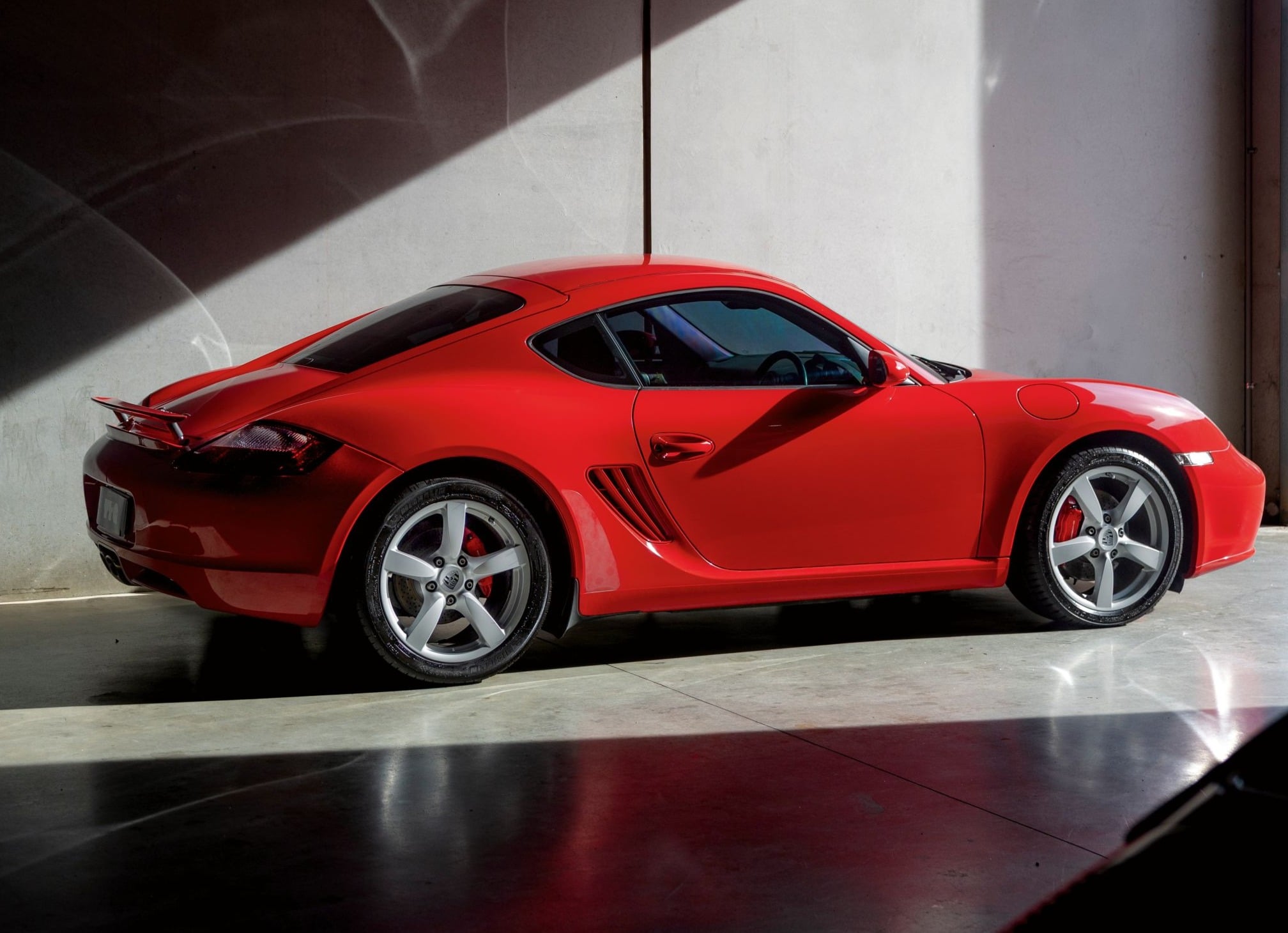
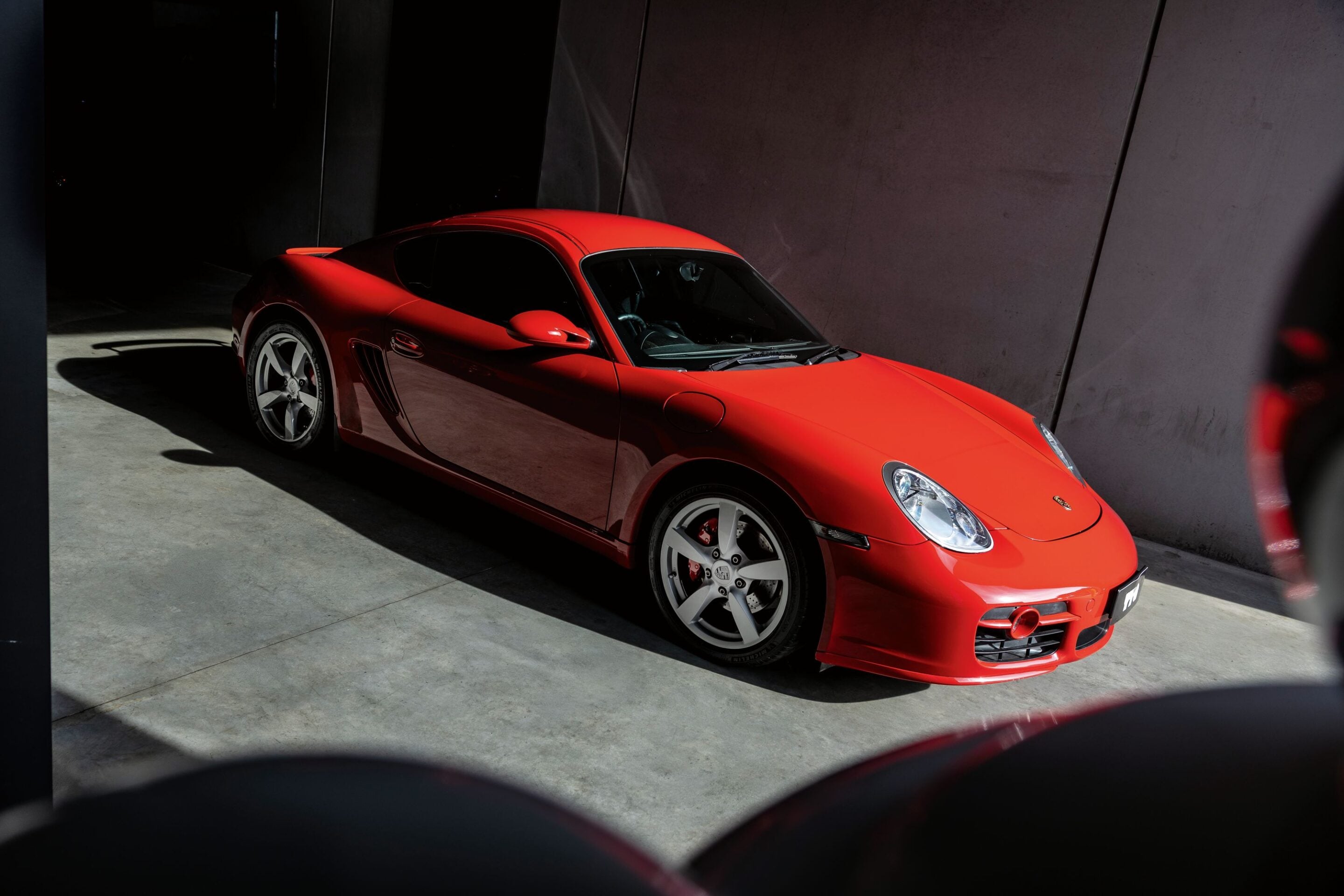
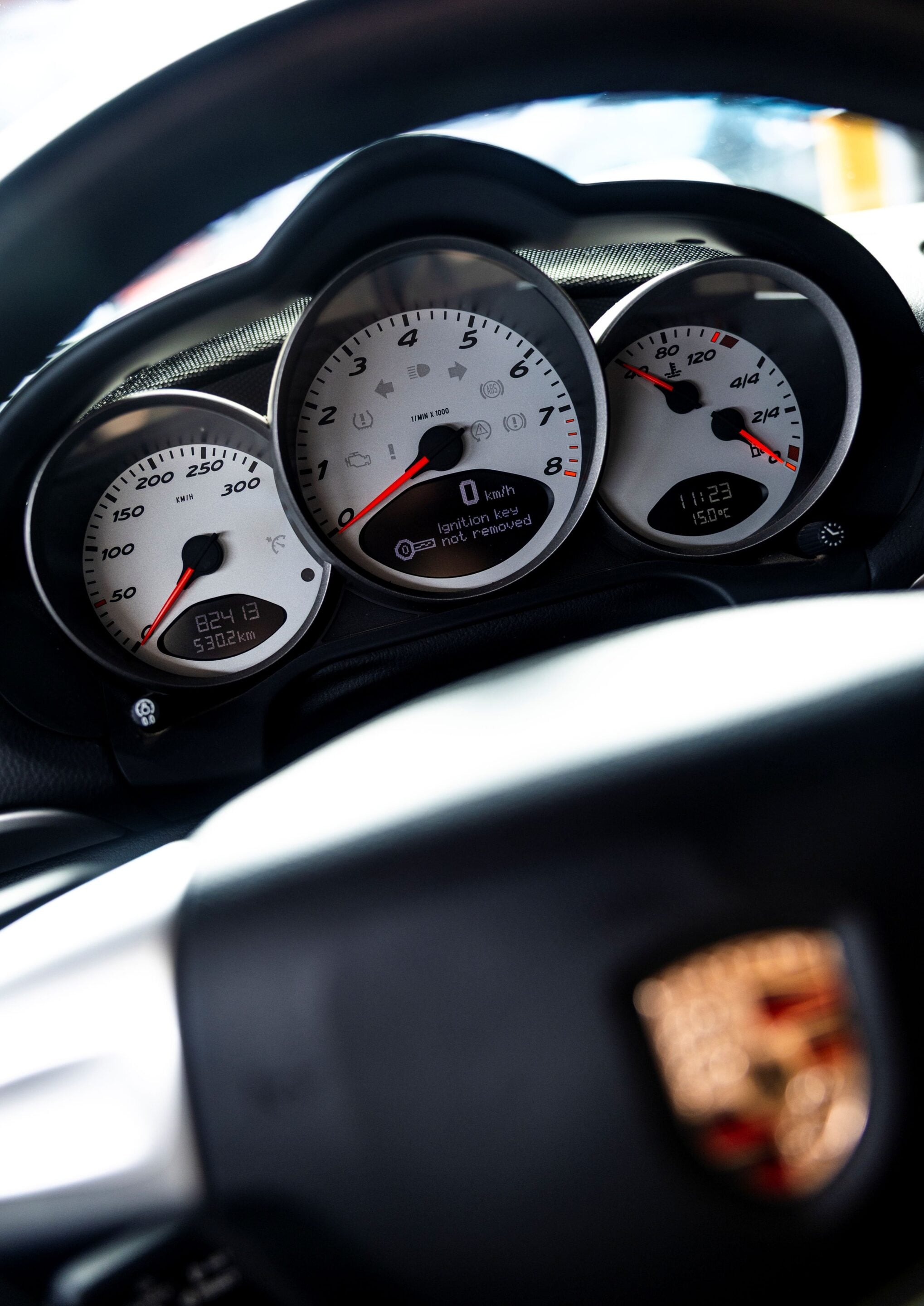
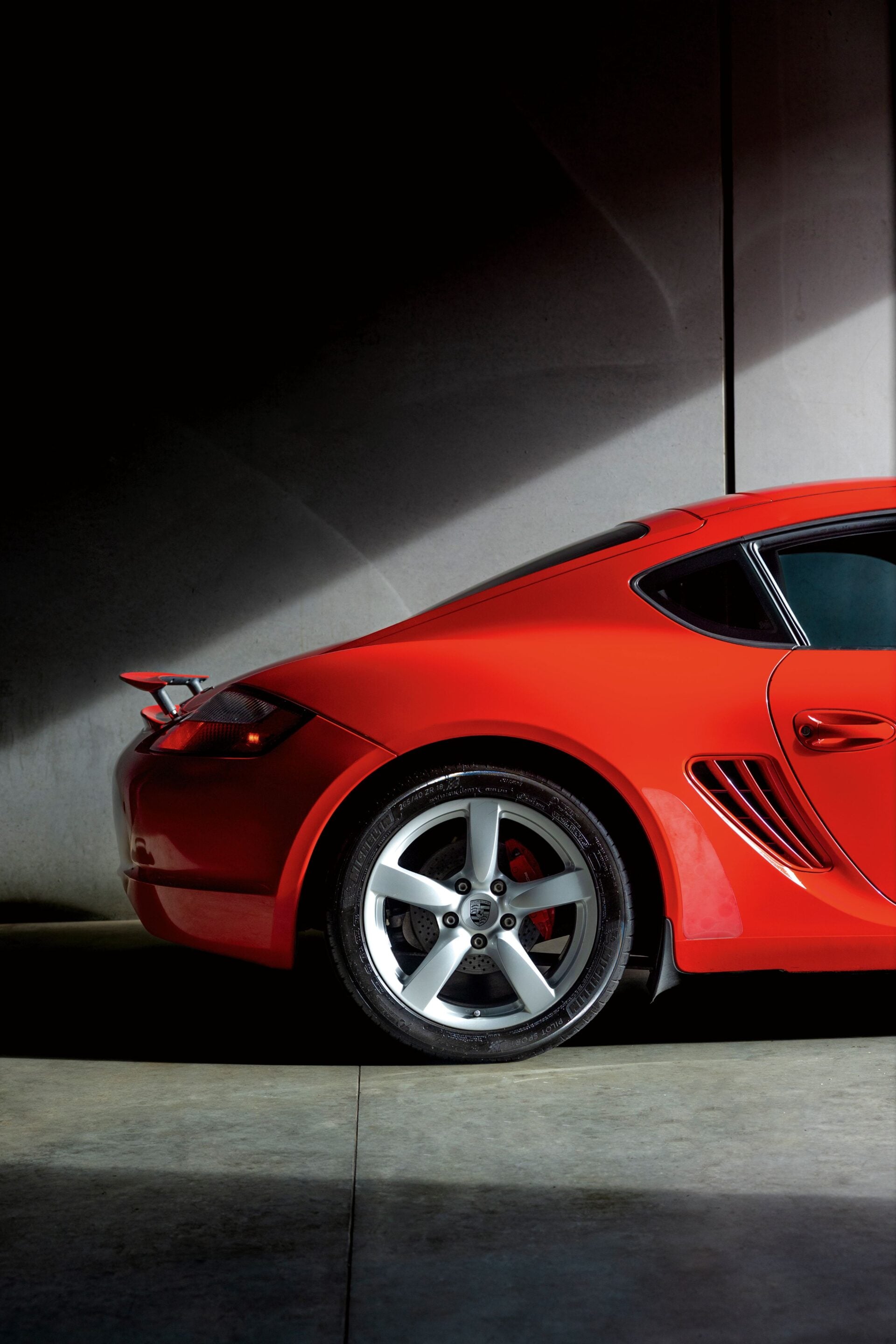
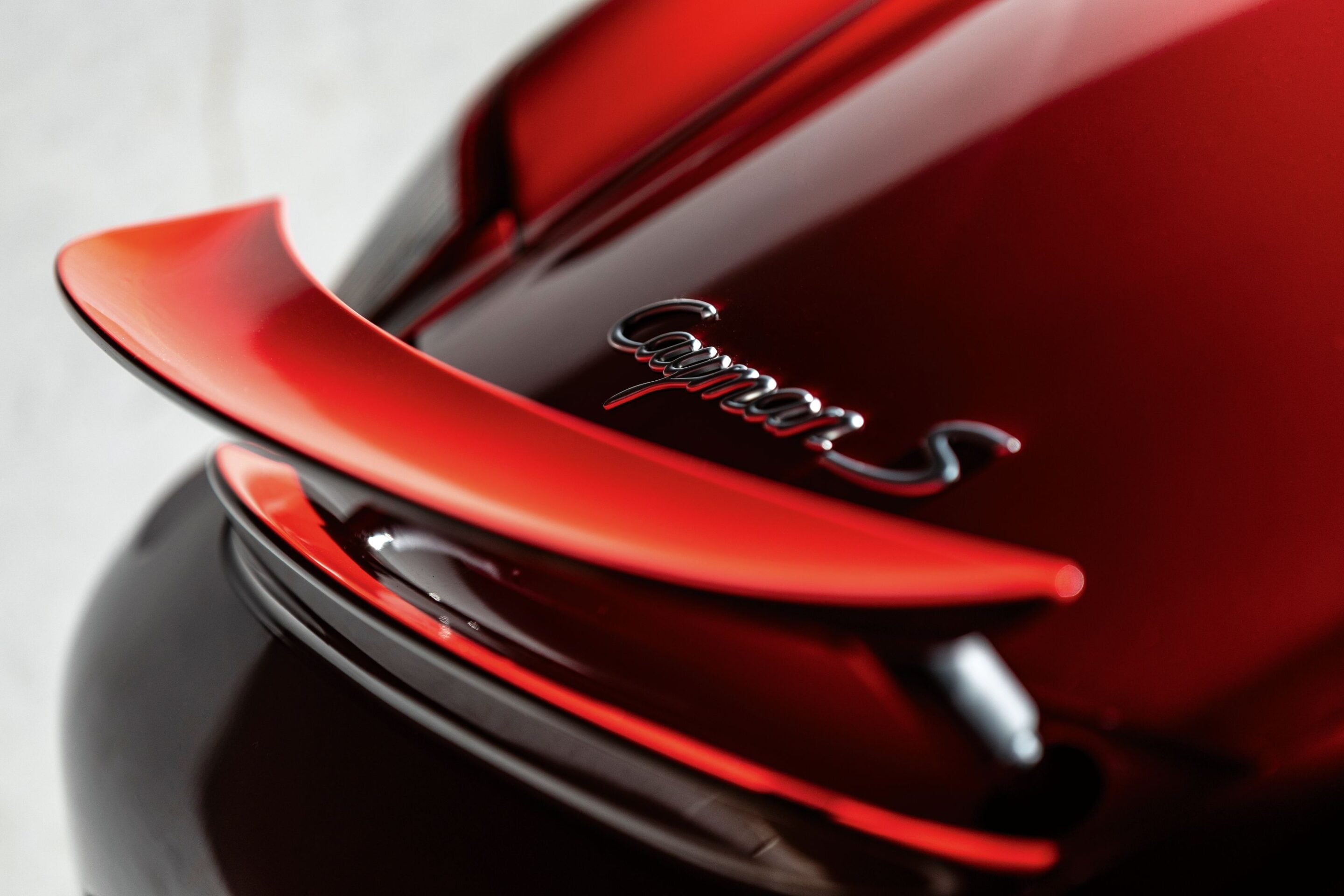
The Cayman S pictured here is an original Australian-delivered 2007 car with a scant 82,400km showing on the odometer. Finished in classic Porsche Guards Red, this six-speed manual example has enjoyed three owners over the course of its 19-year life and remains in well-preserved and fully original condition.
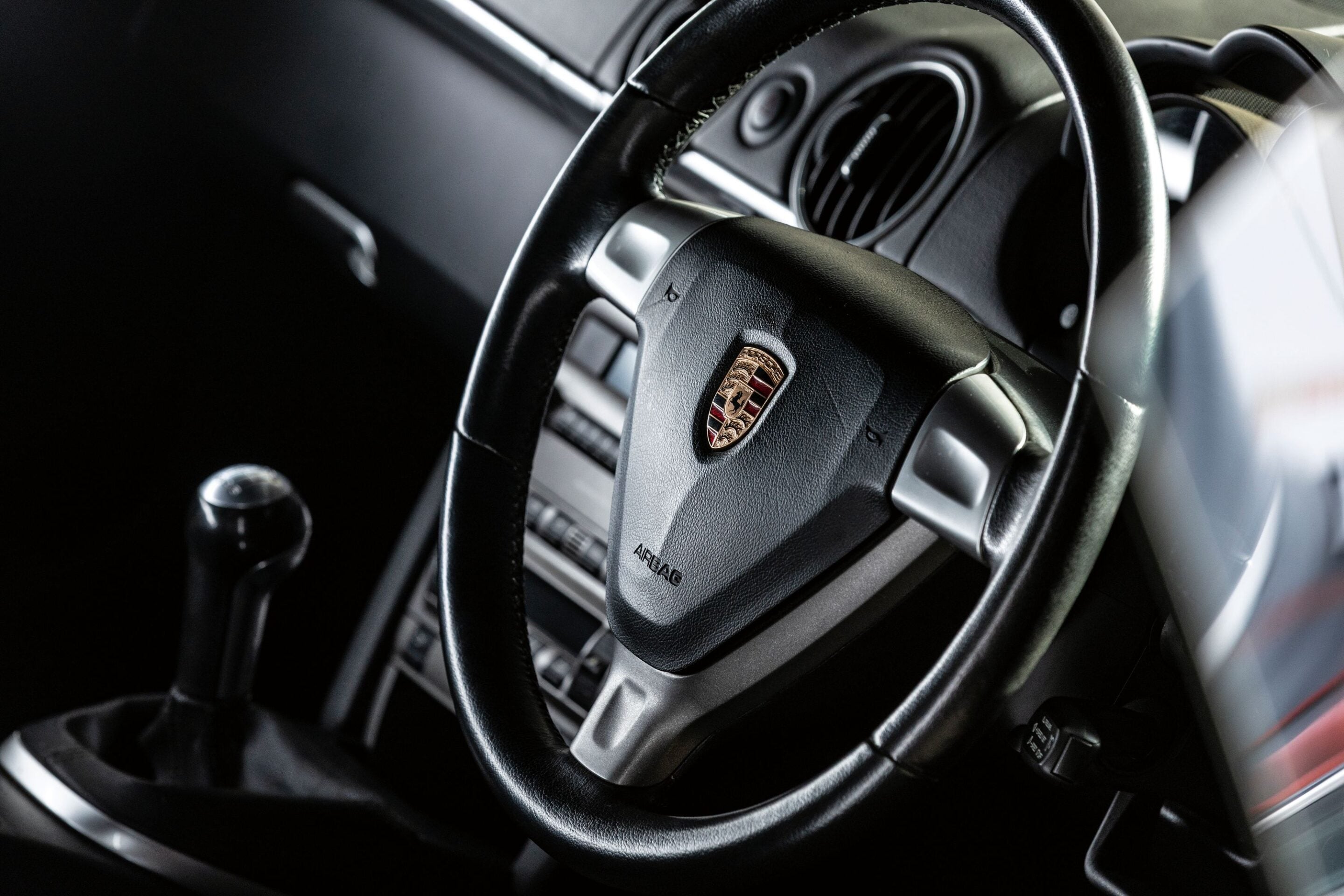
Inside, original black leather adorns not only the seats, but also the dashboard, steering wheel, door cards and various interior trims. Creature comforts include dual-zone climate control and Porsche sports seats with partial power adjustment, while driver assistance extends to cruise control and a trip computer, hi-tech stuff for the time.
The factory-fitted 18-inch five-spoke alloys remain in “exceptional condition” while the brake calipers have been finished in colour-matched Guards Red.
Currently for sale for $69,990 through Melbourne-based Young Timers Garage, this lovely example comes with a complete Porsche service history and all its original documentation.
Specs
| Model | Porsche Cayman S (987) |
|---|---|
| Engine | 3.4-litre naturally aspirated flat-six |
| Transmission | 6-speed manual, RWD |
| Power | 217kW @ 6250rpm |
| Torque | 340Nm @ 4400rpm |
| 0-100km/h | 5.4 seconds (claimed) |
| Top speed | 275km/h |
| Wheels | 18-inch alloys |
| Dimensions (l/w/h/wb) | 4341/1801/1305/2415mm |
| Weight | 1260kg (kerb) |
| Price (new) | $148,500 (2007) |
This story first appeared in the August 2026 issue of Wheels magazine, now on sale. Subscribe here and gain access to 12 issues for $109 plus online access to every Wheels issue since 1953.
Follow WhichCar/Wheels on Google
Click the button below to make WhichCar by Wheels a preferred source for your news.

We recommend
-
 Features
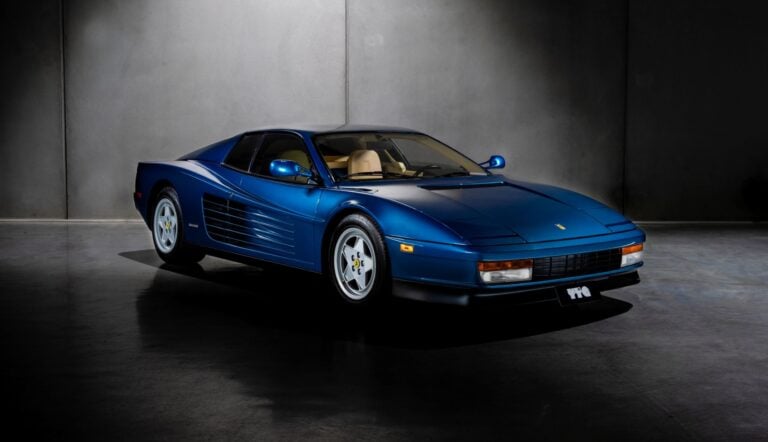
Modern Classic: Ferrari Testarossa, from Maranello to Miami Vice
Its rakish design might have been polarising, but the Ferrari Testarossa dragged the Italian supercar maker into the modern age.
-
 Features
Modern Classic: BMW E60 M5, a sedan like no other
BMW threw away the rulebook when it created the fourth-generation M5, an audacious yet utterly beguiling V10-powered executive sedan that still sets pulses racing.
-
 Features
Modern Classic: Lamborghini Countach, a masterpiece of style
Born in the ’70s, and a supercar icon of the ’80s which lived into the ’90s, the Countach weaved its own magnificent myths.