Features


Gallery 1
If ever there was a year where Ferrari came of age, then 1984 can rightfully stake its claim.
In the space of just three months in that most Orwellian of years, Maranello gave the world two of its most iconic models ever: one an utterly gorgeous homologation special, the other a slightly garish grand tourer that divided opinion from the moment it made its public debut.
Ferrari got the ball rolling at the Geneva Motor Show in February with the reveal of the stunning 288 GTO, widely regarded as Ferrari’s first true supercar. Built for Group B racing, the 288’s twin-turbo 2.9-litre V8 made around 295kW, helping to propel it to a top speed of 304km/h and giving it the distinction of the first road-legal production car to break the 300km/h barrier. Legend status assured.
Just 272 were built and while Group B was ultimately shelved amid growing safety concerns, the 288’s true legacy came just over three years later in the shape of the F40. But this story isn’t about the 288 GTO, the brief snippet here just to provide some context on what was going on behind Maranello’s closed gates during the early months of 1984.
1
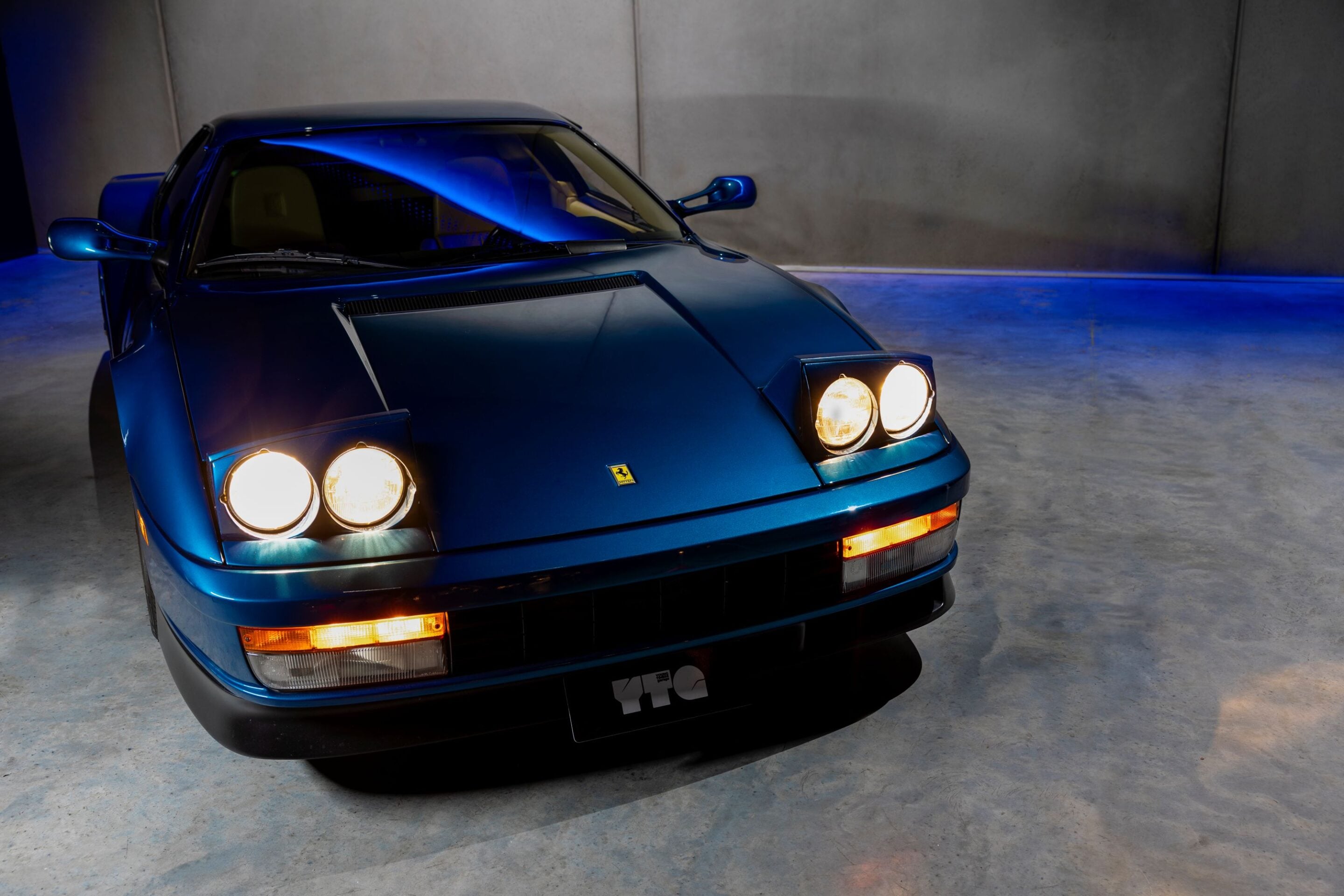
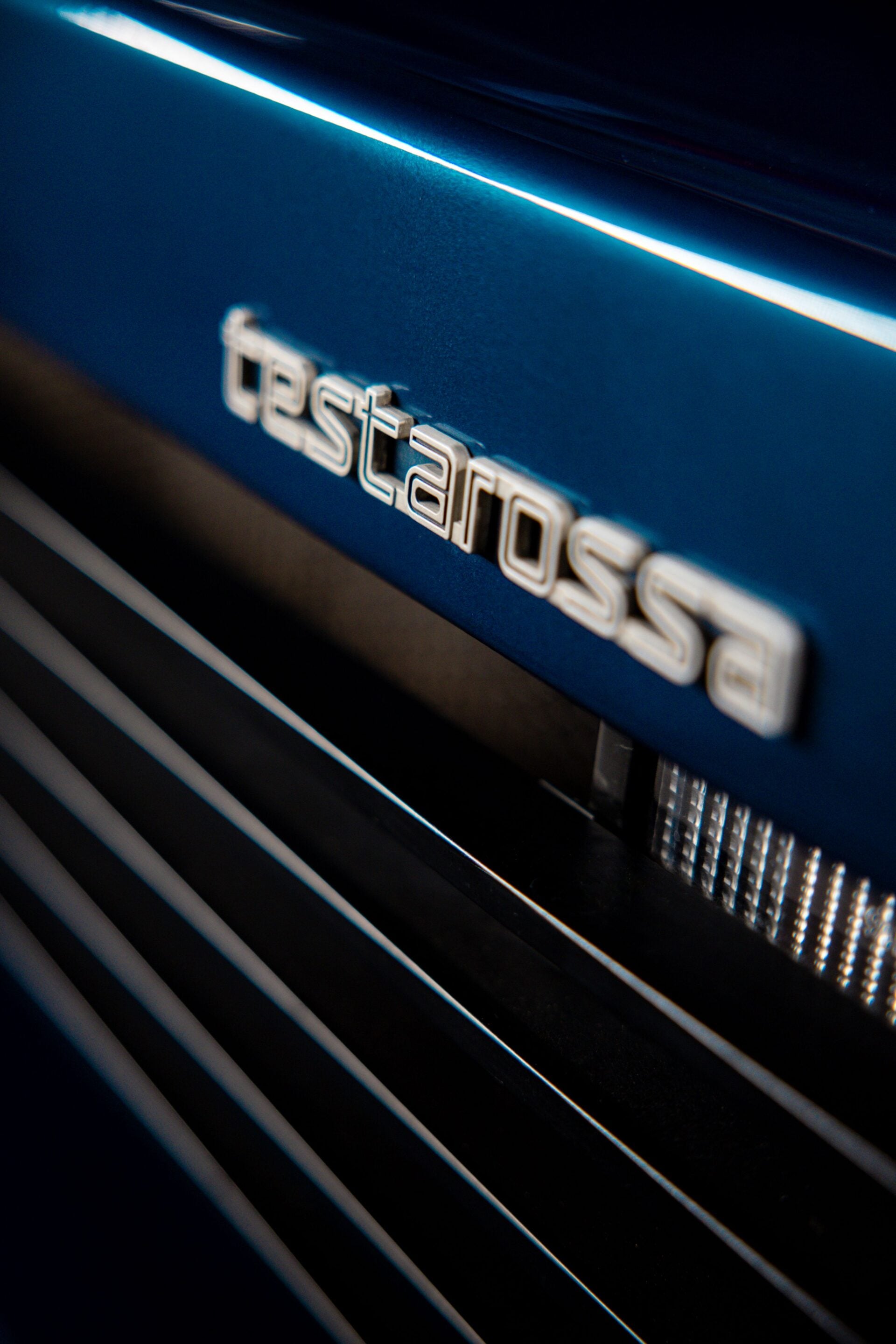
Fast forward to May and the streets of Paris, where the defining car of ‘1980s excess’ took its first public outing – the Ferrari Testarossa. The reception was two-fold. Critics and reviewers weren’t sold on the Testarossa’s widebody stance, and especially its signature strakes that soon earned the epithet of ‘cheese grater’. But the public, on the other hand, loved it, praising its bold imposing size and in-your-face styling.
But more than just a talk-track, the Testarossa’s polarising design emerged out of necessity, even if Sergio Pininfarina – he of the storied Italian design studio which penned the Testarossa – described it as “an exaggeration in flamboyance”. Flamboyant it certainly was, but the story of how Pininfarina and Maranello’s engineers arrived at that point bears telling.
Work on what would become the Testarossa began in 1978, Ferrari needing a replacement for the stunning but flawed 512 BB. The engineering and design team, led by Ferrari’s Angelo Bellei (project manager), Nicola Materazzi (engine department) and Maurizio Rossi (experimental department) were joined by Pininfarina’s Leonardo Fioravanti who headed up the design team.
Their brief was simple – the new car needed to address the overheating issues plaguing the 512, be available to US buyers, improve practicality and add power as well as better handling and traction than its svelte predecessor.
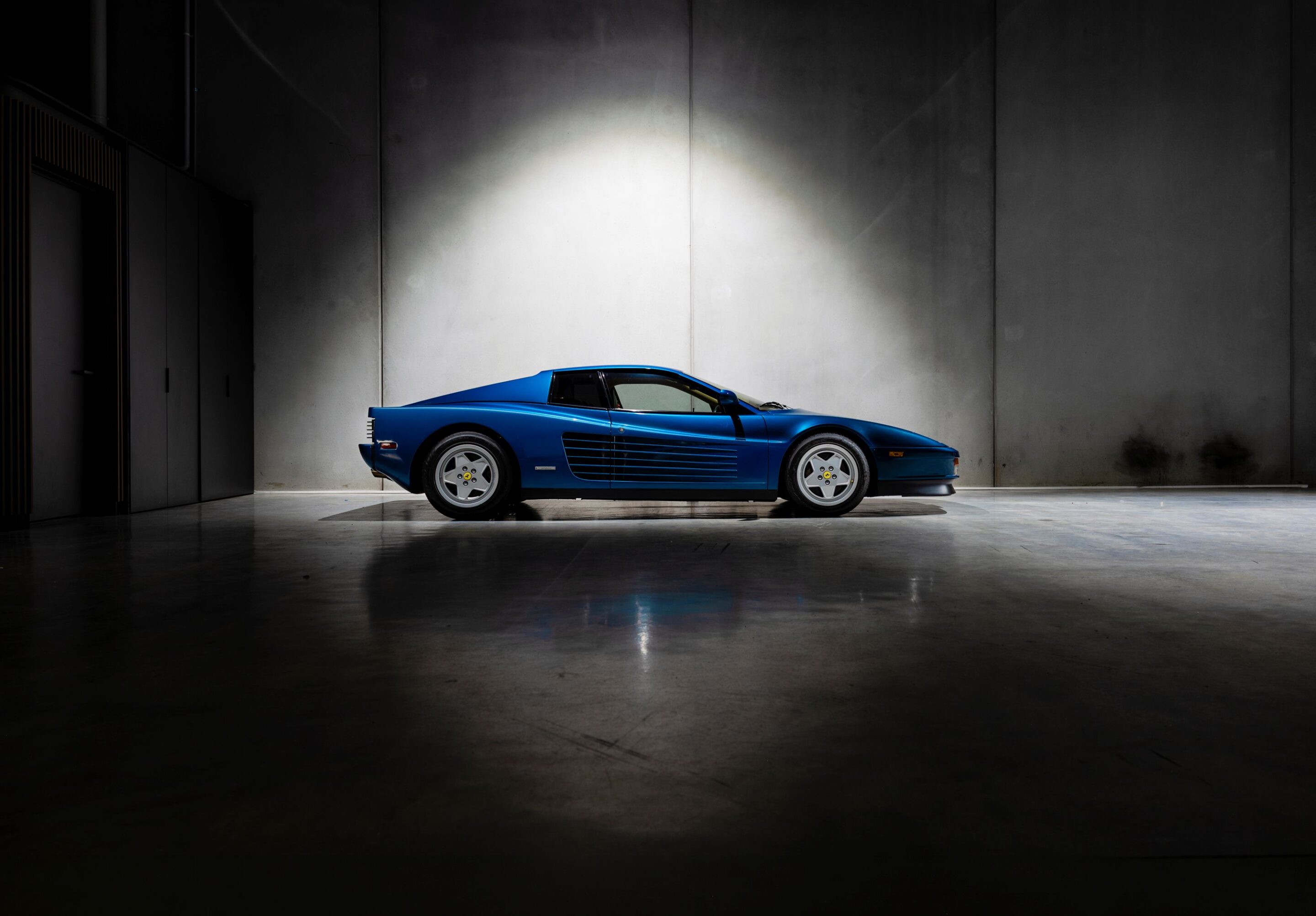
To understand how the Testarossa took shape it’s important to briefly look back at the 512 BB preceding it. Here was a classic Ferrari wedge, powered by a thundering flat-12 mounted amidships. But its stunning proportions and wedge-shaped profile was also its Achilles Heel.
1
With the 512’s 5.0-litre flat-12 mounted directly on top of the gearbox and just behind the cabin, there was precious little space left over for cooling components which remained resolutely located up front.
That resulted in a necessarily complex cooling system that didn’t always work at optimal levels, leaving not only the high-revving engine overheating, but also creating an uncomfortable amount of heatsoak for anyone inside the cabin.
The 12-cylinder engine also presented problems for the US market, its carburetted (and later fuel-injected) design failing the States’ increasingly stringent emissions regulations, meaning the 512 could not be sold in what was, and is, arguably Ferrari’s largest market.
The new car then, had to be designed with one eye on the US market, and by extension the rest of the world, the Testarossa today widely regarded as Ferrari’s first truly ‘world car’.
The 512’s 4943cc horizontally-opposed fuel-injected 12-cylinder engine was carried over, but now
featured four valves per cylinder, a re-engineering that improved not only power, but also emissions.
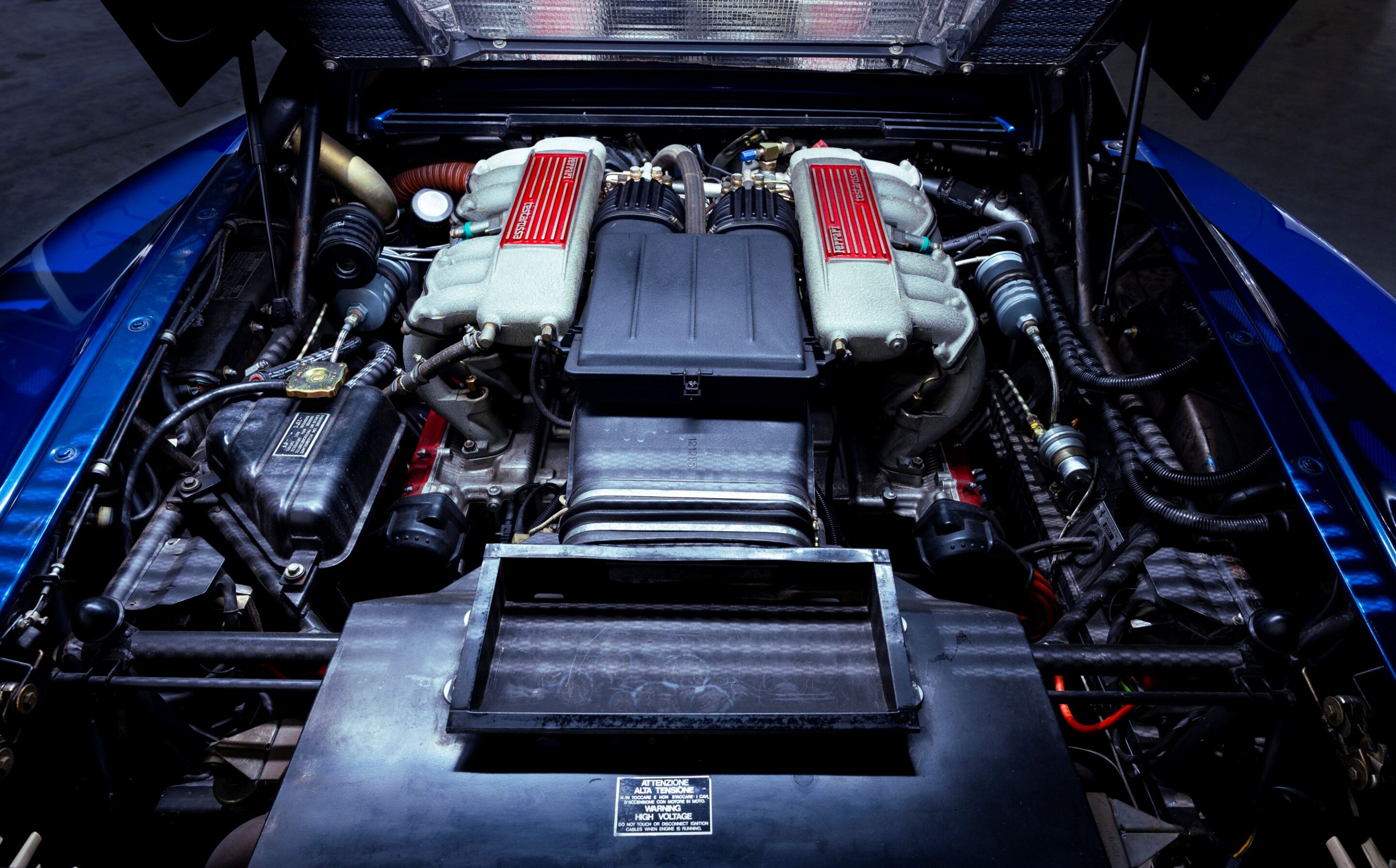
To keep the engine cool, not to mention the car’s occupants, Ferrari’s engineering team favoured two radiators, one on each side, mounted just behind the door openings. But that presented packaging problems and the solution was to widen the car dramatically at the rear (front track was up 12mm over the 512 BB, while the rear track had increased by a staggering 105mm), creating space for the radiators to tuck in neatly behind the Testarossa’s wide body work.
2
Radiators, of course, need airflow and while early design studies highlighted NACA-duct style intakes, a la Lamborghini Countach, Ferrari’s engineers were concerned at how much turbulence the large openings generated. The solution was to cloak the intakes in what has become the defining feature of the Testarossa, those ‘cheese grater’ strakes that lead into the rear of the Ferrari in an ever-widening dance of function over form.
Moving the cooling system to the side of the car brought other tangible benefits, with greatly increased luggage space under the bonnet, addressing a common complaint of the 512 BB.
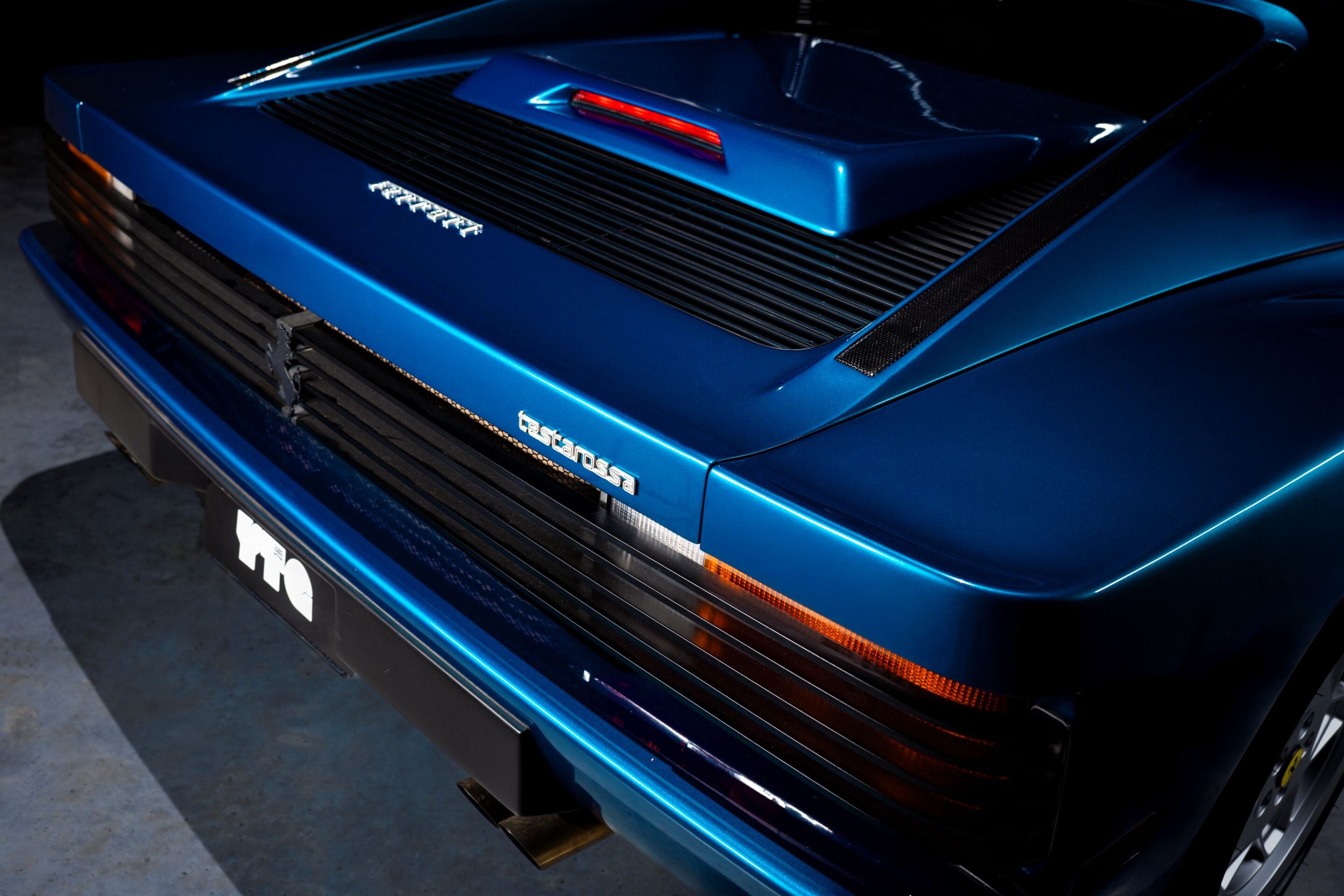
The strake theme continued at the rear of the Testarossa, so wide it looked like it was wearing that other great excess of the 1980s – shoulder pads. Here Ferrari had done away with its signature circular tail-light arrangement. Instead, a matte black louvre running the full-width of the body covered rectangular tail-lights, the combination unifying the Testarossa’s striking design elements.
Another quirky design element of early models was the monospecchio mirror, a single door mirror mounted high and wide on the A-pillar in order to meet what Ferrari erroneously believed were European rear visibility regulations. Derided at the time for its controversial positioning, and for only being fitted to the driver’s side, by 1986 they had been replaced by more conventionally-located wing mirrors on each side of the car. Those early models with what was known as the ‘flying mirror’ have become highly sought after by collectors today.
1
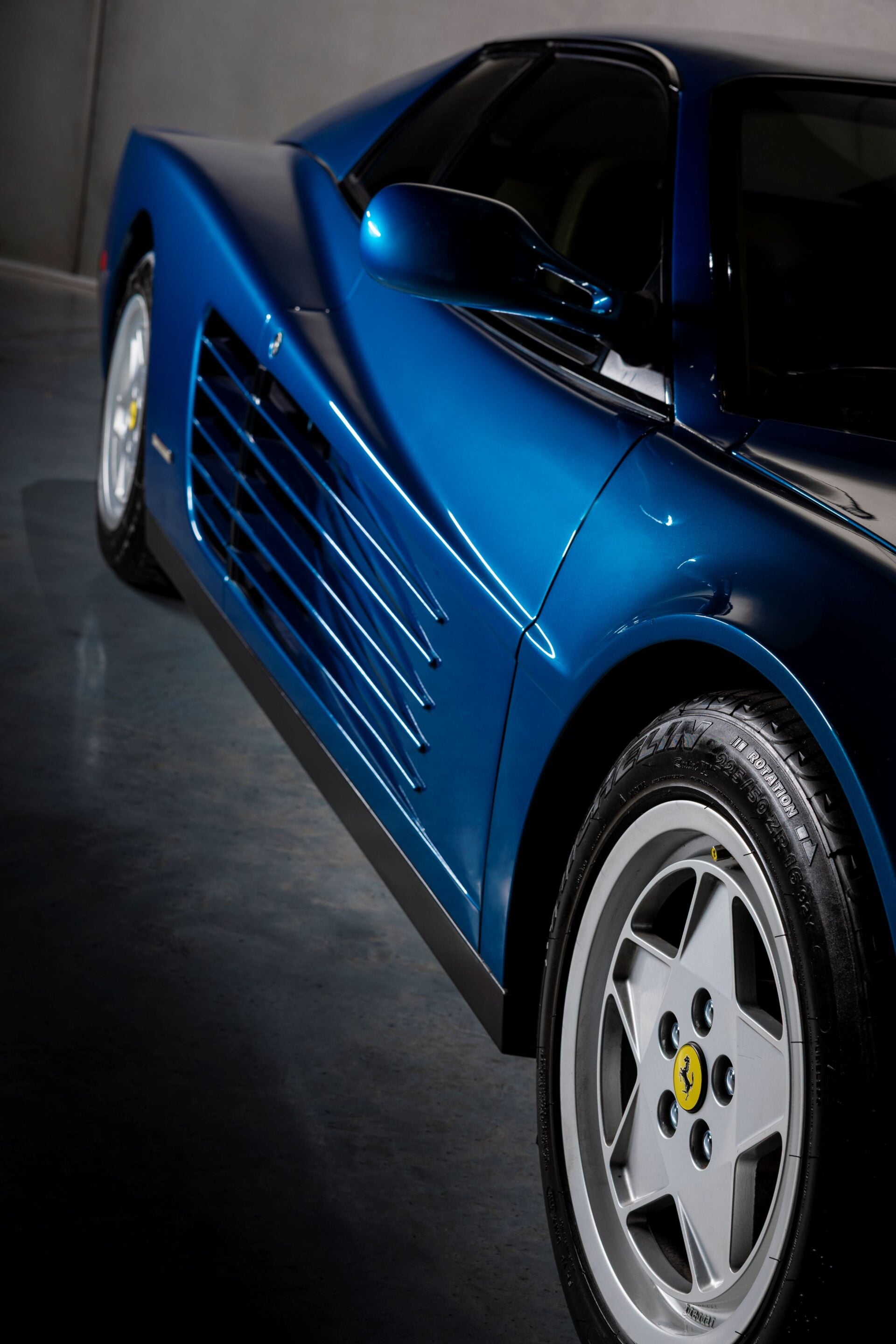
Under the skin, the evolutionary 4943cc flat-12 was a masterpiece of 1980s engineering. With a bore and stroke of 82mm and 78mm respectively, each cylinder featured four-valve technology fed by Bosch K-Jetronic mechanical fuel injection. Two belt-driven overhead camshafts per cylinder bank were driven directly off the camshaft as opposed to idler gears found on earlier Boxer models, such as the 512 BB.
As it was in those earlier models, the engine was mounted longitudinally on top of the five-speed manual transmission sending drive to the rear wheels. Twin bright red cam covers that lent the Testarossa (Italian for ‘redhead’) its name completed the engine bay.
Performance was prodigious for the era, the 12-cylinder pumping out a quoted 287kW at 6300rpm in European spec while US models made do with 279kW at a slightly detuned 5750rpm to placate the emissions nannies.
The sprint from 0-100km/h was said to take 5.8 seconds which seems comically slow by today’s standards but made it one of the fastest accelerating cars of its time. Top speed was a claimed 290km/h, just trailing the 292km/h claimed by that other great poster-child of 1980s flamboyance, the Lamborghini Countach.
Unlike Maranello’s great rival from just up the road in Sant’Agata, the Testarossa was a far more forgiving car to drive, blending supercar performance with grand touring comfort. Despite its size, and especially its width (it stopped the tape at a huge 1978mm at its widest point), the Testarossa remained user-friendly.
A lighter clutch meant less leg work for drivers while getting in and out of the low-slung supercar (it measured just 1130m tall) was made easy thanks to wide-opening doors and a flatter floor. Occupants sat in air-conditioned comfort while powered mirrors and windows were luxury items conspicuously absent from a number of the Testarossa’s erstwhile rivals.
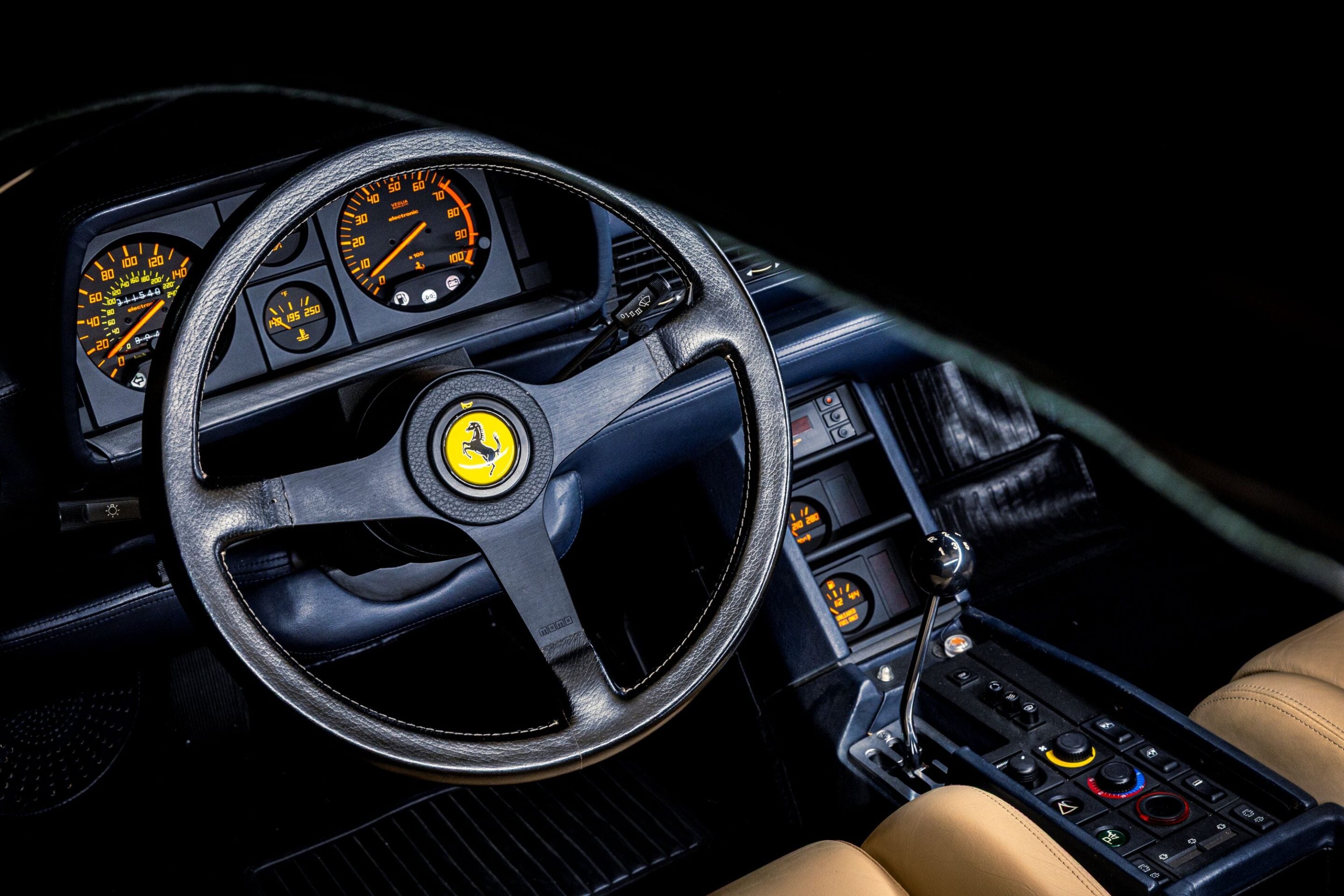
3
Early reviews were overwhelmingly positive, especially in the US where the pain of missing out on the 512 BB was soon banished.
“The 4.9-litre double-overhead-cam flat twelve behind us whirs, hums, whistles, and whines deliciously as the revs rise and fall,” wrote Car and Driver in its September 1986 issue, adding that “Even when driven at a comfortable eight-tenths, though, the Testarossa can cover more ground in less time than almost anything else on four wheels.”
Over the Atlantic, British magazine Performance Car noted “As a blender of outright speed and cruising comfort, roadholding and responsiveness, dynamics and driveability, the Testarossa is as good as they come.”
Here at Wheels we had to wait until 1988 to sample the Testarossa, but when he finally did, Steve Cropley was effusive.
“The 4943cc 290kW engine sounds like no other. Anything else, even the Lambo V12 has an exhaust like a series of muffled explosions. This is a hum, then a howl, then a wail near the 6300 rpm where maximum power is delivered,” wrote Cropley in our September 1988 issue.
“The chassis beneath clings to corners with only a trace, and not a serious threat, of the Boxer’s terminal oversteer. And its noise suppression, ergonomics, ride and comfort – as well as its finish – are well up to the standard of 1988 exotic cars. Even the somewhat over-produced German ones,” he added.
Whether it was because it had the go to match the show, or whether its devilishly rakish styling set hearts aflutter, the Testarossa soon adorned the bedroom walls of enthusiast children and adults alike everywhere, Ferrari’s entrance into the mid-80s supercar club joining a short but stellar line-up of ’80s poster cars that included the Countach and Porsche 959.
2
A starring role in that oh-so-1980s cop drama Miami Vice didn’t hurt its reputation either, the exploits of Tubbs and Crocket almost playing second fiddle to the scene-stealing Testarossa, gleaming white under Florida’s hot sun.
How the Testarossa ended up with a starring role on US television is a story worth telling. And like all good stories, it started with a lawsuit. When the show first aired in September 1984, its two lead characters swanned about Miami in a black Ferrari Daytona Spider. Only, it wasn’t a real Daytona, but rather a well-built replica. And it’s this what got Enzo’s back up. Cue lawyers.
Thankfully, a resolution was reached which amounted to Ferrari offering the production team not one, but two Testarossas for use in the show. Originally delivered in black, the show’s producer, Michael Mann, quickly had them resprayed to white for better on-camera visibility during night-time scenes.
The Testarossa subsequently made its acting debut in season three of what had become, by then, one of the biggest shows on TV. Suddenly the Testarossa was in 20 million homes every week, becoming a cultural icon of that decade.
Such was its influence on popular culture, and particularly in the US, after-market body kits mimicking the Testarossa’s signature strakes proliferated, appearing on a variety of mild-mannered sports cars and even a Mazda pick-up truck, earning it the nickname, ‘Truxtarossa’.
The Testarossa remained in production from 1984 until 1996, with a shade under 10,000 cars produced across several updates including the final iteration F512 M, a limited run of 501 cars. It featured a more powerful 323kW version of the now legendary Tipo F113 flat-12, improving 0-100km/h to 4.7 seconds and a top speed of 315km/h. The Testarossa’s hard edges had been softened too, while pop-up headlights, the epitome of supercar cool in the ’70s and ’80s, made way for fixed headlamps.
The Ferrari 550 Maranello replaced the Testarossa in 1996 with some key distinctions. A front-mounted 5.5-litre V12 – Tipo F133 – presaged the brand’s future grand touring strategy. That leaves the Testarossa as the last ever road car from Maranello to feature the complex but beguiling flat-12 engine mounted behind the driver.
Its lasting legacy remains firmly in place, the Testarossa the automotive embodiment of the 1980s wrapped in a “flamboyant” package that helped usher Ferrari into the modern age.
2
Our Ferrari Testarossa
The Testarossa was never officially available in Australia, largely because factory right-hand drive cars are exceedingly rare with – according to various sources – just 438 right-hookers produced for the UK market over its lifetime.
But that hasn’t stopped a small number of Testarossas calling Australia home, including the car illustrated on these pages.
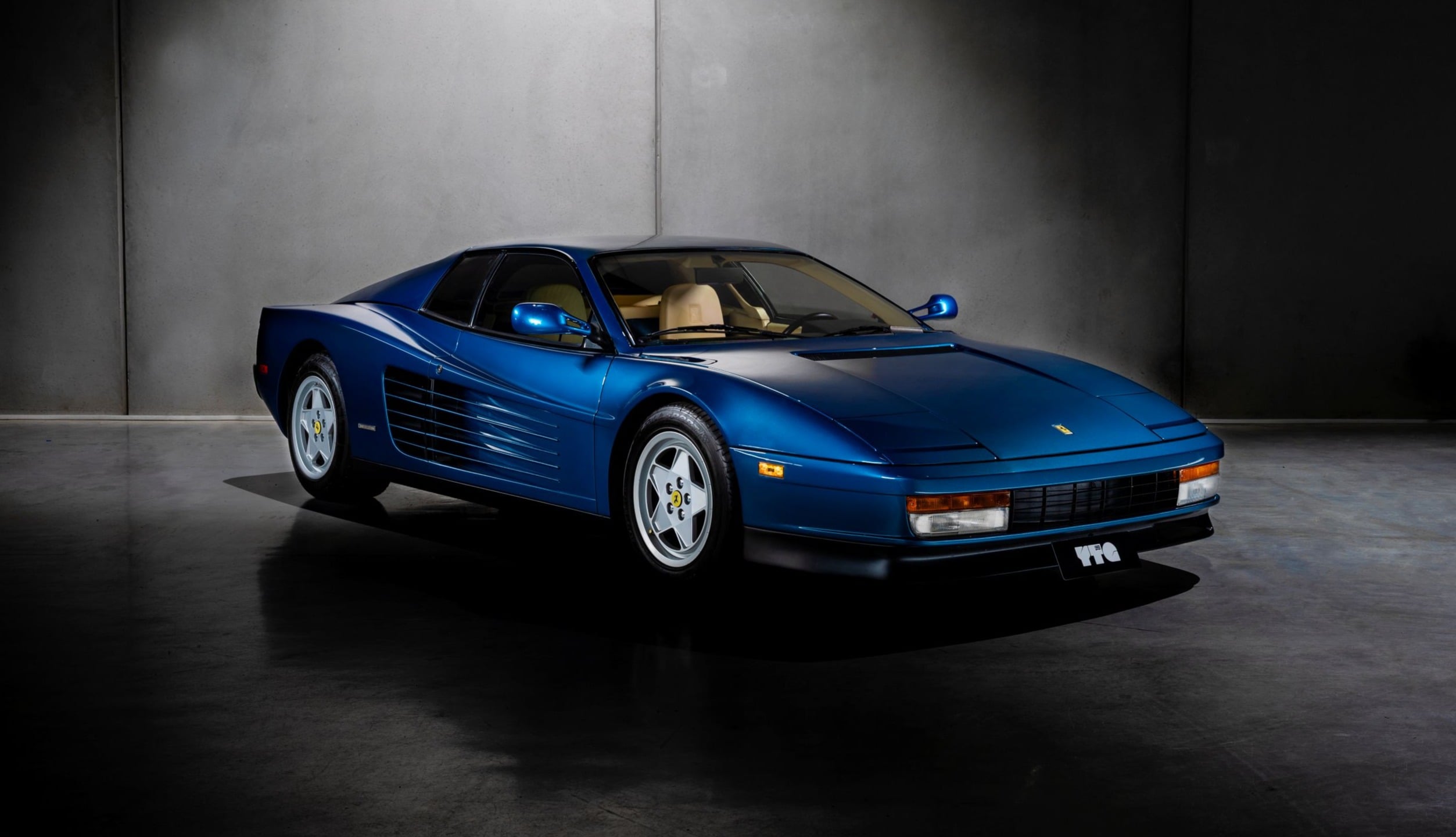
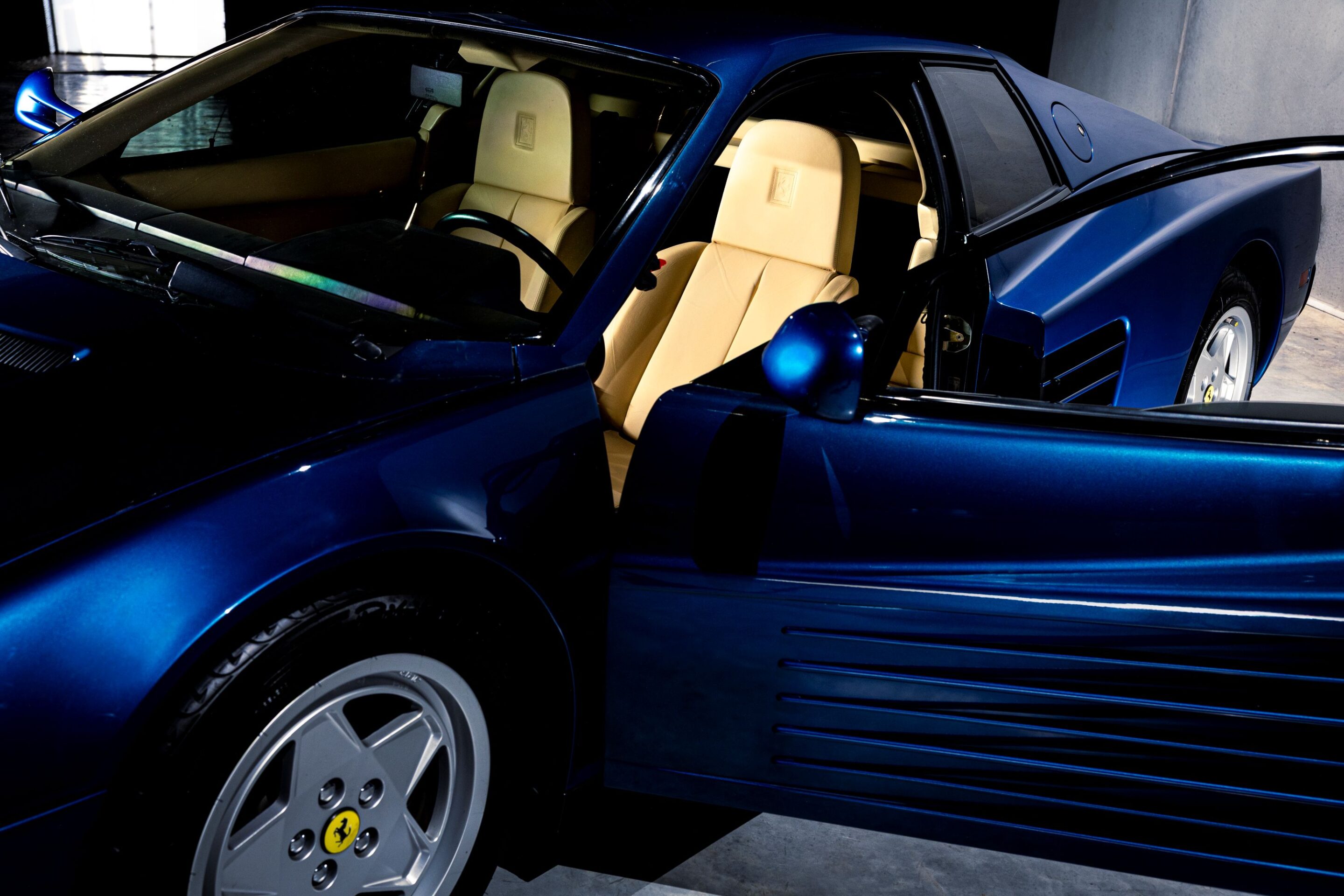
A 1990 model, this US-market car made its way to Australia in 2023 and has remained in its original left-hand drive configuration.
1
Delivered new in June 1990 through Hollywood Ferrari Motors, this striking Blue Chiaro over Crema Nappa leather example remained in the original owner’s hands for over 20 years before passing on to its second owner.
The car has received all-important certification by Ferrari Classiche, confirming that it’s a matching numbers car with the original engine and finished in the original factory colour with 11,500 (18,507km) showing on the odometer. This LHD example is also fully compliant with Australian Design Rules.
The car is currently for sale through Melbourne’s Young Timers Garage, with an asking price of $439,900 plus applicable government charges.
Specs
| Model | Ferrari Testarossa |
|---|---|
| Engine | 4943cc DOHC flat-12, four valves per cylinder |
| Power | 287kW @ 6300rpm |
| Torque | 490Nm @ 4500rpm |
| Transmission | Five-speed manual |
| Wheels | 16in x 8in front; 16in x10in rear |
| Tyres | Michelin TRX |
| L/W/H/WB | 4485/1976/1130/2550mm |
| Weight | 1506kg (dry) |
| 0-100km/h | 5.8s (tested) |
| Top Speed | 290km/h |
| Price (now) | $439,900 |
This story first appeared in the April 2026 issue of Wheels magazine, now on sale. Subscribe here and gain access to 12 issues for $109 plus online access to every Wheels issue since 1953.
Follow WhichCar/Wheels on Google
Click the button below to make WhichCar by Wheels a preferred source for your news.

We recommend
-
 Features
Modern Classic: Porsche 928, a car ahead of its time
Born of a crisis, the Porsche 928 was engineered to replace the 911, redefining the brand with radical design and grand touring ambition.
-
 Features
Modern Classic: Lamborghini Countach, a masterpiece of style
Born in the ’70s, and a supercar icon of the ’80s which lived into the ’90s, the Countach weaved its own magnificent myths.
-
 Features
Modern Classic: HSV Coupe 4
HSV’s rare all-wheel-drive Coupe 4 was bold, complex and ahead of its time – and while it flopped commercially, it remains an example of a braver time in Australian motoring history.