Features

Gallery 1
It seems almost unimaginable today but there was a time when Porsche found itself contemplating a future without the 911.
It was the early 1970s, and far from being the icon it has become today, the 911 was then still a relatively new model, less than a decade old. But Porsche was in turmoil, both from within and without.
Inside Zuffenhausen, a seismic shift had taken place with Ferry Porsche changing the structure of what had up until 1972 been a family-run business, into a publicly-listed company. It did not come without blood-letting, with Ferry’s son, Ferdinand ‘Butzi’ Porsche, and Ferdinand Piëch (Ferry’s nephew and grandson of company founder Ferdinand Porsche) shown the door.
A new board was installed. At its head, Ernst Fuhrmann, the one-time Porsche engineer who had returned to the company in 1971, took over as chairman.
Externally, the German brand was facing uncertainty from its biggest market, the United States, where looming regulations around stricter crash-protections along with tighter emissions controls, threatened to scupper the viability of its halo 911 model. Additionally, the US’s national road safety watchdog was holding a two-year review into the safety of rear-engined cars and while the review ultimately found they presented no increased risk, the very fact the review existed at all had spooked Porsche. Without the US, the 911 – and Porsche itself – was teetering on the brink.
2
As Fuhrmann later recalled, “The worst thing was no one knew exactly what these [new US] laws would be like or when they would take effect.”
Something new was needed.
Enter the Porsche 928, a front-engined grand tourer that, depending on whose memory you believe, was conceived to either replace the 911 or form part of a wider model line-up. Fuhrmann as much as admitted he saw an end for 911, revealing in an interview in Karl Ludvigsen’s illuminating Porsche: Excellence Was Expected, he only saw the 911 lasting until 1975. In its place Porsche’s new chief envisaged a more premium product, one that could take on the likes of Mercedes-Benz, Jaguar and BMW in the luxury grand tourer arena. And in a massive departure for the brand, it was to feature the engine up front.
Development began in February 1972, led by Wolfhelm Gorissen, Wolfgang Eyb and Helmut Flegl. Fuhrmann’s vision might have been radical but according to Gorissen, “everyone was on board”.
While the fundamentals of the 928 were simple enough – front-engine, transaxle, 2+2 seating – the decision as to what engine would power Zuffenhausen’s grand tourer proved more difficult.
Various engine configurations were considered and rejected including a 3.5-litre V6 (too tall to fit under the bonnet) and a V10 based off Volkswagen’s EA825 five-cylinder (too Volkswagen) before settling on a V8, crucially one with a 90-degree vee angle that would sit nicely under the 928’s low, sloping bonnet.
“A Porsche must have a low bonnet line. A horizontally-opposed engine would allow that, but it would make the car too wide,” Flegl said at the 928’s launch in 1977. “The compromise has to be a 90-degree V8.”
1
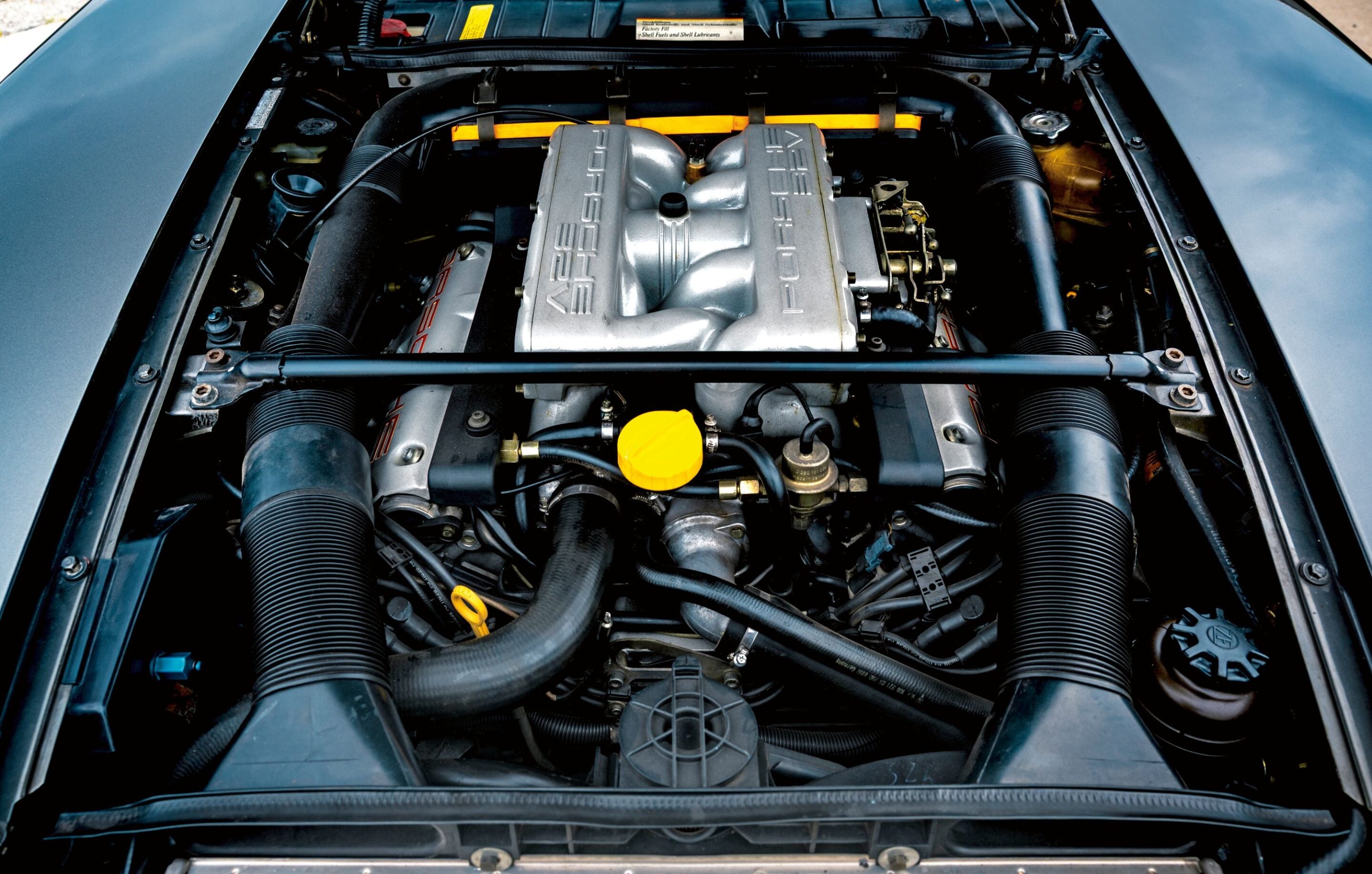
Porsche’s in-house developed 4.5-litre water-cooled V8 was a thoroughly modern piece of kit. Constructed entirely of lightweight alloys, with 95mm bore and 78.9mm stroke, and with two valves per cylinder all housed inside heads offset by 27mm (the right bank ahead of the left). Two overhead camshafts, one per cylinder bank, featured hydraulic rockers activating the valves. A compression ratio of 8.5:1 ensured the new V8 could run on what was claimed at the car’s launch in 1977 as “the lowest grade of fuel”. Electronic fuel pumps fed the Bosch K-Jetronic injection system.
The end result: modest outputs of 180kW at 5250rpm and 363Nm at 3600rpm.
Another critical decision during those early days was around weight-distribution. While not a sports car in the same vein as the 911, the 928 nevertheless needed to offer a balanced chassis and with sporting dynamics befitting the Porsche badge.
As Flegl described, “The most critical terms of reference in the development of new cars nowadays are the American regulations. But since no-one really knows just what those rules will be in the next few vears, you have to be equipped to meet any eventuality.
“The only thing that’s certain about the future design rules is that they’ll be framed around front-engined cars. But there are disadvantages about having the engine mounted in the front in a high-performance car, and if you do it the only logical solution is to separate the power plant from the transmission and use a rear-mounted transaxle.”
Initially available with either a new Porsche-developed five-speed manual or three-speed Mercedes-Benz-sourced automatic, Porsche’s transaxle was mounted ahead of the differential, with the clutch located up front. The V8 itself was mounted well back inside the 928’s chassis, what today would be called mid-front, the end result being perfect 50:50 weight distribution.
1
Up front, lightweight alloy upper and lower wishbones helped to keep unsprung weight down. Coil springs, inward-facing shock absorbers, and an anti-roll completed the front suspension picture.
Out back, a new revolutionary design helped the 928 achieve greater stability during cornering, reducing oversteer and even offered a small measure of ‘four-wheel’ steering. Dubbed the ‘Weissach axle’, the system utilised the rear suspension’s trailing arms and specially-designed rubber bushings to increase the amount of rear-wheel toe-in during deceleration, dramatically reducing the risk of lift-off oversteer.
The 928’s exterior styling was overseen by Porsche’s design chief Anatole Lapine alongside principal designer Wolfgang Möbius. Larger than the 911, the 928’s unusually curvaceous, almost bulbous, design hid its size well. As Lapine recalled later, several elements of the 928’s body were ‘must-haves’.
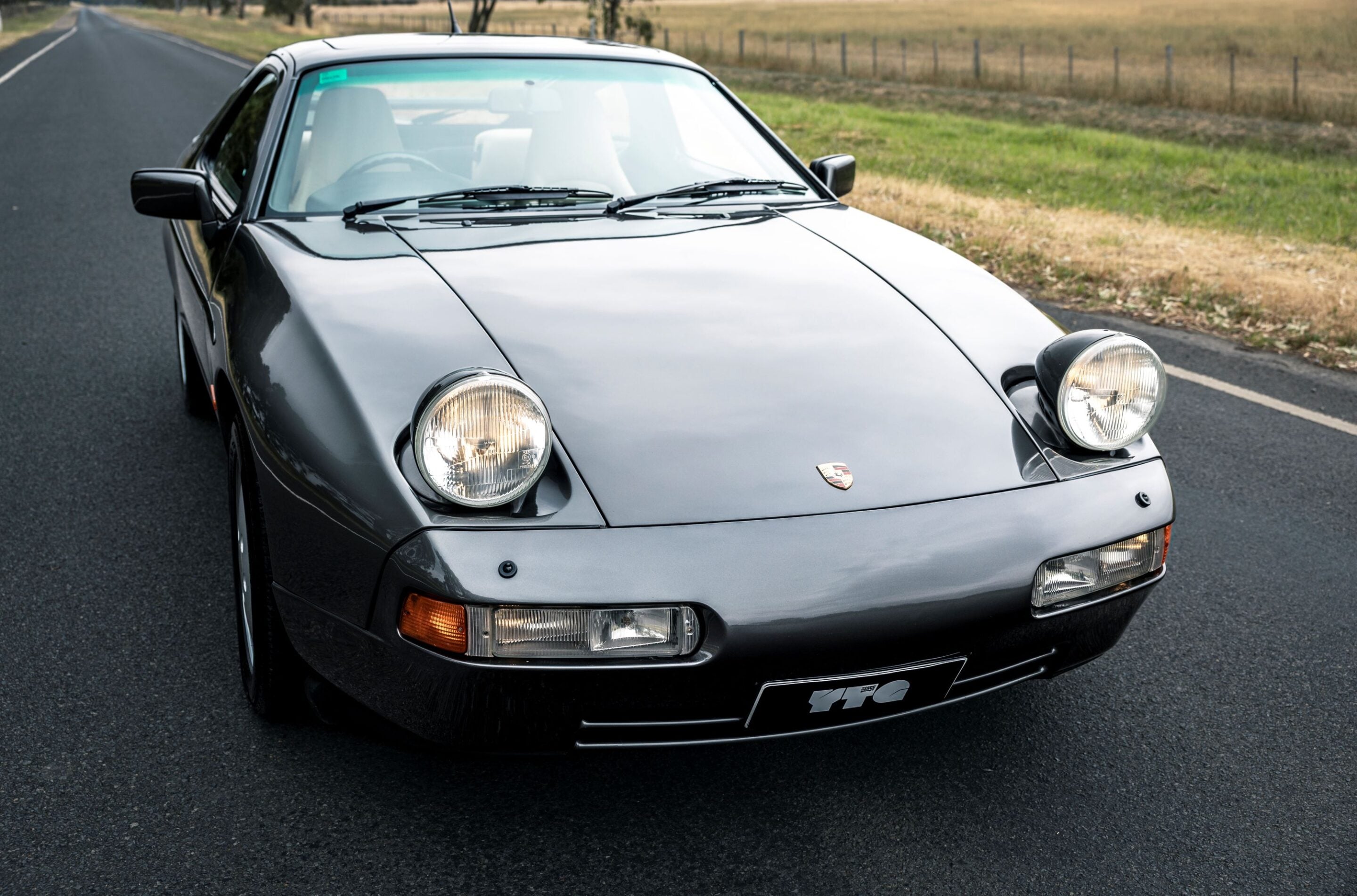
“It definitely had to have a Porsche [bonnet], smooth and not cluttered up,” he said. “With a Porsche, you do not dominate with radiator openings.” The subsequent air inlets that fed air to the front-mounted radiator were tucked neatly away under the front bumper.
Bumper? What bumper? While to the naked eye the 928 was conspicuously devoid of front and rear bumpers, US regulations decreed impact-absorbing bars must be fitted to all new cars. Here, Porsche’s designers, keen to keep the 928’s sleek profile as smooth and uncluttered as possible, integrated the bumpers, rated at the mandated impact speeds of up to 8km/h, behind the car’s bodywork, comprising one-piece polyurethane panels that bent with slight impact before flexing back into shape. Clever.
Low-profile Pirelli P7 rubber clothed the 928’s 16-inch alloy wheels, six inches wide up front and seven at the rear. Their distinctive five-hole design by Stahlschmitt became a defining feature of early cars.
Other signature elements contributed to its distinctive appearance – the exposed pop-up headlights that invoked the Lamborghini Miura, the sharply-forward-angled B-pillar which in turn led to the uneven hexagonal-shaped doors. The rakish B-pillars, far from purely decorative, formed an integral part of the 928’s roll-over structure.
At the rear, the 928’s fastback shape added a level of practicality not found in 911. Lifting the glass hatch revealed a decently-sized cargo area while the rear seats could be folded flat to open up even more space.
3
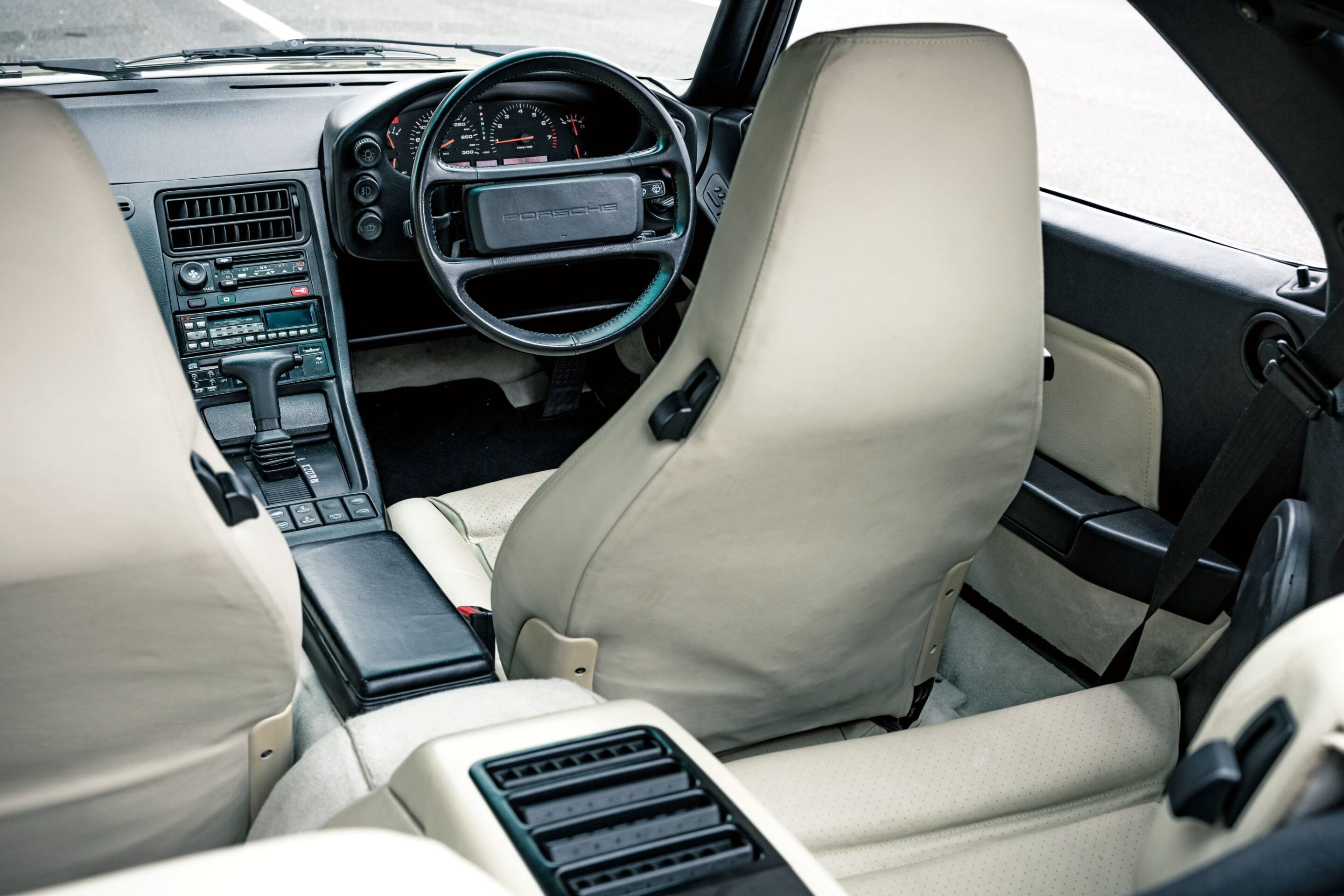
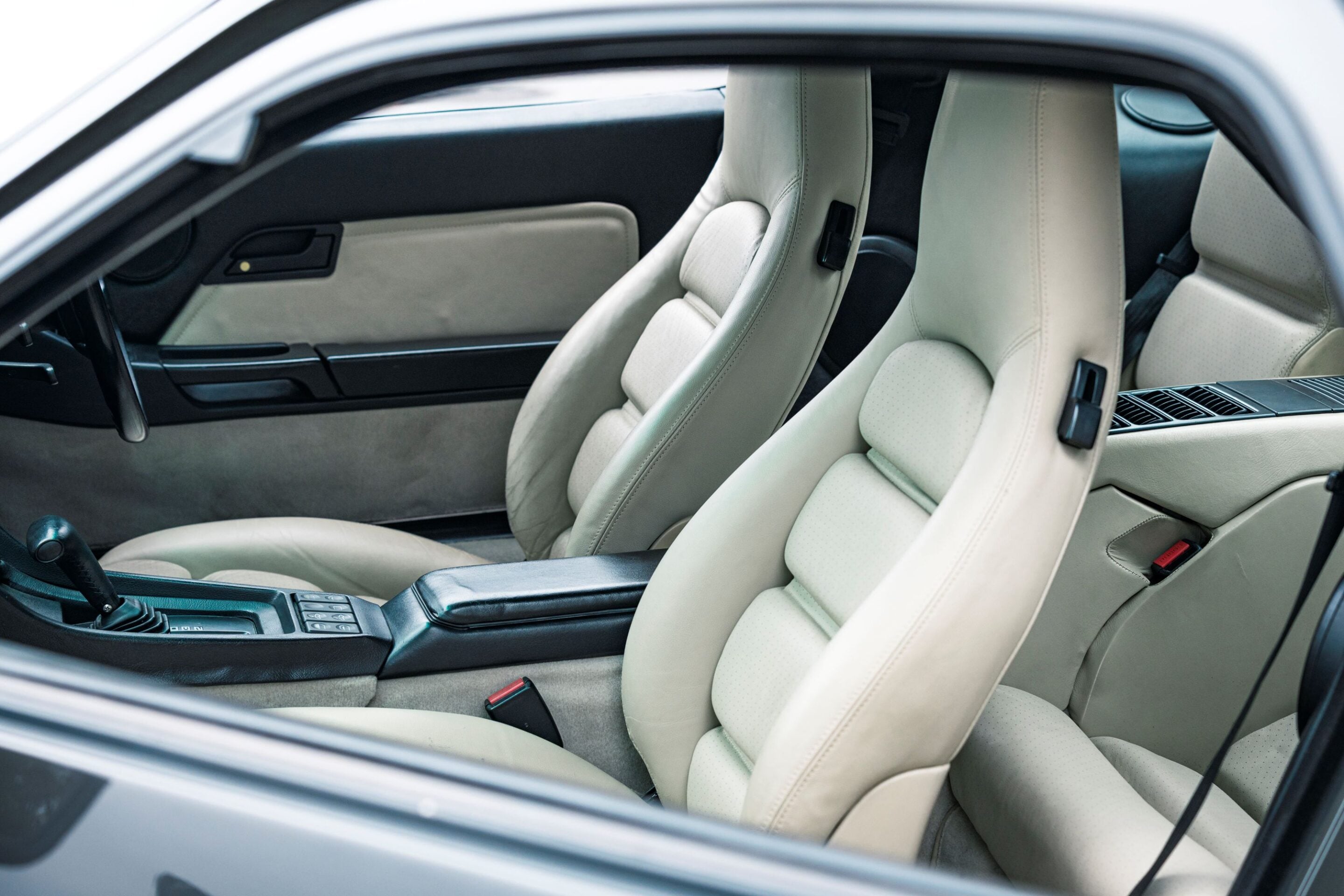
The cabin itself exuded luxury befitting the flagship. Sure, the seats in early models were draped in love-it-or-hate-it black-and-white ‘Pasha’ checkerboard pattern, but they were of their time and strangely alluring.
Still, there remained a familiarity within, despite the 928 being an all-new, ground-up model. The steering wheel was straight out of the 911 parts bin, imbuing the cabin with that unmistakable Porsche feel. So too the front seats, also lifted from the 911 back catalogue although the 928’s ‘Pasha’ seat inserts debuted in the new model. The 911’s similarly-patterned cloth seats were draped in a slightly different black-and-white pattern, dubbed ‘Pepita’.
That’s not to say the 928 didn’t have its own character. The steering wheel was adjustable for height while the instrument cluster, attached to the steering column, moved up or down with wheel adjustment, ensuring the driver always had a clear and uninterrupted view of the dials.
Despite the 928’s cabin being around 11.5 centimetres longer than the 911’s, second-row space remained at a premium. The 2+2 seating arrangement was best saved for kids or young teens while the car’s transaxle layout was keenly felt with a large transmission tunnel between the rear pews.
By 1973 Porsche had finished the 928’s basic design and engineering. Testing began and continued throughout the remainder of the year and into 1974. But the global oil crisis cooled Porsche’s ardour for a large, V8-powered grand tourer and development, while not shelved, certainly cooled.
The pace picked up again in 1976 with the deserts of Algeria hosting Porsche for hot-weather testing with temperatures in the low 40s Celsius range. When the team moved to the Arctic Circle in Finland in January 1977, they were met by temperatures of minus 28-degree Celsius, the two extremes a vital part of ensuring the 928’s systems could cope.
2
By 1977, Porsche was ready to unveil its newest ‘baby’ and in March, the covers came off at the Geneva motor show. With a price tag of DM55,000, the 928 was considerably dearer than the base model 911 SC (3.0) which started at around DM40,000.
Porsche’s first grand tourer, a bold redefining of the luxury sports car genre, was a critical success from the outset. Contemporary reviewers lauded its daring and innovative styling, effortless V8 power and for its unashamedly luxurious proposition. This was no 911, they said almost in unison.
Early reviews were overwhelmingly positive. US publication Car and Driver gushed when it said “the 928 may well be the best all-around car in the world today”, while Road & Track was equally effusive writing that it represented “a quantum leap forward in performance car design”.
Across the Atlantic, Britain’s Autocar drew comparisons with the 911, writing that the 928 “handles with incredible poise for a car of its size and weight, and the level of refinement is in another league entirely from the 911”.
Here in Australia, Wheels wrote “this Porsche already is pretty much the complete car, with long life ahead of it and the massive development prowess of Porsche behind it all the way. It is one of those cars that is taking automotive engineering a few steps further.”
The European Car of the Year gong, a first for a sports car, followed in 1978. It seemed nothing could stop the 928 from being a runaway success, except…it had failed to win over the one cohort Porsche most needed – 911 owners, who disparaged the bigger 928 as too heavy, too slow, too expensive, too front-engined and not 911 enough.
Modest initial sales did nothing to dampen Porsche’s commitment to the 928 and over its 18-year production run, updates kept the model fresh.
1
The original 928, released in 1977, was as per the blueprint – a 4.5-litre V8 making 177kW/363Nm, good for a 0-100km/h claim of around 7.0 seconds.
The lazy V8, as Wheels wrote, “is one of those powerplants that just gets on with the job. It feels strong and lively without seeming especially potent, rather belying the performance it is capable of providing.
“It takes very little time to appreciate Porsche’s efforts with the Weissach axle … and the perfect weight distribution endow the car with roadholding that, at a stroke, matches the [911] Turbo’s and therefore puts the 928 into the top echelon of road cars.”
Conscious of slow sales, Porsche pushed ahead with the development of the more powerful 928 S, released in 1980. Engine capacity had increased to 4.7 litres, with outputs boosted to 221kW and 385Nm.
Body refinements included the addition of a front and rear spoiler, improving aero efficiency which, when combined with that more powerful V8, saw acceleration improve by almost a second, now rated at 6.2s for the 0-100km/h dash. It was, according to Wheels, “the car it should have been from the beginning”.
But behind the scenes, Porsche was in trouble, with stagnant sales and reliability issues across its model range. Fuhrmann, the father of 928 and the 911’s erstwhile Grim Reaper, was shown the door, replaced by an American, Peter Schutz, who famously removed the 911’s stay of execution and granted it a full pardon.
As Schutz recalled of his fateful 1981 meeting with Dr Helmut Bott, Porsche’s then head of R&D: “On the wall he had a chart of the 928 and the 924 and the planned continuing evolution of those cars – and then the 911 stopped in 1981,” Schutz told respected Porsche publication, 9 Magazine. “I picked up a big crayon on Helmut Bott’s desk, walked over to the wall and extended the 911 line off the chart, on the wall, around the corner, around another corner all the way over to the window. And I asked him, ‘Professor Bott, do we understand each other?’ and he had a grin from ear to ear and he said, ‘Yes, Herr Schutz.’”
There would be no Porsche without 911.
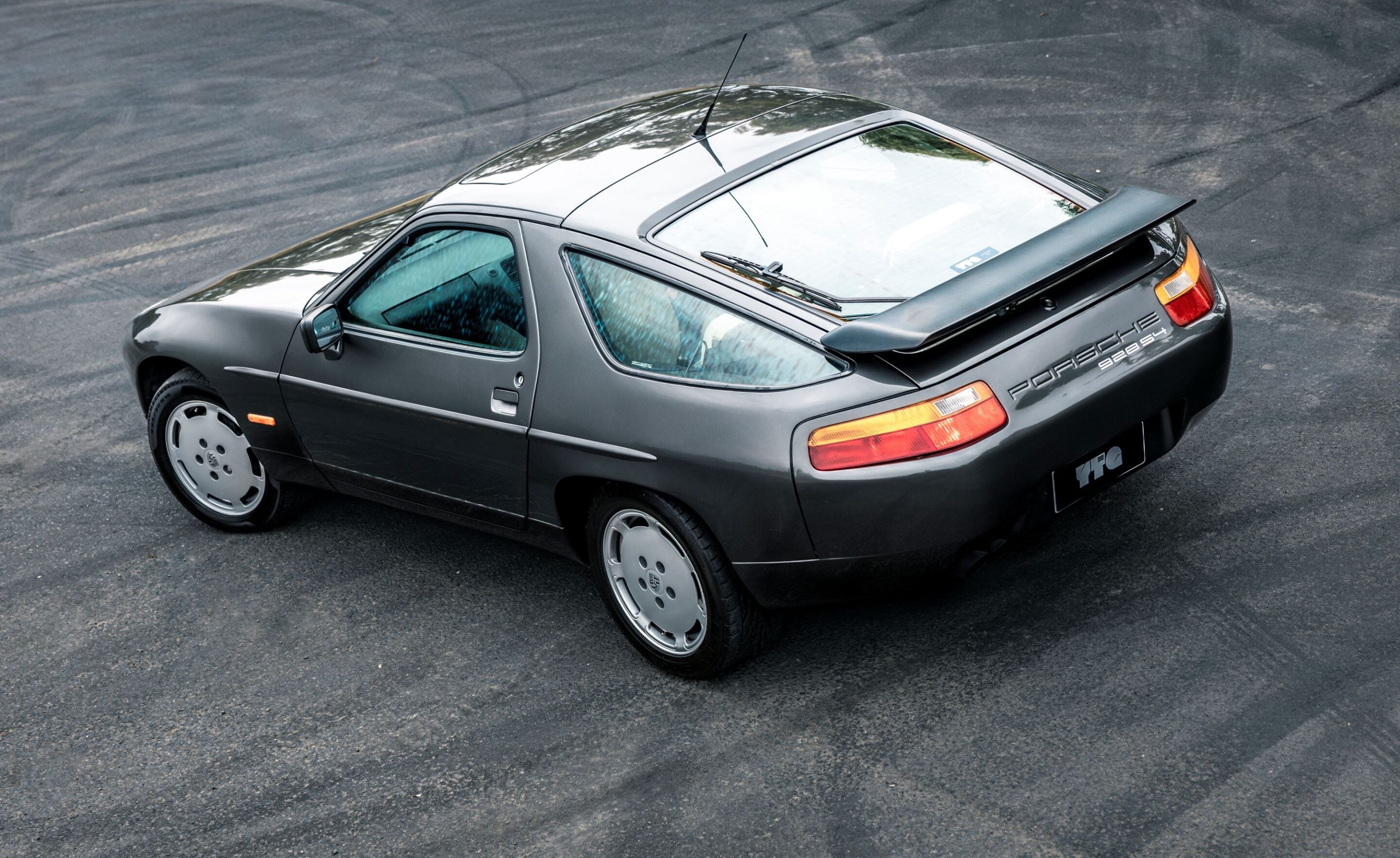
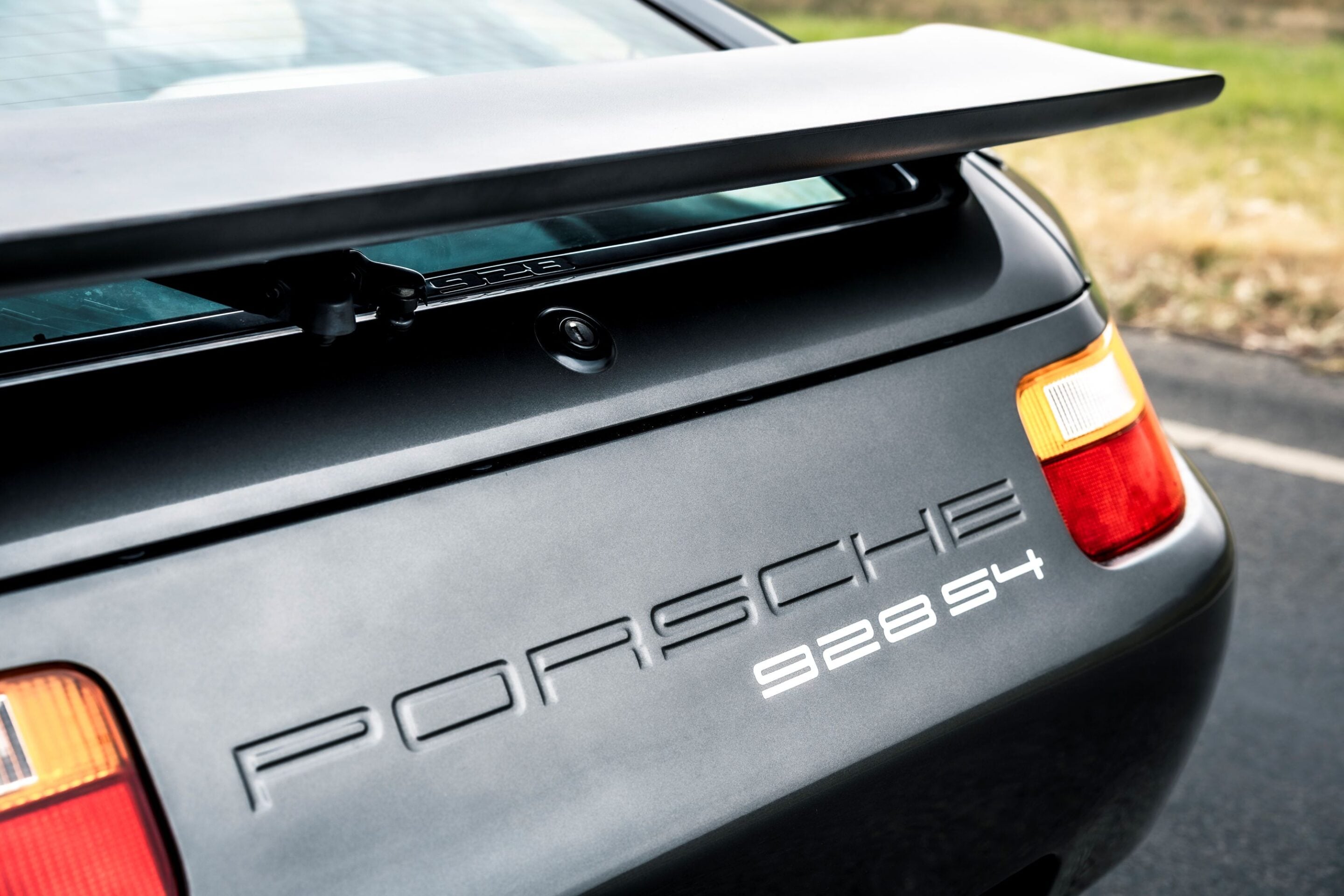
What of the S4 then, which followed in 1986? Visibly different to its predecessors, the updated 928 represented a step-change for the model line. Gone was the slightly gawky appearance of its predecessors and in its place, an altogether more elegant looking car. Softer edges, reprofiled front and rear bumpers, new tail-lights, and a new rear wing, contributed not only to a better-resolved design, but also to a reduction in drag, its aero efficiency now rated at 0.34Cd.

1
Under the bonnet, the V8 had grown to 5.0-litres and with new double overhead cams and four valves per cylinder, outputs increased to 239kW and 420Nm, making this a significantly quicker 928. Zero to 100km/h was dispatched in just 5.5 seconds.“Dead easy to drive, the sleek silver 928 S4 loped along like a cruise missile,” reported Wheels. “Plant the sucker at 200 km/h and it just surges forward, sitting flat and solid. You don’t treat corners gingerly … you attack them. If it has limits of adhesion, they’re someplace I don’t want to go.”
The 928 GT followed in 1989 and while the engine basics remained the same – 5.0 litres, with a slight power increase to 246kW – the GT stood out for only being available with a manual gearbox, despite the majority of 928 buyers opting for automatic.
Here was a 928 that the purists could love or, as Car and Driver noted, “the GT is a deadly serious driver’s car. In its quest for pure performance, Porsche has chiseled off most of the 928’s remaining soft edges… a damn serious automobile, requiring a serious investment and delivering serious performance”.
In 1992, the final iteration of Porsche’s troubled but sublime grand tourer gave the 928 a fitting send-off.
The GTS enjoyed all the fruits of 15 years of development. Everything about it was boosted. Porsche’s biggest V8 yet – a stroked 5.4 litres – resulted in outputs of 261kW and 491Nm and a breathless-for-the-time 0-100km/h claim of 5.4 seconds. A wider rear track, along with the largest rubber ever worn by a 928, necessitated beefed-up wheel arches, a first for the 928. Here then, was the apogee of Porsche’s grand tourer which, while try as it might, still could not displace the 911 in the hearts – and wallets – of Porsche loyalists.
Sure, it had found its own audience – a total of just over 61,000 sales speaks to a different breed of loyalist – but ultimately, as Wheels’ Peter Robinson noted in his farewell to the 928 in our May 1996 issue, “in the end, the customer decided”.
The end came on July 26, 1995, the last ever 928, a Perlglanz (light green pearl) US-market GTS rolling off the production line, bringing down the curtain on a model that Robinson so eloquently summed up as a “rarity among cars, a totally new model, owing nothing to those that had gone before”.
Perhaps the final word should go to Peter Reisinger, Porsche’s modeller during that tumultuous period when the company was teetering on the edge, where the 911’s future looked shaky at best, bleak at worst.
“For 15 years I was a 911 freak. I couldn’t imagine changing to a bigger car, but I thought I should try the 928. Now I love it more every day.
“They’re still both Porsches, but their characters are completely different. I suppose that’s why the 928 never did replace the 911.”
Risky Business
1
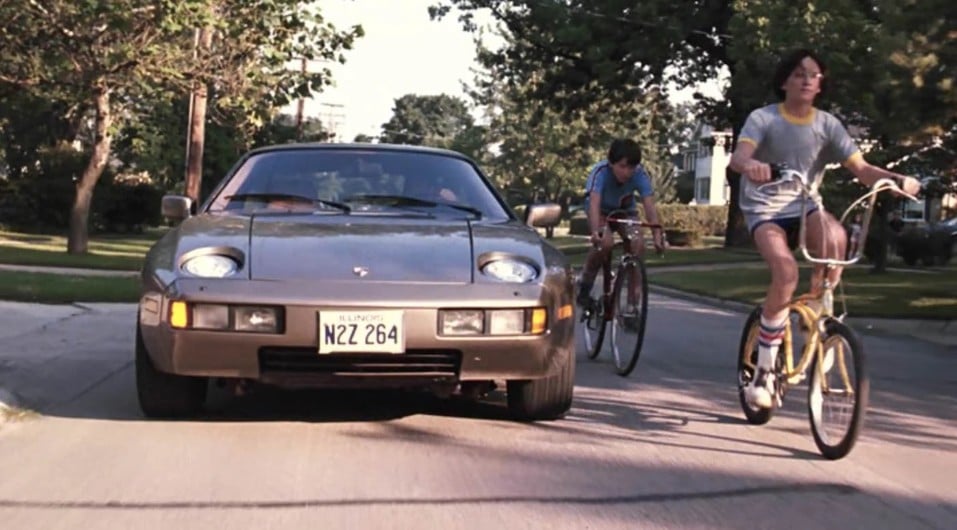
It’s arguably the most famous Porsche 928 of all. Risky Business, Paul Brickman’s seminal 1983 film, made a star of Tom Cruise – and the Porsche 928. Brickman reportedly chose the 928 over its more famous 911 stablemate because he regarded the 911 as too ‘mundane’.
Three 928s were used during filming while the car Cruise’s character, Joel Goodsen, drove into Lake Michigan in one of the movie’s pivotal scenes, was actually just an engine-less rolling chassis and body.
Famously, Cruise who prior to filming had little experience with manual gearboxes, learned to drive
a stick-shift during filming in the starring 928, an education no doubt made trickier by the 928’s dog-leg shift arrangement.
That car set a new record price for the 928 when it sold for US$1.98 million (A$2.97 million) in 2021.
Our Porsche 928 S4
1
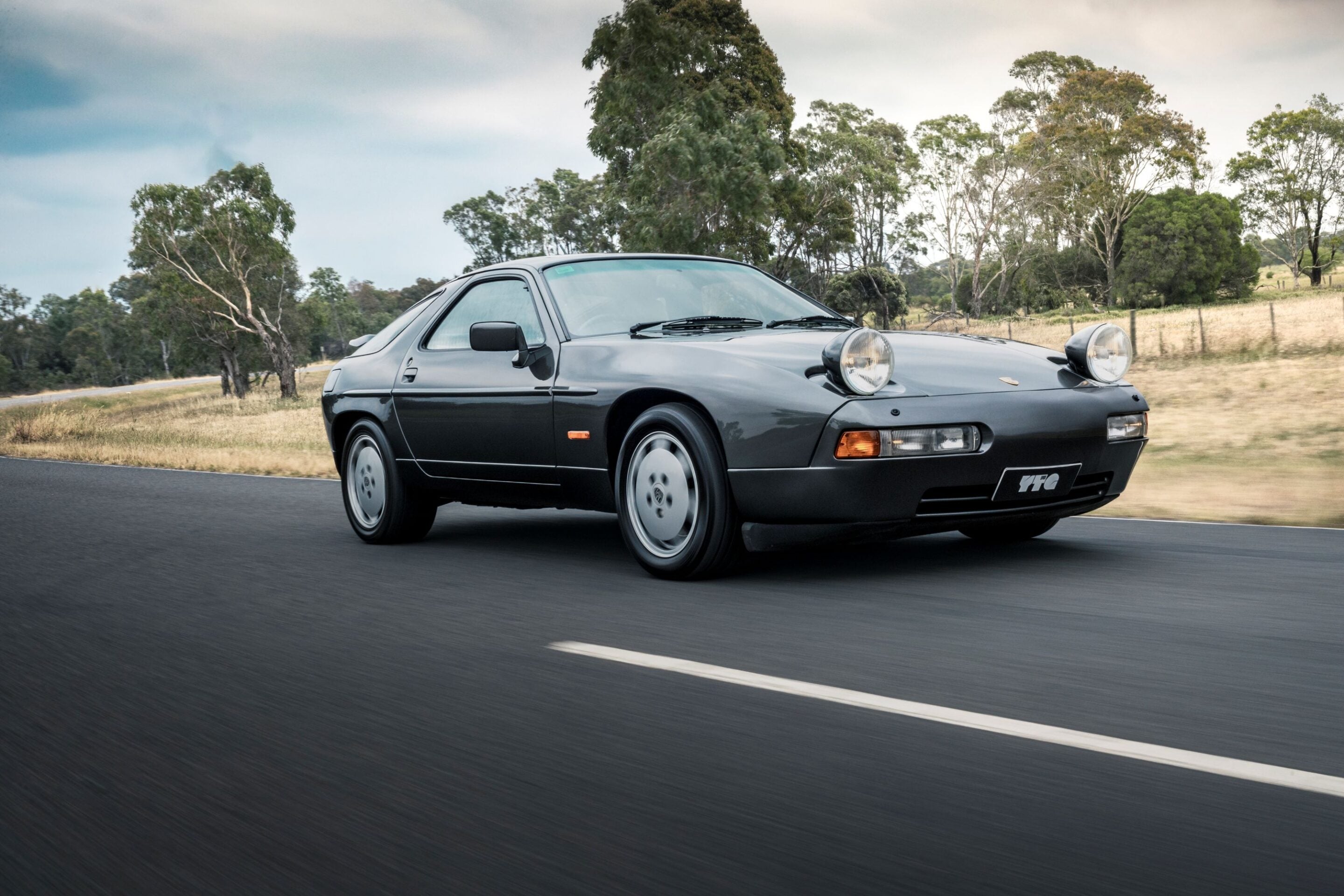
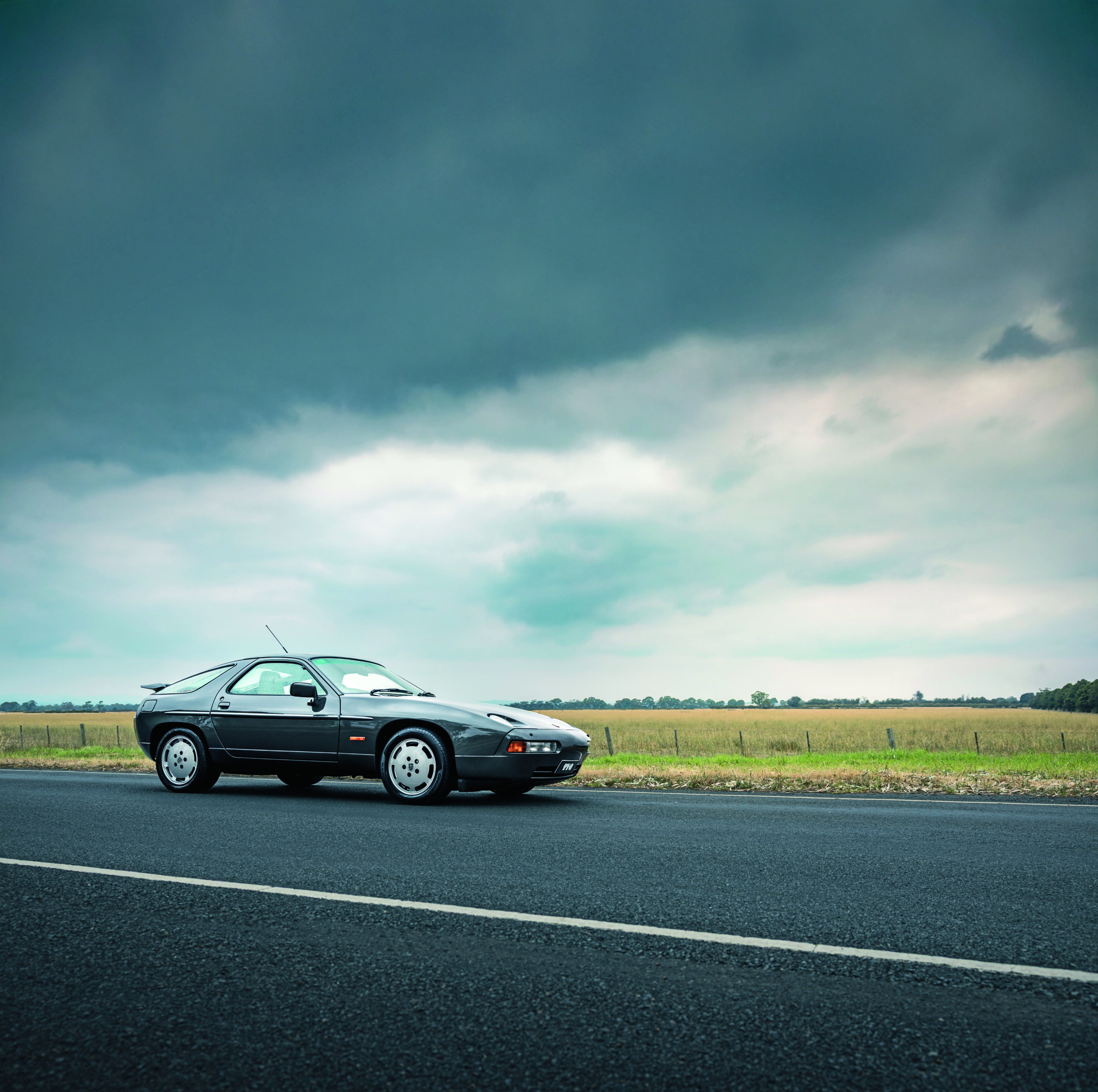
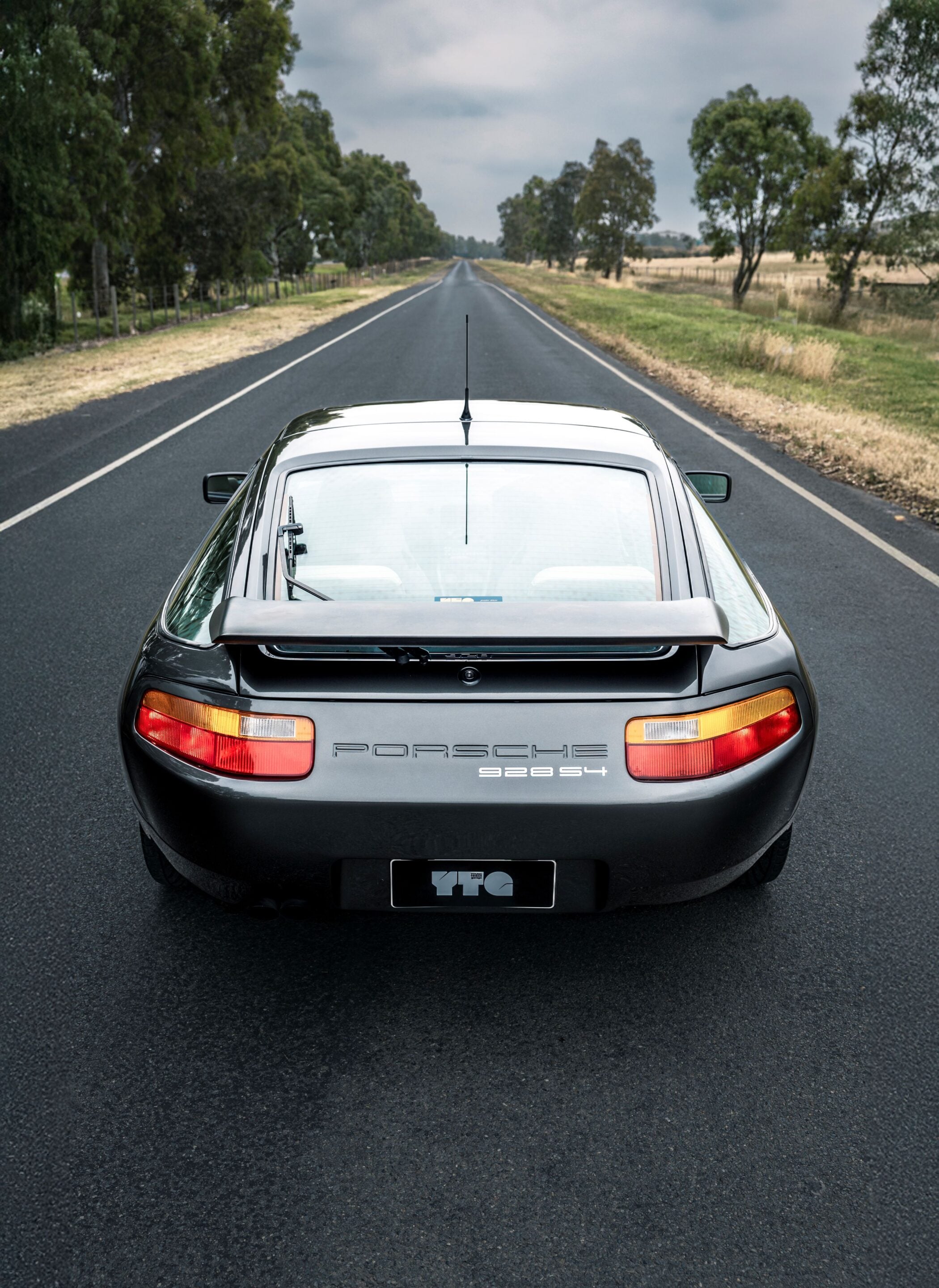
The 928 had really hit its straps when the car depicted on these pages was delivered to its new Australian owner in November, 1988. An S4 model, it packed Porsche’s double-overhead cam 5.0-litre V8 good for 239kW and 420Nm delivered to the rear wheels via a four-speed automatic transmission.
Priced at a smidge over $200,000 (before on road-costs and options) when new in 1988, this particular example was finished in slate grey metallic paint over soft linen leather seat upholstery, nicely accented by black leather interior elements.
Original factory-fitted equipment included 16-inch alloys, a Euro Vox CD player and audio system, air-con, sunroof, powered seats with lumbar support for the driver, cruise control and a trip computer, heady stuff for the time.
With 181,000km showing on the odometer, this matching numbers Aussie S4 has enjoyed four owners over its 38-year life. It’s now on its way to a fifth owner, having been recently sold by Melbourne’s Young Timers Garage (price undisclosed).
Looking at it today, the 928’s design is still fresh, owing its contemporary looks to the vision of the design team at Zuffenhausen back in the 1970s.
And while it might have had its detractors when new, today the 928 has come into its own, a distinctive grand tourer that offered a blend of luxurious comfort and performance that, while not quite on a par with the 911, thrilled in a different way.
1
This article first appeared in the February 2026 issue of Wheels. Subscribe here and gain access to 12 issues for $109 plus online access to every Wheels issue since 1953.
Follow WhichCar/Wheels on Google
Click the button below to make WhichCar by Wheels a preferred source for your news.

We recommend
-
 Features
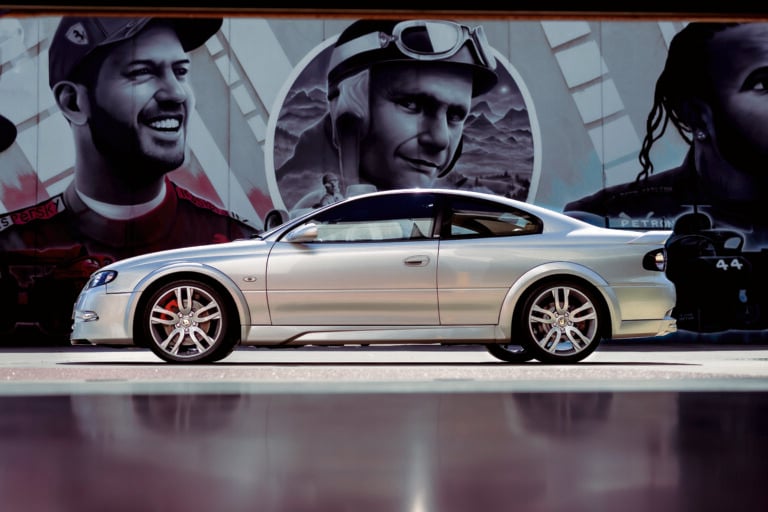
Modern Classic: HSV Coupe 4
HSV’s rare all-wheel-drive Coupe 4 was bold, complex and ahead of its time – and while it flopped commercially, it remains an example of a braver time in Australian motoring history.
-
 Features
Modern Classic: Lancia Delta HF Integrale, the ultimate rally car
It was never officially sold in Australia but as it’s the basis for the most successful rally car of all time, the Delta Integrale more than earns a pass as a Wheels' Modern Classic.