Features

Gallery 1
It’s arguably the most audacious M car ever, a rebel yell of technology and sheer power that is unlikely to ever be repeated.
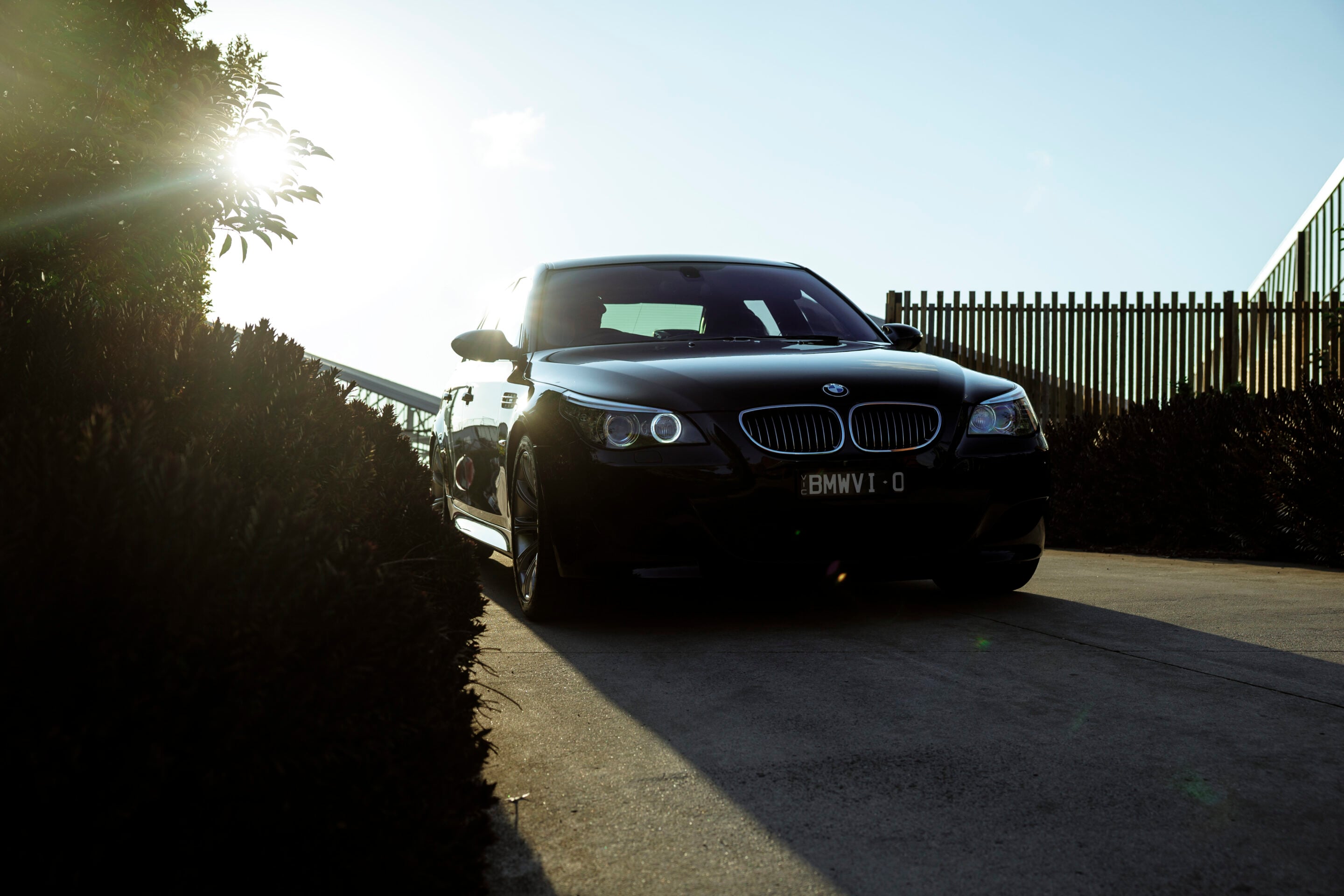
The BMW E60 M5, the fourth-generation of the haloed nameplate, stands alone in the Pantheon of M5 greatness, a V10-powered Chimera that looked to Formula One for inspiration, liked what it saw and then set about rewriting the executive sedan rulebook.
The E60 was a departure for the M brand in more ways than one, the first BMW production car powered by a V10, the first M5 with adaptive suspension, and the first fitted with the third-generation of the brand’s seven-speed sequential manual gearbox (SMG III).
It embraced the digital world more than ever before, while still hanging on to the vestiges of its analogue forebears.
3
Much has been made of the V10’s F1 origins (BMW at that time supplied the V10s that powered the
WilliamsF1 Team), but the reality is that aside from cylinder-count and vee angle, the two bent-10s had nothing else in common. Still, that didn’t stop BMW’s PR and marketing teams from spruiking its F1 credentials.
“The engine boasts extraordinary qualities and specifications,” read one BMW press release from back in the day. “After all, it was based on the 10-cylinder BMW Formula 1 engine.”
Inspired by? Maybe. Based on? Nope.
That’s not to say that BMW’s F1 involvement played no part in what would become the S85 V10, the first clean-sheet engine design from the M division, another departure for BMW’s skunkworks.
Previously M-badged cars were powered by existing BMW engines sprinkled with a liberal helping of M’s go-fast fairydust. But this new generation M5 called for something truly special, something as revolutionary as it was audacious. And the S85 was it.
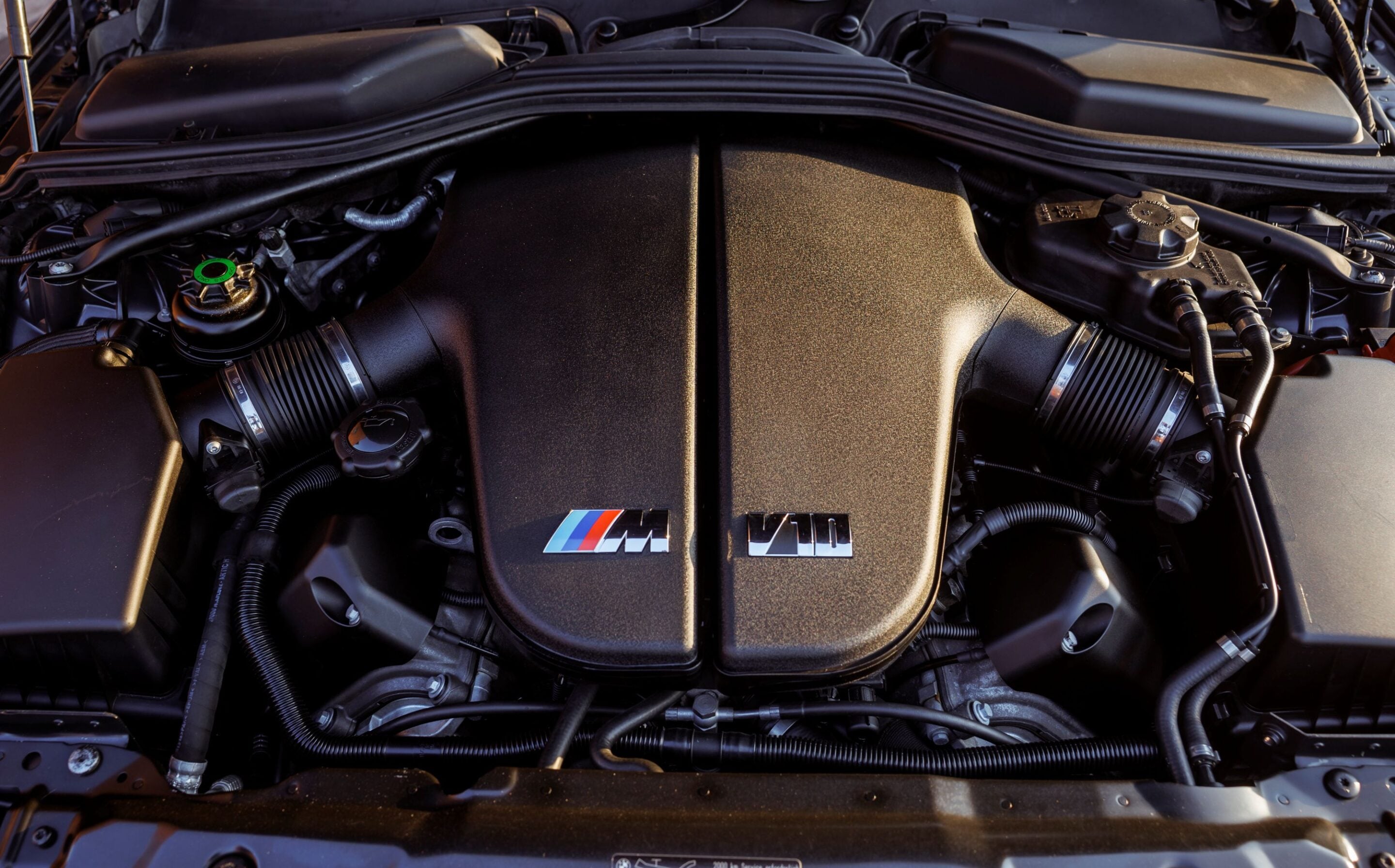
As Peter Robinson recounted in the August 2004 issue of Wheels, “From the same 5.0-litre capacity as the old M5 V8, the engineers have wrung an extra 79kW (now up to 373kW), raised maximum rpm by 1250rpm to 8250rpm, and achieved a miraculous 75kW per litre from, remember, a big capacity, normally aspirated engine.
“Torque, at 520Nm, is up 20Nm, and because it’s developed so much higher – 6100rpm versus 3800rpm – the engineers have avoided the need for weighty driveline reinforcement.
“An extremely short 75.2mm stroke (bore is 92mm) helps the 90-degree V10 reach those soaring revs.”
The S85’s construction comprised a lightweight silicon-aluminium diecast block, forged at the company’s Landhut foundry, the same facility responsible for BMW’s F1 engine blocks. An aluminium bedplate added rigidity.
3
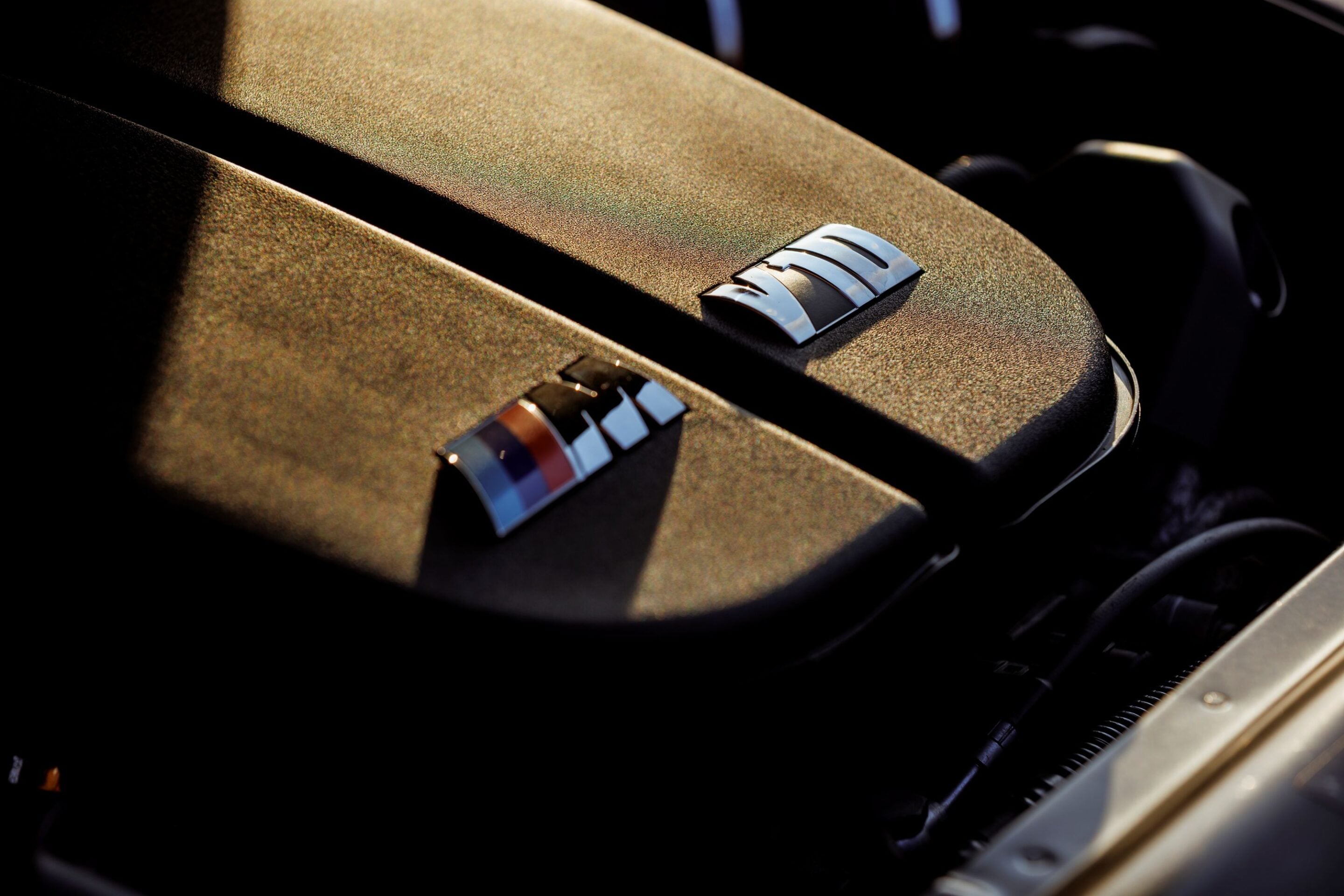
Displacement was listed at 4999cc with a high compression ratio of 12:1. Inside the lightweight block, 10 cast aluminium pistons connected to the forged steel crankshaft by magnesium-steel conrods, and enjoyed an unusual and uneven 1-6-5-10-2-7-3-8-4-9 firing order at either 90- or 54-degree intervals which gave the S85 its distinctive aural signature.
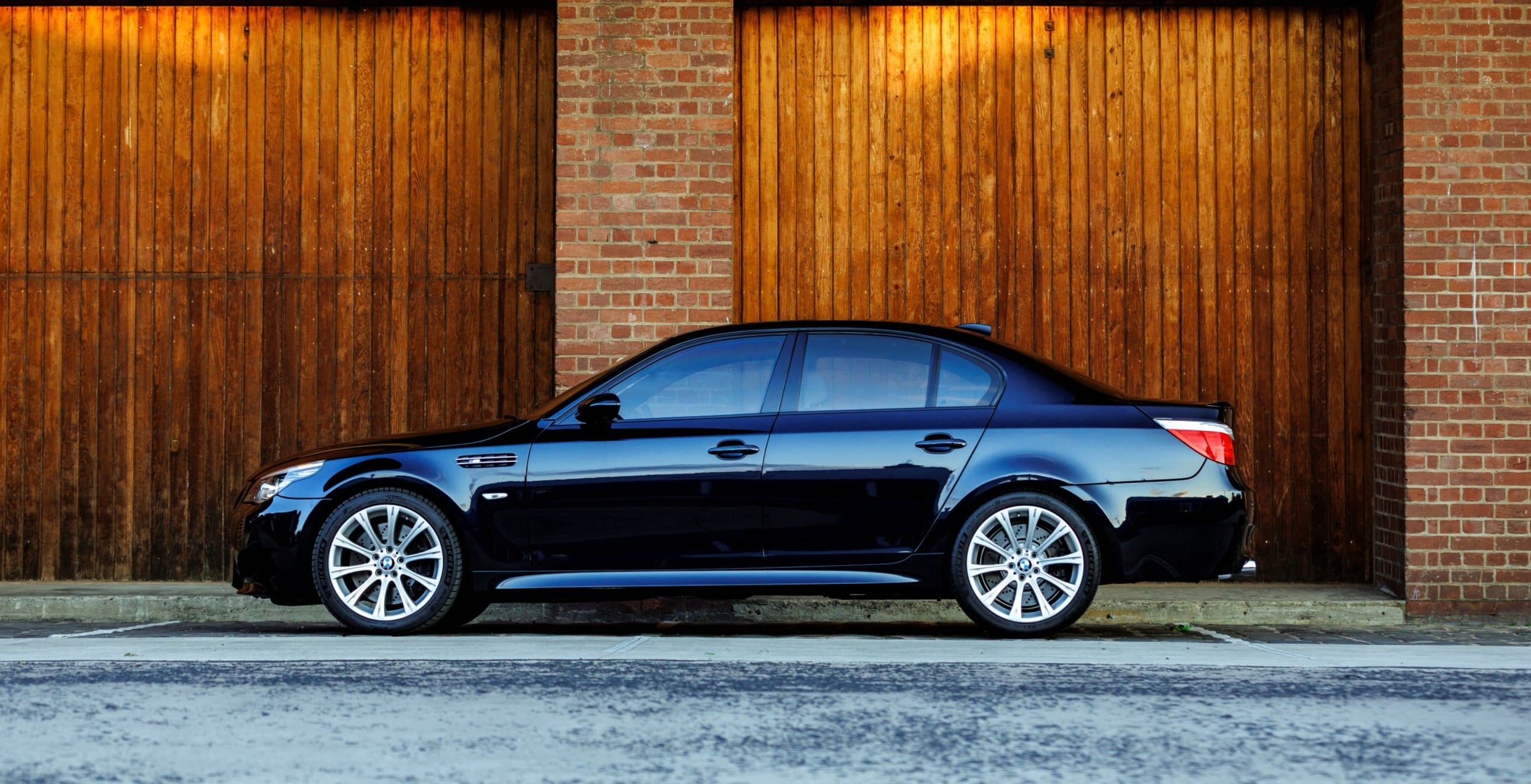
To host the new engine, M’s design team began with the regular E60 5 Series and made it their own. It’s not a stretch to suggest the regular 5 Series’ design, which was created under the watchful eye of BMW’s polarising head of design, the American Chris Bangle, was controversial with critics (and there were many) loathing its angular edges, the ‘tear-drop’ headlight treatment, and most famously of all, its ‘Bangle Butt’ rear end.
Certainly, the E60 moved away, and did so dramatically, from BMW’s handsome and understated designs of previous generations, with a radical new look that bothered pundits, especially when compared to the universally-loved styling of its E39 5 Series predecessor.
But while its true Bangle was responsible for BMW’s overall design language, the final design of the E60 fell to a young Italian, Davide Arcangeli. The former Pininfarina scribbler – who had penned the utterly gorgeous Peugeot 406 Coupe, still regarded as one the most beautifully-proportioned cars of all time – incorporated many of Bangle’s overarching philosophies into the E60.
As Bangle later recalled to BMW Blog, the widely respected unofficial news outlet for the brand, “Davide’s approach to the project was, I think, very unique. BMW’s design team was tasked with creating a car with a huge amount of mass, on top of wheels that were the same size as before.
“[Arcangeli’s] idea behind it was, ‘we really play up the idea of negative surfaces’ which had been, up until that time, considered a taboo. [The idea was to] use the negative surfaces instead of lines, to give you a different idea of what the vehicle is.”
Bangle singled out Arcangeli’s clever use of concave surfaces at the sides, rather than angles and creases, which reduced a lot of the visual weight of the E60.
2
The board greenlit Arcangeli’s radical design, largely unchanged, in 2000. Sadly, the Italian never got to see his vision in the metal, the young designer passing away in December 2000 after suffering an aneurysm while waiting to start chemotherapy treatment for leukemia. He was just 30.
BMW’s M skunkworks also went radical when it came to designing the new M5. Where previous generations of M5 could only be distinguished by small details, the E60 sought to stand out. Treating Arcangeli’s regular 5 Series not so much as a finished design study but rather a blank canvas, BMW’s M division added flared wheel guards, 25mm wider at each side. Up front a new menacing splitter distinguished the M5 while out back, an aggressive rear diffuser housed four 80mm exhaust pipes that bellowed the V10’s symphonic crescendo of combustion. M-specific gills at the side, first seen on E46 M3, joined the M5 stable.
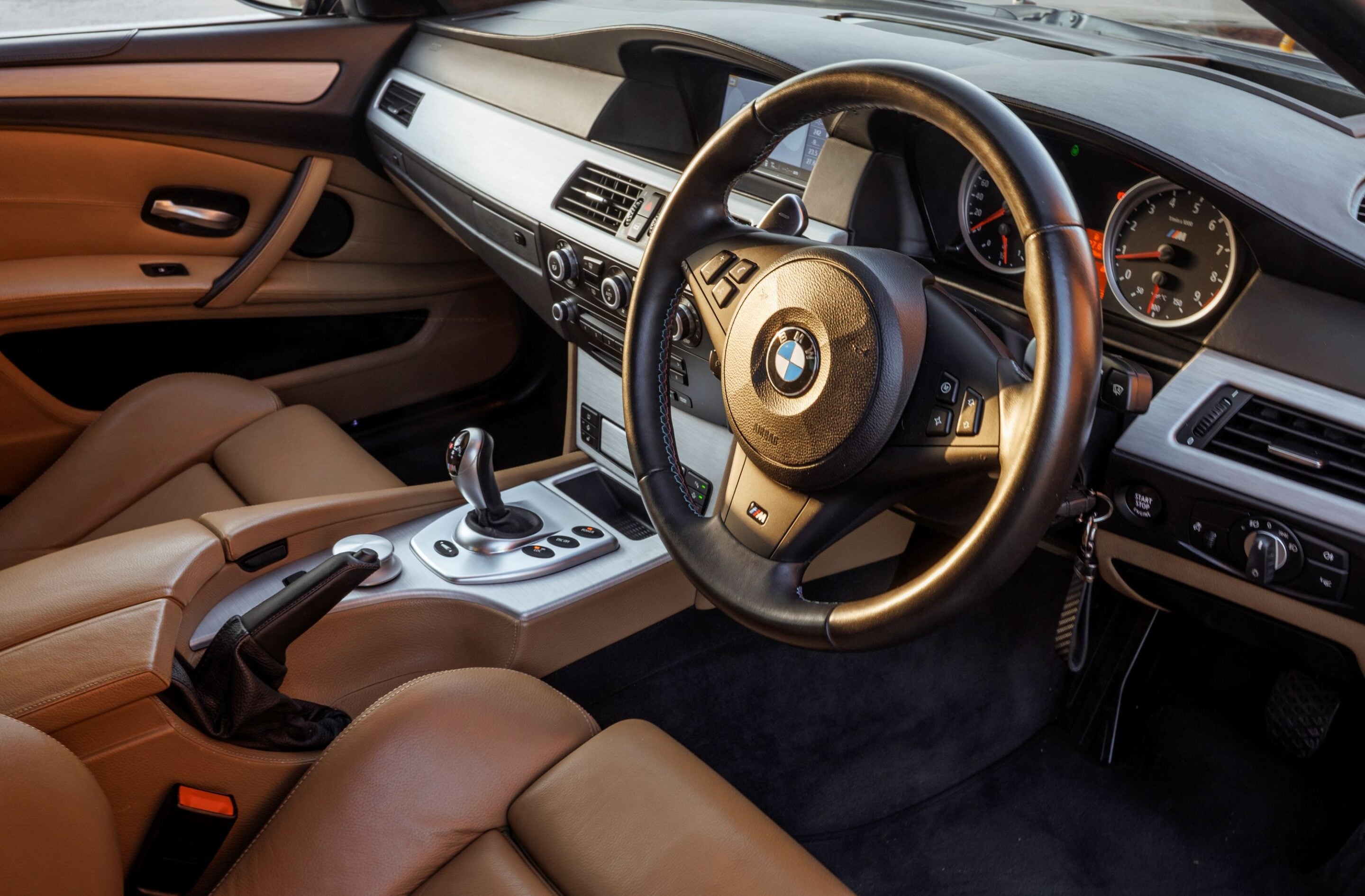
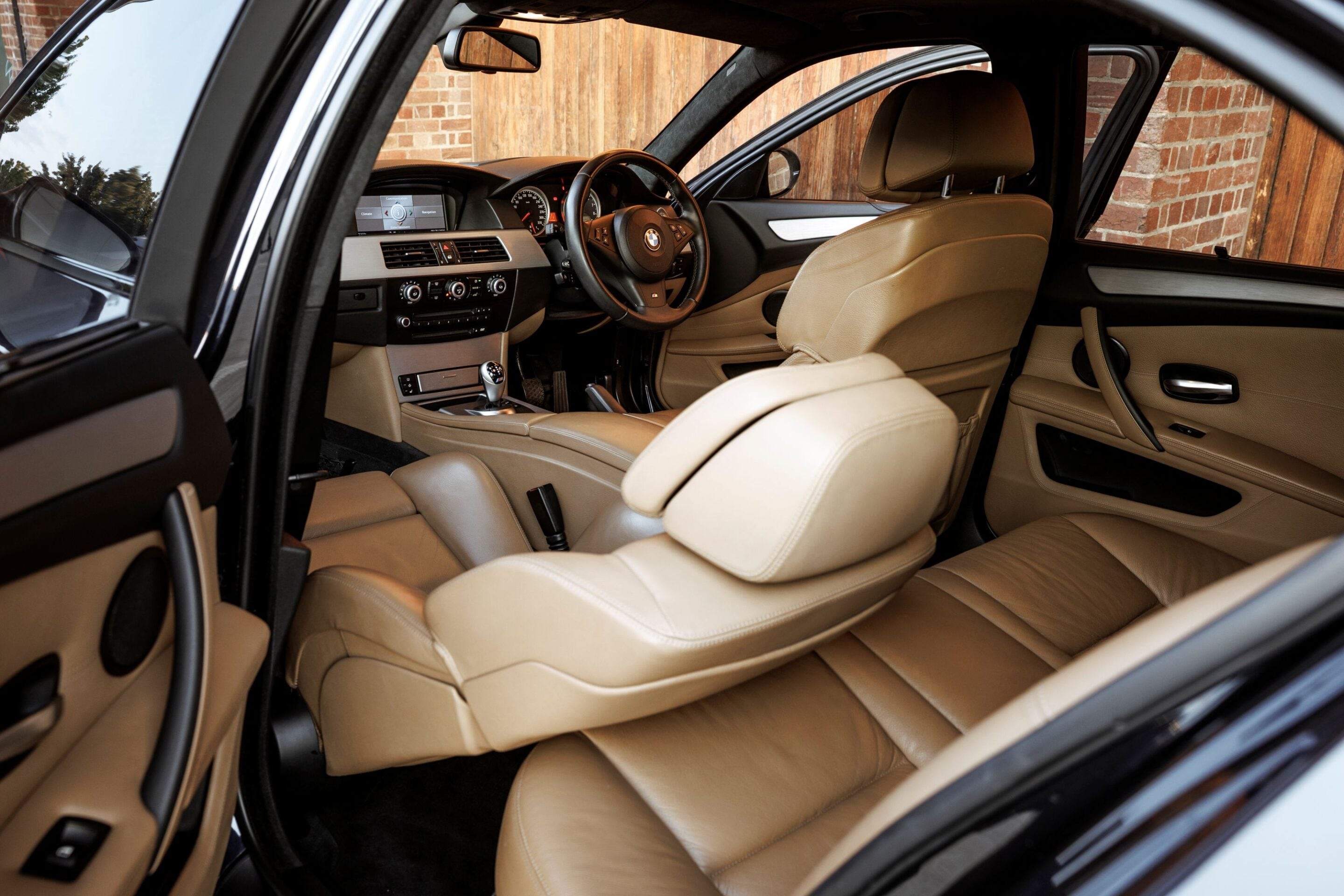
Inside, the M5 played into the 5 Series’ strengths with a luxurious cabin befitting the BMW badge with acres of leather, supportive sports seats that held occupants in their grip, BMW’s signature round steering wheel and in a first for the M5 badge, BMW’s still nascent screen-based infotainment system, or as Wheels called it in November, 2004, “idiotic iDrive”.
BMW’s iDrive came in for a lot of criticism at launch, variously described as being “given to demonic possession”, and “the on-board mouse which will turn into a poisoned rat in the wake of one wrong twist or push”.
]Clunky it might have been, but iDrive was a couple of decades ahead of its time, serving as the nerve centre for the M5’s myriad performance parameter adjustments, dubbed MDrive. “Engine power setting of 400 or 500 horsepower, or ultra-aggressive 500 Sport,” listed Wheels after its first drive of the M5 in 2004. “Five automatic shift-speed settings in automatic ‘D’ mode and six in manual sequential ‘S’ mode.
One of two DSC (dynamic stability control) chassis electronics settings. Choice of Comfort. Normal and Sport mode for the EDC (electronic damper control) system. Head-up display (HUD) on, with a choice between regular and M-specific content, or off.”
2
That’s a lot of electronic wizardry to wade through so to smooth the process, owners could save their preferred settings which could then be engaged by pressing the ‘M’ button on the right-hand spoke of the steering wheel.
Having the ability to set up and store individual performance parameters to suit individual tastes and driving styles seems quaint today but in 2004 it was ground-breaking, the stuff of science fiction.
BMW launched the E60 M5 in late 2004 to a mixture of critical acclaim and criticism. The new 5.0-litre was – rightly – lauded for not only its power and V10 soundtrack, but also for its everyday driveability.
“You don’t have to rev the engine hard to enjoy it,” reported Motor in November 2004. “Ninety seven km/h in seventh is a perfectly acceptable combination for flowing with traffic, and when you put the hoof down at 1800rpm in top gear there won’t be any gulps, hiccups or excuses.
“While most comparable powerplants emphasise either power or torque, the 5.0-litre unit from the Bavarian Motor Works can play both instruments, and it plays them exceptionally well. As a result, its sweet spot ranges almost from standstill to top speed. There are virtually no dents in the torque curve and no deflections in the rpm ladder, there is no ratio too short or too long, and there is relentless dynamic and acoustic stimulation.”
Criticism was largely reserved for BMW’s third iteration of its SMG (sequential manual gearbox) which, while providing razor-sharp gear changes when letting the E60 off its chain for a full-scale assault on the stopwatch, proved clunky and jerky in low-speed driving and everyday traffic. So, most of the time then.
As Motor Trend noted in its 2004 review: “This is the first M car that drives reasonably smoothly in the auto mode – but only as long as you stick to a rhythm that’s familiar to the SMG electronic brain.
“Unfortunately, the chips still struggle to cope with manoeuvres such as sudden kickdowns or aborted overtaking attempts. For best results, choose a medium shift speed. Slow is valium, fast is jerky and abrupt.”
The SMG also proved the E60’s Achilles Heel, providing owners with a litany of headaches over the course of ownership. The Getrag seven-speed gearbox itself wasn’t the problem. Instead, the complex electronically controlled hydraulic system responsible for clutch management and gear changes was plagued by overheating issues, leaks, and sensor failures.
Rod bearing failures were common too, hardly surprising considering the high-revving nature of the V10 and its extremely tight tolerances. BMW’s variable valve timing system also came in for scrutiny, with pump failures common.
1
The E60’s litany of problems saw resale values plummet, the high cost of maintaining its highly-strung powertrain a deterrent to many buyers.
Two decades later, its sins have been forgiven. Prices of well-maintained examples continue to rise as the realisation sets in that its F1-inspired powertrain will never be seen again.
Its polarising styling has aged remarkably well too, the E60 M5 today looking fresh and contemporary, and certainly when compared against its rivals of the day. Polarising it might have been, but Bangle’s overarching design philosophy proved he had one eye on the future.
But it’s that glorious V10 alone cementing the E60’s place as a Modern Classic, a hellfire of combustion inspired by Formula One, a formula that is unlikely to ever be repeated, certainly not in a luxury sedan.
Why V10?
So why a V10 at all, when the incumbent five-litre atmo V8 of the previous E39 M5 was – and remains – a remarkable engine, a 294kW/500Nm blunt instrument of speed?
Wheels answered that very question in our August, 2004 issue.
“You can be sure BMW marketing will draw parallels between the M5 engine and the F1 V10 powering this year’s Williams FW26. Pure hype. In reality, nothing about BMW’s new S85 engine, bar the number of cylinders and their 90-degree vee, is shared with the F1 engine,” we wrote.
2
“So why go to the trouble of creating an all-new engine, and why that V10 layout? The engineers decided that the new M5’s engine should remain at 5.0 litres, while producing 500bhp (373kW). Concurrently, the engineers also believed a single cylinder capacity of 500cc, each producing 50bhp (37kW), was ideal. This naturally dictated the ability for high revs.
“A V10 would be lighter, shorter, and stiffer, with less internal friction than a V12 alternative, and use less fuel than a blown V8. The resulting V10 weighs just 1kg more than the outgoing V8.”
Our E60 M5
1
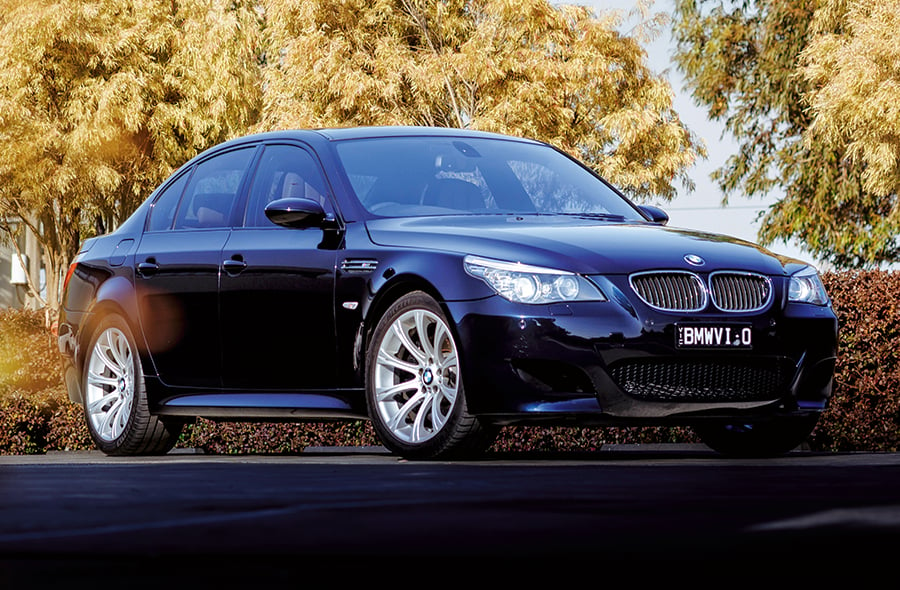
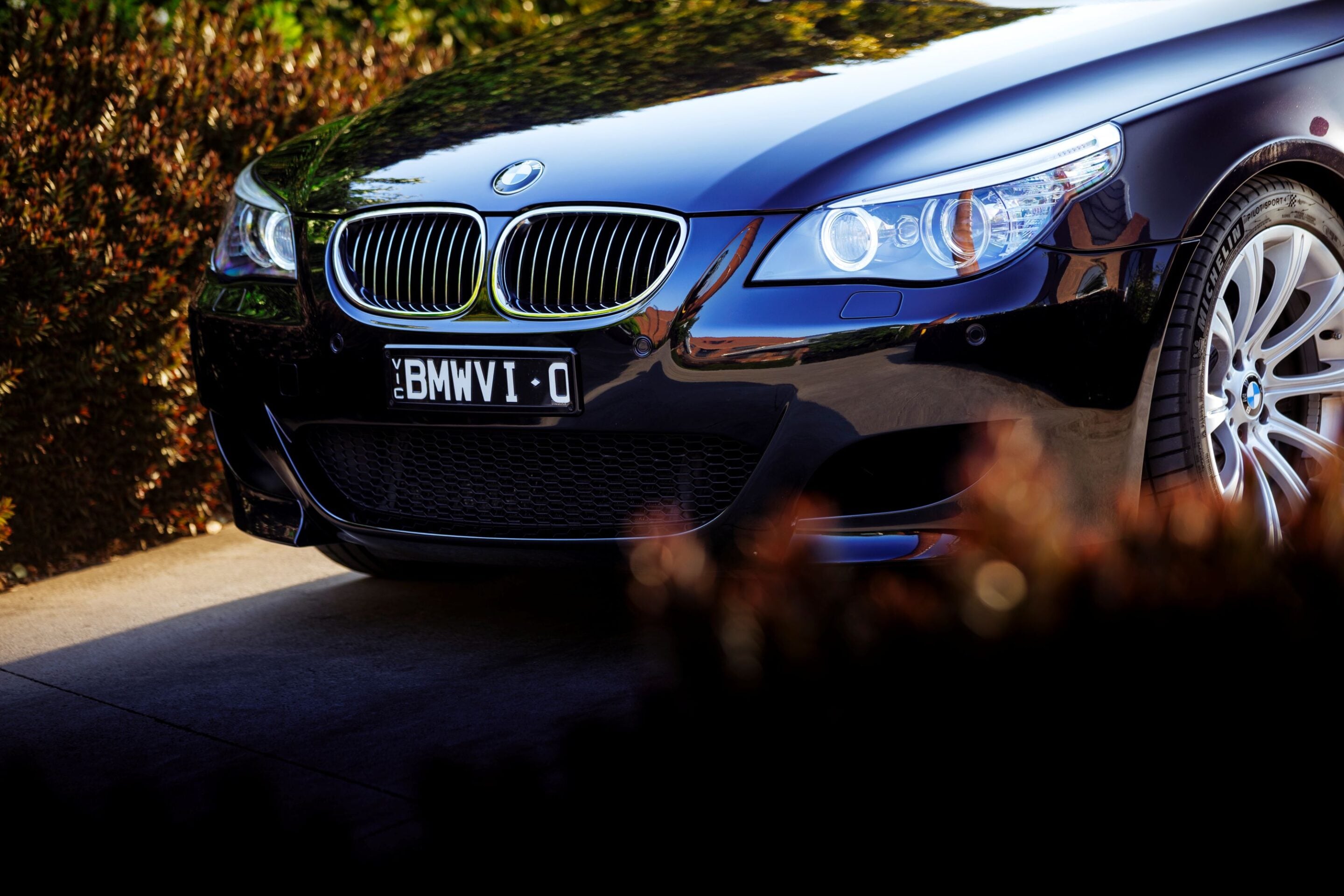
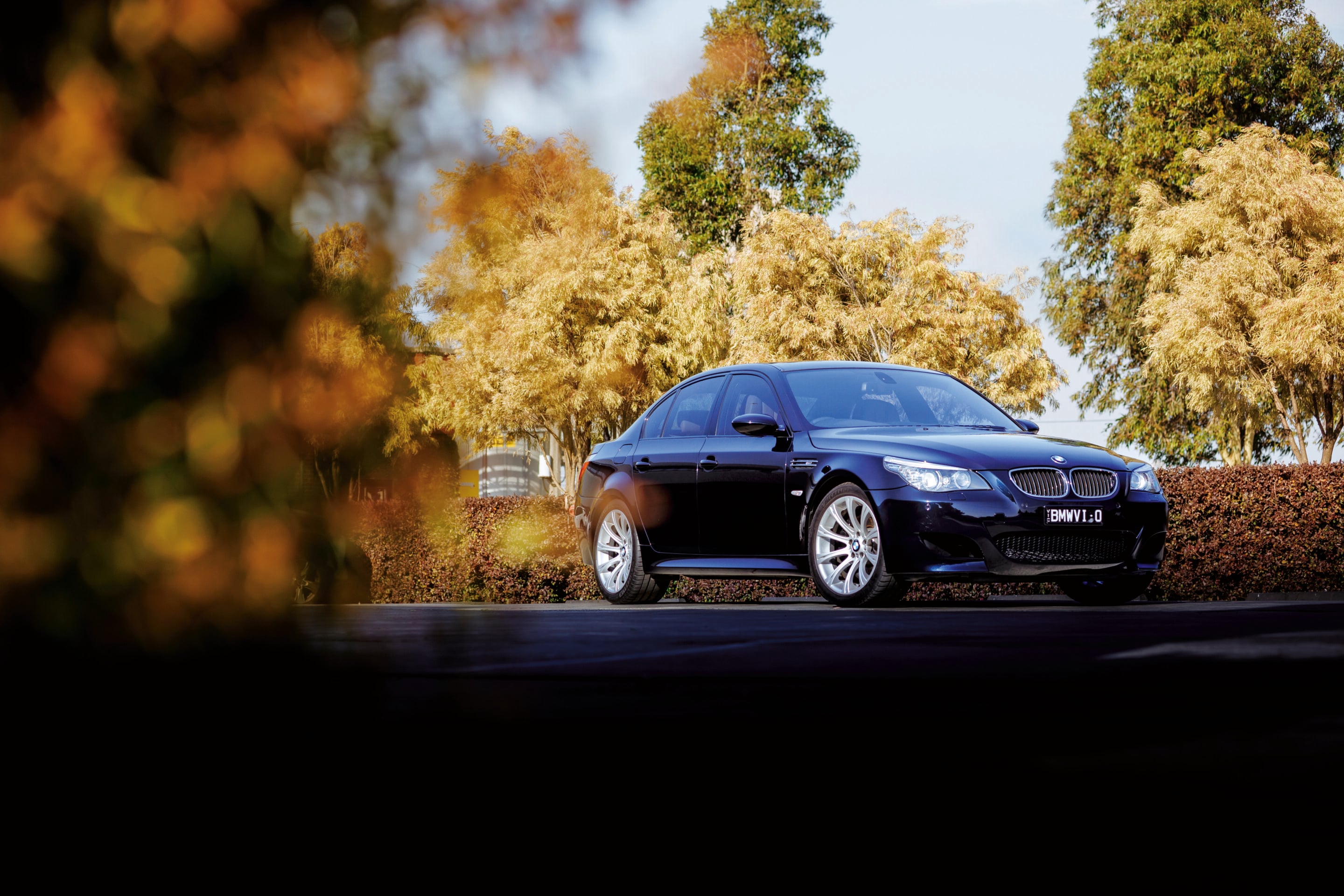
Despite BMW producing more than 20,000 E60 M5s over its lifetime, only around 300 ever made it to Australia. That hasn’t deterred Wheels reader Kenneth Roberts from owning two E60 M5s over the last 20 years, including the one you see on these pages.
Roberts bought his current M5 about 18 months ago after his wife told him to “go and buy something to amuse yourself”. Like all good husbands, he duly complied.
A carbon-black metallic-over-bone cream leather interior 2008 LCI update model, Roberts pre-emptively had the rod-end bearings replaced (“a known fault”) and some minor cosmetic work done, including having the bonnet and front guards resprayed before applying a ceramic coating.
He also – and you can almost hear the smile down the phone as he tells me – had the ECU flashed which added “a little more power and torque and had the speed limiter removed”.
Roberts is the fourth owner of this relatively low-mileage example (it shows 52,000km on the odo) that came with a complete service history.
When I ask him what drew him to the E60, Roberts doesn’t hesitate. “That V10 engine… they were mad.”
Indeed they were. And for that we are grateful.
1
Specs
| Model | BMW M5 (E60) |
|---|---|
| Engine | 5.0-litre naturally-aspirated V10 |
| Transmission | 7-speed sequential manual gearbox, RWD |
| Power | 373kW @ 7750rpm |
| Torque | 520Nm @ 6100rpm |
| 0-100km/h | 4.7 seconds (claimed) |
| 0-200km/h | 13.9 seconds (claimed) |
| Wheels | 19-inch alloys |
| Dimensions (l/w/h/wb) | 4855/1846/1469/2889mm |
| Weight | 1755kg |
| Price (new) | $241,816 (2008) |
This story first appeared in the July 2026 issue of Wheels magazine, now on sale. Subscribe here and gain access to 12 issues for $109 plus online access to every Wheels issue since 1953.
Follow WhichCar/Wheels on Google
Click the button below to make WhichCar by Wheels a preferred source for your news.

We recommend
-
 Features
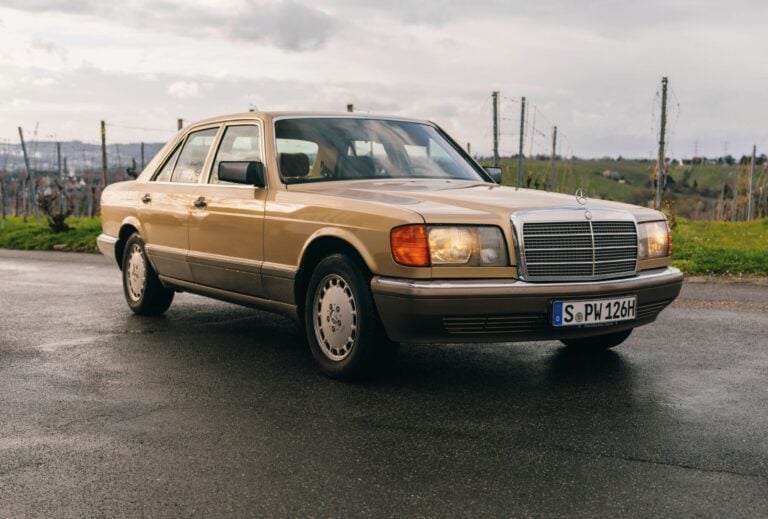
Modern Classic: Mercedes-Benz 300SE (W126), a graceful presence for 47 years
The W126 generation of Mercedes-Benz’s flagship S-Class encapsulates the very essence of the brand in a single restrained, yet powerful model.
-
 Features
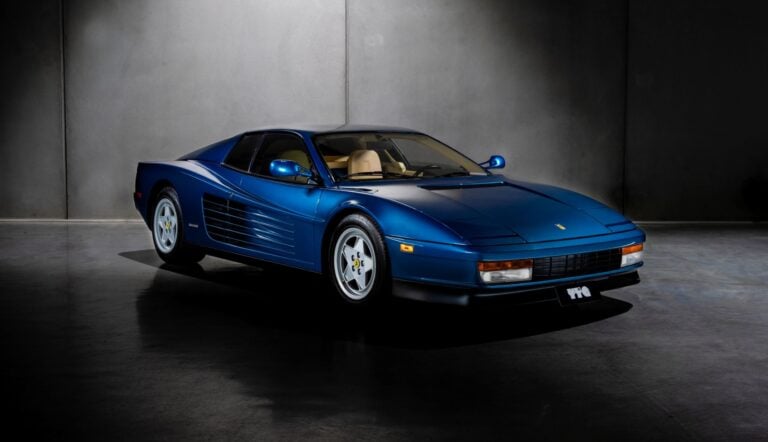
Modern Classic: Ferrari Testarossa, from Maranello to Miami Vice
Its rakish design might have been polarising, but the Ferrari Testarossa dragged the Italian supercar maker into the modern age.
-
 Features
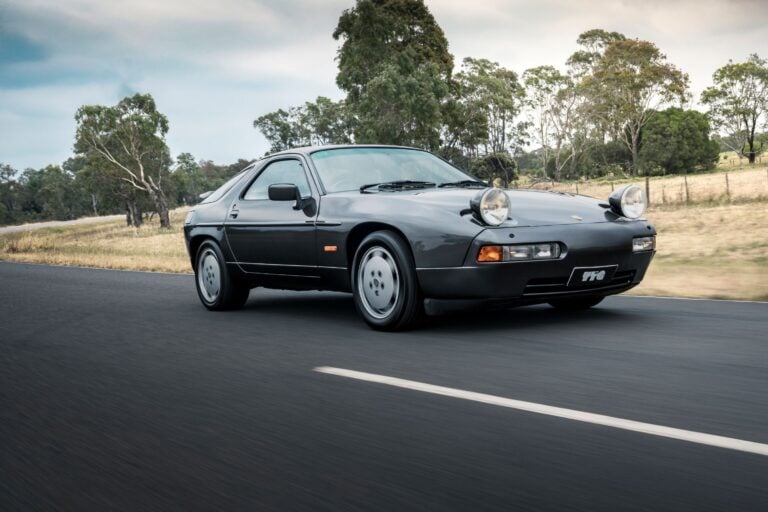
Modern Classic: Porsche 928, a car ahead of its time
Born of a crisis, the Porsche 928 was engineered to replace the 911, redefining the brand with radical design and grand touring ambition.