Reviews

Gallery 1
7.4
/10
Score
Score breakdown
7.0
Safety, value and features
7.0
Comfort and space
8.0
Engine and gearbox
9.0
Ride and handling
6.0
Technology
Things we like
- Still fun to drive but comfortable enough
- Well equipped, even in base Evolve form
- Peppy drivetrain, crisp six-speed auto
Not so much
- Significantly more expensive than it was in 2015
- Ageing in-car tech, no wireless smartphone mirroring
- Precious little interior storage
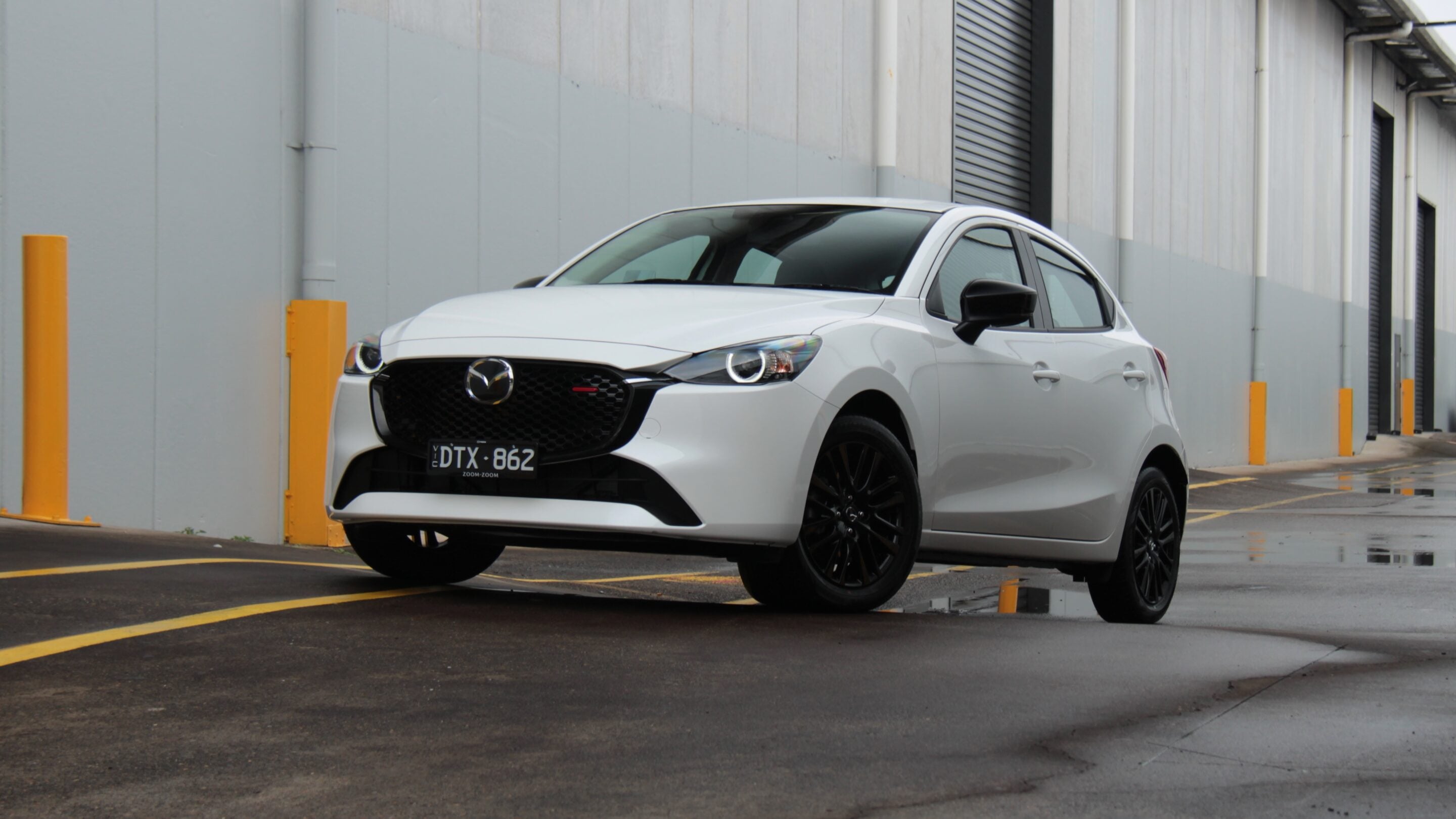
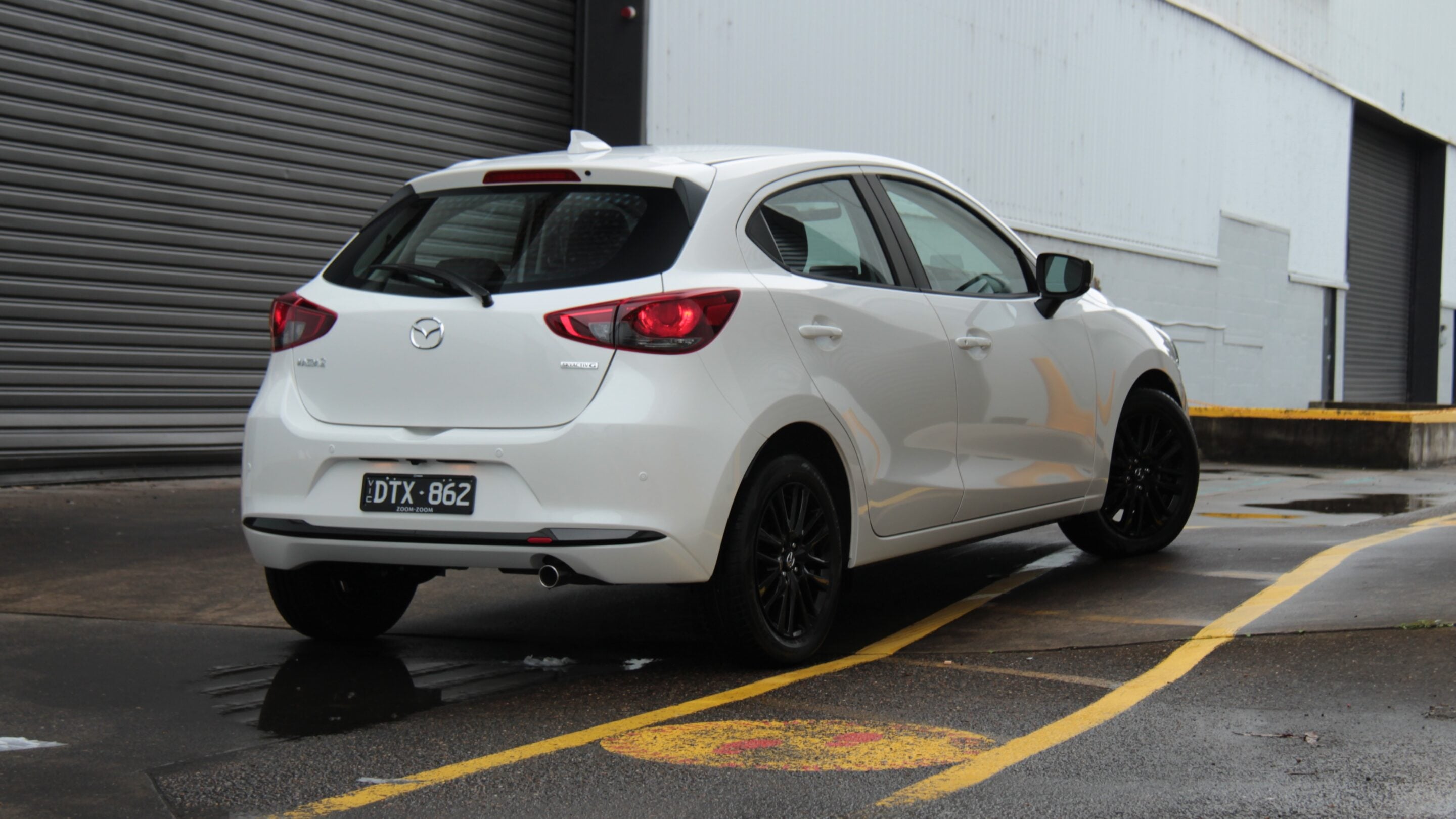
The Mazda2 is one of Australia’s oldest new cars, having been released in its current shape in 2014, yet it continues to prove that age alone doesn’t determine a car’s overall ability. While some rivals have grown larger, more expensive and increasingly electrified, Mazda‘s smallest model has stuck to a simple formula of sharp handling, efficient petrol power and lots of standard equipment. But in 2026, with fierce competition from newer and often cheaper rivals, does the veteran still deserve a place on your shortlist, or has time finally caught up with it?
How much does the Mazda2 cost?
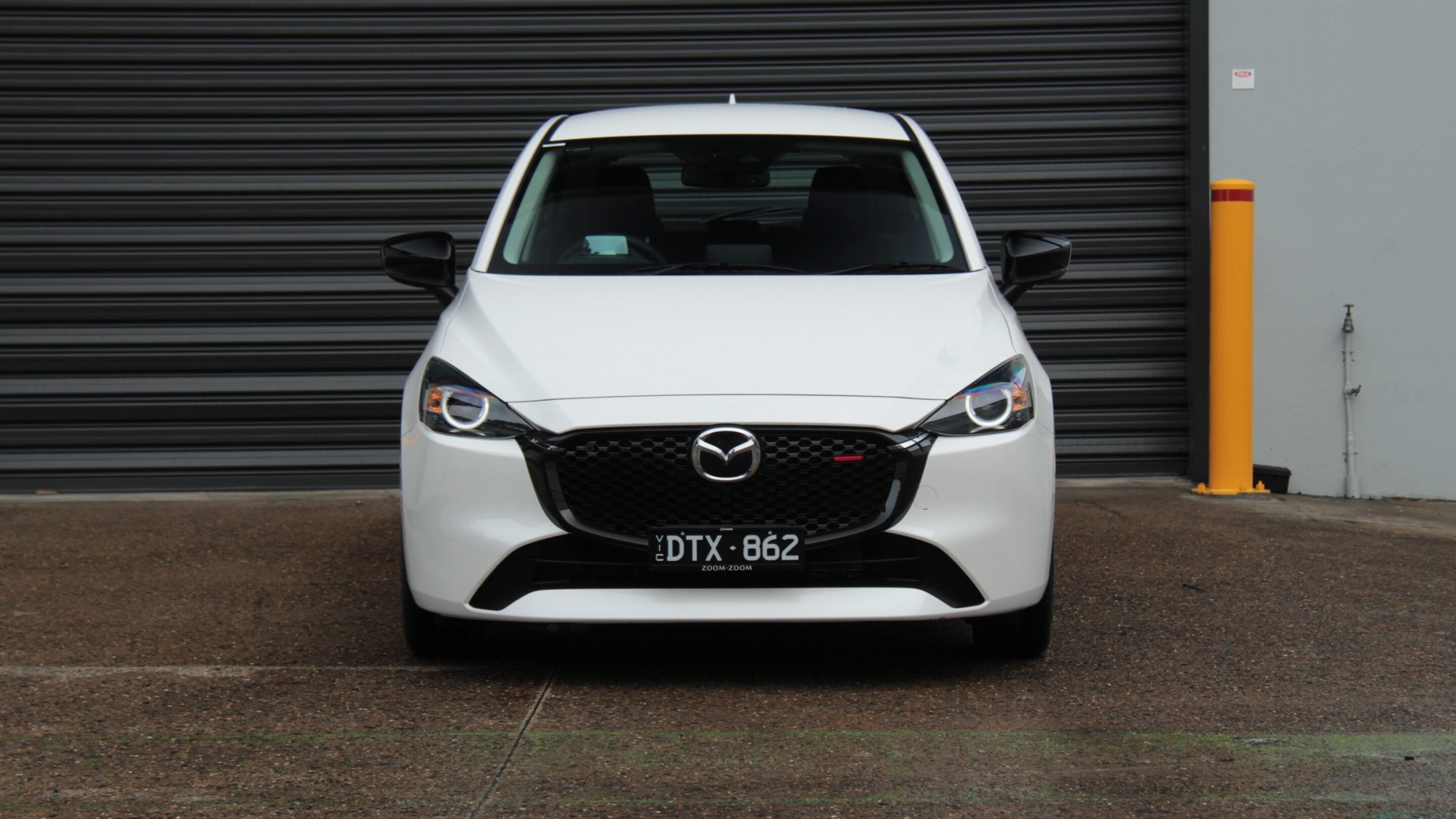
Two model grades are available in the 2026 Mazda2 range: the entry-level Evolve and top-spec GT, the latter available in either five-door hatchback or, uniquely, four-door sedan form. Pricing starts at $27,290 plus on-road costs, and the GT is currently priced at $28,490 driveaway, nationwide.
2026 Mazda2 pricing (plus on-road costs):
| G15 Evolve hatchback: $27,290 | $36,900 |
|---|---|
| G15 GT hatchback or sedan: $28,490 | $37,400 |
5
Those familiar with the model will note that when the current ‘DJ’ series Mazda2 was released way back in 2014, it was priced from just $14,990 plus on-road costs for the entry-level Neo manual (+$2000 for the automatic), and that price often included on-road costs. Even using the Reserve Bank of Australia’s inflation calculator for the $16,990 version, that equates to around $22,500 in 2025 money (the latest year available). Yes, the entry-level Mazda2 is much better equipped than it used to be, but paying significantly more for what amounts to a car released 12 years ago feels mean.
Standard features for the Mazda2 G15 Evolve include 16-inch alloy wheels, dusk-sensing automatic LED headlights, automatic rain-sensing wipers, single-zone automatic climate control, a 7.0-inch touchscreen, Apple CarPlay and Android Auto, a heads-up display, and safety features such as autonomous emergency braking, lane keeping assistance, adaptive cruise control and a reversing camera with rear parking sensors. A full list of features can be found at the bottom of the page.
If you’re after a bit more, the top-spec GT then adds part-synthetic leather/suede trim, front parking sensors, a 360-degree camera, different alloy wheels and keyless entry. It’s also available in the aforementioned sedan body style. That’s a pretty solid list of extra kit for only $1200 more, but we’d be more than happy in the Evolve.
Petrol competition for the Mazda2 is depressingly sparse in 2026 because many car makers simply no longer offer a light hatchback. However, cars such as the Kia Picanto, Suzuki Swift, Skoda Fabia, Toyota Yaris and Volkswagen Polo are still available, and if you include electric models, options swell significantly to include the BYD Atto 1, MG 4 Urban, GAC Aion UT and from October 2026, the Honda Super-One. Thankfully, the small, cheap car is not as scarce as some prospective buyers think.
How fuel efficient is the Mazda2?
As with any car, it depends on where it’s driven. Mazda claims 5.0L/100km on the combined cycle with emissions of 117g/km of CO2. We recorded 6.8L/100km in our driving, which skewed towards urban. Having said that, it will return around 4.5L/100km on highway journeys, and it uses 91 RON regular unleaded fuel to fill its 44-litre tank. You’ll note that number is still a lot higher than the hybrid Toyota Yaris, which can easily drop below 4L/100km in urban driving. However, the Yaris can cost significantly more.
6
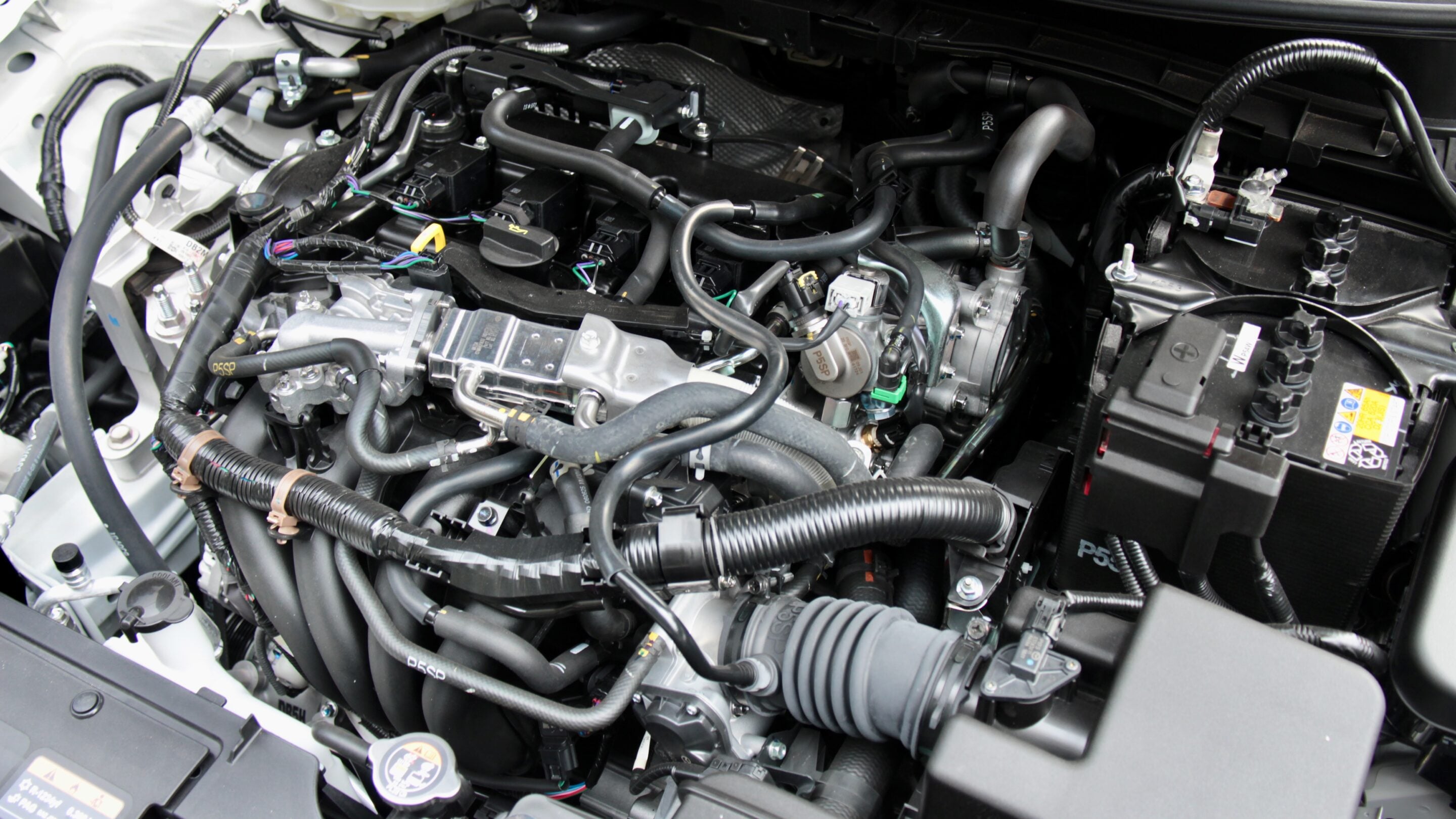
One of the first motors from Mazda’s then-new ‘SkyActiv’ engine family, the 1.5-litre naturally aspirated four-cylinder mill is no powerhouse, but it’s a fun little number that loves being revved to get the best out of it. Making 81kW and 142Nm of torque – the latter figure from 3500rpm so you don’t have to wring its neck to make swift progress – it’s tied to a responsive six-speed automatic transmission that is fun to use, especially the manual mode with the correct direction for changing gears (that is: pull down to shift up, push away to shift down).
Is the Mazda2 fun to drive?
Yes, quite, as you’d expect for a Mazda product. Ever since its release – and arguably the generations before that – the current-shape Mazda2 has offered more driving fun than many of its mainstream rivals thanks to its tight chassis, darty handling and sharp steering. Despite the lack of grunt from the engine, it’s possible to have a ball with the 2 on a good bit of road, and we love it for that. It also copes well with conditions no matter where it is, and overall it’s certainly one of the best Mazda products from a ride and handling point of view.
However, it’s not the most refined light car on the market. It’s quieter at speed than it used to be, but even at moderate velocities, road noise rears its head. Thankfully, its active safety features are well tuned and place trust the driver. We remember when even autonomous emergency braking was an optional feature on the 2 (at least you could purchase it, unlike many of its rivals), so it’s good to see features such as adaptive cruise featuring.
Is the Mazda2 practical?
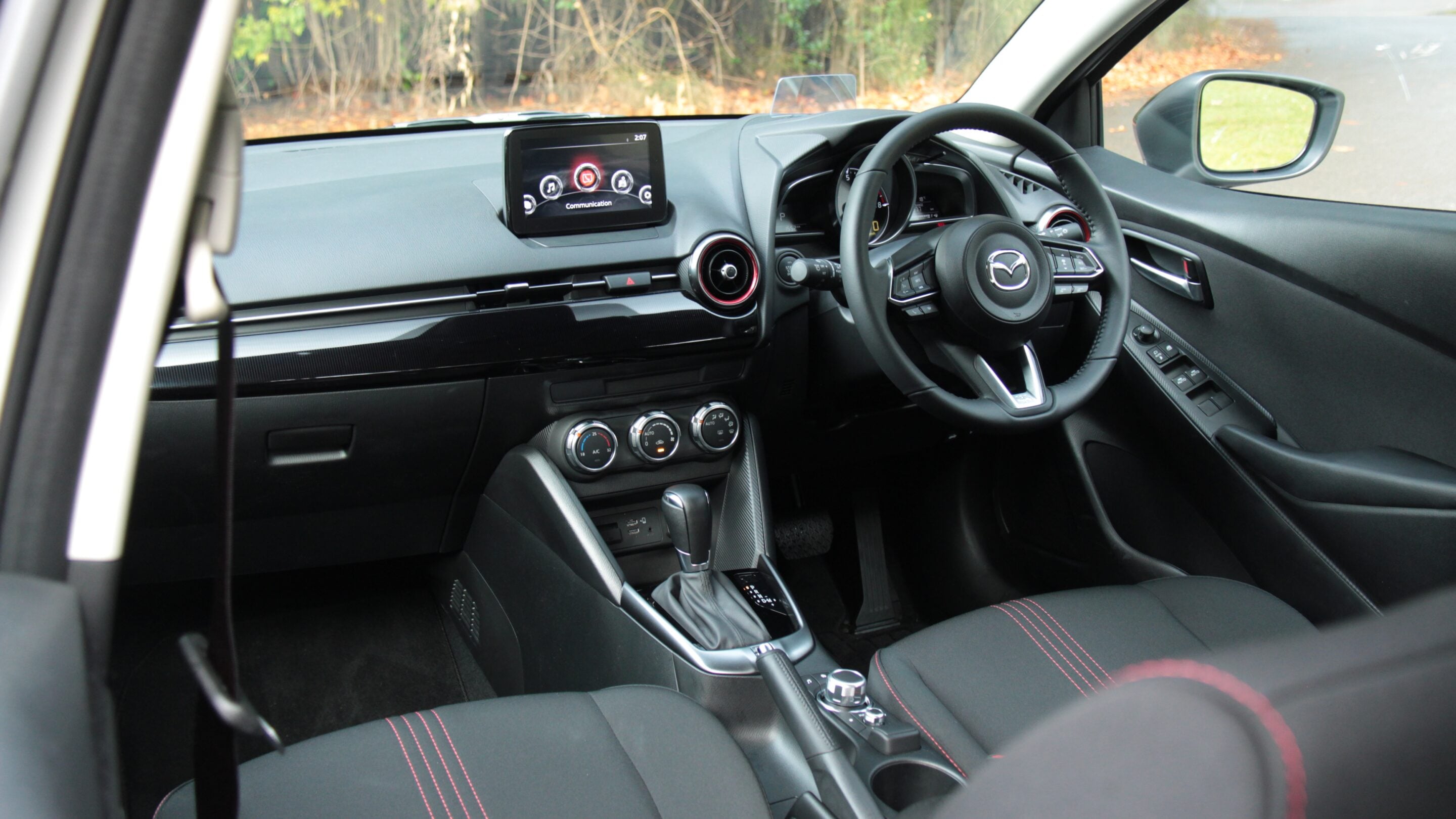
The 2 is reasonably pragmatic for a light hatch, but a Skoda Fabia is noticeably more spacious and can fit a lot more into its boot. Still, there’s an air of quality in the Mazda2’s cabin that has been present since it launched, with solid materials and classy switchgear still used today. The leather on the steering wheel is one of the only soft-touch materials in the whole cabin, and it feels great in the hand. The plastics aren’t scratchy, however – just hard.
8
Infotainment duties are handled by a 7.0-inch touchscreen that still uses Mazda’s MZD Connect software from 2014. It’s a good feature for the price with sat nav, wired Apple CarPlay and Android Auto, AM/FM/DAB+ digital radio and Bluetooth calling and audio streaming
However, the screen is somewhat slow to use and feels a bit dated. We like the way it’s mostly controlled by the wheel on the centre console, which gives it a more expensive feel, but in Japanese Mazda2 models, the more recent Mazda Connect system features a larger 8.8-inch screen with wireless smartphone mirroring. Hopefully that gets added to the Australian models soon, as it would give the interior a far more modern feel.
Storage is severely lacking as it offers just a shallow cup holder section in the centre console, small bottle holders in the doors, an average-sized glovebox and a shallow tray underneath the climate control, where the two USB-A chargers and SD card holder lie. There’s no covered storage as standard, but a centre console armrest is available as a dealer-fit accessory for an extra $531. it does cover the cup holders, but we think it should be standard equipment.
4
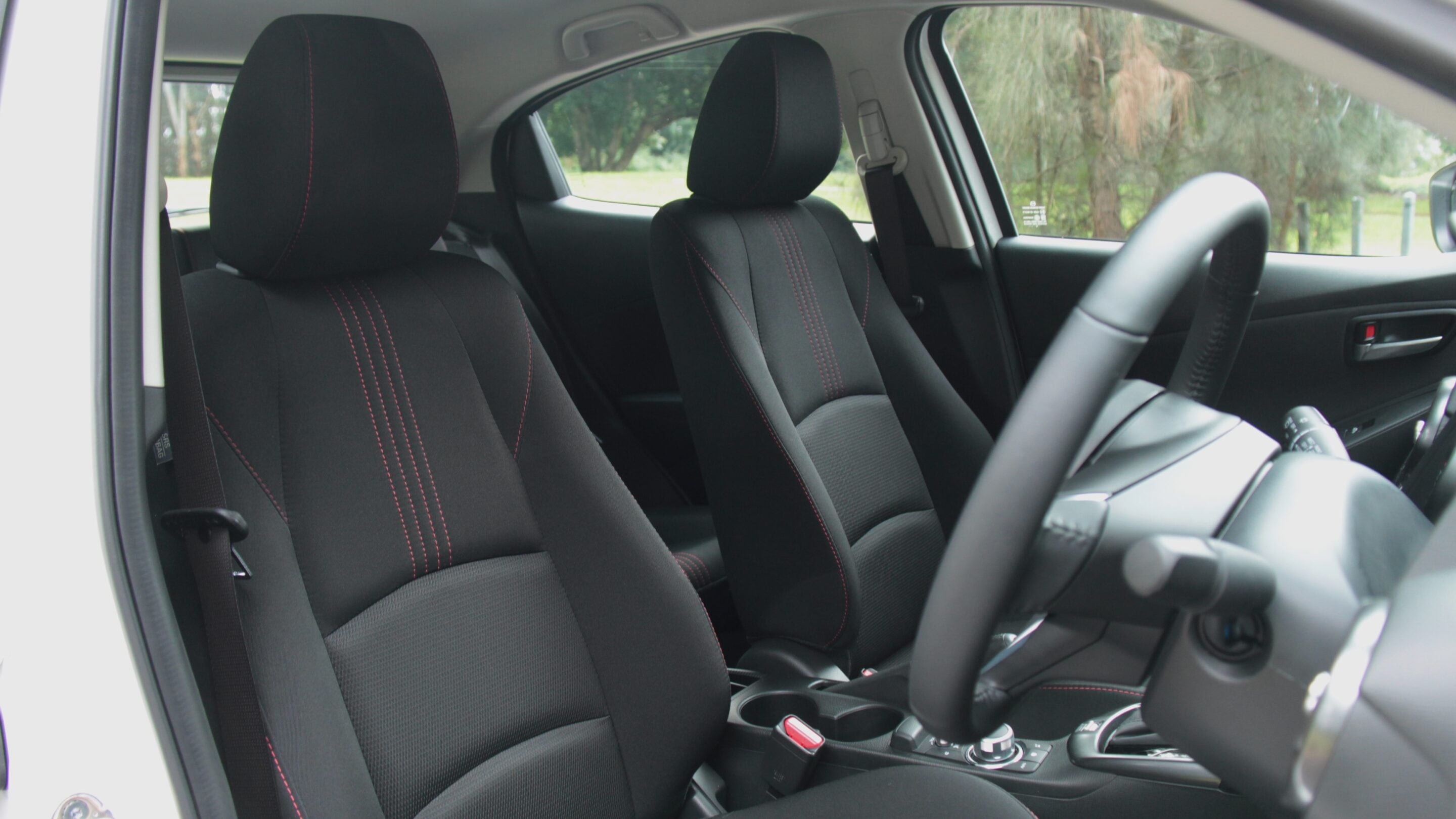
Two averaged-sized adults will be fine in the back seat, but if they’re any taller than six feet, they certainly won’t be very comfortable. There are also no amenities in the back pews, aside from a map pocket and a storage tray with no air vents, or even cup holders of any kind. It’s literally just a seat with two ISOFIX points.
The boot measures 250 litres with the rear seats up. Mazda doesn’t quote a figure with them folded, but around 1000 litres sounds about right. The boot itself is surprisingly deep with a large lip as a result, which could be annoying when loading and unloading heavy items. It has no features except for a light, and a space-saver spare lies underneath the floor. Some more clever features like hooks and nets, like the Fabia, would make it more practical.
How much does the Mazda2 cost to service?
Mazda covers its range with a five-year/unlimited-km warranty with five years of roadside assistance, which is the bare minimum in 2026. Volkswagen, Toyota and Suzuki all match this, though BYD adds a year, and Skoda, GAC and MG add two years.
The 2’s service intervals are once-yearly/every 15,000km (whichever comes first) and the cost for servicing it over five years/75,000km is $2290, or $458 per annum on average. That’s not what you’d call cheap, but it could be worse – the Volkswagen Polo, for example, costs $2957 to service over the same period.
Should I buy a Mazda2 G15 Evolve?
We had a good time during our week with the G15 Evolve. We miss the heyday of light cars and the 2 is a reminder of how great they can be. Sure, it’s feeling a bit dated as it approaches its 13th year on sale in Australia, and it’s a lot more expensive than it used to be, but it’s just a fun car to drive and is excellent for city trips, or even the occasional highway jaunt.
2
The engine lacks guts and isn’t that fuel efficient for urban driving, but it loves to rev, and the six-speed automatic is responsive and decisive. Yes, the cabin is tight and lacks storage, the infotainment system is feeling old and lacks wireless phone mirroring, and the five-year warranty is lacking. But despite its foibles, if you’re still interested in a light car, the Mazda2 is a good place to start your search.
Mazda2 G15 Evolve standard equipment:
- 16-inch alloy wheels (with a space-saver spare)
- Dusk-sensing automatic LED headlights
- LED frontal daytime running lights
- Rain-sensing automatic wipers
- Remote central locking with push-button start
- Auto-folding mirrors with black mirror caps
- Electric windows with automatic up/down front
- Black cloth trim with red highlights
- Manual height-adjustable driver’s seat
- Single-zone automatic climate control
- Leather-wrapped steering wheel, gearknob and handbrake
- 7.0-inch touchscreen with controller wheel in centre console
- Satellite navigation
- AM/FM/DAB+ digital radio
- Wired Apple CarPlay and Android Auto
- Bluetooth calling and audio streaming
- 2x USB-A ports
- Six-speaker sound system
- Heads-up display
- Auto-dimming rear mirror
- Six airbags
- Autonomous emergency braking with pedestrian detection
- Low-speed automatic braking in reverse
- Adaptive cruise control
- Lane-keeping assistance with lane departure warning
- Blind-spot monitoring with rear cross-traffic alert
- Traffic sign recognition
- Rear parking sensors
- Reversing camera
- Tyre pressure monitoring
Mazda2 G15 Evolve specifications:
| Price | $27,290 plus on-road costs |
|---|---|
| Engine | 1496cc four-cylinder DOHC petrol |
| Peak power | 81kW (@ 6000rpm) |
| Peak torque | 142Nm (@ 3500rpm) |
| Transmission | Six-speed automatic, front-wheel drive |
| Claimed fuel economy | 5.0L/100km |
| Claimed CO2 emissions | 117g/km |
| Fuel type | 91RON regular unleaded |
| Fuel tank | 44 litres |
| Dimensions (l/w/h/wb) | 4085/1695/1495/2570mm |
| Boot size | 250 litres (rear seats up) |
| Kerb weight | 1109kg |
| Warranty | Five-year/unlimited km |
| Five-year service cost | $2290 ($458 per year) |
| On sale | Now |
7.4
/10
Score
Score breakdown
7.0
Safety, value and features
7.0
Comfort and space
8.0
Engine and gearbox
9.0
Ride and handling
6.0
Technology
Things we like
- Still fun to drive but comfortable enough
- Well equipped, even in base Evolve form
- Peppy drivetrain, crisp six-speed auto
Not so much
- Significantly more expensive than it was in 2015
- Ageing in-car tech, no wireless smartphone mirroring
- Precious little interior storage
Follow WhichCar/Wheels on Google
Click the button below to make WhichCar by Wheels a preferred source for your news.

We recommend
-
 News
NewsVFACTs July 2026: Australian new-car market posts record July as EV sales top one in five
July becomes the strongest on record for new-vehicle sales, with battery-electric vehicles maintaining more than 20 per cent market share for a second straight month.
-
 News
NewsCompact EVs from BYD and MG top Aussie most-searched list as fuel excise relief ends
Drivers desperate to avoid pain at the pump have made small EVs four of the five most searched-for new cars in Australia.
-
 News
NewsMazda boss confirms all-electric MX-5 is on the table
CEO Masahiro Moro reveals 'major challenge' with upcoming model.