
Classic Wheels
Gallery 1
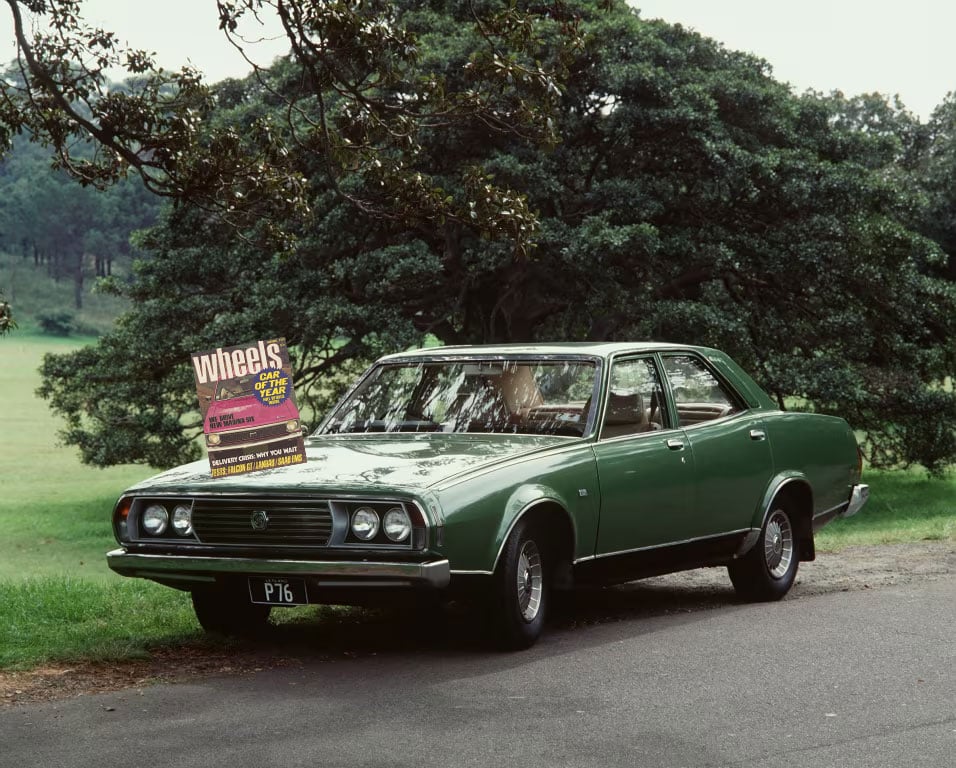
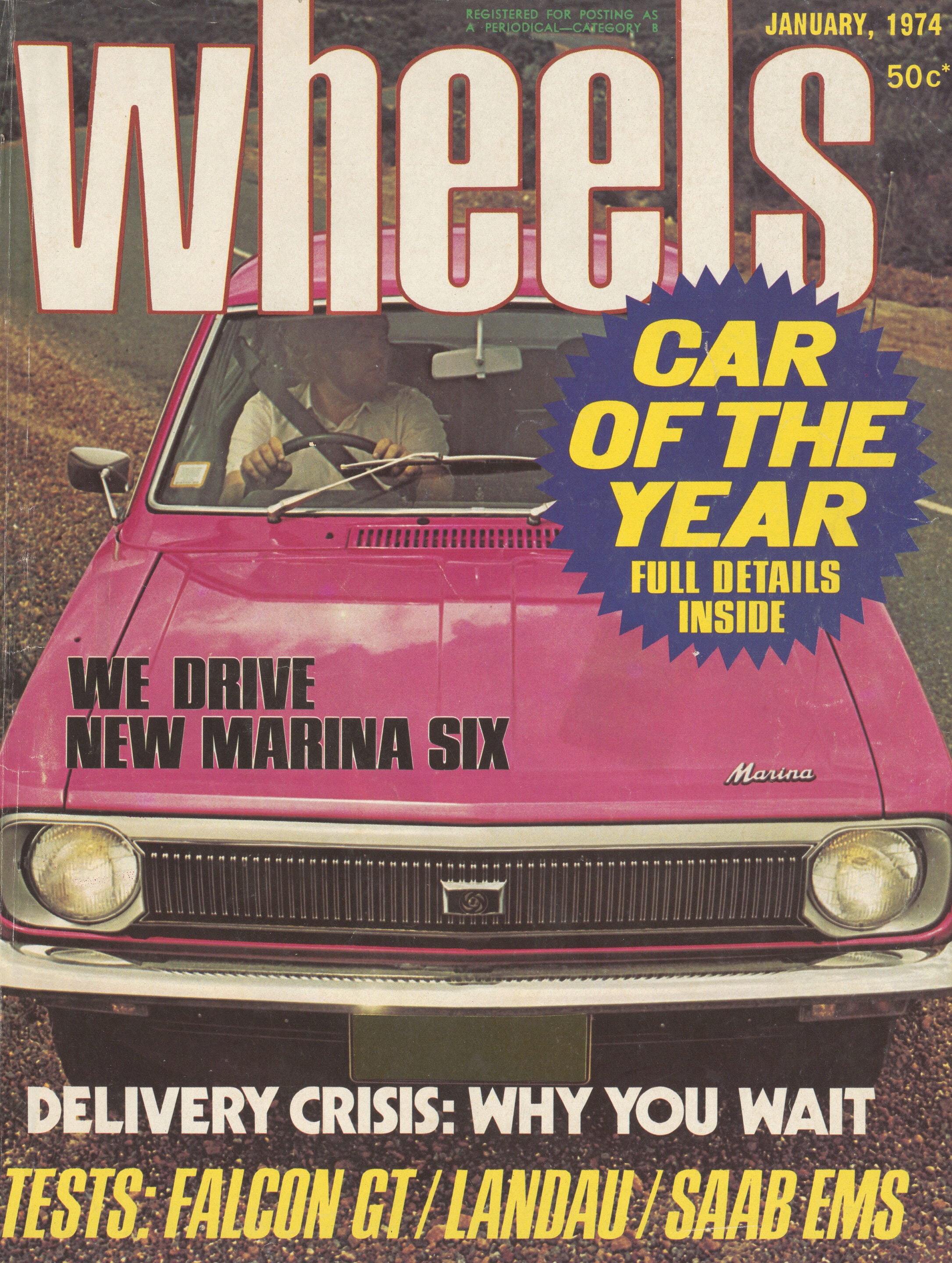
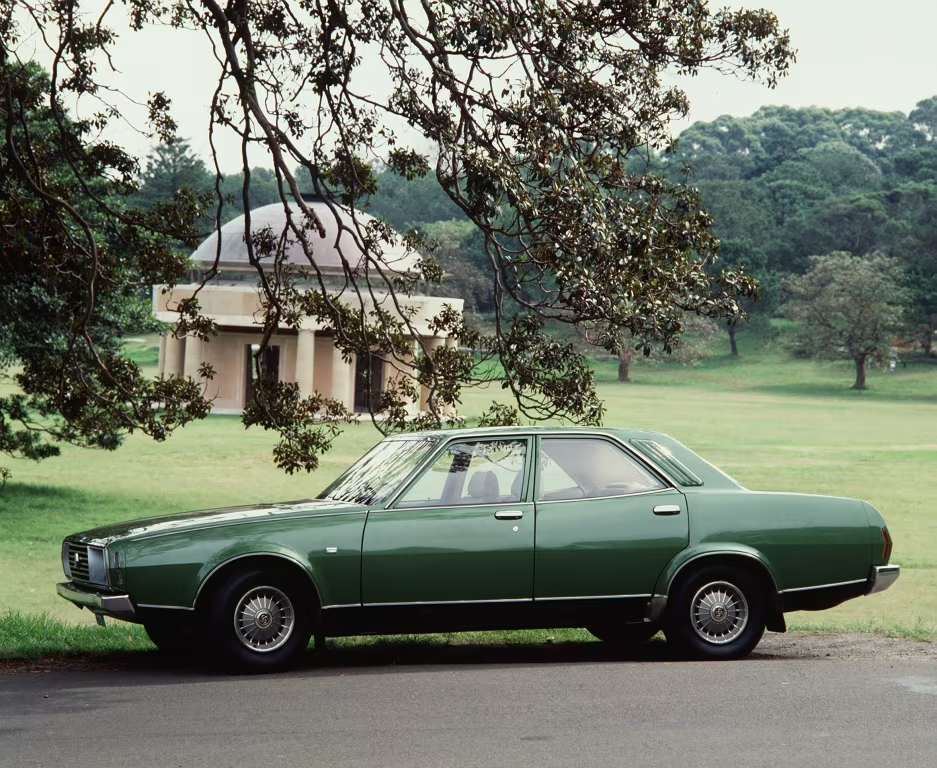
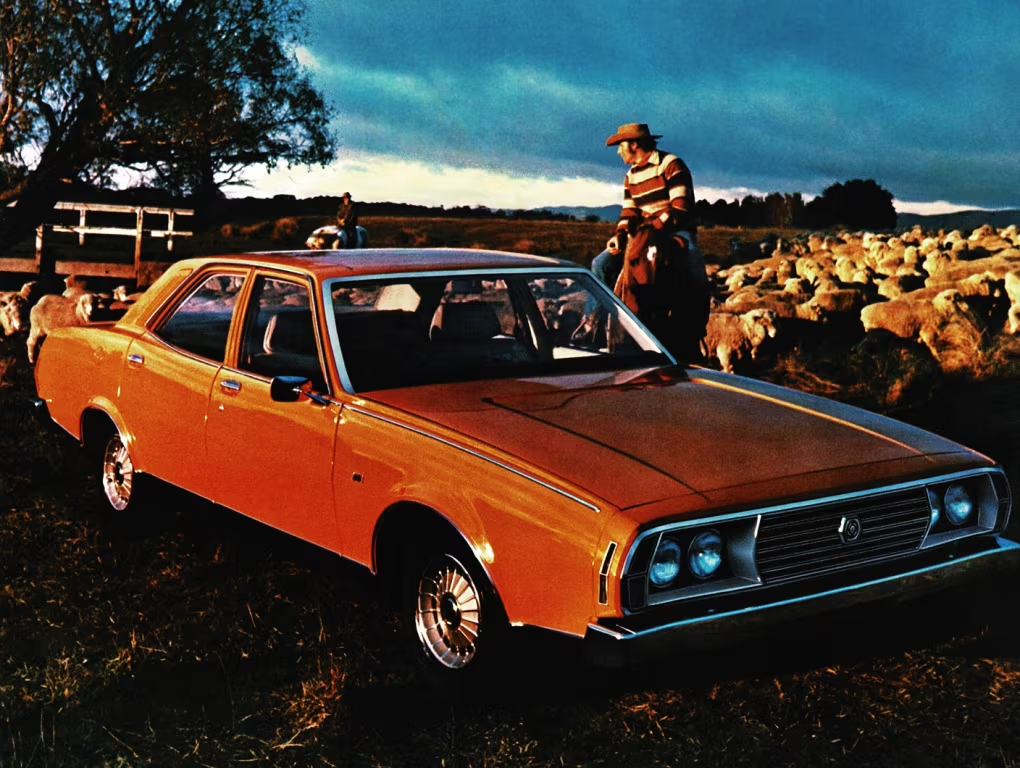
When Wheels announced the P76 as the best car of 1973, controversy followed. We gave the award to the V8 version of the sedan, not the underwhelming 2.6-litre six-pot – but that didn’t stop Leyland from taking out advertisements claiming the entire P76 range won Australia’s most prestigious gong.
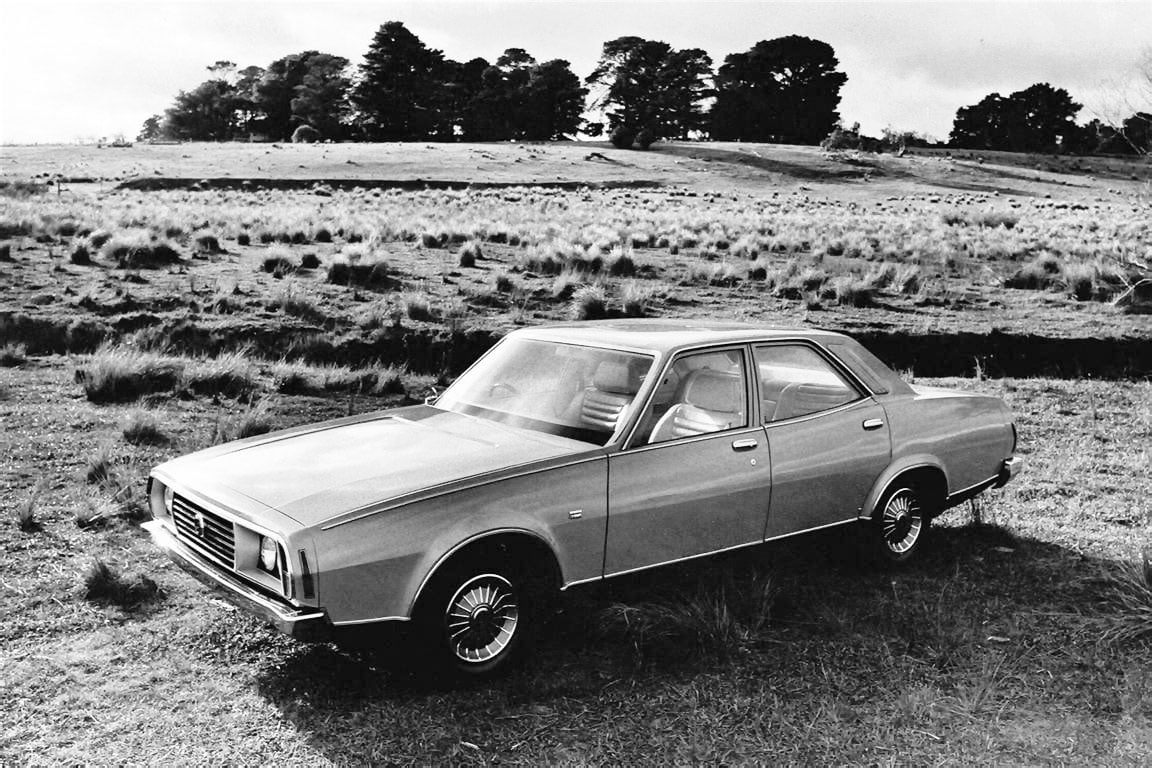
As a result, Wheels magazine changed the COTY rules so the entire model range would have to be taken into account with future contenders, not just a specific variant. But as you’ll find out, we loved the chunky road barge with its 282mm wheelbase and boot big enough to accommodate a 44-gallon drum…
First published in the January 1974 issue of Wheels magazine, Australia’s best car mag since 1953. Subscribe here and gain access to 12 issues for $109 plus online access to every Wheels issue since 1953.
1
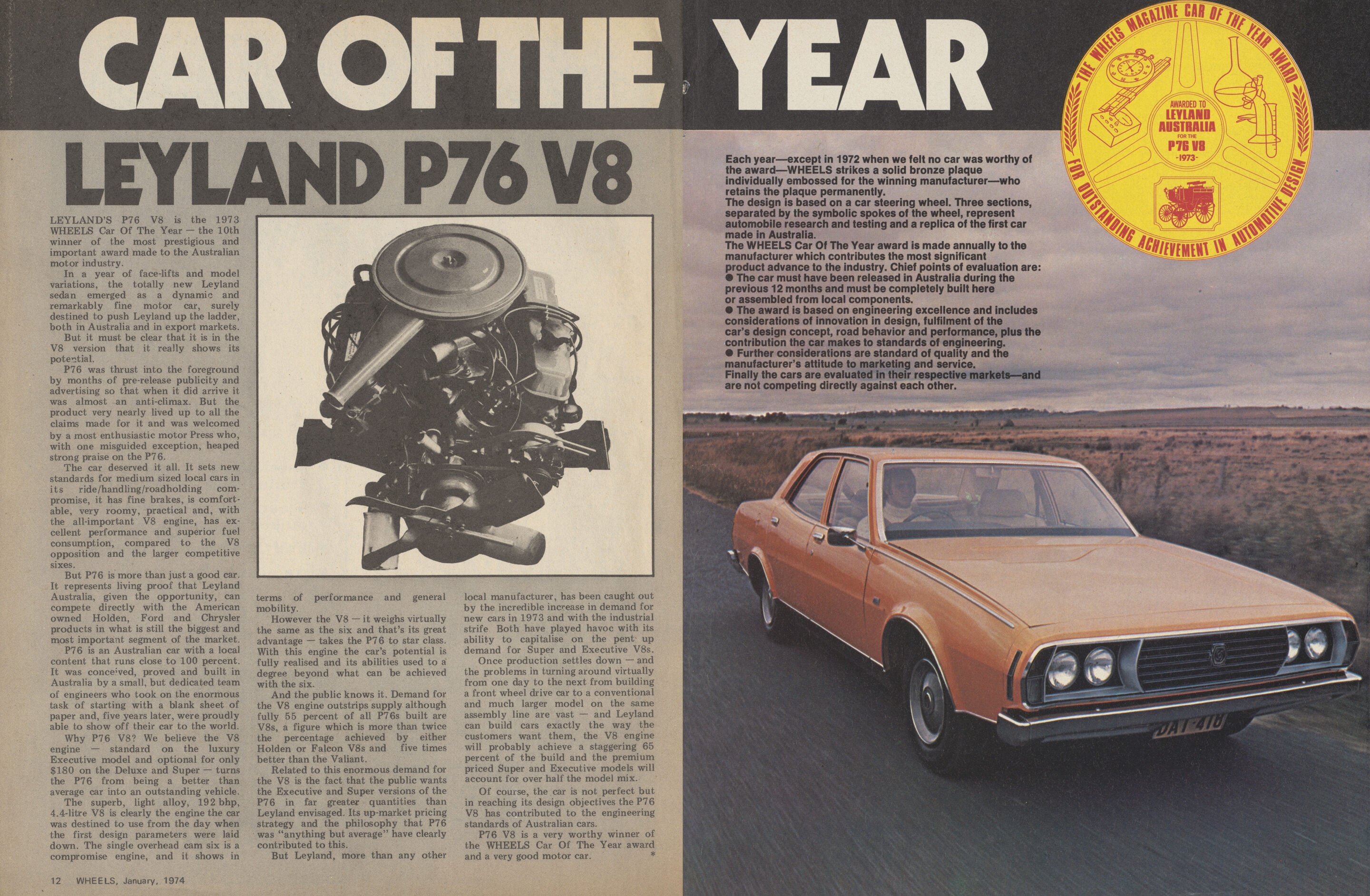
LEYLAND’S P76 V8 is the 1973 Wheels Car of the Year – the 10th winner of the most prestigious and important award made to the Australian motor industry.
In a year of face-lifts and model variations, the totally new Leyland sedan emerged as a dynamic and remarkably fine motor car, surely destined to push Leyland up the ladder, both in Australia and in export markets.
But it must be clear that it is in the V8 version that it really shows its potential.
P76 was thrust into the foreground by months of pre-release publicity and advertising so that when it did arrive it was almost an anti-climax. But the product very nearly lived up to all the claims made for it and was welcomed by a most enthusiastic motor Press who, with one misguided exception, heaped strong praise on the P76.
The car deserved it all. It sets new standards for medium sized local cars in its ride/handling/roadholding compromise, it has fine brakes, is comfortable, very roomy, practical and, with the all-important V8 engine, has excellent performance and superior fuel consumption, compared to the V8 opposition and the larger competitive sixes.
2
But P76 is more than just a good car. It represents living proof that Leyland Australia, given the opportunity, can compete directly with the American owned Holden, Ford and Chrysler products in what is still the biggest and most important segment of the market.
P76 is an Australian car with a local content that runs close to 100 percent. It was conceived, proved and built in Australia by a small, but dedicated team of engineers who took on the enormous task of starting with a blank sheet of paper and, five years later, were proudly able to show off their car to the world.
Why P76 V8? We believe the V8 engine – standard on the luxury Executive model and optional for only $180 on the Deluxe and Super – turns the P76 from being a better than average car into an outstanding vehicle.
The superb, light alloy, 192 bhp, 4.4-litre V8 is clearly the engine the car was destined to use from the day when the first design parameters were laid down. The single overhead cam six is a compromise engine, and it shows in terms of performance and general mobility.
However the V8 – it weighs virtually the same as the six and that’s its great advantage – takes the P76 to star class. With this engine the car’s potential is fully realised and its abilities used to a degree beyond what can be achieved with the six.
1
And the public knows it. Demand for the V8 engine outstrips supply although fully 55 percent of all P76s built are V8s, a figure which is more than twice the percentage achieved by either Holden or Falcon V8s and five times better than the Valiant.
Related to this enormous demand for the V8 is the fact that the public wants the Executive and Super versions of the P76 in far greater quantities than Leyland envisaged. Its up-market pricing strategy and the philosophy that P76 was “anything but average” have clearly contributed to this.
But Leyland, more than any other local manufacturer, has been caught out by the incredible increase in demand for new cars in 1973 and with the industrial strife. Both have played havoc with its ability to capitalise on the pent-up demand for Super and Executive V8s.
Once production settles down – and the problems in turning around virtually from one day to the next from building a front wheel drive car to a conventional and much larger model on the same assembly line are vast – and Leyland can build cars exactly the way the customers want them, the V8 engine will probably achieve a staggering 65 percent of the build and the premium priced Super and Executive models will account for over half the model mix.
Of course, the car is not perfect but in reaching its design objectives the P76 has contributed to the engineering standards of Australian cars.
P76 V8 is a very worthy winner of the Wheels Car of the Year award and a very good motor car.
From a dream to reality: Peter Robinson talks to the man behind the P76 – Dave Beech
“He’s always late for appointments, I suppose he is somewhere out in the plant.” Dave Beech’s tall, rather large and middle-aged secretary spun around in her chair and looked out the window, as if she hoped to catch a glimpse of her boss down there among the cars and massive production equipment.
“But you’re early.” Three minutes early actually.
Then, “How did you get up here?”
“I walked.”
2
“There’s a standing instruction that no outsider gets up here (meaning onto the executive floor) unaccompanied.”
I explained that the PR department was empty but that didn’t seem to account for much.”
Twenty minutes later, David Beech, father of the P76 and Leyland’s Director of Product Development and Manufacturing, returned. The PR man had come and gone and it was a warm handshake and “Good morning, nice to see you”, as he beckoned me into a chair on the other side of an impressive desk.
Beech doesn’t smoke, instead his ashtrays are full of small components from P76 — the badge from the centre of the steering wheel and various little knobs abound. He reaches across and grabs a huge tail light lense on the desk opposite when you show an interest in it.
“See this? It’s the first time anybody has plated an acrylic plastic in Australia.
“This was the first P76 tail light. Hella did it for us.
“People don’t realise that with a totally new car everything, every single component – and there are over 5000 of them – has to be engineered, approved, tested and tooled for.
“Of course you make mistakes, the facia isn’t quite as good as it looked in model form, but basically P76 is a bloody good car.”
Beech is not a man who wastes time on trivialities.
He has another meeting later in the morning but he is willing to postpone it if our discussion goes on for too long.
You ask him about his present problems. He knows, you know what the quick answer to it is (industrial problems and labor shortages) so he is straight into details.
“We are building 170 cars a day — 80 of those are P76s. We should be doing 240 a day and 110 76s. We are spending $40,000 a month in advertising for people and we are doing better than anybody else in getting them but we’re still hundreds short.
“Our greatest problem is in meeting the demand and in building the cars the dealers want.”
And the other problems – specifically about the mechanics and body of P76 – how are they being rectified?
“There have been minimal mechanical faults. When you build something by machine your chances of making mistakes are far fewer than if you do it by hand. Quality control with labor is far more difficult to control.
2
“The dust and water sealing problems were solved very early on.
“The trouble is that it is not until you make some production cars that you get what I call the full tolerance splatter.
“It takes time for the assembly line to settle down. Today’s cars are much better than the first P76s which came off the line.”
I tell him there is still room for improvement, particularly in body panel fit, but Beech is convincing when he says the situation is improving, almost with every single car that comes off the line.
The man has quietened down a little now so you ask him: “If you had to do it all over again, knowing what you know now, how different would the car have been?”
He likes the question and smiles quietly.
“For a start it will never happen again. Our enthusiasm carried us through. Stokes [Donald Stokes, former CEO of British Leyland] left us alone – he had his own problems with the merger (of Leyland and BMC). We will never have the same degree of autonomy again in making all the major decisions. Control in the future will probably be by financial methods.”
Then you hit him with a question which he has been asked hundreds of times since P76 was released. Is the car too big? Shouldn’t it have been smaller?
He gets aggressive immediately and thinks the question infers the car should have been Cortina/Torana size. I explain that what I meant was that it should have been built on the same wheelbase but with six inches lopped off the tail and the styling done with less emphasis on its bigness.
He understands the argument but, rightly, claims the car should be viewed in the overall context of the market. And the fact remains that Leyland had to get into the mainstream of Australian cars if it were to survive as a force on the local market.
To say in hindsight that anybody knew – in 1968 – that the light/medium sized market would be challenging the traditional family sedans for market leadership in 1973 was like knowing that, in 1958 the Opera House was going to cost $100 million.
Perhaps P76 is too big – or rather looks too big – but this was the deliberate intention of Leyland. It felt it had to emphasise the point because it had never built a big car in Australia before.
And with the Mini, Marina Four, Marina Six, it does give Leyland an entrant in each segment of the market.
Beech says, “A lot of people think the rear end has character. I never saw it as being particularly ugly”.
He admits later though that 18 months before the car went into production he got the “twitches” about the tail but ultimately decided to stick with the styling they had.
Anyway, as he points out, the die-cast front and rear ends have been designed so that face- and tail-lifts can be made easily and cheaply and still be effective in terms of changing the look of the car.
Leyland has two face-lift proposals in mind and has yet to make up its mind about which to accept. One is quite major and the other minor.
He comes back to the point about the car being changed, if he had to do it again.
“I can’t see how we could have done anything differently — we had to cover each market. I think we have done that very well.”
2
Of course the only version of P76 the public has seen is the sedan, Leyland’s strategy will become clearer when the Force 7 Coupe, which is eight inches shorter and seems certain to be the most versatile car yet built in Australia, hits the market early next year, followed by a station wagon a few months later.
He is happy with the car’s road characteristics – “they are as good as we could have achieved”.
You mention the low-geared manual steering. “We did that deliberately to completely dampen out feedback on very rough roads.” He admits it might have been better to have put up with some shocks getting to the driver to make the steering better (meaning more direct) in all other conditions.
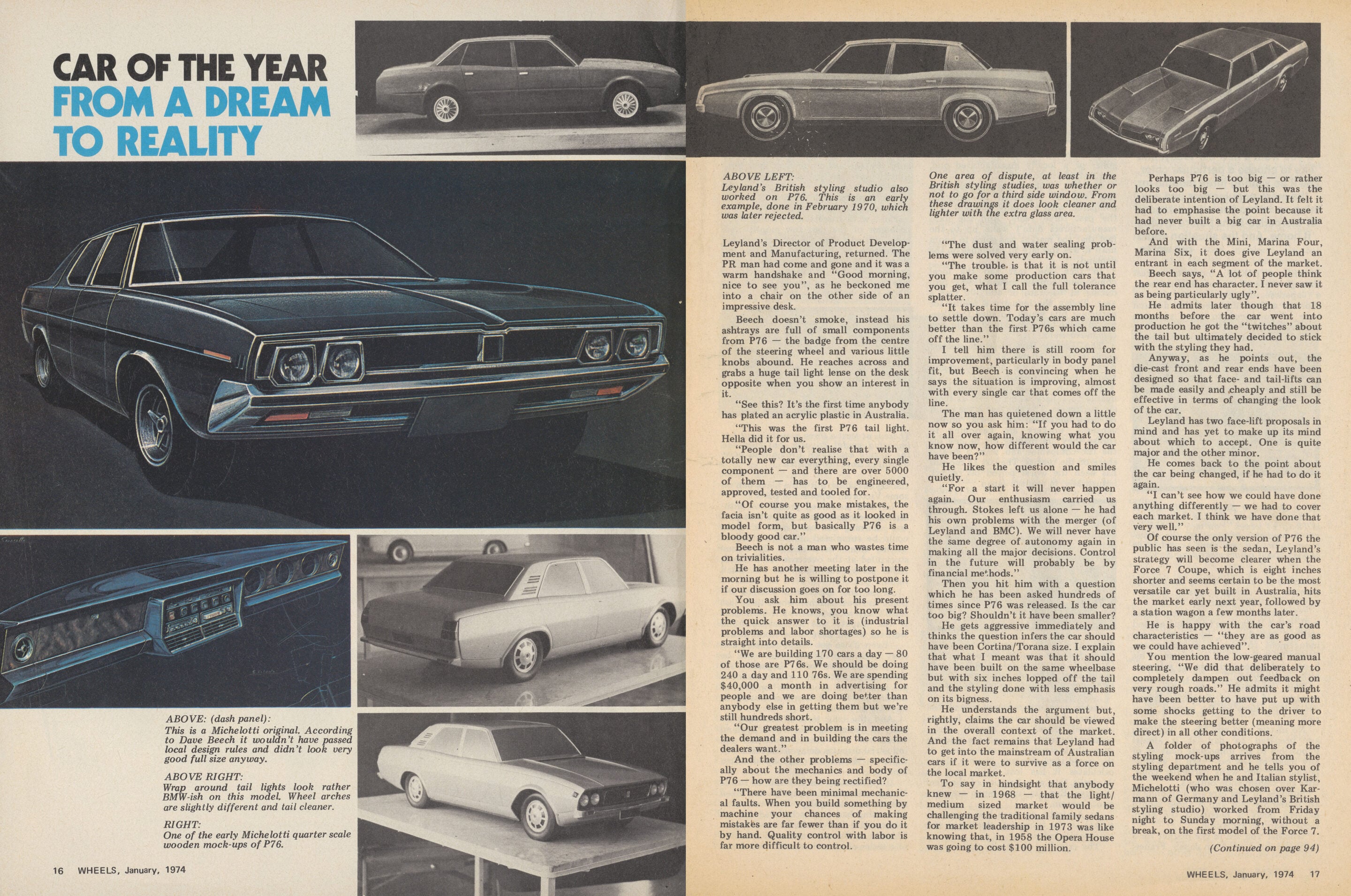
A folder of photographs of the styling mock-ups arrives from the styling department and he tells you of the weekend when he and Italian stylist, Michelotti (who was chosen over Karmann of Germany and Leyland’s British styling studio) worked from Friday night to Sunday morning, without a break, on the first model of the Force 7.
Michelotti, who was sticking down chrome mouldings while Beech was occupied elsewhere, stopped suddenly and called out, “Dave, we will have to shorten the wheelbase.”
“What the bloody hell for?”
“I have run out of chrome moulding!”
It’s a good story and we both laugh.
Leyland gave Michelotti very close design parameters to work from – it established wheelbase, length, width, engine location, spare wheel location, boot capacity, seat position, steering wheel location and instrument layout.
Obviously Michelotti was limited in how far he could go in the styling, and a look at the proposals put forward by the other styling teams, who were given the same dimensions, shows that whoever had styled the car would inevitably have made it look very much a big car.
You take time out for a cup of coffee and Dave shows you photographs of the original styling mock-ups for Force 7. It looks good and he knows it.
Finally he glances at his watch and you realise he is already late for that other appointment. There is a certain inevitability about it, but it’s no real surprise from a man who has devoted five years of his life to a new motor car.
Thankfully, it was worth it.
Follow WhichCar/Wheels on Google
Click the button below to make WhichCar by Wheels a preferred source for your news.

We recommend
-
 Classic Wheels
From the Wheels archive: Falcon GTHO Phase III vs Group A Commodore comparo – with Allan Moffat behind the wheel
A Ford Falcon GTHO Phase III taking on the upstart Group A at Calder with a deadset legend behind the wheel? Yes please...
-
 Features
From the Wheels archive: Australia's greatest ever car is crowned in 2013
Wheels named the top 10 best and most important cars made down under to mark the bible's 60th birthday.
