
Features

Gallery 1
Wheels marked its 60th anniversary with an immense 212-page souvenir edition that celebrated the 10 best cars ever made in Australia. The Ford Coupe Utility came in 10th, and working up from there we named the Holden HQ, Ford Falcon FG, Holden 48-215, Valiant Charger E38/E49, Ford XR Falcon GT, Holden V2 Monaro, Ford BA Falcon XR6 Turbo and the Ford Territory in second place. And the winner? Read on…
First published in the May 2013 issue of Wheels magazine, Australia’s best car mag since 1953. Subscribe here and gain access to 12 issues for $109 plus online access to every Wheels issue ever printed.
4
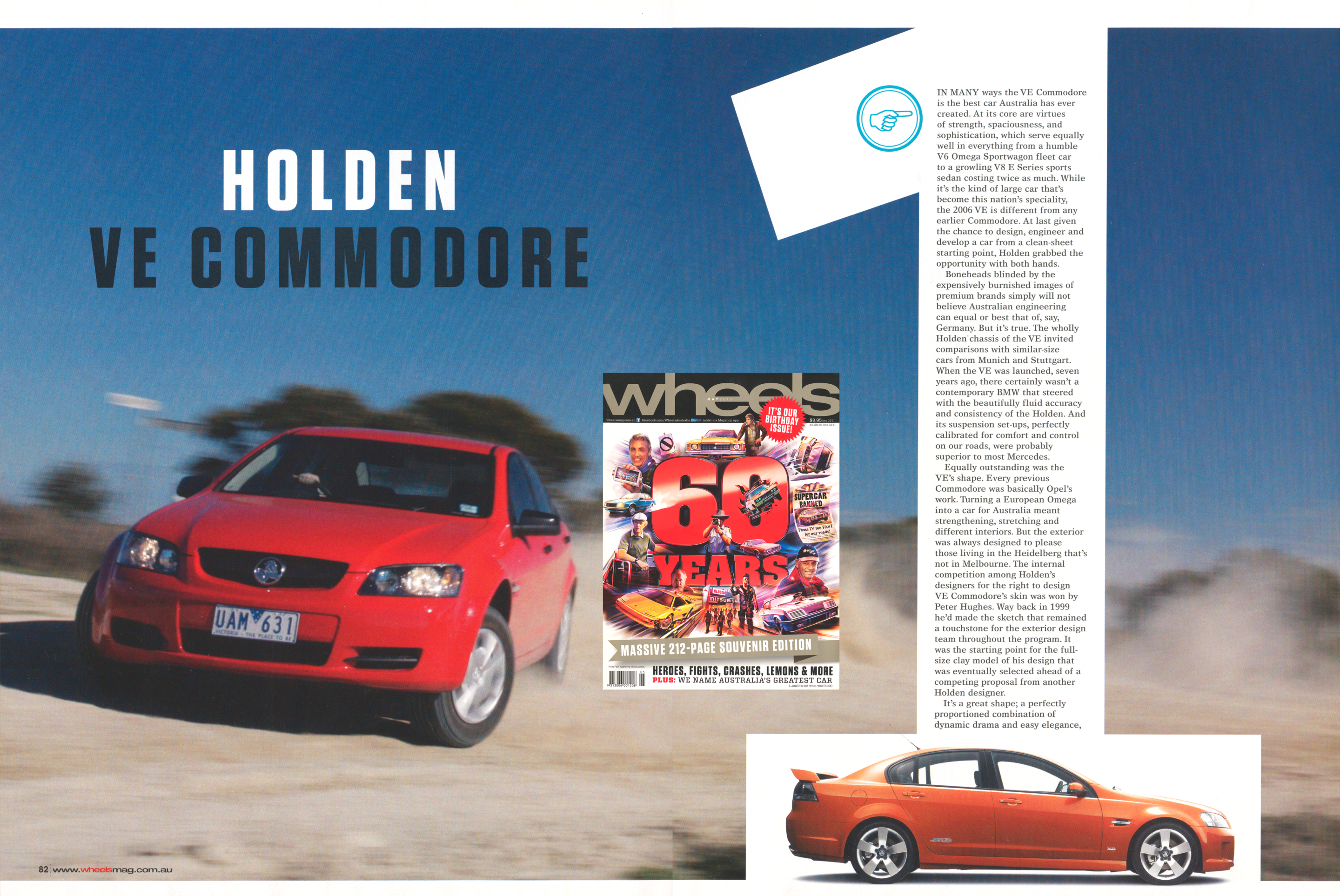
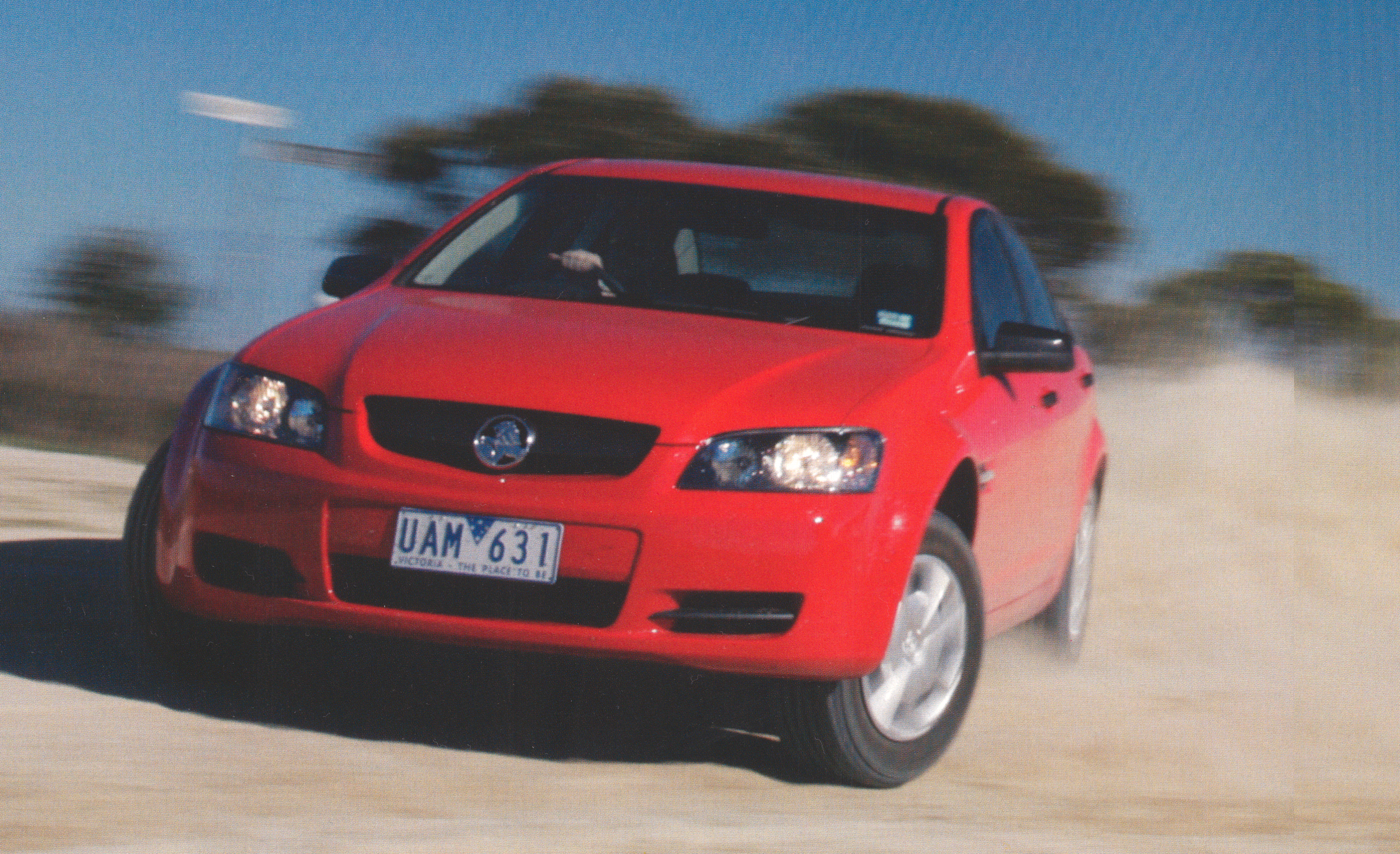
IN many ways the VE Commodore is the best car Australia has ever created. At its core are virtues of strength, spaciousness, and sophistication, which serve equally well in everything from a humble V6 Omega Sportwagon fleet car to a growling V8 E Series sports sedan costing twice as much. While it’s the kind of large car that’s become this nation’s speciality, the 2006 VE is different from any earlier Commodore. At last given the chance to design, engineer and develop a car from a clean-sheet starting point, Holden grabbed the opportunity with both hands.
Boneheads blinded by the expensively burnished images of premium brands simply will not believe Australian engineering can equal or best that of, say, Germany. But it’s true. The wholly Holden chassis of the VE invited comparisons with similar-size cars from Munich and Stuttgart. When the VE was launched, seven years ago, there certainly wasn’t a contemporary BMW that steered with the beautifully fluid accuracy and consistency of the Holden. And its suspension set-ups, perfectly calibrated for comfort and control on our roads, were probably superior to most Mercedes.
Equally outstanding was the VE’s shape. Every previous Commodore was basically Opel’s work. Turning a European Omega into a car for Australia meant strengthening, stretching and different interiors. But the exterior was always designed to please those living in the Heidelberg that’s not in Melbourne. The internal competition among Holden’s designers for the right to design VE Commodore’s skin was won by Peter Hughes. Way back in 1999 he’d made the sketch that remained a touchstone for the exterior design team throughout the program. It was the starting point for the fullsize clay model of his design that was eventually selected ahead of a competing proposal from another Holden designer.
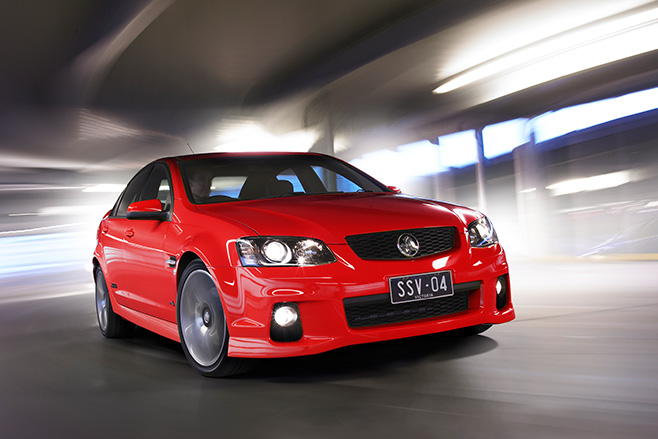
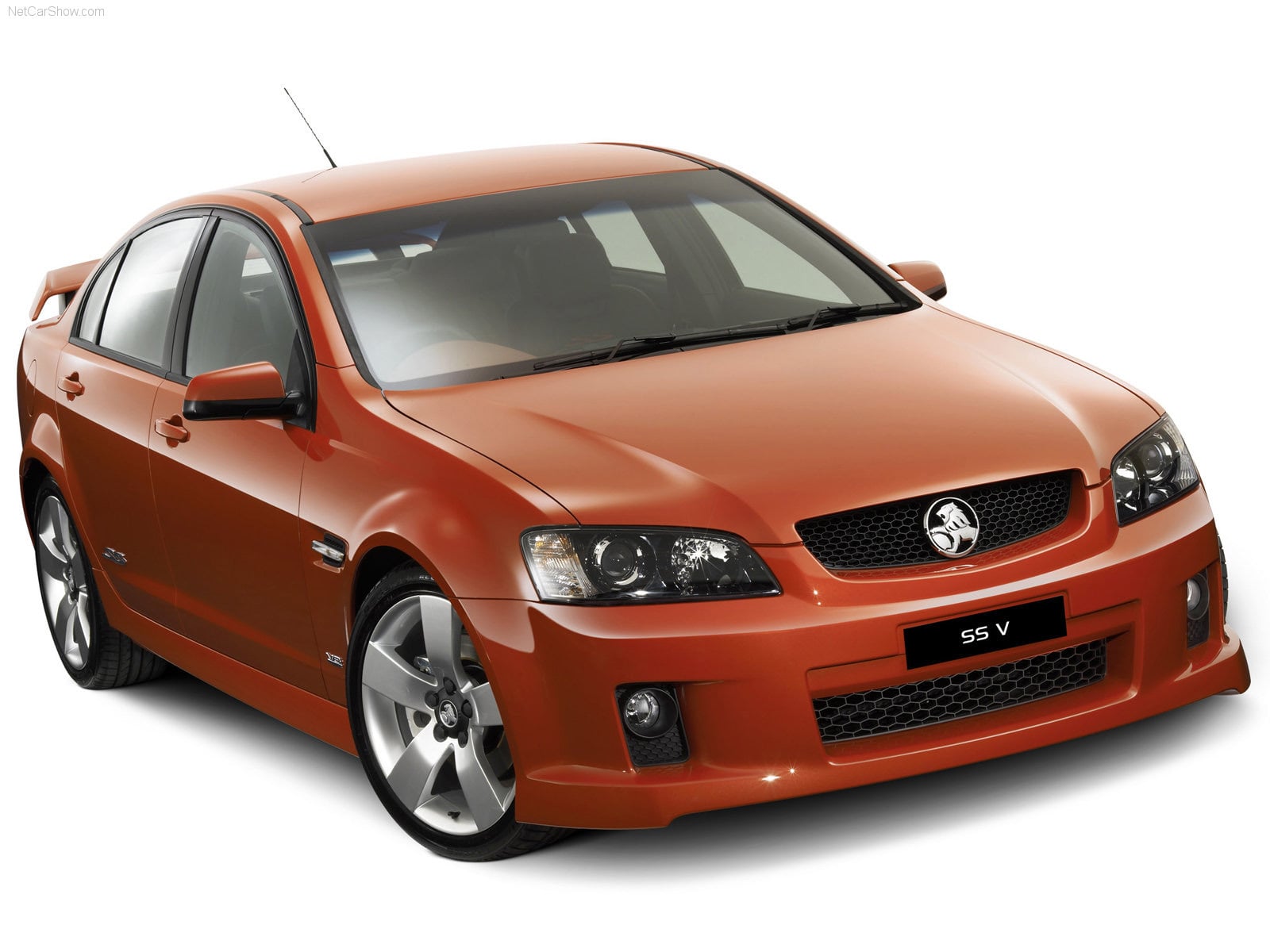
It’s a great shape; a perfectly proportioned combination of dynamic drama and easy elegance, precisely and simply detailed. It was admired from afar by eminent designers. Jaguar’s Ian Callum was one of them. He found out who had designed the VE’s exterior from Hughes’ former boss, Mike Simcoe, who was working for General Motors in Detroit by the time the car launched. The generous Scot made a point of sending Hughes an email saying how much he admired the VE’s exterior.
7
But good looks and fine dynamics aren’t the only reasons the Holden heads our 10 Greatest. It’s no accident that the first three cars on our list are products of the naughties. This was an era when Australia’s car makers were facing, for the first time ever, an operating environment not rigged heavily in their favour.
The Australian car industry spent its youth wearing a protective tariff burka. At the time of the VE, it was down to a G-string and tassels pasted to its nipples. Back in 1971, for example, the year of the HQ launch, non-British built imports had 45 percent added to their prices between dock and driveway. By the end of the decade the rate had risen to 57.5 percent, regardless of country of origin. But from the late 1980s the Button Plan of Bob Hawke’s Labor Government began to strip away 2.5 percent a year, gradually exposing both the Australian car market and car makers to the lustful gaze of overseas competitors. By the time the VE was ready for market in 2006, tariff protection was down to 10 percent. Today the twirling tassels are gone, and it’s just five percent.
There were additional challenges the VE faced. The market share of large cars was in obvious decline, a consequence not only of the creeping withdrawal of tariff protection but also changes in customer preference and Australia’s shift to a more city-centric demographic. Hoden needed to look beyond Australia’s borders if it was to have a future.
It’s fortunate that the company was being led by Peter Hanenberger as the VE program took shape. The charismatic, crafty and persuasive German was a General Motors lifer who knew the outfit inside out. He also knew Australia well, having spent time here in the late 1970s as a chassis engineer, tasked with making the HZ Holden handle with his ‘Radial Tuned Suspension’.
Hanenberger engineered, with the support of GM global product boss Bob Lutz, an international role for the Australian-developed architecture. The platform, codenamed Zeta, would be an export-ready design, and capable of adaptation for other models made in other countries – if it hit targets for cost, performance, safety and production flexibility. This was a new kind of pressure for Holden.
5
Things didn’t go quite as well as planned. Exports to the US of the Pontiac GB version of the VE began in 2008, but lasted little more than a year as GM’s mounting troubles led to the American brand being axed. But since 2009 the current Chevrolet Camaro has been built in Canada on a shortened version of Zeta. Now exports to the US of the VE’s direct descendant, the Zeta-based VF, are under way once more. This time badged as a Chevrolet, as it always should have been.
The VE, of course, has its flaws. Heating and air-con system problems afflicted early production. The base V6 engines, both 3.6-litre at launch and the 3.0-litre direct-injection introduced for the 2010 model year, aren’t as smooth or satisfying as they should be. And a four-speed auto was out of place in 2006, even in fleet models like Omega and Berlina.
Even with its acknowledged imperfections, the VE Commodore still deserves its place at the top of our list. For its design, engineering, value and versatility, but also because it’s a greater and much more significant achievement than any other car Australia has ever made. Holden began in 1948 with a basic design imported from America. With VE, the voyage was in the opposite direction. More than just a good honest car, this was the Commodore that proved, beyond doubt, that Australia’s got talent.
Follow WhichCar/Wheels on Google
Click the button below to make WhichCar by Wheels a preferred source for your news.

We recommend
-
 Classic Wheels
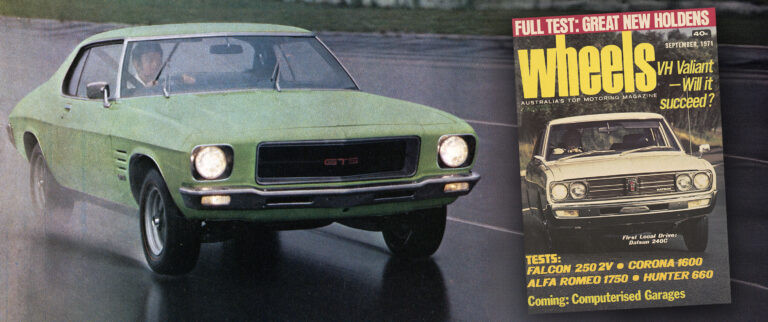
From the Wheels archive: The best Holden ever!
Wheels gushed over the all-new HQ Holden in September 1971, declaring it 'far and away the best Holden ever'.
-
 Classic Wheels
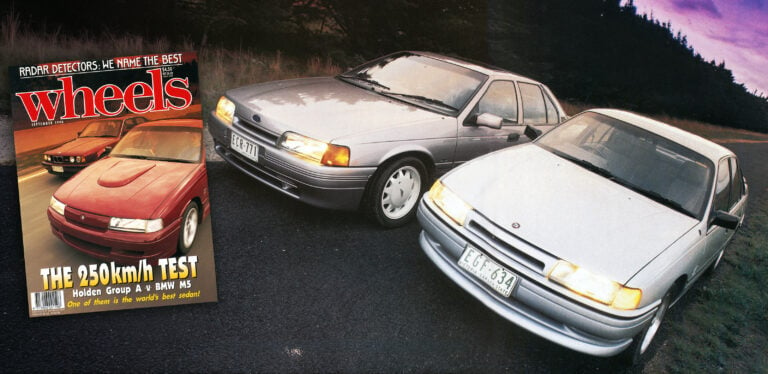
From the Wheels Archive: Peter Brock’s hi-po Ford Falcon vs HSV’s ClubSport. Which was better?
When Peter Brock turned his attention to building hot Falcons it seemed only natural we'd pit it against HSV's latest, but which came out on top?
