Classic Wheels

Gallery 1
First published in the September 1971 issue of Wheels magazine, Australia’s best car mag since 1953. Subscribe here and gain access to 12 issues for $109 plus online access to every Wheels issue since 1953.
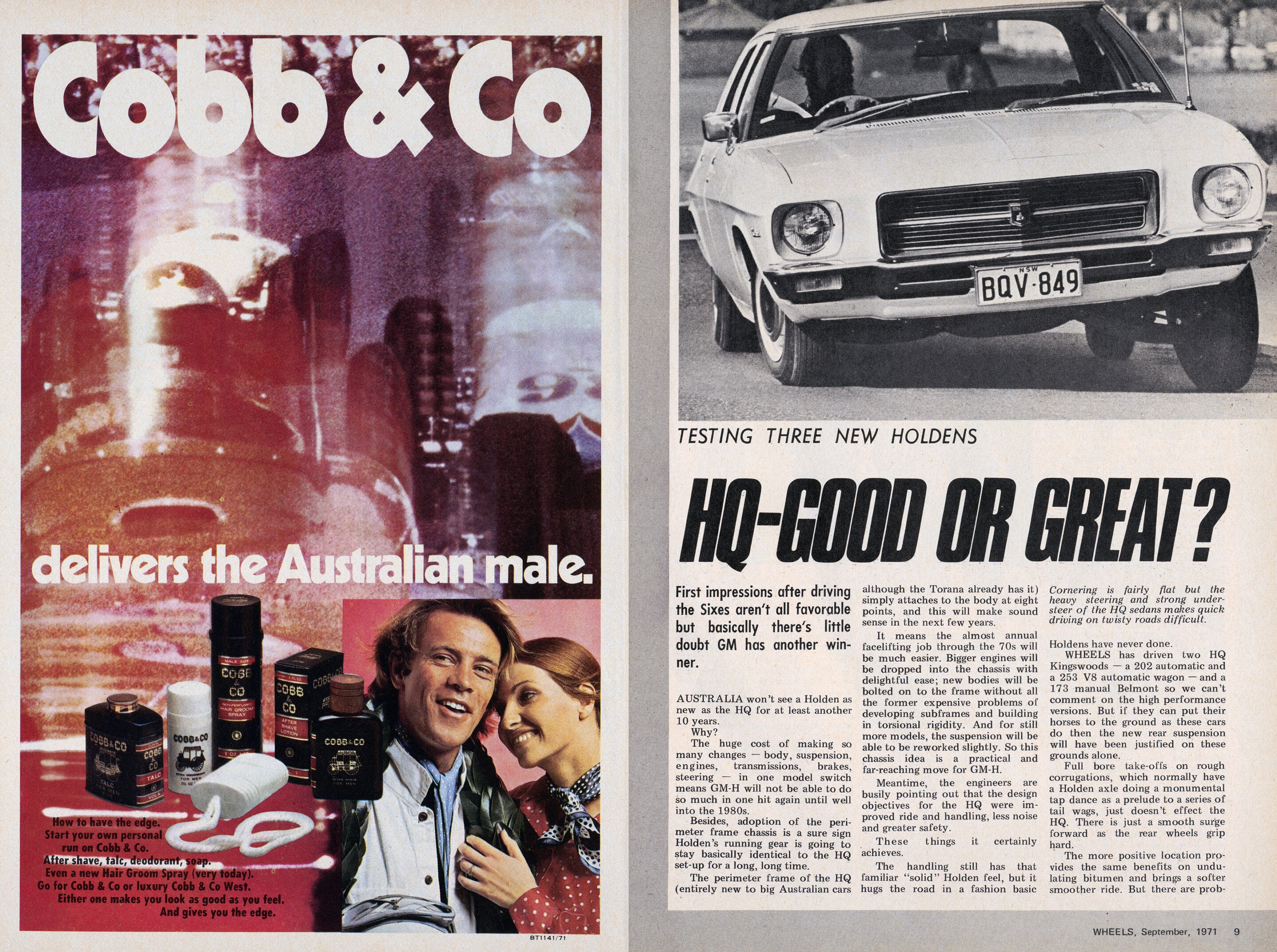
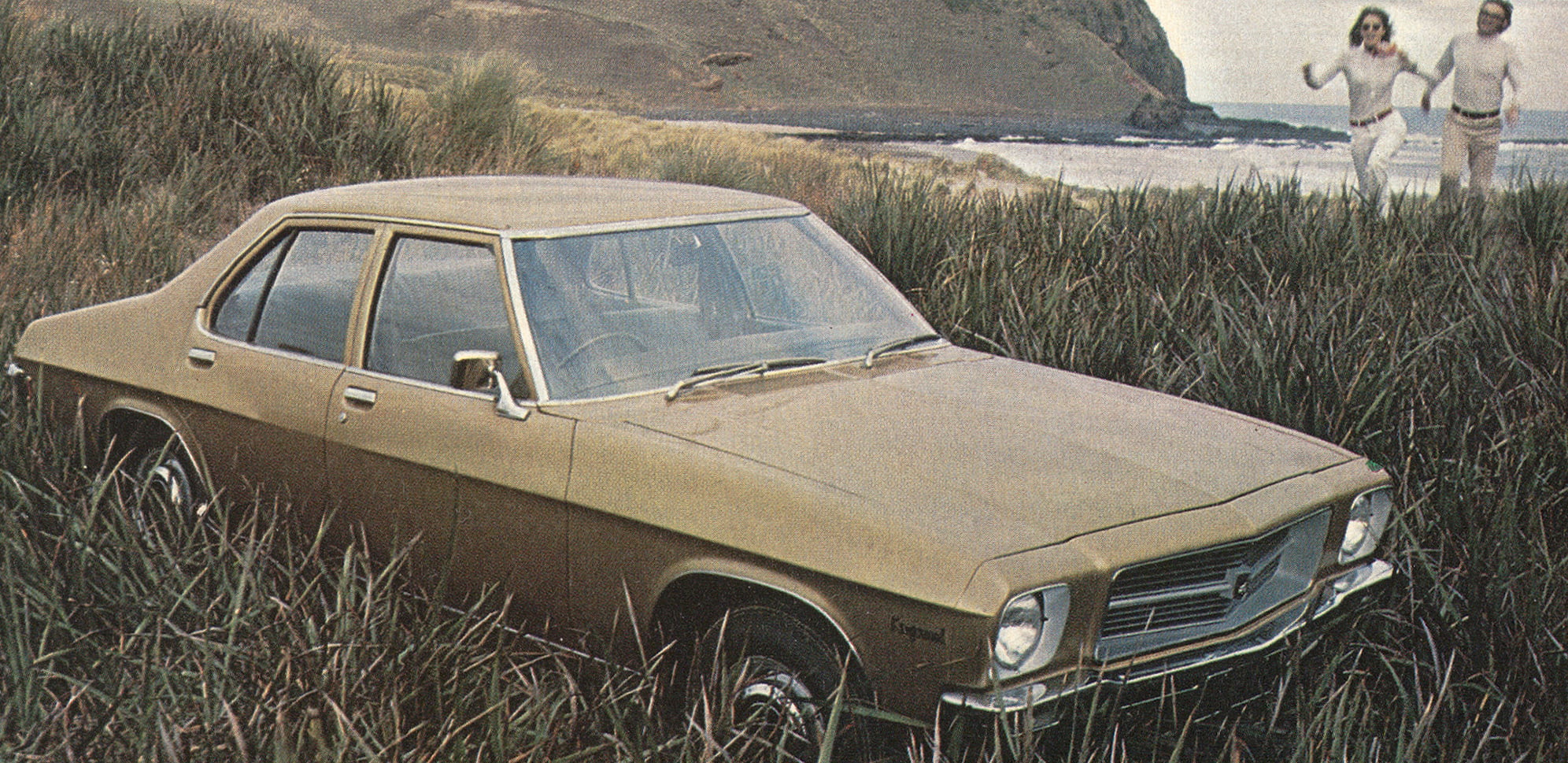
Australia won’t see a Holden as new as the HQ for at least another 10 years.
Why?
The huge cost of making so many changes – body, suspension, engines, transmissions, brakes, steering – in one model switch means GM-H will not be able to do so much in one hit again until well into the 1980s.
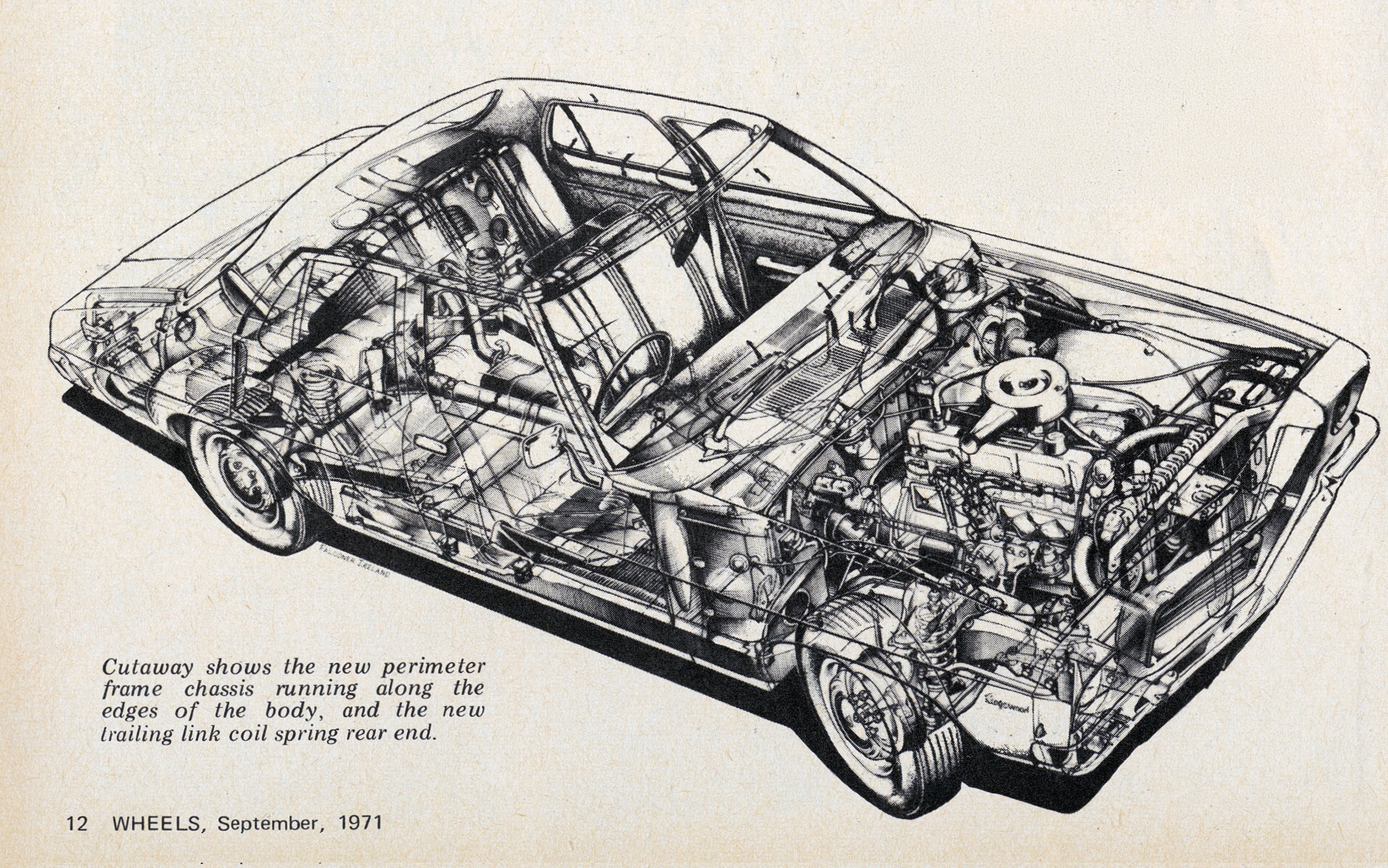
Besides, adoption of the perimeter frame chassis is a sure sign Holden’s running gear is going to stay basically identical to the HQ set-up for a long, long time.
1
The perimeter frame of the HQ (entirely new to big Australian cars although the Torana already has it) simply attaches to the body at eight points, and this will make sound sense in the next few years.
It means the almost annual facelifting job through the 70s will be much easier. Bigger engines will be dropped into the chassis with delightful ease; new bodies will be bolted on to the frame without all the former expensive problems of developing subframes and building in torsional rigidity. And for still more models, the suspension will be able to be reworked slightly. So this chassis idea is a practical and far-reaching move for GM-H.
Meantime, the engineers are busily pointing out that the design objectives for the HQ were improved ride and handling, less noise and greater safety.
These things it certainly achieves.
1
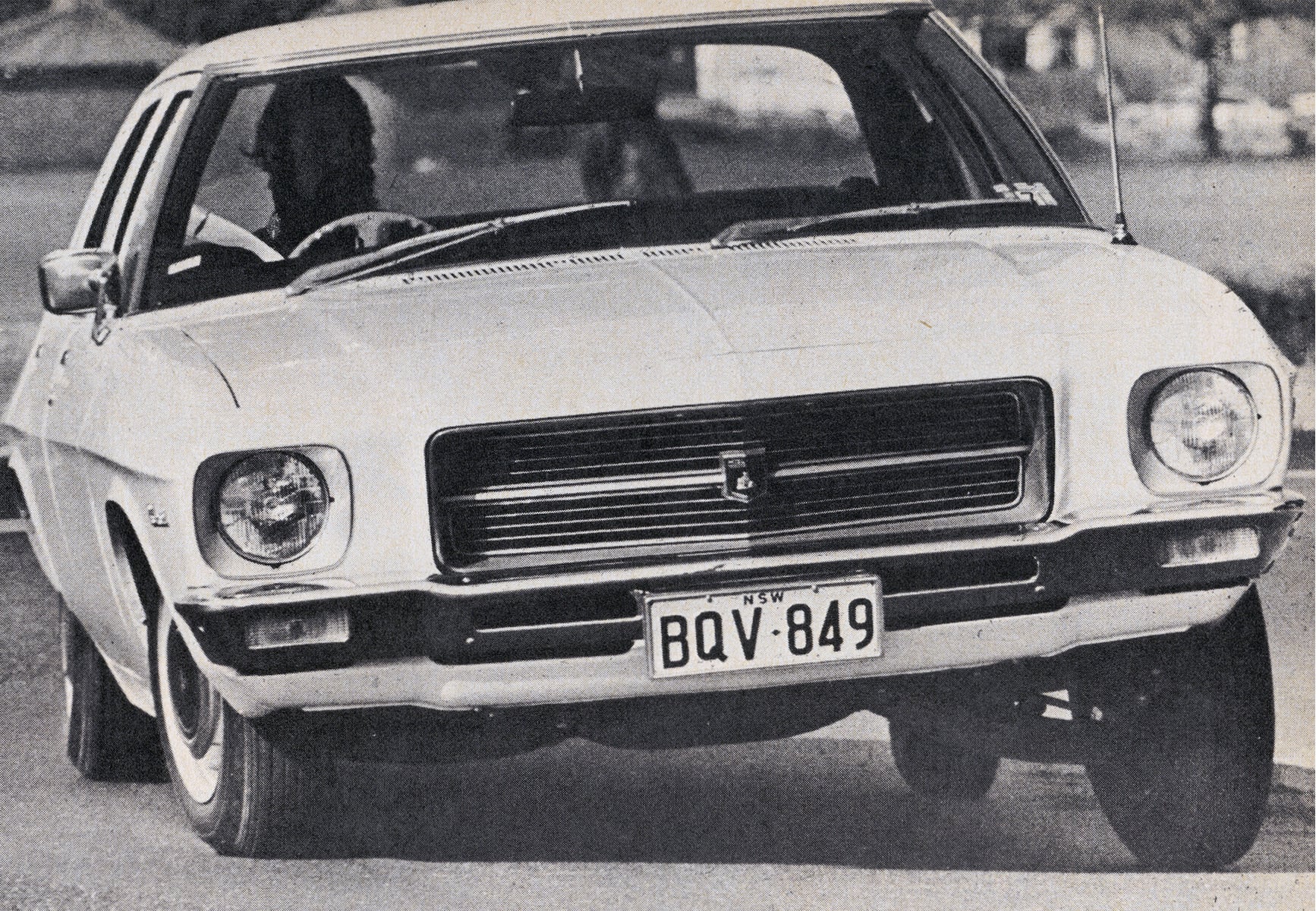
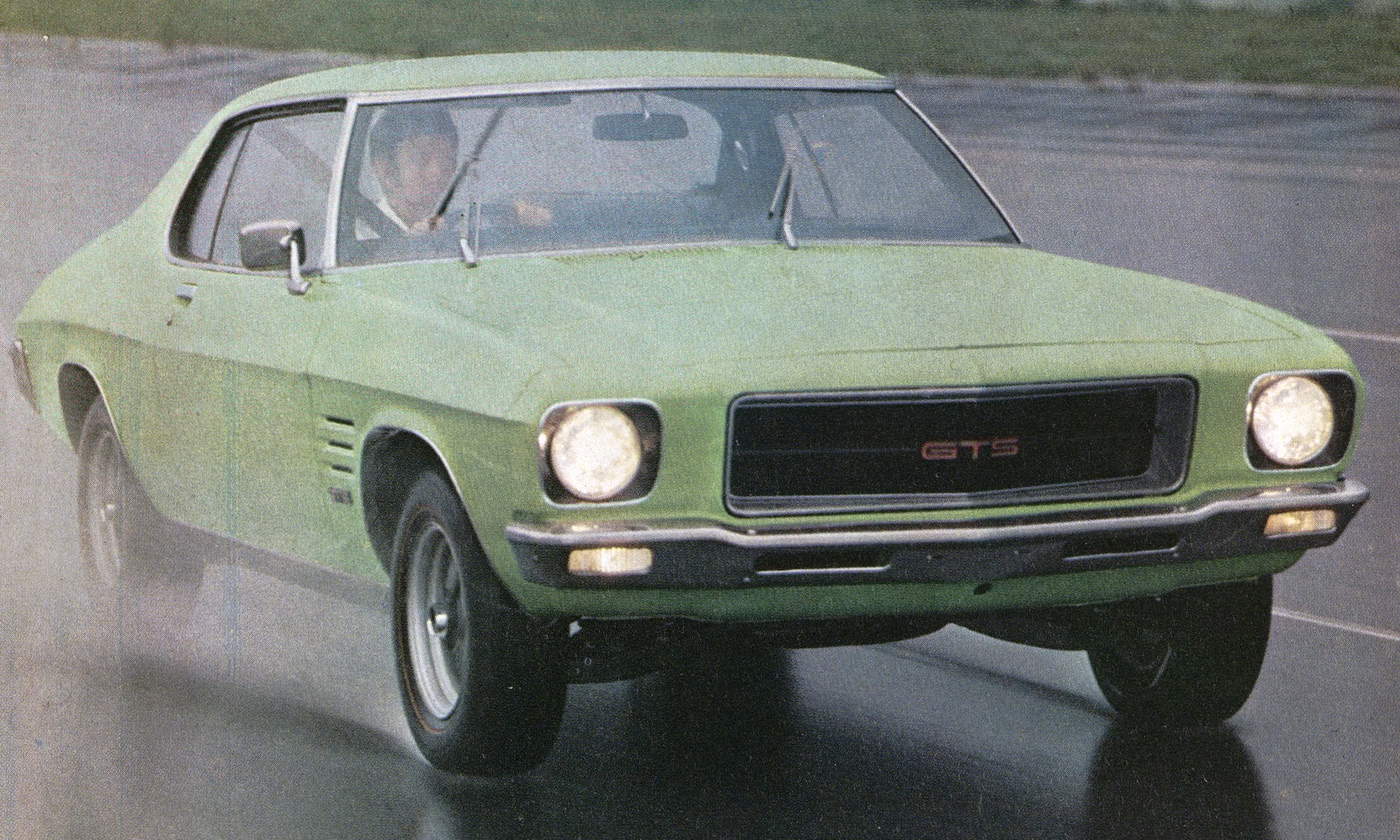
The handling still has that familiar ‘solid’ Holden feel, but it hugs the road in a fashion basic Holdens have never done.
Wheels has driven two HQ Kingswoods – a 202 automatic and a 253 V8 automatic wagon – and a 173 manual Belmont so we can’t comment on the high performance versions. But if they can put their horses to the ground as these cars do then the new rear suspension will have been justified on these grounds alone.
Full bore take-offs on rough corrugations, which normally have a Holden axle doing a monumental tap dance as a prelude to a series of tail wags, just doesn’t affect the HQ. There is just a smooth surge forward as the rear wheels grip hard.
The more positive location provides the same benefits on undulating bitumen and brings a softer smoother ride. But there are problems with the steering. At the straight ahead it feels responsive, light and accurate but turning the wheel brings a heaviness which we have never experienced from a Holden before. Moving the steering box and linkage forward of the front cross member (instead of behind as on previous models) together with the new suspensions makes the steering effort required to get the HQ around any sort of corner quickly outweigh the advances in improved highway stability. And the turning circle at 39 ft for the 111-inch wheelbase cars and 40 ft for the 114 models (wagon and Statesman) is in the really big car class.
1
Compounding the problem is a poor driving position in the bench seat model. This has always been a point of contention with Holdens and the HQ seems little better than we remember the HG. Certainly, if any of the Wheels staff intended buying a new Holden, the reclining bucket seats would be a prerequisite.
The bench seat places even average sized drivers too close to the wheel so that it is all but impossible to twirl it as required by the low-geared steering. Twirling is hardly the correct word either – the steering is far too heavy for that. And because the pedals are so far away shorter drivers have to bring the seat right up which makes the wheel even closer.
Not only does the bench seat force an uncomfortable driving position on the driver but it is mounted too low. There is insufficient support under the driver’s thighs, and the hard adding at the base of the squab and at the edges of the seat pushes the driver towards the centre of the car and away from a spot directly behind the wheels.
Fitting the handbrake between the driver’s seat and the door also seems to have increased the gap between the seat and the door on either side of the car.
1
Let’s just say the Holden with bench seats is undesirable to anyone interested in being comfortable behind the wheel and that, to us, detracts from the car’s obvious safety angles.
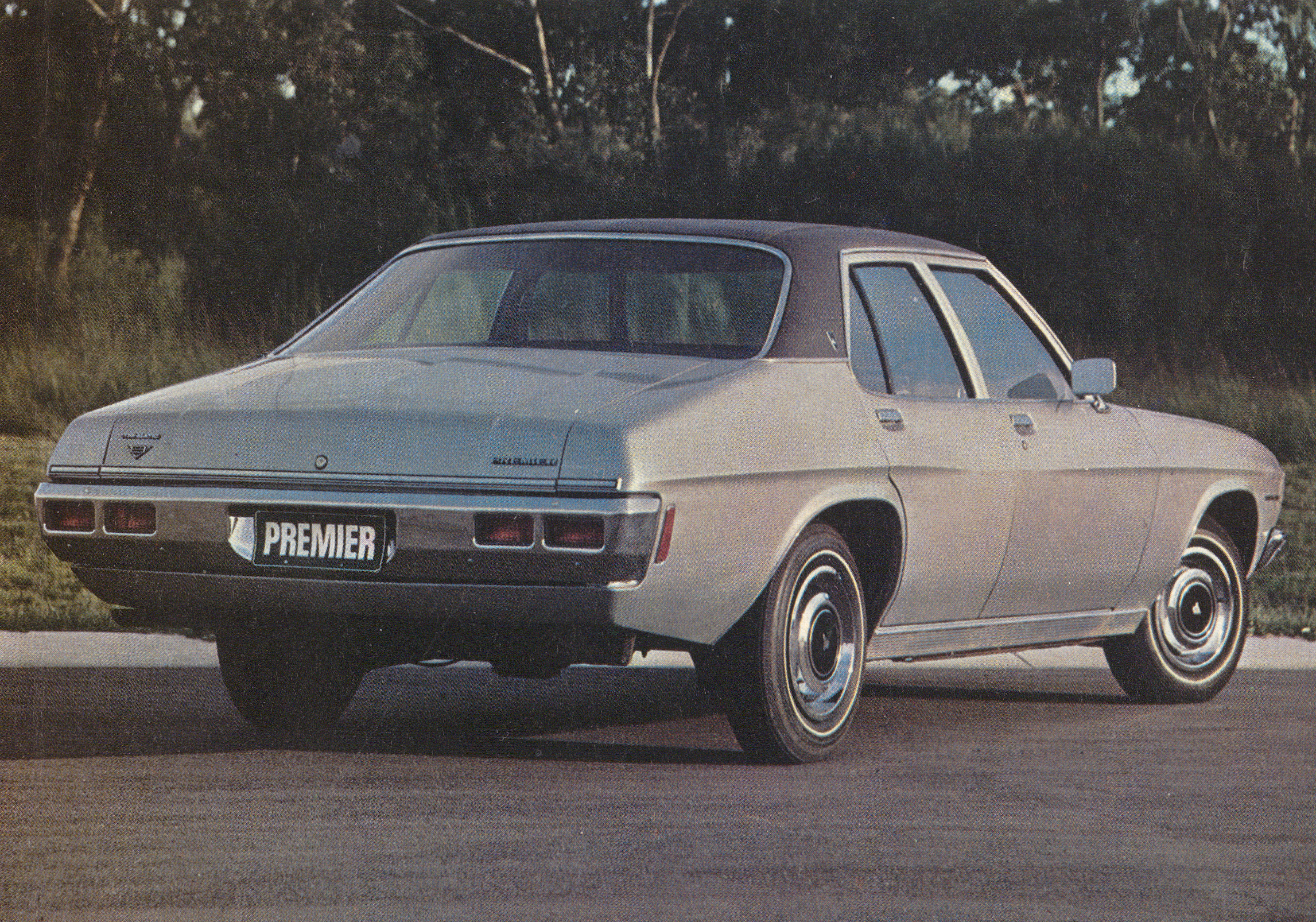
The best of these is the marvellous visibility. The huge windscreen, stunningly thin front pillars (made possible because most of the body stresses previously spread around the car are now taken by the perimeter frame) and low waistline give the car the delightful airy feel which is missing from the VH Valiant.
The rear window too is far bigger and although the short tail slopes away too steeply for it to be visible, parking is far easier than with the previous Holden range.
Good visibility is an essential part of car safety and GM-H has made the most of the 230 sq inch increase in glass area (165 sq in. for Coupes) by fitting the best rear vision mirrors we have seen. Both the internal mirror (night and day even on Belmont) and the external mirror are superbly located and large enough to take advantage of the glass area.
1
The drum brakes too are much superior to the HGs although the feel and fade resistant qualities of the big, new vented-discs would be desirable even with the smallest six.
A crash stop locks all four wheels but the car stops in a perfectly straight line. There is none of the first one wheel and then another locking which was so common with HG.
However, the distance between the brake pedal and the accelerator is too great to allow heel/toe changes. This isn’t as important as previously for the handbrake is so much easier to use when making hill starts.
We like the short, precise, column gear change although one of our drivers thought the pull down from second to first (of course all the forward gears have synchromesh) places the lever too close to the steering wheel. During our time with the Belmont the end of the gear knob broke off in what was a perfectly normal change.
1
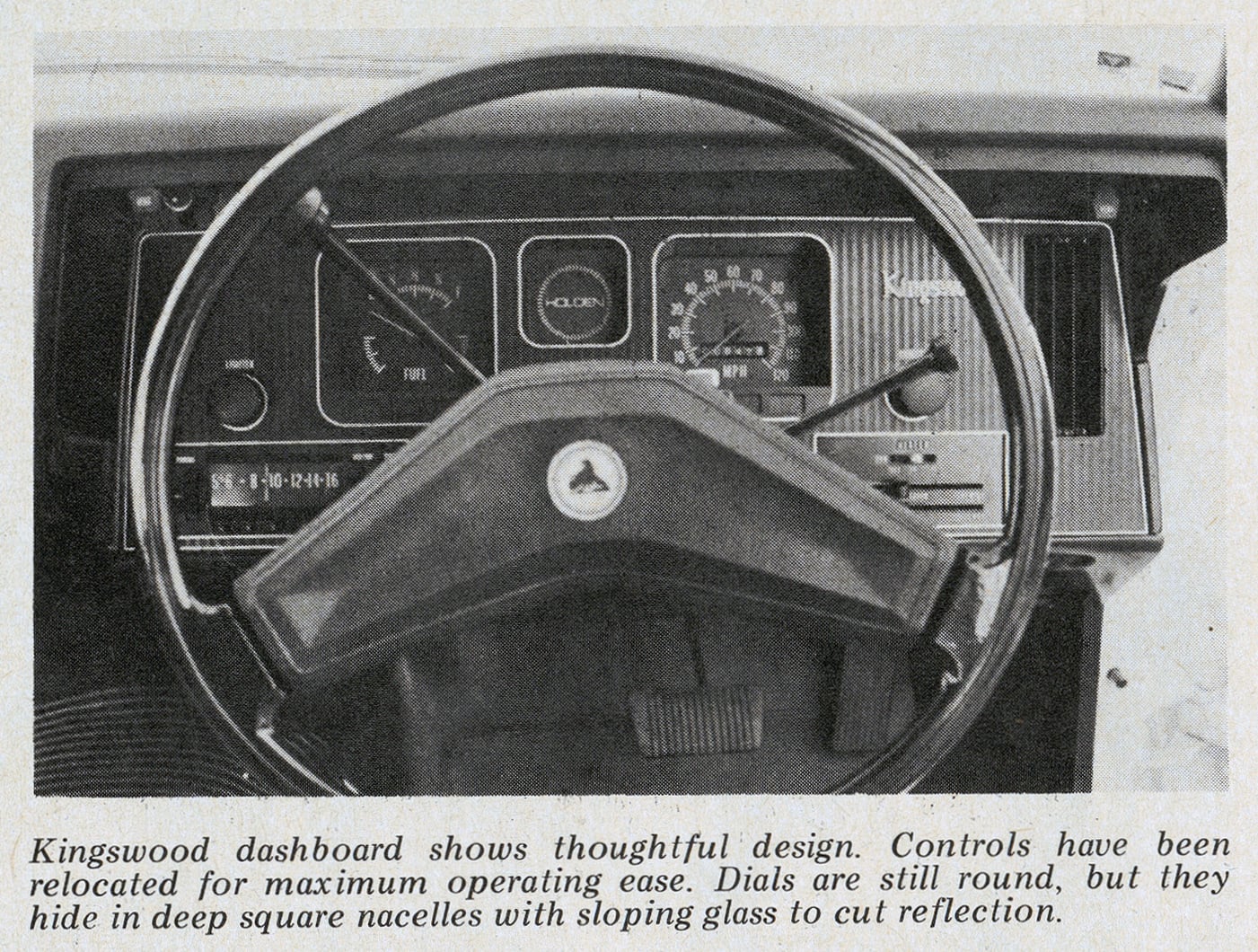
The instruments are easy to read, except at night, when the external lighting from above lacks the intensity of the HG ‘s behind the instruments lighting. It does however, floodlight the heater, windscreen wipers/washers and radio controls.
A cleverly designed flip-off lid in the lower edge of the dashboard to the right of the steering column holds the fuses and the ashtrays are now sensibly recessed into the doors. The glove box lid, like those on Falcon and Valiant is going to bruise plenty of knees. The box itself is large.
Best feature of the interior is the new flow-through ventilation. Air is ducted into the car through a grille in front of the windscreen via four inlet vents. Two of these are below the instruments, on either side, for lower ventilation and two at either end of the instrument panel for face-level ventilation. The driver’s vent is set vertically and the passenger’s horizontally.
Two instrument mounted knobs control the lower vents while the upper level is switched on by swivelling the vanes in the vents. Pressure relief valves are located on the rear door pillars for the four-door models and on the front door pillar for Coupes. These act so that the interior is slightly pressurised, preventing dust from entering. In practice, it seems to work as well as GM-H claims with a strong volume of air coming through at both levels. We noticed a couple of leaks from the lower vents but the heater soon combatted their effects on a cold night.
1
Coming straight after testing the Valiant 245, the six cylinder Holdens seemed slow off the mark. Even the 253 Automatic lacks the performance sting anticipated from a V8 although it was smooth and much quieter than the six which made its presence felt at high revs.
A rundown of the acceleration of the three cars makes an interesting comparison – the 173 manual is as fast as the 202 automatic and it would seem the 202 manual will be quicker than the 253 automatic. Although 253 sedans will naturally be quicker than the big wagon we drove. We clocked the following figures:
| 173 manual | 202 auto | 253 auto | |
|---|---|---|---|
| mph | sec. | sec. | sec. |
| 0-30 | 4.5 | 4.8 | 4.4 |
| 0-40 | 7.1 | 7.3 | 6.8 |
| 0-50 | 10.5 | 10.9 | 9.6 |
| 0-60 | 14.7 | 14.9 | 12.4 |
| 0-70 | 20.6 | 20.1 | 16.5 |
| 0-80 | 29.8 | 28.4 | 21.4 |
| 1/4-mile | 19.9 | 19.9 | 19.1 |
The 202 auto changed at 37 mph and 66 mph in drive range, the 253 V8 running 10 mph further in each gear. Pushed to within a handful of revs of valve bounce the 173 reached 34 mph in first and 65 mph in second with a top speed of just over 90 mph sighted on a short straight. The 202 and 253, as tested, should be capable of between 95 and 100 mph.
Detailed comments and an analysis of the new cars will have to wait until we have had a chance to test the range in depth. Until then it is fair to say we were slightly disappointed with the HO although the car’s obvious potential shows through.
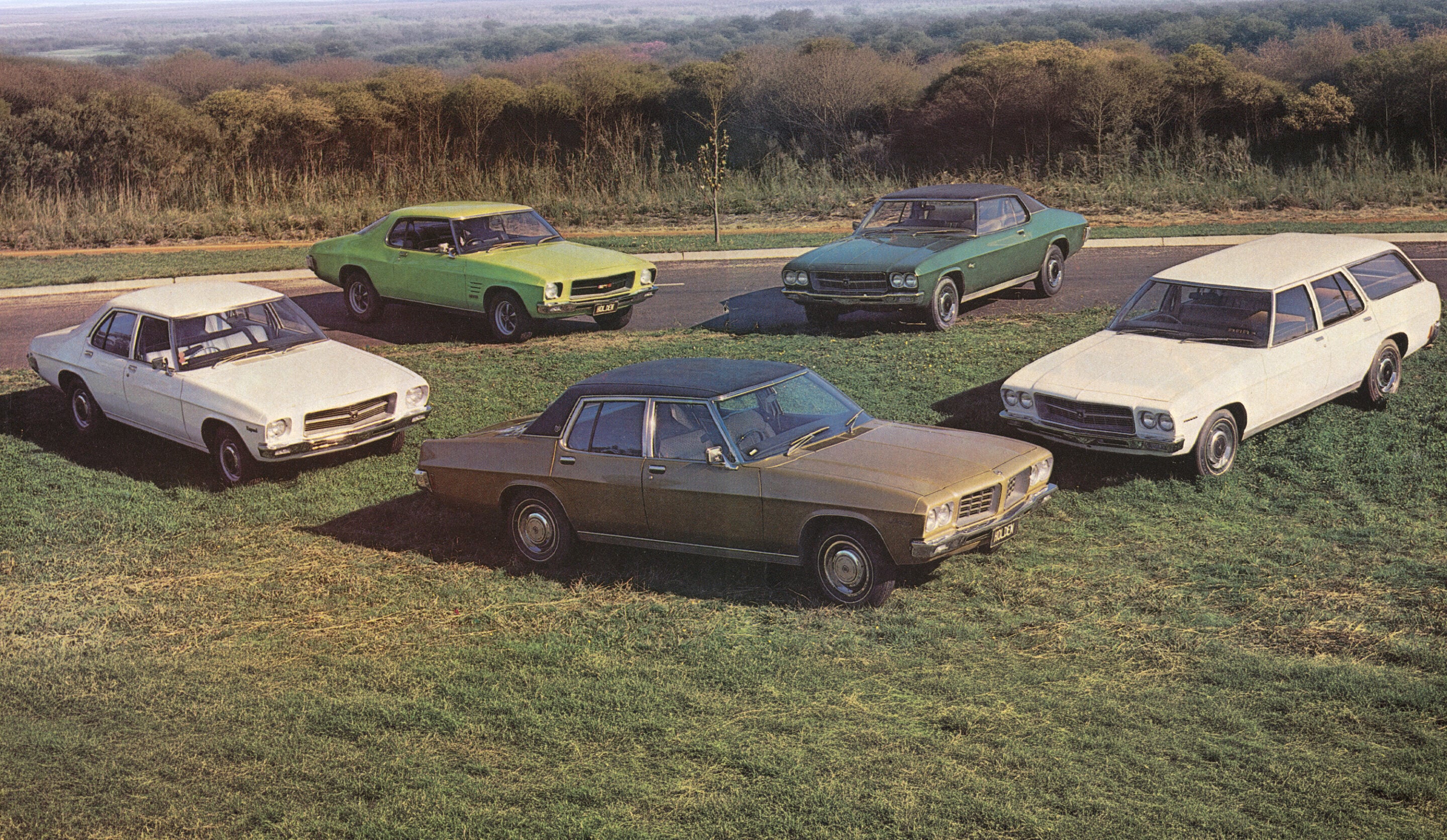
For all the changes the HQ is still very much like previous Holdens with a lot of Torana Six influence showing through, which might not be such a bad thing. But the engineering improvements haven’t resulted in the great leap forward we, perhaps idealistically, had hoped for. But there are still a great many good points to make this far and away the best Holden ever.
1
Follow WhichCar/Wheels on Google
Click the button below to make WhichCar by Wheels a preferred source for your news.

We recommend
-
 Classic Wheels
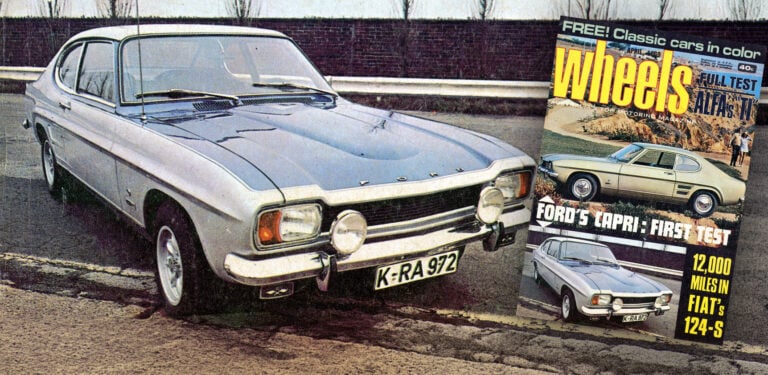
From the Wheels archive: Ford Capri – Mini Mustang or a Shetland Pony?
Wheels got an early taste of the European-designed and Built Ford Capri that would soon make its way to Australia.
-
 Classic Wheels
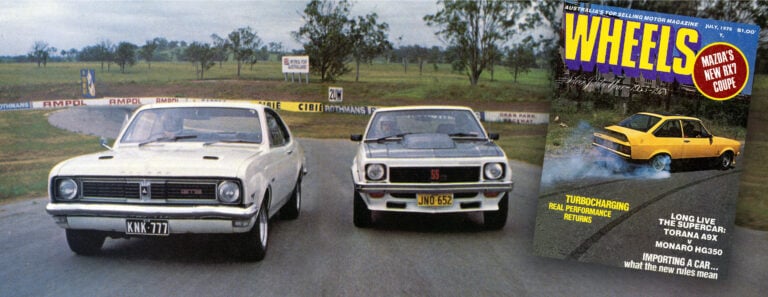
From the Wheels archive: Torana A9X vs Monaro 350 in a battle for the ages
Wheels' July 1978 issue saw Bill Tuckey pit the legendary Holden Monaro 350 GTS against The General's newest road warrior, the Torana A9X.
-
 Classic Wheels
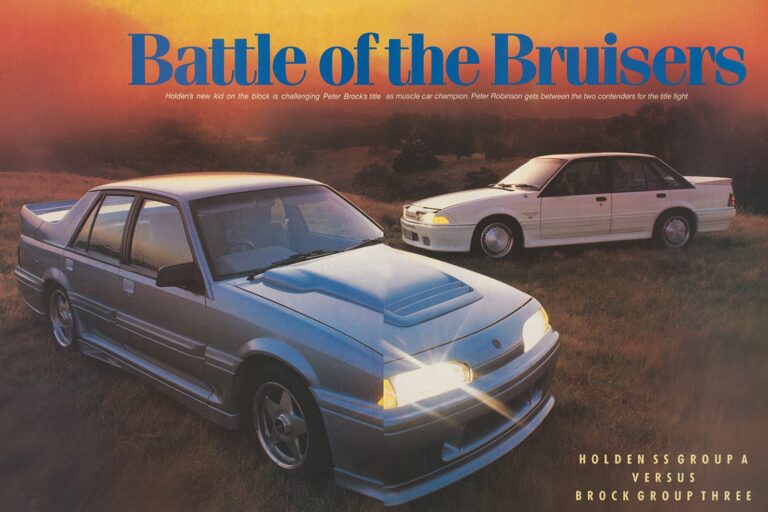
From the Wheels archives: Holden SS Group A vs HDT Brock Group Three comparison review
From the March 1998 issue of Wheels, Peter Robinson gets between the two contenders for the title fight as Holden’s new kid on the block challenged Peter Brock’s title as muscle car champion.