Classic Wheels
Gallery 1
First published in the November 1998 issue of Wheels magazine, Australia’s best car mag since 1953. Subscribe here and gain access to 12 issues for $109 plus online access to every Wheels issue since 1953.
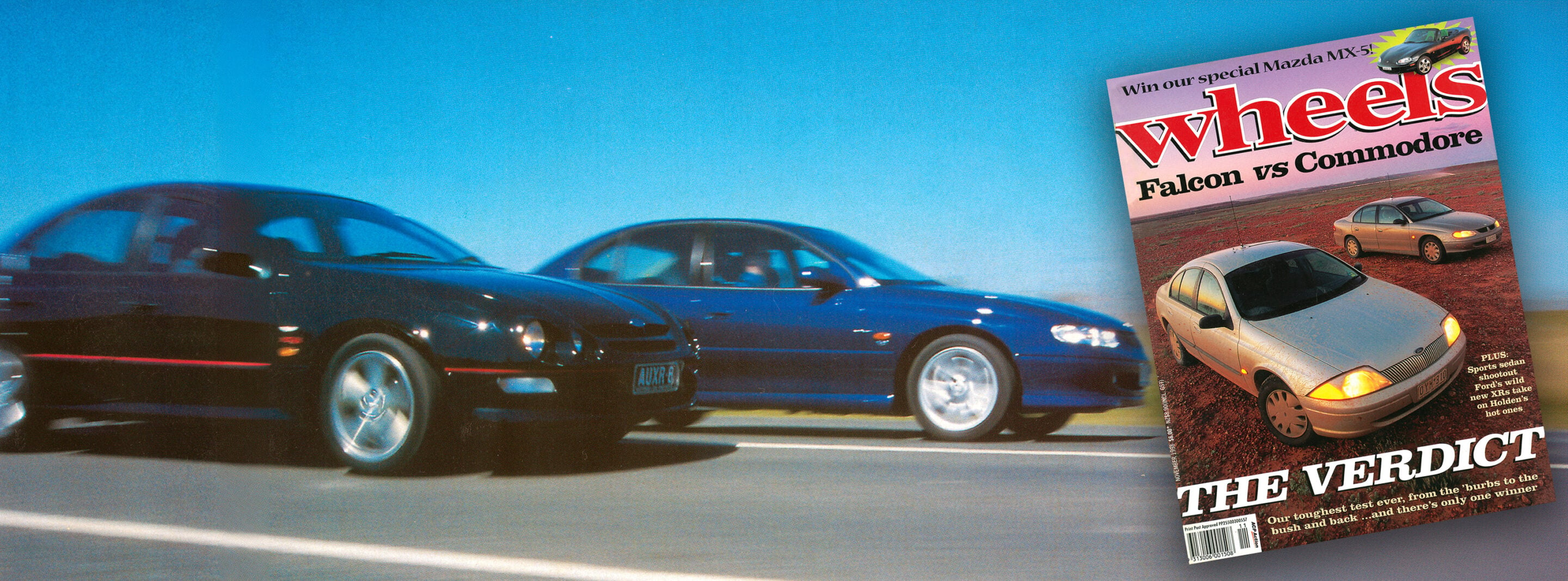
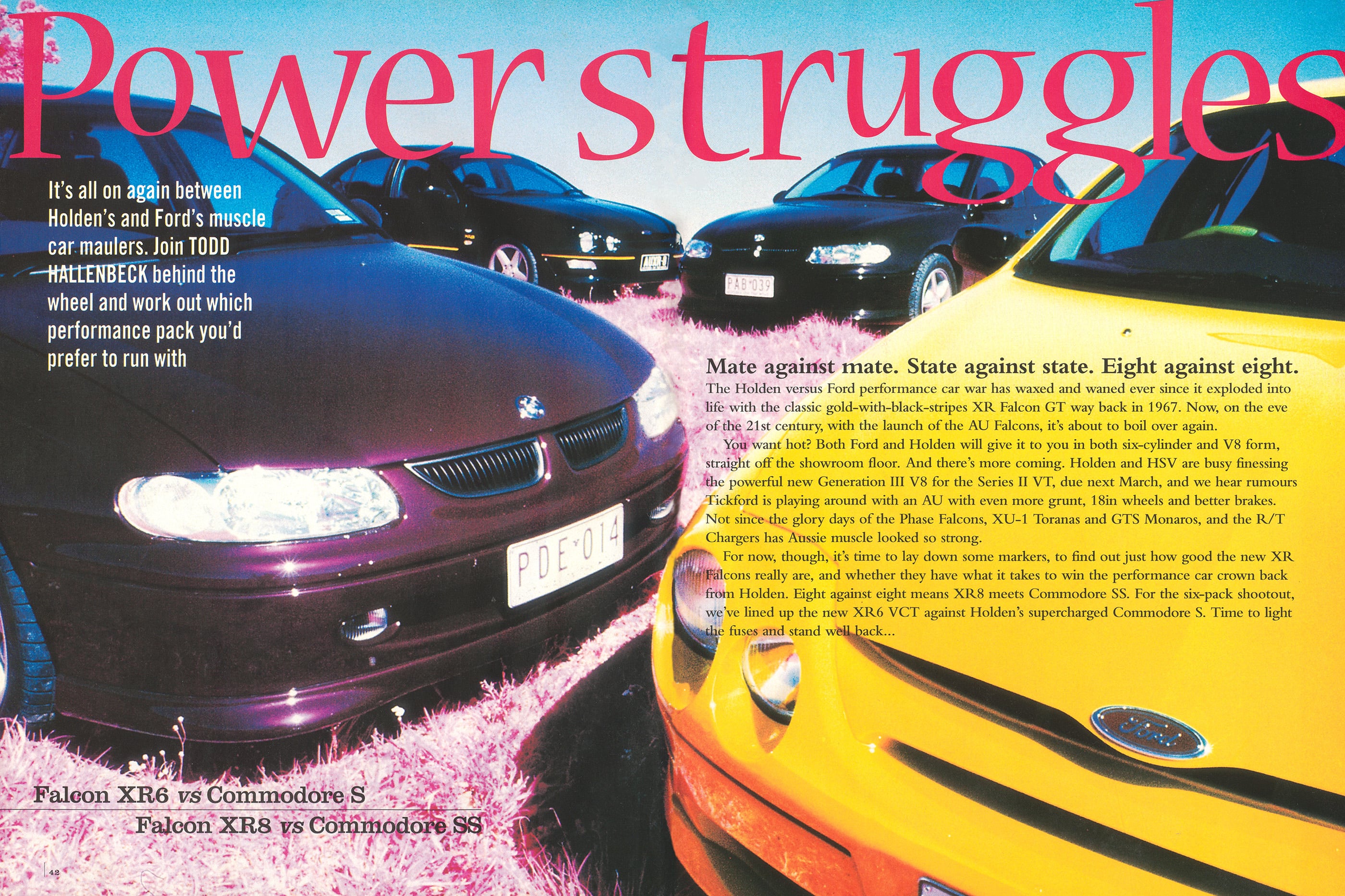
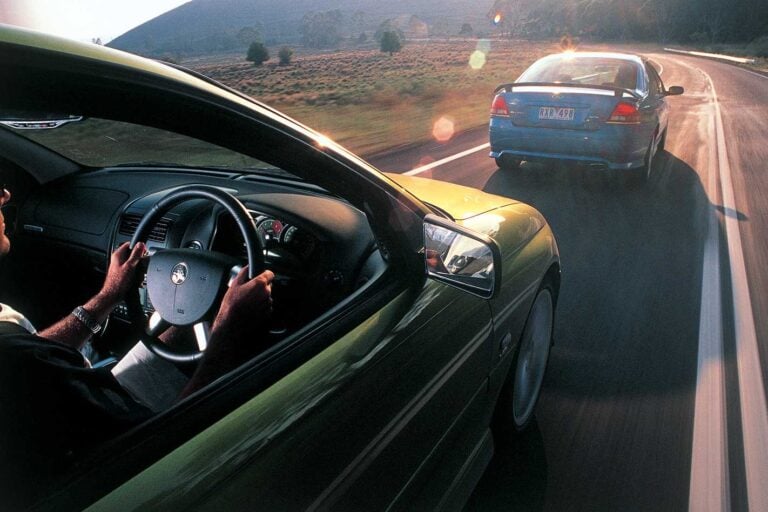
Mate against mate. State against state. Eight against eight.
The Holden versus Ford performance car war has waxed and waned ever since it exploded into life with the classic gold-with-black-stripes XR Falcon GT way back in 1967. Now, on the eve of the 21st century, with the launch of the AU Falcon, it’s about to boil over again.
You want hot? Both Ford and Holden will give it to you in both six-cylinder and V8 form, straight off the showroom floor. And there’s more coming. Holden and HSV are busy finessing the powerful new Generation III V8 for the Series II VT, due next March, and we hear rumours Tickford is playing around with an AU with even more grunt, 18in wheels and better brakes.
Not since the glory days of the Phase Falcons, XU-1 Toranas and GTS Monaros, and the R/T Chargers has Aussie muscle looked so strong.
1
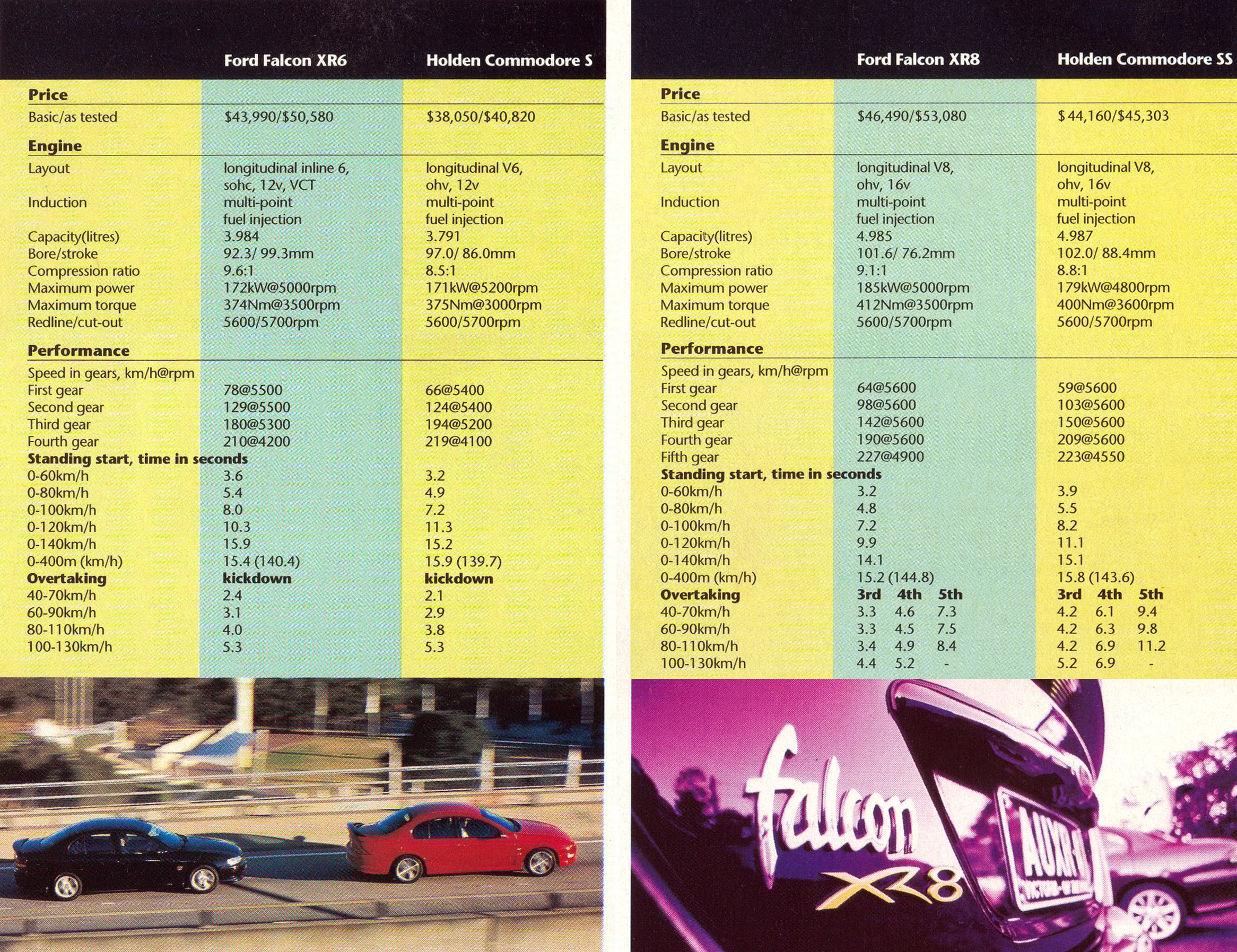
For now, though, it’s time to lay down some markers, to find out just how good the new XR Falcons really are, and whether they have what it takes to win the performance car crown back from Holden. Eight against eight means XR8 meets Commodore SS. For the six-pack shootout, we’ve lined up the new XR6 VCT against Holden’s supercharged Commodore S. Time to light the fuses and stand well back…
Holden Commodore S vs Ford Falcon XR6
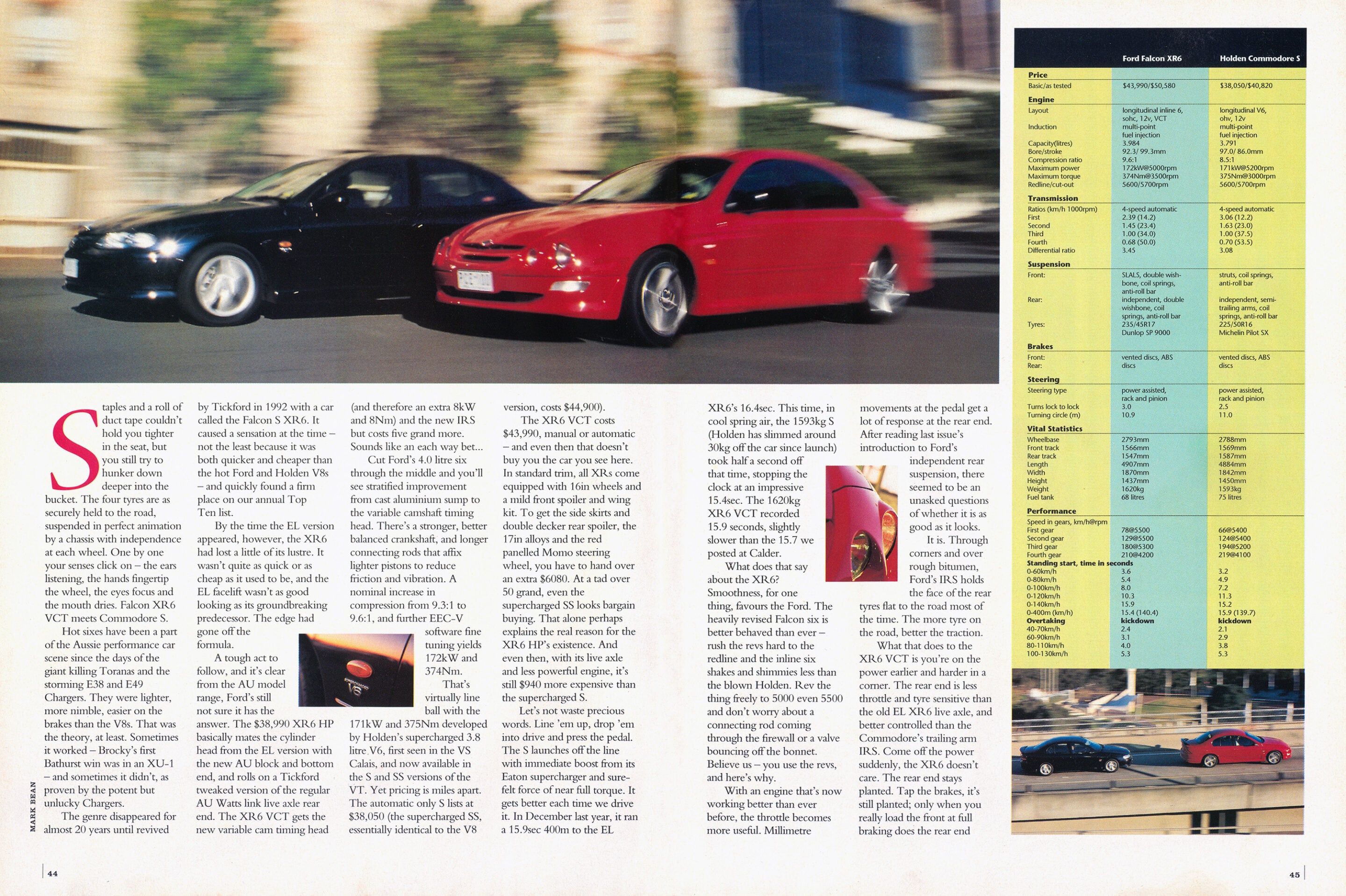
Staples and a roll of duct tape couldn’t hold you tighter in the seat, but you still try to hunker down deeper into the bucket. The four tyres are as securely held to the road, suspended in perfect animation by a chassis with independence at each wheel. One by one your senses click on – the ears listening, the hands fingertip the wheel, the eyes focus and the mouth dries. Falcon XR6 VCT meets Commodore S.
Hot sixes have been a part of the Aussie performance car scene since the days of the giant killing Toranas and the storming E38 and E49 Chargers. They were lighter, more nimble, easier on the brakes than the V8s. That was the theory, at least. Sometimes it worked – Brocky’s first Bathurst win was in an XU-1 – and sometimes it didn’t, as proven by the potent but unlucky Chargers.
The genre disappeared for almost 20 years until revived by Tickford in 1992 with a car called the Falcon S XR6. It caused a sensation at the time – not the least because it was both quicker and cheaper than the hot Ford and Holden V8s – and quickly found a firm place on our annual Top Ten list.
By the time the EL version appeared, however, the XR6 had lost a little of its lustre. It wasn’t quite as quick or as cheap as it used to be, and the EL facelift wasn’t as good looking as its groundbreaking predecessor. The edge had gone off the formula.
1
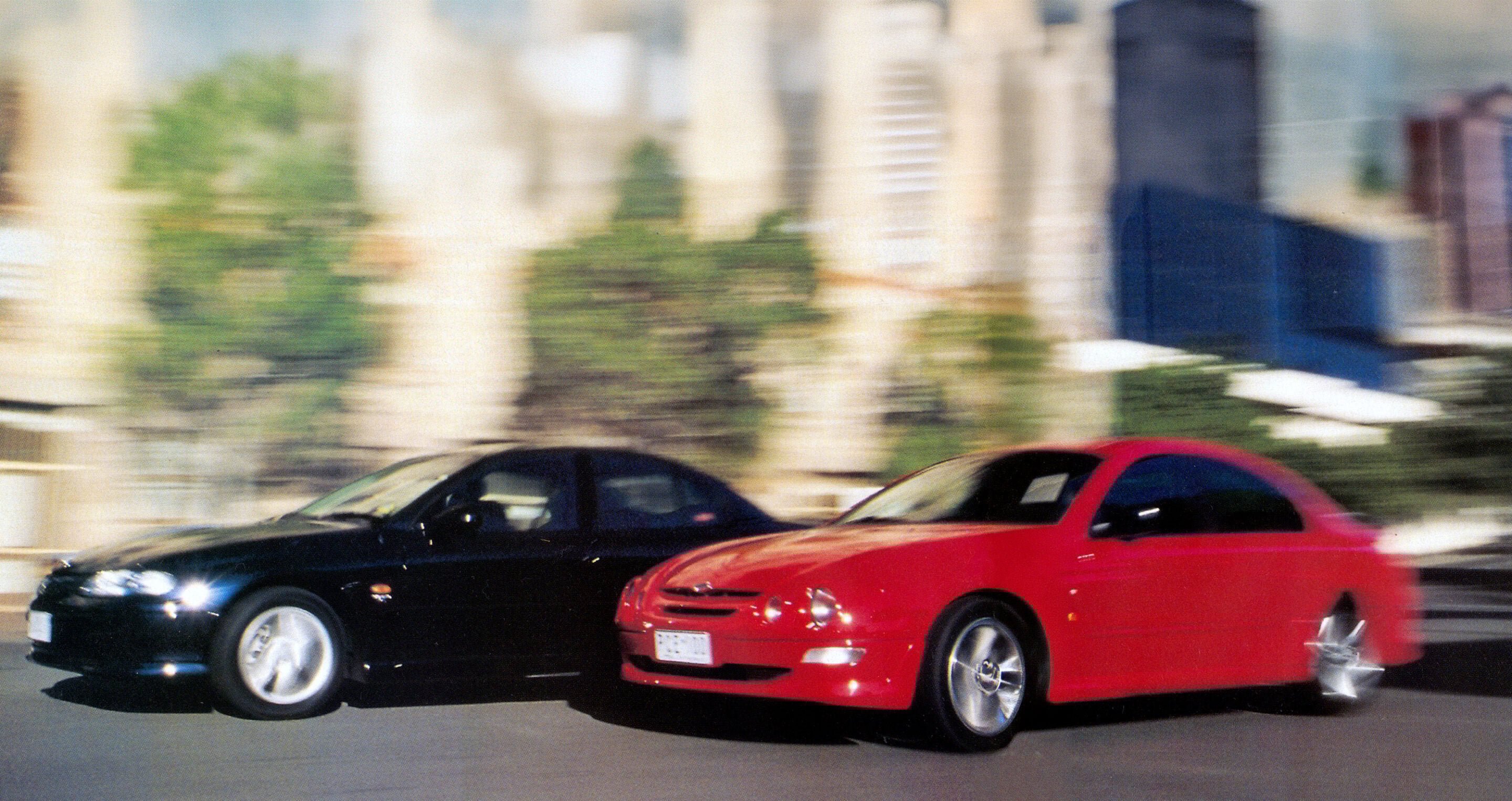
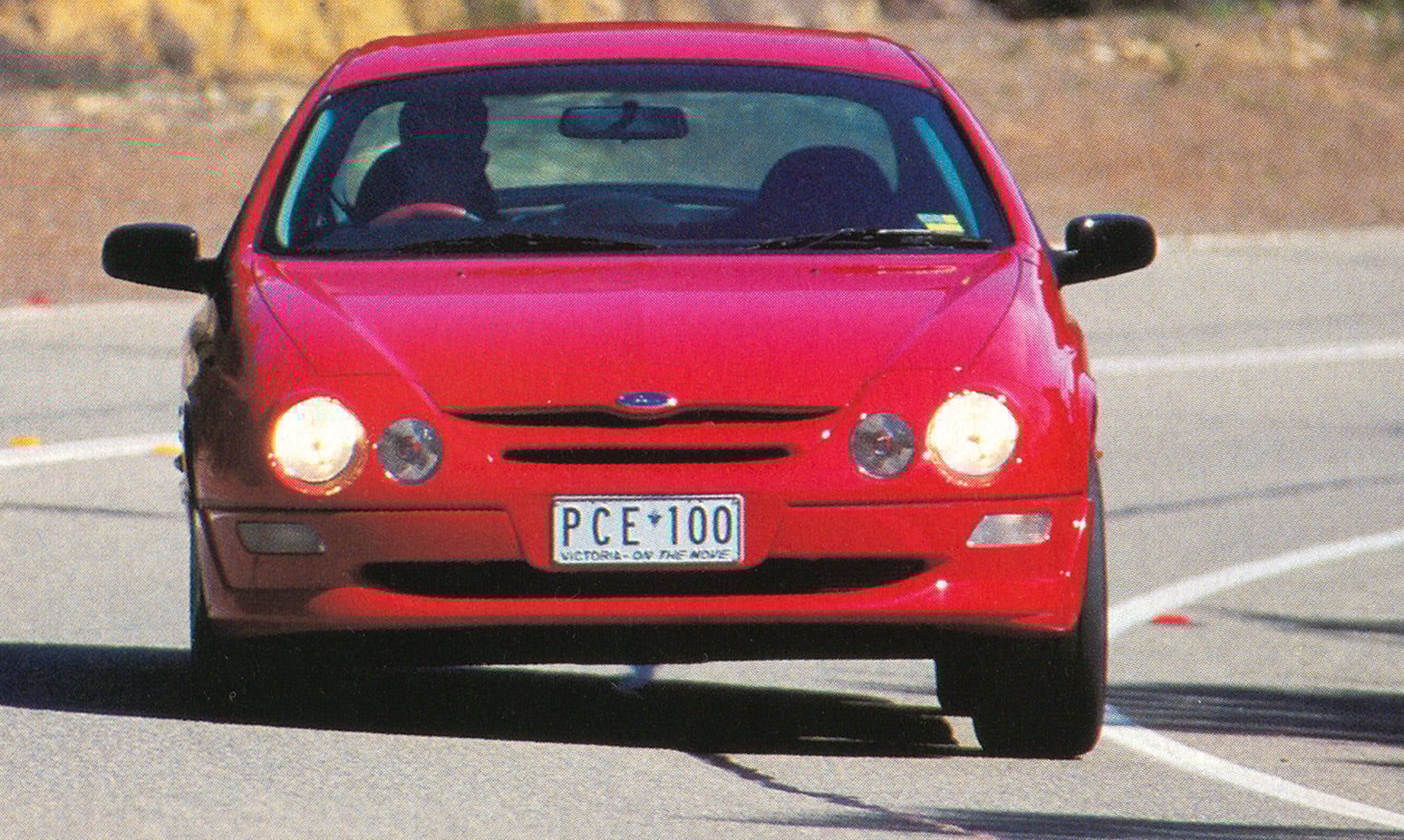
A tough act to follow, and it’s clear from the AU model range, Ford’s still not sure it has the answer. The $38,990 XR6 HP basically mates the cylinder head from the EL version with the new AU block and bottom end, and rolls on a Tickford tweaked version of the regular AU Watts link live axle rear end. The XR6 VCT gets the new variable cam timing head (and therefore an extra 8kW and 8Nm) and the new IRS but costs five grand more. Sounds like an each way bet…
Cut Ford’s 4.0-litre six through the middle and you’ll see stratified improvement from cast aluminium sump to the variable camshaft timing. There’s a stronger, better balanced crankshaft, and longer connecting rods that affix lighter pistons to reduce friction and vibration. A nominal increase in compression from 9.3:1 to 9.6:1, and further EEC-V software fine tuning yields 172kW and 374Nm.
That’s virtually line ball with the 171kW and 375Nm developed by Holden’s supercharged 3.8 litre V6, first seen in the VS Calais, and now available in the S and SS versions of the VT. Yet pricing is miles apart. The automatic only S lists at $38,050 (the supercharged SS, essentially identical to the V8 version, costs $44,900).
The XR6 VCT costs $43,990, manual or automatic – and even then that doesn’t buy you the car you see here. In standard trim, all XRs come equipped with 16in wheels and a mild front spoiler and wing kit. To get the side skirts and double decker rear spoiler, the 17in alloys and the red panelled Momo steering wheel, you have to hand over an extra $6080. At a tad over 50 grand, even the supercharged SS looks bargain buying. That alone perhaps explains the real reason for the XR6 HP’s existence. And even then, with its live axle and less powerful engine, it’s still $940 more expensive than the supercharged S.
Let’s not waste precious words. Line ’em up, drop ’em into drive and press the pedal. The S launches off the line with immediate boost from its Eaton supercharger and sure-felt force of near full torque. It gets better each time we drive it. In December last year, it ran a 15.9sec 400m to the EL XR6’s 16.4sec. This time, in cool spring air, the 1593kg S (Holden has slimmed around 30kg off the car since launch) took half a second off that time, stopping the clock at an impressive 15.4sec. The 1620kg XR6 VCT recorded 15.9 seconds, slightly slower than the 15.7 we posted at Calder.
1
What does that say about the XR6? Smoothness, for one thing, favours the Ford. The heavily revised Falcon six is better behaved than ever – rush the revs hard to the redline and the inline six shakes and shimmies less than the blown Holden. Rev the thing freely to 5000 even 5500 and don’t worry about a connecting rod coming through the firewall or a valve bouncing off the bonnet. Believe us – you use the revs, and here’s why.
With an engine that’s now working better than ever before, the throttle becomes more useful. Millimetre movements at the pedal get a lot of response at the rear end. After reading last issue’s introduction to Ford’s independent rear suspension, there seemed to be an unasked question of whether it is as good as it looks.
It is. Through corners and over rough bitumen, Ford’s IRS holds the face of the rear tyres flat to the road most of the time. The more tyre on the road, better the traction.
What that does to the XR6 VCT is you’re on the power earlier and harder in a corner. The rear end is less throttle and tyre sensitive than the old EL XR6 live axle, and better controlled than the Commodore’s trailing arm IRS. Come off the power suddenly, the XR6 doesn’t care. The rear end stays planted. Tap the brakes, it’s still planted; only when you really load the front at full braking does the rear end begin to feel at all unsettled.
1
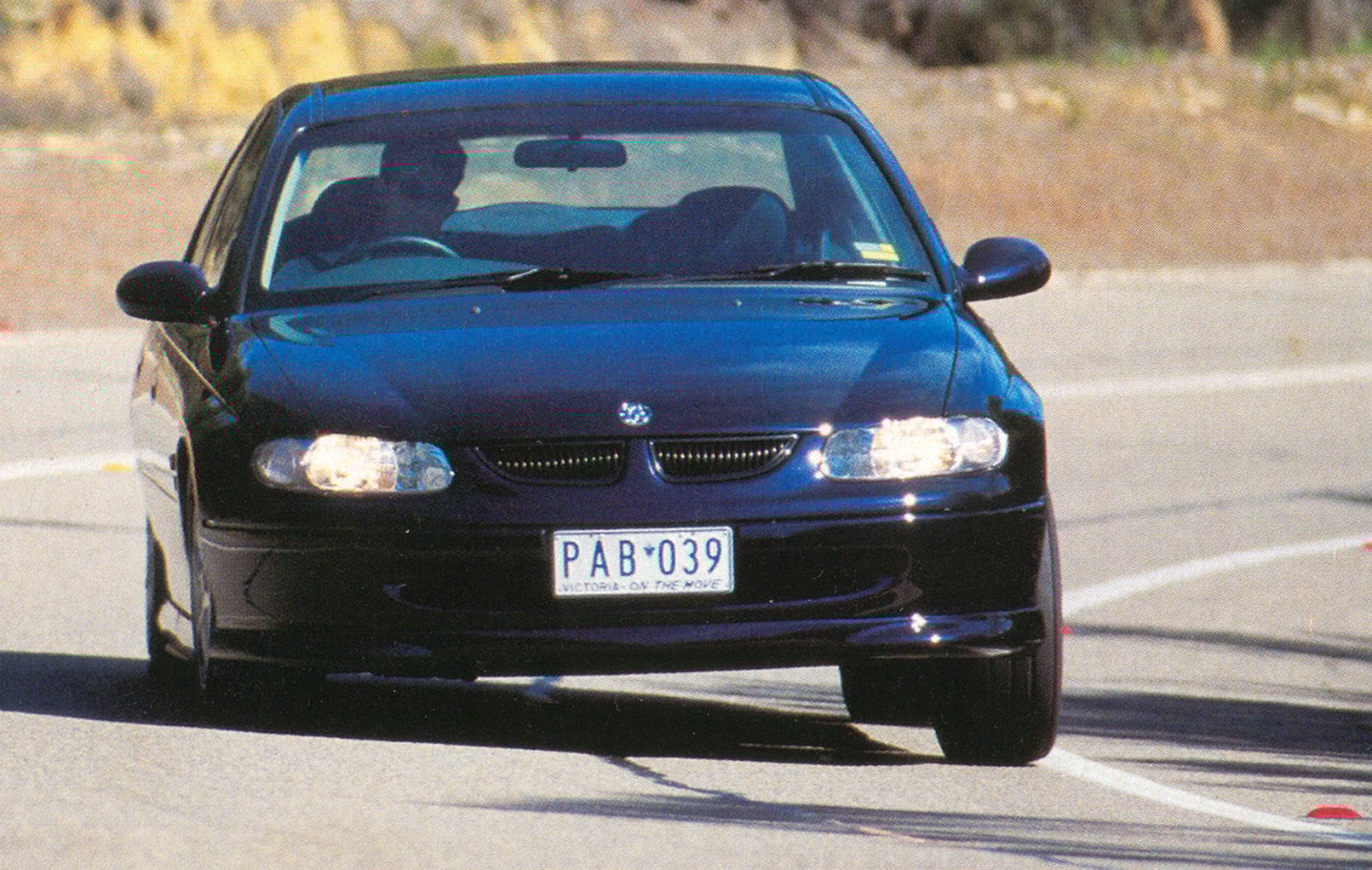
Drive the S into a corner and the rear end pitches, roll steers and bump steers. In the Commodore the rear determines cornering speed. Watch your hands on the steering wheel – in the Commodore they’re chasing the tail with quick jabs to counteract the arse pitching over bumps. In the Falcon, you’re keenly aware of the rear end’s grip because you can now push harder on the front. Your hands are steady.
The XR 6 demands greater steering input only because it has a slower steering rack – three and a frag turns lock to lock where Commodore is half a turn less.
The two cars enter a corner differently. The Falcon likes to be tucked in early and kept tight to the inside. The front will push or understeer long before the rear gets loose or oversteers, so you feed it as much throttle as the front end wants. The Commodore comes in late, turns in sharp as the body begins to roll and its mass leans on the front outside wheel. Once it’s point in, you’re back on the throttle, gentle movements of the slow-action pedal to balance the rear end and always ready to correct it with the steering. The Commodore can be quick through corners, but it’s very driver demanding.
1
Some of that has to do with the XR6’s bigger optional tyres, 17in 235/45 Dunlop SP Sport, but even on standard 16in 225/50 rubber, the Falcon is the superior handling chassis.
To sum up: The Commodore S is quicker to the corners and the XR6 quicker through them.
Straightforward enough, except for that small matter of the price. The way we see it, Holden, not Ford, now builds the great Aussie performance car bargain.
Ford Falcon XR8 vs Holden Commodore SS
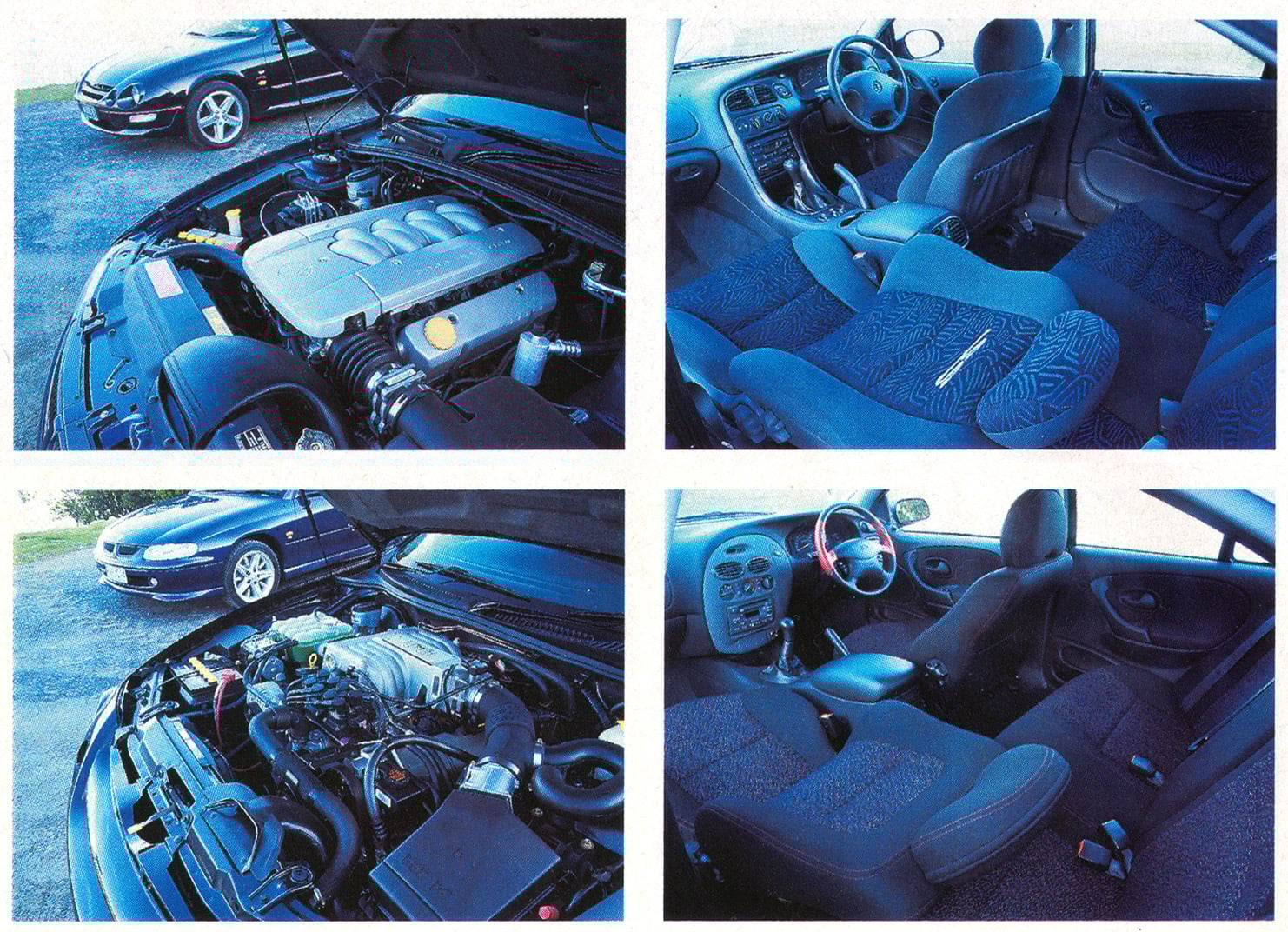
From the moment your gluteus hit the bucket, the XR8 captures you with softer cushions and narrower bolstering. Length in the lower cushions supports longer legs, and finally we have a Falcon that fits big, tall, short and thin.
The dash layout in the SS feels better, more like a cockpit the way the dash flows into the centre console, but the XR8 gives the driver more instrument information. The gauges are spread nicely from left to right – oil pressure and amps, 240km/h speedo and 7000rpm tacho, with water temp and fuel on the right. The SS doesn’t offer oil or amp gauges.
1
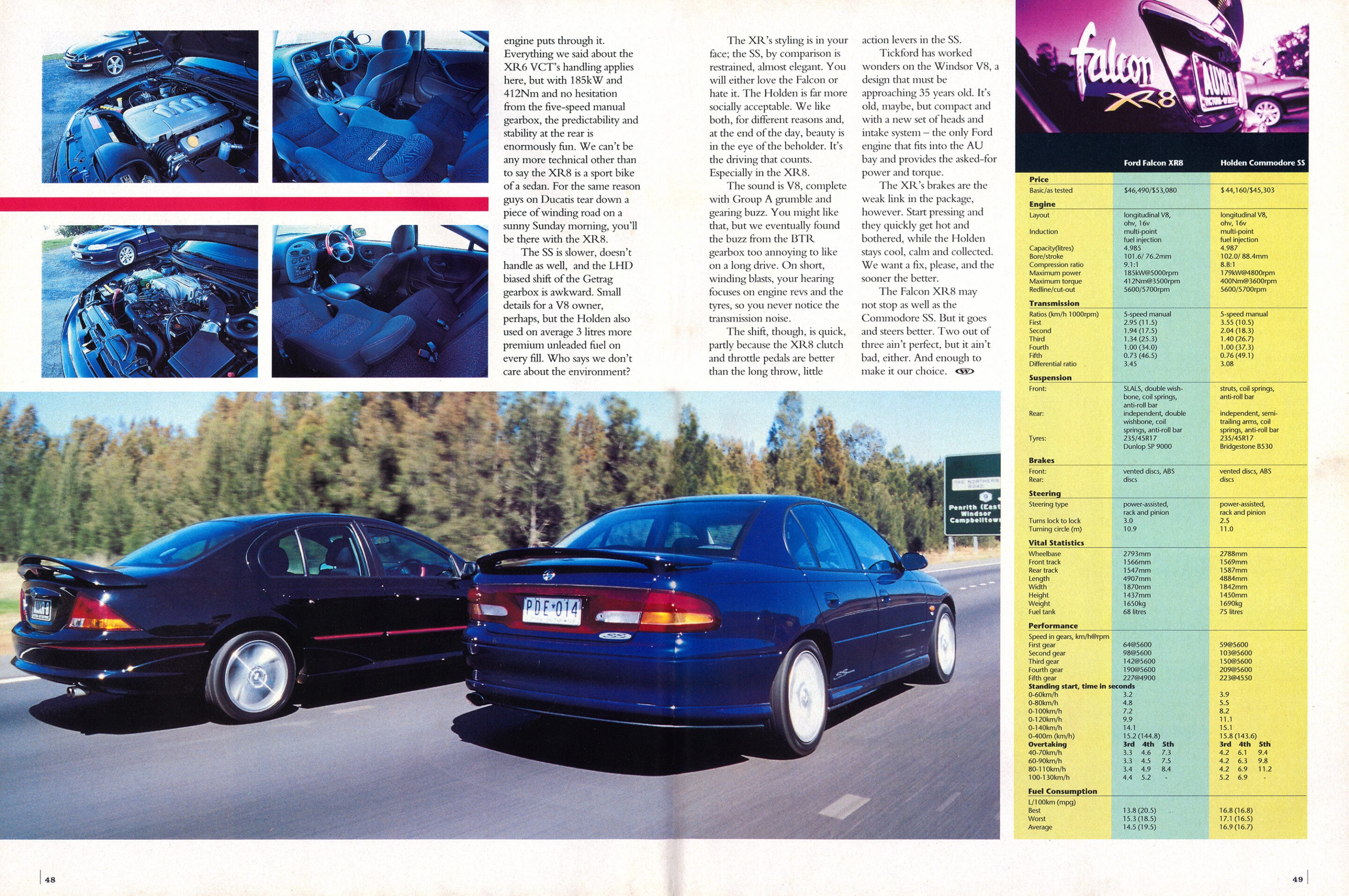
Holden offers few options on the SS V8 manual which creates a Catch 22. At $44,160, not counting the power windows ($910) and metallic paint ($233) fitted to our test car, it is more than six grand dearer than the S and a lot slower, despite a manual five-speed. The problem is the wheezy 179kW 5.0 litre V8 is now past its use-by date. Do yourself a big favour – tick the HSV developed performance option, coded XX3. That essentially buys twin exhausts with extractors and most needed 16kW and 30Nm. But it will cost you an extra $2825.
The XR8 lists at a more competitive $46,490, but that doesn’t buy a 17in wheel and tyre package to match the Holden. For that, you must pay an extra $2450. With the optional body kit and Momo steering wheel added, our test XR8 stopped the cash register ringing at a not insubstantial $53,080.
Still, you do get the necessary bits such as twin exhaust with four-into-one extractors, cone-type limited slip differential, 3.45:1 rear gears and air-conditioning as standard equip.
1
We’ve driven two, maybe three, sports sedans that are better than the AU XR8: BMW’s M3, the E55 Benz and Jaguar’s storming XJR. The cheapest of these starts at $134,000, and you’ll get enough change out of $200K for the Benz for no more than a week’s holiday in Germany. The HSV GTS is also quicker with brakes that’ll deform facial features. But even that costs nearly 20 grand more…
The XR 8 has a sweet chassis, so totally chuckable and completely benign on the limit that it starts to feel small, almost WRX-ish instead of a big, roomy 1650kg sedan.
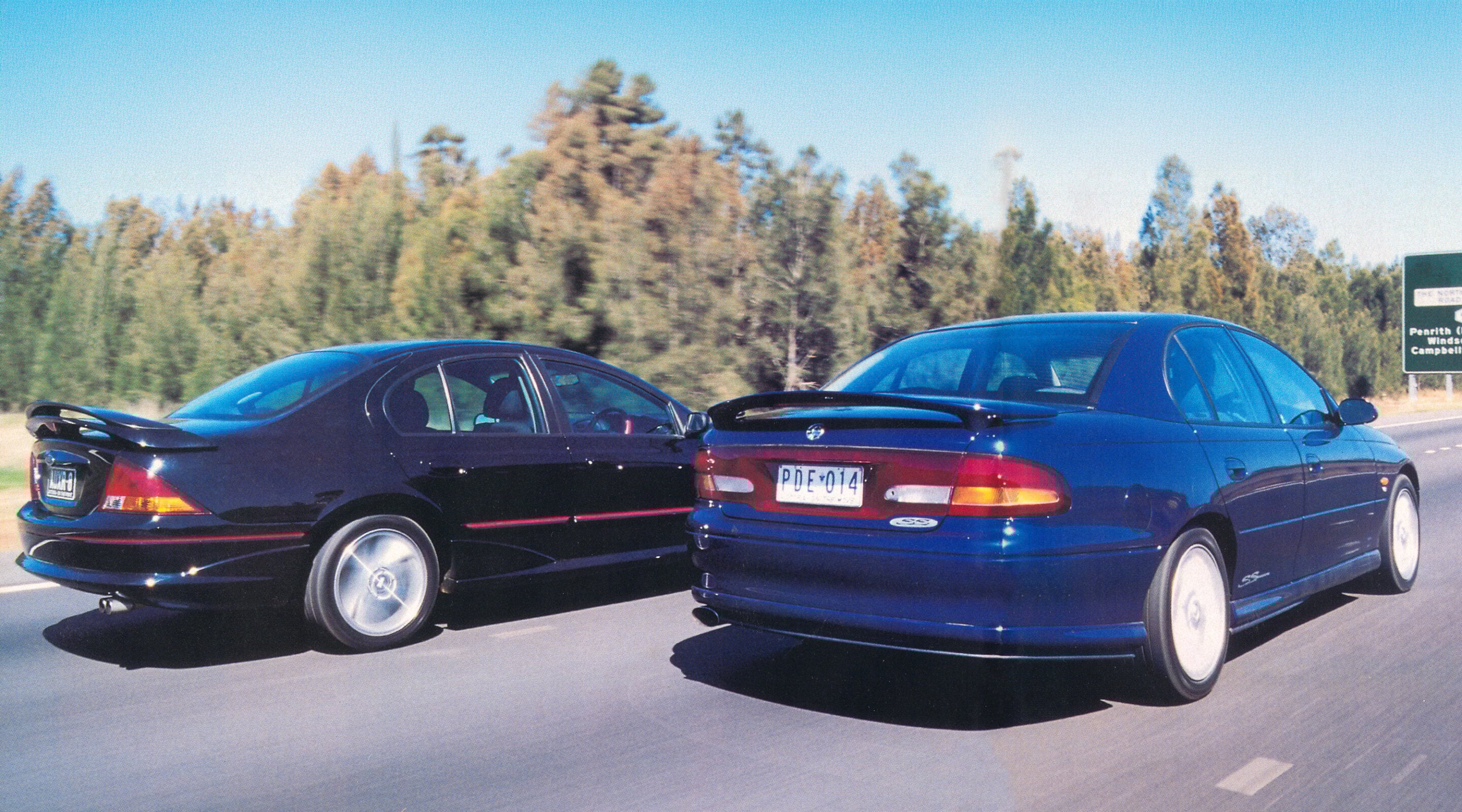
The wonders of the IRS are more, well, wonderful. The more power the engine puts through it. Everything we said about the XR6 VCT’s handling applies here, but with 185kW and 412Nm and no hesitation from the five-speed manual gearbox, the predictability and stability at the rear is enormously fun. We can’t be any more technical other than to say the XR8 is a sport bike of a sedan. For the same reason guys on Ducatis tear down a piece of winding road on a sunny Sunday morning, you’ll be there with the XR8.
The SS is slower, doesn’t handle as well, and the LHD biased shift of the Getrag gearbox is awkward. Small details for a V8 owner, perhaps, but the Holden also used on average 3 litres more premium unleaded fuel on every fill. Who says we don’t care about the environment?
1
The XR’s styling is in your face; the SS, by comparison is restrained, almost elegant. You will either love the Falcon or hate it. The Holden is far more socially acceptable. We like both, for difterent reasons and, at the end of the day, beauty is in the eye of the beholder. It’s the driving that counts. Especially in the XR8.
The sound is V8, complete with Group A grumble and gearing buzz. You might like that, but we eventually found the buzz from the BTR gearbox too annoying to like on a long drive. On short, winding blasts, your hearing focuses on engine revs and the tyres, so you never notice the transmission noise.
The shift, though, is quick, partly because the XR8 clutch and throttle pedals are better than the long throw, little action levers in the SS.
Tickford has worked wonders on the Windsor V8, a design that must be approaching 35 years old. It’s old, maybe, but compact and with a new set of heads and intake system – the only Ford engine that fits into the AU bay and provides the asked-for power and torque.
1
The XR’s brakes are the weak link in the package, however. Start pressing and they quickly get hot and bothered, while the Holden stays cool, calm and collected. We want a fix, please, and the sooner the better.
The Falcon XR8 may not stop as well as the Commodore SS. But it goes and steers better. Two out of three ain’t perfect, but it ain’t bad, either. And enough to make it our choice.
Follow WhichCar/Wheels on Google
Click the button below to make WhichCar by Wheels a preferred source for your news.

We recommend
-
 Classic Wheels
Archive: Ford Falcon XR8 v Holden Commodore SS
Ford wants you, please, to reconsider its AUII XR8. There are 200 reasons why you should, writes Fraser Stronach
-
 Comparisons
2006 Holden VE Commodore SS vs SS V vs Ford Falcon XR8 vs XR6 Turbo comparison: classic MOTOR
When the hot VE Commodores took on the Ford Falcon XRs head-on
-
 Reviews
2003 Ford Falcon XR8 vs Holden Commodore SS comparison review: classic MOTOR
Mate against mate. Eight against eight. Is vengeance really sweet or is the SS' still quick enough to turn the 260kW XR8 tide?