Features
Gallery 1
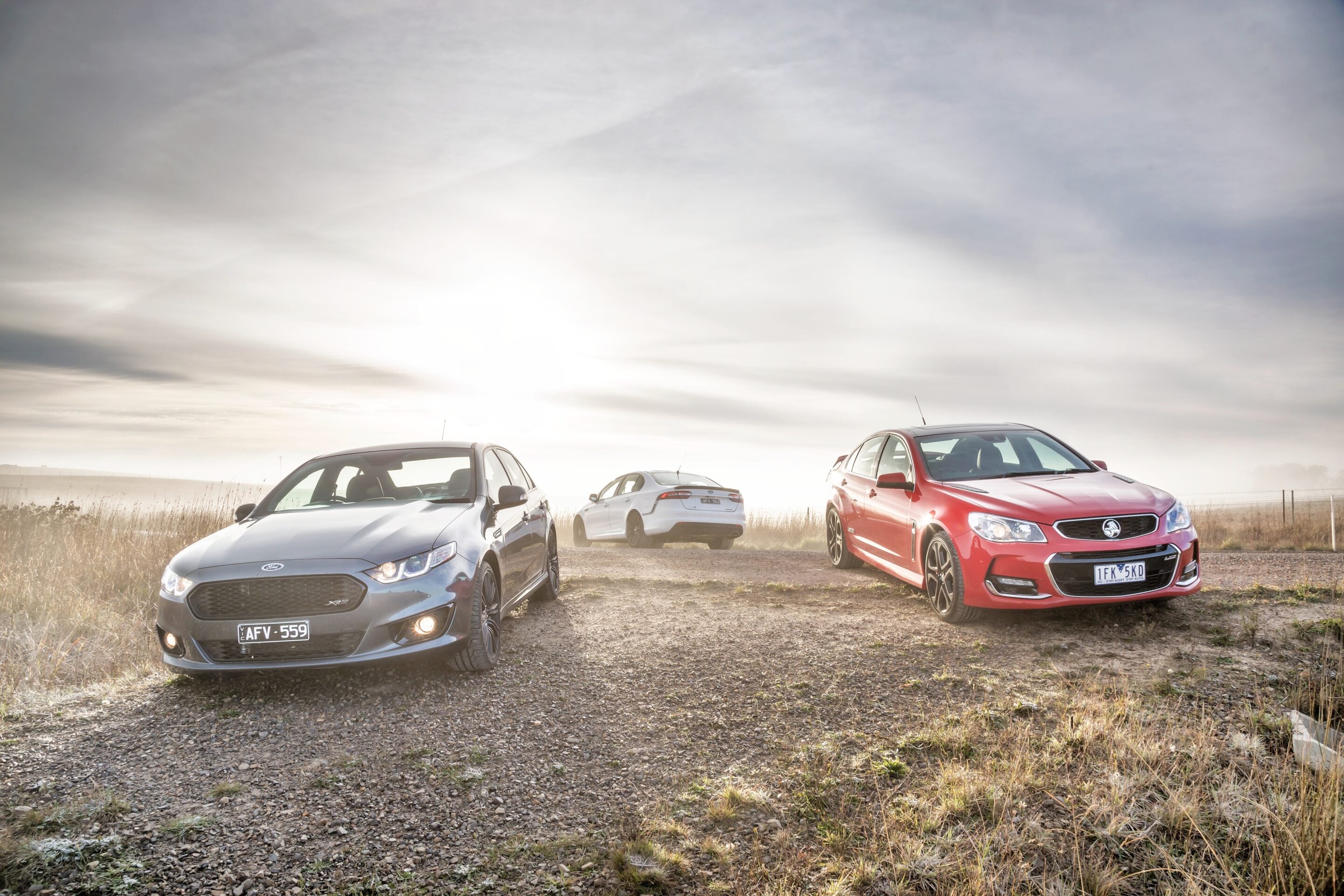
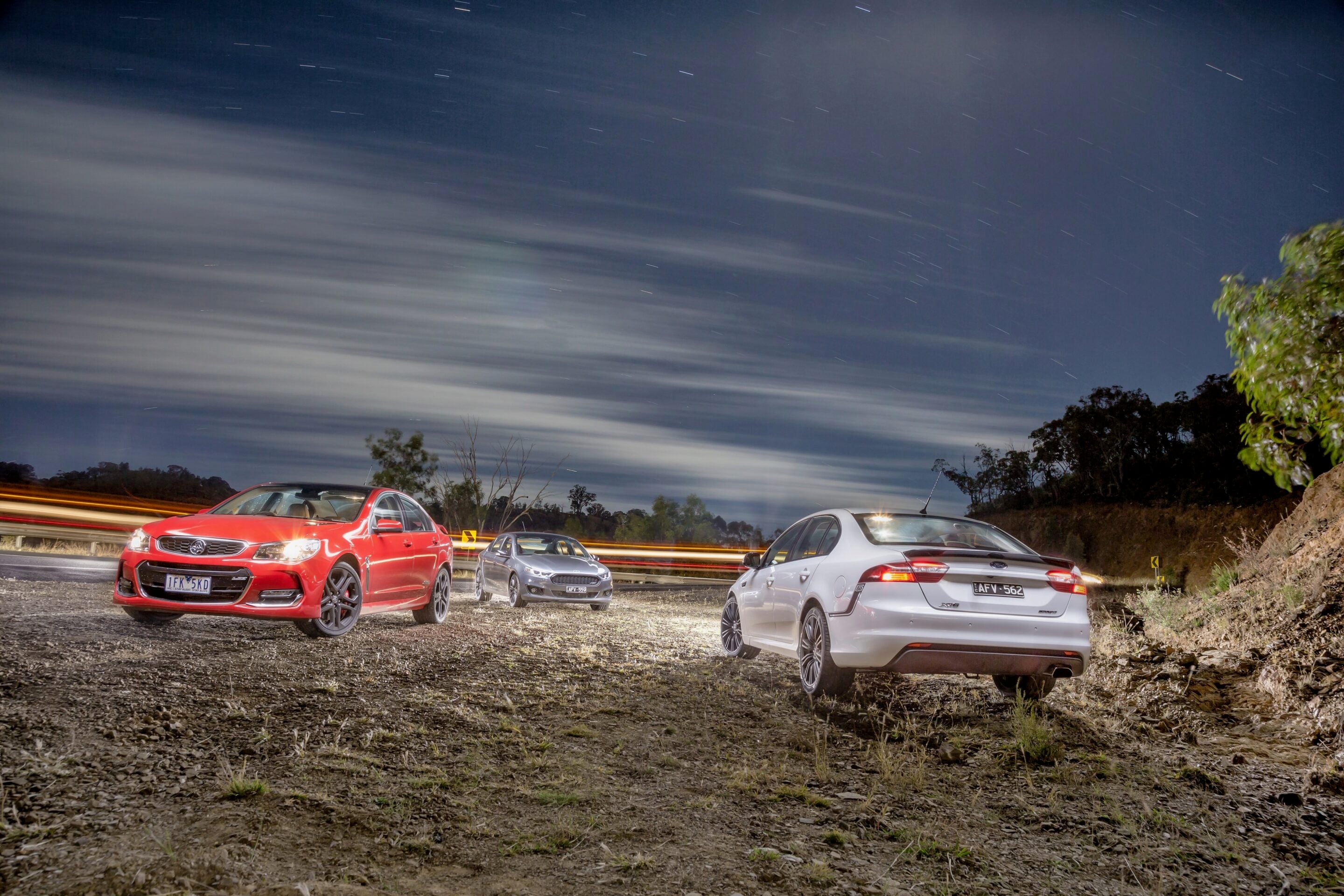
Australia is changing, and probably faster than we think. In fact, it’s about to get one hell of a hurry-up as these two former staples of our daily life – the Ford Falcon and Holden Commodore – cease to exist in their current form. In the Holden’s case, it’ll morph into a large German-built, front- or all-wheel drive hatchback or wagon, still wearing the Commodore nameplate, but the big Ford will soon disappear into an uncaring world hell-bent on championing SUVs.
For the bread-and-butter stuff, that’s no huge deal. A Mondeo Ambiente is better than a boggo Falcon at carting people around in quiet, efficient, luxurious comfort, underpinned by a Ford of Europe chassis brimming with sophisticated spirit. But at the other end, replacing high-performance rear-drive Falcon and Commodore variants is going to be nigh on impossible. Which, tissues please, brings us to this – the last-ever Wheels Falcon versus Commodore comparo.
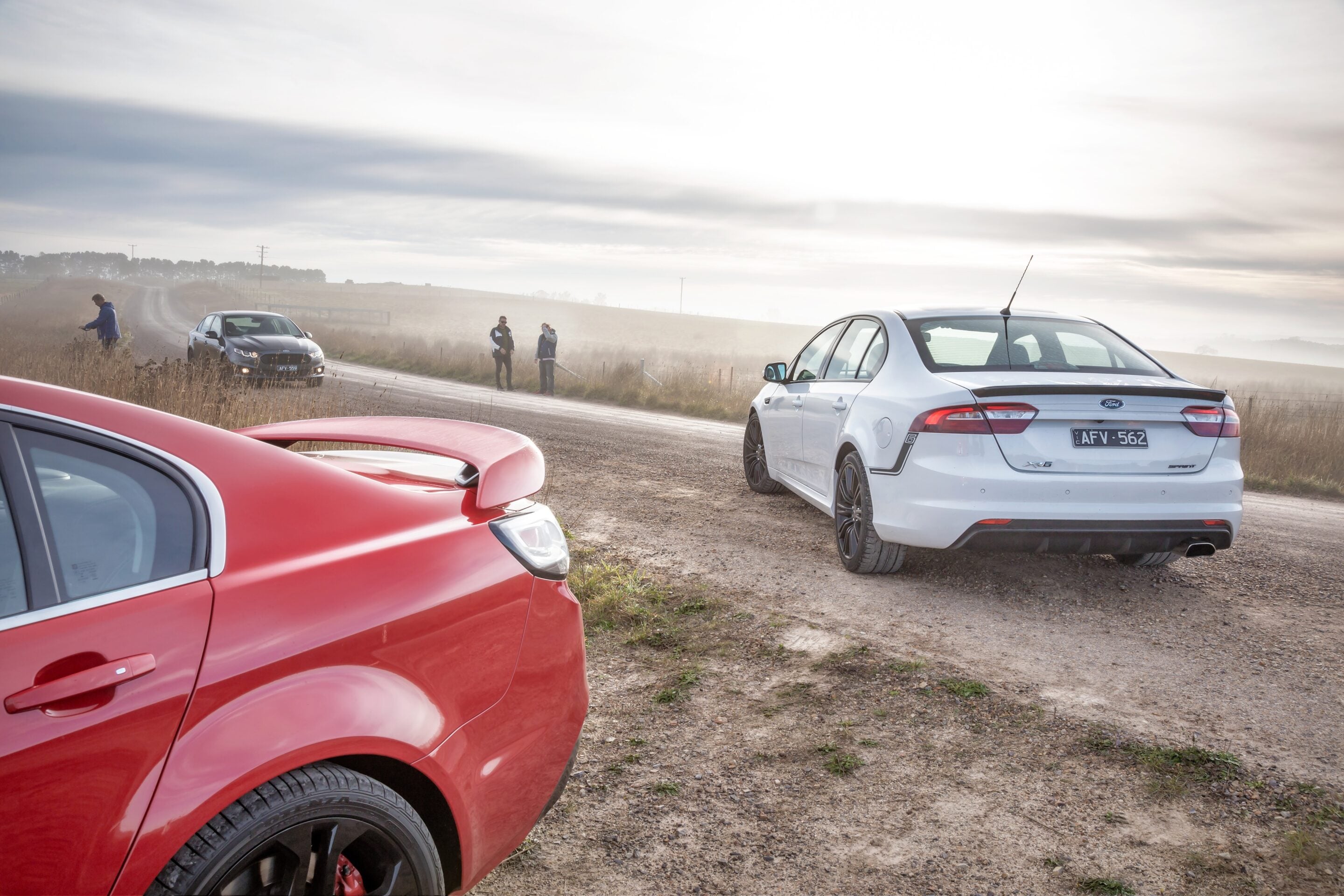
Guaranteed some of you will be thrilled to bits, cultural cringe in full bloom, relieved that other products may soon dominate the cover. But not us. Not when Ford’s final Sprint-badged XR6 Turbo and XR8 are bowing out boasting best-ever acceleration and finest-ever handling talent, and Holden’s excellent SS-V Redline is re-writing the global rulebook for value-for-money performance and dynamic ability. So it’s not just with a heavy heart that we’re farewelling Australia’s fiercest and longest-running rivalry; it’s with a legitimate cause for celebration because these rear-drive brutes have never been better.
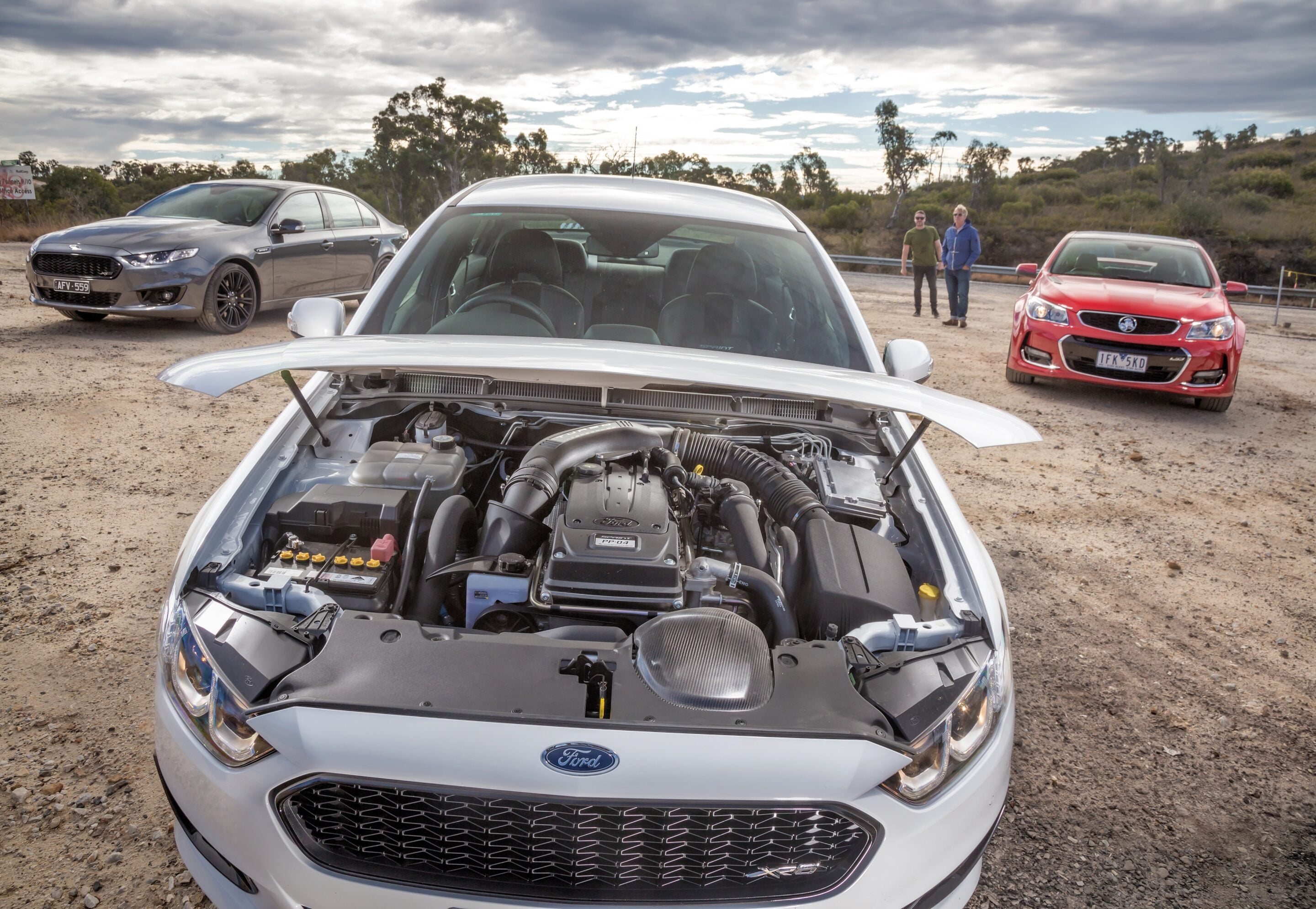
Or faster. While FPV’s last-ever car – the 351kW GT-F – was a smidge perkier than today’s 345kW XR8 Sprint, the difference is so insignificant as to be virtually redundant. On a perfect surface at the You Yangs speed bowl in 2014, we clocked 0-100km/h in 4.68sec for the GT-F automatic and a 12.68sec standing 400m number at 186.7km/h. Yet here we have the same Smoke Grey XR8 auto that struggled to get its power down at Sydney Dragway a month ago managing to rip through the same increments in record time for this test. And that’s despite its launch control having gone to a long Friday lunch, never to return.
4
Using a man-made launch technique of giving a touch of throttle while being held on the brake, then squeezing on the power as the XR8 produced the perfect amount of wheelspin from its 265/35ZR19 rear Pirelli P Zeros, that very same XR8 auto nailed 100km/h in 4.78sec and the 400m marker in 12.72sec at 186.8km/h. And it felt fast too, revving out cleanly in its first two gears but feeling particularly buxom at the upper end of its speed dial, nailing 0-220km/h two seconds faster than its Aussie teammates. All to the tune of subtle blower whine and a crackling exhaust blurting at each upshift.
Interestingly, the mega-boosted six-pack Falcon couldn’t beat its V8 stablemate. With launch control at full fitness, the 325kW XR6 is pretty much neck and neck with the XR8 until 70km/h, when the eight begins to assert its dominance. Even at 100km/h, the XR6 is still only eight-tenths behind (at 4.84sec) but the 400m time tells the true story, registering 12.93sec at 181.5km/h.
And there’s something about the turbo six’s power delivery that never feels as natural. It won’t rev as freely as the blown V8, as if its ECU is trying to dial back boost pressure – even with 370kW available when overboost is cranking – and it doesn’t sound as characterful either, unless you prefer a whooshy soundtrack. Yet it remains super-strong and beautifully smooth, overlaid with lush exhaust blurting on upshifts, and some turbo whistle for good measure. And there’s always its 80-120km/h time to fall back on – just 2.5sec, identical to the XR8’s.
Holden’s strident 304kW V8 Commodore mightn’t have the on-paper muscularity of the Fords, or their rolling start ferocity – clocking 80-120km/h in 3.0sec – but it’s an extremely faithful and consistently strong performer. Off-the-line purchase is much less of a black art and it’s actually the fastest car here to 50km/h (by one tenth over both XRs), but thereafter it gradually concedes ground to the XR8. Yet who can seriously argue with 4.93sec to 100km/h and a 13.07sec quarter from a $55K automatic sedan?
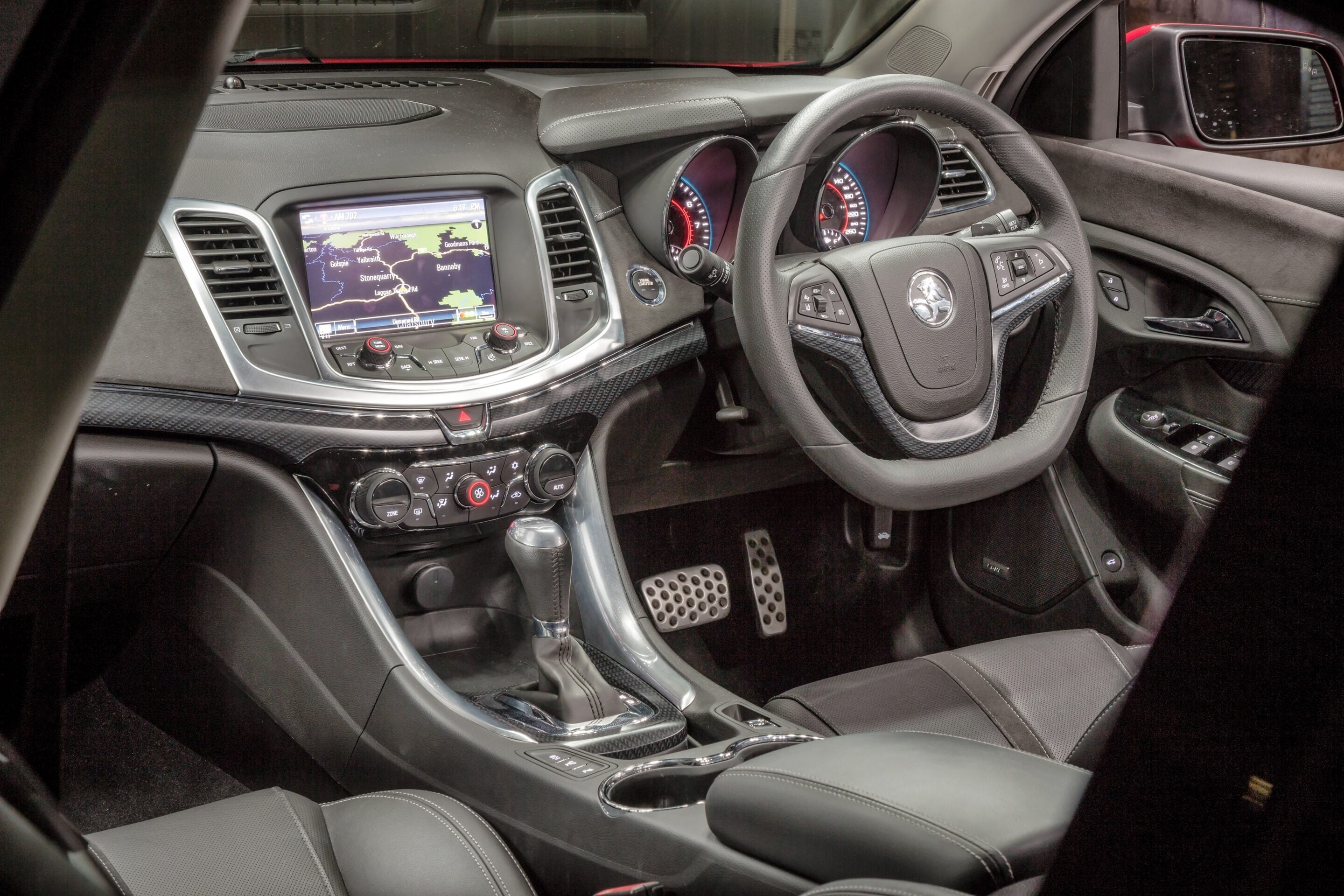
And if you could hear it, no one would complain about the way today’s VF Series II V8 sounds. I began my Wheels career driving Gen III-engined VTIIs and VXs that were relatively weak at the bottom end and way too quiet everywhere, which is something you could never say about this LS3. Right foot flat, it trumpets a bent-eight bellow into the cabin while thrilling bystanders and passengers alike with its fruity, crackle-laden quad-exhaust note. And every time you back off the throttle, there’s a hint of overrun crackle too. GM will need to perform some serious R&D surgery on this engine’s V6 successor if it’s ever going to get close to this.
6
Given the XR6 Sprint’s auto-only status, we chose automatic versions of the XR8 Sprint and SS-V Redline for this test. All are six-speeders that have since been retired in other markets – long ago in the case of the German-made ZF auto fitted to up-spec Falcons since 2005’s BF update.
Back then, the ZF shared its posh credentials with high-end Euros like the Audi A8 and Jaguar’s XJ and XK, but they upgraded to eight ratios long ago, leaving the Aussie Fords with a smooth, yet ageing transmission that neither matches revs on downshifts or offers flappy paddles.
The Commodore, too, relies on GM’s decade-old 6L80E six-speed auto that debuted on VE. But it has received several refinements over the years, included a significant recalibration and downshift rev-matching to coincide with the VE Ute intro in 2007, and, finally, steering-wheel paddles on VFII in 2015. Because of these improvements, it’s a more versatile ’box than the ZF, and a more cohesive match to the LS3 V8, with a more effective ratio spread, particularly for track work or really tight roads.
The forced-induction Falcons are significantly taller-geared than the atmo Commodore, but with a rev ceiling of 6700rpm versus 6250rpm, the Holden can stretch its shorter legs further to almost match the Fords’ speed in first gear. Cut-out in second will see 123km/h in the Fords and only 110 in the Holden (or just 99km/h at the 6000rpm redline, hence its half-second deficit in rolling start acceleration), while third gear will stretch to a leggy 190km/h in the Fords and 170 in the Holden.
But it’s cruising in top that defines the difference between the two. The Fords are geared for 66.9km/h per 1000rpm compared to 58.1, enabling greater use of their torque reserves when devouring country roads … providing you aren’t relying on cruise control.
Where the Commodore’s cruise will kick down a gear, and sometimes two, to maintain speed, filling its cabin with induction richness, the test Falcons – particularly the XR8 Sprint – struggled to fulfil the brief. Too much speed would wash off before the electronic throttle would open the gas, but in the XR8’s case, a really steep hill would result in hunting between fifth and sixth, and a drop in pace to as low as 85km/h.
If you interfered and accelerated back up to 110 or so, the cruise would pick up where it left off, but it didn’t make for relaxed highway motoring. And this isn’t an isolated incident. The standard XR8 auto we drove from Melbourne to Bathurst back in late-2014 did exactly the same thing…
4
Whether this affected fuel consumption or not is anyone’s guess, but there’s no escaping the Falcons’ greater kerb weight – 1818kg for the XR6 and 1872kg for the XR8 auto versus 1803kg for the SS-V Redline auto – though all of them are built like brick outhouses. And given the performance on offer, their economy is bloody good. The SS-V Redline pipped the XR6 by a tiny margin (13.57L/100km against 13.58!) over more than 1000km, with the XR8 not far behind at 14.26L/100km.
Three litres of additional tank capacity gives the Commodore a greater range, though the Falcon offers a larger 535-litre boot with a handy centre indent to stop cargo sliding around, and a proper split/fold rear backrest compared to the Holden’s broad ski-port with built-in cupholders. But did you know that this very ski-port originated in a Falcon? It was one of the ‘new’ features on the 1984 XF…
Where the Commodore has truly had the upper hand in recent years is chassis dynamics. While the sweet spot in the Falcon line-up has long been the atmo XR6, the Commodore has traditionally shone brightest in its most powerful V8 form, and that still applies to the VF Series II. It’ll be no secret to Wheels readers that in areas like driving position, front-seat comfort, mid-corner grip and corner-exit power-down, the Commodore offers solutions to the Falcon’s compromises. But Ford’s comprehensive rethink of the Sprint’s underpinnings has definitely closed the gap.
The biggest surprise, however, is that the XR8 is more polished than the XR6. While feedback from the Sprint media launch on snaking Tasmanian roads nominated the XR6 as the pick of the bunch, the reality in the real world is actually the opposite.
Indeed, it’s only on really twisty roads that the XR6 clearly holds a dynamic edge. And it’s all down to its lighter nose. Where the XR8 can wash wide if your cornering approach lacks patience and placement, the XR6’s affinity with nailing tight corner apexes is stronger, and it tucks in tighter until its rear end inevitably lets go.
While the turbo six feels more on its toes in corners, with excellent balance, it suffers from a nervousness that isn’t there in its more planted, less boosty V8 sibling. Its poise on corner exit, however, is dependent entirely on the condition of its 265/35R19 rear Pirellis and the efficacy of its ESC, rather than the inherent purchase of Ford’s ‘Control Blade’ rear end.
Slightly worn tyres and stability control switched off results in an oversteer arc perfectly in tune with the XR6’s ballsy engine ramping up boost. But it does this vigorously, without the desired throttle progression, making an enthusiastic strafe without an electronic safety net all about oversteer minimisation.
Leave ESC on, however, and the XR6 Sprint keeps it together when pushing hard, with much less electronic intrusion than a non-Sprint XR due to its greater dynamic finesse. But you still need to be considered with steering inputs because the XR6 is very keen to change direction. Perhaps too keen.
In terms of flat-knacker precision and placement, the XR8 Sprint isn’t quite the six’s equal, but that’s arguably a good thing. Its chassis feels more settled, its power delivery is more progressive, and its steering is meatier, making it an easier car to live with.
4
There’s a cohesion to the XR8’s dynamics that the XR6 somehow lacks. Even though it concedes ultimate change-of-direction agility, it loves being hustled on faster roads and actually comes alive the harder you drive it. Chuck it really hard into a corner and you can feel the additional weight up front, but it’s so easy to neutralise with a squeeze of throttle. And it keeps getting better the more time you spend with it.
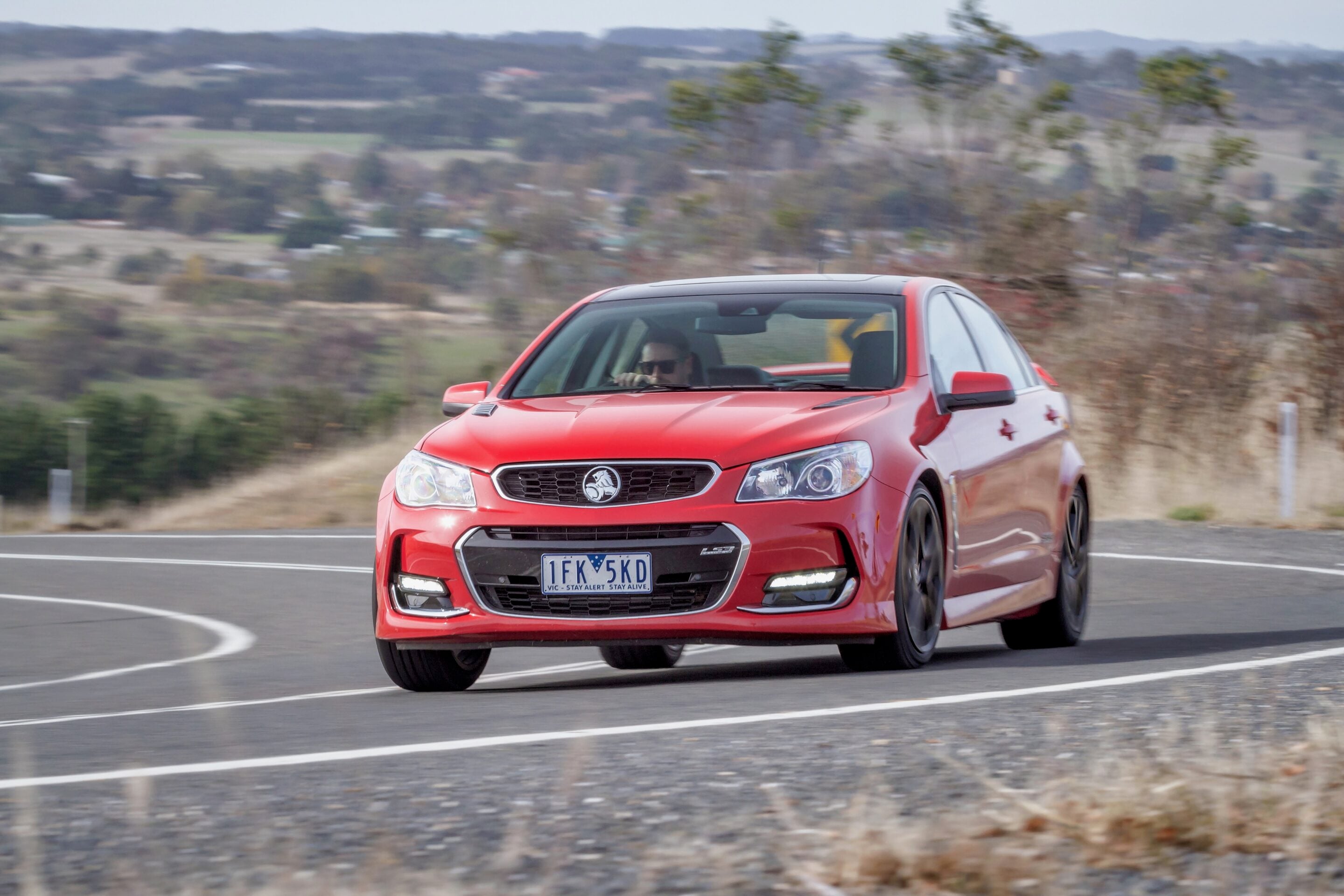
But it’s the SS-V Redline that again takes the ‘driver’s car’ gong. Not only does its engine sound gloriously boisterous when you’re up it, the atmo V8’s more progressive grunt delivery means you can give the Commodore the full boot out of corners much earlier, without the threat of snagging its ESC system – incorporating a unique Competition mode that allows greater slip angles – and impeding its fluency.
The SS-V Redline has more to give through a corner too. Its chassis is more faithful and chuckable than the Blue Oval duo’s, with higher grip limits, more consistent balance and an encouraging nature that goads you to drive it harder. It’s more of a young person’s V8, if you will, and yet it’s also smoother riding, more luxurious and much quieter, with a more expensive feel and next-level comfort.
Inexplicably, the XR8 has a much more fluid ride than the jiggly XR6. It feels more relaxed at all speeds, regardless of the load on board, whereas even carrying four adults, the knobbly XR6 never quite settles. And then there’s the XR8’s additional steering meat we mentioned before, which seems to gel better with its suspension tune. Faced with a big-distance bash, we know which one we’d choose.
Right about now I should probably be talking about interiors, and which car has the best seats, the better stereo and all that comparo gumpf, but none of that really matters anymore. Not when this is the end of the line for both Falcons, both of which sold out almost immediately. There’s probably a regular XR8 still hovering about in a dealership somewhere, not to mention an XR6 Turbo or G6E Turbo, but it’s the Sprints that will always be certified as the last, and the best.
Of the two, it’s no surprise by now that we prefer the eight over the six. While the XR6 has its moments, the greater polish of the XR8 wins out for us. Its delicious engine and exhaust backing track, mixed with an overlay of blower whine, is utterly addictive – more so than the turbo six’s whistle – and that great big bonnet bulge up front gives it more presence too. But the smaller build number of the XR6 (500 units for Oz, compared to 750 for the XR8), and its well-liked sticker pack, means there’s a strong chance it’ll be the one to hold onto in the future.
4
It’s hard to believe it was only 10 years ago that Holden spent a billion Aussie dollars developing the all-new, Zeta-platformed VE, intended at the time to underpin a vast swathe of global GM products that never ultimately eventuated. But if the byproduct of that engineering thoroughness is the bank-vault solidity of our 13,500km-old test Redline – one that has surely been ‘run-in’ with great enthusiasm by the media – then every cent was money well-spent.
Indeed, if the legacy of the Australian auto industry is the VFII Commodore SS-V Redline, then what a way to go out. It’ll be an incredibly hard act to follow when performance versions of the next Opel Insignia replace it, but I bet the Aussies working on the project are fighting hard for something at least as good as this. Holden’s most complete performance car ever. As for the similarly superb SS-V Redline ute, well, there’s still more than 12 months left in the tank to snap one up. And then crickets…
Ford versus Holden, blue versus red, XR battles SS, Broadmeadows or Fishermens Bend. In a generation or so, there’s a strong chance the young-uns won’t even know how political the rivalry used to be, and probably won’t care either. But given the depth of our love for hot-blooded Aussie sedans, what you see on these pages isn’t about to be cotton-woolled away for eternity. Not when it’s all about the driving.
Follow WhichCar/Wheels on Google
Click the button below to make WhichCar by Wheels a preferred source for your news.

We recommend
-
 Features
10 Holdens that mattered: One year on from Holden’s Aussie factory closure
It’s an unwinnable argument, but let’s start it anyway: here are the General’s top 10 soldiers that made the most important contribution to the battle for hearts, minds and wallets
-
 Reviews
2017 Holden Commodore ‘Motorsport Edition’ review
Headline model of Holden’s three-pronged limited-edition MY17 Commodore range gains dynamic upgrades to make it the best-handling car it’s ever produced.
-
 Ford Falcon
2002 Ford BA Falcon wins Car of the Year
Ford’s history with the Wheels Car of the Year awards was always a bit up and down. But in 2002, it reached new heights