
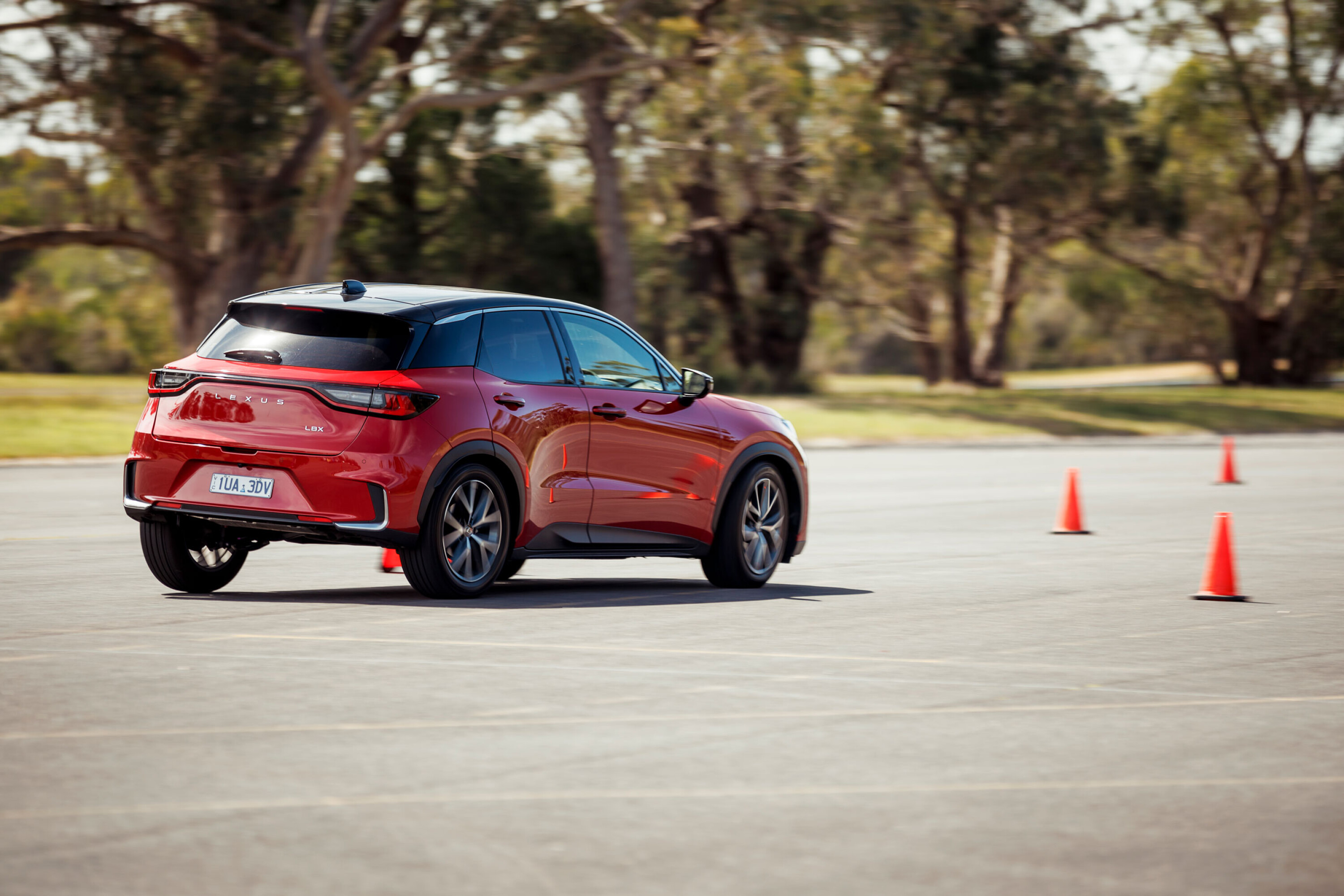
It’s tough to translate a big-car feel into something with a dinky wheelbase, and the latest to try is the promising Lexus LBX.
While COTY judges were unimpressed with the lack of legroom in the back, others loved the attention to detail of the cabin materials. The wheel, the stitched leather, the classy metallic finishes, and then the cultured step-off of the hybrid drivetrain and well-oiled feel to the steering felt premium, and that’s a tough trick to bring off in a car with a diminutive 2580mm wheelbase.
On the move, there’s some bump and thump from the torsion-beam rear and the engine can feel strained when pushed. But the front end is secure and the quickish steering is fun in a set of corners.
It seems an almost ideal car for seniors who have downsized to an apartment and don’t have access to EV charging, but want to keep running costs modest. They don’t need to carry adults in the rear, prefer something that feels assured and well-built, and which can undertake a longer drive when required. Does that feel-good factor merit a $12.5K price hike over a Yaris Cross? Lexus seems confident that it does.
1
This is a very clever vehicle that understands its target markets. Can it also be a slightly cynical exercise in leveraging the power of the Lexus brand? Absolutely. As long as buyers are happy in that compact, then there’s no loser here, the LBX more than warranting its niche.
Lexus LBX Luxury Specifications
| Price/as tested | $47,550/$49,300 |
|---|---|
| Drive | 1490cc 3cyl, dohc, 12v, turbo, hybrid |
| Power | 100kW |
| Torque | 120Nm (engine) / 185Nm (e-motor) |
| Transmission | CVT |
| Weight | 1330kg |
| L/W/H/WB | 4190/1825/1560/2580mm |
| Tyre | Yokohama Advan VE1 225/55R18 (f/r) |
| Safety | Five stars |
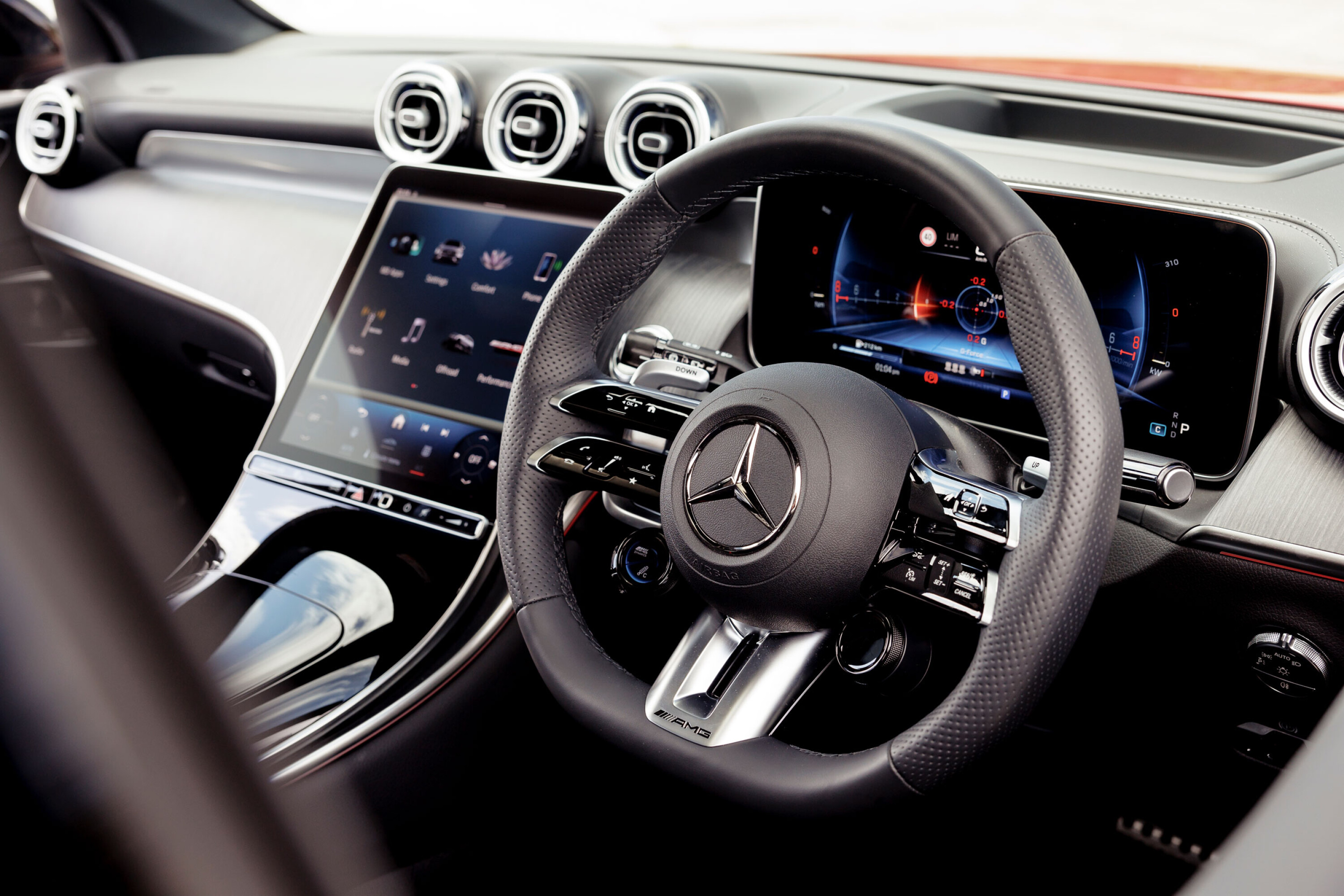
Let’s start with the lane change test at COTY, which offers no place for a car to hide. Some cars couldn’t jink across a lane and back again without sending cones flying. Then there was the Mercedes-AMG GLC43. At no point during the entire event did it even come close to nudging a witch’s hat. It was that good, with huge grip, excellent roll resistance, meaty steering and excellent electronic driver aids. Nothing could really touch it in terms of feeling of security.
It’s quick too. With 310kW coming from the mild-hybrid 2.0-litre four, it’ll scuttle to 100km/h in a claimed 4.8sec.It’s a blast to drive and it even sounds acceptable given that there’s an inline four rather than a six-pot under the bonnet.
It has some shortcomings as an SUV. The rear seats, while fairly spacious, are hard and fairly uncomfortable, and there isn’t a USB slot for rear passengers to plug a phone into. Some of the judges felt it was too firmly sprung for everyday driving, but Mercedes-AMG knows its target market and they expect cars that ride with some attitude.
1
Despite it being powered by a small engine, the 43 isn’t short of spirit and personality. It’s an up-and-at-’em thing that augments rather than trades on the AMG badge.
Mercedes-AMG GLC43 Specifications
| Price/as tested | $135,315/$136,815 |
|---|---|
| Drive | 1991cc 4cyl, dohc, 16v, turbo |
| Power | 310kW @ 6750rpm |
| Torque | 500Nm @ 5000rpm |
| Transmission | 9-speed automatic |
| Weight | 1900kg |
| L/W/H/WB | 4749/1640/1920/2888mm |
| Tyre | Bridgestone Potenza Sport 265/45ZR20 (f), 295/40ZR20 (r) |
| Safety | Five stars |
2024-25 Wheels Car of the Year
There is no better three-row EV SUV than the EV9 for the price – although you won’t get out of the dealership for under $100,000. And you’ll need to recalibrate energy efficiency expectations, too, because the 2.3-2.6-tonne EV9 drains 25-30kWh/100km on the move. So don’t expect to reliably achieve Kia’s claimed 443-512km per charge.
Size equals weight, and because this seven-seat premium family vehicle is longer and wider than the Toyota Kluger, it’s also considerably heavier. But don’t let that worry you, because the EV9 is actually a very capable vehicle to drive. Sharp and light steering makes it feel smaller than it is, and the chassis has a dynamical fluidity that encourages the driver. The EV9 also rides beautifully, soft yet controlled.
Even in its most affordable Air RWD form with just one 160kW/350Nm electric motor, the EV9 has the performance to handle everyday demands. Opt for the Earth or GT-Line AWD and the addition of a front motor takes combined outputs to 282kW and 700Nm, enough for serious, sub-6.0-sec acceleration.
1
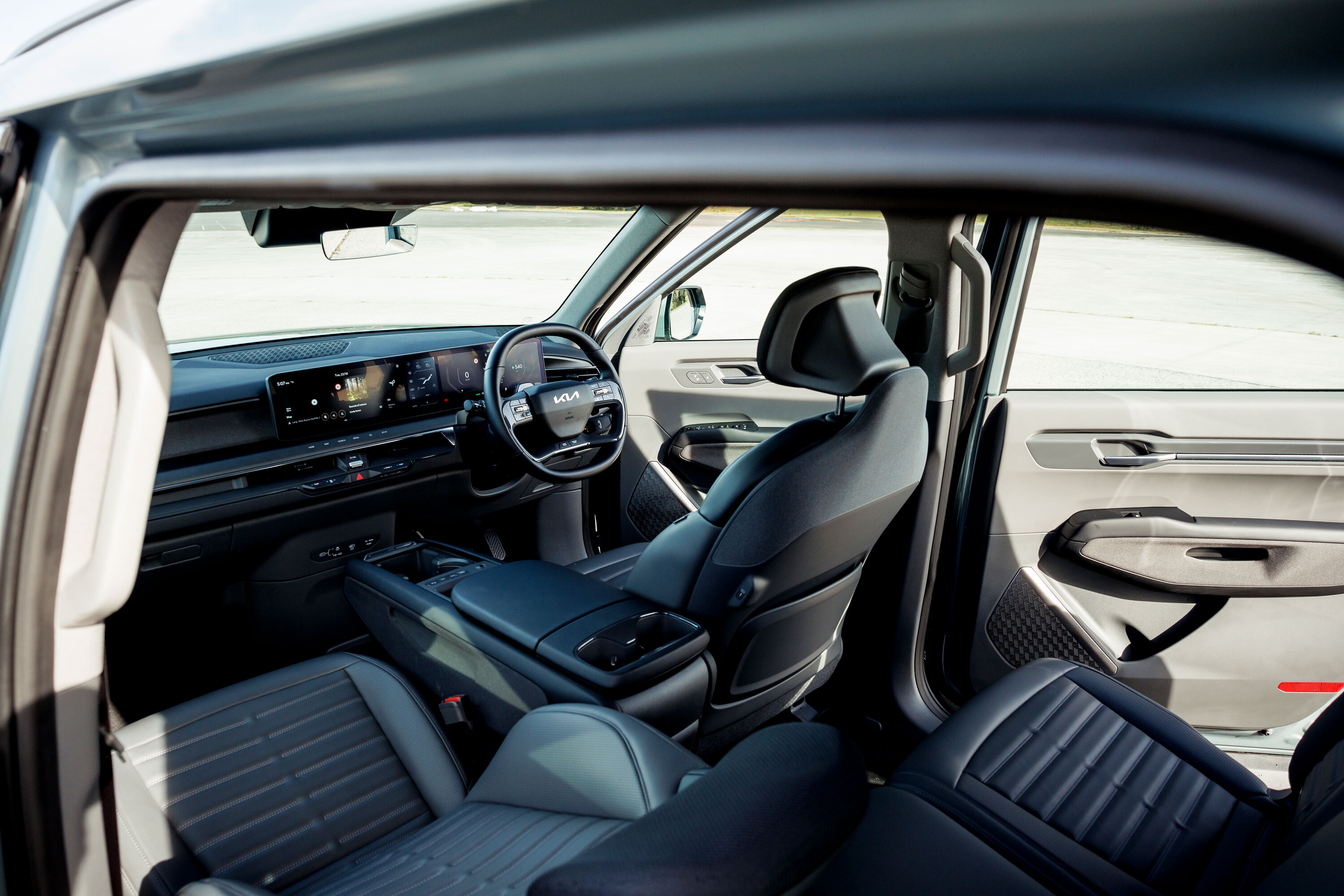
The EV9’s biggest drawcard – once you get past its outstanding tech-themed exterior styling – is the interior. In fact, there are very few vehicles that deliver this much style, space, comfort and serenity, regardless of price.
The front row is typical Kia; two huge screens dominate the dash, providing all infotainment needs and vehicle instruments. Useability is high, as is practicality and storage space.
Judges also commended Kia for providing a sliding second row which takes legroom to limo-like proportions, and for the EV9’s cavernous boot, particularly in two-row configuration. Even with all three rows occupied, the EV9 still provides 312L of luggage space in the boot, and up to 90L under the bonnet.
Kia EV9 Earth AWD Specifications
| Price as tested | $106,500 |
|---|---|
| Engine | 2 x electric motors, 99.8kWh Li-ion battery |
| Power | 283kW |
| Torque | 700Nm |
| Transmission | Single speed, AWD |
| Weight | 2552kg (claimed) |
| Fuel | 22.3kW/100km |
| L/W/H/WB | 5010/1980/1775/3100mm |
| Tyre | Nexen Sport SUV 255/60R19 113V |
| Safety | 5 stars (2023) |
2024-25 Wheels Car of the Year
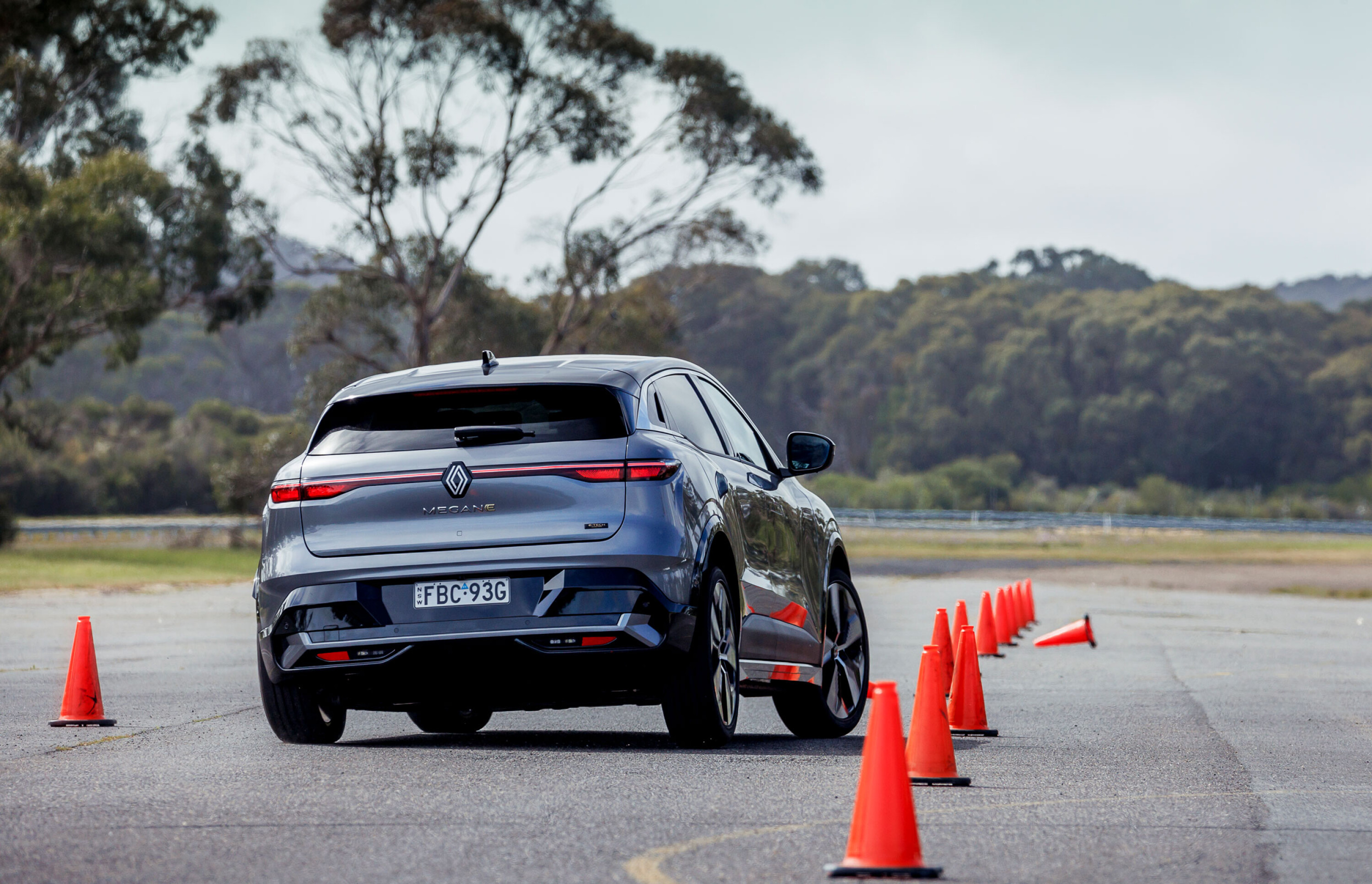
And sitting on the Lang Lang skidpan, nothing makes a Honda CR-V or Nissan Qashqai look more dull than parking a Renault Megane E-Tech between them. Its fat front-three-quarter stance and sports-car-like, almost tapering rear styling are unlike any other car here. Huge standard 20-inch wheels complete the concept-turned-production look.
By packaging the electric motor, transmission, inverter and onboard AC charger into the one unit – nestled neatly under the bonnet for a front-drive application – Renault engineers sought to increase interior space. In theory, at least.
Open the boot and the packaging advantages are immediately noticeable with a tub-like 440-litre luggage compartment so deep, you can’t help but wonder where the rear suspension goes. By putting the motor in the front – as opposed to the rear, like a Cupra Born – Renault also saves weight by forgoing the heavy cabling and cooling required to connect a rear motor to under-bonnet electronics. The E-Tech, then, weighs a relatively light – for an EV – 1642kg.
Around Lang Lang’s ride and handling circuit, that translated to spry and interesting handling, with modest 160kW/300Nm electric acceleration.
1
At just 4.2 metres long and on a 2685mm wheelbase, this is also a smaller SUV than you’d think, and you pay the price in rear-seat space. For an adult, the E-Tech’s back seat was among the tightest of the field.
Despite all this, the E-Tech has plenty going for it. It will have your neighbours asking what it is, has a more conventional interior than some more screen-obsessed rivals (if you like steering-column stalks, this is the car for you – there are four) and its claimed 454km WLTP range is nothing to sneeze at. Same its $54,990 price.
Renault Megane E-Tech EV60 Specifications
| Price/as tested | $54,990/$54,990 |
|---|---|
| Drive | 1 x electric motor + 60kWh lithium-ion phosphate battery |
| Power | 160kW |
| Torque | 300Nm |
| Transmission | Single-speed reduction gear |
| Weight | 1642kg |
| L/W/H/WB | 4200/1768/1505/2685mm |
| Tyre | Goodyear EfficientGrip Performance 215/45R20 (f/r) |
| Safety | Five stars |
2024-25 Wheels Car of the Year
Dripping with style and personality, and packing a powerful twin motor electric powertrain that has pushed its kerb weight out to 2000kg, depending on your viewpoint the Mini Countryman SE is either a fun breath of fresh air or a gargantuan, obese and overstyled step too far for a brand made famous on the back of a very small, light car.
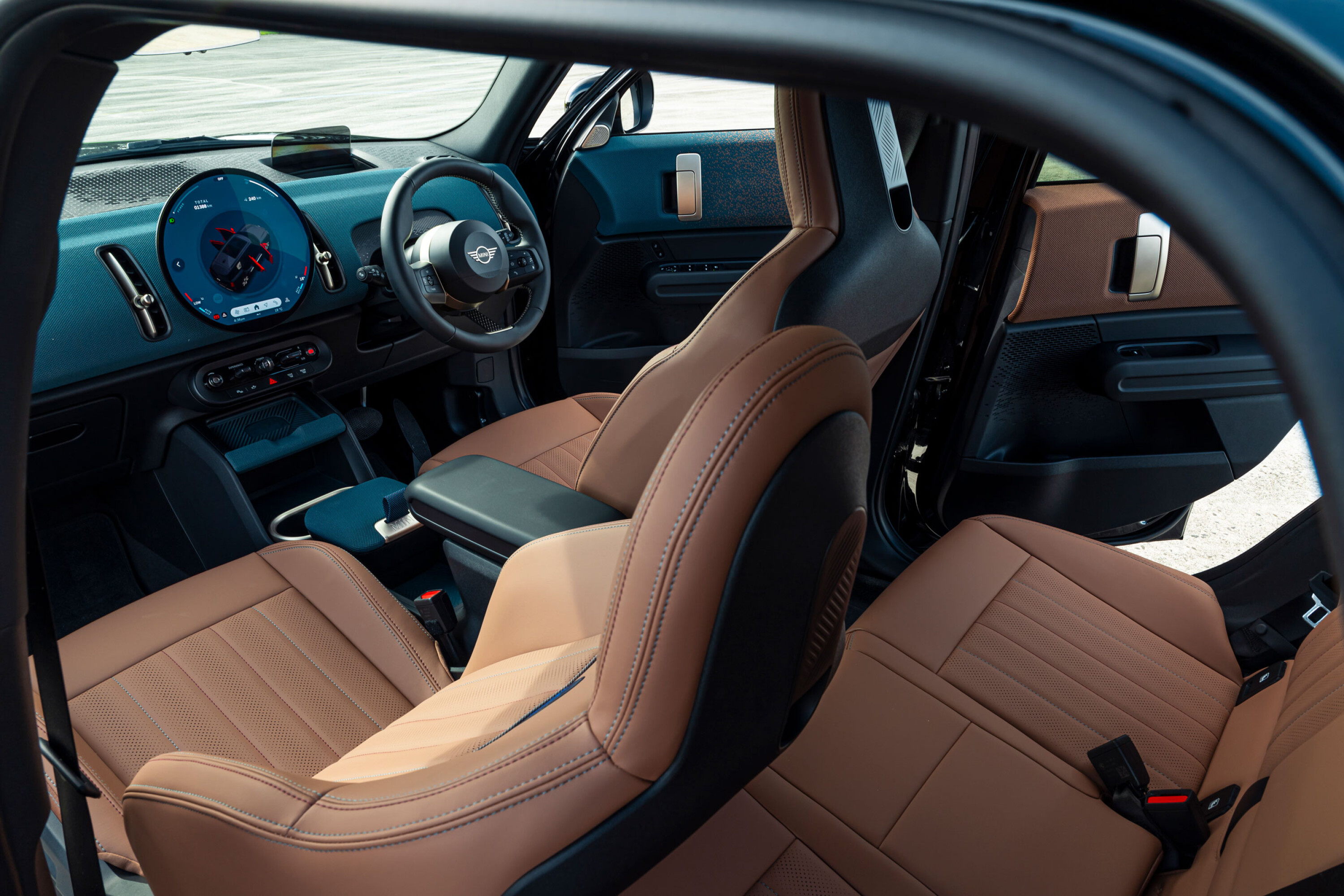
One thing it isn’t, however, is boring. After driving some of the more mainstream models in this year’s COTY field, slipping into the Countryman is like entering a world of hypercolour. If we gave out a gong for best interior then the Mini’s victory would be so resounding it’d make Australia’s clean sweep of the Ashes series in 2013-14 seem like a closely fought contest.
The interior’s showpiece is the knitted material used on the dash and doors, which is made entirely from recycled polyester and in our test car gradually transitions from blue into orange in much the same way as the cabin of the new McLaren W1 hypercar. The colour scheme pairs perfectly with the comfortable tan leather seats (the stitching on the upholstery uses different coloured thread for added visual interest) and the level of attention and finesse applied to almost every surface and detail is impressive. Even the middle spoke on the steering wheel, for example, is a taut cloth strap rather than a plastic or leather spar.
1
Importantly, the focus on style hasn’t come at the expense of functionality. The central OLED display, which is now bigger than ever at 240mm in diameter, is crisp, fast and intuitive to use. There’s a decent amount of front storage and while Mini has tweaked the key controls to give them some flair (you twist the starter toggle, for example, rather than press a button), it’s all fairly straightforward to use.
The catch is that such a fun and individual cabin doesn’t come cheap – our dual-motor Countryman SE All4 Favoured costs $75,990 before on-roads.
One thing that’s indisputable is the impressive performance delivered by the twin electric motors. With 230kW/494Nm on tap, the Countryman is quick and it sounds unique thanks to a pronounced Hans Zimmer soundscape that delivers different noises depending on your drive mode. But while it’s quick and fluid at speed, there was no hiding the Mini’s two-tonne heft through the lane-change manoeuvre where it felt top-heavy and cumbersome.
Mini Countryman SE All4 Specifications
| Price/as tested | $75,990/$75,990 |
|---|---|
| Drive | 2 x electric motors, 66.5kWh lithium-ion battery |
| Power | 230kW |
| Torque | 494Nm |
| Transmission | Single-speed reduction gear |
| Weight | 2000kg |
| L/W/H/WB | 4433/1843/1656/2692mm |
| Tyre | Continental Eco Contact 6Q 245/40 R20 (f/r) |
| Safety | Untested |
2024-25 Wheels Car of the Year
Maybe we shouldn’t be surprised; the Korean giant has dabbled with whimsical design before, as the three-door Veloster coupe/hatch proves. The Hyundai IONIQ 6 is not an anomaly, however; it’s a modern exploration of electrically-motivated aerodynamic extremes, somewhat over-zealously applied to the venerable three-box sedan.
Automotive designers love the idiom, “form follows function”. It dictates that a car’s styling should not compromise functional goals. With the IONIQ 6, the fulcrum has moved in favour of aerodynamic form over automotive function. The result is a car that is not a pragmatic or practical choice for buyers, but a purely personal one.
The IONIQ 6 starts with the Korean giant’s impressive and advanced e-GMP electric architecture also found under the IONIQ 5, this time with a svelte streamliner silhouette on top. On paper it’s an elegant marriage of modern tech and a classical aesthetic, albeit with a modern twist; in reality it’s an uncomfortable combination that’s more compromised than convincing.
The IONIQ 6 is Hyundai’s rival for the Tesla Model 3 and BYD Seal, and it’s the only one of those three that feels engineered by a car company, not a tech giant, as we said when we compared the three early in 2024. This means the IONIQ 6 has the dynamic hallmarks of a capable driver’s car. The ride is plush without feeling pillowy, yet has an agility that belies its 1968kg kerb weight. This is a car that’s fun to drive in a spirited fashion, but we do wish the steering was more immersive and communicative.
1
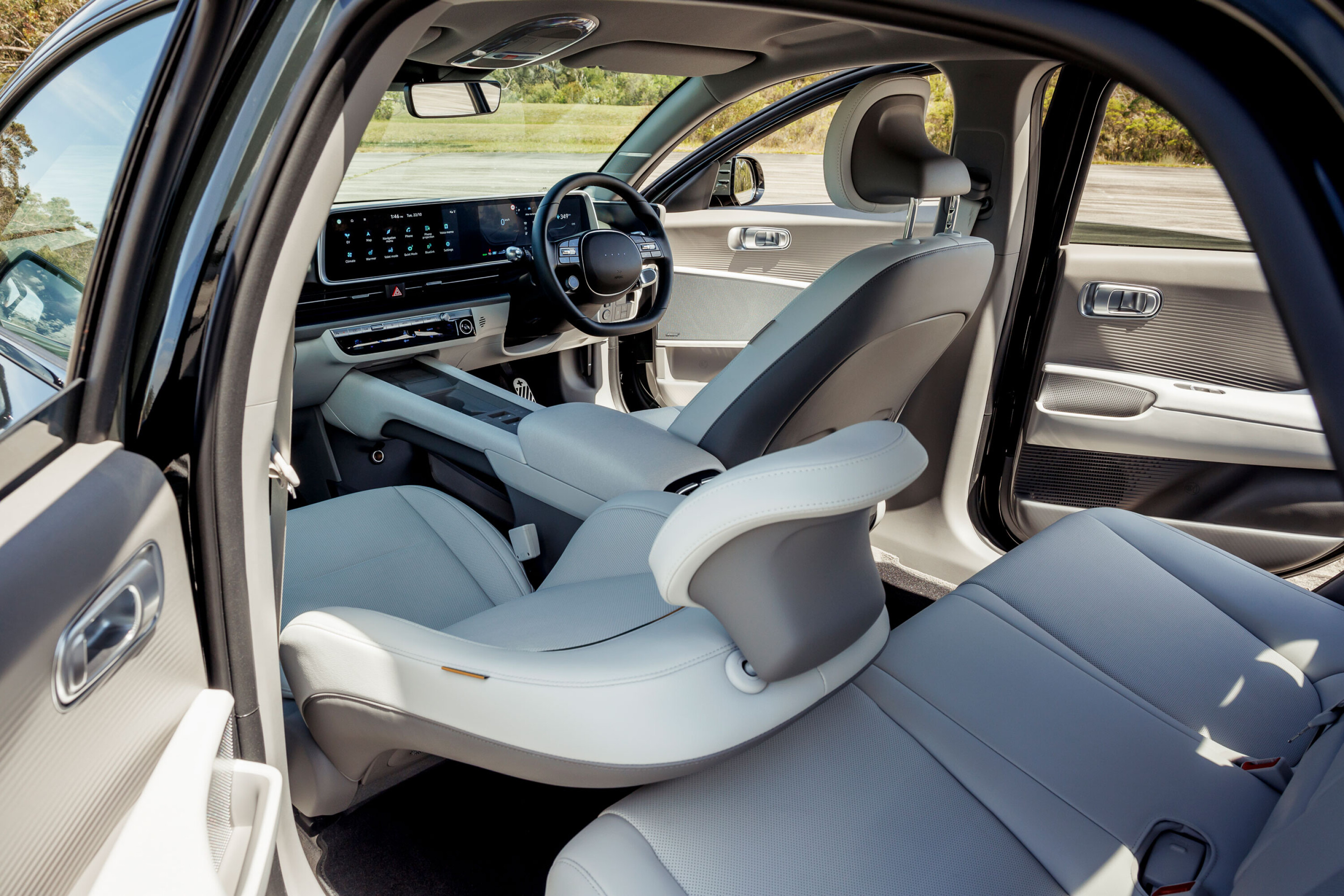
The cabin points more towards sophistication than cheap thrills. The classy sweeping digital dashboard and its well-sorted software is one highlight; materials choices on touchpoints and surfaces is another. The front row has the best seats in the house by some margin, not just because the cabin’s front-half layout and space are exceptional, but because the back is so very compromised. Headroom, footroom and storage space are three examples of where the IONIQ 6’s form has compromised its four-door functionality.
Hyundai IONIQ 6 Dynamiq RWD Specifications
| Price/as tested | $71,500 / $71,500 |
|---|---|
| Drive | Rear electric motor, 77.4kWh Li-ion battery |
| Power | 168kW |
| Torque | 350Nm |
| Transmission | Single speed, RWD |
| Weight | 1968kg (claimed) |
| Fuel | 14.3kW/100km |
| L/W/H/WB | 4855/1880/1495/2950mm |
| Tyre | Hankook Ventus S1 Evo3 225/55R18 |
| Safety | 5 stars (2022) |
2024-25 Wheels Car of the Year
No potential rival goes close to matching the Camry’s long-acknowledged low operating costs, reliability, and practicality.
With the coming of the latest generation, the list of virtues grows to include true refinement, spacious comfort and, now it’s hybrid-only, extremely thrifty fuel economy plus, most surprisingly, driving pleasure.
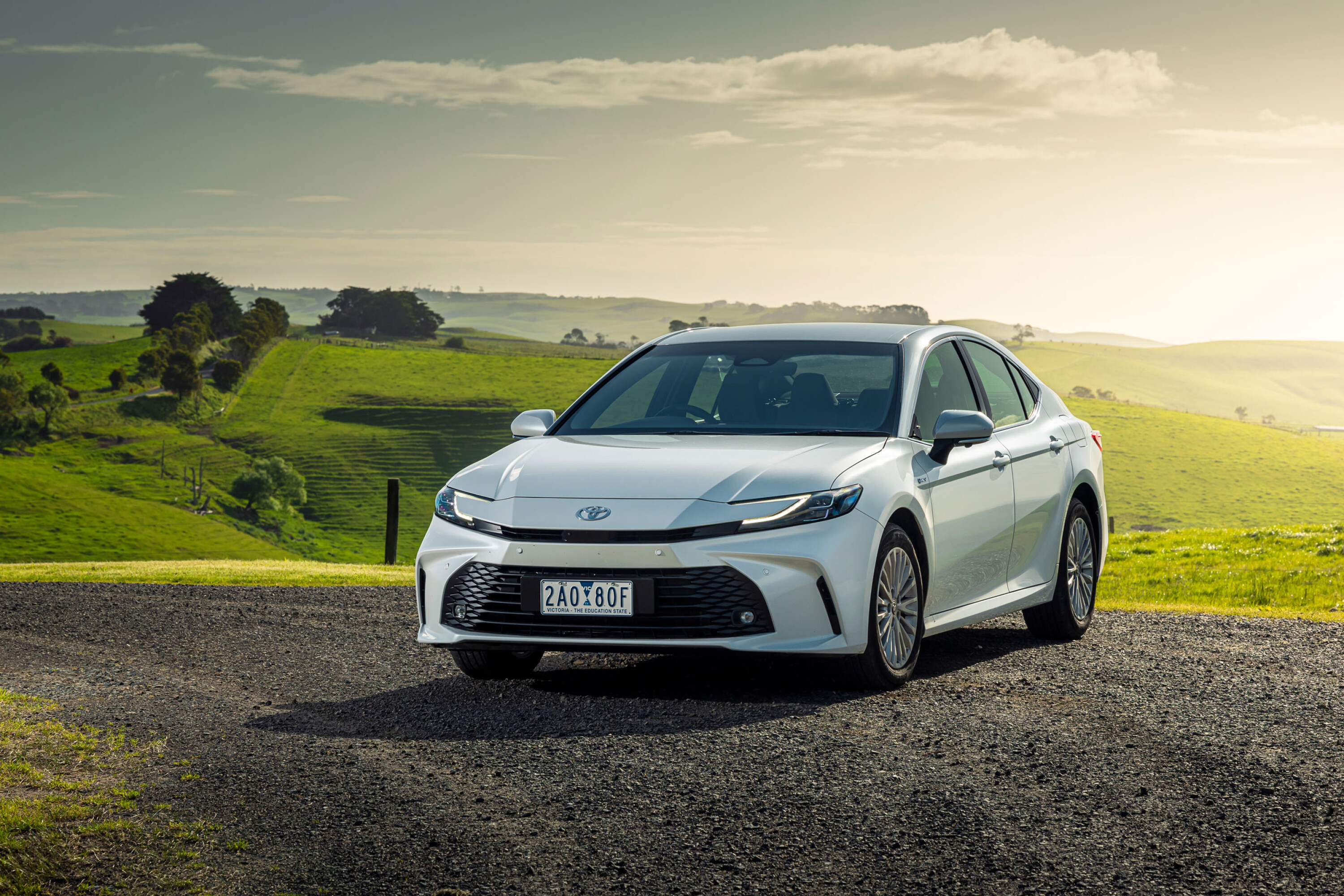
Today’s ninth-generation XV80 Camry is a worthy evolution of the previous XV70 model – the first based on Toyota’s TNGA-K platform (RAV4 and Kluger), and the Camry that lifted the dynamics and refinement above the mediocre XV50 that ran until 2018.
The new Camry is the latest evidence of a quarter of a century spent perfecting hybrid technology, and it shows. Driving it is to experience a wonderful powertrain, whose low-end EV-like performance gets you effortlessly around town. Quick and smooth, the experience feels more creamy and contemporary than ever. On the highway, more throttle is required to overtake but it’s so effortless that the erstwhile V6 is never missed. All this while delivery outstanding – think circa 4.0L/100km or less – economy, though admittedly the 2.5-litre DOHC four does need 95RON premium fuel. There’s no talk of a plug-in hybrid.
1
In as-tested Ascent Sport guise, and despite its conservative, evolutionary styling (the front doors and roof are carried over from the previous model), this is the sportiest Camry we’ve ever driven, as well as being the most comfortable. Subtle suspension and steering modifications (the power steering is now speed sensitive) and a reinforced structure mean this brilliant combination of qualities begins with quick, confidence-inspiring steering, relaxed yet stable and composed road manners, and surefooted braking via a short-travel pedal feel that is easy to modulate. Responsive handling, with just a touch of understeer, provides the Camry with the ability to be punted quickly and effortlessly on challenging roads. Yes, it’s true – here’s a Camry that is fun (perhaps pleasurable is more accurate) to drive.
The three-tiered model line-up (the SX has been dropped) includes Ascent and Ascent Sport, clustered closely together on price and equipment. The top-of-the-range SL jumps both in price and equipment. The Camry Ascent, starting from $39,990 plus on-road costs, includes 17-inch alloy wheels, LED headlights and running lights, a urethane steering wheel, keyless entry and start, dual-zone climate control, a 7.0-inch infotainment screen, six-speaker audio, and 7.0-inch driver’s display plus 360-degree cameras.
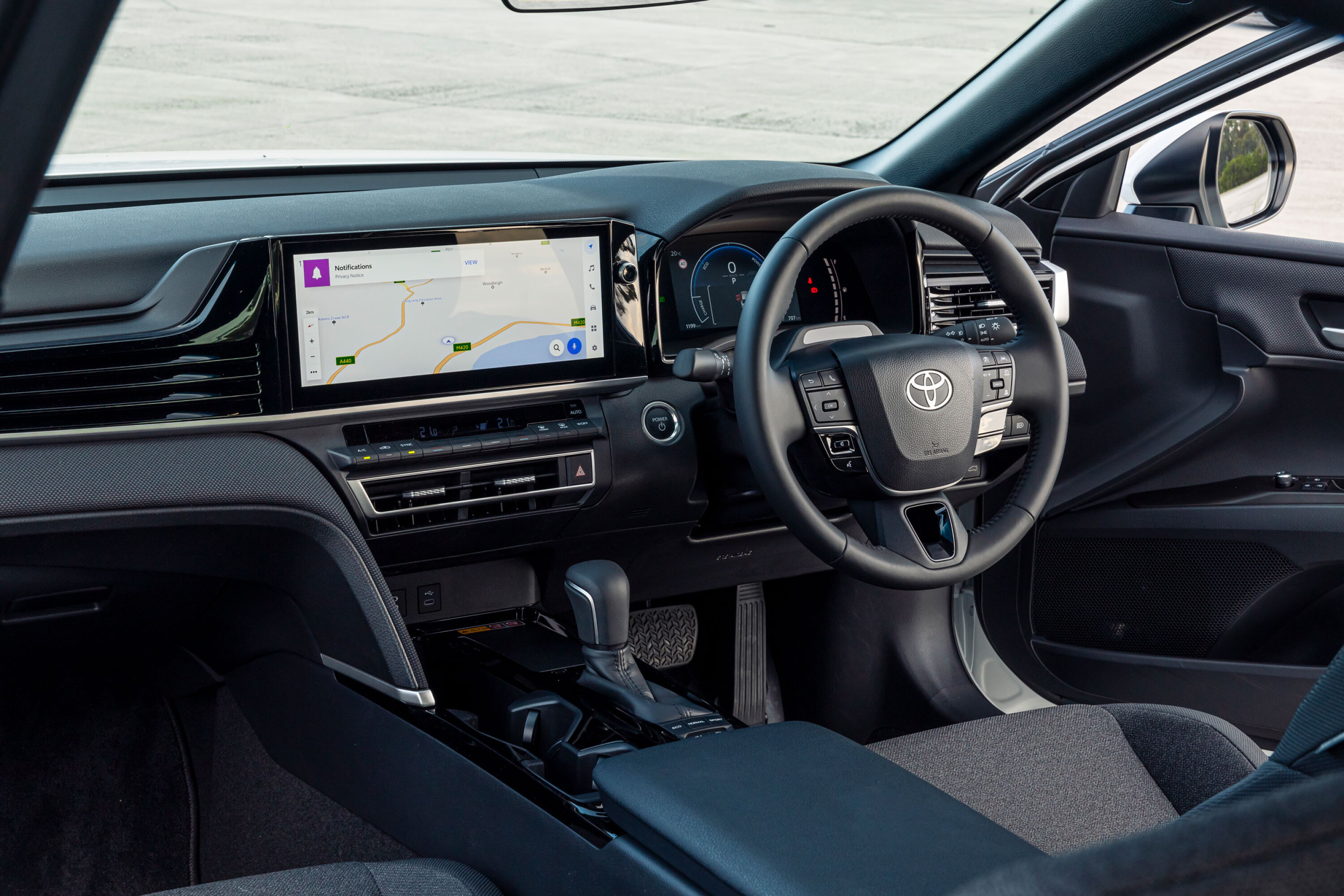
Our $42,990 Ascent Sport gains high-grade LED headlights and LED fog lights, a powered driver’s seat with adjustable lumbar support, leather-wrapped wheel, and a wireless phone charger. The monitor steps up to a 12.3-inch display and all systems are equipped with wireless CarPlay and Android Auto, AM/FM/DAB+ radio, Bluetooth connectivity, and navigation.
1
The flagship Camry SL kicks off from $53,990 and gets a much longer list of standard features including 18-inch alloy wheels, a panoramic sunroof, leather seat trim (we prefer the cloth), a power-adjustable passenger seat, powered steering column and driver’s memory function, heated and ventilated front seats, heated steering wheel, 12.3-inch digital instrument display, digital rear-view mirror, rain-sensing wipers, a head-up instrument display, and a nine-speaker JBL sound system.
The spacious cabin allows a tall passenger to sit behind an equally tall driver, while the front seats deliver plenty of lateral support, a further encouragement to driving this Camry hard. Sensibly, there are plenty of buttons for the important controls and the 7.0-inch digital instrument display is terrific, with legibility much improved over the previous model. The boot is vast and supplemented by 60/40 split folding seats. A rear parking camera is standard.
All Camrys come with a standard suite of driver-assistance features that includes automated emergency braking with pedestrian and cyclist detection and automatic high-beam headlamps, active cruise control, and a feature that helps the driver prepare for curves by gently applying the brakes.
Toyota Camry Ascent Sport Specifications
| Price | $42,990 |
|---|---|
| Engine | 2487cc 4cyl, dohc, 16v, hybrid |
| Power | 170kW (combined) |
| Torque | 221Nm @ 3600-5200rpm |
| Transmission | CVT |
| Weight | 1565kg |
| L/W/H/WB | 4920/1840/1445/2825mm |
| Tyre | Yokohama BluEarth GT 215/55R17 (f/r) |
| Safety | Five stars |
2024-25 Wheels Car of the Year
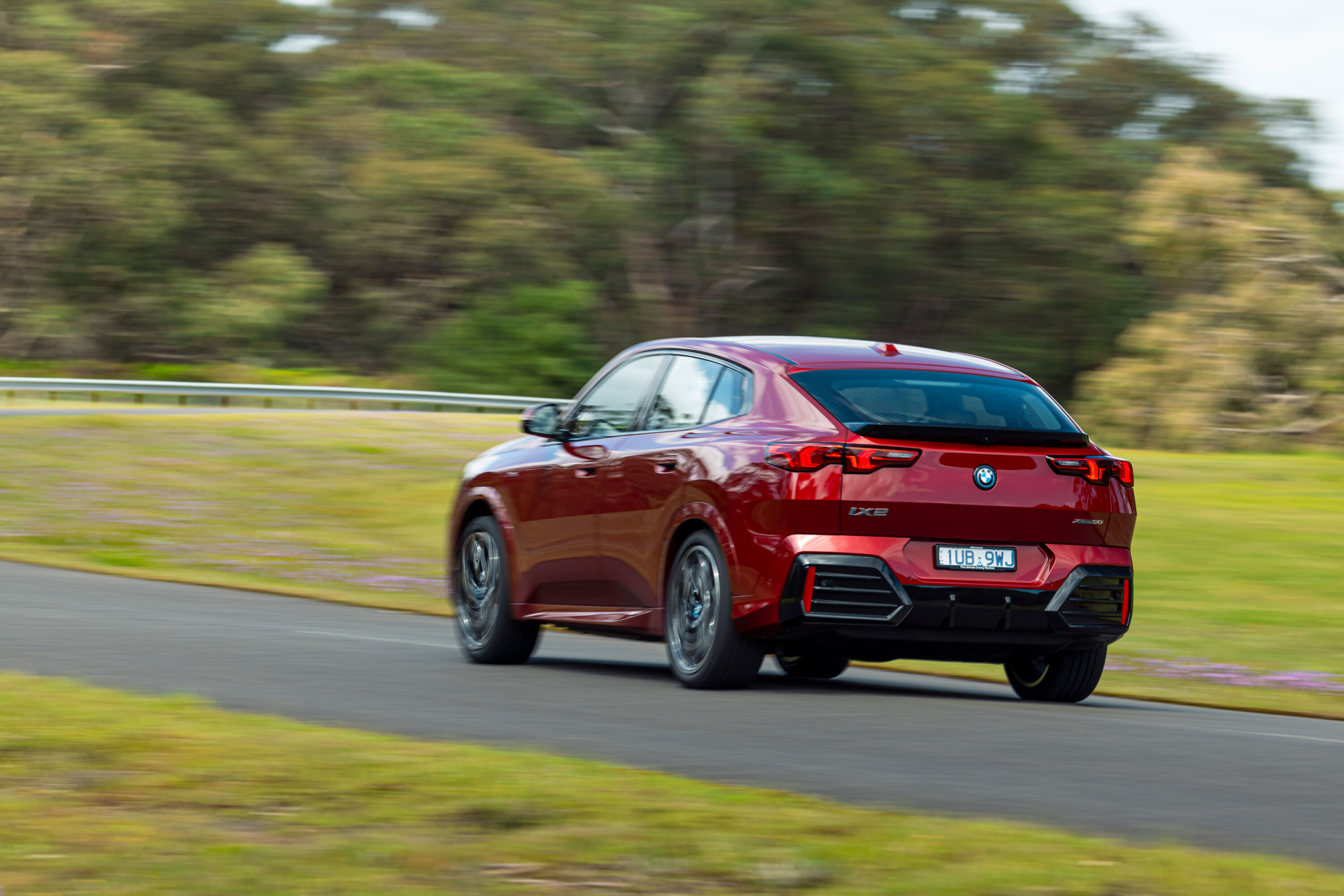
The iX2 lands with us in dual-motor xDrive 30 M Sport guise, aiming to show that ‘the ultimate driving machine’ doesn’t need petrol.
For what it’s worth, I think coupe SUVs are faintly ridiculous contrivances, usually offering far less practicality than their conventional siblings. BMW has instead boxed rather clever with the iX2, delivering a longer body than the iX1 which means that, at 525 litres, its cargo capacity is actually 30 litres greater. A short drive in the iX2 xDrive 30 M Sport is enough to convince you that some sort of case can be made, despite the hefty $85K asking price.
COTY judges found it was tight in the back, with cramped headroom. It rides firmly, again compromising its quasi-SUV credentials. Its range of 395km isn’t stellar.
Set against that is the undeniable fact that it’s bloody good fun to drive.You feel special at the wheel, surrounded by some quality materials, sitting in deeply bolstered sports seats and gripping the fat M-branded steering wheel. I feel a little sad that the clarity of the instrument panel, once an area where BMW led the world, is compromised by trying to deliver too much information all at once.
1
It’s quick though, getting to 100km/h in just 5.6sec. It has a really strong front end that eggs you on to pitch it into corners. Drive it hard and you’ll begin to appreciate the consistency of its control weights, the way the ESC tune in Sport mode rewards you if it thinks you know what you’re doing, and the instant urge delivered by the twin electric motors. It disguises its 2020kg bulk adroitly and our test car rode on quality Pirelli P Zero rubber. It’s clear that BMW has spent a long time finessing its chassis dynamics.
BMW iX2 xDrive 30 M Sport Specifications
| Price/as tested | $85,700/$90,853 |
|---|---|
| Drive | 2 x electric motors, 65kWh lithium-ion battery |
| Power | 230kW |
| Torque | 494Nm |
| Transmission | Single-speed reduction gear |
| Weight | 2020kg |
| L/W/H/WB | 4554/1845/1560/2692mm |
| Tyre | Pirelli P Zero 245/40R20 (f/r) |
| Safety | Untested |
2024-25 Wheels Car of the Year
But the Chinese aren’t just focused on lithium-ion and electromagnets. They want a bite of the internal combustion pie as well.
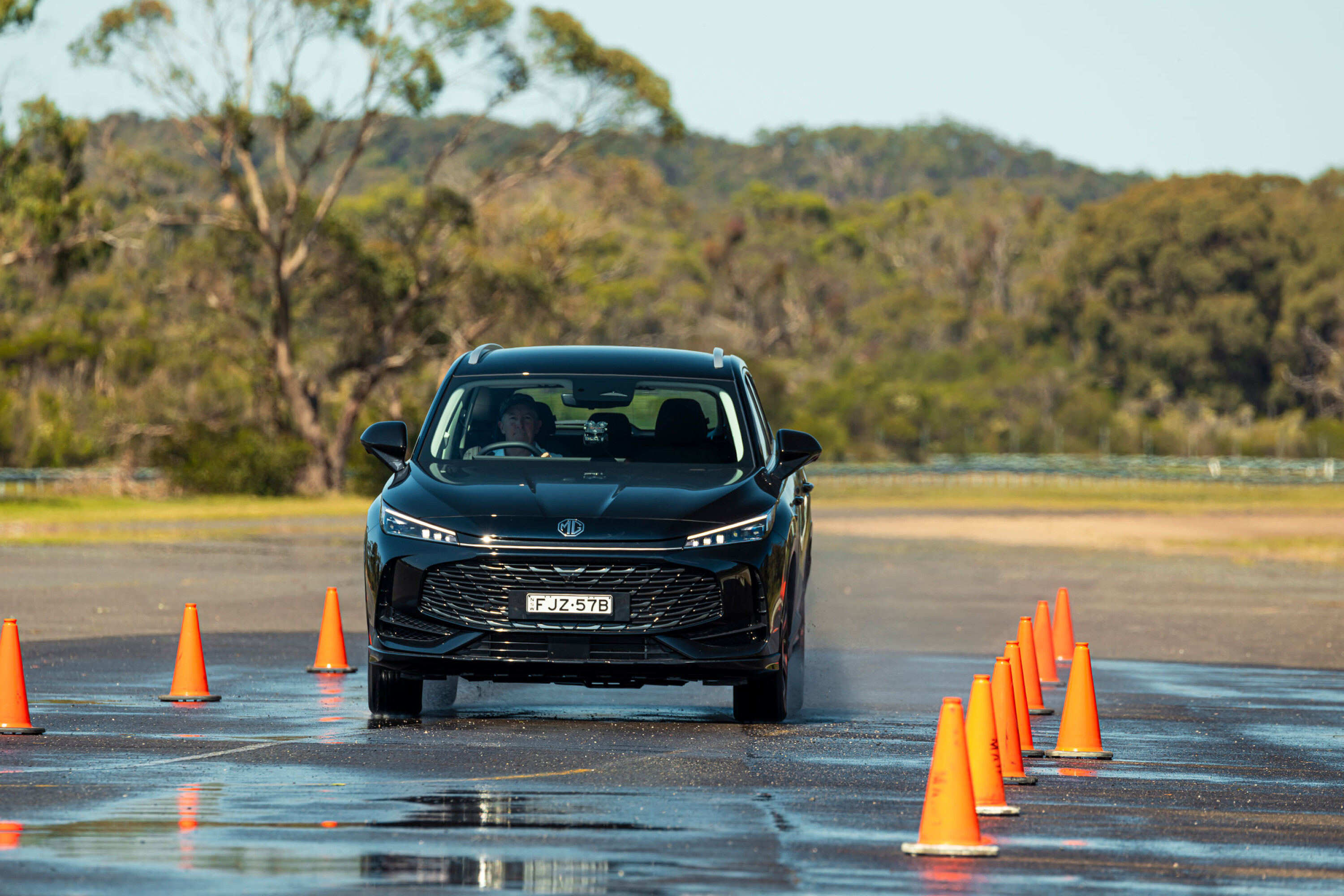
Enter the new MG HS. It took just a quick glance by the judges to recognise that this second-generation mid-size SUV has come a long way from its predecessor.
A decidedly European, smartly inoffensive exterior conceals a deeply impressive new interior. Even in base Vibe guise – our car for COTY – you get dual 12.3-inch screens, a very Volkswagen flat-bottom steering wheel and a lovely mix of black upholstery, ubiquitous piano blacks and just the right amount of brightwork.
It’s also bigger. Space in the back is also hugely impressive, with one of the most lounge-like rear seats of any car in the field. The boot is also a generous 507 litres, although the tailgate seems engineered to be hoisted by a motor. It’s a bit too heavy for manual operation in base Vibe guise, if you ask us.
1
While many owners probably won’t find themselves attempting to dip as deeply into the MG HS’s dynamics as COTY testing would, there’s no denying this is an awful lot of mid-size SUV for the money. Just $37,999 drive-away – for the black base Vibe we had at COTY in Victoria – gets you MG’s full active safety offering, an electrically adjustable driver’s seat and a whole lot of space. Not to mention a 10-year/unlimited-kilometre warranty. For the value criteria, the HS had it licked.
MG HS Vibe Specifications
| Price/as tested | $33,990/$37,999 (d/a) |
|---|---|
| Engine | 1496cc 4cyl, dohc, 16v, turbo |
| Power | 125kW @ 5600rpm |
| Torque | 275Nm @ 1700rpm |
| Transmission | 7-speed dual-clutch |
| Weight | 1554kg |
| L/W/H/WB | 4655/1890/1655/2765mm |
| Tyre | Maxxis Bravo HPM5 215/60R18 (f/r) |
| Safety | Five stars |
2024-25 Wheels Car of the Year
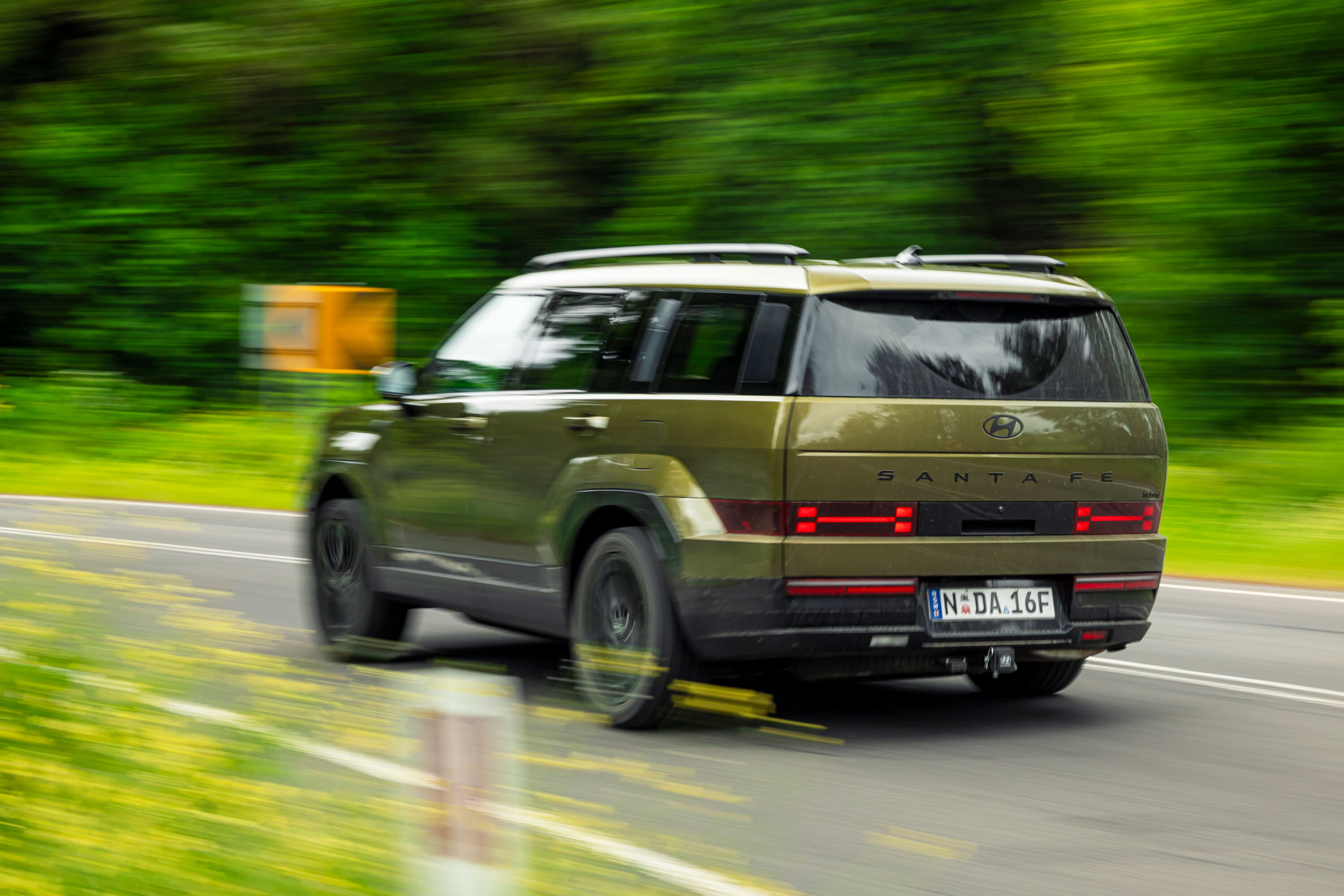
Hyundai wants the Santa Fe to be noticed because the previous four generations were too often overlooked by car shoppers.
The new Santa Fe hit Australian showrooms mid-year priced $10,000 above the outgoing model, which design changes alone can’t justify. All models are powered by a hybridised 172kW/367Nm 1.6-litre turbocharged petrol engine driving either the front wheels or all four. Hyundai will add a non-hybrid 206kW 2.5-litre turbo in due course, replacing the previous generation’s 3.5-litre V6. But diesel is no longer part of the Santa Fe range.
For now, the four-cylinder hybrid is where it’s at, and despite being the smallest Santa Fe engine ever, it delivers. Even though the Santa Fe Calligraphy we tested weighs in at 2105kg, the hybrid engine and six-speed automatic transmission do a more than adequate job of meeting daily driving demands.
There is a touch of throttle lag below 2500rpm, which can make the car feel a little lethargic, most obvious in Eco mode which is prioritising fuel economy. Move out of Eco to Normal mode and the engine responds better and is also more willing to smoothly drop gears to give the driver what they want. That said, the engine can become coarse when put under pressure.
The hybrid powertrain’s energy recuperation system is commendably invisible. There’s no jerkiness transitioning from regenerative braking to recuperation. It’s also clearly doing its primary job, because we recorded 6.6L/100km on our very hilly 50km open-road loop, just one litre higher than its official claim.
1
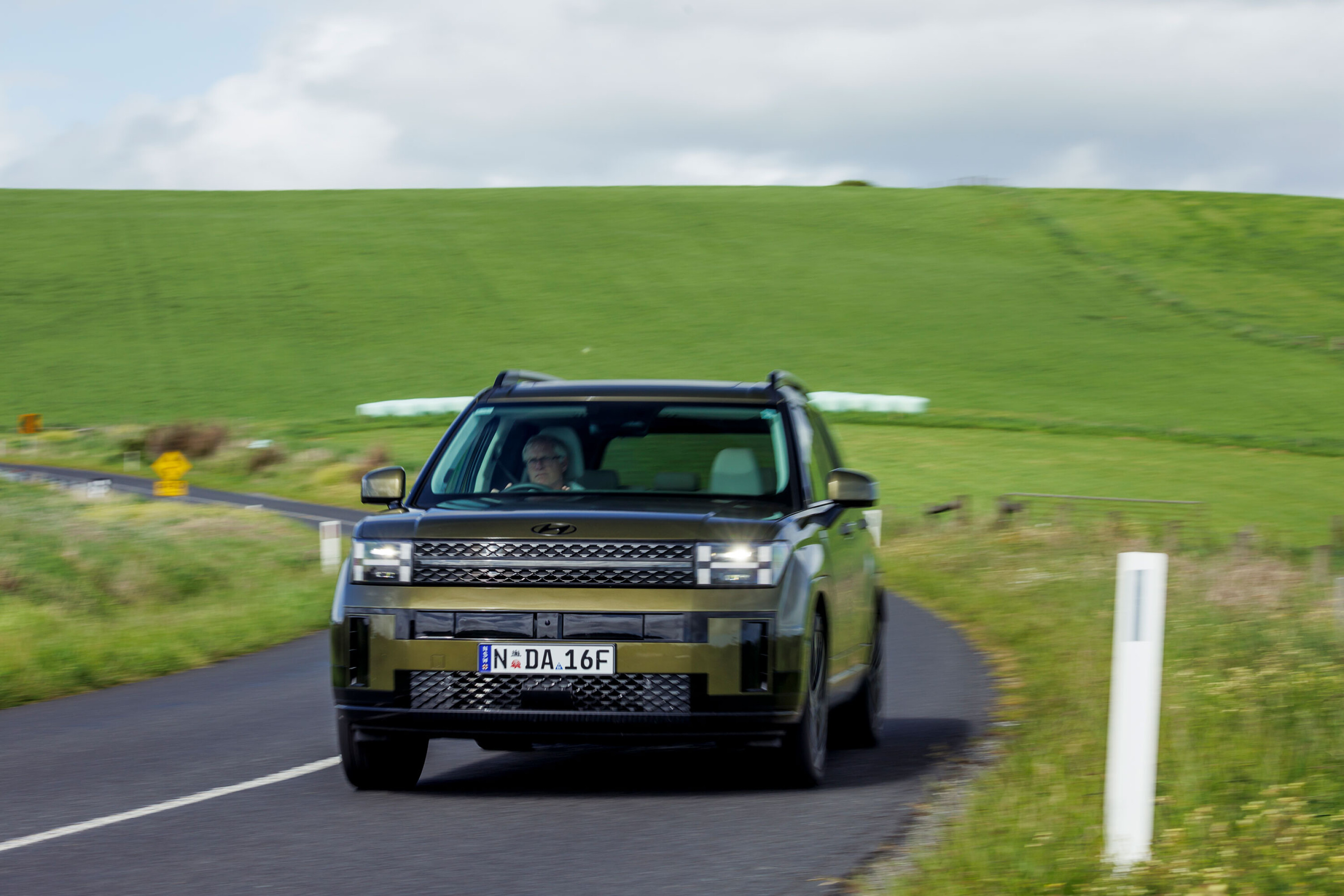
When it comes to ride quality, the Santa Fe is less impressive, but that’s more a reflection of its highly polished rivals than any real-world deficiency. The Santa Fe is another Hyundai whose suspension has not specifically been tuned for Australian conditions, the factory relying instead on historical data. This results in a vehicle that’s busier than its rivals, and also noisier on its Kumho Ecsta tyres.
The ride isn’t overly terse or overactive, just without the suppleness to match the Kluger or indeed its Kia Sorento stablemate. The tyres and suspension tune do make up for it dynamically; this may be a family truckster, but it also has the poise and the grip to make winding roads more enjoyable.
While some may debate the importance of chassis dynamics for a family SUV, Wheels sees merit in driving competence and confidence. We’d much rather a dynamically proficient family vehicle than the alternative. But still, the wider target market will be more focused on the Santa Fe’s space and practicality than any dynamic overtones.
1
The new body is bigger: 45mm longer, 10mm taller, and riding on a 50mm-longer wheelbase, which liberates more legroom and cargo space inside. The boxy body also has some thoughtful touches, like the hidden handhold on the C-pillar which makes accessing rooftop loads easier, and also for clambering into the third row. The biggest dimensional change, however, has to be the boot opening which is 145mm wider, giving loads more load width. The boot floor’s loading height is lower, too.
The boot is a whopper in two-row mode (628 litres), but buyers will need to tick a few rooftop luggage options if they’re planning roadtrips with all three rows occupied because luggage space is almost non-existent in this configuration. Still, that’s the same for any SUV in this class, and Hyundai’s extensive – and affordable – options list again highlights the company’s family focus during development.
The range incorporates three model grades – Santa Fe, Elite and Calligraphy – and all come with three rows of seating in a 2+3+2 configuration. There’s a second Calligraphy model that replaces the bench middle row with two individual seats – handy for separating offspring that like to niggle and tease, and for walk-thru access to the third row.
We chose to test the top-spec Calligraphy because it’s expected to outsell both the base model and the Elite combined. It puts everything on the table for buyers, but does cost $75,000 plus on-roads.
1
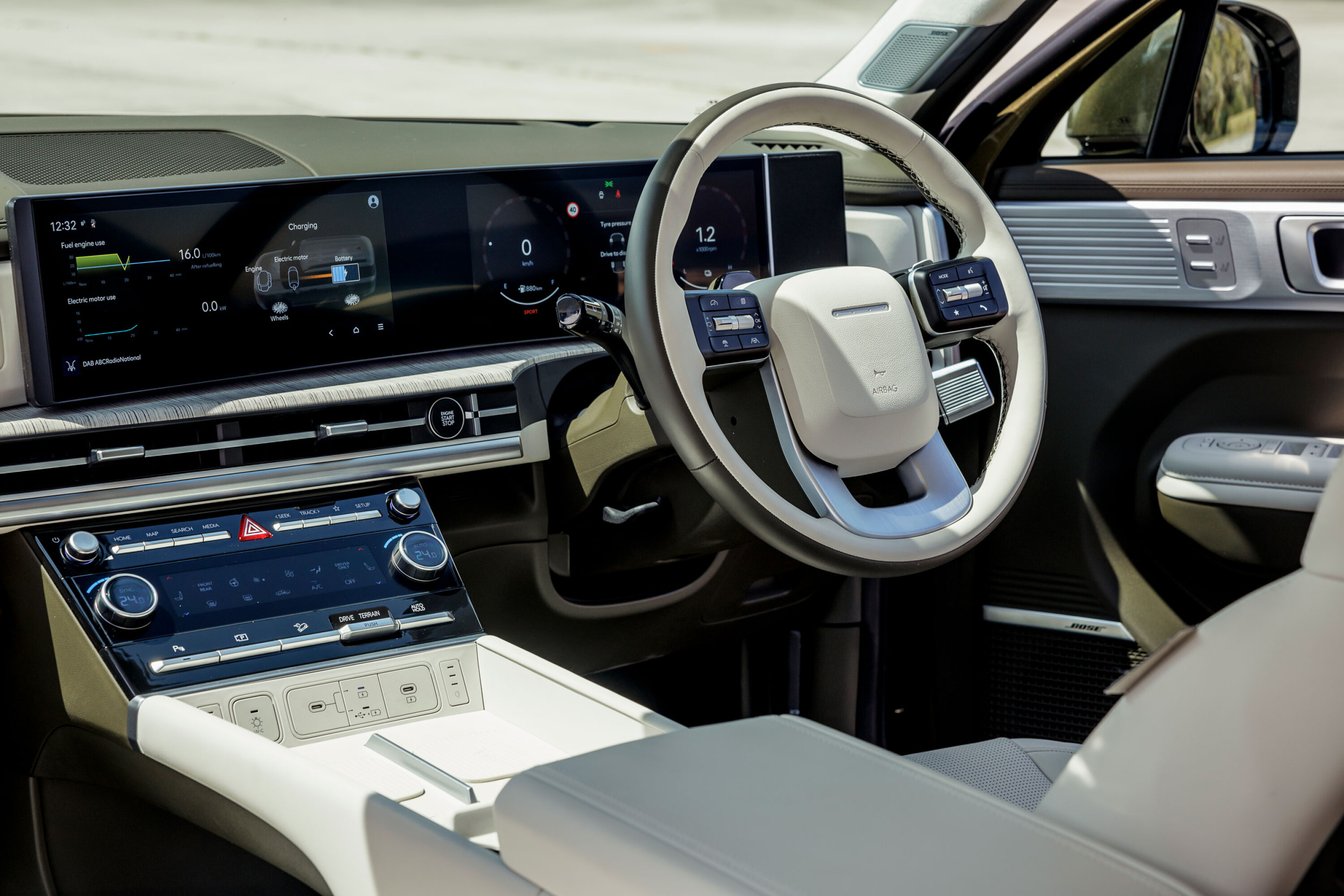
The cabin continues the boxy theme with amusing attention to detail, and also makes use of modern materials to convey quality and class. Again, Hyundai’s thoughtfulness and innovation shine through. For starters, dual wireless phone chargers speak to its family friendliness, as do the many useful storage spaces – including the centre console’s double-hinged lid that opens for rear occupants as well.
Kudos to Hyundai for also resisting the temptation to go all-in with touchscreen controls and retain actual buttons for the dual-zone climate control and other oft-used systems as well. And for adopting the one-touch speed warning override as debuted on Genesis models earlier this year, doing much to fix one of the Santa Fe’s most tedious features.
The second row has plenty of legroom and headroom, even with the Calligraphy’s huge sunroof, and the third row can accommodate adults at a push (if the second row compromises its legroom), but is more suited to children.
The more we delved into the Santa Fe, the more we understood the lengths Hyundai has gone to address buyer needs and concerns. This new Santa Fe is a thoughtfully designed and brilliantly executed family SUV that improves on the previous generation in all the right areas.
Hyundai Santa Fe Calligraphy Specifications
| Price/as tested | $75,000/$75,990 |
|---|---|
| Drive | 1598cc 4cyl, dohc, 16v, turbo, hybrid |
| Power | 172kW @ 5500rpm |
| Torque | 367Nm @ 1500-4500rpm |
| Transmission | 6-speed automatic |
| Weight | 2105kg |
| L/W/H/WB | 4830/1900/1770/2815mm |
| Tyre | Kumho Ecsta PS71 255/45R20 (f/r) |
| Safety | Untested |
