
This saddens us. If you tried to hazard a guess at the sales split between the Mazda6 and the Mazda CX-5 SUV last year, what do you think it’d be? Well, we know that the SUV is going to be more popular, so let’s wing in with an extreme first stab. One Mazda6 sold for every 10 CX-5s? Not even close. It’s nearer one in 17 which is why, along with new ADR regulations, Mazda has quietly deleted the 6 from its local line up.
It’s all a far cry from the heady days of 2005 when Mazda couldn’t get enough cars to satisfy the demand from Australia. Nearly 15,000 cars found owners Down Under that year, helped by the fact that Mazda only sold one fairly unappetising SUV.
Fast forward to 2015, and the third-gen (GL) version of the Mazda6 was shifting over 5000 units per year, helped by a spec upgrade with the MZD Connect infotainment system and additional safety gear included in the i-ActiveSense suite. Mazda was still clearly invested in its flagship passenger car.
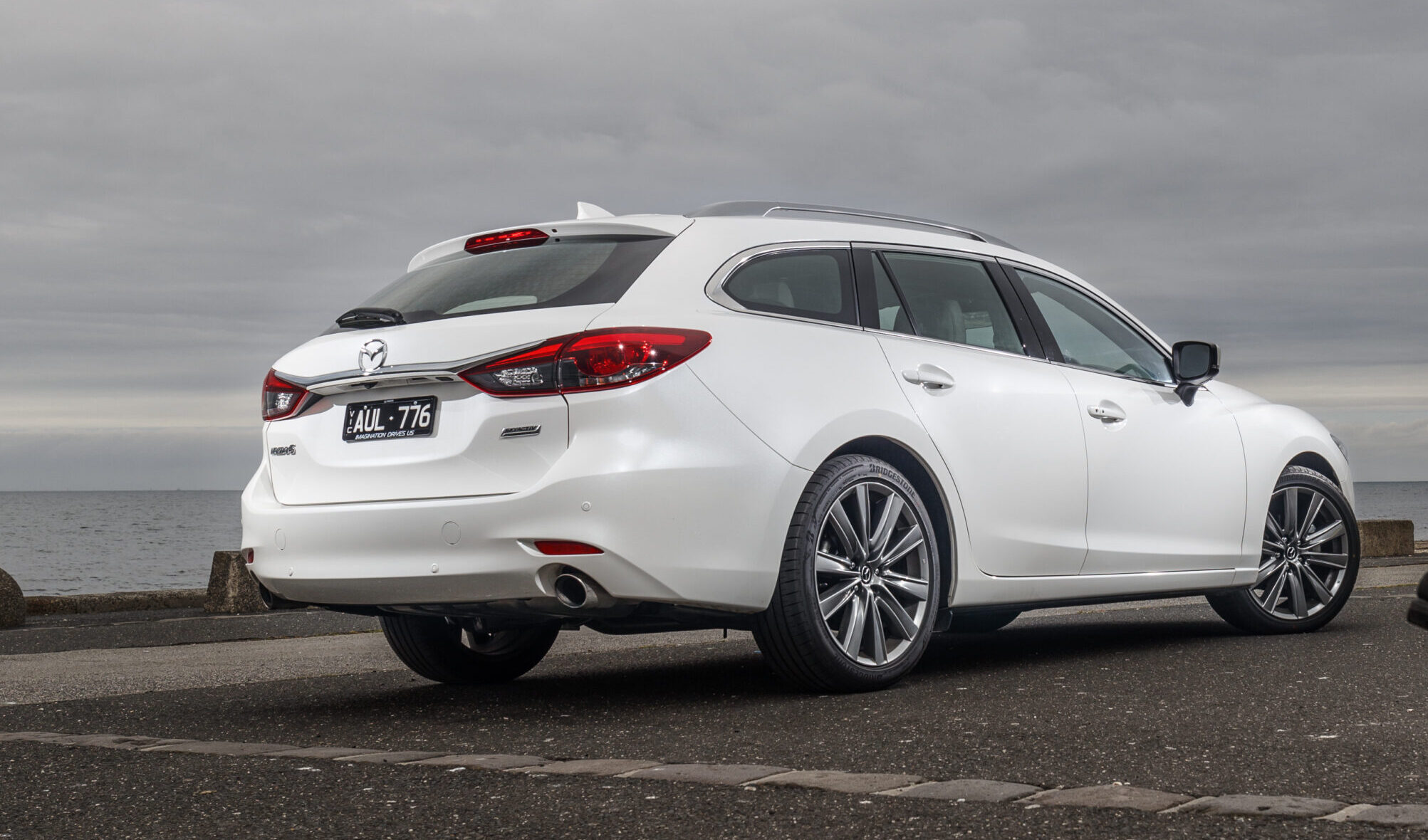
It wasn’t to last though. A decade ago, the writing was already on the wall for the traditional sedan and wagon. The CX-5 was selling five times the numbers of the Mazda6, and the Hiroshima company had backup in the form of the CX-3 and the big CX-9. Buyer tastes had changed decisively, but since when did fashion have a great deal with common sense?
Wheels attempted to make sense of what was then a fairly crowded field when it threw the Mazda6 GT sedan in against nine rivals in the September 2016 issue, but it became clear that we’d chosen the least competent 6 to pitch into the fray. While the diesel wagon excelled, the GT sedan’s big wheels, long wheelbase and so-so economy of its atmo 2.5-litre petrol engine saw it only manage seventh spot. Nathan Ponchard even reckoned the diesel was more refined than the petrol unit.
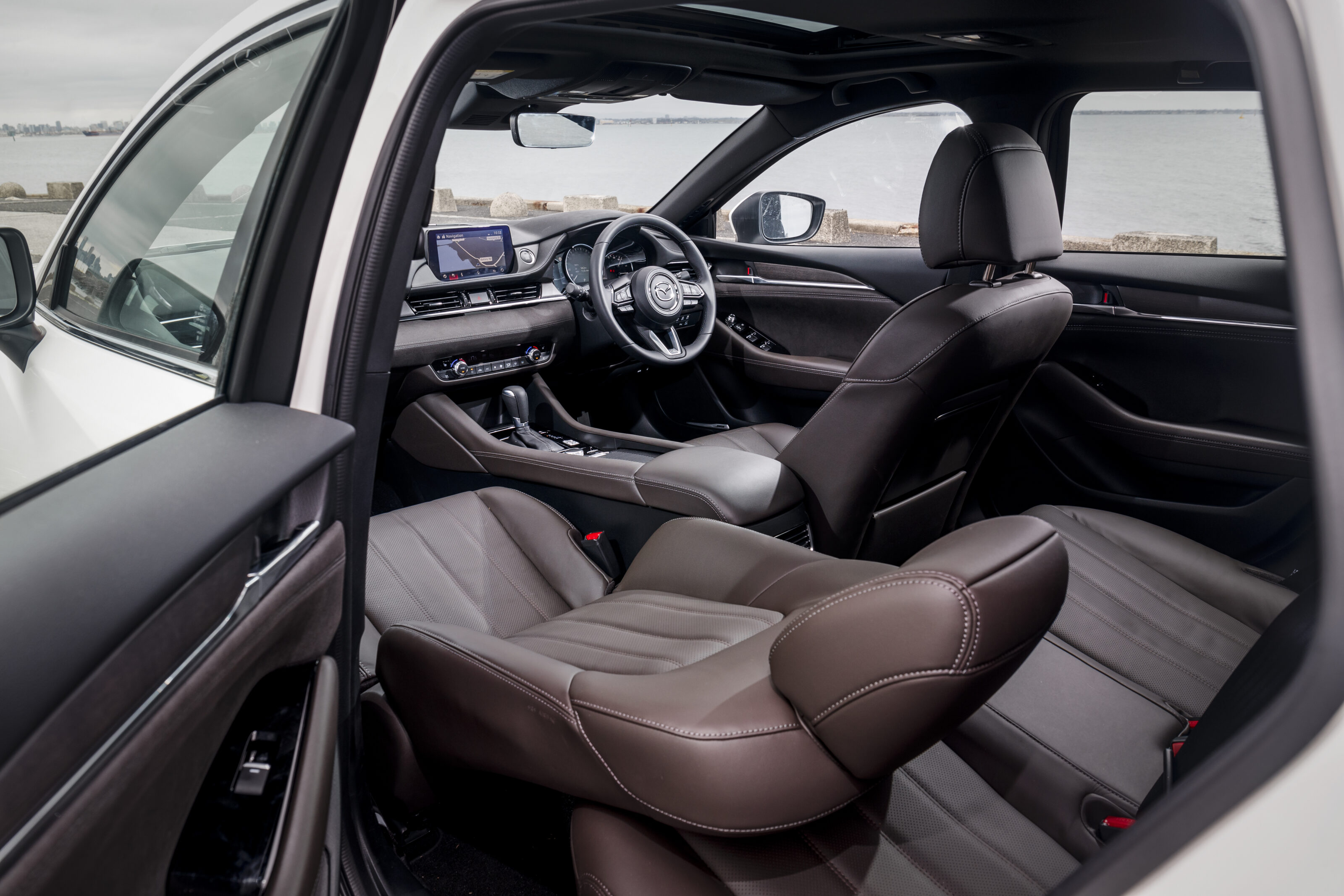
So it’s fair to say that the GL-generation Mazda6 was a car that was extremely spec-dependent. Many of the medium-rangers that we put it up against have, in the interim, taken their leave of the Aussie market. We can no longer buy a new Ford Mondeo, Subaru Liberty, Peugeot 508, Kia Optima, Volkswagen Passat or Holden Commodore. Timing was indeed against the Mazda6. Quite aside from the fact that it arrived just as SUVs were really starting to kick goals in the sales charts, its best version, the diesel, landed just as the market for diesel passenger cars started to plummet.
Mazda has introduced the all-electric Mazda EZ-6 in China – effectively a reskinned Deepal L07 – but the prospect of trying to sell a battery-electric sedan to Australian customers is not one that has tempted the local arm, despite some recent ‘wait and see’ statements. Even the range-extended electric version doesn’t look likely to make landfall. Scheduled to be called the Mazda6e when it goes on sale in Europe in mid-2025, it’ll get a larger 80kWh battery than the Chinese version, good for 552km WLTP range. Mazda needs all the NVES help it can get.
Mazda Australia’s hand was forced when the 6 was axed in Japan in quarter two of last year. Production continued, but hopes for a version with one of Mazda’s new-gen straight-six engines were dashed. After 22 years on sale in Australia, the final models have already left the lines, so dealer stock is your best bet if you want to snag one of the last of the last. It was a good car, but one that served as an unfortunate case study in getting your timing wrong. In truth, it probably deserved better.
The forgotten fast one
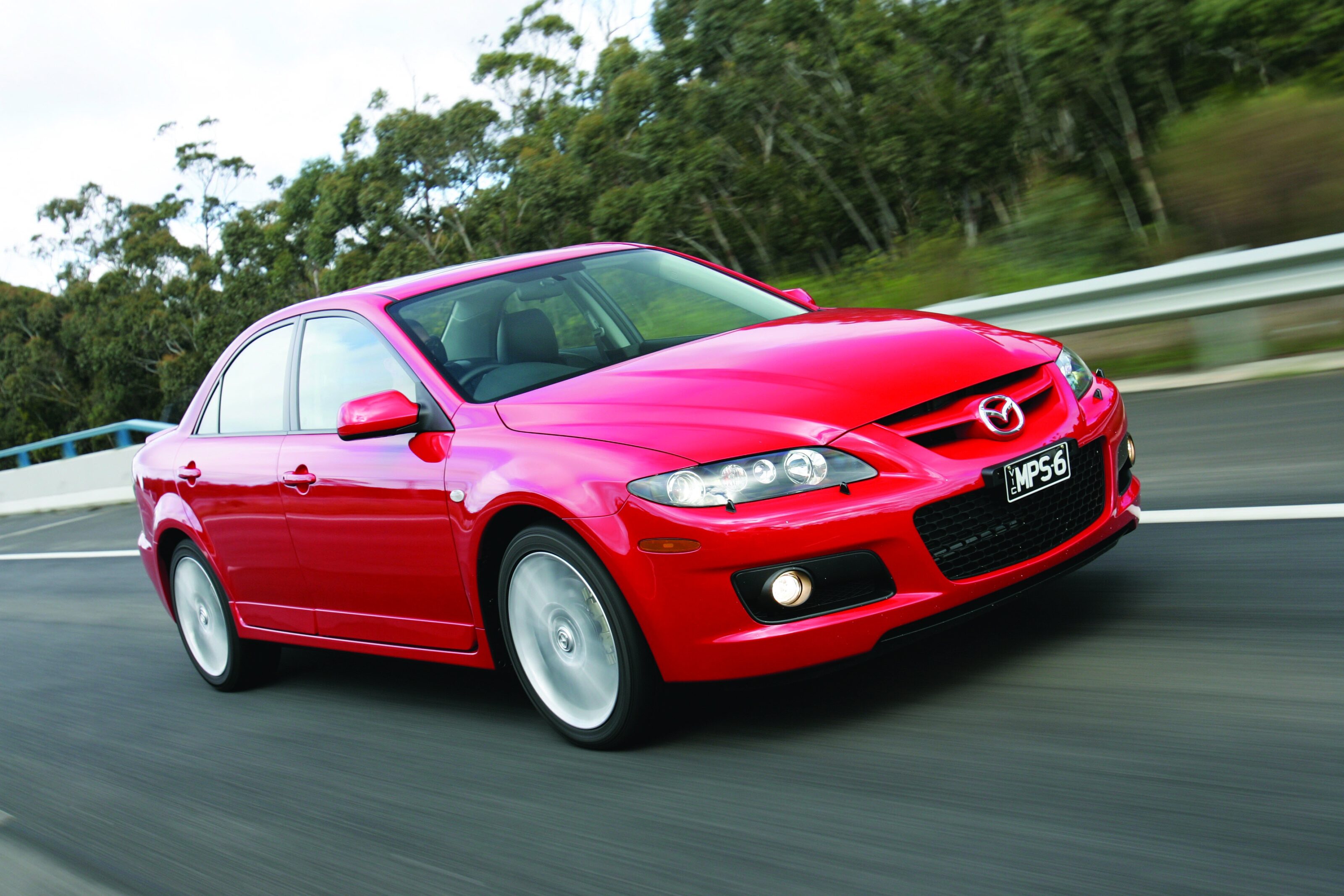
AN AWD SEDAN with a six-speed manual gearbox, 200kW at the crank, and a limited-slip differential sounds like a winner, but the Mazda6 MPS somehow seemed to emerge as less than the sum of its parts.
It saw off the Subaru Liberty GT in the only Wheels comparo it was entered into (Dec 2005), but reliability issues with the 2.3-litre four (rods, tubos, valvetrain) have seen many disappear from our roads.
Back in ’05, you’d have been better advised to sit on your $50k for a year and wait for the heavy-hitting VE Commodore SS.
Mercedes-Benz Australia has launched a new special edition based on the entry-level C-Class variant, the C 200 Sport Edition, and kicks off with special drive away pricing.
Priced from $88,400 plus on-road costs – or $600 more than the C 200 – the C 200 Sport Edition is being offered with a special $92,500 drive away price, which is around $2000 less than the C 200 depending on your state.
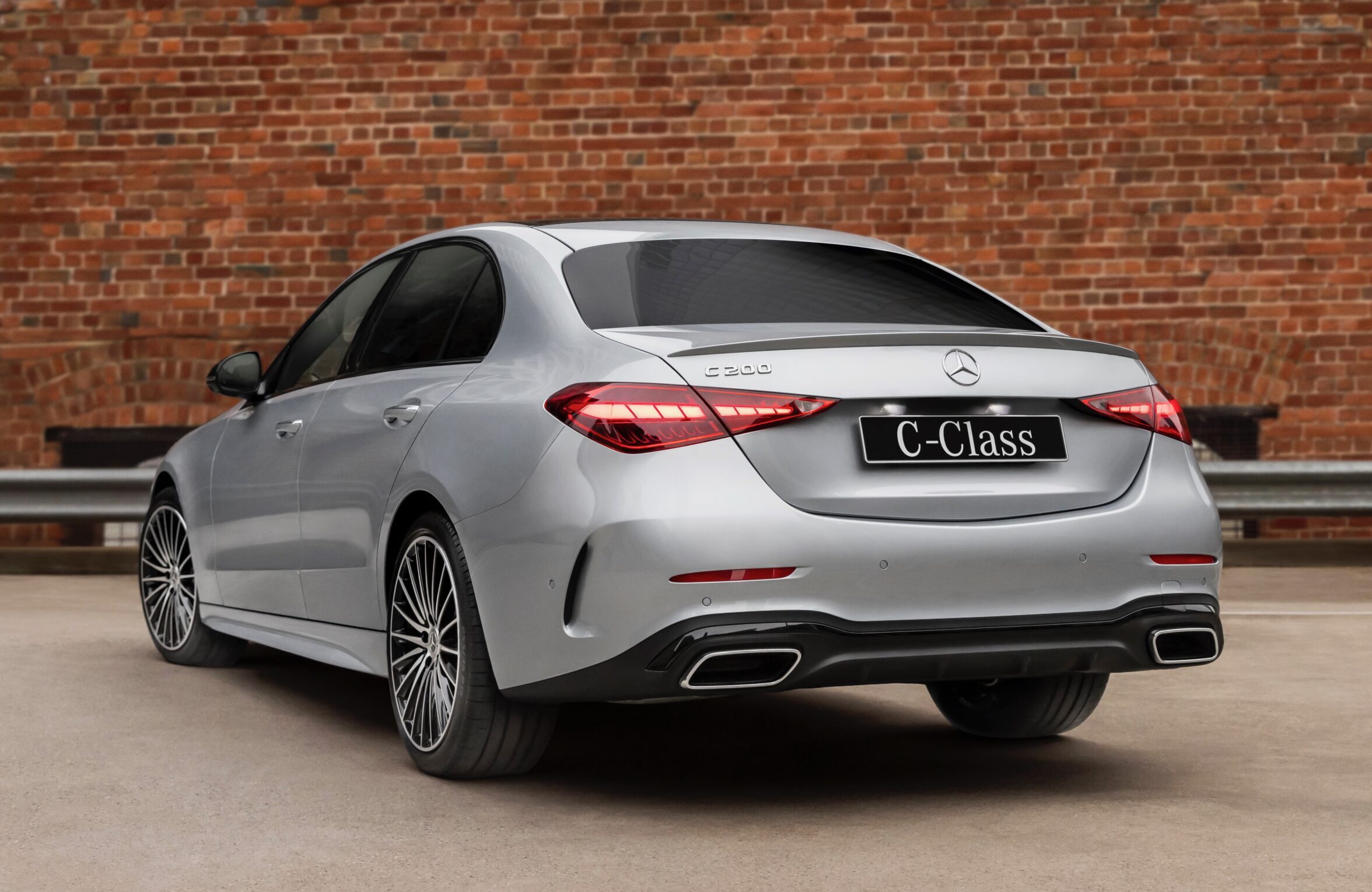
In addition to special pricing, the C 200 Sport Edition also adds more features, including larger 19-inch AMG alloy wheels, rear privacy glass, an AMG lip spoiler and the Night Package with gloss black exterior trimmings on the mirror housings, window line and radiator shell Louvre.
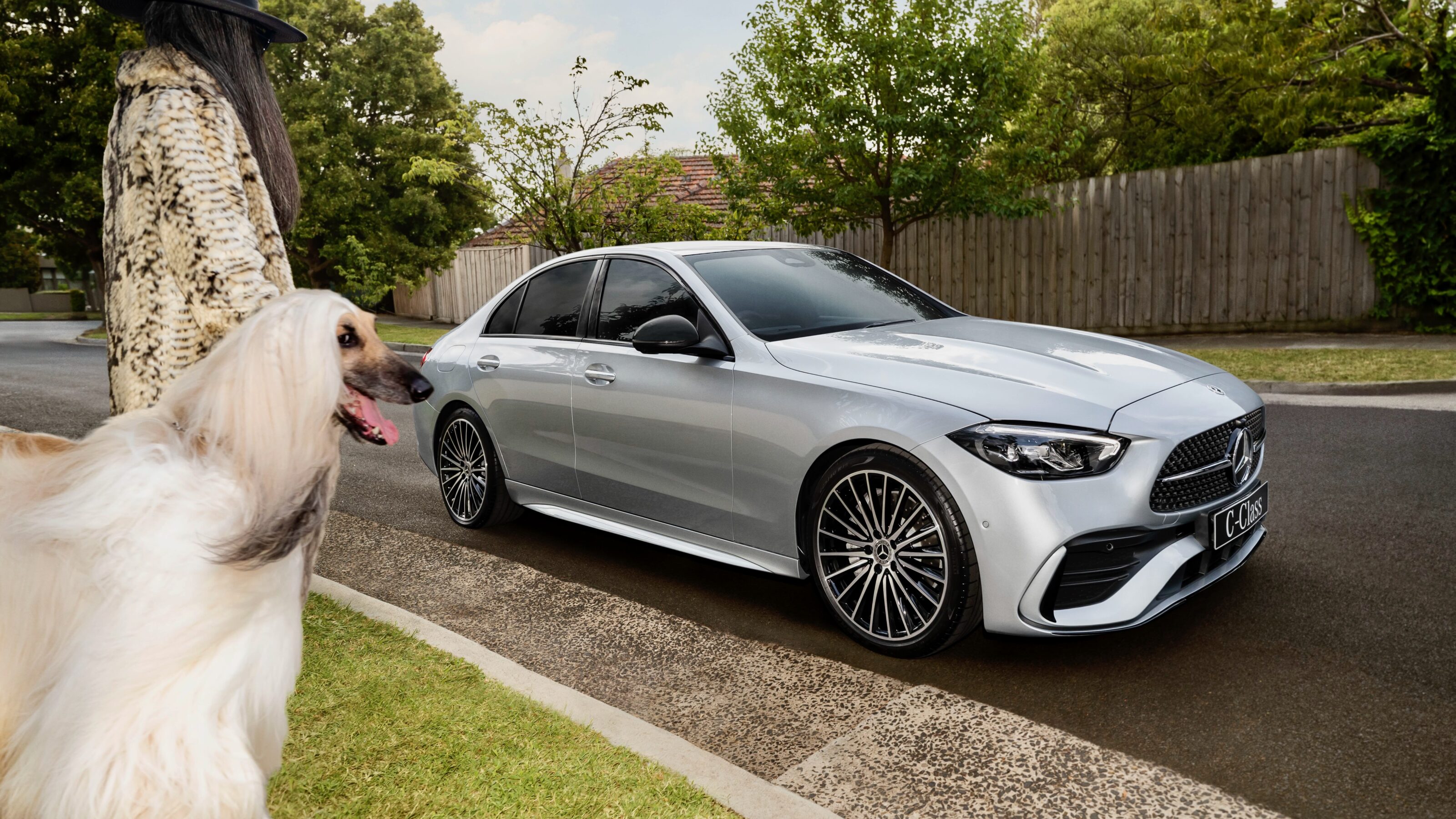
That’s on top of the regular C 200’s standard equipment, which includes heated and electric front seats with memory functionality, dual-zone climate control, an 11.9-inch touchscreen with the company’s ‘MBUX’ software, a 12.3-inch digital driver’s display, wireless smartphone mirroring and a wireless phone charger.
Adaptive high beam, a 360-degree camera, keyless entry and start with an electric bootlid, auto-folding and heated mirrors and adaptive dampers also feature as standard on the C 200.

Safety equipment includes autonomous emergency braking, adaptive cruise control, automatic parking, active lane keeping assistance, blind-spot monitoring, traffic sign assist and tyre pressure monitoring.
The C 200 Sport Edition will be available in ‘High-Tech Silver Metallic’ as standard with ‘Polar White’, ‘Graphite Grey’, ‘Selenite Grey,’ ‘Sodalite Blue’ and ‘Spectral Blue’ metallic colours as no-cost options, with black, grey and brown ‘Artico’ synthetic leather upholstery options.
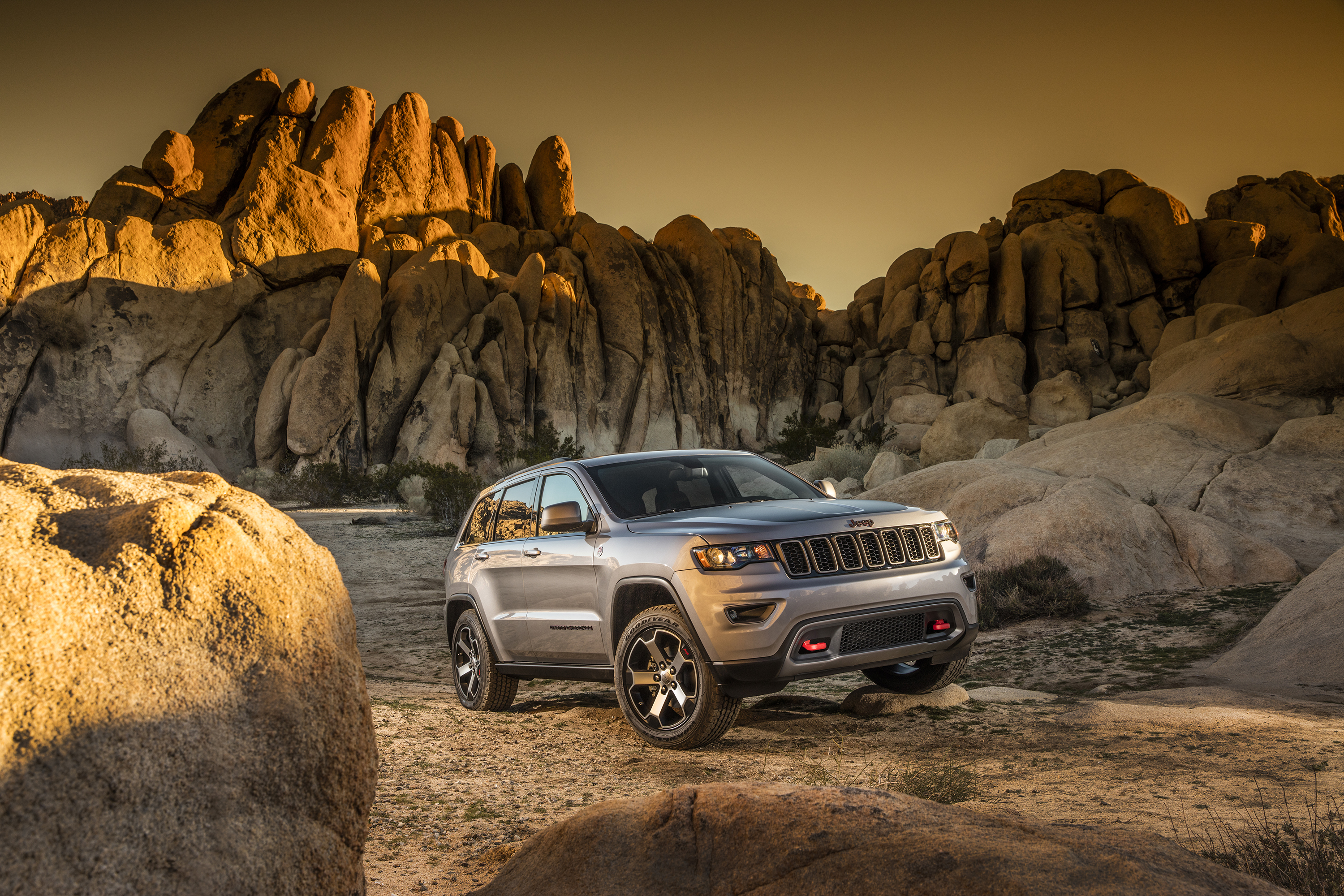
How the mighty have fallen. As recently as 2014, the Jeep Grand Cherokee was the best-selling large SUV in Australia. During that year it chalked up 16,582 deliveries, acing the likes of the Toyota Prado.
Last year, Jeep managed to shift just 645 cars locally, its worst result since 2009. On the back of this 96 per cent decline in sales, Jeep has pulled the plug on the Grand Cherokee. Parent company Stellantis Australia has taken “the difficult decision to pause availability of the current model Grand Cherokee” in order to “match local market dynamics and customer preferences”.
A statement went on to say: “While the Jeep Grand Cherokee will continue to be sold in many markets around the world, this decision allows us to focus our efforts on placing the right products in the right segments that can have the greatest relevance for our customers.”
We’re not the only ones in this situation. Production of both the five-seat Grand Cherokee and the seven-seat Grand Cherokee L has ended for all right-hand drive markets. The UK, Japan, South Africa, Singapore and India will all see supply axed.
It ought to have been far rosier, on these shores at least. Quite how Jeep – a manufacturer with arguably the most storied off-roading credentials in the market – has managed to fail with the Grand Cherokee in Australia, a country that loves off-roading, adores big SUVs and has had, to date, no punitive measures on emissions is something to behold.
What’s more, it’s not as if the Grand Cherokee has been a particular weak spot in Jeep’s portfolio. In fact, it’s the second biggest seller after the Wrangler. That should clue you in to the amount of trouble the brand is in Down Under. The writing was on the wall when Jeep introduced the latest WL generation Grand Cherokee in 2023. Pricing had leapt up considerably, the rises over the outgoing model averaging around $18,000, and this in the teeth of a cost of living crisis.
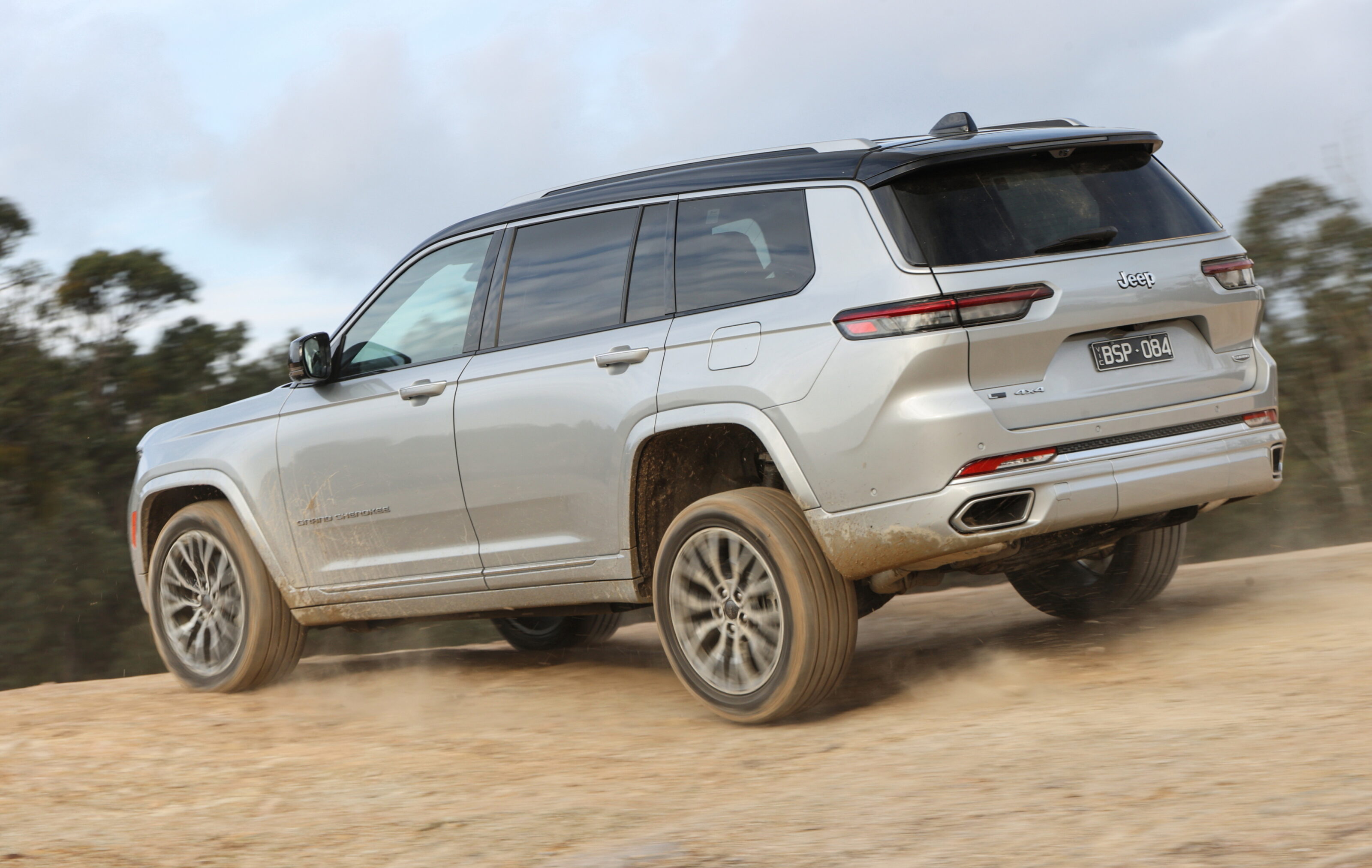
In short, the market just didn’t wear Jeep’s premium positioning for the WL. They were unimpressed by the carry-over petrol engines and the short service intervals. Customers voted with their wallets and found value instead in vehicles like the resurgent Ford Everest and Mazda’s plush CX-90, or else they sat on their money waiting for the box-fresh Toyota Prado to launch.
Jeep responded, belatedly slashing prices of the Grand Cherokee, but by that time the damage had been done. With prices far keener on these runout models, there are some bargains to be had. Repairing the reputational damage of a model that once reigned and then collapsed will be a tougher ask, but it’ll probably need to be done ahead of the arrival of the electric Jeep Wagoneer S, slated for 2026. If Jeep can’t convince Aussie buyers to sink their money into a petrol large SUV, it might face an even tougher task selling them an electric one.
Still, Jeep as a company has survived bumps in the road since 1943. Given the love for the brand, we wouldn’t bet against it. As the company knows, it’s just a case of right product for the right market at the right time. Here’s hoping for happier days ahead.
Mud plugging – the Grand Cherokee 4xe
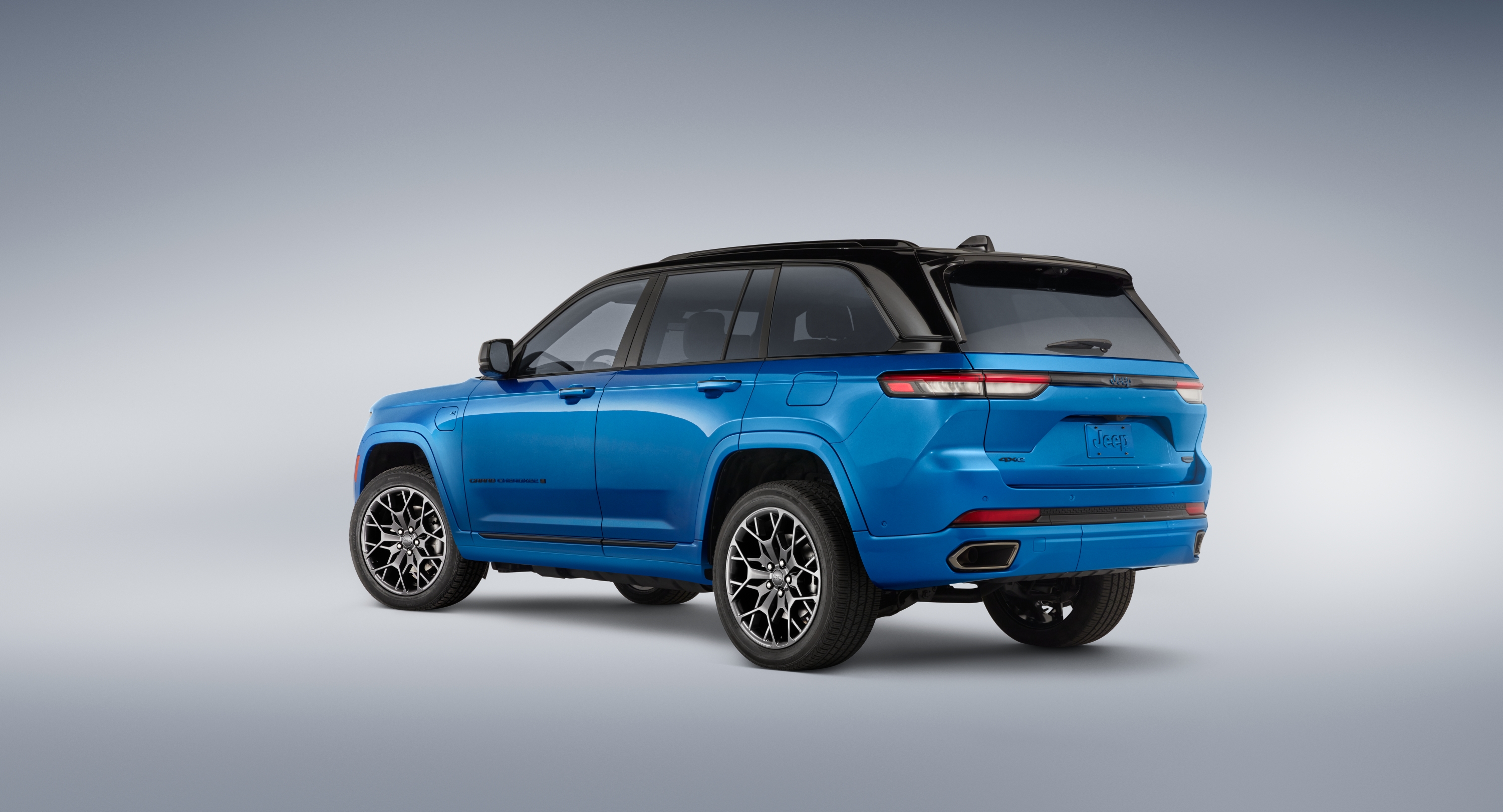
As well as the old 3.6-litre V6 lump, Jeep also offered the Grand Cherokee with a 2.0-litre plug-in hybrid four. Sales here have been woeful. Positioned as the range flagship, the Summit Reserve 4xe boasted 280kW/637Nm and fuel economy of 3.2L/100km versus 10.4L/100km for the conventional 3.6-litre cars.
So why did it flop? Issues around thermal runaway because of the compromised Samsung prismatic battery design contributed. Above all, it was just too expensive. Who wanted to pay $129,950 for a car that you needed to home charge for three hours to achieve a paltry 52km of electric range? Very few of you, it seems.
This article first appeared in the April 2025 issue of Wheels magazine.
Things we like
- More nimble steering than its predecessor
Not so much
- Kerb weight works against its performance versus rivals
‘Doing more with less’ has a lot to be said for it.
We’re forever being exhorted to reject excess and to live a right-sized life. That original phrase was credited to American futurist Richard Buckminster Fuller and it’s something that’s front of mind when driving the latest Ford Mustang EcoBoost.
Mull over the spec sheet and this is an incredibly appealing proposition. For $66,990 you get a well equipped rear-drive coupe that generates more power and torque than Porsche’s four-cylinder coupe, the $133,365 718 Cayman. Almost immediately the spectre of the eight-cylinder Mustang GT materialises.
Wasn’t 60-odd grand the price we were paying for a V8 Mustang not so many years ago? Yes, it was. But now you’ll need to spend $78,990 for a manual GT coupe and $81,990 if you want one that, like the EcoBoost, comes with a 10-speed automatic.
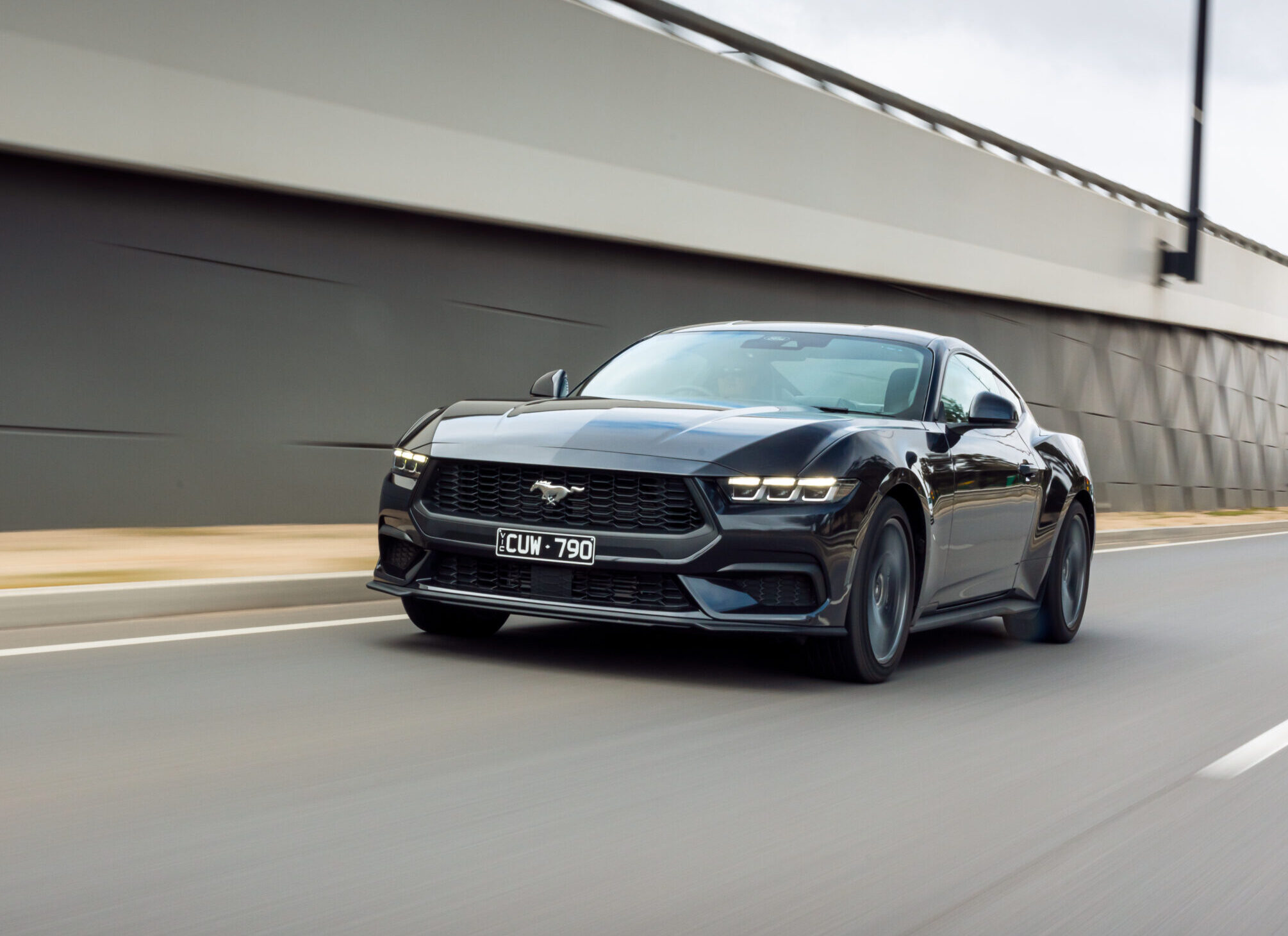
While the GT compares fairly closely on price to the likes of the Nissan Z and the Toyota Supra, it’s hard to know what to compare the EcoBoost with. It’s likely going to be a choice if you feel that you’re bored with hot hatches like the Golf R or the GR Corolla, two cars which it matches fairly closely on price.
It doesn’t take long behind the wheel of the Mustang EcoBoost to realise that it’d struggle to tag onto the back of either of those two all-wheel drive pocket rockets on any halfway challenging road. The 2.3-litre four is willing and, with 475Nm at its elbow, hardly shy of torque but the kerb weight of 1746kg contrives to take an edge off the car’s performance. A 0-100 sprint of 5.6 seconds is respectable and it even sounds reasonably good, even if some of the aural theatrics are artificial.
The engine benefits from a new twin-scroll turbocharger and both direct and multi-point injection, boosting response. The transmission slurs through ratios unobtrusively, when you’re hustling, helping to keep the car in its relatively narrow peak torque window. The old car made less in the way of twist action, but seemed to prolong the meaningful torque plateau further than this latest model. Still, that car made do with a mere 224kW whereas the current S650 model steps that up to 232kW.
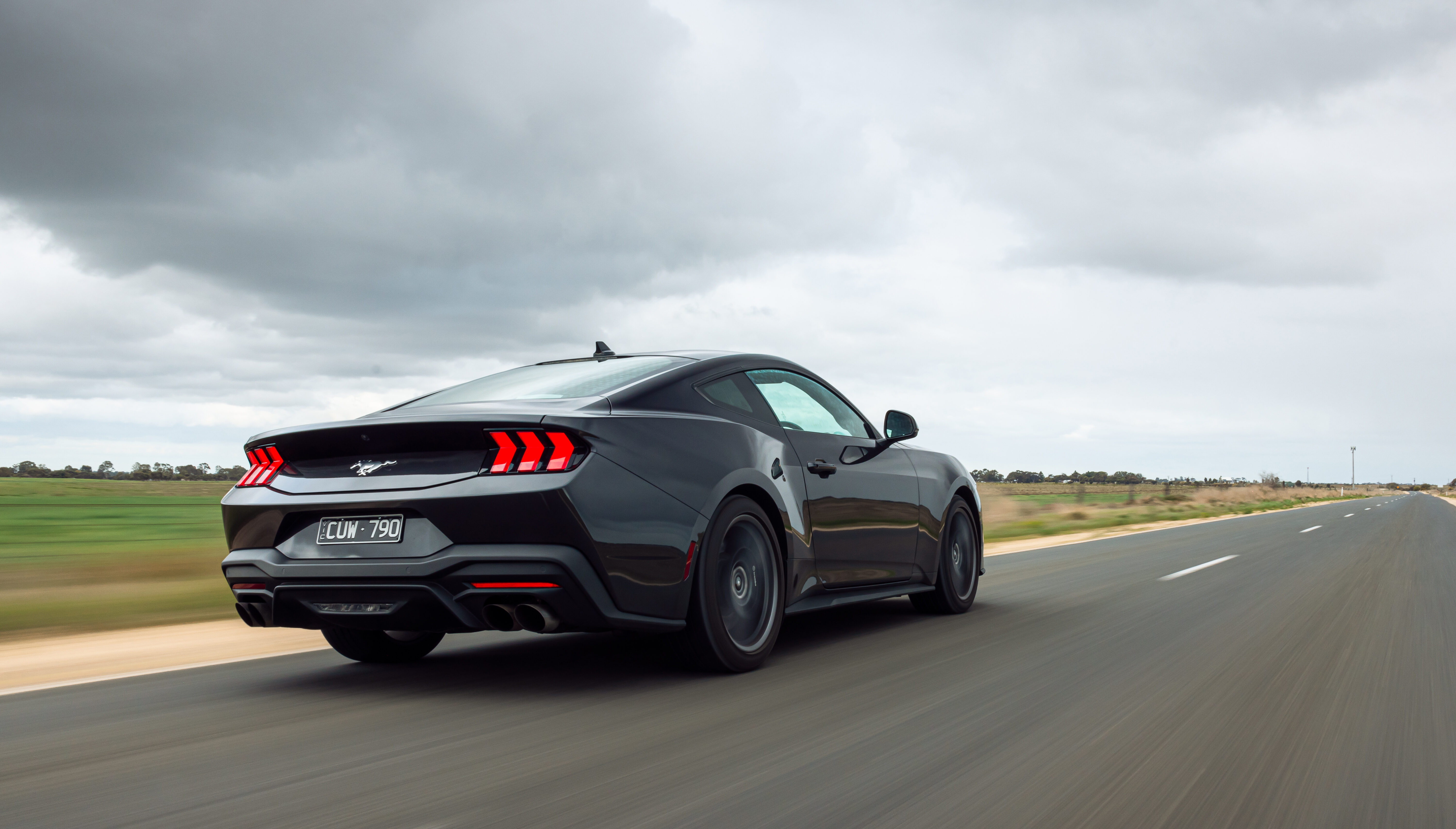
There’s a reasonable expectation that the front end would feel lighter and keener to turn in than the V8, and it does, but the difference is marginal. A fully-dressed turbo four can weigh close to a compact V8. Indeed were you to buy these powerplants as crate engines, Ford quotes 247.2kg for the EcoBoost without a flywheel and 268.5kg for the V8 with one. The standard Ecoboost flywheel assembly is 30kg. Make of that what you will.
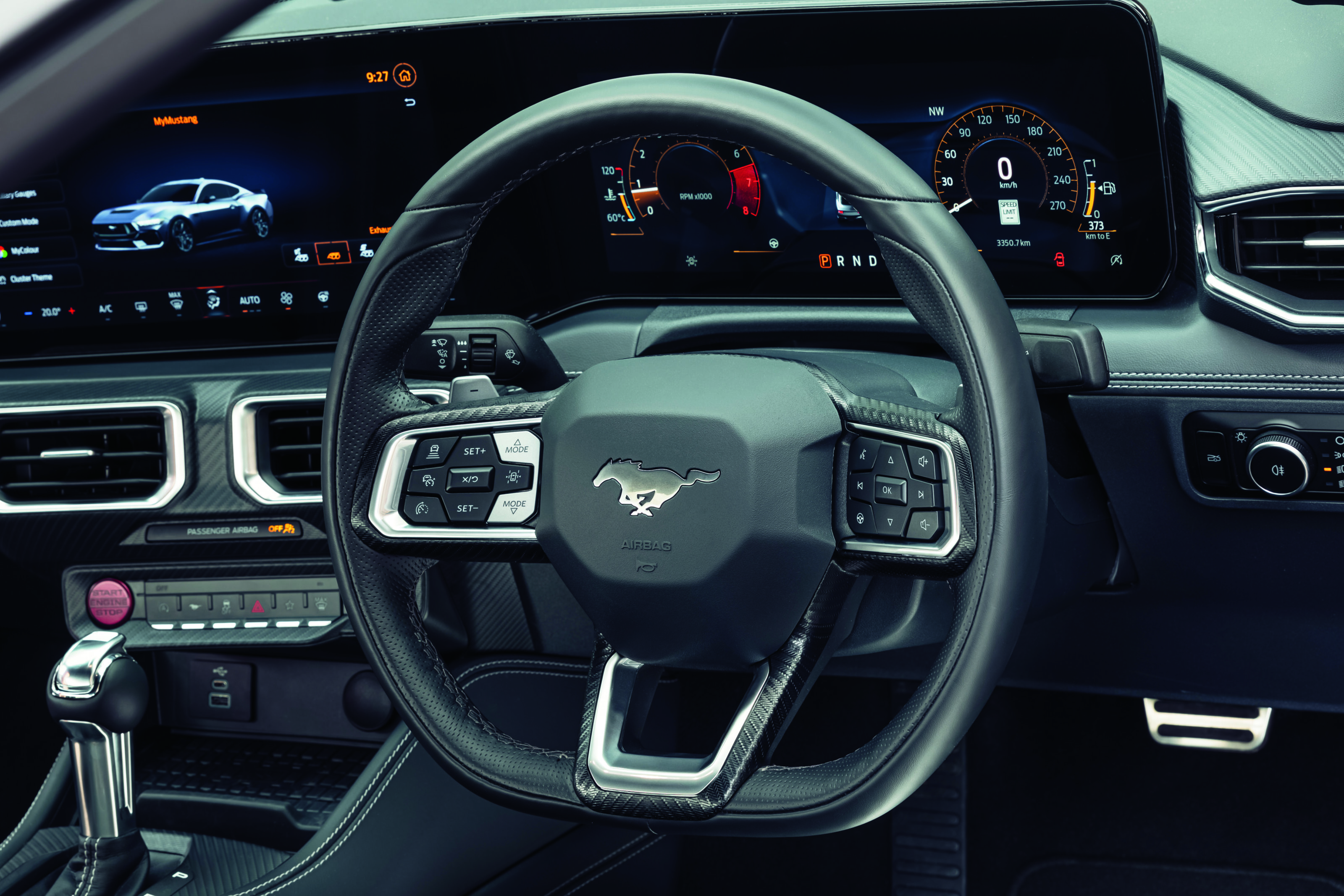
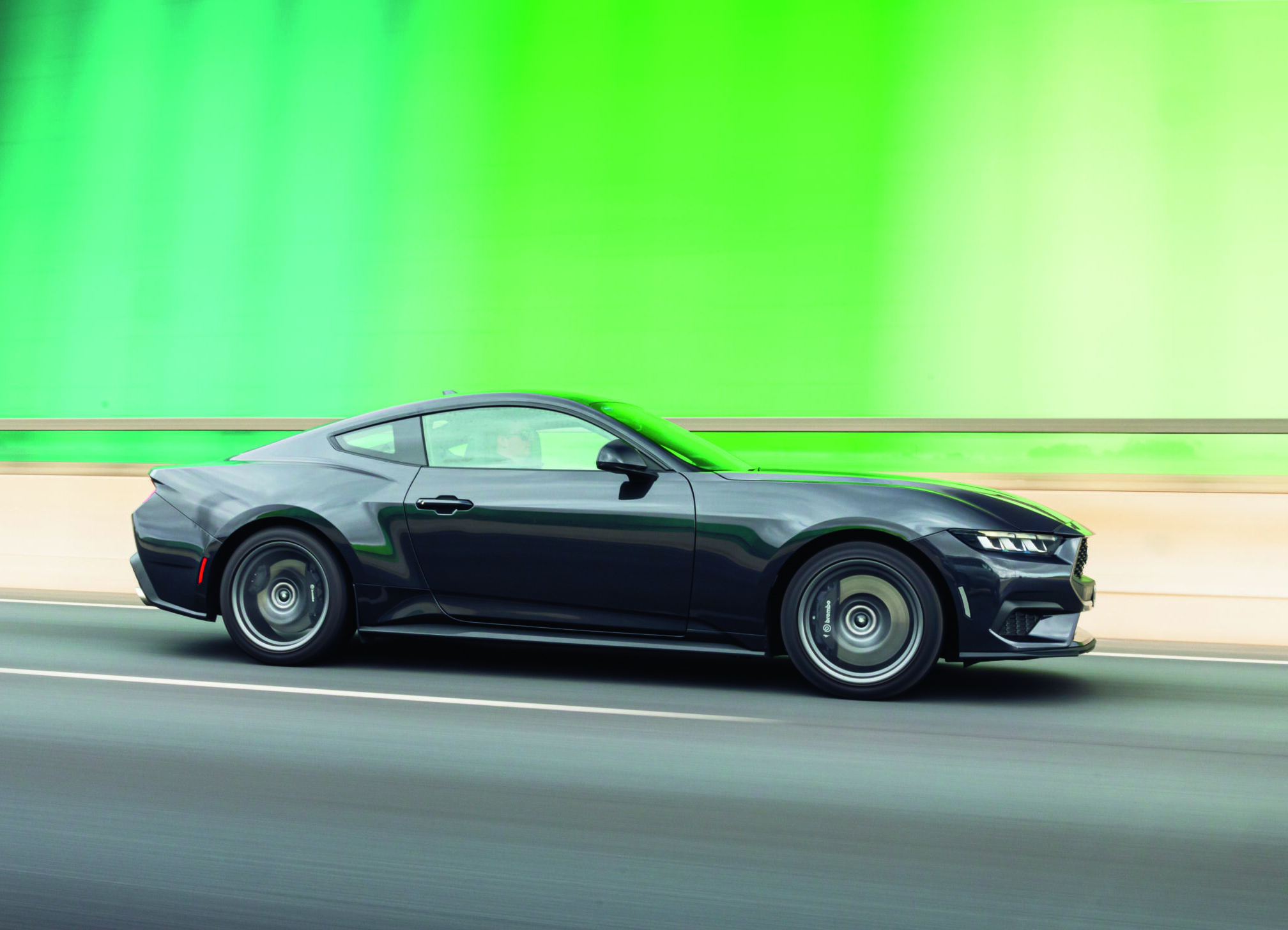
The feeling of agility is likely down to the steering, which is night and day improved compared to the S550 predecessor, Ford having removed an anti-vibration joint from the steering column and increased the steering gearing and upgraded the rack capacity, resulting in a much nimbler feel. Damper tuning feels slicker, although the Pirelli P Zero tyre on this car (255/40 R19 all round) feels a step back from the Michelin Pilot Sport option.
Aussie cars also get the majority of the Performance Pack as standard including the brake package which comprises 390mm discs and six-piston Brembo front calipers with 355mm discs and four-pots aft. It also receives the 3.55:1 final drive, four-mode active exhaust, along with all the track apps: acceleration, brake and lap timer, line lock and the new drift brake. It’s a comprehensive package and in terms of standard gear, the V8 doesn’t get a whole lot extra.
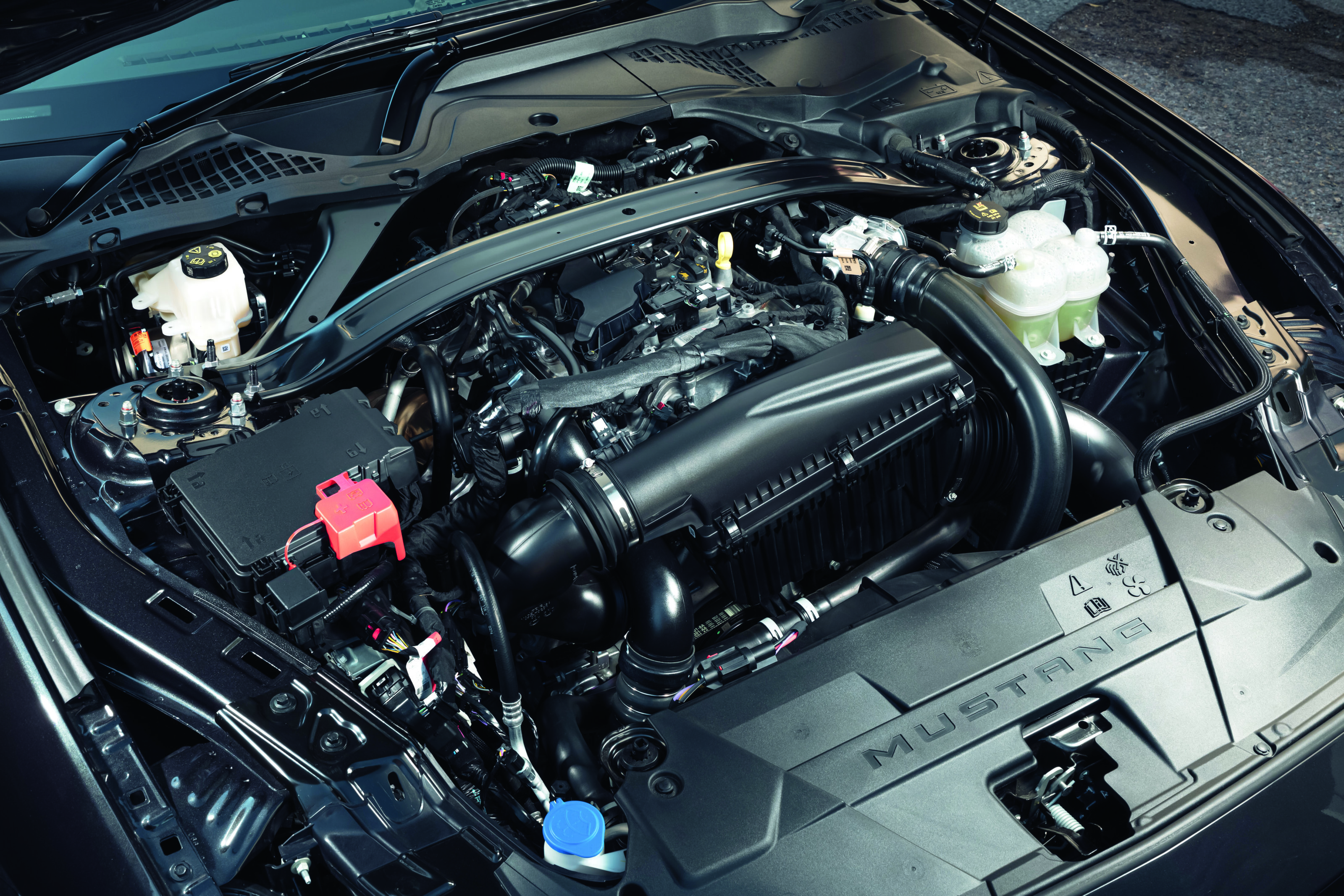
Should you buy one? Only if you’re not sold on the V8, a better car in most regards. You can do more with less, but when it comes to Mustangs, that really only applies to fuel economy. The S650 updates usefully improve the Mustang, but we can’t really make a coherent case for the EcoBoost as the thinking person’s option. It’s a good sports coupe, but it lacks the soul of the V8 and, among car enthusiasts at least, that counts.
Specifications
| Model | Ford Mustang EcoBoost coupe |
|---|---|
| Engine | 2261cc 4cyl, dohc, 16v, turbo |
| Max power | 232kW @ 5500rpm |
| Max torque | 475Nm @ 3000rpm |
| Transmission | 10-speed auto |
| Economy | 9.4L/100km |
| 0-100km/h | 5.6sec |
| Price | $66,990 |
| On sale | Now |
This article first appeared in the April 2025 issue of Wheels magazine.
With the 2025 Easter period coming just days before ANZAC Day on April 25, many Australians are planning an extended break, prompting authorities to issuing warnings about the roads to try and prevent holiday tragedies.
According to Yahoo!, new data has found that more than a quarter of Australians plan to take off the three working days between Easter Monday and ANZAC Day – April 21 to 25 – and almost two thirds of that group plan on travelling, including 77 per cent choosing to drive.
Combined with the recent drop in interest rates, that means a significant boost in domestic tourism, particularly in areas such as south-east Queensland and northern NSW as they continue to recover from Cyclone Alfred.
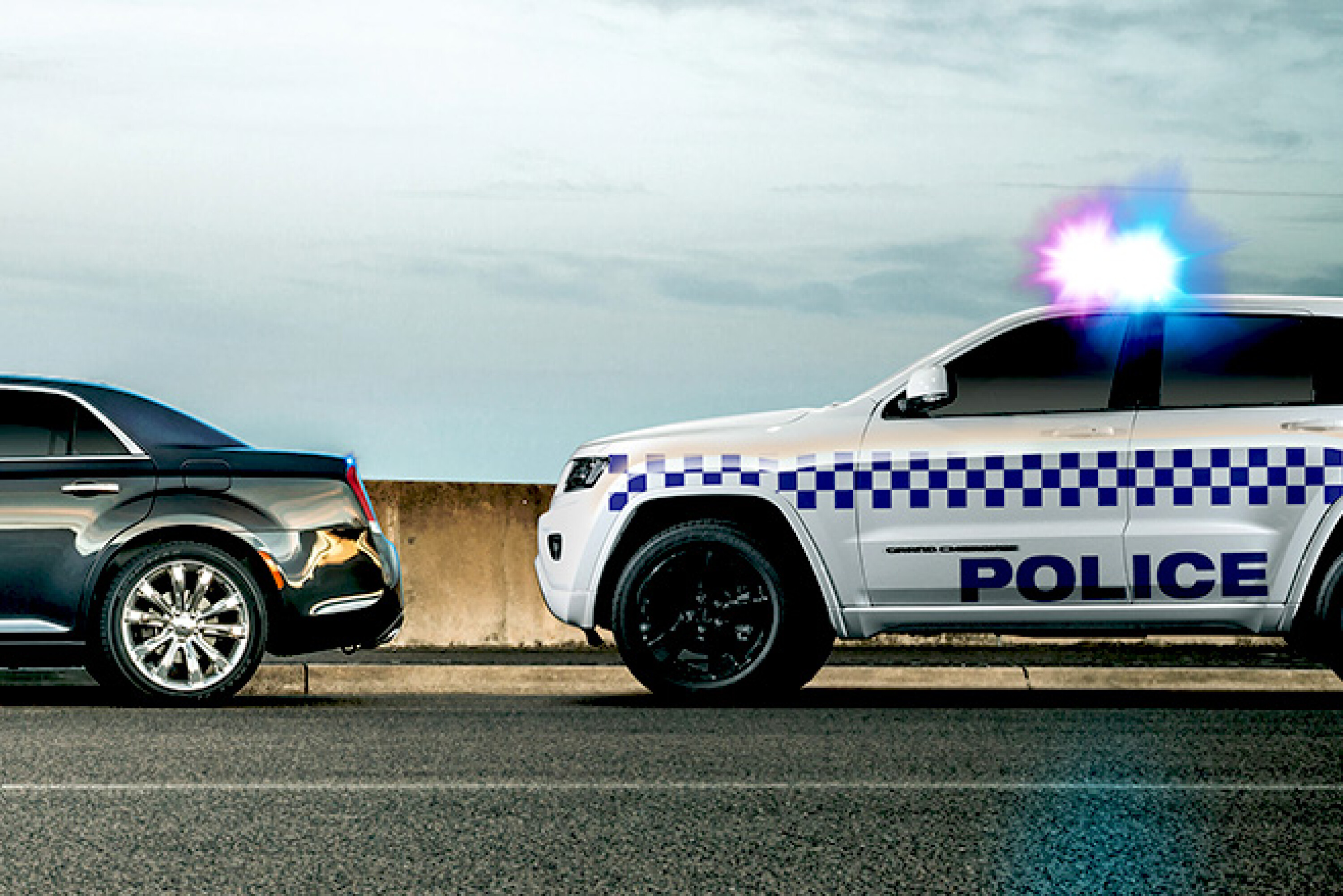
The NRMA’s Peter Khoury warns that with so many people planning a getaway, drivers must take extra precautions to cater for the drastic increase in vehicles on the road.
“We’re expecting traffic to ramp up as we get closer to Easter, particularly as the rest of the states fall into their school holiday period,” he said. “The road toll is up in a number of states, certainly in NSW, which is very worrying. We want to see that reverse, and this is going to be a critical period in the next few weeks, as more families go on holidays.”
In the 12 months to the end of February 2025, Australia’s national road toll sits at 1,292 deaths – an increase of 1.6 per cent compared with the same period in 2024.
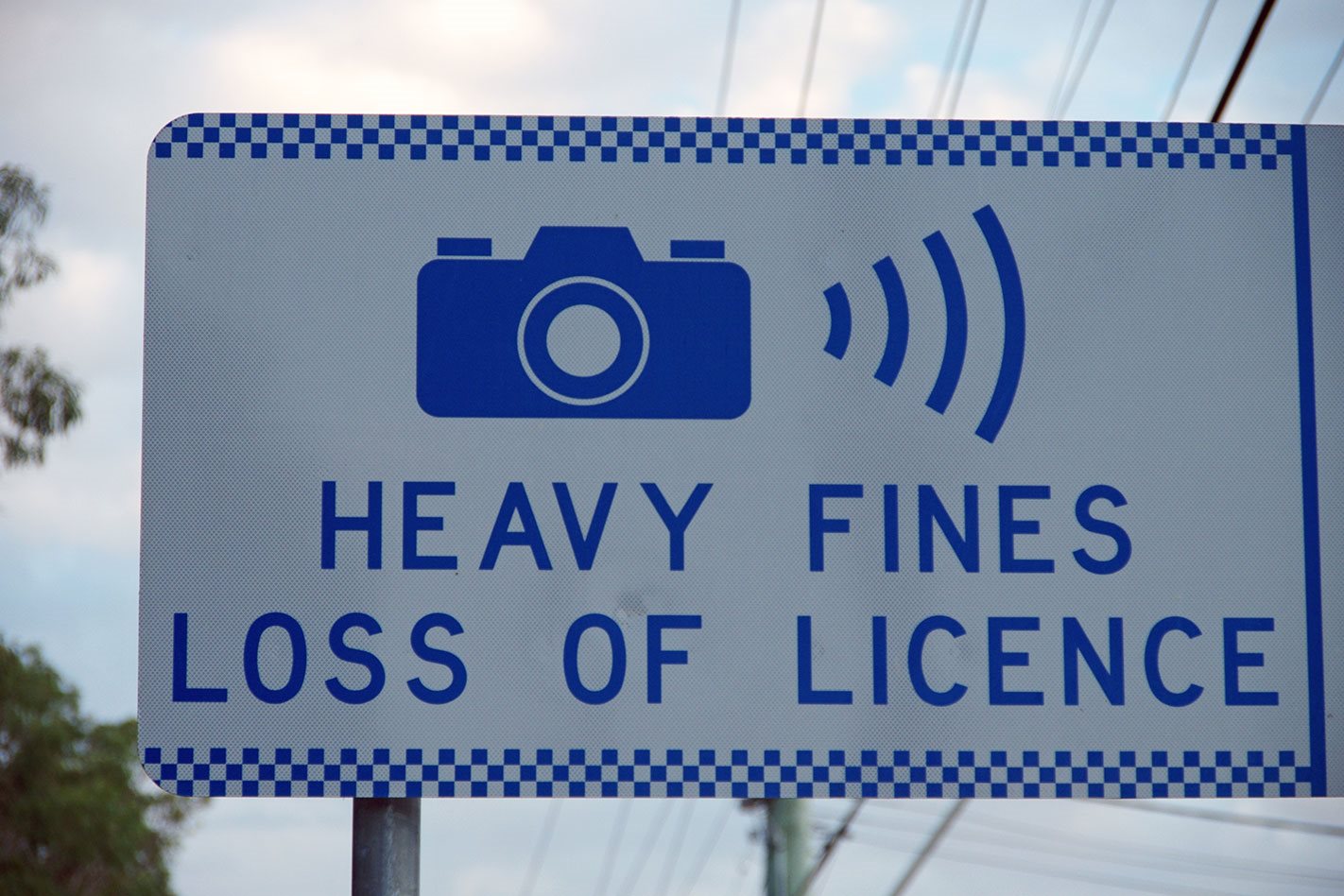
Double demerits will be in force in NSW, the ACT and Western Australia from April 17 to April 21. Queensland police will also be broadening its roadside breath and drug testing as part of ‘Operation X-Ray Easter’, coinciding with the April school holidays from April 4t to 21.
So far this year, Queensland Police have conducted more than 500,000 random breath tests and more than 14,000 roadside drug tests, detecting more than 9500 motorists over the legal alcohol limit and almost 3000 positive indications that motorist have driven under the influence of illicit drugs. According to Queensland Police, X-Ray Easter will expand that significantly.
Queensland Police Road Policing and Regional Support Command Acting Chief Superintendent Garrath Channells said police will have a strong presence across the state, ensuring that drivers make safe choices.
“Easter is a time for families and friends to create lasting memories. We do not want to see anyone’s holiday period end in tragedy,” Acting Chief Superintendent Channells said. “History tells us Easter is a particularly dangerous time on our roads, with families travelling longer distances, often on unfamiliar routes.
Queensland Police are also urging motorists to avoid the “fatal five” – that’s drink and drug driving, speeding, fatigue, distraction, and seatbelt misuse –– to prevent holiday tragedies from occurring.
Easter holiday penalties – state by state
| NSW | Double demerits: Thurs Apr 17-Mon Apr 21 |
|---|---|
| ACT | Double demerits: Thurs Apr 17-Mon Apr 21 |
| Queensland | No specific double demerit window, but year-round enforcement targets repeat high-risk offences |
| Victoria | Victoria does not have a double demerit points scheme at any time of the year, including public holidays and long weekends |
| Western Australia | Double demerits: Thurs Apr 17-Mon Apr 21 |
| Tasmania | Tasmania does not have a double demerit points scheme at any time of the year, including public holidays and long weekends |
| South Australia | South Australia does not have a double demerit points scheme at any time of the year, including public holidays and long weekends |
| Northern Territory | Northern Territory does not have a double demerit points scheme at any time of the year, including public holidays and long weekends |
The plug is being pulled on the electric car.
European manufacturers are scaling back their EV ambitions in response to a collapsing market. In Germany, EV sales plunged 27.4 percent in 2024. Porsche, Lotus, Volvo, Bentley, Audi, Aston Martin have each announced some sort of delay to their EV plans and even renewed investment in combustion engines and hybridisation. Geopolitical tectonic plates are also starting to shift against the EV.
While it’s still early days, a rollback of the EV rollout could amount to an apparent win for Western auto industries, a win for the combustion engine (which I personally love, just as you do) and a loss for China, where the EV continues to boom.
But it would feel like another loss of other sorts – and a great pity, if you ask me. I like electric cars. They make increasing sense to my prudent, middle-aged Australian mind. I like driving them.
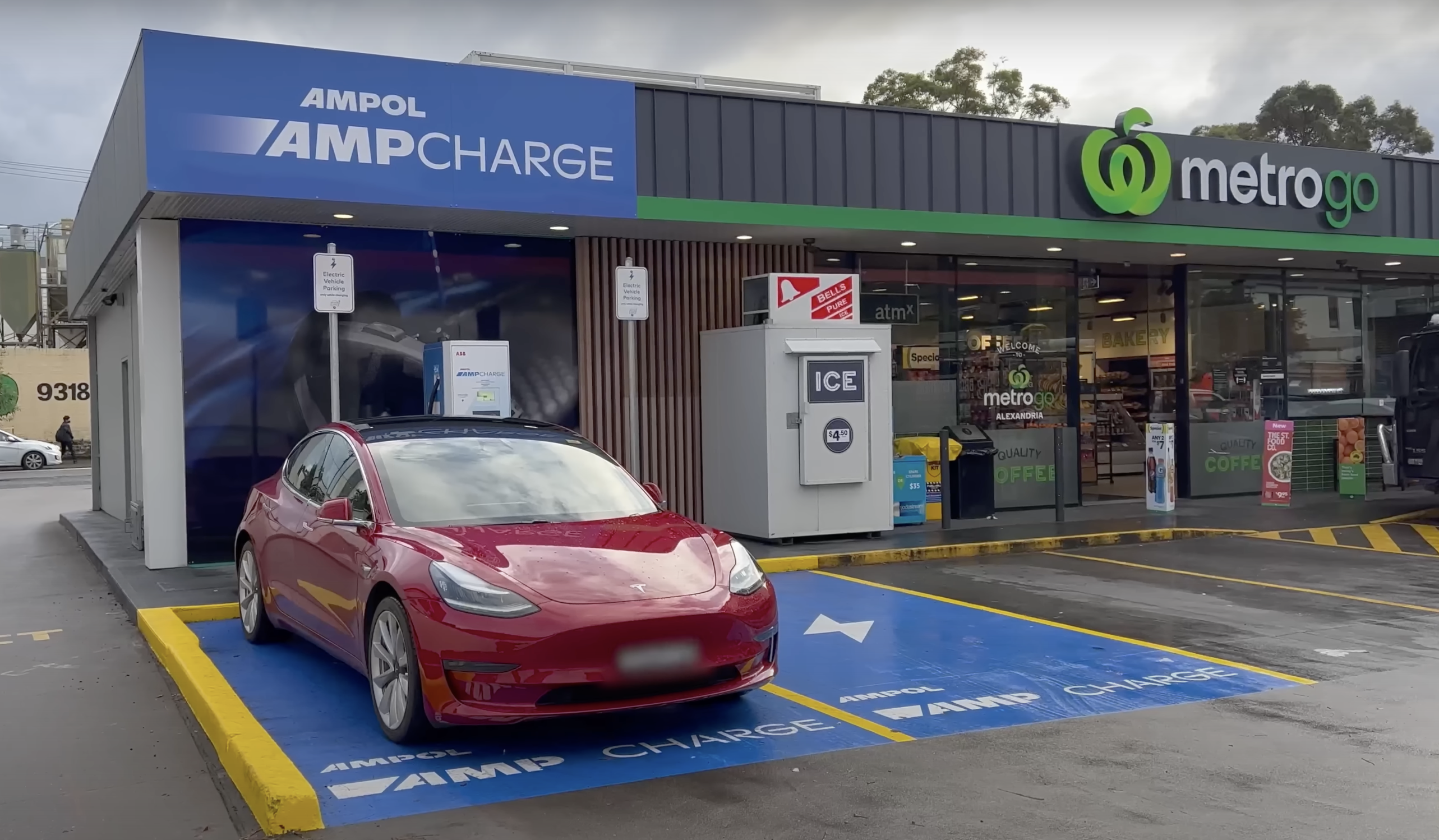
I don’t love the extra weight, but that’s probably unsurprising given I swap into a 900kg Toyota at least once a week. But EVs are getting lighter; a rear-drive Tesla Model 3 is ‘just’ 1761kg with a sensible 513km WLTP range. The low centre of gravity in such cars makes the heft feel somehow less. EVs should get lighter with time.
You can hoon around in an EV without having to wait for an engine to warm up. I like their stealthy briskness, letting you zip around urban areas at night without feeling like the bloke who just woke up some other bloke’s baby.
EVs are great for daily duties. Cabin pre-heating or pre-cooling is a game-changer. You can also leave your dog in the car on a hot day with the AC going and doors locked.
EVs are cheap to run. Forget the $1500 wallbox – if you’re the average Australian who commutes 31.2km each day, a powerpoint is fine. Program the car to charge between midnight and 6am on an EV electricity plan, and you could cover about 75km for $1 in something like a Hyundai Ioniq 5 RWD. A 7L/100km new SUV at $1.93/litre is more like $10 for the same distance. Charge the EV at work on the boss’s dime and you’re laughing.
More EVs will lead to a proliferation of used EV batteries – a disaster, right? More like an ideal scenario for Australia which increasingly has more household solar than it knows what to do with. Already enterprises are repurposing old EV batteries for household use. No electricity bill at all, and not a single lump of coal burned? Sounds okay to me.
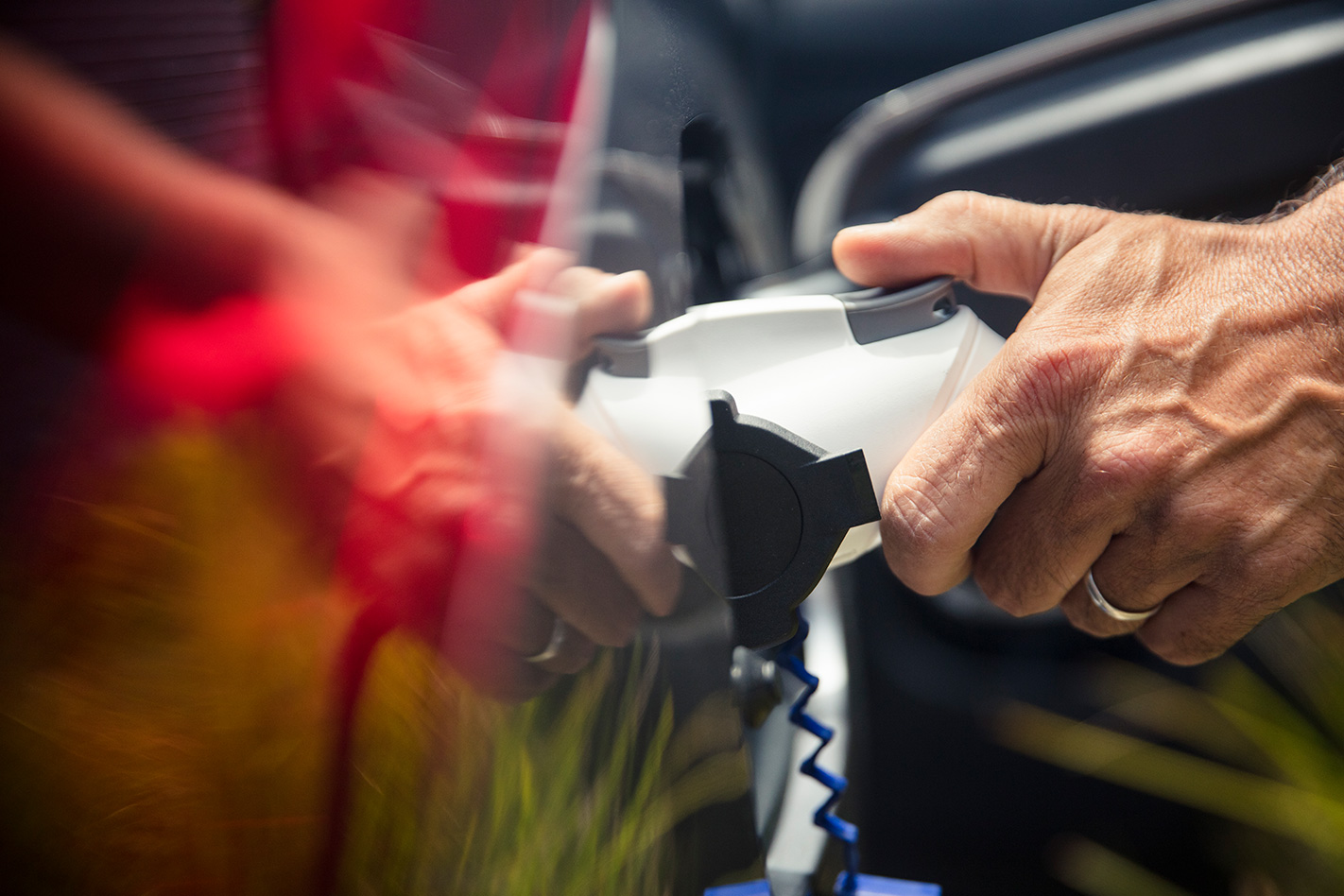
Many expensive-sounding studies have demonstrated that EVs are far from from “zero emission” but even in worst-case scenarios, they still release less CO2 than combustion cars. The International Energy Agency says a medium EV, when fully recharged with 90 percent coal-fired electricity across a 15-year lifetime, will produce 16 percent less overall CO2 than an equivalent combustion car – including manufacturing. That includes the assumption that no new renewables are added to the grid in that time.
Even if charged only with coal, EVs shift their exhaust fumes to some distant power station, rather than within easy inhalation distance of, you know, your lungs. And if you don’t ‘believe’ in man-made climate change, what if you’re wrong? Surely there’s no harm in releasing considerably less CO2 into the atmosphere just in case?
I accept EVs aren’t perfect. Using children to mine the cobalt, in Africa, is not ideal, to say the least. If you live rural, need to tow or regularly drive long distances, a PHEV is better.
Depreciation, however, remains the hairiest number on my EV spreadsheet, but that will surely improve in time. If the lights don’t go out, that is. It would be a true shame if they did.
This piece originally appeared in the March 2025 issue of Wheels magazine.
Rapidly expanding brand BYD has confirmed earlier rumours it would make a significant change to its product warranty for Australian customers, expanding its six-year/150,000km coverage from bumper-to-bumper and adding an 8-year/160,000 km battery warranty.
The new arrangement will apply to all models and is backdated to cover vehicles from BYD’s first Australian deliveries in August 2022.
Previously the brand’s six-year warranty excluded certain parts, with elements such as the infotainment touchscreen and shock absorbers covered only for three years or 60,000km (whichever comes first). Other parts such as lights, suspension and ball joints are covered were covered for four years or 100,000km.
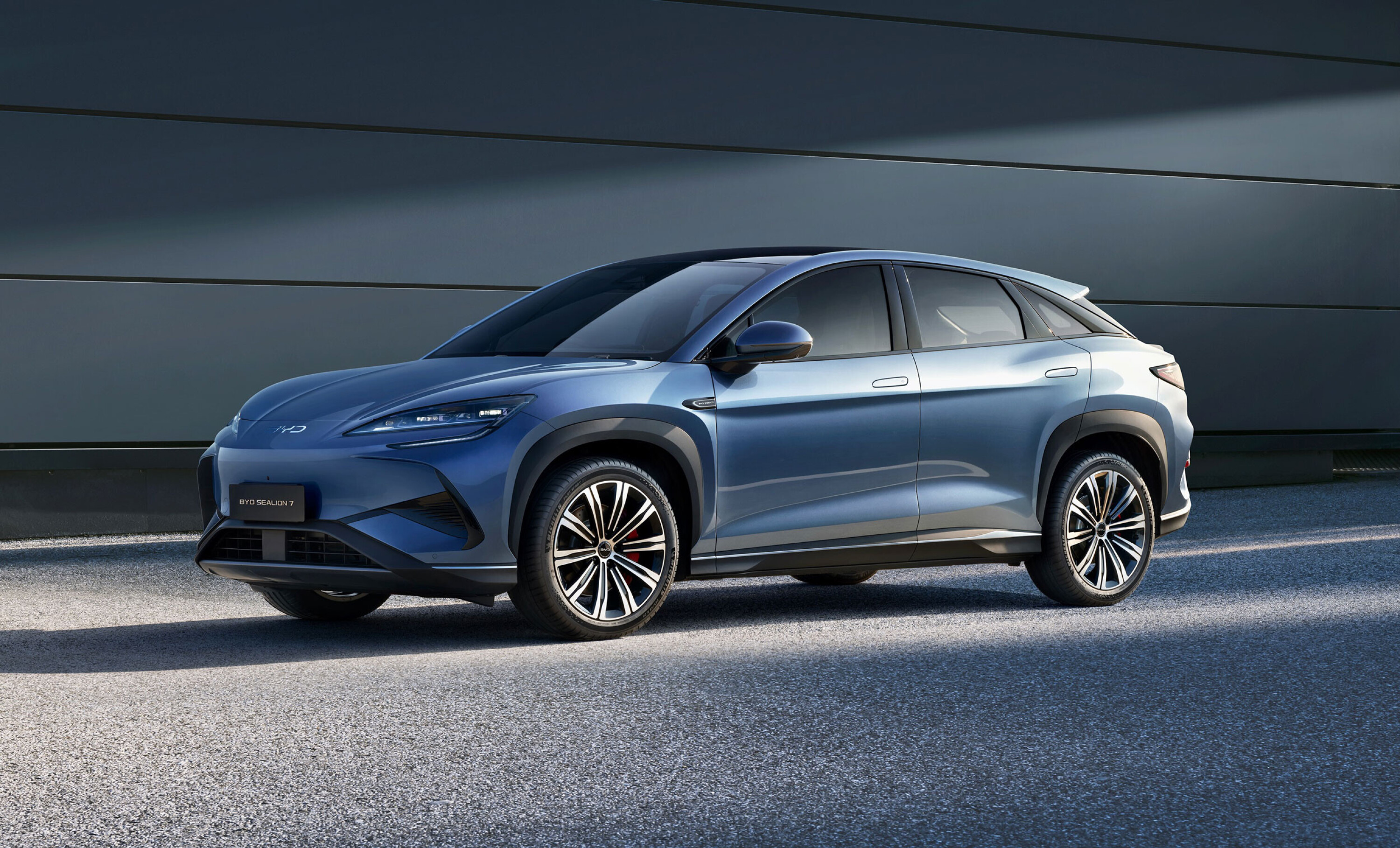
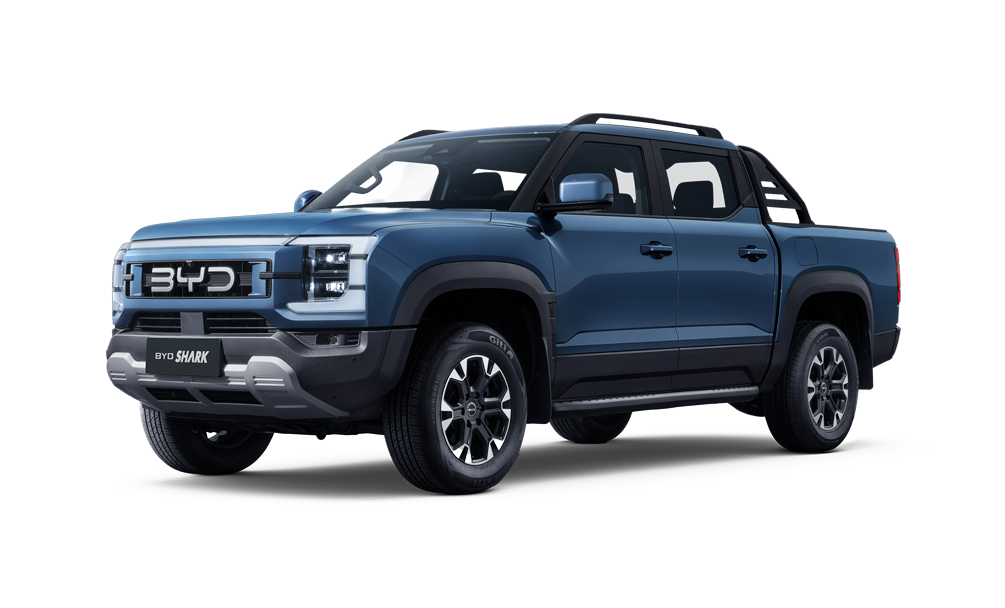
BYD made the announcement as it said it had marked over 40,000 sales in Australia.
The warranty includes the Power Battery pack and Drive Unit which are covered for a period of eight years or 160,000 km, whichever occurs first, while all other components are subject to a six-year / 150,000km warranty.
BYD also announced its SEALION 7, its electric SUV launched here in February, had achieved a five-star ANCAP, joining the much-hyped BYD SHARK 6.
Further information about BYD’s enhanced warranty can be found here.
Smart has revealed the new #5 Brabus, which will sit atop the brand’s lineup as a very quick version of its new mid-size SUV. Capable of a 3.8-second 0-100km/h sprint using launch control, the #5 Brabus makes a massive 475kW of power – or a full 165kW more than the next #5 below it.
That’s again thanks to a dual-motor all-wheel drive drivetrain, which is fed by a large 100kWh battery that enables a 540km WLTP range – or 200km less than the regular #5 thanks to the extra performance.
Thanks to its 800-volt architecture, the #5 Brabus can charge at up to 400kW for a 10 to 80 per cent charge in as little as 18 minutes.
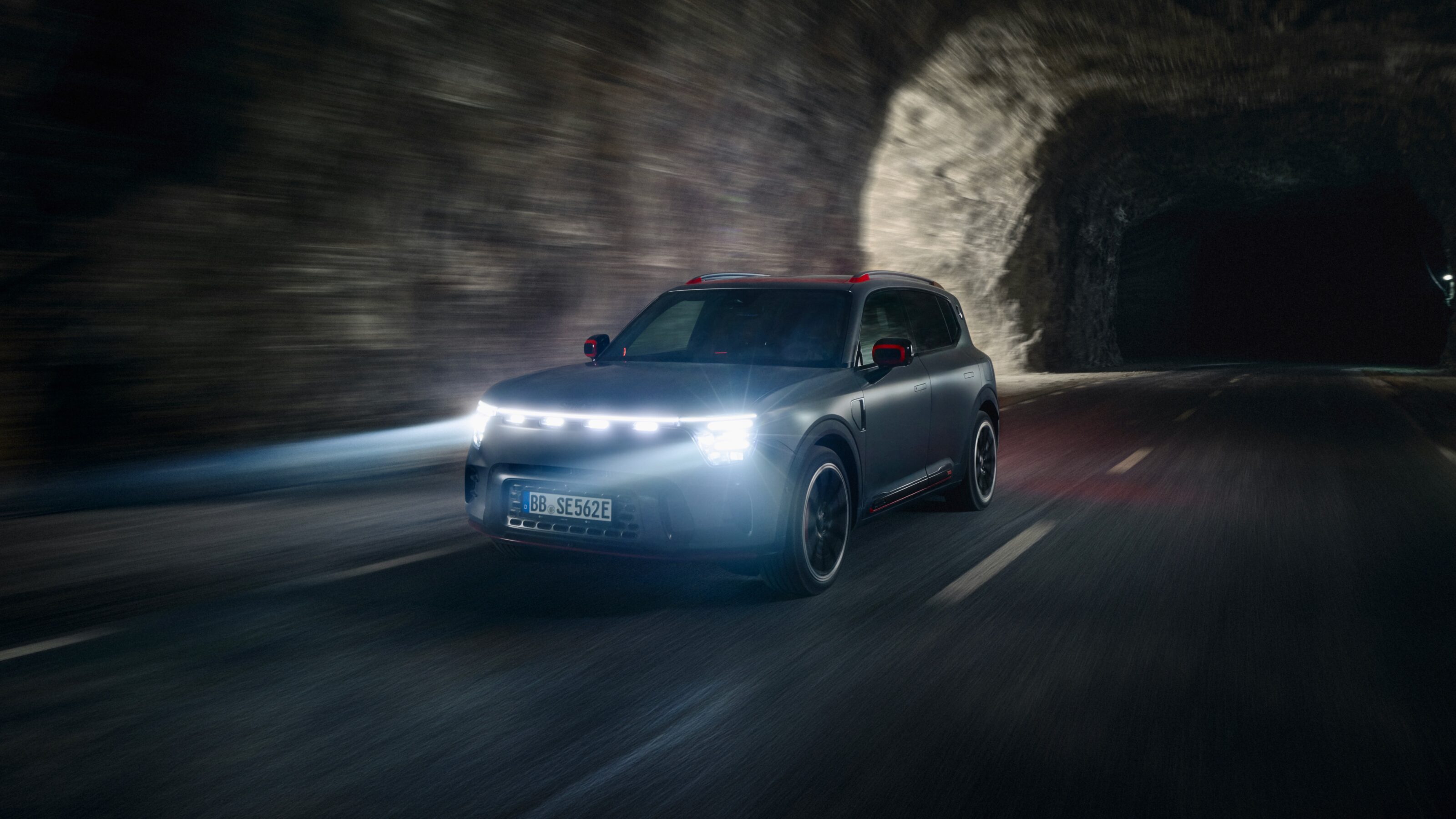
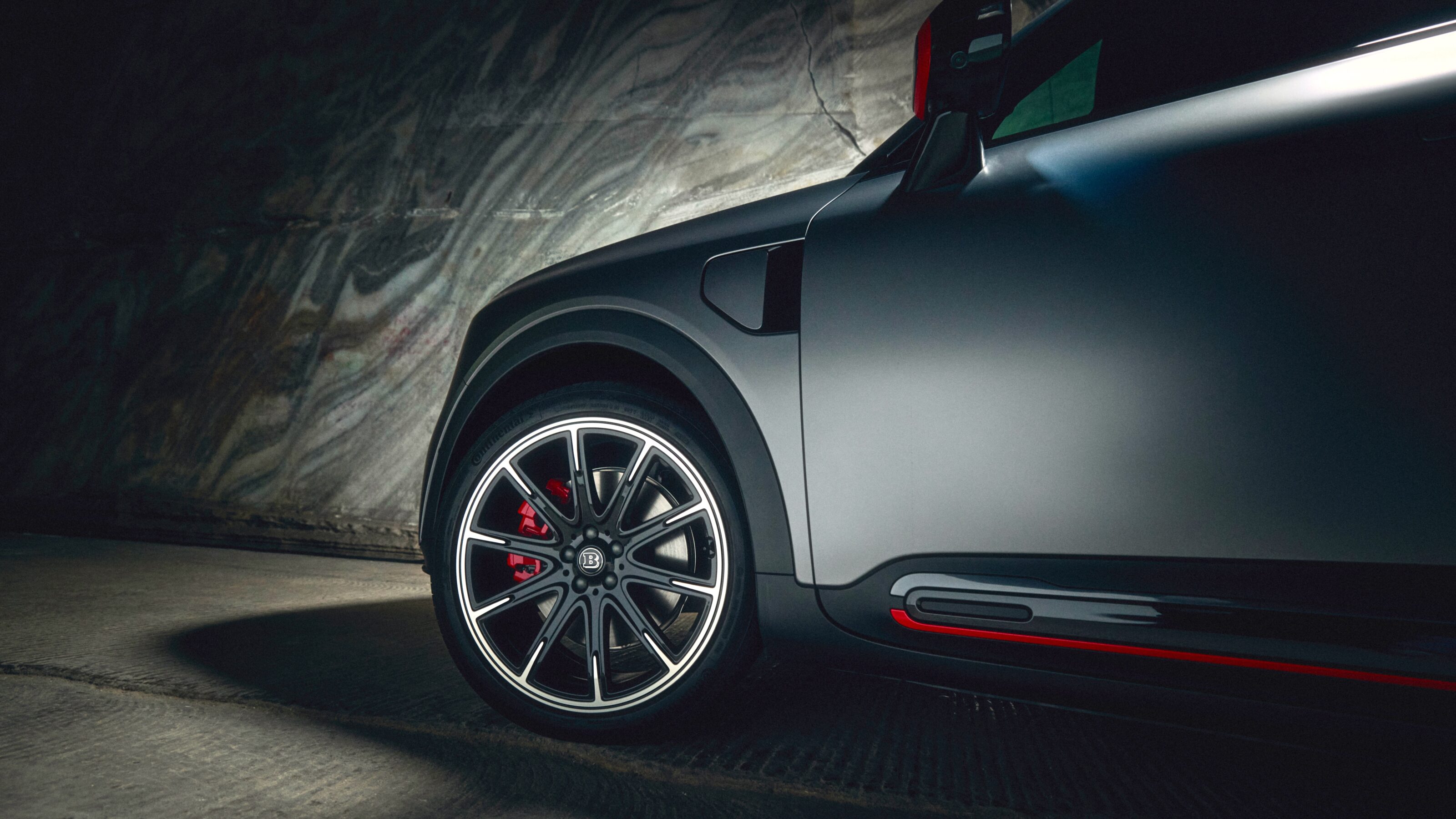
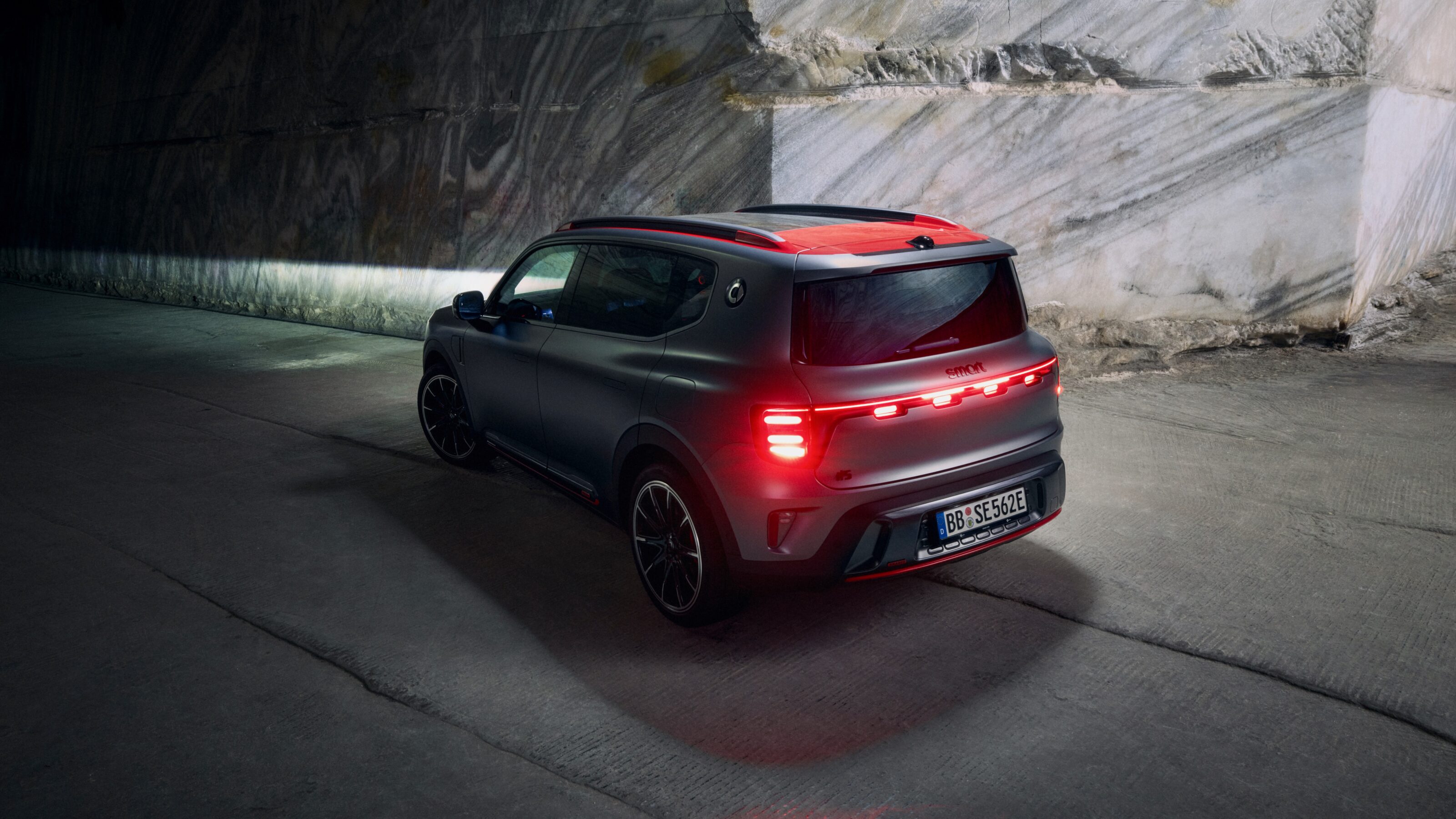
On the exterior of the #5 Brabus are new 21-inch ‘Monoblock Z’ wheels, sportier styling pieces and red colouring on the brake callipers, mirror caps, side skirt and rear trim strip.
On the inside, the #5 Brabus features the same sporty details as the #1 and #3 Brabus such as suede and microfibre upholstery, heated and ventilated front sports seats and red stitching, while the suede steering wheel also sports illuminated Brabus badging.
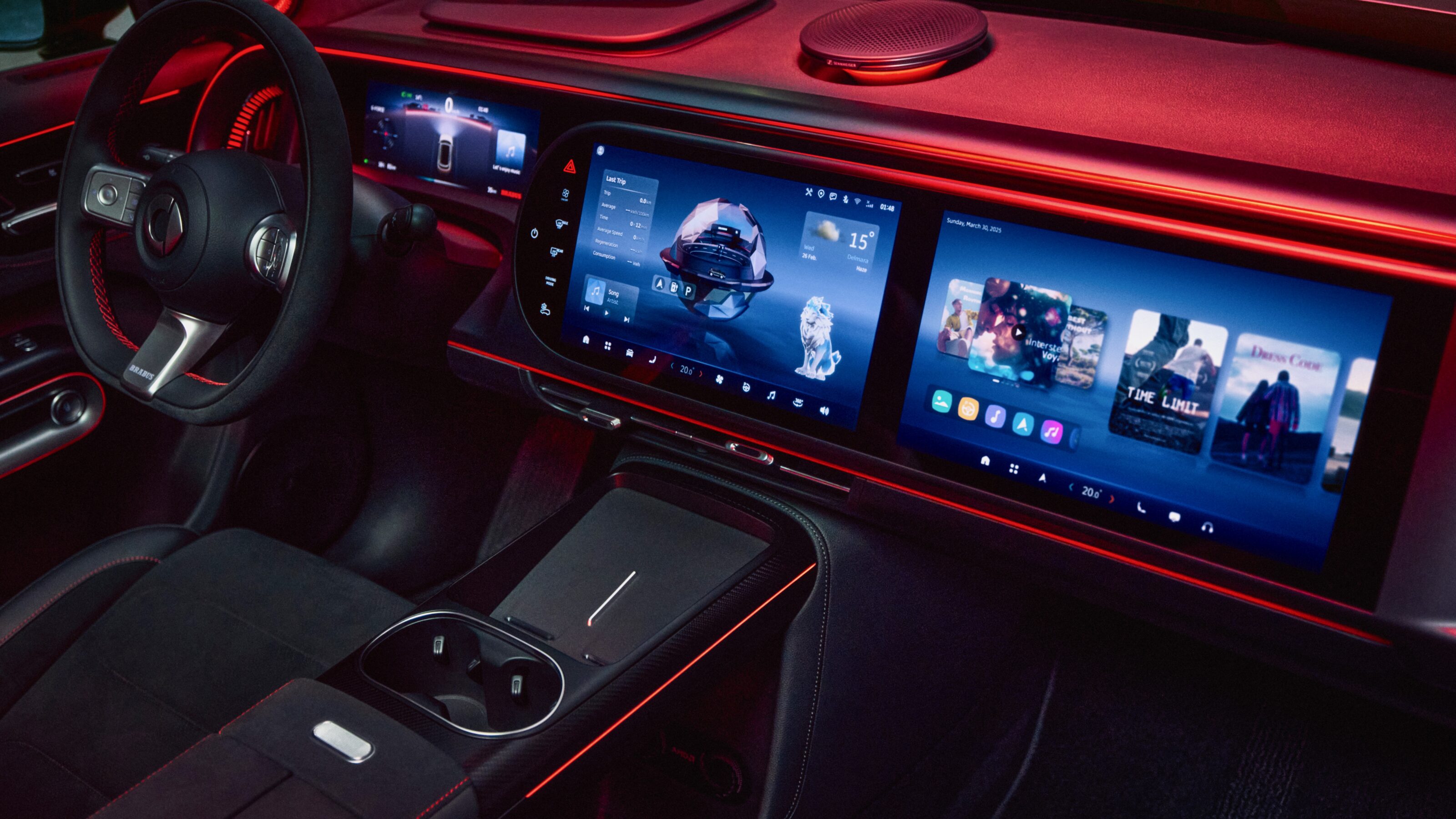
The #5’s infotainment is handled by two 13-inch OLED displays with one dedicated to the front
passenger, while a 20-speaker Sennheiser sound system provides 2,000 watts of audio. 256-colour LED ambient lighting also features.
European pricing for the #5 Brabus starts at €60,900 (A$108,105) and deliveries there will commence later in the year.
Currently, the Smart #5 Brabus is yet to be confirmed for Australia, though the regular #5 will go on sale locally in late 2025.
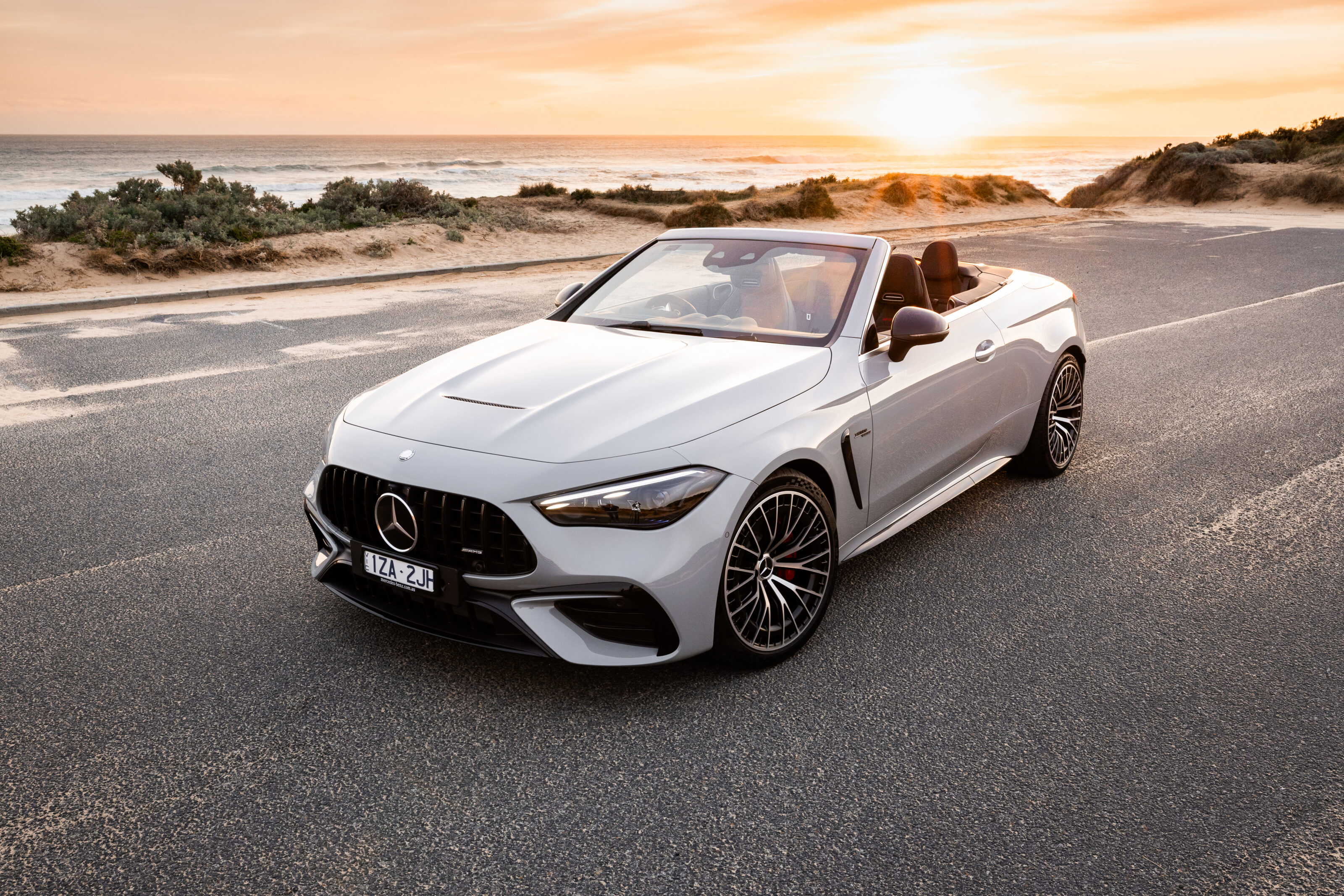
Only a few months after launching the CLE 53 in coupe form, Mercedes-Benz Australia has
announced local pricing and specifications for the CLE 53 Cabriolet, which is now available to order.
Priced from $175,600 plus on-road costs – or $16,700 more than the 53 coupe and $38,000 more
than the four-cylinder CLE 300 convertible – the AMG CLE 53 Cabriolet uses the same
turbocharged six-cylinder engine and 48V mild-hybrid drivetrain as the coupe.
Making 330kW of power and up to 600Nm of torque on overboost, the CLE 53 Cabriolet hits
100km/h in just 4.2 seconds – only 0.2 seconds slower than the lighter coupe. Power is sent to all
four wheels through a nine-speed automatic transmission.
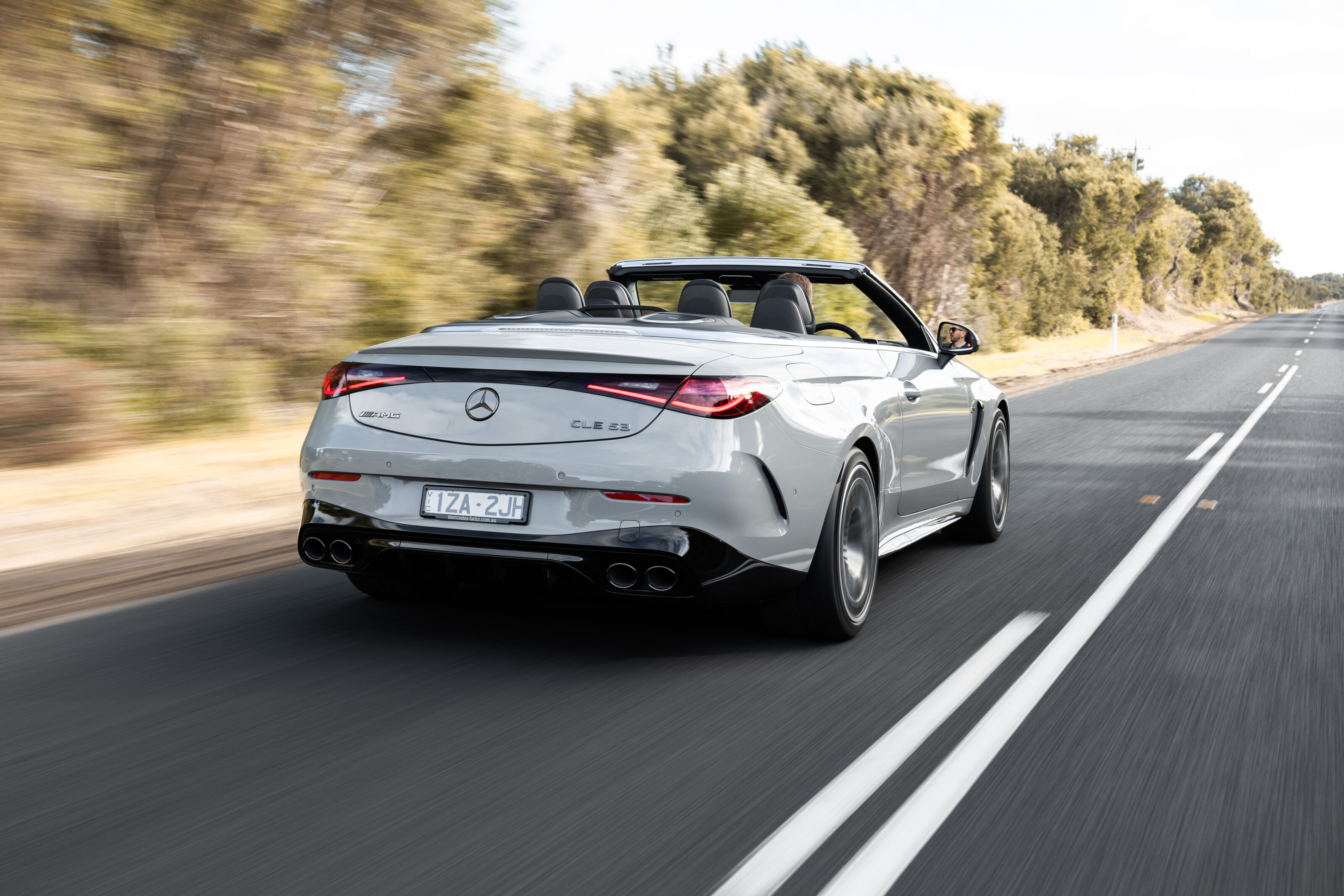
Standard equipment on the CLE 53 includes 20-inch alloy wheels, automatic all-LED exterior
lighting, adaptive damping, rear-axle steering, the AMG Exterior Night Package 1 and 2, keyless
entry and start, and the company’s ‘Aircap’ electric wind deflector and the ‘Airscarf’ neck-level
heating and ventilation.
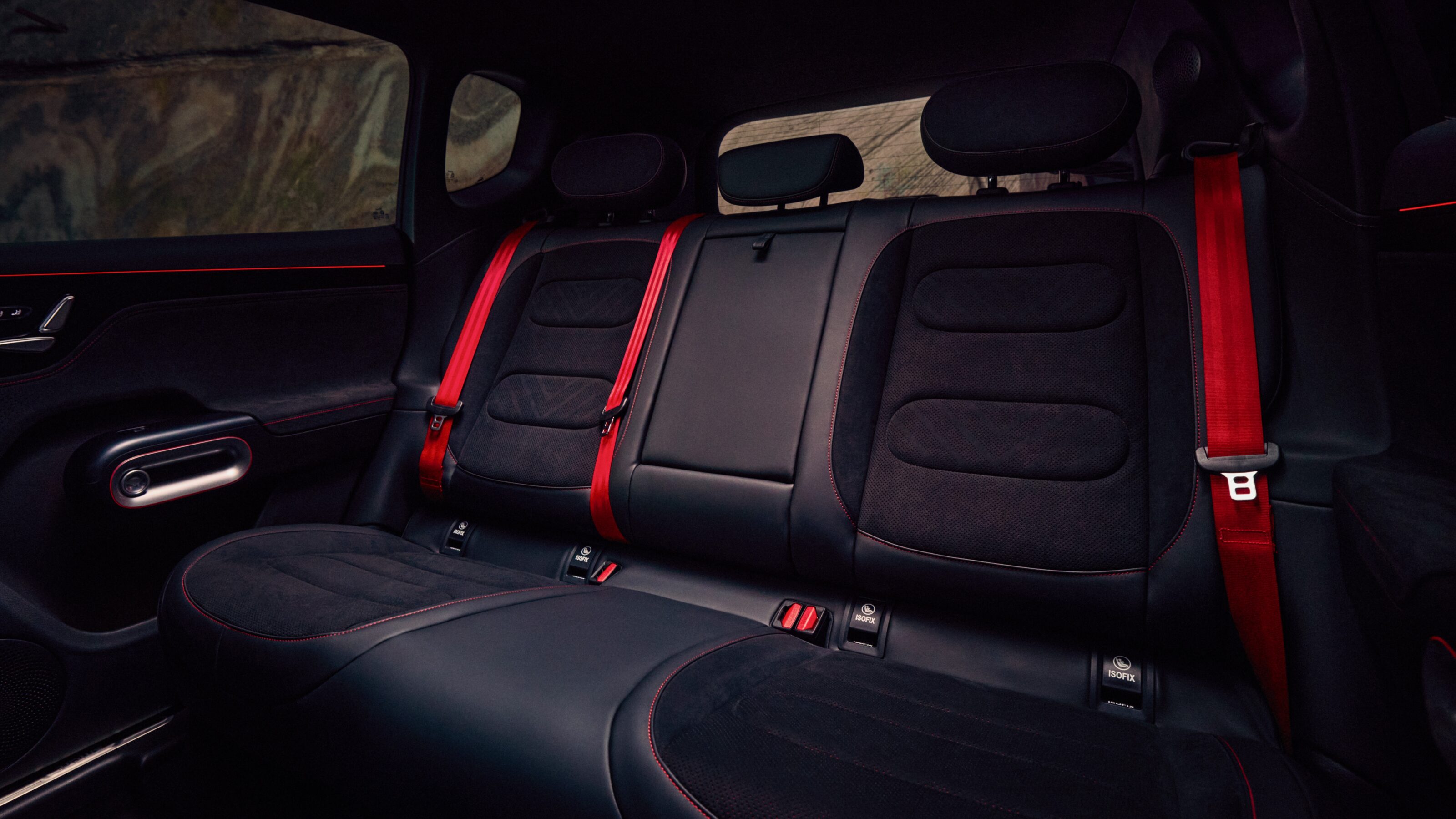
Inside features black leather upholstery with red stitching, carbon interior trim, a Nappa leather
steering wheel, 64-colour ambient lighting, a 12.3-inch digital driver’s display, an 11.9-inch
touchscreen with wireless Apple CarPlay and Android Auto, digital radio and a Burmester sound
system.
Safety equipment includes 10 airbags, autonomous emergency braking with pedestrian and cyclist
detection, adaptive cruise control with stop and go functionality, blind-spot monitoring with front and
rear cross-traffic alert, active speed limit assist, safe exit warning, lane keeping assistance,
adaptive lane guidance, traffic sign recognition, a 360-degree camera, front and rear parking
sensors and adaptive high beam.
Buyers wanting to personalise their CLE 53 Cabriolet can choose the $2,100 Plus Package with
heated and ventilated front seats, memory parking assistance, air-balance package and the
energising package plus.
The $8,900 Carbon Package is also available and includes carbon fibre trim on the steering wheel,
dashboard and doors, front splitter, mirror caps, lip spoiler and side sills.
AMG Performance Seats are also available for an extra $5,400.
Mercedes-AMG CLE 53 pricing (plus on-road costs):
| Coupe | $158,900 |
|---|---|
| Cabriolet | $175,600 |
The Mercedes-AMG CLE 53 is now available to order, with local deliveries commencing soon.
Things we like
- Excellent fuel economy from the e-POWER system
Not so much
- Price makes the hybrid tech less accessible than it should be
I’m not sure I’m ready for the idea of a $54,365 Nissan Qashqai.
Yes, this is the flagship N-Design version of the updated 2025 car, and it features the clever e-POWER hybrid engine, but that’s some serious wedge to fork over for what remains a compact crossover.
The headline news is that the car has been thoroughly refreshed inside and out, with a new trim structure across the range, better tech inside the vehicle and those perennial complaints about servicing costs have also been addressed. Plus there’s that new industry-leading 10-year warranty that is sure to attract many buyers who realise what effect that will have on their new Nissan’s residual values a bit further down the track.
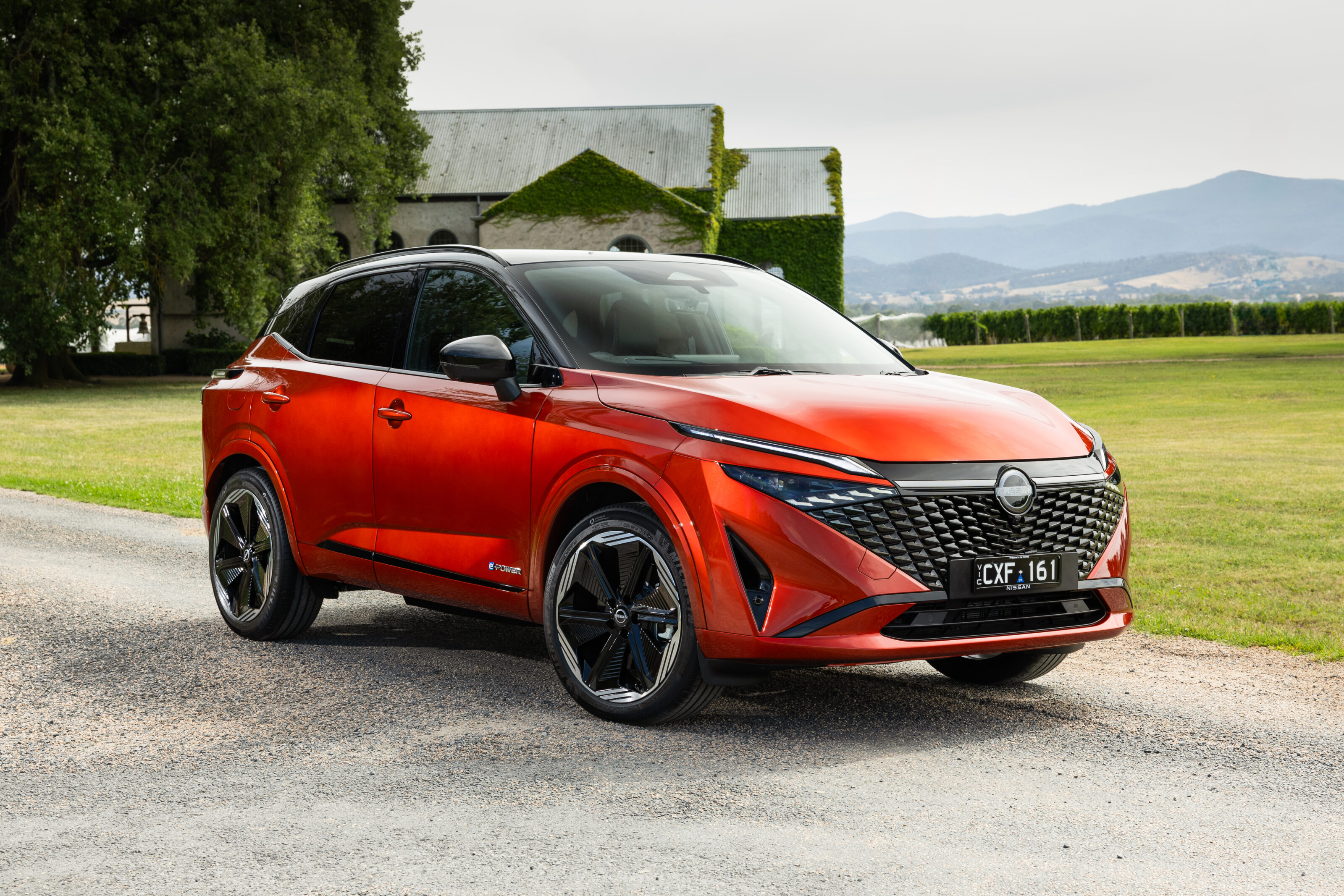
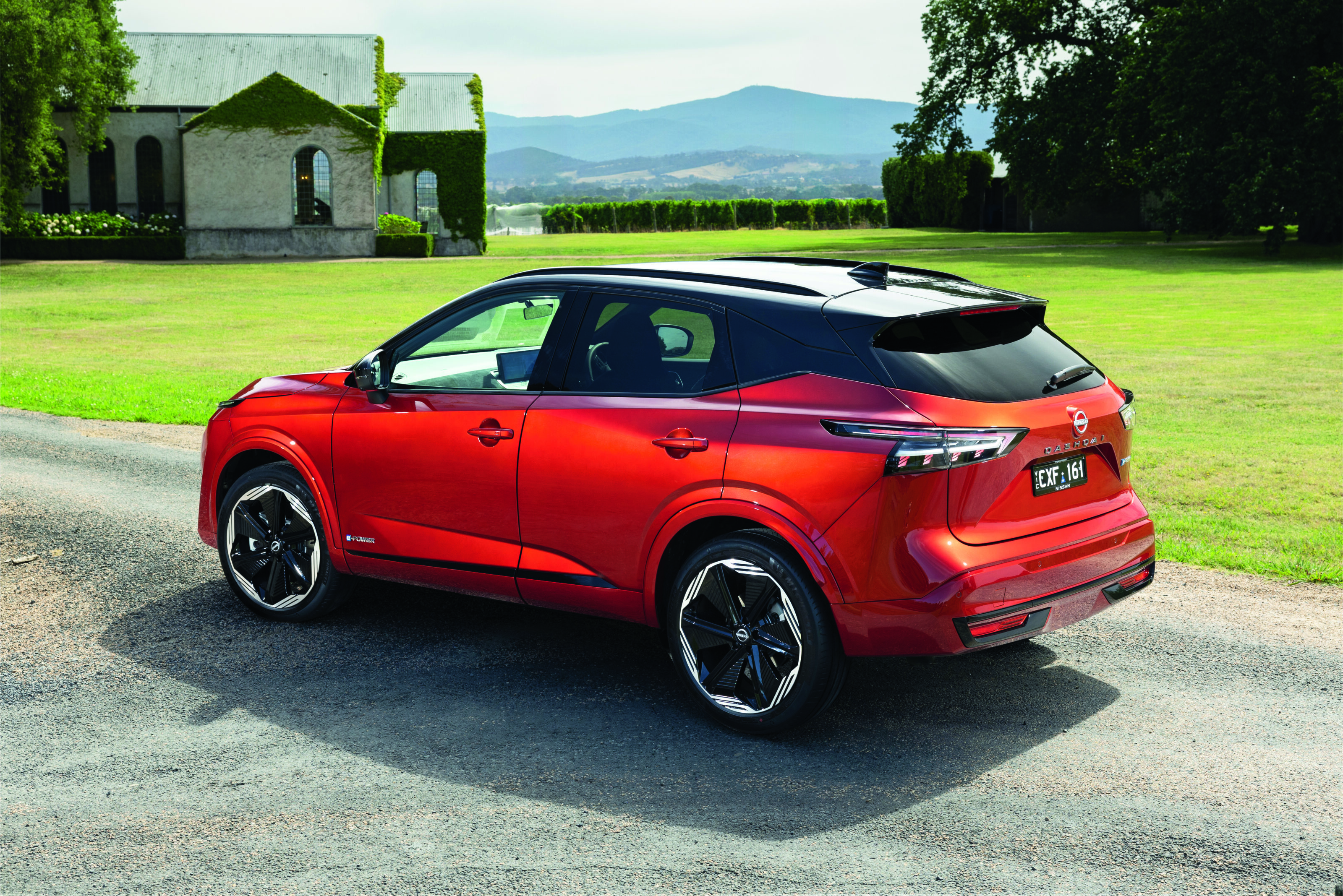
First impressions? There’s a lot going on with the styling. Normally that’s no good thing, a case of designers over-egging the pudding, but it seems to work here. Whether it’s the busy design of the 20-inch (yes, really) wheels, the scaly grille or the revised front and rear lights, it gives a fresh look to a model introduced as recently as 2022. The car’s stance is purposeful and there’s a muscular shoulder line which gives it an impression of extreme rake.
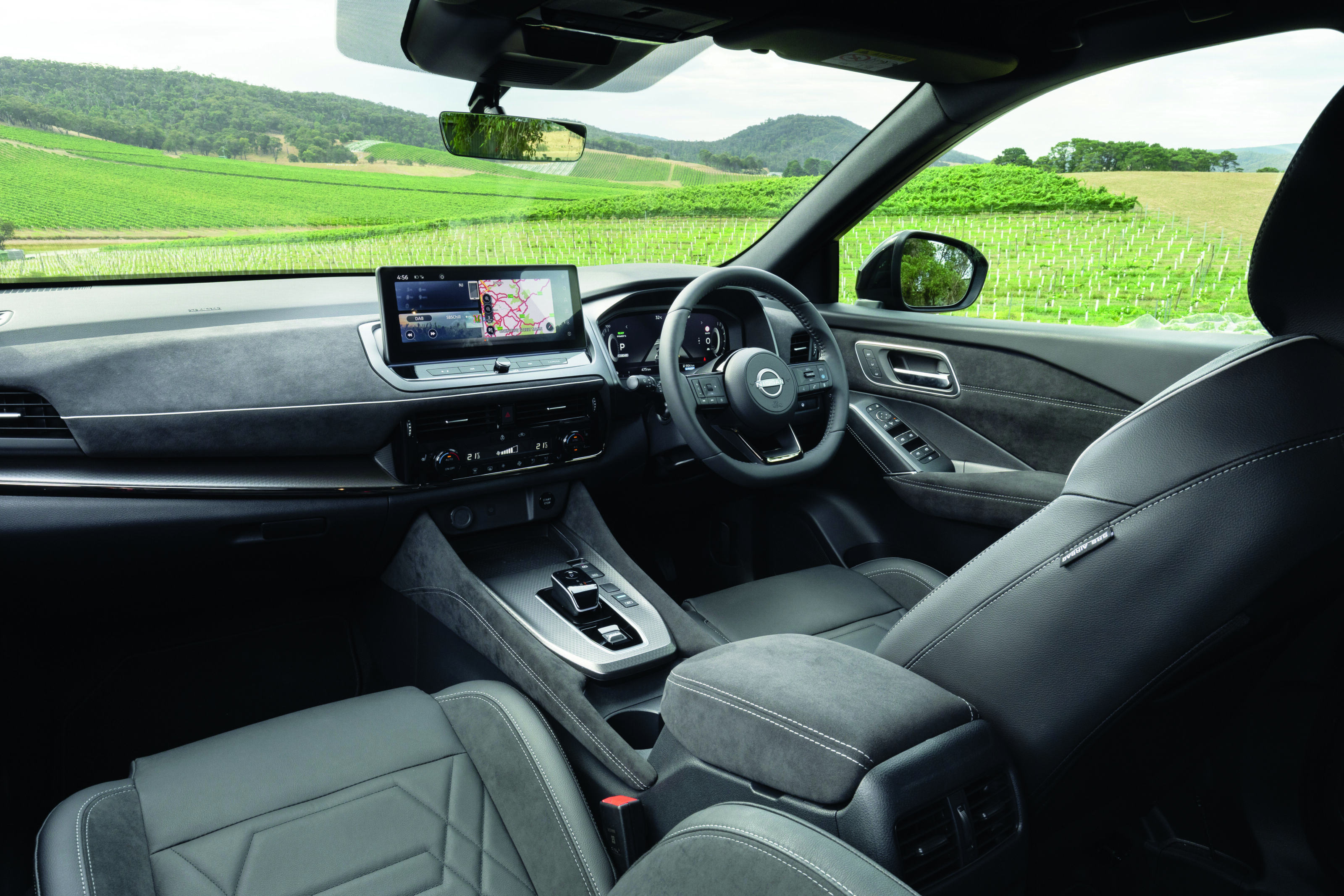
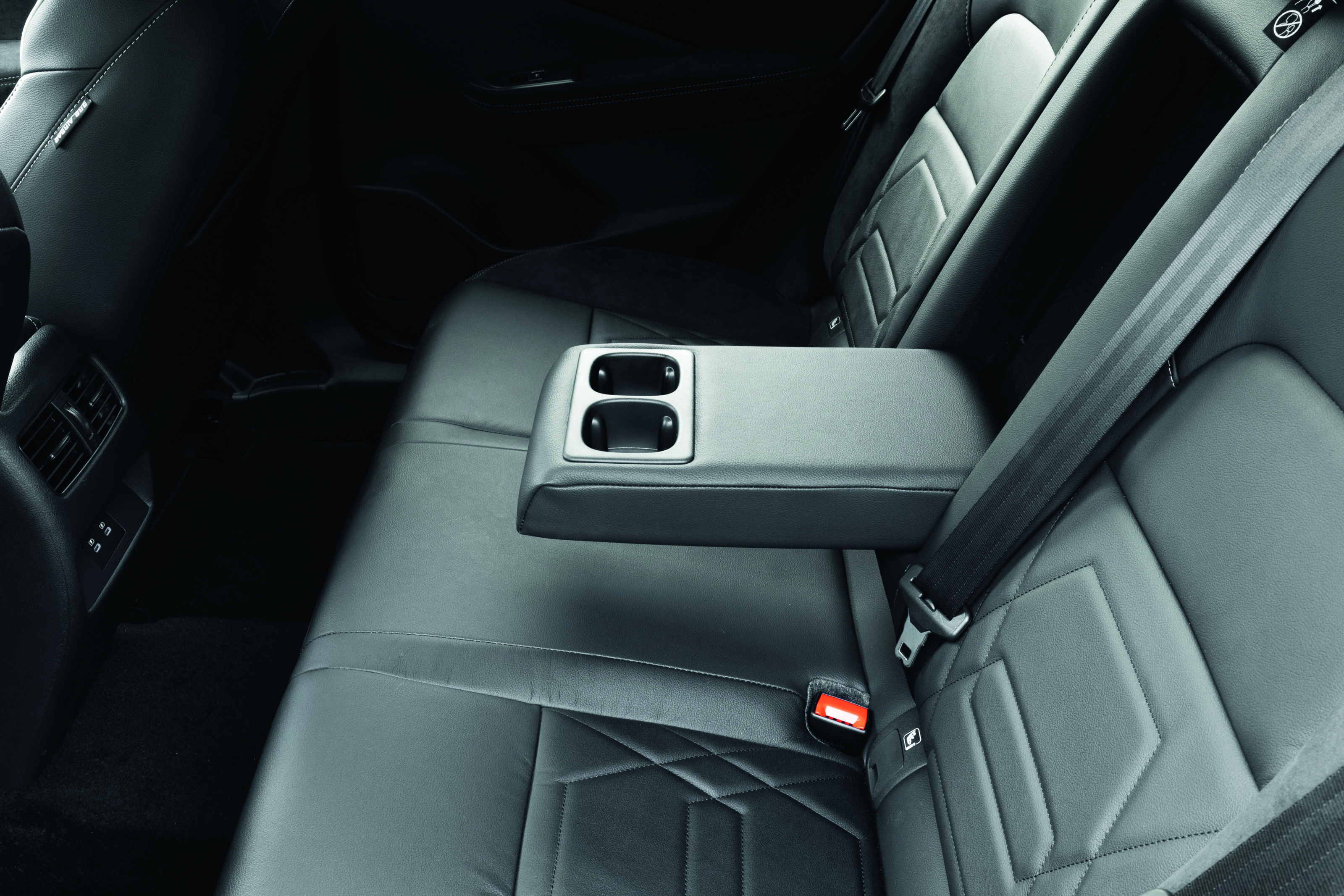
The quality of the materials inside has improved, with the N-Design being liberally swathed in Alcantara and leather. There’s also quite a bit of piano black plastic which looks great until it becomes smudged and scratched. It’s time car manufacturers looked for a more durable alternative. A 12.3-inch centre screen features wireless Apple CarPlay and Android Auto, and there’s also the backup of native sat-nav should your phone go on the fritz. The tile-based interface isn’t the most intuitive, but it seems robust.
The steering wheel is particularly slick, with a soft stitched leather wrap. The seats are embossed and feature white piping and stitching, and there’s a wireless phone charger, which is a bit of a tight squeeze for larger handsets.
The hybrid system is such that the 1.5-litre petrol engine powers an e-motor that drives the front wheels. Mechanical refinement is extremely good, to the extent that you notice tyre noise which would usually be muted by the sound of the engine. The brake pedal handover from friction to re-gen braking is also very slickly handled, but I feel that, in this variant at least, the ride quality is writing cheques that the handling can’t cash. That’s in part due to the big alloy wheels and the 235/45 R20 Michelin Primacy4 tyres, which let you know unambiguously exactly how coarse the chip is that you’re driving on.
One area where we’ve had mixed feelings about Nissan’s e-POWER system insofar as it sounds odd (the revs don’t always build and decay in tune with acceleration and deceleration) is that the efficiency figures have typically failed to match up to the likes of Toyota and Honda hybrids. The former point still stands, but on a mixed route of country back roads, freeways and suburban routes, I averaged 4.6L/100km which is right up there with the best in class.
As a demonstrator of what the updated Qashqai is all about, the N-Design impresses, although I’d be inclined to look at the other end of the range in search of value. The entry-level Qashqai ST runs on 17-inch alloy wheels for a more supple ride and starts at just $32,665. It seems a more convincing proposition, despite the fact that it misses out on the e-POWER hybrid tech. You’ll need to step up to the $52,365 Ti-L e-POWER model for that, which, given that Toyota will happily sell you a hybrid RAV4 for just over $42k, seems a bit of a miss.
The updates have made a good compact crossover more attractive still, but until Nissan prices its hybrid tech a bit more generously, it can’t hope to erode the market share of its key rivals in any meaningful manner. That seems a genuine shame.
Specifications
| Model | Nissan Qashqai N-DESIGN e-POWER |
| Engine | 1497cc 3cyl, dohc, 12v turbo hybrid |
| Max power | 140kW @ 4500-7500rpm |
| Max torque | 330Nm @ 0-3000rpm |
| 4.6L/100km (tested) | 4.6L/100km (tested) |
| Weight | 1728kg |
| 0-100km/h | 7.9 sec (tested) |
| Price | $54,365 |
| On sale | Now |
This article appeared in the April issue of Wheels magazine.
