
Sebastien Loeb didn’t win nine straight WRC titles by chance. Nor is it luck that has secured Audi victory in 13 of the last 16 Le Mans 24 Hour races.
Such dominance is the by-product of hard work, determination and talent. A similar combination of attributes explains Porsche’s impressive run of success at our annual Performance Car of the Year test.
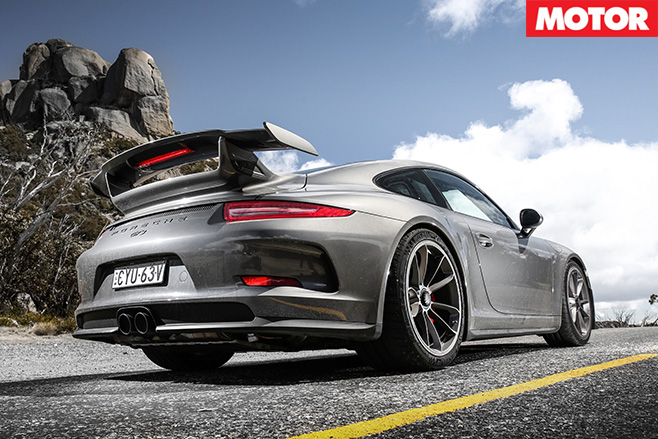
The 991 911 GT3’s victory is Porsche’s 12th in the 20-year history of the event, however it was far from a foregone conclusion. With a brand new sportscar from AMG, an all-wheel drive version of last year’s third-placed F-Type and the hottest hatch of recent times, this year’s field was the toughest in recent memory, but in the final reckoning the GT3 stood head and shoulders above the rest. Whichever way you cut the deck, Porsche’s hardcore 911 reigned supreme.
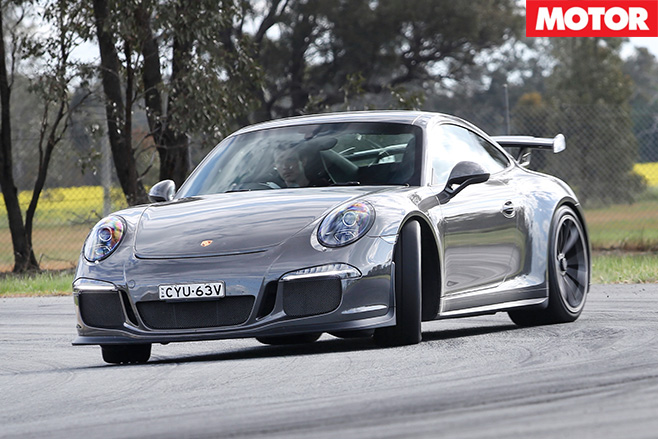
Okay, so with that 3.8-litre flat-six pressing down hard on the rear wheels, it’s always going to shoot off the line, but the speed is relentless. The quarter mile takes just 11.48sec and it is travelling 201.60km/h as it does so. Only the AMG GT S could best that (202.60km/h) and that’s packing a 375kW/650Nm twin-turbo V8. An atmo six-cylinder producing 350kW/440Nm just shouldn’t be this fast.
The stats are impressive, but initially the GT3 feels impressively brisk without being spectacular. That’s when you realise you’ve been changing up at 7000rpm, when every sense suggests that that’s the prudent thing to do. The final 2000rpm changes everything and immediately dispenses any notion that the GT3 has somehow gone soft – the acceleration becomes manic and the engine emits a blood-curdling scream.
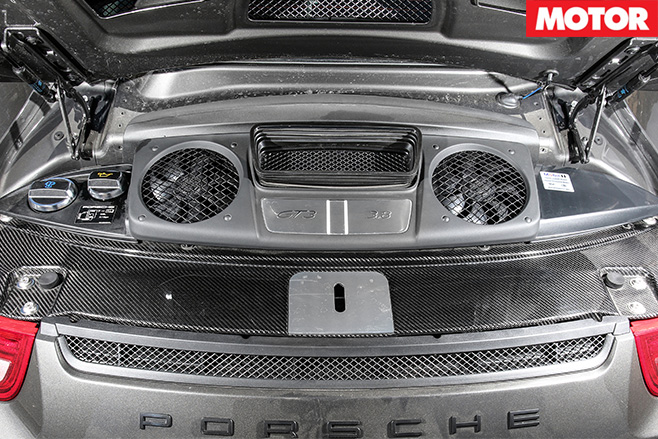
Luffy’s searing effort also illustrates the enormous jump Porsche has made with the new GT3. Despite being bigger and 35kg heavier, it not only beats its predecessor by 3.3sec but also the more focused 997.2 GT3 RS (+2.2sec) and even the turbocharged GT2 (+1.2sec).
What’s more, it will do so all day long and with all the electronics engaged; you don’t even need to take it out of Drive, such is the brilliant PDK’s uncanny ability to choose the right gear with Sport Plus engaged.
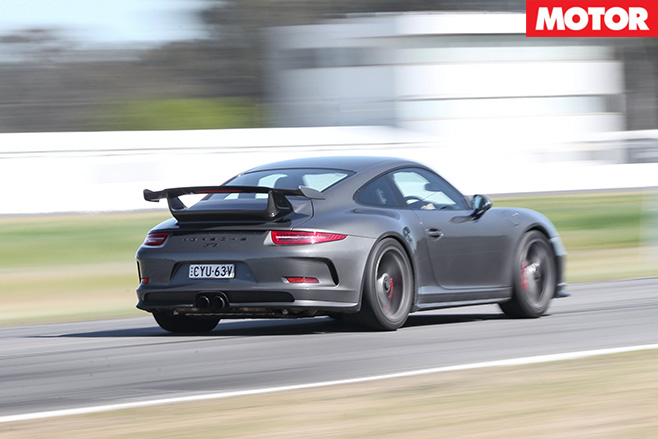
In previous GT3s, novice drivers would eventually have to extract themselves from a wall/hedge/gravel trap, but in the 991 they’ll probably go faster than in any other car with the same or even less effort. Attempt to drive the GT3 to its limit rather than your own, however, and it’s a whole different ball game.
The way it both builds and sheds speed, along with its incredible lateral grip, means it appears to have inexhaustible reserves. You push harder and harder and it shrugs and says: “Great, what’s next?”
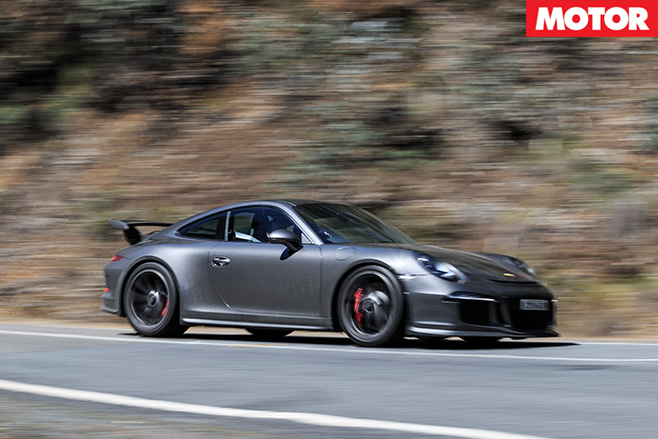
On track it’s arguably even more frenetic, as the car finally starts to move around. The absence of a manual gearbox does remove one layer of complexity, but simply means the driver can concentrate on leaving braking until the very last moment.
The unique weight distribution still requires a level of finesse; 911s are friendlier than ever but still have an enormous amount of weight in the ‘wrong’ place, so it’s important to keep weight on the nose at corner entry to avoid understeer. And whatever you do, don’t lift the throttle in the middle of a fast corner.
You can use the weight to your advantage, though. Brake firmly, flick the steering and the massive 305mm Michelins break free. You have to stay committed at this point as there’s so much grip and traction that if you hesitate with the throttle it’ll spit you back the other way faster than you can say “where did all this grass come from?”.
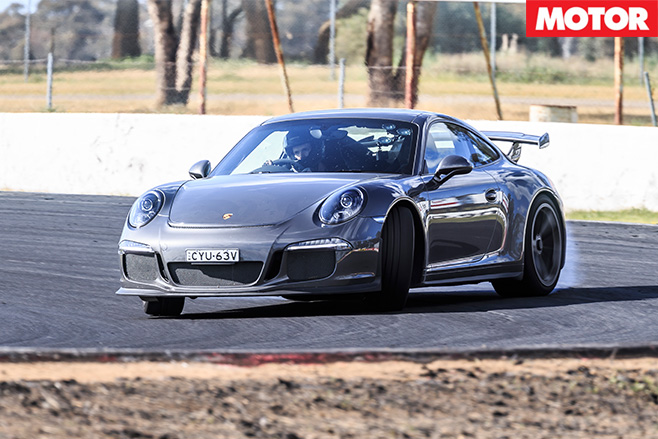
The scale of the GT3’s ability won everybody over, with four of the five judges awarding it first place. Robbo was the sole dissenter, feeling the 911 was simply too much hard work on the road sections, and instead giving his vote to the AMG GT S. There’s no doubt the GT3 possesses a fairly uncompromising ride, and the road noise can be fairly deafening, too, but most felt it still perfectly liveable and a small price to pay given the performance on offer.
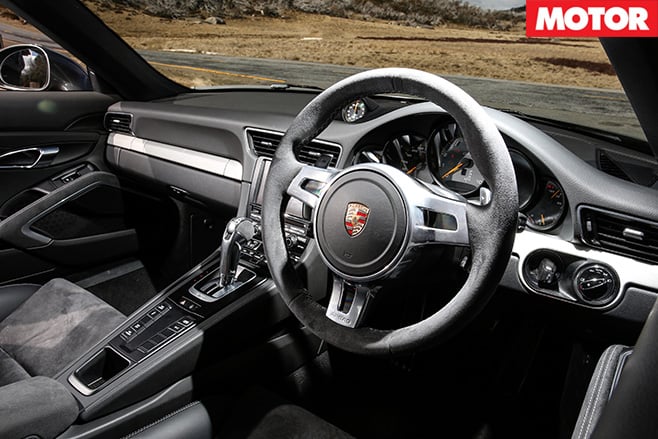
It’s not good business for one manufacturer to regularly claim our biggest prize – everyone loves a surprise result – but to not award PCOTY to what is clearly the best product would be a far greater sin.
It’s up to the other makers to lift their game, and with the likes of the new Audi R8, Lamborghini Huracan LP580-2, McLaren 570S and Mercedes-AMG C63 S Coupe already pencilled in for 2016, Porsche will have a bigger fight on its hands than ever to retain its title. Then again, when its own roster includes the Boxster Spyder, Cayman GT4, turbocharged 911 Carrera and 911 GT3 RS, well, you’d be brave to best against it.
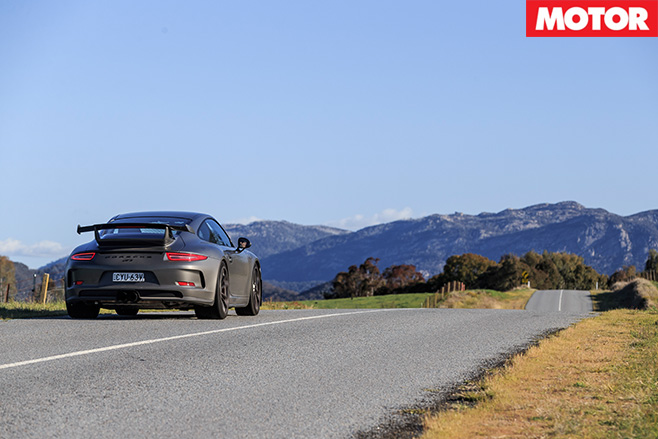
THE NUMBERS 0-100km/h: 3.55sec (1st) 0-400m: 11.48sec @ 201.60km/h (1st) Lap Time: 1:30.9sec (1st)
| 1996 | Porsche 993 Turbou00a0 | 2006 | Audi B7 RS4 |
| 1997 | BMW E36 M3u00a0 | 2007 | Porsche 997 GT3u00a0 |
| 1998 | Porsche Boxsteru00a0 | 2008 | Porsche 997 GT2u00a0 |
| 1999 | Porsche 996 Carrerau00a0 | 2009 | Audi R8 V10 |
| 2000 | Porsche Boxster Su00a0 | 2009 | Nissan GT-R |
| 2001 | Nissan S15 200SXu00a0 | 2010 | Porsche 997.2 GT3 RSu00a0 |
| 2002 | BMW E46 M3u00a0 | 2011 | Nissan GT-R |
| 2003 | Porsche Boxster Su00a0 | 2012 | Porsche 991 Carrera Su00a0 |
| 2004 | Lamborghini Gallardou00a0 | 2013 | Audi R8 V10 Plus |
| 2005 | Porsche 997 Carrera S | 2014 | Porsche 991 Turbou00a0 |
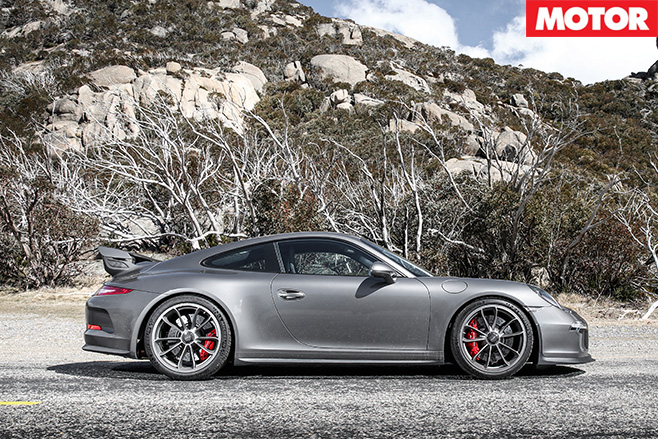
David Morley: 1st “I’m not saying the PDK doesn’t work. But I’d still crave a third pedal”
Scott Newman: 1st “More car than I am driver. Civilised enough for the road but unbeatable on a track”
Tim Robson: 2nd “Holy sweary words. Astonishingly composed at jet fighter velocities. More sweary words”
Warren Luff: 1st “Officially the new fastest car at Winton for MOTOR. Don’t need to say much else”
Imagine if you could take your favourite road, snip out 1.4km of the best bit and join the ends together in a paddock somewhere.
If you did that, depending on what your favourite road looks like, you might get something like DECA, the Driver Education Centre of Australia, on the outskirts of Shepparton, itself about three quarters the way to the NSW border north-ish of Melbourne.
The facility itself has skid pans and training circuits and everything necessary to train learner truckies during the week, but we’re most interested in the circuit out the back, 1.4km of wide-enough bitumen, bent in eight places to form a quasi-circuit.
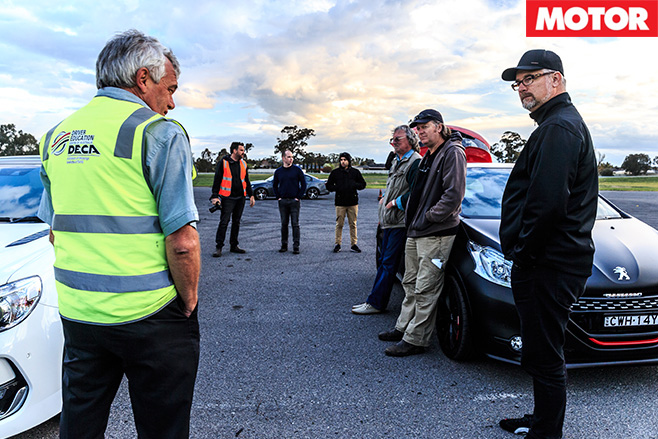
The purpose for our visit is this: no cops, no kids, no well-meaning old folks giving you dirty looks as you drive past their house. And something becoming increasingly an attraction, at least in Victoria, no cyclists riding in the middle of the road around blind corners. Not that they’re not entitled to do so.
As DECA is more a closed road than racetrack, the stopwatches are left alone; so, too, helmets. It’s the perfect place where, for day one, judges can break ice with our 11 go-fast contenders.
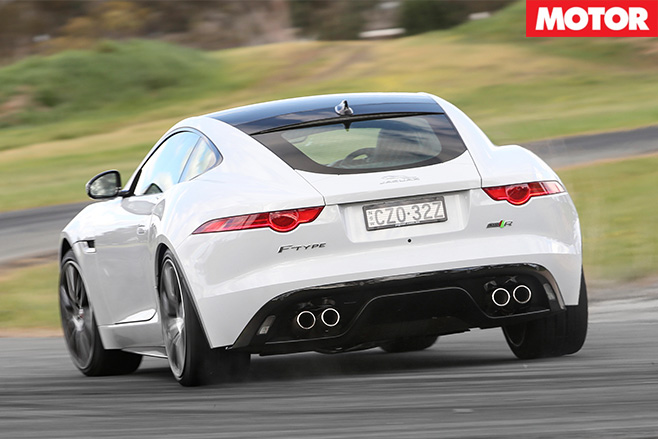
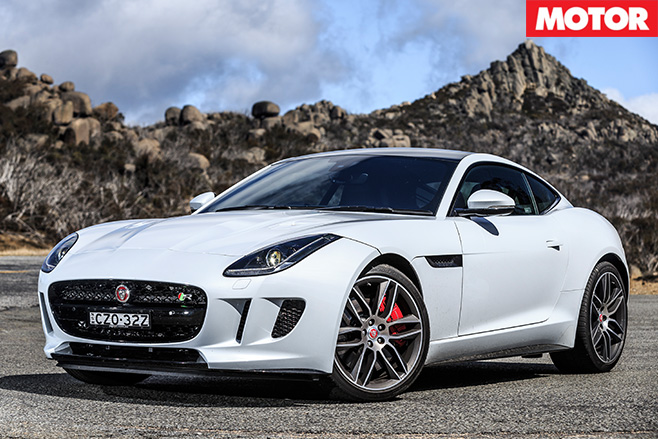
In the F-Type you slink into a low, pillbox cockpit, peering over a long bonnet and almost feeling to sit over the rear axle. I pull the little drive mode switch backwards to engage the Dynamic program, knock the shift lever into manual mode. Double checking the active exhaust button is pressed is as much a part of the routine with this car as the ol’ click-clack.
I turn on to the track from the infield bitumen car park, straighten the wheel and boot it down towards the first right-hander. The rear-drive version would be either strobing the traction light or slewing sideways in a spike of revs right now, but the all-wheel drive version just sinks claws into bitumen and converts 404kW into forward momentum with an efficiency the rear-drive version could only dream of.
And I feel almost guilty given DECA shares its back fence with some bloke’s backyard. Make that many blokes’ – brand new-looking tiled roofs and the tops of clotheslines peek over shamrock-coloured Colorbond fences. Yep, suburban encroachment of our beloved racetracks isn’t limited to capital cities. I just hope they like cars.
The F-Type does an outstanding job of making the DECA circuit feel like a go kart track, giving 200km/h a nudge along the 600-odd-metre main ‘straight’, where you can hold it flat through its right-hand kink, braking for the fast-incoming right-hander.
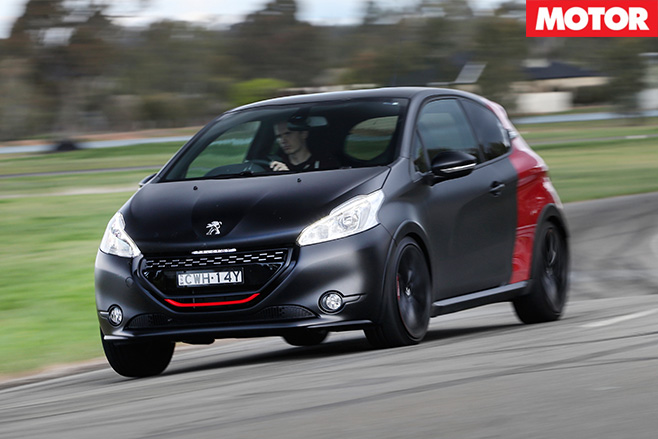
Down into turn one, long, aggressive undulations live in the braking zone and can unsettle even the most planted car. It’s here the 208 GTi 30th first reveals to the judges an ever-so-slightly nervous rear end under brakes, while here and elsewhere, cars like the 911 GT3 and Commodore don’t break a sweat.
And while it is busy blowing away the judges with its grunt and mid corner, Cup tyre-enhanced grip, over these bumps it’s best to either keep out of the C63’s super-stiff RACE setting, or take it very easy.
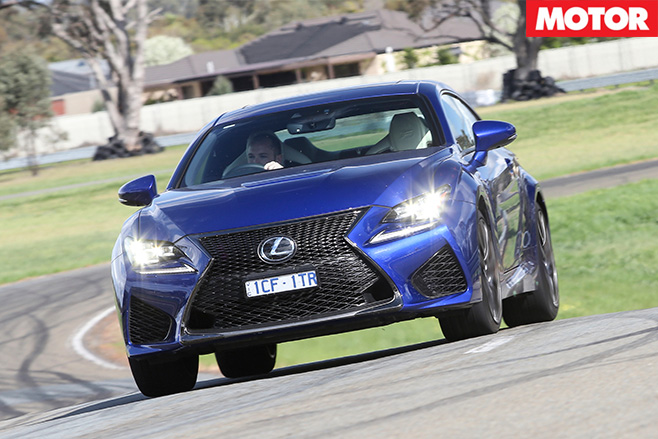
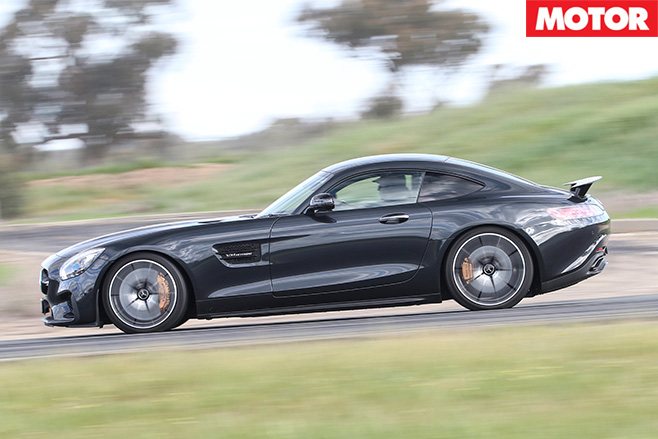
It was here the ballistic AMG GT S, in particular, turns the mouth to cotton with incredible mid-corner speed, while the 911 GT3 encourages you to commit, and cars like the F-Type simply frighten you witless.
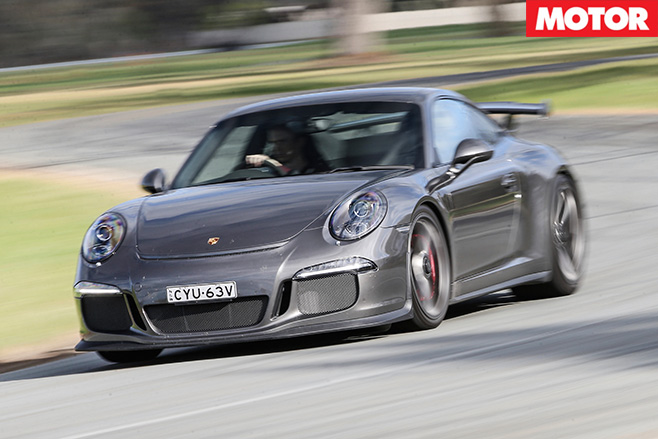
This is the last corner you properly learn at this place – and up until, and even beyond that point, it demands maximum respect. Not least because an enormous eucalypt lives on its outside.
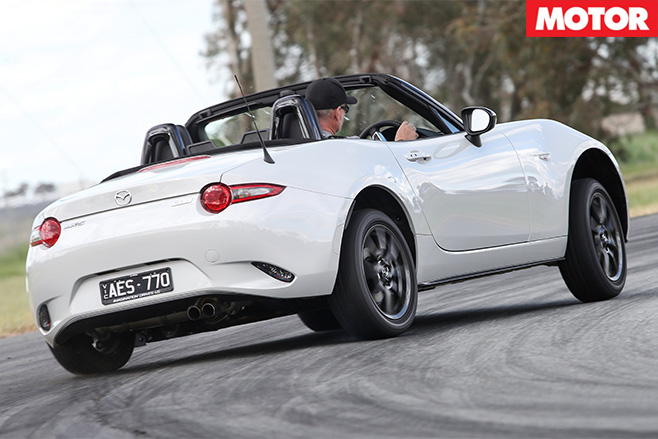
With the trees watching from a distance on the outside, this corner is Drift City. And it’s here among the rear-drivers the XR8 excels, showing off a talent for sideways action. Like every other time we’ve tested it, it feels more comfortable sideways than driven in any manner you might call behaved.
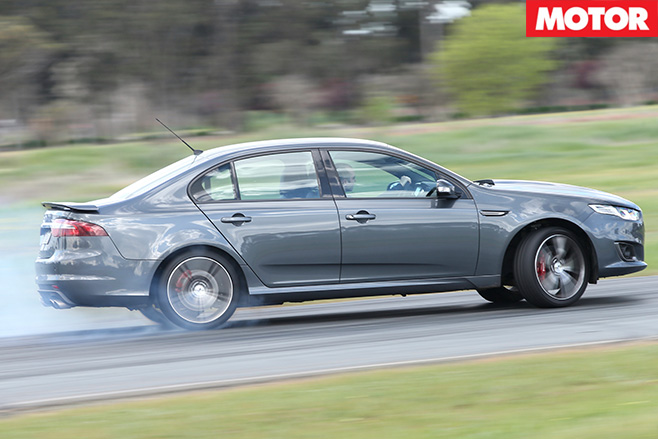
Having tidied up any slides you’re unleashed back on the 600m straight, taking a breather, eyeballs widening in the Jag, AMG GT S and 911, as you catapult through the kink. Or check your watch if you’re in the MX-5.
Being just day one at PCOTY, this was not the place for ten-tenths, entire-lap commitment in any of the cars, let alone the fast stuff. For the Jag, AMG GT S and 911 GT3, half the gearbox’s cogs weren’t getting used. DECA, instead, was the PCOTY Warm-Up.
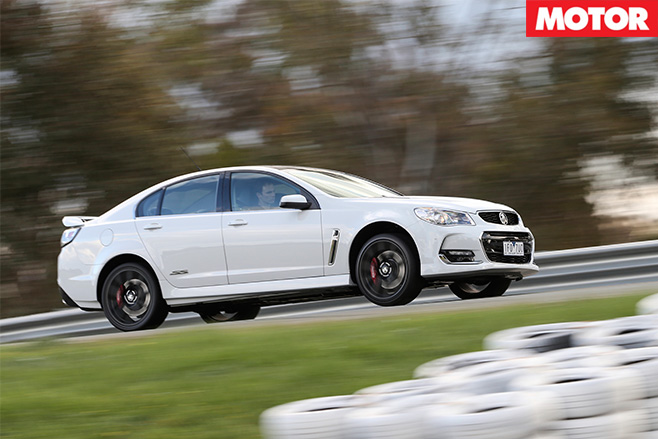
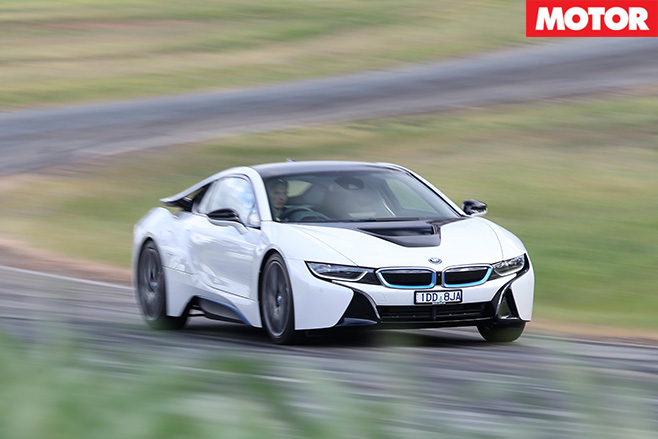
And so the slower of the bunch seemed to revel around the tighter track, like the 208 GTi, Megane Trophy R and even, to an extent, the i8, with its stiff-as-a-board chassis and razor-sharp front end.
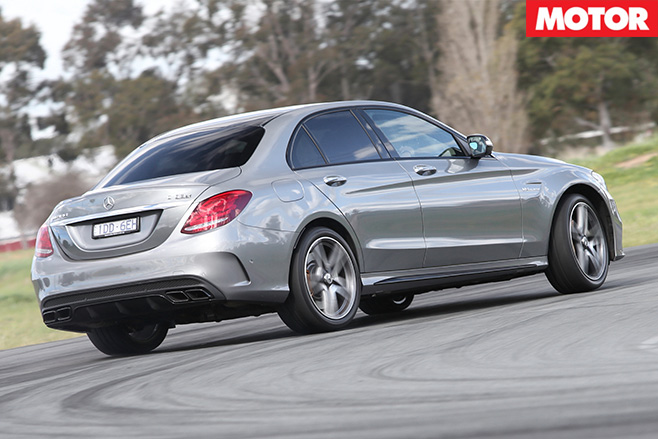
Merc fitted its PCOTY C63 with Michelin Pilot Sport Cup2 tyres – the same as that on the 911 GT3 and a 458 Speciale. Overkill? On paper, perhaps. But around DECA, with great, satisfying reserves of mid-corner grip to lean into, the C63 felt awesome.
We cruised to our Wangaratta hotel as the night rolled in, the judges all at work in their minds developing theories. For more answers it was time to climb the alps.
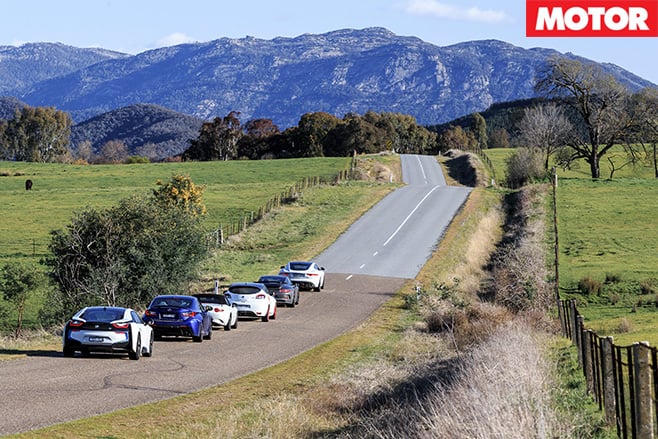
MY jetlagged brain is playing tricks on me. Last week I was whipping through misty snow-capped granite peaks, shamrock-green hillsides and rolling pine forests in the north of Germany. But this is Victoria, and the scene is exactly the same.
It’s a postcard-perfect early spring day, though the heavy clouds to the south belie the forecast of a brutal cold front sweeping up across our PCOTY fleet. It’s a real mix of price points, ability and agility this year, and one that, despite first appearances, is very likely to end in an argument around the pizzeria table on the last night.
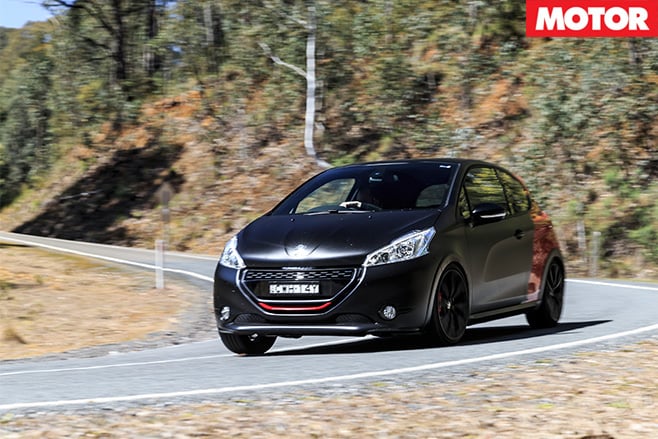
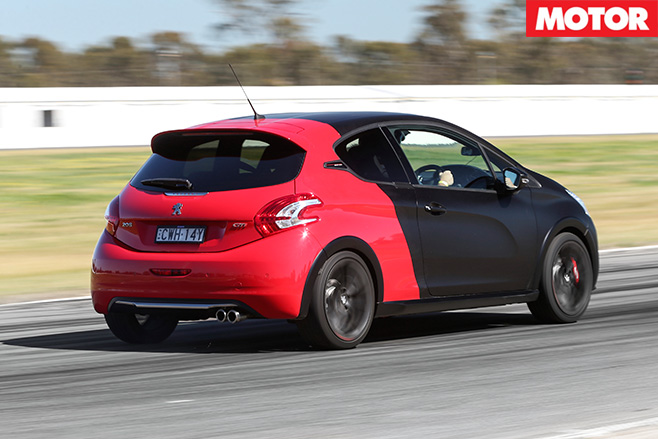
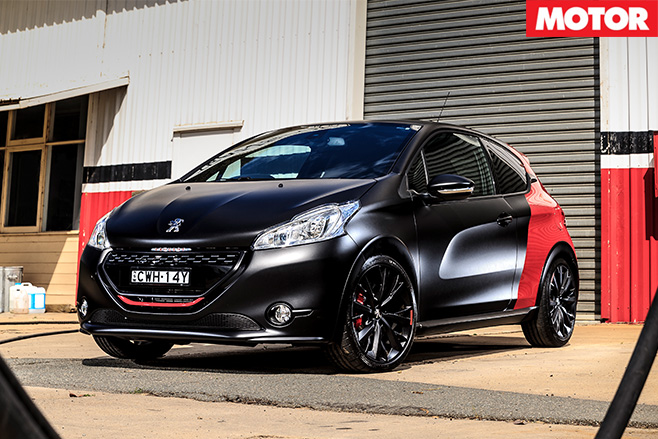
Ignore the paint, though, as it’s the least of the Pug’s party tricks on the open road. Wider rubber, a Torsen front slipper, wider track and tweaked suspension give this 208 a more robust, tied-down feel than its regular brethen.
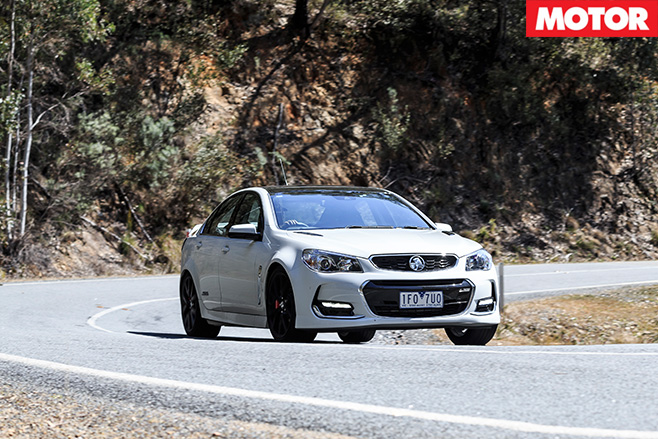
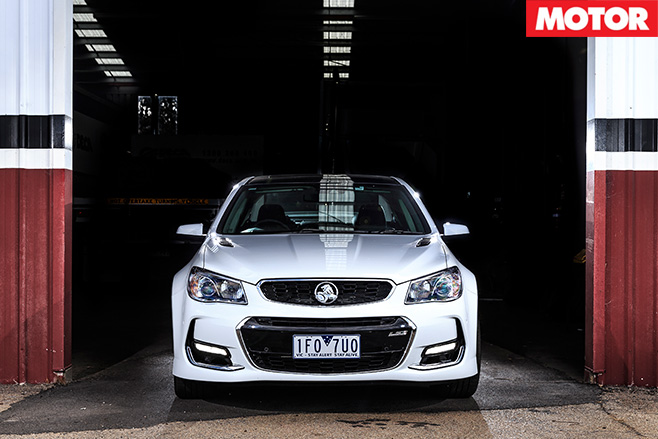
At the other end of the scale lies the new Holden Commodore VF II SS V Redline. I say ‘new’ as the paint was literally still drying on our test example, and Editor Dylan instructs the more social-media savvy among us (not so much Cockburn and Morley, then) not to include it in any sort of Snapchat action. Ahem.
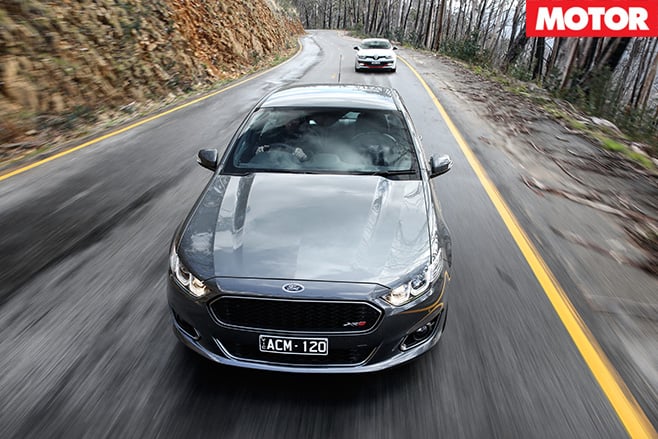
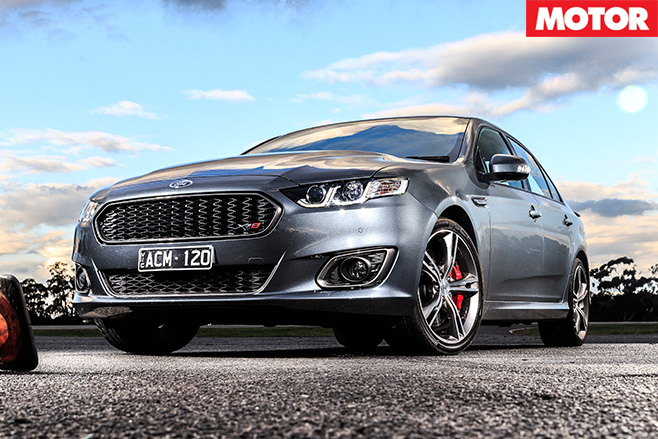
The same cannot be said for the Ford Falcon XR8. Again, a monster motor is deemed appropriate; this time, a supercharged 5.0-litre V8 takes pride of place under the power bulge.
Day 2: Taming the Mount (Buffalo)
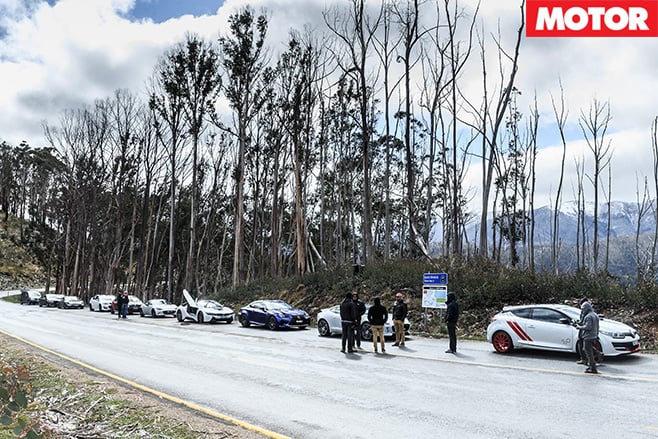
“So we’ll roll out at exactly 8.30am,” says Dylan over dinner the previous night. “Make sure you’re on time!” So at exactly 9.24am, the PCOTY fleet rolls out on the Alpine Way, towards the Victorian Alps.
The run up to Mount Buffalo, I’m told, is a bit of a cracker, so I sidle over early to the Jaguar F-Type to stake a claim. And oh boy, I pick right.
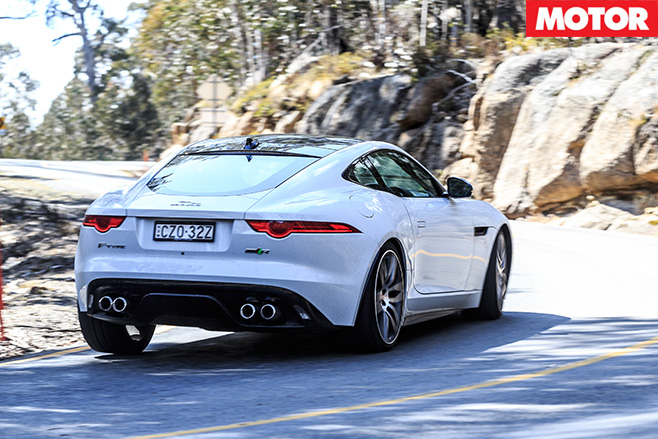
Trusting the front end to find grip, feeding in throttle earlier and earlier then pushing in the mat invokes an effect akin to being shot from a howitzer, with a noise to suit. It’s utterly intoxicating and totally addictive. The Jag soaks it up, too; it’s a willing companion that coaxes you into more mischief, but won’t punish you for being too ham-fisted or footed.
The F-Type’s driving mode adjuster can be customised from the centre console, so in a quiet moment, I change the damper settings from dynamic to normal. The change is marked and the F-Type is instantly softer and more pliable over the sharper rolls and undulations of this cold-ravaged road, keying into the rough tarmac like a lump of large, fast Blu-Tack.
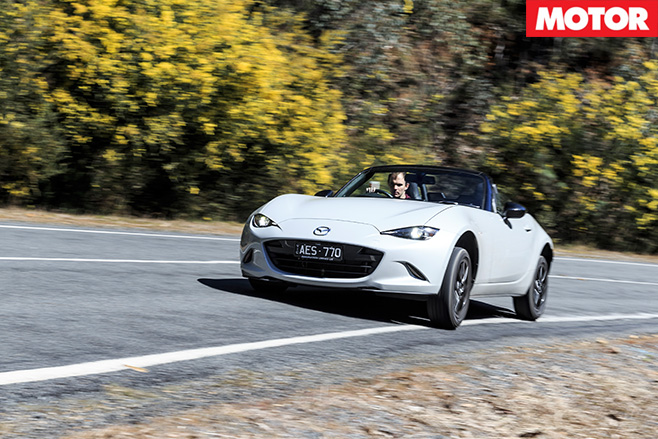
Heart in throat? Check. Wind in hair? Check. Being thrown from side to side, ever fearful you’ll be thrown off, but knowing deep down you won’t be? Check. What a blast. What. A. Blast. This little car is such a ray of talented sunshine. Out of the box, its manners and its attitude are so close to spot on, it’s not funny. With heated seats and a howling gale of warmth from the vents, I’m comfortable even in -5°C temperatures, too.
Day 3: Halfway to Hotham
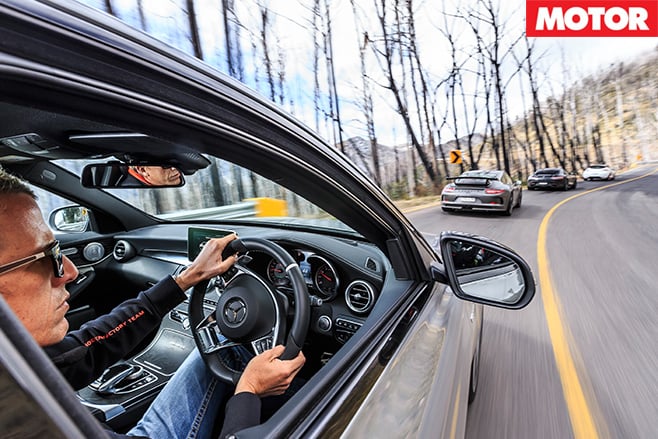
It’s a multi-faceted haul up yet more sinuous alpine roads towards Mount Hotham, where temperature gauges drop into low single digits. It’s cold enough to pay heed to grip levels on the damp sections of road, with several cars warning of icy negative outcomes.
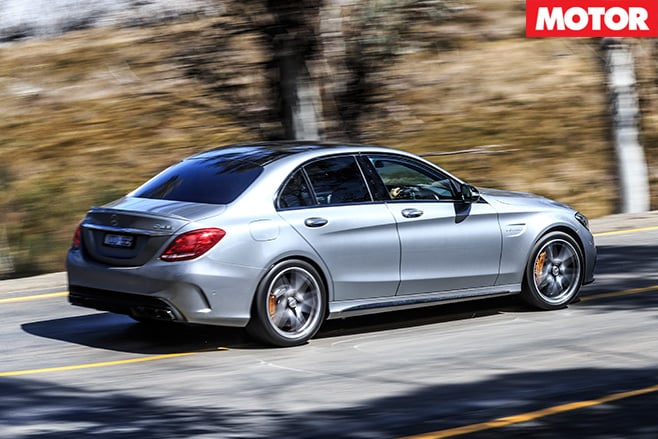
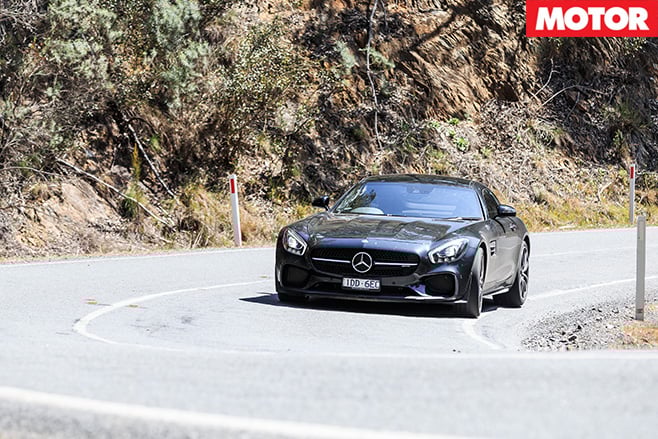
Trying to explore the AMG GT S’s limits today, too, proves frustrating and illuminating in equal measure. No doubt there is immense ability here, but in order to exploit it, you are asking a lot of yourself and the conditions.
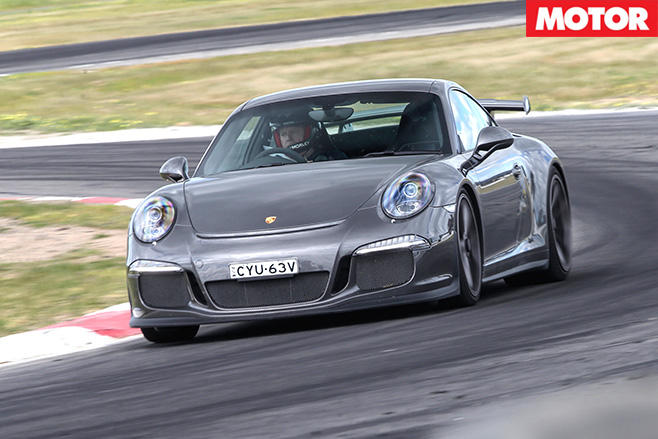
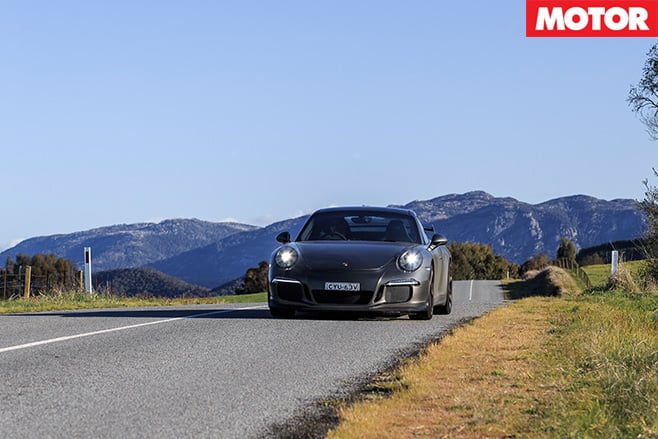
The 911 GT3, too, displays its ‘take-it-or-leave-it’ side on the run home. It’s always on point and, if you’re up for it, its on-road performance is from another dimension. Such depth of ability! How is this thing not turbocharged? So much pace, so much mid-corner speed!
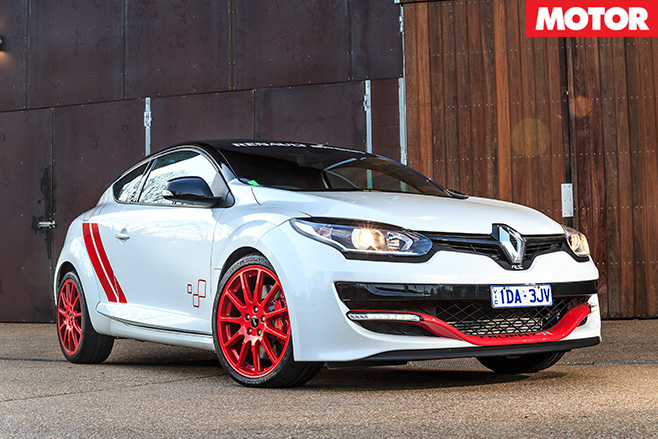
The ridiculously-named Renault Sport Megane RS275 Trophy-R is a late arrival, but it has quickly wormed its way into several hearts with its insanely tactile chassis. The chassis is made even better by the deduction of unsprung weight via alloy hubs and lighter wheels, and the addition of a seriously tricky diff. I’m not convinced, though.
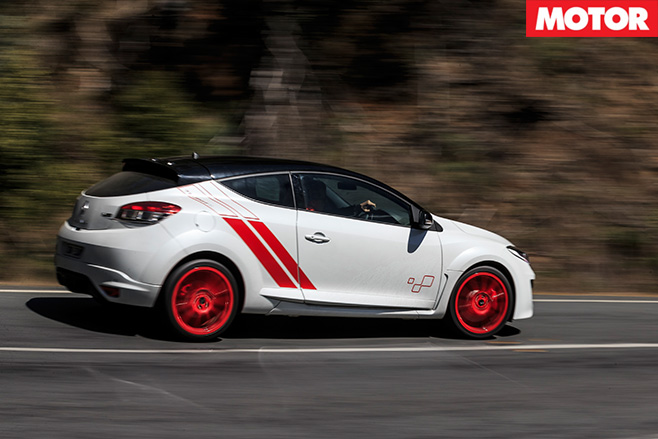
A run up the mountains, though, breaks my heart – such is the sublime ability lurking within. The ageing Megane has always been a MOTOR favourite, and this final iteration brings it all together in fitting style. Laser-rivalling turn-in, astonishing power-down and unfathomable levels of mechanical grip are only let down by the laggy turbomotor, though the slightly short gearing helps it out of a hole here.
Its interior, too, is off – the seats sit too high, the roof sits too low and the console between the seats sits very tall. The fingerpad arrangement, too, is batting a thousand in this age of swipe pads and Apple CarPlay – it’s hard to use in motion and feels decidedly unnatural.
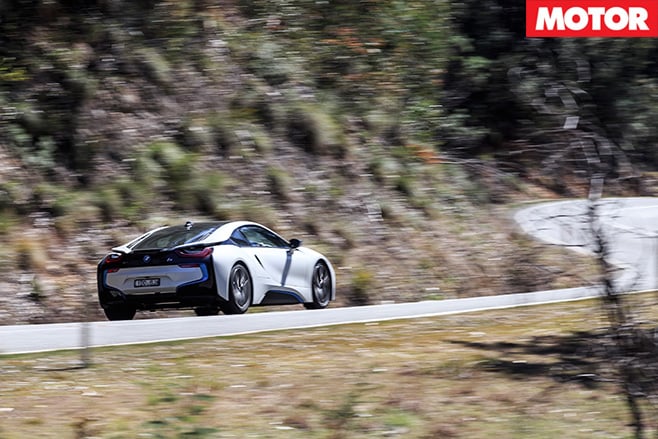
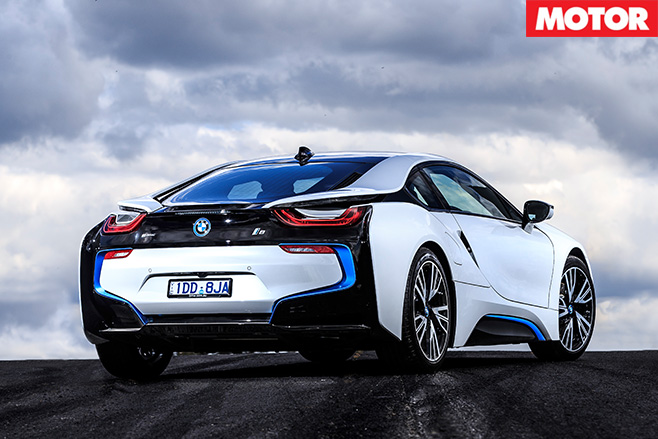
Lots of things have been omitted from the car – multiple seat adjustments, radar cruise, heated seats – in what we can only assume is an exercise in power management. But, despite being specced like a mid-level 3-Series, the i8’s touring credentials are sound, with its rock-solid CFRP chassis nicely complemented by well-tuned springs and dampers.
| Vehicle | Claimed | Measured | Difference |
| Ford Falcon XR8 | 13.7L/100km | 14.47L/100km | +0.77L |
| Mazda MX-5 | 6.1L/100km | 7.65L/100km | +1.55L |
| Porsche 911 GT3 | 12.4L/100km | 14.74L/100km | +2.34L |
| Lexus RC F | 10.9L/100km | 13.37L/100km | +2.47L |
| Peugeot 208 GTi 30th | 5.4L/100km | 8.37L/100km | +2.97L |
| Holden SS V Redline | 12.6L/100km | 16.25L/100km | +3.65L |
| Renault Megane Trophy | 7.5L/100km | 11.86L/100km | +4.36L |
| Jaguar F-Type R AWD | 11.3L/100km | 17.74L/100km | +6.44L |
| BMW i8 | 2.1L/100km | 8.56L/100km | +6.46L |
| Mercedes-AMG C63 S | 8.6L/100km | 18.92L/100km | +10.32L |
| Mercedes-AMG GT S | Not available | Not available | Not available |
Driving in a straight line, how hard can that be?
On the face of it, it’s the simplest of tasks, but anyone who’s had a bash at drag racing knows that extracting the best acceleration times from a car can be a frustrating job.
Crucial tenths are lost with every flare of wheelspin or fluffed shift, and it’s important to get it right – the value attached to ‘the numbers’ is enormous, and the world at large is never shy in voicing its opinion should it deem your efforts lacking.
To that end, at the risk of divulging trade secrets, here you’ll find the details of how we extract the best times from each car, their behaviour in the process and, should we not match the manufacturer claims, the reasons why not. One of those reasons is time.
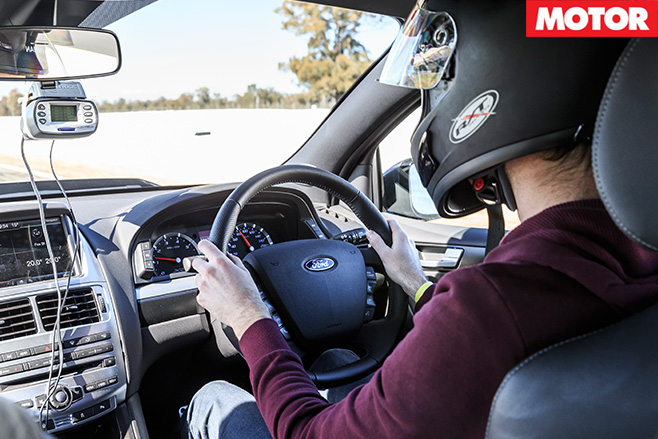
One factor working in our favour is the venue. It might not be a prepared track, but our makeshift Winton ‘strip’ – running in reverse direction from turn 11 – provides some quick times. There’s the small issue of a bumpy, dirty braking zone, and a ‘jump’ at the 400m mark (where Winton’s short track crosses over the long circuit) but more on that later. At least it keeps things interesting.
Foolproof all-wheel drive systems, tricky transmissions and clever launch control might have taken the skill out of performance testing some vehicles – step forward VW Golf R and Mercedes-AMG A45 – but that’s certainly not the case with the current crop of turbocharged front-drive hot hatches.
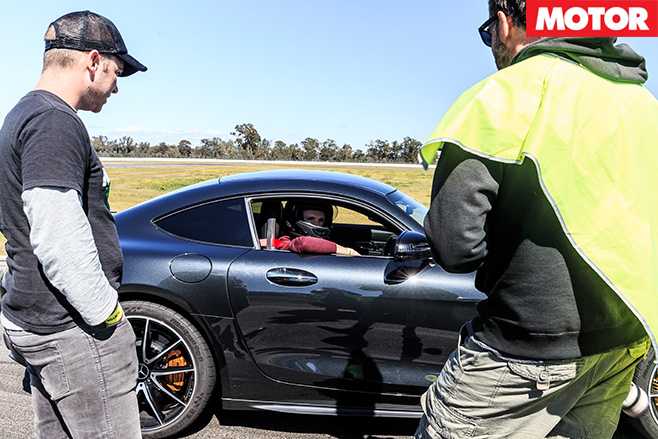
Loading the car against the handbrake and minimising wheelspin/axle tramp in first gear is the key to a good time, and 0-100km/h in 5.8sec and a 13.9sec quarter mile at 170.02km/h are very quick times for a front-drive hatch.
Unfortunately, the Megane is one of a number of cars that suffers from equipment failure – a dud memory card means we only have times to the nearest tenth rather than the usual hundredth for around half the field. Apologies, but these things happen.
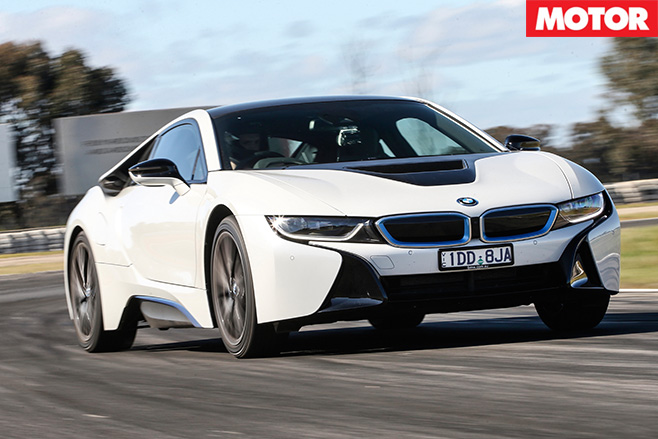
It may have an even smaller engine than the Pug, but BMW’s i8 is in a different league in terms of performance. With the 1.5-litre turbocharged three-cylinder ably assisted by electricity, the futuristic sportscar fires off the line with zero fuss, passing 100km/h in 4.6sec and the quarter mile in 12.7sec at 183.9km/h.
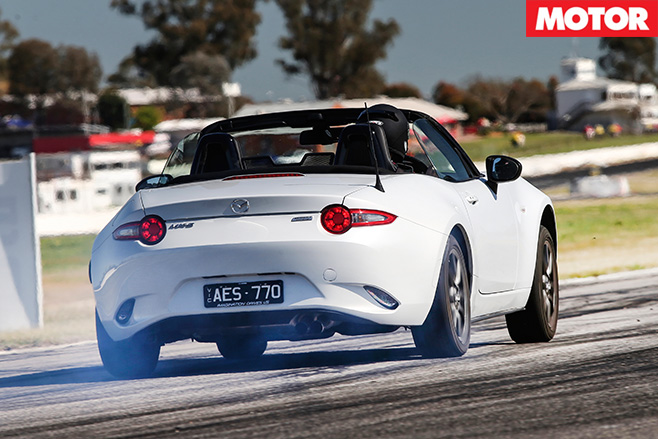
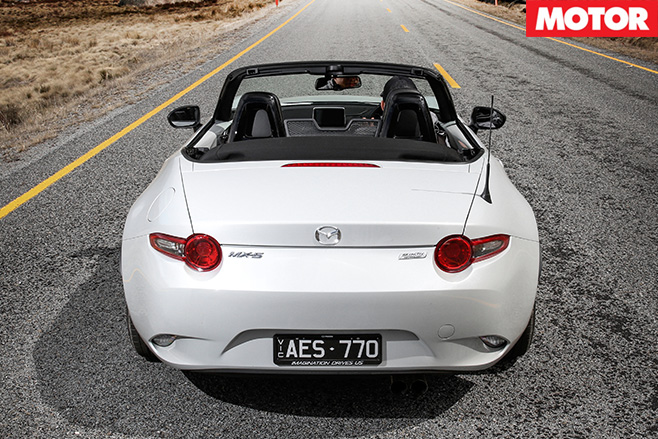
Also packing a 1.5-litre engine, though without the benefits of batteries or boost, is Mazda’s new MX-5. As the car with by far the least power and torque (57kW/150Nm down on the next lowest), there’s no prizes for guessing it earns the drag strip wooden spoon, however we’d bet that it’s faster than most will give it credit for.
Lack of grunt isn’t a criticism that could ever be levelled at Ford’s supercharged Falcon XR8. The key to getting the blown brute off the line is to start in second gear – a trick also used by Ford’s testers as it turns out.
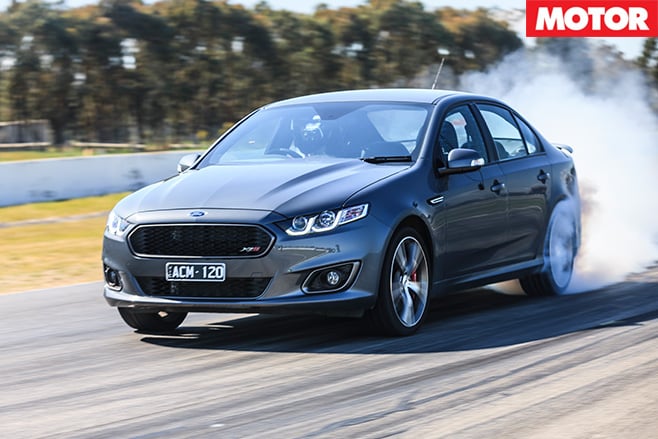
Once it’s off the line cleanly, only one gearchange is needed over the quarter, though the speed with which the XR8 revs from 5000-6000rpm means it’s easy to bash into the rev limiter.
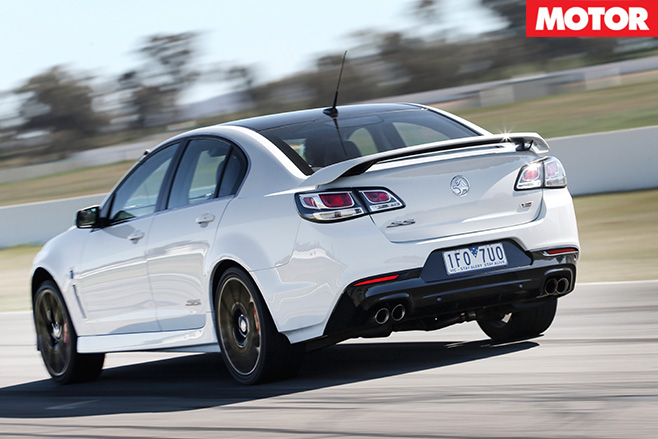
The system dials up 4000rpm, which merely sets off a furious struggle between the electronics and rear tyres as soon as the clutch is dropped, half-a-second being wasted in the process.
Dropping launch rpm to just over 2000rpm results in a clean getaway, and 0-100km/h in 5.0sec dead and a 13.1sec quarter at 179.4km/h. What’s more impressive is the experience from behind the wheel.
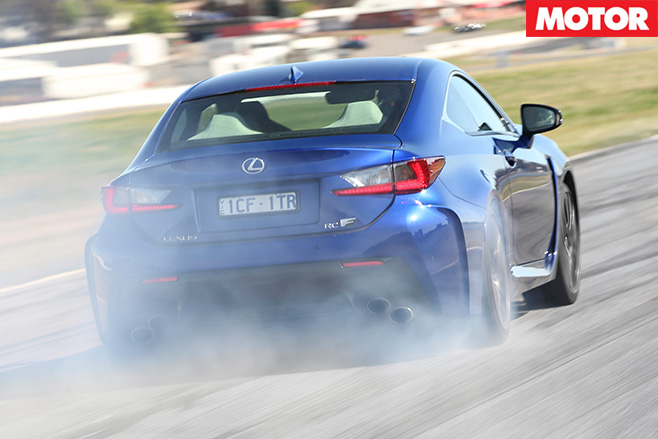
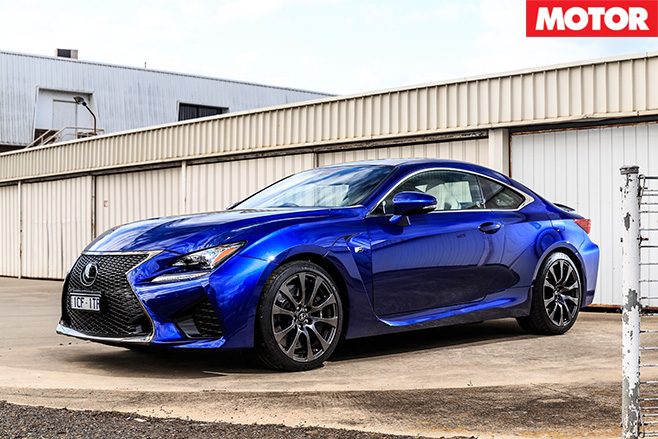
As is the Lexus RC F, if only by a whisker, which hammers home just what performance bargains our local V8s are. Cajoling Japan’s only V8 coupe off the line requires a bit of finesse on Morley’s part, who also says it doesn’t really feel that fast, but there’s no arguing with 0-100km/h in 4.75sec and a 12.86sec quarter mile at 182.38km/h. Sounds good, too. But imagine how fast it would be if it weighed 200kg less?
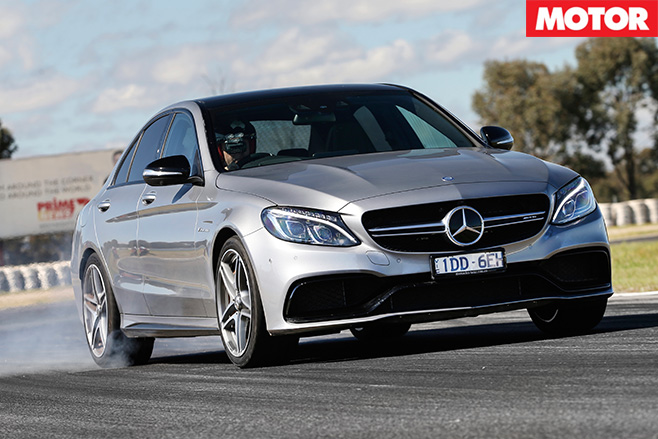
Faster than the new Mercedes-AMG C63 S, based on this evidence. But of all the cars at this year’s PCOTY, it’s Merc’s newly boosted C63 that proves most difficult to extract a representative number from. The culprit isn’t too difficult to identify: sending 700Nm through 265mm-wide rear rubber is always going to end in melted Michelins, and launch control only makes it worse.
With 50Nm less torque and 295mm rear rubber, the identically-engined AMG GT S has less of an issue with power down but proves equally frustrating – the culprit this time, the gearbox.
For whatever reason, Race Start doesn’t want to play ball – though based on Morley’s experience in the C63, this is no great loss – and the electronics won’t let you stall it against the brakes, which leaves walking it off the line as your only option, though it’s probably the most effective.
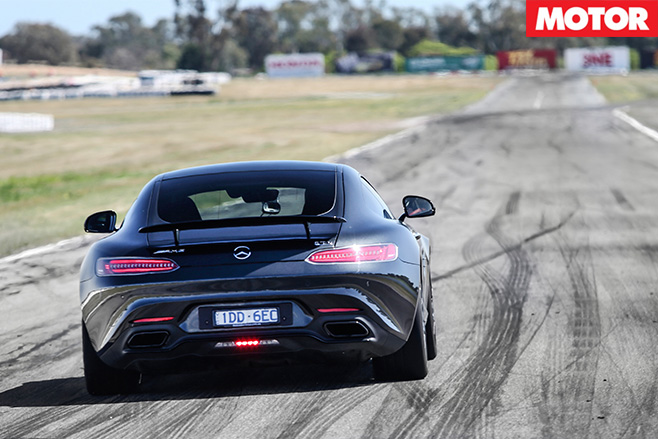
With a bit of practice and some heat in the sticky Michelin Cup tyres, however, it manages 0-100km/h in an impressive 4.0sec and an 11.8sec quarter mile at 202.6km/h, at which point it’s still pulling like a train. Boy does it hate bumps, though, constantly shifting side to side under brakes like it’s negotiating choppy seas.
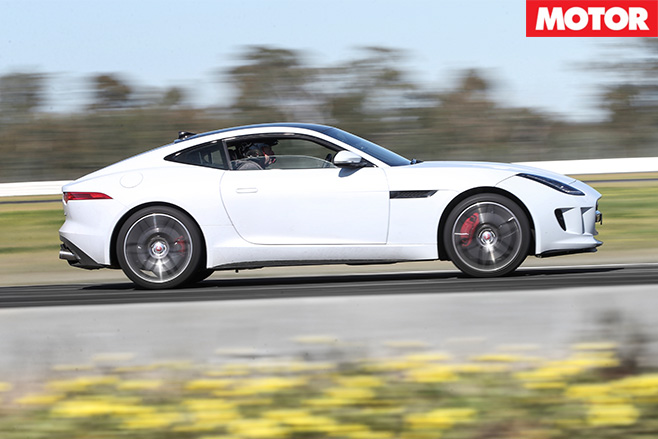
That honour goes to the Porsche 911 GT3. It might not strike you as a straight-line star on paper, but rear-engined traction and a finely-honed launch control system help it blitz the 0-100km/h sprint in just 3.55sec, while the feral flat-six’s outrageous top end means it never stops accelerating.
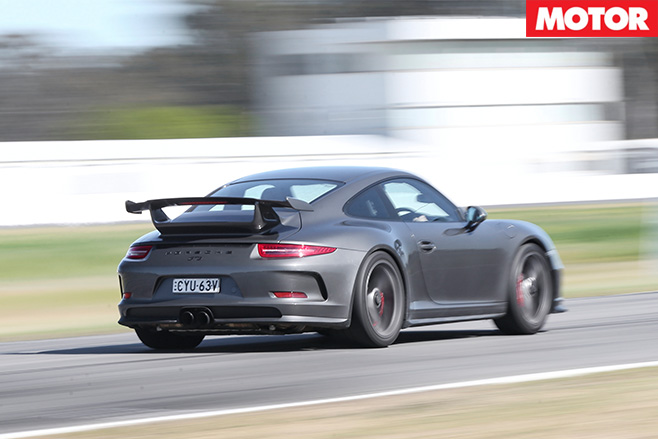
It mightn’t be the most comfortable ride – Morley swears he was airborne where the tracks cross over, and it didn’t like the bumps, either – but neither was it a particular challenge. Maybe this straight-line thing isn’t so tricky after all.
Behold, the numbers
0-100km/h
| 1st | Porsche 911 GT3 | 3.55sec |
| 2 | Jaguar F-Type R AWD | 3.75sec |
| 3 | Mercedes-AMG GT S | 4.00sec |
| 4 | BMW i8 | 4.60sec |
| 5 | Lexus RC F | 4.75sec |
| 6 | Mercedes-AMG C63 | 4.76sec |
| 7 | Ford Falcon XR8 | 4.80sec |
| 8 | Holden VF II Redline | 5.00sec |
| 9 | Renault Trophy-R | 5.80sec |
| 10 | Peugeot 208 30th | 6.60sec |
| 11 | Mazda MX-5 | 7.50sec |
0-400m
| 1st | Porsche 911 GT3 | 11.48sec |
| 2 | Mercedes-AMG GT Su00a0 | 11.80sec |
| 3 | Jaguar F-Type R AWD | 11.80sec |
| 4 | Mercedes-AMG C63 | 12.65sec |
| 5 | BMW i8 | 12.70sec |
| 6 | Ford Falcon XR8 | 12.80sec |
| 7 | Lexus RC F | 12.86sec |
| 8 | Holden VF II Redline | 13.10sec |
| 9 | Renault Trophy-R | 13.90sec |
| 10 | Peugeot 208 30th | 14.81sec |
| 11 | Mazda MX-5 | 15.40sec |
Terminal Speed
| 1st | Mercedes-AMG GT Su00a0 | 202.60km/h |
| 2 | Porsche 911 GT3 | 201.60km/h |
| 3 | Mercedes-AMG C63 | 194.40km/h |
| 4 | Jaguar F-Type R AWD | 193.35km/h |
| 5 | BMW i8 | 183.90km/h |
| 6 | Ford Falcon XR8 | 183.10km/h |
| 7 | Lexus RC F | 182.38km/h |
| 8 | Holden VF II Redline | 179.40km/h |
| 9 | Renault Trophy-R | 170.02km/h |
| 10 | Peugeot 208 30th | 156.73km/h |
| 11 | Mazda MX-5 | 142.80km/h |
When you get to my age, it takes a fair bit to surprise a bloke. You start to think maybe you’ve seen it all before. And then something happens that makes you realise that you don’t know the half of it.
Take DC’s racing helmet, for instance. Now, god knows I’m no fashionista. In fact, I’m the sort of bloke who thinks a catwalk is what you attempt when you’re sneaking home at three in the morning.
But even I know that a helmet shouldn’t sit way up on top of your scone for a result that resembles a pair of humpin’ pumpkins. Clearly, Campbell – bless him – is not aware of this.
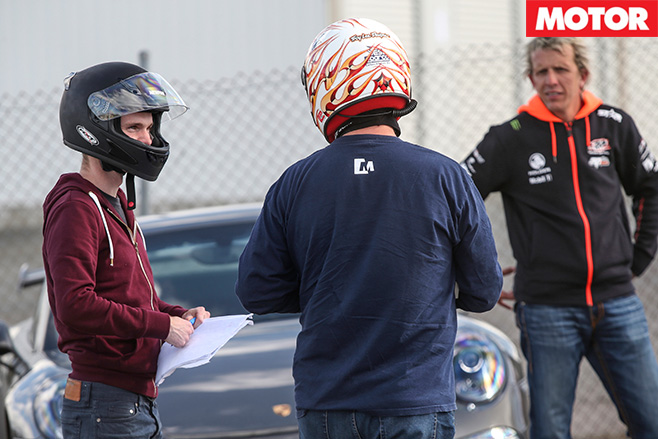
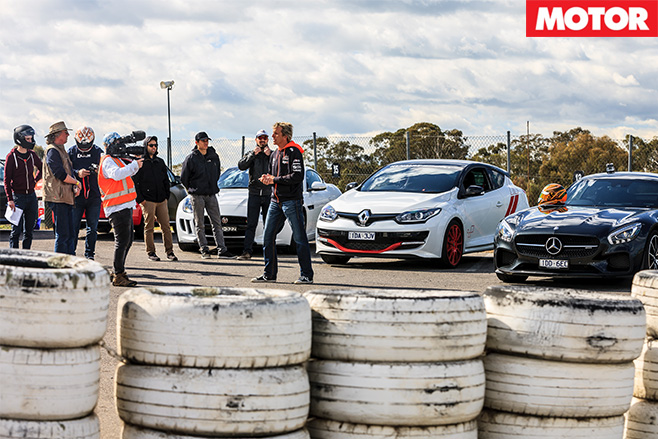
The accepted PCOTY wisdom (an oxymoron if ever there was) is to start tackling the curly little Winton layout in the tiddlers first. This has two main results. First, it allows you to get your eye in, in something that is less likely to tear your head off and eat it.
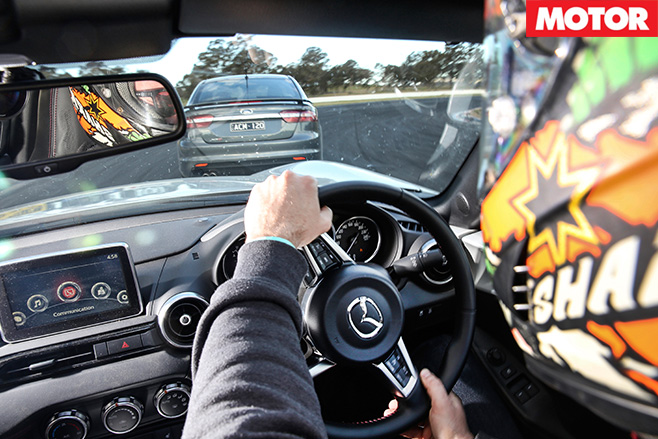
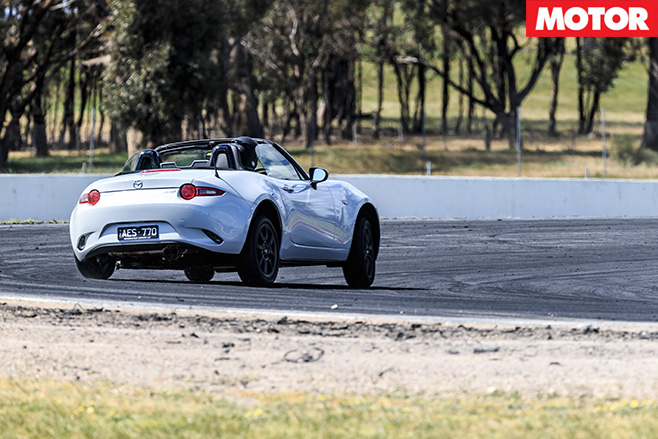
Anybody left blowing smoke rings at the news that the Mazda MX-5 turned in the slowest lap time needs to recalibrate. Of course, it was always going to be that way. I mean, the MX-5 gives away a full 279kW to either the Jag or the GT S, and even the little Peugeot has 57kW (about 60 per cent more) than the wee Mazda. Not that Winton is a total grunt circuit, but, hey, everything has its limits.
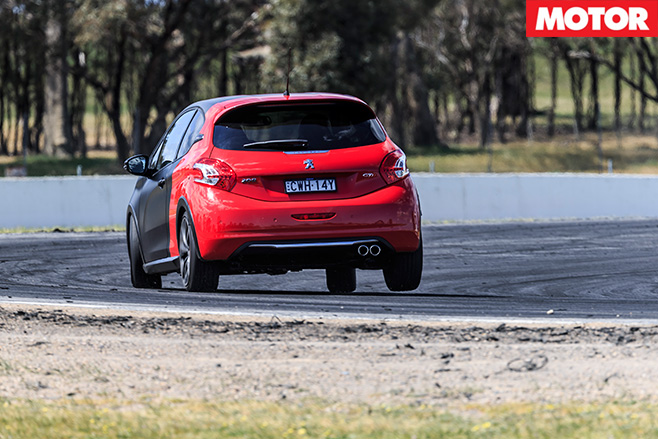
The Peugeot was next with a time that was a good five seconds faster than the Mazda, and it did so by having the grunt to stretch out on the straight bits, as well as the short wheelbase that makes it such an effective car to rotate at the apex.
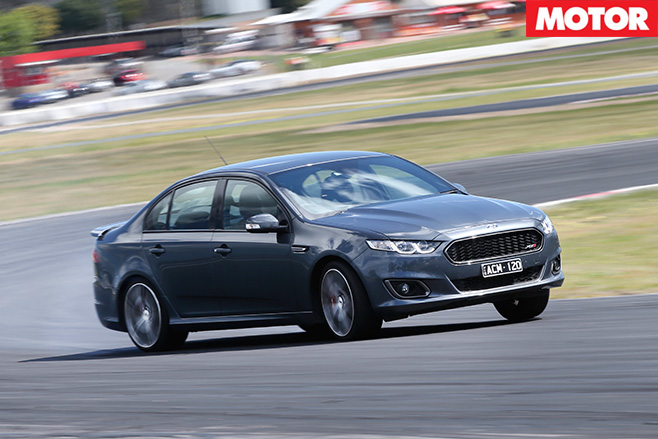
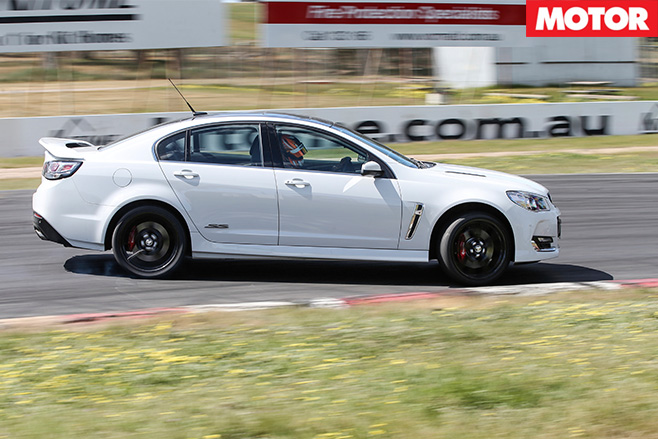
Given the sheer grunt of the Falcon XR8, you might have expected it to fare a bit better on the track. But, as we’ve discovered more than once, the supercharged V8 not only gives the Falc serious squirt, it also has the ability to show the chassis up as being pretty long in the tooth.
Still, it was only about a second behind the new Commodore SS Redline, and that did surprise us a bit. Okay, so the SS doesn’t have the shift of the XR8, but in every other regard it’s a sharper thing to punt hard. Felt it, too.
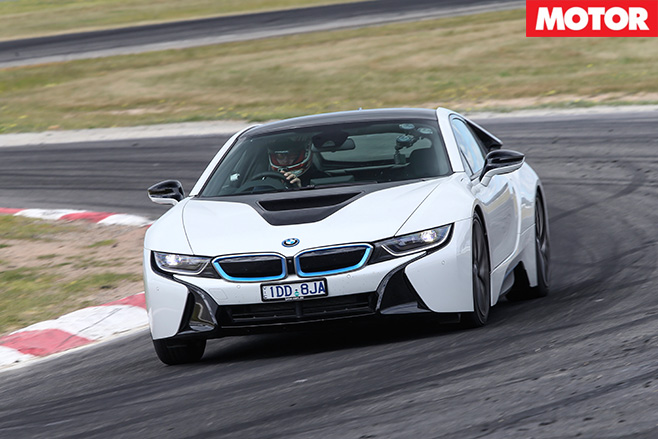
I’m doubtful anybody is ever going to buy a hybrid as a track-day car, even one like the i8. For a start, when it inevitably runs out of battery power about half way ’round the first lap, you have a problem. Also, the quest for fuel efficiency has led BMW to under-tyre the thing (in a performance car sense), so its grip is limited.
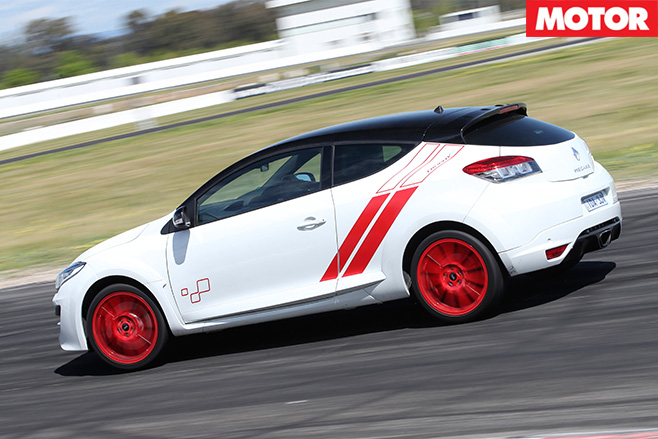
It mightn’t exactly be a cheap little hot-hatch, but in the context of some of the price-tags here this year, the Megane is a car that punches w-a-y above its weight. To be fair, though, if it hadn’t done well on the track, it would have been marked pretty harshly, because that’s clearly what it has been designed and built for.
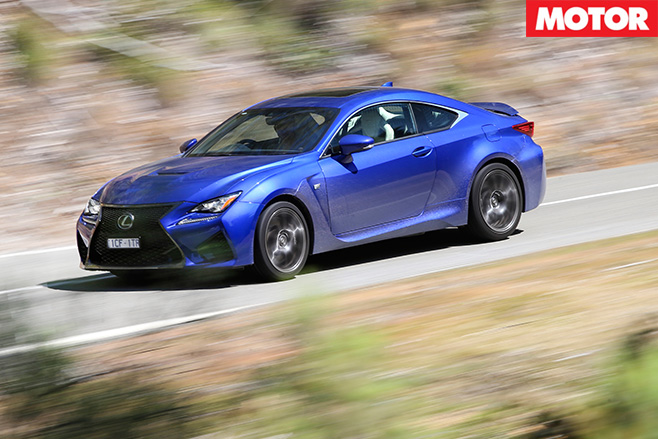
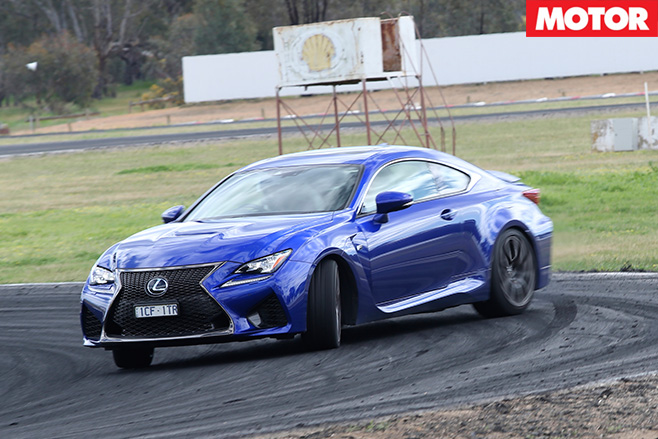
Now here’s the surprise packet of PCOTY 2016. Not only did the Lexus surprise us on the road for its blend of pace and refinement, it blew our doors off on the track where it turned its back on decades of Lexus tradition and actually enjoyed itself.
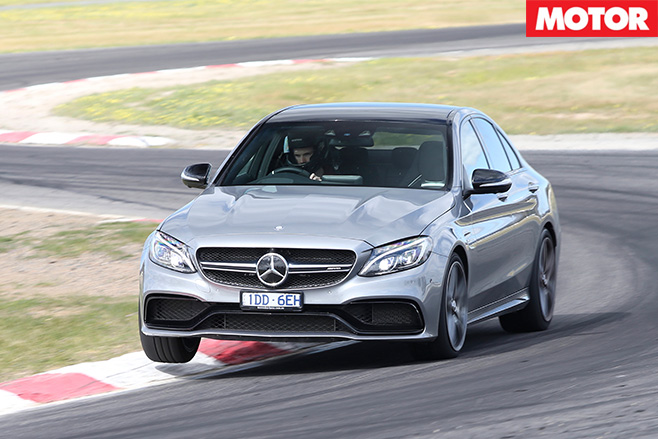
AMGs have traditionally been great road cars and somewhat compromised track cars. Which is fine, given AMG owners would admit that doesn’t matter much to them. But the twin-turbo V8 now fitted to the new C63 platform has made us think twice about that assumption.
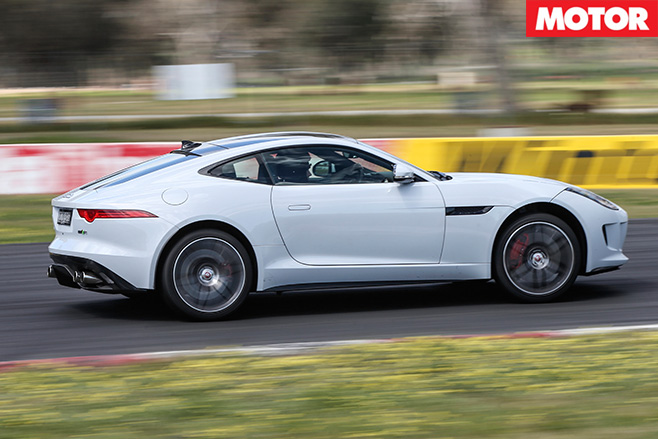
The big debate regarding the Jaguar F-Type Coupe R was whether the move to all-wheel drive would do it any favours. Perhaps, in the context of a racetrack, it could have even been counterproductive.
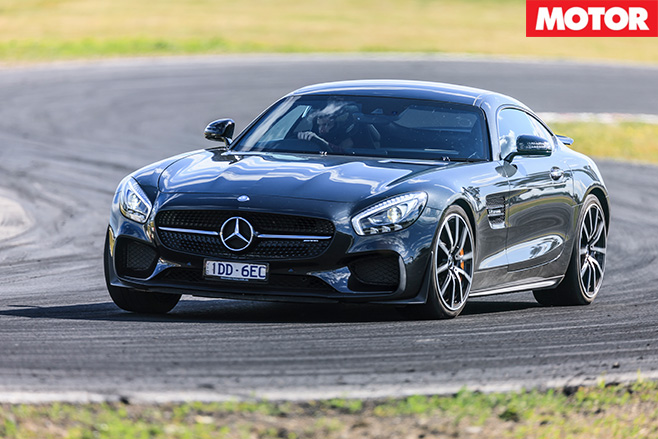
It’s no secret we like the new AMG GT S much more than the old SLS on which it’s kinda based. And when it can lap Winton 1.4 seconds faster than the SLS, we like the new guy even more. Its corner speed was right up there, as was its v-max (duh). More than that, though, it feels alive when you hit the hotmix.
The only thing that was ever a likely chance to hose the AMG was, of course, the GT3 Porker. And man, did it ever. In fact, the GT3’s 1:30.9 not only trounced the AMG by more than a second-and-a-half, it also hosed every other previous PCOTY entrant – living or dead – around Winton.
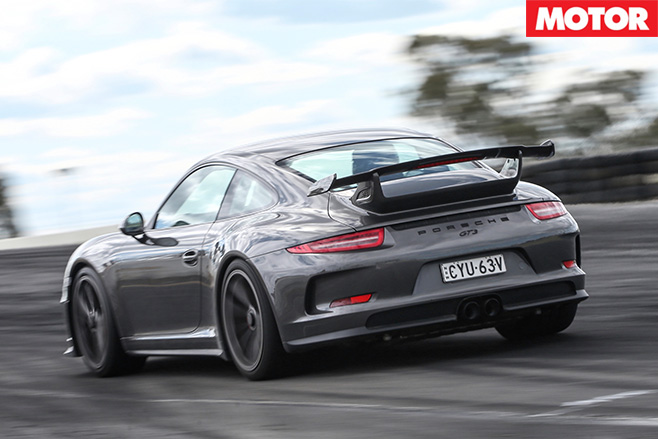
But I’m not; I’m an ageing yobbo with an overdraught and one gammy knee, and the 911 GT3 is a racecar with number-plates. Wonderful, in other words.
Here are the five hard-working *cough* souls tasked with finding the best fast car of 2015.
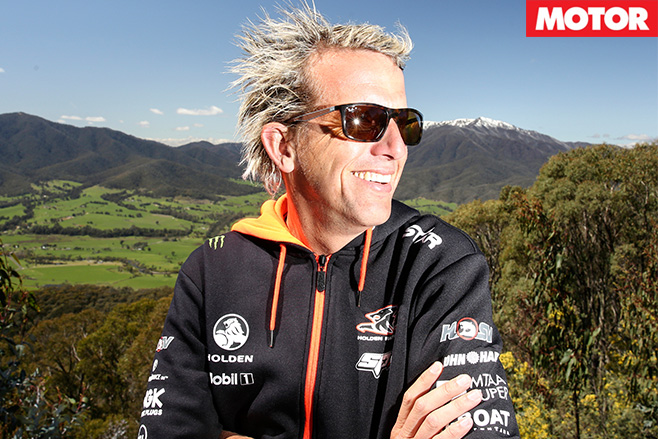
Warren Luff
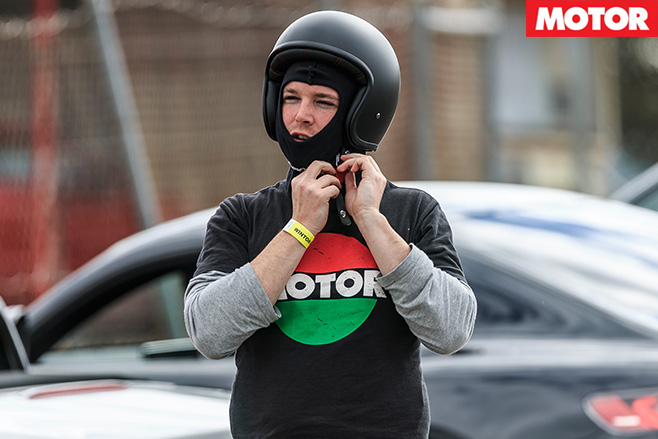
Dylan Campbell
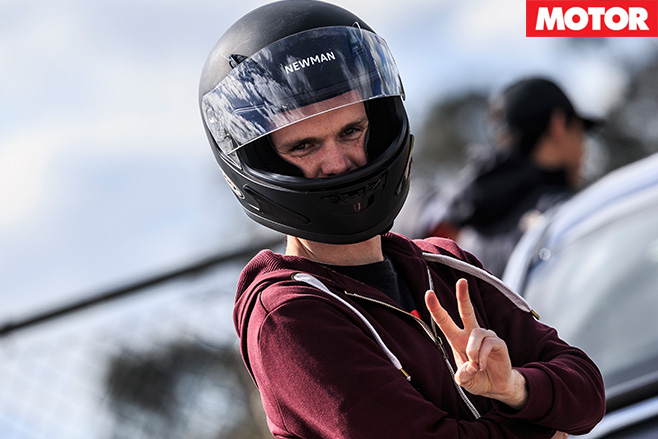
Scott Newman
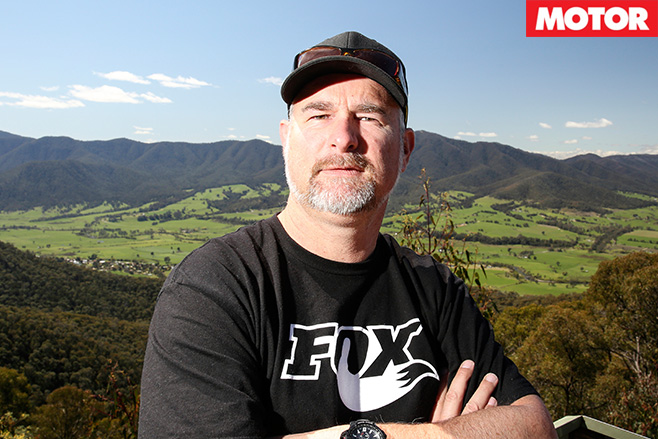
Tim Robson
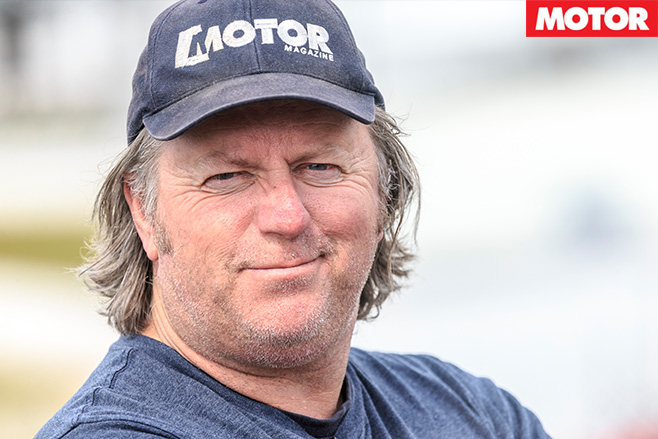
Morley
Our 11-strong eclectic line-up
BMW i8
Peugeot 208 GTi 30th
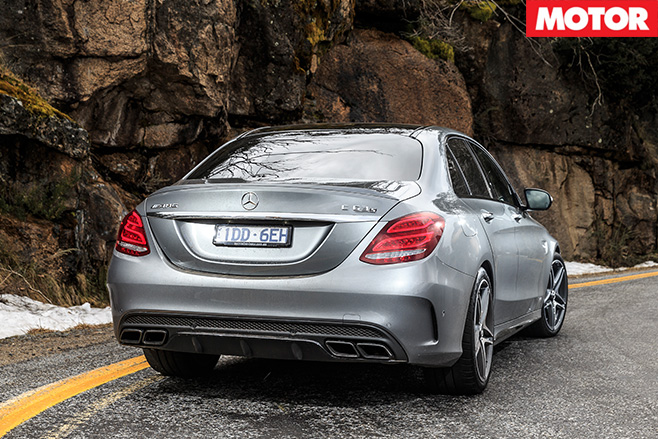
Mercedes-AMG C63 S
Jaguar F-Type Coupe R AWD
Porsche 911 GT3
Mazda MX-5 1.5
Lexus RC F
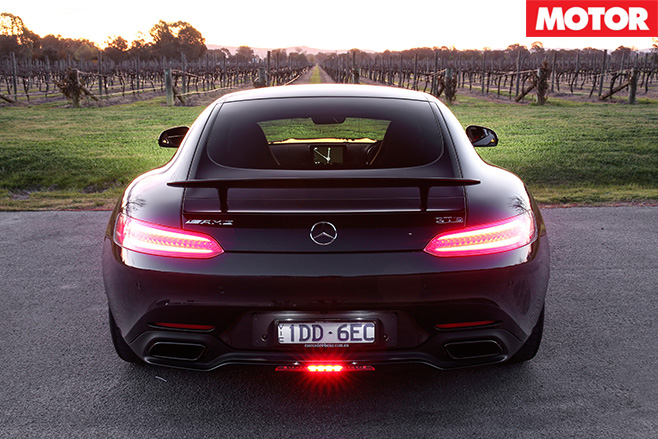
Mercedes-AMG GT S
Ford Falcon XR8
Holden VF II Commodore Redline
Renault Megaine RS275 Trophy-R
Metal that didn’t make it – and why
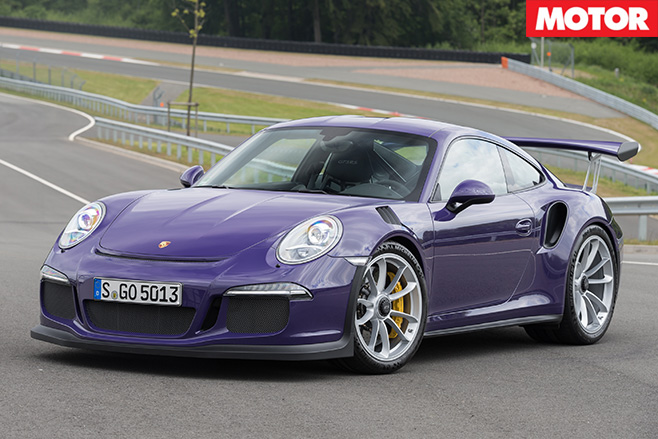
Porsche 911 GT3 RS
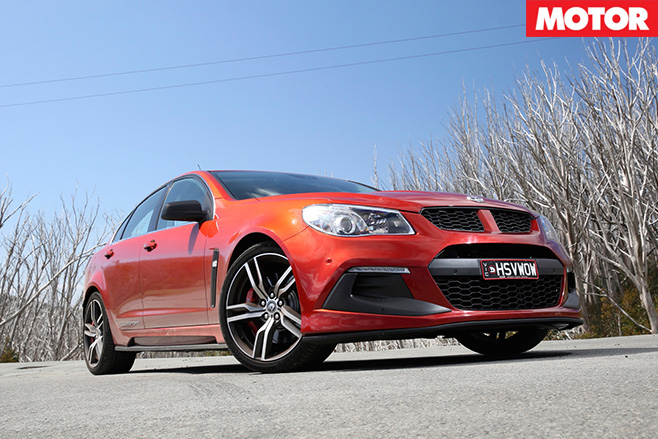
HSV Clubsport R8 LSA
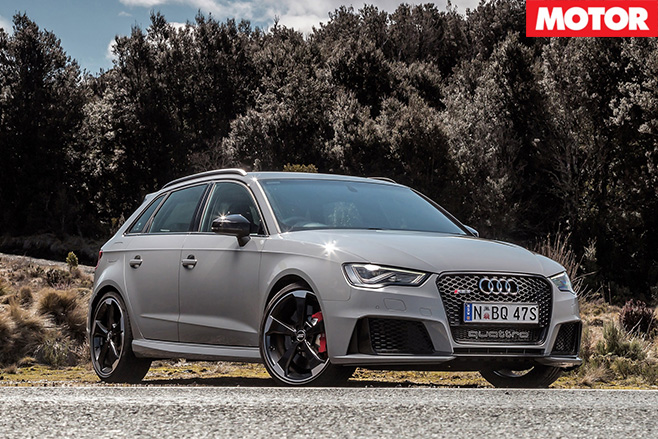
Audi RS3
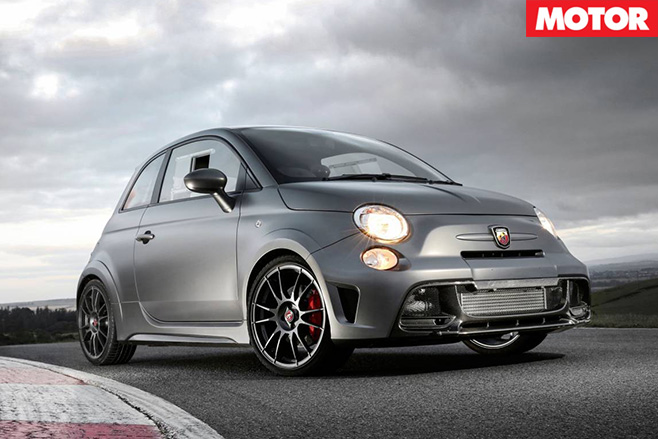
Abarth 595 BiPosto
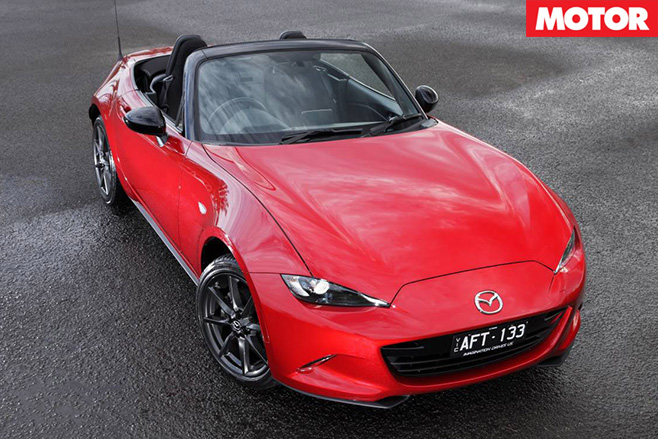
Mazda MX-5 2.0
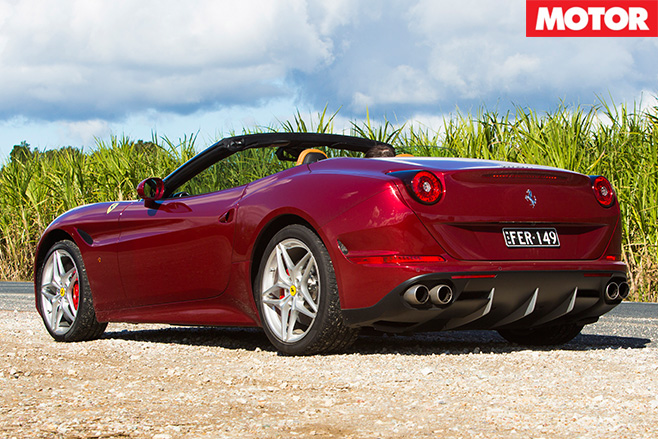
Ferrari California T
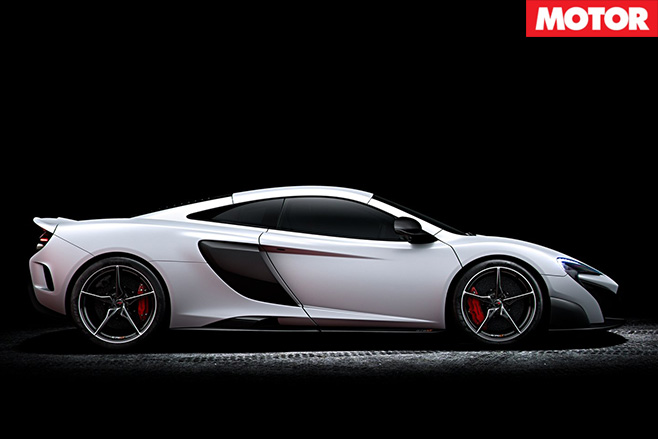
McLaren 675LT
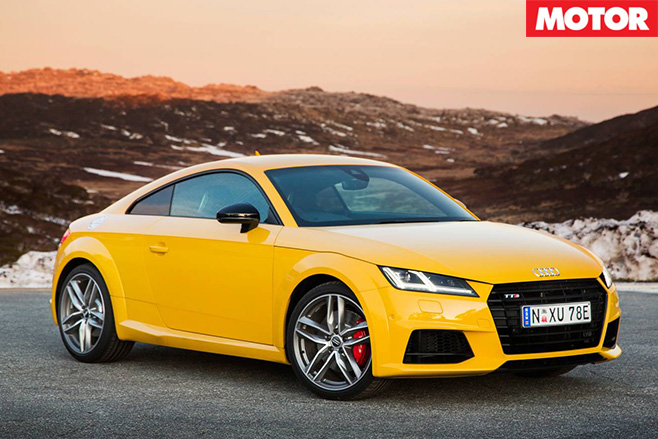
Audi TT S
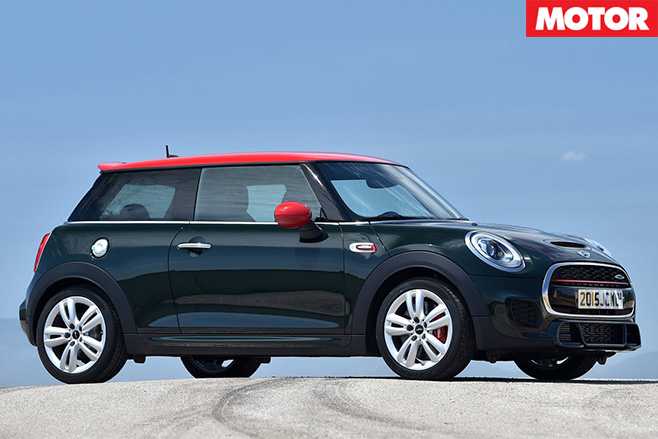
MINI Cooper JCW
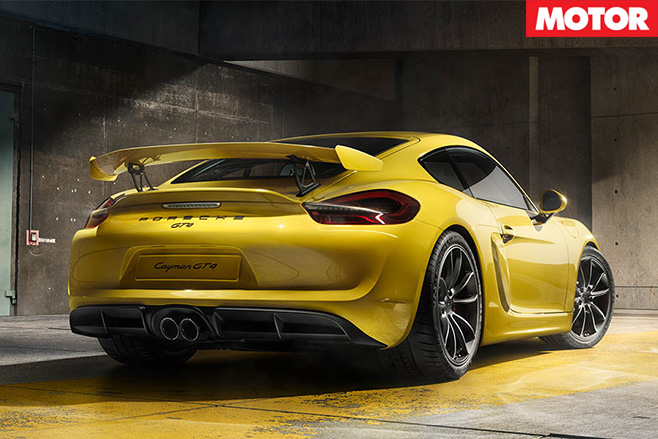
Porsche Cayman GT4
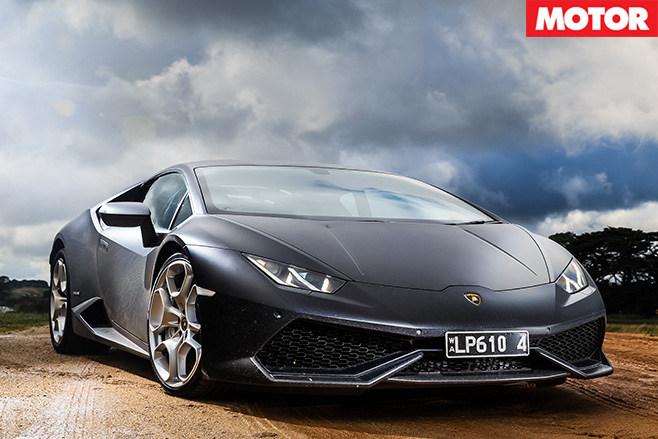
Lamborghini Huracan LP 610-4
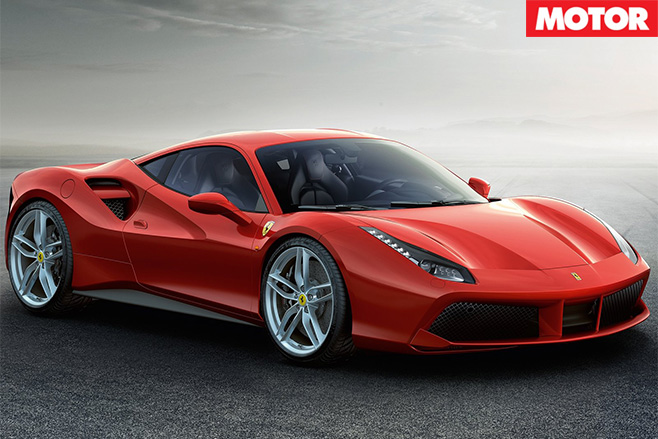
Ferrari 488 GTB
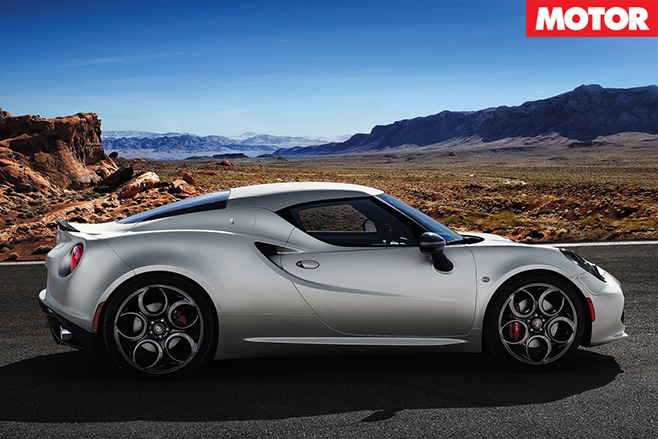
Alfa Romeo 4C
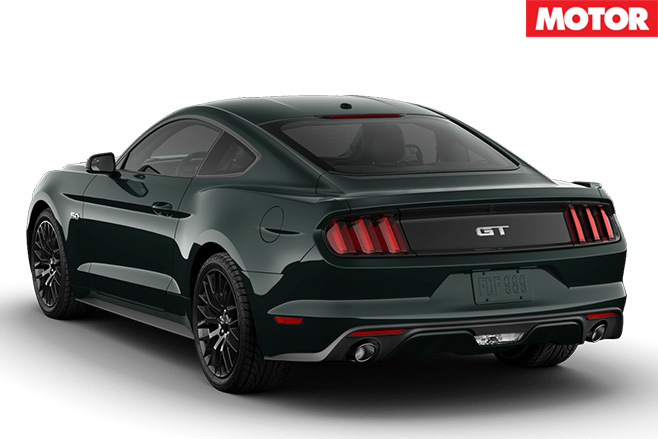
Ford Mustang GT
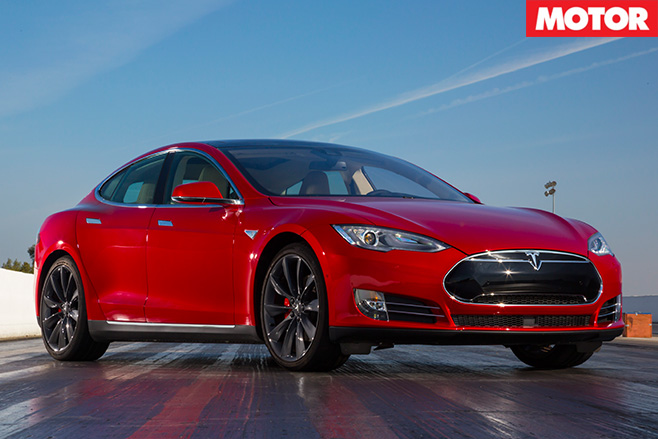
Tesla Model S P90D
We knew from the moment the C63 rammed down the front straight at DECA that this would be a mighty hard year to pick a top three, let alone a winner.
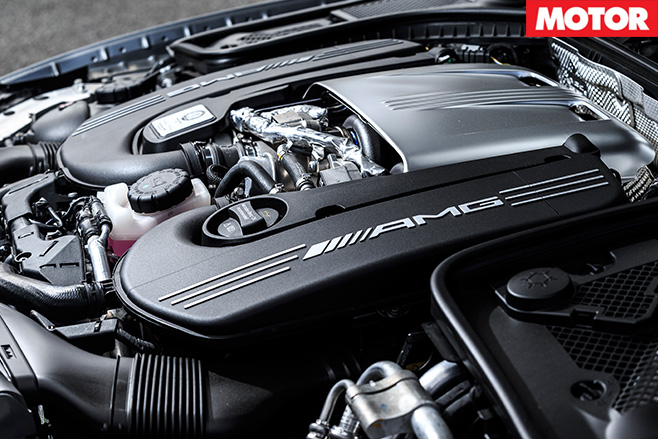
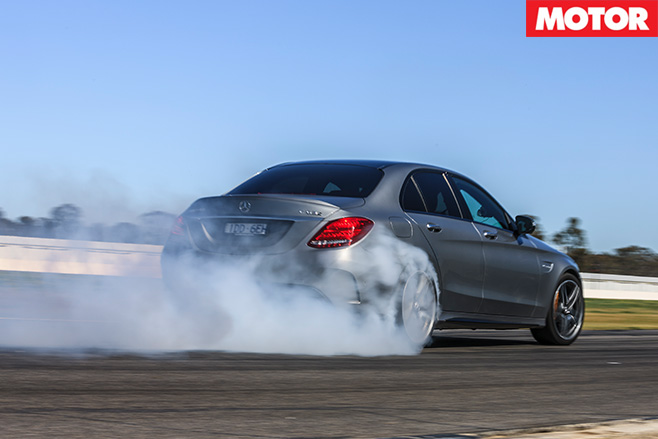
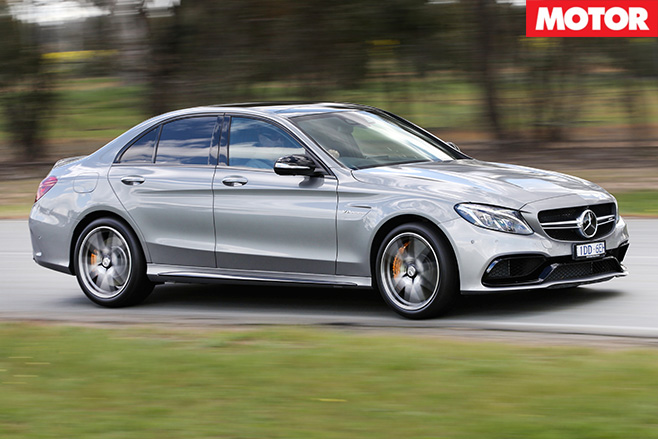
Of course, the two Mercs (or AMGs, if you will) are joined at the driveshaft by slightly different versions of the same M177 4.0-litre engine (nerdy fact – the AMG GT’s engine is the dry-sump M178), and both are driven at the right end. Other than that, the differences are pretty apparent.
The C63 S pumps out 375kW and 700Nm, while still returning fuel economy below 9.0L/100km. And the massive motor is backed by a clutch pack-equipped seven-speed auto transmission, while a clever electronic limited-slip diff helps to spread the prodigious output across the rear axle.
The interior, too, hasn’t missed the racer’s touch, with low-slung sports buckets facing a Dinamica-trimmed steering wheel, while a multiple-mode Drive Select toggle changes the C63’s character with a single touch; a mild-mannered family hauler is transformed into a menacing back-road assassin in a heartbeat.
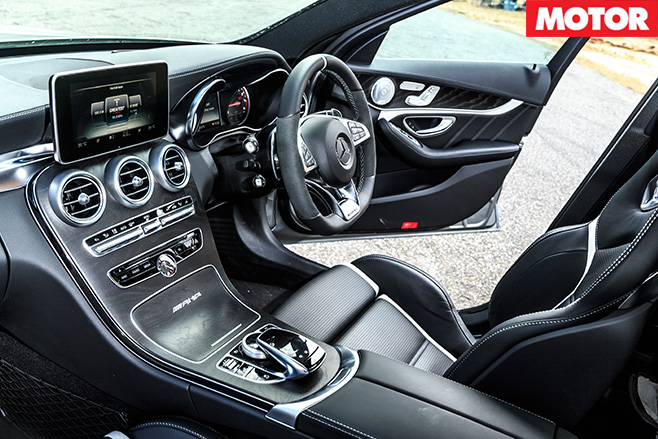
New to the C-Class – and hence the C63 – is the Individual mode; my fave is putting the engine and transmission in ‘Race’ mode, the stability systems to Sports Plus and the suspension to Comfort. This gives the C63 a bit more compliance and confidence over the bumpy, damp, cold Alpine roads.
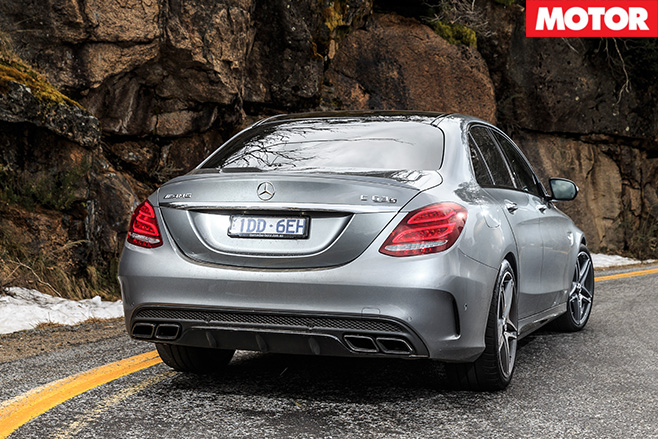
Perhaps the nicest element of all is the way the C63 flatters its pilot, no matter how ham-fisted his or her inputs may be. It’s never edgy or frightening, despite its prodigious capability, and its stability systems are so finely calibrated it’s nearly impossible to tell just how hard they are working to keep you out of the roadside scenery.
And all of this genuinely high-end performance comes packaged in a roomy five-seater with a great stereo, clever infotainment, Wi-Fi capability, terrific visibility and excellent safety credentials.
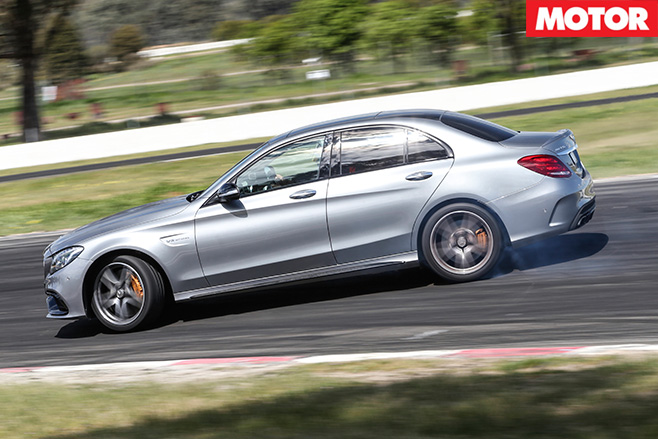
How did it outshoot the AMG GT S, though? Its performance times were within a bull’s roar of the front bunch, and both its alpha and beta sides are more easily tapped than the always-on-point GT. Its rather large price difference did it no harm, either – if the ‘value’ part of the PCOTY equation carried more weight, you might have been looking at the winner of PCOTY 2015. Yep, it was that close.
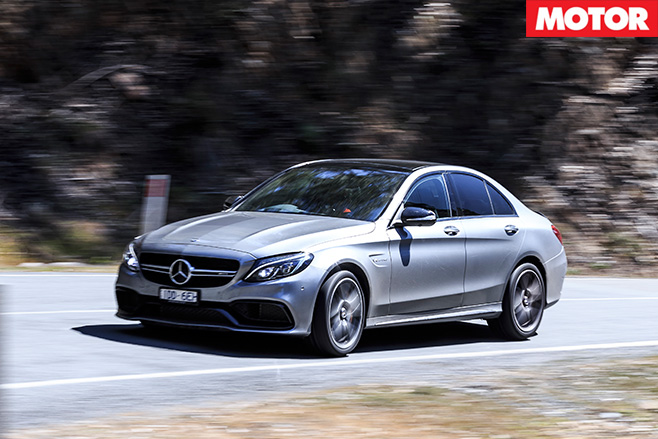
David Morley: 2nd “As much as I loved the old naturally-aspirated donk, this is just better”
Scott Newman: 2nd “A monster. Outrageous power in a practical package. Ride quality the only real bugbear”
Tim Robson: 4th “Impressively fast, but not as much fun as I expected on the track, if I’m honest”
Warren Luff: 2nd “Ultimate sleeper. Put the wagon version in my driveway and I’ll be very happy”
Third place on the podium in any 11-car comparison is a pretty stout effort.
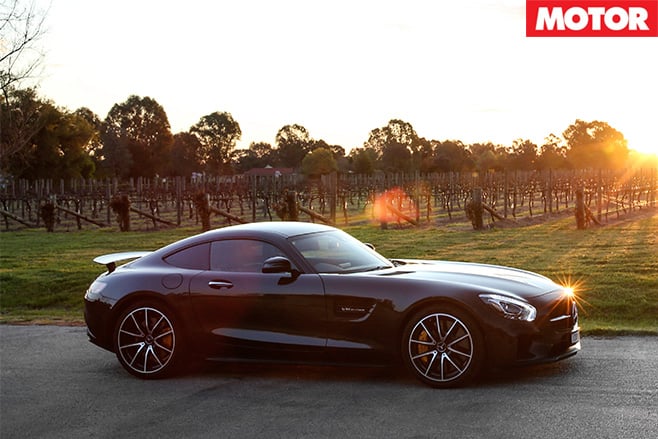
But when it’s PCOTY we’re talking about and simply making the field is confirmation of legend status, then the bronze medal is an even bigger deal. Still, the AMG GT S is a car that arrives with high expectations, so it’s nice to see that it can walk the walk as well as talk the talk.
AMG admits that the GT S is based on the old gullwing SLS, however we can’t help but think the new version is way better. For a start, it’s diced those dopey gullwing doors for conventional units and, while you can still see the basic proportions of the SLS poking through in places, overall it’s a better looking car.
More practical, too. Or should that be less impractical, because, let’s face it, something this big with but two chairs is no Family Truckster, right? And anyway, there are other AMG models for that role.
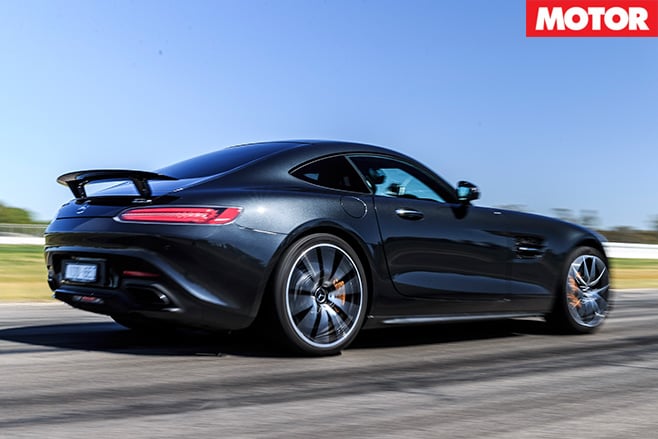
Its performance on the racetrack confirmed that it’s a serious piece of hardware, although its sheer size and bulk plays against it a little in the tighter stuff. But the layout that places your butt more or less over the rear axle, as well as the wonderful surging driveline, gives it that old speedboat-taking-off thing.
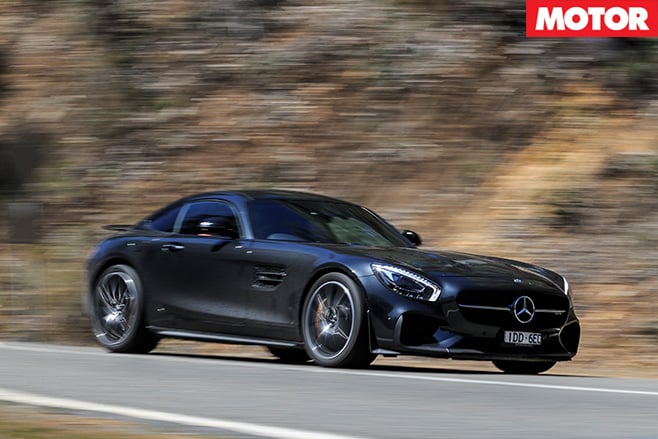
It’s expensive, but you should have guessed that. However, in the company of the BMW i8, the Porsche and, to a lesser extent, the Jaguar, the AMG’s near-enough-to-300K sticker is a little less confronting than it would be in isolation.
If you want to pick nits, we reckon it could do with a little less small-amplitude ride control, but, who knows, maybe that would blunt its ability to rattle off the second-fastest lap-time of this year’s crop. The dimensions also mean that it can feel a bit difficult to place accurately out in the world of white posts and centrelines.
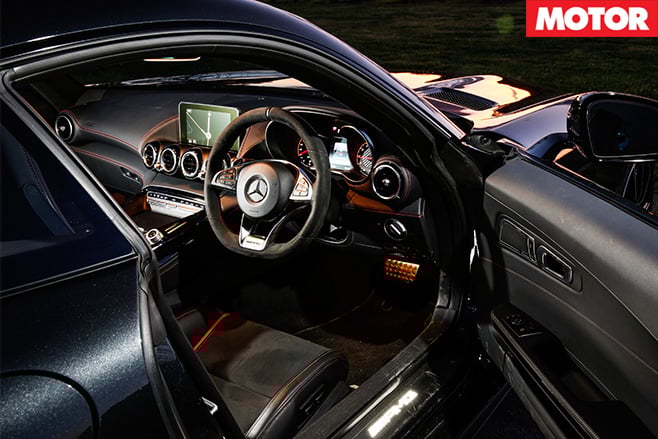
In the end, though, this is a supercar, so you can forgive stuff like that. And when you do take it out and give it a thrashing as the AMG engineers intended, then it also emerges as a pretty complete supercar.
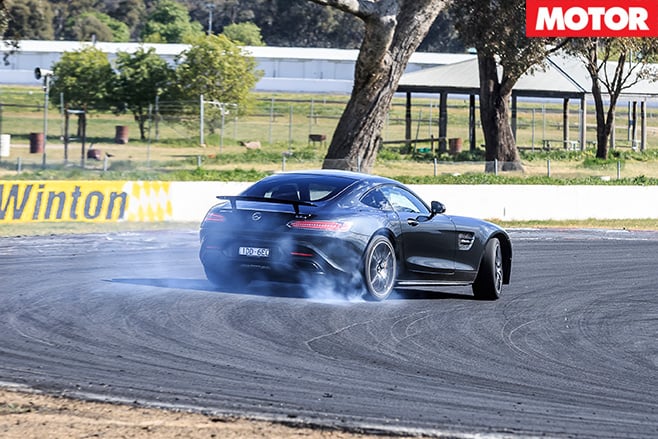
On the basis that high-end cars need to make you smile as well as cover miles, the AMG GT S is as worthy a bronze-medallist as we’ve ever seen at PCOTY.
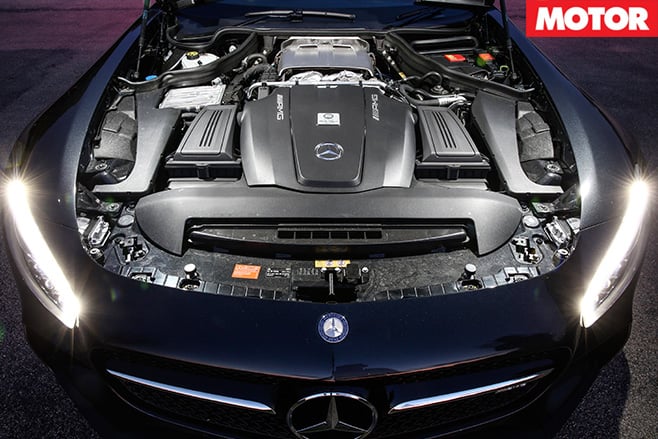
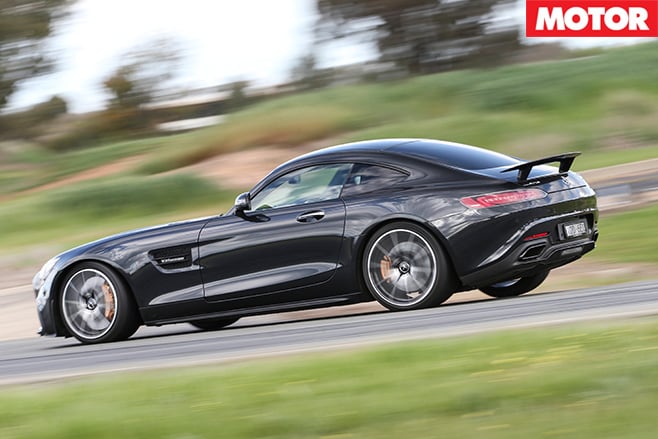
David Morley: 4th “SLS replacement is a better gullwing for having ditched the, er, gullwings”
Scott Newman: 5th “Incredible performance, but darty steering and severe dislike of bumps takes the shine off”
Tim Robson: 1st “Sharp, agile, quick and brutal without traction control … but so bloody fast”
Warren Luff: 3rd “Unbelievable engine and so much grip at the front. A big improvement over the SLS”
