
The Toyota Prius, the car that introduced the world to affordable hybrid engine technology, has added newfound maturity.
WHAT IS IT? The fourth iteration of Toyota’s original hybrid car and the flagbearer of petrol-electric tech within the brand’s expanding hybrid range.
WHY WE’RE TESTING IT To see if the Prius can shake its stodgy driving image with an all-new model that’s actually claimed to be fun.
MAIN RIVALS Honda Civic Hybrid, Toyota Camry Hybrid and the upcoming Toyota Corolla Hybrid.
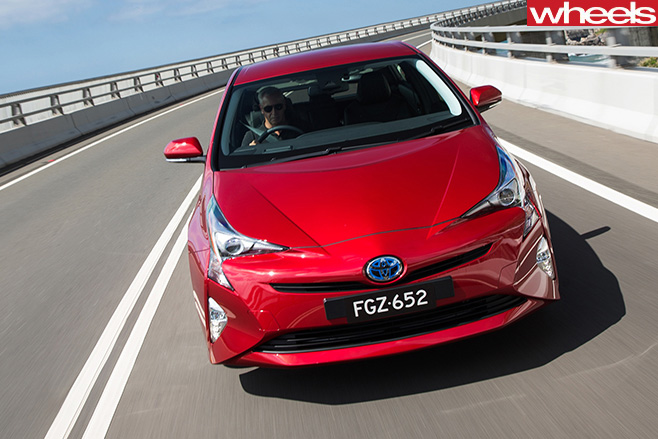
PLUS: Frugal hybrid drivetrain; classy interior; newfound maturity to driving dynamics MINUS: Rear headroom; still runs old school nickel metal hydride batteries despite being tech “ambassador”; no Apple CarPlay or Android Auto
THE WHEELS REVIEW MEET the Prius Toyota wants you to love – and not just for its ability to halve fuel bills. Toyota is so confident the fourth generation of the car that popularised petrol-electric propulsion will tickle the driving toes it guided media to a private test track to experience it under more extreme conditions – tyre squealing and all.
And that was after the snaking corners of the Old Pacific Highway and some of Sydney’s less forgiving suburban roads.
The verdict? It’s a huge step up for a Prius … but it’s no hot hatch.
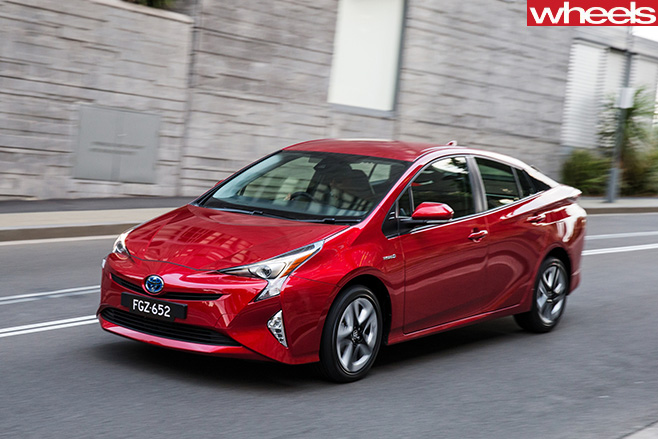
The 15-inch Bridgestone Ecopia tyres on the base Prius lower grip levels slightly but are not as underwhelming as the look of the wheels they wrap.
Body control, too, is far more convincing and the Prius now deals admirably with B-grade roads, significantly improving comfort. It helps the driver is sitting low in the car – the front seats sit 55mm lower contributing to a centre of gravity that’s been reduced 24mm – so gets far less of the top-heavy lurching of previous Prii.
There’s still some inconsistency to the brake feel, and more so when you’re pushing on. On moderate applications the pedal is squidgy yet responsive. Throw the anchors out hard – as we did a few times on our track punt – and things get spicier as it swiftly approaches lock-up then eases off.
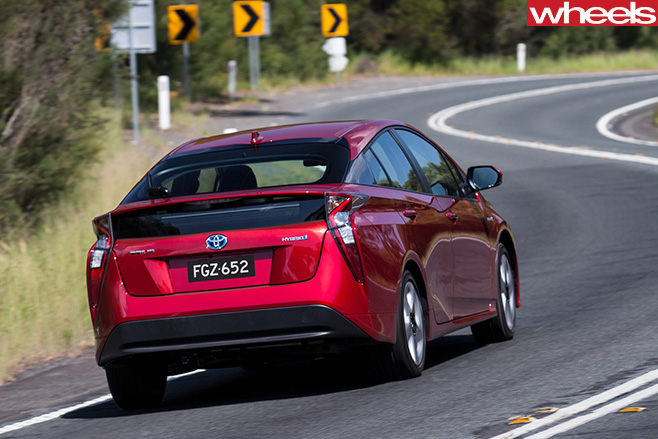
Floor it from a standstill and there’s a brief grumble as the petrol engine fires to life. Acceleration is respectable but far from fiery. Think Corolla or Hyundai i30.
Treat it more gently and the usable mid-range surge redeems points, which ensures respectable progress. And at any speed the extra work that’s gone into refinement is appreciated.
Fuel use is claimed at 3.4 litres per 100km, and our hundred-odd kays with the car would suggest you’d have to be leisurely with the right foot to get anywhere near that. But the 5.4L/100km we logged in occasionally spirited driving is excellent by any measure.
Inside, space is similar to Prius gen 3, with good leg room and loads of space up front, although rear seat head room is marginal for tall people.
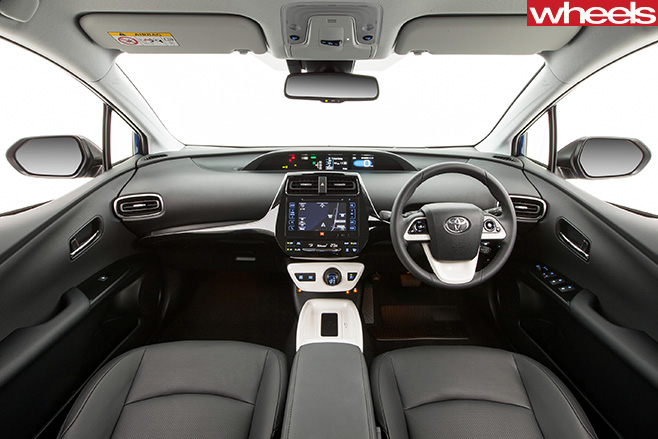
The biggest change inside is to the presentation. The dash and controls have scrapped the scratchy, hard plastics of old models and adopted a more welcoming feel that looks vaguely upmarket. The central instrument cluster has a requisite high tech flavour, complete with a large digital speedo to complement the standard head-up display.
The base $34,990 Prius also gets bi-LED headlights with auto high beam, a reversing camera and a 10-speaker JBL sound system. Safety is taken care of with active cruise control, lane departure warning and auto emergency braking above 15km/h.
The i-Tech flagship ($42,990) has a mix of real and fake leather, sat-nav, digital radio tuning, front seat heaters, blind spot alert and rear cross traffic alert for reversing. Both versions use an old-school nickel metal hydride battery instead of a lighter, more compact and more expensive lithium ion one used for other world markets.
It adds up to a Prius that drives more like a tech leader should, but with the price premium attached to having a unique body in what is pitched as an ambassador for Toyota’s hybrid family.
SPECS Model: Toyota Prius Engine: 1798cc 4cyl with 53kW electric motor Max power: 90kW system power Max torque: 142Nm @ 3600rpm (petrol engine), 163Nm (electric motor) Transmission: CVT auto Kerb weight: 1375-1400kg 0-100km/h: NA Price: From $34,990
Within six years half of all McLaren models produced will feature hybrid technology, the British supercar manufacturer has revealed.
That goal is unthinkable only a few years ago, let alone when the single-seater McLaren F1 ruled the road (and kids’ bedroom walls) during the 1990s. It is all part of McLaren’s business plan called Track22, which as the name suggests is a roadmap for the brand towards 2022.
McLaren says it will invest £1 billion into research and development for the launch of 15 new or derivative models ahead of that date, in addition to launching a new engine architecture.
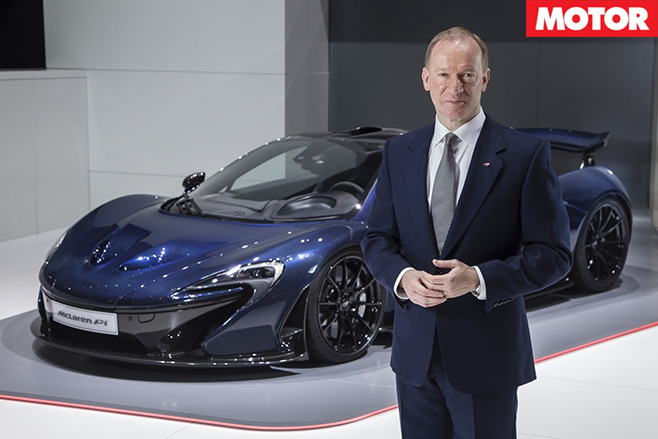
“This will see us launch 15 all-new cars or derivatives within our existing Sports Series, Super Series and Ultimate Series families. We will also develop an all-new engine architecture that will debut towards the end of the Business Plan period.”
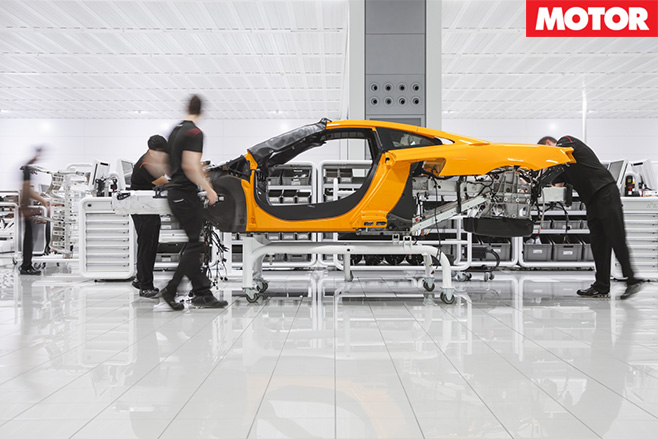
“Hybridisation has obvious CO2 and fuel consumption advantages but for us, it is all about delivering the performance and enjoyment of a McLaren,” Flewitt added.
“Our engineers have even started work on a one-off prototype to evaluate the possible benefits of a fully-electric powertrain in an Ultimate Series car; such is the pace of development.”
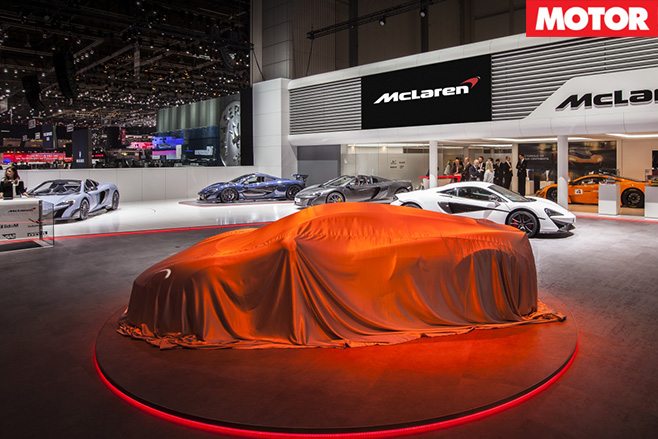
Following the 675LT and 675LT Spider inside the Super Series ranks, McLaren announced the ‘LT’ badge will transition into a “track-focused sub-brand with further models in the future.”
McLaren says future development will be focused “purely” on two-seater sports and supercars as part of the six-year plan – killing off rumours of a 2+2 variant and, as with rival Ferrari, ruling out a play in SUV territory anytime soon.
Fuel apps are taking over Australian Smartphones everywhere. Remember the days when fuel cost less than a snack-size packet of Smiths chips? Well, as people scramble to save as much as they can on inflating fuel prices, companies and app developers everywhere are pushing to find a solution.
This month, we’ve seen the launch of two new fuel-sourcing apps – GasBuddy and 7-Eleven Fuel. These come as a challenger to existing apps such as MotorMouth, Petrol Spy and Fuel Map Australia, as well as the official apps and discounts for Woolworths, BP, Coles Express and Caltex fuel.
The fuel-game is getting more competitive and it’s only going to get fiercer.
So what do the GasBuddy and 7-Eleven Fuel apps actually do?
The 7-Eleven app, available on iOS and Android, filters through the fuel prices of various 7-Elevens within a radius of the user, and allows motorists to ‘lock in’ the cheapest price.
First, users need to register for the 7-Eleven digital wallet and then select a voucher based on fuel type and litres (10-150 litres) – not too dissimilar to a pre-paid phone. The voucher can then be used in seven days at any of the stores and paid for once the voucher is redeemed – so if the bowser price falls below the voucher price, you can still make the most of the lower dollars.
Obviously, there’s a catch. The vouchers can only be redeemed once, which means if you buy 150 litres worth of fuel, for you 40 litre tank, you’ve just forfeited 110 litres worth. And only one voucher can be used per transaction – so two 10 litre vouchers won’t cover your 20 litres of fuel.
Additionally, there’s a limit on how many times you can check fuel prices (100 is the magic number) and two fuel prices can be locked in over a 24 hour period.
Then there’s GasBuddy, which helps you located the cheapest prices around town via a crowdsourcing method.AustrlaianMotorists are able to submit the prices for various fuels types to GasBuddy which is then updated in real time.
To ensure accuracy, GasBuddy allows users to confirm or update prices submitted. Points are rewarded for submissions and can be deposited to win a $100 fuel voucher.
While there’s no doubt the app game will continue to develop in the fuel industry, we give a big tick of approval to anything that’s going to save us some money. Unless fuel prices fall to 50c per litre again, in which case we’d be ok with that too.
There’s no question that motorsport is one of the largest male dominated sports on the planet. And while the divide between women and men in the motoring industry is still at large, there’s a deep seeded history of women in the motorsport world stepping up to the plate, or in this case, the steering wheel. From NASCAR, NHRA and Formula One, women are making an impact – all be it a very slow and challenging race to equality at the finish line.
So, with March 8 the day to celebrate all women everywhere for International Women’s Day, we decided to take a look at the stories of some of the women in motorsport – and in particular, the fiercely competitive Formula One.
HISTORY OF WOMEN IN MOTORSPORT
There is a long history of women in motorsports dating back to the early 1900s. Since French Camille du Gast was the first woman to race at an international level consistently, there have been many women to attempt the male-dominated sport.
Elizabeth Junek (Eliška Junková) raced for the first time on her own in 1923 – a year after her and her husband, Vincenc Junek, bought a Bugatti Type 30 which her husband raced and Elizabeth served as a mechanic until he hurt his hand and gave Elizabeth the wheel. Elizabeth spent the next five years racing with a couple of wins and even more close calls. The racing ended in 1928 when Vincenc was tragically killed at the German Grand Prix while driving their Bugatti Type 35B and Elizabeth decided to retire as a result.
Maria Teresa de Filippis was the first female Formula One racing drivers in the history of the sport. Given there have only ever been five women to compete at F1 level, Filippis was a gateway into the sport for women. She first started racing at the age of 22 in a Fiat 500. When she finished second in the Italian Sports Car Championship, Maserati started to take notice and hired her as a works driver. Unfortunately Filippis’ F1 career was a short and unsuccessful when we look at her statistics, but in our eyes, she was a pioneer and led a very important path for women in this sport.
As one of the only women in F1 history to have finished a World Championship in the top sixth position, Lella Lombardi was a part of 17 F1 Grand Prix. She was granted half points (short race distance) for the 1975 Spanish Grand Prix, which makes her the only female driver to ever score points in F1. Lombardi also competed in Formula Three, Formula 5000, NASCAR and race cars after her F1 career. She retired in 1988.
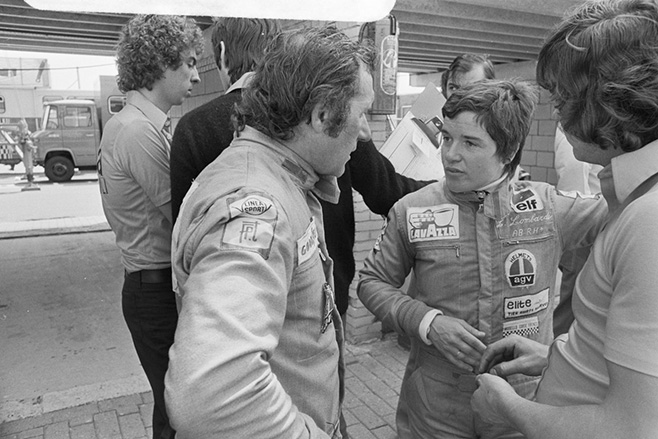
Divina Galica is a bi-sport athlete having competed in four Winter Olympics on the British ski team, and also in three F1 World Championship Grand Prix. Galica’scareer started after she was invited to a celebrity race which led her to karts, Formula Two, Formula One and ending in sports cars and trucks. Her first F1 race was at the British Grand Prix in 1976 and ended at the Brazilian Grand Prix in 1978.
Desiré Wilson is one of the five women to have ever competed in F1, and is also the only woman to win an F1 race. In 1980, the South African scored a victory in Brand Hatch behind the wheel of her Wolf WR4. In the three years she competed at F1 level (1978-1980), Wilsonfinished 10th, 7th and 6th respectively. Despite hurdles and criticism from the rest of the sport, Wilsoncontinued to maintain her competitive spirit and today, she continues to race occasionally at the Goodwood Revival.
Despite a short career, Giovanna Amati enters the list as the last woman to have entered the F1 World Championship. With an interesting personal history (she was kidnaped and held for 800 million lira ransom in 1978 at the age of 19), Amati completed in Formula Abarth, Formula Three and Formula 3000, until 1992 when she entered the Formula One for Brabham. Racing against names like Nigel Mansell, Amati failed to qualify in an F1 race.
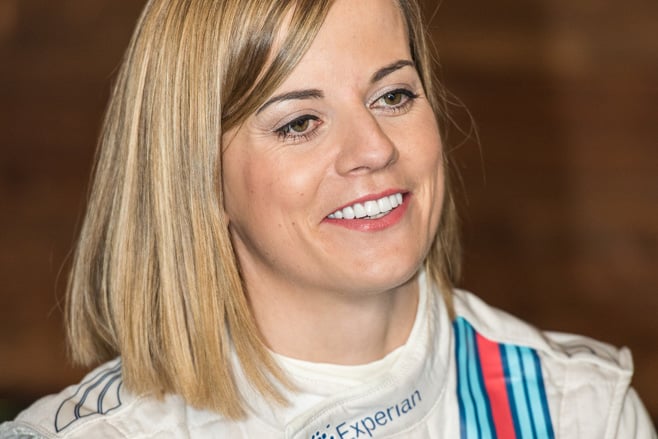
Susie Wolff was the first female to participate in Formula One since Amati. After seven years driving in DTM, in 2012 she took a place on the Williams team as a development driver and drove in practice sessions. The Scottish racer unfortunately never won a race as a processional, despite beating famous male drivers such as Lewis Hamilton, Ralf Schumacher and David Coulthard at various other times. Still counts! Wolff retired from motorsports at the end of 2015.
WOMEN TO WATCH
Our main girl Molly Taylor. This Australian driver is the daughter of Coral Taylor – a four-time Australian Rally Champion co-driver. In 2006, the now 27-year-old was selected into the Confederation of Australian Motorsport (CAMS) Women’s Driver Development Program. In what’s already been a decade long career, Taylor has achieved many career highlights and accolades. From the NSW Confederation of Australian Motorsport Young Achieved of the Year Award in 2006 to being the first female in the Australian Motor Sports Foundation (AMSF) International Rising Star Program, and one of the only females to participate in the World Rally Championship, not to mention a bunch of championships to her name, this woman is one to watch.

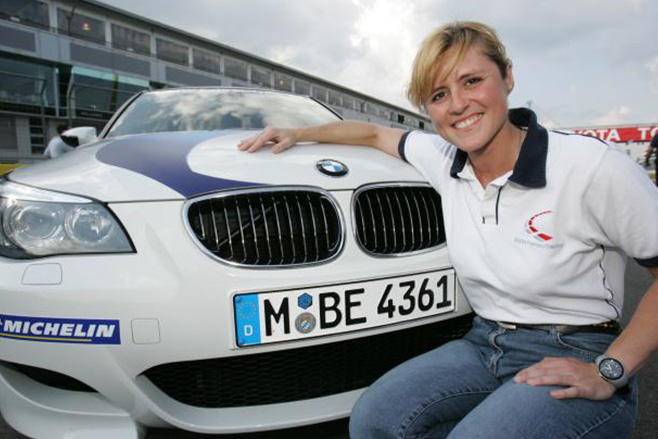
The German born Sabine Schmitz has grown up with one of the deadliest circuits in her backyard – the Nürburgring – and has driven it more than 20,000 times. She’s currently a motor racing driver for BMW and Porsche and is said to be one of the new presenters on Top Gear.
Otherwise known as the Iron Maiden, Simona de Silvestro currently drives for Andretti Autosport in the Indy Car Series where she finished fourth in the 2015 Louisiana Indy Grand Prix. Last year, it was announced Simona would drive in the Formula E for Andretti’s, a partnership that’s continued into the 2015-2016 season.

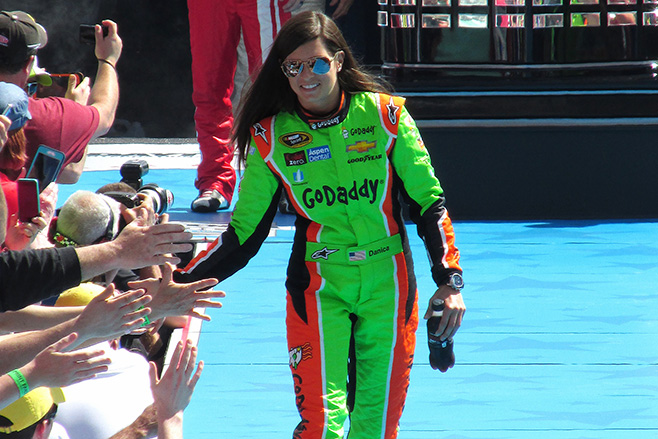
Danica Patrick is the glamour of motorsports. But before you throw her into a stereotype, Danica is one of the women to watch with a hell of a lot of talent. She’s earned six pole positions across NASCAR, Indy Car and the Toyota Atlantic Championship, worked as a TV host, appeared in commercials, video games, music videos and even appeared in CSI: NT, The Simpsons and The Food Network’s Chopped. She’s got too many successes in the sport to list them all in this article, but we’re hoping those Formula One speculations that have been floating around since 2008 soon come to fruition. We have no doubt Patrick is one of the more exciting athletes of the sport and we can’t wait to see what she does next.
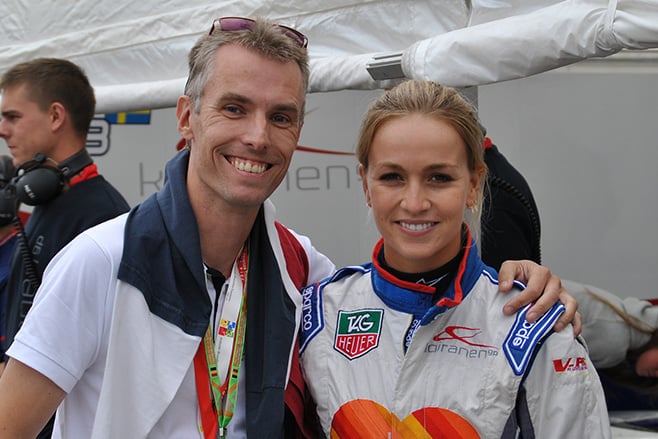
Carmen Jorda is a development driver for the Renault F1 Team and claimed to be one of the fastest women currently racing. The Spaniard has raced in GP3, Formula Three and Indy Light series. She entered the F1 last year with the Renault F1 Team (then known as Lotus F1) but has copped some criticism since with some claiming she was only picked for the team because of her looks. We say give a girl a break – prove ‘em wrong Carmen, you go girl.
Those who closely follow the world of concept cars and prototypes might remember the Audi RS5 TDI from recent times. It was the car Audi used to demonstrate its new electric turbo diesel technology, something the brand has been developing for several years. Well, now you can get this production car world-first for yourself in the Audi SQ7.
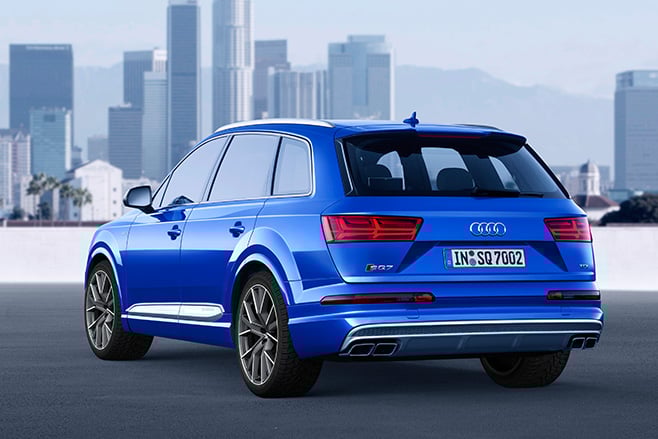
Without going into too many gory details, the SQ7 houses a mighty 4.0-litre twin-turbo V8 under the bonnet that is highly advanced in its own right. But what makes the SQ7 even more of a wolf in sheep’s clothing is the addition of a third turbo – this one powered by electricity.
Where a normal turbo takes a little time to get going – commonly referred to as ‘turbo lag’ – the electric turbo spins up almost instantly. Audi’s clever system means the electric turbo does the job when you first put your foot down, then the conventional turbos take over to make turbo lag a thing of the past.
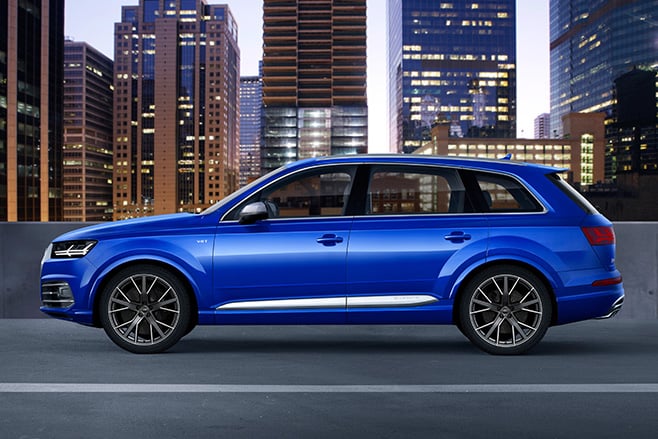
What all that equates to is 320kW of power and a monstrous 900Nm of torque from a virtual standstill.
We have driven the Audi Q7 quite a lot and we really like it. It’s a beautifully refined and comfortable place to be and it shifts along effortlessly using its relatively tame 3.0-litre twin-turbo diesel V6. We can’t wait to see how the SQ7 compares when it arrives in Australia later this year. Pricing will be announced closer to that time, but expect it to be around the $140,000 mark.
The car is called BMW Vision Next 100 and it was unveiled at BMW’s 100th birthday party in Munich this week.
“No-one can say what the next 100 years will be like,” said BMW chairman Harald Kruger, although the brand is clearly thinking about what the future holds.
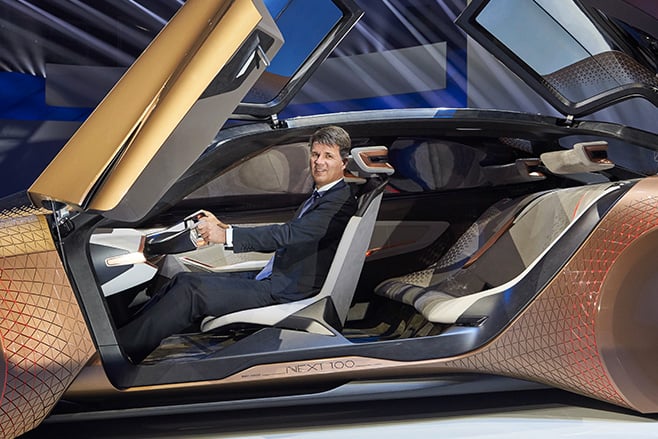
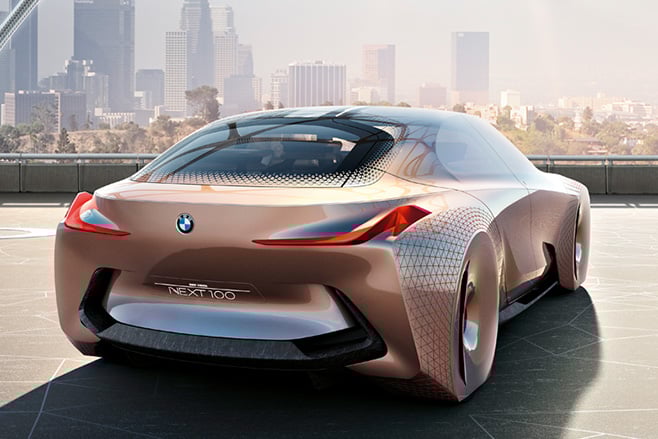
An ultra-efficient design is the first obvious element of the Vision Next 100. It features fully enclosed wheels with stretchy, moving bodywork allowing the front wheels to turn.
No exhaust tip at the rear suggests BMW expects electric power to be all-conquering. The requisite BMW kidney grille isn’t for air flow, instead providing a space for autonomous driving cameras and sensors to ‘see’ from.
The Vision Next 100 also gives insight into BMW’s thinking about autonomous driving modes. A fully auto mode called ‘Ease’ allows the driver to hand control over to the car completely. There’s nothing ground-breaking about that. But its ‘Boost’ mode brings BMW’s emphasis on driving pleasure into the fold.
In the concept, the inside of the windscreen becomes a huge digital display. Graphics overlay onto the road to show the best line around a corner, and to pick out hazards.
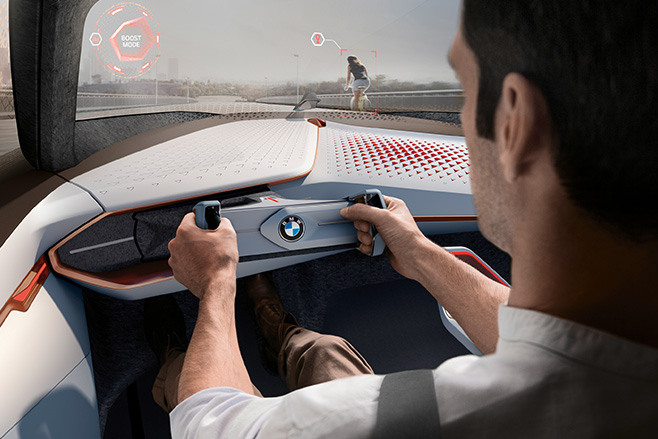
“Our aim is to turn every driver into a better driver,” said BMW design chief Adrian van Hooydonk. “We will give the driver an intelligent co-pilot.”
If it works, this could be BMW’s big play in the world of autonomous cars, keeping keen drivers interested in driving by giving them the chance to grab the wheel when they want to, and allowing them to enjoy the experience even more.
BMW has said the Vision Next 100 is the first car in a series of four concepts, with more to come from its subsidiaries Rolls-Royce and Mini in June, followed by a BMW motorcycle concept in October.
The Toyota Setsuna is the latest concept car to come out of the Japanese automaker’s garage ready to be unveiled at Milan Design Week, which starts on April 12. The electric roadster is meant to represent the “developing relationship between people and their cars” according to the company.
As wood changes due to environmental factors and how well it’s looked after, the Setsuna (Japanese for moment) is meant to evolve and develop character as it is passed on from generation to generation. To keep track of the time passing, it includes a meter that’ll log the car’s age for 100 years.
The Setsuna uses various types of woods, such as cedar and birch, incorporated into all aspects of the design, except the electric motor it is powered by. At this stage, we don’t have much more information about the car except there are no plans to sell it at this stage as it’s currently not road-legal.
We’re stumped as to why, but we think it could be a pretty cool concept to enter into a go-karts competition. Knowing what the Setsuna is made from though, we think we might need to axe our idea of branching out to use it as a burnout car. We think it might be a nail in the coffin.
A Mercedes-Benz ute is well and truly on the horizon, and the man behind its development has big expectations for the finished product.
In an interview with Wheels, head of Mercedes Vans, Volker Mornhinweg, said the Mercedes-Benz ute (likely to be badged ‘GLT’) will be the safest, most luxurious and most powerful ute on the market.
The GLT will share its underpinnings with the Nissan Navara, and be built on Nissan production lines in Argentina and Spain.
“We will develop the first premium pickup, but on the other hand we want to show it has real driving dynamics, and this focus I think will be something new for this segment.”

Engine options are yet to be confirmed, though it is likely we will see a choice of four- and six-cylinder engines, lead by the 3.0-litre turbo-diesel V6 currently found in the GLE SUV producing 190kW/620Nm.
Merc’s full suite of safety technology will be included in the GLT, and the luxurious interior will fall in line with other Mercedes-Benz product.
“We see there is a trend towards a more premium, more passenger car-like pick-up and we want to push that kind of trend,” said Mornhinweg.
“The clear plan and target is to make a pick-up that is a Mercedes-Benz, with our philosophy and our genes. You can be sure it will be an outstanding product, I’m totally convinced of this.”
THE BMW Vision Next 100 concept revealed at the marque’s 100th birthday bash in Munich yesterday is only the first in a series.
Still to come are concepts from the BMW Group’s pair of British brands, Mini and Rolls-Royce. These will be revealed in London in June. BMW’s Motorrad motorcycle division gets its turn in Los Angeles in October.
“No-one can say what the next 100 years will be like,” BMW chairman Harald Kruger told media gathered in Munich for the big day. But the company does have some idea of what’s coming in the not-so-distant future, he added.
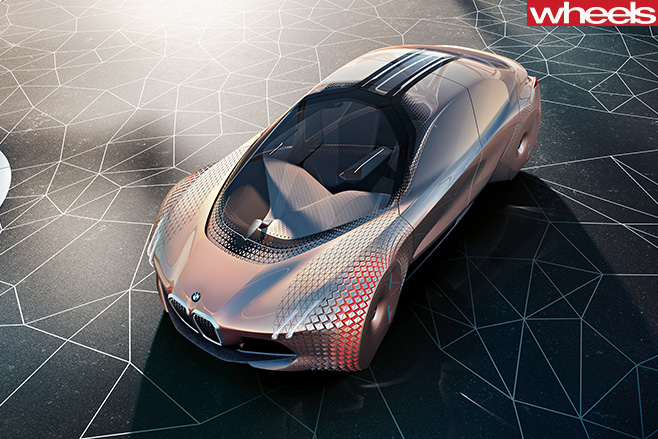
Instead, they preferred to swing the focus to tech bling. The Vision Next 100 has fully enclosed wheels, helping the low, wide four-seater achieve a claimed Cd figure of 0.18. Stretchy skin around the wheelarches permits the front wheels to swivel for steering.
While there’s a trad kidney grille, it doesn’t flow air to a radiator. BMW design chief Adrian van Hooydonk said he believed the future of the brand’s visual signature was as a site for the sensors required for autonomous driving.
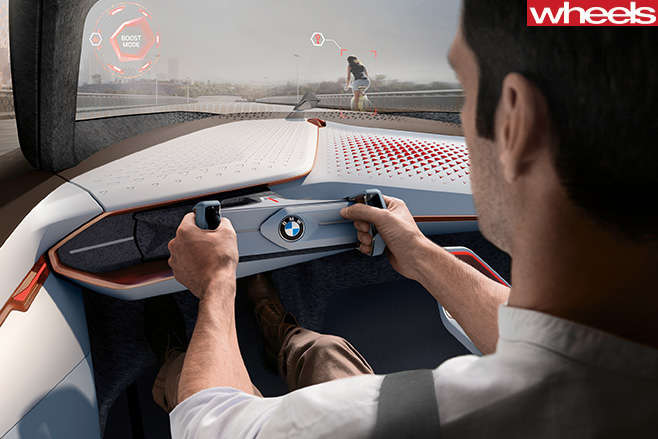
It’s the Vision Next 100’s ‘Boost’ mode that shows how BMW believes it could retain its reputation for driving pleasure in the age of the autonomous car. The concept’s entire windscreen is a kind of gigantic head-up display. BMW’s vision is that this could be used to show the driver the best line around a corner, as well as warning of road hazards.
“Our aim is to turn every driver into a better driver,” van Hooydonk said. “We will give the driver an intelligent co-pilot.”
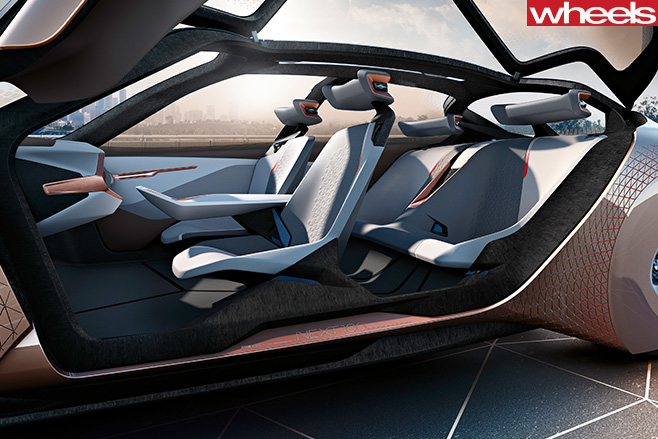
But it seems the BMW boss isn’t convinced that internal combustion has the same life expectancy as the steering wheel. “There is no alternative to e-mobility,” Kruger told a journalist who asked if BMW was satisfied with sales of the i3 electric car. “E-mobility is a marathon, not a sprint.”
It’s not giving away too much to say that the 2.0-litre MX-5 is the winner here.
As it should be, with 118kW/200Nm to the 1.5-litre’s 96kW/150Nm and only an extra 20-odd kilograms to push. But the question is: how much faster is it?
The baby-engined MX-5 has surprised us in the past by smashing its claimed 8.3sec 0-100km/h claim, so can the 2.0-litre do the same? Or is the gap between the two marginal?
Forty-degree temperatures on the day certainly didn’t help the times, but we’ve now answered which is fastest. As for which is best? That’s a story still to come.
