
Buying a Trophy-R could be a risky social decision. For a start, it has no back seat, but it’s also an easy target for the kind of mate who loves to give shit.
It’s got stickers like a Kmart mountain bike, looks like it’s wearing lipstick and then there’s the fact Renault charges an extra $9000 over a standard RS275, yet that one keeps the back seat, radio and air-con. And the brakes, engine and output (201kW/360Nm) are no different, either.
But tell your shit-giving mate to take a hike, because there’s a reason every judge voted the Trophy-R first in the $50K-$100K class: it’s utter, spine-tingling bliss on a track. In fact, we wish Renault would stop calling us about it and get the message. We’re not giving it back.
In the case of the Trophy-R, less truly is more. The deleted gear saves nearly 100kg over the base RS275, and like a big syringe it injects the 1284kg Trophy-R with a feeling of lightness so many new fast cars just don’t have.
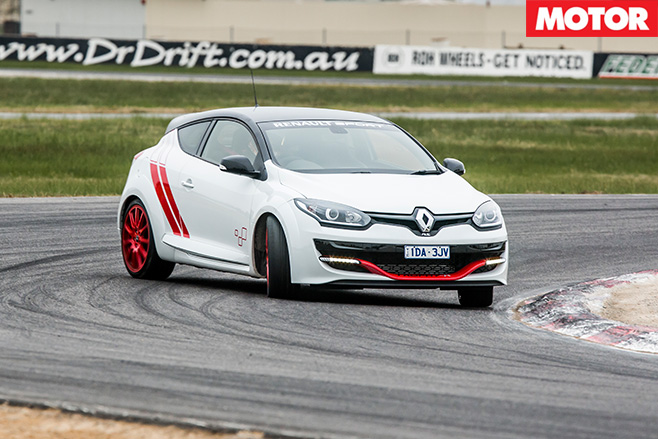
Having sunken into the Trophy-R’s revelatory fixed-back seats, you’re presented the option of the normal seatbelt or a full-on harness. Either way, roaring out of pit-lane you notice the front tyres grappling for grip as the 2.0-litre turbo hisses, pops and roars with induction noise; the note more crisp and richer thanks to the lack of sound deadening. This thing sounds angry.
The tyres need to be warmed first otherwise your eyeballs will pop out at the first corner. With a bit of heat in them, you begin to notice the Renault Sport engineers were on a mission to destroy all understeer. Initially the Trophy-R feels so oversteer-y it’s a little off-putting, but then you realise it doesn’t want to kill you, it just wants to play.
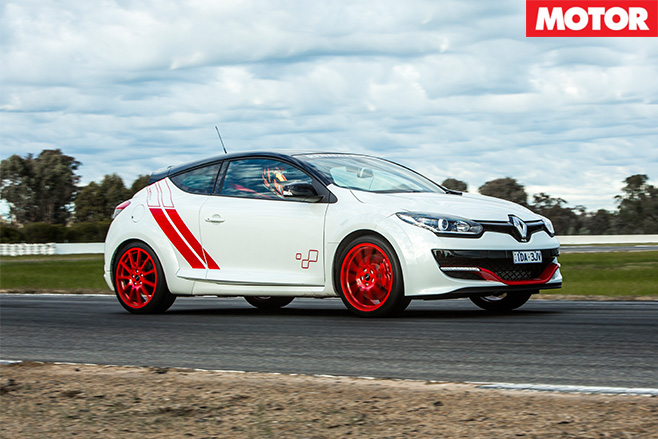
The Trophy-R is immensely engaging, predictable and satisfying to punt around a track. It’s fast, too, its 1:39.4sec laptime the fastest of the entire 22-car Bang field. Yep, this thing was P1.
But it was a case of grip over grunt, as the Trophy-R finished last in class for the 0-100km/h and 0-400m sprints. It clawed its way back to fifth for 80-120km/h, lap v-max and 400m v-max, suggesting it’s tricky to launch.
Around Winton, though, those sticky Michelins helped the Trophy-R score the fastest mid-corner speeds of the entire field at the turn five and nine apexes. Impressive. It was strong under brakes, too, second best in class.
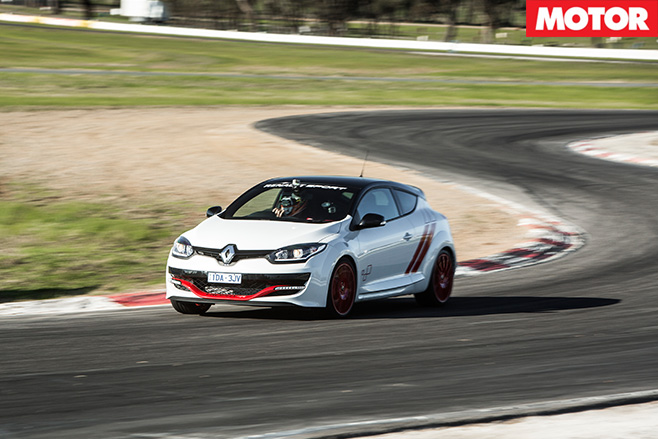
While the Trophy-R is in a much more junior league than either, it absolutely has the same kind of personality, in some ways making its $62K price seem like a bargain. It might be a risky social decision, but who needs mates when you have a Trophy-R? Not us. – DC
0-100km/h – 6.16sec (8th) 0-400m – 14.15sec @ 165.68km/h (8th) Lap time – 1:39.4sec (1st)
Overall Scoring
Bang Index – 110.4 Price – $61,990 Bucks Index – 107.2 BFYB Index – 163.4
Judges’ Rankings
Campbell 1st – “This and an empty racetrack is my kind of bliss. The best bum-dragger I’ve ever driven”
Morley 1st – “Just looking inside at the harnesses and race seats is enough to get you off on the right foot.”
Newman 1st – “Le grand fromage of hatches – absolute heaven on a circuit.”
Spinks 1st – “A must-drive for any sceptic of FWD performance.”
Luffy 1st – “So fast for a front-wheeler. You can throw it around or trail brake and it’ll respond. Great engine and you can brake later than the other cars. You just want to stay on track because you know there’s more potential to be unlocked. The ’box is a bit sticky between second and third, but as a fun everyday road car and an occasional track car, this thing’s a winner.”
God, this thing just gets better every year, doesn’t it. You drive a front-wheel-drive Golf GTi (even the Performance version with that tricky diff) and you wonder if you need the all-paw R in the first place. And then you go and drive a Golf R. And the answer is simple: Oh yes you do.
The biggest surprise for me was that some of the numpties along for the BFYB ride this year preferred other stuff – like the Audi TT, for one – over the Golf R.
This is a bit like saying: Mila Kunis is okay, but I can’t go past the excellence of Rosie O’Donnell’s housekeeping. Spare me. Now, I know the Golf R only finished fourth in its price category, but even a quick drive will start to make you think that that’s a bit harsh.
For a start, the R is quick in a straight line. Sub-five-seconds for the 0-100 dash and 13.2 over the 400m aint waiting for the kettle to boil. And yet, the lap-time at Winton was a distinctly mid-field 1.01:6. So what gives?
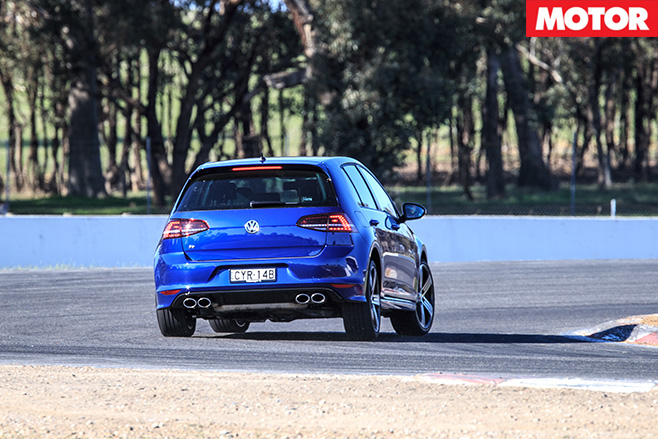
Corner speed, kids, and for whatever reason, the Golf R just didn’t hustle as hard once you had the lock wound on. In fact, though the sweeper, the VW was mid-pack with a 106km/h V-max. But slower turns were its real problem and at the patience-is-a-virtue Turn Nine, the R was down to a piddling 47.5 kliks…stone motherless last.
So there’s your problem. It could be something to do with the all-wheel-drive wanting to make the front-end wash a bit wide at times, but only Luffy would be able to tell you that. And, in fact, that’s a very valid point: For anybody with mortal-ish skills, the Golf R would probably be faster than just about everything else here, purely because it’s so confidence inspiring and otherwise balanced.
And let’s talk just for a moment about how the thing feels, because for X-factor (which doesn’t come into BFYB reckoning) the Golf R had things kicked to bits.
Not only does it give the impression that it has boundless grip, it’s also super stiff corner-to-corner and that gives it great feedback through the driver’s perch. That said, those same spring and damper rates also make it ride a bit sharpish and this is one car you wouldn’t take near the kerbs on a wet track.
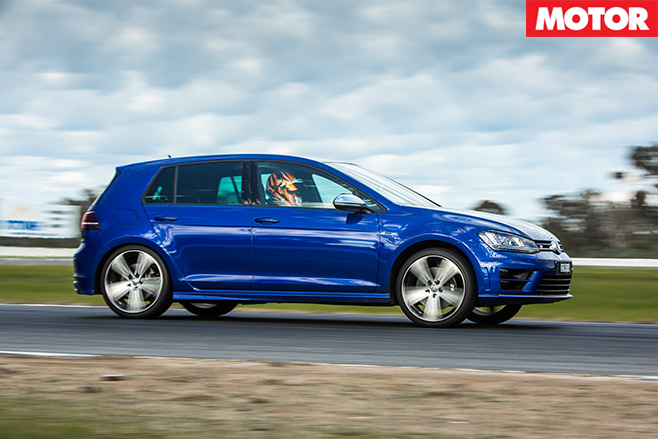
But here’s the real reason the Golf R is a brilliant bit of kit: Instead of naming the most aggressive electronic setting something nebulous like ‘Dynamic’ or ‘Sport Plus’, Volkswagen has done the right thing by tappetheads everywhere and called it ‘Race”. Brilliant.
0-100km/h – 4.95sec (4th) 0-400m – 13.24sec @ 168.10km/h (4th) Lap time – 1:41.6sec (=5th)
Overall Scoring
Bang Index – 98.4 Price – $55,240 Bucks Index – 120.3 BFYB Index – 162.9
Judges’ Rankings
Campbell 3rd – “Love how this thing fires up. Press a button, goes from mellow to monster.”
Morley 3rd – “Utterly resolved, beautifully done.”
Newman 4th – “Very difficult to fault, but stronger opposition this year.”
Spinks 2nd – “Now this is how a flagship Golf should drive.”
Luffy 3rd – “An easy car to drive on the limit, but the biggest thing that lets it down is the electronics in the gearbox. Even in full manual mode it wants to upshift and won’t downshift when you want it to, which tends to hurt it up in the tight stuff. It’s good on the change of direction and has a great chassis.”
It may look more like a high-riding A-Class but technically the GLA45 AMG is the lone SUV in this year’s Bang.
A couple of things make it stand tall in other ways: brash wings and body parts that make it look more WRX than AMG; and the bonkers 265kW four-cylinder turbo from the A45 and CLA45 that features a supercar-shaming specific output.
Teamed with launch control and an all-wheel-drive system that can shovel 50 per cent of the engine’s 450Nm to the rear axle, the GLA45 puts that engine to good effect from standstill. In the 0-100km/h and 0-400m sprints, the barmy Benz was pipped – and we really do mean pipped in the fractional sense – by only the M135i and XR8 overall.
That explosive acceleration also contributed to the third-quickest lap around Winton, with a 1min 40.4sec. Not that the GLA45 is a slouch through corners, though its apex speeds at Turns 5 and 9 were decent rather than stunning.
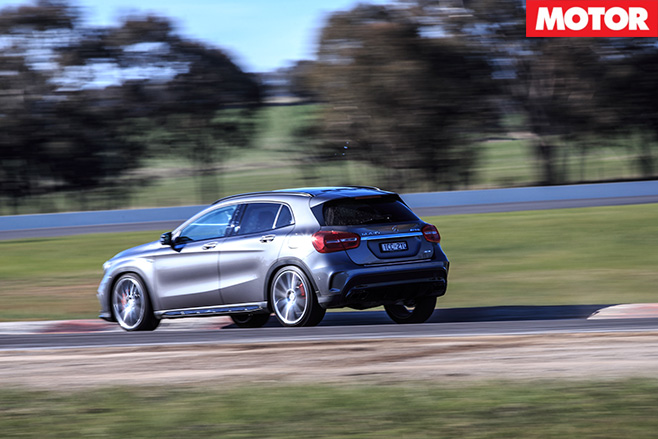
The steering’s disappointing on-centre feel that’s noticeable on the road disappears on the track, and you’re instead left focusing on its positive attributes: decently quick and naturally weighted for an electric system.
And there’s nothing like a bit of Alcantara (as featured on the GLA45’s steering wheel) to suggest you’re in a vehicle where you should be wearing racing gloves rather than driving mitts.
Like its compact relatives the A45 and CLA45, the GLA isn’t your traditional AMG when it comes to straying from your intended direction. Where a C63 or E63 would invite power oversteer, the GLA is adjustable more to a lifting rather than pressing of the throttle when things are loaded up mid-corner.
It doesn’t sound like your typical AMG, either, with the raucous exhaust and its cracks on upshifts dominating the noise rather than the engine. Personal preferences determine whether that’s a bad thing or not.
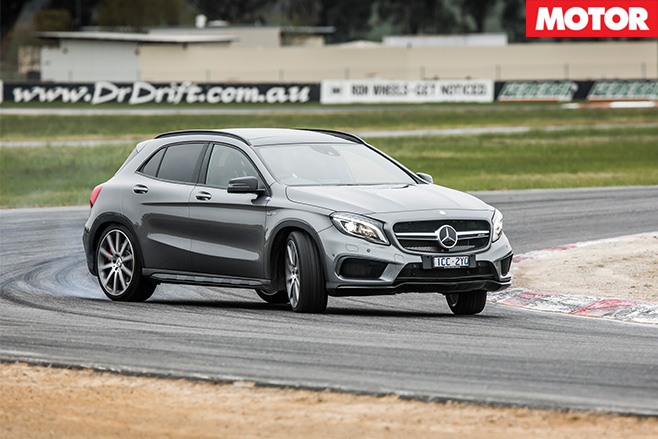
So the GLA45 AMG is certainly playful to a point, and it finished second in the Bang Index despite falling into the lower-half order of the judges’ ranking cards.
The least-affordable sticker here – $80,430 – cruelled the madcap Merc’s Buck factor for fifth overall in the $50-100K, but not bad for a sports utility vehicle.
0-100km/h – 4.89sec (3rd) 0-400m – 13.07sec @ 176.19km/h (3rd) Lap time – 1:40.4sec (3rd)
Overall Scoring
Bang Index – 129.4 Price – $80,430 Bucks Index – 82.6 BFYB Index – 161.3
Judges’ Rankings
Campbell 5th – “Surprisingly good. Grunt, grip and playfulness, it felt at home on the track.”
Morley 7th – “SUVs bore me. Sports SUVs bewilder me. This aint bad, though.”
Newman 7th – “Amazingly quick for a faux-SUV, and surprisingly keen to play.”
Spinks 7th – “Don’t let the SUV status put you off. AMG badge far from shamed here.”
Luffy 5th – “Easy to drive on the limit; this car kinda does it all for you. It’s quite boring, but surprisingly pulls a lap time. It’s a little bit loose in the rear through the sweeper, which is the only time it’ll catch you out. Also, you end up going through corners in third when you’d prefer to be in second.”
The Audi TT comes with so much baggage it wouldn’t be allowed on any aeroplane anywhere in the world.
Poser-mobile, hairdresser’s car, a Golf in a fancy frock, it appears that Audi’s entry-level sports offering will never be taken seriously as a performance car, forever tarred with the ‘style over substance’ brush.
Well, if Audi’s third-generation TT is a hairdresser’s car, then you can call me Vidal Sassoon, as it now deserves to be regarded as a very accomplished driver’s car. For this judge, at least, it was the surprise of the event.
Audi knows how to play the BFYB game; witness last month’s S1 Sportback arriving sans 18-inch wheels and hence scraping under the $50K price cap. PR dude Shaun Cleary is a former MOTOR staffer and organised the event for a number of years, which means that the decision to provide us with a quattro TT was probably no accident.
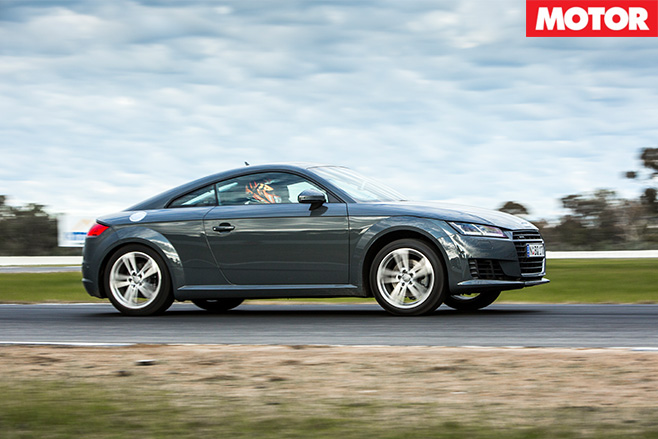
It was a hand worth playing, as despite packing ‘only’ 169kW/370Nm, the foolproof launch control allowed the TT to reel off 0-100km/h in 5.32sec and a 13.64sec quarter mile at 163.86km/h, just four-tenths slower than the Golf R despite being 37kW down.
Even more impressive, around Winton the TT beat its (admittedly much cheaper) Wolfsburg sibling by seven-tenths – that’ll be the 100 less kilograms it’s carrying.
But while the TT was faster than we were expecting, the real surprise was just how good this new-generation model is to drive. It must be said that it appears I felt more strongly about the TT’s talents than my colleagues, who all preferred the Golf R’s more aggressive personality, but having driven the two back-to-back just to make sure, the TT’s heightened sense of agility was the clincher.
You can feel both its lighter weight and lower centre of gravity in every corner, but while there is plenty of grip – though its apex speed was second-to-last in both turn five and nine – its greatest attribute is its adjustability.
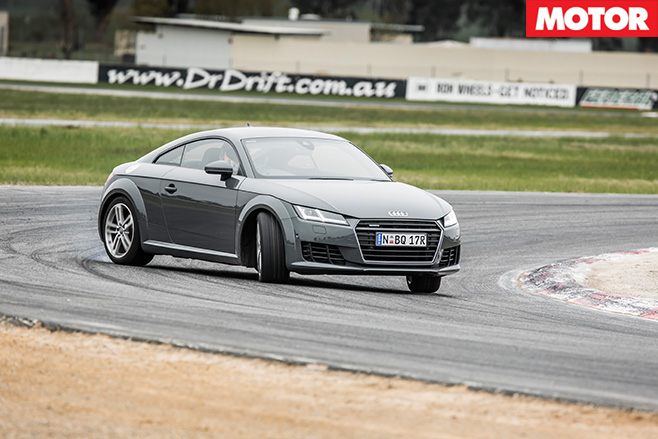
Combine that with the field’s second-highest price and a distant sixth is the best the Audi could manage, a long way adrift of the GLA45 AMG ahead of it. However, while the TT mightn’t be the strongest BFYB package, it’s far better than the name-calling would suggest.
0-100km/h – 5.32sec (5th) 0-400m – 13.64sec @ 163.86km/h (5th) Lap time – 1:40.9 (4th)
Overall Scoring
Bang Index – 82.9 Price – $77,950 Bucks Index – 85.2 BFYB Index – 126.0
Judges’ Rankings
Campbell 4th – “What a surprise! Expecting a hairdresser’s car, but in fact it’s got balls.”
Morley 4th – “Feels smaller than before. Kind of where it should be.”
Newman 2nd – “Brilliant. Fast, agile and entertaining. Loved it.”
Spinks 3rd – “Third gen another step away from show car and step closer to sports car.”
Luffy 4th – “It’s not too stiff, so you can slide the back around a little. If it does start to get out of shape then just get back on the throttle. It won’t downshift in a corner when you want it to, and it’ll auto upshift by itself. Still, there’s good weight in the steering and you feel like you’re always involved in the driving process.”
Luffy wasn’t mad about the feel and feedback offered by the 228i. I’m not going to mark it as hard as that.
True, it’s not the absolute most talkative car of the bunch, but when it does what it does, then maybe the precise way it does it is a little less important. Obviously, I’m not as attuned to what a car is doing at the banzai limit as W Luff either, but I still reckon it’s hard to fault the 228i given its road bias.
Actually, I liked this car from the moment I stepped into it. The interior is sharp and a bit of an update from recent BMWs. Classy, too, with all manner of high-end materials and touch-surfaces.
To tell you the truth, I liked it even before I got in it: Just walking up to it made me think it was a bit more of a grown-ups car than the M135i which, to my old eyes, still has a bit of Disney-Pixar about its overall proportions. The seats are fabulous, grippy things that hold you in place, enabling you to left-foot brake and make the most of the two-pedal arrangement.
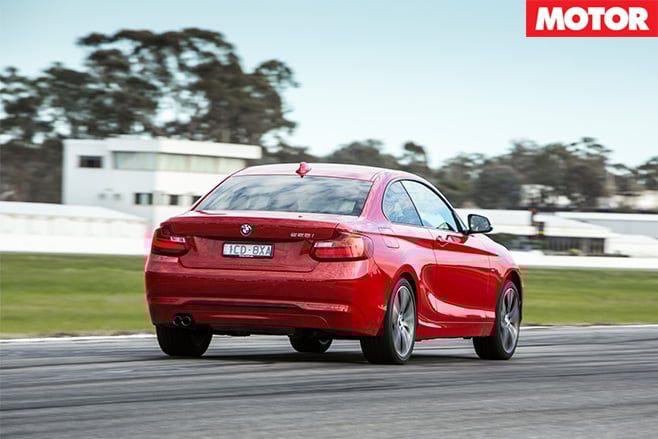
Okay, I know it’s not the rippling-abs three-litre six in the M135i, but the 180kW tune for the two-litre four-banger is my favourite of the lot and marks a serious sweet-spot for this engine-tranny combo.
With the clock ticking, the 228i laid down a sub 5.5 time getting to 100km/h and backed up with a 400m time of comfortably under 14 seconds.
These are proper performance car numbers, folks, and on the road, it feels even faster. But more than that, it’s a willing unit that urges you on and never feels like it’s getting strained or having its feathers ruffled, even when you’re pointing the tach needle at the big numbers.
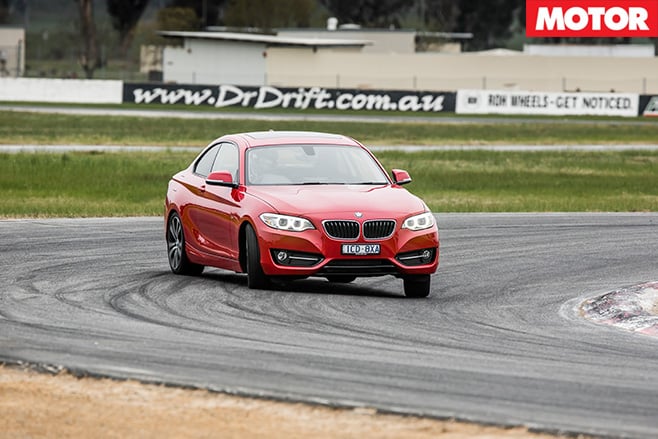
But beyond those bald numbers (not that it helps its cause in this reckoning) there’s more to like. Trackside, I found the fairly pointy front end was tolerant of me changing my mind about line and entry point, and those lovely brakes allowed me to trust them and then go deeper each lap until they finally stopped saving my bacon. So it gives you options, then, the 228i and that’s got to be worth something.
0-100km/h – 5.45sec (6th) 0-400m – 13.78sec @ 161.17km/h (6th) Lap time – 1:44.4 (8th)
Overall Scoring
Bang Index – 60.5 Price – $64,400 Bucks Index – 103.2 BFYB Index – 120.6
Judges’ Rankings
Campbell 8th – “Ballsy powertrain but on track felt a little too clinical for me.”
Morley 5th – “My favourite tune for BMW four-pots. This is why.”
Newman 6th – “Does a huge amount with what it has, it just needs a bit more.”
Spinks 7th – “Lovely rear-drive handling but more steering communication, please.”
Luffy 5th – “It’s a great chassis and you can feel that mechanical grip is there, but the feedback from the steering and throttle is non-existent. It feels like driving a simulator; the steering and throttle are very removed from what the rest of the car is doing. Instead you rely on what you’re getting back through the chassis.”
Numbers can be cruel. Especially so to Lexus, it seems. For the second year running Toyota’s premium arm occupies the bottom rung on the $50-100K ladder yet, just as with last year’s IS350 F Sport, in this case the numbers don’t paint a fair picture of the RC350’s abilities.
Put simply, as the only car in its class without some form of forced induction, Lexus’s new two-door isn’t particularly fast, and at $74,000 it’s not particularly cheap, either – not a promising recipe for BFYB success.
Its pace isn’t helped by the fact that at some point in its development process the RC350 was clearly given free rein with the buffet; its 1680kg kerb weight is just 50kg shy of the twin-turbo, all-wheel drive Nissan GT-R.
As a result, Lexus’s latest coupe scrapped with Renault Sport’s Megane Trophy R for the straight-line wooden spoon, but whereas the Trophy R then set a blistering time around the track, the best the RC350 could manage was a 1:42.9. Not bad, but certainly nothing to write home about.
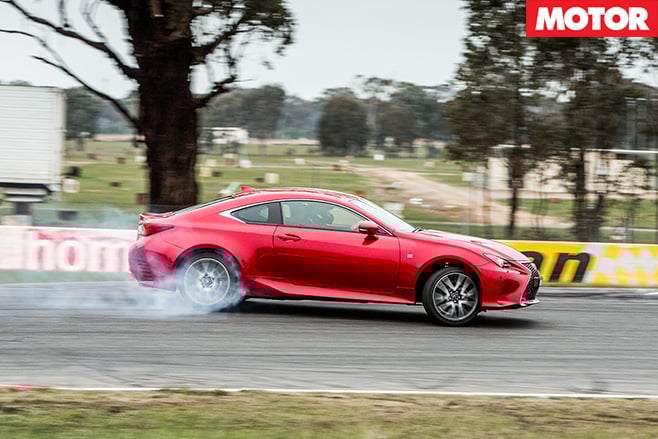
The 3.5-litre atmo V6 might not be a powerhouse with 233kW/378Nm, but it howls like an old-school touring car and with eight gears to play with, it’s not too much of a task to keep it revving in its 4000rm+ happy zone.
Likewise, the RC350 might’ve gone too hard on the donuts during development, but there’s little sense of its mass on track. There is heaps of grip – its minimum corner speed in Winton’s famous sweeper was a competitive 108.01km/h – and the variable ratio steering means most corners are dispatched with little more than a quarter-turn of lock.
The only real chink in its armour is the lack of a limited-slip diff. Why manufacturers persist in building powerful rear-drive performance cars without LSDs is beyond us, as more often than not having one fitted transforms the on-limit behaviour of the car.
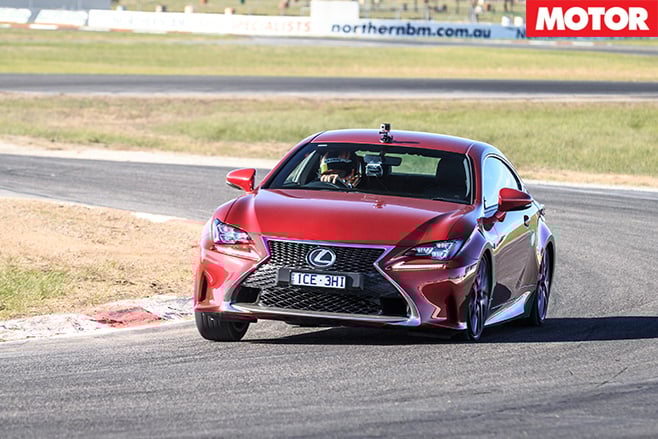
Its behaviour at 10/10ths can be frustratingly inconsistent and it was marked down by the judges accordingly. Please put a diff in the RC350 Lexus, it’ll make it faster and more fun – it’d be cruel not to.
FOOTNOTE: As part of its MY16 update Lexus has now made a limited-slip differential standard on Lexus RC350 F Sport – hooray!
Specs
0-100km/h – 6.08sec (7th) 0-400m – 14.12sec @ 164.34km/h (7th) Lap time – 1min42.90sec (7th)
Overall Scoring
Bang Index – 52.4 Price – $74,000 Bucks Index – 89.8 BFYB Index – 104.7
Judges’ Rankings
Campbell 7th – “On track it tries hard and is surprisingly agile. But ultimately prefers cruising to attacking.”
Morley 6th – “A sporty Lexus that finally is. Still a road-car first, though”
Newman 5th – “Impressive, and fun, but lacks that final tenth and needs an LSD”
Spinks 7th – “Great electric steering and old-school V6, but imagine if RC were 100kg lighter”
Luffy 5th – “What a fantastic car. The chassis balance and amount of front-end grip on turn-in is unbelievable; it really rotates well in the corner. One of its biggest let-downs is the lack of a limited-slip diff. It also does everything right, but it needs more power to unleash its true potential.”
Your twenty-first. In America, according to every documentary I’ve seen, it’s a licence to cause booze-fuelled mass destruction of your parents’ house. Closer to home, the rite of passage is a carton of tinnies and a snooze under a bridge with a goon bag for a pillow.
MOTOR’s ripper stalwart event Bang For Your Bucks turns 21 this year and it’s been decidedly less riotous. In fact, it’s been pretty laid-back. Business as usual, but instead, with 22 cars cracking their knuckles to take on our famous spreadsheet, the event is healthier, busier and bigger than ever.
But suppose this is the first time you’ve picked up a copy of MOTOR and Bang For Your Bucks sounds to you like the name of a fireworks store in a back-suburb of Canberra. Well, prepare for the lowdown. (And if you need more than two hands to count how long you’ve been reading MOTOR, you could probably use this opportunity to skip through a few paragraphs.)
MOTOR has four events each year. One, the annual Tyre Test finds the best performance tyre on sale in Australia. In fact, in all of the southern hemisphere we know of, it’s the only performance tyre test where someone actually gets a pro driver, and a car, and books a track, and goes out and does the testing.
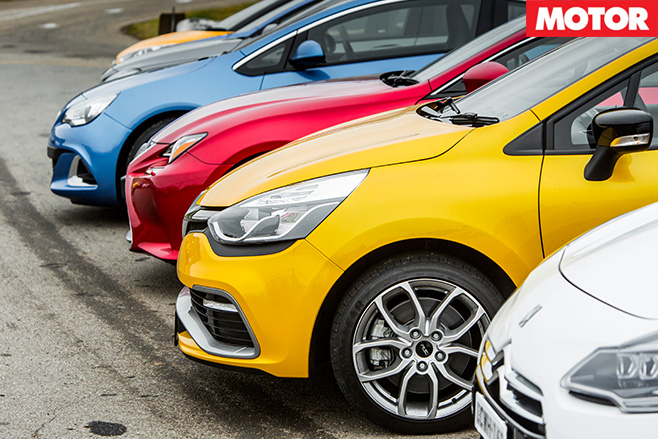
Performance Car of the Year is MOTOR’s blue riband event (yes, that’s how you spell blue riband). PCOTY takes the top 10 performance cars of the year by way of road, track and drag testing and combines subjective judging to name the best fast car of the year.
The difference between PCOTY and Bang is the price. Bang For Your Bucks names the best-value performance car on sale today, up to $100,000. It was open-slather, price-wise, up until 2007, when we stopped sending invitations to Porsche Boxsters, GT-Rs and M3s and bolted in the price ceiling, to focus on the cars that were at least half-attainable to those with mortal finances.
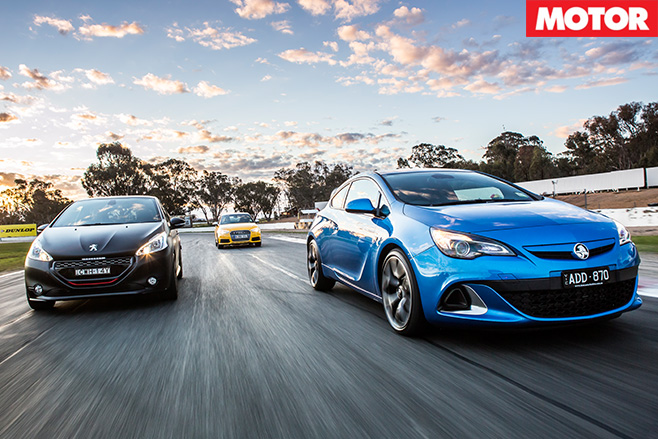
But price cap or not, the Bang trophy, as you’ll see in our Honour Roll table, has reliably rewarded the fast and the cheap. In the early 90s it darted around unpredictably before entering the WRX era, punctuated by HSV’s sole event win in 2000, before SS Commodores starting getting in the pocket-rocket Jap cars’ way. There’s been a few oddburger winners, too, as you’ll notice.
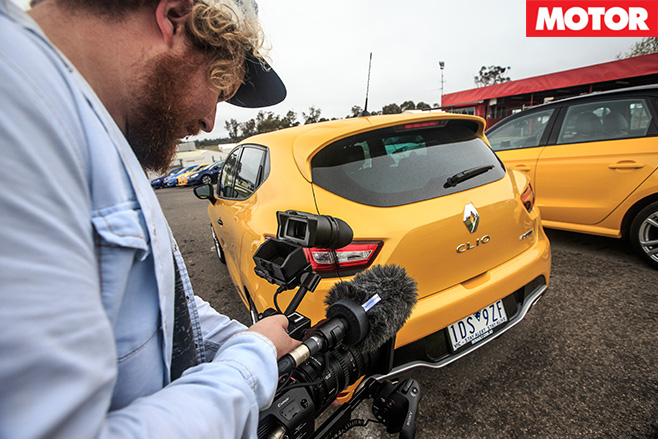
So what makes a car eligible? It must cost under $100K and be a totally new model, or at least have reasonable mechanical updates, or a significant price drop – anything, really, that would make a meaningful impact to its Bang For Your Bucks score compared to past years.
Our wish list written, we send out the invitations to the car manufacturers. We book a track – this year, same as last, Winton Motor Raceway in northern Victoria – and book photographers, videographers, journalists, racing drivers… trust us, it’s a circus.
Now, the thing is, not every car manufacturer accepts our invitation, or has a car that it can give us.
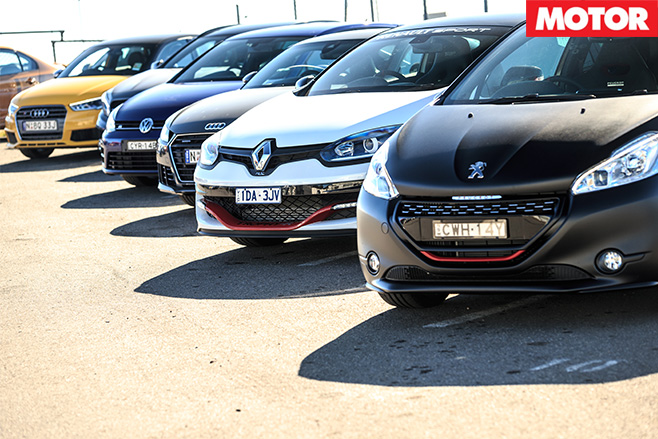
Twenty two cars have fronted up to Bang this year, and the field ranges from wild 335-but-actually-over-400kW V8 Falcons and stripped-out Megane RS275 Trophy-Rs to aspiring new performance machines like the Veloster Turbo. Then there are brand new bullets like Audi’s TT, which really did surprise us, and the monster Golf R is back, too.
Now, to the cars we invited that couldn’t come. Would’ve loved a 4C, and Alfa Romeo had one, but a journalist crashed it. Given the XR6 Turbo Ute’s outright win in 2008, we asked for a Ute this year, but Ford sent a sedan instead. All good, happy to have it, but the higher price, and no extra speed, will hurt it.
Meanwhile Holden didn’t have any Insignia VXRs for us yet, and same as last year, HSV didn’t want to participate because, well, actually they didn’t give a reason. Lotus just never got back to us about an Elise, and the storming MINI JCW wasn’t available when we did our testing. Apart from those cars, everything else eligible was available.
It’s good we’re back at Winton. If we did this at Phillip Island, it’d be fun but the higher horsepower, higher grip cars would have an unfair advantage over the cars not-so-talented in those areas. Likewise, if we did this at Wakefield Park, or the Haunted Hills hillclimb circuit, the opposite could be the case.
Winton is a fair and level playing field because it rewards power with its mix of straights, medium-speed corners, the sweeper, hairpins and a few long corners where our gun driver can lean into a car’s chassis and tyres.
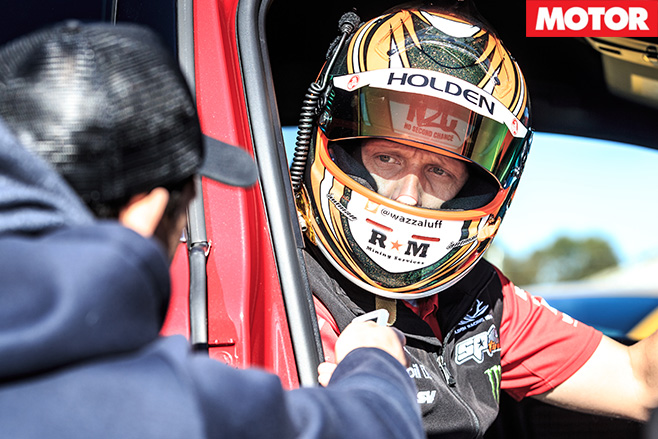
And just lastly, we need to bang on about how important Bang For Your Bucks is. Yes, we sound like Ronald McDonald trying to flog you a Fillet-o-Fish, but we can’t think of any other media outlet that books a track, a panel of experts and a gun driver to do old-school nitty-gritty testing like this. Bang For Your Bucks has been around so long because the formula works, the results are on-the-money and people trust it. We trust it. Now, if we can get a hip-hip and a hooray for our birthday event, with that out of the way, let’s get cracking.
The Formula explained
How does this infinitely mysterious Bang For Your Bucks formula work? Fairly mind-bending mathematics, that’s how. Beware, this isn’t light reading. And we didn’t even include all of the maths and equations.
But when you absorb it, think about it, and it clicks, it all makes sense, because the whole thing is rooted in common sense. And actually, it’s quite clever, almost elegant, in how it determines the final finishing order.
One thing’s for certain, in crunching an enormous amount of as-tested performance data, it’s unbelievably fair, particularly as the scores are divvied about based on exact indexed data (rather than just handing out scores based on rank).
So the Bang For Your Bucks index is actually two indexes combined – a Bang index, drawn from performance data and judges’ rankings. And a Buck index, drawn from price. The Bang For Your Bucks index is 60 per cent Bang, 40 per cent Buck, to give a 100 per cent indication of just how good value a performance car really is.
THE BANG INDEX
First, let’s explain the Bang index. We factor in as-tested data from nine performance disciplines. They are Lap Time, 0-400m, 0-100km/h, 80-120km/h, 0-400m Top Speed, Lap Top Speed, Apex Speed from turn five, Apex Speed from turn nine, and 100-0km/h.
Obviously 0-400m, 0-100km/h, 80-120km/h give a pretty solid indication of a car’s accelerative performance, while the Top Speeds give an indication of raw grunt. 100-0km/h covers off a car’s stoppers, while the Apex Speeds speak of grip. The Lap Time obviously combines them all.
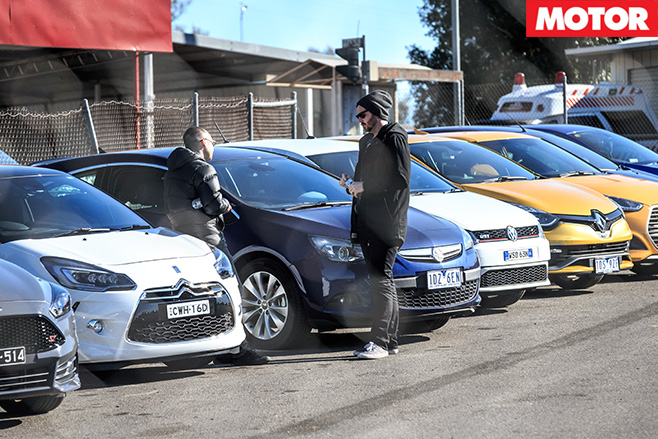
Of course, a risk here is that the order is based purely on speed. A car might be fast, but it might also be boring or frustrating to drive at speed. That’s why performance data is 80 per cent – the other 20 per cent is drawn from the judges’ subjective rankings.
Meanwhile, that subjective scoring criteria is simply what the data can’t account for: the fun and engaging factor.
Warren Luff and Scott Newman gather the accelerative and braking performance data using our super-accurate Driftbox testing equipment. Meanwhile the Lap Time stuff is left to Luffy, Australia’s best driver for testing road cars on racetracks.
With the data collected and back in the office, this is where it gets complicated.
We have a Microsoft Excel spread-sheet full of precise formulas refined by Australia’s most experienced motoring journalists and road testers over a 20-year period. And so with the care of a neurosurgeon, the data goes in. And the results are spat out.
The Bang index is based on an equation applied to each of those nine performance disciplines. It seems befuddling at first glance, but when it clicks, it makes perfect sense.
In the $0-$50K class there are 14 cars scored for each of the nine disciplines. The worst car gets 1.000, the best car, 14.000. The greater the score, the better.
But simply because it’s the fairest and most accurate way, we scale the score based on the spread of performance data (rather than just handing out scores of one, two, three, etc, based on the finishing order). Why? Well, what if the first 12 cars all did laps between 1:42 and 1:43, and some Tail End Charlie did a 1:53? It wouldn’t be fair, or make much sense, to spread the points evenly if the spread of lap times was anything but.
We had included here an example of how we score a car, but it went on for a bit. Instead we’ll publish to our website a detailed example of a car going through the formula. Mathophiles keep your eyes peeled. But for now, we’ve only got 148 pages to work with, so you’ll just have to trust us – the maths is sound.
THE BUCKS INDEX
Fortunately the Bucks index value is much easier to determine. Of all the 13 cars, the average price is $35,152. How far above or below a competitor car sits, determines its value on the Bang index.
THE BANG FOR YOUR BUCKS INDEX
Now we need to factor in 60 per cent of a given car’s Bang index, and 40 per cent of its Bucks index. When you’ve done this, you get a final number – your Bang For Your Bucks score.
And there you have it.
Don’t say we didn’t warn you.
Ford’s junior hot-hatch overcame finishing second in the $0-50K division to take the overall 2014 BFYB title.
With the cheapies champion Clio RS also returning, how did the Fiesta ST turn things around for 2015? Simple: for whatever reasons it triggered ‘timings’ from the orbiting GPS satellites earlier via our Driftbox.
It scrubbed four-tenths from its previous 0-100km/h to touch on its claimed 6.9sec (6.97sec), did the same in the 400m sprint to drop below 15 seconds (14.93), flexed its in-gear muscle two-tenths quicker in the 80-120km/h, and – most importantly for the biggest-scoring discipline – lopped a whole 1.5 seconds off its lap time. Blimey.
And while it seemed to have brain fade more than brake fade in the 100-standstill test last year, in 2015 it put those rear discs exclusive to the ST in the Fiesta range to better use – pulling up nearly five metres shorter!
We’ve known the Fiesta ST since 2013 now but familiarity didn’t breed contempt among the judges – more contemplation that this is surely destined to be enshrined in the hot-hatch hall of fame.
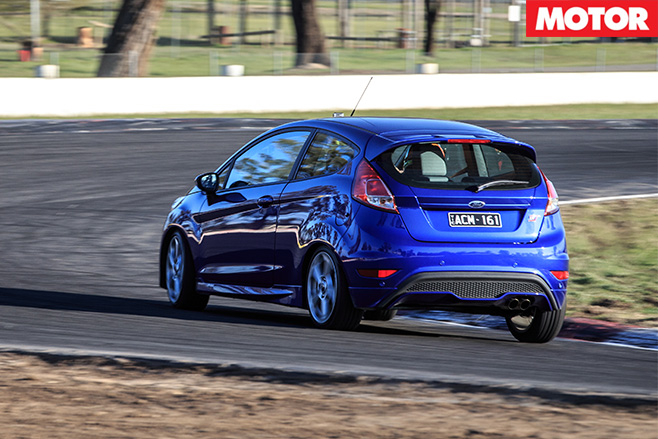
As ever, there isn’t one outstanding aspect to the diminutive fast Ford; it’s a complete package that synchronises engine, chassis and driver for a perfectly timed blast from A to B.
The ST’s 1.6-litre four-cylinder turbo is loaded with torque and character. 240Nm across a vast field of revs – 1600-5000rpm – provides muscularity, with another 50Nm available for short bursts via the overboost function.
As is typical of these small-capacity turbos, the rev counter doesn’t spin with frenzy but it does so with sufficient fervour to make it an enjoyable and worthy exercise – maintaining strong performance to its redline. The parping exhaust is a delight, too, adding to a soundtrack that’s far more interesting than the Clio RS’s.
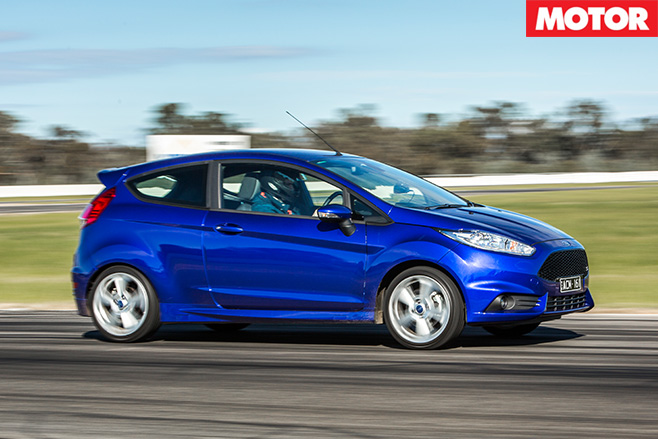
Ford, of course, has a reputation for bolting together a fine-handling small performance car. So it’s probably little surprise the ST was one of only five cars to crack 110km/h plus through Winton’s fabulous Turn 5 sweeper. (And a quick nod of respect to the 208 GTI 30th here, which was fastest of the $0-50K brigade with 113.77km/h.)
The steering is progressive, quick without being nervy, and imparts some genuine feel. The chassis is even more of a chatterbox – relaying tyre grip info as the ST’s front end starts to bite into the corner, with traction-control-based torque vectoring keeping a tight rein on inside-front wheelspin, and an ever-lively rear end that’s beautifully responsive to the amount of right-boot pressure.
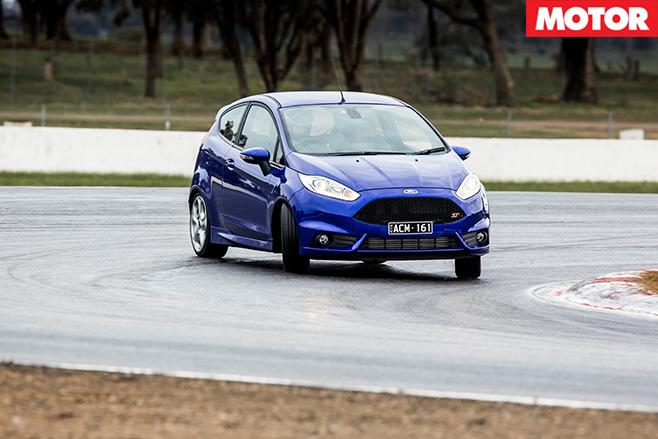
Calling it the Feisty ST wouldn’t necessarily be a case of dyslexia. Of course, as with many hot-hatch Fords – including the last, $59,990 Focus RS – the Fiesta ST’s first-class dynamics come in tandem with an Economy cabin (despite made-by-Recaro reclineable seats). The price tag is still just $25,990, though, and this year it was the cheapest in the field rather than just one of the most affordable. For 2015 its Price Index jumped from 85.9 to 135.3.
Its Bang Index actually fell slightly year on year, despite greater universal love from the judges and a lap time that was not only a second slower than the all-wheel-drive S1 that costs almost twice as much but crucially beat direct rivals – the Clio RS and Polo GTI – despite a deficit in engine performance.
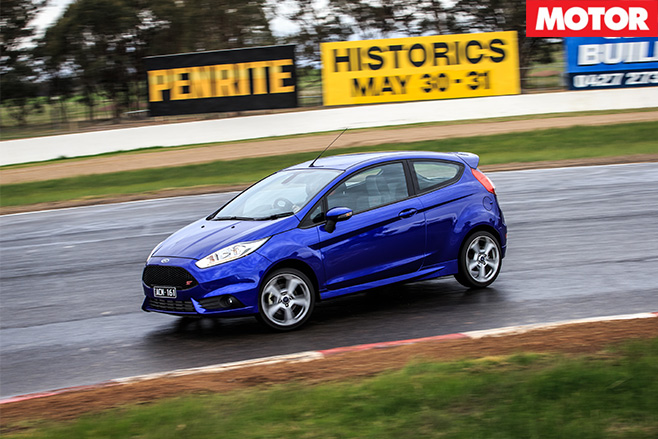
That could mean it’s a Guernsey for the ST retaining its overall crown… Except the Clio RS can tell you how easy it is to get presumptions wrong.
0-100km/h – 6.97sec (8th) 0-400m – 14.93sec @ 153.42km/h (7th) Lap time – 1:45.1 (5th)
Overall scores
Bang Index – 121.9 Price – $25,990 Bucks Index – 135.3 BFYB Index – 192.2
Judges’ Rankings
Campbell 1st – “Feisty engine and playful chassis, hard to believe how much it costs.”
Morley 1st – “I did but see it passing by, and yet blah blah blah. You get the picture.”
Newman 3rd – “Brilliant fun, though prefer it on the road I think.”
Spinks 1st – “Cornering ability and stability unmatched in its class.”
Luffy 1st – “It’s in the same league as the Polo GTI, but it’s a lot cheaper. It has a great engine, good chassis dynamics and it does everything right. On the way into a corner, though, it doesn’t like to trail brake too much, which is more a function of tyre than chassis. When trying to brake and turn it tends to understeer. But it’s a great little package and great value for money.”
We all had one of those friends who went slightly off the rails during their teenage years.
One minute they’re quiet, demure and studious, next thing you know they’ve got multiple piercings and are skipping classes to steal CDs from JB Hi-Fi. In its latest 30th Anniversary guise, Peugeot’s 208 GTi has undergone a similar transformation.
The standard 208 GTi is the sensible member of the mini hot hatch segment. It’s quick and very capable, but isn’t particularly interested in larking around, it just gets the job done with a minimum of fuss. It’s a good car, but we’ve always found it a bit…uneventful. No such worries with the 208 30th, as even looking at it is an event thanks to the crazy split paint job.
Even without the wacky (optional) colour scheme, there’s no mistaking the 30th’s sense of purpose. Wider tracks at both ends (22mm front/16mm rear) and half-inch wider wheels give it a far tougher stance than the standard car, and the front wheels have that ever-so-slightly knock-kneed look that speaks of negative camber.
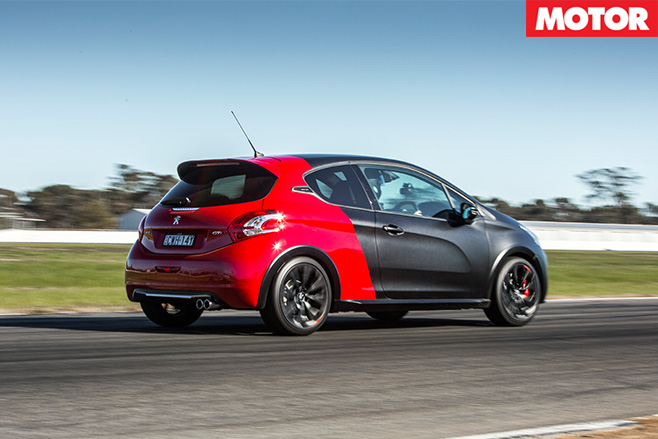
However, consider that the 30th lapped Winton 3.9 seconds faster than the standard 208 GTi managed last year and the full effect of Peugeot Sport’s extensive chassis modifications becomes clear. Virtually no area has been left untouched, with the suspension lowered and stiffened with revised geometry, larger front brakes (323mm discs with four-piston Brembo calipers) and Michelin Pilot Super Sport rubber.
Initially, it’s these sticky new tyres that dictate the 208 30th’s behaviour. Until sufficient temperature has been generated, the car’s aggressive new setup makes it a right handful, with massive oversteer easily provoked.
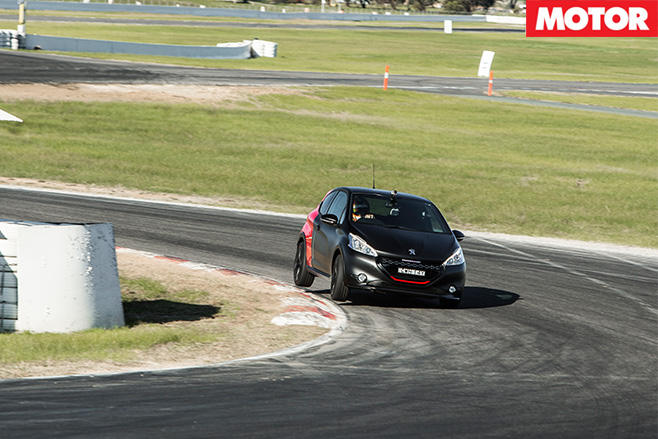
Of course, the corollary of the focused rubber is that once warm, there is masses of grip on offer. From an enthusiast point of view, almost every aspect of the car has been changed for the better. Whereas the standard 208 GTi feels a bit soft on track, the 30th’s stiffness is evident even on Winton’s smooth hotmix, the car jiggling over imperfections down the main straight.
This sharpness pays dividends in the bends, however, allowing you to attack corners with an aggression that would have the standard car howling in protest. The brakes still feel a little soft underfoot, but are plenty powerful, and on corner exits the mechanical diff hooks up and pulls you along the next straight in a rush of turbo boost.
The steering is still a little slow, even with the tiny ovoid-shaped (check the shape) tiller, and the gearshift could be more accurate, but neither shortcoming detracts from what is a stellar performance.
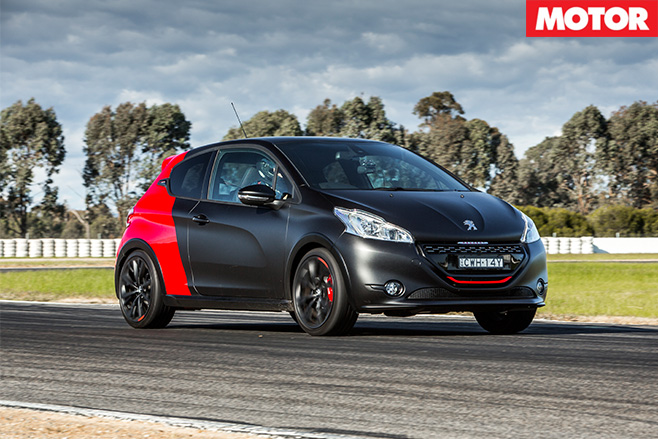
In celebration of a birthday when most people are sensibly settling down, Peugeot Sport has instead turned the 208 a bit feral, and it’s all the better for it. After all, who doesn’t look back fondly and regard their teenage years as the best of their life?
0-100km/h – 6.63sec (5th) 0-400m – 14.79sec @ 158.27km/h (5th) Lap time – 1:42.7sec (2nd)
Overall scoring
Bang Index – 146.8 Price – $35,990 Bucks Index – 97.7 BFYB Index – 185.8
Judges’ Rankings
Campbell 2nd – “Great fun. Although like a big puppy that can get too excited and bite”
Morley 2nd – “Finally, the French GTi is back in business. About time.”
Newman 1st – “Rights most of the standard car’s wrong, but demands big respect.”
Spinks 4th – “The spirit of the 205 is revived. Just don’t be spooked.”
Luffy 3rd – “It’s an interesting car on the limit. It has great front feel and grip, though it’s a little stiff in the rear and it tends to get the hop-up going up through the tight stuff which tends to unsettle it. Brakes are very good, but a major ergonomic problem is that the steering wheel feels small and you can’t see the tacho, so you have to duck under to see the revs.”
Big things were expected of VW’s new Polo GTI at this year’s Bang for your Bucks.
After all, this is the updated version of the car that turned the BFYB formula on its head so comprehensively it called the future of the event into question; its back-to-back wins in 2011-12 were by such a margin that at the time it didn’t look like anything would ever be able to beat it.
It’s a measure of the evolution of the performance car game, then, that VW’s latest pocket rocket managed ‘only’ third in class at BFYB 2015, despite, on paper, offering a stronger case than ever. As rivals downsize, the Polo GTI has gone the other way, increasing capacity from 1.4 litres to 1.8, albeit ditching one form of forced induction with only a turbocharger now present.
Power is up to 141kW and torque increases by a massive 70Nm if you specify a manual gearbox, the result of which is a stunning 6.36sec to 100km/h (over three-tenths faster than the pessimistic claim) and 14.61sec quarter, quicker than all bar the XR6 Turbo and S1 Sportback.
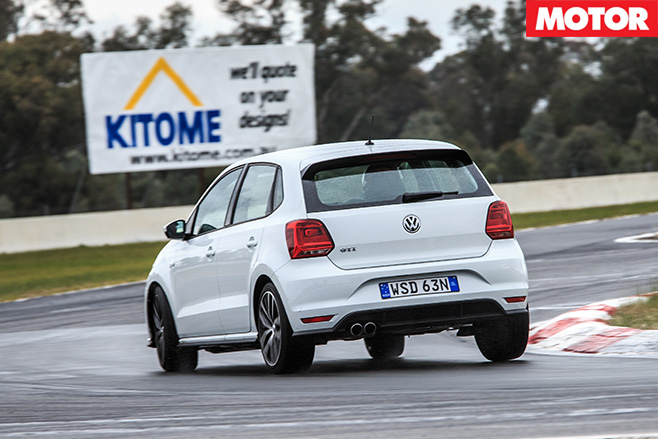
Its 1:05.50 lap time trailed both the Fiesta ST and Clio RS (albeit only just), which suggests whatever it was gaining on the straights it was losing in the corners.
Its 105.69km/h minimum speed through Winton’s long sweeper was last-in-class, though 53.00km/h through the tight turn nine was competitive. Regardless of its speed, however, in general the judges felt that it failed to match its Ford and Renault competition in terms of driver appeal.
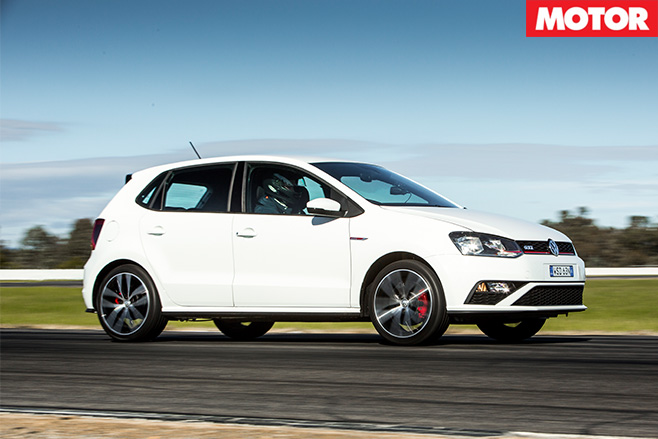
It could be fairly argued that the racetrack isn’t the Polo GTI’s natural habitat, but it must be said that while the Fiesta ST and Clio RS shine when taken to the track, the VW is entertaining up to a point, but beyond that it all gets a bit scrappy. Make no mistake, it’s still a polished performer, but all that torque easily overwhelms the front tyres, dragging the nose wide.
There’s little that can be done about it, either, as if there’s one thing that holds the Polo back, it’s the lack of chassis adjustability. It’s not completely inert, but neither is it particularly keen to involve the rear end, though even if it was, the non-switchable ESP would soon kill any fun.
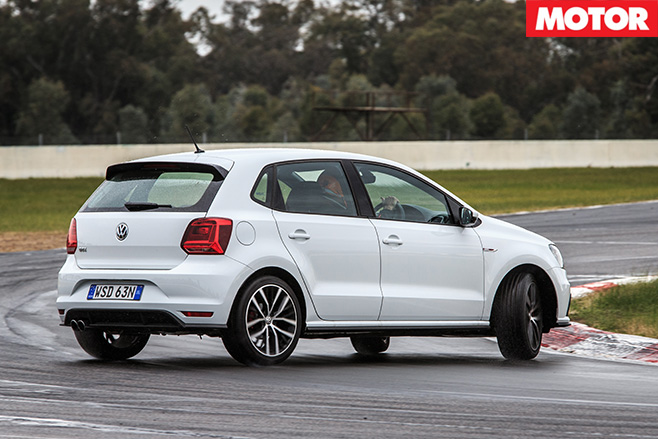
In some ways the new Polo GTI is the muscle car of the small hatch class, as silly as that sounds. Capable of dominating its rivals in a straight line, it’s not quite as capable or rewarding in the corners. Would the adaptive dampers recently announced as standard on MY16 Polo GTIs have been enough to make the difference? We’ll have to wait until next year to find out.
0-100km/h – 6.36sec (3rd) 0-400m – 14.61sec @ 157.14km/h (3rd) Lap time – 1:45.5sec (7th)
Overall Scoring
Bang Index – 108.7 Price – $27,490 Bucks Index – 127.9 BFYB Index – 176.5
Judges’ Rankings
Campbell 5th – “Class act road car that love to let its hair down on track. It’s got oomph.”
Morley 5th – “Bucks the trend of small engines in hot-hatches. And the better for it.”
Newman 6th – “The muscle car of the mini hatch brigade; mega grunt.”
Spinks 5th – “Suave yet muscular. A little hatch that punches hard.”
Luffy 2nd – “You can definitely see that it shares the same DNA as the Golf R; it’s like a mini version of it. It does everything very similar to its big brother, but it just doesn’t have the power, refinement and mechanical grip as it’s a much smaller car. It’s still a beautiful car to drive. It’s easy to drive on the limit and it gives you confidence to push on.”
