
Only days after recounting my best and worst drives of the year I realised I’d made the mutha-of-all oversights. I’d forgotten Sweden in March.
I’d forgotten the short-odds favourite for bucket list-topper of the year. Or the decade, perhaps. What happened was I scoured all the new cars I’d written about over the past 12 months and, in the moment of selection, simply forgot about my short-yet-utterly momentous experience in a 30-year-old jigger I’d yet to write about. Oops.
Psychopathic thrashings of Audi S1s on frozen lakes, a hellride with the legitimate Stig (Blomqvist) in a genuine ex-Röhrl Group B rally monster, a stay in a Bond-esque Swedish chateau – I was a pig in brown snow. Days rarely get better.
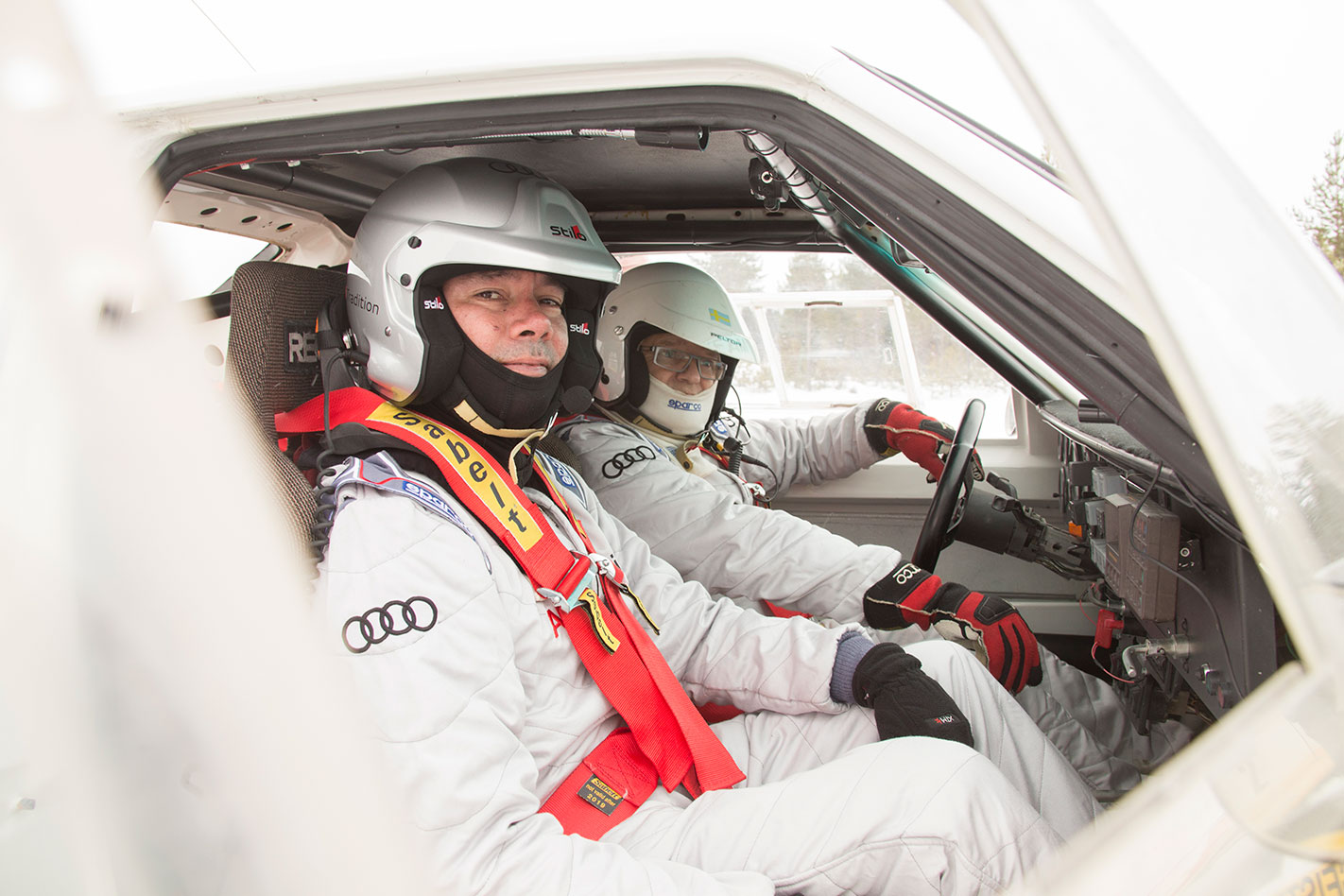
More impressive still, as build-plate Number One, this example was the king of Group B-homologation road car royalty. Short-wheelbase, 221kW, carbon-Kevlar panels, only 214 built… but, seriously, if this is news then you’ll have to Google the rest from whatever rock you’ve lived under.
For sheer pedigree and achievement, it’s one of my all-time great hero cars. In theory, because I’d never actually seen one.
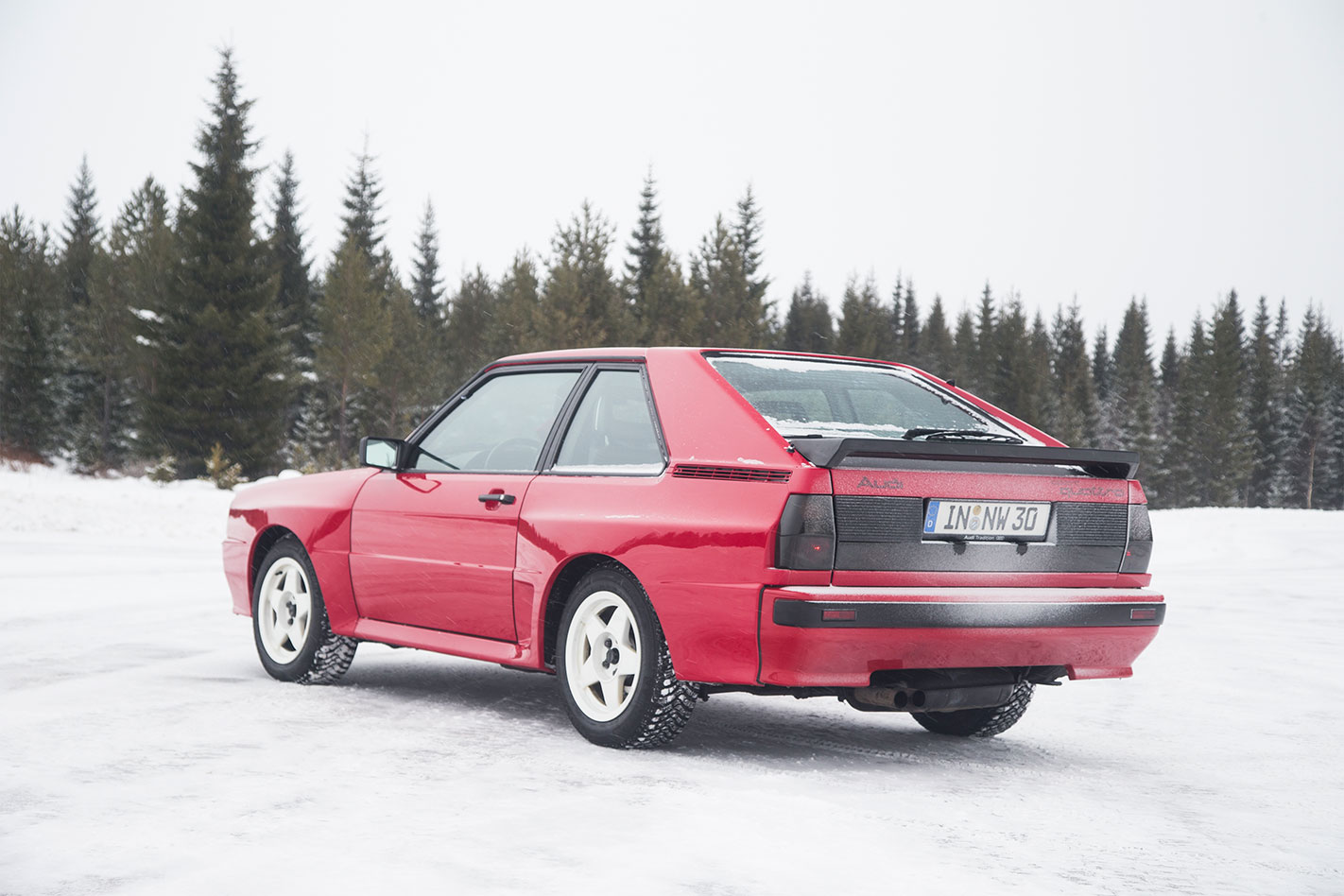
In design respect, outside of its focused and potent purpose, it’s a road car abomination. And should such a car front up in showrooms right now for $40K I’d probably pan it, despite the fact Sport Quattros now fetch half-a-million bucks.
That’s the thing: newer is almost inevitably better; pragmatism of reality rules over sentimentality. That said, I do believe in the soul and spirit of a machine. So I took this rare opportunity to gawk long and close enough to bask in its halo, yet far enough away as to not breathe on the thing.
“Would you like to drive it?” its German minder chimed. “What, NOW?” I replied, as in ‘this lifetime?’ They say don’t meet your heroes for risk of bursting that sometimes immense fanboy bubble. But sudden heart palpitations were drowning out any sensible urge of resistance as I was shoved into the musk of mid-’80s leather and plastic.
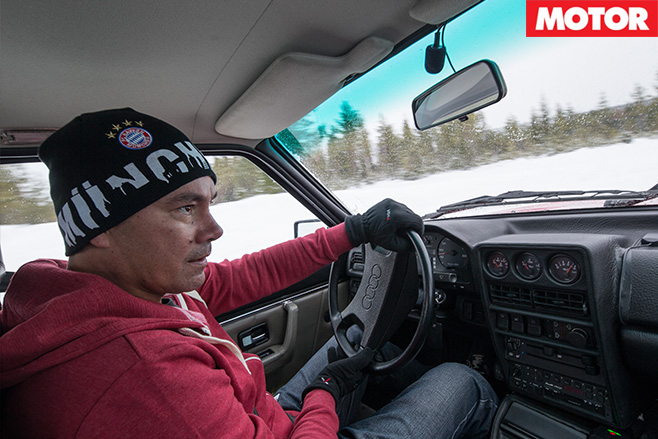
I could write reams about this car’s history. And I could double the word count explaining what it’s like to punt Number One around an undulating and slippery makeshift ice rally course Audi carved into Lapland – its steering, the five-pot’s character, the nuances of its bespoke-for-1984 Quattro system.
But I just wanted the spirit and soul of the Sport Quattro to crush my misgivings about old cars and show me some joy. And as I lifted off to swing its tail entering a huge sweeper I prayed the experience would bring elation, though I’d take ‘enjoyable’ as a satisfactory win.
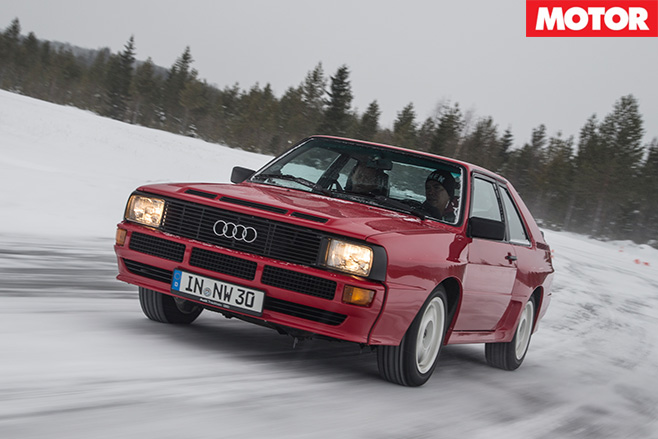
Simple. Fun. Potent. Heroic. It’s a perfect cocktail. It’s as good as I’d hoped it could be.When that lottery windfall comes to me, it’s the only old car I truly, badly, madly want. I’d probably fawn over it with the kind of love and paranoia justifiably reserved for an only child. Embarrassing but I don’t give a rat’s.
I’d probably opt to buy a faster, comfier, more luxurious modern German too to share the garage. Anything from most of Audi’s or its contemporaries’ ranges would likely do the job.
It didn’t take long – the government announces that from 2018 you will be able to privately import your own new car, and now we come up with our favourite cars you may soon be able to bring here from the UK or Japan.
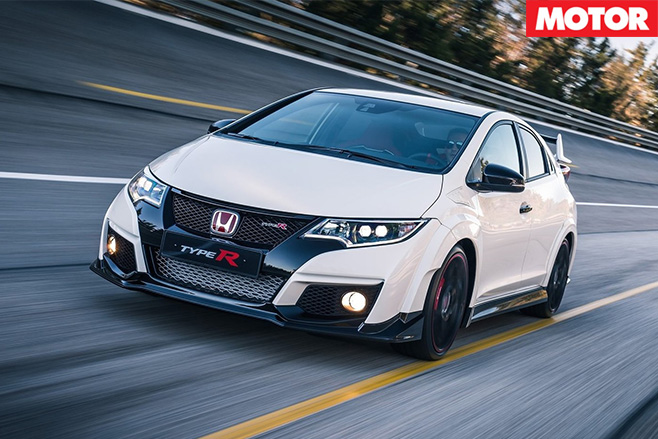
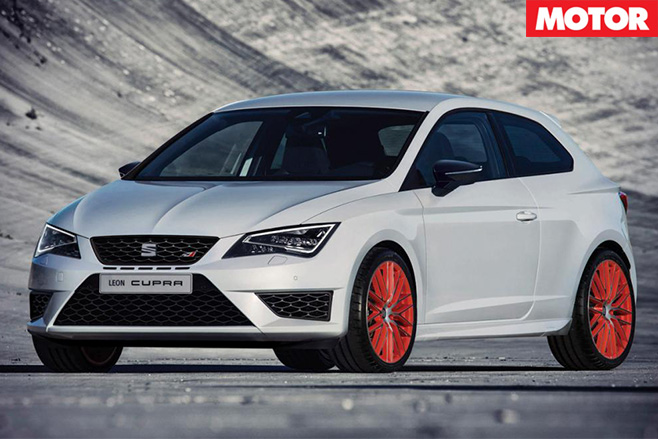
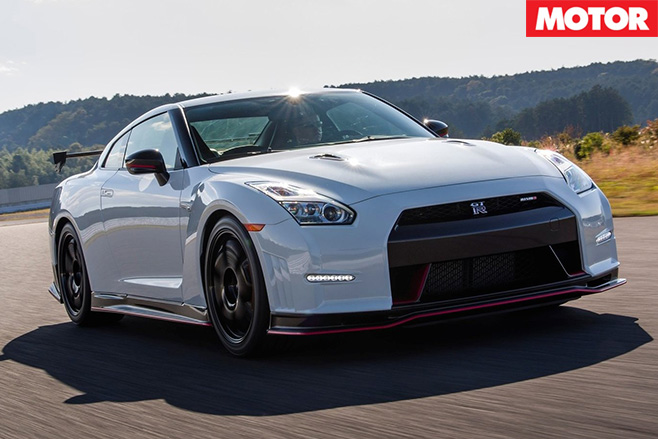
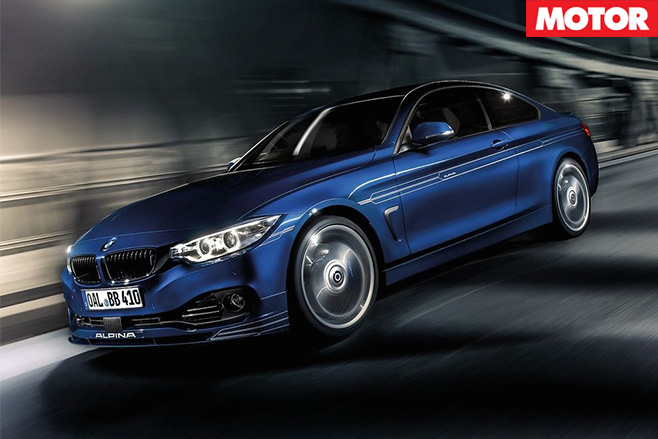
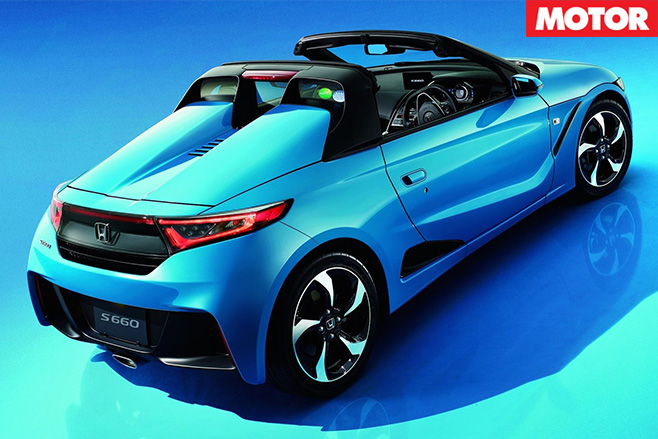
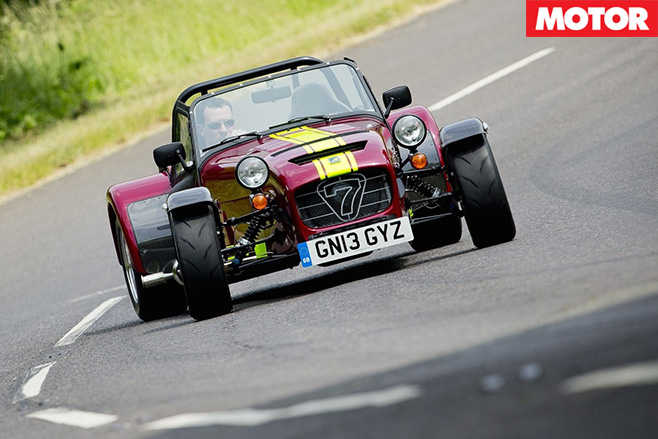
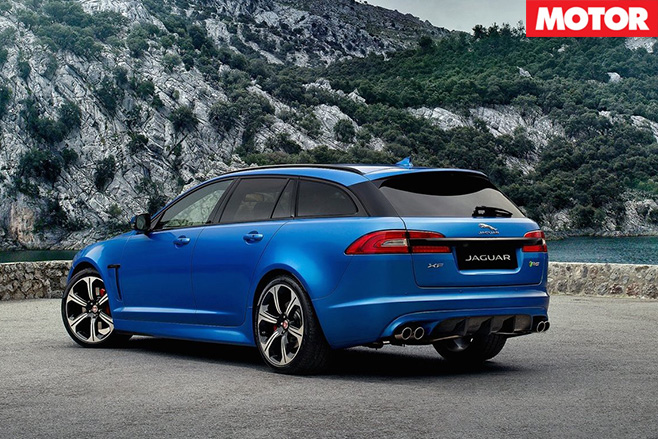
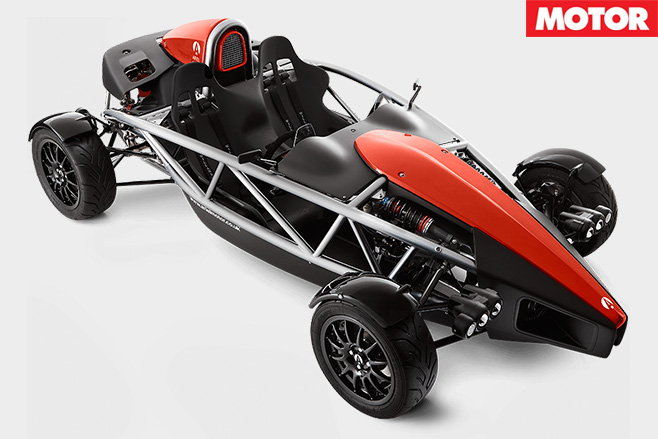
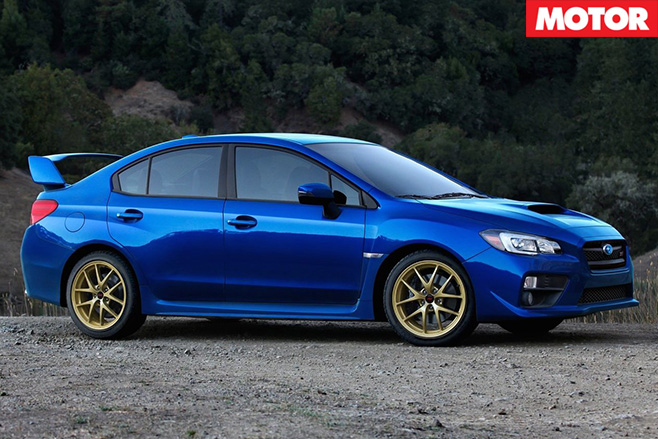
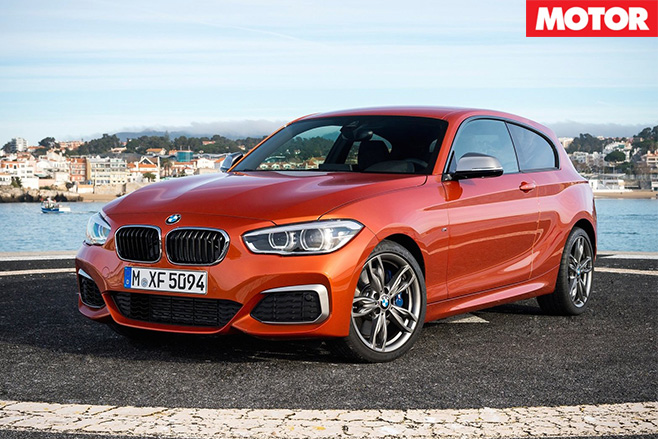
By now, you’re probably aware that MOTOR‘s Performance Car of the Year for 2016 is the Porsche 991-series 911 GT3.
We’re aware that the GT3’s $293,200 price tag puts it within reach of only a lucky few, so to try and explain what makes the car so good in a little more detail we’ve put together this video.
For more videos, check out MOTOR‘s Youtube channel.
Bugatti built its first production Veyron 16.4 in 2005, back when John Howard was Prime Minister.
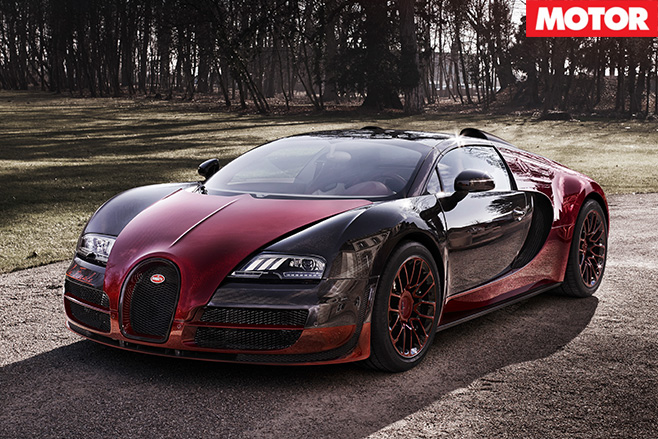
At its astonishing top speed, even limited to 407km/h when it launched, it ate 45,000 litres of air a minute, which was also quite similar to Howard when he got on a roll. And now it has finally joined the politician in retirement, with Bugatti last month selling the last of the 450 Veyrons, a 16.4 Grand Sport Vitesse roadster dubbed La Finale.
The 1888kg carbonfibre monster ended production with 300 coupes and 150 roadsters on the road, leaving Bugatti as a brand without a saleable car. That won’t last for long, though, with Bugatti President and CEO, Wolfgang Durheimer, promising it will be back with another coupe based on the same engine. But faster and lighter. With more power, more torque, more focus. And, well, just more of everything.
“More breathtaking” is an extraordinary statement to make. There have been few parallels in the history of the car industry to match the impact made by the Veyron’s “breathtaking-ness”. Maybe McLaren’s F1 made the same sort of impact, or Lamborghini’s Muira, but precious few others.
This wasn’t a race car converted for the road, which would have been an obvious and cost-effective way to get the Veyron to its speed targets. There wasn’t even any recent racing heritage to speak of, unless you want to flick your calendar back past World War II.
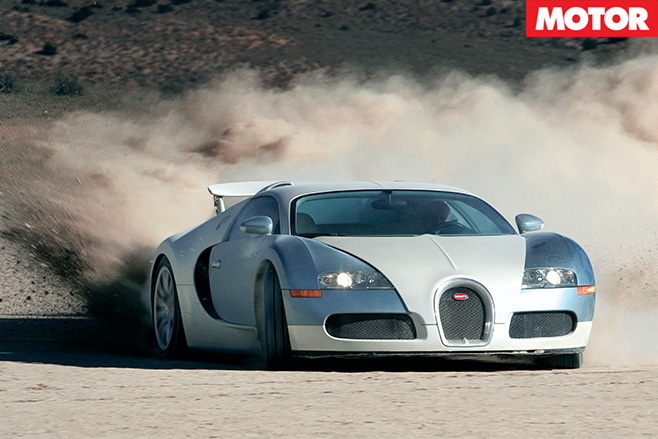
Moving on from the short-lived EB110 developed by an earlier Bugatti car owner and built just outside Modena, Italy, Piech demanded his French-built Veyron was true to the 1999 18/3 Chiron concept car in every visual way. What’s more, he insisted it become a contemporary version of the Bugatti Royale, a car that kings and industrial icons drove themselves, with unmatched speed and luxury.
“The Bugatti Veyron has shown that our engineers are capable of achieving a previously unimagined level of technical excellence, thereby opening up whole new dimensions in the automotive sector,” Durheimer insisted. “With a world record speed of 431.072 km/h, it has become an icon of longitudinal dynamics,” he said.
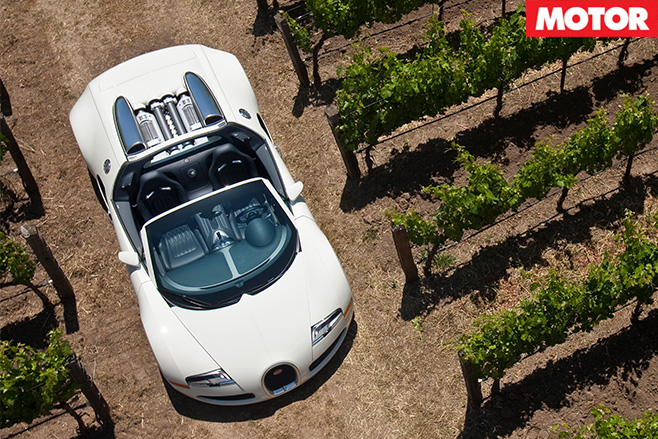
Whatever Durheimer’s people do next, it will be hard to top the impact the Veyron had on an unsuspecting supercar world that was used to V12s from both Ferrari and Lamborghini – with the occasional upward blip from the likes of the Enzo or Pagani or the not-always-credible Koenigsegg.
The latter still often claims to build a match for the Veyron in every way, even without the budget Bugatti’s engineering leader Dr Wolfgang Schreiber had for the Veyron. The budget was, effectively, no budget. It was an exercise in getting it done and counting it up later, which was a very non-Piech way to do business.
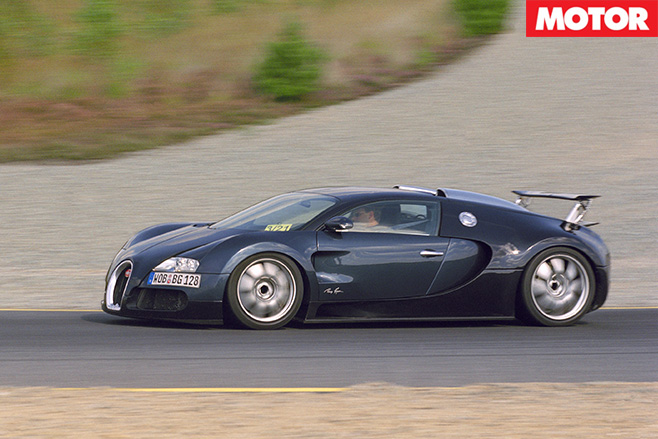
One of the biggest reasons they were losing so much money was that the research and development team, tasked with perfection, found that the law of diminishing returns bit them hard at the outer edges of what is possible.
The law bit them especially hard when they had to stick so religiously to the concept car’s visuals. It became so problematic that the production car was released two full years after the first prototypes were on the road.
There was no real budget for the Veyron because Schreiber only arrived late in the program, after new Volkswagen Group boss Bernd Pischetsrieder and new Bugatti president, Dr Thomas Bscher, went through the car with a fine-toothed comb and realised it was in trouble. Effectively, they started again.
With a drag coefficient of 0.41 (or 0.36 with the top-speed wing setting), it didn’t so much slice through the air as barge its way through – you need a lot of power to move that much air.
Cooling it was also a bit tricky. The Veyron had 10 radiators. Yep, 10. It boasted three radiators for the engine, three more heat exchangers for the air-to-liquid intercoolers and even more for the transmission oil, the differential oil, the engine oil and one last one for the air conditioner.
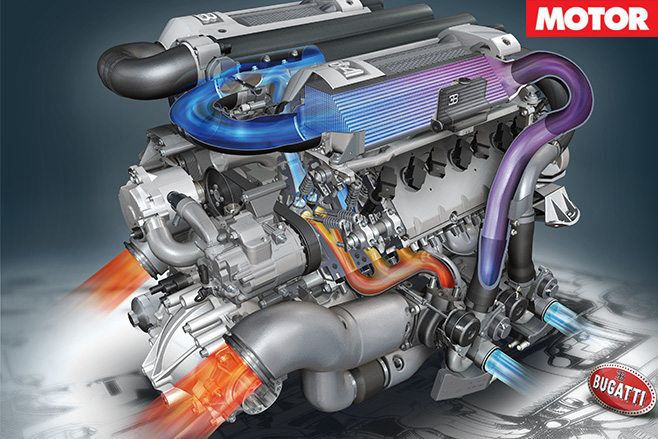
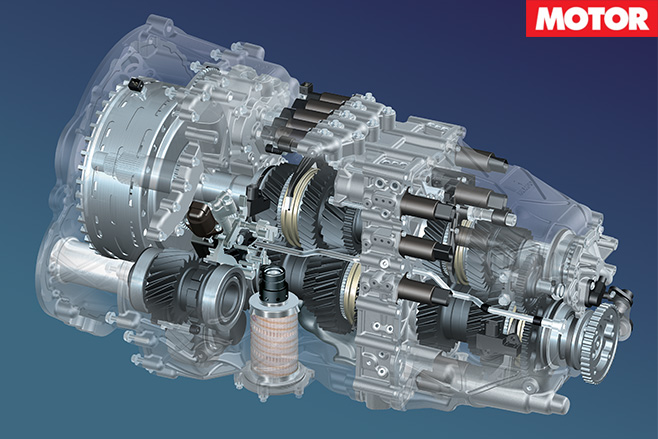
It used the best Haldex-derived centre diff system available at the time and tortured it. Then it strained the seven-speed dual-clutch transmission so much that its production didn’t go to BorgWarner, GETRAG or ZF, like most German sports cars (and most of the Volkswagen Group) did. It went to British racing specialist, Ricardo.
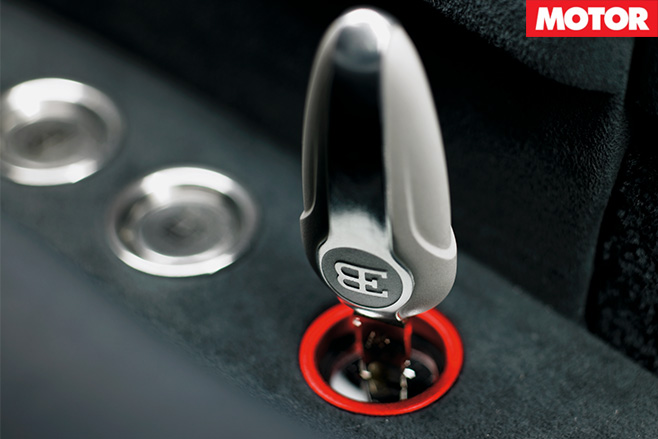
Even with its introductory power output, the car still managed to smash beyond 100km/h in 2.5 seconds, beyond 200km/h in seven seconds and past 300km/h in 15 seconds. It kept going (after you’d stopped and inserted its go-crazy key to reduce drag and lower the downforce to just 100kg at the rear) to a top speed limited at 407km/h – a number less arbitrary than most knew.
Unlimited, the 882kW Veyron Super Sport broke (and still holds) the production car speed record at 431.072km/h, though it pulled 434km/h on the fastest of the two averaged official runs – and all with a Volkswagen Group warranty.
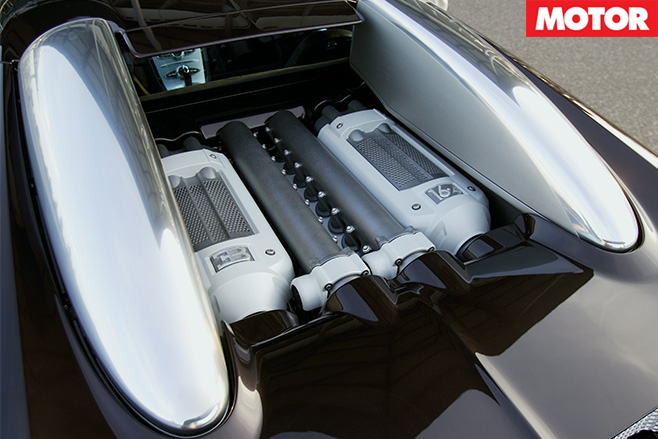
The thing about the Veyron’s power output, though, wasn’t that it had 736kW when it launched. It had a minimum of 736kW, regardless of altitude or temperature. The real number was closer to 775kW, Schreiber admitted.
Its extremes of speed and acceleration made people rethink everything they knew about fast cars. Other cars claimed very high top speeds, but the Volkswagen Group validated everything it did in pure engineering terms, and then some. The last thing they wanted was somebody dying in one due to a mechanical failure at v-max.
They had to come up with some ludicrously expensive solutions, like finding a metal for the horseshoe grille that would bend at speed and then bend back again once the stress was over. It went to extremes like connecting the ABS to the handbrake as well as the massive carbon-ceramic grabbing calipers, just in case it had to be used as a back-up. You could brake the Veyron at 0.9g, just on its handbrake.
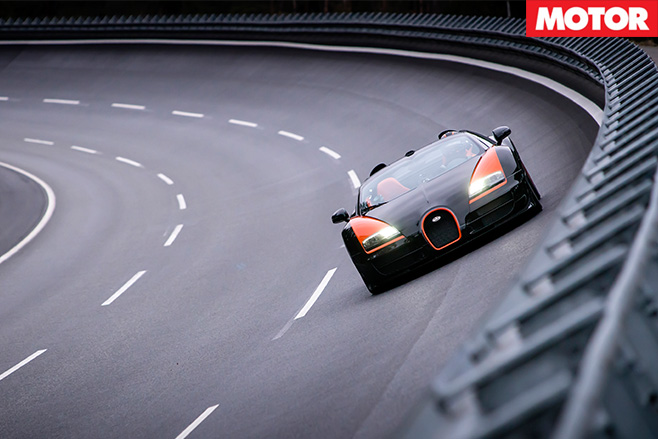
When the Veyron launched, only a handful of cars were capable of moving at more than 300km/h, and most of those were very low volume and lacked what Volkswagen would have regarded as proper engineering and development and validation testing.
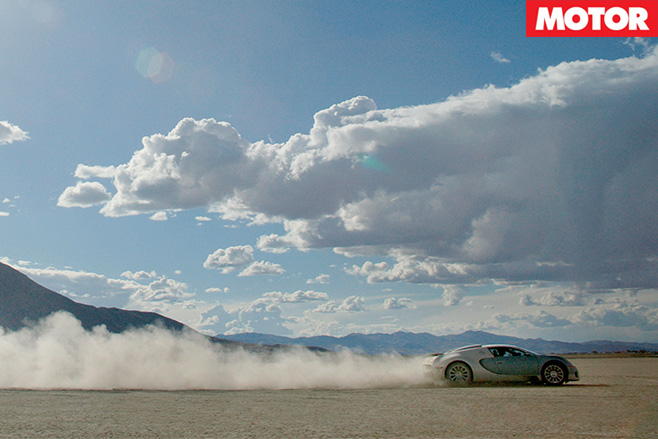
And yet, the Veyron hit 300km/h just 15 seconds after launching off the line. The acceleration – from any speed, in any gear – is what I’ll remember most. I once had a photographer in a Super Sport who insisted on shooting from the passenger footwell on a test track, then told me to stand on the throttle.
It was one of the biggest errors of his career, and he was forced, constantly, into the seat so hard that he couldn’t inhale until the Veyron had pulled fifth gear. It’s the only car I’ve ever driven where, in a straight sprint with a Hayabusa, I had to repeatedly lift off the throttle to avoid getting too close to the bike.
I also remember the car’s composure. The gearbox was the fastest shifter around at the time – in around 150 milliseconds – and it was silky smooth. The thing sounded like an offshore powerboat and it had torque everywhere, always accompanied by that enormous swoosh of turbo-rammed air that sounded like a hot-air balloon punching out more flame.
And it handled. Not light-of-touch, like a Cayman S, but up to about eight-tenths, it walked around a bit and had a lot of the 911’s manners. It got a little dull as you pushed it to its limits and the weight took over, but it was foolproof, as long as you adjusted your braking points to the new layer of speed it was forever sneaking up to.
In its final fling, the La Finale closed the Veyron story where it began, in Geneva, though its 882kW peak power had grown by 147kW since the car’s launch. It also had an astonishing 1500Nm of torque.
Veyron owners were initially required to change their custom-made run-flat Michelins every 5000km (it eventually moved out to 10,000km) whether there was tread left or not. This was because of the stresses on the belts at v-max. A set cost $22,000.
Bugatti’s concern (and this is the engineering-driven attitude) was that because it had a 407km/h v-max, they had to assume the car was going to be driven at that speed. It was a legitimate fear because at 407km/h, the rear tyres, Michelin admitted, would fail after 15 minutes with that sort of heat and centrifugal force.
That never happened, in part because the Veyron could only carry enough fuel for 12 minutes at its top speed. Delivering peak power drained the Veyron’s tank at five litres a minute.
What made the compulsory tyre change worse was that the only equipment capable of removing the tyres, and precisely matching their successors, was in France. So, Veyrons had to be shipped there to have their new boots fitted at a cost of $91,000. Plus shipping.
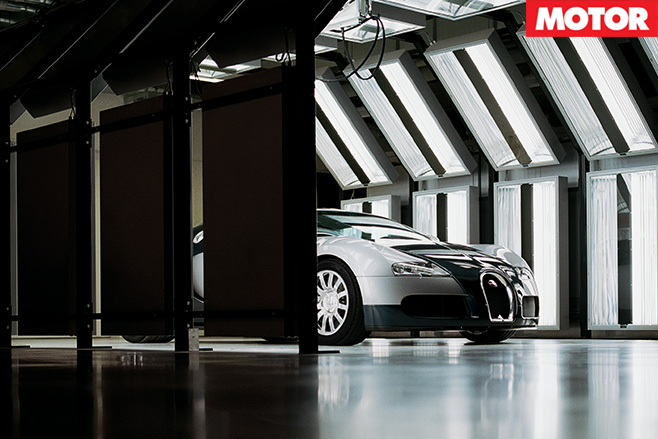
The brilliant Ricardo-built dual-clutch transmission cost around $160,000, or twice what the most-expensive Volkswagen-branded car cost at the time. “In the Veyron, Bugatti has created an automobile icon and established itself as the world’s most exclusive supercar brand,” Bugatti Automobiles President, Wolfgang Dürheimer said.
“So far, no other carmaker has managed to successfully market a product that stands for unique top-class technical performance and pure luxury in a comparable price/volume range. An unprecedented chapter in automobile history has reached its climax.” That is not an exaggeration.
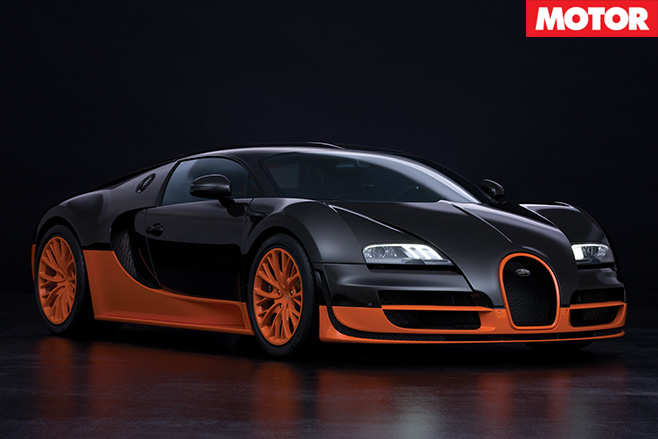
Bugatti Veyron Super Sport
Body: 2-door, 2-seat coupe Drive: all-wheel Engine: 7993cc W16, DOHC, 64v Bore/stroke: 86.0 x 86.0mm Compression: 8.3:1 Power: 882kW @ 6400rpm Torque: 1500Nm @ 3000-5000rpm Power/weight: 480kW/tonne 0-100km/h: 2.5sec (claimed) Transmission: 7-speed DSG Weight: 1838kg Suspension: A-arms, coil springs, double wishbone, anti-roll bar (f/r) L/W/H: 4462/1998/1190mm Wheelbase: 2710mm Tracks: 1715/1618mm (f/r) Steering: hydraulically-assisted rack-and-pinion Brakes: 400mm ventilated discs, 8-piston calipers (f); 380mm ventilated discs, 6-piston calipers (r) Wheels: 20 x 11.0-inch (f); 21 x 14.0-inch (r) Tyres: 265/680 ZR500A 99Y (f); 365/710 ZR540A 108Y (r); Michelin Pilot Sports Price: ¤2.3 million (approx.) AUD$3.16 million (with Aussie taxes that’s more like $5.1m…) Positives: Brain-frying speed; polished dynamics; technological prowess Negatives: Hilarious price tag; heart attack-inducing maintenance costs
5 out of 5 stars
Our Car of the Year, the MX-5, is great fun to drive. But can it match the much-praised 86 coupe – COTY in 2012 – for speed and precision?
IT’S Jinba ittai versus Hachi roku: Mazda’s ‘rider and horse as one’ philosophy, which guides development of its MX-5 roadster, against the Japanese translation of ‘86’, which carries on in spirit from Toyota’s fondly remembered, drift-friendly, AE86 Corolla GT.
They may differ in their approach to how a roof is fixed, but this is otherwise no oriental odd-couple. The MX-5 and 86 are united in the way they free up lightweight, rear-wheel-drive performance for those on a budget.
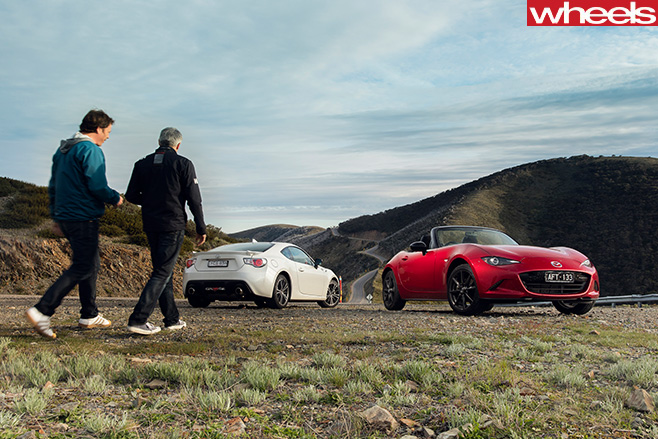
Mazda’s $31,990 starting price for the MX-5 1.5 – just $2000 more than the original in 1989 – indicates how much of a rival it deems the 86. There’s a $2500 premium for adding 500cc: the base-spec MX-5 2.0 costs $34,490.
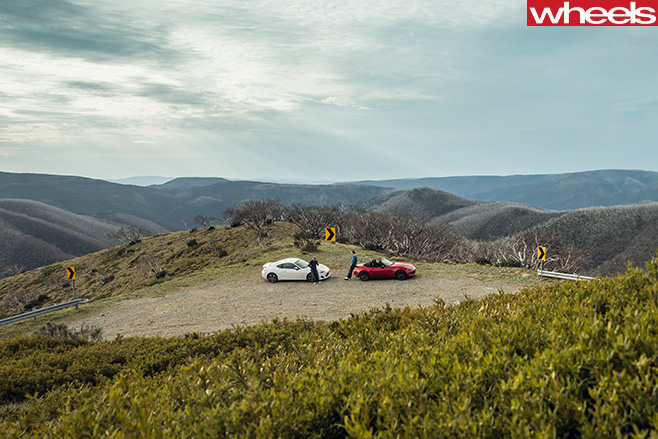
These are driver’s cars, so naturally we’re abiding by their standard six-speed manual gearboxes rather than the sacrilegious optional autos.
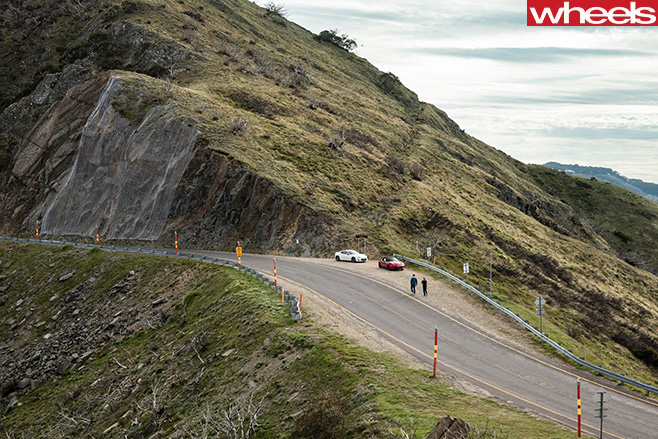
On the track
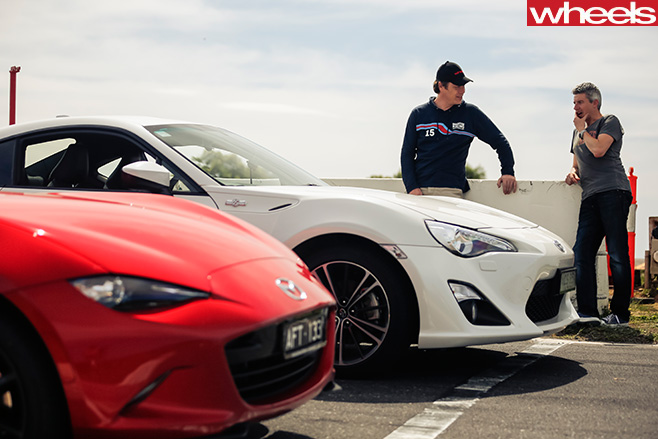
There’s still a notable power disparity between the Mazda’s 2.0-litre, whose four pistons punch downwards in a neat (north-south) line, and Toyota’s same-size unit, whose four pistons are opposed horizontally and jab sideways.
But while the MX-5 falls 29kW short of the 86’s 147kW, it counters with a kerb weight advantage of nearly 250kg – 1033kg v 1275kg.
That should make it close at our designated track – the roller-coaster on bitumen that is Haunted Hills, in Victoria.
First up is the 86, which in 2012 transported us back to the ’80s – a decade when Toyota was known more for a range of exciting sports cars than for dynamic dullness.
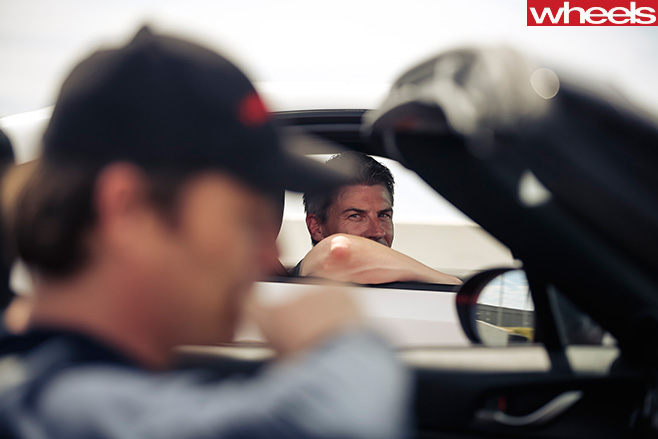
Maximum torque of 205Nm doesn’t materialise until a surely-that’s-a-misprint 6400rpm, though some meaningful pulling effort enters the fray from 3000rpm.
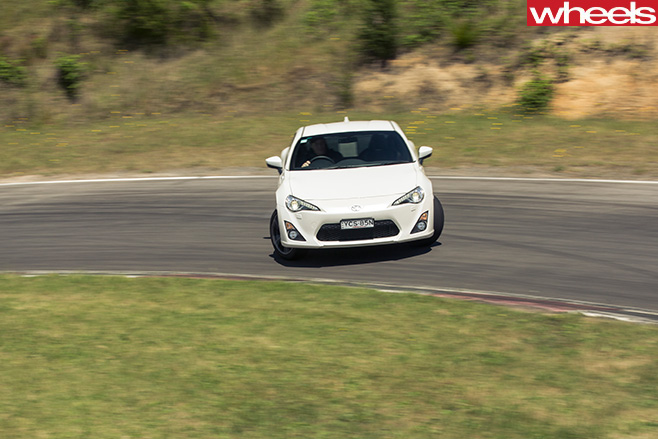
The Toyota’s acoustics are a more natural match to the track environment, where its quasi-belligerent vocals contrast with the civility of the Mazda’s.
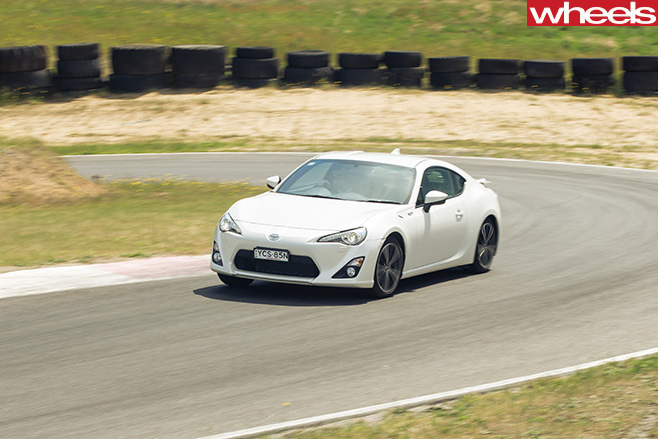
Yet the MX-5 is the early pick of the drivetrains here on the tight, descending and ascending, layout of Haunted Hills.
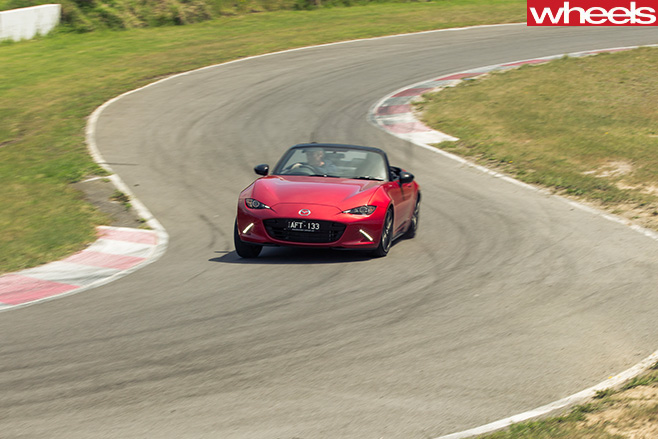
And the Mazda’s six-speed manual is a purler. Where the 86’s stick-shift operation has some notchiness that slightly spoils its otherwise positive nature, the MX-5’s action – via a gearlever almost as chubby as the original NA’s – is satisfyingly slick and ultra-accurate.
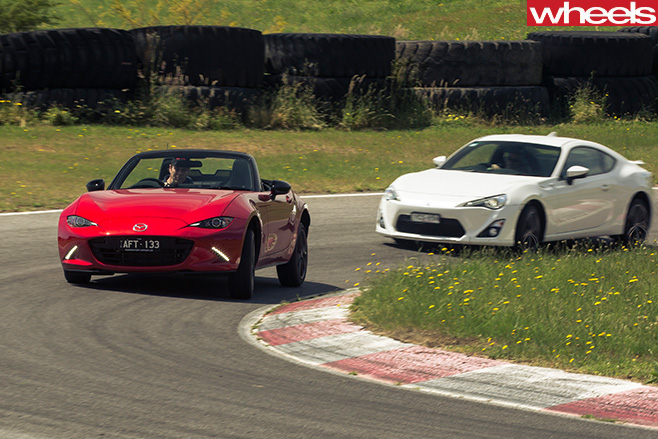
Electronics interfere with the 86’s progress, even if the VSC Sport button is pressed to employ the electronic nannies part-time.
Switched off, the 86 chassis is allowed to demonstrate its fine talents.
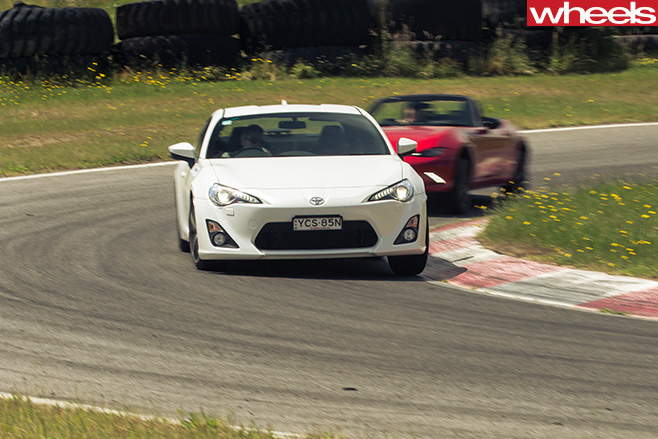
The 86 sits remarkably flat through bends and under hard braking, with a seemingly imperturbable balance stemming from that ultra-low centre of gravity.
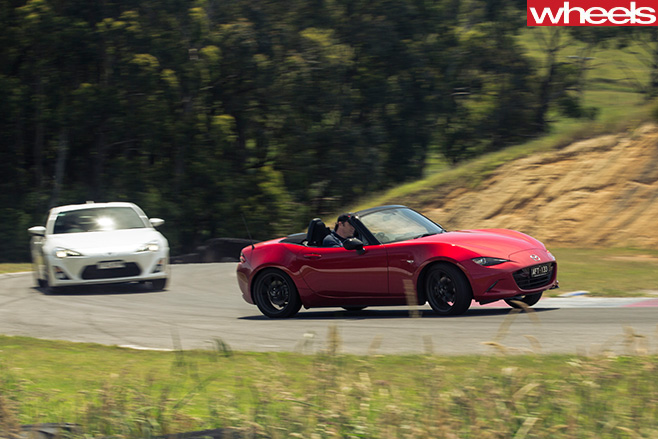
The MX-5 takes a little more acclimatisation to get up to speed on track, because body control isn’t quite as taut, the brake pedal isn’t quite as meaty, and the steering isn’t quite as talkative or precise.
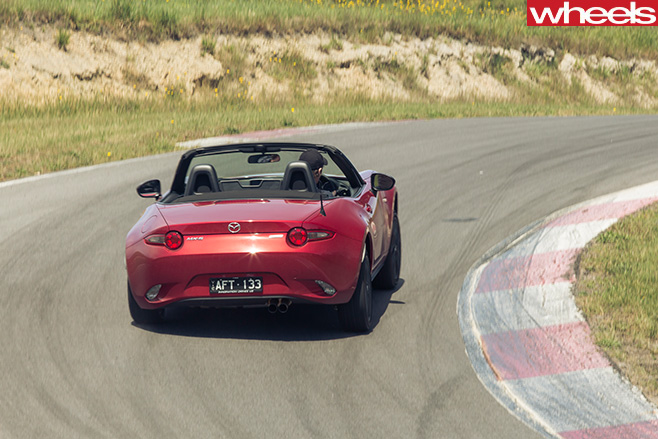
And while body roll is exaggerated, it would be erroneous to equate this with poor balance.
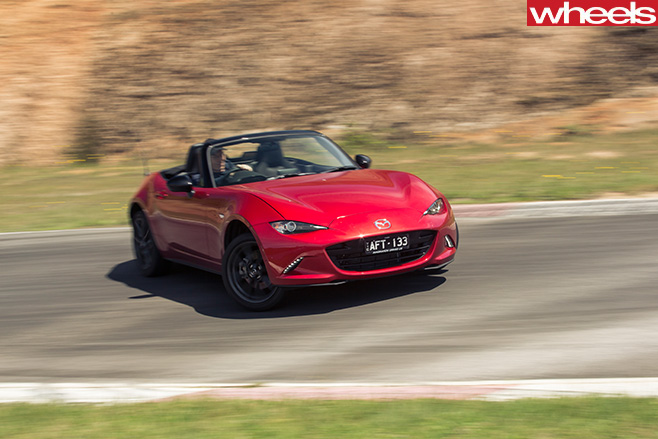
This is a rag-top that doesn’t get ragged on the limit – and one that will allow enjoyment with a safety net, courtesy of a vastly better calibrated stability control system.
It’s a close call between this playful duo of entry-level rear-drivers on the track – but the livelier MX-5 shades the 86 for involvement. And lap time – by four-tenths.
On the road
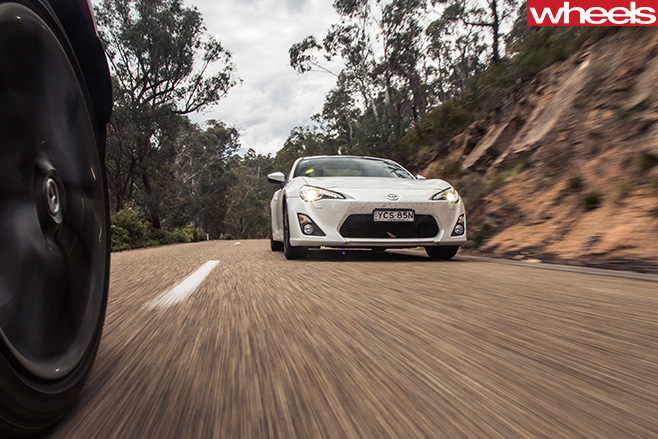
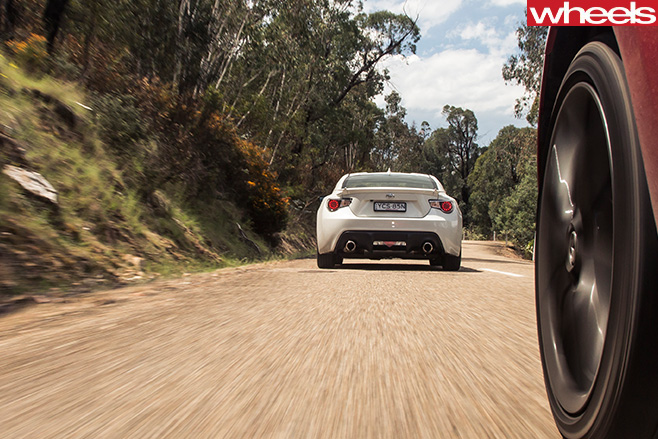
Unblemished racetrack surfaces have flattered many a car, but both of these Japanese sports cars transition terrifically to the bumpy bitumen of Aussie country roads.
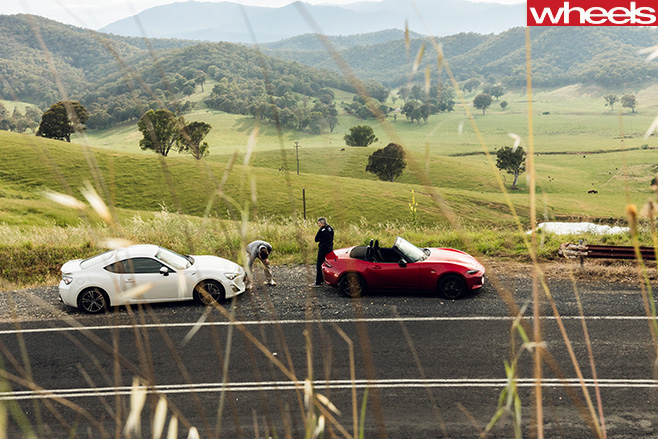
The damping of the MX-5 feels a tad busier, but not enough to prevent the Mazda from being as impressively supple and comfortable as the Toyota when traversing country.
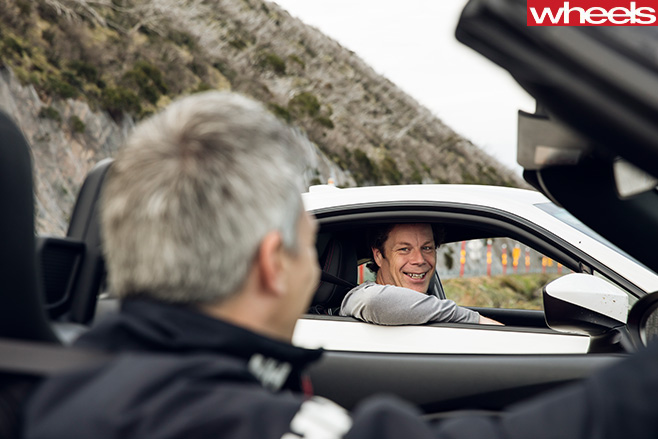
Add in the Mazda’s better tractability and torquier mid-range, and both our testers found it harder – and thirstier – work chasing or escaping from the MX-5.
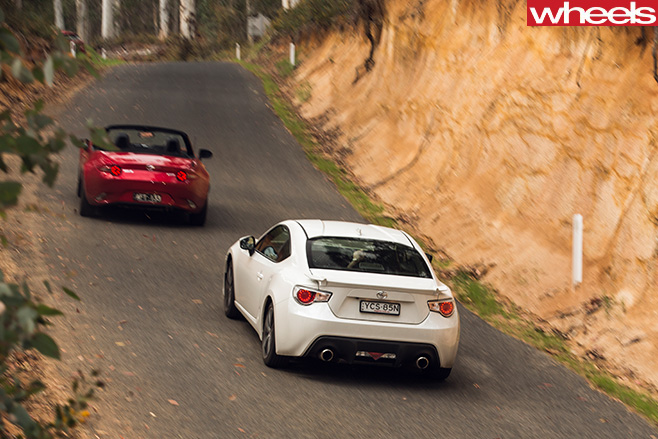
At servo time, after being driven as their engineers intended, the MX-5 used 7.8L/100km of premium unleaded versus the 86’s 9.5L/100km.
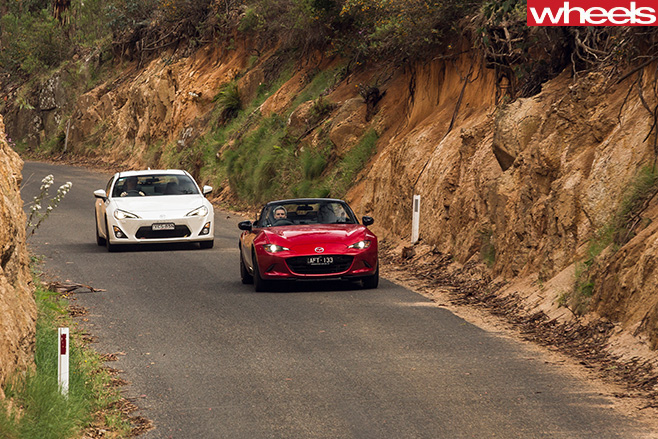
The Toyota already sits 30mm closer to the road than the 2.0L MX-5 (which rides 10mm higher than the 1.5L). And its front seats go lower – despite the Mazda having lowered its pews by 20mm over the previous model.
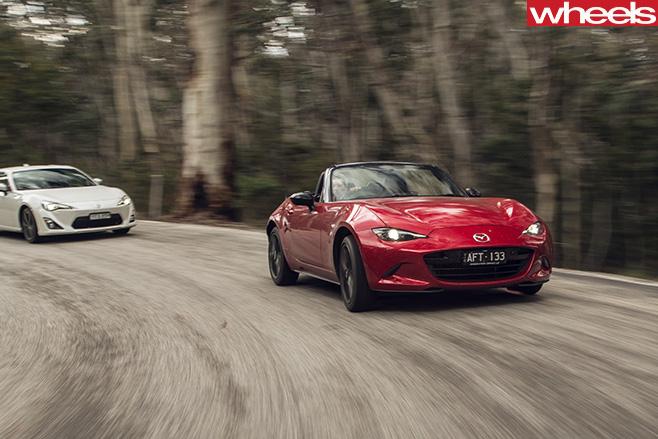
Still, the Mazda can offer a view the 86 can’t – when you manually unclip and stow the MX-5’s fabric folding roof.
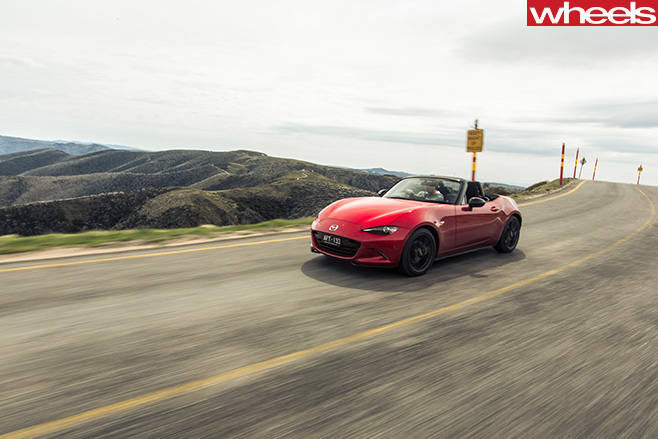
The dashboard scenery is also more attractive here, subjectively speaking. Where the Toyota’s cabin requires the euphemistic description of looking “business-like”, the Mazda has a higher-quality look and feel – particularly with the GT’s 7.0-inch multimedia display, which looks like it belongs at least in 2015, where the 86’s smaller effort could be from the year of its number.
There are ergonomic flaws in the Mazda beyond the limited headroom and steering wheel adjustment, though. The rotary controller for the MZD Connect system is awkwardly placed, as are the moveable cupholders – whether they’re positioned in their default place behind and between the two seats, or in the slots either side of the centre console.
However, neither the roadster from Hiroshima nor the coupe from Ota (courtesy of Subaru) emerges from this battle looking black and blue.
Off the fence
We’re simply fortunate to have the Mazda MX-5 and Toyota 86 – the new poster boys for affordable Japanese sports cars that partly compensate for absent Japanese nameplates such as the Integra and Silvia.
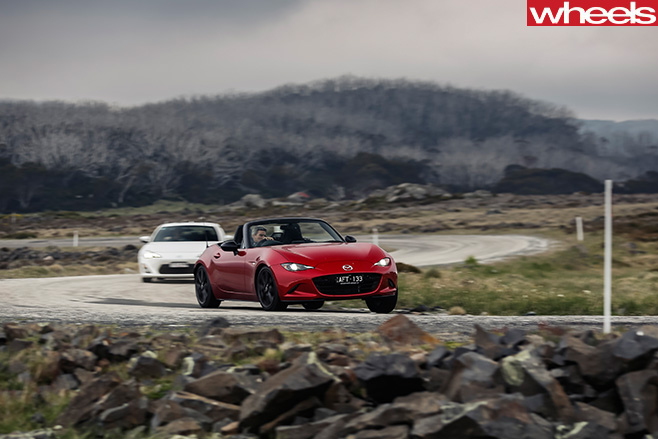
Think logically rather than instinctively, and the 86, of course, is more practical with its 2+2 seating and foldable back seat. Yet the MX-5’s ability to go either covered up or topless brings the Mazda its own brand of versatility.
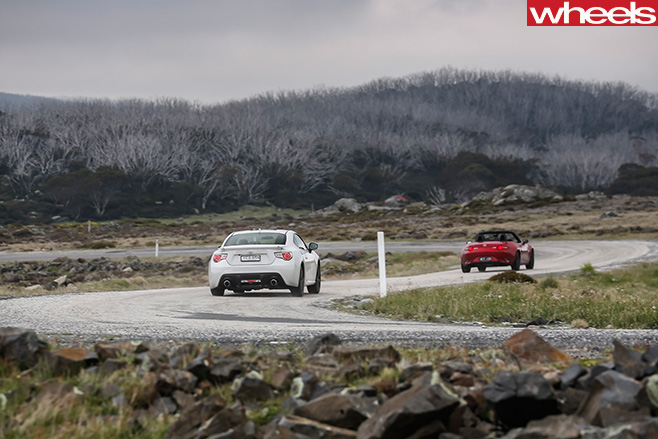
Add in the MX-5’s more flexible engine, which makes everyday driving as pleasurable as fast driving is enjoyable, and it’s “kampai” to a lightweight car that is almost quite literally a tonne of fun.
What happened to the 86 convertible?
Toyota teased us with a drop-top version of the 86 at the 2013 Geneva motor show, and at the Tokyo show a few months later – only for the idea to fold in on itself. Despite Toyota’s US youth brand Scion, which markets the 86 as the FS-R, pushing for the convertible variant, the car’s co-developer Subaru reportedly had manufacturing and safety concerns. A Scion executive also indicated Japan wasn’t expecting the model to be profitable if it went into production but wasn’t prepared to cop the estimated loss.
Which MX-5 will Australians buy?
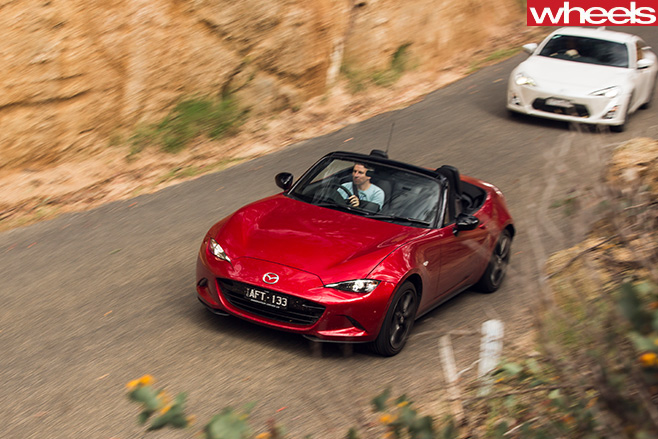
SPECS
TOYOTA 86 GTS Engine: 1998cc flat 4, dohc, 16v Max power: 147kW @ 7000rpm Max torque: 205Nm @ 6400-6600rpm Transmission: 6-speed manual Weight: 1275kg 0-100km/h: 7.6sec (claimed) Fuel economy: 9.5L/100km (test average) Price: $35,990 On sale: Now
MAZDA MX-5 2.0 ROADSTER Engine: 1998cc 4cyl, dohc, 16v Max power: 118kW @ 6000rpm Max torque: 200Nm @ 4600rpm Transmission: 6-speed manual Weight: 1033kg 0-100km/h: 7.3sec (claimed) Fuel economy: 7.8L/100km (test average) Price: $34,490 On sale: Now
Dating isn’t like it used to be. Back in the days of flared jeans and poodle skirts, when ‘swingers’ meant dancing and groovy was still a word, you’d pick someone up, drive to a location and pull the old yawn and hug move. The only really stress you’d have is what car you’d be spending your first date in. So in the spirit of taking it back to basics for this Valentines’ Day, here are ten cars perfect for a first date. Which one is your favourite? Vote below.
Looking for tips for where to go on Valentine’s Day? We have you covered with Australia’s top romantic drives.
Pommie Ben Oliver reckoned our 297km/h on unrestricted Northern Territory roads in an FPV last year was a bit soft, and figured a Bentley Speed could give it a handy touch-up.
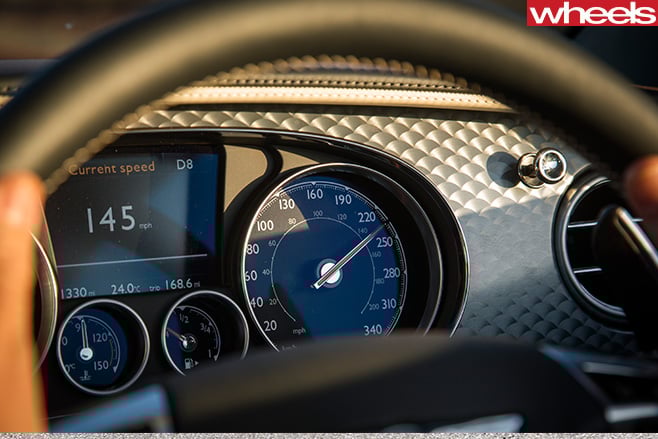
AS THE Bentley heads beyond 300km/h its handmade, leather-swathed cabin fades out and my perception zeroes in on its fundamentals until it feels race-car basic. I remain very aware of the steering wheel. The two-lane black-top ahead might be laser-straight and flat, but the surface ain’t level.
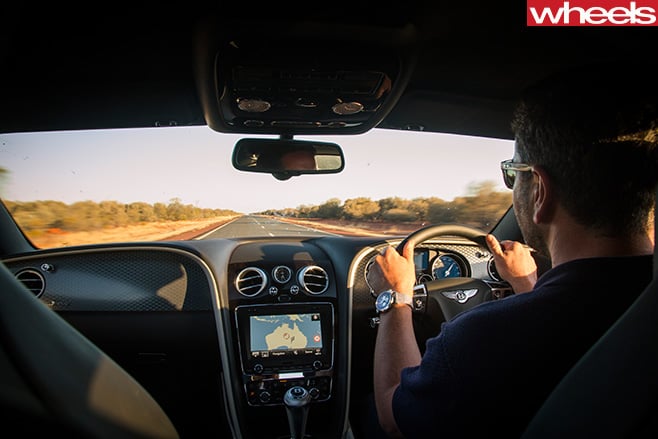
Above 250km/h each dip and pothole causes the wheel to kick back and the car to drift a foot or two to either side. Nerves make me want to strangle the rim and it’s a conscious effort to keep my grip loose. The constant, precise corrections required are small, but a lot bigger than I’d like to be making at this speed.
Up to 280km/h, I have to force myself not to follow my progress on the dials. Above that speed, I have no desire to. My gaze is fixed outwards. However, although I ought to be able to see the five kilometres to the horizon, there’s a solid heat-haze reflecting the sky onto all but the first 200 metres of road, so it looks like I’m constantly approaching a crest.
And I keep thinking about the brake pedal, because I would very much like to use it. At this speed you need to act quickly but never suddenly, and I’m already planning how I’ll roll off the gas and gently squeeze the brake when one of us – me or the car – runs out of heart.
There are now plenty of cars that will do 300km/h or more, but very few places where you actually can. The opportunity is so rare and the experience so fleeting that you can never get used to it; you always feel like you’re transgressing the laws of nature. But I’m not breaking the law.
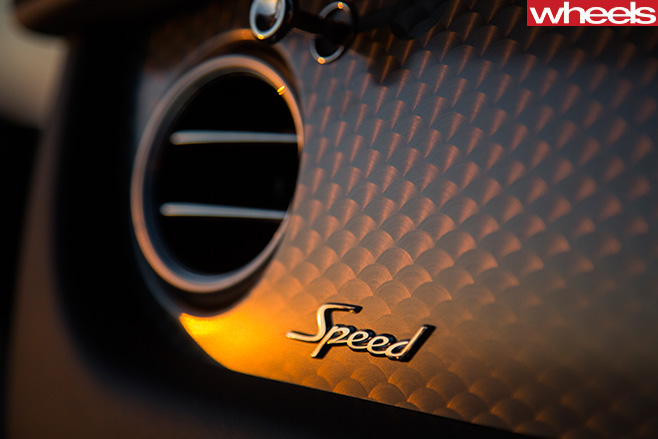
The Territory has extended both middle fingers to the global trend towards lower speed limits, greater regulation, less responsibility for the driver and eventually autonomous cars. Germany still has its autobahns, but the percentage of the network that is derestricted is shrinking, and opinion polls and party policies increasingly back a blanket limit. The Northern Territory is the only place in the world that has turned against the tide.
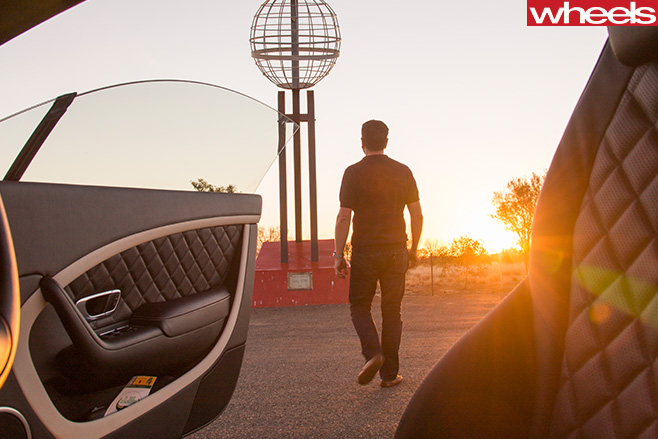
I wanted to ask the locals and the police what they thought about the ‘open’ limit, and what speed they choose to drive at. I wanted to find why this is happening here, and nowhere else. And I wanted to mark this moment, this last hurrah for speed and personal responsibility, with a big number.
As a Brit I think in miles, and 200mph (322km/h) is our big benchmark. Despite Europe’s autobahns and test tracks, it remains a very difficult target. Even if you have the car, the autobahns are usually too congested to do it safely in daylight hours. There are only a handful of test tracks at which you might sustain that speed, and they’re not open to the public.
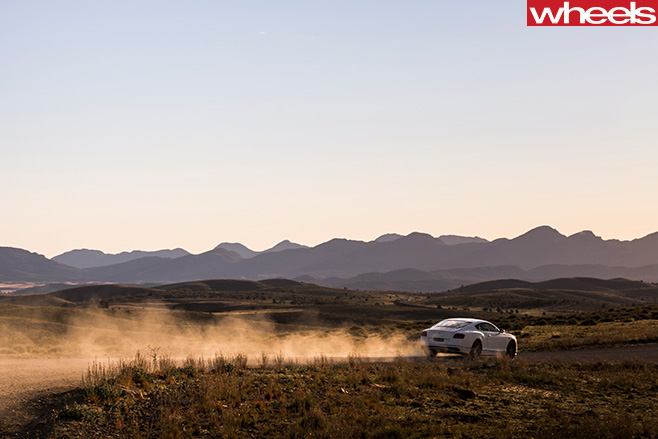
Even before I’d landed, I found one reason why this is happening in the Northern Territory and nowhere else. We Europeans don’t get that Australia is a coastal country. You can fly for hours across the Red Centre and from the cloudless sky you won’t see a single human mark on the red earth as it unrolls endlessly beneath you. The NT has a lower population density than anywhere bar Greenland and Antarctica. Even at 200mph you’ll struggle to find anyone to hit.
Having collected the Bentley Continental GT Speed in Alice and scarfed the finest burger I’ll ever eat in Monty’s, I head north up the Stuart to the start of the open-limit zone. A map is not required.
But there’s good reason for doing it in this car, name aside. The Speed is the fastest road car Bentley has ever made and it’s a better car for the job than a hard-riding, fragile Italian. Its all-wheel drive and air springs offer supercar performance with all-condition usability; this is the secret of an 11-year success that has been transformational for the brand.
The Continental has always been engineered to do these speeds, even if it seldom will, and the weight penalty this brings caused many of our criticisms of the car. The lighter, more agile V8 is our preference now, but if you want to do 200mph you need the full-fat W12. It’s good to finally drive this car as it was engineered to be driven.
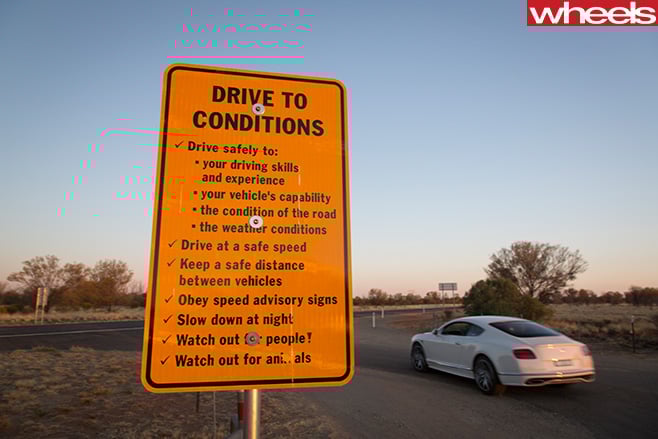
So what speed did the conditions suggest? This isn’t a free-for-all; you can still be jailed for driving “carelessly, recklessly or at a speed or in a manner that is dangerous to the public”, so it wasn’t 300km/h all the way. But you can let your car run out to a speed where its capabilities and the road and the weather and your skill find a comfortable balance.
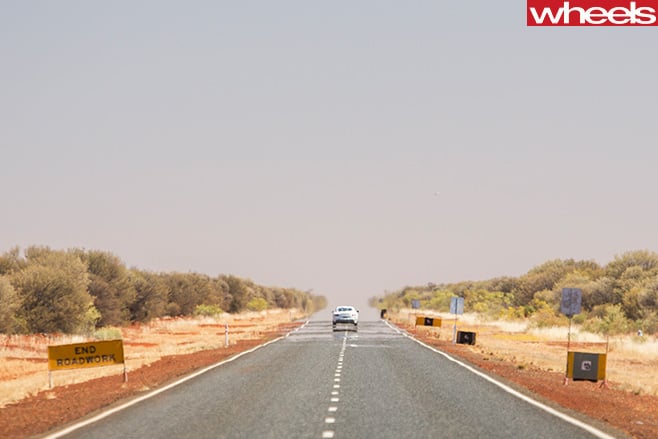
The occasional bend is well signposted and in a few places there’s a speed limit through a junction or a tiny settlement. But mostly the Stuart just runs arrow-straight across the flat red dirt, flanked by patchy bleached grass and low, sage-coloured bushes. There’s little to measure your progress against, other than the wedge-tailed eagles wheeling overhead.
The ‘traffic’ is mostly road-trains, farm utes and foreign backpackers in crappy vans, and you can go for minutes on end without seeing another vehicle.
You can see the benefit for Territorians who have to make this 1500km trip regularly, and for who even a 160km/h cruise might cut two tired hours from the end of a 12-hour trip. I want to ask them how they use their freedom, but first I have to find one. Beyond Alice Springs, it’s lonely country out here.
We stop at Ti Tree, a roadhouse about 200km north of Alice. Inexplicably, its claim to be Australia’s most central pub isn’t attracting many customers. The few people who have stopped are mostly those backpackers. The staff running the shop and bar are young and all from the UK. Have they seen many fast cars filling up here, taking advantage of the open speed limits? “Not really,” one tells me. “I think we saw a Lamborghini once.”
Most interestingly, the average speed, given a free choice, is between 133 and 139km/h – barely more than the old limit. One officer notes that few people up here have cars that can do much more than 130km/h, and for almost everyone the fear of burning more gas outweighs the temptation to go fast. He also confirms that almost nobody comes to the Stuart Highway to engage in hooning. Unless you live here, it’s just too far away.
But what is it about Territorians that made them elect a party that promised open limits when the rest of Australia is so obsessed with speed? “I think there’s a sense of liking to be a little bit different in the Territory,” NT transport minister Peter Chandler tells me. “I think the average Territorian doesn’t much like the South, and doesn’t like much being told what to do. We are a little bit different. I see this as just giving back a right that we once had.”
One last question to answer. What speed will the Speed do? Bentley has wisely hired race legend John Bowe to drive the car in their film (above), partly on the strength of his experience piloting the FPV GT-F to 297km/h here for Wheels last year. Now he is (bravely) in the passenger seat next to me, watching the big GPS speed display stuck to the screen, working the stopwatch and spotting the active wildlife.
Bowe drove the car down the same stretch for the film yesterday and says it’s fine, but rough at the far end. The cops know what we’re doing and are cool with it, so long as we hold the traffic at the far end of our 13km stretch so there’s nothing coming in the opposite direction. The traffic is so light that we rarely inconvenience more than three cars. And at flat-chat it doesn’t take the Bentley long to get to the other end.
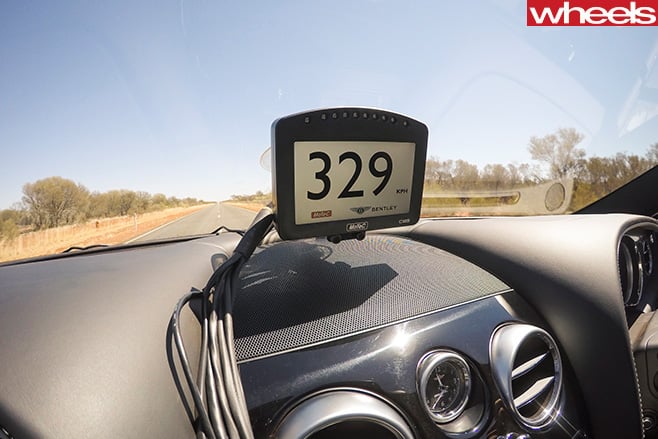
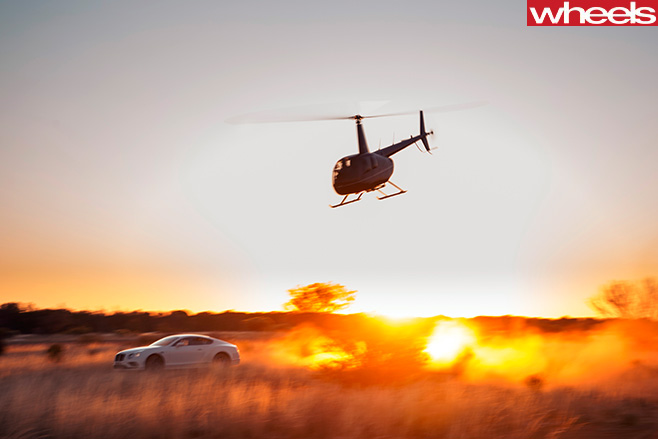
Once the chopper has confirmed all is clear, I mash the throttle. After just five kays and 1min 16sec we hit 200mph. Another 8km can only add 4mph to the Motec display. In gusting wind, and with the Bentley’s steering kicking back furiously and its fine ride quality disintegrated, this feels quite fast enough. 204mph (329km/h) on a two-lane public road. Astonishing.
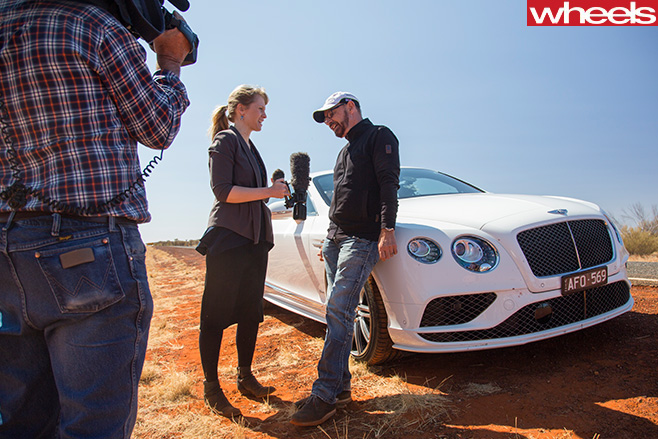
John Bowe was the hired gun for Wheels when we maxed-out an FPV GT-F last year – and for the Bentley speed run up the Stuart Highway – so he’s the only person who can acurately compare the old record run and the new one.
“The Falcon took a lot longer to wind up. Over about 260, it generated front-end lift and became light; not dangerous, but light. And the faster it went the lighter it got. So you had to be very gentle with it, whereas the Bentley didn’t generate any front-end lift at all.
“Without knowing much about the aerodynamic program that was developed for this car, it’s obviously been pretty good. It was very solid, despite the fact that we had much more wind than we had with the Falcon.
“It’s a very impressive car, but it’s not like you drive along one-handed doing 329km/h. If you have a crash, it’s going to be like a plane crash.
“I don’t advocate for a minute that people should come up here and try to do 300 kays an hour. But to drive along this stretch of road in this car and do 140 or 150, it’s just as safe as a church.”
Opposition remains
“They’ll have blood on their hands,” Harold Scruby, chief executive of the dull-sounding Pedestrian Council of Australia, said of NT’s open limits. “This is government by hillbilly.”
Ian Faulks, the academic who was the Territory’s road safety expert under the previous administration, called it “a political exercise” by the Country Liberals, rather than “an evidence-based decision”. He points out (correctly) that you can’t compare “an undivided rural two-lane road with no passing lanes, no median barriers, unsealed shoulders, and subject to desert conditions” to ‘first-world’ roads like the autobahns.
The Country Liberals said they had four studies that supported lifting the limit, but declared them confidential.
Even the local motoring association and the Northern Territory Police Association have officially opposed the policy.
As I arrived, the Country Liberals announced they would extend the trial section to 336km, and eventually to most of their highways. But transport minister Peter Chandler admitted that their freedom might not last if the federal government steps in.
After teasing us with only three examples last month, Gooding & Company has finally revealed Jerry Seinfeld’s full suite of Porsches it will sell at its upcoming Amelia Island Auction.
When the event kicks off this March in Florida, 18 cars from Seinfeld’s collection will be up for bidding. Two Volkswagens will be included, a Beetle and a Microbus, while the other 16 represent some of history’s most sought-after Porsches.
Predicted to snare the auction’s largest sale is Seinfeld’s ’55 blue 550 Spyder. Gooding & Company estimates it’ll fetch somewhere between US$5m and US$6m, notably more than a US$3.7m silver example sold for in 2012.
There’s also his immaculate 718 RSK up for grabs, a sale which coincides with Porsche’s release of the new 718 Boxster and Cayman, while some significant race cars have bobbed up too. His ’73 Sunoco 917/30 Can-Am Spyder will be joined by a 1990 white 962C.
The lot will also feature a prototype Carrera GT, and a ’74 911 Carrera RSR imported by Roger Penske for the International Race of Champions.
“I never bought a car as an investment,” Seinfeld says in a press release. “I just love cars. But it’s time to send some of them back into the world, for someone else to enjoy, as I have.
“If I had unlimited time, space and attention span I would never sell one of them. My enthusiasm for this pursuit remains quite insane and I am very fortunate to have many other cars I get to look after.”
He isn’t joking about many others. It’s said these 18 cars make up only a tenth of his collection, which is thought to be the most impressive this side of Stuttgart’s museum.
We can only imagine the quality of the goodies he considers worth keeping.
Scroll down for Gooding & Company’s full list for sale and see what we mean:
Pictures via Gooding & Company

If you’re anything like us here in the MOTOR office, this video will blow your mind.
As part of a recent feature with CNET, a video was revealed of an electromagnetic suspension system developed by US company BOSE, which is best known for headphone and high-end audio equipment.
Supposedly 24 years in the making, the system, fitted to a Lexus LS400, replaced that car’s standard suspension with a MacPherson strut arrangement filled with magnets, motors and computer componentry.
Each wheel operates completely independently and gifts the car in question with astounding levels of body control. The system also has a unique party trick, but we won’t spoil that here.
Unfortunately, while many manufacturers took note of BOSE’s system, it ultimately proved too heavy and too costly to make it into volume production, however if Rolls-Royce were looking for a system for its new Phantom, we suggest this would be the place to start.
While the system itself hasn’t been adopted, a less complex version can be found in everything from the HSV GTS to the Audi TT to the Ferrari California T in the form of magnetoheorological dampers, which operate under largely the same principles.
Car makers have called the federal government’s lift on new-car private import restrictions short sighted and fraught with risk for the consumer.
Industry body the Federal Chamber of Automotive Industries (FCAI) first criticised yesterday’s announcement which will allow an individual to privately import one ‘new’ car from the UK or Japan every two years, sidestepping local dealerships in the process.
The government warns that a local warranty will not apply to these and recall notices may not be properly applied. The FCAI believes this will leave owners unprotected, and consumers who are on-sold the car may not know that their vehicle is not covered by manufacturer-backed parts and servicing.
“Currently, consumers are offered the highest possible level of consumer protection when it comes to purchasing a new motor vehicle through an Australian dealership,” said FCAI chief executive Tony Weber in a statement.
“Brands selling in this country make substantial investments in Australia by way of dealerships, workshops, technology and training to support and service their products. This means consumers can be certain their vehicles can be serviced and repaired appropriately, and that recalls are captured so consumers are informed if something needs to be fixed.
“In its announcement today, the Government failed to acknowledge that Australians who personally import a vehicle made for another country may end up with a vehicle that does not meet their needs or operate as required in Australian driving conditions.”
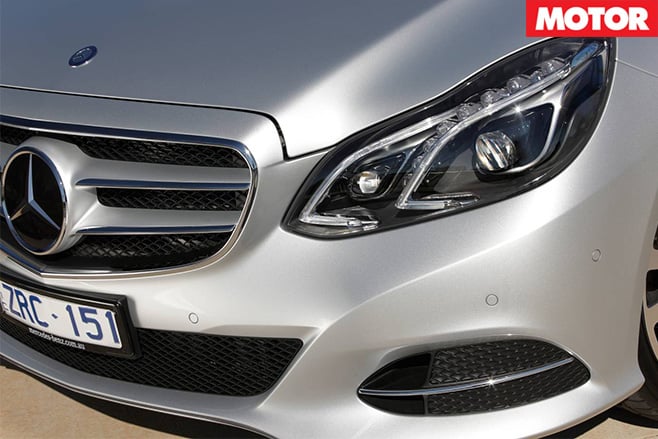
A statement from Mercedes-Benz Australia said: “Australian Consumer Law currently provides comprehensive protection for automotive consumers when a vehicle is imported to Australia by the OEM [but] the owner of a privately imported vehicle will have zero protection.”
“The Government has announced no demonstrable or detailed plans as to how consumers will be protected against buying a stolen, financed or insurance write off vehicle,” the statement added.
“Currently, any customer vehicle purchased through official channels has guaranteed title against such issues [and] the considerable and valuable work done by Australia’s National Motor Vehicle Theft Reduction Council will all be diminished by suspect vehicles crossing our borders without compliance plates,” the statement added.
“The matters that we are very concerned about go to the heart of Consumer protection and the integrity of the new vehicle market in Australia.”
Among the proposed changes to the law, the definition of ‘new’ car is cited as a vehicle less than 12 months old and with less than 500km on the clock, something Benz says is definitely not a new vehicle. Imports will no longer be required to have compliance plates physically attached but rather will be registered on a new, online database – however Benz also questions who will run this and how consumers will access it when being on-sold a vehicle.
The government says it expects 30,000 new cars to be privately imported per year, less than 3.0 per cent of total new vehicles sold each year in Australia.

“If the Government is so concerned about car affordability, it should look at the taxes and other government charges that make up around 20 per cent of the price of new cars in Australia. Fixing those tax arrangements, including the poorly-designed Luxury Car Tax, is a better and more targeted way of addressing car affordability than a change that will only ultimately hurt consumers.”
“Mercedes-Benz Australia is not frightened of reform,” the German company added. “What we are frightened of is the disruption and diminution of one of the rights of Australian consumers which this policy proposal completely and totally disregards. It will create second class consumers when there is no demonstrated need to do so”.
Porsche has also been vocal in its opposition to the proposed changes to new vehicle importation.
MOTOR will further investigate the performance cars that, from 2018, may be imported from the UK or Japan – currently the only two permitted countries to import from – and how the process may work.
