
The Ford Fiesta ST has been boosted to 158kW and given a limited-slip differential as part of an M-Sport pack – but BMW has nothing to do with it.
M-Sport create rally-spec Fiesta and Focus models in the UK, in partnership with Ford of Europe. It is now turning its attention to road cars, with the Fiesta ST M-Sport Edition first off the line complete with livery from competition cars.
The 1.6-litre turbo four-cylinder scores a Mountune MR215 performance kit, producing as the name suggests, 215hp or 158kW in addition to 320Nm – a handy increase on the 134kW/240Nm production model.
In our September 2015 issue we tested a Mountune MR230 kit that is available locally for $4980 and offers about 170kW, although it is unclear whether M-Sport will also offer that higher output.

An optional ‘handling pack’ adds Bilstein monotube struts and Eibach springs to the little German-made three-door hatch.
Brake discs move from the 278mm standard units to 332mm, complemented by Alcon calipers and Goodridge braided hoses, while the exhaust comes from the same outfit that fits up the Fiesta WRC car.
Inside changes include a carbonfibre-insert over the gearknob and Nappa leather/Alcantara steering wheel. Each Fiesta ST M-Sport Edition is also individually numbered.
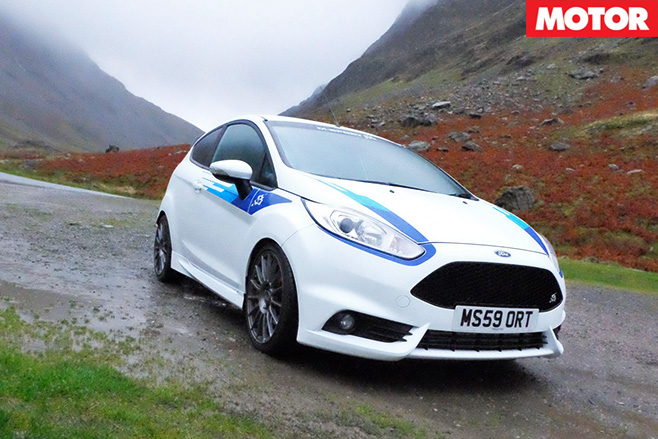
“It’s a proper hot hatch with a Quaife differential in the gearbox as well as a host of other well thought out options and additions supplied by our valued trade partners. It looks fantastic and it really does go as well as it looks!”
The Fiesta ST is already one of our favourite hot-hatches, however these tasteful modifications we reckon would really uncover the little Ford’s true potential – all it needs now is an RS badge and an export program.
Click here to read the full range review of the Ford Fiesta.
THE Kia Cerato GT is on Kia Motors Australia’s most wanted list, its chief operating officer, Damien Meredith, says.
Speaking to Wheels at the launch of the 2016 Kia Optima about the company’s long-term goal of selling 50,000 cars a year, Meredith suggested that a Cerato GT would be a more significant addition to the car maker’s line-up here, where the manual-only Proceed GT has failed to fire.
“I would love to continue with Proceed GT if it came in auto, but you’ve got to make those decision based on market reality, and unfortunately, to me, our future lies in Cerato having the opportunity to be a Cerato GT,” he said.
“What we have to do is consolidate our models,” said Meredith.
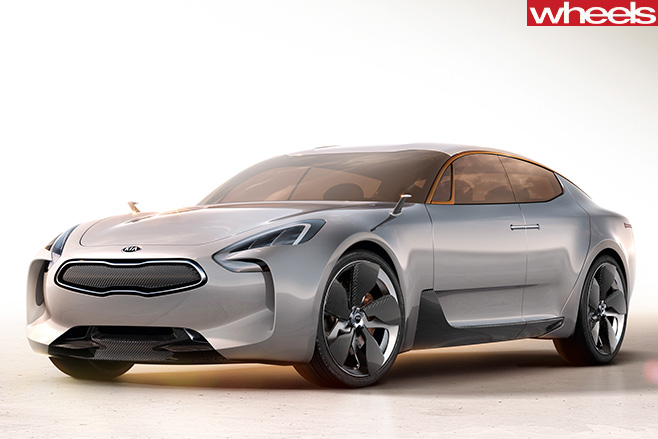
That sticking point of no automatic option is made worse for Kia by the fact that the Slovakian-made Proceed GT is based on the same platform and mechanicals as the Korean-built Hyundai Veloster, which uses the same engine but is built with a six-speed dual-clutch transmission. The Veloster has snared 2435 sales so far in 2015, compared with only 365 Proceed GTs.
The Koup, a hot version of the Cerato, has already on sale in Australia using the same engine as both the Veloster and Proceed GT. It, too, comes in automatic form from its Korean factory, but to date has not worn the GT badge or had the turbo engine fitted to a hatch variant.
Two Kia products currently wear the two-letter badge here, with the Proceed GT joined by the new Optima GT sedan.
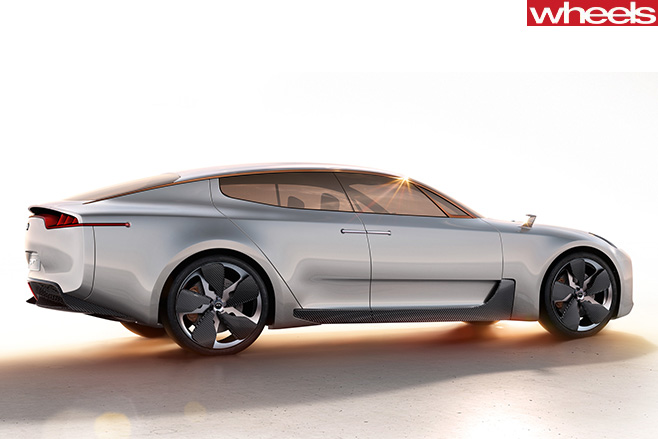
“It’s not just the cars – they help dramatically … but as the brand grows stronger, we get better dealers; better dealers sell more cars,” Meredith said. “So there’s a flow-on effect with that: quality communication, better market representation and better product. We’re relatively confident we’ll get to that 50,000 by 2020.”
Two doors fewer but so much more for the Mercedes-AMG C63 S Coupe.
WHAT IS IT? The latest Mercedes-Benz C-Class sedan launched in Australia in late 2014, so it has been a bit of a wait for the two-door version to arrive. The headline, though, is the firebrand Mercedes-AMG C63 S Coupe; the rough nut in a sharper suit than its four-door sibling.
WHY WE’RE TESTING IT The 375kW twin-turbo 4.0-litre V8 C63 S Coupe is not just a clone of its sedan-based sibling. Lower, wider and meaner, it promises more on-the-limit performance as a result. And with the challenging Ascari circuit in Spain as our proving ground, there’s plenty of opportunity to push it to the limit.
MAIN RIVALS BMW’s 317kW twin-turbo 3.0-litre straight six M4 and the 331kW atmo 4.2-litre Audi RS5 are the rivals that immediately spring to mind. Luxury performance minnow Lexus has also entered the fast two-door fray with the 351kW RC F powered by an atmo 5.0-litre V8.
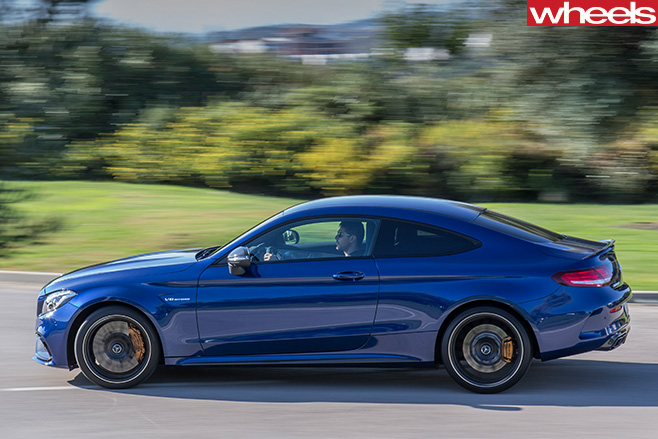
PLUS: Staggering performance; epic soundtrack; edgy but excellent on-limit handling MINUS: Extra weight over sedan; firm ride; tight rear seats; thick A-pillars
THE WHEELS REVIEW IT TAKES just four laps of the daunting Circuito Ascari, nestled between rugged, limestone-cloaked hills in Spain’s picturesque Andalucia region, to realise that Mercedes has created something special with the new AMG C63 S Coupe.
Four laps, 22km and 100 turns of the fast and technically challenging circuit to know that the C63 S Coupe is a remarkable machine, with the sort of dynamic depth once the preserve of cars from its nemesis and arch-rival, BMW’s M Division.
Of course, AMGs have always been fast, but they haven’t always been the sharpest scalpel in the surgical drawer. Yet through the tiller, pants and pedals, this new C63 coupe feels as if it’s been honed by a master swordsmith.
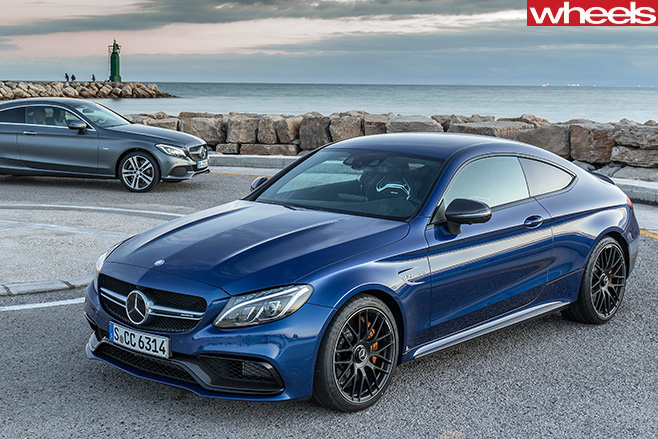
As Mercedes-AMG chairman Tobias Moers explained, the goal with the C63 Coupe was to create an AMG that differs from the regular production Benz more than ever before.
From the outside that translates to a classic coupe profile that’s been honed to such buff muscularity that it shares only doors, roof and bootlid with the handsome base coupe.
Beneath the strikingly flared front and rear guards are tracks that have been widened by 64mm and 66mm respectively to house staggered 9.0×19 and 10.5×19 wheels, clad with low-profile 255mm and 285mm rubber.
As with the C63 sedan, the coupe features extensive use of aluminium in its body and suspension, yet weight is up 70kg over the four-door thanks to the structural reinforcing to the pillarless body.
Despite this, the two-door still manages to shave a tenth off the equivalent sedan’s 0-100km/h time, stopping the clock at a blistering 3.9 seconds, which is also a tenth quicker than the ‘cooking’ model C63 Coupe.
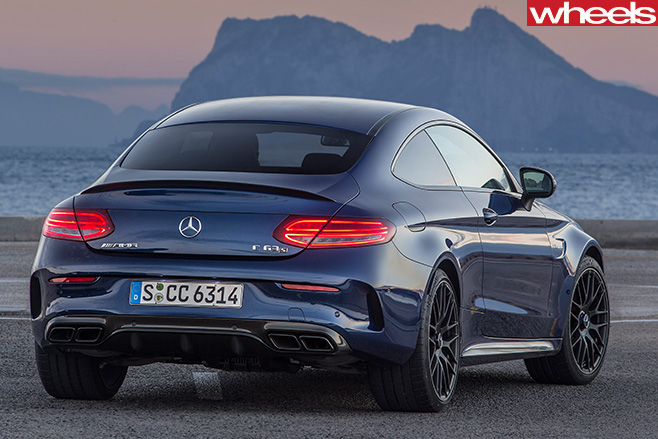
While the existing C-Class’s impressive lightweight four-link front suspension has been redesigned for the C63 Coupe’s widened track, it’s the entirely new multilink rear suspension that is the piece de resistance in the two-door’s dynamics arsenal.
The new rear axle assembly features a model-specific 12-link design that draws on AMG’s extensive motorsport experience, doing away with rubber mounts altogether and relying instead on race car-style metal uni-joints to ensure maximum stiffness and stability.
In combination with an electronic limited slip differential, the new rear-end simply gets the V8’s prodigious power to the tarmac more efficiently. Importantly, it does so without compromising ride or creating unnecessary noise and harshness.
There is lots of noise, of course, but it’s a symphony of heavy-metal from AMG’s mighty 375kW/700NM 4.0-litre twin-turbo V8. It’s raucous enough with the standard exhaust, but fitted with the optional Performance Exhaust the engine becomes a barking, bellowing beast of a thing.
Out on the track, with the five-mode AMG Dynamic Select toggle set to Race, the system drops its traction control guard and raises the edginess quota dramatically, sharpening the reflexes of the engine and transmission, firming the electronically controlled dampers and allowing extravagant slip angles that dictate armfuls of opposite lock.
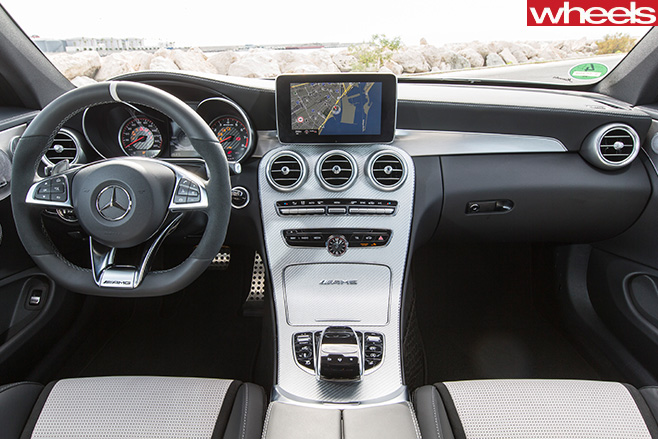
But AMG has taken its dynamic game to a whole new level with the new C63 Coupe, delivering the sort of playful on-throttle adjustability that makes it a delight to get to grips with.
We can’t wait for the inevitable comparison with BMW’s M3.
Coupe Swoops
THE stylish new Mercedes-Benz C-Class coupe arrives next March or April, with four models available at launch and a fifth, the C450, arriving in late 2016.
Final pricing and spec won’t be confirmed until the end of the year, but expect to pay about a five percent premium for two less doors versus the equivalent C-Class sedan.
The range kicks off with the 135kW/300Nm C200, a 2.0-litre four-cylinder turbo-petrol that takes over from the old C180 Coupe but promises more punch and panache.
Next up is the thrifty diesel-engined C250d, the only one of the new coupes to feature Benz’s new 9G-Tronic nine-speed auto. Its 2.1-litre twin-turbo four musters 150kW/500Nm and quaffs a miserly 4.4L/100km. The impressive new auto is destined to replace the seven-speed in other models in due course.
Further up the ladder comes the C300, or C300 Sport as it will be badged here. It replaces the current C250 and, as such, is expected to be the popular choice for most buyers. It packs the same turbocharged four-cylinder petrol engine as the C200, albeit upgraded to a more robust 180kW/370Nm, thus shaving a full 1.7sec off the C200’s 0-100km/h sprint.
Not available at launch but arriving in late 2016 wearing AMG Sport badging, the C450 boasts a new 270kW/520Nm 3.0-litre twin-turbo petrol V6, mated to the 9G-Tronic auto and driving all four wheels via Benz’s 4Matic all-wheel-drive system.
Finally, at the top of the tree sits the AMG C63 S with its 375kW/700Nm 4.0-litre twin-turbo V8. Although available elsewhere in two states of tune, Mercedes-Benz Australia has opted, as with the C63 sedan, to take only the higher-output, better-specified version.
SPECS Model: Mercedes-AMG C63 S Coupe Engine: 3982cc, V8 (90°), dohc, 32v, twin turbos Max power: 375kW @ 1750-6250rpm Max torque: 700Nm @ 1750-4500rpm Transmission: 7-speed automatic Weight: 1725kg 0-100km/h: 3.9 (claimed) Fuel economy: 8.9L/100km Price: $160,000 (estimated) On sale: March/April 2016
PLUS
- Even by Audi standards, the TT has been a high watermark for the brand’s design portfolio and the new car, even in roadster form, takes that to new heights.
- It still steers like a proper sports car.
- Ten seconds. That’s all it takes for the fabric roof to stow itself away, and it’ll do it up to 50km/h.
- Despite packing only a small 2.0-litre four the engine provides an enjoyable soundtrack, especially on upshifts.
- Its interior design is like a jet fighter cockpit, only much, much more suave.
- Plan on packing? The Roadster’s boot is decent, it could swallow a suitcase.
- Gadget geeks will love the cluster integrated media system.
- Audi makes you choose between a comfortable ride and jaw-dropping looks. The cheaper Sport trim Roadster comes with 18s on Continental rubber that irons out most bumpy road surfaces, but they certainly don’t fill out the car’s wheel wells as nicely as the 19s offered on the S line.
- The S line’s 19s lose out on comfort for their style, and make you tense harder for pot holes.
- It’s nowhere near as fast in a straight line as something like BMW’s M235i cabrio.
- If you’re carrying a lot of gear on your person, you’ll be disappointed to know there is little storage space in the cabin.
Everybody has to drive in the rain at some point, and it can be a white-knuckle ride if conditions are really bad. But we’ll bet you had no idea just how risky it can be to venture out in the wet, especially on old tyres.
Wheels magazine recently tested nine new tyres to find out which is best, and in the process turned up some eye-opening numbers about the dangers of worn tyres.
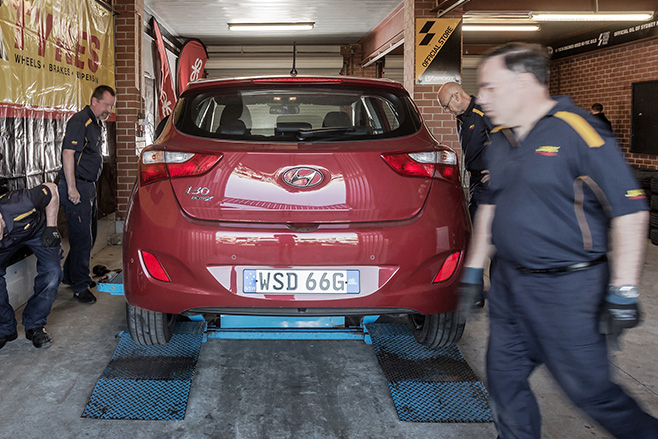
The tyres tested ranged in price from $89 to $228 each. They were put through the ringer over two days and eight tests covering grip and handling ability on wet and dry surfaces. Perhaps unsurprisingly, the most expensive tyre was the best.
Good rubber is important, so opting for the cheapest tyre that suits your car isn’t always the wise approach. The best tyre is the one with the least compromise. All-‘round ability is the key. In the cornering tests, three tyres gripped better in the wet than they did in the dry. But not when stopping.
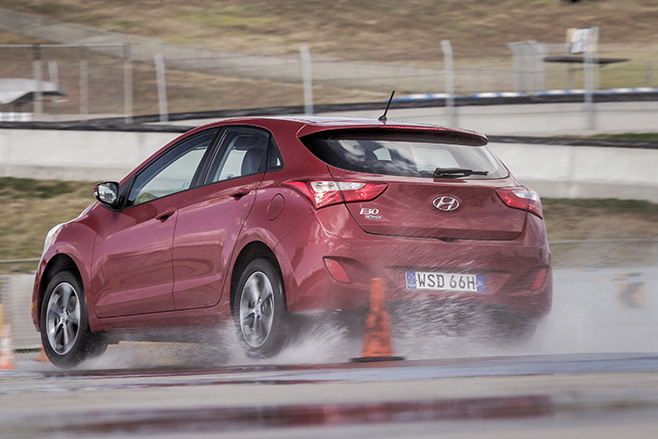
Wheels thought that what was most important to drivers was not how hard a car cornered, but how well a car stopped. And in particular, how much longer it took a car to stop when the road was wet, compared with when it was dry.
Every one of the nine tyres took longer to stop in the wet than in the dry. On average, 2.1 metres longer – in a stop from 80km/h.
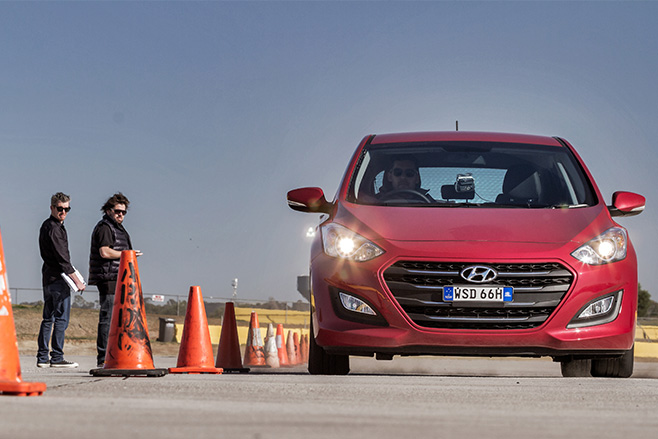
That’s an extra stopping distance equivalent to about half the length of the Hyundai i30 test car.
Not a huge bombshell. It should be well known that stopping distances blow out when pulling up in the rain. But if brand new tyres are influenced that much by a bit of wet weather, how much more are your old tyres putting you at risk?
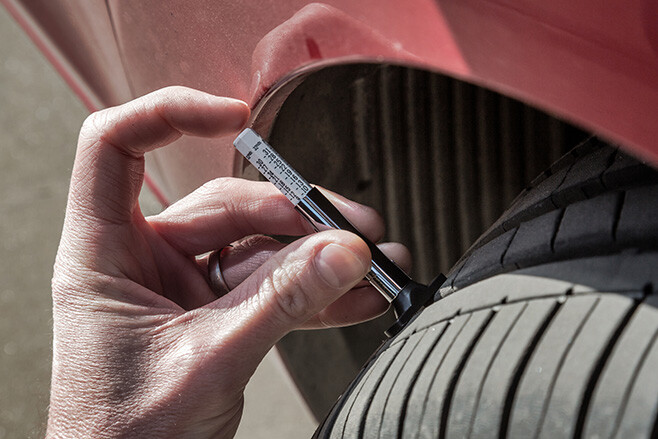
To find out, the testers fitted a set of tyres whose tread had worn down to just 2mm deep. That’s about enough tread to hide a matchhead – used, but it still looks like tread, and it’s legal. (Tread depth of 1.5mm is enough for roadworthiness.)
On a dry road, the worn tyres felt great – and they actually were. Especially in corners, where they gripped better than most of the new tyres.
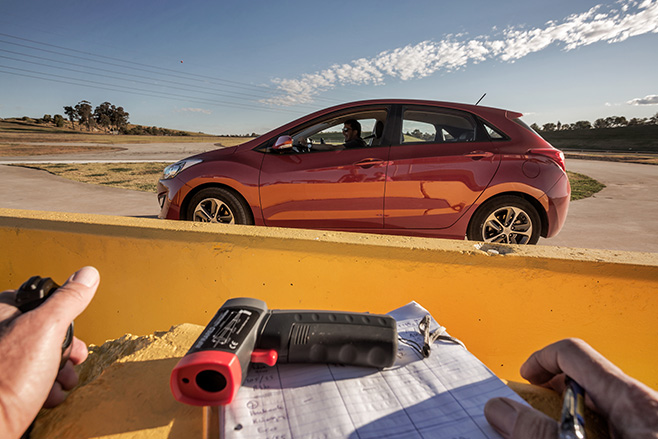
In the wet, around a corner, they weren’t great but they still weren’t bad. They had about 7 per cent less grip than the best of the new tyres, still just as good as the worst of them.
However, when braking in the wet the worn tyres were disastrous. From 80km/h, they took 11 metres longer to stop than the best of the new tyres.
That’s about an extra three car lengths, or a stopping distance 43 per cent longer than the best new tyre managed.
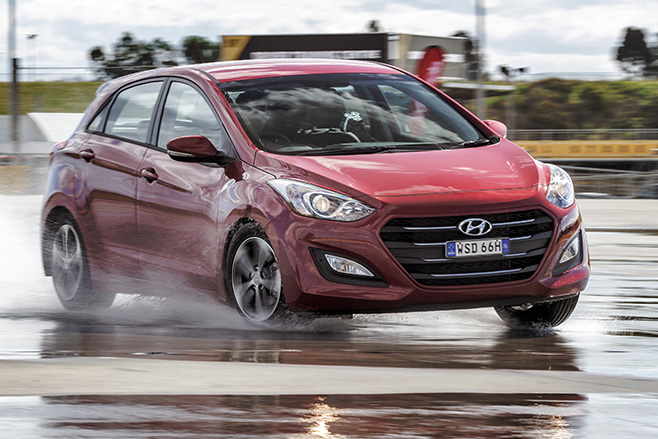
Even compared with the average of all the new tyres, the worn tyres took nearly nine metres longer to stop in the wet.
“Experience suggested that worn tyres lost a lot of performance compared with when they were new, but the magnitude of the increase in wet stopping distance still shocked me,” said Wheels journalist and Tyre Test data analyst James Whitbourn.
What makes this worse is that – remember – on a dry road, the worn tyres had felt great in corners. So if you were driving on them, you would not realise you were in trouble until it rained and you had to stop in a hurry.
And that’s the tip: if you want to be safe in the wet, start looking for new tyres – just about any new tyres – long before you run out of tread. The tyre you shouldn’t trust is the tyre that’s nearly worn out.
AND THE WINNER WAS …
When you are looking for new tyres, which should you get? Wheels rated the Yokahama Advan Sport V105 ($228) the overall winner. It performed very well in each of the eight tests (four dry, three wet and a noise test), and it was that across the board performance that earned it overall top honours.
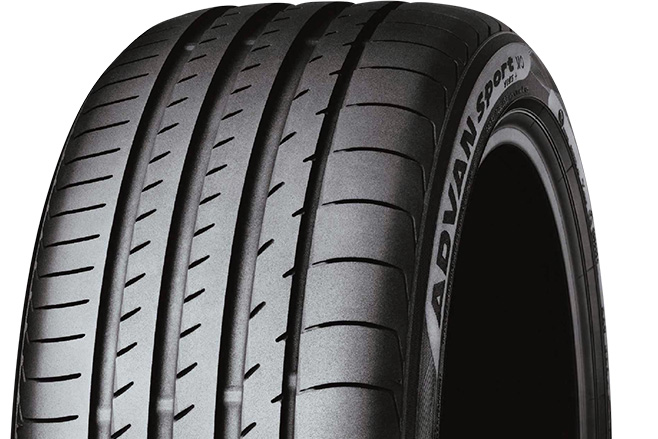
There were some good – and great – choices among the other tyres tested.
- The Continental ContiPremiumContact5 ($162) won four of the tests (including wet braking). It was best overall in the wet, and second overall across the wet and dry tests.
- The Dunlop Sport Maxx RT ($192) won two tests (wet slalom, and quietness).
- The Michelin Primacy 3 ST ($184) and Toyo Proxes T1 Sport ($215) won a test each (dry braking and dry slalom, respectively).
- And one of the cheapest tyres, the Lassa Impetus Revo ($117), was second-top for wet braking, stopping in a shorter distance than all but the Continental.
In last place overall was the cheapest tyre – the Momo M3 ($89). It was also the worst in wet braking, taking about 3.5 metres longer to stop than the winner.
But in the wet, even the Momos stopped about 8 metres shorter than the worn tyres.
Which means it’s likely safer to pay less for your tyres but replace them early, than to pay more for the tyres but wear each set out.
Want to know more?
You can read the complete test – including the test methods and results for each category –in the November edition of Wheels magazine (out now in print, iPad and Android device form) and at wheelsmag.com.au.
So, what is it?
A ‘warm’ version of Peugeot’s refreshed 308 hatch, offered with a choice of four cylinder turbos; a 151kW/285Nm 1.6-litre petrol matched with a six-speed manual, or 133kW/400Nm 2.0-litre diesel with flappy paddle six-speed auto.
Why should I care?
As a brand, Peugeot remains an unconventional choice in this market. But the second-gen 308 picked up the European Car of the Year award last year, so the car the GT is based on already has a solid fan-base.
And the French maker has serious form when it comes to performance hatches. The 205 GTi is an all-time great, and the current 208 GTi has been raising eyebrows and smiles since it arrived here in 2013.

What’s new about it?
The GT is positioned as a genuine grand tourer, rather than a purely sports-focused hot hatch. That’s likely to come sooner rather than later in a production version of 2013’s (202kW/330Nm) 308 R Concept.
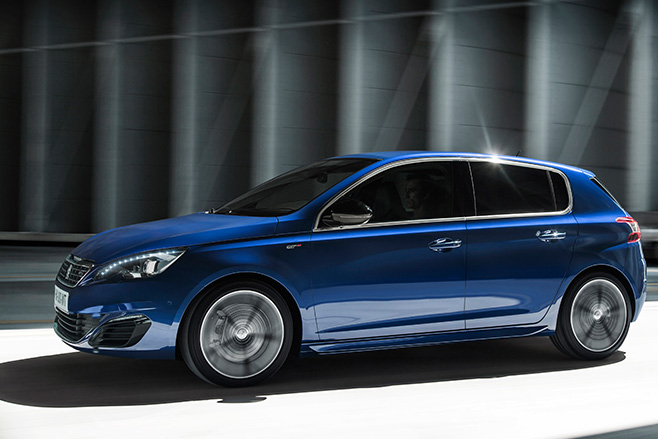
The newcomer features unique 18-inch alloy rims, a lower ride (7mm front / 10mm rear), spring and damper rates stiffened by between 10 and 20 per cent (depending on drivetrain), as well as driver-adjustable steering weight and throttle calibration.
There’s also an amplified engine note (more on that later), specific interior trim elements, red instrument illumination, and a multi-function display, reading out on power and torque, turbo boost pressure, as well as longitudinal and lateral Gs.
Car-spotters should also look out for chrome on the grille bars, front fog lamps, window surrounds, and dual exhaust
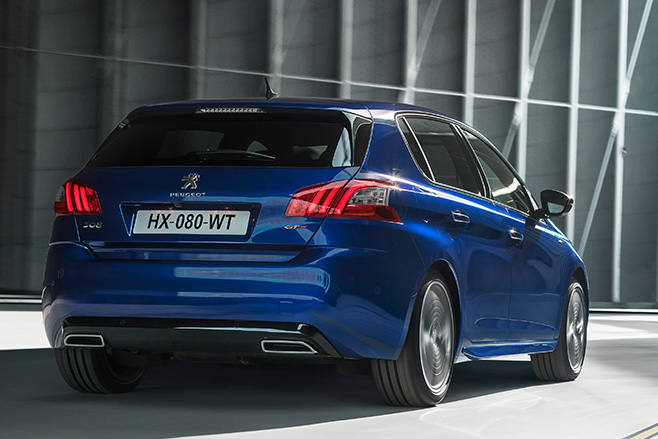
That’s all fine, what’s it like to drive fast?
We scored several hundred kays worth of GT wheel time during a launch drive program around the NSW-Victoria border towns of Albury Wodonga; on the sweeping backroads in the surrounding Murray River hinterland, and a twisting 1.6km driver training circuit operated by Wodonga TAFE.
It became clear immediately the GT’s outstanding dynamic attribute is supreme body control. Even on fast, dipping and twisting sections, the strut front, torsion beam rear suspension manages to not only keep pitch and roll in check, but make sure yaw movement doesn’t get out of hand. All very predictable and stress-free.
Acceleration in both variants is brisk rather than quick, with the diesel’s meatier mid-range running out of puff towards the top end, while the petrol loves to rev towards its power peak at 5,000rpm.
In Sport mode (available via a console rocker switch), steering weight loads up, while road feel remains good (rather than great). Throttle response sharpens, and in the diesel, gear shifts become more urgent. Overall, the 308 GT is an enjoyable drive.
And driving home from the city?
Yes, it’s a subjective call, but we think the 308 is a beautifully resolved design. Its proportions, key character lines, and overall stance set it apart from the medium hatch crowd, and the GT’s interior is just as striking.
Minimalist, in Scandinavian style, the 308’s cabin has the cool, reserved air of an upmarket Norwegian ski lodge, accented by a subtle combination of soft-touch plastics and brushed metal finishes.
Ride comfort around town over imperfect surfaces is extremely good. The sports seats are comfy and both engines are amazingly quiet.
Anything bad about it?
Several points on the negative side of the ledger.
First, you’re either a fan of Peugeot’s ‘Head up’ instrument display or you’re not. This ‘main instruments above small steering wheel’ arrangement was pioneered in the 208, and lives on here.

We think it’s an answer to a question nobody was asking, but Peugeot counters with a raft of ergonomic pluses. And speaking of counters, we’re not sure why the rev counter winds anti-clockwise, but we are sure it doesn’t add any meaningful benefit.
The ‘amplified engine note’, mentioned earlier, is also a bone of contention. Imagine the fashion model in waiting that’s laughing at all your jokes, and making laser beam eye contact is actually not of the gender you assumed they were. Nothing wrong with that, but it’s not your thing, and burning interest cools immediately. That’s kind of what it’s like when you realise the GT’s rorty engine sound (in Sport mode) is a synthetic facsimile pumped through the audio system.
And finally, ‘Manual’ mode on the diesel’s six-speed auto… isn’t. It changes down a couple of ratios when it wants to, and always shifts before the rev limiter. Sure, head-butting the rev-limiter on a regular basis isn’t necessarily a good idea. But if the mode says manual, we reserve the right to be stupid when we want to.
How much would I have to pay? And is it worth it?
Cost-of-entry is $41,990, and that number brings a lengthy list of standard equipment with it.
Highlights are a 9.7-inch infotainment touchscreen, sat-nav, rear-view camera with front parking sensors, ‘Jukebox’ music storage, electric lumbar support with massage function on the front seats, ‘Open & Go’ keyless entry, alloy pedals and door sills, LED headlights with integrated DRL’s, and cool animated indicators (as in, they swipe across the lens when activated).
Then there’s the standard ‘Driver Assist’ pack, which adds active cruise, Emergency Collision Alert, Emergency Collision Brake, Park Assist, and Blind Spot Monitoring. That’s a h-e-a-p of fruit for a $42k price point.
Would you take the 308 GT or VW Golf GTI?
Peugeot’s at pains to point out this is a GT, rather than a GTi; the inference being a GTi is compromised by overly stiff suspension and a less refined drive experience. Problem is, the Golf GTI is faster and delivers a superb combination of dynamic ability and comfort. No compromise.
On the flip side, the petrol only GTI while more powerful is heavier and thirstier. And while the features list is impressive, it can’t match the Peugeot’s standard spec. Close call, but we’d still opt for the German benchmark.
Click here to find out more about the Peugeot 308 GT.
Our team of experts has shortlisted 10 of the most stylish cars from the last year, and now it’s time for YOU to choose your favourites.
Using the poll below, tell us what you think about our nominees. The top cars, as voted by you, will be assessed by a panel of judges drawn from the Automotive, Design and Publishing industries. Only one car will receive the inaugural WhichCar Style Award. You have until November 25th to tell us what you think, so get voting!
POLL HAS NOW CLOSED. STAY TUNED FOR THE RESULTS!
WhichCar Style Awards 2016 – Top 10
- Alfa Romeo 4C
- Audi TT Coupe
- Citroen DS5
- Holden Cascada
- Jaguar XE
- Jeep Renegade
- Land Rover Discovery Sport
- Mazda CX-3
- Mercedes-Benz GLC
- Volvo XC90
- Design Innovation – Does it break new ground?
- Functional Ergonomics – How well does it work?
- Stand-out Features – Is there any X-Factor?
- Value For Money – Does the quality match the price?
- Target Market – Does it meet owner’s wants and needs?
Tanya Buchanan – Editor, Belle
Deb Bibby – Editor, Real Living
Anna Kantilaftas – Lifestyle Editor, WhichCar
Paul Beranger – Automotive Design Consultant, former Head of Toyota Asia Pacific Design
Michael Pickering – Editor, Men’s Style
The winner of the WhichCar Style Award will be announced at the Australian Motoring Awards, in Melbourne, on Wednesday 20 January, 2016.
WhichCar is the ultimate new-car comparison site, designed to help Australian’s find the right car for them. The site provides expert, easy-to-understand information and sophisticated search tools to connect users with high quality videos, reviews, specifications and lifestyle content.
VOLKSWAGEN Australia says it is yet to determine if it can offer a similar cash-and-kind program for customers here that has delivered a $AU1400 goodwill package to US owners affected by the growing emissions scandal.
In a deal announced overnight, the carmaker’s US customers are queueing up for a goodwill package that includes $US500 in cash, as well as $US500 that they can spend at a Volkswagen dealership on services. As well, they will have access to three years of roadside support at no extra charge.
More than 11 million cars globally are affected by the emissions cheat, with up to half a million of them in the US. In Australia, the tally of Audi, Skoda and Volkswagen passenger cars and commercial vehicles linked to Dieselgate has reached almost 100,000 vehicles.
A Volkswagen Australia spokesman said the carmaker had not yet outlined a plan locally to support owners affected by the recall.
“As the vehicles in the US and Canada are subject to a significantly more stringent emissions legislation, they will consequently have to wait longer for remedies than is the case in most other countries,” the spokesman said.
“In Australia, locally we haven’t announced a program as Volkswagen AG is putting together a package of measures for each market.”
Volkswagen Australia has not made a local public statement relating to the emissions scandal since it announced on October 9 a voluntary recall for vehicles affected by the diesel cheat.
Toyota has developed Mirai as the world’s first full-production fuel cell vehicle. However, even though it has been developed for right-hand-drive markets, it will only be sold where refuelling stations are available. That rubs Australia out of the game.
WHAT IS IT? The futuristic Toyota Mirai sedan uses high school cookbook chemistry; combine hydrogen with oxygen from the air, and you make water and electricity. The water trickles out into the environment and the electricity powers the sedan’s front wheels.
WHY WE’RE TESTING IT Toyota Australia says it isn’t in the business of making and selling hydrogen fuel, so it wants someone else to step in and start doing it. In a way, it’s pinning hopes on Aussie journalists driving and liking the Mirai to add weight to the business case to bring it here.
MAIN RIVALS There are none yet with full-blown production ambitions. Hyundai, which is very bullish on hydrogen in Australia, is believed to be working on a fuel cell version of its Tucson SUV. Honda, meanwhile, has recently updated its Honda FCX Clarity fuel cell vehicle but is stalling on plans to roll it out worldwide.

PLUS: Good step-off acceleration; dynamics appear to be very well sorted for a Toyota, apart from the tyres; quiet cabin; brakes better than traditional Toyota hybrids MINUS: Likely to be hideously expensive; science-fiction styling; dash falls short on ergonomics; no plug-in option; wees like an excited dog every time you stop
THE WHEELS REVIEW LET’S play a bit of word association. What’s the first thing that comes into your head when you hear the word “hybrid”? Toyota Prius? Now let’s do the same thing with the words “fuel cell”. No, no, take your time…
Hydrogen is touted as the fuel of the future. Unlike hybrid, it’s not a fossil fuel extender, but a genuine fossil fuel substitute. And because it sloshes around in a tank, it’s also something familiar and tangible, unlike electricity.
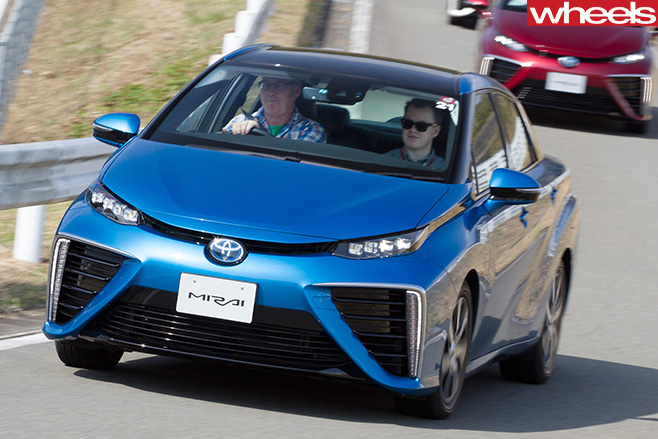
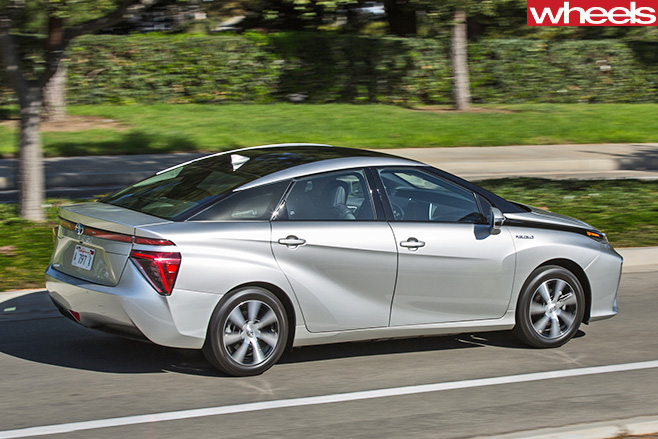
Mirai is a transitional vehicle. Nothing else out on the world’s roads looks like it, with awkward, jagged lines and confused design. Funny thing, but reverse a new fourth-generation Prius up next to the Mirai and you’re hard pressed to tell them apart from opposing ends.
The Mirai’s motive process is simple enough. Mix hydrogen gas and air in a reactive fuel cell stack and the atmospheric oxygen combines with hydrogen to create about 60cc of water for every kilometre travelled, and electricity. The electricity passes to an electric motor borrowed from the development program for the hybrid Lexus RX SUV via an old-school nickel metal hydride battery system that smooths everything out.
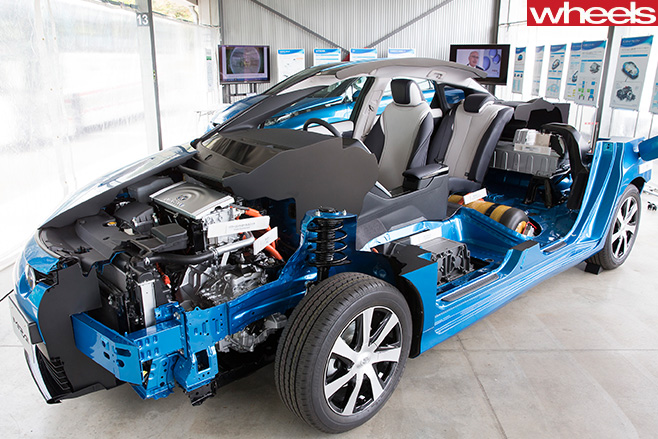
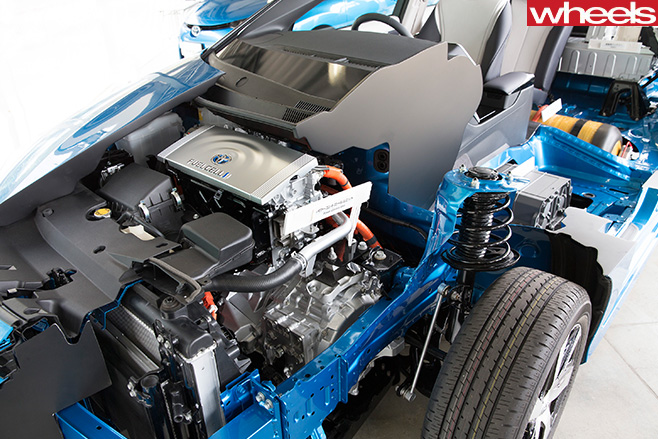
The battery and electric motor fill the under-bonnet space in between the MacPherson struts; a multi-link suspension sits under the boot.
Inside, Mirai is all I, Robot-inspired clean, white, wrap-around lines broken by a digital dash that sits off to one side of the driver, and a high centre console topped with a large touchscreen. Without a head-up display, the speedo’s readout is way out of the driver’s eyeline.
We’re given two controlled laps in the Mirai of the Lexus-owned test track based at Fuji Speedway, about four kilometres in total, so there’s not a whole lot we can learn.
The first thing to note, though, is that, similar to other pure electric cars with a bloated kerb weight, the Mirai’s step-off acceleration is still quite strong, and enough to win the odd traffic light grand prix. It’s even more impressive as rolling acceleration, pulling quickly and keenly.
The reason you notice the pump noise is because everything else in the Mirai is so quiet. The front windows are double-glazed, and the sound isolation from the drivetrain and 17-inch Bridgestone Ecopia low rolling-resistance rubber makes it very hushed.
Toyota’s engineers set up a couple of bump strips for us to try out the suspension at low speeds. It’s difficult to divine much other than the Mirai feels like a heavy car, with the firmish ride recovering quite well from those small hits.
More telling is a short slalom with a speed cap of, ahem, 30km/h. The Mirai’s taut suspension, quickish steering and low centre of gravity – all the heavy bits are mounted low on the chassis – make it a bit of fun to chuck around with an almost unnoticeable weight transfer.
The limitation, though, are the tyres, which all squeal at once like a pack of teenagers at the sound check for a rock concert, at even moderate speeds.
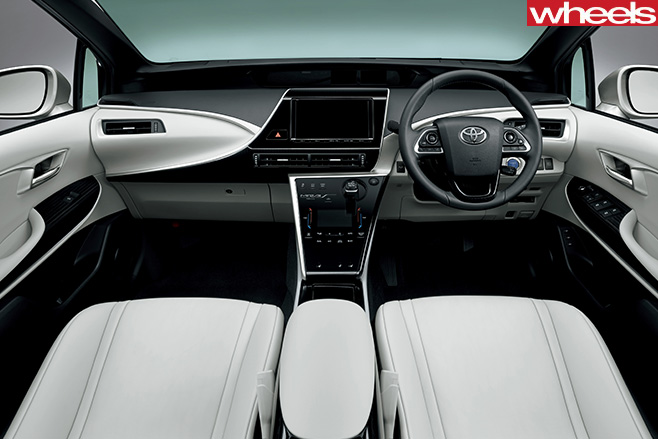
The Mirai is Toyota’s hedge against rising fuel prices and ever-tightening emissions laws, and the third generation of technology that dates back 23 years. Best of all, though, the experience is almost seamlessly familiar from behind the wheel, and simple enough that anyone could just jump behind the wheel and drive it.
Unfortunately, until we get the refuelling issue sorted, the future of Mirai in Australia appears to be in line with how its emissions taste.
SPECS Model: Toyota Mirai Engine: 114kW fuel cell stack and 125kW electric motor Max power: 113kW Max torque: 334Nm @ 0-10,000rpm Transmission: Single-speed reduction gear Weight: 1850kg 0-100km/h: 10.0sec (claimed) Fuel economy: the equivalent of 4.2L/100km (estimated) Price: $80,000 (estimated) On sale: When the fuel becomes available
Forget F1, or V8 Supercars, or WRC. The coolest race cars on the planet right now are Trophy Trucks.
Whether they’re bouncing across scorching deserts, flying around stadiums or bouncing off concrete walls at the Gold Coast the combination of enormous suspension travel, unbreakable chassis and 600kW V8s (not to mention slightly crazy drivers) seems to guarantee good racing.
BJ Baldwin is one of the sport’s leading lights and given he’s backed by Monster Energy, it’s not surprising that he’s involved in some pretty awesome marketing material.
The above video is the third in his ‘Recoil’ series; think Ken Block with much bigger jumps and you’re just about there.
There’s a strange sub-plot about chasing a sasquatch (whatever that is) but just skip ahead to 0:55sec and enjoy the incredible vision of an incredible machine being driven flat out.
