
In an ever-automated world, here are three affordable Euro manuals that prove it’s great to shift your own gears.
First published in the April 2015 issue of Wheels magazine, Australia’s most experienced and most trusted car magazine since 1953.
Can’t wait to see the final scores? Jump to the verdict now.
IT’S no wonder the world is going automatic. Long gone are the days when losing a clutch pedal also meant sacrificing a gear ratio or two, as well as a great wad of performance. About the only thing anyone could miss from the bad old days of glacial small autos is some of the marketing names, though whoever thought ‘Toyoglide’ gave an impression of speed had clearly never driven one.
If you love driving, nothing beats the pleasure of a great manual. And if you don’t mind lowering your aspirations to the bottom end of the small hatchback market, there’s a wealth of sharp-shifting manuals waiting to tempt the Fangio in all of us.
Three pedals, three ways
Europeans worship the manual gearbox almost as much as the Greeks love smoking, so it’s no surprise that Peugeot, Renault and Volkswagen open their nifty-handling 308, Megane and Golf ranges with six-speed, three-pedal variants.
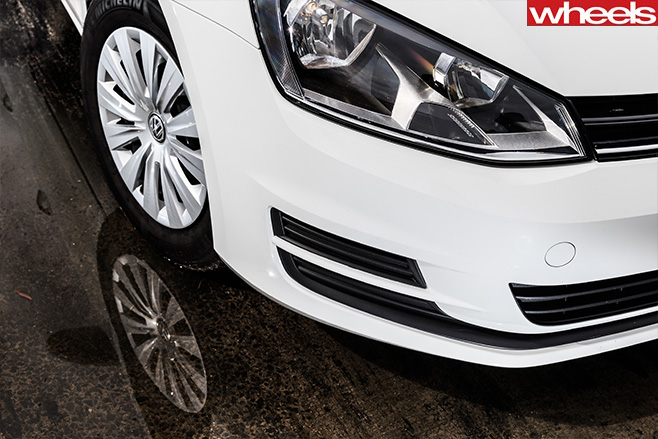
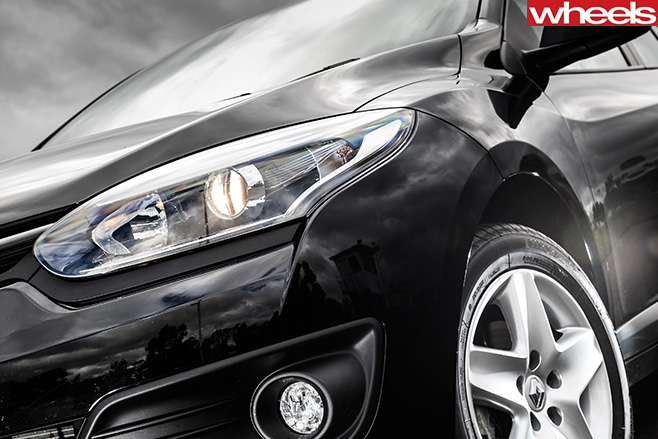
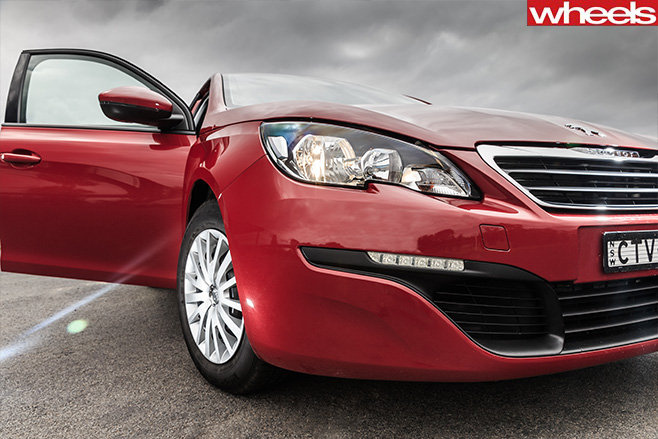
In the Volksy, you can have a manual in either the $21,490 base car or the retiree-tinged $25,240 Comfortline, but not the beautifully finished Highline (even though it exclusively offers a sporty R-Line package). The Frenchies, however, only serve up a manual in their entry-level specials – the $20,990 Megane Authentique and $21,990 308 Access – or their performance models. So we’ve gathered the cream of the affordable Euro crop, all sub-$22K yet also surprisingly flash for the poverty end of the market.
Pushing the go-pedal
Sadly, that’s where the GT-R connotations end for the Renault. Its 97kW/205Nm 1.2-litre turbo four – an uprated version of the same donk in the Clio – is no powerhouse, though a 17.4sec standing-400m time ain’t too shabby for a large-ish hatch with a small engine.
Where it drops the ball, though, is in shift feel. Its firm, short-travel clutch and meaty gearchange lack the crispness that makes the Peugeot and Volkswagen manuals so pleasant to use. Combine that with the softness of the Renault’s turbo boost and throttle response, and you’re left feeling slightly dissatisfied. But there’s definitely some latent potential. How about more boost please, Regie?
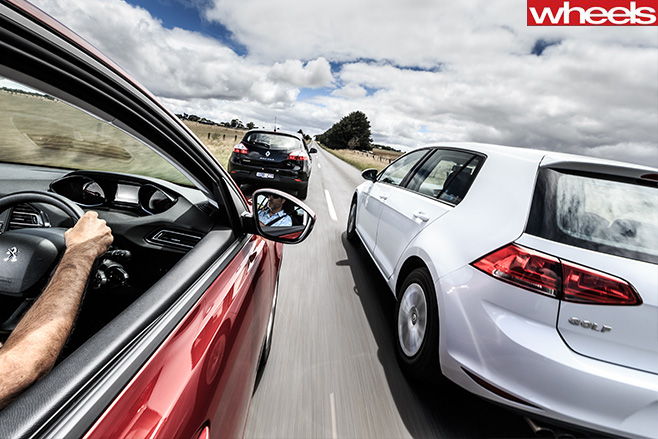
Given the worker-bee quality of most mass-market French petrols, it’s a revelation that Peugeot’s ‘Pure Tech’ 1.2-litre turbo triple is such a fantastic engine. On paper, its 96kW/230Nm outputs aren’t greatly different to the Renault’s, yet there’s a sparkle to the Peugeot’s throttle response, and a sweetness to its power delivery that raises this engine to another level. Without question, this is the greatest three-cylinder engine of all time, with the possible exception of some obscure mad-bastard domestic-market Daihatsu from the 1980s.
Winding on lock
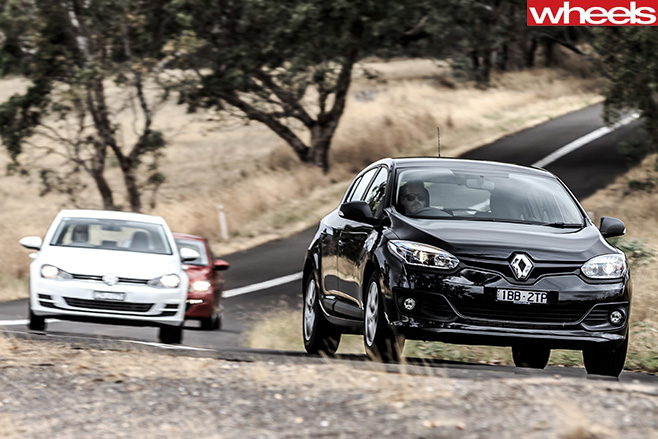
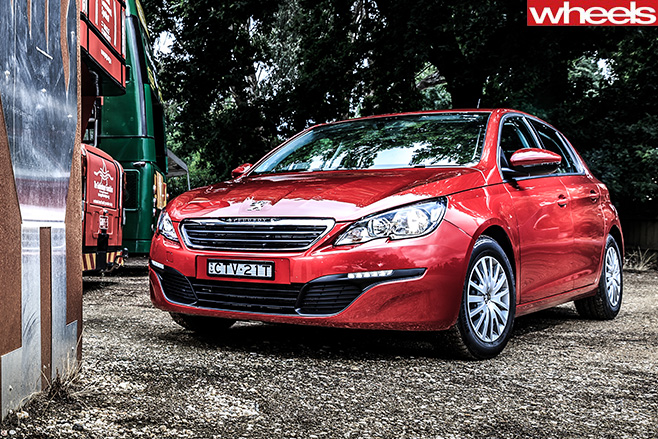
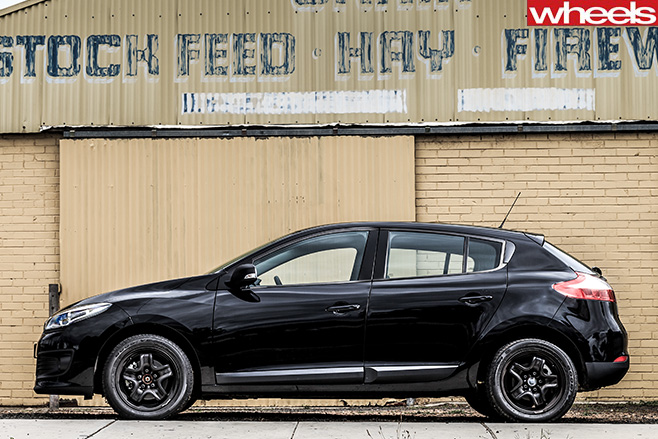
Where the Megane claws back some ground, and ultimately argues the strongest case for itself, is on a twisty road. It’s the easiest car of the three to simply jump into and drive hard, displaying instant poise and adjustability from a lifted throttle that enhances its involvement, and elevates its handling to a level far beyond most of the competition at its $21K price point. Indeed, the Megane’s co-operative back end proves that torsion-beam bums are what you make of them, and that this pseudo driver’s car has more than a hint of Renaultsport about its chassis.
But the 308’s chassis is instantly up for it. It’s much more reactive to mid-corner throttle adjustments than the Golf, and while it feels more softly sprung than the Megane, the 308’s sharp steering, quick turn-in and terrific body control give it a layer of dynamic polish that the handling-biased Renault fails to achieve. And the 308 does so with personality and panache.
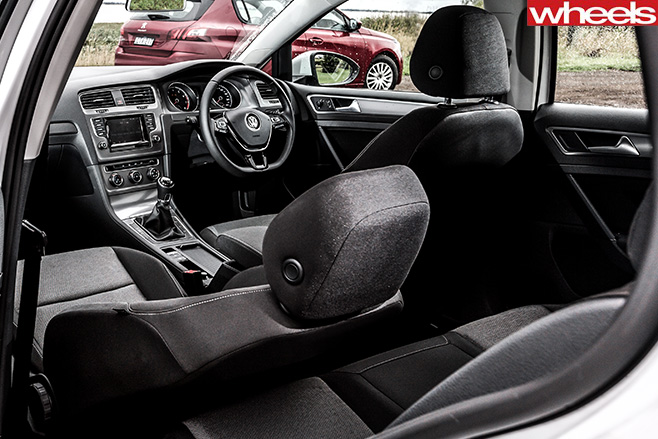
In the Golf, everything harmonises with such lovely, seamless fluidity that you almost don’t notice how capable it is at first because you just feel so calm and relaxed when driving it. The VW’s big steering wheel and the on-centre aloofness of its steering are in sharp contrast to the Peugeot’s hyper keenness, but its chassis is sweetly balanced and its refinement continues to be a highlight. Pity the driver’s seat doesn’t offer lumbar adjustment, though, and its somewhat squeal-prone 195/65R15 Michelin Energy Savers don’t seem to have the wet-road purchase of the French pair’s Goodyear Efficient Grip tyres – 195/65R15s on the Peugeot and sportier 205/55R16s on the Renault.
Just cruising
But the Golf holds one invincible ace up its sleeve and that’s ride. The quiet and serene fashion with which it blots virtually any road surface is exceptional for any car, let alone a small hatchback. The entry-level Golf is truly a luxury car in a concentrate, with class-leading rear seat room and comfort, and little extras such as individual map lights and fully lined door bins designed to take 1.5-litre water bottles.
Close-run thing
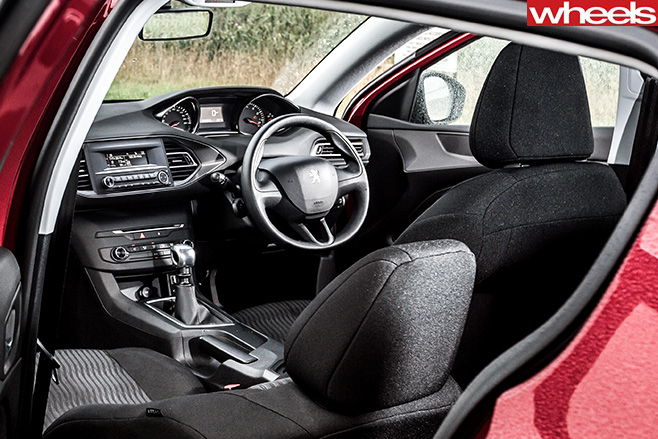
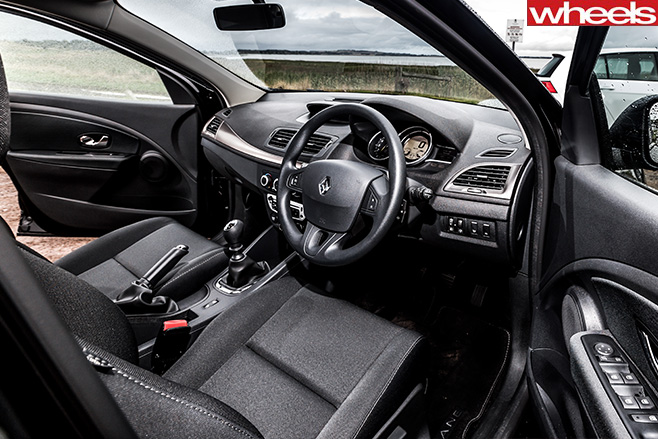
So while the Megane Authentique’s handling talent and its sharp $20,990 starting price scream base-model value, its drab and dated interior, and its lack of visual sizzle, make it almost seem expensive. Then again, with its mega warranty, capped-price servicing, five-star safety and impressively vast boot, the boggo Megane manual would be a pretty good starter car, especially for someone who values driving entertainment. Lose the wheelcovers, chip the ECU, fit a performance exhaust, upgrade the speakers…
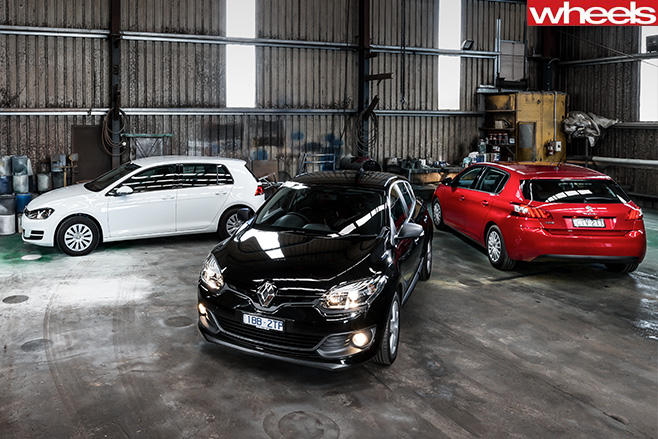
Indeed, so great is the 308’s revival of Peugeot’s once-revered abilities that it’s a close run thing between it and Volkswagen’s COTY-winning Golf. Where the VW hits hard with its outstanding refinement and devastating breadth of ability, the Pug fires back with its chirpy personality, more entertaining dynamics and hugely endearing three-cylinder engine. In comparison, the Golf’s all-round slickness almost seems a tad boring. Brilliant, yes, but for some people, just not exciting enough, especially its styling.
What nudges the VW over the line, though, is its back half. The best rear seat in its class – Golf is a true five-seater – is supported by the best boot and a benchmark rear suspension set-up.
Yet in many ways, despite not being quite as perfect, the 308 is the more likeable package. It’s prettier, sportier, more fashionable, sounds charming, is slightly quicker, yet sips just as little fuel, and is definitely more unique.
It may not be one of the greatest all-rounders ever made, which in so many ways the Mk7 Golf is, but the 308’s character is infectious, and for car tragics like us, that’s something you can’t measure.
Revival of fortune
SO WHY do car companies so often have hit-and-miss generations? Beats the hell out of us, but there’s no better example of what not to do than Peugeot.
The beautiful 306 hatch (1993-2001) wasn’t known for its Corolla-style reliability, but it still looks fantastic (below). As for the 306’s reputation for superb steering, ride and handling, it’s a feat Peugeot has never quite managed to repeat.
Its 307 successor (2001-07) steered and handled keenly, and its interior was better quality, but ride went to the dogs and so did its appearance.
Even worse was the first 308 (2007-14). It raised the facelifted 307’s toothy, beaky front to a new level of ugliness, supported by middle-of-the-road dynamics that attempted ride suppleness, but ended up pleasing no one.
Ladder climbing
BEYOND the base manuals tested here, Renault has a heavy sporting focus, with the Megane GT-Line ($26,990) gaining a Renaultsport-tuned chassis, 17s, sat-nav, sports seats and extra gear that more than justifies its $3500 premium over a dual-clutch Authentique.
For $3350 over an Access auto, the 308 Active ($27,390) scores alloy 16s and fogs, an excellent touchscreen, dual-zone climate, leather wheel, rear parking sensors and a bunch of comfort features.
VW’s Golf 90TSI Comfortline ($28,140) jumps $3850 over a base DSG and adds alloys, fogs, front/rear sensors, rear camera, dual-zone climate and rain-sensing wipers, but it lacks the base car’s value for money.
Verdict
 PEUGEOT 308 ACCESS
Price as tested: $21,990
NCAP rating: 5 stars (Euro)
Fuel economy: 7.2L/100km (test average)
Acceleration: 0-100km/h: 9.3sec (tested)
Plus: Engaging engine; superb economy; handling; ride; styling; cabin flair
Minus: Not-so-great back seat; can tell it has a torsion-beam rear at times
Verdict: 8.5/10
 RENAULT MEGANE TCe120
Price as tested: $21,790 *Includes metallic paint ($800)
NCAP rating: 5 stars (Euro)
Fuel economy: 8.3L/100km (test average)
Acceleration: 0-100km/h: 10.7sec (tested)
Plus: Keen handling; excellent grip; precise steering; long warranty; decent boot
Minus: Crappo interior; unpleasant rear seat; noisy and lumpy ride; resale
Verdict: 6.0/10
 VOLKSWAGEN GOLF 90
Price as tested: $21,790
NCAP rating: 5 stars (Euro)
Fuel economy: 7.2L/100km (test average)
Acceleration: 0-100km/h: 9.4sec (tested)
Plus: Marvellous blend of comfort, poise and refinement; efficiency; space
Minus: Understated styling; steering a little aloof at times; squealy tyres
Verdict: 9.0/10
KIA MOTORS has confirmed that the current ProCeed GT will remain a manual-only proposition, leaving the future of the warm hatchback in Australia up in the air.
As a result, the facelifted version shown at the Frankfurt Motor Show this month may never make it to Australia, as the company is struggling to sell the required number of the existing version, released last year.
The ProCeed GT topped its category in the 2015 Wheels Gold Star Value Awards: Performance Cars under $75K.
A DCT dual-clutch transmission was mooted for the GT range when the series was unveiled internationally in early 2013, and it is understood Kia Motors Australia (KMAu) was counting heavily on the automatic model coming through.
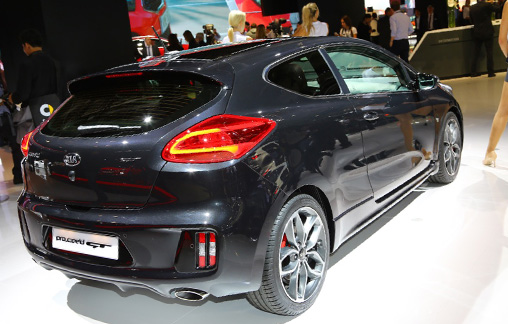
“There is no plan to have an automatic transmission on ProCeed,” Kia Europe’s general manager of product management and pricing, Pablo Martinez, said.
“From our side we have to look at how many units we plan to sell with such a car, what is the investment cost to the company… and I understand for Australia a DCT is very important, but in Europe people are still very fond of manual transmission, so therefore we do not see a high need to develop that for the ProCeed GT.”
Kia Europe’s head of powertrain, Michael Winkler, added that a ProCeed GT DCT could be developed, but only if the marketing department called for it.
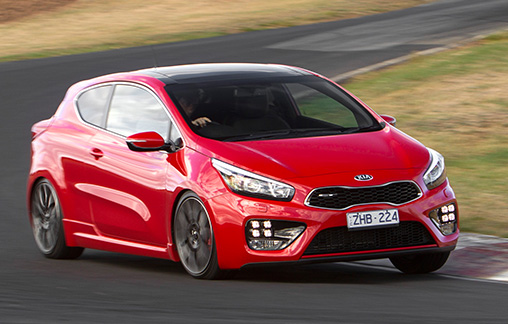
“Our newly developed seven-speed DCT can be combined with the GT. We offer more than 300Nm capability with the dry clutch, which is one of the highest for this type of gearbox, and therefore it is very important for a packaging and efficiency point of view because we don’t need an oil pump… so we are capable of it, but it is a business decision. Maybe it is something for the next generation car.”
Kia Motors Australia communications manager Kevin Hepworth, said that the absence of a DCT or auto had long held back ProCeed GT sales.
“If we could have the DCT we would have it immediately,” he said. “But the ProCeed GT is still an extremely important image car for us.”
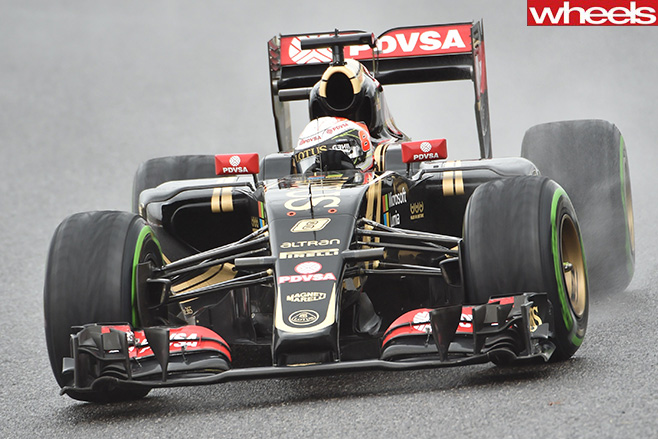
Renault looks set to return to Formula 1 as a works entry in 2016 following an announcement that it has signed a letter of intent to take a controlling stake in the Lotus F1 team.
The Lotus team has been embroiled in financial difficulties all year and is currently fighting legal battles in court as well as its competitors on track.
With Renault’s relationship with the Red Bull team having broken down following strong criticism of the French manufacturer’s turbo V6 hybrid engine, the scene was set for it either to leave F1 altogether or purchase an existing team.
The move sees Renault buy back the team it sold to Genii Capital at the end of the 2009 season.
Despite lacking the budget of the manufacturer teams, Lotus – which has nothing to do with the road car business of the same name – has performed strongly in recent years, regularly appearing on the podium in 2012 and 2013.
A disastrous 2014 season followed, ironically largely due to the shorrtcomings of the Renault power unit.
Venezuelan Pastor Maldonado is already confirmed as one of the team’s drivers for 2016, however his team-mate remains a mystery.
Frenchman Romain Grosjean would be an obvious choice, but he recently signed a contract to drive with the fledging Haas F1 team for 2016. It is rumoured, however, that there is a clause in the contract that allows Grosjean to stay put should the Renault buy-out come to fruition.
If you ever needed proof that simply giving a car the racing treatment was enough to make it look cool, this Kia Rio is it.
Anyone who’s of a similar vintage to the MOTOR crew might remember the first Gran Turismo offered a ‘race modification’ option for every car, which could turn an otherwise humdrum hatchback into a stickered-up, be-spoilered racer.
That’s essentially what has happened here, with flare guards, WRC-style bodykit and Castrol livery which, let’s face it, makes anything look good.
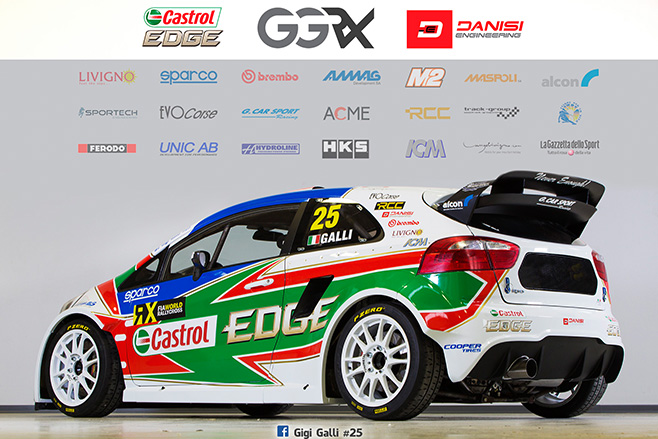
Controlling this beast will be Italian former WRC driver Gigi Galli, who was one of the more flamboyant characters in the championship until a heavy accident in Germany in 2008 sadly ended his career.
Not familiar with the name? You should be, as he’s the man behind one of the most impressive bits of driving you’ll ever see.
One of motorsport’s true showmen, Galli will no doubt be a crowd favourite when he makes his debut at the Italian round of the World Rallycross Championship at Franciacorta on October 16.
PLUS
- Styling. The Clio is a bit of a statement with lots of European flair on the outside. It’s perfect for those who want to stray away from the typical small car options.
- Fun to drive. Renault understands chassis dynamics and its engineers know exactly how to make a car that handles well. It’s especially enjoyable with a manual gearbox.
- Practicality. In Australia, Clio models are only available in five door configuration, making them convenient when it comes to moving people, pets or paraphernalia.
- Class. Inside, the Clio’s modern interior feels elegant and roomy. There’s plenty of adjustability to give the driver a seating position that feels just right.
- Engines. Impressive fuel economy for the entry-level models, and awesome performance in Renaultsport guise.
- Gearbox. We found the Clio’s automatic gearbox a little slow to react off the line. Not the best for jumping into traffic.
- Sound imitator. There’s a quirky feature in the Clio’s infotainment system that allows you to recreate different vehicle engine sounds through the speakers. It’s a gimmick, but it doesn’t make a difference to the car itself so it’s no deal-breaker.
While the Mercedes-AMG GT has no doubt plugged the gap left in Benz’s model range after the SLS’s exit, we know it’s not a direct replacement.
The GT was developed to be cheaper, more practical, and achieve much greater volume than its predecessor.
But in doing so, Mercedes-Benz have left its most prestigious customers, accustom to big-money halo products like the gullwing SLS and McLaren SLR, without a pen to play in.
Word is, then, that Mercedes-Benz is planning an even higher status supercar than the GT to appease this lot, and is taking on supercar big boys Ferrari, McLaren, and Porsche in the process.
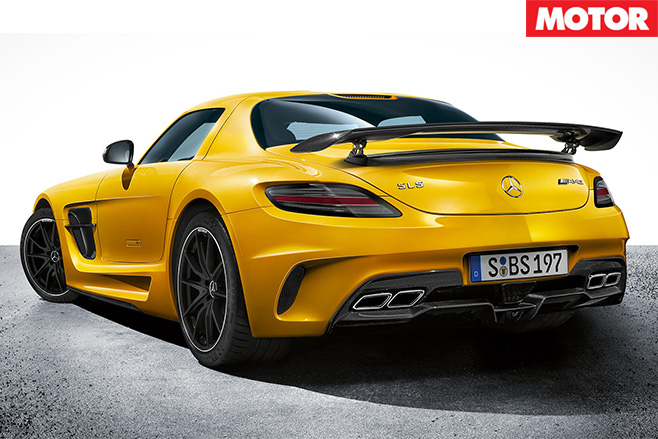
Not only does this hint at a Mercedes-AMG with more performance than any before it, but it’s said the supercar will also be capable of fuel economy to environmentally justify its existence.
Just how long until we see Mercedes’s new monster is unknown, and for now any other information is thin.
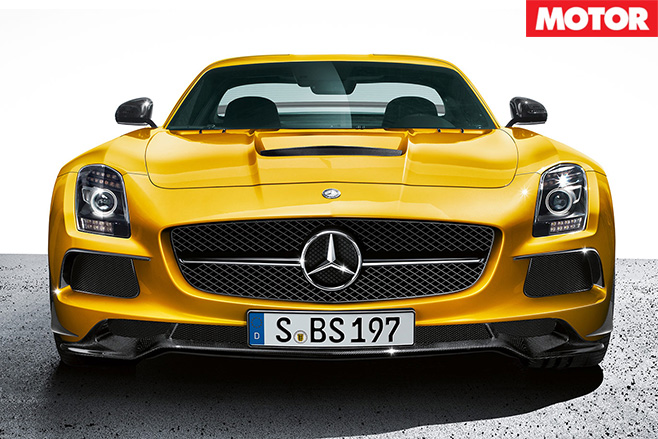
He revealed AMG was working on a hybrid powertrain and that he wanted to save the Black Series name for something worthy, Affalterbach’s holiest offering.
This new monster may just be what he’s talking about.
PLUS
- The A7’s styling is divisive, but we think it looks stunning and arguably more expensive than its $115,400 price tag – perhaps that’s because the range stretches all the way to the $241,610 RS7.
- Likewise, the interior is beautifully put together, though our particular test car had a few quirks (see Minus).
- Those with a phobia of fuel stations will love the ‘base’ A7 turbo-diesel. Audi claims just 5.2L/100km on the combined cycle, which means fill-ups will be few and far between.
- Practicality. The A7 is essentially a very large hatchback and the boot is very accommodating, while there is also plenty of space for rear passengers.
- Style comes at a cost – the Audi A7 3.0 TDI quattro is a hefty $15,500 more than the mechanically identical A6.
- While the interior feels high quality, the 3.0 TDI lacks some of the premium touches of more expensive variants and the wood trim of our test car felt out of place amongst the dark leather and aluminium highlights.
- While it costs a considerable $29,500 extra, we’d be sorely tempted to choose the bi-turbo 3.0 TDI, which lifts outputs from 160kW/500Nm to 235kW/650Nm and endows the A7 with the speed (0-100km/h in 5.2sec) to match its looks and positioning.
FORMULA 1: Service returns to normal
AFTER Sebastian Vettel’s stunning romp to victory in Singapore a week earlier, the burning question when the grand prix circus put up tents at Suzuka was whether Mercedes had experienced a bad weekend or Ferrari had made a leap forward.
A rainy Friday at Suzuka revealed nothing other than the competence of Red Bull’s chassis in the wet.
But a dry Saturday hinted strongly that Singapore had been an aberration and that normal service had been resumed, with the Mercs on top.
In a qualifying which ended early with Daniil Kvyat’s ferocious crash and flip, Nico Rosberg took pole from Lewis Hamilton. Williams and Ferrari shared each of the second and third rows, ahead of Daniel Ricciardo’s Red Bull. Kvyat was consigned to a pitlane start in his rebuilt Red Bull Renault.
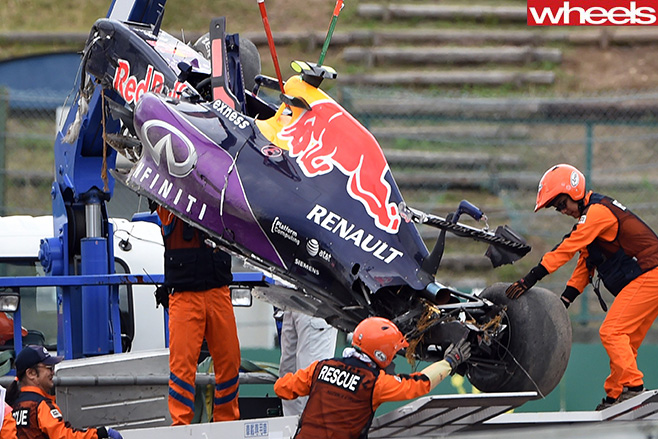
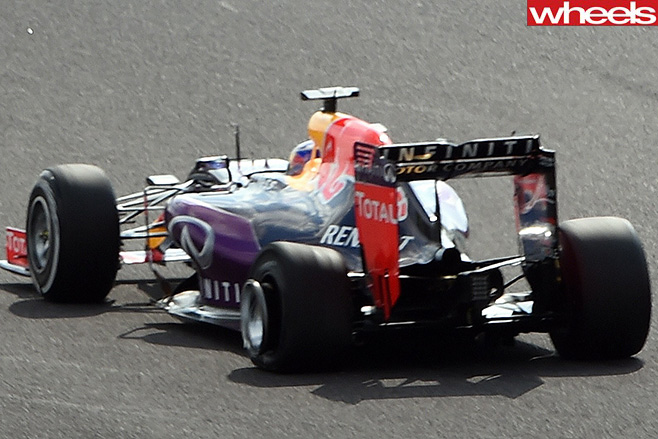
Not so. At the start of yesterday’s Japanese Grand Prix, Hamilton aggressively whipped ahead of Rosberg, who slipped to fourth. Simultaneously, Ricciardo’s race was ruined by a belated blocking move from the Williams of Felipe Massa, which punctured a tyre on both cars. Crawling slowly back to the pits for replacements pushed them to 19th and 20th.
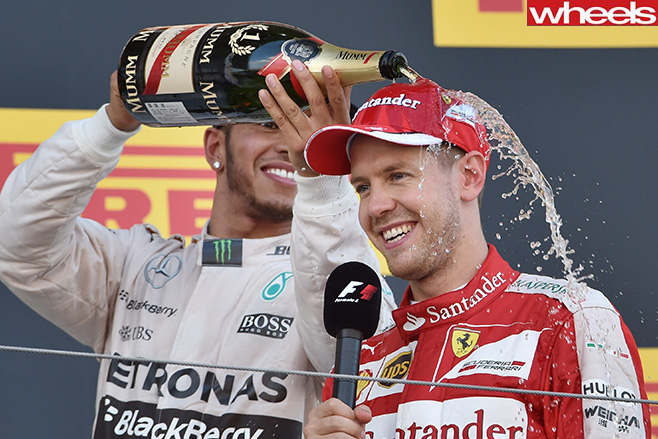
Not that Lewis cared: “I’m buzzing like you could not believe. As I’m walking through after the race I’ve got this rush but I’m thinking about all the different experiences I’ve been through and the people that have helped me along the way: my family, without whom I wouldn’t be here today, and everyone else that’s helped me – they know who they are.” Sounds like Hamilton thinks he has the title won.
Romain Grosjean and Pastor Maldonado shook off the concerns about Lotus’s future to lift team spirits with seventh and eighth. And the entertaining Toro Rosso whiz kids, Max Verstappen and Carlos Sainz Jr, grabbed the final points positions.
The McLaren Hondas were pretty sad at Honda’s home track, a tough day not helped by Fernando Alonso’s very public shaming of the Japanese power pack, comparing it to a GP2 engine. Amidst conjecture about their commitment to McLaren, Alonso finished 11th and Jenson Button 16th.
And Ricciardo? With a damaged floor, and that killer smile supplanted by a grimace, he battled to 15th, three slots behind Kvyat.
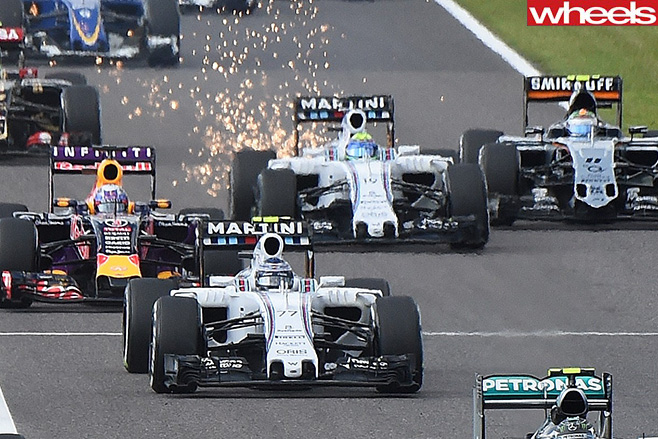
With five races remaining, three drivers are in the title chase. Realistically, though, Hamilton can rehearse his champion’s acceptance speech.
V8 SUPERCARS: Courtney battles for Bathurst
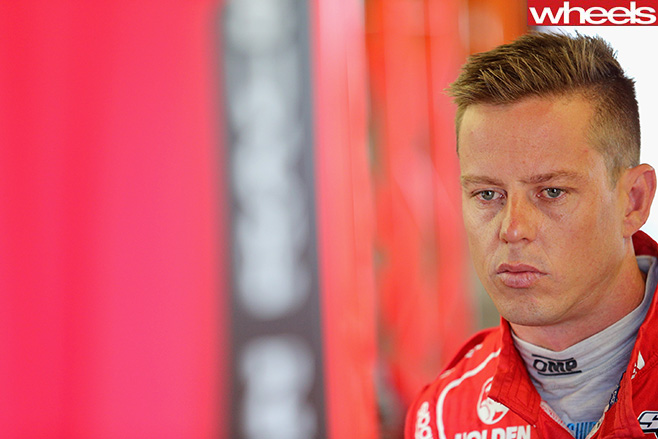
Injured in a freak incident at Sydney Motorsport Park last month when hit by advertising walls sent flying by the downdraft of a helicopter overhead, Courtney underwent a second medical procedure last week.
Initially Courtney was diagnosed to have received two broken ribs and a punctured lung, but further examinations revealed he had five broken ribs, and cartilage damage.
The follow-up procedure involved the driver getting pulsed radio frequencies (electrical pulses) into his ribs and the nerve endings ‘numbed’ to provide pain relief and assist recovery.
Time is tight but Courtney is optimistic he will be in his HRT Commodore when the track opens next Thursday. Russell Ingall, who was resurrected for the Sandown 500, remains on standby.
Formula 1: VW scandal hits Red Bull hopes
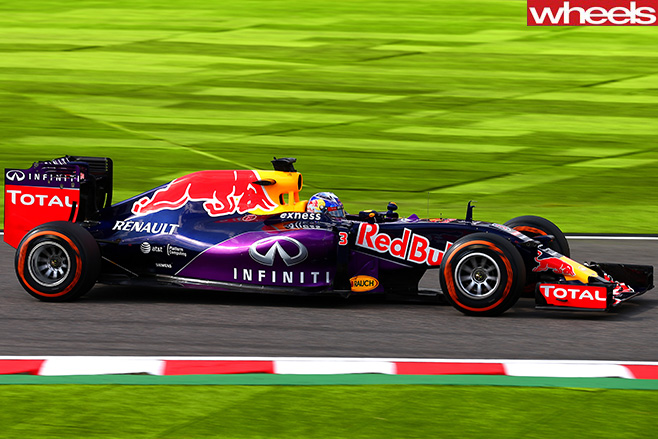
The scandal almost certainly spells the end of any possible purchase by VW of the Red Bull Racing F1 team. Speculation has been rampant in recent weeks that VW would buy the team, and also provide a hybrid V6 power unit from 2018, while the power drink brand would stay on as major sponsor.
How far down the track this rumoured takeover had progressed is not known – if in fact there was serious substance to the conjecture.
But in the wake of the current corporate dramas, it would not be a good look for VW to be spending up hugely on a comparatively frivolous activity such as F1.
Asked as much by NBCSN if it was safe to assume any link with Volkswagen was dead in the water, Red Bull’s Christian Horner acknowledged: “That seemed to go up in smoke.”
Back in Wolfsburg, in a tension-charged atmosphere of introspection and serious cost-cutting, there will also be questions asked about VW’s involvement in world rallying, and Audi and Porsche’s participation in international sports car racing.
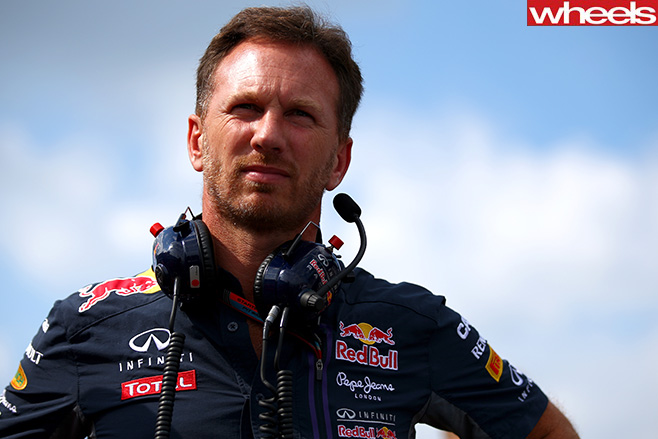
Former McLaren F1 Sporting Director Sam Michael, an Australian now working in the high-tech field of automation and big data, won’t say it is impossible to cheat today’s elaborate technical checks in F1 but instead offers that it would be “very difficult to change anything” to gain an advantage, and suggests that no sensible team would try.
The introduction to all F1 cars of a standard ECU (made by McLaren) from 2008 means the FIA can easily check the software. If a team tried to change the rev limit or fuel flow limit, the routine FIA checks would detect it immediately.
Noting the recent Volkswagen emissions scandal, Michael observed that teams in F1 and car makers like VW are in a parallel universe. “While objectives are different, both are highly incentivised to secure an advantage – VW to save money and sell cars; F1 teams to improve lap times.”
Both operate to strict, though dissimilar controls. F1 does not have a standard for exhaust emissions, just an overarching green philosophy – evidenced by fuel flow limits, energy recovery systems and turbo compounding.
“Of course the specific amount of emissions per F1 car is very high because they are powerful and therefore thirsty – hence the push for efficient technology. But 20 F1 cars emit nothing in the scheme of things – [which is] a world of more than one billion vehicles.”
FORMULA 1: Ferrari power catches Mercedes
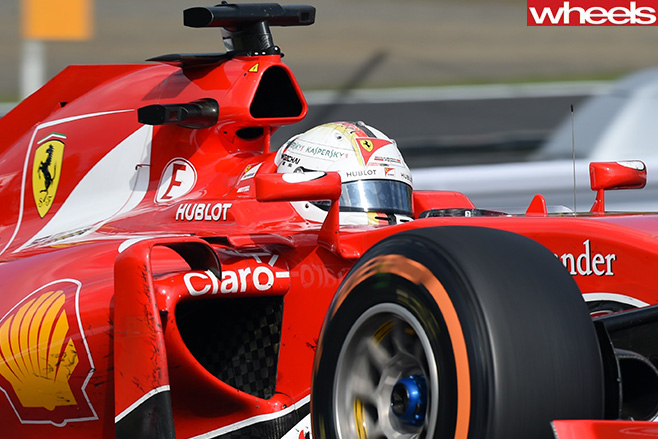
This is the first time the Mercs have been challenged in the power stakes since F1 moved to turbocharged 1.6-litre V6 power units in 2014.
Mercedes recently elbowed a serious request to supply Daniel Ricciardo’s Red Bull team with power units for 2016 and beyond. The rationale was that Merc engines in a Red Bull chassis would be a tough combo to beat. Red Bull then approached Ferrari as a potential (only) engine supplier. That request is still under consideration.
Question to Mercedes: if it happens, won’t Ferrari-powered Red Bulls pose a threat to the present Merc dominance?
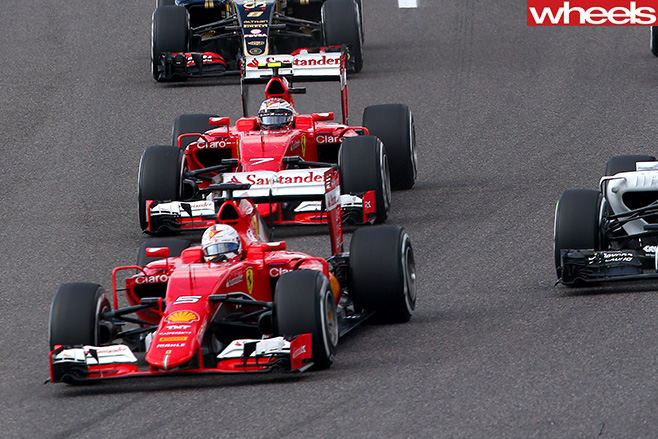
There is a greater concern – that Red Bull might take its toys and leave F1 (with Toro Rosso). That would be 20 per cent of the grid disappearing in a huff.
So Christian Horner’s immediate challenge is to make sure Red Bull stay in F1, with megabucks owner Dietrich Mateschitz somewhat disillusioned with F1 at the moment.
“We have a big commitment to Formula One, a big workforce, a very talented team and I’m doing my best to try and ensure that we find a competitive engine to power the team next year,” said Horner.
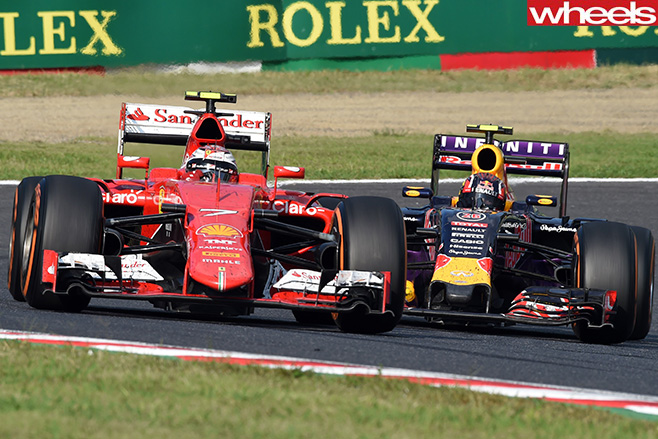
“Formula One has to provide a return. A marketing return globally. And, in order to do that, you need to be able to not be restricted in terms of the tools at your disposal.
“There are really only two engines out there that you can compete for grand prix victories with,” Horner told Sky News. One has already said no. The other apparently isn’t keen for Red Bull to get its 2016 power units.
Yes, there is a real chance that Red Bull walks away.
Unless Bernie gets very persuasive.
FORMULA 1: Haas to announce first driver
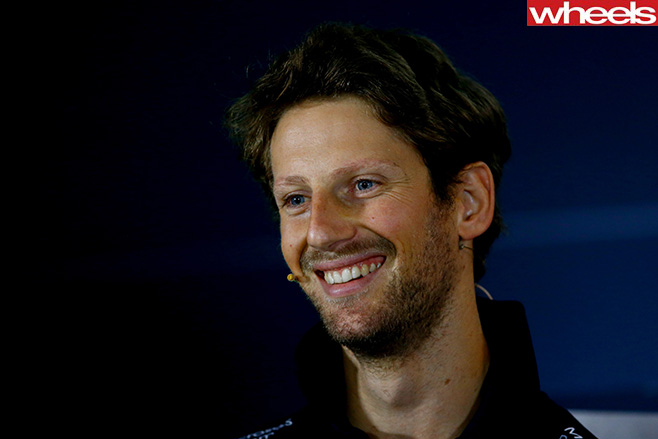
Except we already know who it is.
Team founder Gene Haas and team principal Guenther Steiner will make the announcement from the Haas F1 base in North Carolina.
The second Haas driver will be Esteban Gutierrez, the Mexican anointed by the team’s technical partner Ferrari.
FORMER Porsche CEO Matthias Muller has pledged that Volkswagen will aim for industry leadership in compliance with standards, after being appointed head of Volkswagen Group.
Muller was confirmed as board chairman and CEO of VW Group at a Supervisory Board meeting on Friday.
He replaced Dr Martin Winterkorn a week after the group admitted it had fitted cars with software that allowed them to bypass emissions tests in the United States.
“My most urgent task is to win back trust for the Volkswagen Group – by leaving no stone unturned and with maximum transparency, as well as drawing the right conclusions from the current situation,” said Muller.
“Under my leadership, Volkswagen will do everything it can to develop and implement the most stringent compliance and governance standards in our industry.”
Muller was chosen ahead of Dr Herbert Diess, who said on Friday that approximately five million Volkswagen brand cars were among the 11 million worldwide fitted with the bypass software.
Other changes were also announced after the Friday board meeting.
Bernhard Maier will take over as the boss of Skoda, after Prof Dr Winfried Vahland, formerly Chairman of the Board of Directors at Skoda, was announced as a board member and head of VW Group’s operations in North America.
Volkswagen North America CEO Michael Horn has not been removed and will remain head of the Volkswagen brand there.
On the product front, Porsche, Bentley and Bugatti will now be grouped together to produce a ‘modular tool kit’ shared platform for sports cars, including a ‘mid-engine toolkit’.
Around the world, Volkswagen has been criticised for failing to contact customers to reassure them of the legality and safety of their vehicles.
While it has embarked on a major restructure from the top down, starting with Mueller’s replacement of Winterkorn, VW customers are yet to be told whether if any action is required of them.
The software has been fitted to VW Group vehicles using the EA189 1.6-litre and 2.0-litre turbo-diesel engines, which includes the Mark VI VW Golf, previous generation Audi A3 and various Skoda models. VW is yet to issue an official list of which cars are affected.
SUZUKI is back in the small-SUV game in a big way with the Vitara, a monocoque rival for the Mazda CX-3 that majors on style, space, handling, and personalisation.
WHAT IS IT Based loosely on the near-invisible S-Cross, the fourth-gen Vitara is vying for Mazda CX-3 and Honda HR-V buyers. It is the first Suzuki Vitara without a ladder-frame chassis construction, losing the tough go-anywhere potential of previous versions. But the newest Suzuki gains plenty on the road, with dynamics, refinement and driveability formerly foreign to the nameplate.
WHY WE’RE TESTING IT Once a decade, Suzuki goes that extra mile. Last time it was the 2004 Swift, and the new Vitara might be next. The pricing, quality, refinement, packaging, efficiency, and design all suggest it has, and even the small but sweet 1.6 atmo engine seems up to the task.
MAIN RIVALS Ford EcoSport, Holden Trax, Honda HR-V, Mazda CX-3, Nissan Juke, Peugeot 2008, Renault Captur, Skoda Yeti
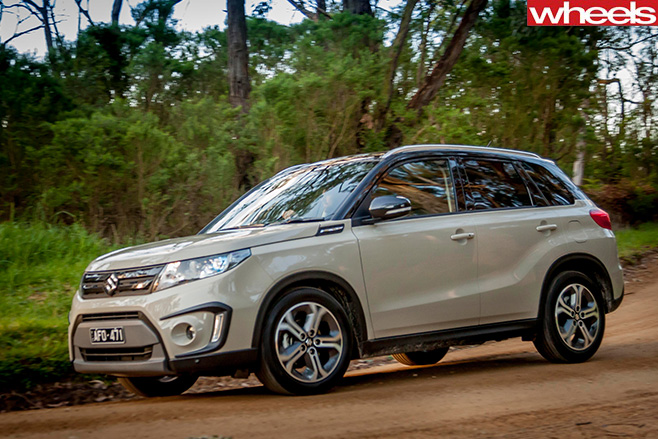
PLUS: Space, comfort, handling, ride, value, economy, ease, some off-road ability MINUS: Torque shortfall, no driver-assist tech, no digital speedo, some road noise
THE WHEELS REVIEW ANY WHICH WAY you look at it, Vitara is an ‘80s icon right up there with Roger Rabbit, Reebok and Roxette. The modishly chunky original sure had the look, inspiring the Toyota RAV4 that kicked off the whole car-based compact SUV craze.

Enter the Vitara IV, based on the nearly invisible S-Cross’s still-box-fresh small-car platform, scaling back hundreds of kilos and thousands of dollars in the process. It starts from $22,990 drive-away for the 1075kg front-drive manual RT-S, while the mud and snow traversing AWD RT-X range-topper is also pretty lithe at $31,990 (before on-roads).
What compact SUV seekers may swoon at is the standard sat nav, reverse camera, touchscreen multimedia, Bluetooth phone, audio streaming, cruise control, speed limiter, 17-inch alloys, privacy glass, and LED daytime lights – along with seven airbags for a five-star ANCAP rating. Suzuki is shifting the value goal posts.
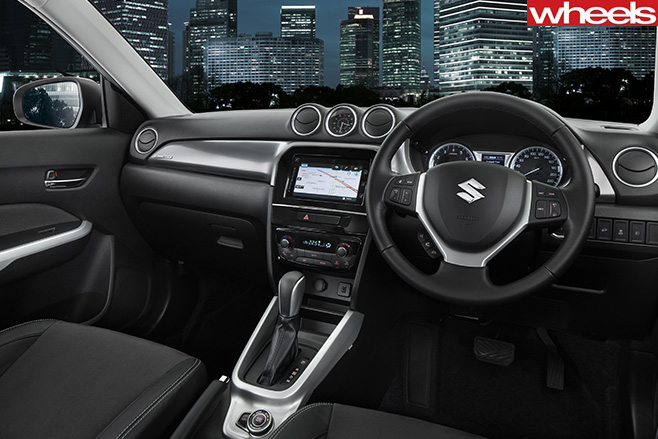
Lightly laden, even the slick (Aisin six-speed torque-converter) auto doesn’t feel undernourished, stepping away keenly thanks to a sensibly spaced set of ratios. On the RT-X AWD, a Sport mode effectively keeps the engine revs within the power band, so it can feel punchy on the move, especially as the mechanical accompaniment is one of smoothness and not coarseness.
While the Sport-less auto front-driver is also fairly spirited, heavy loads, hills or both can impede progress – so be prepared to downshift frequently (in the slightly notchy manual) and bury that right foot to keep the 1.6 singing up in the sweet spot. At least promising economy is the pay-off: between 5.8 and 6.3L/100km officially.
Still, the chassis deserves more. Vitara’s dramatic diet has resulted in steering that’s pleasingly Swift-like, meaning sharp off-centre responses and enthusiastic yet controlled turn-in that keeps the driver connected. Unlike the rubbery old versions. Add taut handling and plenty of grip from Continental 215/55R17 tyres, and Suzuki has clearly tuned this SUV for fun. Ride comfort is yet another bonus, which leaves occasional road-noise intrusion out on the open road as the only thing to whinge about dynamically.

As the analogue clock, flanked by the central circular vents, and various colour personalisation options attest, the latest Vitara is trying hard to fit in with 21st Century fads. However, the absence of driver-assist tech such as autonomous emergency braking is vexing; the rear bench – which sits okay – lacks the recline and/or slide functionally of some rivals; and there are no face-level air vents back there.
Nevertheless, Suzuki has nailed the basics with Vitara IV, blending traditional brand virtues – such as some off-road capability in the RT-X AWD – with some of the CX-3’s dynamic smarts, the Honda HR-V’s packaging, and Renault Captur-aping multi-configurable style. The ‘80s compact SUV pioneer finally comes of (this) age.
SPECS Model: Suzuki JY Vitara RT-X Engine: 1586cc 4-cyl, dohc, 16v Max power: 86kW @ 6000rpm Max torque: 156Nm @ 4400rpm Transmission: 6-Speed automatic Weight: 1185kg 0-100km/h: NA Fuel economy: 6.3L/100km Price: $31,990 On sale: Now
