
PLUS
- Stylish. With the Mercedes-Benz badge at the front, it’s hard to think of it as anything but. But even as the entry price option for the A-class, the cabin is chic and built from quality materials.
- The tyres. We love that you can last about an extra 80km on a flat, which we think will come in handy for those pesky flats in the middle of winter.
- Affordability. For a Benz, it sits at a pretty affordable price-point.
- Safety. It has nine airbags and a bunch of safety technology, including attention assist which alerts you if you’re falling asleep at the wheel.
- Storage. While space isn’t a highlight of this car, there are a few handy storage spots, like under the seats.
- Space. There’s not much of it, but then again, compared to rivals it’s not too far off the mark. Headroom is also lessened in the models with a panoramic sunroof.
- Visibility isn’t great, mainly due to the shape of the back doors. But it comes with a reverse camera which counteracts the issue.
- Infotainment system is a bit messy. It takes a bit of playing around with, but like anything, once you get used to it, it’s not too much of a hassle.
- This isn’t a car for the faint hearted. Nah, just joking. The A180 feels slower than you’d expect and if you’re look for a bit of power, there are some better choices.
Toyota has given the Prado its first all-new diesel engine in nine years. It’s smaller but more powerful than the engine it replaces, and a sixth ratio has been added to the auto gearbox. The unloved petrol V6 has also been tweaked.
WHAT IS IT The Toyota Prado is Australia’s best-selling large four-wheel drive wagon. It’s an old-school 4WD that has genuine off-road ability but does most of its work as a day-to-day family bus.
WHY WE’RE TESTING IT Toyota’s 150 Series Prado has received its first significant mechanical upgrade since it was launched in late 2009. A 2.8-litre diesel and six-speed auto replace the 3.0-litre diesel and five-speed auto that had been carried over from the previous generation Prado. The new engine brings a modest 3kW power increase but it offers a solid 40Nm of extra torque, with a maximum 450Nm that’s on tap at just 1600rpm.
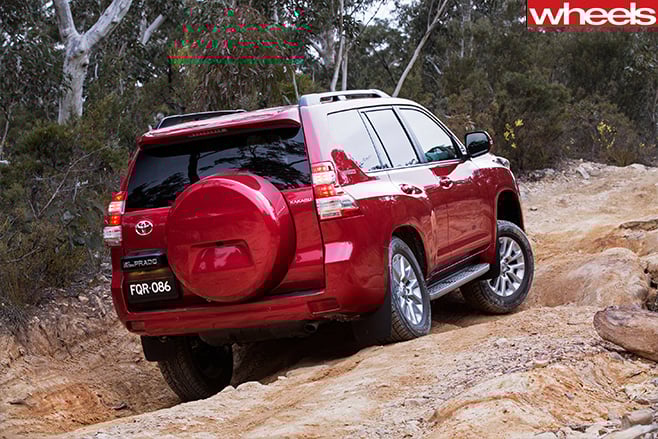
THE WHEELS VERDICT Prado’s new diesel engine and auto gearbox bring a new level of refinement and driving pleasure, but no significant improvement in performance.
PLUS: Much refined diesel powertrain; comfortable ride; formidable off-road ability. MINUS: Modest performance; soft and uninspiring on-road dynamics.
THE WHEELS REVIEW THE PERENNIALLY popular Toyota Prado has received a new, 2.8-litre diesel engine, the first new diesel in any Prado since the 3.0-litre KD-FTV, or D-4D as it is commonly known, arrived in late 2006 in the previous, 120-Series Prado.
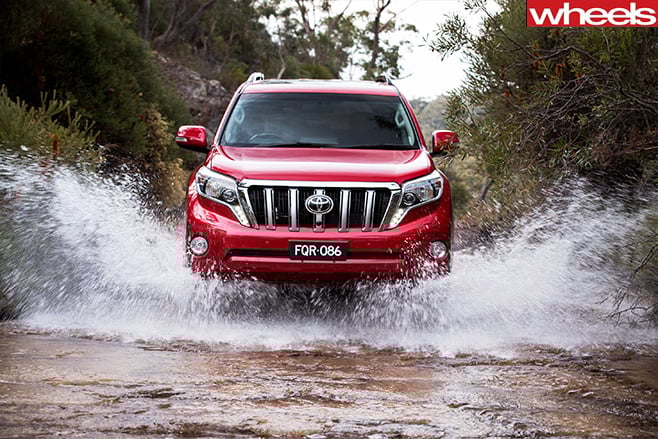
Given that 98 percent of past Prado buyers have opted for the diesel over the Prado’s more powerful petrol V6, the diesel is the main deal here. With diesel also dominating Hilux sales, and the Fortuner to be diesel-only, this engine is destined to become very common on Australian roads, and quickly.
The diesel in question is designated the 1GD-FTV, where GD stands for Global Diesel. Even though the D-4D moniker is carried over, this is new from the ground up.
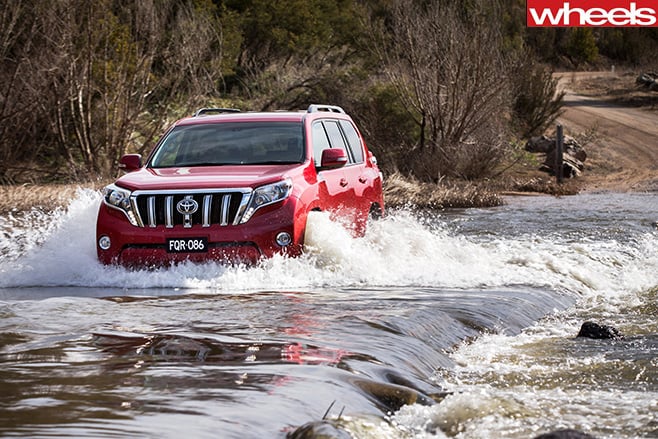
It does this off the back of the latest generation high-pressure (2500bar) common-rail fuel injection system, a more sophisticated variable-nozzle turbocharger and newly designed combustion chambers.
The claimed maximum power of the 2.8 is still only 130kW, up just 3kW up on the 3.0-litre engine, so it’s still no rocket given it has to haul well over two tonnes of bulky 4WD. Still, the 2.8 is generally more enthusiastic than the 3.0 thanks to its extra low-rpm torque.
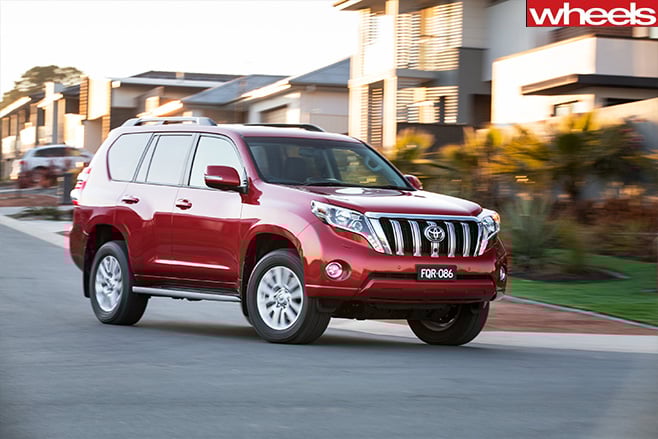
When mated to the carried-over six-speed manual (only available on the less expensive GX and GLX variants), the 2.8’s maximum torque is pegged at 420Nm. But this comes on tap at just 1400rpm, so there is 10Nm more at 200rpm less than the out-going 3.0-litre – again a measure of the extra efficiency of this smaller engine.
This new 2.8 is not however about extra performance. It’s about refinement, and this is where it makes the biggest leap forward from the 3.0-litre. It doesn’t sound or feel as diesel-like.
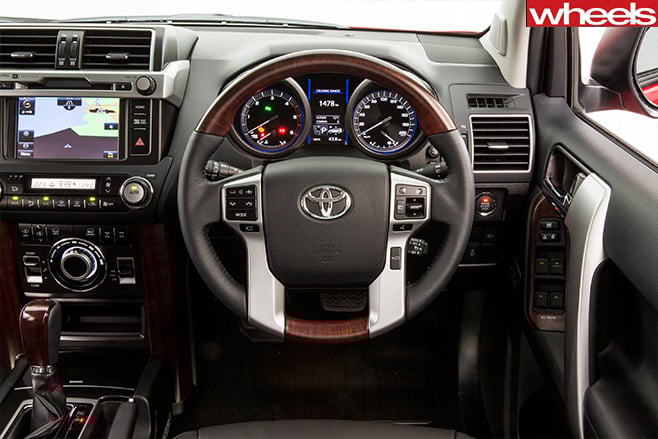
The overall driving experience is also enhanced by the six-speed auto, as the shifts are notably slicker and better timed than the five-speeder’s were. The 19 percent taller top gear also makes the Prado quieter and more relaxed at highway speeds.
As ever, the supple, long-travel suspension produces a cosseting ride on even the worst roads, with only the odd disturbance from the solid axle at the rear. But with the Prado’s significant weight factor thrown in, the soft suspension also contributes to soggy and generally uninspiring dynamics, although VX and Kakadu models, with their KDSS suspension do handle noticeably better.
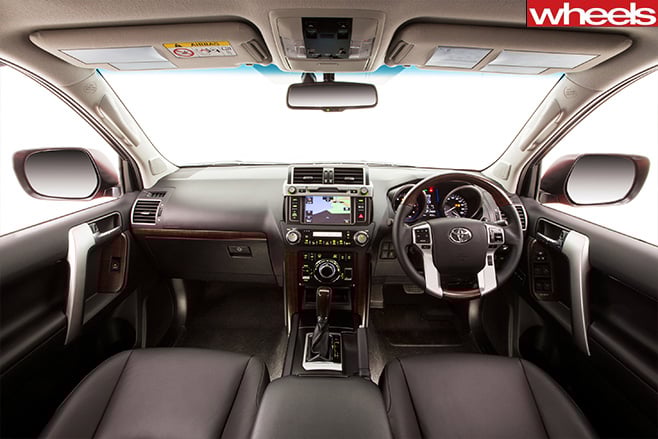
In a move that should please buyers, satellite-navigation has been added to the standard equipment list of the volume-selling GXL model. The top-of-range Kakadu model also adds a rear cross-traffic alert.
One thing that Toyota hasn’t done with the new Prado is address it’s modest 2500kg tow rating. Competitors such as Jeep Grand Cherokee and Land Rover Discovery are specified to tow 3500kg. Not that buyers seem to mind.
SPECS Model: Toyota Prado GXL Engine: 2755cc 4cyl, dohc, 24v, turbo diesel Max power: 130kW @ 3400rpm Max torque: 450Nm @ 1600-2400rpm Transmission: 6-speed automatic Weight: 2220kg 0-100km/h: n/a Fuel economy: 8.0 litres/100km Price: $61,990
Click here to read the full range review of the Toyota Prado.
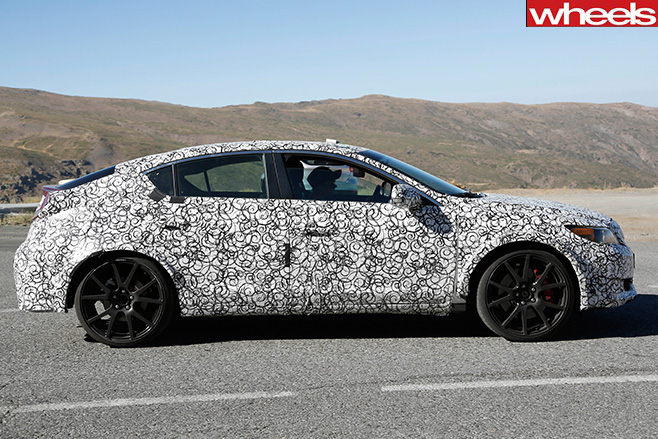
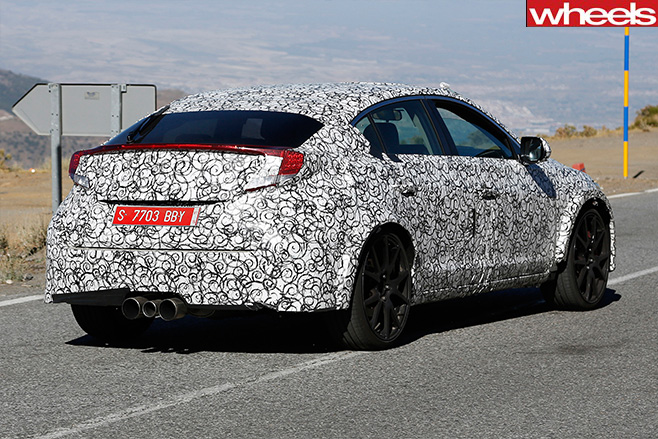
SPREAD before you is perhaps the biggest change to hit the Honda Civic in nearly 43 years of its existence, with Australia looming large as a target for the Type R prototype snapped here.
Due to be unveiled within 12 months, the 10th-generation Honda Civic Hatch will be a clean-sheet redesign, growing in size, wheelbase, track width, cabin space, and performance.
Its aim is to take on more effectively Europe’s most respectable C-segment mainstreamers – namely the Volkswagen Golf, Ford Focus, Renault Megane, Opel/Holden Astra, and Peugeot 308.
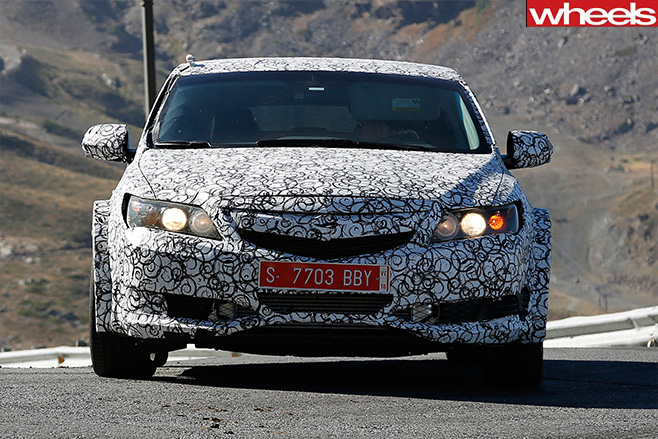
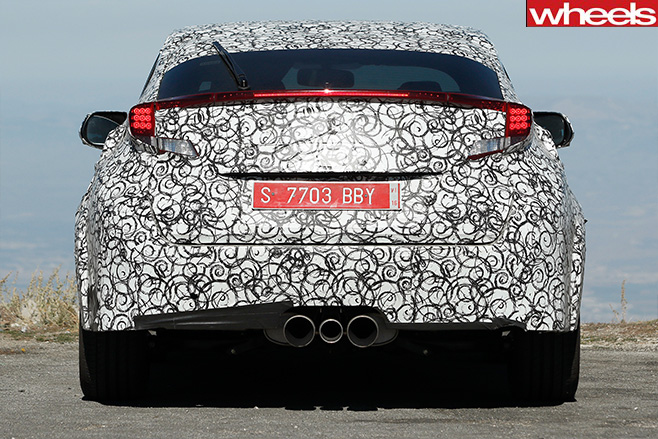
Undergoing hot-weather testing in Spain, this Mk10 Civic Type R prototype is also brandishing the usual hot-hatch accoutrements – big wheels, low-profile tyres, Brembo brakes, and visible air intakes for the intercooler – but no crazy oversized hatch-spoiler, indicating newfound maturity for 2017.
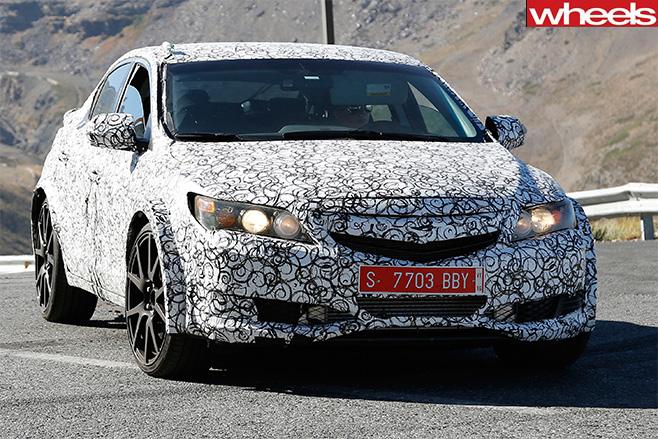
Whether the Civic Sedan (to be unveiled next week in the United States, much earlier than the Mk10 Civic Hatch), and Civic Coupe two-door (unlikely for Oz) also gain the more upmarket rear end is not yet known. The small-car segment Stateside is extremely price-sensitive, the three-box Honda slogging it out against the Toyota Corolla, Volkswagen Jetta, Hyundai Elantra, Kia Cerato/Forte, and Chevrolet-nee-Holden Cruze. What has been confirmed is that, unlike Civics since 2005, all bodystyles will be built on Honda’s box-fresh, common small-vehicle architecture.
Despite offbeat styling and some very keen pricing, the existing Civic has not been a success for Honda, falling under the shadow of larger yet sharper and more innovative rivals such as the Golf. Honda boss Stephen Collins has declared to Wheels that the next one will be completely different and “absolutely worth the wait”.
There was a time when my ears would robotically tune out at the mention of cars. Engines, power, torque, gears, fast, slow, loud, quiet, sporty, big – ugh, you may as well have asked me to sit in a paddock and count how many blades of grass the cows ate.
Even now, the boys I work with will tell you I have the attention span of Nemo’s mate Dori when the outside-of-work conversations turn to cars, as it always does. These days, however, my apathetic attitude toward their conversations is less about not caring, and more about the type of cars ruling the discussions – loud, powerful, expensive cars!
That was until I sat behind the wheel of a Lamborghini Aventador. But let me come back to that…
Conversations with the boys usually go something like this:
Car-loving work colleague 1: Hi how was your weekend?
Me: Good thanks Colleague 1, I went to this theatrical restaurant that served some of the most delicious food I’ve ever eaten.
Colleague 1: Oh, tell me more…
Me: It’s called [insert name of restaurant] and serves this modern Japanese food. It’s located in…
*Car-loving work colleague 2 enters conversations and interrupts*
Car-loving work colleague 2: Hi guys. What did you get up to on the weekend?
Me: I went to this really cool restaurant that had acrobats flying around inside while we ate and…
Colleague 1: Hey mate. How did you go driving [insert name of insanely-expensive-car-that-makes-lots-of-noise-and-has-a-weird-name-that-you-can-never-remember]?
Colleague 2: It was awesome. It’s a beast. Those things are super powerful.
Me: ….
Colleague 1: That’s sick man. How did it sound?
Me [using inside voice]: How did it sound? Sound? It ‘sounded’ like a car. You know, broom broom!?
Colleague 2: Like nothing I’ve ever heard before. It was so unbelievably loud and beautiful.
Me [inside voice]: Did he just say the ‘really loud’ sound a car makes is ‘beautiful’? Flowers are beautiful, people are beautiful, and violin music is beautiful. But the grunt of an engine?
Colleague 1: Oh man, that makes me tingle inside. I’m so jealous. What about the transmission?
Me [inside voice]: Seriously guys, I was talking about acrobats flying around me while I ate dinner served on a platter licked clean by the Queen, and handed to me by Elvis Presley’s cousin’s daughter, and you want to talk about a car making ‘broom broom’ noises and it’s transmission? *stares blankly*
Me: AHEM! What car are you talking about? *turns to Google*.
Me [inside voice]: Unless it was driven by Elvis Presley and is 9ct gold plated and can do more fancy things than a Bond car, then I’m only asking this question so I can pretend to be interested in this conversation that is definitely nowhere near as interesting as the amazing restaurant I went to…
Colleague 2: [Insert name of car]. It’s got a naturally aspirated 12-cylinder engine, and the transmission is flawless. And it’s so light, you barely feel like you’re driving anything, and yet it’s got so much power you only need to touch the accelerator and [insert more words].
Me [Dori fish brain kicks in] [inside voice]: Hmmm, I wonder what I’m going to have for lunch today. It’s 10am already, well past coffee o’clock!
Me: Keep it in your pants boys. *walks off*
Maybe I’m exaggerating a little here – I do actually take more of an interest than I’m letting on. But, my point is, in this world I live in, sometimes it can feel like cars rule every…single…conversation. Particularly when you’re surrounded by a bunch of car-nuts. Sometimes I feel like I’m jumping up and down just for some attention. I live and breathe automotive, it’s my job and I love it, but my perspective and the way I look at these machines is very different to some of my office buddies.
For example, cars that are really loud annoy me. Some guy who lives in my neighbourhood drives around in his sports car that’s louder than metal grinder on a hangover, and probably cost more than my house. It’s annoying and it’s impractical – I mean, how are you meant to have a conversation without losing your voice, or sing along to your road-trip playlist? Impossible. Ridiculous.
And don’t even get me started on the line ‘it looks sporty’ because that basically means it’s so low to the ground I need to duck-and-roll just to get out every time we park near a sidewalk. It may look cool in Mad Max, but trust me, you look like you should be constrained by a straitjacket when you summersault from a Ferrari in the middle of Toorak.
That’s just how I feel about them. It’s how I’ve always felt about them. At least, that was until I drove (read: sat inside) a Lamborghini Aventador. Suddenly I switched from cursing my neighbourhood cruiser to jumping out of bed to see what of car he drives. I’ve even started shoving my phone in people’s faces to show them footage of the Lamborg driving out of the work garage, and going as far to claim I was the driver (I wasn’t). Occasionally, I catch myself listing off facts about the Aventador. The softness of the leather steering wheel, the curves of its face, the futuristic silhouette, the gadgets, the gizmos, the smell.
It carries a $1mil on-road price tag and it’s much wider than you’d expect. Don’t even get me started about how powerful that V12 engine is; you just need to touch the accelerator and you’ll end up on the other side of the country. And boy, that sound. It’s like music to my ears. Forget this broom broom stuff, this thing is exactly how a car should sound. But the Aventador is utterly impractical – like, you wouldn’t believe how low to the ground it is, and there’s nowhere to store anything… Holy moly, who am I!?
It’s like I’ve caught the bug. I mean, it’s not like I could pass up the opportunity to experience it – how could I judge it otherwise? I just didn’t expect it to be as exciting as it was.
Don’t get me wrong, I still think these beasts are totally impractical and if you gave me the keys to one, I’d probably run for the hills. I don’t like them at all. Seriously. I don’t. Not even one little bit. Just don’t ask me where the keys are, okay?
Broom broom!
Volkswagen has drawn first blood for this weekend’s WRC Rally Australia, its drivers setting the top three times during the pre-event Shakedown stage.
Shakedown is a short 4.98km stage used by the drivers to fine-tune car setup and is a good indicator of confidence heading into the stages proper.
Despite almost rolling the car on the very first corner of the stage, dual world champion Sebastien Ogier recovered to set the fastest time, 1.1sec faster than team-mate Andreas Mikkelsen.
Ogier has won the past two Rally Australias and a third victory would secure him his third straight world title with three events still to run.
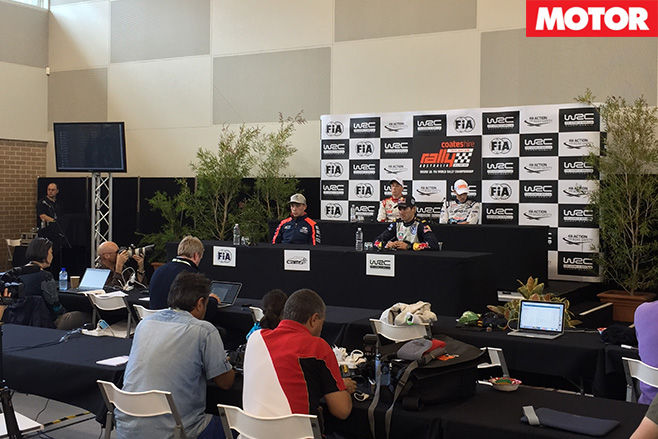
“[I will] try my best to fight for victory,” said Ogier during the pre-event press conference, “there is quite a lot of loose gravel; I will have to try and take risks.”
Hoping to capitalise on their favourable running order will be Citroen’s Kris Meeke, Hyundai young gun Kiwi Haydon Paddon and M-Sport (Ford) driver Ott Tanak, the only three drivers who have challenged the VWs on pure pace this year.
Citroen’s second driver, Mads Ostberg, has withdrawn from the event following a heavy crash during recce, which the drivers use to write pace notes for the event. He has been replaced by Stephane Lefebvre, who happened to be on the event to gain experience for next year.
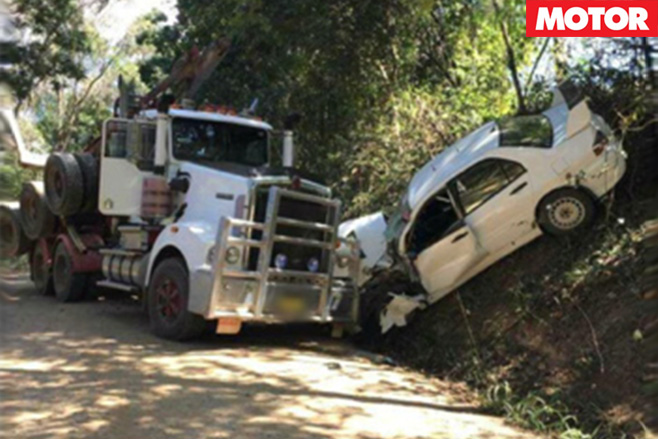
Day 1 of Rally Australia consists of eight competitive stages comprising 125.12 competitive kilometres and we’ll bring you all the action in our evening wrap.
This is the driver’s Golf you may have been waiting for since the seventh-generation’s release.
Volkswagen has announced the GTI Clubsport Concept seen at Worthersee earlier this year has been rubber stamped to enter production, seeing the GTI badge elevated to new performance heights for its 40th birthday in 2016.
Power is the Clubsport’s biggest talking point. Wolfsburg’s engineers have warmed its turbo 2.0-litre inline four to 195kW, representing a 26kW increase over the standard GTI.
But they’ve also introduced an overboost function as well. With the throttle pinned flat, the Clubsport will be able to squeeze another 18kW from the EA888 for 10 seconds.
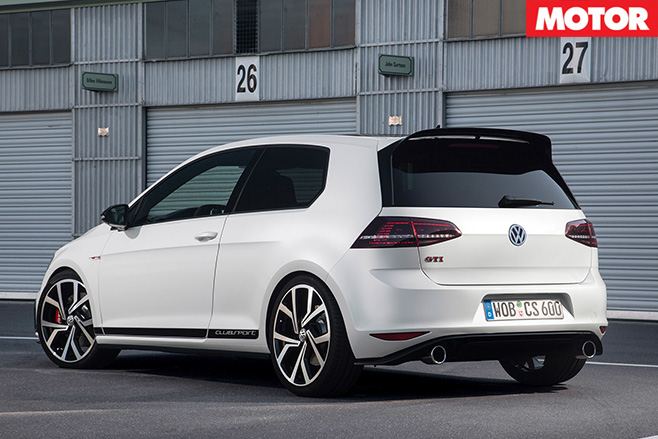
Both types of transmission will clock the Clubsport at a top speed of 250km/h. While an irrelevant figure in most situations, Volkswagen has paid particular attention to the car’s aerodynamics at such velocities, boasting the Clubsport wields “groundbreaking” handling at high speed.
This would explain the Clubsport’s boisterous rear wing, slicing side skirts, and new front bumper, all of which look unchanged from the concept car’s package.
The Clubsport will ride on 18-inch wheels of a new design, but optional exclusive “Brescia” 19-inch wheels are available as well.
Meanwhile the black strip linking the car’s wheel arches is one among many additions that are a nod to the car’s anniversary status.
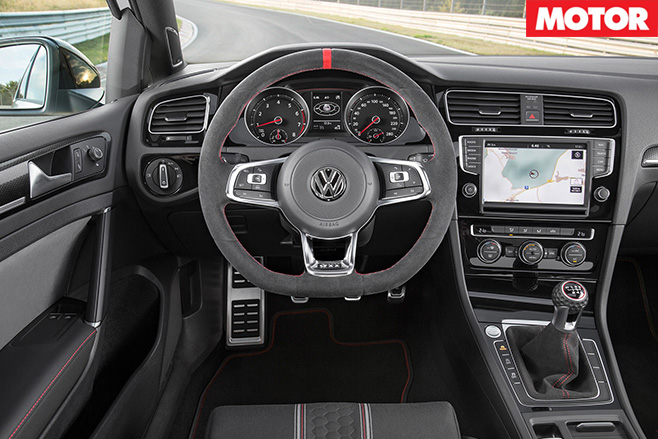
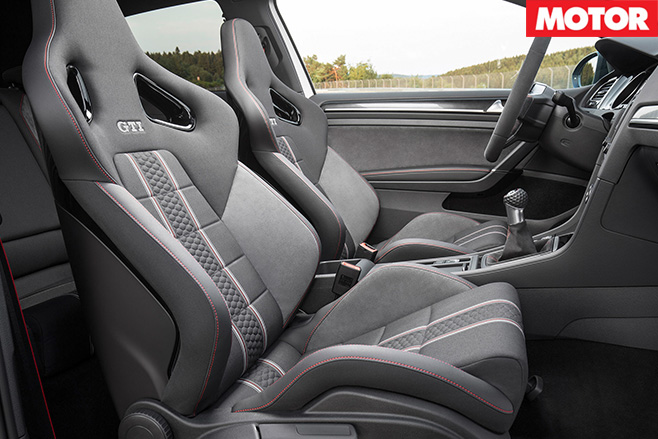
Like the seats the steering wheel is covered in alcantara, and is also stitched with red. It scores a ‘12 o’clock’ marking too.
It’s reported the Clubsport will be a full-production model, but Volkswagen’s yet to release any information on pricing or market launch for the GTI Clubsport.
Reports are also predicting the three-door special will be priced close to the Golf R, which starts at $52,740 in Australia, when it launches in showrooms sometime next year.
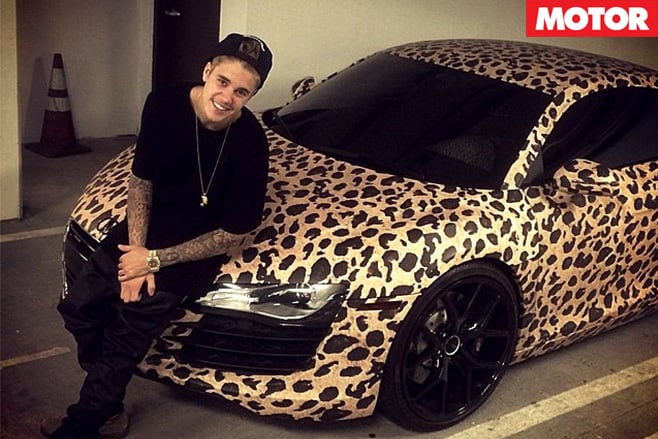
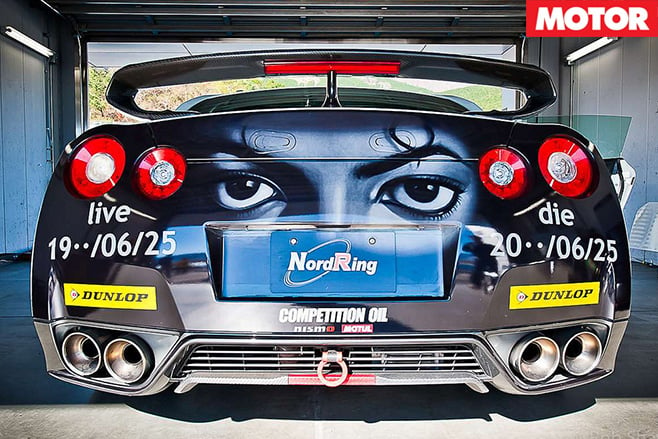
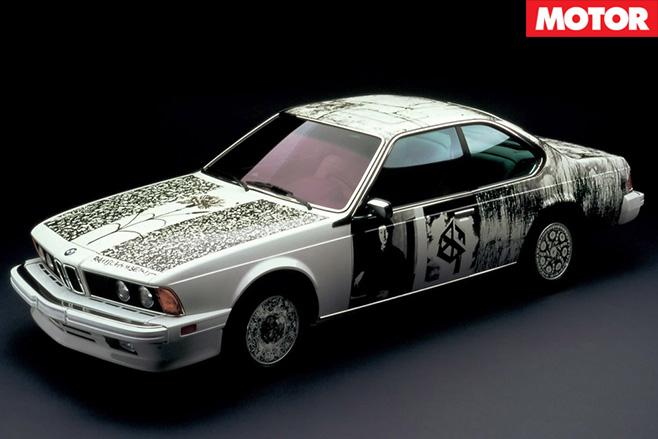
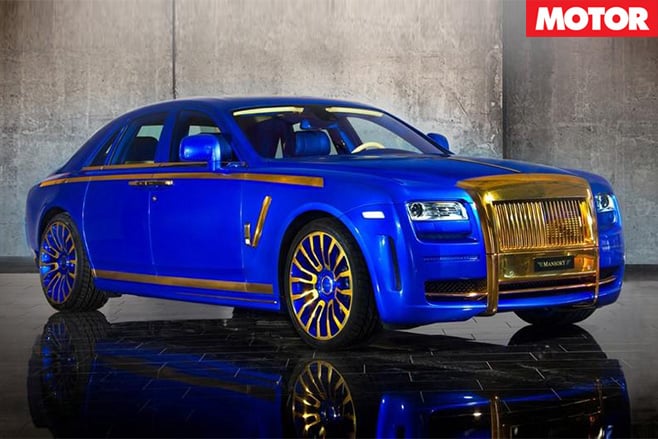
When using a car as your canvas, it’s important not to turn it into a hateful, retina-burning monstrosity. Forgive us for wishing these ‘artists’ had found a different outlet.
1. Justin Bieber R8
2. Michael Jackson GT-R
3. BMW 635 CSI Art Car
4. Mansory RR Ghost
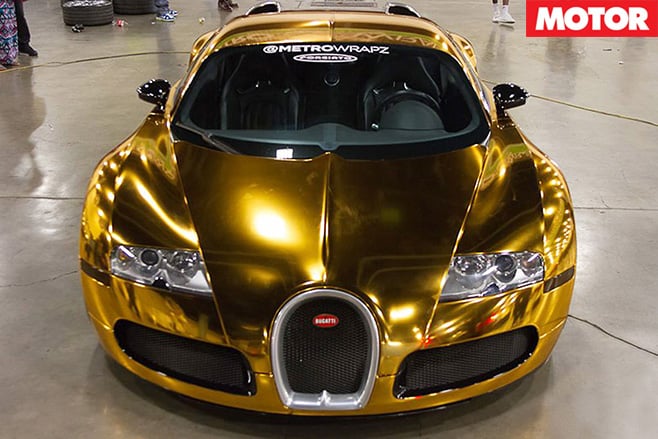
5. Gold Bugatti Veyron
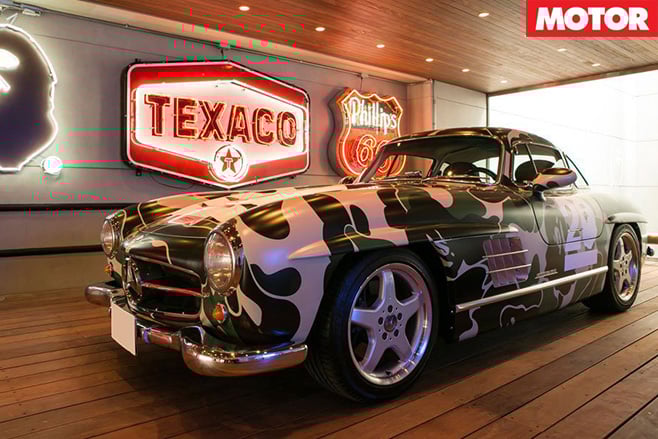
6. Bape Merc-AMG 300SL
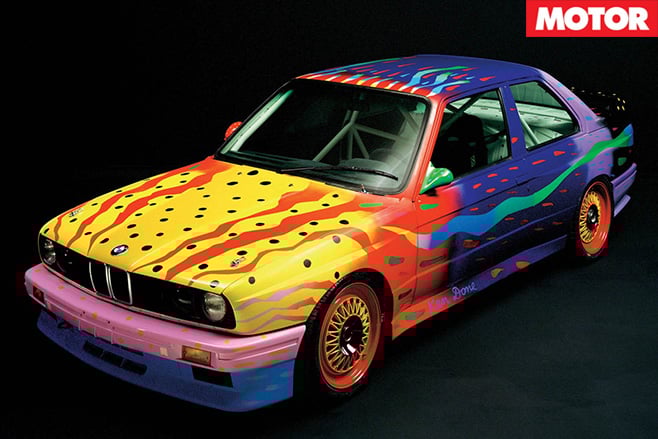
7. Ken Done BMW M3
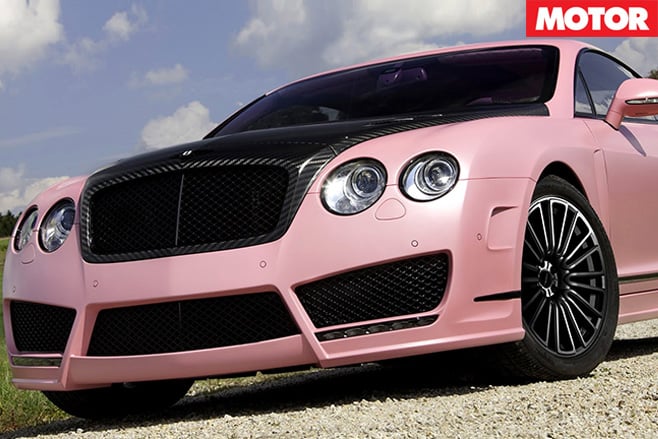
8. Mansory Vitesse Rose
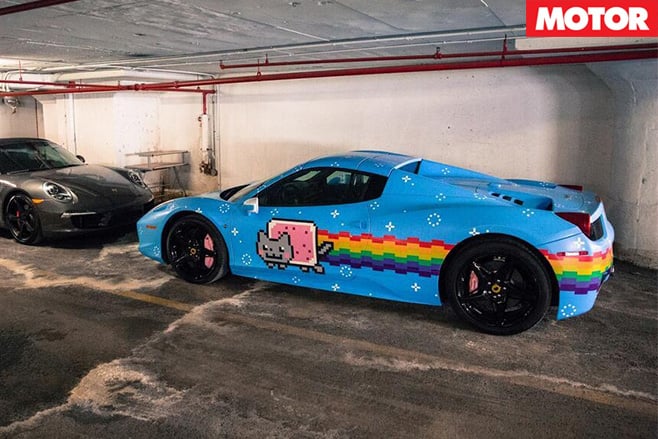
9. Deadmau5 Ferrari 458
Will your new Carrera S thump and slap around town? Um yeah, they all do that. Ain’t it wonderful…
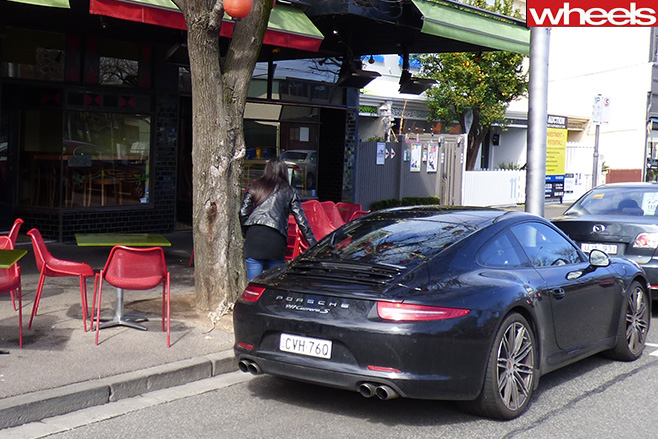
I HAD A Porsche 911 recently, and took a mate for a drive. A smooth-as-butter black Porsche 911 Carrera S, with PDK transmission and Turbo wheels. They were the first things he commented on as we meandered along the Princes Highway in Melbourne traffic, stopping, starting and doing it all over again. “The ride’s pretty harsh,” he said matter-of-factly.
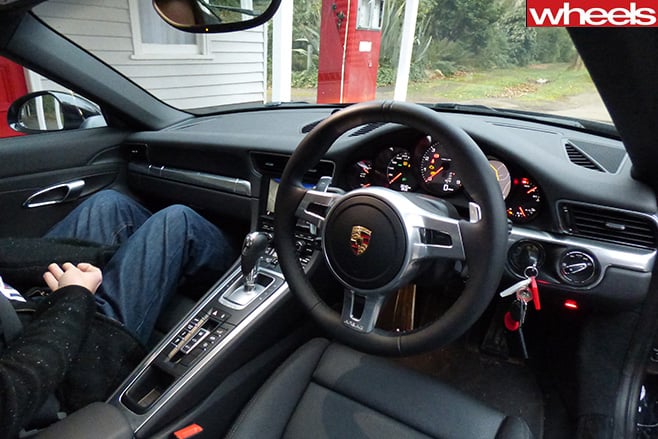
Wouldn’t have gone that far myself, but I saw his point. It’s a firm ride. That cabin is as tight as Donald Trump, and the steering wheel is a throwback to a simpler time when stereo and trip-computer buttons were standard fare on the spokes.
In fact, this car didn’t have shit. Not on paper.
“The funny thing is, most blokes who buy these cars are in their 50s,” says mate, “and they’ll never get near what it can do. So maybe they should soften the ride a bit, make it more comfortable.”
No way. That’s a bad idea. The 911 is The Car. It’s the machine people buy for what it can do and what it represents, not for what they can actually achieve in it.
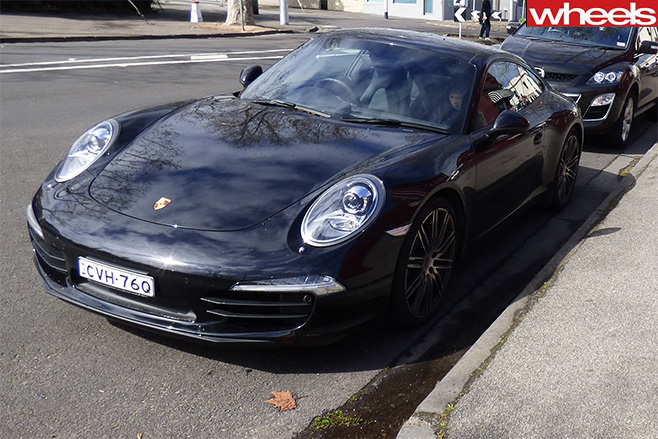
To soften the 911, to replace those chiropractor-backed wheels and springs with something as delicate as its owner’s spine, would be to destroy the 911’s essence. And, while that buyer may be far more comfortable in a Mercedes S-Class with airbag suspension to cushion his or her ego, an S-Class doesn’t garner the adoration, respect and lust that the Porsche 911 has earned. So even if it is not the ergonomic partner that some other luxury cars are, none of those can match the complete 911 package.
In the UK recently, an editor of a particular magazine bought a 996 911 GT2. You know, the one with the fried-egg eyes, my least favourite generation 911. Around the same time, another magazine’s buyer’s guide called the 996 the worst GT car Porsche had ever made. To me, that’s like debating Shakespeare’s worst play, or Usain Bolt’s least impressive gold medal.
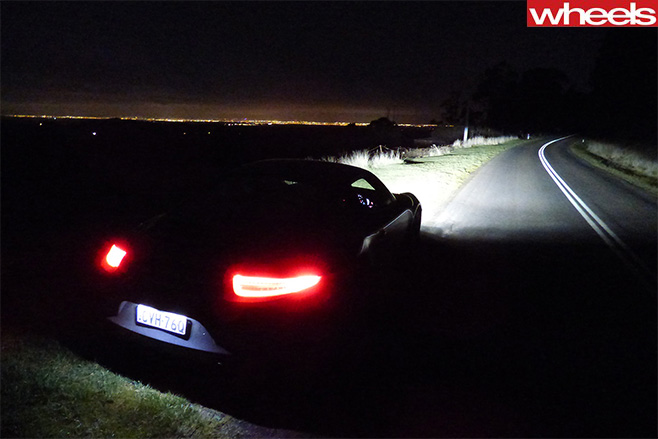
Porsche has confirmed a new generation of turbocharged engines will power the 911 into the future. Read more here.
PLUS
- Value for money. Your dollar goes a long way with the Veloster. Standard equipment in all models is impressive, including cruise control, iPod/USB/Aux/Bluetooth connectivity, keyless entry, six airbags, auto headlights and lots more.
- Parking sensors and reverse camera. All Velosters have parking assists as standard fitment. That’s a bonus as the limited rear visibility would make parking without them quite tricky.
- Tyre pressure sensors. The Veloster boasts lots of safety equipment including a system that monitors how much air is in your tyres. That’s a good thing, and impressive as a standard feature on all models.
- Warranty. Hyundai provide a five-year warranty on the Veloster with no limit on the number of kilometres travelled in that time.
- Looks sportier than it feels. The non-turbo models don’t quite have the grunt to match the go-fast styling.
- Unique doors. The Veloster is the only hatch on the market with different doors on either side. Whether you like it or not will depend on your feelings about asymmetry, though practically it is a useful feature.
- Gearbox. The Veloster’s dual-clutch automatic transmission leaves a bit to be desired as far as refinement is concerned. It can be jerky in stop-start traffic. We prefer the manual.
Claimed to be “the fastest, most powerful, most luxurious and most exclusive SUV in the world.”
Enthusiasts of the British brand can also breathe a slight sigh of relief – we reckon the Bentayga looks nowhere near as vulgar as the 2012 EXP 9 F Concept that previewed Bentley’s first production SUV.
Since that concept, the Bentayga has found some subtlety to its front- and rear-end lines while picking up some extra muscle in its haunches and a distinctive ‘horizontal T’ side character crease.
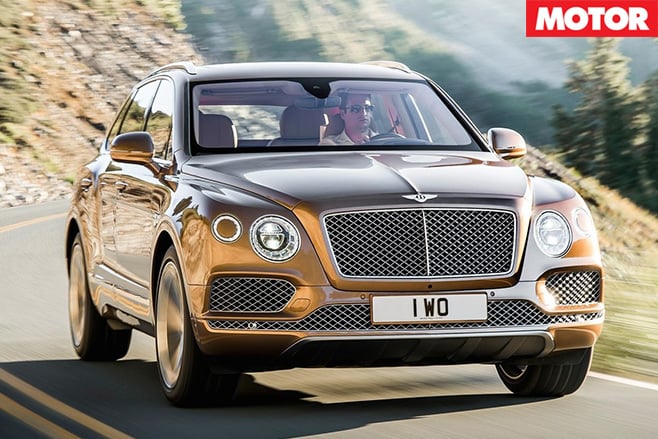
For all the weighty excess, stop-start and cylinder deactivation tech and an auto that drops out of gear when coasting helps achieve 12.6L/100km consumption, a W12 best for the brand.
Meanwhile Bentley has aimed to make this elephant both dance and play in the mud.
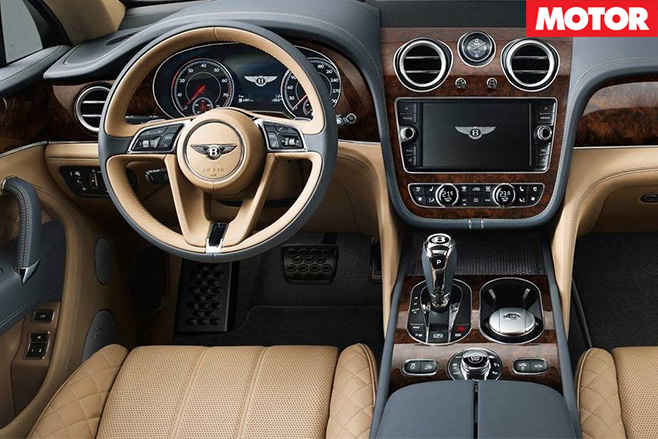
The Betayga has both tackled the dunes of Dubai and completed 400 laps of the Nurburgring, according to the brand.

Standard are 22-way front and 18-way electrically adjustable twin rear seats with massage and ventilation functions. There is a fifth seat optionally available, as is a sixth seat that drops from the tail-gate to be used as a rear viewing pew or “folding event seat” when halted.
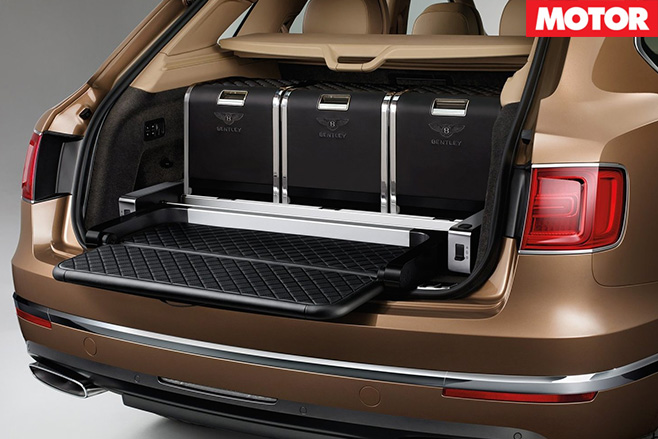
Unlike most modern Bentleys, the Bentayga has plenty of technology including surround view camera, traffic sign recognition, adaptive cruise control, head-up display, full LED headlights, auto park assist and a night vision infra-red camera that can heat-detect obstacles ahead before you see them.

