
It felt like yesterday: same roads, same routes, same silly speed.
We used to be driving ourselves dizzy here in trick Mitsubishi Lancer Evos and Subaru Imprezas on steroids, relatively affordable fast cars that loomed large inside our heads and on our bedroom walls.
Ten years on, however, the once untouchable four-door Japanese batmobiles are about as en vogue as the Nokia 3110 mobile phone or a Rio MP3 player. The compact crackerjacks most petrolheads embrace in 2013 still can be had with four doors, four-wheel drive and turbocharged four-cylinder engines, but they are no longer street-legal derivatives of rally-bred icons made in the Far East.
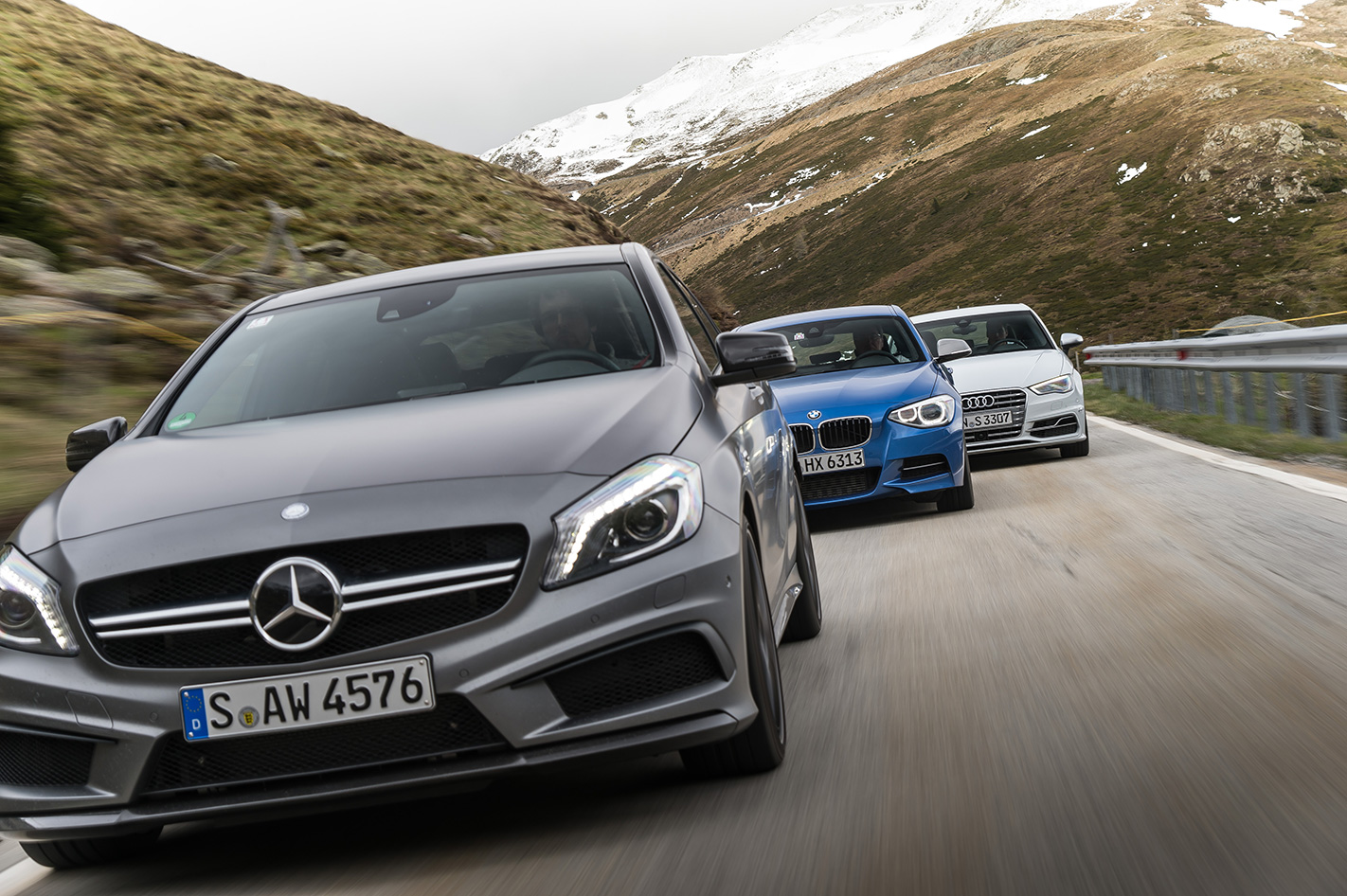
In the not too distant future, this group would have starred the 360bhp BMW M2 and the 380bhp Audi RS3, but right here and now the 360bhp Mercedes-Benz A45 AMG is facing the 300bhp S3 and the 320bhp M135i. Gentlemen, start your engines for a two-day no-holds-barred shootout on the Dolomites’ finest tyre-shredding, brake-eating turf.
Perhaps Mercedes should have known better and offered its silver fox clientele a less uncompromising A-class. One that looked friendlier, had a taller roofline and more rear headroom, not to mention a bigger boot and a softer suspension. Trouble is, this model already exists.
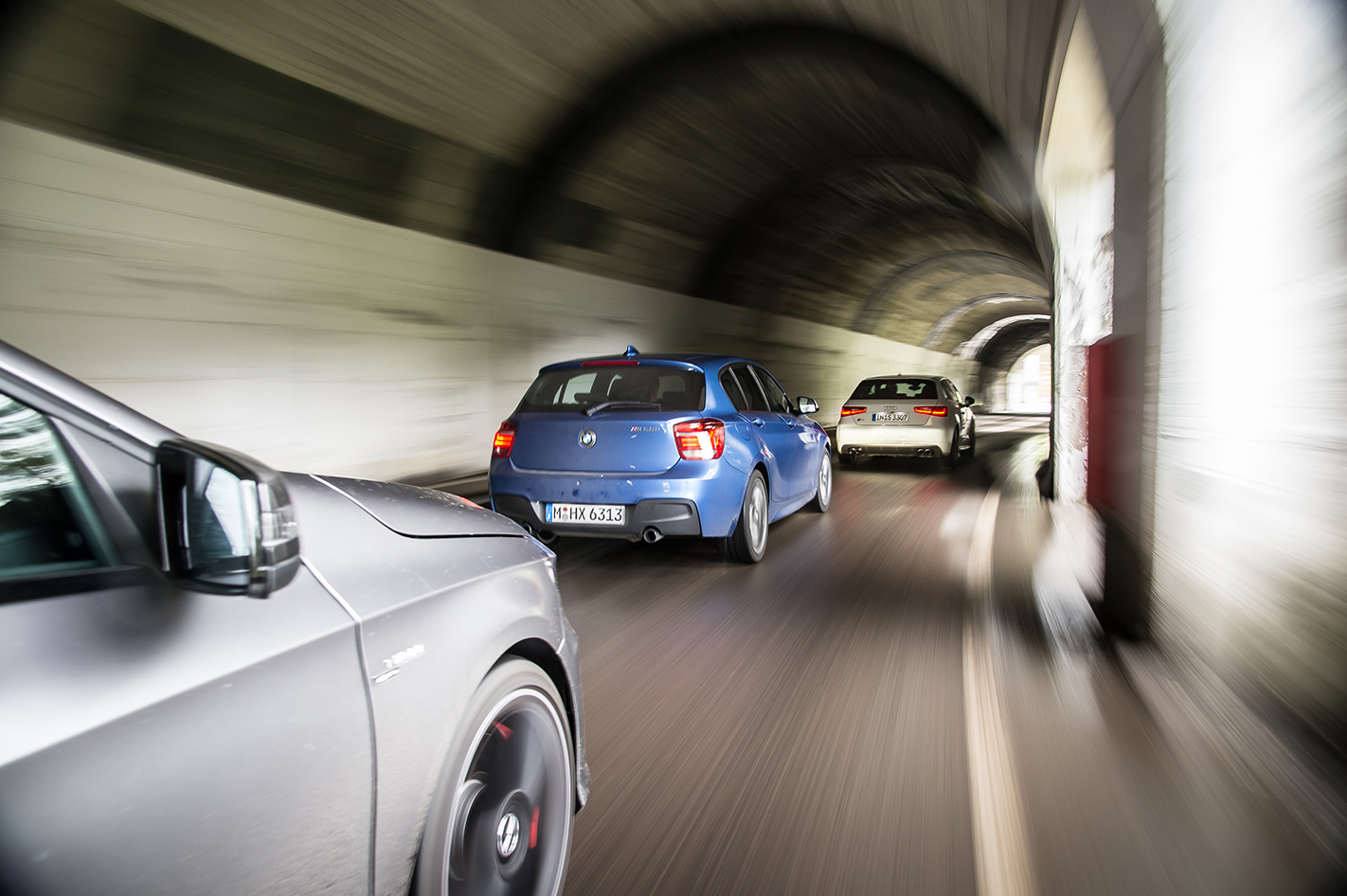
True, the new A-class should ride better, it could do with adjustable dampers, and the dual-clutch transmission has its foibles. But these flaws can be fixed, and the packaging & visibility issues pale against the Merc’s handling and roadholding virtues, its ability to surprise and delight, the sensation of being different from the pack in a way only Audis and BMWs used to be different.
Enter the fully loaded A45 AMG test car, a compact crackerjack costing almost as much as a naked C63 AMG. It is painted matte pewter, runs on black multispoke 19in alloys with polished flanges, and shows off the optional carbon fibre body kit which costs about as much as a six week package holiday in Mallorca.
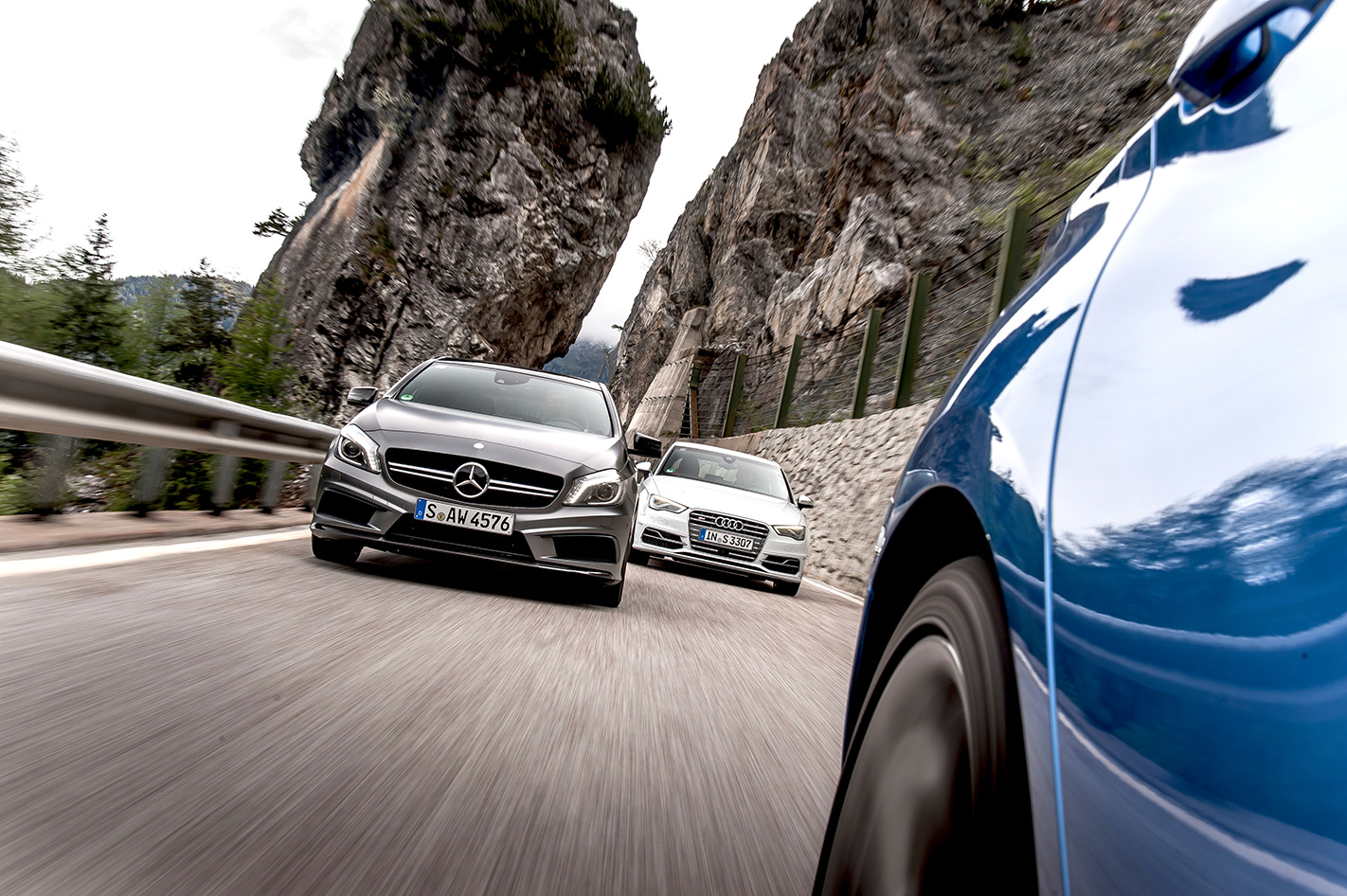
The pursed snout is however a little long in profile, and the behind may be too broad and squashed for some liking, but the proportions are striking and there is no danger of mistaking the real thing for a tarted up A180.
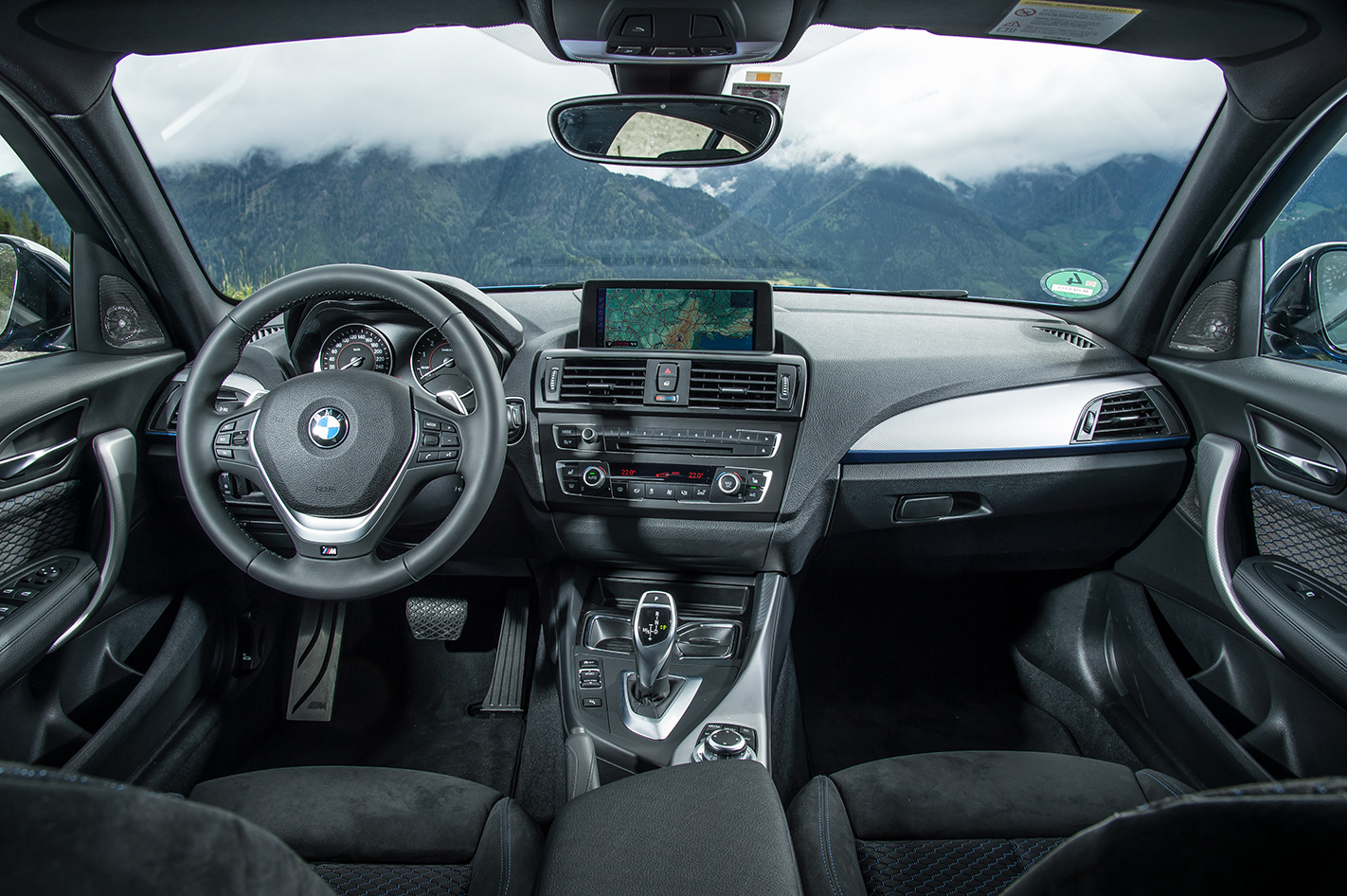
Still very much on subjective ground, we wonder how the 1series could ever be type-approved for daytime operation on public roads. Even in M sports livery, this is at best a mediocre piece of design which does not get any prettier when you climb into the sombre plastic wonderworld the cabin is best described as.
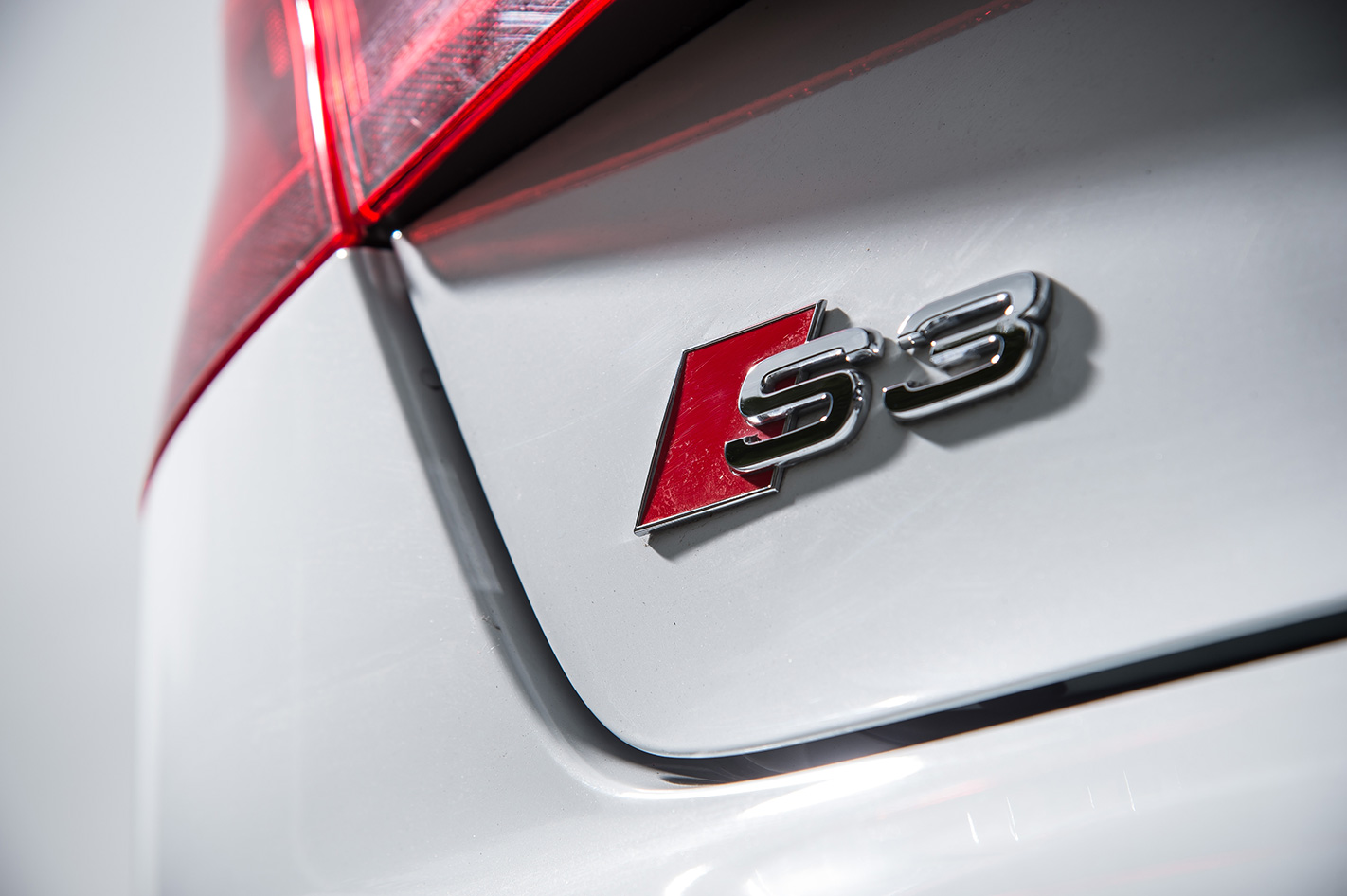
So why is the must-have appeal of the S3 still only a 7 on a scale that stretches to 10? Because the cockpit layout is rather bland, because the three-door model fails to match the visual balance of the five-door Sportback out later this year, and because the S3 looks too much like an A3 S-line with four instead of two exhaust endpipes.
Normally in June, all passes connecting Italy to Austria and Switzerland are open, but since this spring is an autumn which has been pulled forward, evidently erasing summer in the process, we had virtually the entire alps to ourselves.
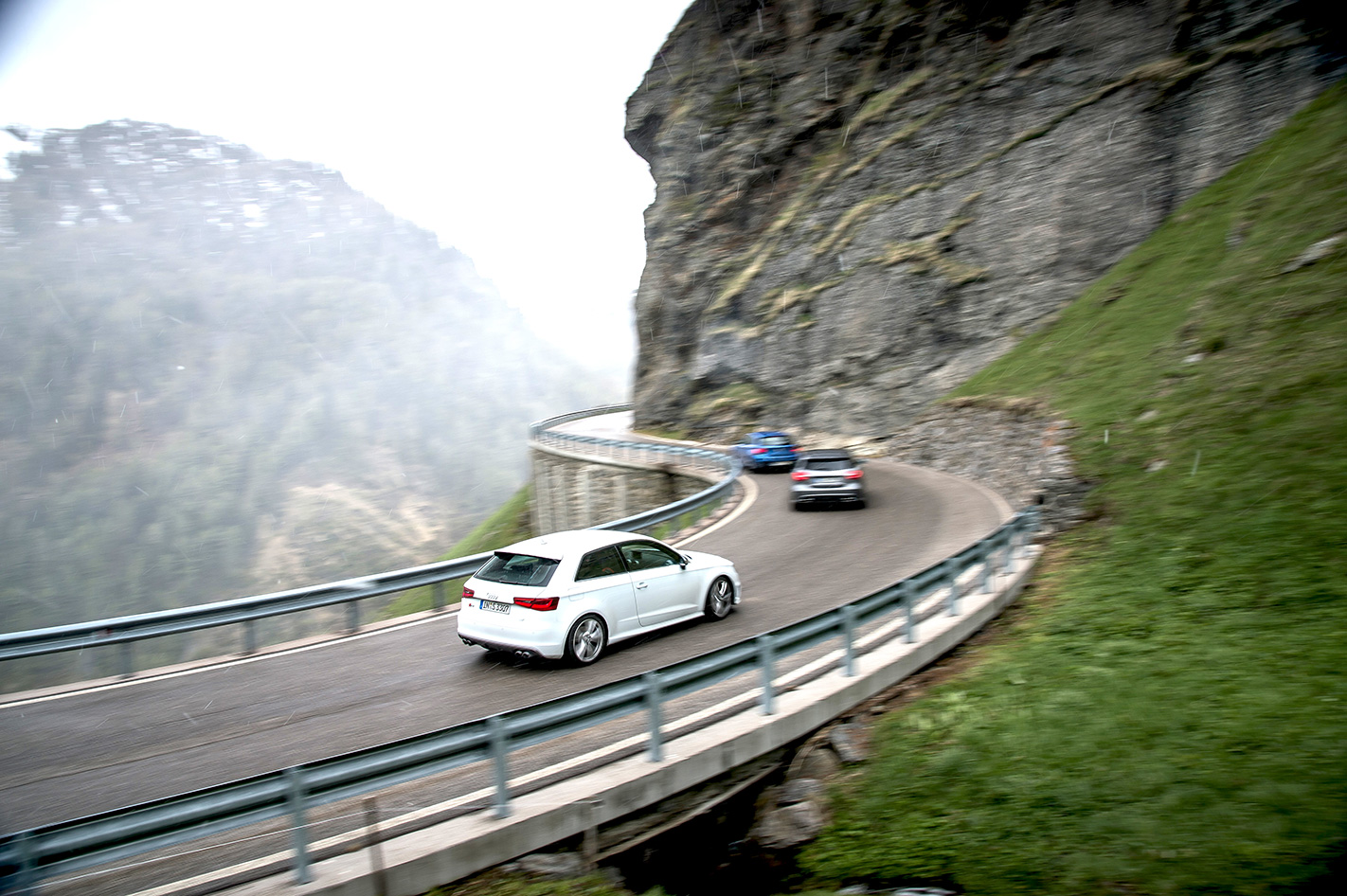
As luck would have it, not all cars arrived in the required specification, which resulted in the widest possible variety of drivetrain and suspension options. Our S3 was one of the very few specimen not fitted with the desirable S-tronic transmission.
The manual shifter works well – short throws, positive action, pragmatically spaced gears, but at 5.2sec, it loses 0.4sec from 0-62mph to the dual-clutch equivalent simply by taking more time to pass on the slices of the nicely stacked torque cake. At 380Nm, the turbocharged 2.0litre unit is not quite as well-endowed as its rivals, and yet it rolls out the dough all the way from 1800 to 5500rpm.
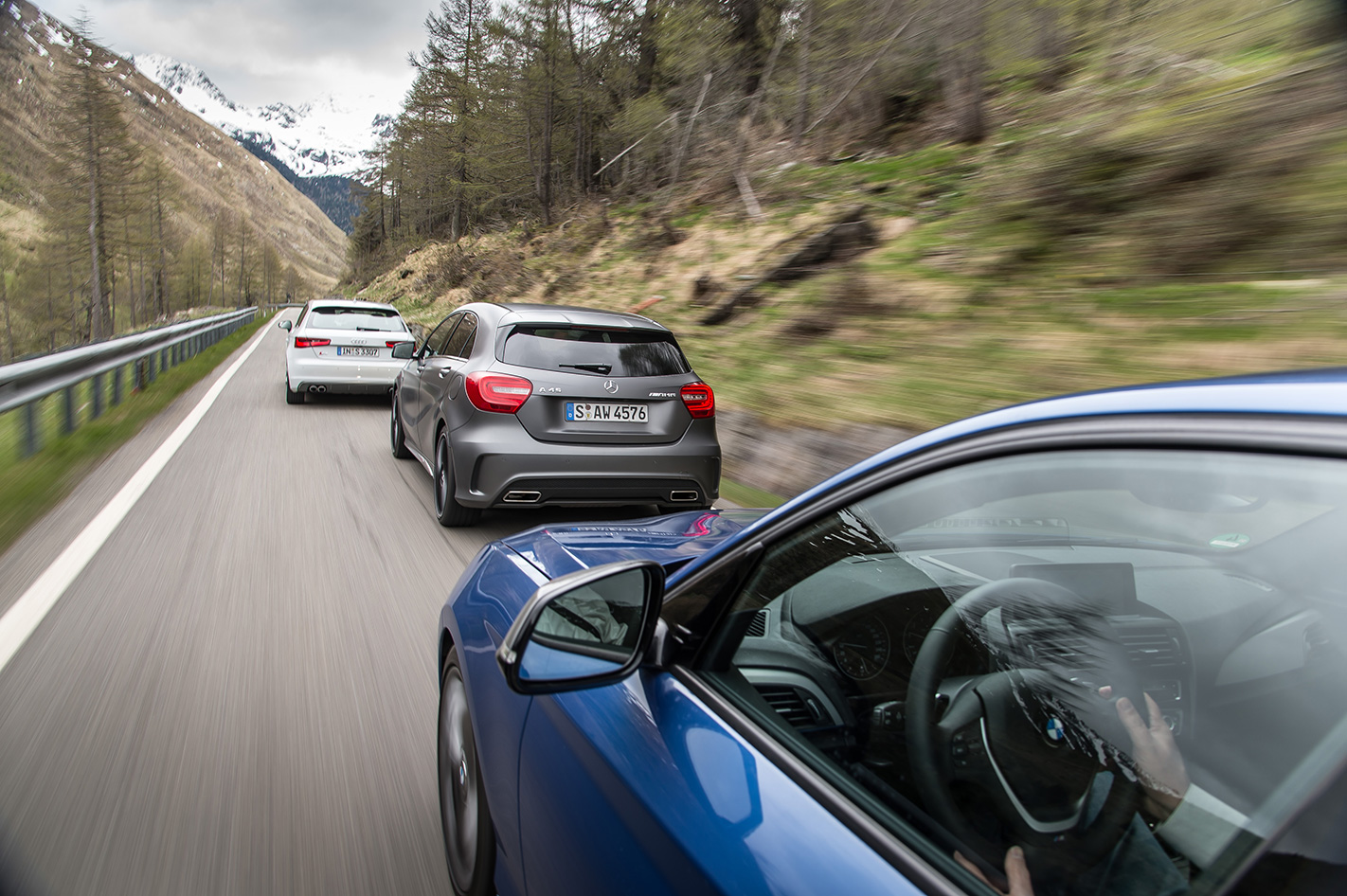
Our BMW M135i came with the optional eight-speed automatic which may be not be particularly M-like but is extremely convenient. It would even be more perfect if there was a positive deterrent between park and drive to secure the lever in reverse, if the transition from sport to manual (to the left of the main gate) was less fiddly, and if coasting was part of the Eco Pro software.
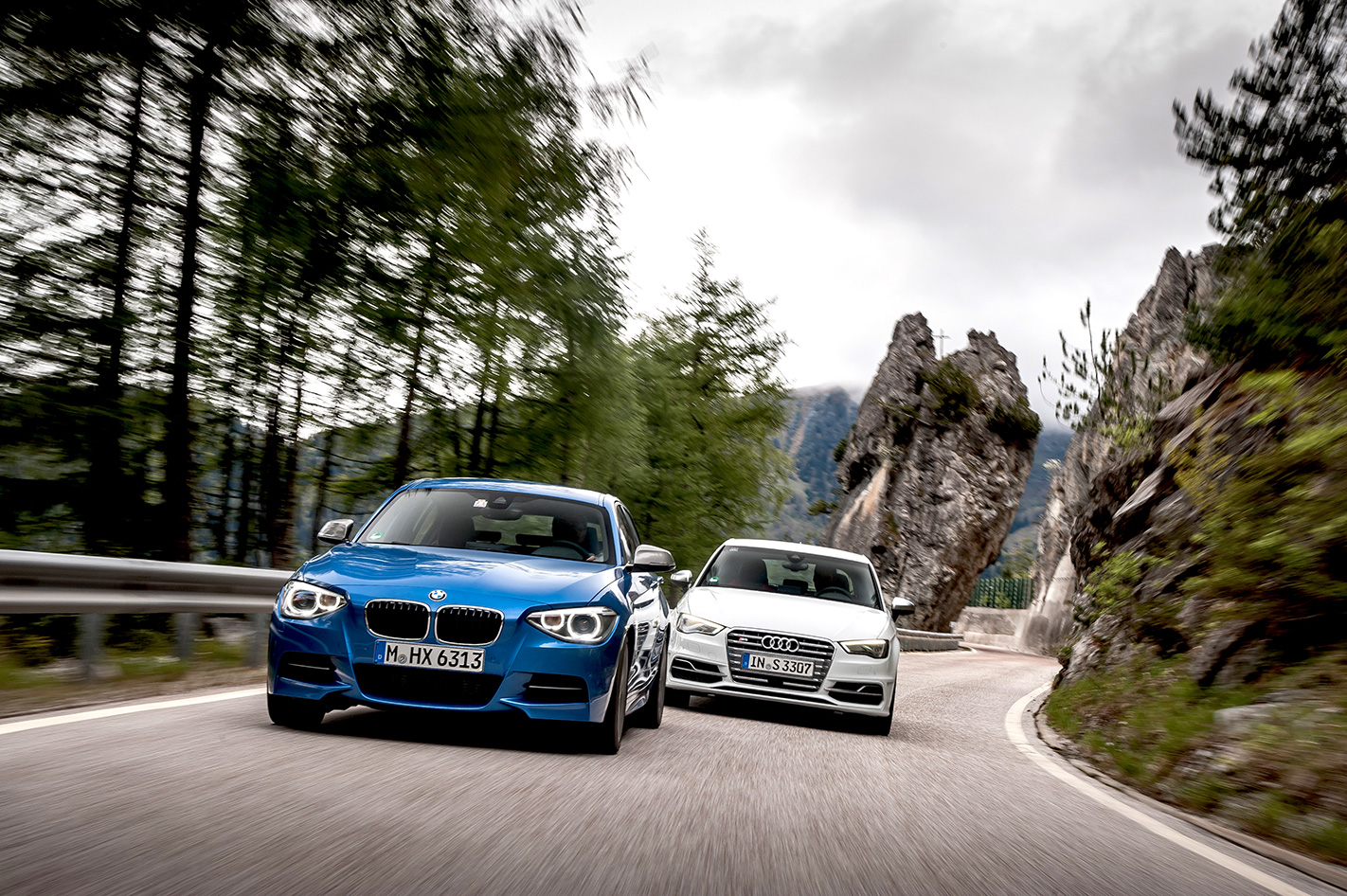
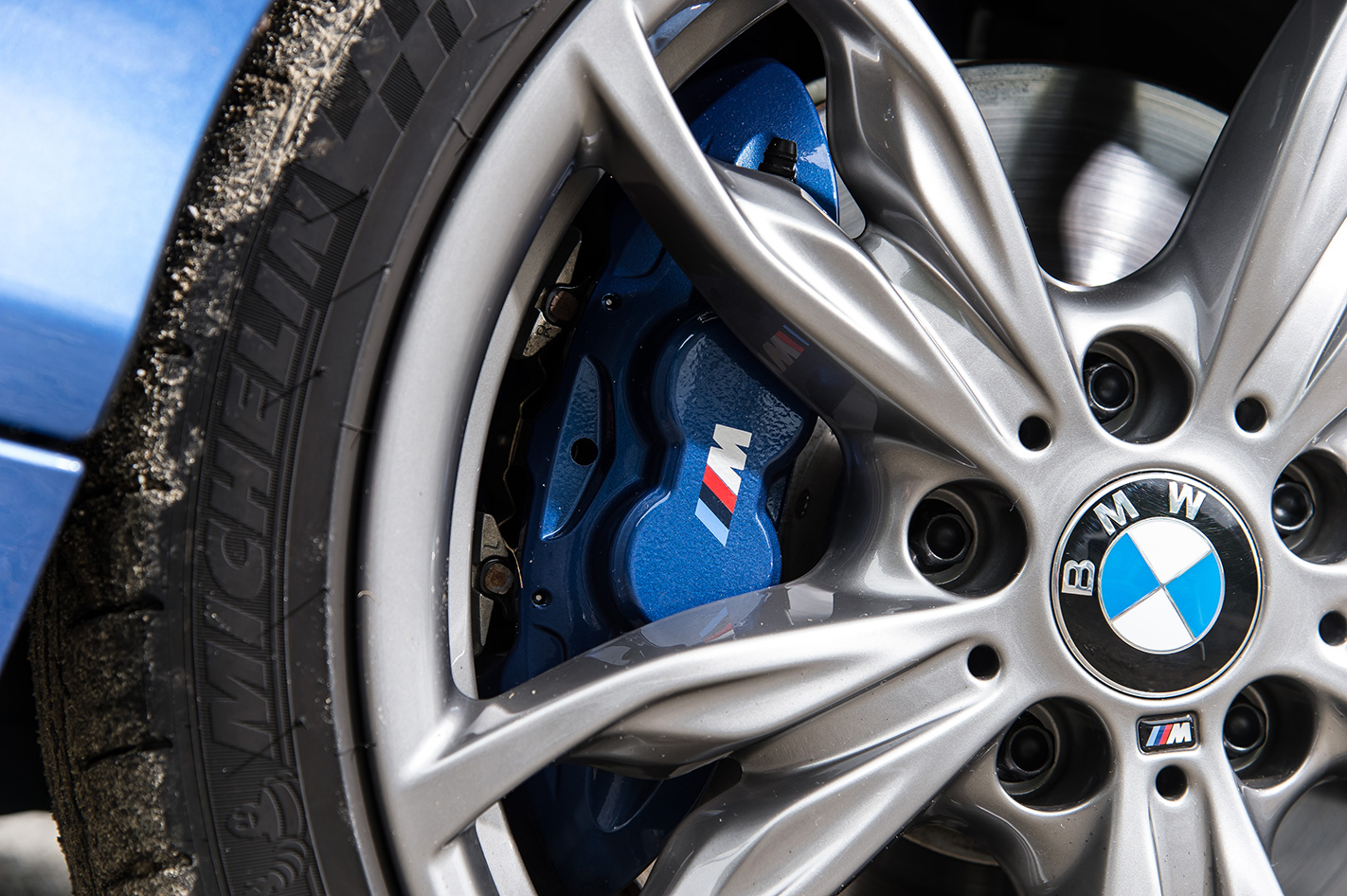
Shaped like a Bavarian beer garden table, the torque curve plateaus from 1300 to 4500rpm at a constant 450Nm. The discontinued Audi RS3 employed a 2.5litre five to generate 340bhp, thereby matching its closest natural enemy, the 1series M coupe.
Although it lacks two cylinders and 1000cc vis-a-vis the BMW, the peak twist action is an identical 450Nm. Again, full muscle is maintained over a wide rpm band, namely from 2250 to 5000rpm. To turn this torque punch into a mighty kick in the butt, the AMG engineers mated their reinforced seven-speed DKG to an aggressively tuned 4Matic driveline.
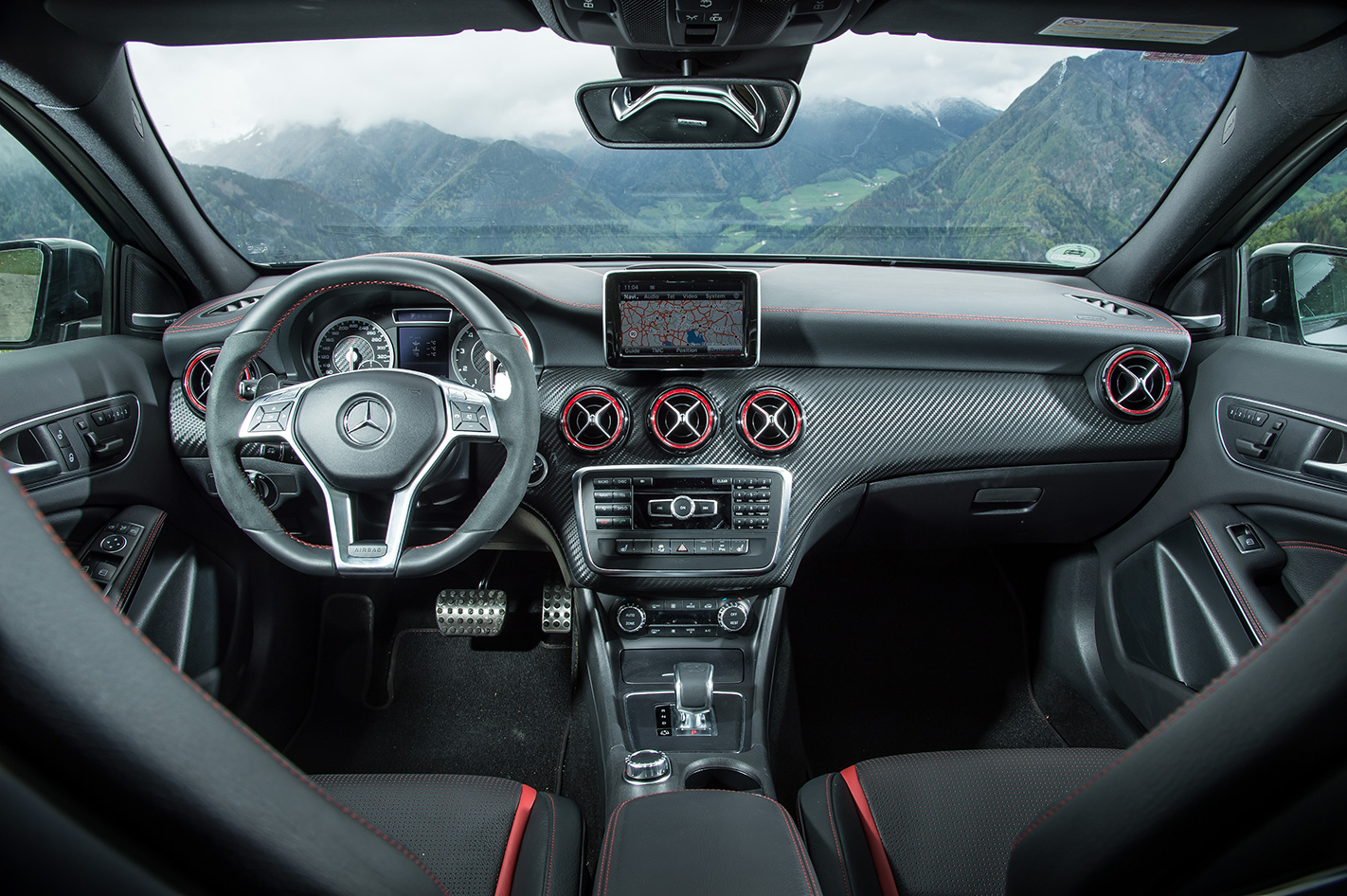
In C (for controlled efficiency), friends of the earth may relish start-stop and super-smooth gear changes at low revs. In S, the same process is repeated at a brisker pace. In M, you do the shifting, so don’t expect the black box to help out when the needle of the rev counter suddenly hits 6250rpm.
Good: on-demand M allows you to play the paddle piano for individual driving manoeuvres without first pushing the select button. Bad: the transmission will not accept early downshift orders. In will in fact only shift down when it reckons that the revolutions are evenly matched, which definitely takes too long on the fast approach to a slow bend.
At least that’s what we thought before setting off on the trails of Hannibal in these highly tuned triplets. No more turbo lag? Hop into the S3, and the ancient vice is back, large as life and annoying. The extra-cost S-tronic may to an extent cushion the effect, but in the manual version one must change down early to keep at least the bottom two LEDs of the boost gauge lit most of the time.
Which is a shame because after the delay there is always enough oomph on tap to zoom the car towards the next apex. It takes an adjustment in attitude and timing to step on the gas earlier so that little momentum is lost when snow white is propelling herself onto the next straight.
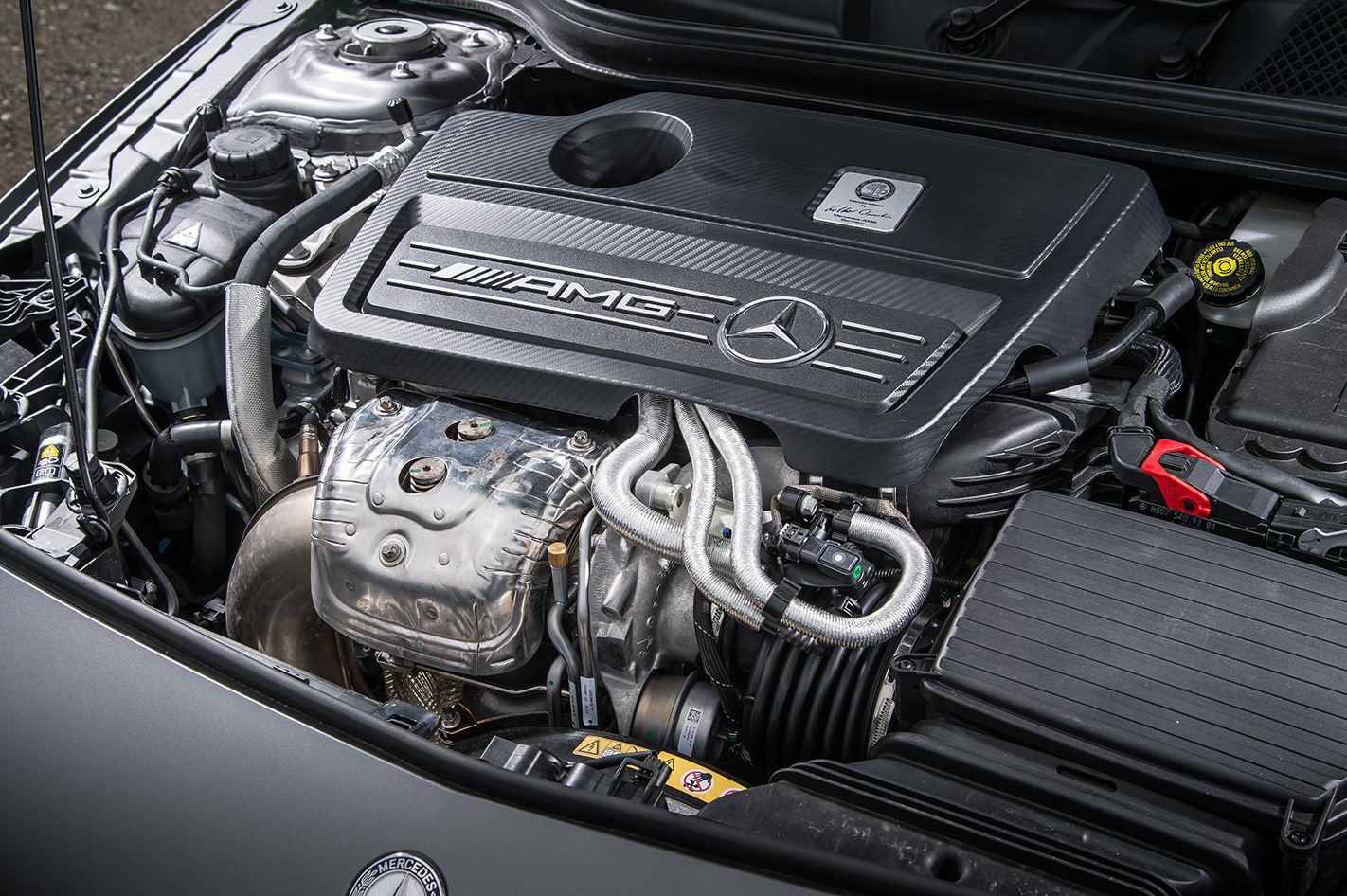
Did the SLS-inspired A45 AMG convince us with a rapid-fire throttle response? Yes and No. In combination with the new exhaust (for reduced back pressure) and the advanced fuel injection (for improved thermodynamic efficiency), the twinscroll charger (which runs at a high 1.8bar) swings the whip hard and early.
It’s the DCT which can undermine this effort by sometimes preselecting the wrong ratio, by taking a little too long to make up its electronic mind now and then, and by occasionally triggering a counter-productive upshift. A software issue perhaps, but one that needs addressing. On a different front, the MB chips do a splendid job relaying a hackle-raising sensation of speed.
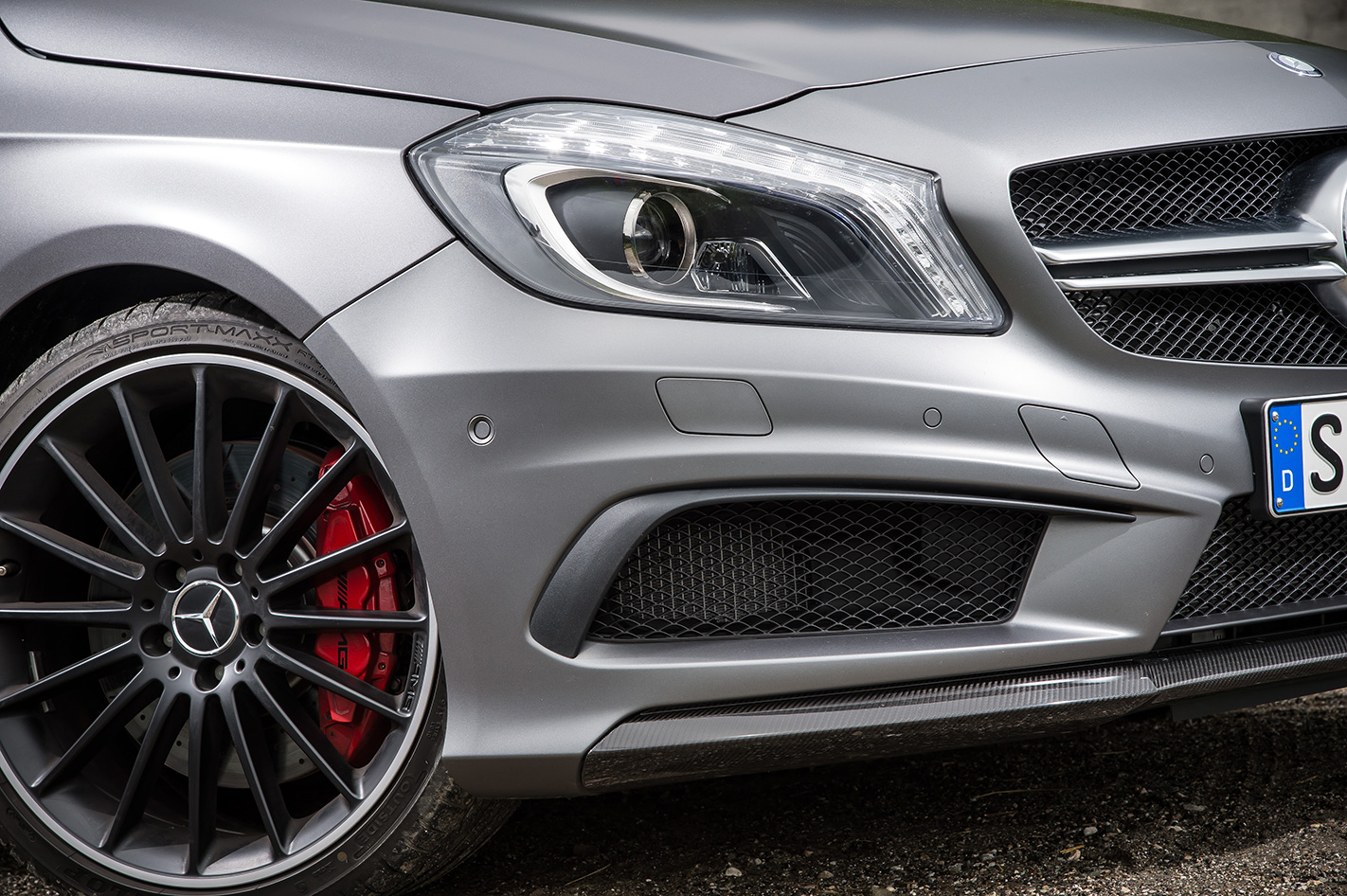
With Racestart active, the 1555kilo 360bhp A-class will howl in 4.6 sec from 0-62mph. The official consumption on optional 19in rubber is 39.8mpg. Spend a small fortune on the AMG drivers pack, and the Affalterbach power brokers will kindly raise the top speed from 156 to 169mph which almost equals 6250rpm or the engine’s cut-out speed.
If the A45 is Darth Vader on the prowl and if the S3 is Zorro on his day off, then the M135i is Robin en route to lunch with Catwoman. Forget the German hot hatch competition, forget the Japanese Playstation connection, forget the fact that there is an M in this BMW’s model designation.
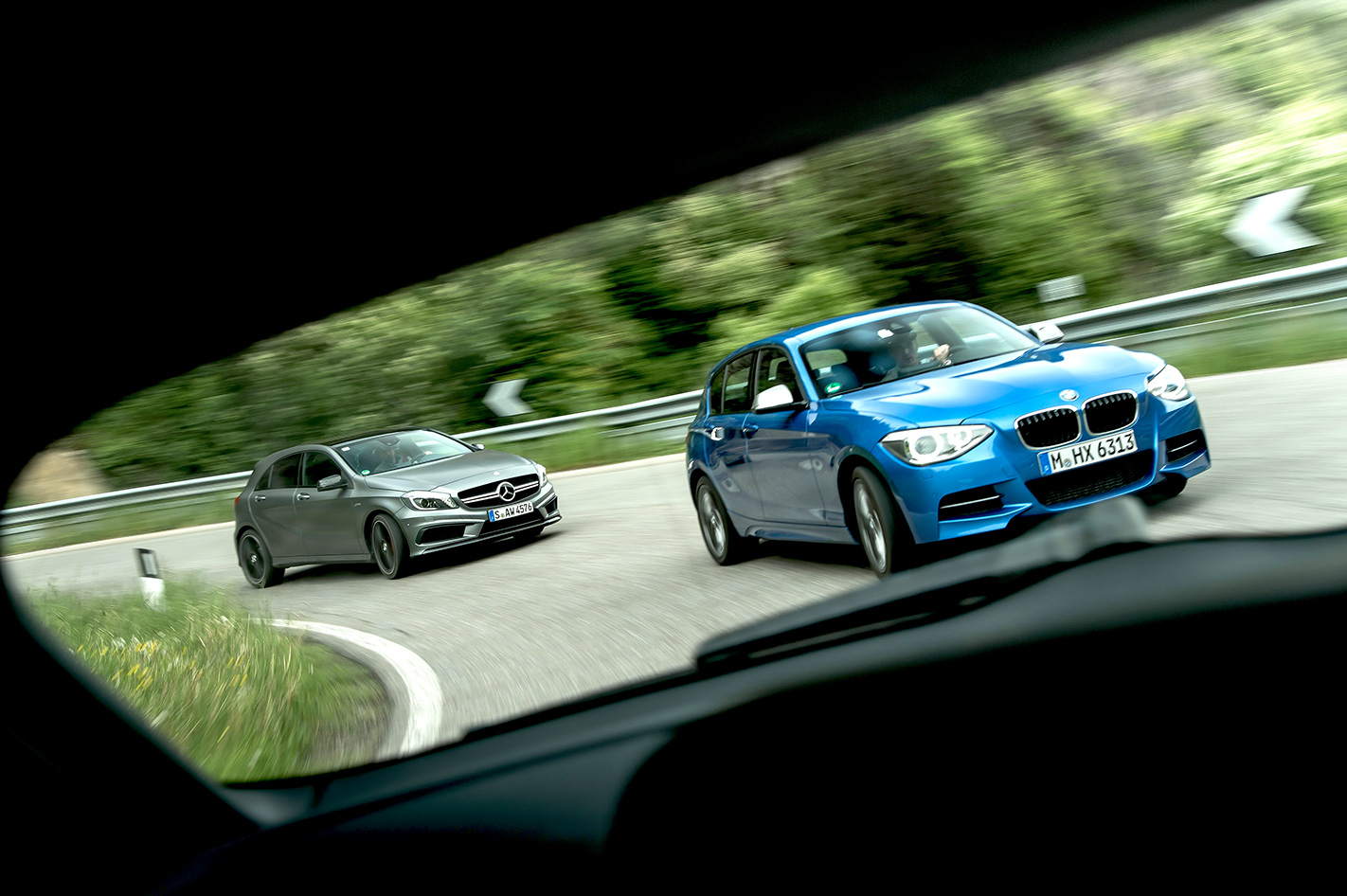
How come? Because the halfbreed M car is benign instead of brutal, cosetting instead of crash-bang hard, relaxed instead of highly strung, easily accessible instead of radically focused. For a start, the 320bhp in-line six runs out of revs at an unambitious 5800rpm, it takes a relatively leisurely 5.1sec to satisfy the stopwatch squad, and its on-paper consumption is a comparatively unexciting 35.3mpg.
On the credit side, any trace of turbo lag disappears inside the fantastic ZF box, the mighty mid-range urge puts the four-cylinder competition into perspective, and there are absolutely no artificial ingredients involved in making this 3.0litre motor sound spine-tinglingly good when the mixture gates open.
Included in the standard M pack are 18in wheels with 225/40 tyres up front and 245/35 footwear in the rear, sports suspension, sports brakes and variable-rate sports steering. The M135i was our number one choice on the poorly maintained Italian autostrade, but it is a touch too laid back to bring your blood to the boil on those memorable alpine special stages.
The brakes are furthermore on the soft side when pushed, the quick steering (only two turns from lock to lock) feels overdamped and undertransparant, and there is more roll and pitch and dive than we expected from a 1series model wearing the M badge.
Especially at a 10/10 pace, the S3 is even easier to drive than the BMW, which in turn feels significantly softer edged than the 1series M. While the M135i will want to understeer into a corner and oversteer at the exit, the Audi goes round bends like a slot racer with a second pin between the rear wheels.
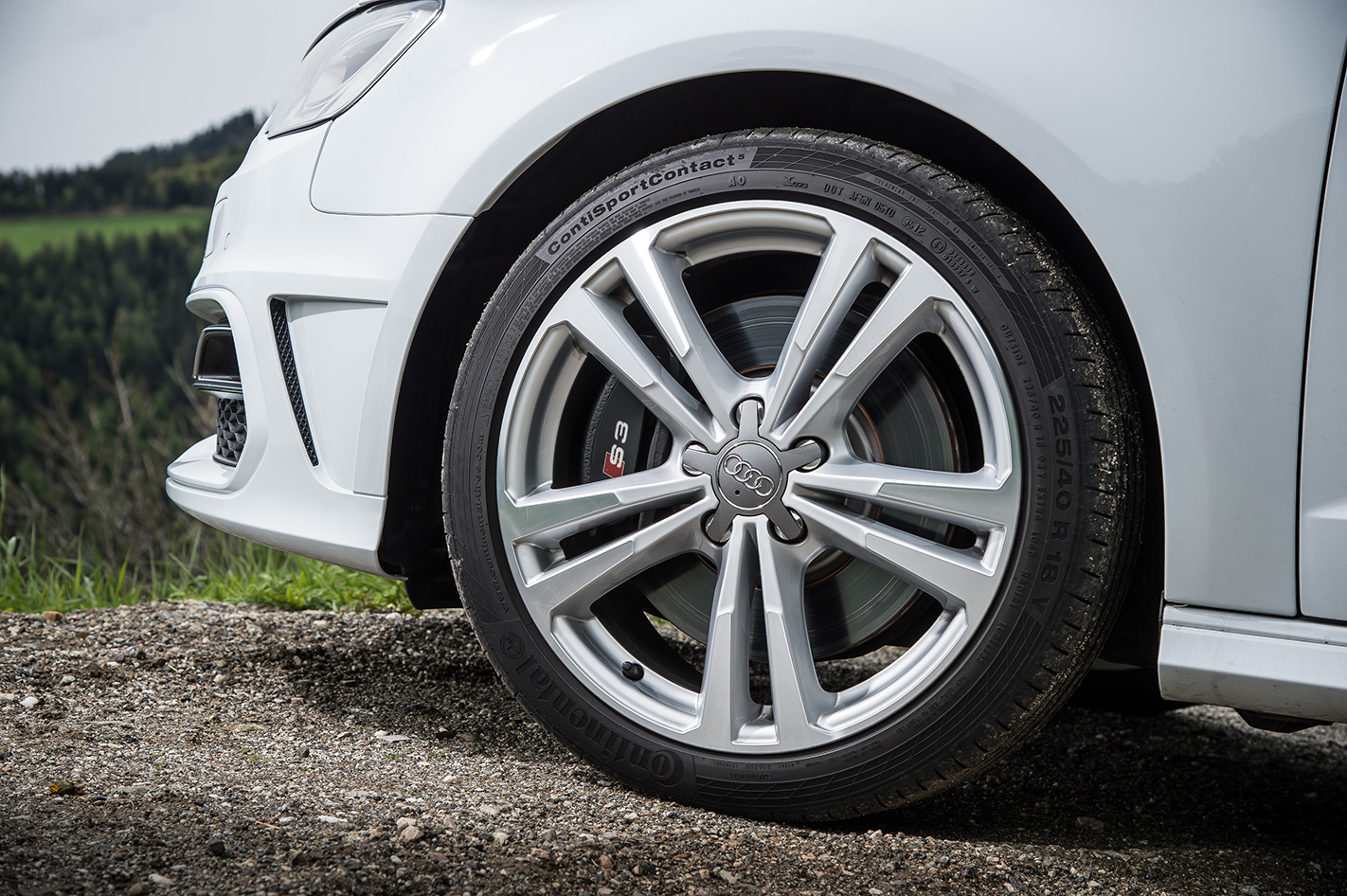
Neutrality is the name of its game, modularity ranks only second on its priority list. Boring? Wrong term. The S3 rewards its driver with a different potpourri of talents. The roadholding is for instance so tenacious that we checked the Conti Sportcontact tyres (225/40 R18 all round) for magnetic metal flakes and hidden velcro strap fragments.
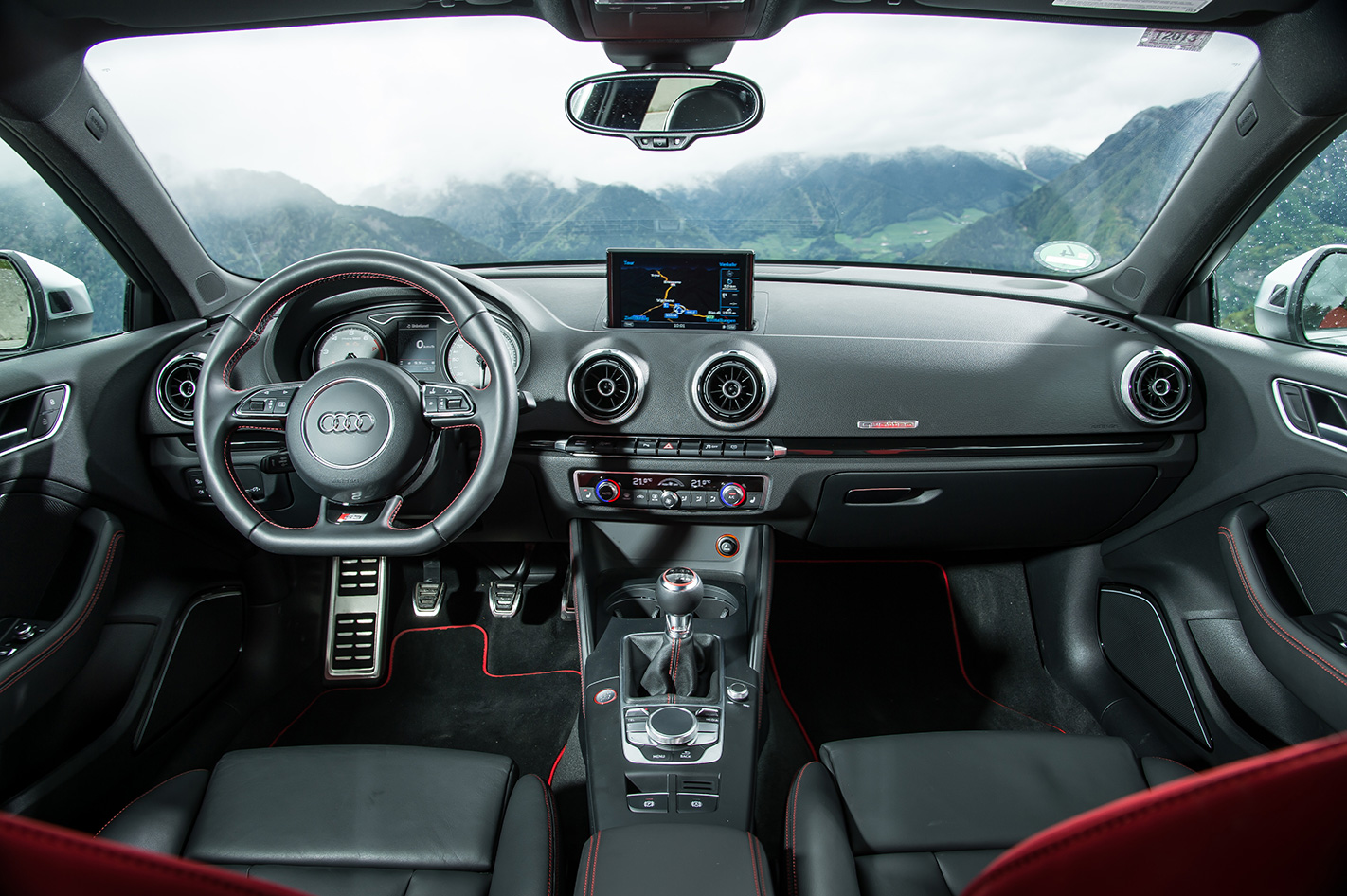
Eventually, the gap will widen and the Audi will drop back, still gracefully maintaining its composure. The car from Ingolstadt is tight-lipped, monosyllabic and reserved, strangely robotic in the way it performs, and flawed in its ability to turn a near-faultless performance into a tangible feelgood experience.
The A45 AMG is not just engine and badges and butch looks. It also boasts a heavily revised front and rear suspension with firmer mountings, recalibrated springs and firmer fixed-rate shock absorbers, fatter anti-roll bars and a reduced ride height.
Also new are the variable-effort but constant-rate steering, the high-performance brakes with ventilated and cross-drilled discs all-round, the more lenient stability control, and the latest-generation 4-Matic which diverts up to 50percent of the torque to the rear wheels.
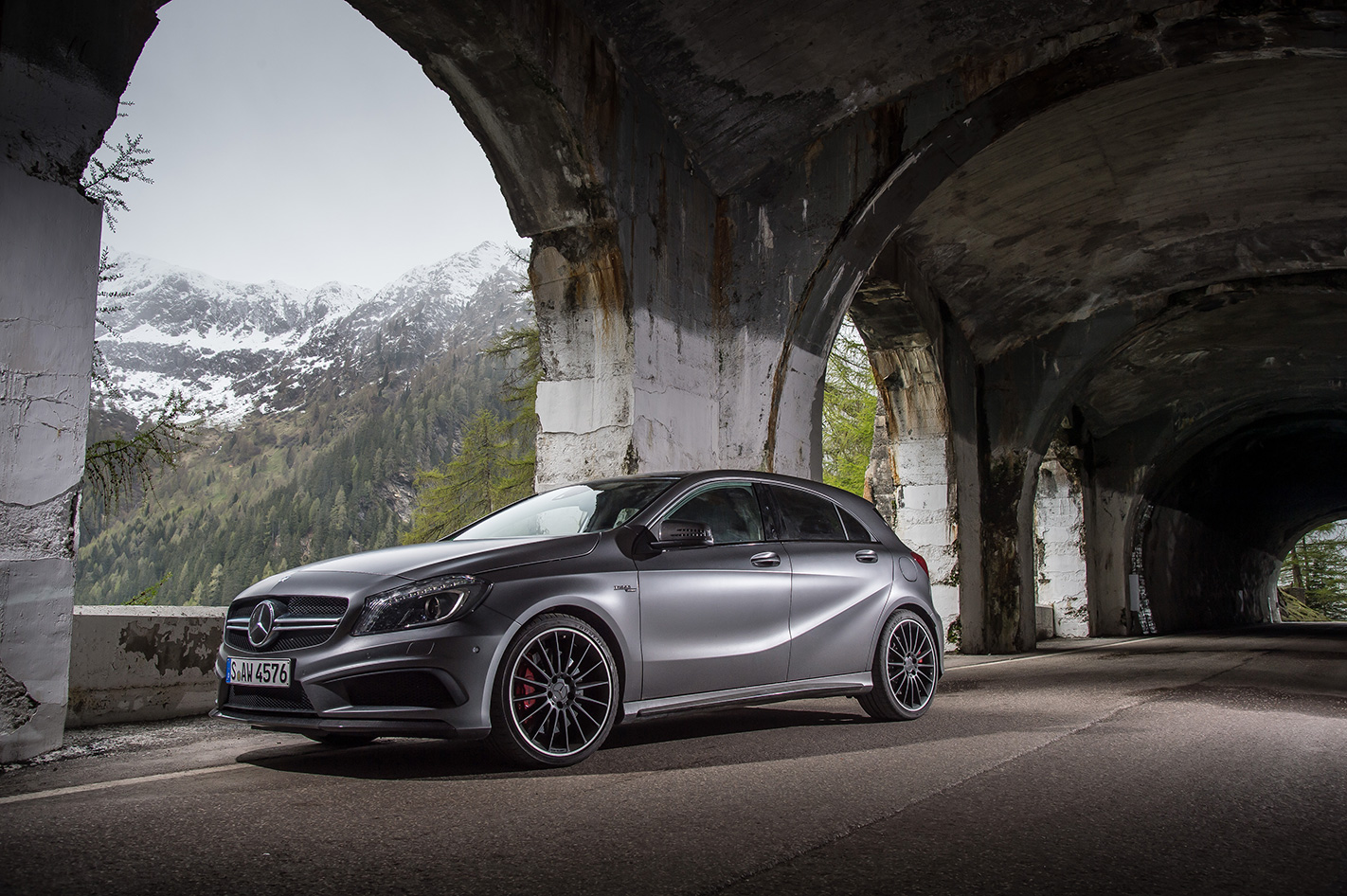
The engine delivers quantifiable extra urge with real authority, the steering fuses input and feedback to a wonderfully three-dimensional level of control, four-wheel drive distributes torque with the eerie professionalism of a poker ace dealing his rounds, and the brakes bite with vigour and determination until, at the foot of the pass, smoke signals beg for mercy.
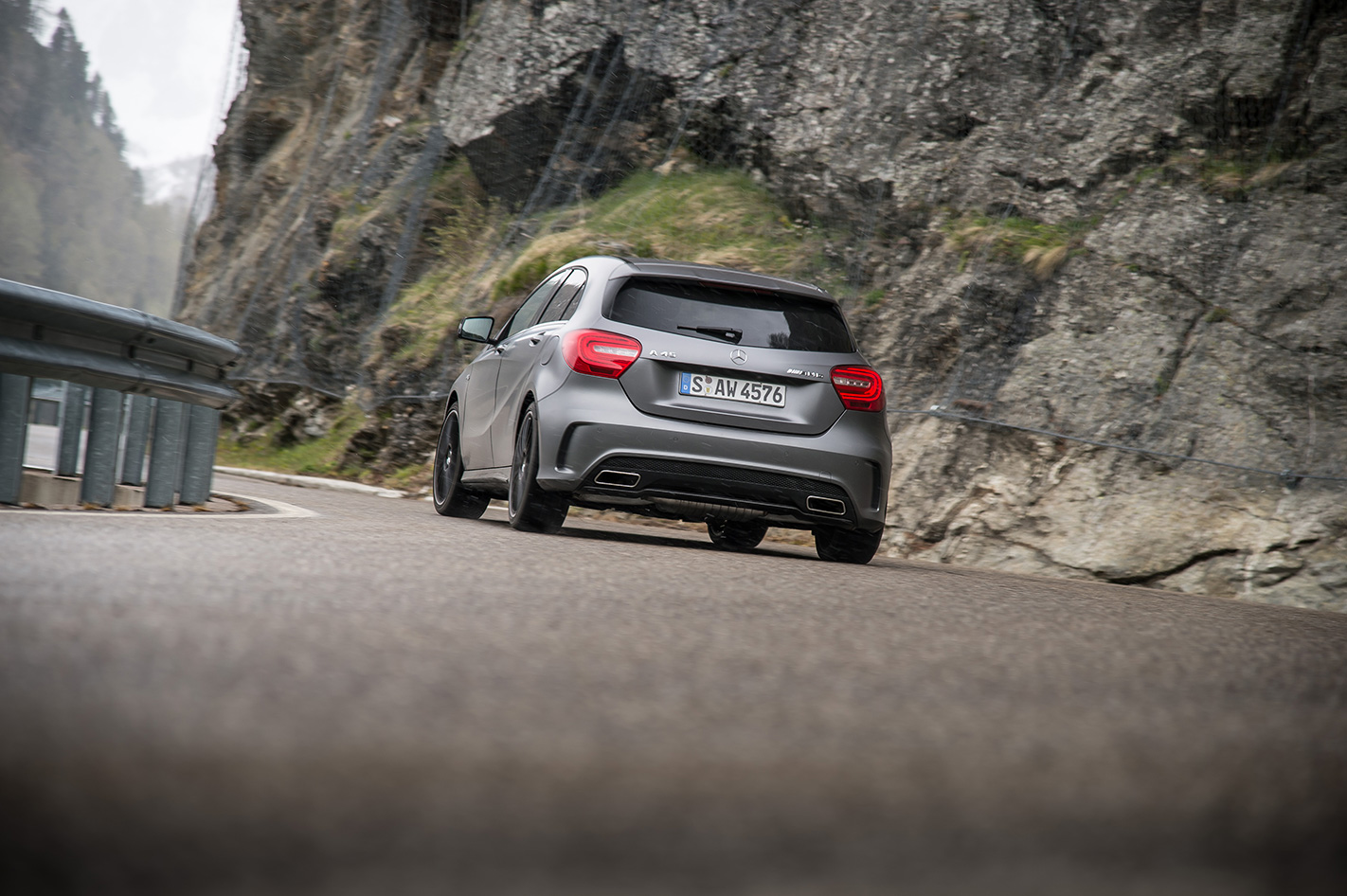
The A45 AMG is as chuckable as it is sure-footed. It can corner on three wheels, decelerate at a ridiculous yaw angle, put the power down even earlier than the Audi. What it cannot do is ride well, period. Even on smooth blacktop, it is patently obvious that eiderdowns were not on the shopping list.
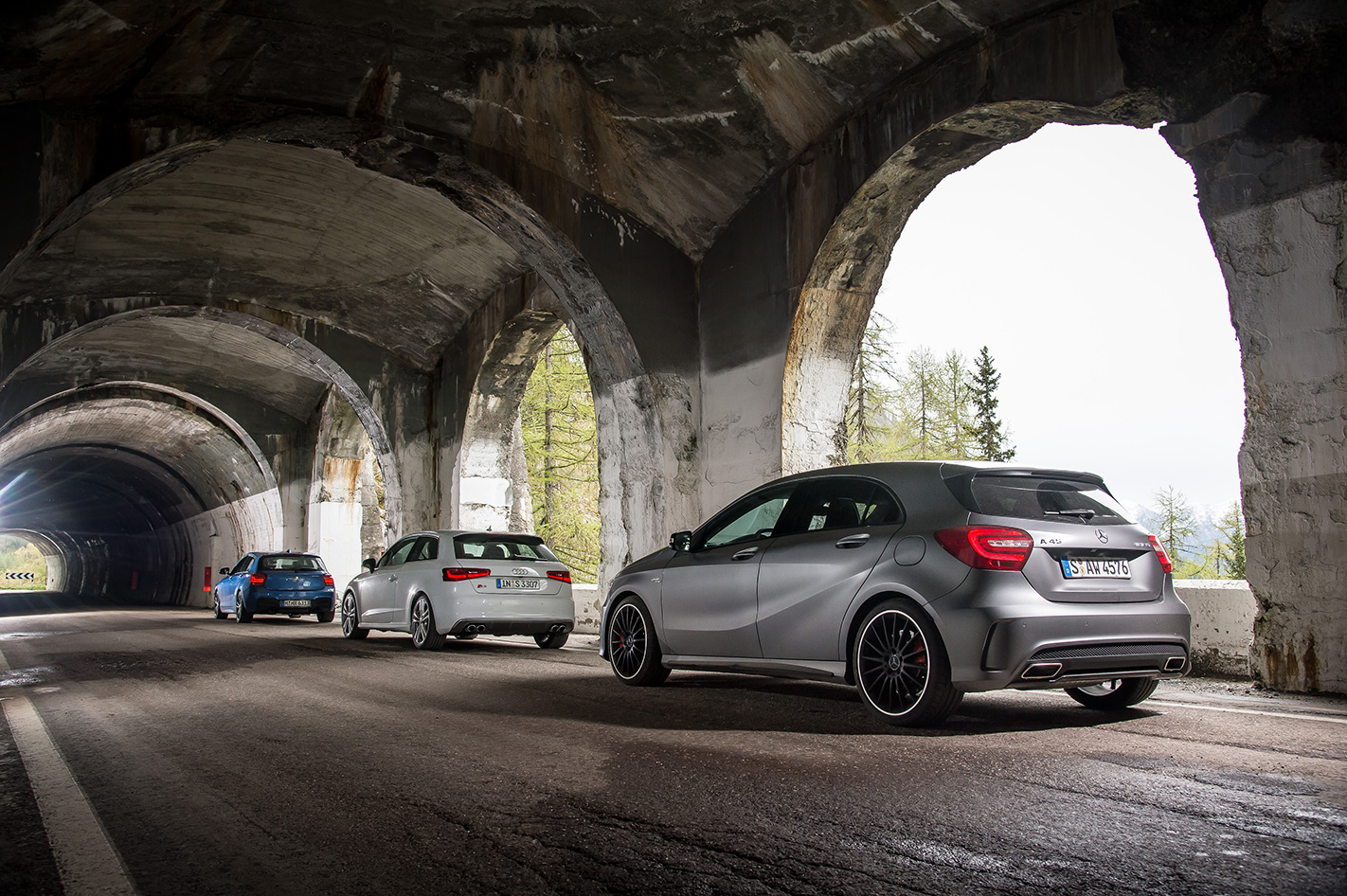
We would love to see the Quattro division succeed in making good cars great again, but the S3 (and the RS6) are tuned primarily for perfection, which is seldom synonymous with excitement. So after 48 hours, 645 kilometres, 269 litres of four-star and three fresh shirts, the A45 AMG takes the trophy ahead of the BMW and the Audi, off-putting price tag and compromised packageing notwithstanding.
BMW Four stars Love: Engine, transmission, ride Hate: Design inside and out, not really an M car Verdict: Wait for the facelift out next year
Audi Four stars Love: Quality, refinement, infotainment, quattro Hate: Bland looks, bland dynamics, not really an S car Verdict: Wait for the Sportback, buy an S-tronic
Mercedes Four stars Love: Engine, noise, appearance, handling, roadholding Hate: Ride, price, transmission idiosyncrasies, instruments Verdict: The real McCoy, soon also available as CLA and GLA
Call it facelift is you must, but the “new generation” Mercedes-Benz E-Class range has just lobbed into Oz with a bold new look, gutsier and more efficient engines, richer updated interiors, higher levels of standard equipment, better value and a raft of cutting-edge tech that brings (albeit very limited) autonomous driving to local terra firma. It’s a direct response, Merc-Benz says, to customer wants of more aggression, power and technology in their Es.
The buff new exterior styling is anchored by the new front end and those one-piece LED-based headlights that, with their various ‘modes’, retain the so-called “four-eye face” (Merc’s words, not ours). The jury is out on fresh look and you’ll no doubt make your own mind up about the design. It is, however, a more convincing look in metal than it is in pictures.
By the time mighty 430kW/800Nm E63 AMG S lands in September there’ll be seven sedans and three Estate wagons to choose from and every model under the $249,990 king bruiser gets an AMG-styled exterior sport package, lowered stance and twin-exhaust treatment as standard. The entire range has a subtle muscle car appeal, such is the Aussie buyers’ preference in the large primo segment, Merc says.
The interior design across the range, too, is fresher, perceivably higher class in presentation and a touch sportier in the overall feel, though it no great departure from its forebear. Most of the key changes are in the details: a slick new multifunction wheel, a two-part trimmed dash, a new shifter-less console, three-colour ambient lightening lifted from the S-Class, repositioned indicator stalk, fruiter functionality from the Comand NTG 4.5 Generation 3 which now allows web browsing connectivity via iPhone or Andriod. In all, it’s slightly less want-for-nothing than the old Es.
As is now an E-Class tradition, all Estates are seven-seaters fitted with reverse facing third-row bench arrangement generous enough for pre-teens that folds flat into the cargo floor.
Bottom to top, the E-Class is an all turbocharged affair. The first variants off the boat are all four-bangers, kicking things off with the cheap and cheerful E200 sedan ($79,990) and wagon ($86,900), fitted with a new 135kW/300Nm 2.0-litre direct-piezo-injected turbo four that lifts outputs 20kW and 30Nm over the old 1.8-litre. The combined fuel consumption claim is pretty remarkable 6.4L/100km. For the E250, a high-power version of the turbo-petrol 1991cc engine lifts outputs to 155kW and 350Nm, up 5kW and 40Nm over the old versions, and lobs into local showrooms on sedan-only form ($96,400) on 19s, proper leather (rather than the man-made stuff in the 200s) and full LED headlights.
Oiler fours are covered off with two grades of the 2143cc turbodiesel engine: a workmanlike 125kW and 400Nm in the sedan-only ($82,400) E220 CDI spec and the lustier 150kW and 500Nm in E250 CDI trim in either sedan (98,900) or Estate ($106,700) forms. The best economy claim for either engine is just 4.9L/100km – incredible frugality for large, German luxury car.
As you’d expect, performance isn’t much beyond being adequate for a four-banging E-Class, though no variant struggles to get on with job. The gem, though, is the high-output oiler, its significant torque thrust throwing the 250 CDI between country backroad curves, or to anywhere from a standstill, with effortless ease. The across the range 7G-Tronic seven-speed auto is, as always, a silken and obedient partner to any engine its mated to.
Bar everything running performance-style 18s and 19s, little has changed to the E-Class ride and handling packages, either in a technical sense or purely from a seat-of-the-pants perspective. It’s still points into corners confidently and is keenly balanced, though it understandably lacks degrees of sharpness, steering clarity and tautness in its body control to that of the smaller, nimbler C-Class. That said, the bigger Merc retains the superb ride comfort and bump control of its forebears. Few other luxury cars, period, can bomb across pockmarked Aussie countryside with such comfortable, pampering, fuss-free confidence.
Merc reckons that the 245kW and 480Nm direct-injected twin-turbo 2996cc V6 offers comparable performance to the V8 it replaces in the E400 sedan ($128,900) and wagon ($136,700), but we’ll reserve judgment until we can get a steer of one. The move means that if you now want a bent-eight E-Class, you’ll have to foot for the (twice-as-pricey) E63, which won’t be available, it’s worth noting, in a wagon version.
Fast Facts (E250 CDI) Engine: 2143cc 4cyl, DOHC, turbodiesel Power: 150kW @ 3800rpm Torque: 500NM @ 1600-1800rpm Weight: 1775kg 0-100km/h: 7.5sec (claimed) Top speed: 210km/h (limited) Price: $98,900 (sedan)
How can you not be excited about the Alfa Romeo 4C?
We’ve been teased with videos and pictures of the cracker coupe, so you can imagine how big our eyes ballooned when Fiat-Chrysler said it had two 4Cs in Oz available for a quick fang around a motorkhana course.
Caveat was, the cars were left-hand drive and we couldn’t elope with them for a week. Still, we snatched the keys without hesitation.
We also slapped some cameras on the cars to grab a quick video of the mid-engine 177kW/875kg Alfa Romeo blasting around some cones. You can also read all about it in our May issue that’s on stands now.
THERE’S a V6 version but forget it. The V8 is the one you want.
It is simply mega. Five litres of supercharged V8 and a Vesuvian 404kW and 680Nm – from just 2500rpm.
At 7000rpm it sounds like a grizzly bear that’s had an anvil dropped on its foot – a throaty, animal scream. Press the active exhaust button – which will become part of your start-up routine – and it’s so loud you’ll wonder how it’s legal. At full throttle, it will easily drown out your screams for mummy.
Considering it’ll clip 100km/h in 4.2 seconds you could never complain it hasn’t enough grunt. And the brakes – particularly the optional, and very expensive, carbon ceramic ones – will bring you to a stop quick enough. Which is what you want because if you’re the kind of person who regularly kisses the throttle pedal against the carpet – and let’s face it, you are – you’ll want decent anchors.
Dive-bomb into a corner and you’ll realise the F-Type Coupe is made for Monza more than Monaco. With so much power, and the taller gears to match, it prefers drinking up big, long, fast corners with triple digits on the speedo. It does so easily and impressively.
In slower, tighter bends the F-Type Coupe feels physically huge – its corners never seem to shrink-wrap around you like a 911, and the bonnet feels like it extends metres away from you. It’s wide, too; it makes narrow roads feel like you’re driving on a footpath.
Hammer into a slow to medium speed slower corner too fast and naturally you’ll expect the F-Type to push into understeer. But it doesn’t – the inside brakes lightly engage in torque vectoring trickery, tucking in the nose and vanquishing understeer. Even if you cheekily pick up the throttle a little too early, it still keeps the nose tucked in nicely.
And as the corner begins to end, you can feed in too much throttle deliberately and the rear of the F-Type will get up on its tippy toes with oversteer. Feed in more gas and be ready with the countersteer because the ESP permits a fair bit of angle. It’s easy to slide and, belying its monstrous power, not as scary as you’d think. (But only the brave, or foolish, would ever turn ESP all the way off.)
The F-Type’s steering is quick and sharp, too, meaning you’ll rarely need to move your hands away from nine and three. But, reflecting again its inescapable largeness and generous wheelbase, it’ll change direction swiftly but not particularly elegantly. It’s more bull than ballerina.
And if you’ve ever driven a 991 911 you’ll wish forlornly the F-Type had its steering. It’s the quickest rack ever fitted to a Jag, and the weighting is spot on, but push the front tyres to their limits and you’ll feel it first through your bum rather than your fingers. We wish we felt more through the steering wheel.
That aspect, and just a few others, make us think the 911 still holds the upper hand over the F-Type Coupe. But then you press that blown V8 against its limiter one more time and you’re not so sure. It’s glorious.
The heart says V8 but the head says V6 – read why the little brother version might in fact be better in our full review in MOTOR’s June issue, on sale May 14.
Watch us do a big, wet burnout in the V8 F-Type Coupe on our Facebook page www.facebook.com/motorofficial
THE SPECS
The F-Type Coupe comes in three variants.
Coupe, $119,900: 3.0-litre supercharged V6, 250kW, 450Nm, 8-speed auto, 0-100km/h in 5.3sec, 8.8L/100km, 1577kg
S Coupe, $152,300: 3.0-litre supercharged V6, 280kW, 460Nm, 8-speed auto, 0-100km/h in 4.9sec, 9.1L/100km, 1594kg
R Coupe, $219,600: 5.0-litre supercharged V8, 404kW, 680Nm, 8-speed auto, 0-100km/h in 4.2sec, 11.1L/100km, 1665kg
THE VERDICT
The V8 is a total, bite-your-arm-off sweetheart. The acceleration and the noise are drug-like. But pitched against the 911 in the handling Olympics we expect the F-Type Coupe to win silver.
It might have been launched more than two years ago (replacing the Murcielago in the process) but so rarefied is the Lamborghini Aventador’s air that only now has MOTOR managed to get its mitts on one. That the occasion happened to be at Philip Island was just the icing on one hell of a cake.
If you haven’t physically stood next to an Aventador, you probably won’t appreciate how freaking big it is. Well, not high, but certainly long and definitely w-i-d-e. Yet the cockpit is cosy for taller folk and you’re kind of left with the impression that this is a platform for keeping 12 cylinders off the hotmix, not some prissy gadget for pampering over-paid footballers. Not that that has kept the latter out of the things, but you get my drift.
Hit the key and there’s theatre. The starter whirrs for a satisfying few seconds and then the big atmo V12 whumps into life and settles into a fast idle. Snick first gear home via the right paddle and let the big guy ease out of the pits. First impressions are of that epic width, but beyond that the all-paw Lambo is stupidly easy to drive.
Plant the clog and it gets very serious very quickly. With 700 neddies (515kW) and 690Nm, whacking the tacho needle into the red bits is also stupidly easy and you really do have to keep a close eye on the dial to make sure you don’t bump into the limiter. Down the P.I. main straight? Call it 280km/h and you’re getting close. Turn 1? Dunno, but it’s faster through here than most things with number-plates.
Curiously, the coupe seems faster and more stable than the roadster version, but the Lambo boffins on hand reckon the car is really sensitive to tyre pressure changes and that a pound either way can make a difference. I also wouldn’t mind betting that the cleaner aero of the coupe makes for better downforce which, at the speeds we were seeing, would definitely have been a factor. And that’s the point: even Muggins here could wind the Aventador up to 11 and get away with it. Not too many Lamborghinis you could say that about.
The engine is the biggest change, baby-F12 styling aside. Some will sob, some will be thrilled, but Ferrari has done away with the old California’s 4.3-litre naturally aspirated V8 (the one that shrieked its way to a magnificent 8000rpm).
Now the California has a new, twin-turbo 3.9-litre V8, cranking out 412kW and 755Nm. And if you think it’s impressive the new California has 52kW more than its predecessor, the torque increase is frightening – up 255Nm on the old car. The chassis? It’s the same all-aluminium sled from the old car, though it’s been heavily refreshed for the T, and the smaller engine sits 40mm lower than the old 4.3-litre unit, working magic on the car’s all-important centre of gravity.
But another big change, particularly for Australians, is the price, which has been slashed by nearly $50,000. On par with the Audi R8 V10 Plus and Porsche 911 Turbo, you can now slide yourself into a twin-turbo V8 Ferrari for a not-entirely-unreasonable $409,888.
Does it sound any good now it’s turbo?
If a California T hammered past your house in first gear, you’d think it was a 458 with a few extra mufflers. It truly sounds great – the flat-plane-crank, naturally-aspirated V8’s beautiful, spine-tingling timbre hasn’t been blended into a homogenised drone by the turbos. It still sounds like a naturally-aspirated Ferrari, except two things. It sounds like the gloriously berserk, thing-thing’s-gonna-blow final 1000rpm has been skimmed off the redline because, well, it has. And, if you ask us, it’s not loud enough. Most MOTOR readers will search for an active exhaust button – but in vain. If only the exhaust had a volume dial, you’d crank it a few clicks clockwise. Ferrari argues California customers don’t want an antisocially noisy car, and fair enough, only 458 owners drive around stuck in first gear. But initial turbo California prototypes sounded ‘terrible’, says Ferrari, so they spent an inordinate amount of money, manpower and time making sure it sounded right, fussing particularly to ensure the exhaust runners were equal-length. Does it sound right? Yes. Is it loud enough? Not to our ears. But make up your own mind: we just posted two videos to our Facebook page – one of us kissing redline in a tunnel – though admittedly videos don’t really do it justice.
Can you hear the turbos?
Yes. Fold the roof back and plant your foot at 2500rpm and you’ll just hear the turbos whistle as they cram air into engine. Past 3500rpm, though, the exhaust drowns them out. And if you sharply close the throttle at, say, 4500rpm, yes, you’ll hear a cute little turbo sneeze, though it’s more audible outside the car than in. Those who can afford a California T may have just inhaled their Gucci tie but you needn’t worry, it hardly sounds like an old Nissan Silvia.
Is there any turbo lag?
This was something we were worried about. MOTOR has driven many, many turbo cars over its 60 years and to us, drowsy throttle pedals were just an accepted curse of turbo cars. Throttle response was a focus area for Ferrari with the California T and as such, they worked hard to get it right. And they have, mostly. Aggressively pick up the throttle at high rpm in a low gear and the engine is ready to boogie. Mush throttle from low rpm, in a higher gear, and there is the tiniest of delays. But certainly, this is one of, if not the most responsive turbo car we’ve ever driven. It doesn’t have the tensed-with-kilowatts, ready-to-roar throttle of a naturally-aspirated car, but only a very sensitive right foot will notice any lag. Everybody else will be thoroughly distracted by the acceleration.
It’s fast, hey?
Yes. It’ll do 0-100km/h in 3.6 seconds and, for your first experience, you’ll be swearing like you’re reading the script of Wolf of Wall Street. Put a nun in the passenger seat and she’ll reveal an until-then-unknown talent for profanity. Count to 11 and you’re tearing past 200km/h, on your way to a 316km/h v-max. Unless your daily is a 1000hp Commodore – which would probably be slower anyway – you will never feel unfulfilled by the California T’s mental acceleration.
But it’s the way it accelerates that’s interesting – and very new for a California. If there’s one good thing about all these new turbo performance cars, it’s the almost silly levels of torque – and the previously unheard-of rpm at which your newton metres are available. The California T’s redline is 7500rpm – high for a turbo – and though the California T’s full 412kW is made here, Ferrari has also sought to keep as much as possible of the old, naturally-aspirated engine’s deliciously stratospheric rev ceiling. Those who like to tickle their ears will indeed regularly light up the row of red LEDs atop of the steering wheel because the California T sounds best at 7500rpm.
That said, those just happy to go fast can pluck a new gear at 6000rpm and certainly won’t feel insatiate. Peak torque is available from just 2750rpm and hangs around to 5000rpm. Overtaking is addictively easy – most times, there’s no need to knock down a gear. In fact, there’s so much torque that Ferrari has different boost maps for each gear. Every new ratio unlocks more torque than the last, building to 755Nm in seventh gear. The effect is an unending surge of feral acceleration apparently never unrelenting as you pluck new gears. Only madmen (or women) who have garages full of spare tyres would be disappointed they don’t have 755Nm at 2750rpm in first gear.
It sounds like a missile, but what about corners?
The first thing you notice is the steering. The rack is hilariously fast, around 2.3 turns lock-to-lock. It takes some getting used to; the first, oh, two dozen corners you tip into, you find yourself having to bleed off the initial steering input. It’s almost too fast and certainly, you never have to move your hands from three and nine.
The California T has plenty of grip and its limits are beyond reach of most mortals on the road. Push to them, though, and not only will you be frightened to look down at the speedo, but you’ll find a car that is comfortable at its limit, predictable, and balanced. Like any front-engine, rear-drive car, it’ll begin to slip gently into understeer at first. But get bold with the throttle, which directs power through an LSD, and the balance of grip tips forward. Add as much throttle as you dare – any slides are easily managed thanks to the hyper-alert steering.
The California T rides absolutely blissfully, too. High tempo bumps are nibbled up easily and big bumps are smothered out nicely. And – this might sound strange – but the suspension is pleasantly quiet. You don’t notice how noisy suspension can be in other cars until you drive one on, well, an Australian road.
What’s it like as a GT car?
Brilliant. Silky ride aside, the interior is fairly incredible – peerless leather quality, comfortable and supportive seats, smart ergonomics (aside from a lock/unlock doors button, but that might’ve just been our shortcoming in finding it). The driving position is dominated by a giant yellow, central tacho. The fit and finish is also impressive – and we haven’t always been able to say that about a Ferrari. You could easily live with a California T every day and we’re not so sure we could say that about other supercars.
Fuel consumption is also improved 15 per cent, too, not that people who buy Ferraris are concerned about such things. A fairly central reason Ferrari went turbo for California was to future-proof itself against tightening emissions regulations (more on this in the magazine) and to save fuel (the T uses longer gear ratios than the old California because it has the torque to pull through them – but they also help fuel economy). Having said all this, there’s no average fuel consumption readout in the trip computer and Ferrari will tell you customers don’t care. What they do care about is how often they visit a dirty service station and the less fuel your car uses, the less you have to stop to fill it up.
Anything you didn’t like?
It’s a truly impressive car and, we’re told, miles better than the old one. If we’re honest, though Ferrari has fitted springs 11 per cent stiffer than the previous California, and fussed over the dampers like you wouldn’t believe, it’s still a bit too soft for us. That’s no fault of the car – most people will find its ride/handling balance perfect – and it’s certainly very deliberate of Ferrari for a GT car. We just wished the manettino had a race setting which firmed the dampers another smidge. And we wished the brake pedal was a bit more sensitive and delivered its immense stopping power in less pedal travel. But Ferrari knows these things; California customers don’t want brakes that bite like the pads are Hubba Bubba. They spend most of their time on city streets and perhaps don’t want adaptive dampers that firm up like a bodybuilder’s biceps. Ferrari says if you test drove a California T and found it a bit too soft, they’d politely plonk you in a 458 instead. Sounds fine to us. Where is it?
THE SPECS: 3855cc twin-turbo V8, 412kW, 755Nm, 0-100km/h in 3.6sec, 0-200km/h in 11.2sec, 1730kg, 7-speed dual-clutch transmission, 10.5L/100km, $409,888
IRONY’S a bitch, ain’t it? I mean, here we have the best high-performance vehicle ever to use an Aussie Falcon platform. It’s good enough that it deserves to sell in huge numbers, be admired by the world and enjoyed frequently by those who own one.
Then along comes reality. See, the FPV GT F 351 is destined to sell in tiny numbers, will rarely be seen on the road and will be driven sparingly by those with the keys. Why? All because the GT F is the last of the line; the last FPV-badged model and the last high-end V8 Falcon-based model to be built before Ford Oz turns off the lights in 2016. It is, in the words of Ford Australia CEO and president Bob Graziano, an instant classic. And that’s its biggest problem.
But there’s not a lot else wrong with it. The blown Miami V8 still measures five litres, but with some ECU tweaks, there’s now a 351kW output at eight psi of boost. And, if conditions (mainly ambient temp) allow, the engine can hang on to those eight pounds all the way to the ignition cut to provide an overboost function that jacks power up “beyond 400kW”. How much is `beyond’? Nobody’s saying. Rest assured, this thing boogies.
The platform is more or less carry-over GT R-Spec which gets you stiffer bushes all round, revised rear springs, a thicker rear sway-bar and the fiddles to the rear suspension arms that allow for a nine-inch rear hoop. It makes the GT F the best handling FPV ever and belies the weighbridge ticket that is still on the portly side of well-fed.
Visually, the big deal is the stripe over the roof, bonnet and bootlid, a graphic that is echoed on the interior across the gauge cluster and even the new animated gauges high in the centre stack. Throw in some darkened details (door handles, mirrors and decals) 19-inch alloys, some 351-specific identification and a numbered build plaque and you’ve got yourself a GT F… more or less.
As a long-distance tourer, this thing would really take some beating, but the tauter platform and big Brembo brakes (six potters up front, four-pots out back) mean it’s one of the few full-sized Aussie cars that would respond positively to a beating at the track, too. The driving position still suffers from a too-high seat and a too-low steering column, but the ride quality is pretty good and the F still steers accurately for such a big `un.
It really does deserve a rich life where it can confirm its status as the best ever. But sadly, it’s also the last ever and Aussie muscle-car collectors’ experience of this stuff is that it’s a gilt-edged investment. More so if it’s in perfect nick with no kays on board. That’s why there are pretty much none of the 500 to be built without deposits against their $77,990 ask. Some dealers sold out their allocation weeks ago. It’s also why the GT F is doomed to spend its life in darkened, triple-locked garages with just a trickle-charger for company. How can we be so sure? Because while the factory options list for many performance cars includes sticky tyres and track-day tuition, in the GT F’s case, the big factory-option news is a car-cover with a stripe to match the car’s.
THE SPECS: 4951cc supercharged V8, 351kW, 570Nm, 0-100km/h in 4.6sec (estimate), 1862kg, six-speed automatic transmission, 13.6L/100km (claimed), $77,900 (sold out)
Porsche certainly knows how to handle the sports side of the equation, but has it managed to imbue the Panamera with this crucial dual personality? You can buy a Panamera in any number of guises, from the eco-concious diesel and hybrid models all the way through to the wallet-frightening rocketship thrust of the Turbo S. At $318,200 standard ($340K as tested), the GTS lies somewhere in the middle of the price hierarchy, but is supposedly the very pinnacle in terms of driver appeal. Let’s find out.
Under the bonnet lies a 4.8-litre naturally-aspirated V8 with 324kW/520Nm, numbers that look a little light-on compared to the comedy outputs now being thrown around by its 400kW+ direct competition. Still, it’s enough to hit 100km/h in a claimed 4.4sec and forgoing forced induction should pay dividends in terms of throttle response.
Insert the key (annoyingly, keyless start is not standard), twist it right and the engine fires with a bark that never gets old, though your neighbours may not be as enthusiastic… Under hard acceleration the urge is impressive rather than awe-inspiring, but the V8 is so creamily smooth that it feels like it’s just hitting its stride when the 7200rpm limiter interrupts play.
It also makes a particularly naughty noise. It’s a complex, multi-faceted sound – initially it bellows like a grizzly bear with a bad hangover, but as the revs rise there’s a faint, motorsport-esque hollow rattle overlaid with a whine that’s halfway between a supercharger and a straight-cut gear set. I imagine most owners press the bi-modal exhaust button the moment they drive the car out of the dealership and then never touch it again.
As expected, throttle response is razor sharp in the sportier modes, and the ultra-close ratios of the seven-speed PDK ‘box (second is all done by 90km/h) make the most of the available grunt. A habit of taking off in second gear gives a slight hesitation from rest, but the transmission itself is nigh-on flawless; left to its own devices it’s telepathic in its shift choices, yet take the reigns yourself and it answers requests instantly.
Unfortunately, the method for providing these requests leaves a lot to be desired. Rather than the usual paddleshift arrangement, Porsche installs a pair of toggles, one on each side of the steering wheel. To go up the gears, you push either toggle with your thumb; to go down, you click it towards you. Sounds simple enough in theory, but in practice it’s hopelessly counter-intuitive – thankfully, a sports steering wheel, with traditional paddles, is a no-cost option.
Still, it speaks volumes that that’s really the biggest complaint you can level at the Panamera GTS. It has that knack, common to all Porsches, of being incredibly easy to drive hard, but the better you drive, the greater the rewards. Despite its immense size and weight (1925kg), the GTS scythes through corners, with beautiful steering and superb chassis balance. Lift slightly mid-corner and this two-tonne limo tucks its nose like a hot hatch, yet get hard back on the throttle and the rear-biased all-wheel drive system fires you out of turns with a hint of opposite lock. Superb.
Switch back into cruise mode and the Porsche’s limo credentials come to the fore. The ride doesn’t have the lushness of an S-Class, but it’s perfectly comfortable on all but very poor roads and the gearbox slides imperceptibly through the ratios. Some may criticise the Panamera for only seating four, but I’d be prepared to wager the amount of time these uber-limos spend five-up is miniscule, so why not just seat four in comfort?
The Panamera GTS lacks the sledgehammer straight-line punch, and thus some of the visceral excitement, of (cheaper) German rivals such as the BMW M6 Gran Coupe or Audi RS7, but it’s the connoisseur’s choice. Rational thinking says you could have a Cayenne GTS and a Cayman S for this money, but I suspect prospective buyers won’t see it that way. Some (most?) won’t be able to get past the way it looks, but the Panamera is a classic example of beauty being more than skin-deep.
THE SPECS: 4806cc V8 DOHC 32v, 324kW @ 6700rpm, 520Nm @ 3500rpm, 0-100km/h: 4.4sec (claimed), 1925kg, 7-speed dual clutch, 10.7L/100km (claimed)
One of the prettiest cars ever created has been de-clothed.
Aston Martin introduced the Volante (convertible) version of its flagship DBS coupe at the Geneva Motor Show.
It utilises all the cool bits of the ‘James Bond’ DBS coupe, including the 380kW 6.0-litre V12, standard carbon brakes, stiffer suspension and widened body, but drops its top with a classy fabric roof that can be fully retracted in 14 seconds, at speeds up to 48km/h.
Mercedes-Benz has taken the unorthodox step of releasing official spy pics of its flagship Gullwing coupe ahead of its unveiling at the Frankfurt Motor Show in September. Mercedes has also confirmed a raft of technical details and the name – SLS AMG – before it hits European streets early next year. Australian deliveries are scheduled for 2010.
The SLS AMG will replace the McLaren-built Mercedes SLR as the three-pointed star’s ultimate sports car. It’s been developed in partnership with AMG and specialists at its Mercedes Technology Centre in Sindelfingen and won’t carry the SLR’s stratospheric price tag.
Built around a lightweight aluminium spaceframe with a near-perfect weight distribution of 48/52 percent and a relatively lithe kerb weight of 1620kg, it’s powered by a front-mid-mounted hi-po version of the 6.2-litre AMG-developed V8. The SLS AMG will match the SLR with 100km/h coming up in 3.8sec and a top speed of 315km/h.The engine is based on the M156 6.2-litre V8 used in most mainstream AMG models, however it has been thoroughly re-engineered for the SLS with a dry-sump oil-delivery system, an all-new intake system, a revised valvetrain and camshaft profiles, and a tailored exhaust. Despite the use of high-strength components to handle the added stresses (such as forged pistons, a reinforced crank bearing and stronger crankcase structure), the M159 6.2-litre V8 actually weighs less than the regular version, tipping the scales at 206kg.The overall result is maximum power of 420kW at 6800rpm and peak torque of 650Nm at 4750 – compared to its current 386kW/630Nm personal best in the CL63 AMG. A carbonfibre driveshaft in a rigid torque tube delivers power to a rear-mounted seven-speed dual-clutch transaxle. The gearbox has four shift modes, ranging from a comfort mode for highway cruising to a quick-changing mode with a launch-control function for track driving.The suspension places double wishbones on all corners with forged-aluminium hub carriers to reduce unsprung mass, and 19 x 9.5-inch and 20 x 11.0-inch alloys on the front and rear respectively. The stopping department is taken care of, at the extreme level, by optional carbon-ceramic brakes.While Mercedes is yet to reveal pricing for the SLS AMG, it is expected to undercut the $600K price-tag worn by the SL65 AMG Black Series by a substantial margin, with the Aussie list price expected to be around $450,000.
