
Okay, so who dropped the ecstasy pills into the new MX-5’s fuel tank?
With 20 years of production creeping dangerously close to one million units (855,000 at last count), and a claimed 178 awards under its belt, the world’s best-selling open-top two-seater has plenty of reasons to smile.
But the facelifted third-genner cracks a Botox grin like it’s rocked in the door at 6am after a night of dance-party tomfoolery. Or woken up and found Jennifer Hawkins cooking it breakfast. Or perhaps both.
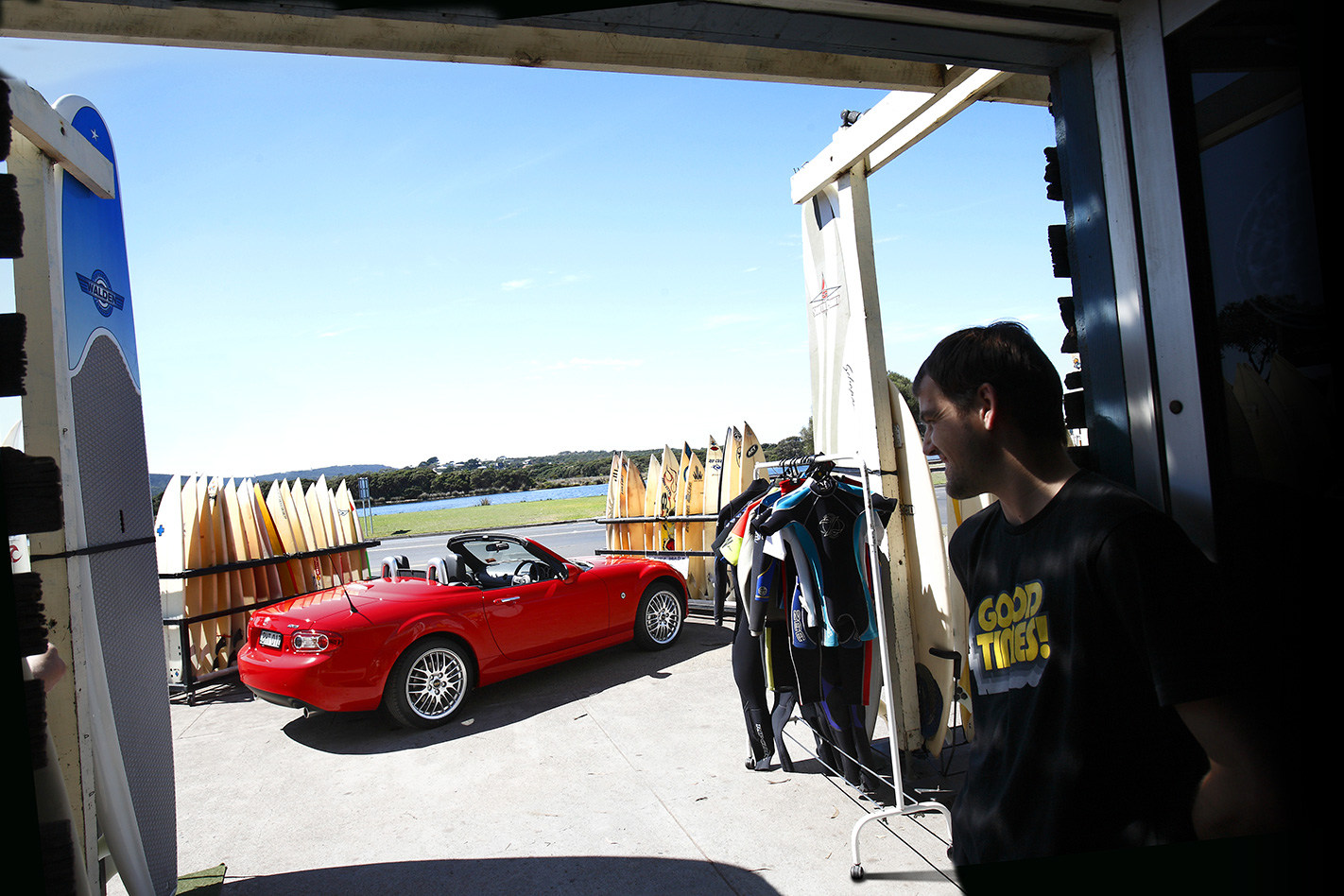
Mazda calls it “aggressive” – we reckon it’s a promise of the kind of black-labelled, X-rated, over-proof fun you might need lawyers to bail you out of. Never has MX-5 appeared so keen to be naughty.So you might, then, take a cursory glance at the muscle-shirt wearing MX-5’s new glory figures, and the mechanical specs behind them, and think it’s a bit of a farce. Little, it seems, has changed over the old car. The previous hard-lid Roadster Coupe scrambled over the 400-metre mark in a commendable 15.8sec.The new range-topping Roadster Coupe Sports – featuring BBS 17s and suede/leather mix Recaro buckets – shaves just a single tenth off that, yet at $51,455 (for the manual) it costs $3795 more. The old MX-5 weighed 1152 kilos whereas the new hero model carts around an extra 15 kegs (the base soft-top is 1129kg). And there are no major chassis, suspension or driveline overhauls.
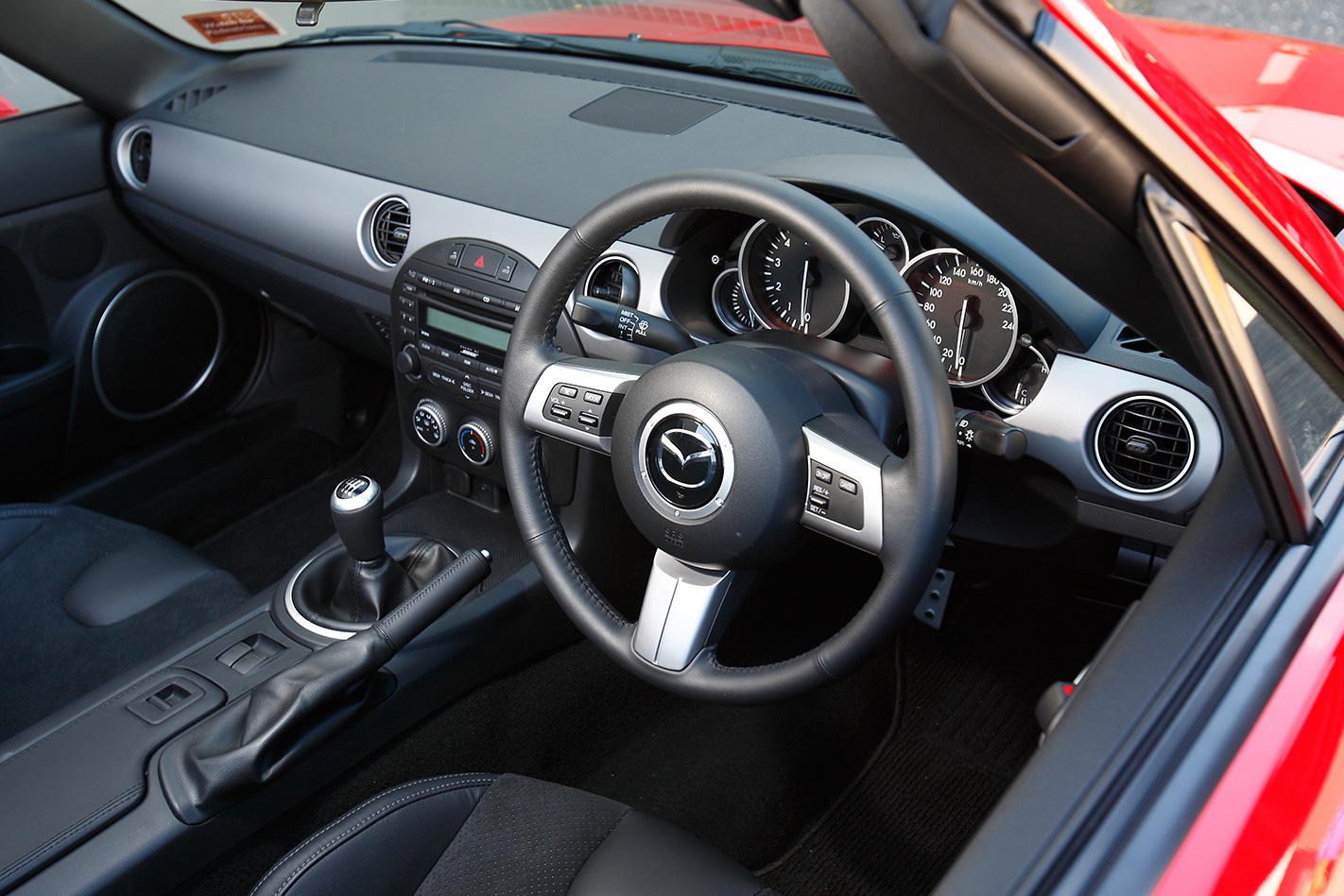
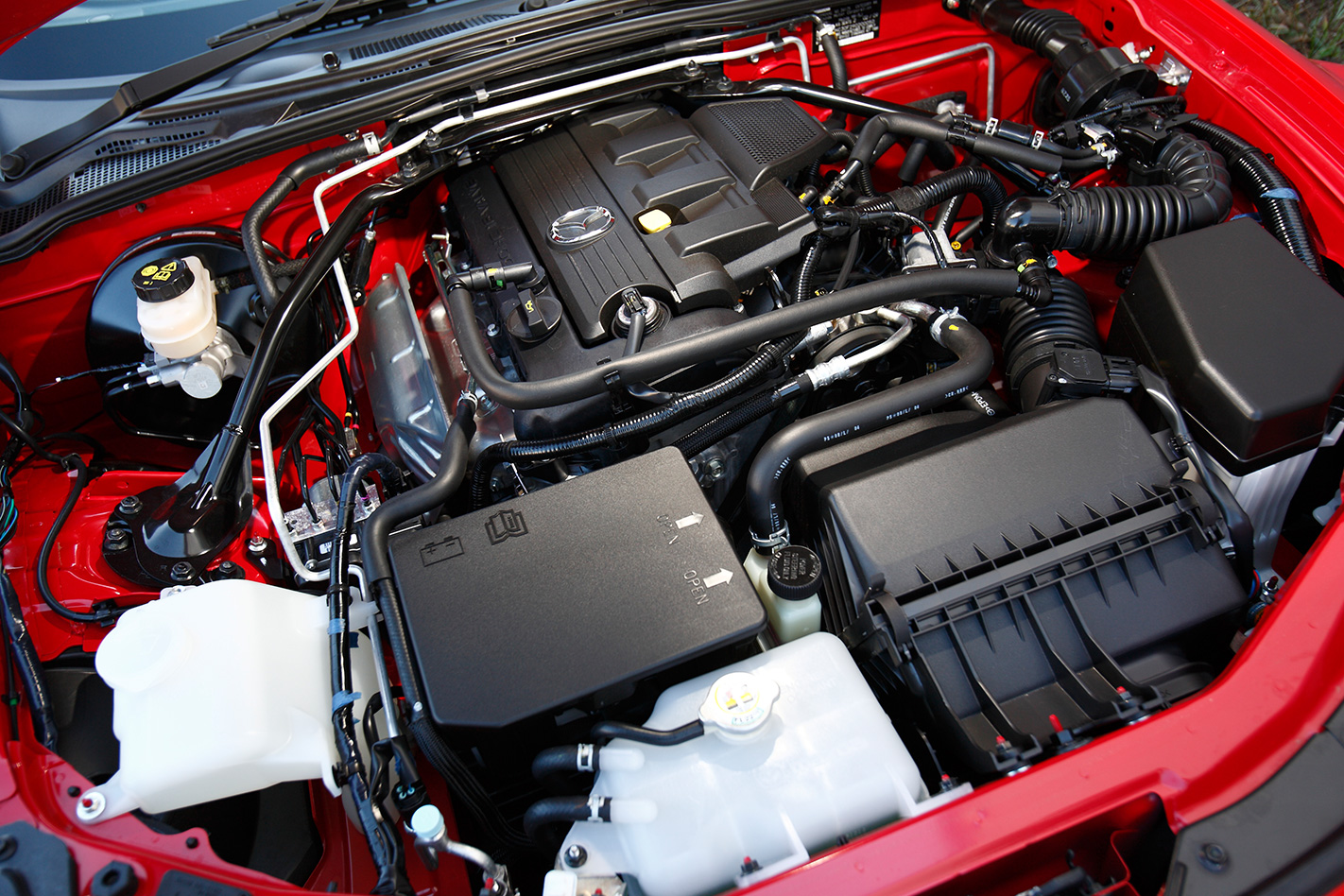
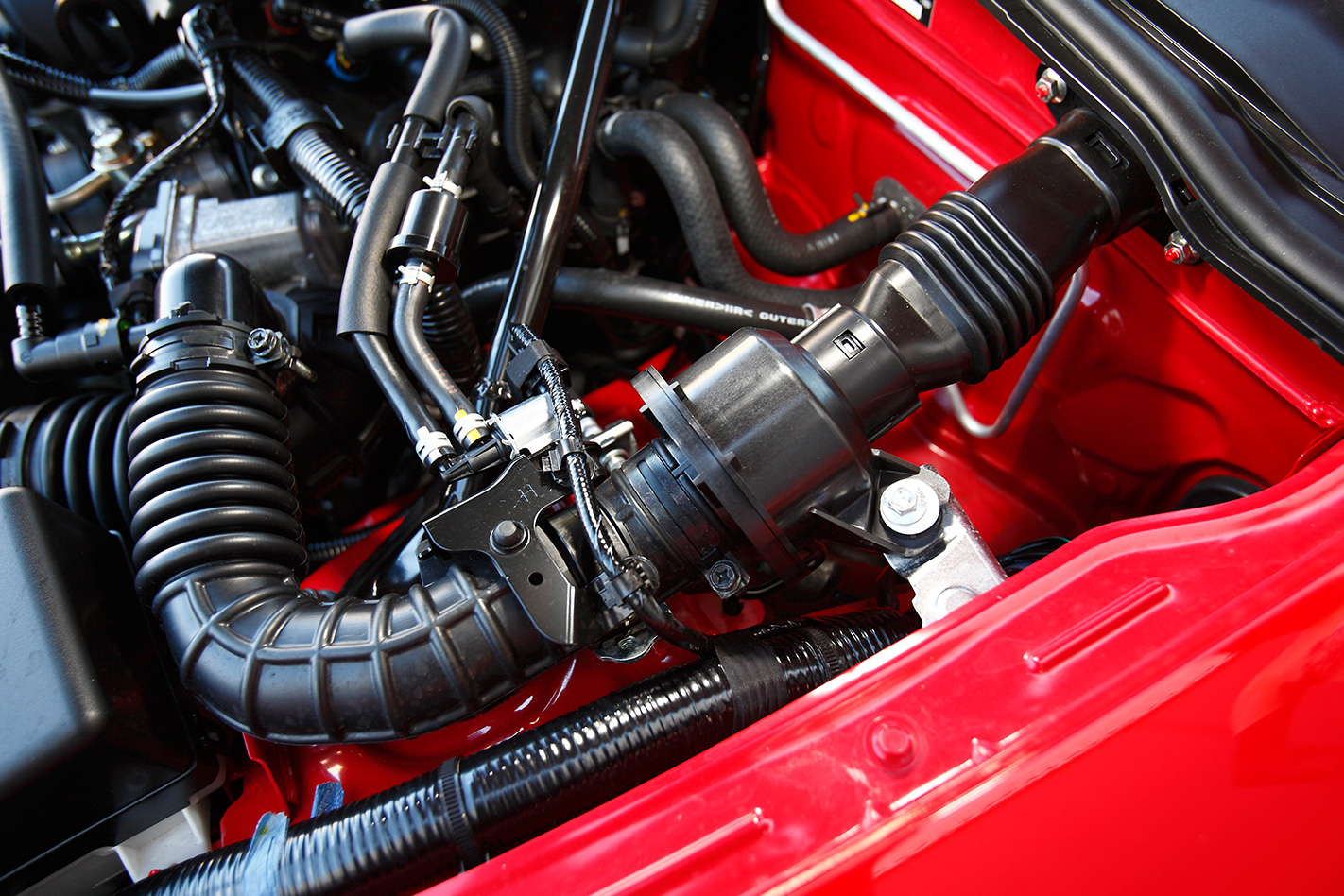
So Mazda’s goal with the facelift was more of the same where it could, while chasing more refinement and comfort and, conversely, creating a sportier-feeling and more abuse-proof result.Apply the methodology to MX-5’s engine and you get a silky smooth, hard-revving, absolutely bomb-proof unit that’s surprisingly eager (given the output) from the depths of the rev-range – it’s toey around town – to the manual’s extended banshee-wailing 7500rpm cut-out so handy for holding a selected gear through racetrack curves. It’s refined, yet has a nice raspy edge, audible without being annoying.
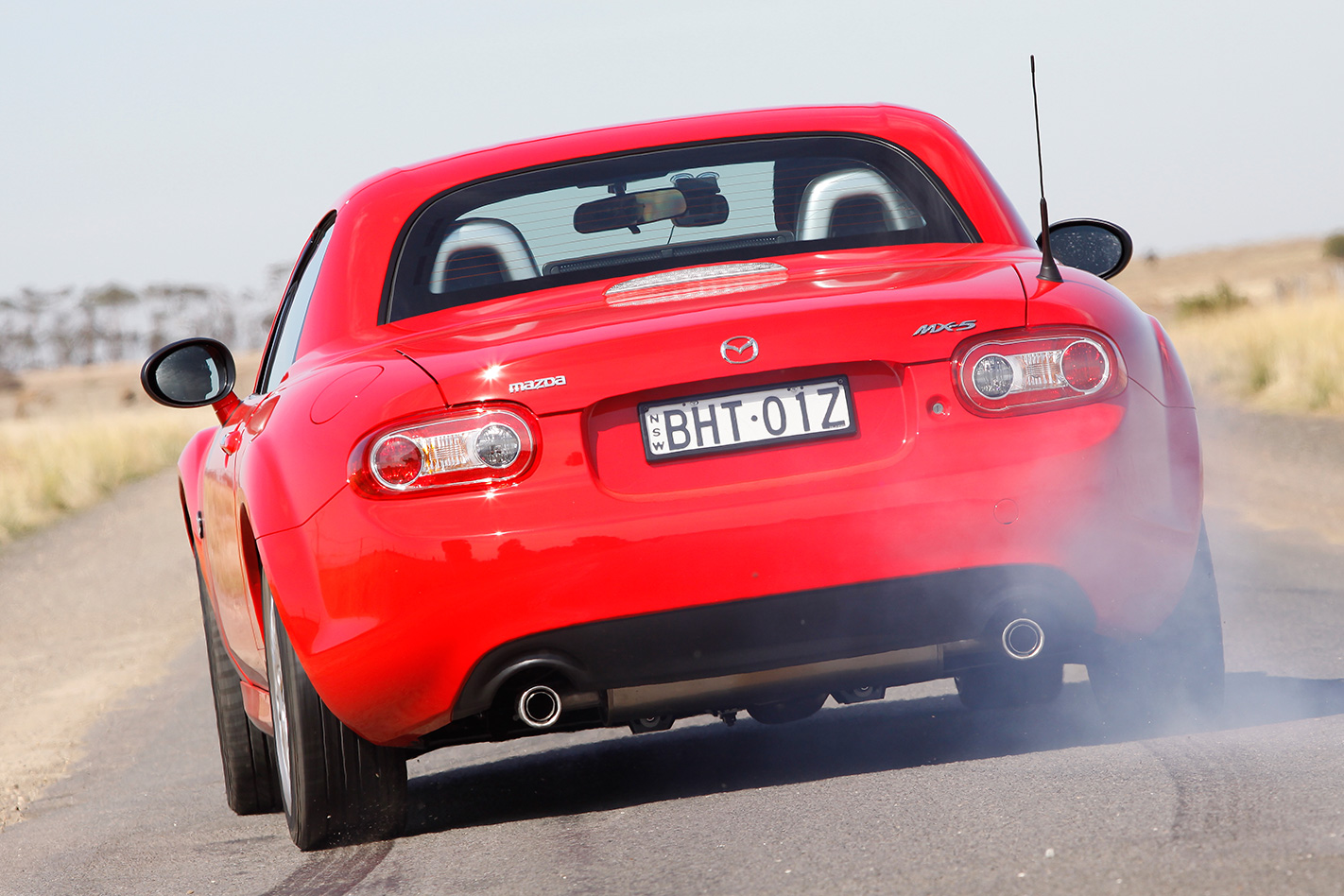
It’s punchy enough to fry the tyres, but has that linear flexibility so crucial to MX-5’s fluid balance.
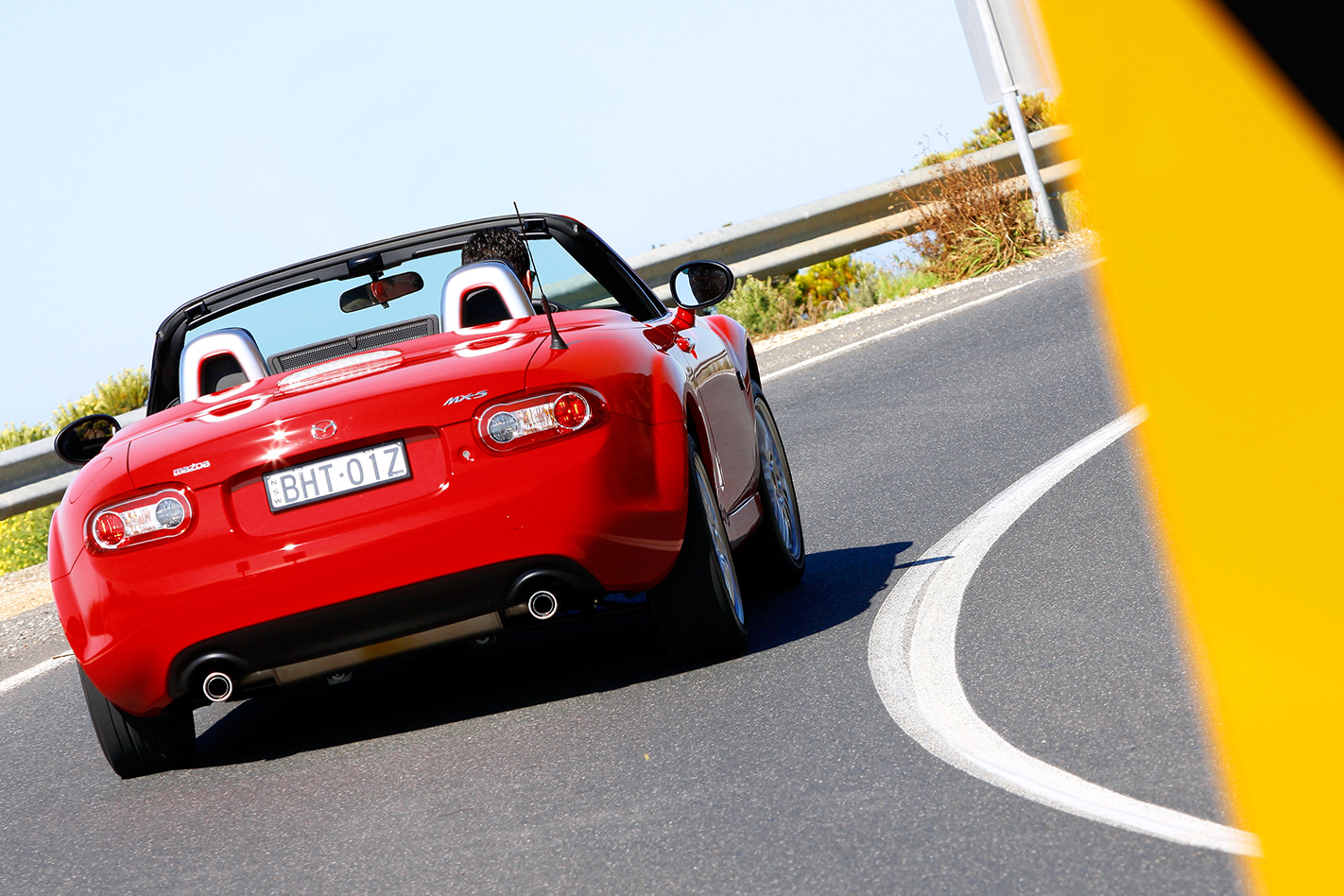
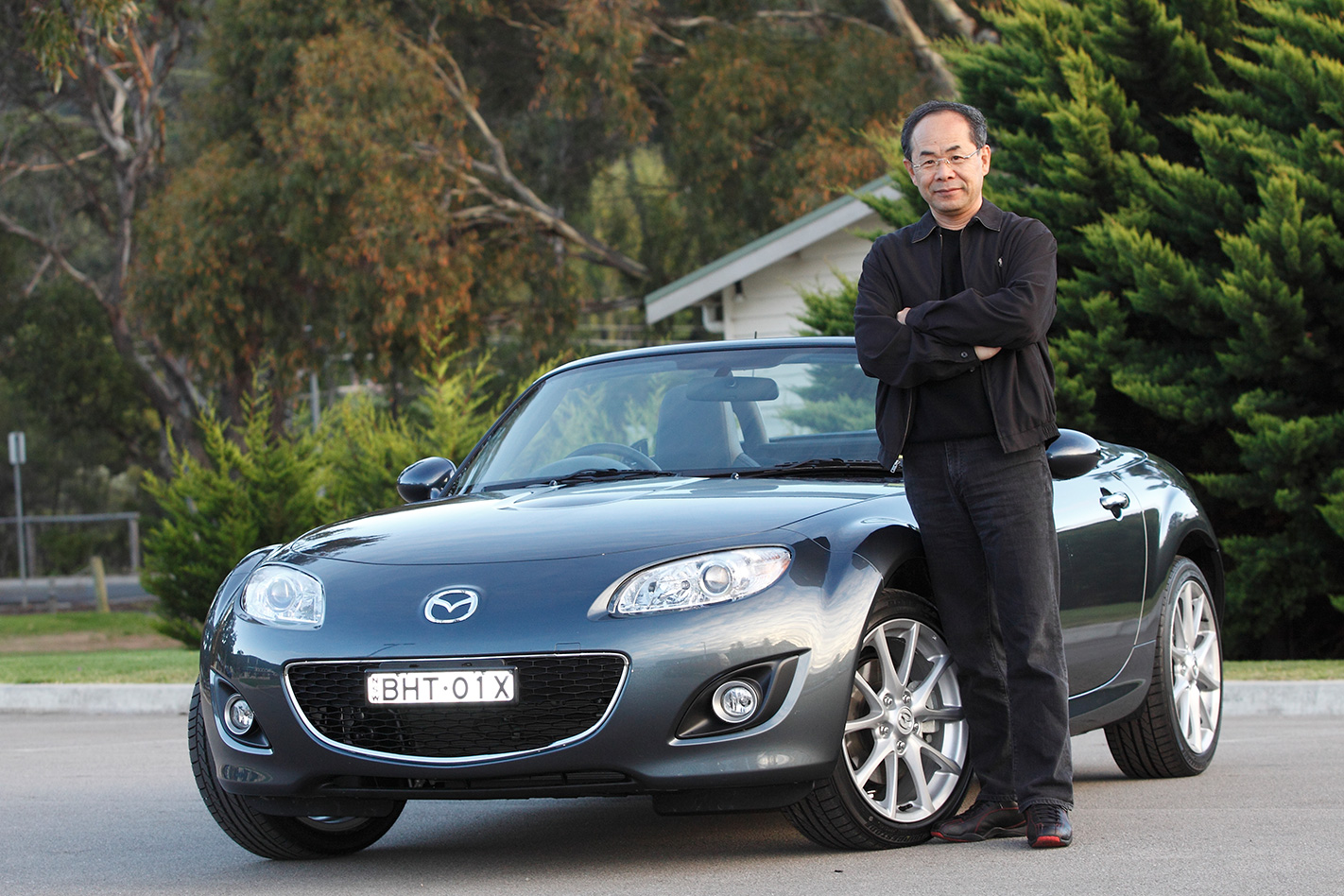
From the base soft-top ($43,850) to our full monty Roadster Coupe Sports test car, all manuals get an LSD, while the autos (Touring, Coupe and Coupe Sports only) don’t.Though Takao Kijima, the MX-5 Godfather himself who tagged along to the local launch, claims the auto “isn’t really the sporting version”, the Activematic is a gem: completely fluid with intuitive sport-focused shifting and a tight ratio spread.
It’s superbly mannered around town – all in a single mode – and offers a new, instantaneous manual mode at a flick of the correctly arranged (– forward/+ back) console shifter or the awkward thumb (–) and finger (+) tiller paddles that are mounted to the steering wheel. The revised six-speed manual, with more robust syncros, feels as direct, tightly gated and as nicely ‘mechanical’ as ever.
But perhaps MX-5’s most impressive trick is how it retains such a crisp sharpness to its body control while offering a really startling level of ride comfort. The spring/damper matching and compression/rebound rates offer suspension tuning par excellence.
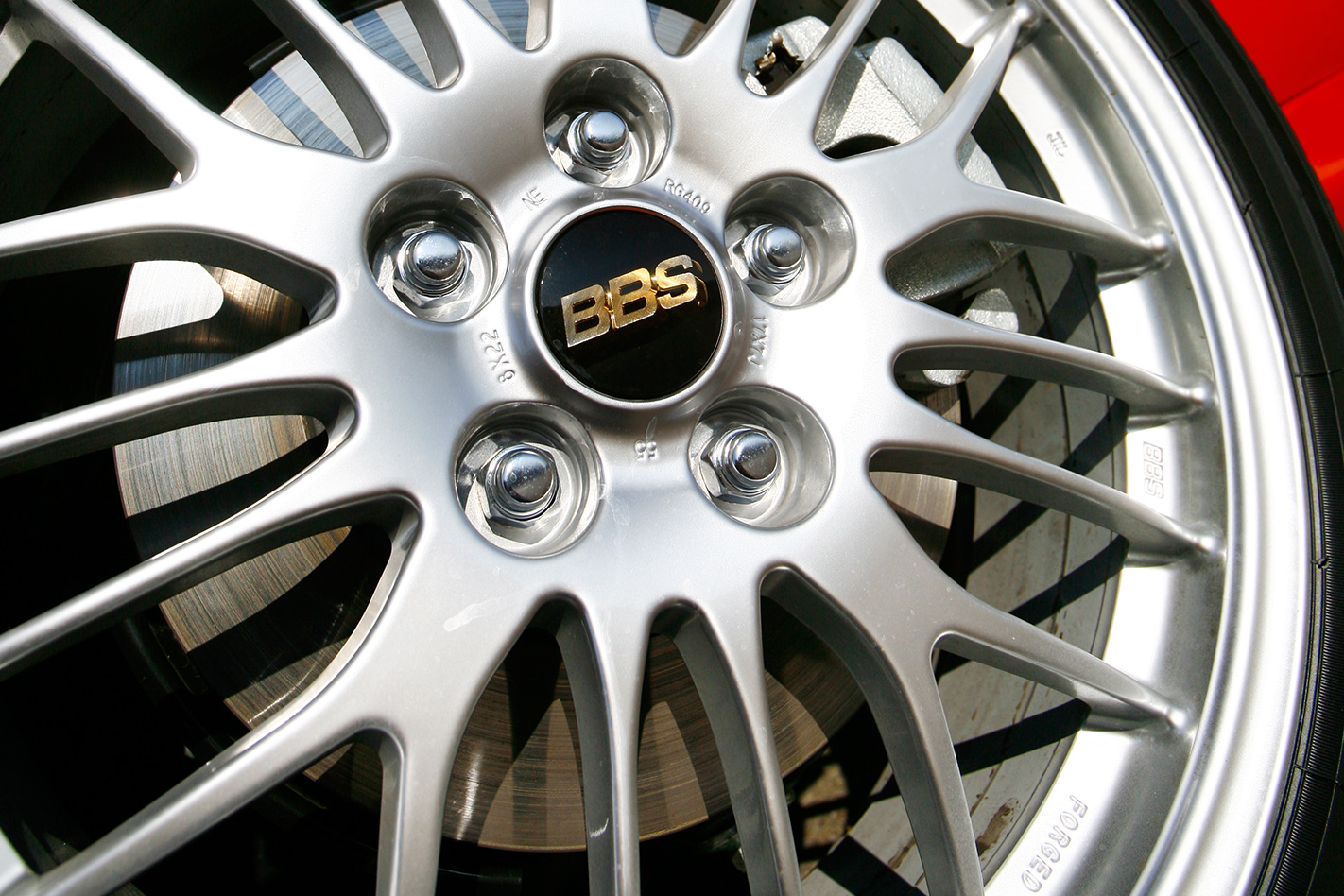
The 205mm-wide rubber still looks anaemic under MX-5’s pumped guards, and those frankly Wheel-And-Tyre-Mart-looking 17-inch BBS rims don’t do it any favours (the standard wheels are much nicer). But they muster up decent lateral grip, and break away nice and progressively at the sort of brisk road speeds where most keen punters might ideally want to do a bit of lateral tango with the sublimely balanced chassis’ rear-end.
One button switches both electronic stability- and traction-control systems off, and there’s enough slip-angle and headroom tuned into both to have a hard punt without either waving a white flag in protest.We’re not completely sold on the Roadster Coupe’s looks, though. The hard skid-lid’s a bit bulbous for MX-5’s proportions, a bit Noddy Goes To Toytown. But it opens or closes electrically in 12 seconds, robs no boot space, removes a lot of ambient noise when shut and adds just 37 kilos over the more pleasant-looking soft-top.
Does being Spartan mean purity for the MX-5 breed? Judging by the new range’s impressive specs, definitely not. Standard equipment, even on the base soft-top, includes cruise control, six-disc stereo, electric windows/mirrors, central locking, front and side airbags, DSC and traction control, and all variants feels a bit richer and nicer inside.
At mid-spec Touring level, trim is leather and the stereo is a new 200W seven-speaker Bose system. There are even a few new and clever cabin storage tricks – like the centre console ‘grip’ mat or new door-mounted storage nets – and, for some reason, four cup holders (in a two-seater?).
And in continuing along a proven path with steady incremental gains while offering plenty of choice – there are seven versions available, priced between $43,850 and $53,655 – the MX-5 looks to continue its status as both a credible enthusiast cult car and a reasonable volume-seller fit for the masses. And that’s a rare path to forge indeed.
Removing the LP560-4’s roof merely adds to its allure.
The new open-top Lambo’s already doing 270km/h − well shy of its claimed v-max − as things become even more interesting. The braking markers fly past with a disturbing frequency and, finally, half a second’s hard braking washes off the scariest 50km/h.
But, still, the Spyder turns in at more than 220km/h to a long, long, long corner that tightens up twice. Twisting, snarling and challenging the most accomplished cars and drivers, this corner would have worried Lamborghini’s old Gallardo Spyder. It would have worried the driver a lot more. It’s a piece of extreme engineering and it demands a piece of extreme machinery.The Gallardo LP560-4 is just that. It’s carrying about 235 or so as the corner tightens up. The old car hated this kind of thing – most cars would – but after you get the nose turned in, you find yourself nervously squeezing back down on the gas in fifth gear because, well, the redesigned, stiffened LP560-4 chassis just seems to cope with it.The Gallardo LP560-4 Spyder is a completely different animal to its predecessor. In addition to improvements to the 5.2-litre V10, it has benefitted from a complete, rigidity-rich redesign of the rear architecture and more-sophisticated front and rear suspensions.If you tightened or changed direction unexpectedly in the old model, the bushes didn’t always cope, the suspension’s architecture didn’t cope and sometimes − often when you really, really didn’t want it to − the rear-end could break away. That doesn’t happen in the LP560-4, as like its coupe brethren, the Spyder now has double wishbones that bolt directly to the chassis (and with four bolts, rather than two) and a relocated anti-roll bar. The differences are immediately obvious.There is no lurch from the rear, no suspension wobble, no heart-in-mouth moment, waiting to see which way it goes. Because you know instantly where it’s going to go. Even here, turning and braking hard from 235 for a 180km/h corner, you just know it’s heading exactly where you point it. And nowhere else.Three hundred metres further on, it does it again, from 180 or so down two gears to a corner worth 80 and, again, there’s nothing but what you ask for. It’s symptomatic of a tighter, more organised and more accessible machine and it has been lifted by far more than the sum of its parts.The torque curve, for example, is more accessible and even though it says 540Nm at 6500rpm, it feels stronger, earlier, than the old V10. While that means it’s easier to leave it in one gear and cruise the city streets, the six-speed E-gear paddle-shift system is also faster than it used to be, though little smoother.The Y-shaped daytime running lamps mark this Spyder immediately as part of the LP560 family and the taillights seem to add even more visual width to the topless version than they do to the coupe. There is more presence behind the cabin, too, because the engine cover hides not only the cloth roof and its bracing bar, but a hydraulic pump and six cylinders, an electric motor and two actuators − all of which explains the weight and the higher roll-centre.It’s a dramatic piece of theatre because Lamborghini doesn’t bother with a discreet flip-up home for its roof. It just lifts the entire carbonfibre engine cover and, 20 seconds later, once it has swallowed the roof, it drops it down again.You can hold comfortable conversations with the roof up, even at 250km/h. The cloth barely buffets and wind noise only begins to reach uncomfortable levels at extremely high speeds. With the cloth roof lowered, the rear window acts as a wind blocker and does so with surprising effectiveness.Deep beneath the seats, the Spyder is faster and more fuel efficient than its predecessor. That’s partly because the new direct-fuel-injection system increases efficiency and partly because the car is, at 1550kg, 20kg lighter.The 5.2-litre V10 spins freely right through to the 8300rpm cut-out and it would be a cruel man who didn’t love the way the sound had its own rich, distinct character at each and every rpm. It’s a deeper note than you’d think possible, full of huskiness and rising from a menacing growl at idle to a full blooded, barrel-chested bellow nearer to the redline. And it’s not just noise, either.Lamborghini’s 0-100km/h claim of 4.0sec sounds about right to us − even if launching the all-wheel drive cleanly is not an easy job − and, with enough road, the 324km/h top-speed claim seems easily achievable, too. When we ran out of road at 280km/h, the LP560 Spyder was still howling and accelerating hard.It’s comfortable in the default setting, starts swinging when you push the Sport button to change the six-speed E-gear’s paddle-shift software, and throws its heaviest punches in the track-oriented Corsa mode.There, the shifts become more brutal, cutting 40 percent from the shift time and sending an audible ‘bang’ from the clutch all the way down through the viscous-coupling centre differential to the front and rear diffs.The changes to the chassis have altered the character to sharp and reliable from crisp and dazzling. Even if you didn’t know about the roof, you’d know that its driving character is softer than the coupe’s. They’ve done a much better job of hiding the high nature of the roof’s extra weight than they did on the original Spyder.It never feels like it will bite you, regardless of the situation, and that’s partly because the upgraded, faster ESP software flashes its warning light more often (and cuts in less obtrusively) than it seemed to before. But it is also the most comfortable Gallardo yet, with a charming, compliant ride.There’s more weight in the steering, too, though that doesn’t necessarily translate to a more intimate picture of what’s happening beneath the front wheels. And, what’s happening is usually happening quickly, because it comes together so much better than its predecessor.It is, unerringly, the front-end that runs out of grip first and it does so with a gentle lightening of the steering weight − and it’s the same modus operandi regardless of whether you’re in second or fifth gear. And you fix it the same way; by simply rolling off the gas just a touch, letting it regain traction and then squeezing down again, with the sportier ESP setting letting you streak towards your exit points while performing beautiful four-wheel drifts.You can choose the optional carbon-ceramic brakes, but if you drive hard enough to need them, then the Spyder’s probably not the car for you in the first place. Instead, the enormous eight-piston Brembo calipers up front will comfortably do the job, clamping down on the 365mm front discs with an authority backed up by four-piston units at the back.Inside, there are still some issues, such as window winders that seem to work the wrong way. The main visible upgrades are isolated to the new instrument graphics, the digital readout on the dash, and the switch materials (an unpleasant chromed plastic) on the centre console.It’s a more predictable car than it was, but that’s not to say Lamborghini has taken the fun out of the Spyder. It hasn’t. It’s removed some excitement, for sure, but the will-the-parachute-open kind of excitement wasn’t always what you were looking for. What you have now is a fast, achingly soulful car that’s more GT than Superleggera and easier to live with every day than you’d expect. It’s a superb job – a car that’s not just a roofless Gallardo, but a Lamborghini with a unique character in its own right.
The mystique of the black Spec-V GT-R is immediate.
The lure of such an exclusive, anticipated supercar sparked a hive of activity around the world as pundits and supercar lovers tried to pick exactly what the Spec-V would gain over the already-capable standard GT-R, after the flying V was spied at the Nurburgring last year.We!|d heard about its lightweight carbonfibre body parts, its $70,000-plus carbon-ceramic brakes, its high-gear boost control, unique Bilstein suspension, and ultra-high performance Bridgestone rubber. Now it!|s our turn in the hot seat to see how these changes alter the GT-R.The GT-R’s creator is celebrated race engineer Kazutoshi Mizuno, and as he leads us onto the test track, he begins raving about the ultra-special upgrades on the Spec-V. It’s like Mad Max being guided by his leather-clad workmate, The Goose, into an underground workshop to reveal the thundering 448kW ‘pursuit special’ the police mechanic has just finished creating. “Shut the gate on this one, Maxy. It’s the duck’s guts!”Now Mizuno might not be as colourful with his description, but he is no less enthusiastic talking about the beast he’s created. He is the only chief engineer we know of who reports directly to the boss, in this case Nissan CEO Carlos Ghosn. And after hearing his ‘supercars according to Mizuno’ philosophy, you understand why. This fella is an engineering genius and that’s why Ghosn basically gave him free reign.“We thought the opposite to most engineers,” he said. “We thought backwards. For the GT-R, we came up with a target kerb weight first of around 1750kg and then thought, what do we need to [do to] achieve that weight?” The Spec-V looks more menacing than the regular GT-R.Shaded in optional ($8700!) Ultimate Black Opal paint, the Spec-V’s carbonfibre brake ducts, grille, and rear wing not only give it a racy nuance, but they also reduce weight. The lightweight, forged-aluminium 20-inch wheels by Rays Engineering openly advertise the fact that this car means business.To shed as much weight as possible, Mizuno replaced the tight rear seats with soft plastic covers, while in the front he specified two ultra-thin carbonfibre Recaros to save more kegs. All up, the Spec-V has lost 56kg, dropping kerb weight to 1684kg which, to tell the truth, is less than the 100kg weight loss that we expected.“The GT-R is the anyone-anywhere-anytime supercar,” claims Mizuno. “The Spec-V, in contrast to what you might be thinking, is not the high-performance version of the GT-R.” Huh, really? “It is a car tailored to those drivers who really enjoy fast driving and like to push a car to its limits on a track. That’s why we strived to build the best brakes in the world,” he stresses. Right.With a nod from Mizuno, we flick the starter button and the Spec-V springs to life with a deeper, throatier burble than the stock GT-R thanks to a newly fitted titanium-coated exhaust system.Finally, an exhaust that sounds like an exhaust! The Spec-V’s 3.8-litre twin-turbo V6 is painted black instead of silver, and claimed power is 357kW, which is no different from the regular MY09 GT-R !V again, a figure less than we expected.But as Mizuno explains, “That was not our aim. We wanted to lift the on-road thrill factor, not power. And re-define brakes.” The 588Nm torque figure is identical to the regular GT-R’s, too, however there is a high-gear boost control device that ups that figure by 19Nm for an 80-second burst.As we ready ourselves to launch the car, Mizuno makes sure we know about the retuned VDC unit (an upgrade on all post-MY09 GT-Rs). He is basically saying that he strongly recommends we leave the VDC on, as minor revisions to its programming make it as fast as, if not faster than, the car with the VDC off. “Oh, so you don’t want us to use the launch control?” we say cheekily. To which he replies half-smiling: “What are you talking about? The GT-R has no such feature.” He is just toeing the company line, because Japanese law states that road cars cannot have launch-control systems.Leaving the stability-control on, there’s no need to floor the brake pedal, wood the throttle to 4500rpm and release the brake like with the standard GT-R. So we take Mizuno’s advice and just transfer our right boot gently off the brake and floor the throttle.In contrast to the original GT-R’s brief loss of traction at launch, the Spec-V takes off instantly with virtually no tyre squeal. This thing gains speed like it’s been catapulted from an aircraft carrier. Simply awesome. Zero to 97km/h (60mph) comes up in 3.4 seconds and the quarter-mile flies by in 11.5 at 201km/h. That makes the Spec-V faster than not only the Dodge Viper, Porsche 911 Turbo and Corvette ZR1, but its true European rivals in the Ferrari 430 Scuderia and Porsche 911 GT2.The slalom is a true test for the revised suspension set-up and tyres. On the Spec-V, the switchable Race, Sport, and Comfort dampers are history. The new car’s one-size-fits-all units were jointly developed by Bilstein and Nissan to achieve the best combination of grip and ride quality.The tyres might look like stock 20-inch Bridgestone Potenza RE070ZRs, but they’re not. To endure the extreme braking forces of the Spec-V, Mizuno asked Bridgestone to produce stiffer sidewalls for the Spec-V’s boots, with more rigid shoulders and a more aggressive tread pattern that puts more rubber in contact with the road.But the Spec-V’s big news is its carbon-ceramic brake system. It pulls the car up quicker than any other stoppers of the past and resists fade better. This six-piston affair is a collaboration between Brembo and Nissan. From motorsport, Mizuno knows brakes and what’s here is just a bee’s weeny shy of the stoppers found on a GT track car.Pushing the Spec-V through the slalom, we immediately notice just how much more composed the car is at speed, with more feedback and less understeer than before, but acceptable ride quality. Grip is enormous. At 120km/h, the Spec-V is nearly 1.6 kays faster through the cones than the GT-R we tested last October. But, more significantly, it is much quicker than the 911 GT2’s 115km/h and matches the Corvette ZR1!On the skid pad? Fitted with those ultra-grippy Bridgestone Potenzas and fixed Bilstein suspension, the Spec-V returns a sensational figure of 1.12g, compared to the stock GT-R’s 0.93 and the ZR1’s impressive 1.06. Braking from 97km/h to zero, the Spec-V’s package pulls up in 32.3 metres. After a couple of tries wooding the huge carbon-ceramic anchors, our stopping distance is curiously identical to the GT-R’s.The Spec-V is lighter, has better rubber and ceramic anchors, so what gives? Nissan’s public-relations bloke pipes up and points to the windstorm that has just dumped dust and crap all over the track. We also reckon that maybe we did not quite generate enough heat throughout the test to get these all-conquering brakes up to operating temperature.After all, for all intents and purposes, these are racing brakes and need heat on board to achieve maximum stopping force. Okay, so we were expecting something like the ZR1 and GT2’s stopping distance of 29.3 metres, but 32.3 metres will have to do for now.When Mizuno points us in the direction of the winding test track at the back of the facility, our first lap is extra-tentative so that we can adequately warm up these carbon-ceramic stoppers. Satisfied that the rotors and pads are now hot, and that the dust and pollen has all but gone, we open the throttle more and brake later, diving deeper and deeper into each successive corner.And the Spec-V just keeps delivering, inviting us even deeper into the turns. Nothing can really prepare you for the galactic braking force as you jump hard on the Spec-V’s anchors.We’ve been told that up to 2g is generated under full braking from 240km/h. And, yes, it feels that brutal !V like pulling up in a GT race car. But the Spec-V remains stable and flat throughout the whole process, instilling an eerie sense of calm in its driver. You almost feel as though you are coming out of hyper-space as the scenery slows and the Spec-V ‘s pace is arrested. Violently.No matter how many laps we complete, the Spec-V’s brakes are always there, and we mean every photon of braking force that is there for the taking, every time. Brake fade simply doesn’t exist. The standard GT-R starts to fade after five laps of Fuji Speedway !V including full braking from over 260km/h at the end of the mile-long straight.Mizuno tells us the Spec-V can push its limits all day at Fuji and come back for more the next day. And we believe him. The downside? You’d better have upwards of $70K in your back pocket to replace pads and rotors.As we exit yet another corner at Nissan’s Tochigi test track, we flick the steering-wheel-mounted switch that engages the high-gear boost control for an 80-second shot of additional torque. It’s “just enough for half a lap of a race track like Fuji Speedway,” explains Mizuno. And that’s where this car is at home !V going full throttle on a circuit.In the Spec-V, Mizuno has created a GT-R track special packing prodigious brakes, unyielding rubber, and a suspension set-up that combines both ample traction and acceptable comfort. But it comes at a premium. Try $242,571. In Japanese coin, that’s double the price of a base GT-R and $65,000 more than the Corvette ZR1 that generates similar test results. At that price, the Spec-V could be a hard sell even in Japan, even if they only make 30 units a month. Exports are yet to be confirmed.Just to keep us all salivating at the evolution of Japan’s greatest-ever car, Nissan will turn up at the Nurburgring in Germany in April with the Spec-V in an attempt the smash its own 7:29 lap time. And there’s more for the GT-R in the pipeline, apparently.That’s right, Mizuno has more magic up his sleeve. Watch this space.
MOVE OVER MCLAREN and Ferrari – the next Lamborghini will be an all-carbon conquerer.At the launch of the McLaren MP4-12C, McLaren boasted that it would take Lamborghini and Ferrari between three and five years to catch up to its carbonfibre technology. Sources at Lamborghini insist, though, that when the Murcielago replacement arrives next year, McLaren will be the company in for a rude shock.For starters, the all-new car will have not a single carry-over bolt in it and it will be all carbonfibre.It will have a bigger engine than the Murcielago’s 6.5-litre V12, it will have more power than its 493kW, it will be stiffer, stronger and it will even weigh less and emit fewer CO2 particles. And it will be demonstrably faster than the he-man all-conquering Murcielago that it replaces.The Italian powerhouse has been working on the 360km/h supercar for years and a key part of that has been collaborating with both Boeing and the University of Washington, both of which developed the technology for the pioneering carbon-composite Dreamliner passenger jet.So confident is Lamborghini of its superior carbon know-how that its new range-topper will debut not one, but three carbon-composite technologies.“They don’t know it yet, but we are the car industry’s carbonfibre leader,” one source told MOTOR. “We are more advanced, and we intend to keep it that way. You will be very surprised.”Sources insist this will make the car about 150kg lighter than the outgoing carbon-bodied Murcielago, so it will tip the scales at no more than 1500kg. Given that it will have seven delicious litres of all-new, Sant’Agata-developed V12 sitting behind the driver’s seat, that’s no mean feat.The new engine, complete with direct-fuel injection and variable valve timing and lift, will punch out more than 530kW in its initial trim and is expected to thump out 750Nm of torque as well, despite revving beyond 8000rpm.If our sources are correct, the lightweight Lambo to challenge the 3.0sec barrier for its 0-100km/h blast, with a sub-10sec 0-200km/h run on cards too.The car will remain all-wheel drive, though, and while the rest of the world is moving to double-clutch gearboxes, Lamborghini has long believed there is life left in single-plate, robotised gear-changing technology. So, although this is the area where its rockets are most heavily criticised, expect the Murcielago replacement to use an all-new, seven-speed robotised gearbox behind the all-alloy V12.But that’s not all. Lambo insiders insist it will be no ordinary gearbox. There is, it seems, a technical trick or two coming with this unit, as our sources insist it has sliced its gearshift times by more than half compared to the Gallardo’s E-gear system.Sadly the manual, with its classical chromed gate, will be killed off, though, a la Ferrari 458.But it’s the carbon technology that will get most of the attention, because Lamborghini is said to be using an all-new manufacturing process that reduces cost and time – each of which are traditional bugbears for mass production of carbonfibre.The Lambo flagship will also use a new system for the tub, which allows it to align the fibres to give strength in exactly the right direction, while it will also debut braided carbon-composite tubing that gives enormous strength in critical areas with low weight, which will have the added benefit of being easily replaceable.
AMG’s soon-too-be replaced 6.2-litre V8 has pipped the Ferrari 458 Italia’s V8 to win International Engine of the Year.
The showdown saw the 6208cc engine, as fitted in everything from the C63 to the CLK 63, dominate the judging to post 90 more points that the Italian’s 4.5-litre, which finished 20 points ahead of Jaguar’s supercharged 5.5-litre bent-eight. The Benz engine won the Above 4.0-litre category as well as Best Performance Engine of the Year.The BMWs M3’s 4.0-litre V8 took the honours ahead of Porsche’s legendary flat-six and the Nissan GT-R’s 3.7 twin-turbo in the 3.5 to 4.0-litre category, while Audi’s TT RS is home to the 2.5-litre turbocharged five-cylinder that’s won the 2.0 to 2.5-litre class.Volkswagen’s twin-charged 1.4-litre was voted best in the 1.0 to 1.4-litre category, while in the free-for-all Best New Engine of the Year, Fiat’s 1.4 turbocharged Multi Air, as fitted in the Alfa Romeo Mito and Giulietta, ironically prevented Ferrari’s 4.5-litre V8 winning any accolades by knocking it off the top spot.
It’s the fastest car you’ve never heard of. Just a few weeks before our arrival in Berlin, German race driver Florian Gruber wrestled a Gumpert Apollo Sport around the famous Nurburgring Nordschleife in 7:11.57sec, taking the production-car record in the process.At that moment, the Gumpert became more than an eccentric-looking rocketship: it could rightfully claim to be the fastest point-to-point car in the world. But you’ve still never heard of it, even though it’s fully homologated and is considered a full production car … if you can afford to fork out $800,000.We meet the salesman, Sven, at the company’s new sales office in Berlin’s Meilenwerk building. This converted factory now houses a priceless collection of old-timers and instant classics like a 300SL Gullwing and a Ferrari Enzo. Yet even here, the Apollo Sport stands out from the crowd. It’s not the most beautiful – not by a long shot – but this orgy of straight edges is pure, leg-breaking aggression. It’s the antithesis of the more elegant Pagani and Tramontanas that occupy its price range.Roland Gumpert, the man who introduced four-wheel-drive to Audi’s WRC program, and Roland Mayer, a crack Audi tuner who fancied something more substantial, set about creating a supercar with enough downforce to drive along the ceiling at full speed. What they came up with is a shrink-wrapped, uncompromised racing car with a number plate, and I can’t even climb in without unhooking the quick-release steering wheel.The minimalist interior is mostly carbonfibre, with two bucket seats, a giant sequential lever, three pedals and a few dials. There isn’t a rear-view mirror (because there’s no rear window!) and grabbing the leather strap and pulling down the surprisingly heavy gullwing door to close it takes serious effort. Reverse, meanwhile, requires blind faith in the camera that feeds into the sat-nav screen.As I finally fire up the 515kW V8, a hollow bark fills the halls as the Audi-derived 4.2-litre clears its lungs like a heavy smoker, spitting unburnt fuel all over the highly polished floor. I use the car’s hydraulic system to raise the front-end 40mm before engaging first gear by dipping the clutch and pulling firmly on the lever twice. Then it’s out of the perfectly surfaced Meilenwerk and into the outside world.I’m hemmed in on every side by Berlin traffic. A bus runs ominously close to the frighteningly expensive wing, a cyclist sits ahead and if my foot slips off the clutch, I could smear his yellow jersey all over the road. I feel for the bite point with bomb-disposal levels of care and the Apollo trickles gently into the fast-retreating traffic. I’m slower than everyone else; I’m sweating and I’m working twice as hard.The clutch and sequential lever are heavy. Both are race-bred and the clutch and sequential marriage works perfectly, but it isn’t a natural set-up to jump into, so it’s a manual workout in there and the optional air-con is a life saver. Without that box ticked, this car would be an oven, with no way to fight the heat on offer from the twin-turbocharged engine that sits just inches away from you.For the Nurburgring record, Gumpert softened the car to give it the suspension travel to cope with the Nordschleife’s wicked bumps and kerbs. This one bounces and struggles on the cobbles and every rut is transmitted through the barely padded racing shell that forms the seat – it’s like driving through an earthquake. The massive tyres grab at every tram line, painted line, and fault-line in the road.Downforce doesn’t help, as we’re joining traffic moving at 15km/h, but the mechanical grip is immense and in town, that can work against the Gumpert. It never quite deviates from the straight line, but there’s a riot of noise, jolts and bumps coming through that carbonfibre monocoque as each tyre taps out the road surface.Of course the car is more at home on the racetrack, where the 848Nm of torque can kick in and send the Apollo Sport scorching to 100km/h in 3.0sec flat, 200km/h in 9.1sec and onto a top speed of 360km/h, which is mind-boggling considering the aerodynamics at work. After our painful run through the city, it’s high bloody time for an excursion onto a backroad.The numbers really should have warned us, but we weren’t prepared for the sheer violence of the Gumpert’s acceleration. The Apollo Sport packs such an explosive force that it feels like your face is melting. The noise is like an old-world racecar as the metallic V8 roar reverberates around the cabin.The 1197kg Apollo Sport feels so direct and so responsive that even the Ferrari Enzo seems dimwitted by comparison and I end up winding steering lock off before the apex on more than one occasion. The direct, rose-jointed connections give racecar-like responses at any speed. But high-velocity bends are the Gumpert’s true forte, with its trick chassis and 1700kg of downforce keeping it stuck firmly to the road at outrageous speeds. It’s still quite a job, though, trying to keep this two-metre-wide steed in my own lane.You see, I feel like I’m only a foot spasm away from a major accident. But the useable, smooth power band helps, as well as the depth of feel on offer from the AP Racing six-pot steel brakes. The almost infinitely variable Racelogic traction-control system is cranked to full and yet I can still feel those massive rear tyres flailing against the surface before the computers cut in to kill the power. It’s disconcerting at first, but I learn to trust the car as we head back into the city and along one straight of the old AVUS race circuit to the south west.Flowing along with the traffic, I can leave the clutch alone and roll along in second and sometimes third, using the torque (not the turbos) to row along. And I start to see softer qualities in this brute of a car. Kept below its flashpoint of 3500 revs, it is calm, controlled and docile, perfectly engineered to take whatever the city can throw at it. Learn to ignore the white noise from the suspension and the Apollo Sport is a faithful companion. The jolts, bangs and vibrations simply mark progress, rather than any imminent disaster.Building confidence, I even plug a few cheeky gaps in traffic. And easing through Berlin gives us the chance to see just how much of an impact this car has on Joe Public. Just 40 Gumpert Apollos have been built and hardly any have been spotted on the open road, so its sledgehammer appeal is undiluted by familiarity. Waving back, tooting the horn and an occasional burst of revs to satisfy the growing throng at traffic lights is all part of the Apollo Sport experience as we close in on our destination.We turn left past the famous Nike flash, a unilateral symbol if ever there was one, and snake past a thousand disbelieving eyes to the chain link sculpture that’s simply entitled: Berlin. Gucci, Bvlgari, Chanel, Louis Vuitton, Valentino, Lacoste, Tommy Hilfiger, Cartier, Hermes, Swarovski and Aston Martin all have stores here, and once again, the Apollo Sport fits right in. Its price-tag means it is beyond the dreams of most mere mortals, and ensures that the Apollo Sport remains a plaything for the rich that already have a Ferrari and a Lamborghini in their garage and crave a different buzz.The fact that it can lap the ’Ring in record time, yet crawl to the centre of one of the busiest cities in Europe makes it all the more unique. It truly is a production car; not just the fastest car you’ve never heard of.Price: €300,000 base price, €400,000 as tested Body: 2-door, 2-seat coupe Drive: rear wheels Engine: 90-degree V8, DOHC, 40v, twin-turbocharged Material: alloy head/alloy block Bore/Stroke: 84.5 x 92.8mm Capacity: 4163cc Compression: 9.3:1 Power: 515kW @ 6500rpm Torque: 848Nm@ 4000rpm Redline/Cut: 7000/7200rpm Fuel/tank: 98 Octane/80 litres Kerb weight: 1200kg Power-to-weight: 429kW/tonne Transmission: six-speed sequential manual Suspension: Independent Pushrod actuated double transverse control arm, horizontal dampers, anti-roll bar; hydraulic lift kit (f); pushrod-actuated double transverse control arm, horizontal dampers, coil-springs (r) Length/width/height: 4460/1998/1114 Wheelbase: 2700mm Track (f/r): 1670/1598mm Steering: power rack and pinion Turning circle: 10.8m Brakes: 378mm ventilated discs with six piston calipers all round Wheel: 19 x 10.0-inch (f), 19 x 13.0-inch (r) Tyres: Pirelli P Zero 255/35 ZR19 (f) 345/35 ZR19 (r)Positives: A real race car for the road that can just about handle a trip to the city.Negatives: It hurts to look this cool and supercar owners pay a heavy price to show off their pride and joy.Stars: 8/10
Leaked pictures of an uncamoflagued ‘BMW Concept M5’ have emerged on the internet, revealing Munich’s long-awaited F10M M5 sedan.
The concept’s design features a more prominent shark-nose to give the car’s face a more aggressive look than the rest of the 5-Series range, while the lower front splitter is much chunkier and features large air intakes at either side.The wheel guards and aero treatment isn’t over-the-top, ensuring the M5 still fits its ‘executive express’ moniker. But the huge charcoal alloys and overall proportions of the car leave you in no doubt as to what it might be capable of.And good authority suggests the peak power output of the 4.4-litre twin-turbo V8 will be nudging 450kW, and mated to a seven-speed twin-clutch gearbox.
Nissan, in co-operation with Nismo (a Japanese tuning house) has released computer-generated footage of its latest creation – the Nissan Leaf Nismo RC.
It’s not your everyday race car, and offers only modest performance, because it runs on an 80kW AC electric motor that propels it to 100km/h in 6.85sec and on to a top speed of 150km/h.The Leaf Nismo RC can compete in races up to 20 minutes in length before it needs charging. As it lacks a petrol engine, it emits no noise, so we can’t see packed grandstands rising to their feet for this one anytime soon.
Maserati’s fastest-ever car is bound for Australia, with the first to arrive in June. The Gran Turismo MC Stradale is 110kg lighter than the Gran Turismo S, and work on the 4,7-litre V8 engine boosts power to 331kW, and torque to 510Nm.
Despite stripping so much mass out of the car, Maserati insists the ideal 48:52 front-to-rear weight distribution has been retained. Most of the weight saved comes from the use of a pair of carbonfibre race-style front seats, and the removal of much of the Gran Turismo’s soundproofing. The rear chairs have also been removed entirely, making it the first two-seat Maserati since the MC12, which was built purely for FIA GT homologation.The MC Stradale is equipped with carbon-ceramic brakes and an upgraded version of the six-speed MC Race Shift transaxle gearbox.“As the name suggests, [the MC Stradale] is a road going version of the Maserati Trofeo and GT4 racing cars, with the heightened performance, sharpened reflexes and heightened visual presence that this requires,” says Maserati Australia boss, Glen Sealey.The MC Stradale will be available in short supply, and will cost $364,900.
Volkswagen has confirmed it will join the WRC ranks from the 2013 season.
The four-wheel-drive Polo R WRC will conform to the same Super 2000 regulations as its competitors, such as the new-kid-on-the-block Mini Countryman WRC, and will be powered by a turbocharged direct-injection 1.6-litre four-cylinder engine.The challenge comes off the back of its recent success in events like the Dakar Rally, and motorsport boss Kris Nissen is keen to continue that momentum. “We look forward to this new challenge and are working on this project with the same passion with which we won the Dakar Rally in the past three years,” he said.“Even though the WRC is new territory for us and involves learning in many areas, the team already meets some important prerequisites now as it brings an unwavering professional attitude and resolve to deliver absolute perfection to this commitment.”The last time Volkswagen achieved success in a rally formula that is comparable to the WRC was with the Mk 2 Golf GTI in 1986, when Swede Kenneth Ericksson claimed the Group A World Championship.
