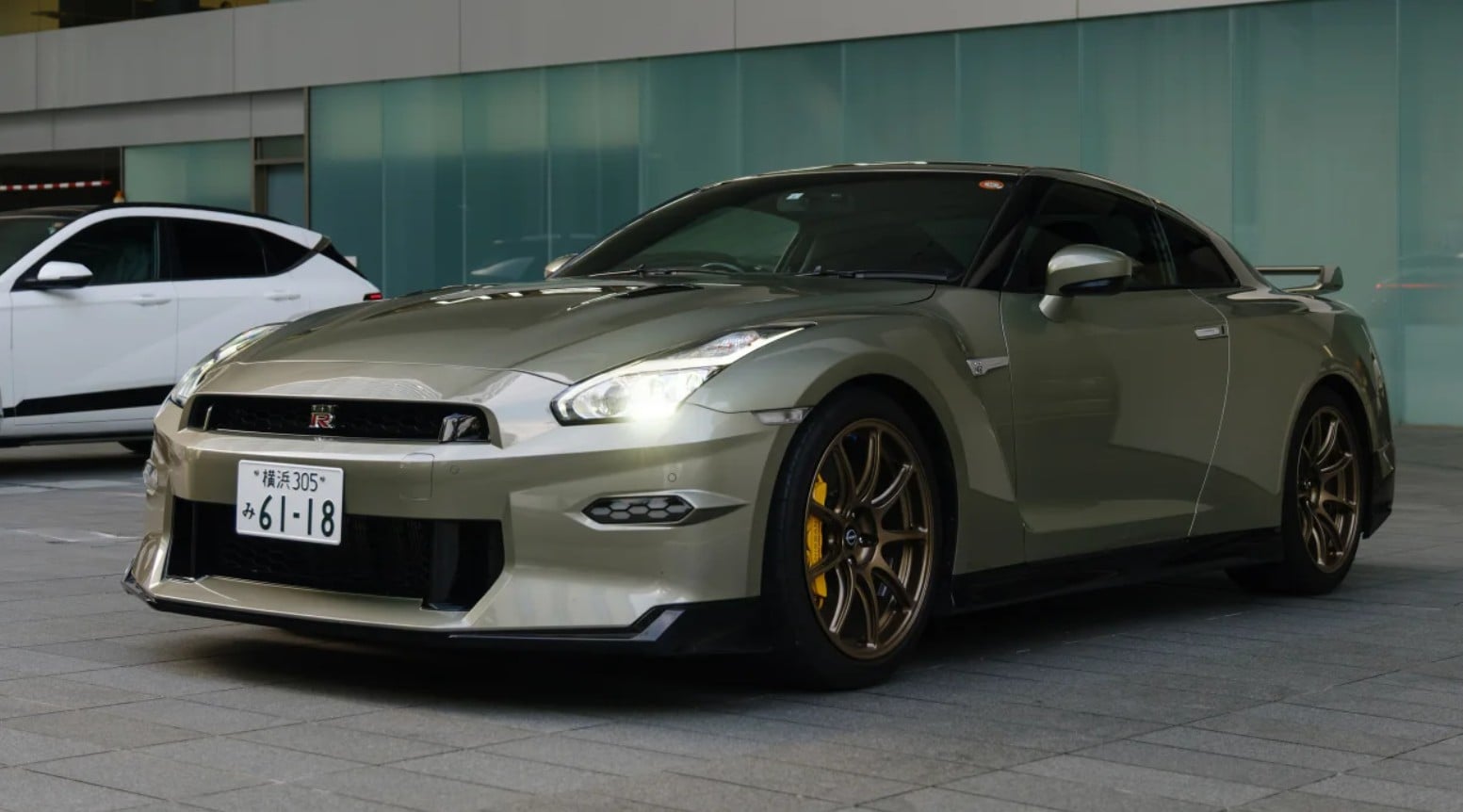
Driving the MY25 Nissan GT-R T-Spec in Japan feels like closing the final chapter of an automotive legend. It is, quite simply, the best-balanced R35 GT-R we’ve experienced – though it’s worth stating upfront that any GT-R remains a jaw-dropping machine.
While the GT-R officially left the UK market in 2023 and Australia in 2021 (because of ADR 85), it continued on elsewhere, culminating in this final MY25 T-Spec. Finished in the iconic Millennium Jade with gold magnesium wheels, carbon-ceramic brakes and subtle 2025 visual tweaks, it’s a collector-grade send-off. More importantly, it represents the most rounded execution of Nissan’s super-sports icon.
The GT-R story stretches back to the late 1960s as a high-performance offshoot of the Skyline, but its modern mythology was forged in 1989 with the R32. Built during Japan’s “gentleman’s agreement” era, its twin-turbo straight-six officially claimed around 206kW, though reality suggested much more. With all-wheel drive, space for four and supercar-slaying pace, it earned the name “Godzilla” and rattled Europe’s performance elite.
When the R35 arrived in 2007, Nissan tore up the rulebook. The Skyline link was severed, and the GT-R became a bespoke machine from the ground up. Its front-mounted twin-turbo V6 – initially producing around 353kW – fed an astonishingly complex all-wheel-drive system via a rear-mounted dual-clutch transaxle. Active differentials and a second driveshaft completed a drivetrain that looked absurd on paper but devastating on road and track.
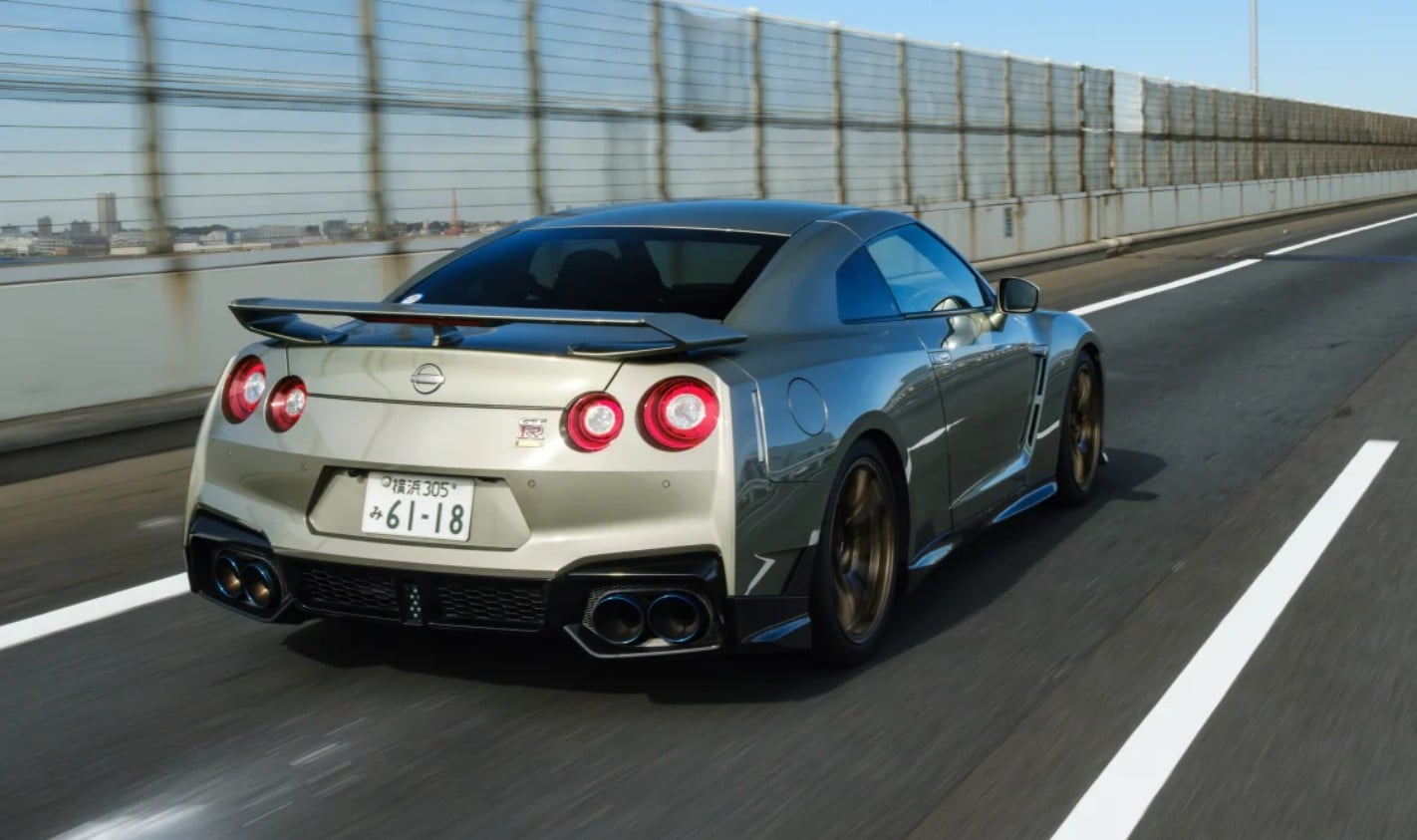
Over an 18-year lifespan, the R35 evolved through countless updates, Track Pack editions and hardcore Nismo variants pushing as much as 441kW. The MY25 T-Spec sits just below that summit, combining key Nismo hardware with a more forgiving setup. Output is rated at around 419kW, with kerb weight at 1760kg.
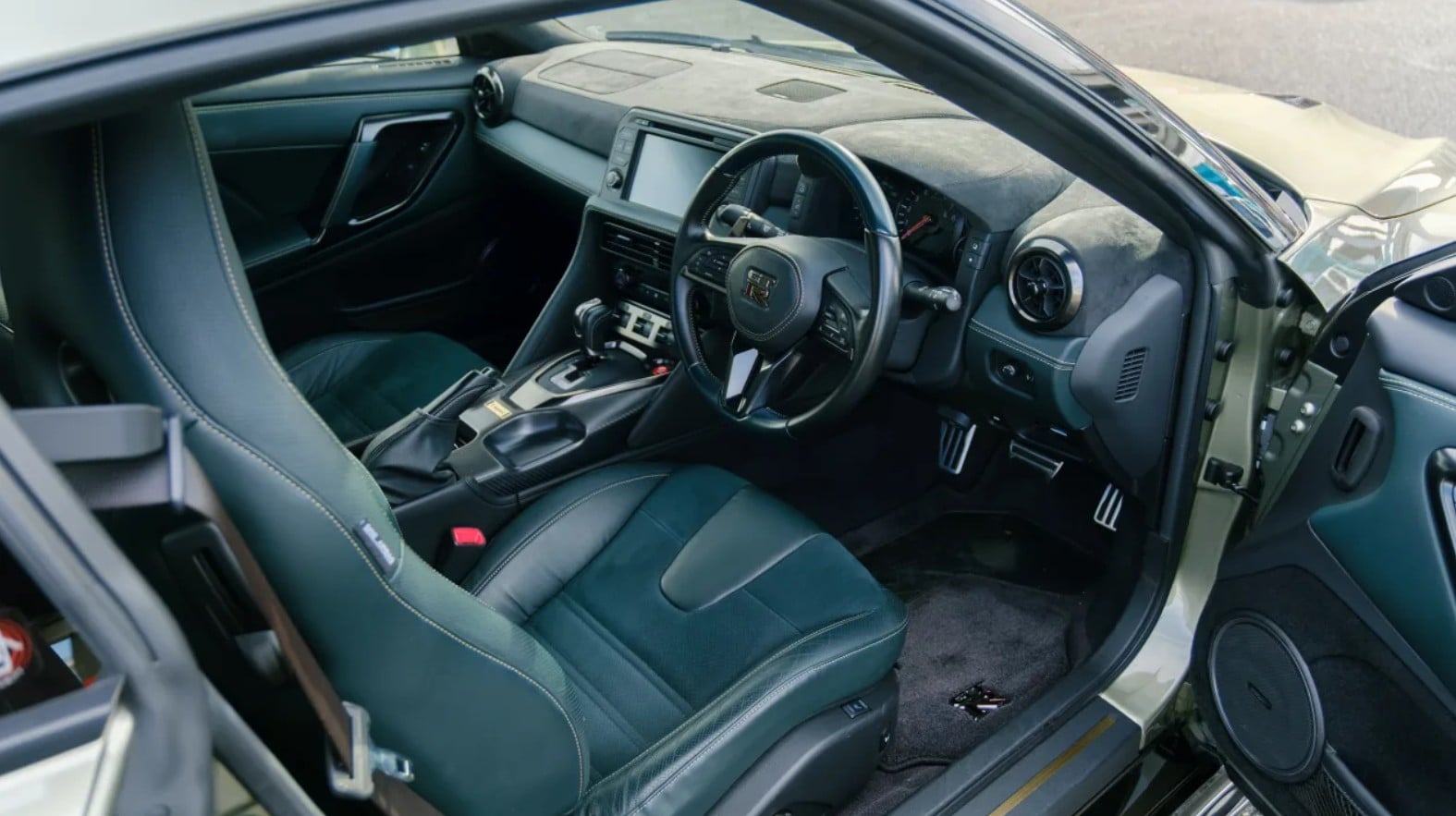
Inside, the GT-R is instantly familiar: the towering central rev counter, physical handbrake, mechanical gear selector and trio of drivetrain switches are reminders of its late-2000s origins. Yet that analogue feel is part of its charm. This is no softly polished modern performance car.
On the move, it’s anything but sanitised. From Nissan’s Yokohama HQ to the mountain roads near Nagoya and Osaka, the GT-R feels alive, demanding commitment. Turbo lag exists, but once boost arrives the acceleration is immense and deeply physical. The steering, slightly heavy at low speeds, comes alive at pace, communicating grip levels that feel almost limitless on warm Toyo rubber.
Rain later revealed the T-Spec’s true brilliance. With a few extra throttle liberties, the rear-biased all-wheel drive allows controlled oversteer, delivering excitement without intimidation. Crucially, the suspension tuning is the revelation here. Gone is the brittle edge of earlier R35s; in its place is a fluid, controlled ride that remains composed even on rougher roads. It’s still ferociously capable, but now genuinely usable.
As Nissan looks toward an uncertain electrified future, the GT-R’s absence looms large. A successor remains undefined, yet driving this final R35 is a reminder of why the name matters – not just to enthusiasts, but to Nissan itself. The GT-R is legacy made metal. Let’s hope Nissan remembers that.
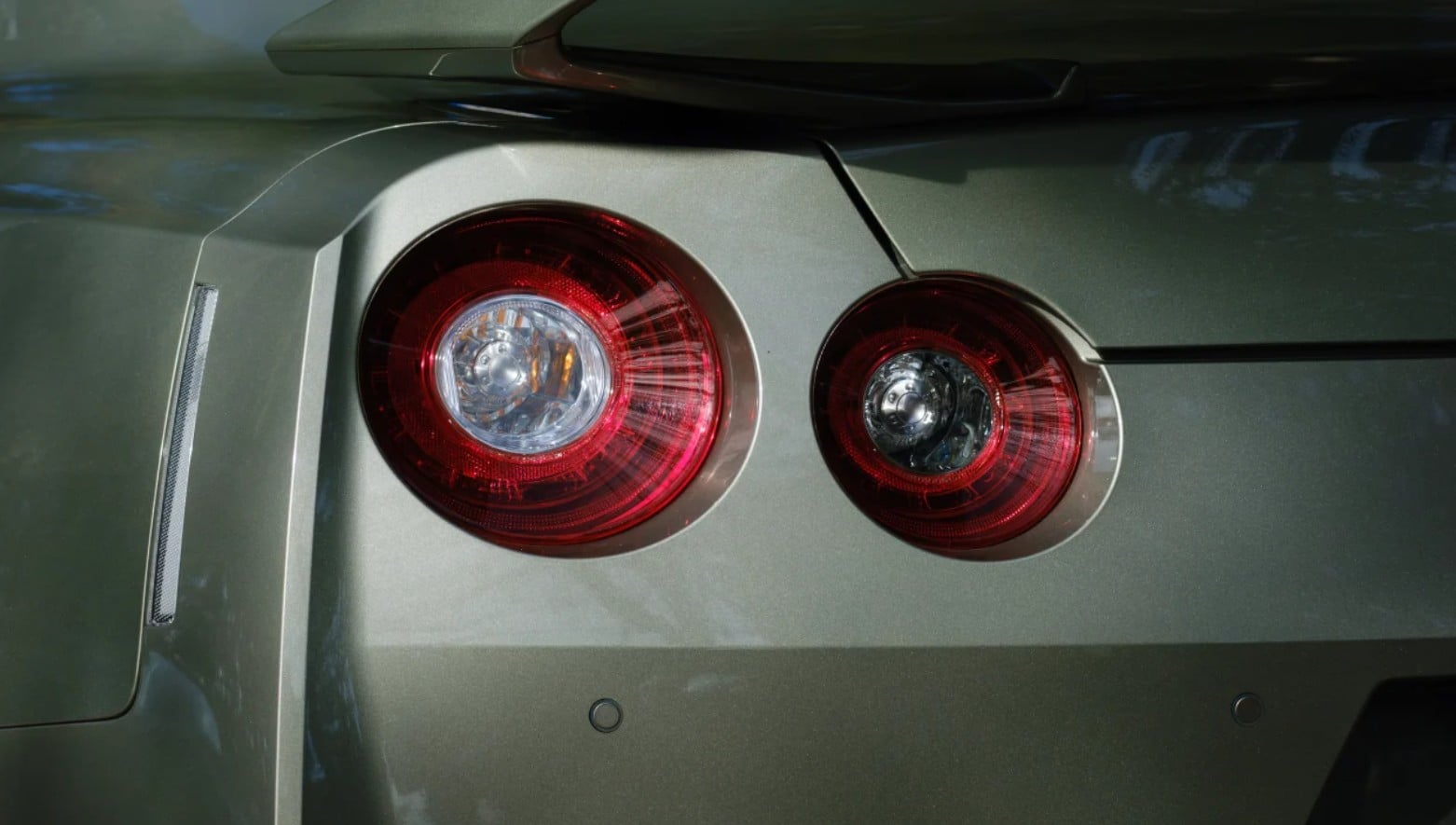
The influx of new brands and new models to Australian shores in 2025 alone has been astounding. Seemingly every day, there’s a new model to memorise and research, so much so that you wonder how such a relatively small market can sustain so many offerings.
But while there are new models in the market, there have also been casualties with at least 10 pulled from sale in 2025. Here are the ones we’ll miss the most:
Mazda6
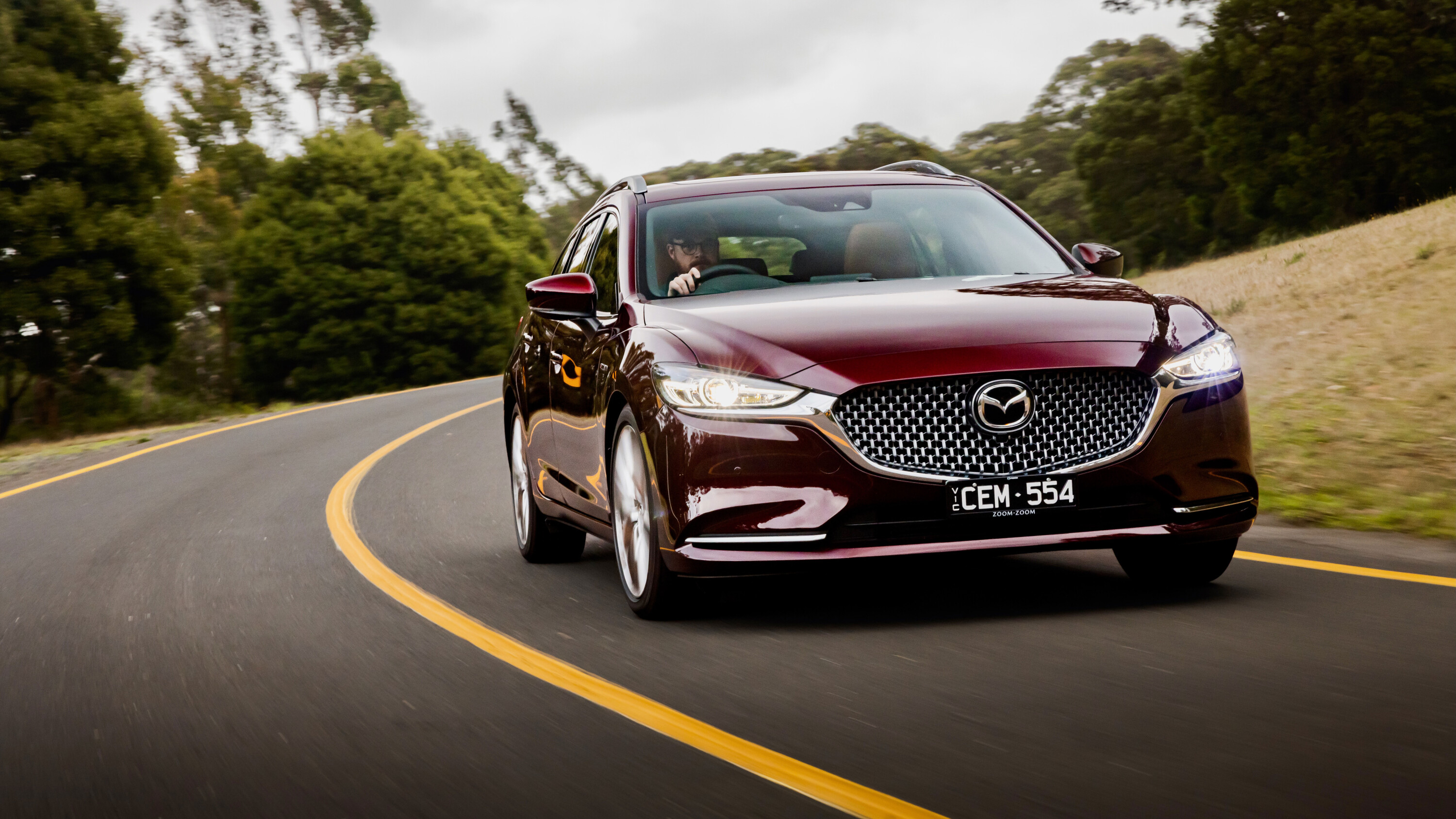
Why it died: It came to the end of its 13-year life cycle amid low sedan sales globally, meaning that developing a true replacement was too costly.
Replacement: The 6e electric sedan, which is due in Australia in 2026.
Why we’ll miss it: It was one of the best mid-size sedans/wagons over its three-generation career.
Produced since 2002, the Mazda6 was one of the best mid-size sedans/wagons/liftbacks (the latter only in the first and second generation) on the market in its three generations. One of the first products under Mazda’s then-new “Zoom-Zoom” marketing that revitalised the brand, the Mazda6 was sportier and more fun to drive than many of its competitors, and was also a handsome and practical car. The third-generation model lived since 2012 and with competitors falling by the wayside, Mazda kept it going as long as it could before eventually pulling it from Australia in 2025.
Mitsubishi Pajero Sport and Eclipse Cross

Why it died: Meeting new Australian Design Rules (ADRs) for autonomous emergency braking systems was likely too costly, plus both were long in the tooth.
Replacement: Nothing directly just yet, though a new Pajero Sport-like SUV has been spied multiple times and there’s a new – fully electric – Eclipse Cross for European markets based on the Renault Scenic E-Tech.
Why we’ll miss it: The Eclipse Cross PHEV was the cheapest of its kind and the Pajero Sport was a good value off-road SUV.
In today’s market, it seems crazy that a car maker would kill off any SUV, yet that’s what Mitsubishi was forced to do earlier in 2025 because its Pajero Sport, older ASX and Eclipse Cross, didn’t meet stricter Australian Design Rules (ADR 98/00) for autonomous emergency braking (AEB) systems and it was deemed financially unviable to re-engineer them, so they were culled. There is still stock of both models in Mitsubishi dealers as the cars were produced in 2024.
Porsche 718
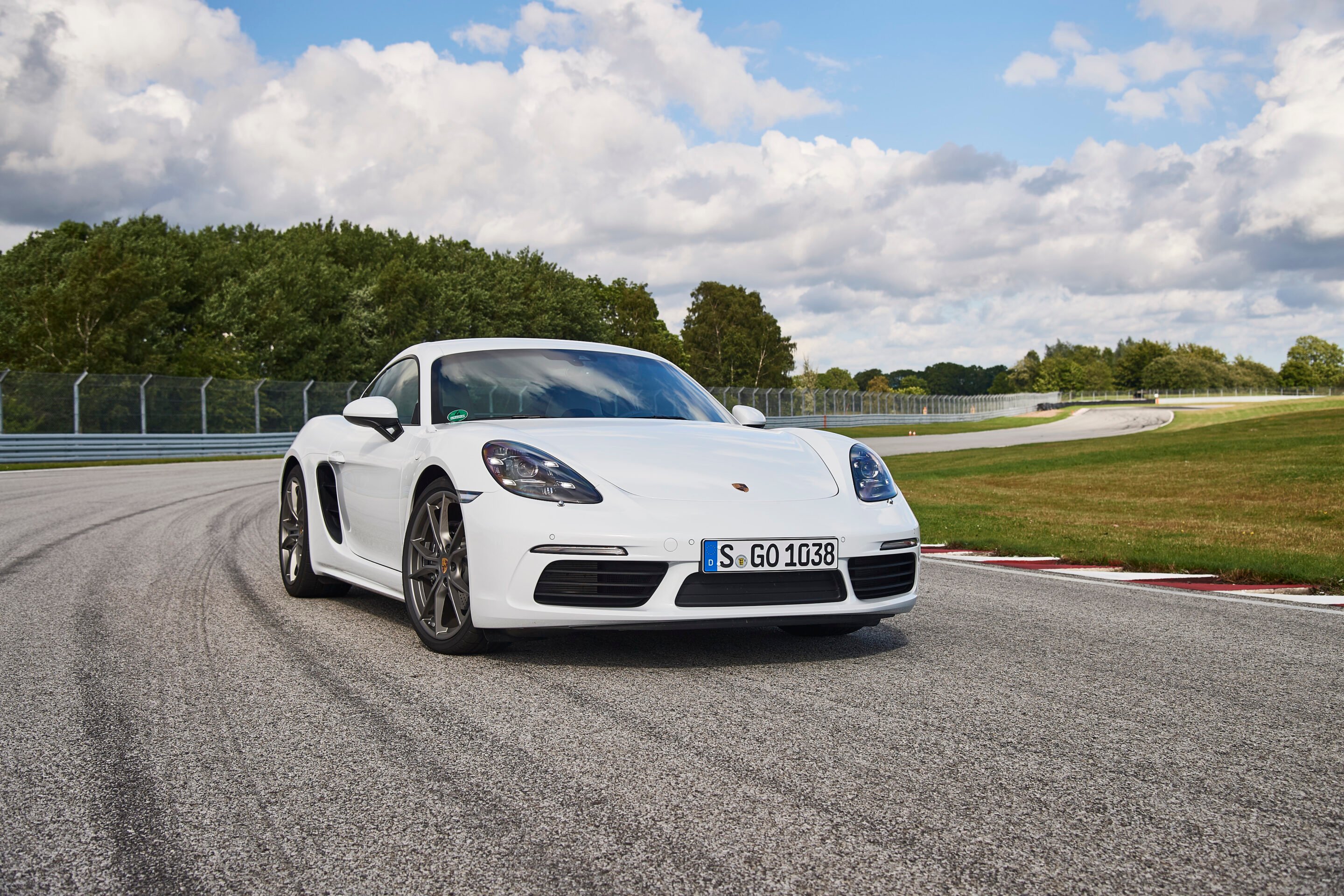
Why it died: New EU cybersecurity laws that made updating the 718’s existing platform too costly.
Replacement: A new generation model is reportedly due in the next few years… with electric power.
Why we’ll miss it: It’s a sublime sports car, no matter which model.
Production for the Porsche 718 Boxster roadster and Cayman coupe ended in October, officially thanks to new European Union cybersecurity laws. Sitting underneath the iconic 911 in the Porsche line-up, the Boxster and Cayman were still wonderful sports cars that, like the Cayenne SUV, helped save the company from extinction. A new generation model has been confirmed for 2027 (maybe), but in a loss for enthusiasts, it’ll include electric power for the first time.
Volvo S60/V60

Why it died: Australia’s appetite for SUVs meant low sales.
Replacement: None, though some could argue the Polestar 2 is a good S60 replacement.
Why we’ll miss it: The S60 was an fantastic luxury mid-size sedan and the V60 was one of the few remaining wagons.
One of the few remaining mid-size cars on the market, the Volvo S60 sedan and V60 wagon were excellent products. The S60 was launched locally way back in 2001, while the V60 was added in 2011 when the second-generation S60 went on sale. Both took the fight to the big German three but their sales were never in the same league, unfortunately, and the axe fell on both in Australia earlier this year. They’re still produced for global markets, but given how popular SUVs are now, we aren’t sure how much longer they’ve got left in them. A big, big shame.
Toyota GR Supra
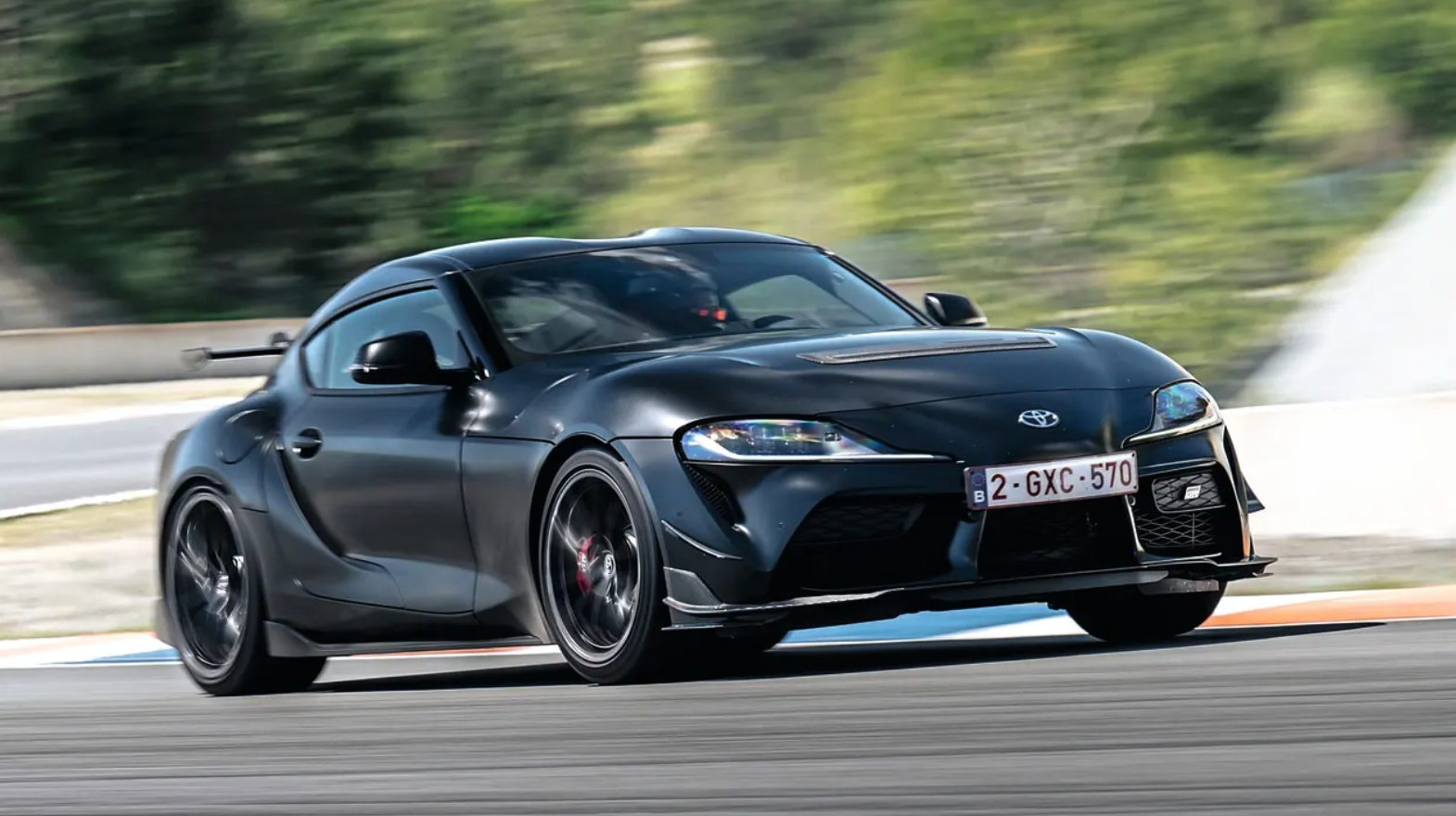
Why it died: It came to the end of its life cycle and the end of a deal with BMW means that both it and the Z4 roadster will end production soon.
Replacement: Nothing confirmed yet, though a new all-Toyota replacement is likely in the next few years.
Why we’ll miss it: It was a fantastic sports car.
The Toyota Supra is a legendary sports car that first appeared in 1978. Originally just a longer version of the Celica, the Supra morphed into a high-performance sports car in its latest fifth-generation form that was launched in 2019 after a 17-year gap. But this time, the Supra wasn’t a Toyota-led project, instead using the same platform and engines as the BMW Z4, and being built in Austria. That didn’t stop it from being a great car: it was very quick, handled well and looked great.
Volkswagen Tiguan Allspace
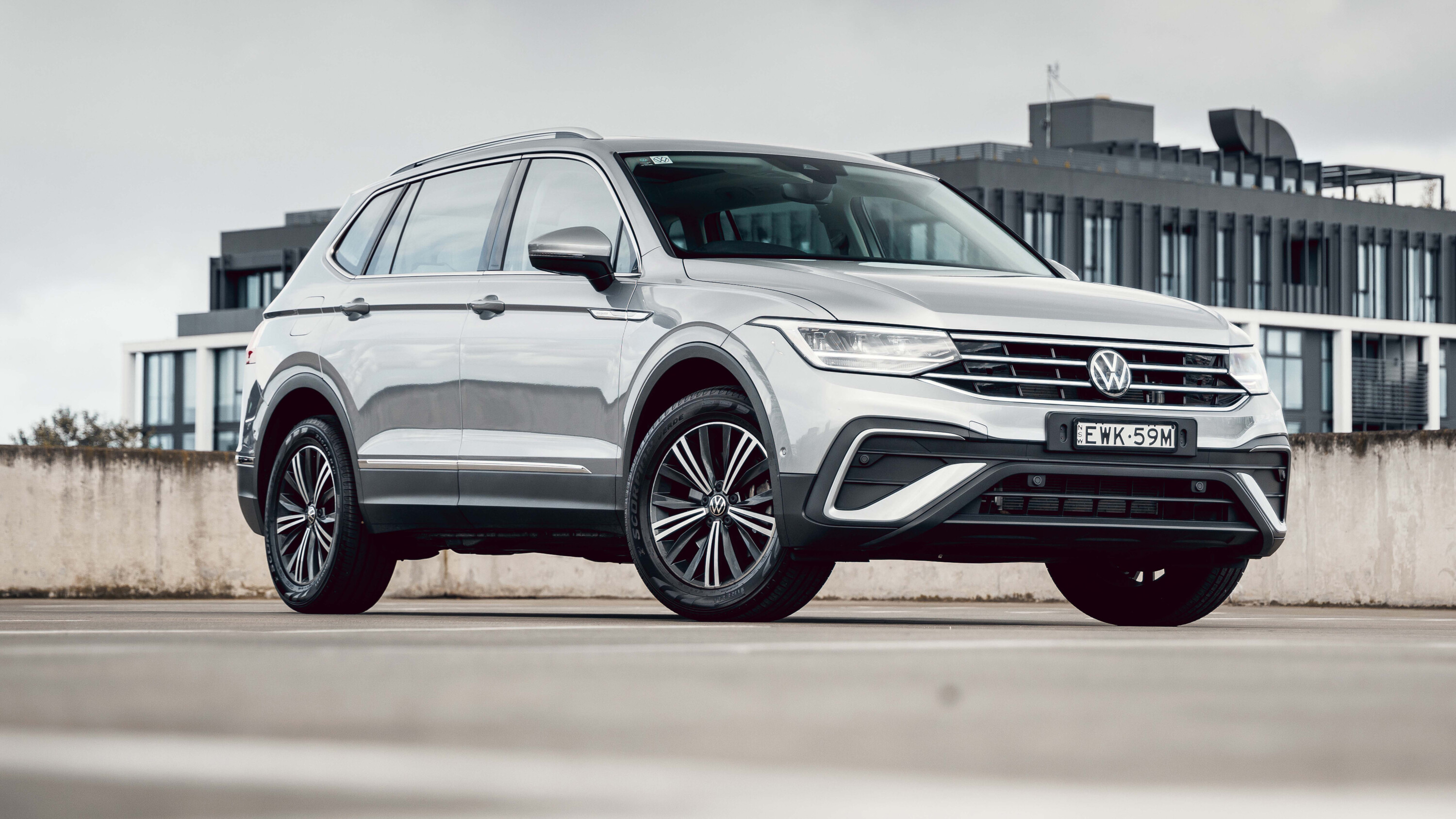
Why it died: A new generation Tiguan arrived.
Replacement: The Tayron, which is the same concept but based on the new Tiguan instead.
Why we’ll miss it: It was a good all-rounder for those who didn’t need a massive seven-seater SUV, and was properly cheap at the end of its life.
The Volkswagen Tiguan Allspace, the extended-wheelbase five/seven-seat version of the Tiguan mid-size SUV, went on sale in Australia in 2018. Produced in Mexico, unlike the German-made Tiguan, the Allspace was good value for money throughout its life cycle. Its value equation and attractive sizing made it popular, especially during the Covid-19 pandemic (and the chip shortage that resulted from it) when it was the only Tiguan available in short notice in Australia. Alas, 2025 was its last year and the Tayron – which is the same concept but with a different name – is now in showrooms instead.
Toyota Granvia
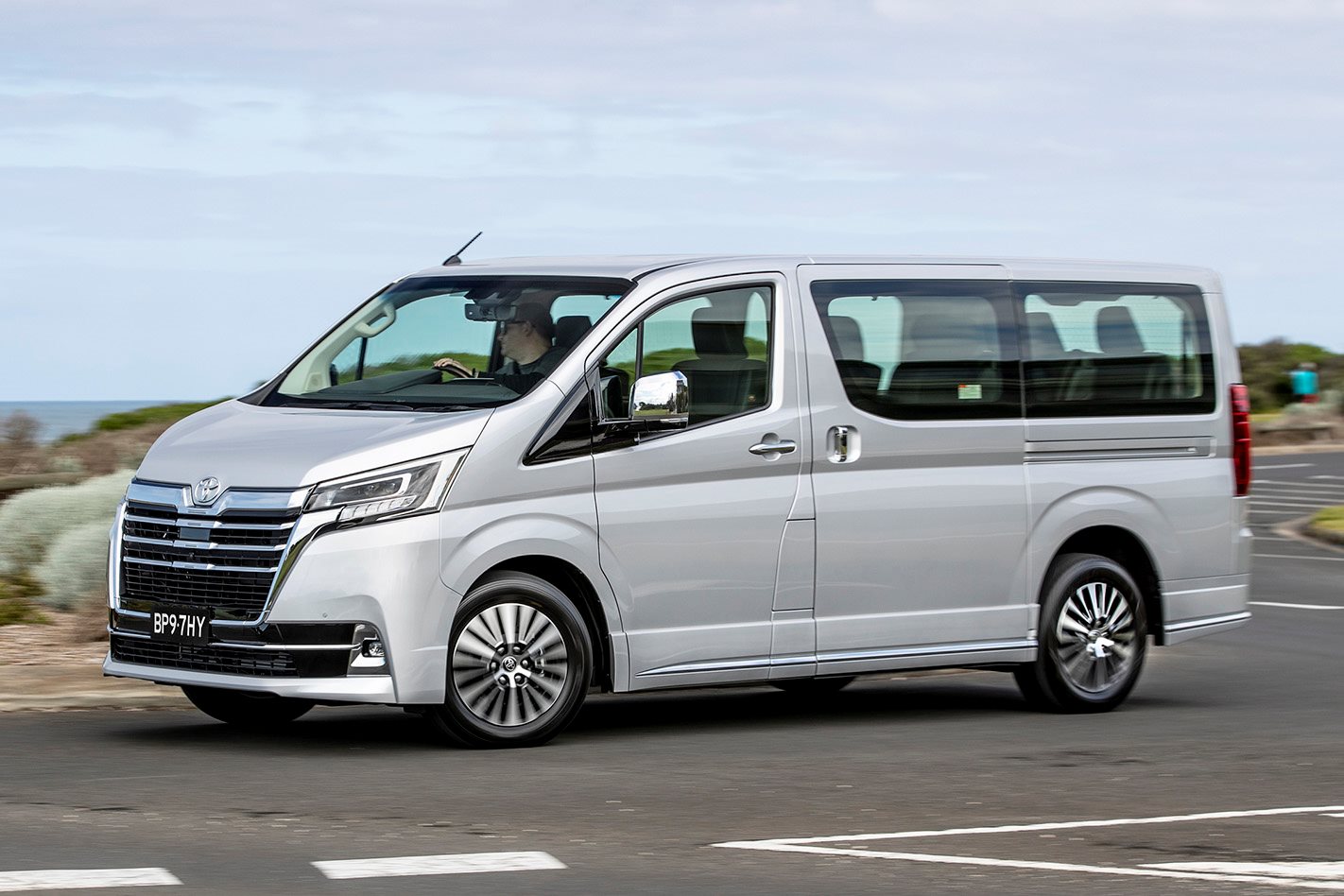
Why it died: Very slow sales.
Replacement: None, though Toyota would argue cars like the Prado fill its place in the line-up.
Why we’ll miss it: Honestly, we won’t. The Granvia was no Tarago replacement.
The Toyota Tarago people mover was a legendary product in Australia and over its almost-40 year career locally, the brand sold over 100,000 units. The company expected similar things for its replacement, the Granvia, but only around 1000 units of it were sold during its six-year run. Perhaps it was because the Granvia was really just a more upmarket HiAce Commuter van, or that the Kia Carnival steals the vast majority of the people mover sales in Australia, but the Granvia was a rare failure from Toyota’s local division.
Hyundai i30 hatchback
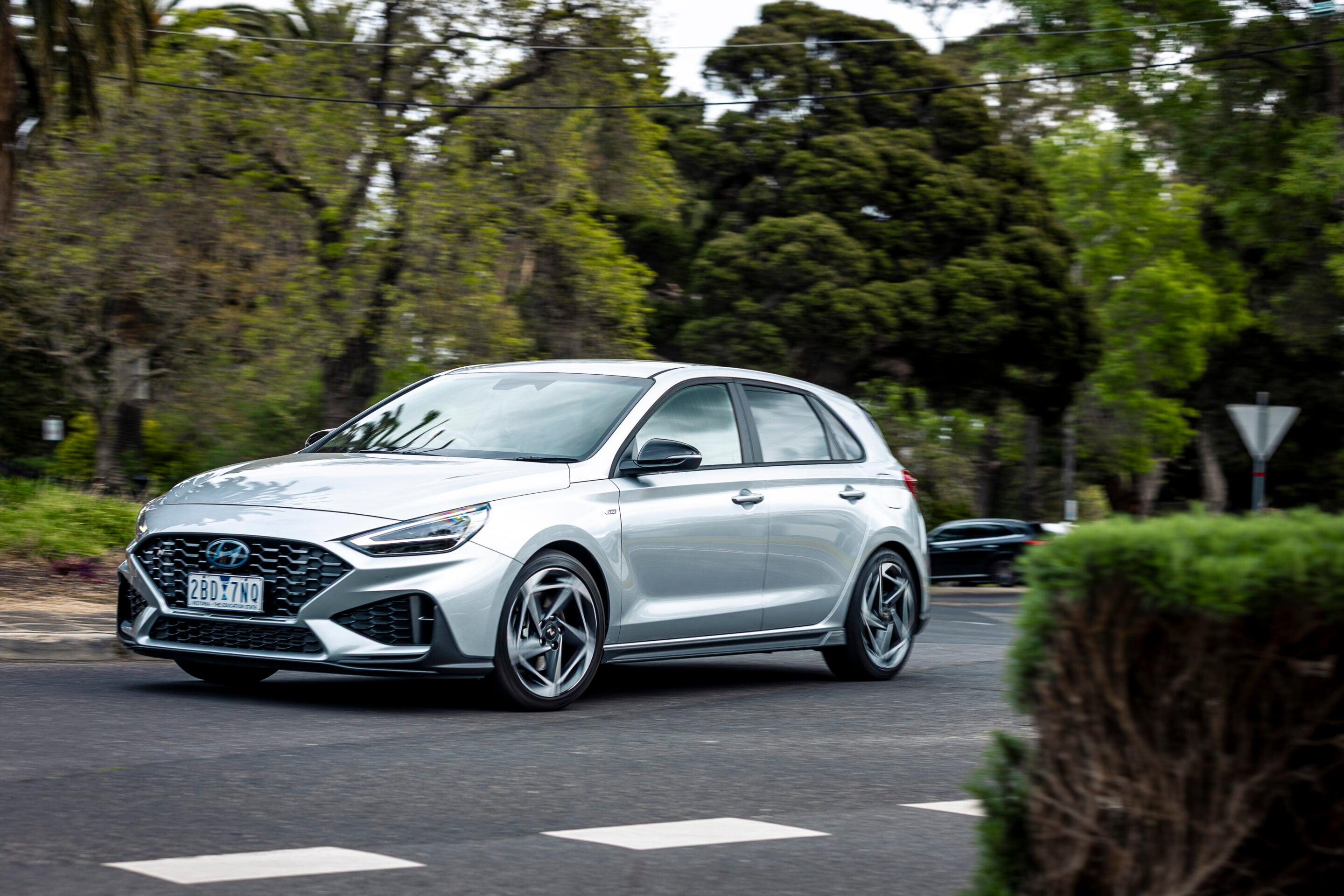
Why it died: A number of factors, but mostly that Hyundai switched production from South Korea to the Czech Republic, pushing up the cost significantly.
Replacement: The i30 sedan is still available, as is the i30 N hatchback.
Why we’ll miss it: It’s yet another small hatchback death.
The i30 is the car that really propelled the Hyundai brand when it was launched way back in 2006. Aimed at Europe, it was a well-rounded small hatchback that won the hearts of thousands of Australians – over 20,000 were sold locally in 2022 alone, for example. Yet thanks to a number of factors, the i30 hatchback has been discontinued for Australia, with the sedan and i30 N hot hatch carrying the nameplate on, which is a massive disappointment.
MG ZS EV
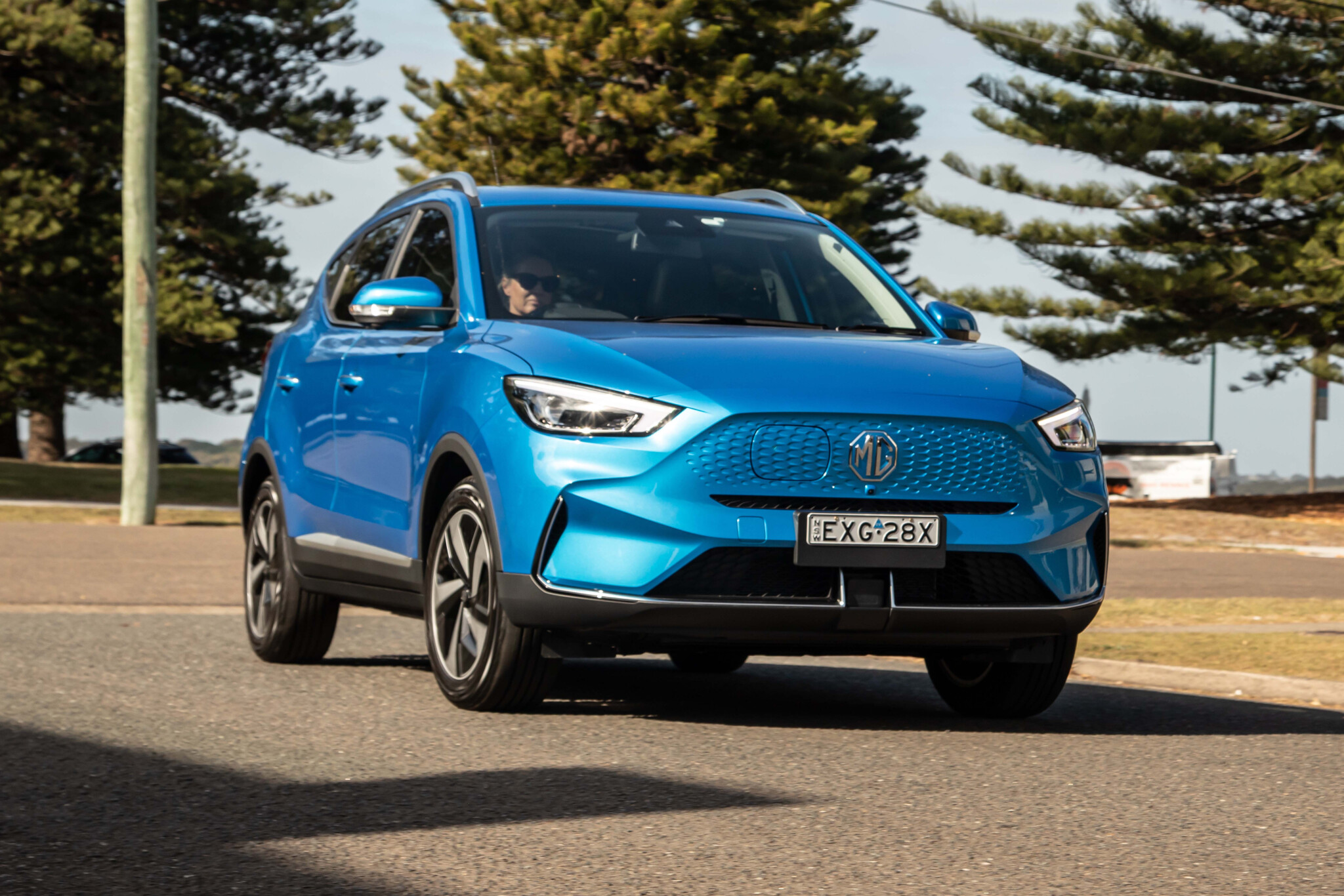
Why it died: It was replaced by a new model.
Replacement: The excellent MGS5 EV.
Why we’ll miss it: We won’t as the S5 is far superior.
The MG ZS EV is not a car you’re likely to be familiar with, as it wasn’t the biggest seller (at least in electric form) but it’s an important car for MG because it was the brand’s first electric vehicle sold in Australia and it was the cheapest EV available at the time. It went on sale locally in 2020 priced from $40,990 plus on-road costs and gave a reasonable 263km of WLTP range. It was updated with new styling, more features and more range, and was replaced by the – far superior – MGS5 EV in early 2025.
Ford Focus (globally)
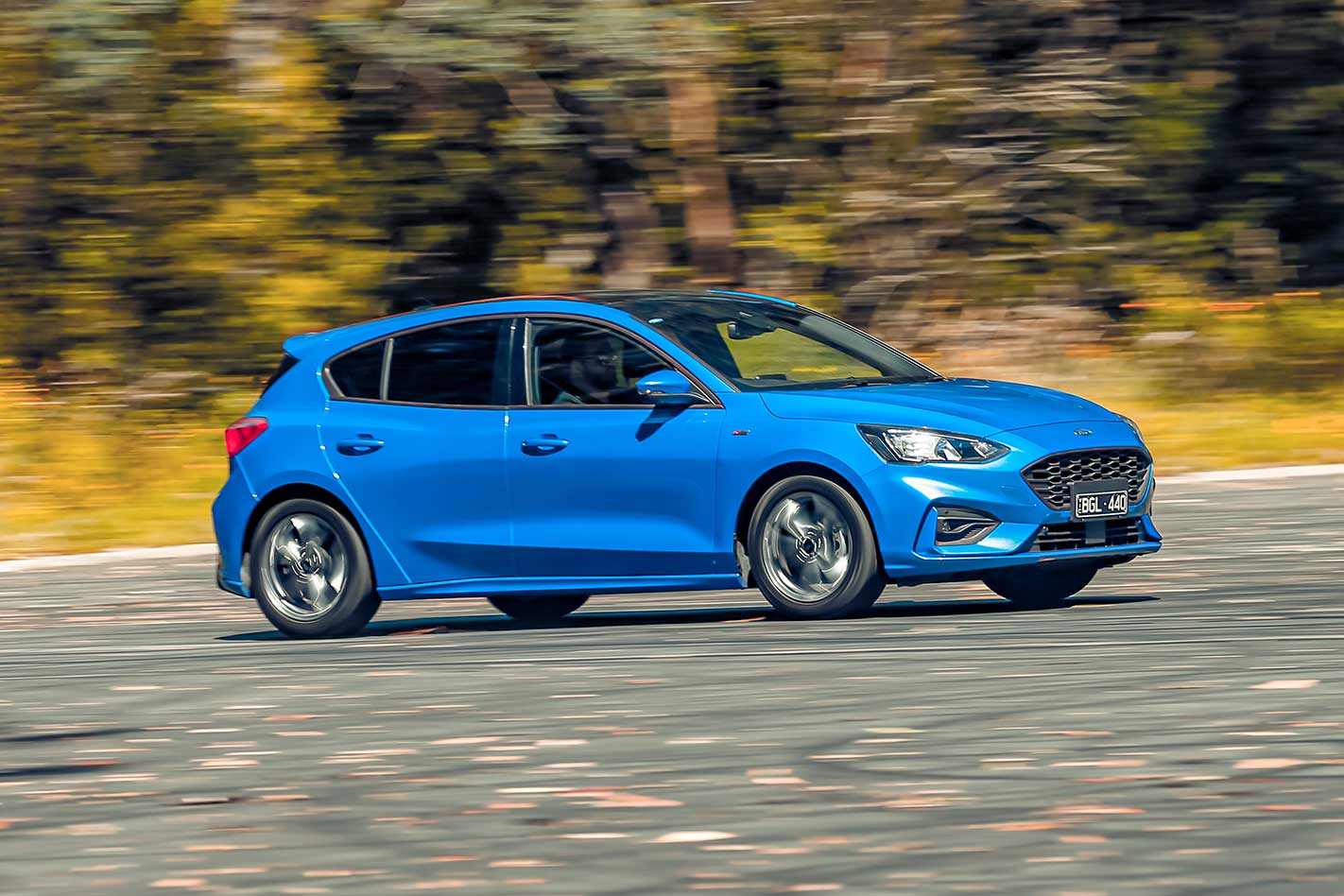
Why it died: Not sure about this one. Likely SUV sales, but the Focus still sold strongly in Europe until its death…
Replacement: Nothing, though a new small SUV is rumoured.
Why we’ll miss it: Yet another small hatchback death but also, yet another death of a fun, affordable car.
Though it left Australian shores back in 2022, 2025 marked the final year of production for the iconic Ford Focus, a death that enthusiasts are still reeling from. The Focus was a practical hatchback that drove like a sports car, with a wonderful ride and handling balance that put many far more expensive cars to shame. Various hot versions were produced, such as the ST and RS, but even the base model cars were a riot from behind the wheel. Alas, Ford decided to kill it globally with production ending a few weeks ago with no direct replacement in sight.
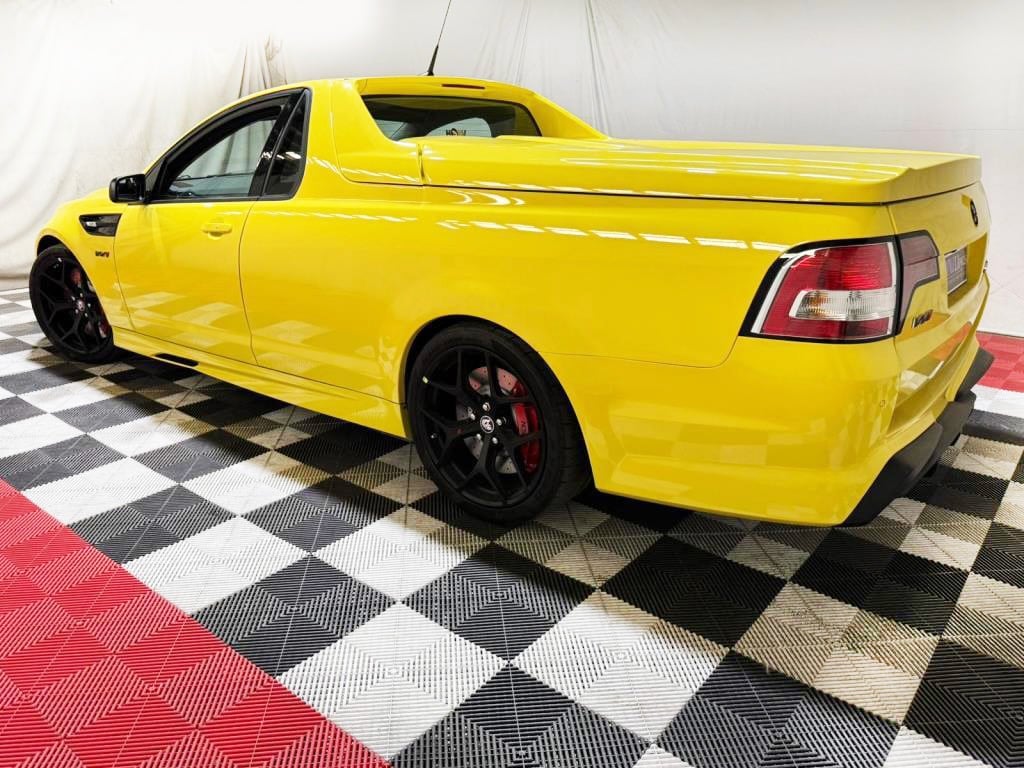
An exceedingly rare HSV GTSR W1 Maloo ute has shattered the previous sales record for a Holden production car, selling for $1.2 million this week.
The car went under the hammer at Lloyds Auctions last weekend but the final price of $1.2 million was only reached by private agreement two days after the auction.
The sale price eclipses the previous benchmark for a Holden road-going vehicle, the $1.057 million paid in 2021 for a Peter Brock owned and driven 1985 Holden Commodore VK SS Group A road car, and the $1.05 million achieved at Lloyds Auctions for another GTSR W1 Maloo ute, also in 2021.
“This $1.2 million result not only obliterates expectations but proves Lloyds’ unrivalled expertise in delivering record-breaking sales for Australia’s rarest automotive treasures,” said Lee Hames, Lloyds Auctions’ Chief Operating Officer.
The never-registered GTSR W1 Maloo with just 26km on the odometer, is powered by a supercharged 474kW V8 engine, making it the most powerful Australian production car ever made.
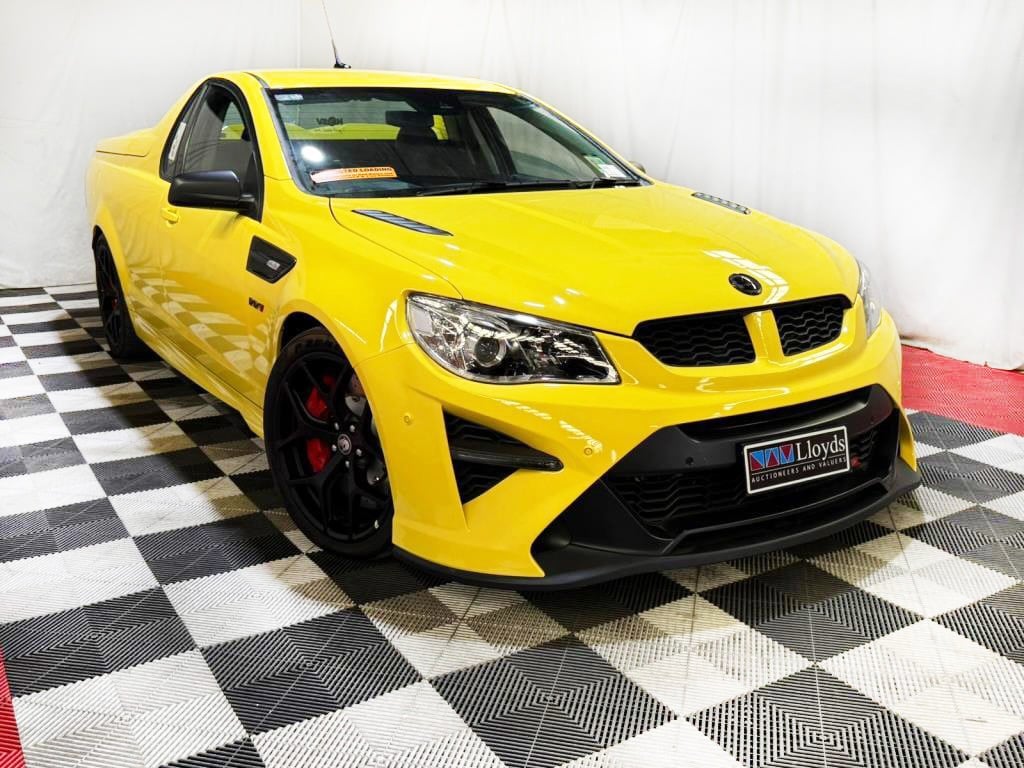
The record-breaking car is build #01 of just four examples ever made. It’s believed the four cars were built-to-order for HSV top brass and loyal customers and were never made available to the general public.
Build car #01 is the only example finished in ‘XU3 Yellah’, the iconic colour made famous by the original HSV VS GTSR.
While this week’s $1.2 million is a record price for a road-going Holden, it’s a long way off the all-time record for an Australian car, the $2.1 million paid in 2018 for the Holden Commodore race car driven by the King of the Mountain, Peter Brock, to back-to-back Bathurst 1000 wins in 1982 and ’83.
It also fell just short of the highest price ever paid for a road-going Ford, the $1.3 million shelled out in 2021 for a 1971 Falcon GTHO Phase III finished in Yellow Glo topped with a beige vinyl roof.
Driving home from the country recently with one of my daughters, we were talking about cars and driving. That’s not unusual: both my daughters are now of driving age, and it makes me happy that they’re conscious of the activity in which they’re engaged.
We were talking about things like processing the constant stream of information from surrounding traffic, a cloud of dust or smoke beyond a crest, a truck labouring up a distant hill. I write scenarios in my head, which may or may not happen, but it certainly keeps my brain in the game as I drive.
Mostly unrelated to that, Stahlette No.1 suddenly asked me: what would I have imagined cars would look like in 2025, back when I was a kid? (She didn’t say “in the olden days”, as I’d have said … in the olden days).
I was stunned to realise I’d never really thought about it. It’s especially weird, given the hard-core automotive upbringing I had and the entire career that followed. My memory went straight back to the books, magazines and toys I had in the late-1960s and ’70s.
Flying cars were really more of a hangover from the 1950s, but I did have a favourite book that included a particular two-seater flying car with large rotors framed in the bonnet and boot and the obligatory, jet-age glass bubble canopy.
Perpetually propped in front of The Jetsons, which (like me!) first aired in September 1962, that car always struck me as somehow plausible.
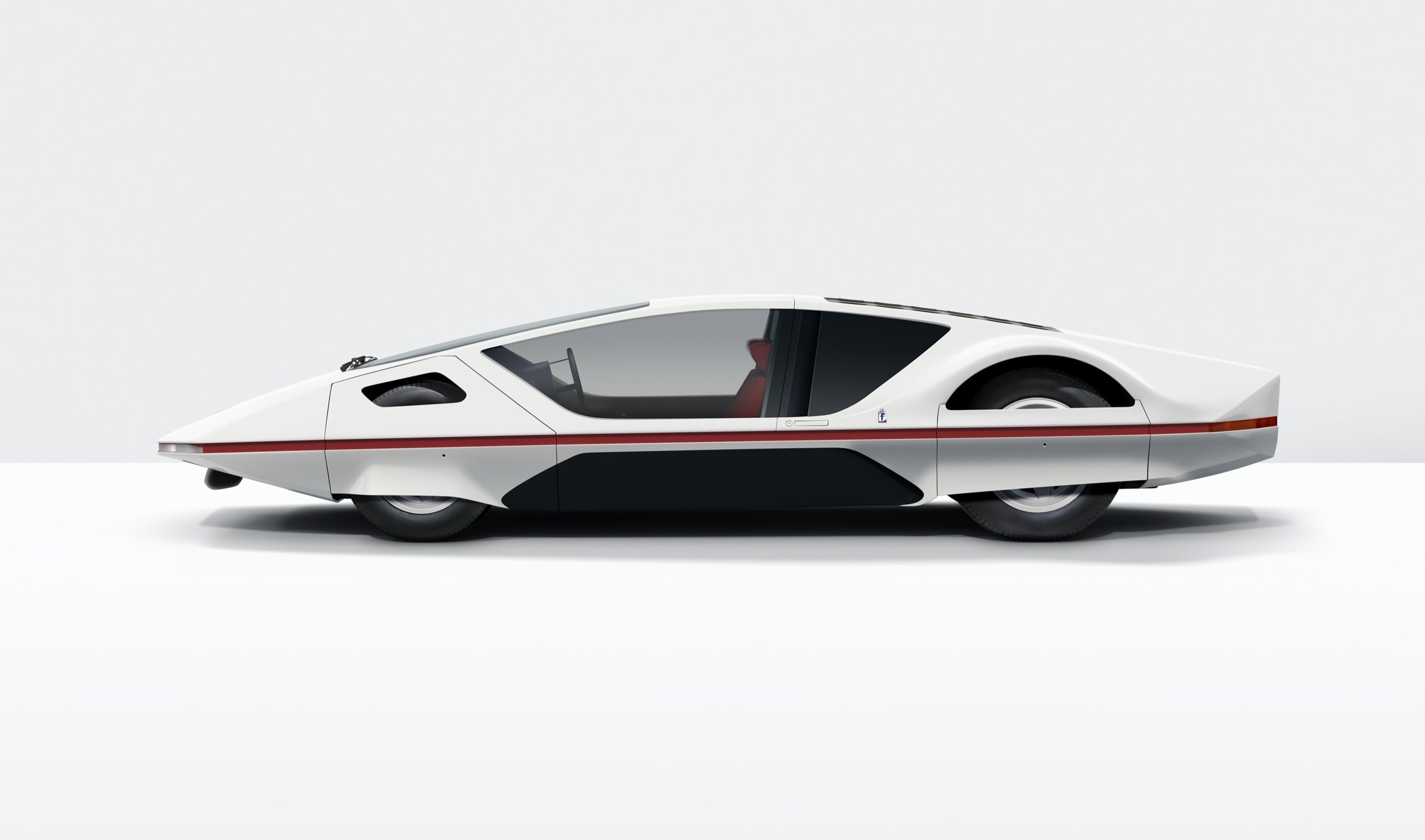
But the cars of the future burned into my childhood brain are almost exclusively late-1960s to early-1970s concepts like the Ferrari Modulo (below), Lamborghini Marzal, Mercedes-Benz C111, Alfa Romeo 33 Stradale and Carabo, and the Lancia Stratos HF Zero.
I had no recollection of the Holden Hurricane from 1969; ironic now, because it is the one “wedge era” concept car that I have driven (Wheels, November 2011). I got big dad-points when my daughter pulled up a pic of the Hurricane on her phone.
None of these cars of the future considered a future that could accommodate more than two people, with luggage. Sure, these were supercars – “dream cars” – but I can’t recall any futuristic takes on three-box or even two-box passenger vehicles, which were the reality of motoring back then.
Oh, George, Jane, Judy and Elroy could magically squeeze into the Jetson family car, even if Astro was sometimes towed in a separate bubble-top trailer. I had to wait another three decades before family packaging and futuristic styling were more credibly addressed by a cartoon, with The Homer.
Certainly, in the early-1970s nobody was predicting the global dominance of the Sport Utility Vehicle. That seed was only planted around the middle of that decade and I think, in Australia at least, my family had a tiny, peripheral part in it.
Skip forward just a few years to the early-1980s and the hot car industry topic was “substitution”. Almost like EVs today, the industry was grappling with a seismic market shift wherein punters were spurning passenger sedans and station wagons in favour of off-road 4WD wagons.
These crude 4WDs were classed as commercial vehicles and thus paid only a fraction of the 57.5 per cent import duty on passenger cars that helped protect the local manufacturers from competition.
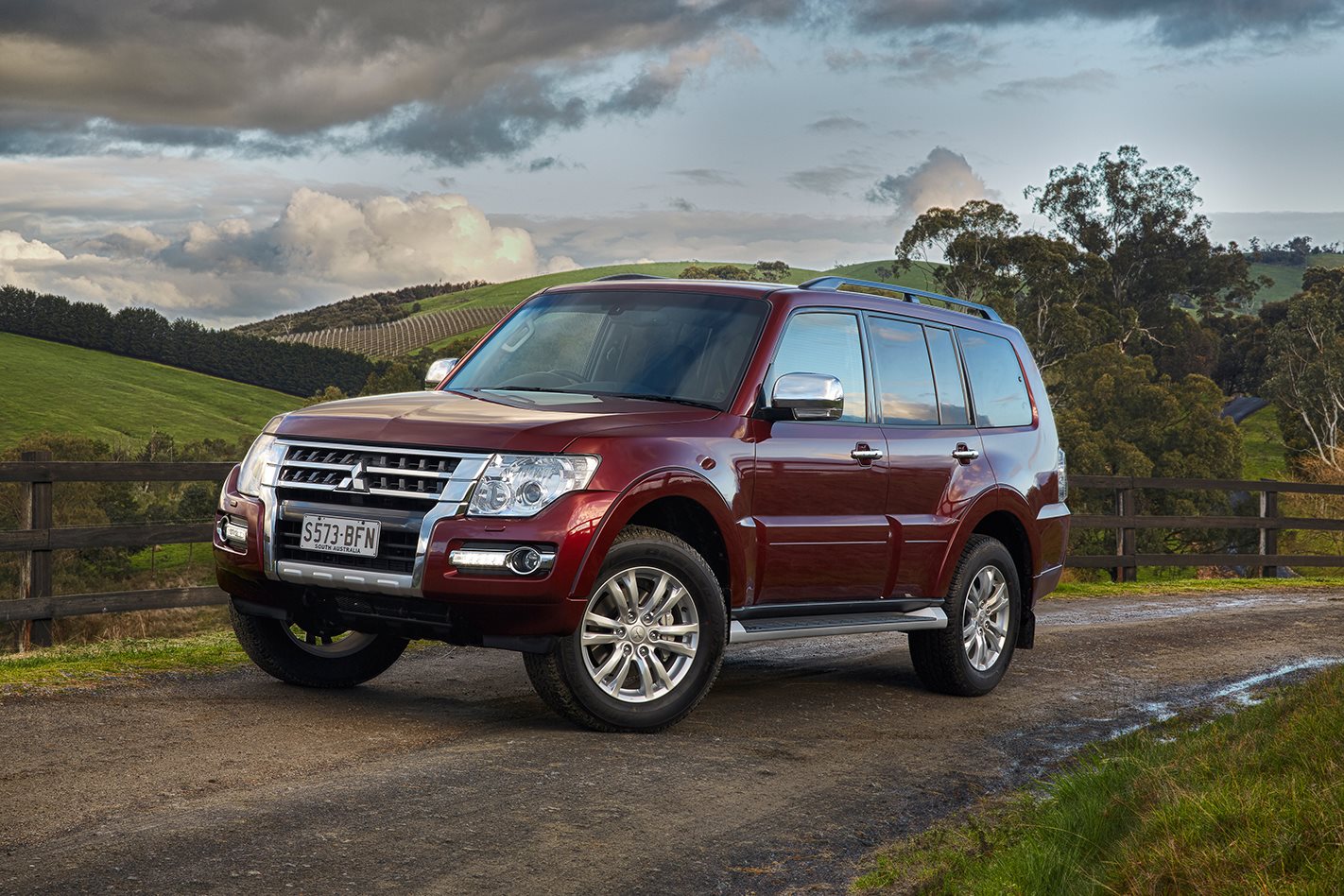
A whole wave of buyers sacrificed creature comforts and dynamic ability for the family space and dubious practicality of a Land Rover, Toyota LandCruiser or Nissan Patrol. (The Range Rover was, I’m pretty sure, classed as a passenger car and was twice the price of a LandCruiser).
A small catalyst was my wheel and tyre-dealing stepdad, who recognised that these vehicles were hamstrung by the limited tyres available for their 16-inch steel wheels. Developing a tough 15 x 8” design – the original Sunraysia wheel – opened a much bigger choice of both road and off-road tyres.
By the early-1980s we were seeing a softer breed of 4WD wagon like the Mitsubishi Pajero (above) and Holden Jackaroo. We were dreaming Birdsville, while the reality was Bunnings.
The article originally appeared in the December 2025 issue of Wheels. Subscribe here and gain access to 12 issues for $109 plus online access to every Wheels issue since 1953.
The turn of the millennium Holden was riding the crest of a wave.
It was number one in the sales race by a country mile, a good 25 per cent ahead of second-placed Toyota, and the latest Commodore was not only thumping its main local opposition but being shipped to the Middle East as a Chevrolet Lumina and Brazil as a Chevrolet Omega.
It seemed like everything Holden touched was turning to gold and this corporate confidence translated into an incredible run of concept cars unveiled in the late-1990s and early-Noughties. There was, of course, the beautiful Coupe Concept that led to the reintroduction of the Monaro, followed by the Utester, Sandman and HSV HRT Maloo utes, and the wild Porsche-baiting HRT 427 Coupe. Not everything made production – we’re still sour the 427 didn’t make the cut – but the company was a hive of creative energy and it seemed nothing was off the table.
One of the more unusual concepts was the SSX, a hatchback VY Commodore SS that hid the all-wheel drive system from the forthcoming Adventra cross-over. Appearing at the 2002 Sydney Motor Show, it was powered by the 235kW/465Nm Gen III V8 and, according to then-Holden Chairman Peter Hanenberger, “It heralds a family of low-ride height, inspirational all-wheel drive niche vehicles.”
This isn’t the only quote from around this time that stretched the truth somewhat, but Holden Special Vehicles’ Marketing Director, John Elsworth, dropped a clue to the press when he suggested that he wouldn’t be surprised if HSV was to use, even debut, the drivetrain combination. Elsworth, of course, knew very well what was being cooked up at headquarters.
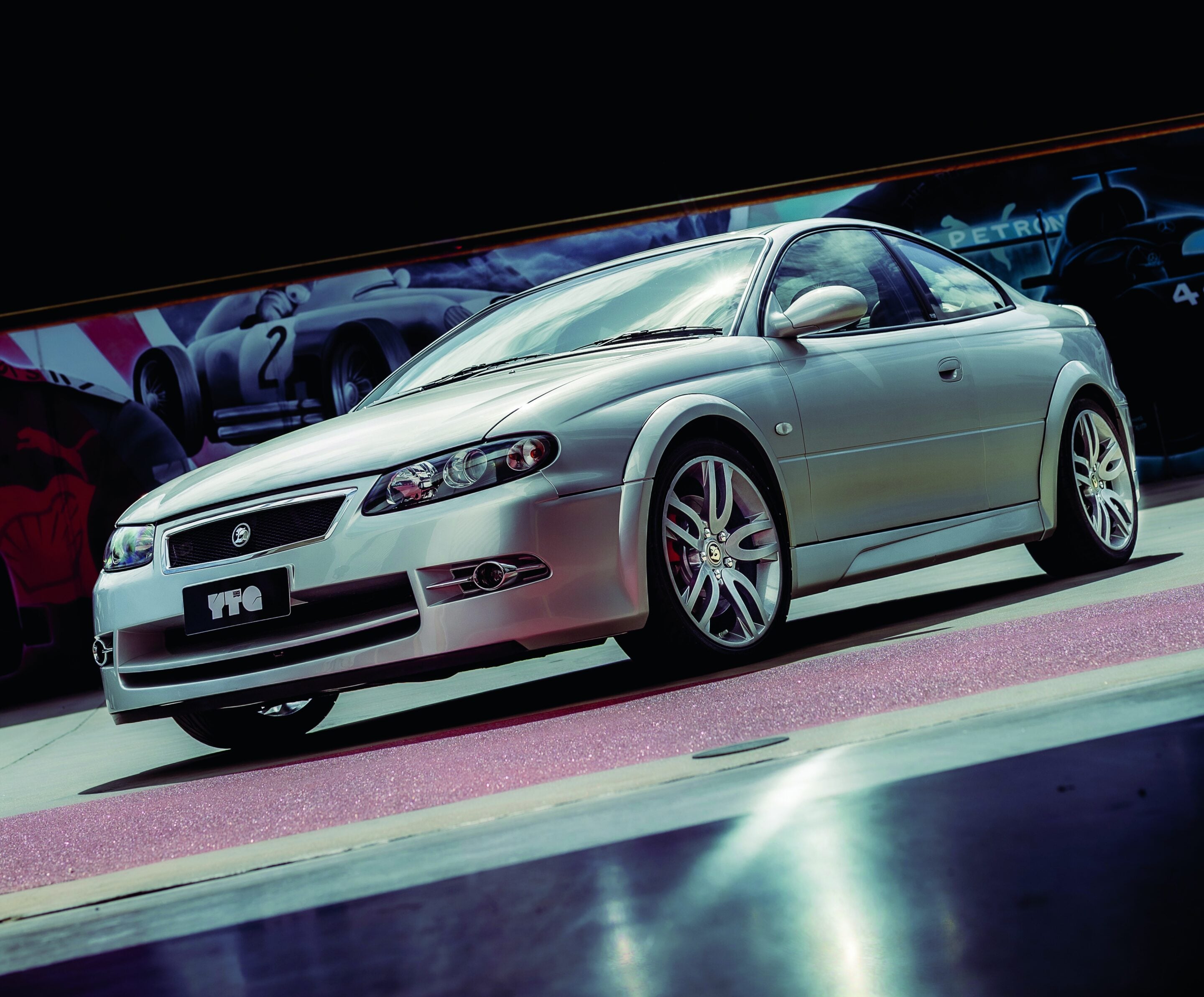
History now tells us that Holden never created a true high-performance all-wheel drive, limiting itself to the Adventra wagon and Cross8 dual-cab ute. This left the door open for HSV to create the Coupe 4 – the Quattro from Clayton.
Let’s be upfront; the Coupe 4 was not a commercial success. At the time, HSV Managing Director John Crennan asserted that: “There’s no doubt in my mind that in five years’ time, the role of all-wheel drive in our range will be profound. It will be a very significant part of our business.”
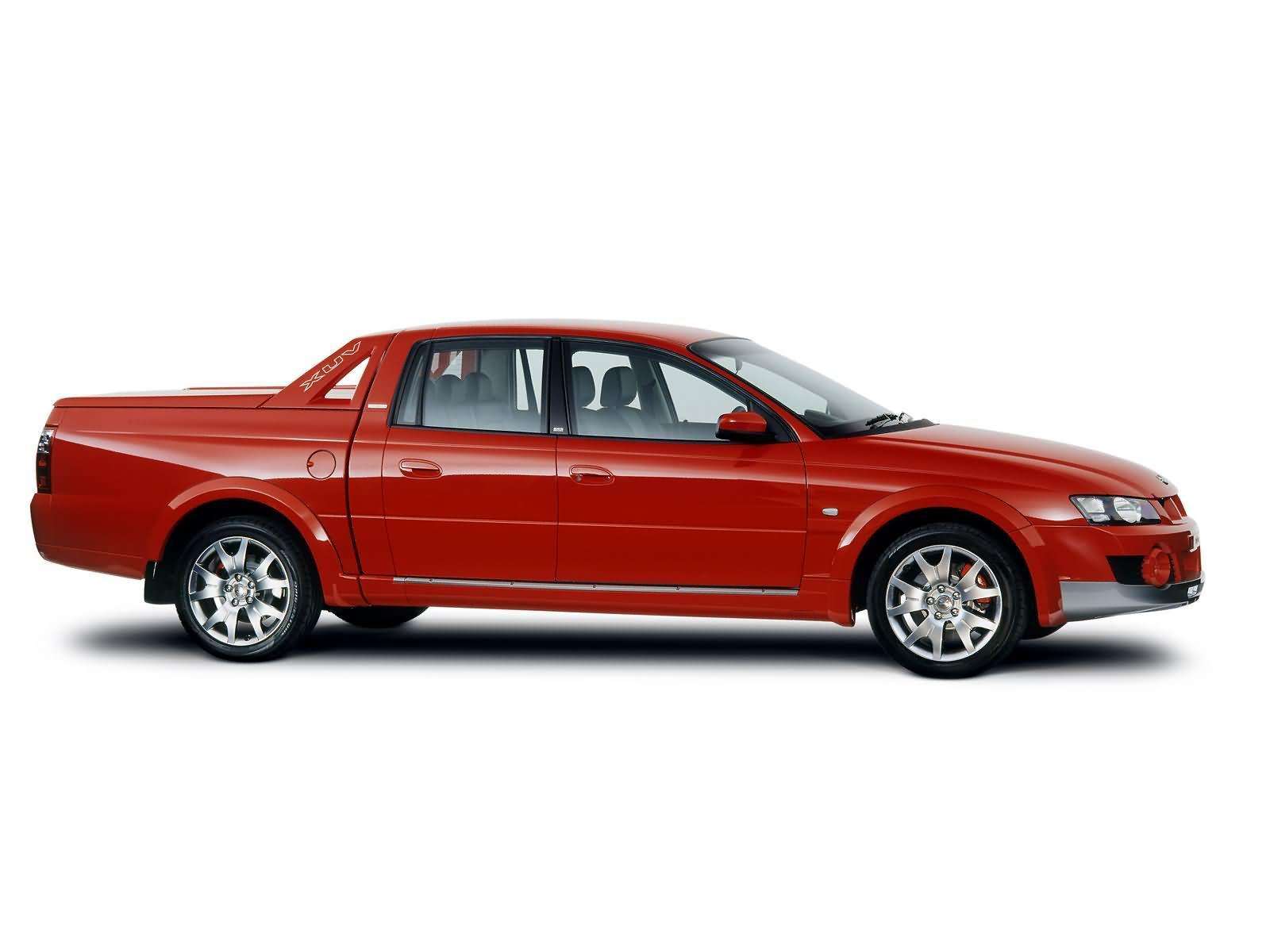
This quote aged about as well as milk in the desert, for after its dalliance with the Coupe 4 and its high-riding relatives, the Avalanche wagon and XUV ute, HSV wouldn’t create another vehicle with four driven wheels until the Colorado SportsCat in 2017, which ironically became its most popular ever model.
However, contemporary commercial success isn’t a prerequisite for modern classic status. Quite the opposite, in fact, as a lack of popularity when new results in a scarcity that often only enhances a car’s collectability. HSV needed to build 200 Coupe 4s to break even on the project, with the plan to build 100 in 2004 and the remainder in 2005; the final tally was 134 cars (28 Series III and 106 VZ) with 20 of those sent across to New Zealand.
HSV might argue that the Australian performance car market at the time lacked the sophistication to appreciate the Coupe 4’s talents that lay deeper than the spec sheet. Buyers cared about numbers and the bigger the outputs and smaller the acceleration figures the better. A big part of the reason for Holden’s success in this era was its cars had more grunt, plain and simple.
Less charitable commentators might attribute the Coupe 4’s lack of popularity to the fact that at $89,950 plus on-road costs (almost $160,000 in today’s money!) it was HSV’s second-most expensive model – behind only the 300kW GTS – its least powerful, at 270kW/475Nm, and at 0-100km/h in 6.1sec, quicker only than its heavier, high-riding Avalanche stablemate.
Wheels’ best effort was 6.5sec, only a fraction ahead of the 6.6sec HSV claimed for wet gravel, and it’s unclear where HSV’s test drivers found the extra four-tenths when the Coupe 4 launch technique was to spool up as many revs as possible against the brake then keep the accelerator pinned to the floor.
But HSV may have had a point, too. When Wheels’ sister publication MOTOR conducted an Australian muscle car mega test in 2005, the Coupe 4 was easily the slowest of the V8s in a straight line, yet around Eastern Creek it was third quickest, despite not being designed for the racetrack in the slightest.
Wheels’ initial drive wasted no time in delivering its verdict, author Nathan Ponchard proclaiming the Coupe 4 to be “bloody excellent” in the second paragraph, while over at MOTOR the car’s manners and bandwidth won over an initially skeptical Jesse Taylor: “I admit to being a bit cynical about the Coupe 4. For one, I didn’t understand the appeal of a car that’s slowest in the range, but second-most expensive. I also feared HSV was looking too far outside the square and away from what it does best. Over 1200 traction-packed kays later, its breadth of ability has peeled away my cynicism.”
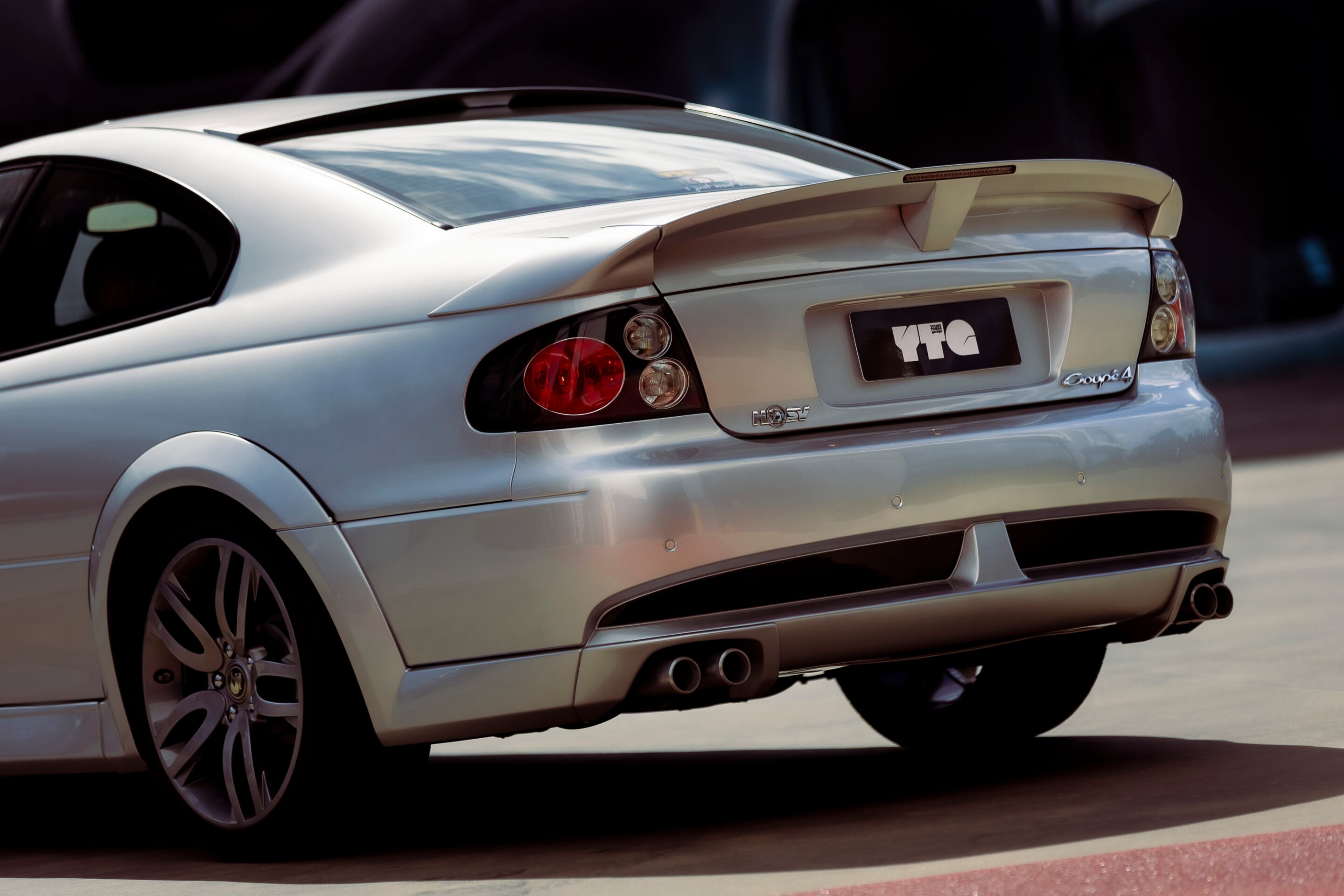
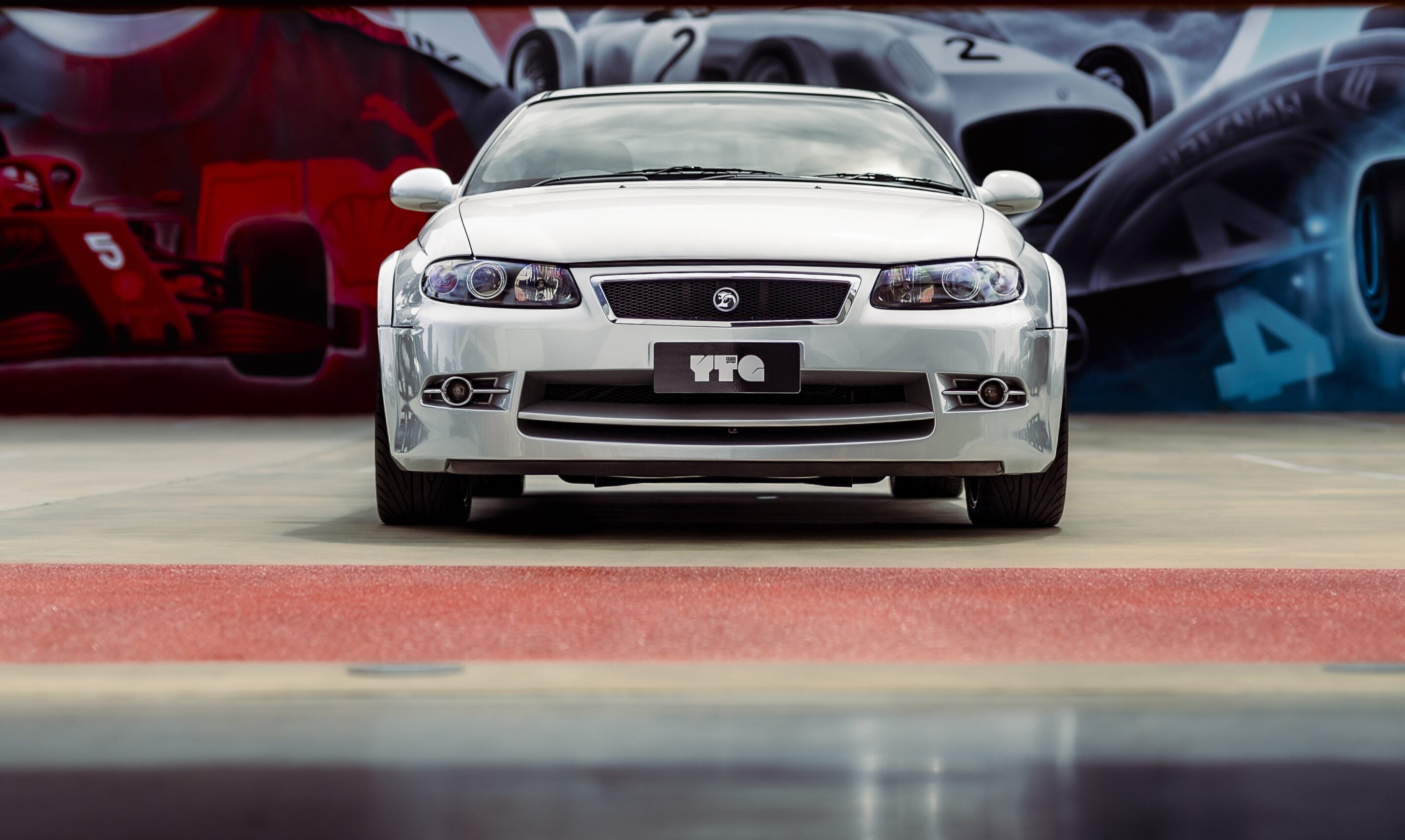
But perhaps the Coupe 4’s greatest achievement, certainly in terms of its contribution to the HSV brand, was how it was built. Installing the all-wheel drive system widened the front and rear tracks by 60mm apiece, pushing the wheels out beyond the standard guards and requiring the wheelarch flares that were somewhat controversial in period, many commentators feeling they were at odds with the car’s more premium aspirations.
Until Coupe 4, every single HSV model went down the production line in Elizabeth as a standard Commodore before being sent to Clayton for its transformation. As such, modifications were limited to parts that could be easily changed, such as wheels, lights, grilles, side skirts, spoilers and the like.
Adding the Coupe 4’s flares after the fact at Clayton was a no-go as drilling holes in the finished bodyshell would be to invite all manner of potential rust issues and associated warranty claims. The solution was for HSV to install its own production line featuring a multi-million-dollar robot purchased specifically for the program.
Each Coupe 4 was initially built up as a left-hand drive Pontiac GTO shell due to HSV’s desire for it to have quad exhausts. Due to US crash regulations, Monaros that headed Stateside had their fuel tanks relocated behind the front seats. This led to a sizeable reduction in boot space from 520 to 370 litres but it did clear room for the right-hand side exhaust pipes.
Once the body-in-white was completed, it left the main production line to undergo the ministrations of HSV’s fancy new robot. Here it was converted to right-hand drive thanks to the installation of the Aussie-spec cockpit module, which included the firewall, while the mounting points and crossmembers required for the all-wheel drive system were also attached.
Following this, the bodyshell was placed on a rotisserie where a plasma cutter trimmed the guards and installed the mounting points for the flares before the guards were rolled for added strength. From here it was back on to the main production line where the usual corrosion protection and paint were applied. Et voila, a suitably widened but fully warrantable bodyshell.
The all-wheel drive system was essentially a straight lift from the Adventra, albeit with a flexible coupling rather than a CV joint to the rear diff thanks to the Coupe 4’s lower ride height, though it also improved refinement. Drive was fixed at a rear-biased 38:62 split with open centre and front differentials, with wheelspin managed by the traction control which could brake individual wheels to transfer torque as required.
Installing all-wheel drive had plenty of flow-on effects. The most obvious was an increase in weight; the Coupe 4’s extra 120kg over a GTO not just down to the Quad-Trac system, but elements like the 4mm-thick steel engine subframe. This weight was distributed 55:45 (front:rear), but its location resulted in a lower centre of mass, which combined with the wider tracks provided greater cornering stability and largely explains both the Coupe 4’s impressive Eastern Creek performance and its ability to lap the Lang Lang Ride and Handling course quicker than the 300kW GTS – corner speed and traction.
A substantial suspension rethink was required by HSV’s engineering team as the dynamic demands were completely at odds with the rest of the range. Intended to sit alongside the Senator and Grange on the sports-luxury side rather than the racier Clubsport, GTO and GTS, ride comfort was a priority and by all accounts the engineers nailed the brief.
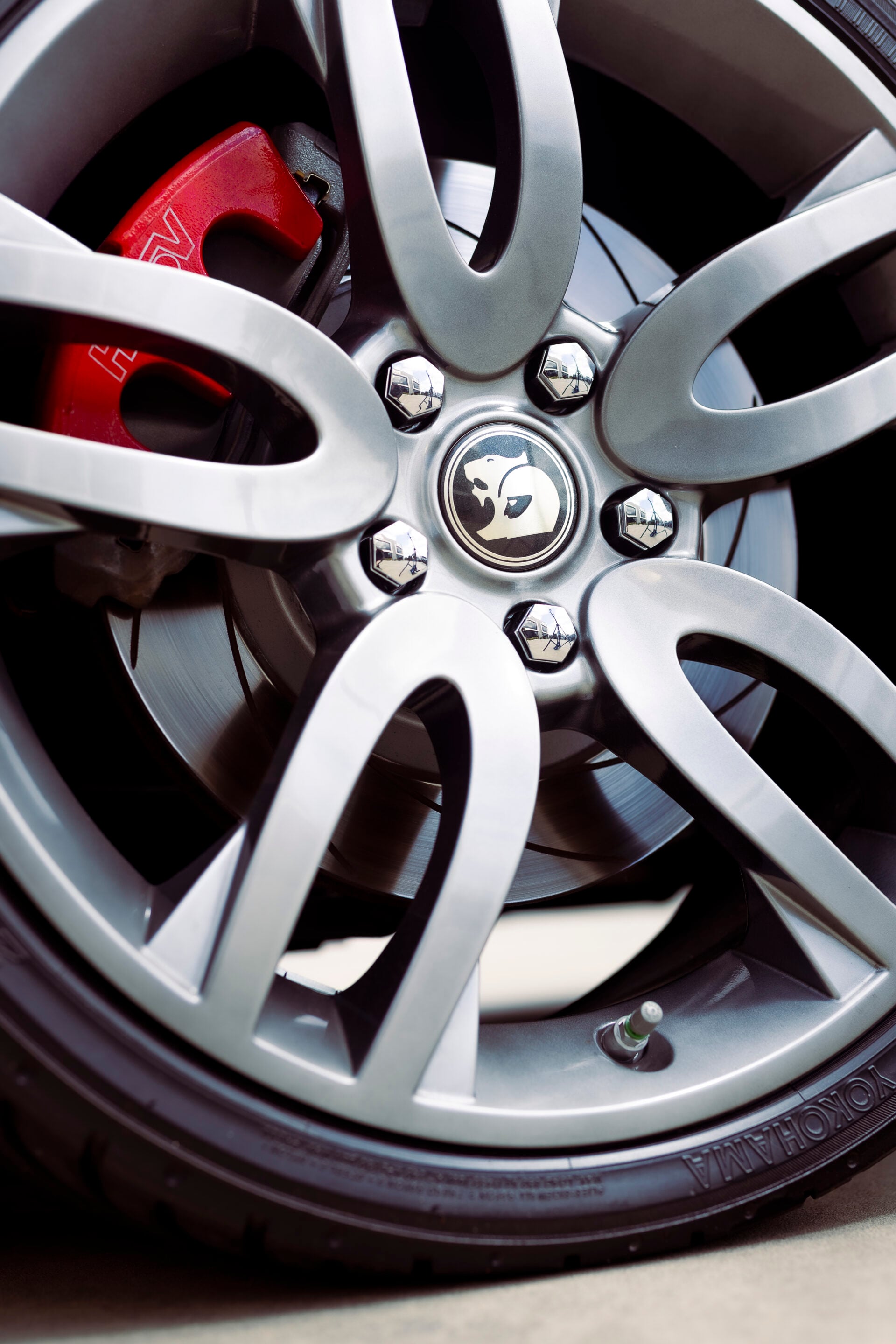
The GTS donated its linear-ratio steering and the front ball joints and knuckles were reversed to lower the roll centre, which required new lower control arms, but those knuckles then didn’t allow enough clearance for HSV’s premium brake package. Whereas the GTS wore 362mm front discs with six-piston calipers, the Coupe 4 made do with 336mm discs and two-piston calipers supported by 315mm discs and single-piston calipers at the rear. Combined with the extra heft, they could quickly wilt under heavy use.
They also meant that the Coupe 4-specific wheels had to be fitted at Elizabeth as the transport steelies wouldn’t fit over the brakes. At 19 inches in diameter but with staggered widths of 8.0 inches (front) and 9.0 inches (rear) – another first for HSV – they wore Pirelli rubber measuring 245/35 and 255/35 front and rear respectively. This change came very late in the piece, as when the initial press drives took place the car still wore 19 x 8.0 wheels and 245/35 tyres all ’round.
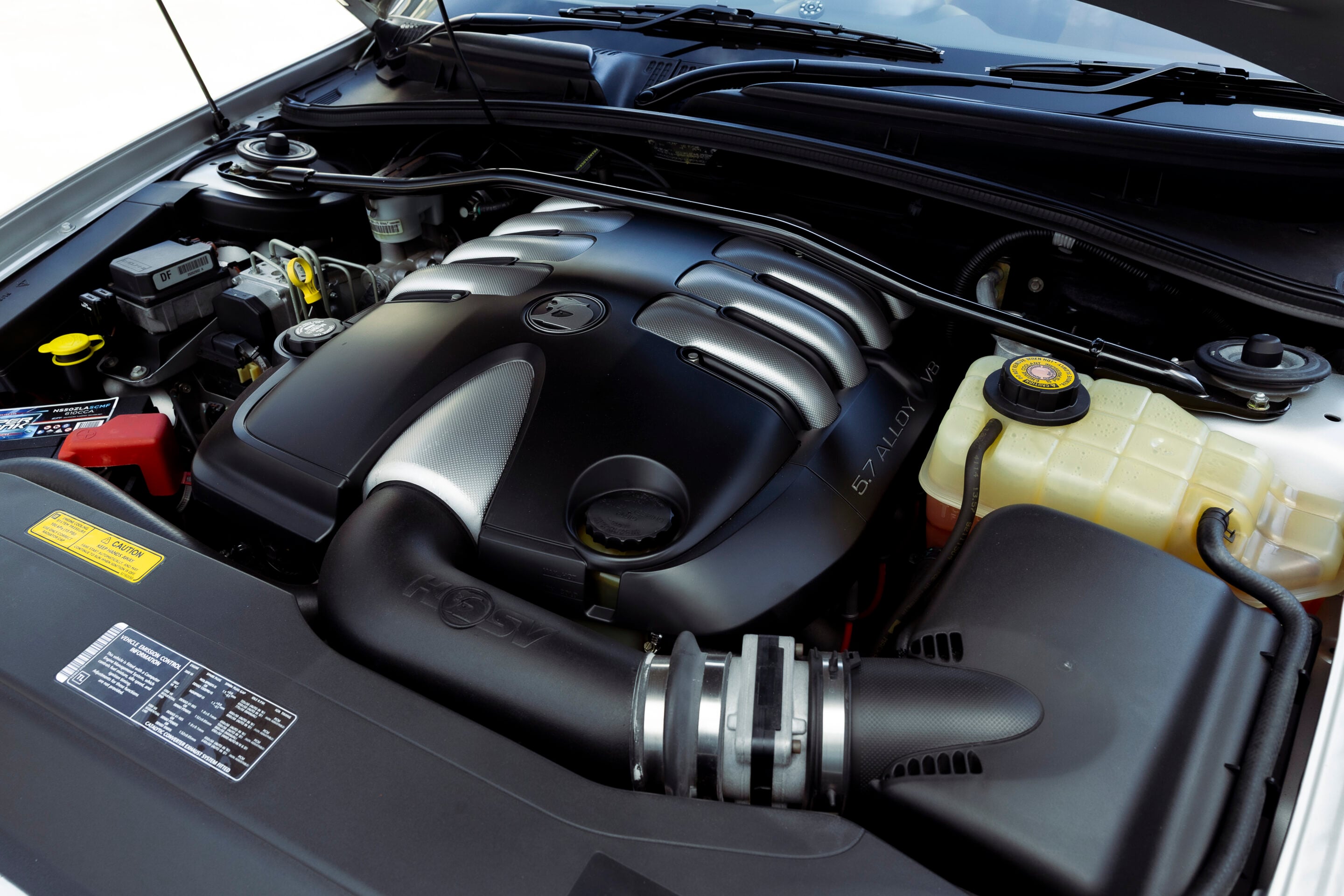
And then there was the engine. HSV did itself no favours by launching the Coupe 4 alongside the upgraded VY II rear-drive range, which featured a new 285kW/510Nm tune for the 5.7-litre V8 across the board, even in the base $60,200 Clubsport. In that context, having less power in the $90K Coupe 4 was a tough sell for the marketing team, especially when the four-speed automatic was the only gearbox able to be mated to the all-wheel drive system.
Crennan’s predecessor, Chris Payne, who was HSV general manager when the Coupe 4 was announced, was aggressively defensive at the suggestion of any shortfall: “Two weeks ago you could’ve driven a 260kW Clubsport and come away extremely impressed. I fail to see how offering 10 more kiloWatts, being quicker, and having a fistful of dynamic benefits can be
perceived as a disadvantage.”
The culprit was once again those pesky front driveshafts, which didn’t allow enough clearance for the VY II’s 44mm headers, instead restricting the Coupe 4 to the 41mm headers of the original VY. In that context, extracting another 10kW was quite impressive, especially when you consider that the engine made 279kW under the DIN standard (which Ford used), but the fact remained you were making excuses before a wheel had even turned.
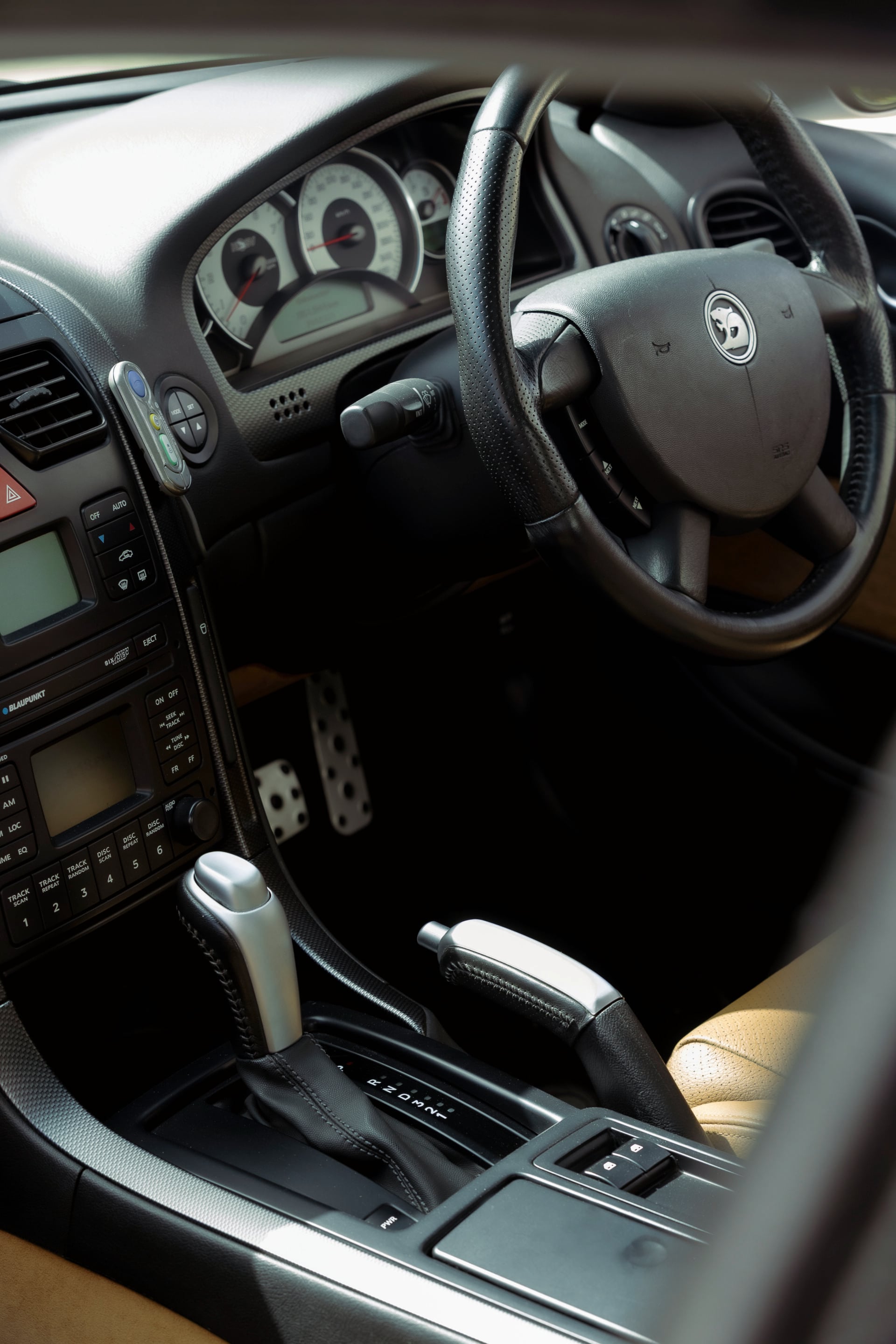
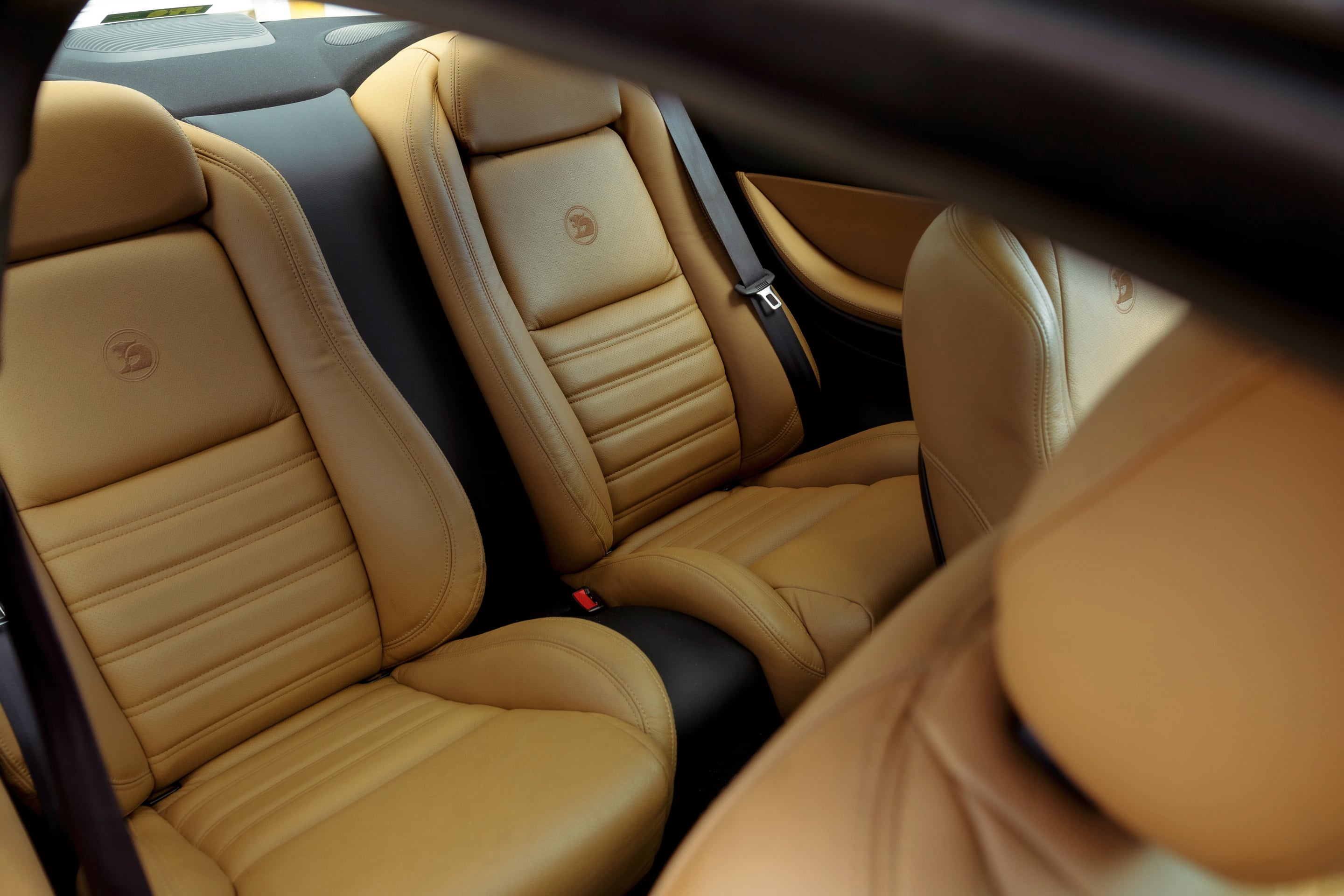
In order to position the Coupe 4 as a more premium product, HSV used the sharper headlights from the Pontiac GTO as well as a unique grille with a chrome surround. Only three colours were available – Sting Red, Phantom Black and Quicksilver – with a black-on-black or the rarer ochre-on-black interior.
It was also loaded with kit, including Xenon High Intensity Discharge (HID) headlights, remote central locking, rear park assist, electric mirrors, embedded security system and immobilizer with data dot vehicle identification, eight-way electrically adjustable front seats (driver’s with three-position memory), concealed mobile phone storage compartment and a Blaupunkt stereo with in-dash six-disc CD changer.
As a new car the Coupe 4 struggled. In the rainy counties of England or the snowy states of the US it might have worked, but in Australia you could buy a rear-drive GTO Coupe for less money and have a car that was quicker, more powerful, more involving and with a bigger boot. Kudos to HSV for trying to broaden its scope, but the end result was more of a curiosity.
Of course, that’s exactly why the Coupe 4 now appears here. Two decades on its performance shortfall over its stablemates is irrelevant, as no one is buying a 20-year-old Australian muscle car for cutting edge performance. Its grand touring credentials, however, are more relevant than ever, making this the perfect car for a weekend cruise in comfort. Most importantly, it’s interesting and intriguing with a unique story to tell and the build numbers mean sightings are few and far between. All-wheel drive might not have taken off at HSV, but it gives the Coupe 4 an appropriately strong grip on modern classic status.
The Other One
HSV’s other all-wheel drive experiment, the Avalanche (below), fared a little better, with 333 units supposedly built, though this incorporates both the wagon and the XUV dual-cab ute. At more than two tonnes, the Avalanche was even slower than the Coupe 4, though at $73,990 it was also much cheaper and could easily fit the family. While it wasn’t a huge hit, it was quicker and more powerful than the Porsche Cayenne S that landed at around the same time, so there’s that.
Specs
| Engine | 5666cc V8, OHV, 16v |
|---|---|
| Transmission | 4-speed auto |
| Power | 270kW @ 5700rpm |
| Torque | 475Nm @ 4000rpm |
| 0-100km/h | 6.1sec (claimed) |
| Weight | 1830kg |
| PWR | 148kW/tonne |
| L/W/H/WB | 4789/1840/1397/2788mm |
| Tyre | 245/35 R19 (f); 255/35 R19 (r) Pirelli P-Zero |
| Price | $89,950 (2004); $99,990 (today) |
The article originally appeared in the 2025 Yearbook issue of Wheels. Subscribe here and gain access to 12 issues for $109 plus online access to every Wheels issue since 1953.
Suzuki Australia has announced a voluntary safety recall for a number of 2025 Fronx Hybrid vehicles after identifying a potential fault with the rear seatbelt system, following a recent assessment by the Australasian New Car Assessment Program (ANCAP).
The recall applies to a specific vehicle identification number (VIN) range, which Suzuki says has been identified during an ongoing investigation into the Fronx Hybrid’s safety performance. According to the company, the issue relates to the rear seatbelt retractor mechanism, which may not operate as intended in a collision.
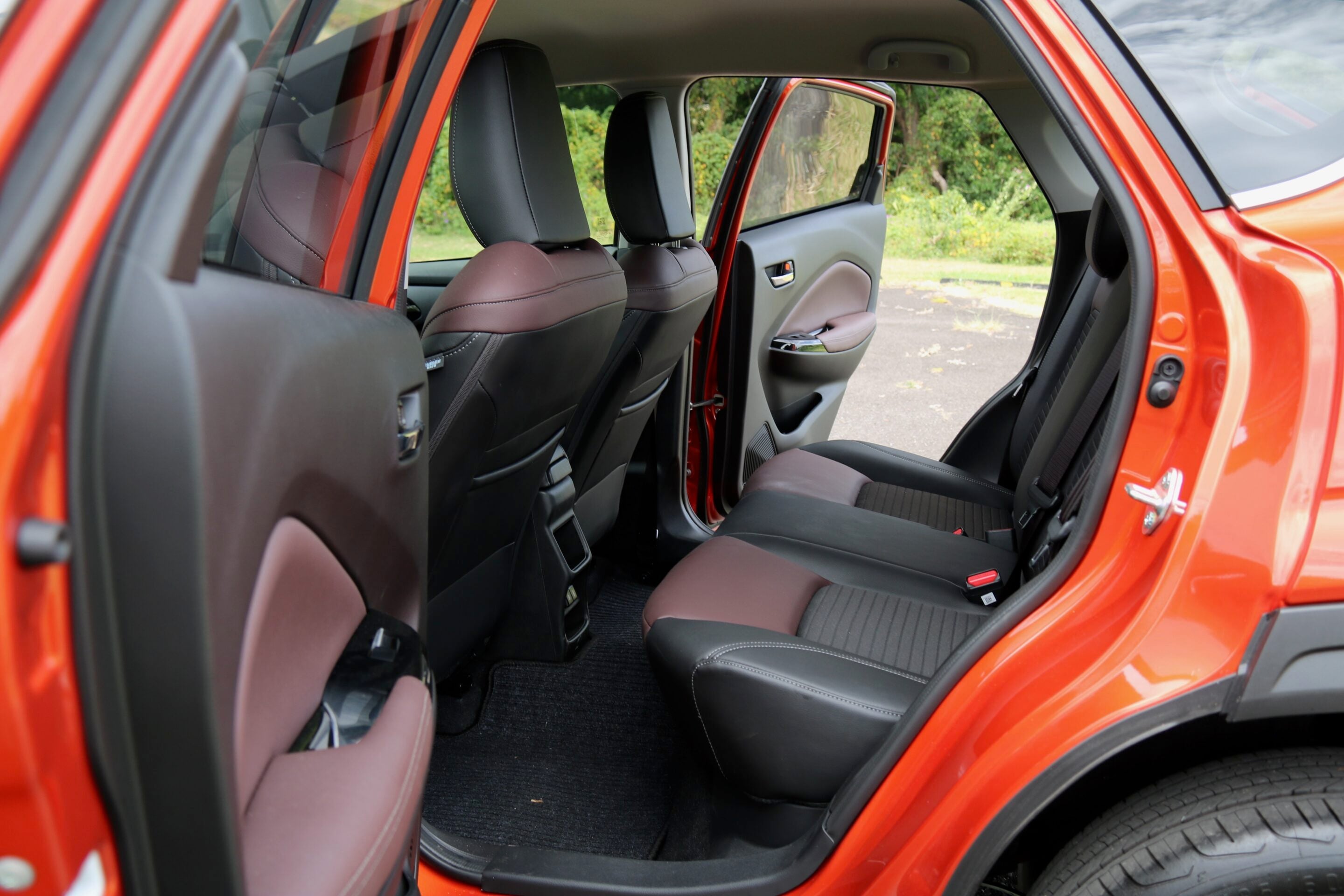
Suzuki has warned that, in affected vehicles, excessive seatbelt webbing could be released during an impact, increasing the risk of injury to rear-seat occupants. As a precaution, the company has instructed owners of impacted vehicles to immediately stop using the rear seats until further notice.
Customer safety remains the company’s priority, Suzuki Australia said, with investigations continuing alongside Suzuki Motor Corporation to fully understand the cause of the issue and determine a permanent fix.
“All affected customers will be contacted directly,” Suzuki Australia confirmed, adding that owners are encouraged to reach out to the Suzuki Customer Call Centre if they have any concerns or questions about their vehicle.
The recall follows scrutiny of the Fronx Hybrid’s safety systems during independent testing, prompting Suzuki to act while further technical analysis is undertaken. The company has not yet confirmed how many vehicles are affected nationwide, but says it is working to ensure all impacted owners are identified and informed as quickly as possible.
Suzuki Motor Corporation and Suzuki Australia have committed to implementing additional measures once the investigation is complete, with the aim of restoring full rear-seat usability without compromising safety. The company says further updates will be provided once a remedy is finalised.
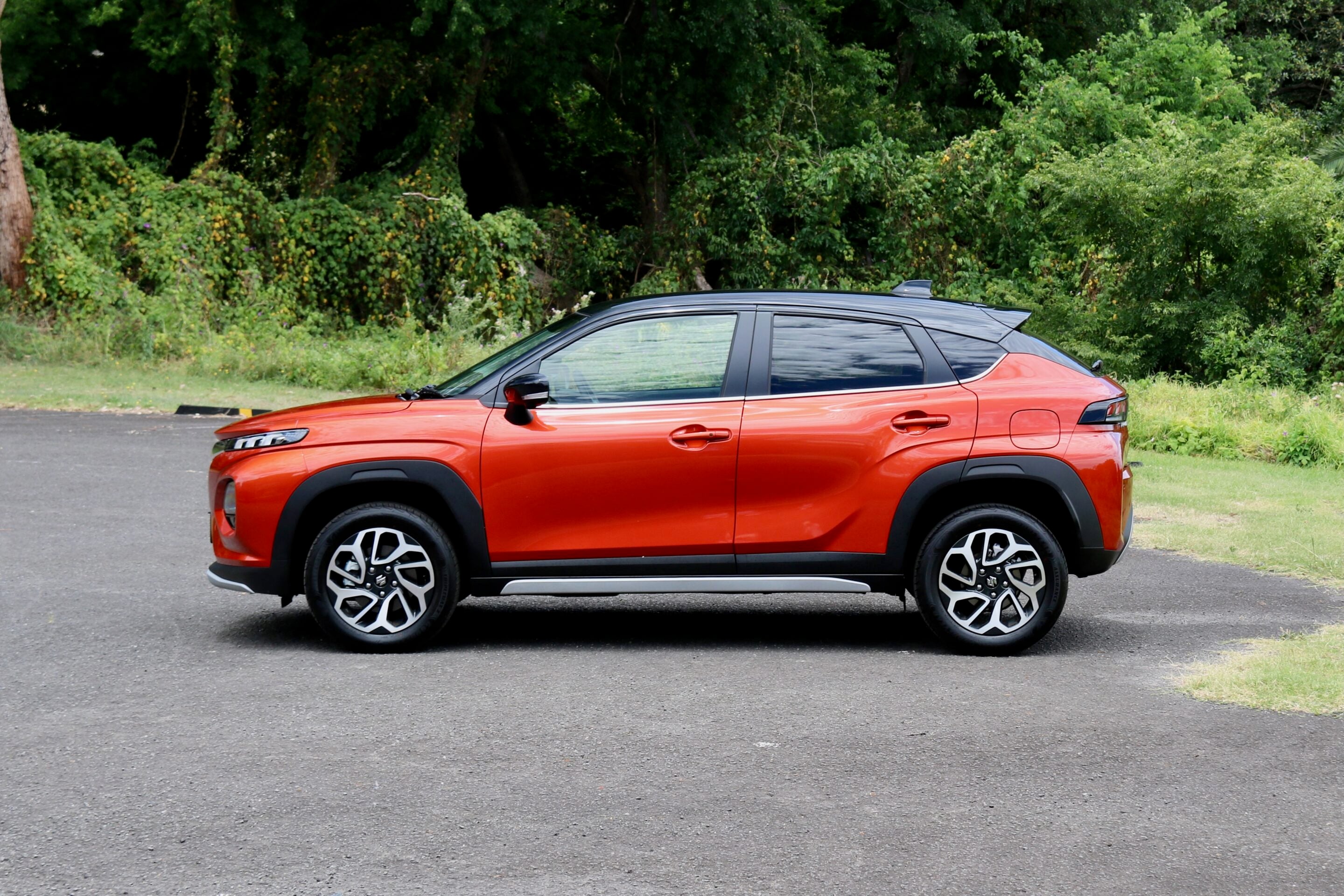
The Fronx Hybrid, which launched in Australia earlier this year, is positioned as a small, urban-focused SUV and is currently sold in a single specification locally. The recall represents a significant early setback for the model, particularly as safety ratings play a major role in purchasing decisions within the light SUV segment.
Details of the recall are listed under reference REC-006520 on the Australian Government’s Vehicle Recalls website. Owners can check whether their vehicle is affected by searching their VIN or contacting Suzuki Australia directly.
Suzuki has reiterated that transparency and customer safety remain central to its response, stressing that the recall is a precautionary step taken while investigations remain ongoing.
Australian motorists are being reminded to take extra care on the roads as double demerit points come back into force over the Christmas–New Year holiday period, coinciding with one of the busiest travel windows of the year.
In New South Wales, double demerits apply from 12:01am on December 24 through to January 4, 2026, as part of the state’s annual Operation Christmas and New Year road safety campaign. Police say enforcement will be highly visible, with traffic and highway patrol officers joined by general duties and specialist units across the state.
The focus will again be on the most common causes of serious crashes, including speeding, illegal mobile phone use, failure to wear seatbelts and riding without an approved motorcycle helmet. During the operation so far, five people have already lost their lives on NSW roads.
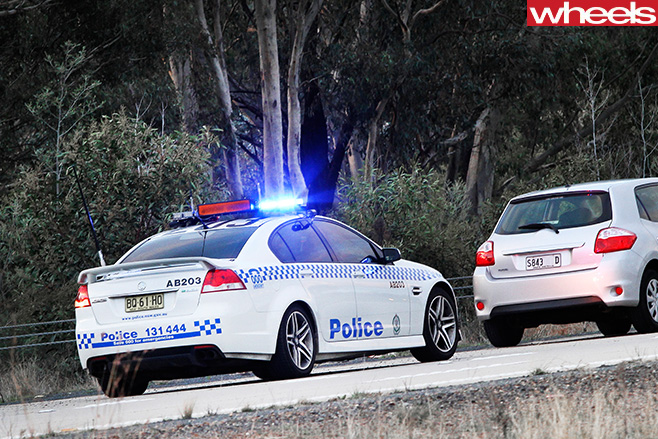
Police have warned that there will be no tolerance for risky behaviour, with authorities stressing that poor decisions behind the wheel can have fatal consequences, particularly during periods of heavy holiday traffic.
The Australian Capital Territory mirrors NSW dates, with double demerits also applying from December 24 to January 4. Unlike NSW, however, the ACT applies double demerit points to all traffic offences during the holiday period, not just selected infringements.
Western Australia’s double demerit period began earlier, starting on December 19 and continuing until January 4. WA’s scheme covers a wider range of offences, including speeding, mobile phone use, drink and drug driving, running red lights and seatbelt or child restraint breaches. More serious infringements, such as attempting to evade speed cameras or using detection-avoidance devices, attract significant penalties of up to 14 demerit points.
WA Police have issued stark warnings following a sharp rise in road deaths, with the state recording its highest fatality numbers in nearly two decades. Authorities say enforcement over the festive season is aimed squarely at preventing further loss of life during a period traditionally associated with increased travel.

Nationally, the road toll remains a concern, with more than 1,300 deaths recorded in the 12 months to late November – an increase of around three per cent compared with the previous year. Police agencies across the country say the holiday period is critical, as long-distance travel, fatigue and distractions combine to increase crash risk.
Queensland operates a different system and does not introduce double demerit periods over public holidays. Instead, drivers receive double demerit points if they commit the same offence more than once within a 12-month period. This applies year-round to offences such as speeding, mobile phone use and seatbelt breaches.
Several jurisdictions, including Victoria, South Australia, Tasmania and the Northern Territory, do not operate double demerit schemes at all. However, police in those states and territories still conduct targeted holiday enforcement campaigns and issue fines and licence suspensions where required.
Authorities are urging drivers nationwide to slow down, avoid distractions and plan ahead, warning that penalties can escalate quickly during double demerit periods – and that the consequences of unsafe driving extend far beyond fines or points.
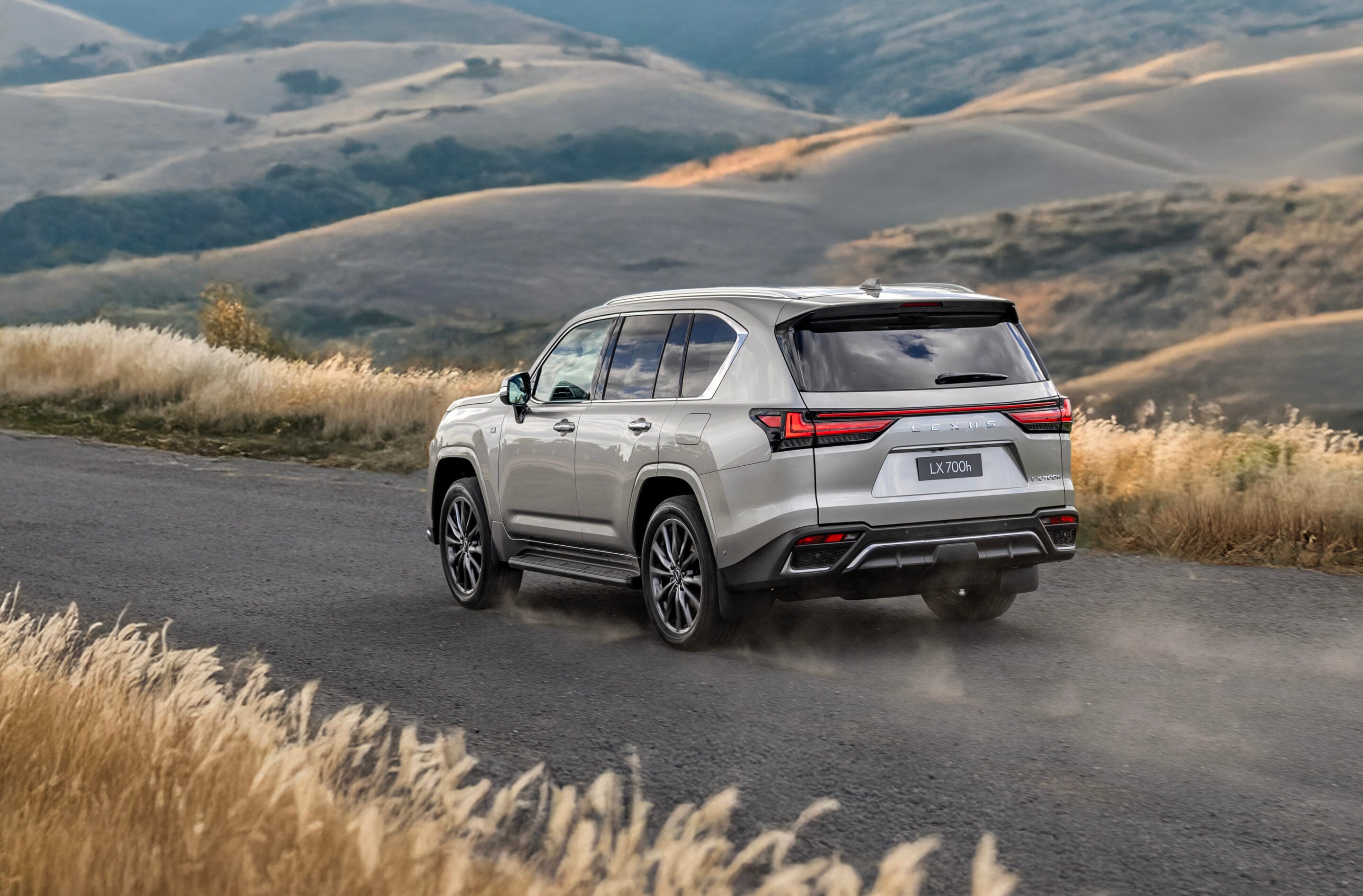
Lexus Australia has confirmed its flagship LX large SUV will gain a new performance-focused hybrid option in the first half of 2026, broadening the range to include petrol, diesel and hybrid powertrains for the first time.
Badged LX 700h, the new variant will sit above the existing LX 600 petrol and LX 500d diesel models and become the most powerful Lexus hybrid offered locally. Buyers will be able to choose the hybrid powertrain in either F Sport or Sports Luxury trim levels, with the latter available in five- or seven-seat layouts.
Pricing for the LX 700h Sports Luxury starts at $196,000 plus on-road costs in five-seat form, rising to $199,800 for the seven-seat version. The F Sport variant will be offered exclusively as a five-seater, priced from $202,000 plus on-road costs.
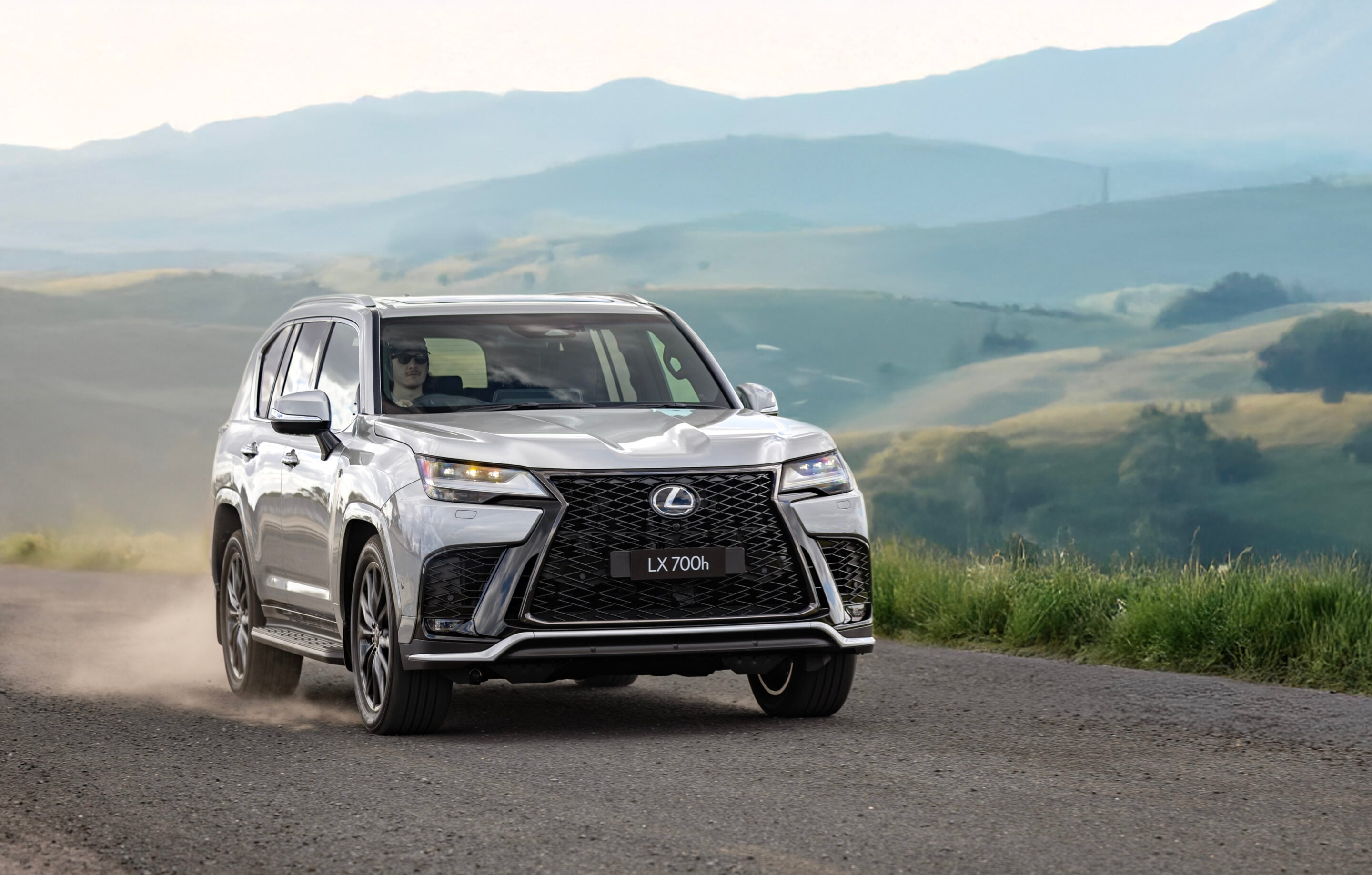
The LX 700h combines Lexus’ 3.5-litre twin-turbo petrol V6 with a single electric motor mounted between the engine and the 10-speed automatic transmission. The petrol engine produces 305kW and 650Nm, while the electric motor contributes an additional 36kW and 250Nm. Combined system output is rated at 341kW and 790Nm, making it the most powerful and torque-rich LX to date.
The hybrid system is a parallel design, intended to supplement the petrol engine under acceleration while also allowing short periods of electric-only driving at low speeds. Lexus says this setup improves throttle response and delivers smoother low-speed control, particularly in off-road conditions when modes such as Rock, Dirt or Deep Snow are selected.
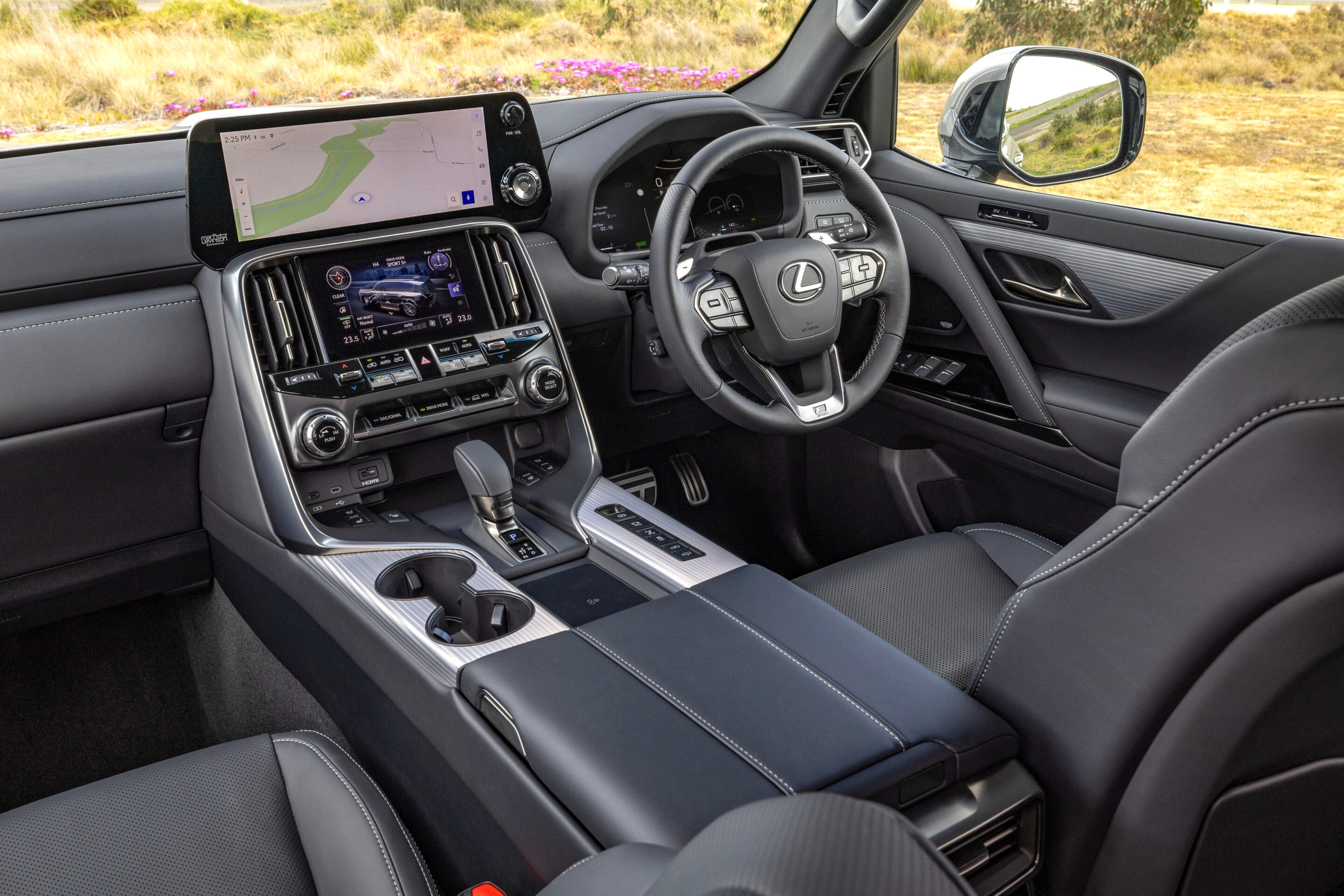
Importantly for buyers who tow or venture off-road, the hybrid system has been engineered to retain the LX’s existing mechanical strengths. The LX 700h keeps full-time four-wheel drive, low-range gearing and a 3500kg braked towing capacity. Lexus has also added waterproofing measures to protect the battery and inverter during water crossings.
Fuel efficiency improves compared with the petrol-only LX 600, with combined-cycle consumption quoted at 10.0L/100km, representing a reduction of around 16 per cent. CO₂ emissions are also lower.
Hybrid-specific features include a shift-by-wire gear selector and a 1500W power outlet in the cargo area, capable of running small appliances. However, packaging the hybrid components reduces boot space in five-seat models from 1109 litres to 889 litres.
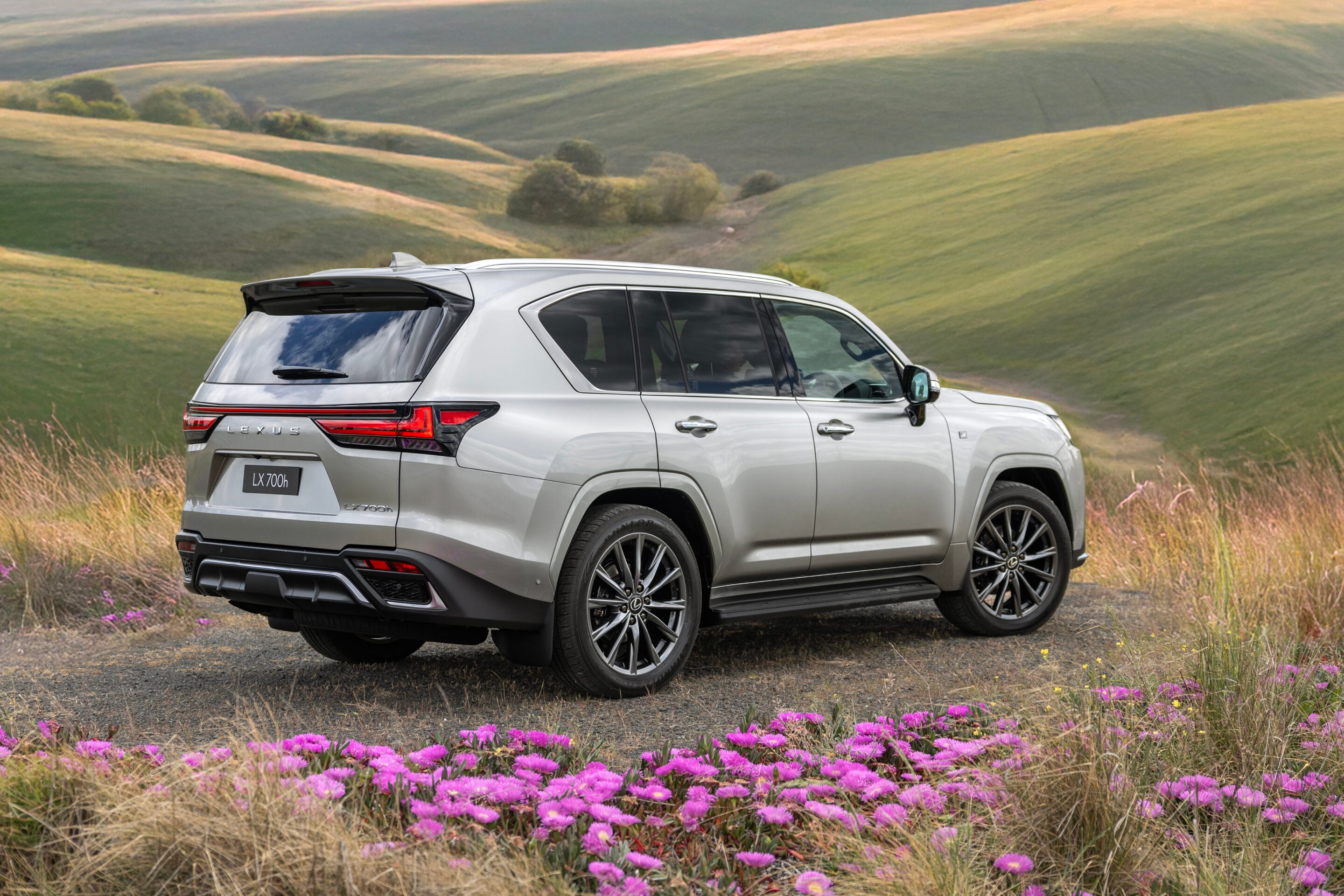
Alongside the introduction of the LX 700h, Lexus will update the broader LX range. The optional Enhancement Pack will become standard on LX 500d and LX 600 Luxury grades, adding items such as 22-inch alloy wheels, a moonroof and a hands-free tailgate.
The four-seat LX 600 Ultra Luxury will be discontinued, with the new hybrid positioned as the range’s flagship moving forward.
| LX 500d | LX 600 | LX 700h | |
|---|---|---|---|
| LX Luxury seven-seat | $164,200 | $167,700 | – |
| LX Sports Luxury five-seat | $176,300 | $179,800 | $196,000 |
| LX Sports Luxury seven-seat | $178,900 | $183,600 | $199,800 |
| LX Overtrail five-seat | $182,300 | $185,800 | – |
| LX F Sport five-seat | $182,300 | $185,800 | $202,000 |
Trent Nikolic, Wheels Managing Editor
Nissan Patrol Warrior
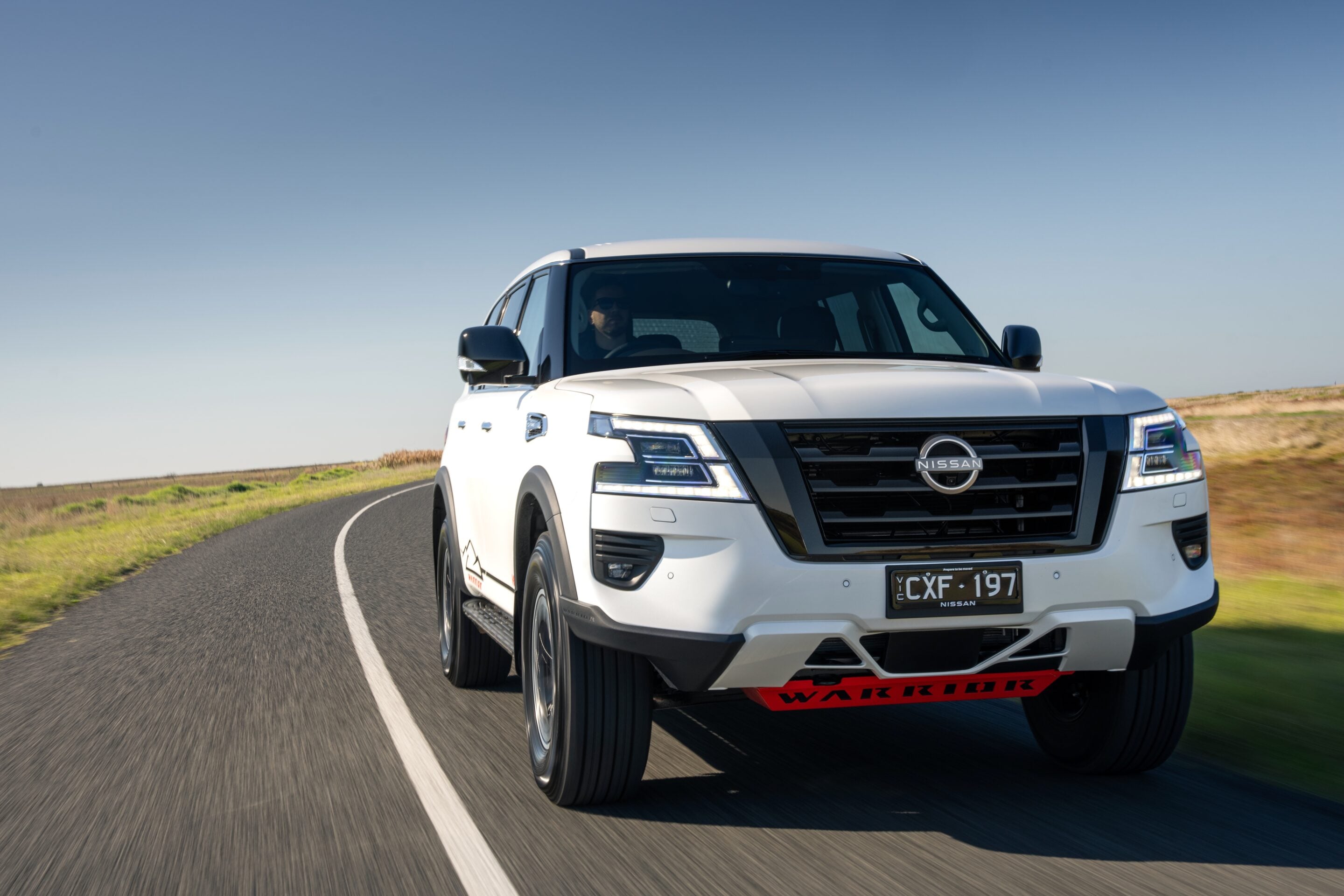
A fitting farewell to a sensational V8 engine, the Patrol Warrior will leave a legacy to the mechanical simplicity of one of Australia’s off-road icons. The added bonus of PremCar’s excellent Warrior modifications, is full factory warranty support for those of you not wanting to make the modifications yourself.
Patrol Warrior is an exceptionally comfortable, spacious, luxurious and effortless large 4WD, that has found favour with buyers in the city – hardly surprising – despite it’s almost single-minded off-road ability. And now, more than ever, the concept of long-haul touring with a petrol engine is more acceptable than it ever was.
Toyota’s LandCruiser gets most of the press, but the Nissan Patrol – in Y62 form – has always been a legitimate contender whether you live in town, in the country, whether you tow or tour, and especially for family buyers with active lifestyles. Farewelling the legendary 5.6-litre petrol V8, is another case of rejoicing in such engines while we had them.
Toyota GR Corolla Auto
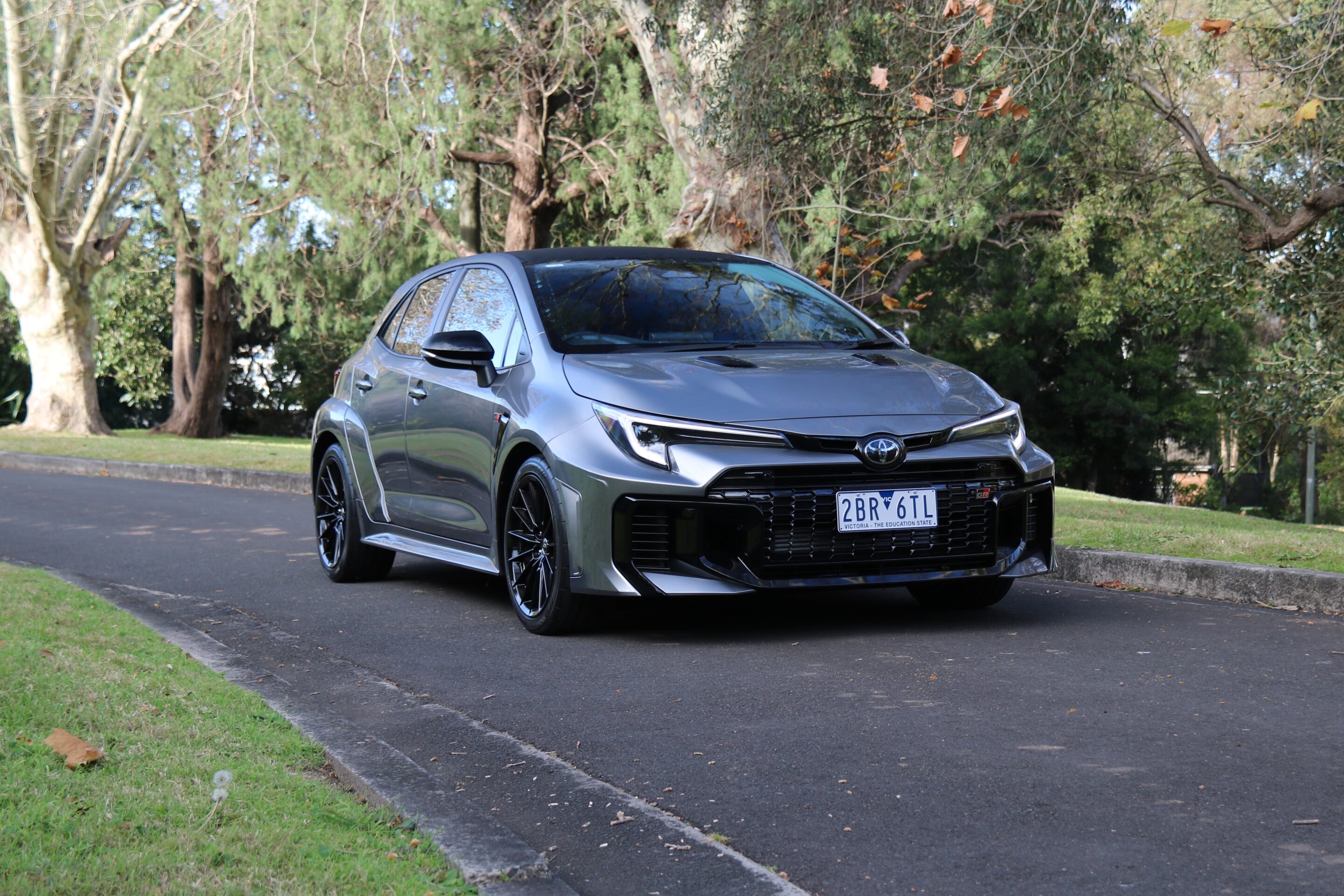
On one hand, it’s unsurprising that the GR Corolla would be an absolute hoot to drive, but on the other hand, you could be forgiven for thinking the manual was the only one to have. An excellent, conventional automatic, has however, strengthened the GR Corolla’s daily driving credentials.
The concept of the GR Corolla is genius. It’s a Corolla, so it means you get everything that’s great about a Corolla – reliability, dealer/service access, practicality, four-doors and a space-efficient exterior. Add the special blend of GR spices though, and the result is a grin-inducing lunatic of a hot hatch, up there with the best of them.
On the right road – regardless of surface – the GR Corolla is devastatingly fast. And, it’s an easy car to drive fast, too, such is the quality of the chassis, the driveline and the grip. Few cars can be driven with such abandon. However, around town, in traffic, especially with the auto transmission, it’s as practical and as effortless as any other Corolla.
Honda Civic
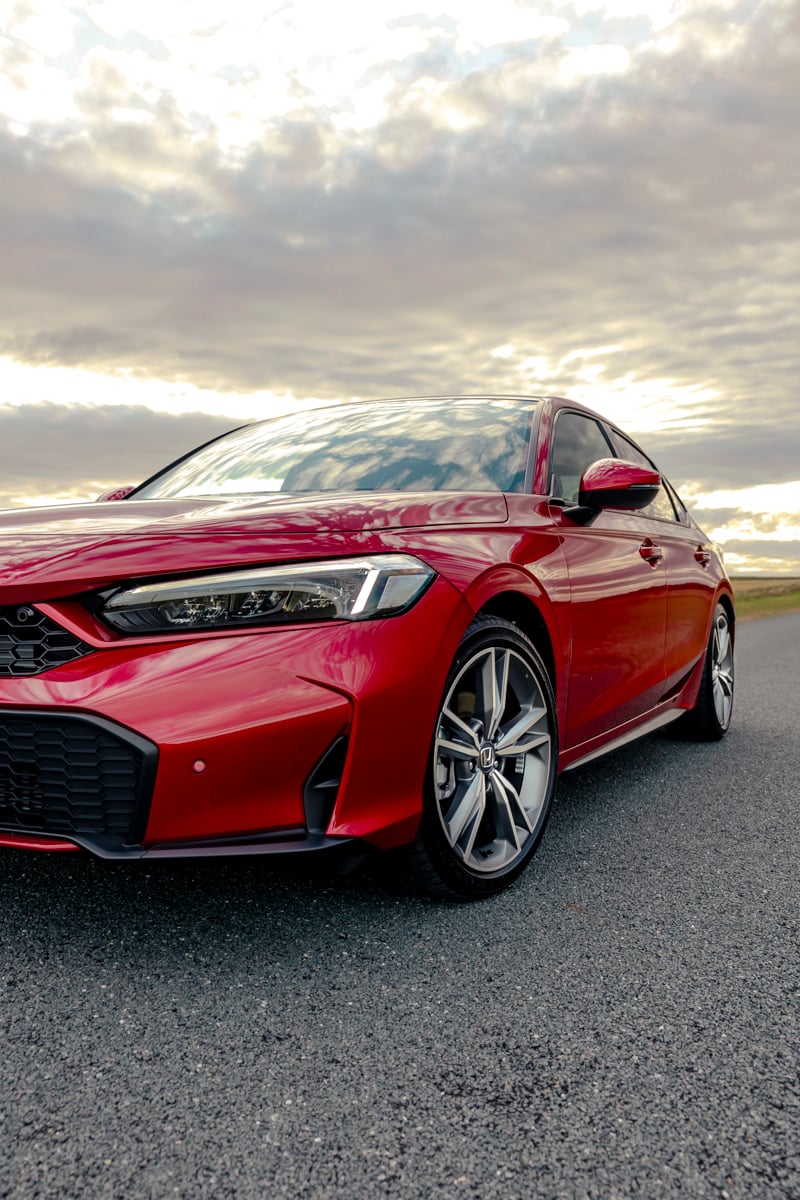
Wheels COTY testing, as it has a tendency to do, threw up numerous surprises over the week spent at Lang Lang, and our winner deserves special mention here. The new Civic is a return to form for Honda, and how.
The GFC hit Honda’s R&D department hard, and a brand that had once been aspirational in our market, fell into a decline. Its vehicles were still good, but not great as they once had been. In the 1980s and ’90s, if you knew someone who had a Honda, it was as good as any Euro badge.
Well, the new Civic is a shot across the bows that Honda is back. It’s a great car to drive, it’s genuinely efficient in the real world, it feels premium, built to a high standard, is comfortable and has plenty of space. Oh, and it’s not an SUV either, proving you don’t have to buy one just because everyone else is.
MG HS Hybrid
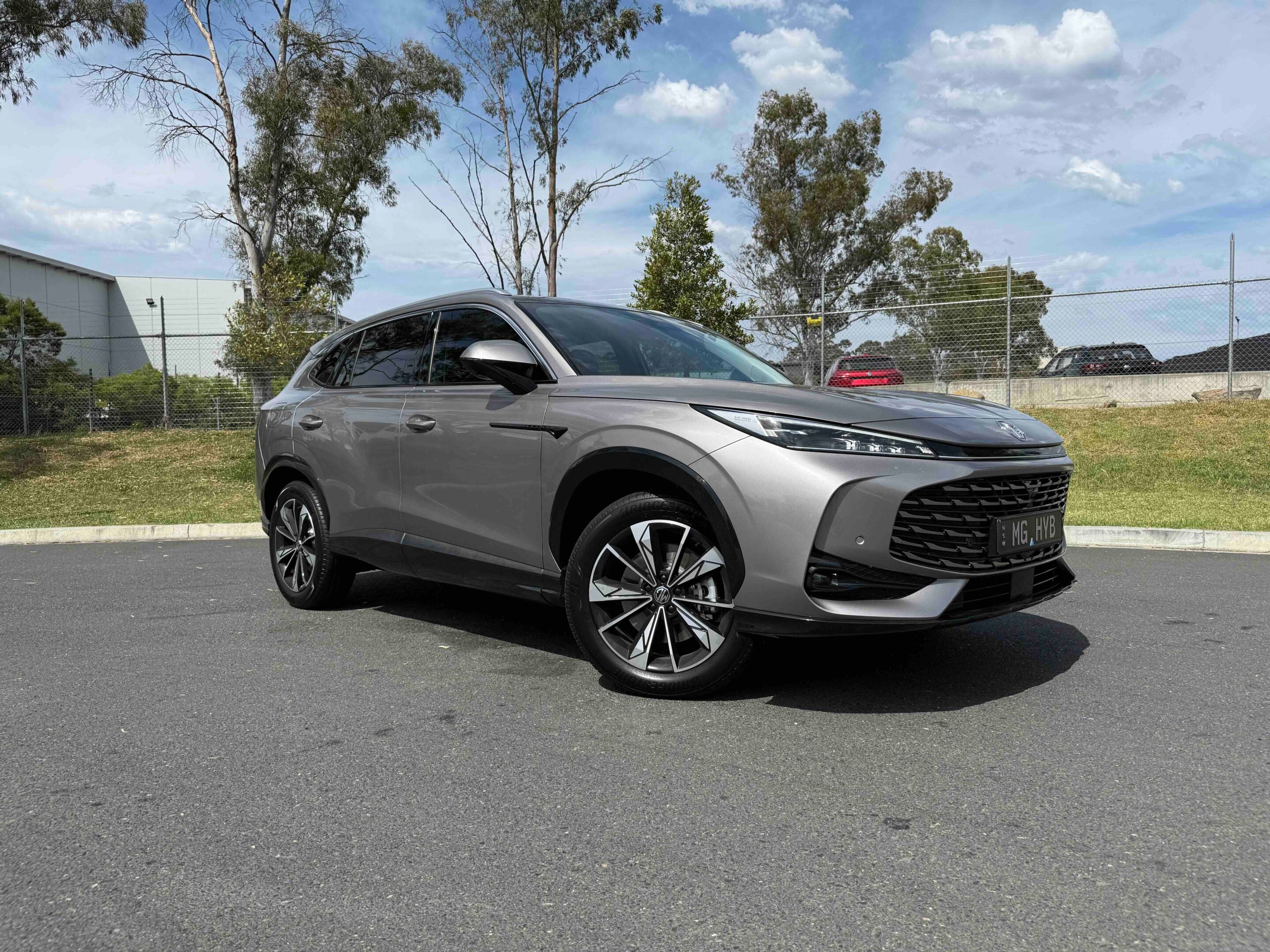
Another surprise – that was noted by all the judges at COTY – was the new MG HS Hybrid. This is quite simply, the standard setter for what we as testers now expect from MG. Each new vehicle is a significant step forward for a brand continuing to rise.
The HS Hybrid delivers everything that Aussie buyers love about the crucial medium SUV segment, but with a hybrid system that delivers impressive fuel efficiency no matter how you’re driving, and with a quality, comfortable cabin experience.
A deserving place getter in a competitive field, driving the MG HS was enjoyable regardless of the road, and when you factor in the list of standard equipment, and starting price, it’s a compelling medium SUV in an ever-crowded segment. To underestimate the desire for MG to succeed in our market, is to make a serious error of judgement, and the new HS Hybrid is the best example of that.
Ferrari 296 Speciale
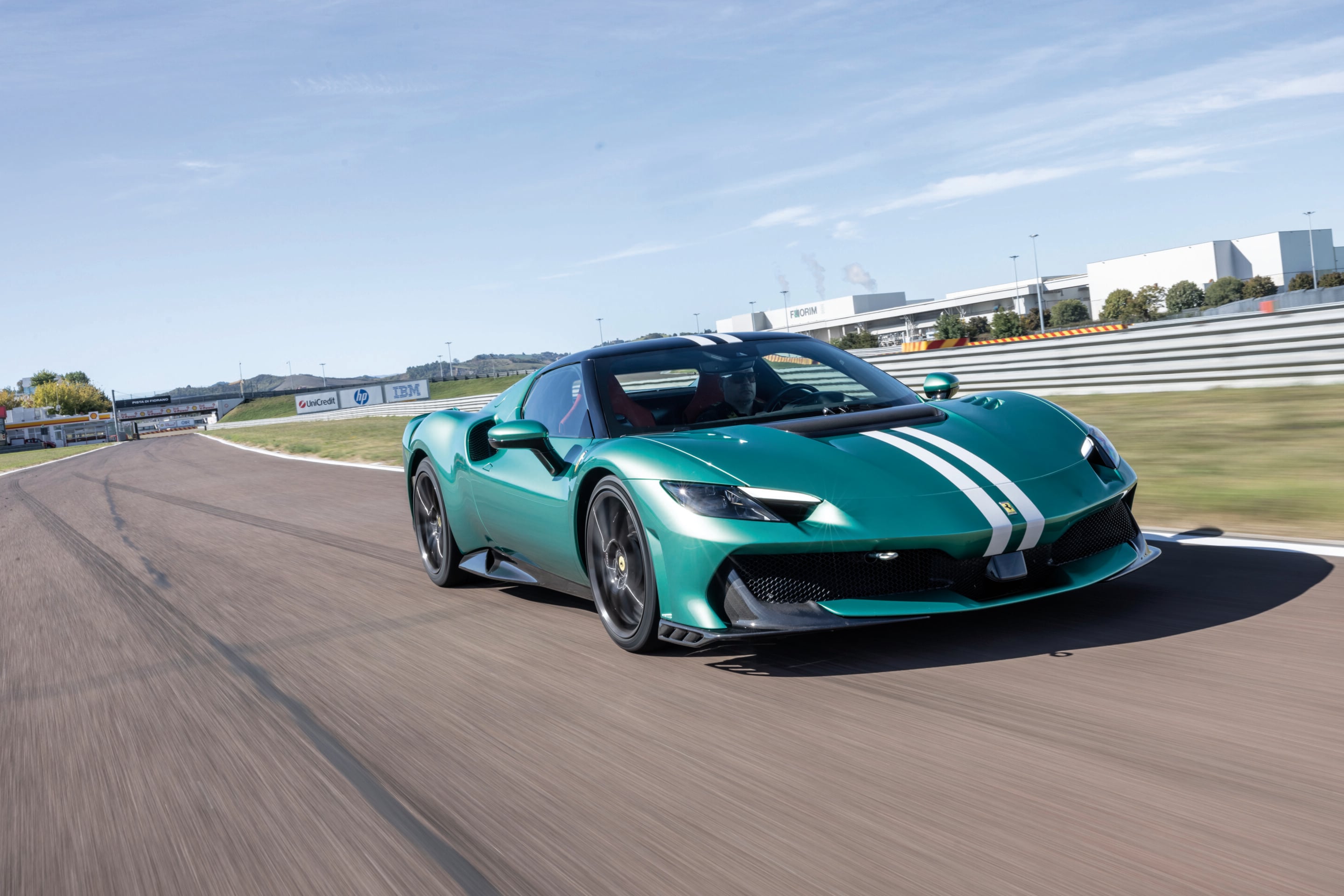
It’s stating the bleedingly obvious to list a Ferrari as one of the best cars you’ve driven in any given year, but the 296 Speciale is, literally, quite special. The 296 was already a stunningly fast car in regular form, but the Speciale badge, and everything it brings, winds the wick up to ridiculous levels.
So fast is the 296 Speciale, you’ll need a few out laps to reprogram your brain and reflexes, but the key is how safely, and easily it can be used at warp speed. The level of grip, sharpness of input and response, and staggering capability of the aerodynamic genius, means you can push harder than you ever thought possible.
Cars of this type have been getting ‘too fast’ for a while now, so the outright speed is nothing new. But the 296 Speciale is a sensational car, that does everything with a sense of flair only the Italians can inject. If 2025 had a single highlight for me, it would have been exiting the pits at Maranello for the first time in my career, behind the wheel of this mindblowing car from the Scuderia.
Rob Margeit, Wheels Features & Road Test editor
Hyundai Santa Fe Hybrid
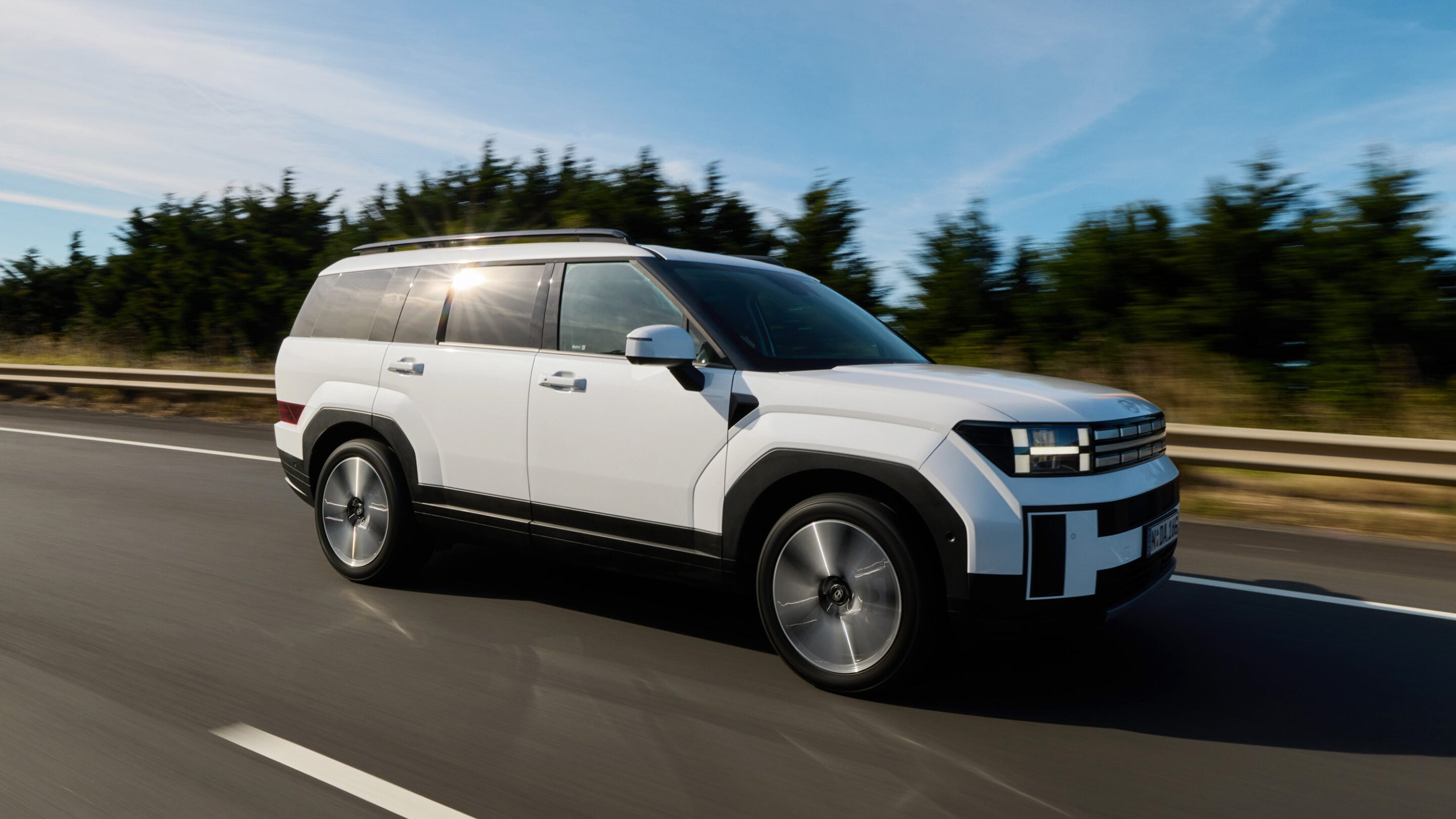
Bold. Daring. Polarising. Call it what you will, but there’s no denying Hyundai looked at the large SUV rulebook when coming up with its new-generation Santa Fe. And then ignored it.
And that’s a good thing, because I reckon our roads are over-populated with homogenous design, especially in the world of SUVs.
But the Hyundai Santa Fe thumbed its not inconsiderable nose at that homogeneity, with a boxy profile and blunt but foreboding front-end treatment that enlivened the otherwise austere large, family SUV segment.
But more than just its cutting-edge and contemporary looks, the Santa Fe backed up its fashion sense with serious substance, the showpiece a refined and frugal 1.6-litre turbo-four petrol-hybrid engine that returned genuine savings at the pump. How frugal? Try 5.6L/100 over a week of real-world testing.
Inside, the Santa Fe in base hybrid trim, matched its avantgarde exterior styling with a spacious cabin – even in the third row – and, just to be different, funky tartan-covered cloth seats.
That it actually drove beautifully with composed road manners and a reasonably potent petrol-hybrid drivetrain underscored its abilities emphatically.
The Hyundai Santa Fe hybrid, more Punk Rock than K-Pop. And that’s no bad thing.
Volkswagen Touareg 210TDI Elegance
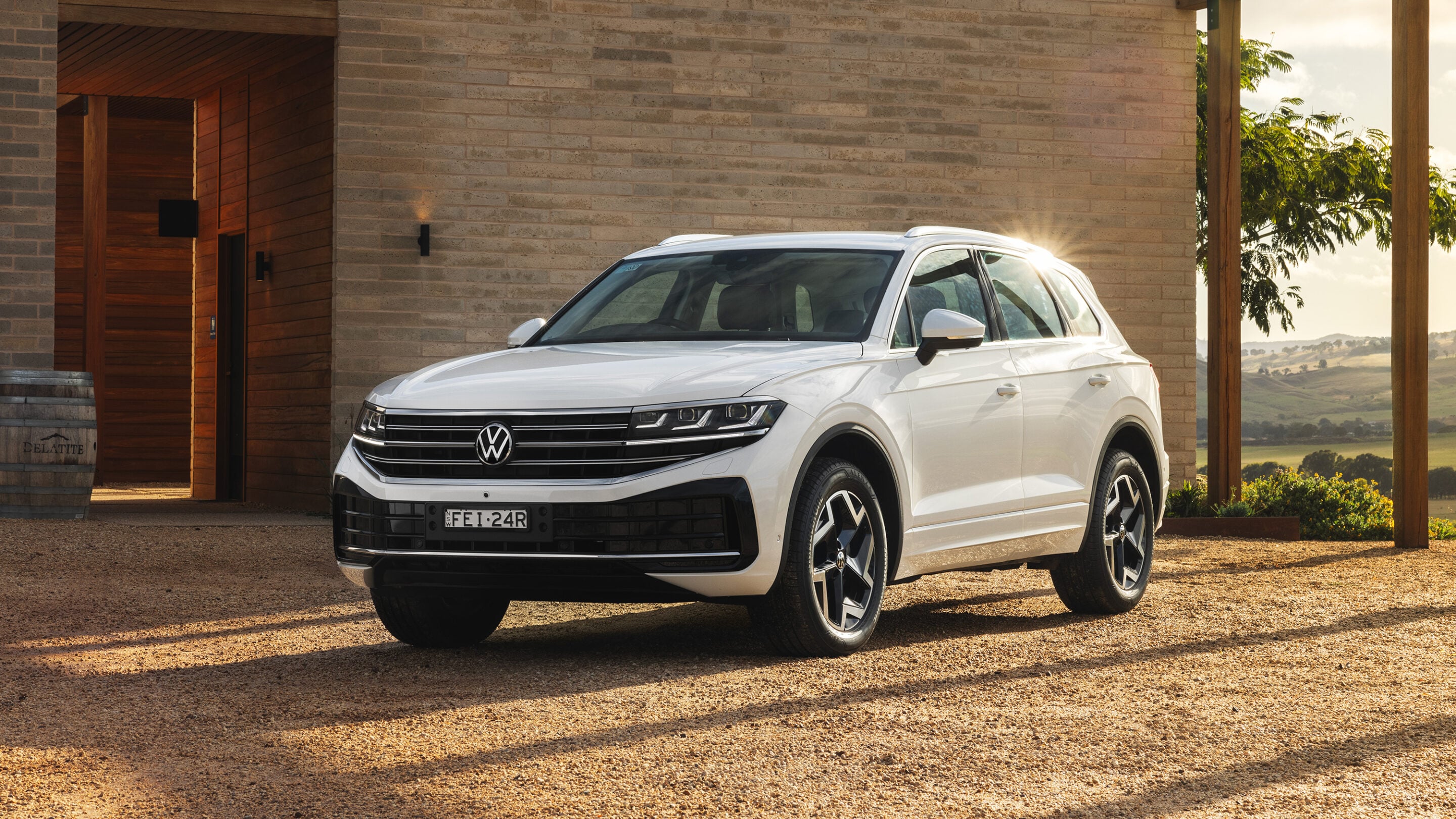
Volkswagen might not be at the top of your list of luxury German car brands, but Mein Gott in Himmel did the Touareg make a decent fist of proving otherwise.
The erstwhile Volkswagen flagship was, to put it simply, impressive. From its handsome design, beautifully crafted cabin, to the effortless torque-laden 3.0-litre V6 turbo-diesel under the bonnet, the Touareg blurred the line between its mainstream reality and premium aspiration.
Certainly, it didn’t – and doesn’t – look out of place in a carpark full of Audis, BMWs and Mercs.
Inside, Varenna leather (the real stuff, not vinyl masquerading as ‘artificial leather’) sets off a spacious and well-appointed cabin that looks every bit the part of a luxury SUV from Germany. Sure, it missed out on third-row seating, but honestly, how often does anyone use pews six and seven in an SUV?
But its triumphal march came under the skin, a lusty diesel V6, mated to an eight-speed automatic sending drive to all four wheels.
‘Effortless’ is a word thrown around too easily when it comes to performance, but here, in the Touareg, it’s entirely apt. Few, if any, luxury SUVs I sampled throughout the year offered as much refinement and performance as VW’s flag bearer.
Whisper quiet around town, and lazily powerful out on the open road, the Touareg cossetted those fortunate enough to be along for the ride in serene comfort.
But as much I loved the Touareg’s style and sophistication, the buying public didn’t, leaving VW no choice but to confirm the end of its production. Sad.
Porsche 911 GTS T-Hybrid
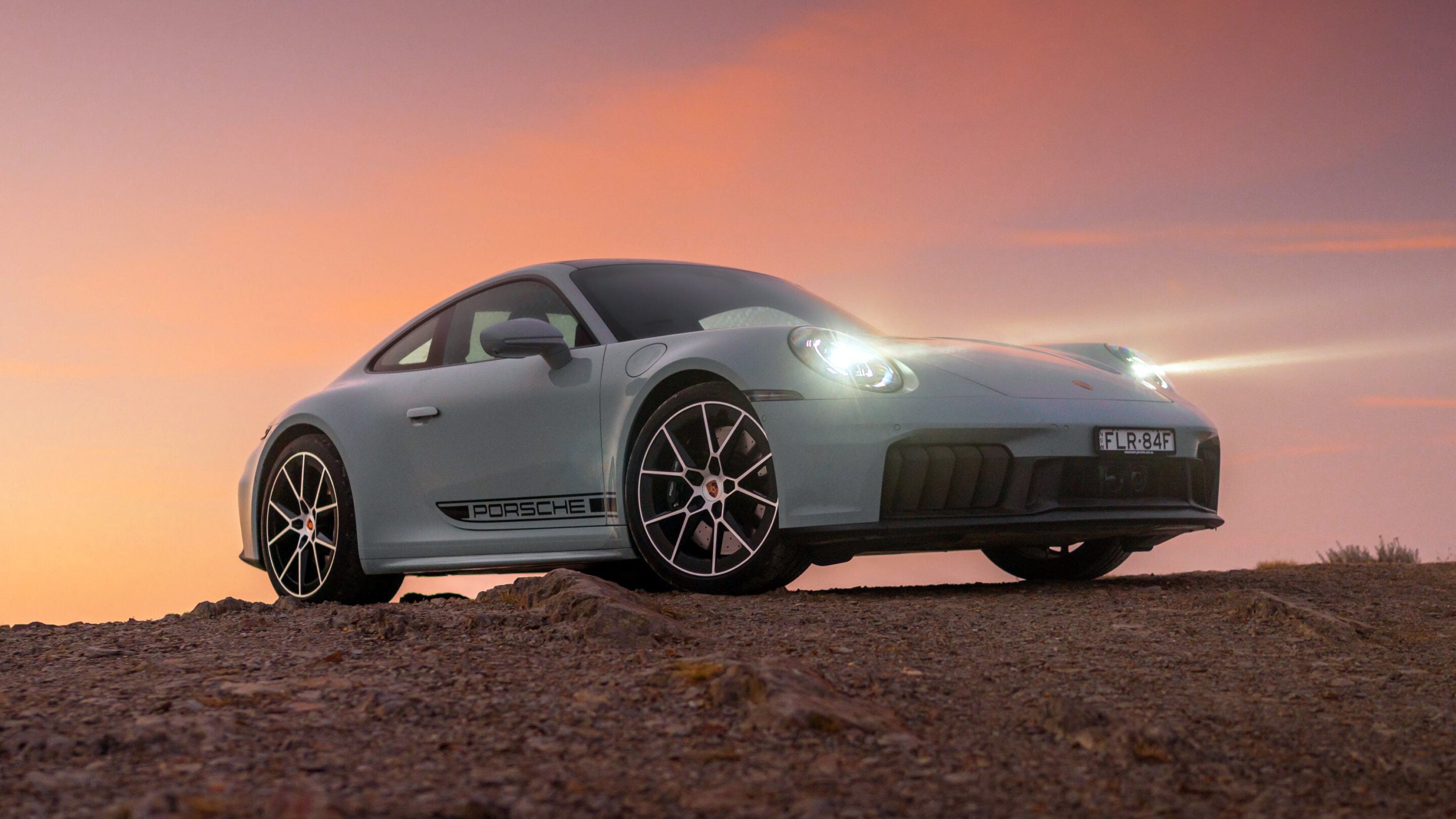
How to enrage a Porsche fan, part one. Tell them the next generation 911 will be a hybrid.
How to enrage a Porsche fan, part two. Reveal that the new hybrid 911 is actually better, by almost every measure, than the old non-hybrid model.
I remember reading comments from the Porsche keyboard warriors (or maybe worriers?) that a 911 hybrid would be ‘the beginning of the end’ for the talisman of the brand.
The reality couldn’t be further from that ill-founded concern because what Porsche has done by adding ‘hybrid’ to the 911 is nothing short of remarkable.
Forget the tree-hugging feels usually associated with hybrids. The T-Hybrid – as Porsche calls it – is not about eking out fuel consumption and reducing emissions. Instead, it exists only to boost performance. Two electric motors, one between the engine and transmission, the other nestled inside the 911’s turbocharger, combine with the 3.6-litre flat-six to propel the GTS from 0-100km/h in a stupid-fast three seconds flat.
But far from just a headline act, the 911 GTS is a remarkable car, one that blends everyday driveability with the scintillating performance the 911 is revered for, only better.
The ‘beginning of the end’?. Naah, just the start of a new chapter.
Mahindra XUV 3XO AX7L
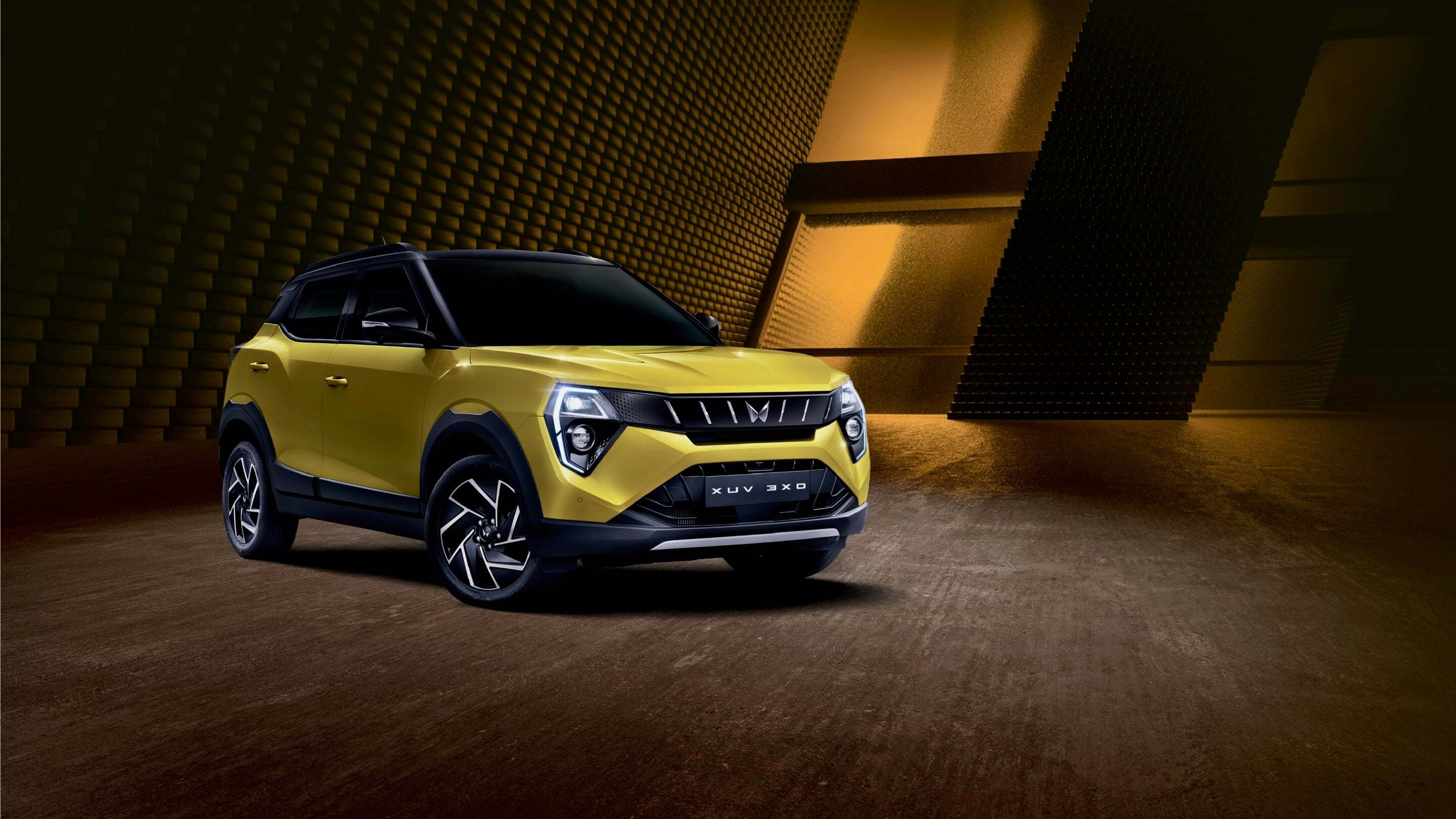
I’ll admit to being a tad sceptical when tossed the keys to the XUV 3XO from Mahindra. After all, I’d previously spent time in various SUVs from the Indian carmaker and while they proved perfectly adequate, left me feeling just a little bit whelmed.
So I expected more of the same from Mahindra’s smallest SUV, the city-sized XUV 3XO. I was wrong.
From the outset, the little urban brawler charmed with its thrummy 82kW/200Nm three-cylinder engine and slick six-speed auto as well as its nicely sorted suspension setup. That translated to a surprisingly competent drive experience, with excellent road manners and an unexpected nimbleness.
But perhaps its best selling point and why I reckon the XUV 3XO is such a little winner, is its $26,990 drive-away price. For that spend buyers score a nicely-designed cabin, with enough switches, dials and buttons to not leave you frustrated, all the tech modern owners expect and the cherry on top of a bonza Harman Kardon sound system.
For me, the Mahindra XUV 3XO is definitely 2025’s surprise packet.
Hyundai Inster Extended Range
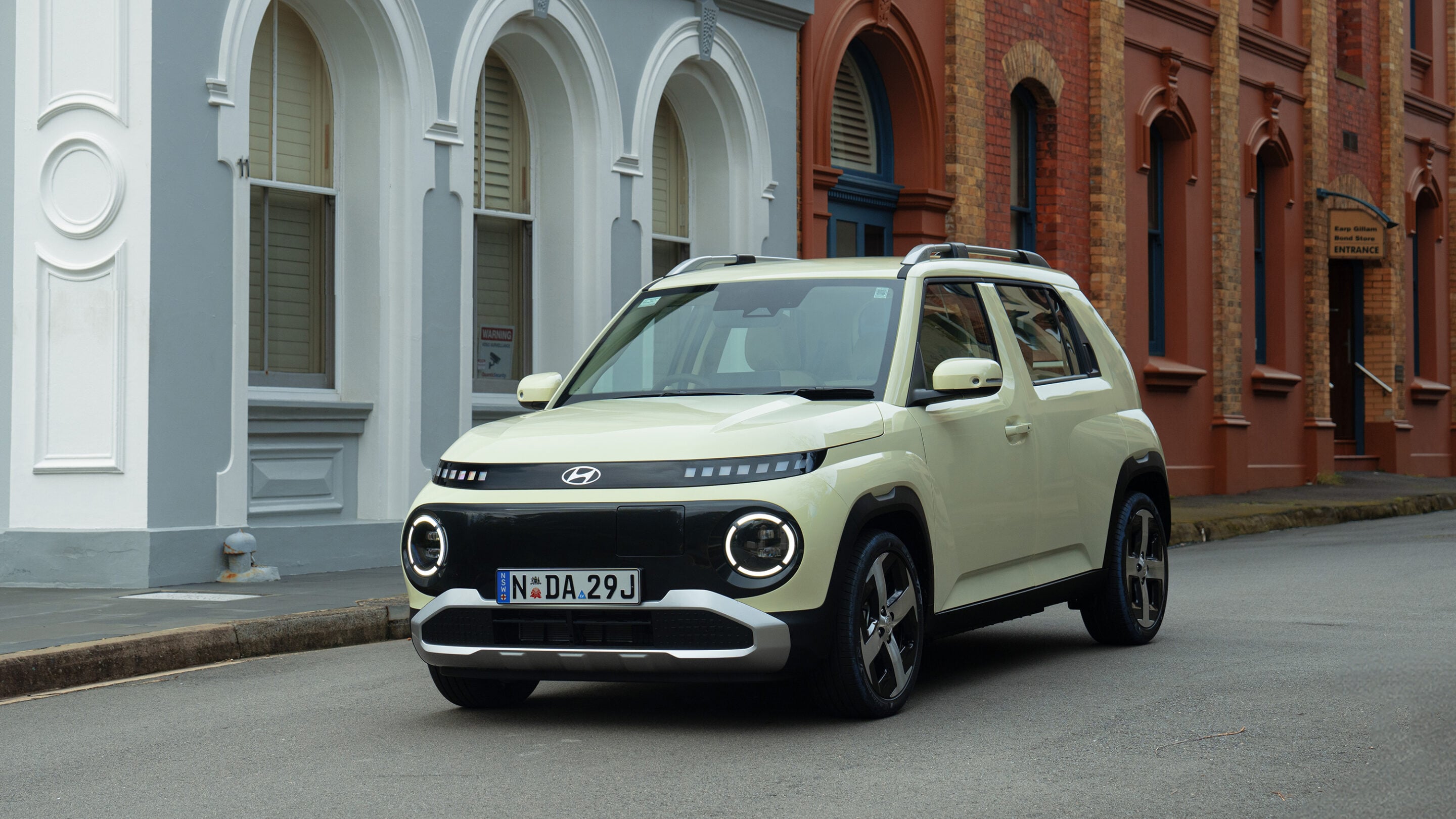
I’m a sucker for a cute city car and in 2025, I reckon none came cuter than the Hyundai Inster. This compact electric car from the Korean giant – the answer to a tsunami of ever more affordable small EVs from China – hit an awful lot of the right notes, especially for inner urban dwellers.
Wrapped inside its quirky styling and choice of bold colours, the diminutive Inster defied expectations with an incredible amount of space inside. Even the second row, so often an afterthought at this end size spectrum, brims with leg, knee and head room, thanks to its clever rear bench.
That funky exterior styling carried on inside where houndstooth cloth seats threatened to depose the original Golf GTI’s plaid trim as the chicest interior ever, even without the dimpled gear lever of the VW.
But perhaps the biggest surprise came out on the road, where the Inster proved a hoot to drive, its nicely-balanced chassis and decent damping offering plenty of thrills, even if its on-paper acceleration claim of 10.5s suggested otherwise.
The biggest drawback, of course, came at the cash register, the Inster starting from $$39,000 for the base-model and $42,500, for the extended range model. This at a time where small EVs from China are priced well under the $40k bracket and, with the arrival of the Atto 1 in recent weeks, under $25,000.
Still, if I had to nominate one car I would buy from this year’s alumni, it’s the Hyundai Inster. If only it was ten grand cheaper.
Jake Williams, Wheels staff journalist
Aston Martin Vantage
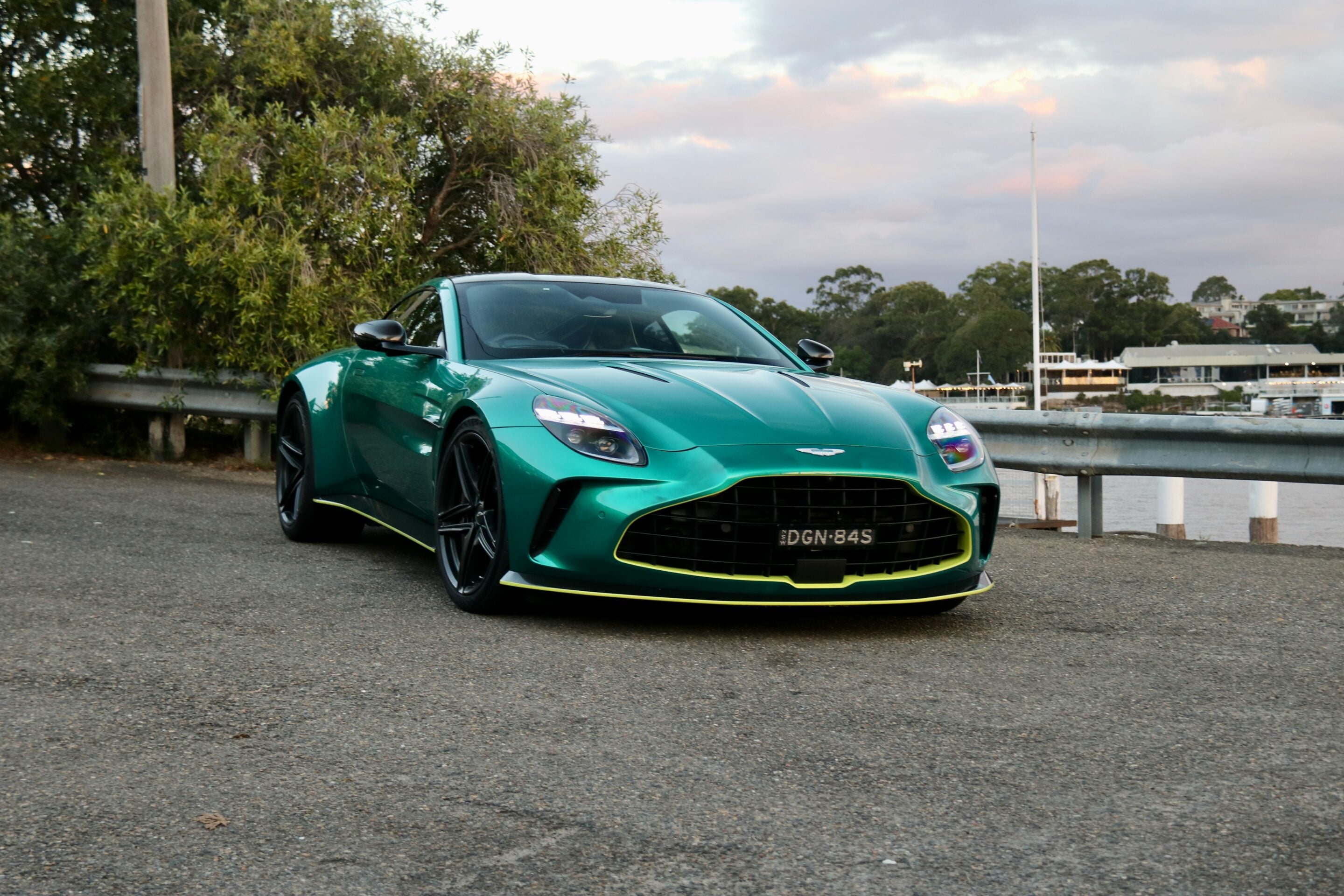
I had a big treat in my first few months at Wheels in 2025 with the launch of the new Aston Martin Vantage. Not quite an all-new car, the Vantage’s facelift is about as close as car makers get with a facelift – the front-end and cabin were completely redesigned and are far more modern than before.
But the real change with the Vantage is the uprated 4.0-litre twin-turbo V8 engine under the bonnet, which now makes a massive 489kW of power and 800Nm of torque. That makes it fast… really fast, its claimed 0-100km/h time of 3.5 seconds feeling almost pedestrian given how hard it accelerates. The top end claim is 320km/h, not that you’d see it in speed camera-obsessed Australia, but it feels entirely believable by the seat of your pants.
Its suspension set-up has also been upgraded to feel even sportier, while its 30mm-wider track, new Bilstein dampers and new multi-stage traction control system ensure that you stay on the road, even at hyperspeed. But it’s still a brute, and likes to be handled that way on track. Overall, it’s difficult not to recommend the Vantage if you’re lucky enough to have the funds for one.
Skoda Octavia RS
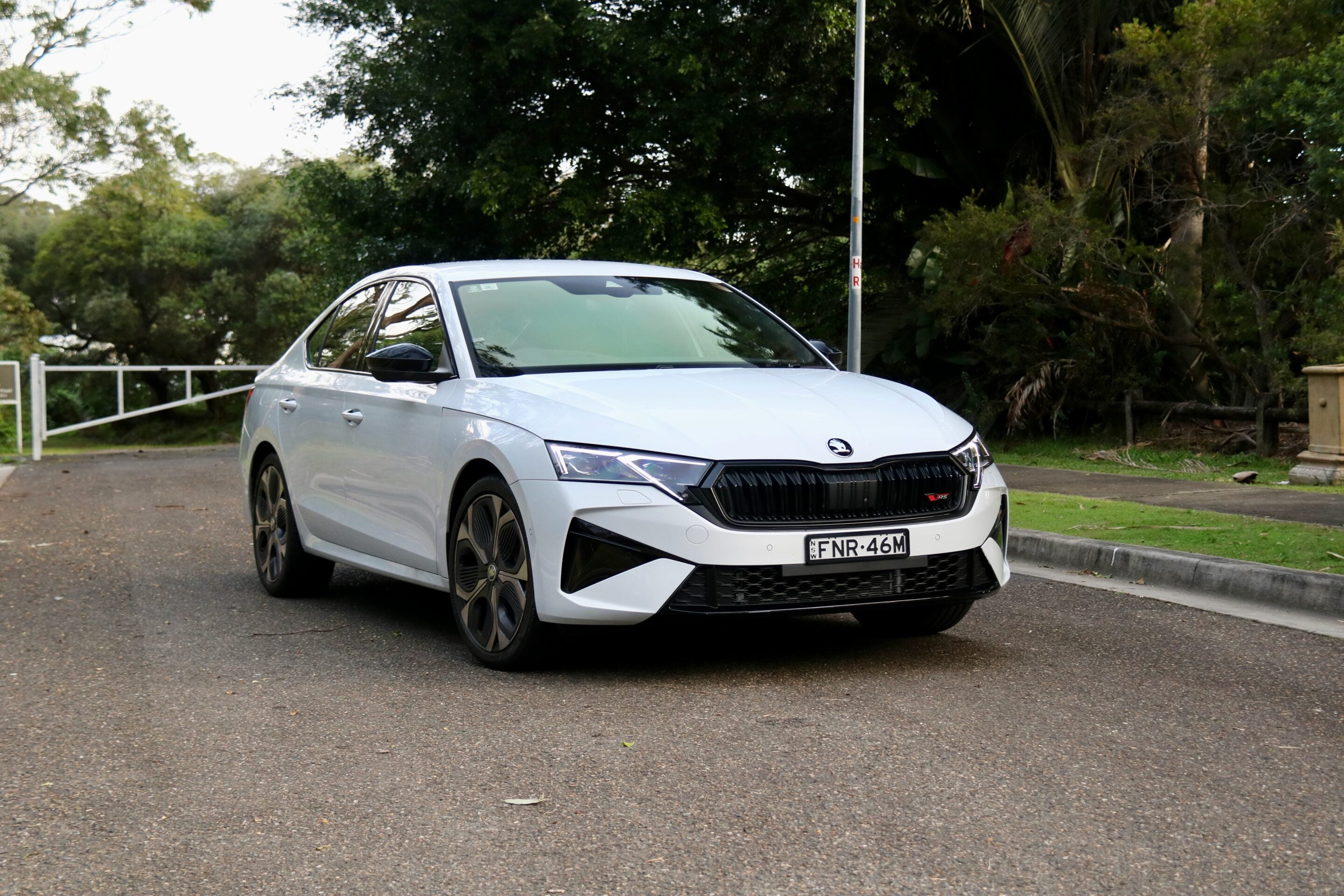
Back in the real world, I struggle to think of a more well-rounded sub-$70k car than the Skoda Octavia RS. True, it used to be less expensive and its manual option is sadly no longer available, but there really isn’t anything that the keen driving family person would want that the Octavia RS cannot do.
It takes usual Octavia goodness like fabulous practicality, great quality and refined driving manners and pairs it to the Golf GTI’s 195kW 2.0-litre turbo-petrol engine, lighting-fast dual-clutch gearbox and mechanical limited-slip diff for a great time on a windy road. Sure, it’s not quite as nimble as its German cousin, but can a Golf hatchback fit a family of five and all their junk for a road trip too? I think not.
The Octavia RS is not cheap, but it is loaded with standard features, including Matrix LED headlights, adaptive dampers, 19-inch alloy wheels, leather and suede upholstery, heated and electric front seats, a huge infotainment screen, head-up display and warm Canton audio. Don’t forget Skoda’s seven-year/unlimited km warranty in Australia too. Really, if you like driving and need a practical car, don’t even consider an SUV: the Octavia RS is the solution.
Hyundai Palisade
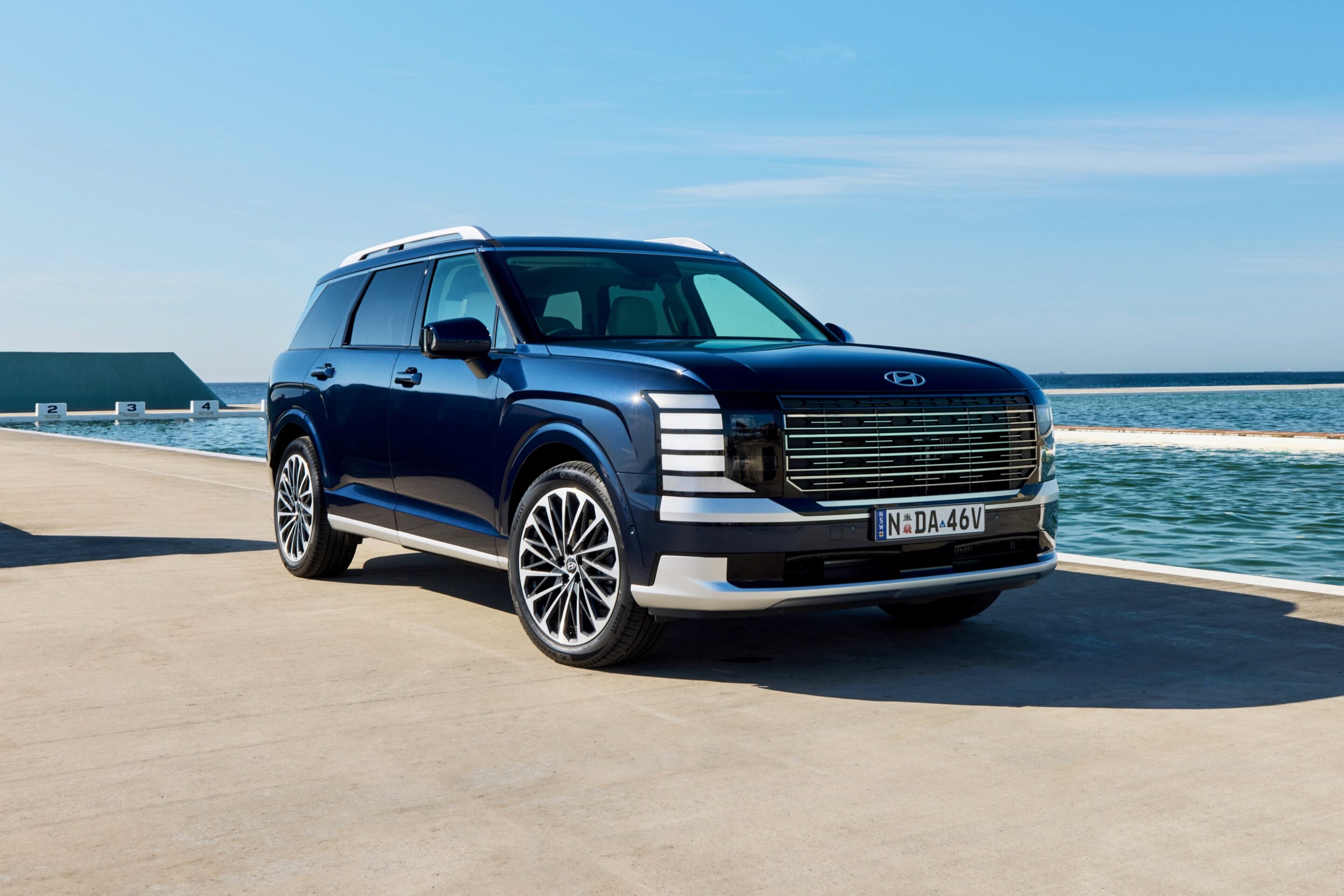
Hyundai has been on a huge product roll for the past decade and the Palisade is the latest in line for a glow up. Generation two is bigger and more expensive than generation one, but it’s also a massive step up in comparison. Take, for example, the interior. It’s now properly luxurious and shocks you with its quality and general feel throughout. Even in the third row, the materials and ambience are high-end, so much so that you have to wonder why Genesis exists.
Gone are the previous 2.2-litre turbo-diesel and 3.8-litre petrol V6 powertrains and in their place is a new hybrid system. The 2.5-litre turbo hybrid drivetrain makes impressive 245kW/460Nm outputs but is also reasonable for thirst at a claimed 6.8L/100km on the combined cycle. It’s a strong drivetrain, and is more than punchy enough to safely propel its eight passengers.
The new Palisade drives well too, with successful local tuning for the suspension and keen handling for such a big vehicle. Add in the very practical cabin with room for even tall adults in the third row and I reckon that Hyundai has got a winner on its hands.
Hyundai i20 N
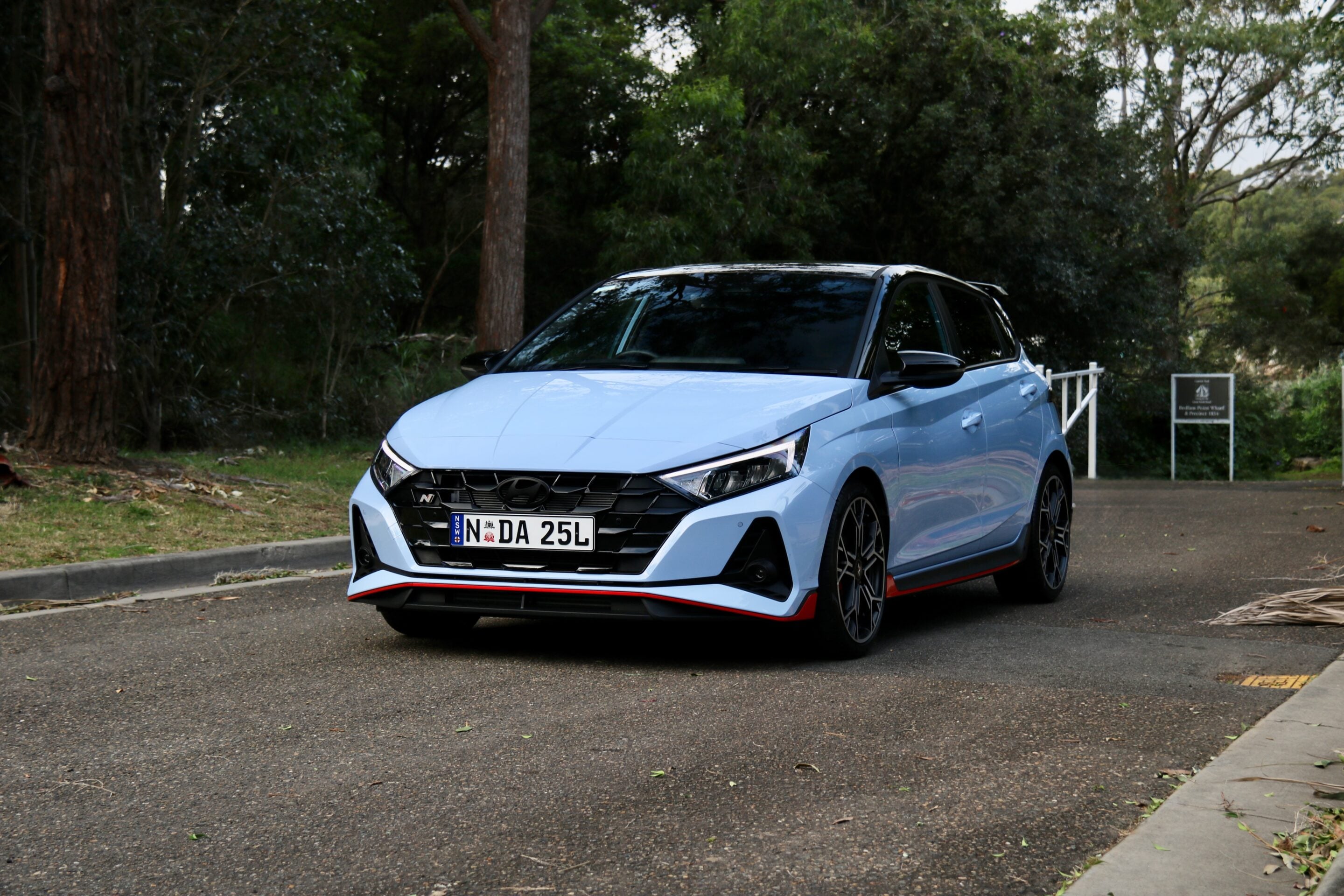
Here’s a fun fact: did you know that Hyundai only makes the i20 N for two countries globally? That’s right, despite being built in Turkey, it’s no longer sold in Europe, nor any Asian market. Yep, the i20 N is only sold in Australia and New Zealand. That’s no surprise given how much our market loves performance cars, but of all the countries in the world, it’s made for just us (and NZ)? We should be honoured.
It’s not long for this world in its current generation, but the i20 N is one of the hot hatch greats of this century. The combination of a grunty 1.6-litre turbo-petrol engine, sweet six-speed manual, mechanical limited-slip differential and rorty exhaust sound like a winner, but add in the i20 N’s keen value equation, practical cabin and long list of features, and it’s a big shame that Hyundai hasn’t been able to make more for our market.
On the road, the i20 N is quite firm, but it’s an absolute riot moving swiftly from bend to bend with meaty controls and most of the aural drama you’d expect from Hyundai’s N division. Unfortunately, 2026 will see a new generation of i20 N, one that’s likely to be hybridised and fitted with an automatic transmission as standard. Because of that, I implore you to buy one if you’re in a position to because it’s a great ‘lil nugget as it is currently.
BMW X3 M50
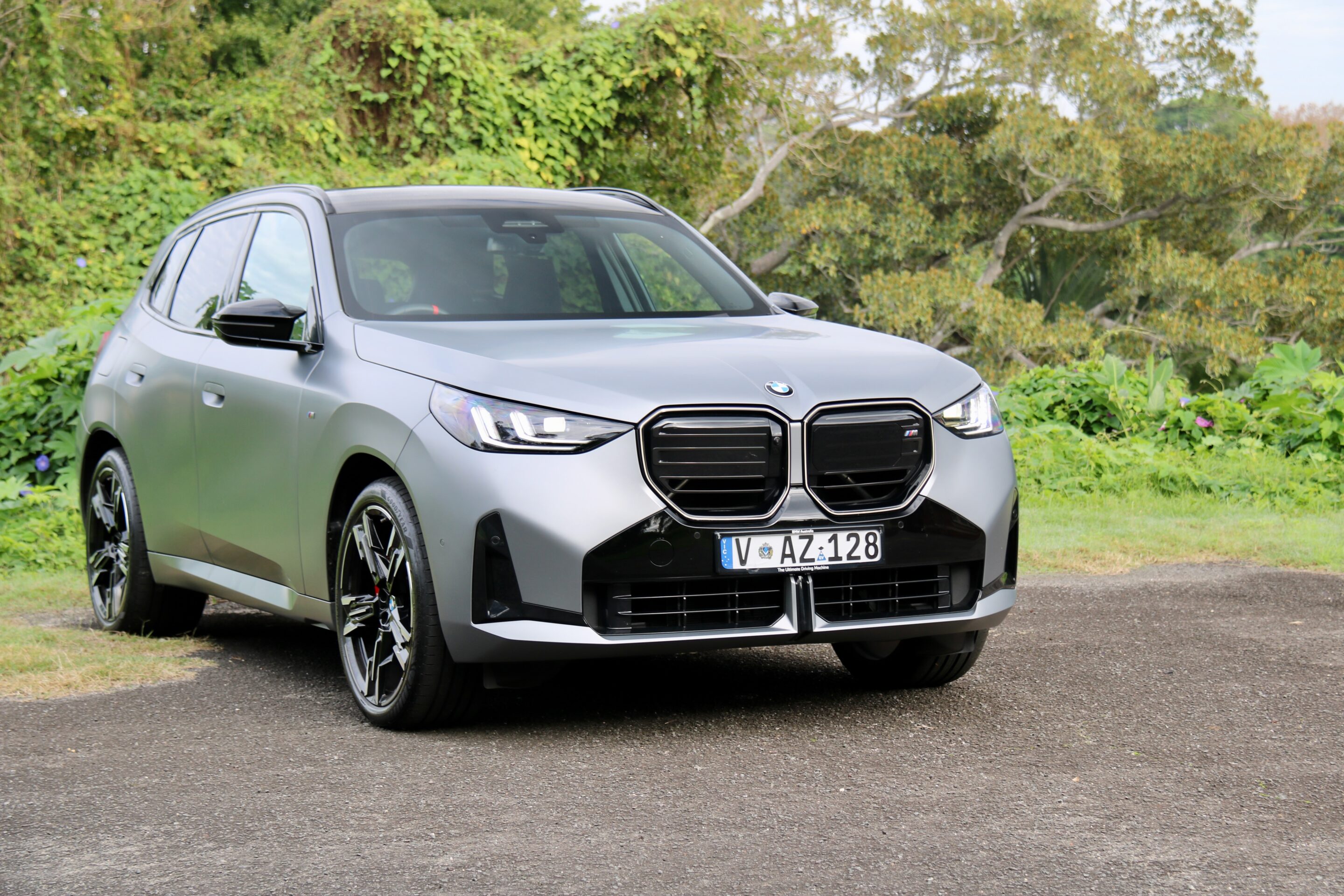
An M340i wagon makes a lot more sense to me than an X3 M50, but you can’t buy a new one locally so if you’re in need of more space but don’t want something too big, the X3 is your likely solution. Priced from $128,900 plus on-road costs, it’s not cheap, but it is very well equipped.
Then there’s its party piece: the iconic B58 3.0-litre turbo-six engine and ZF eight-speed automatic transmission pairing. Very quick (just 4.6 seconds to 100km/h), great to listen to and yet, somewhat efficient if you’re careful with it, the X3 M50 is a joy to drive. It handles excellently, as you’d expect for a BMW, but it’s also comfortable enough for our appalling roads.
The cabin of the new X3 is certainly more minimalist than the previous model, with masses of synthetic leather trim on the dashboard and a few ungainly plastics on the doors (like the handles). But it still all works well, and feels as solid as a BMW should. If you’re after a sporty mid-size luxury SUV, the BMW X3 M50 is one of the best at the moment – I’m still thinking about the M340i Touring though…
The Ferrari Amalfi may sit at the base of the Italian brand’s model hierarchy, but describing it as a “baby Ferrari” badly undersells what it delivers. This is a serious grand tourer with ferocious pace, cutting-edge technology and a level of usability that broadens its appeal beyond weekend blasts. Entry-level or not, the Amalfi still demands a price north of $380,000 before on-road costs – and it earns much of that asking figure.
Replacing the Roma in Ferrari’s global line-up, the Amalfi represents more than a light refresh. It introduces meaningful design, mechanical and ergonomic changes that justify a new name and a clearer identity. Ferrari positions it as a high-performance sports car that can be driven every day, and crucially, it feels engineered with that brief front of mind.
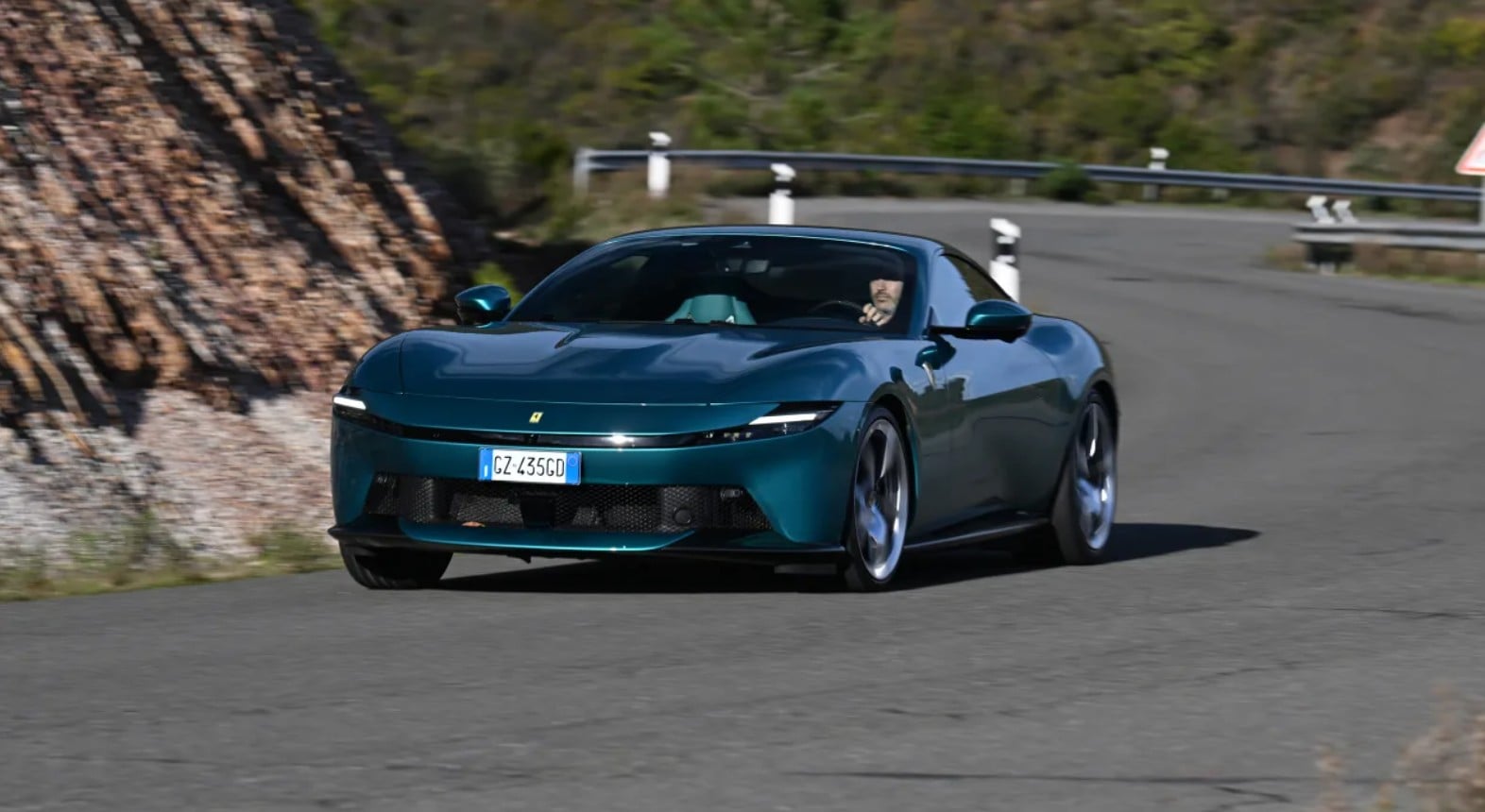
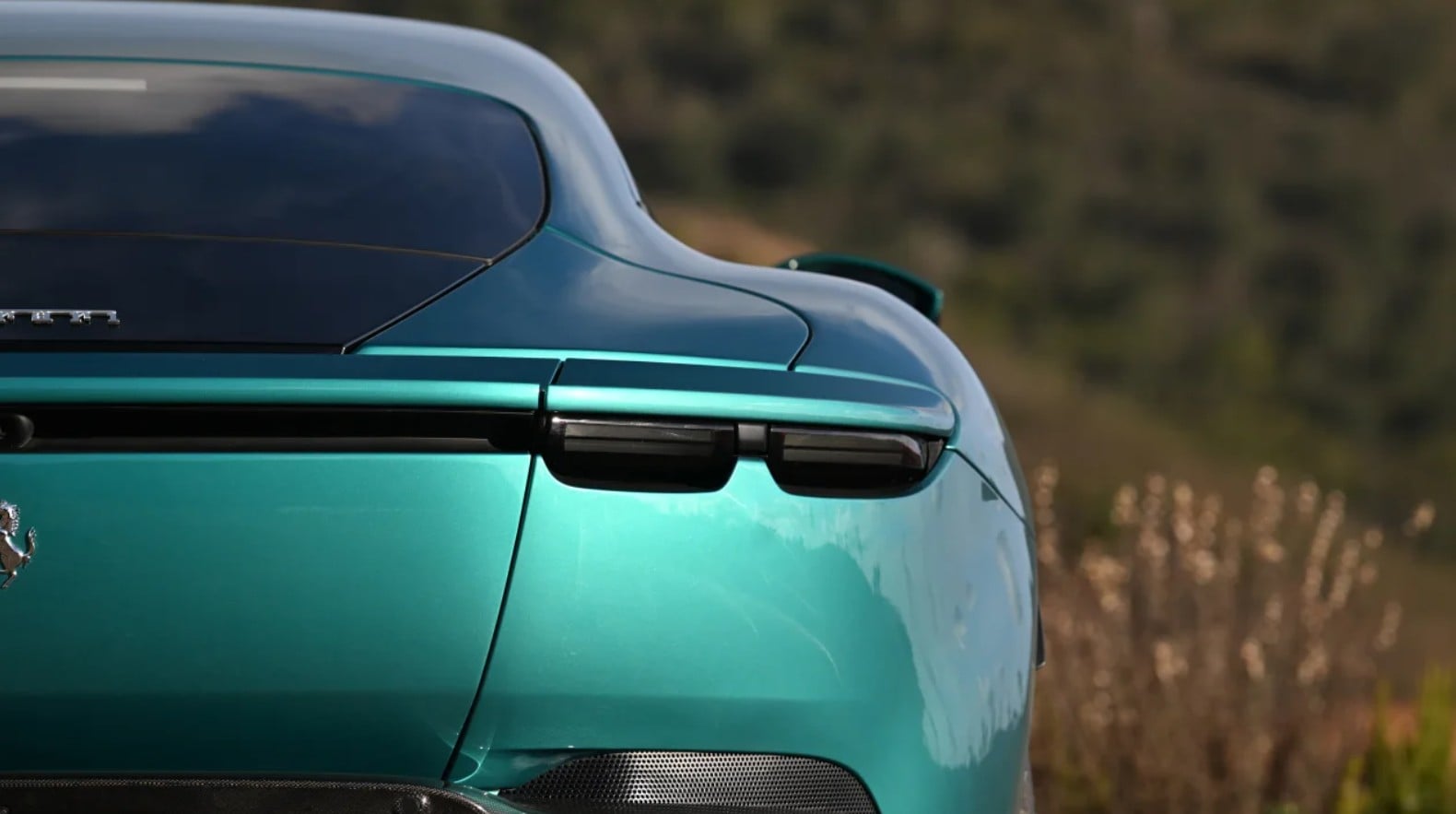
Visually, the Amalfi adopts a cleaner, more modern look. The front end is pared back with slim headlights linked by a subtle black strip stretching across the nose, while the rear design has been tidied for a more cohesive appearance. It’s understated by Ferrari standards, but still unmistakably exotic.
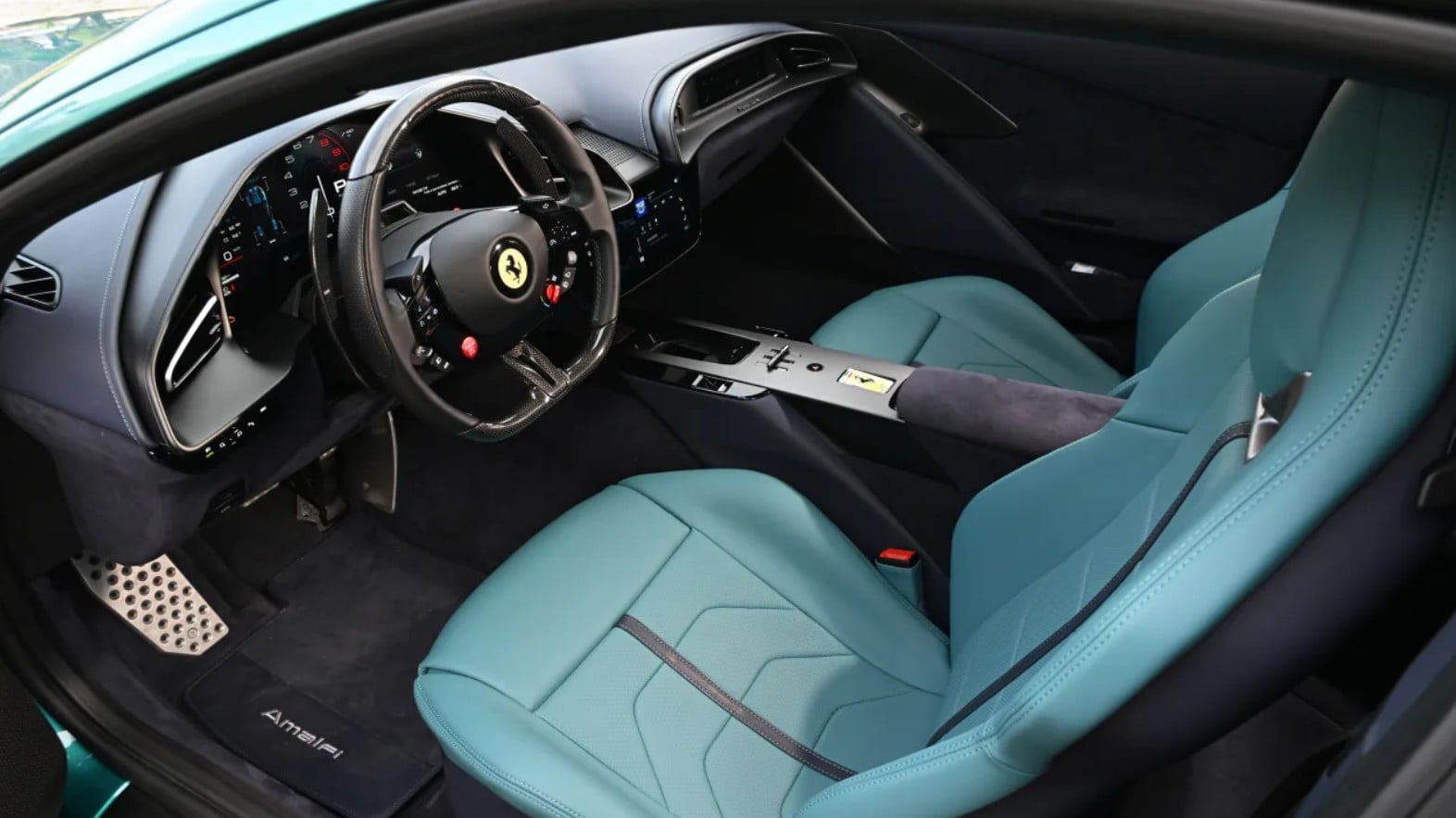
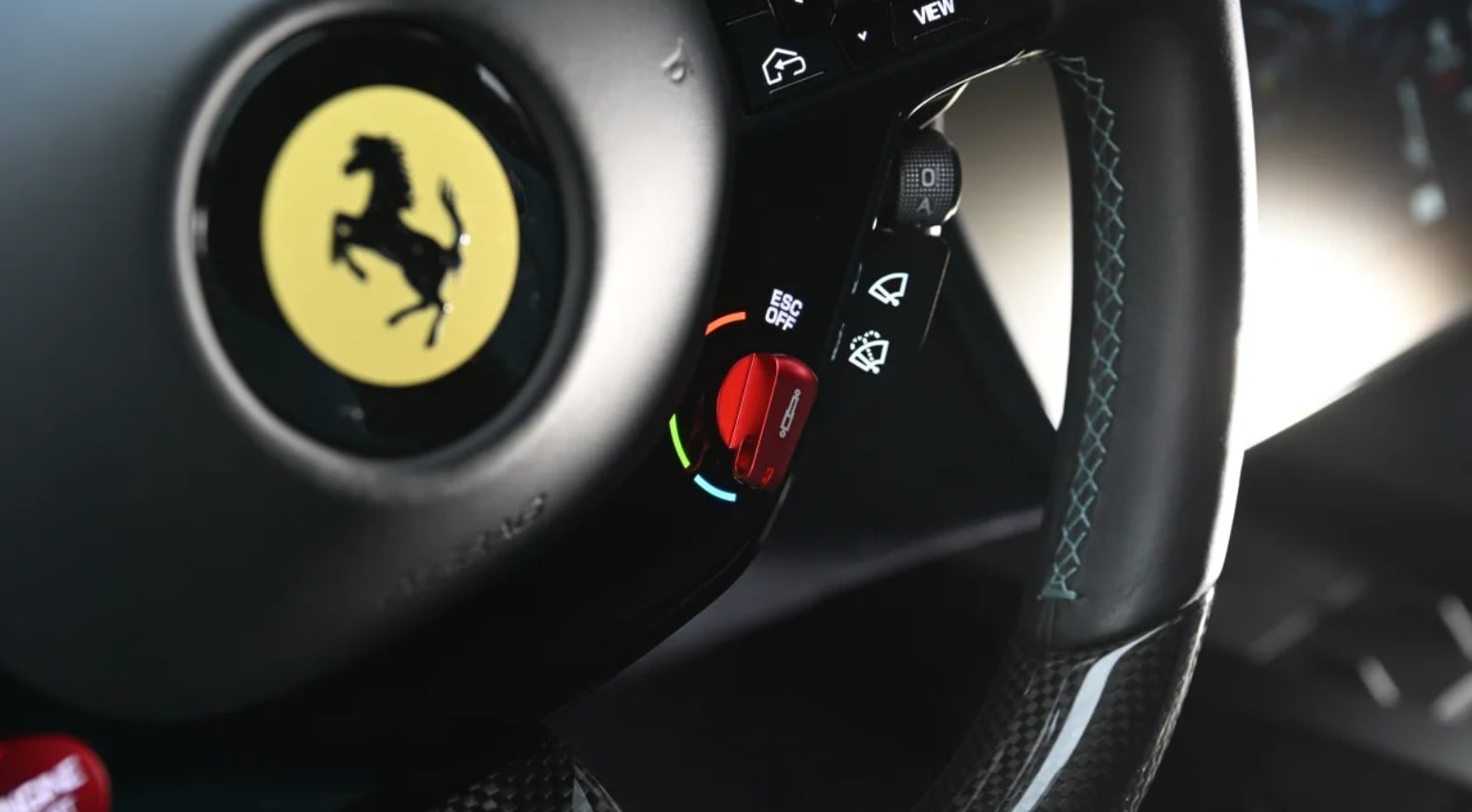
The most obvious improvements are found inside. Ferrari has ditched the awkward portrait-style touchscreen of the Roma in favour of a wider, landscape-oriented display that’s better integrated into the dash. Apple CarPlay and Android Auto are now standard, and usability has taken a big step forward. Just as importantly, Ferrari has responded to criticism of its touch-heavy steering wheel by reintroducing proper physical buttons, along with a prominent red starter button. The result is a far more intuitive and tactile driving environment. Existing Ferrari owners can even retrofit the new wheel, albeit at considerable expense.
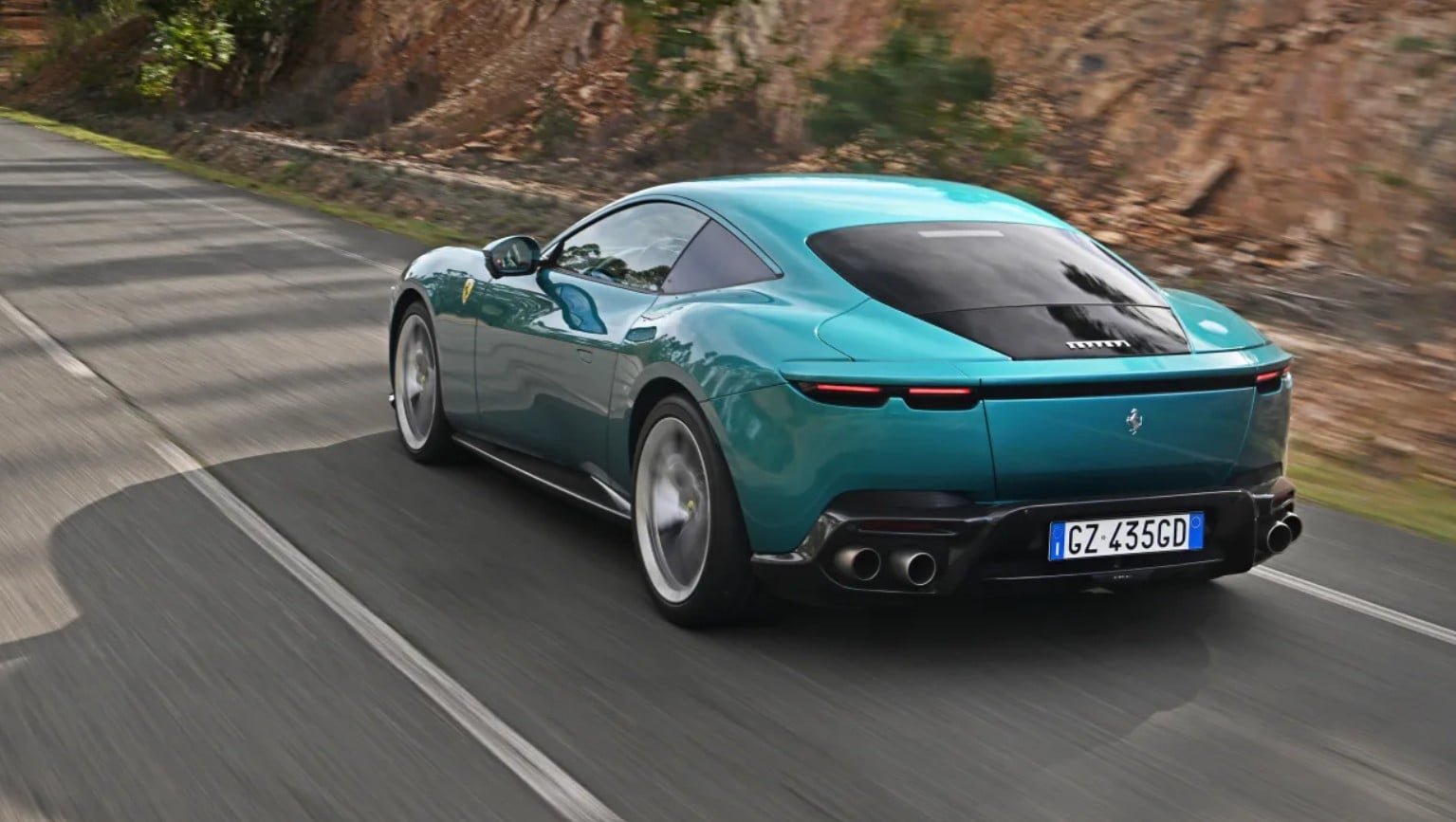
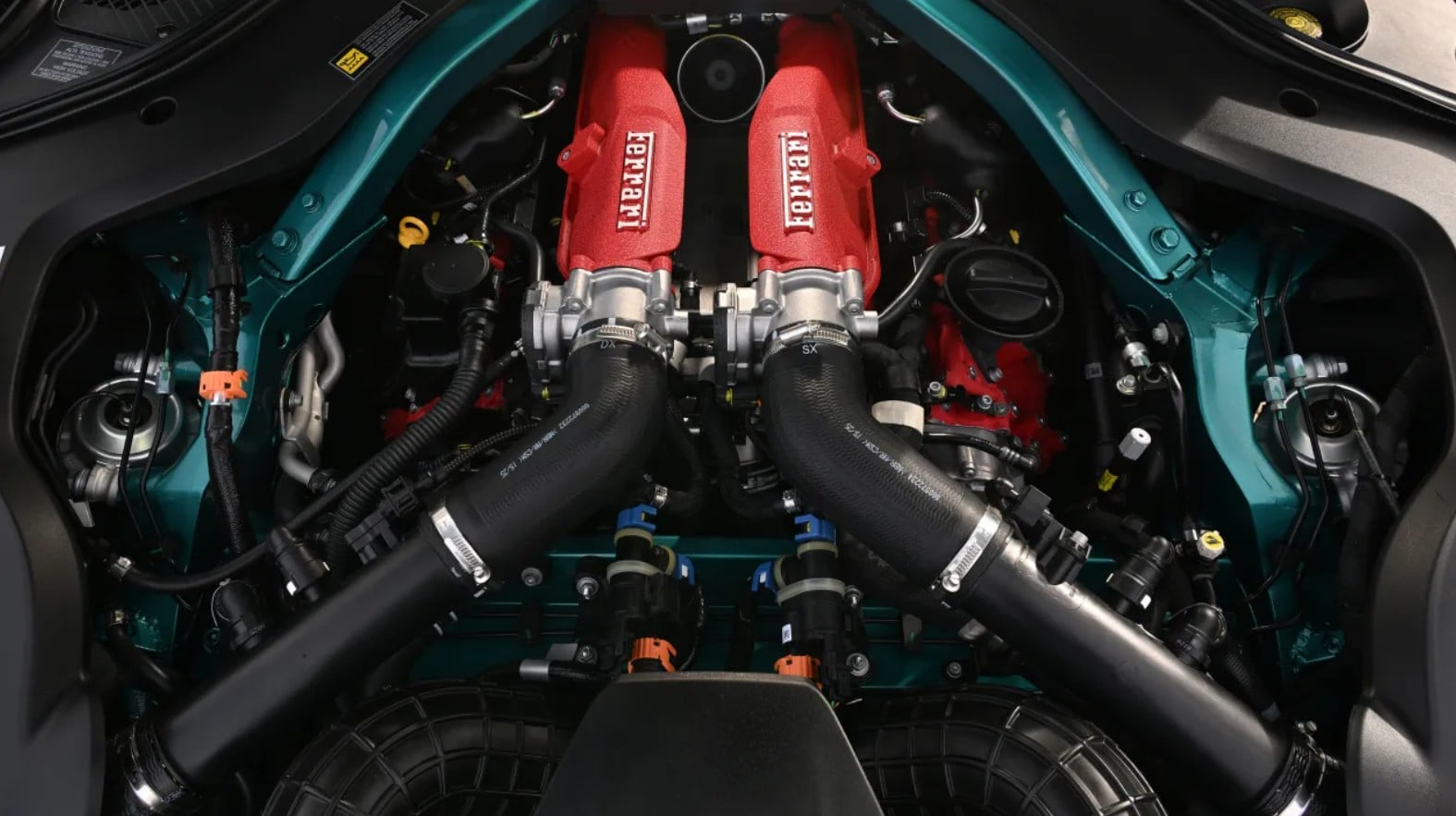
Power still comes from Ferrari’s familiar 3.9-litre twin-turbocharged V8 mounted behind the front axle. For the Amalfi, it’s been revised to produce around 471kW – up from roughly 456kW – along with a hefty 760Nm of torque. Drive is sent exclusively to the rear wheels through an eight-speed dual-clutch transmission. Hardware upgrades include a new ECU, lighter camshafts and a reworked engine block, all contributing to sharper responses and stronger performance.
Ferrari claims the Amalfi is capable of pushing close to 320km/h, while the 0–100km/h sprint is dispatched in just 3.3 seconds. These figures place it firmly in supercar territory, regardless of its “entry” positioning.
Aerodynamics have also been refined, with a discreet, active rear spoiler that automatically adjusts its angle to suit driving conditions. At high speeds, it can generate up to 110kg of downforce at around 250km/h, improving stability without compromising the car’s clean design. The Amalfi also benefits from Ferrari’s latest electronic differential, updated Side Slip Control (SSC 6.1) and a new brake-by-wire system.
On the road, the Amalfi strikes a compelling balance between approachability and excitement. Compared with rivals like the Aston Martin Vantage or Porsche 911 Turbo S, it feels less intimidating and more progressive at the limit. There’s huge performance on tap, but it’s delivered in a way that builds driver confidence rather than demanding constant vigilance.
The familiar Manettino dial allows the driver to cycle through Wet, Comfort, Sport, Race and ESC-off modes, each progressively loosening the car’s electronic safety net. With the Side Slip Control system working in the background, the Amalfi can be coaxed into playful oversteer without feeling unpredictable or spiky.
The V8 soundtrack is ever-present but refined. Ferrari says a new electronically controlled exhaust bypass valve adapts the sound to driving conditions, and while it may not be as thunderous as some rivals, the metallic edge and rising intensity give the Amalfi plenty of character. It’s engaging without being antisocial.
Performance feels anything but diluted. The engine is flexible enough to rely on mid-range torque, allowing most driving to be handled in higher gears, while the transmission shifts quickly and cleanly via fixed carbon-fibre paddles. The sensation of downshifting into a corner, hearing the engine flare and feeling the chassis settle, is a reminder of what makes high-performance combustion cars so special.
Steering is electrically assisted but impressively direct, offering more feedback than many modern sports cars. The new brake-by-wire system may raise eyebrows, but once acclimatised, it delivers excellent modulation and precision, particularly when driving hard. Initial low-speed sensitivity fades as pace increases, revealing strong stopping power and fine control.
Ride quality is another highlight. Even without selecting Ferrari’s ‘Bumpy Road’ setting, the Amalfi remains composed over rough surfaces, coping admirably with challenging tarmac. Road noise, however, is more noticeable at highway speeds, largely due to the massive 285-section rear tyres. It’s a reminder that this is still a sports car first, GT second.
Inside, the Amalfi feels like a genuine step forward from the Roma. Material quality is high, ergonomics are improved and the updated infotainment system is far more user-friendly. The seats remain on the firmer side, but provide excellent support during enthusiastic driving. A large central rev counter and clear digital displays ensure key information is always front and centre.
Practicality remains limited, as expected. The rear seats are suitable only for small children or extra storage, while the 273-litre boot is sufficient for a weekend away, comfortably accommodating luggage and camera gear.
Ultimately, the Ferrari Amalfi proves that “entry-level” is a relative term. It blends immense performance with everyday usability, modern technology and a more intuitive driving experience than its predecessor. It may be the most accessible Ferrari in the range, but there’s nothing modest about what it offers – except, perhaps, by Maranello’s own lofty standards.