
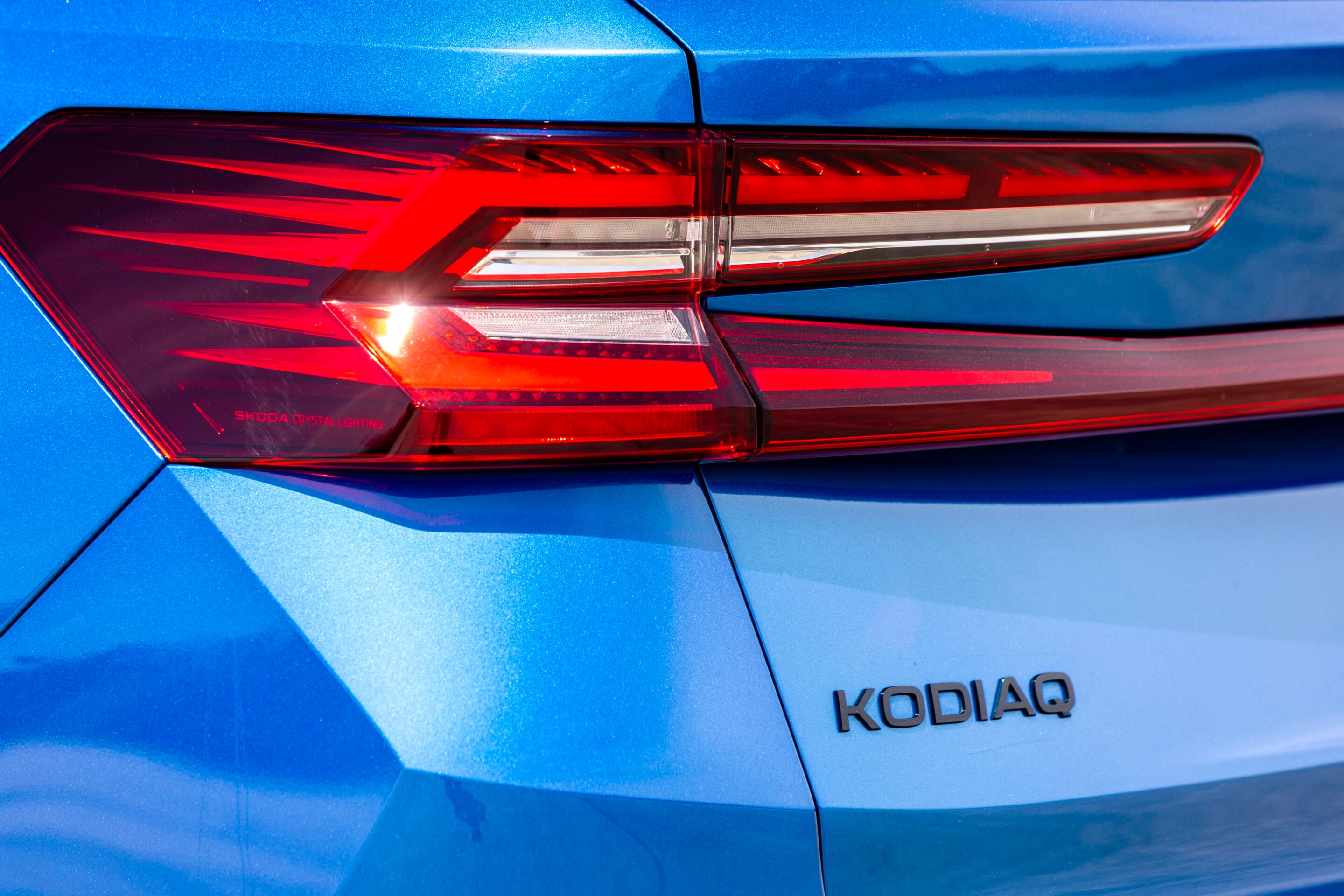
After the first stint behind the wheel of the Skoda Kodiaq the judges – all of whom had tested the previous iteration – were unanimous. It looks and feels like a Skoda Kodiaq. There’s been no deviating from the well-worn path and in effect, that’s a good thing because the Kodiaq has always been a sensible choice for family buyers.
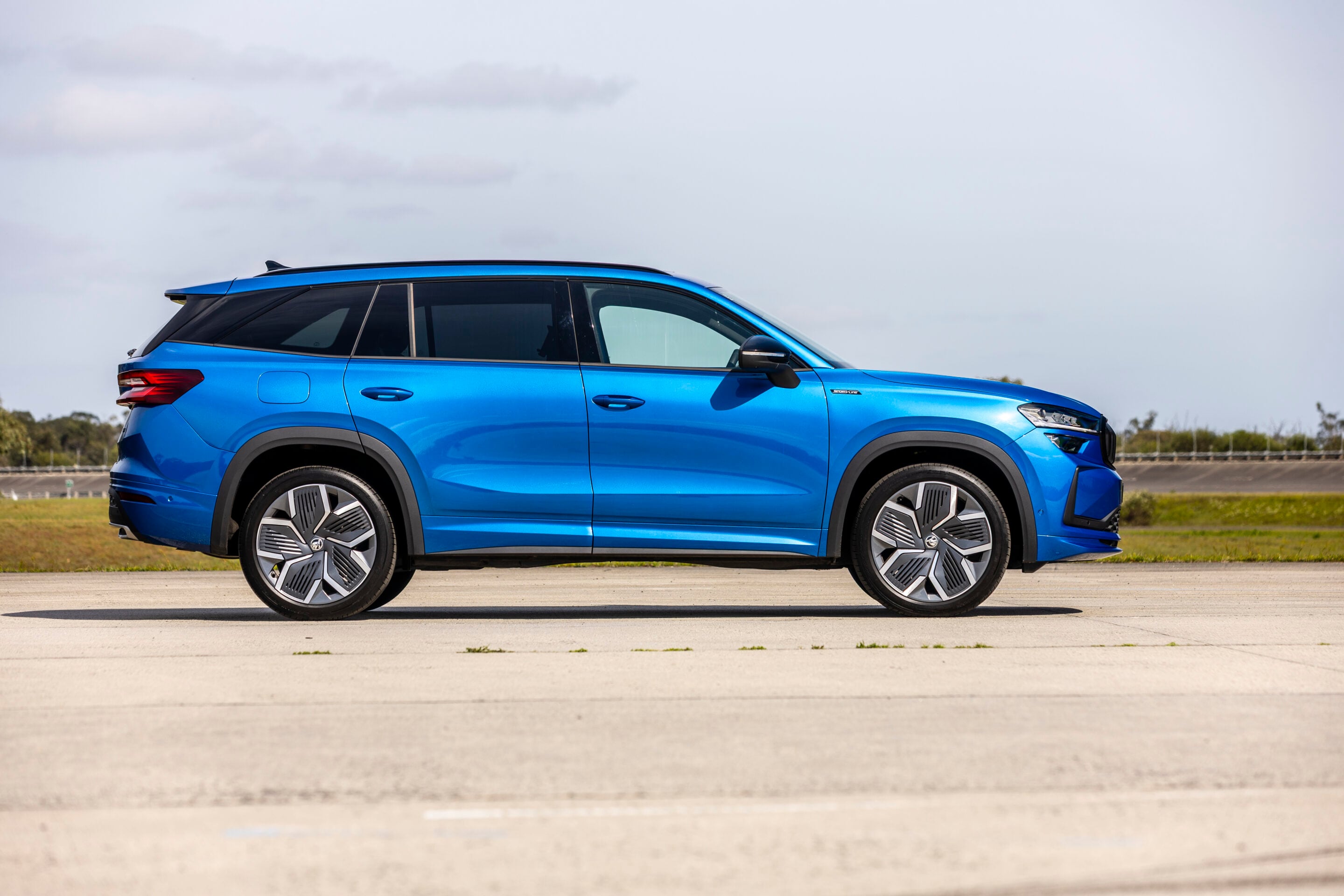
With its seven-seat capability and clever cabin, the Kodiaq aims to take down stablemate Volkswagen with a more sensible approach. For buyers the issue is that the price is almost lineball. The Sportline 4×4 on offer for Wheels COTY starts from $58,990 before on-road costs, and at the time of testing was available for $61,990 drive-away. Which means it’s effectively price positioned right alongside the Tayron. Like the Tayron though, the model we’re testing here sits in the middle of the three-model Kodiaq range.
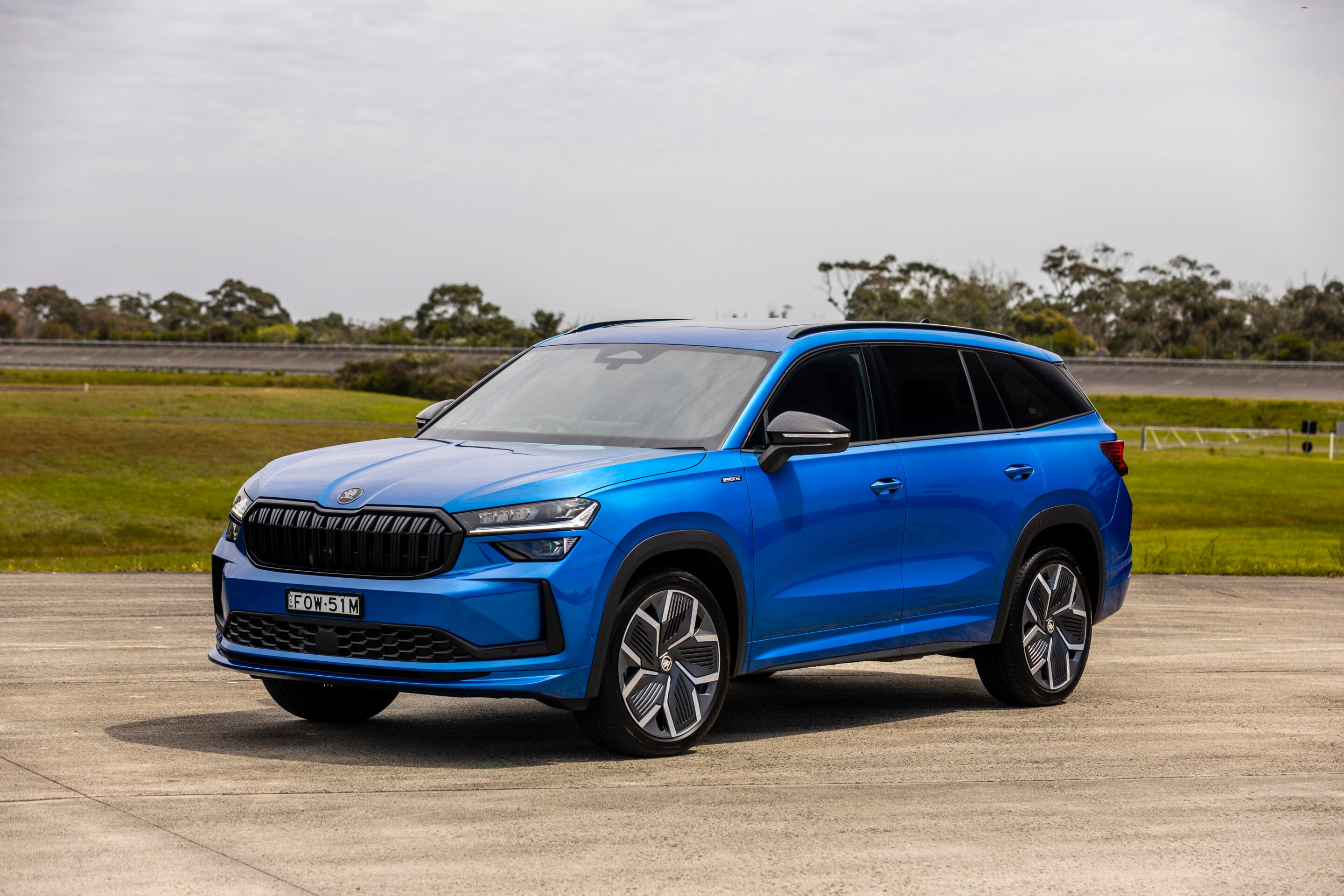
Skoda does run hard on its value proposition, though, countering Volkswagen’s five-year warranty with seven years of coverage and capped-price servicing to match. The question is whether Skoda’s value-first proposition has been eroded somewhat by its climbing price? The judges agreed that it has.
“As good as the Kodiaq is, why wouldn’t you just buy the Volkswagen?” That statement was uttered more than once during testing.
One reason for choosing the Skoda, however, are its points of difference, from its exterior looks to the set-up of the cabin. Some people might simply prefer to have a less recognisable badge in the driveway. Make no mistake, it is still a well-executed Volkswagen Group large SUV, and very deserving of making it to Round Two.
The judges noted Kodiaq’s excellent cabin, not just its design but its layout and positing of key controls and storage, as well as the choice of materials throughout. The seats are comfortable for occupants of all heights and sizes, visibility is a strong point, and the cabin has a bright, light-filled ambience to it – vital for family road trips.
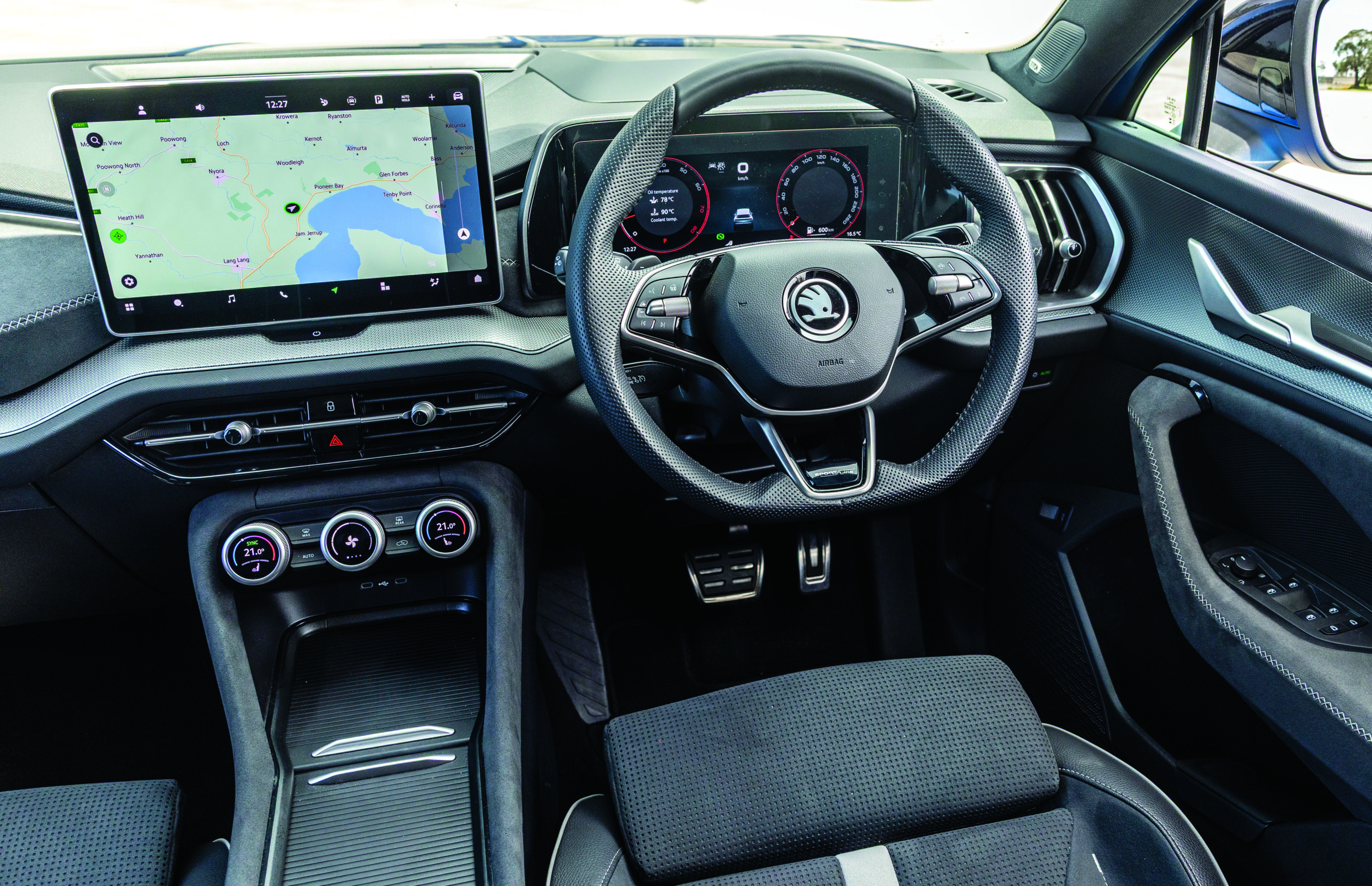
Skoda has stayed the course we’ve come to expect from the brand – that is, clever and functional use of space with a point of difference. The hidden umbrella in the door that some owners don’t even know about is there, the rubbish bins that sit neatly into the door pockets, and general storage options throughout the cabin that ensure this large SUV makes a hell of a lot of sense for family buyers.
Like the Tayron, the judges noted the lack of space for adults in the third row and its ‘occasional’ use scenario. That aside though, the cabin is excellent, with wide door apertures opening to comfortable second-row seats that don’t feel like a park bench, where the kids will be able to charge their devices and store smaller items.
Kodiaq’s control systems and infotainment are an exercise in the simplicity of the old way of doing things. And an example of why the old way isn’t always a bad way. There are enough buttons and dials to ensure crucial functions can be easily and quickly accessed, with no messing around via the touchscreen. Call the judging team curmudgeons, but when you’re trying to change the radio station or blower fan setting on the fly, the presence of conventional controls is a godsend.
Having said that – and this is where Skoda’s smarts come to the fore – the Kodiaq has still delivered a slew of modern amenity in the form of a whopping 13-inch infotainment screen and configurable 10-inch driver display. Proof once more that you can cleverly mix old with new, and the controls that Skoda has included all work as they should without any recurring issues.
The judges liked the smoothness that’s been engineered into Skoda’s seven-speed dual-clutch, one of the better DCTs you’ll experience. Around town, in low-speed driving, the Kodiaq is precise and punchy, easy to manoeuvre and feels almost a segment smaller than it is. There’s a lightness and response to the controls that means it doesn’t feel heavy or underdone.
Out on the open road though, you’ll notice the heft a little more. The run from 80-110km/h, for example, when you roll out to overtake, doesn’t feel as sharp as the power delivery does lower down in the rev range. The judges also thought the Kodiaq didn’t deal with the nastier bumps as easily as the Tayron did, when driven back-to-back over the same rutted surfaces, and agreed that the ride tune erred more on the side of firm than it did comfort.
The other departure from Tayron, as noted by the judges, was the amount of noise intrusion into the Kodiaq’s cabin at highway speed. On coarse chip surfaces especially, tyre roar and wind noise make their way into the cabin, disturbing the otherwise comfortable confines.
On the positive side of the ledger, as noted by all the judges, was the way in which the Kodiaq feels tied down and balanced on any road. Turn in is sharp and reliable, the steering is excellent, and the firm suspension takes significant effort to unsettle. “You’d never feel bad about owning this car,” Gover said. “It’s a great thing to drive on roads that most Aussies will take on a family road trip.”
Skoda’s challenge now then – as solid as this revised Kodiaq is – is to keep punching from its higher price point against more premium badges that aren’t much more expensive. There’s more space and more equipment now with the Kodiaq, but it does come at a price. The third row is something of a novelty, like Tayron, and for now there’s no hybrid version when the segment almost demands it.
The updated Kodiaq is another high-achieving SUV from a manufacturer that has made a habit of impressing. It’s just not quite high achieving enough to get right to the pointy end of this year’s Wheels Car of the Year.
Specs
| Price | $58,990 (MSRP) $61,990 (DA) |
|---|---|
| Body | Five-door, seven-seat SUV |
| Drive | All-wheel drive (on demand) |
| Drivetrain | 2.0-litre four-cylinder turbo petrol |
| Power | 140kW @ 4200-6500rpm |
| Torque | 320Nm @ 1400-4100rpm |
| Transmission | 7-speed dual-clutch automatic |
| Consumption | 9.2L/100km |
| Kerb weight | 1885kg (tare) |
| 0-100km/h | 7.9 sec |
| L/W/H/W-B | 4758/1864/1659/2791mm |
| Boot space | 289L/794L/2035L |
| Warranty | 7yr/unlimited km |
| Safety rating | 5 star ANCAP (2024) |
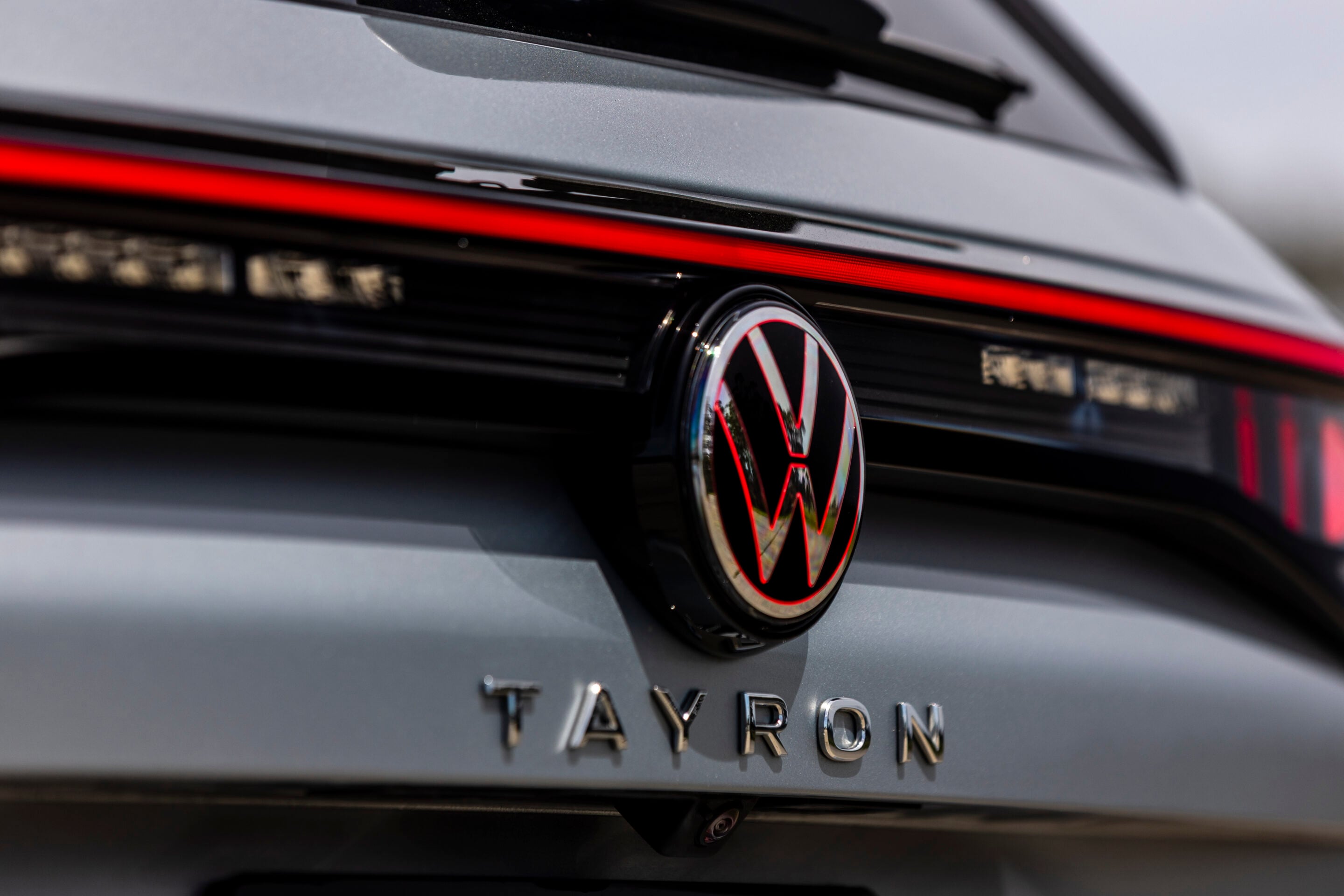
The release of the Volkswagen Tayron (pronounced Tie-ron) earlier this year was fascinating. And that’s because the Tiguan Allspace has been a sales success in Australia, yet Volkswagen made the big call to replace its popular, well-known nameplate with a new name that needs to be promoted in a very crowded marketplace. The resulting SUV was present at Lang Lang for Wheels COTY testing.
From the minute the first drive loops were done, all judges knew this was yet another high quality Volkswagen SUV.
“Feels solid,” said Robinson. “Drives beautifully,” said Gover. “It’s got some punch to it,” said Morley.
And yet, none of that is surprising. Wheels is accustomed to expecting quality from a new Volkswagen, and that’s exactly what the Tayron delivers.
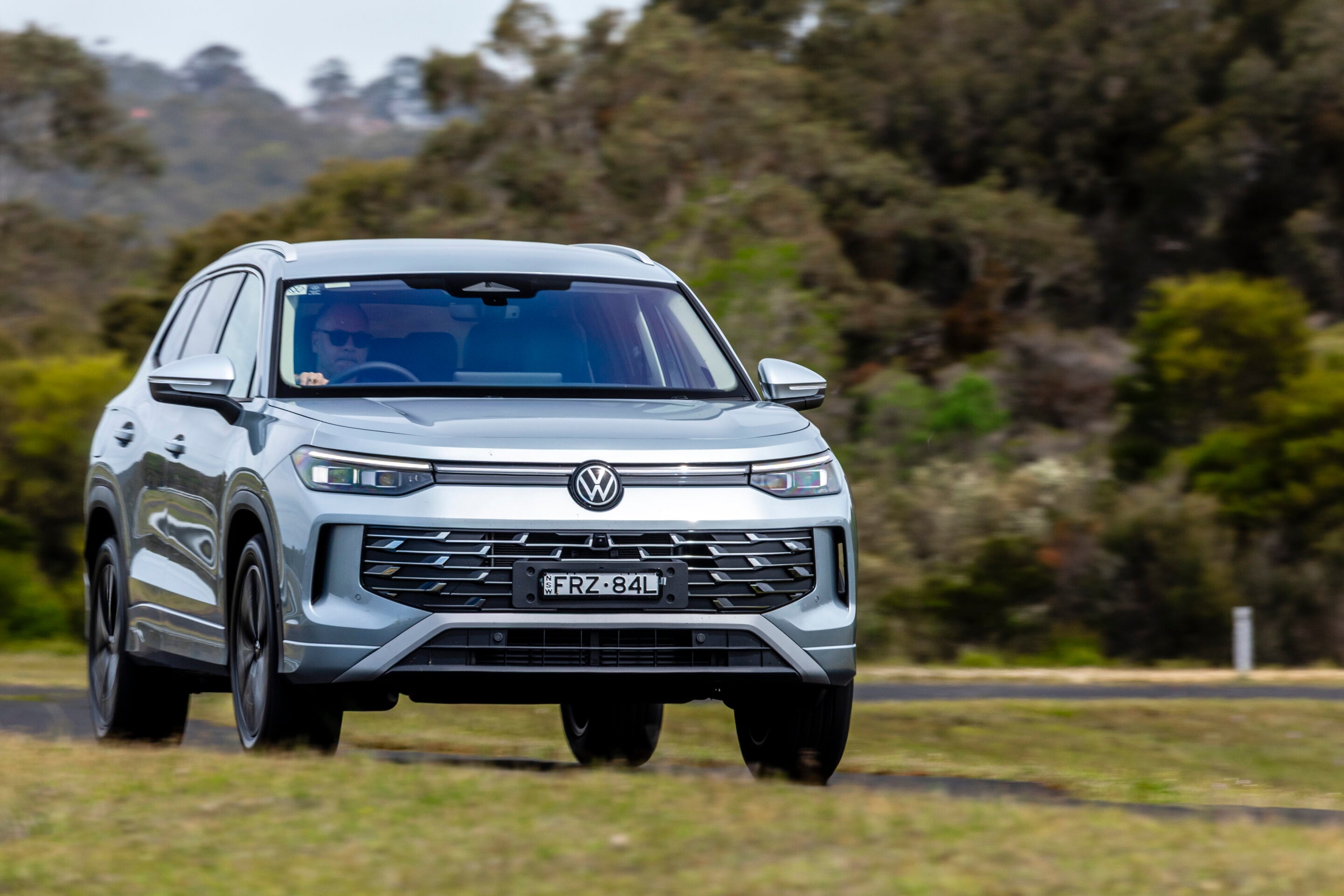
The judges had the 150 TSI Elegance for COTY, with a starting price of $59,490 before on-road costs. If you think you’re getting a lot of SUV for the money, you are. On demand all-wheel drive, a 2.0-litre four-cylinder turbocharged petrol engine, and 150kW/320Nm. Volkswagen’s seven-speed dual clutch is a good one, and the claimed 7.7L/100km is frugal for an SUV of this size and capability. Keep in mind, too, you can get into a Tayron for as little as $48,290 before on-road costs.
Tayron has value covered, then, with a sharp starting price, a long list of standard equipment, and a cabin that features both quality design and choice of materials.
Factor in Volkswagen’s strong value on the second-hand market and it means you know exactly what you’re in for if you buy a Tayron. Value plays a large part in why it gets down to the pointy end of the field this year.
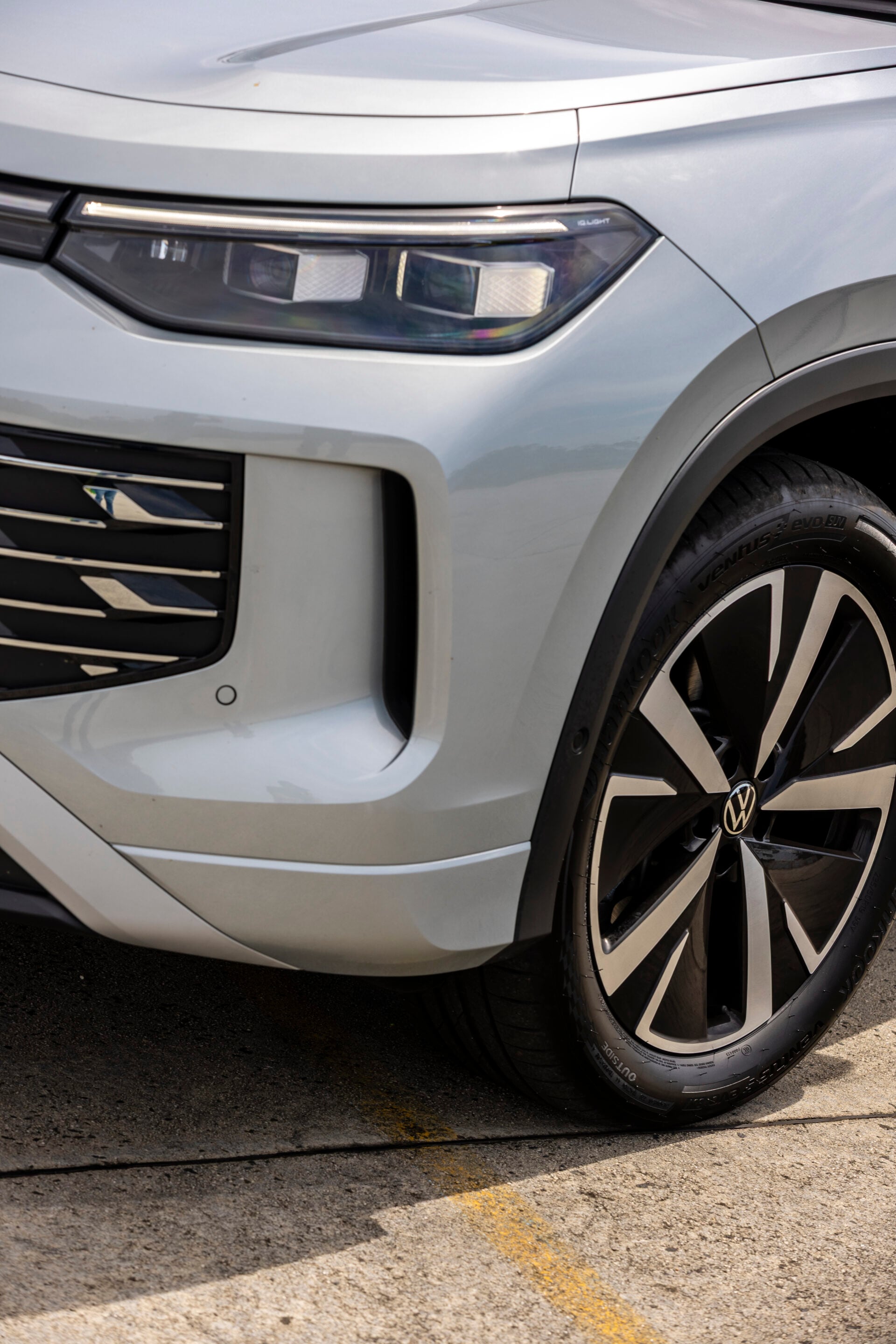
In a sea of otherwise unassuming SUVs, the judges noted the new Tayron’s ability to stand out from the crowd with classy styling and distinct LED light signatures that ensure you won’t blend into the crowd. Once again, Volkswagen has delivered an upmarket yet understated design that ensures the buyer will feel good about their purchase. While that’s not something you can measure, it is important in a style-conscious world.
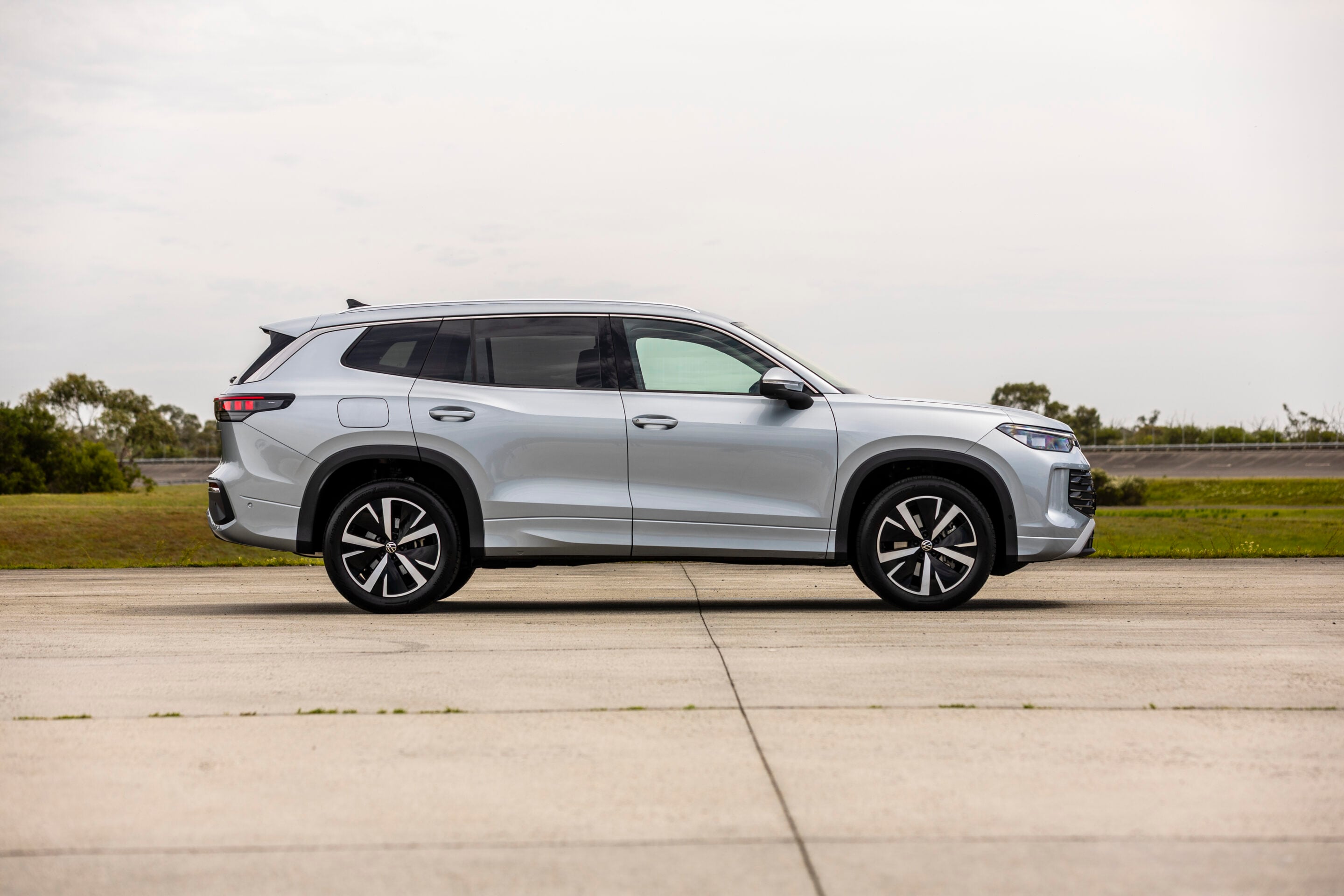
Australians are hoovering up SUVs in this segment in ever increasing numbers. Where once sedans dotted the highways and cities, medium and large SUVs are now the default family vehicles of choice, and Volkswagen has made a habit of delivering a luxury experience for those buyers without the luxury price tag. The desire for a three-row SUV is rabid, to say the least, and the Tayron picks up where Tiguan Allspace left off in this space.
Attention to detail inside the cabin is a strong point. That’s true of even the base 110TSI model, but the 150TSI we have on test is well-equipped, premium and comfortable. Volkswagen has fitted acoustic glass for example, to ensure noise intrusion is controlled as much as possible. “It’s genuinely quiet out on the road loop,” Gover said. That sense of insulation on any road surface, at any speed, only adds to the premium feel when you’re on the move.
The judges all noted the third row as ‘occasional only’ for adults, but it will work for those of you with children you need to get to and from the weekly sports run. There’s a five-seater as well, with luggage space for that model coming in at 885L, countering the seven-seater’s 850L. The judges loved the near-flat floor in the boot space, too, meaning it’s actually useful for loading and transporting items.
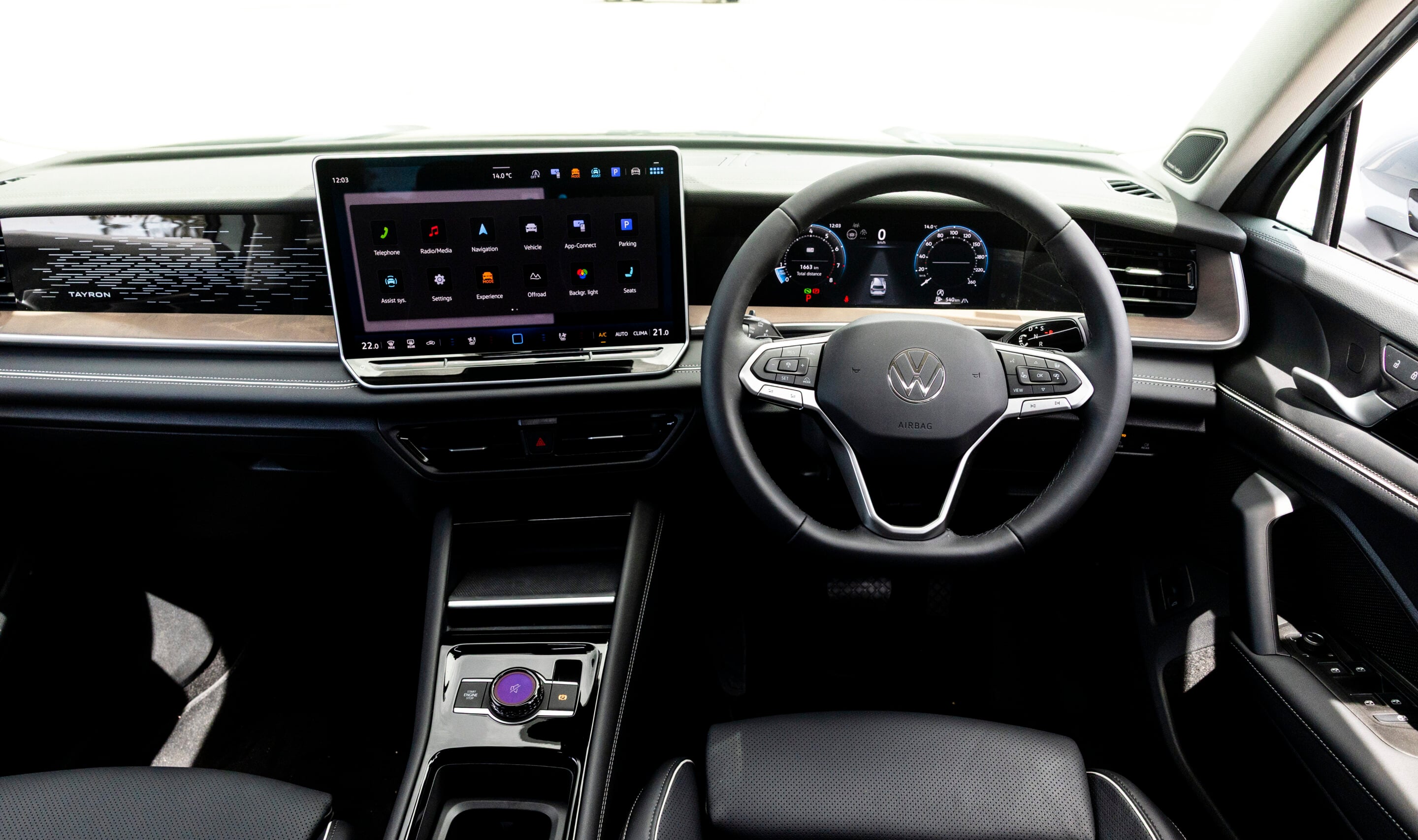
Volkswagen’s tech inclusions work, repeatedly and reliably, and are easy to decipher for first timers. How about putting the wireless charge pad somewhere that isn’t in the way? Done. On the subject of smartphones, connect yours and it stays connected. Numerous other manufacturers could take note of Volkswagen’s determination to blend modern technology with a more traditional feel to the gauges and controls, listening to feedback for some previous models that had moved too far in the direction of less is more. As such, there is nothing to fear in regard to working out and getting familiar with the controls you’ll be using on a daily basis.
Where the Tayron impressed the judges most, though, was from behind the wheel. Keep in mind, the range topper gets 195kW/400Nm Golf GTI power, but this 150TSI is plenty fast enough on any road, even in variable conditions. Lang Lang offered up its customary four-seasons-in-one-day variability, and even torrential rain couldn’t unsettle the Tayron when hustled at speed.
The 150TSI is absolutely more rapid and more capable than this segment calls for. Grip is excellent, bump insulation is impressive and the general ride quality – especially when added to the level of cabin refinement – is beautifully catered for. The Tayron’s steering, brakes and all-round balance are fantastic, meaning you have to try hard to unsettle it.
Tayron isn’t perfect, but it’s fair to note that no COTY entrant is, even if some come close. As noted, the third row seats are tight, pricing – despite still being sharp – is a steeper ask than the Tiguan Allspace it replaces and the R-Line suspension tune is not for Australia’s less than average outer urban road network.
The Tayron is however, an excellent SUV from a manufacturer making a habit of executing them. It takes a deserving seat out of the early rounds of judging for this year’s COTY and ensures family buyers can still have some fun behind the wheel. Even the judges will admit the Tayron is evidence that SUVs don’t need to be bloated and boring. Still, it’s not quite a Car of the Year.
Specs
| Price | $59,490 (MSRP) |
|---|---|
| Body | Five-door, seven-seat SUV |
| Drive | All-wheel drive (on demand) |
| Drivetrain | 2.0-litre four-cylinder turbo petrol |
| Power | 150kW @ 6000rpm |
| Torque | 320Nm @ 1500-4400rpm |
| Transmission | 7-speed dual-clutch automatic |
| Consumption | 7.7L/100km |
| Kerb weight | 1829kg (tare) |
| 0-100km/h | 7.4 sec |
| L/W/H/W-B | 4792/1853/1674/2791mm |
| Boot space | 345L/850L/1905L |
| Warranty | 5yr/unlimited km |
| Safety rating | 5 star ANCAP (2025) |
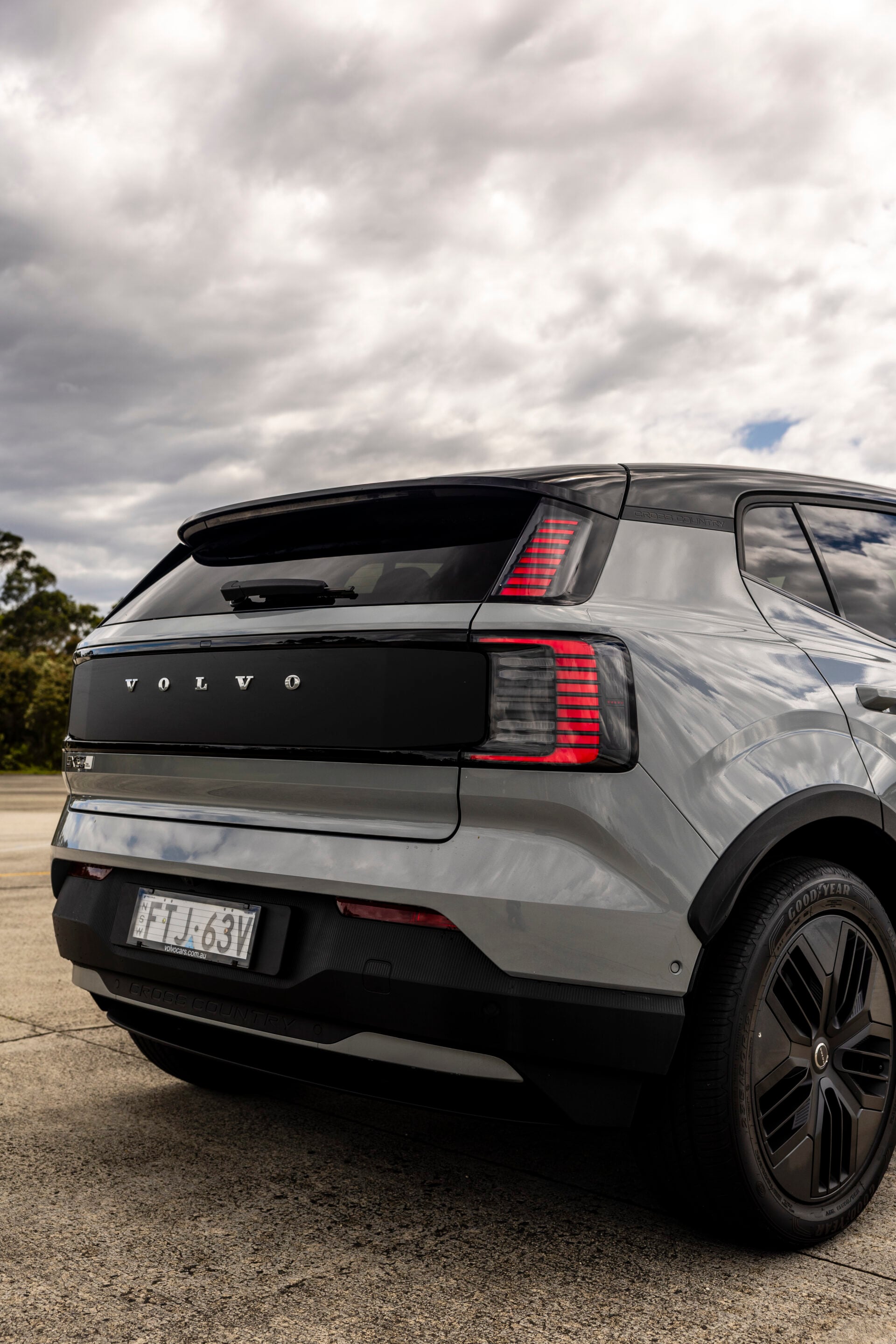
Job one when assessing the Volvo EX30 Cross Country is figuring out what it’s actually for. It is, after all, an all-wheel-drive, jacked-up SUV, yet its pure electric driveline tends to preclude it from attacking the Oodnadatta Track.
Its performance aspirations are clear, too, with twin electric motors delivering a combined 315kW of thrust and 543Nm. But a kerb mass of just shy of two tonnes will always see it playing in the forwards, rather than on the wing.
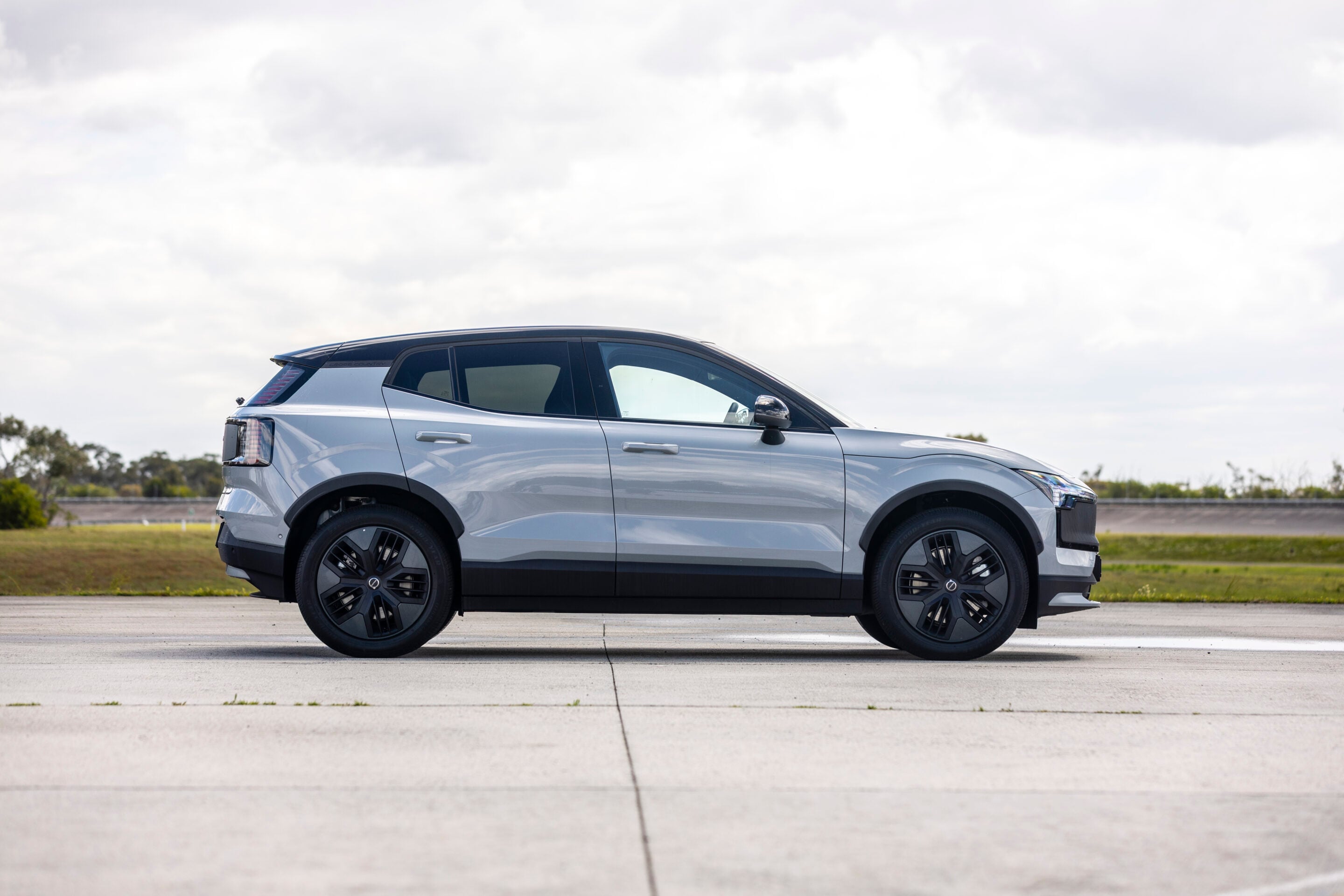
In reality, the transformation to the Cross Country version of the EX30 is a pretty commonly used move from the Volvo playbook and has been for decades now. You add some wheel arch extensions, bigger wheels and tyres, all-wheel-drive, hike the ride height and call it a Cross Country. The end result certainly looks interesting with a distinctly SUV set of general proportions, but some truly Scandi-Fwooar detailing.
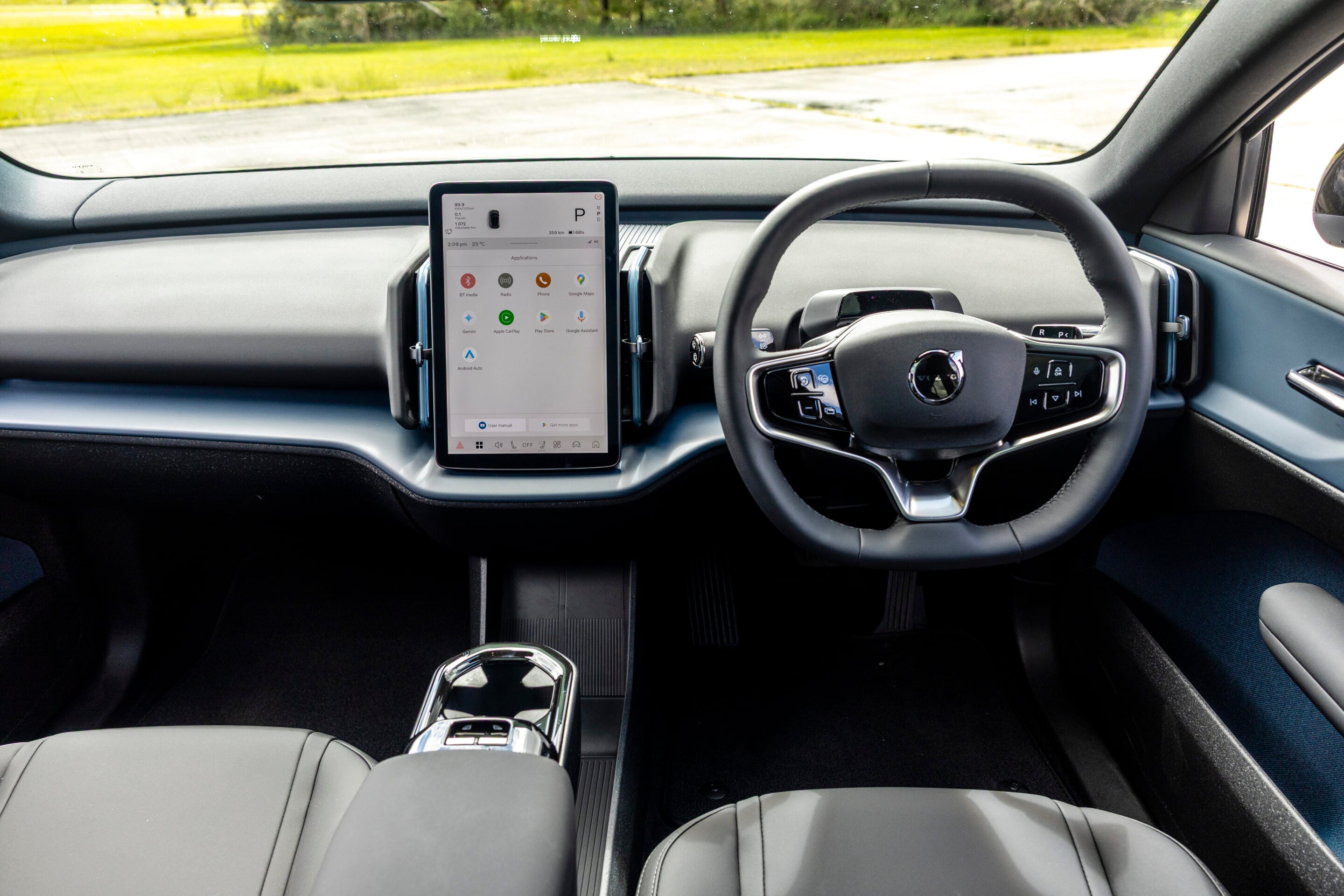
So, trips to the snowfields, then? Sure, and it’ll get you to the chain-bays pretty damn quick with a 0-100km/h time of sub-four seconds. What about impressing the neighbours? Another big thumbs up; the interior is funky as all get out with the square steering wheel, and the groovy, cast aluminium (that’s what they look like, anyway) interior door handles give the thing some real wow factor.
But you can’t help wondering whether all that calculated cool is at the expense of some practicality. For instance, the lack of instruments dead-ahead of the driver mean all the info is displayed Tesla-style on a portrait-mounted central screen. A head-up display would soften the collision between fashion and form here, but there isn’t one (a head-up display, that is).
The Volvo is far from huge inside, either, with a luggage capacity of 318 litres, although that expands to 1000 litres if you fold the rear seat down.
The performance speaks for itself, but there’s always the EV question-mark of what happens to range if you start to get cheeky with the accelerator pedal. As it is, Volvo claims a 417km range and energy usage is a relatively high 19.1kWh per 100km. On a three-phase 16-amp socket (which almost nobody has at home) you’re looking at a charge time of eight hours, while a DC fast-charger will take the 69kW battery from 10 to 80 per cent charged in 28 minutes. Decent numbers, but nothing earth-shaking.
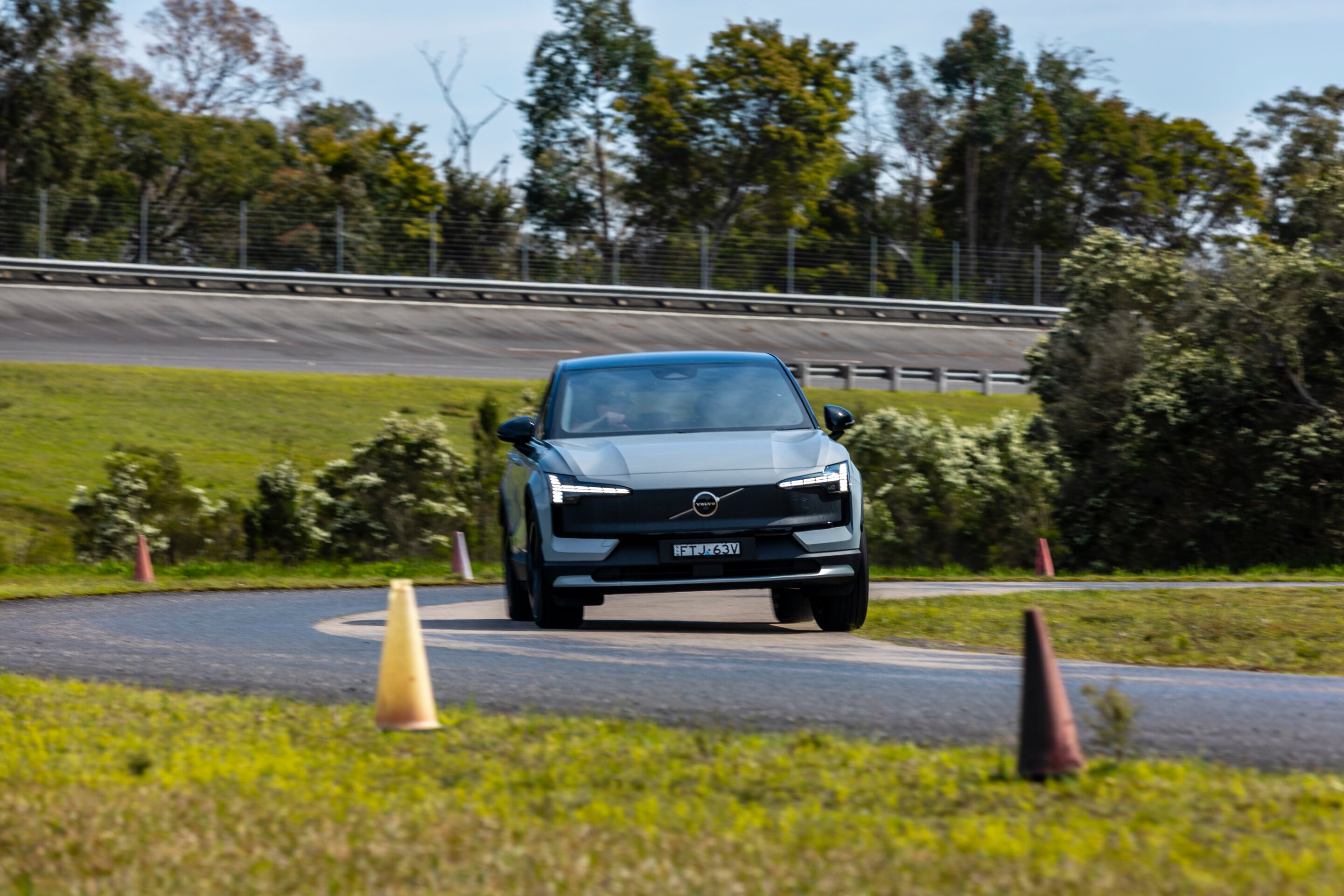
Sticking with the physics for a moment, the EX30’s ride and handling equation is likewise determined by falling apples and text books. Thanks to the kerb mass of the Cross Country, not to mention the unsprung weight of those big wheels and tyres, the engineers have been required to fit springs to suit. The end result is far from terrible, but if you pay attention, there’s a sense that the small-bump ride is being compromised by the large bump control. But the EX30 is in good company there.
Other elements, however, are pure Volvo including the comprehensive safety kit that includes a centre air-bag, whiplash protection built into the seats, Isofix points, a Harman Kardon stereo and a five-year Google Assistant subscription.
You’ll like it, but will you love it?
Specs
| Price | $69,990 (MSRP) |
|---|---|
| Body | Five-door, five-seat SUV |
| Drive | All-wheel drive (on demand) |
| Drivetrain | Dual electric motors, 69kWh lithium-ion battery |
| Power | 315kW combined |
| Torque | 543Nm combined |
| Transmission | Single-speed reduction gear |
| Consumption | 19.1kWh/100km, 417km range WLTP |
| Kerb weight | 1910kg |
| 0-100km/h | 3.7 sec |
| L/W/H/W-B | 4233/1850/1567/2650mm |
| Boot space | 318L/1000L |
| Warranty | 5yr/unlimited km |
| Safety rating | 5 star ANCAP (2024) |
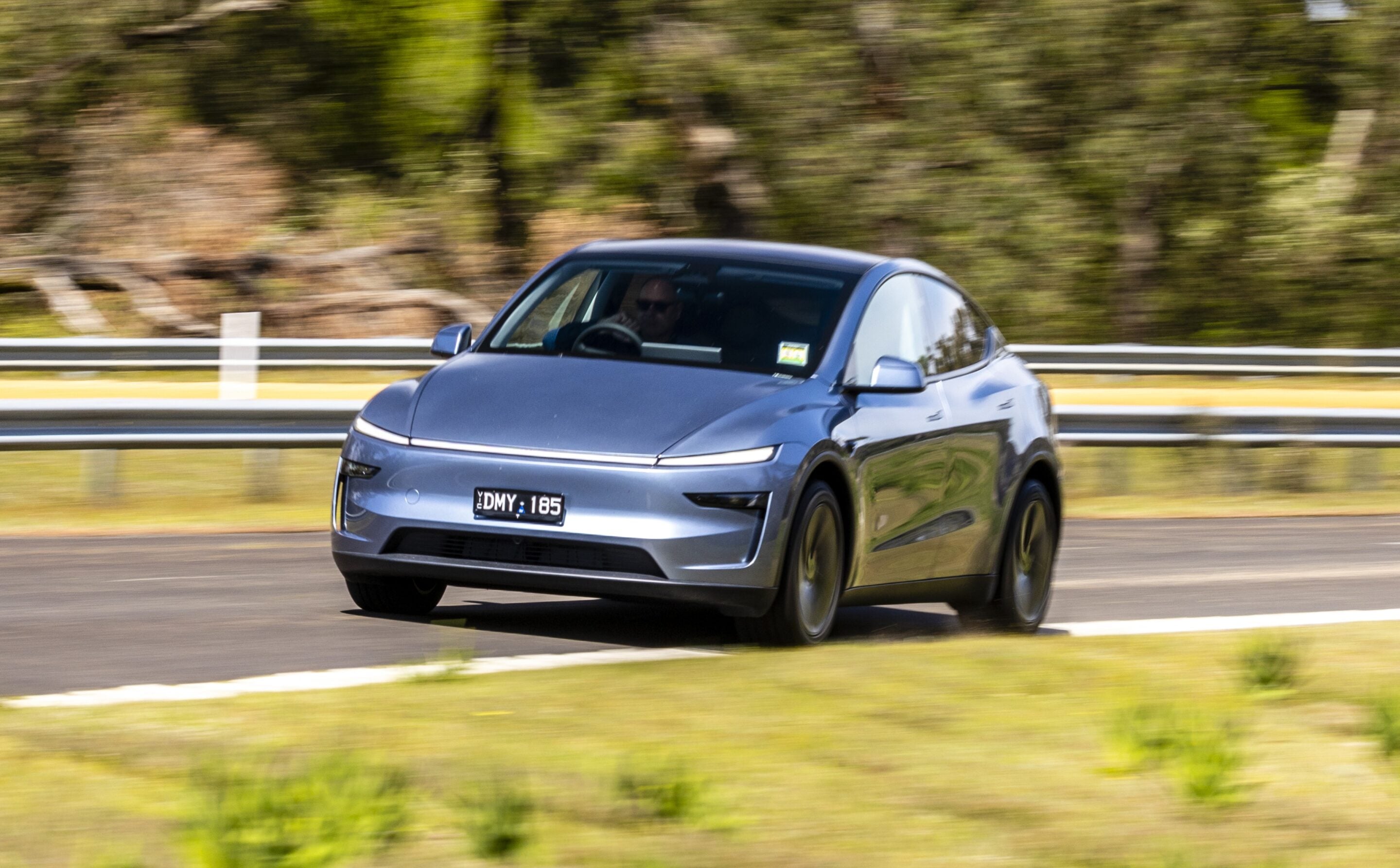
Now with self-driving capability – love it or not – the Model Y attempts to reinvent itself in an ever-deepening crowd of not just electric options, but efficient hybrids and plug-in hybrids, too.
That love-it-or-not theme is a common one also, not just with electric vehicles in general, but with the Tesla brand in particular. The reality is, though, Tesla puts forward an incredibly compelling case for those of you wanting to move into the EV realm. In regard to value, and we’ll look at the Model Y specifically in a minute, Tesla has the market at its mercy.
Its public charging infrastructure is better and more extensive than any other. And it works. All the time. Tesla’s app is easier and more intuitive to use than the competition, and the way in which the app controls the car is immediately evident as being designed by people who understand modern technology. Quite simply, the all-round Tesla ‘ecosystem’ (to use a modern branding term), is second to none.
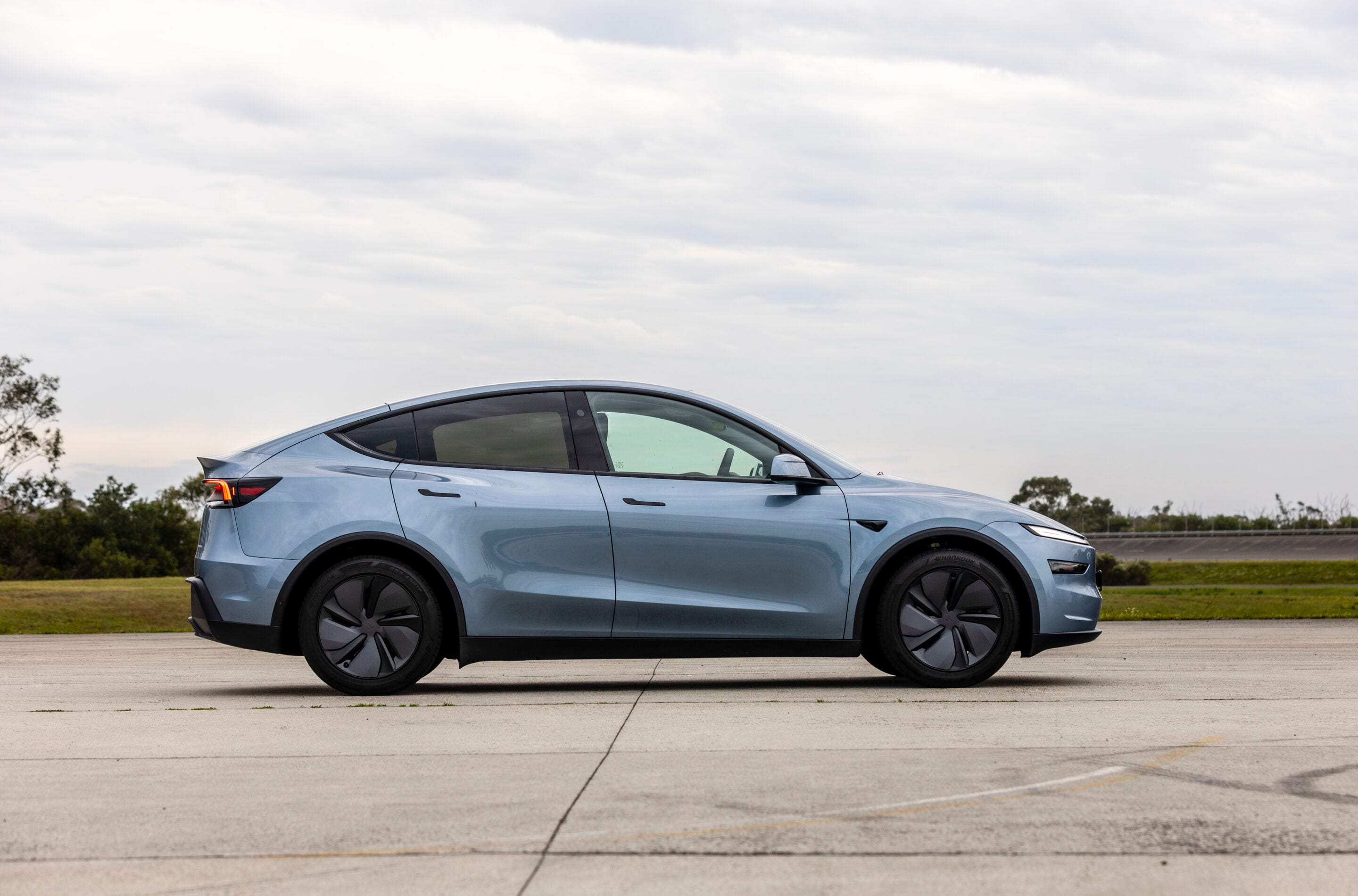
Wheels chose the middle of the range, the Long Range AWD, which starts from $68,900 before on-road costs, as the smart-money pick in the line-up. It continues the value story with twin motors, an 81kWh lithium-ion battery pack, 286kW and 510Nm, 0-100km/h in 4.8 seconds and a WLTP claimed range of 600km.
The judges noted efficiency as a strong point, too, with Tesla’s claim of 13.8kWh/100km extremely close to the figures you’ll get in the real world. In many cases, you’ll get an even better return.
The new Model Y’s styling has been sharpened up, ensuring it looks more contemporary than the old model, which had started to age somewhat. Negatives are few and none of them reflect the way the Model Y behaves or drives. The glass roof, for example, which can be covered with an optional clip-in shade, is good in theory, but can’t cope with the roasting Aussie sun in the middle of summer.
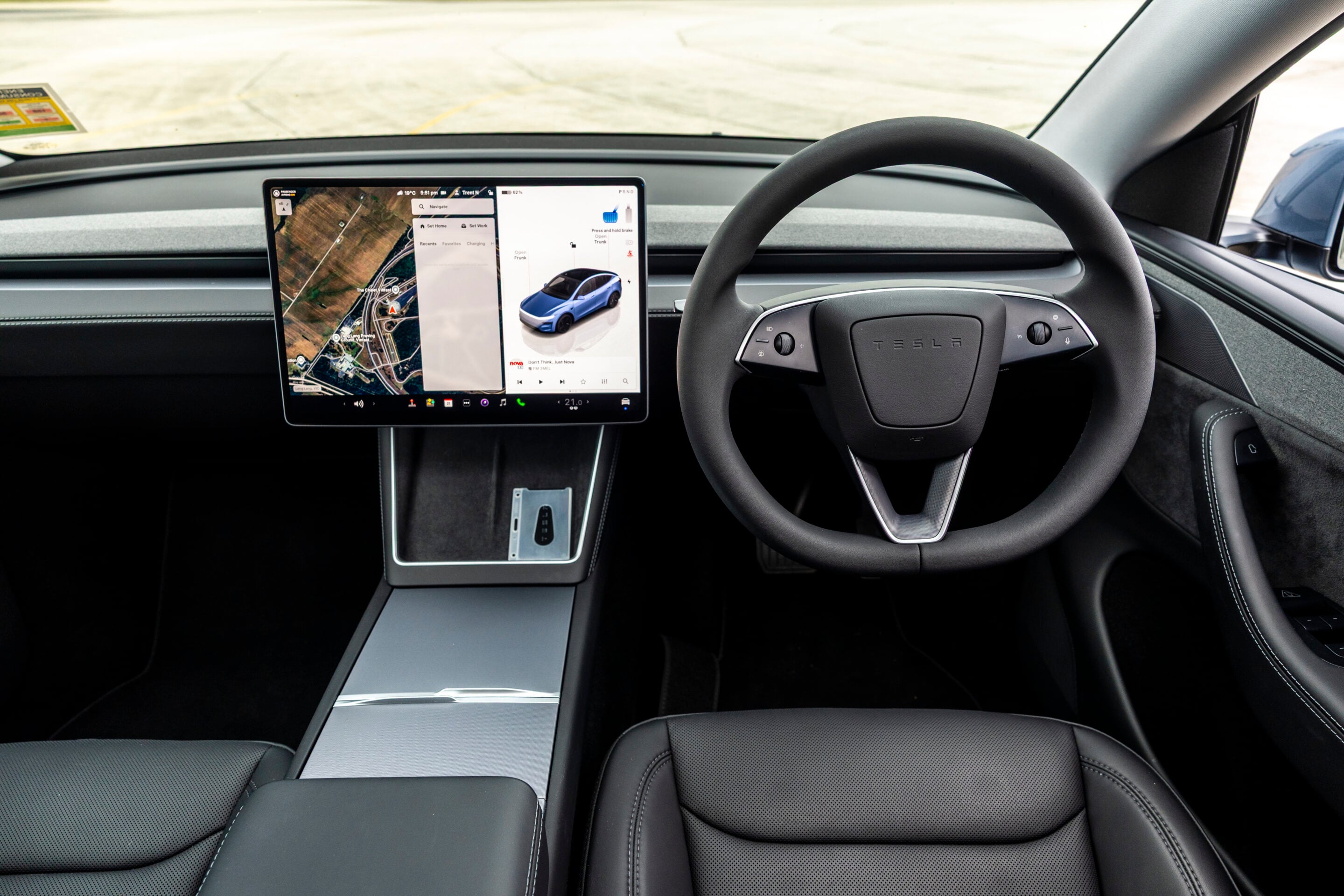
The lack of a driver’s display, head-up display or gauge cluster of any kind, is a deal breaker in the eyes of the judging team. Likewise, the move away from a shift stalk on the steering wheel, and the replacement of that with a touch and slide function – again on the screen – which is neither intuitive or easy to decipher.
“Stupid, silly, nonsensical, unnecessary.” All terms used by the judging team to describe some of Tesla’s choices. In this instance, Tesla has gone a little too far. However, integrating rear seat entertainment into an 8.0-inch screen that also controls temperature and ventilation in the second row? That’s genius.
Annoyances aside, the Tesla infotainment screen works incredibly well once you work out its complexities. It’s still unfathomable that there’s no smartphone-mirroring connectivity either, Tesla still sticking to its ‘use our system’ guns, for better or worse. Storage space is excellent – 938L out to 2022L when you fold down the second row.
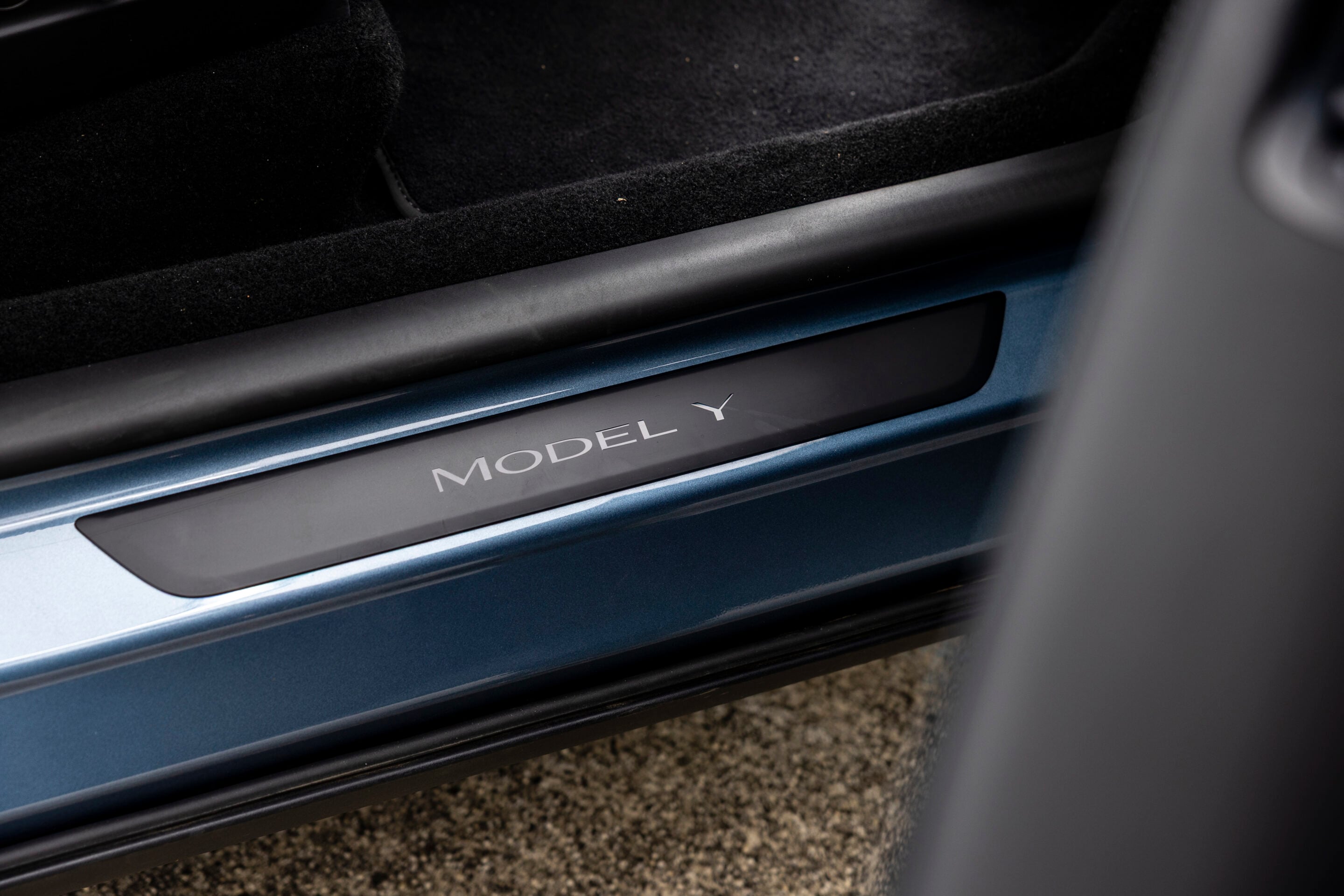
The big change for this update, though, is the quality of the ride and bump absorption, which has been markedly improved along with general refinement – most specifically, inside the cabin. The judging team noted the quality of the interior insulation on Lang Lang’s ride and handling course, a section of coarse chip designed to unsettle the best cars on the market.
The judges agreed that the Model Y is a car that should absolutely be on your shopping list if you’re considering a switch to electric. It’s competent, solid, excellent to drive and energy efficient.
Let’s leave the self-driving functionality to cartoons and sci-fi movies for the moment, though.
Specs
| Price | $68,900 (MSRP); as tested: $70,400 (MSRP) |
|---|---|
| Body | Five-door, five-seat SUV |
| Drive | All-wheel drive (on demand) |
| Drivetrain | Dual electric motors, 81kWh (est) lithium-ion battery |
| Power | 286kW (est) |
| Torque | 510Nm (est) |
| Transmission | Single-speed reduction gear |
| Consumption | 13.8kWh/100km (est), 600km range WLTP |
| Kerb weigh | 1992kg |
| 0-100km/h | 4.8 sec |
| L/W/H/W-B | 4792/1982/1624/2890mm |
| Boot space | 938L/2022L (VDA) |
| Warranty | 4yr/80,000km |
| Safety rating | 4yr/80,000km |
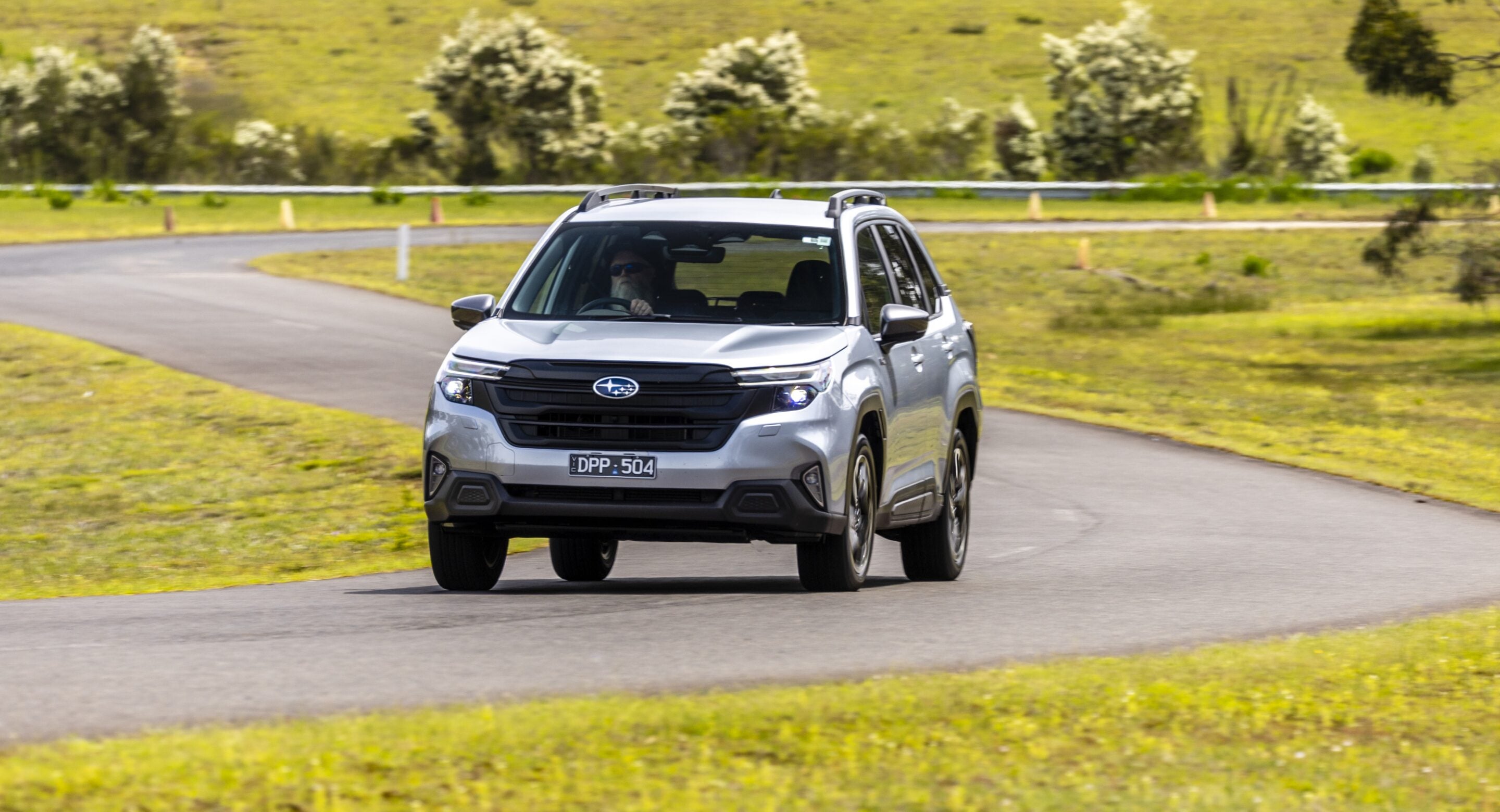
Maybe it’s because the brand itself is part of the landscape. Perhaps it’s the fact that the car in question knows what it is, where it fits in and who’s buying it. Maybe it’s because there are no pretensions or inflated boasts to harpoon during the first drive. Whatever, the Subaru Forester is four-wheeled comfort food.
Lacking the Darth-Vader styling of some of its mid-sized SUV peers, and without the buzzing, whirring pure-electric driveline that continues to polarise the marketplace, the Forester is wholesome and satisfying. Just like Grandma used to make.
That said, just as time-honoured recipes get constantly tweaked, the latest Forester has grown an evolved hybrid element to its driveline, in this case a pair of electric motors teamed with the trademark flat-four petrol engine. But don’t assume the two motors act directly on the front and/or rear axles, because this technology – borrowed from Toyota, it should be noted – is quite a bit more sophisticated than that.
The 2.5-litre petrol engine is connected inline with the first electric motor, the latter providing starting duties for the flat-four as well as charging the hybrid battery. The second electric motor is the bigger hitter, is also mounted inline and provides drive to the wheels as well as harvesting otherwise lost power through regenerative braking. The combined 145kW and 276Nm then drive through what’s called an E-CVT, although that’s a bit misleading. That’s because this is a CVT that uses no belts or cones, but instead calls on compound planetary gearsets (like a conventional automatic) and then sends the (moderate) urge through a transfer case and centre differential to each wheel.
The result is a car that maintains mechanical (rather than mechanical/electric) all-wheel-drive and allows Subaru to cut-and-paste its ‘symmetrical four-wheel-drive’ paragraph from the old brochure to the new one.
Although Subaru tags the system as a ‘Strong Hybrid’, the apparent gains are less chest-pounding. Sure, the Forester never feels lame nor lacking the will to accelerate, but equally, there are other hybrid systems that are clearly calculated and calibrated to offer more zing. And 6.2 litres per 100km? Not bad, but no PHEV.
But the driveline is smooth and flexible even if, after all these years, the horizontally opposed layout still plays that familiar, quirky tune.
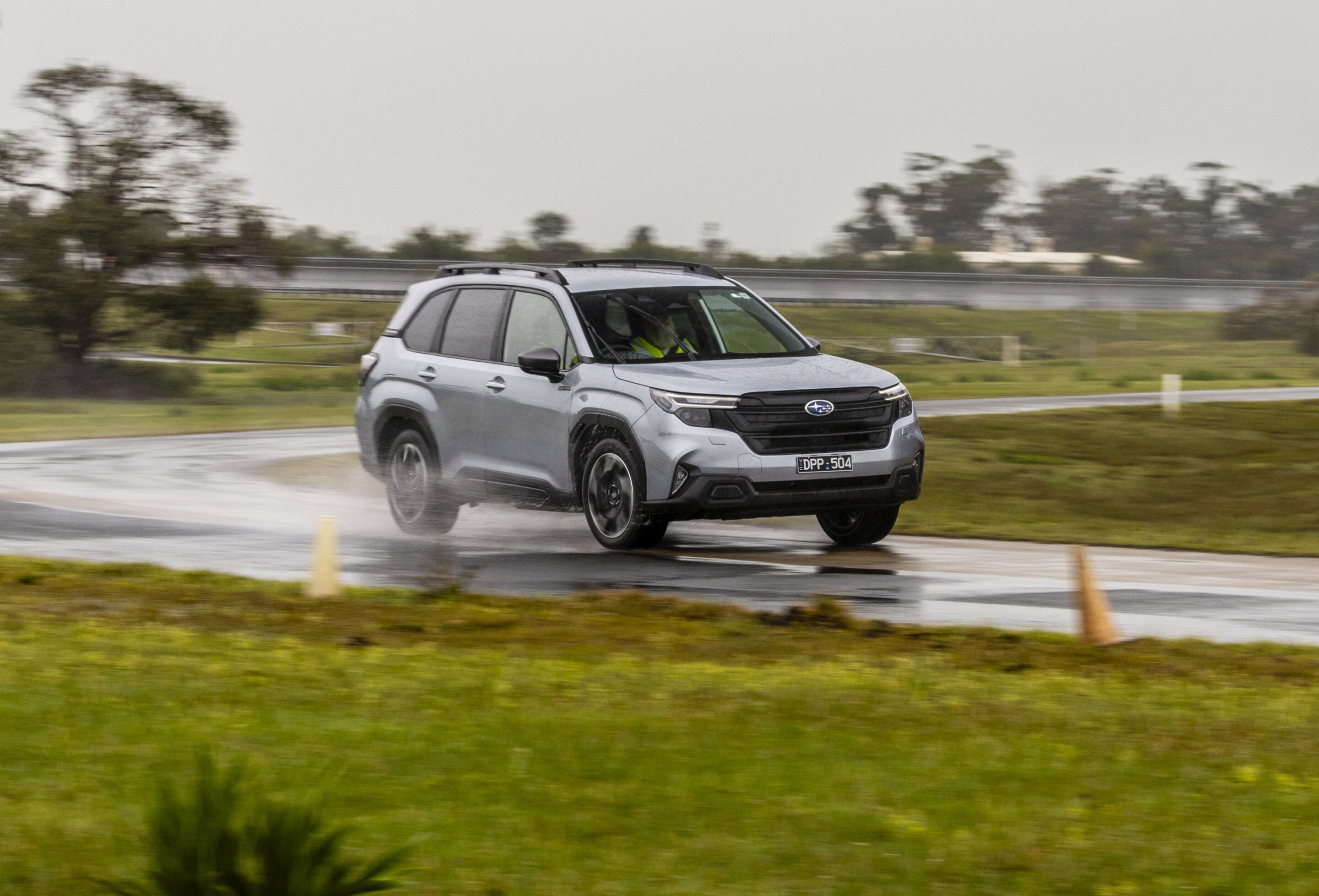
The steering is vice-free, logical in its gearing and weight, and bordering on actually entertaining. The Forester never actually encourages you to press on, but you may just find yourself doing so anyway… it’s that sort of car.
The Forester’s other point of difference remains its off-road chops and, while the Sube won’t take you to The Cape on the Old Telegraph Track, it will get you to mountain-bike tracks and campsites that plenty of other SUVs with bulging wheel-arch flares and chunky alloy wheels simply will not. Just as Subaru has persisted with the boxer engine layout and its all-wheel-drive platform for so long, neither will it be allowing the soft-roader to become any softer.
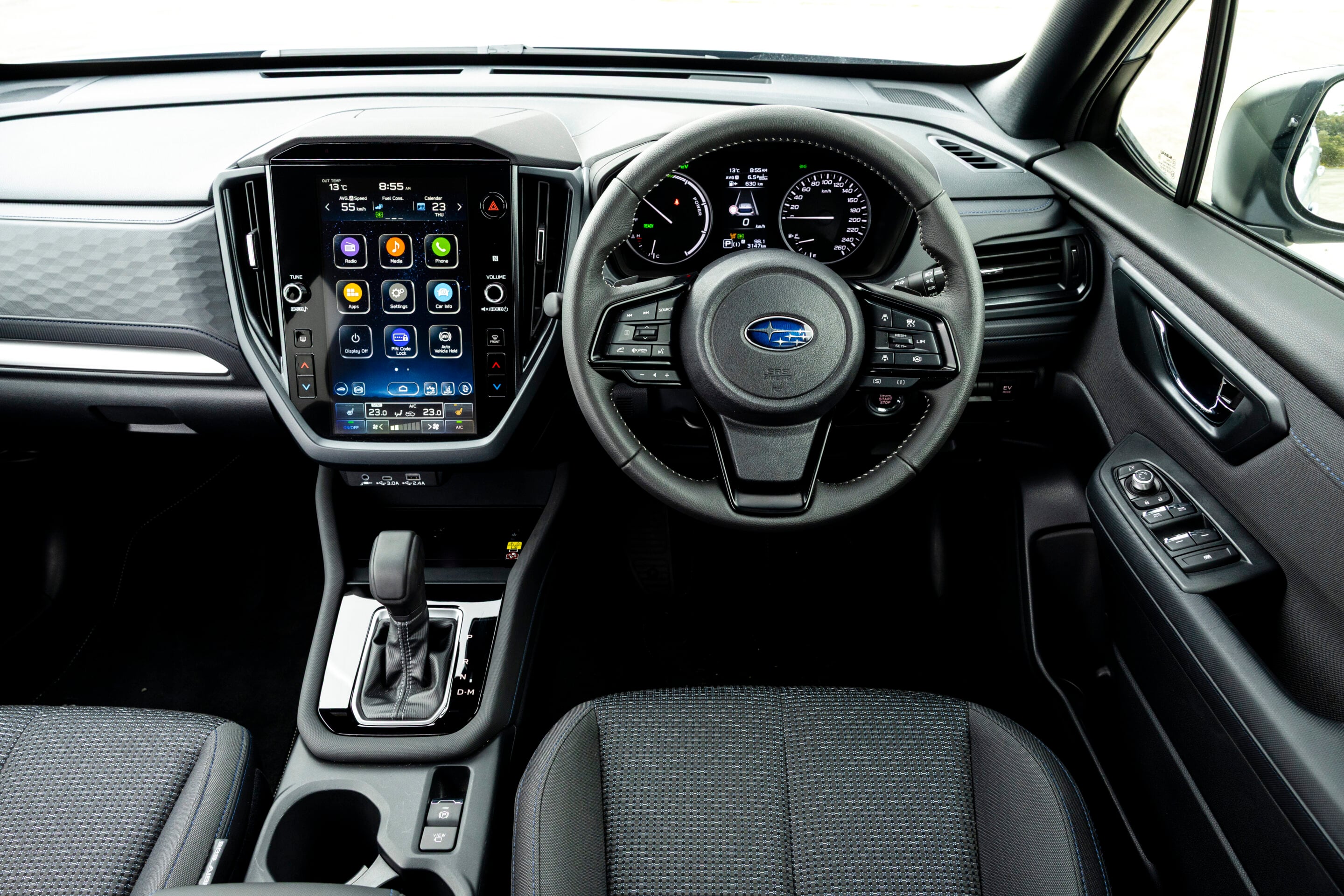
Inside, the Subaru is laid out in a conventional way apart from the 11.5-inch central screen that is mounted portrait rather than landscape. It’s nice to see there are at least some hard buttons for commonly used functions and the usual slew of USB charging points and cup-holders are present and accounted for.
The company says the front seats have been made more comfortable and even a short stint at the helm bears this out. Thankfully, the rear seat is roomy in every direction, too, with plenty of foot room and a cabin wide enough for actual rear-seat adults.
If this is all sounding like a triumph of considered moderation over risky flamboyance, so be it. But long after you’ve forgotten about the lack of fire-breathing pace or trendy tech, you’ll still be appreciating the grown-up result this $46,490 car represents.
That the Forester survived our first edit when so many of its mid-sized SUV brethren did not, proves the point that, even in a stove-hot market segment, sometimes, a generous serve of something competent and familiar is all you really want.
Specs
| Price | $46,490 (MSRP) |
|---|---|
| Body | Five-door, five-seat SUV |
| Drive | All-wheel drive (constant) |
| Drivetrain | 2.5-litre four-cylinder petrol hybrid |
| Power | 145kW combined |
| Torque | 276Nm combined |
| Transmission | Continuously variable automatic |
| Consumption | 6.2L/100km |
| Kerb weight | 1717kg |
| 0-100km/h | NA |
| L/W/H/W-B | 4655/1830/1730/2670mm |
| Boot space | 484L/1707L |
| Warranty | 5yr/unlimited km |
| Safety rating | 5 star ANCAP (2024) |
One of my favourite terms that we use a lot in testing is a simple one. “It’s the answer to a question nobody asked.”
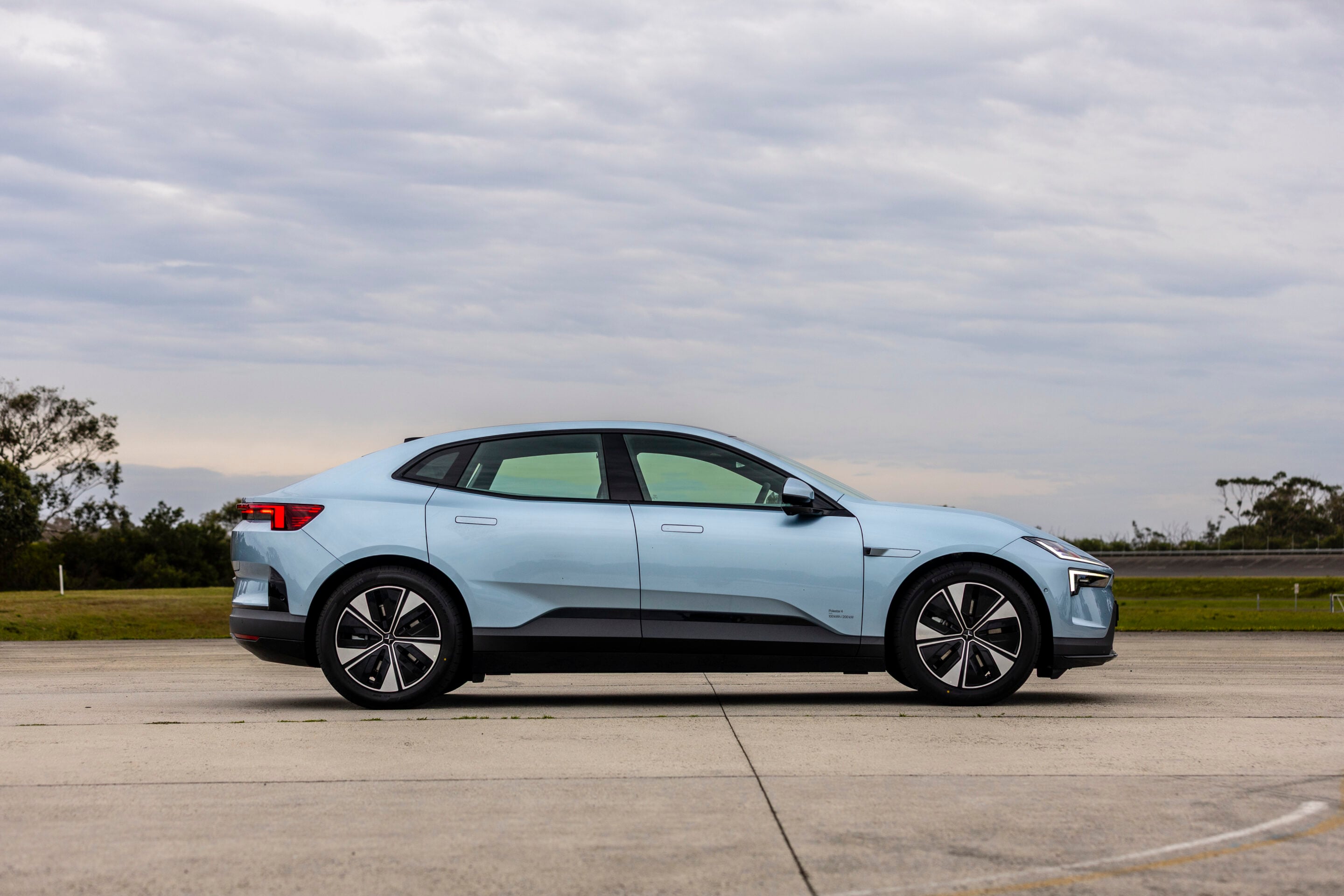
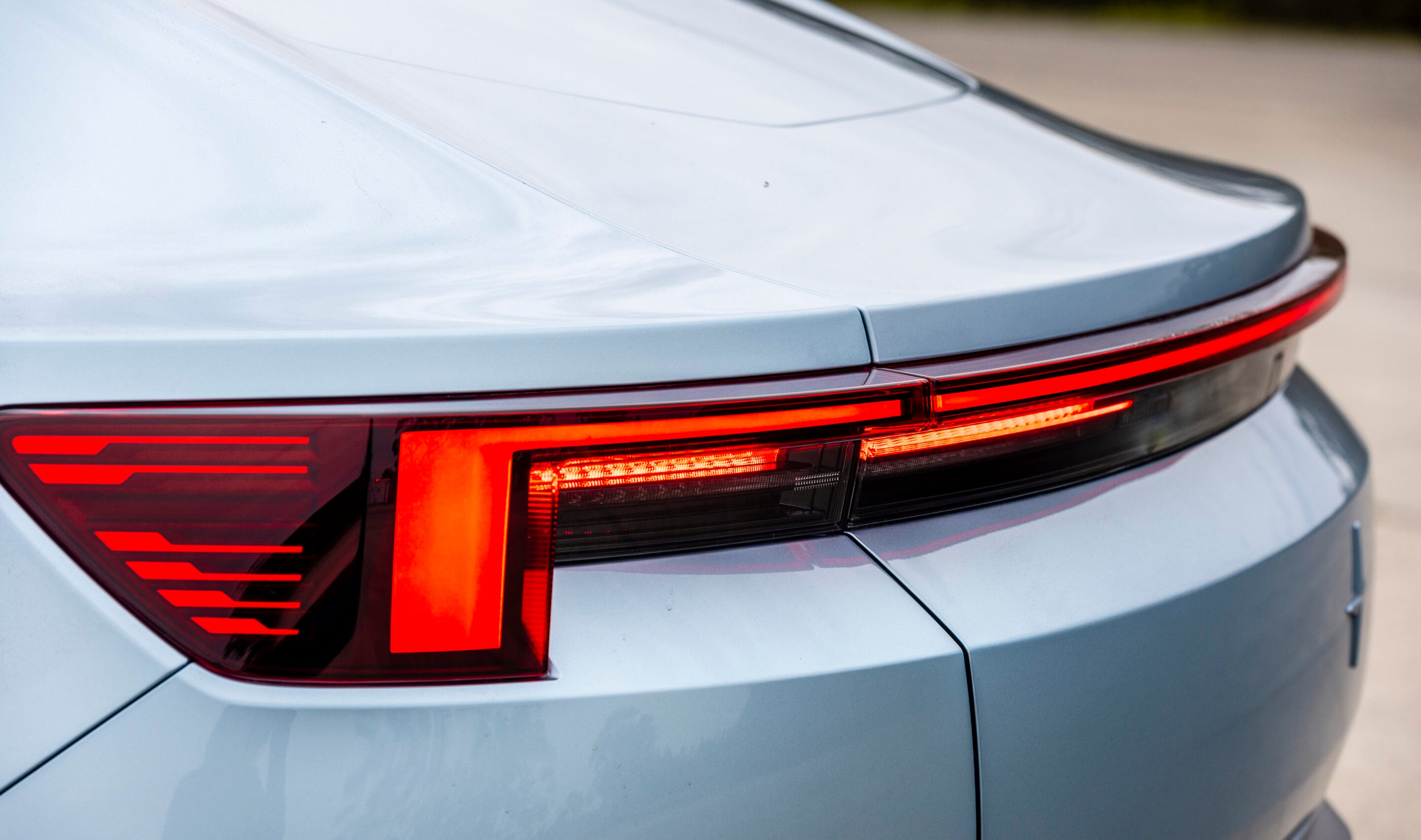
The judging team visited that phrase more than once during COTY, and more than once when dissecting the merits of a four-wheeled conveyance devoid of a back window. It is, without doubt, one of the Polestar 4’s most glaring deficiencies. It doesn’t work in theory and it doesn’t work in practice.
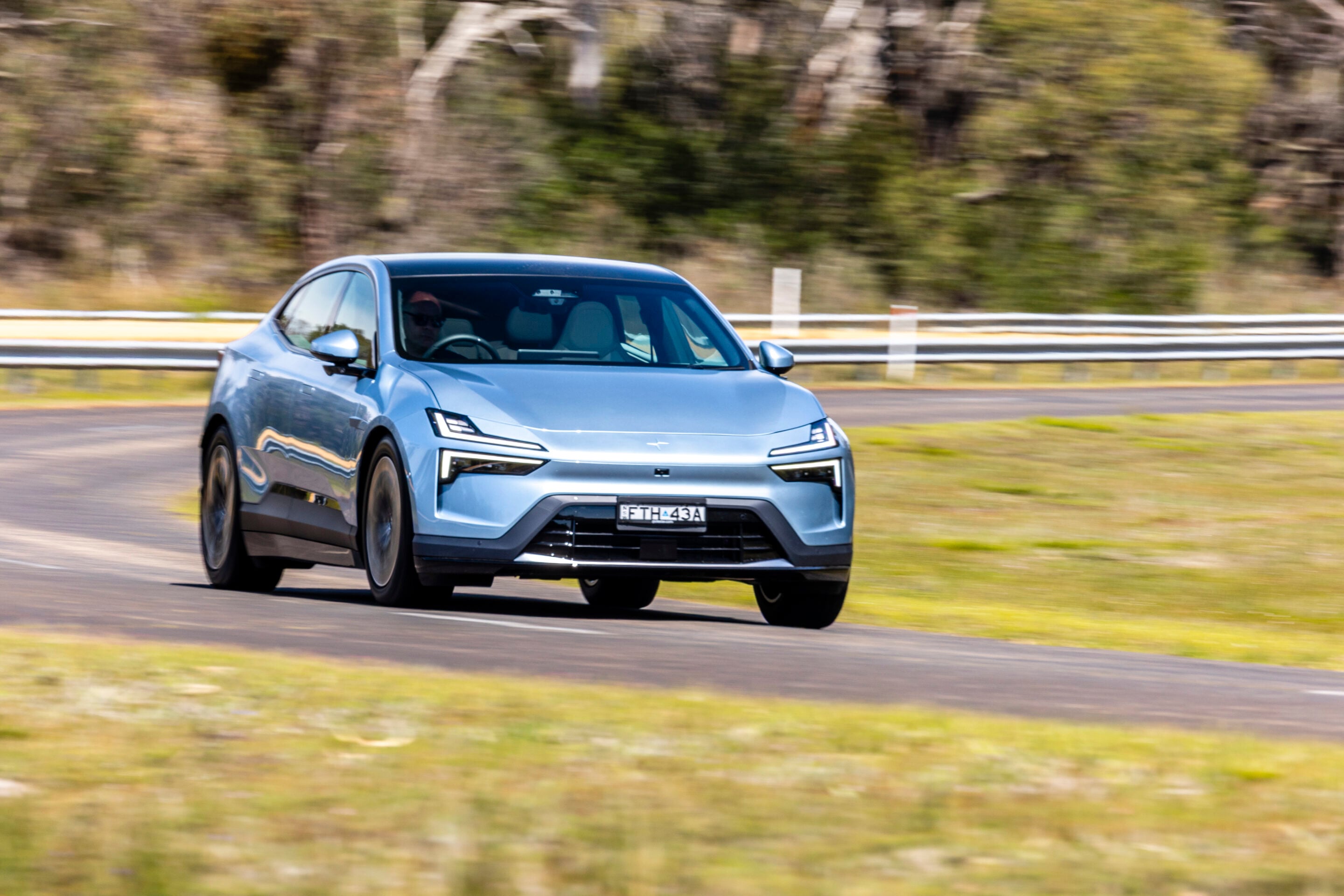
On the plus side, the Polestar 4 looks and feels well-made, and delivers premium cabin ambience, rough road thumps aside. On the move broadly, and on smoother surfaces, it’s a serene driving experience. The interior isn’t just thoughtfully appointed, it’s beautifully executed and stretches well beyond Tesla’s austerity. Front and second row space is a highlight for family buyers, along with a hefty 526L/1536L luggage capacity, and Polestar 4’s energy usage is solid in the real world if a little greedier than the standard-setting Tesla Model Y.
As tested though, the Long Range Single motor crests $90,000, with options getting very pricey, very quickly. The judges agreed that too many crucial functions require navigation through the central infotainment touchscreen, and that the rear window delete is a case of the design team running roughshod over engineering. If you spend a lot of time on rutted rural roads, the firm ride will also grate, but around town it will behave well.
Like all electric cars, the Polestar 4 feels fast, the 7.1-second run to 100km/h backing that up, even if this single motor model is the slower of the two. Interestingly, Polestar has accounted for the pace with quality Pirelli P Zero rubber, a performance-oriented choice, without question. The 100kWh battery is hefty, and the single motor makes an easy 200kW and 343Nm. The kerb weight of 2230kg means it’s a portly vehicle to fire through a ride and handling course, and the weight is never far from the mind of the person holding the steering wheel.
Electric vehicles are heading rapidly toward a fork in the road. Do manufacturers continue to try to innovate and reshape the rule book in the way that Polestar has done by deleting the rear window? Or do they deliver on the time-honoured tradition of the motor car? That is, give ’em what they want. If Polestar had delivered a car that was more conventional, for example, the judges thought that it would go into battle with more firepower in its armoury.
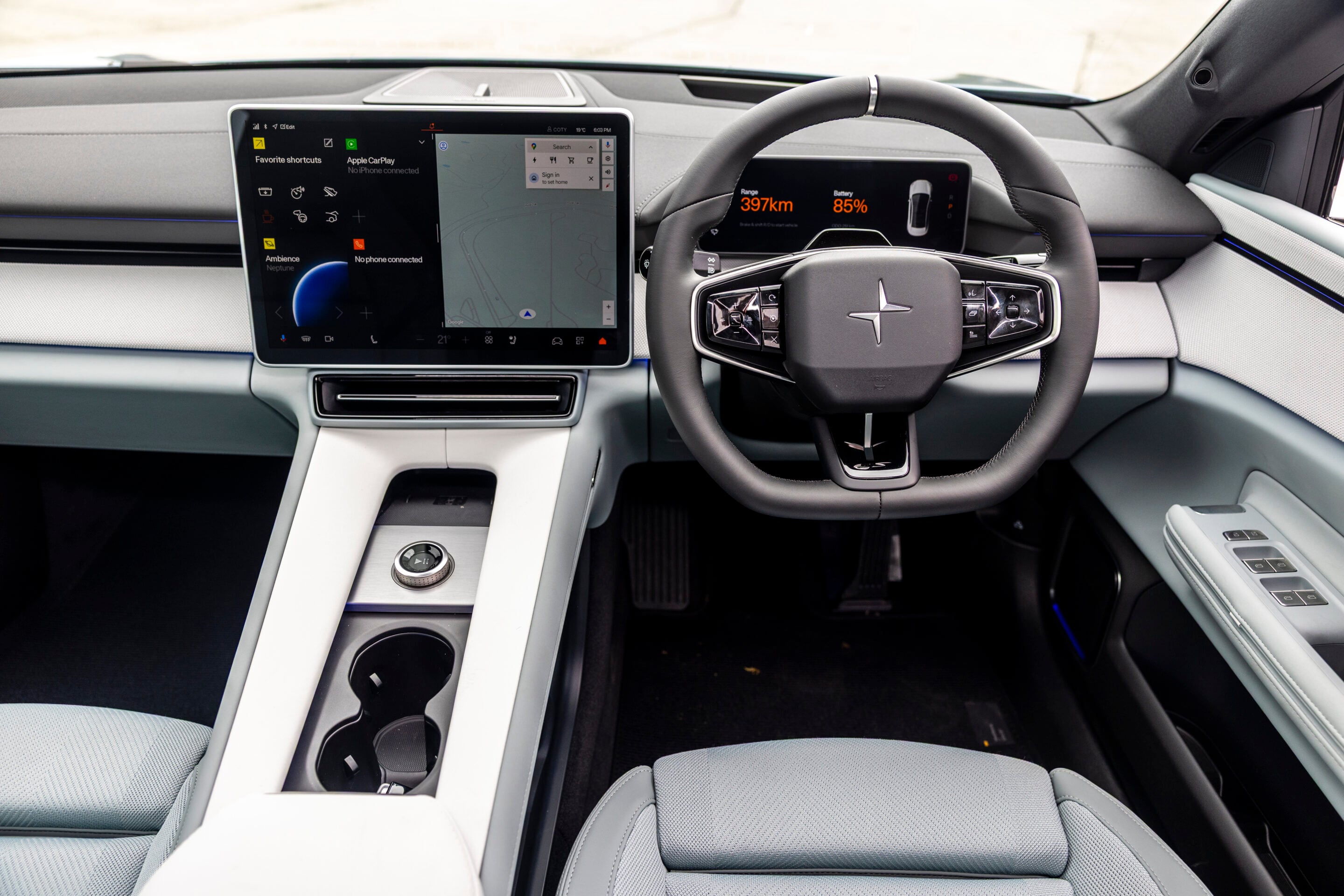
While there’s a lot to like about the Polestar 4, then – both on paper and in the metal – this year’s field is a tough one, and Polestar’s attempt to rewrite the rules for the segment, haven’t quite hit the mark. Still an excellent vehicle both in the pure sense and as an EV, it’s not as
competent as the best in the field for this year’s award.
Specs
| Price | $78,500 (MSRP); as tested, $89,650 (MSRP) |
|---|---|
| Body | Five-door, five-seat coupe |
| Drive | Rear-wheel drive |
| Drivetrain | Single electric motor, 100kWh lithium-ion battery |
| Power | 200kW |
| Torque | 343Nm |
| Transmission | Single-speed reduction gear |
| Consumption | 17.8-18.4kWh/100km, 620km range WLTP |
| Kerb weight | 2230kg |
| 0-100km/h | 7.1 sec |
| L/W/H/W-B | 4840/2067/1534/2999mm |
| Boot space | 526L/1536L (15L front) |
| Warranty | 5yr/unlimited km |
| Safety rating | 5 star ANCAP (2025) |
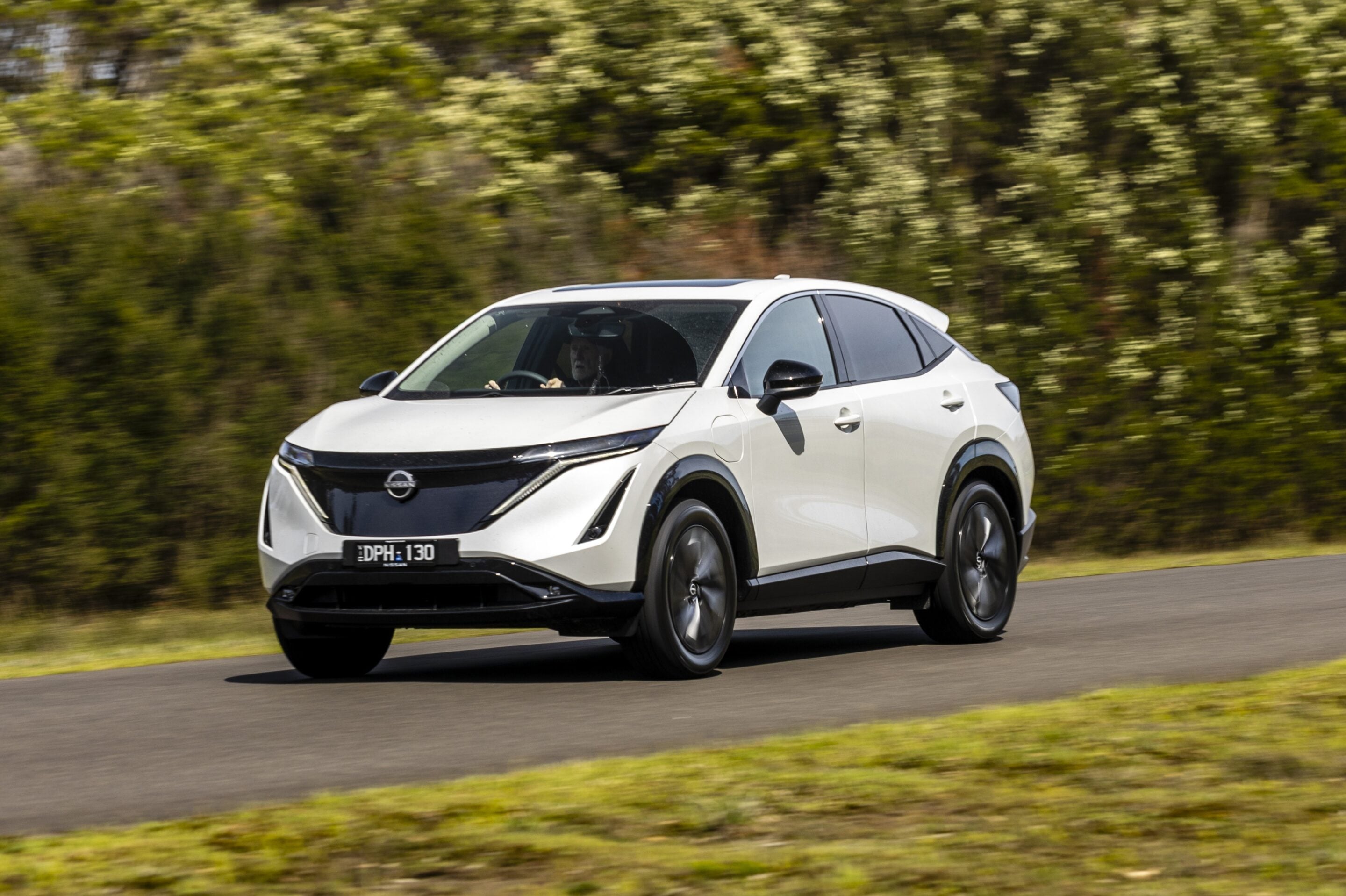
On paper, the Nissan Ariya was looking good.
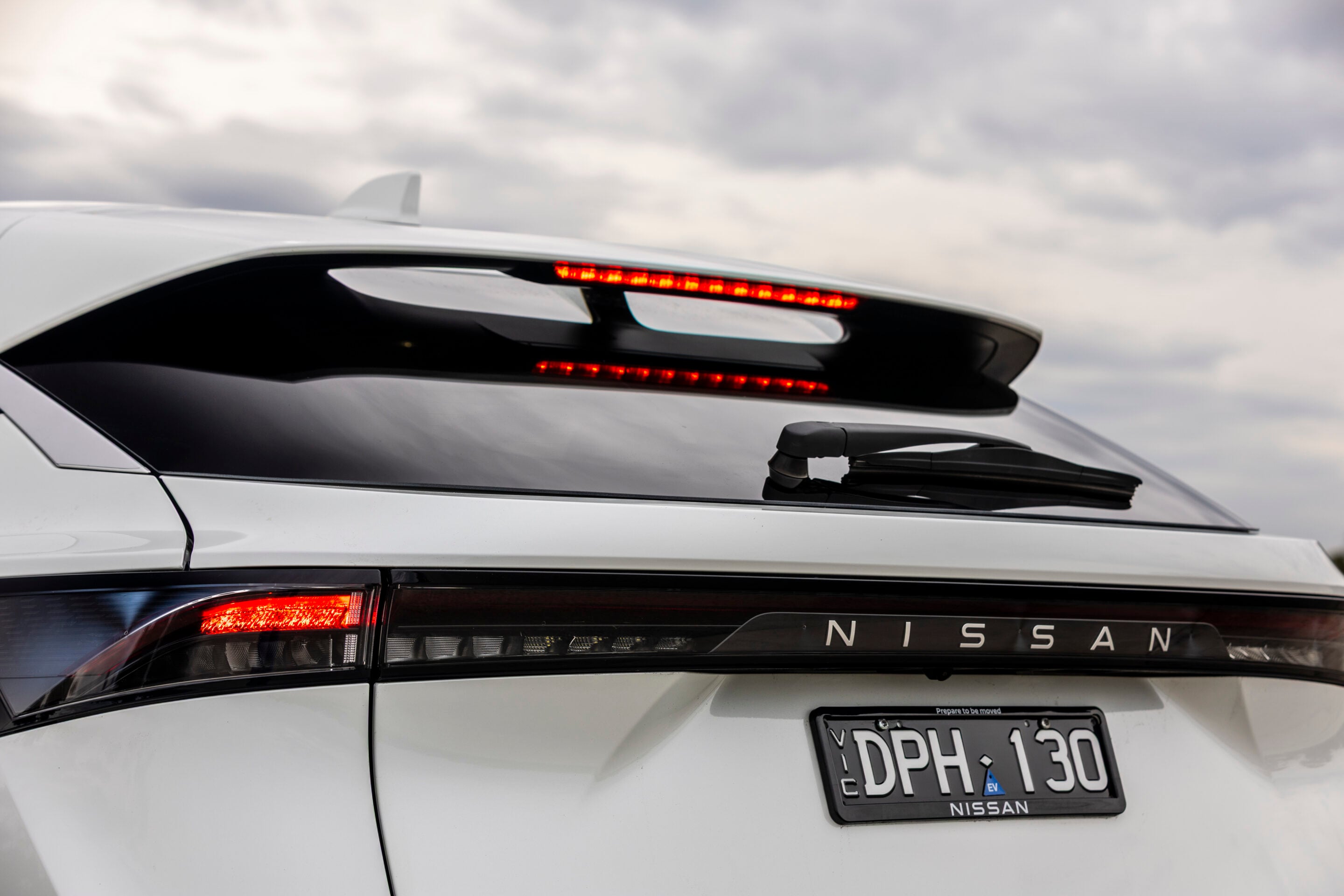
It ticked the first, most important box for any new EV, with a claimed range just over 500 kilometres. The starting price of $55,840 was not high and not low, but not out of step with rivals arriving from outside China. Also, it’s not just another big-box SUV, as Nissan has injected some angles and originality in its exterior design. Inside, there was plenty of space and an airy look and feel.
Going back to basics, the Ariya – a name variously attributed as ‘noble’ and ‘celebration’ – is a mid-sized SUV when most Australian families are shopping for something in that space and a growing number are being converted by EV contenders from brands as diverse as MG and MINI, Kia and Hyundai, and – inevitably – Tesla.
Why, then, is it struggling so miserably for sales in Australia? Just 47 were registered in September, a total easily eclipsed by the vastly underwhelming Leapmotor C10 with 71. Digging into the background on the Ariya began to provide answers.
It is Nissan’s second fully battery-electric contender, after the Leaf, but it was unveiled as a concept car in Tokyo nearly six years before reaching Australia. That is literally a generational gap when Chinese brands are bounding ahead, handing a massive advantage to its rivals.
Nissan Australia claimed the delay was a conscious decision to set its timing to match the introduction of the Federal Government’s New Vehicle Efficiency Standard, with its requirement for more EVs to offset its diesel and petrol combustion contenders. But, really…
The Leaf has never done much in Australia, even in its second generation, so the package for the Ariya is a smarter move. There are single and dual-motor power packs, 63 or 87kWh batteries, with either front or all-wheel drive, and the COTY contender was the Advance+ model.
The Advance+ sits in the sweet spot and means $63,840, 178kW/300Nm, front-wheel drive and a 0-100 time of 8.1 seconds.
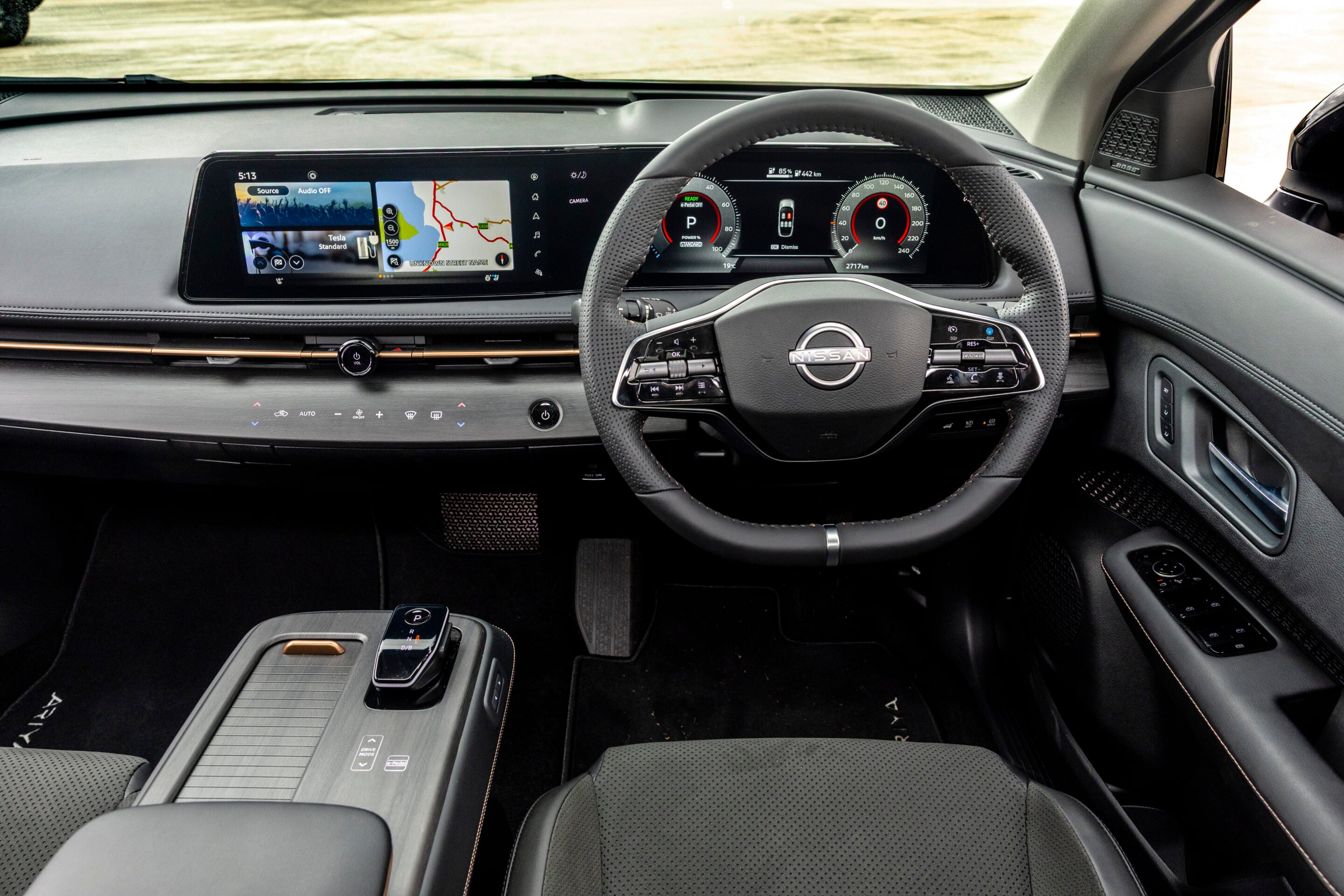
A walk-around on the Ariya showed its size and heft, good exterior finishing, and the vast leap forward from the Leaf. Inside, there was lots of space, but now there were questions. There is hard plastic, the design is overly frugal, the seats are roomy but not supportive, and the dashboard layout and display screens are just ‘me too’ in the class. There was a sliding centre console, with a gimmicky electric motor, but otherwise nothing special on the USB or storage front.
“It looks cheap,” opined Peter Robinson.
“Nothing much to see here,” said David Morley.
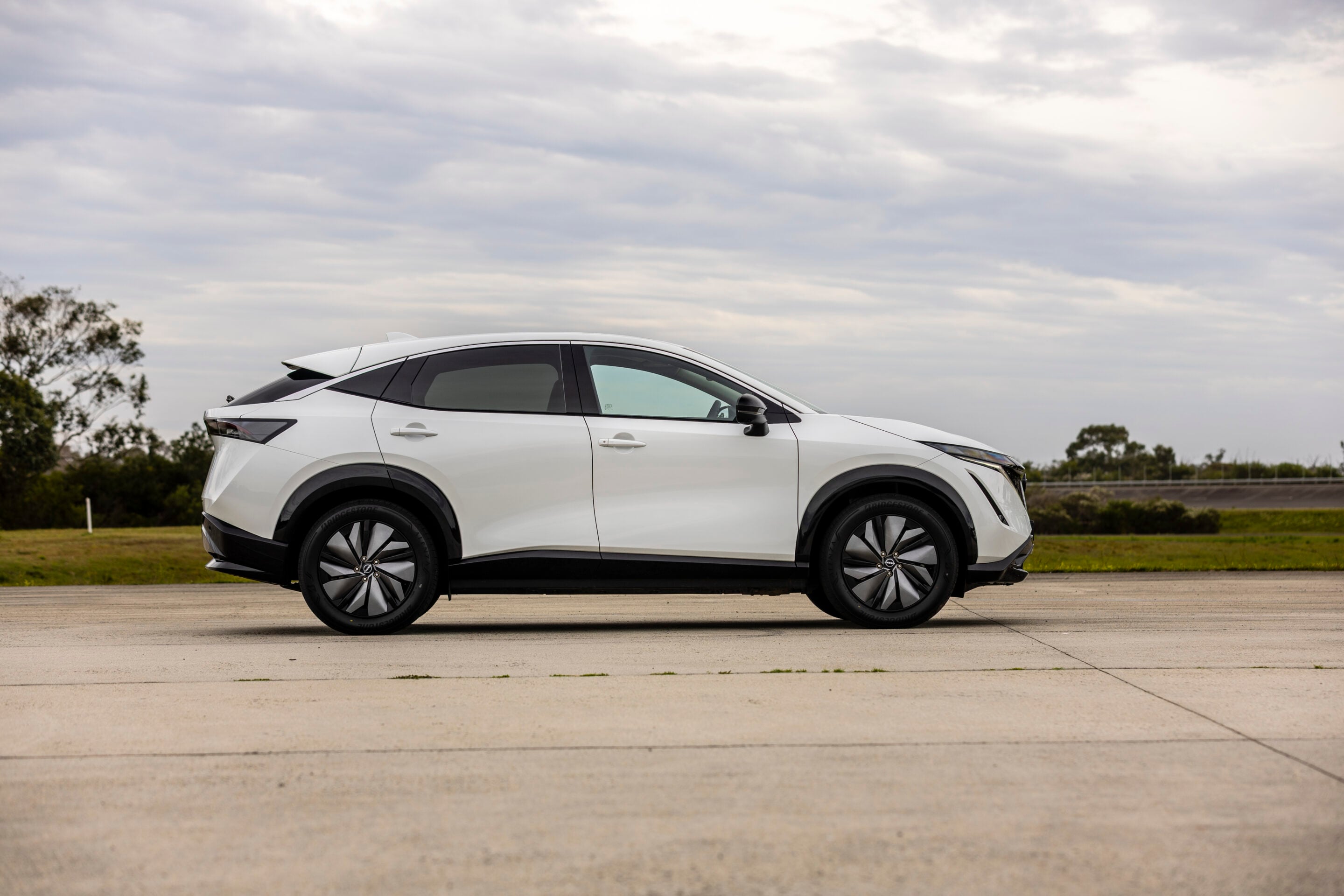
In the driving, the Nissan was underwhelming. For an EV, the acceleration was ordinary. Nissan touts its one-pedal driving mode, with strong regeneration to boost the battery and improve slowing without the brakes, but that’s not unique.
The steering was light and floppy, with response which is probably just fine on a California freeway but gave no real connection to the road.
At Lang Lang, it had to be eased into corners and squeezed under braking. It rocked and rolled. Bounced, too. The damping was soft and floppy, especially on the rolling waves set to highlight such flaws.
Road noise? More than other EVs in the COTY field. In the end, no-one came to save the Ariya when it was the first car dropped from COTY.
“Where was this car four years ago?” asked Robinson.
“Where was this car 10 years ago?” replied Morley.
Specs
| Price | $63,840 (MSRP) |
|---|---|
| Body | Five-door, five-seat SUV |
| Drive | Front-wheel drive |
| Drivetrain | Single electric motor, 87kWh lithium-ion battery |
| Power | 178kW |
| Torque | 300Nm |
| Transmission | Single-speed reduction gear |
| Consumption | 19.1kWh/100km, |
| 504km range | (WLTP) |
| Kerb weight | 2078kg |
| 0-100km/h | 8.1 sec |
| L/W/H/W-B | 4595/1850/1660/2775mm |
| Boot space | 446L/1350L |
| Warranty | 5yr/unlimited km (min), 10yr/300,000km (conditional) |
| Safety rating | 5 star ANCAP (2022) |
Mazda’s showroom is awash with SUVs – there’s your ‘thanks for the tip, scoop’ moment for 2025-26 Wheels Car of the Year. Within the CX-60 range as tested for COTY, there are three drivetrains, petrol or diesel, and five trim grades available. And that’s one model in amongst many.
At the time of testing, the price spread started from $47,990 drive away, scaling up to $74,192 drive
away. The GT grade we included was priced at $67,990 drive away. Mazda is a brand that carries the heavy burden of multiple COTY successes, dating back to 1980 with the 323 – along with the expectations of a judging panel keen to assess whether any new Mazda delivers on the premium, sporty feel we expect (demand) from the Japanese manufacturer.
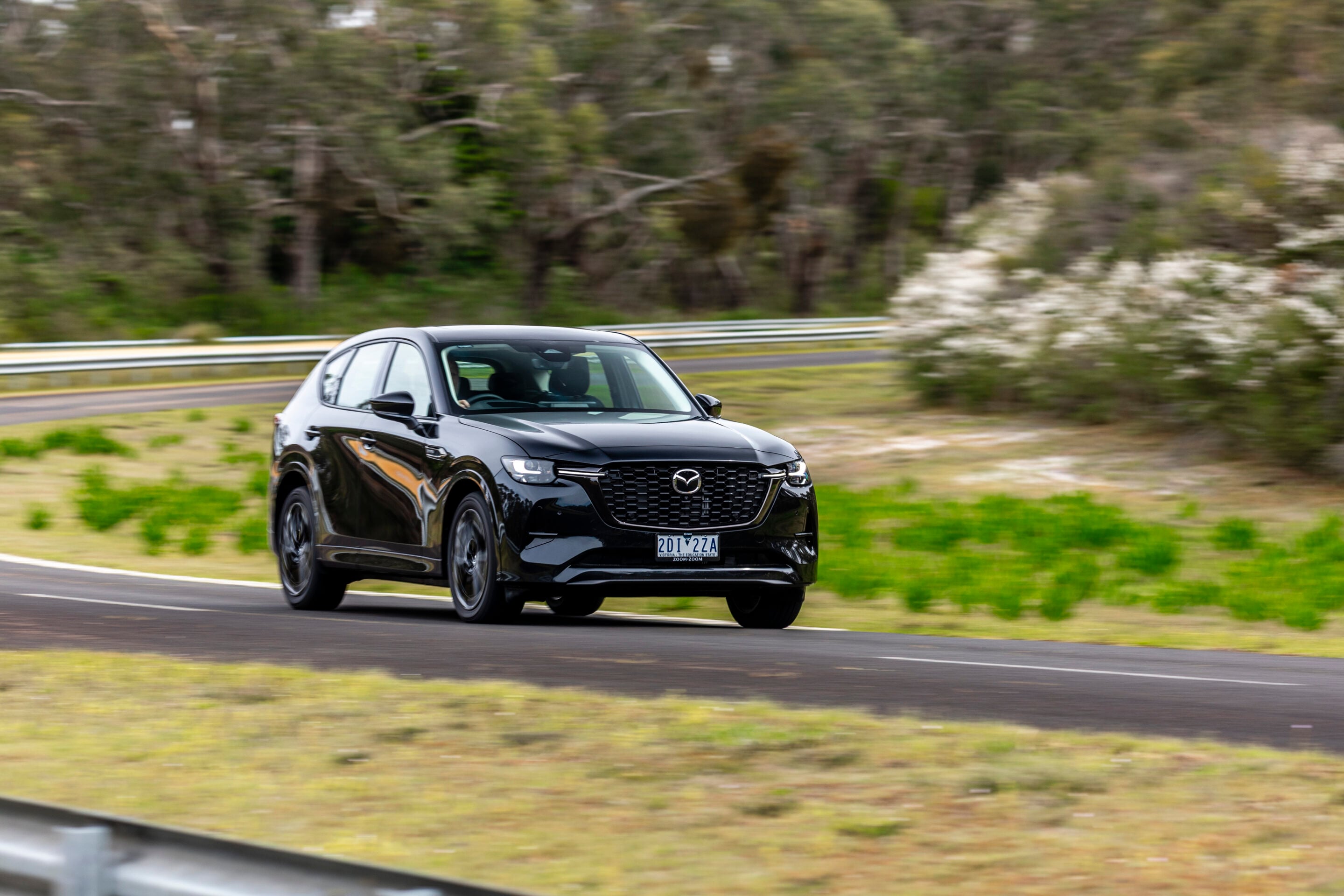
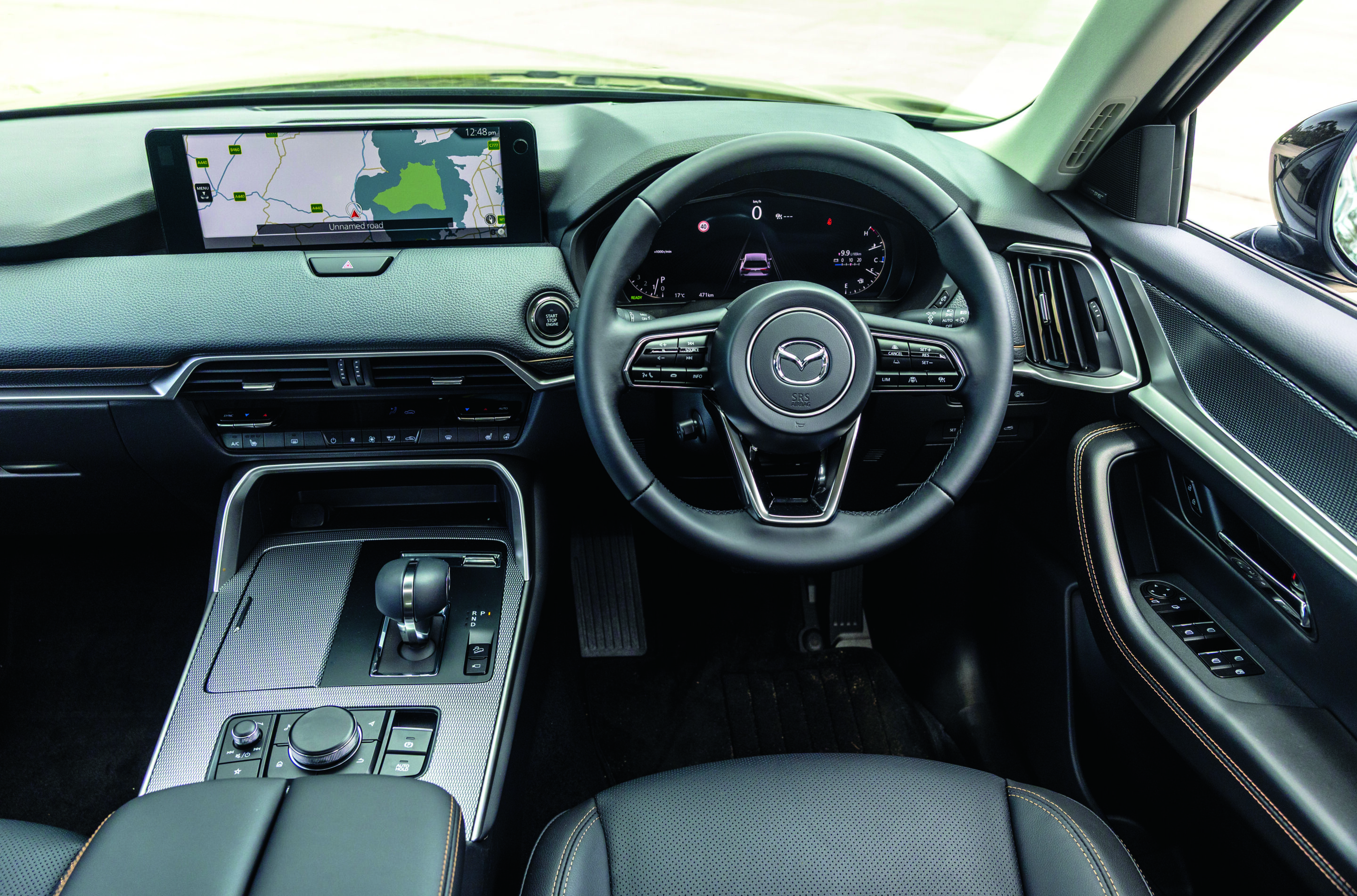
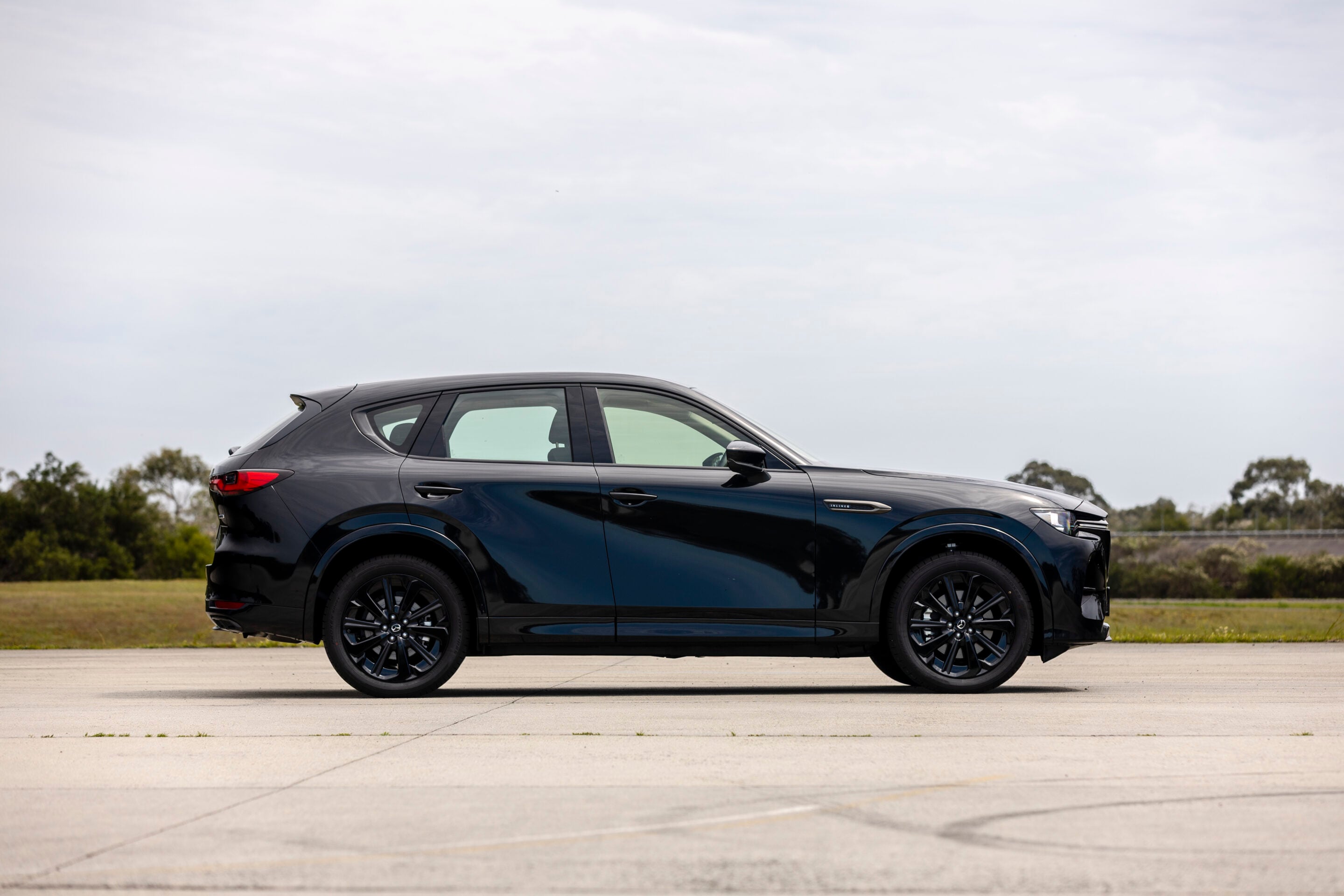
CX-60 GT enters the fray this year, then, more forcibly armed than it might have been. Both more affordable and more expensive variants are available, but the GT sits in the sweet spot near the middle of the range. Cabin design and execution remain a Mazda standout and while everyone’s definition of luxury differs, the Mazda cabin is a lovely place to be. Visibility, the sense of light and space, the quality of the controls, and how easy those controls are to locate and use are all highlights of the CX-60’s DNA.
The judges unanimously agreed that the eight-speed multi-clutch automatic lacked the last 10 per cent in refinement, and the mild-hybrid system wasn’t as smooth as it could be either. We also noted road noise intrusion into the cabin on coarse-chip surfaces at highway speed. However, there is no doubt Mazda has taken on feedback, and softened up the suspension system to deliver improved ride quality on rough surfaces, as well as making the price more attractive to buyers in a hugely competitive segment. The CX-60 – even with road noise noted – is also quieter than previous Mazdas, meaning Mazda has undertaken to engineer cabin insulation into the mix.
The judges loved the smooth response of the 3.3-litre inline six-cylinder engine, which generates 209kW and 450Nm, while using a claimed 7.4L/100km. “A timely reminder of how great an inline six can be,” uttered by more than one judge during the week.
The judges also noted that Mazda faces a tough task anytime it releases a new vehicle – traditionalists wanting it to ‘feel’ like a Mazda whether it’s hybrid or electric, and therefore heavier than it might otherwise be.
Ultimately, the Mazda CX-60 – competent as it is – doesn’t reset the bar in a segment that is hugely competitive across all price points and specification grades. The judges enjoyed driving the CX-60, and all plumped for the quality of the cabin, the useful space on offer, and the choice of materials. Progress to the pointy end of Car of the Year is no easy task though, and the Mazda CX-60 fell short this year.
Specs
| Price | $64,240 (MSRP) |
|---|---|
| Body | Five-door, five-seat SUV |
| Drive | All-wheel drive (on demand) |
| Drivetrain | 3.3-litre inline six-cylinder turbo petrol, 48V mild-hybrid |
| Power | 209 @ 5000-6000rpm |
| Torque | 450Nm @ 2000-35000rpm |
| Transmission | 8-speed multi-clutch automatic |
| Consumption | 7.4L/100km |
| Kerb weight | 2033kg |
| 0-100km/h | 6.9 sec |
| L/W/H/W-B | 4740/1890/1675/2870mm |
| Boot space | 570L/1726L |
| Warranty | 5yr/unlimited km |
| Safety rating | 5 star ANCAP (2022) |
What we have here, ladies and gentlemen, is a bona fide time machine. Climb inside, press the start button. When the engine is stone cold, you’ll sense a small delay as the glow plugs warm the internals sufficiently to convince high-pressure diesel to explode under nothing more provocative than mechanical compression. And within seconds, you’ll be transported back to a time when NVH stood for Not Very Happy.
Pull the shifter into D, tip in some throttle and prepare for the aural and tactile onslaught of a truly
old-school diesel experience. There’s vibration and there’s noise. Haul on to the main road and feed it some more throttle. Now you notice that while there’s a distinct sense of relentlessness about the acceleration, relentless is not another word for enthusiastic. Try dogged, and even that word has a limit of about 3500rpm, at which point, the 2.2-litre four-banger is about done.
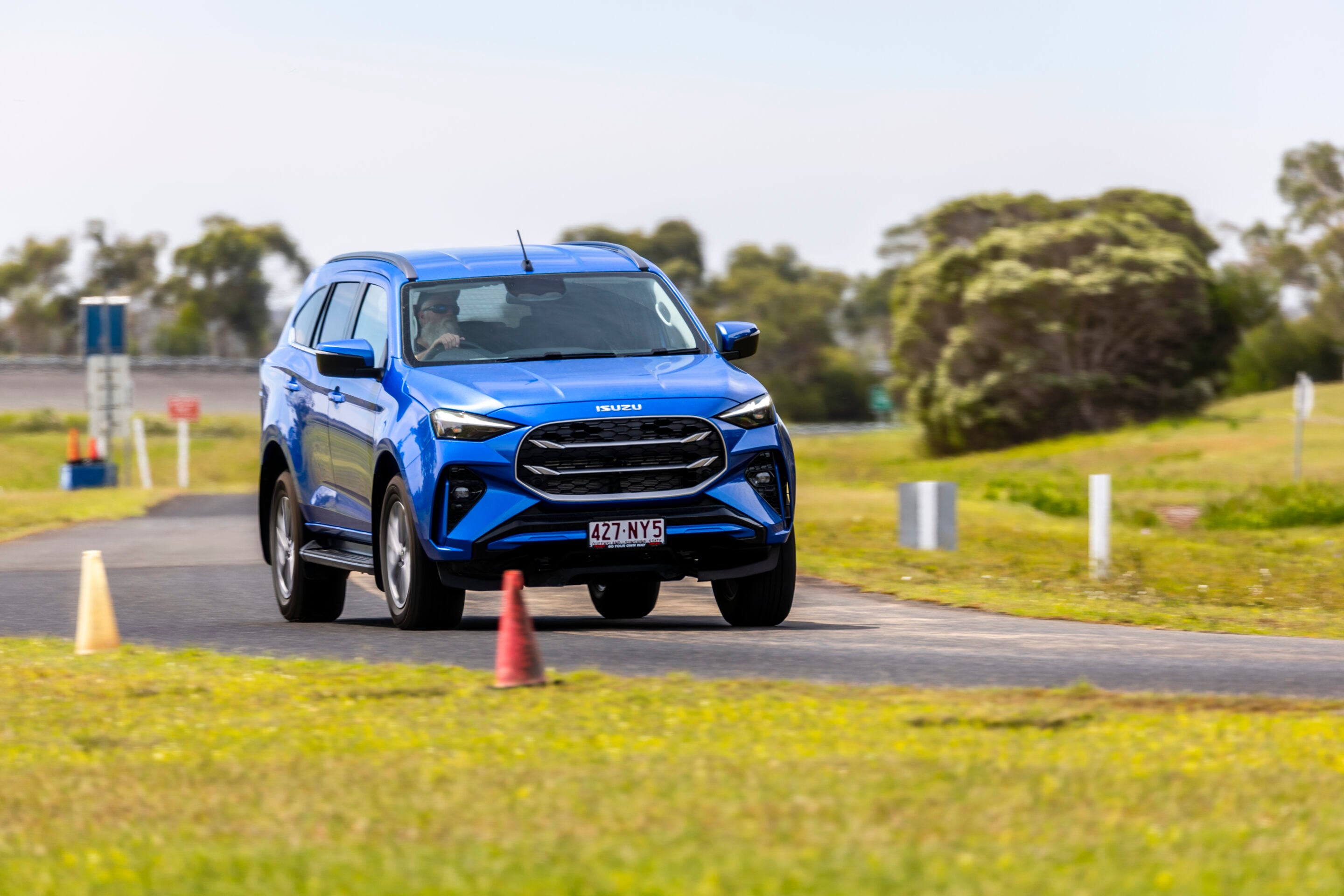
In the world of marine comparisons, if a Mazda MX-5 is a small ski-boat, an Audi RS6 wagon is a cabin-cruiser and a Yaris GR is a jet-ski, the Isuzu is an ice-breaker. And, possibly in this company, a deal-breaker.
The eight-speed automatic does its best to iron out the peaks and troughs of the turbo-motor’s delivery, but there’s no hiding the bronze-age DNA lineage (relatively speaking) of the 3.0-litre engine, considered to be one of the better modern common-rail diesel engines. Well, as they apply to dual-cab utes, anyway.
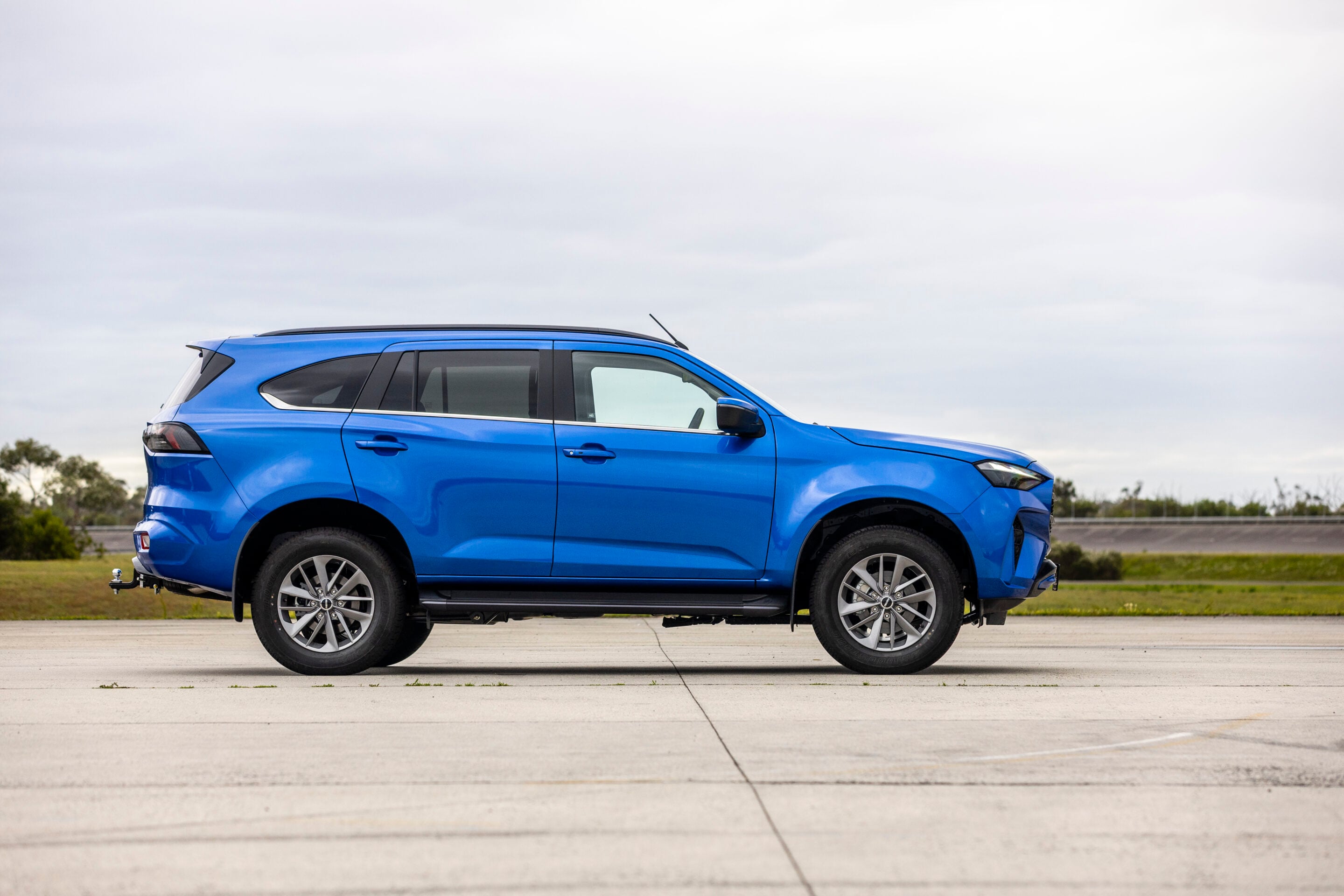
And that’s the key to understanding the MU-X. Not to mention its $62,990 plus on-roads sticker. Strip away the marketing and what you’re left with is an Isuzu D-Max dual-cab with a station-wagon rear section instead of the brickie’s or sparky’s canopy. True, Isuzu has gone to the trouble of re-engineering the box-of-hammers leaf-sprung, live rear axle to produce a coil-sprung independent set-up. But painting a shipping container bright red does not make it a Ferrari. Dig?
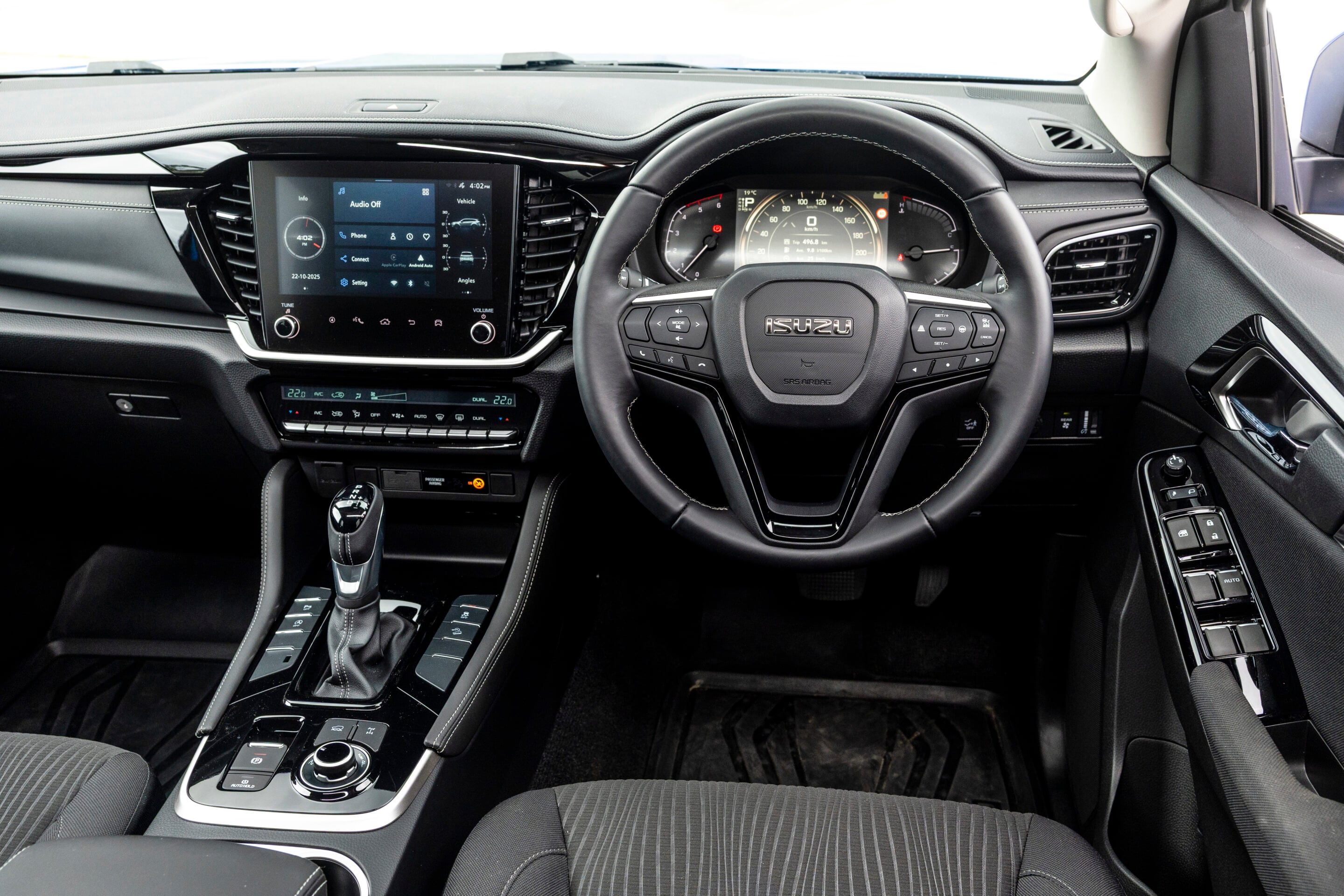
So, you’re driving a truck, okay? If you can live with the unsprung mass and tall ride height, and the spring rates that go with that, and you don’t mind slow steering, a big climb up inside, the noise and the lazy dynamics, then there is one thing the MU-X offers that nothing else in the COTY field can. And that is being the direct descendant of a 4WD with the unquestioned ability to tackle pretty much any off-road journey you can name. Simpson Desert? No problems. Cape York? Victorian potholes? No dramas whatsoever. The Isuzu will gobble it up and tip you out at the other end like nothing happened.
Which brings us to the reality of all this. If you do wish to strike out and see the bits of Australia that only a capable off-road four-wheel-drive can take you, then the Isuzu is a contender for your dollars. The question is whether Aussie buyers will adopt the 2.2L as hungrily as they did the 3.0L?
But, frankly, there are other makes and models that offer the same rock-hopping abilities without quite the same compromises.
Plenty others will likewise reveal this nation’s heartland but will do so with more refinement and sophistication. You don’t necessarily need a time machine to visit history.
Specs
| Price | $62.900 (MSRP) |
|---|---|
| Body | Five-door, seven-seat SUV |
| Drive | Dual-range 4×4 |
| Drivetrain | 2.2-litre four-cylinder turbo diesel |
| Power | 120kW @ 3600rpm |
| Torque | 400Nm @ 1600-2400rpm |
| Transmission | 8-speed automatic |
| Consumption | 6.7L/100km |
| Kerb weight | 2105kg |
| 0-100km/h | NA |
| L/W/H/W-B | 4860/1870/1825/2855mm |
| Boot space | 311L/1119L/2138L |
| Warranty | 6yr/150.000km |
| Safety rating | 5 star ANCAP (2022) |
It was early in 2024 when the bait came through the interweb. Hyundai wanted to know if I’d like to fly to Dubbo in central NSW to sample a top-secret prototype of what could become a volume selling model. In this game,that’s like asking a politician if they’d like to tour the factory where lies are planted as seedlings and grown into policies.
We all know that Hyundai uses local suspension engineers to get things right, but less well known is that the brand in general likes testing prototypes down under. Our time zone is closer to South Korea’s than Death Valley’s, for instance, and landing secret cars here in large boxes is both cheaper and easier. Plus we have plenty of temperature extremes and enough red dust to test any engineer’s skills at keeping the stuff out of interiors and mechanical bits.
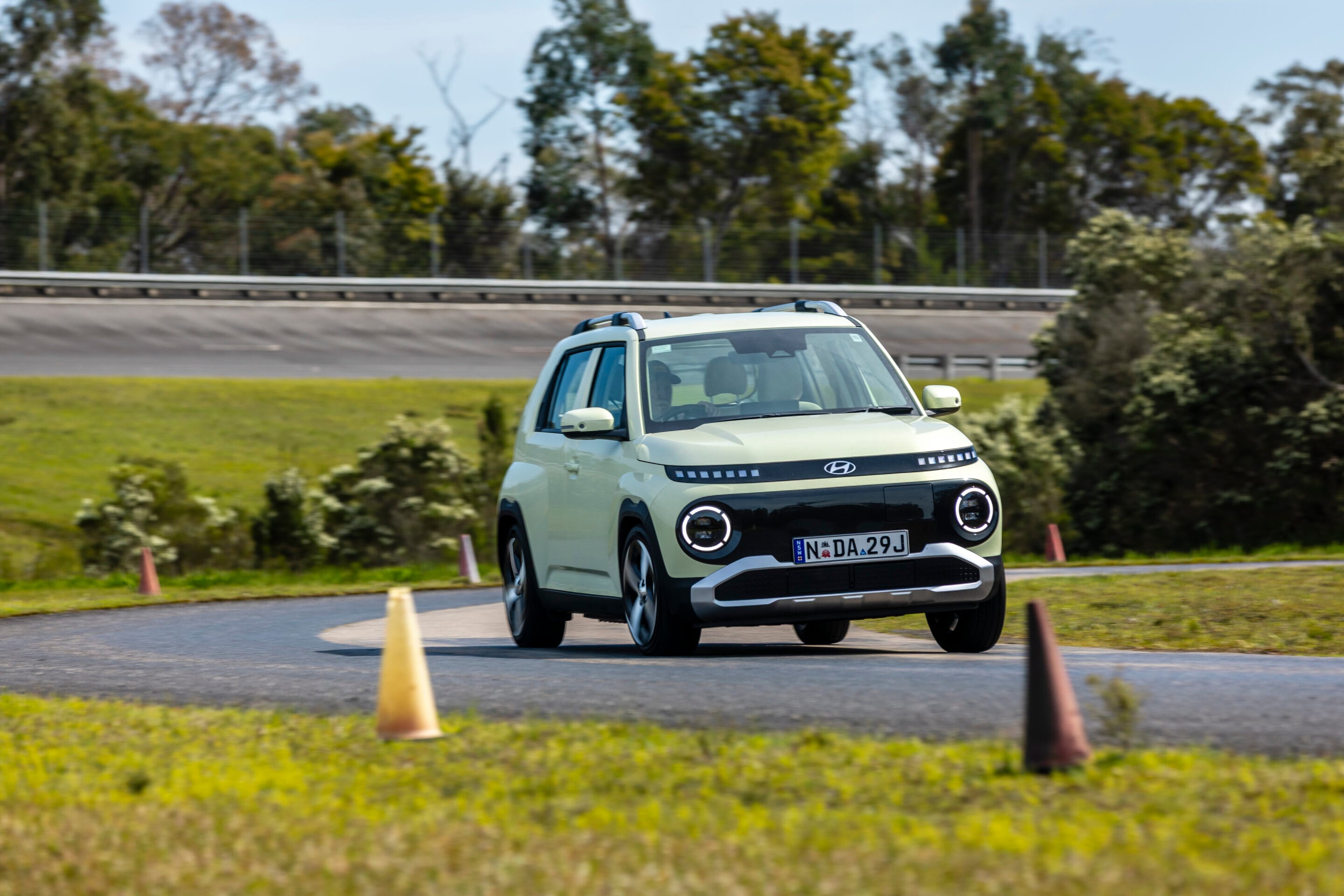
In any case, the prototype in question was a city-bound compact with an all-electric driveline. Sound
familiar? Yep, the Inster.
At the time, the secret-squirrel chat was that the Inster might hit the Aussie market at under $40,000. Which, of course, it did in entry-level form. Fast forward about 14 months and the Inster is on sale in Australia at $39,000 for the base-model and $42,500 (plus ORC) for the extended range model here. So, mission accomplished then? Well, sort of.
The catch is that GWM had been slicing $2000 chunks out of its Ora franchise, finally making the funky little EV $36,000 driveaway. Oh, and the MG ZS EV had also lobbed into the mix at $35,000 after similarly savage discounting. Then there’s the BYD Dolphin Essential at sub-$30K. Oh dear. Which is where we find ourselves right now, with the Inster retaining all the charm and technical verve it ever had, but a price-tag that is scaring the horses.
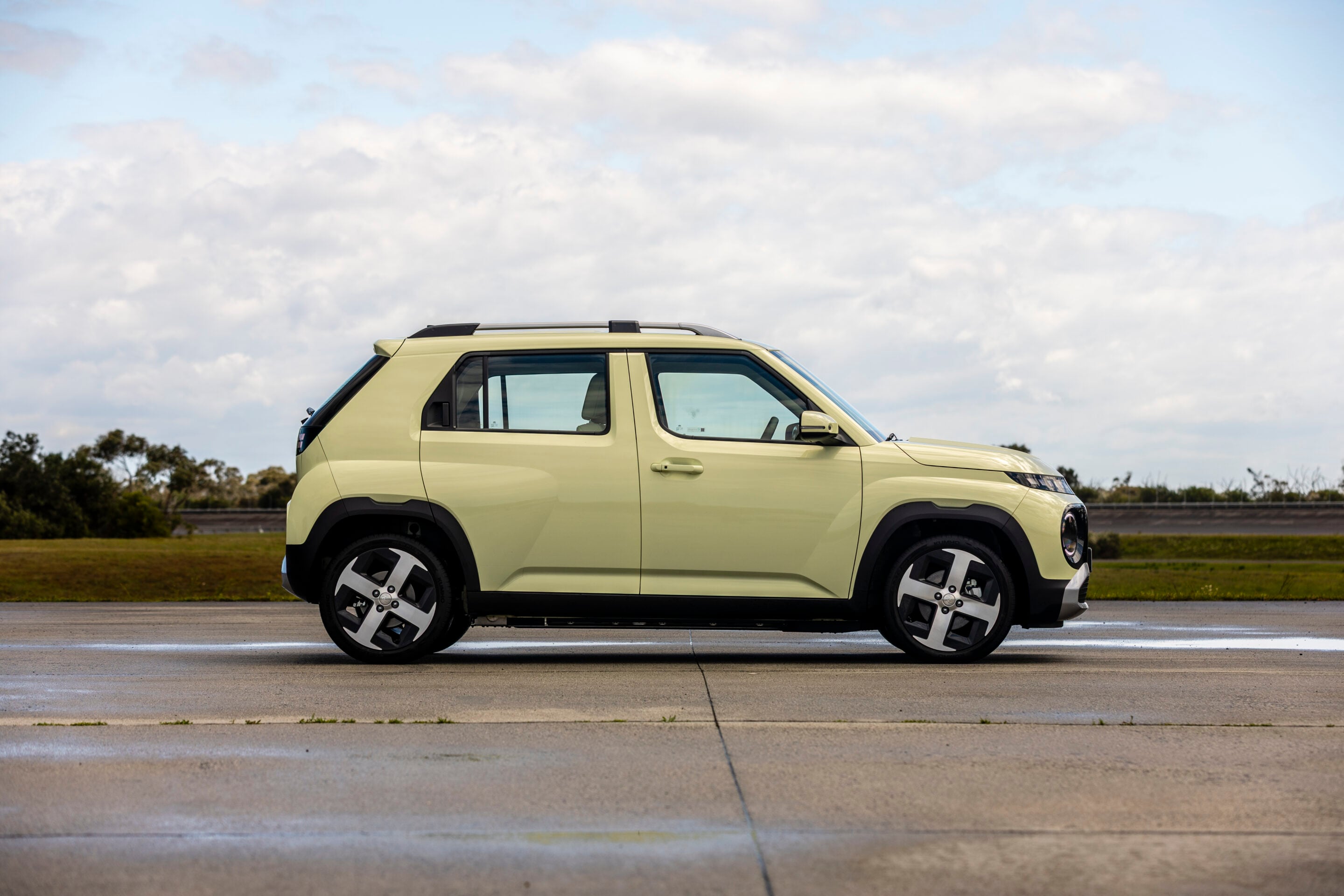
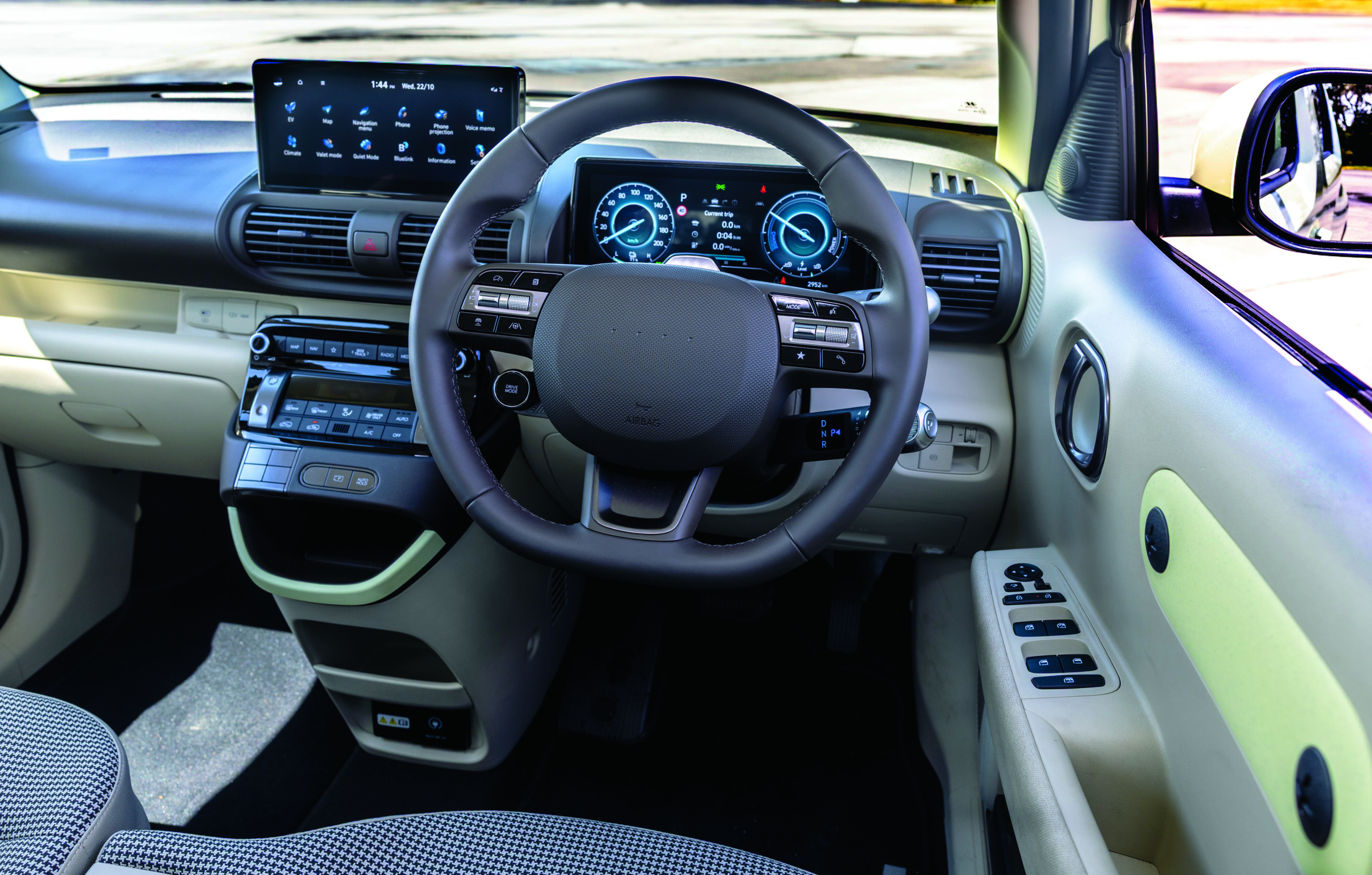
But you can’t deny the Inster is cute. It has a kind of Staffy-puppy enthusiasm even in the way it sits when parked. Okay, it might look a bit Fisher-Price to grown-ups, but the K-Pop generation couldn’t care less. Inside, the funkiness continues with the houndstooth and off-white interior looking great now, but who knows for how long.
A single electric motor drives the front wheels and power comes from a 49kWh lithium-ion battery under the floor. Driving through a single-speed transmission, the Inster makes do with 84.5kW of power and 147Nm of torque to hustle its 1400-odd kilograms. Understandably, then, performance is leisurely rather than frantic, and there’s always the feeling that a few more kiloWatts under your clog would be a nice thing to have.
But the Inster’s real charm is in the way it shreds. In fact, this is a properly competent platform which is also nicely damped and has an especially talkative front end, something that has characterised tiny Hyundais and Kias for a while now. Again, though, if it were just a tad speedier…
This variant of the Inster has the larger battery which extends range to a claimed 360km. Three-twenty will be closer to the truth. Charging is easily achieved overnight on a household wall-box (call it seven hours from 10 to 100 per cent charged) and the wee Hyundai can also cope with up to 120kW on a DC fast-charger. At which point you’re looking at going from 10 to 80 per cent charged in 20 minutes.
In the end, despite Peter Robinson’s description of it as “part suburban runabout and part small SUV… delivering a civilised drive at a price” the Inster did not offer enough to proceed beyond round one.
Specs
| Price | $42,500 (MSRP) |
|---|---|
| Body | Five-door, four-seat SUV |
| Drive | Front-wheel drive |
| Drivetrain | Single electric motor, 49kWh lithium-ion battery |
| Power | 84.5kW |
| Torque | 147Nm |
| Transmission | Single-speed reduction gear |
| Consumption | 15.1kWh/100km, 360km range WLTP |
| Kerb weight | 1335-1423kg |
| 0-100km/h | 10.6 secs |
| L/W/H/W-B | 3825/1610/1610/2580mm |
| Boot space | 280L/1059L |
| Warranty | 5yr/unlimited km |
| Safety rating | 4 star ANCAP (2025) |
