
Data from insurance company Rollin’ has shown that Queensland and New South Wales drivers are the worst for using their phones while driving. The company analysed over 18 million kilometres of real-world driving and found that drivers in Cairns and the Central Coast have a one-in-four-trip phone usage, which is the highest in the country.
Using smartphone sensors to assess things like acceleration, braking, cornering, and phone usage, the app calculates a safe driving score, helping identify the safest drivers across the country. The research found that a staggering 91 percent of Rollin’s customers were detected using their phone while driving.
Cairns in Queensland and the NSW Central Coast take the top spots as the cities where drivers are most likely to use their phones. Drivers in these cities are the worst offenders for phone use, reaching for their devices once every four trips on average. Not far behind, Queensland’s Sunshine Coast takes second place, with drivers using their phones once every five trips.
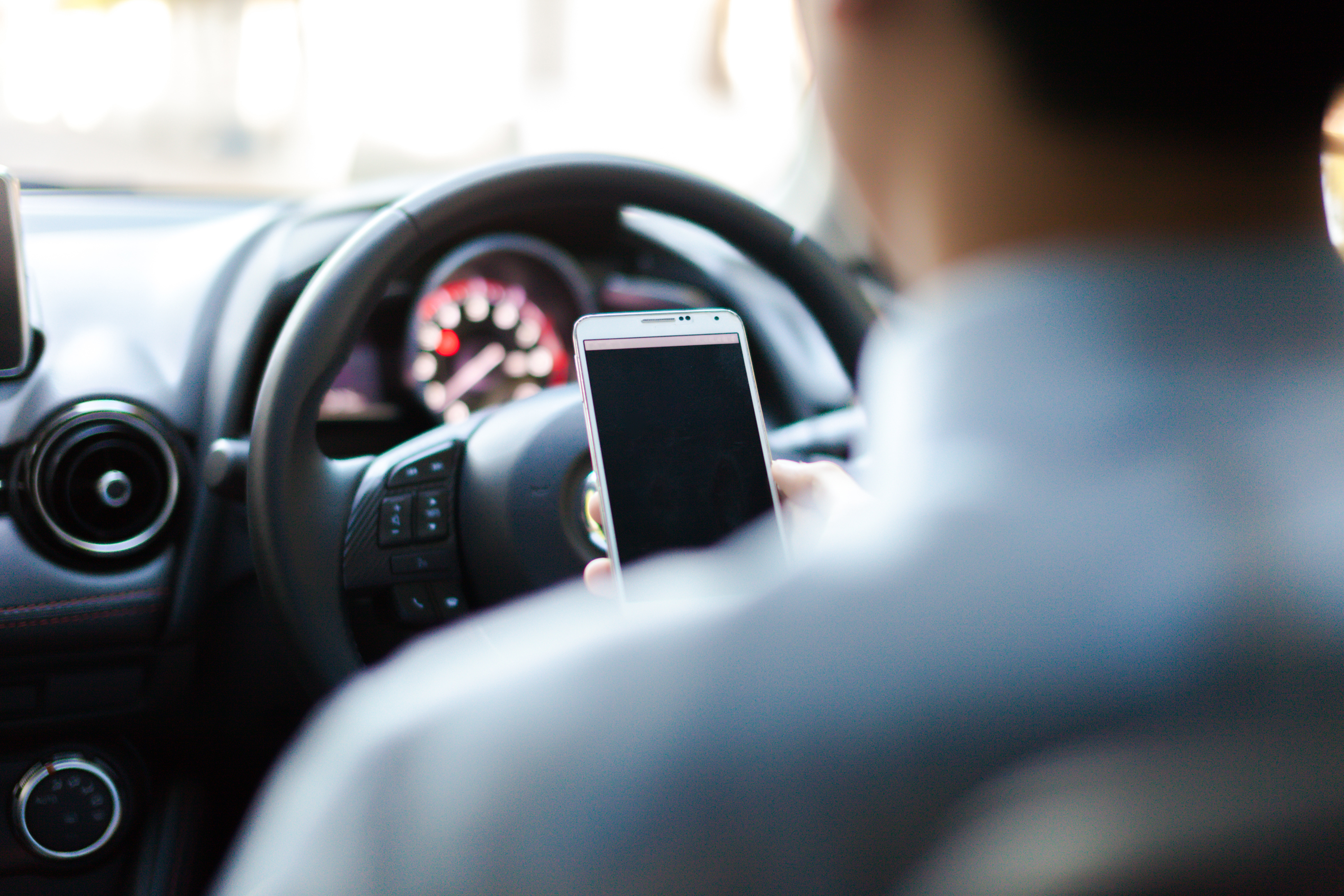
On the flip side, Wollongong, NSW drivers are the least likely to use their phones behind the wheel, averaging one in 10 trips. South Australia’s capital Adelaide ranks in second place, with drivers reaching for their phones once every nine trips on average.
In fact, South Australian drivers are the least likely to use their phones while driving, averaging just one instance every nine trips. Surprisingly, Queenslanders, despite having the toughest penalties for mobile phone use, rank joint second alongside those living in New South Wales and the ACT.
Victoria and Western Australia rank among the worst states for phone use while driving, with drivers reaching for their phones once every six trips on average, more frequently than those in South Australia, Queensland, the ACT, and New South Wales.
In some non-phone related results, Geelong takes the top spot for the safest drivers among all Australian cities, earning an impressive safe driving score of 92.0. This high rating is driven by their exceptional performance in smooth acceleration and turning, showcasing their steady and controlled driving habits.
South Australia is the safest state behind the wheel, with a driving score of 90.3. Drivers here ranked second in braking performance and maintained the lowest average speeds overall. The most dangerous time to drive is Friday between 5-6pm, as traffic and weekend travel peak. Weekend lunchtimes (12-2pm on Saturdays and Sundays) also see more incidents.
“Our analysis of over 18 million kilometres of driving data from our app reveals that, while many Australians earn an A on their safe driving score, there’s still room for improvement. Habits like phone use and harsh braking remain common on Australian roads, putting drivers, passengers and pedestrians at risk,” says Rollin’s Executive Manager, Brendan Griffiths.
New teaser images have given fans of the Toyota RAV4 a small glimpse of the coming updated model to be launched in May 21.
Selling almost 60,000 units in Australia in 2024 and with its 2025 numbers already up 10.2 per cent over this time last year, the current-generation Toyota RAV4 has been a big success for its maker.
Despite its potential wait list and that many rivals offer newer models, the RAV4 still does big sales
numbers and it’s clear to see why: it’s an excellent all-rounder that’s also very fuel efficient.

What will the interior of the new RAV4 look like?
As well as confirming that the new RAV4 will be revealed this month, Toyota has also shown pictures of its interior for the first time. From the teaser pic (below), we can see that a new digital display for the driver will feature, as well as a large new touchscreen with a new software system. The company will introduce new indicator and wiper stalks, as well as a new steering wheel design. There is also a place for a head-up display at the foot of the windscreen.
In another teaser, the new RAV4’s centre console is sleek with a tiny gear lever – like the new C-HR – and a big wheel sitting on the dashboard, like a LandCruiser Prado to potentially change drive modes. We can also see the usual big cupholders in the centre console, and an opening for a tray, likely with a wireless phone charger.

What will the new RAV4 look like?
Like the current Camry, which is a heavily revised version of the old model, we expect the body of the new RAV4 to largely stay the same as the current shape car and use the same ‘TNGA-K’ platform as well. While the front and rear ends will likely be different and use the brand’s latest design language, the general shape will be largely identical with unchanged window shapes to avoid spending big money.
Considering that the recently-revealed facelifted Corolla Cross will include a GR Sport model in Australia for the first time, it’s likely that the RAV4 GR Sport – previously offered only overseas – will be making it Down Under for the first time as well. This model will likely add sportier styling and interior details, and potentially changes to the suspension as well.
What will power the new RAV4?
As with the current model, which became a hybrid-only line-up locally in 2024, it’s expected that
the new RAV4 will follow suit – in Australia, at least. The new Camry upgraded to the brand’s latest
fifth-generation hybrid when it launched with newer battery tech, a move that we expect the RAV4
to follow. Both front- and all-wheel drive variants will be offered again.
But judging from public comments made by the brand’s local arm, we could also see the plug-in hybrid RAV4 offered locally for the first time as well. Toyota has offered a powerful 224kW RAV4 PHEV overseas for this generation, but Australia’s slow-until-now PHEV uptake meant that it missed the boat. Thanks to new emissions regulations and advancements in battery tech for more than 100km of electric driving range, the RAV4 PHEV could be sold locally for the first time.

How much will the new Toyota RAV4 cost?
Of course, pricing and specifications for the new RAV4 are yet to be revealed but given the price
increases with the latest Camry when it launched, we can expect a reasonable increase to the current model’s $42,260 plus on-road costs price, marking a dramatic increase to when the current shape launched here in 2019 priced from just $30,990 +ORC.
Given the likely inclusion of a plug-in hybrid drivetrain, the current model’s top-spec Edge’s $58,360 +ORC asking price is also likely to increase. Could we see the first $70,000+ RAV4 in Australia? Potentially.
When will the new Toyota RAV4 debut?
Toyota has confirmed that the new RAV4 will debut next week on May 21st, with a likely-2026
Australian release date. Be sure to check in to the WhichCar website then for the latest details.
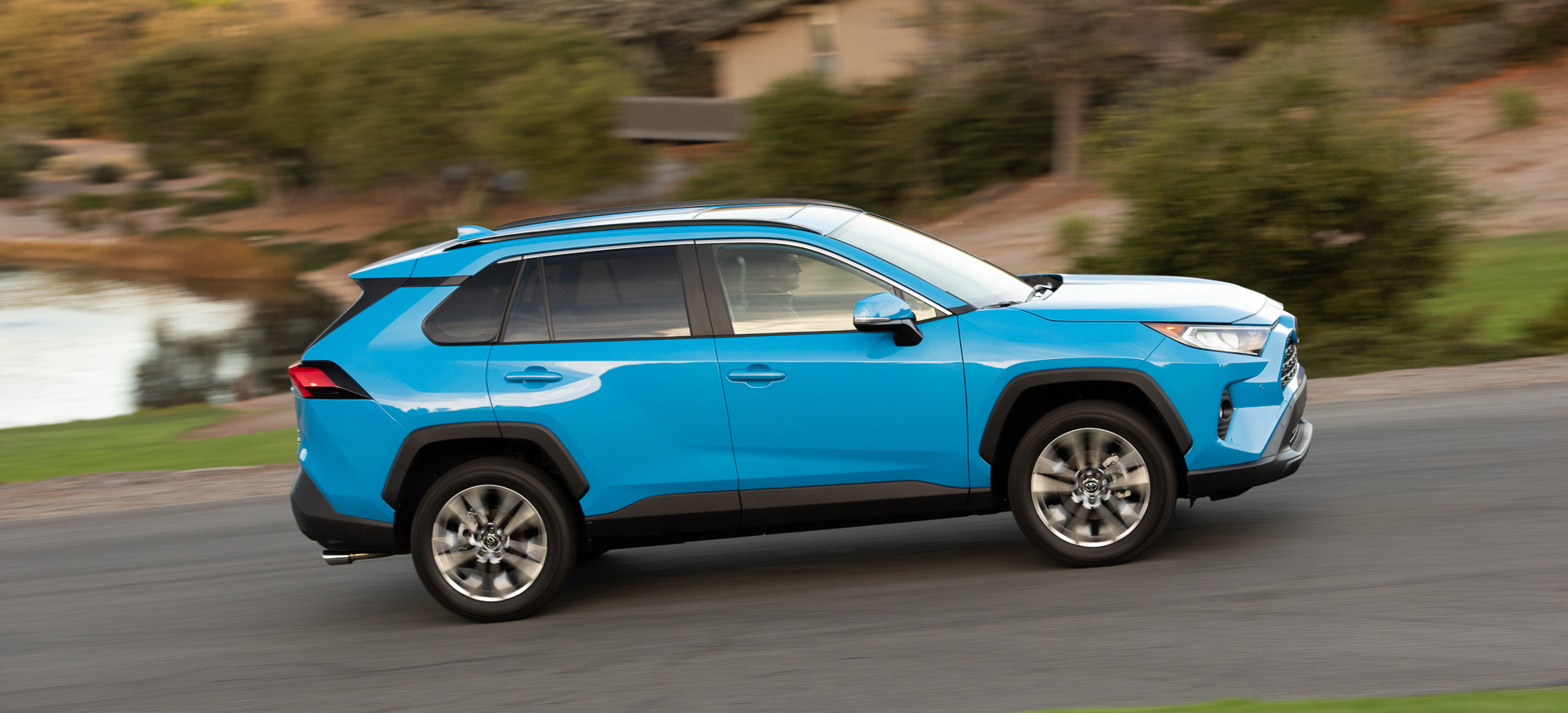
While some may consider some Australian road rules to be a a bit nutty, a search of global motoring road rules reveals that some countries are on another planet. We all know the basic traffic laws such as obeying traffic signals, no speeding, and giving way to pedestrians, but did you know there are truly bizarre road rules in different parts of the world? Here are our favourites in no particular order:
Norway
Reindeer are legally protected and always have right of way.
Turkmenistan
In the capital city, Ashgabat, motorists must drive a light-coloured car as it’s believed that they bring good luck.
Japan
In a typical Japanese way, it’s illegal – not to mention, quite disrespectful – to splash pedestrians by driving through puddles. The consequence? An AU$80 fine and a few ruined days.

Tonga
Need to drive to church or the shops on a Sunday? You can’t, because it’s illegal to drive on that day, a law that’s shared with Zimbabwe to promote exercise and a clean environment.
Brunei
It’s illegal to eat or drink anything at all while driving, same with Cyprus, which gets you an AU$140 fine and the loss of three demerit points.
Kyrgyzstan
Motorists are required to carry a fire extinguisher in their vehicles at all times.
United Arab Emirates
Major highways in the UAE have different signposted speed limits in different lanes, and it’s illegal to drive too slowly in the fast lane and block faster moving vehicles.
France
A breathalyser must be kept in vehicles at all times.
Mauritius
It’s illegal for drivers to smoke when behind the wheel.
Uzbekistan
It’s illegal for vehicles to have tinted windows – no light tint, no privacy glass, nothing.

Oman
All cars must be clean and drivers can be fined for it – same in Russia, specifically Moscow, and Iran as well.
Brazil
It’s illegal to drive while wearing thongs/flip flops – similar to Paraguay, where drivers must wear shoes at all times behind the wheel.
Switzerland
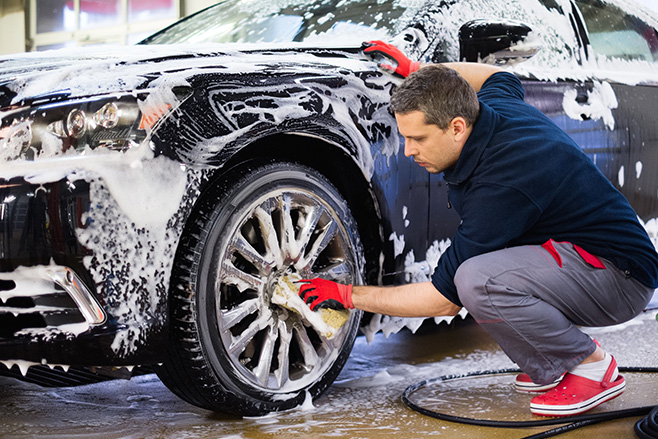
Cleaning your car on a Sunday is a big thing for a lot of Aussies, but in Switzerland, that is actually not allowed.
Phillipines
In an attempt to limit traffic while commuting on weekdays, cars that have a 1 or a 2 at the end of their licence plate aren’t allowed to drive on Mondays, cars with a 3 or a 4 aren’t allowed to drive on Tuesdays, and so on.
New Zealand
Such is the importance of sheep in NZ, if a farmer is moving stock between paddocks on a country road, then drivers must do whatever they say.
Australia
A homegrown law that you may consider crazy is that in some states, it’s illegal to leave your car unlocked. Even if you’re stepping away from the car for just a moment, it must be locked.
USA
Finally, the country with the nuttiest road rules. For example, in Vest Virginia, road kill is fair game for anyone. In Texas, all vehicles must have windscreen wipers – regardless of if they have a windscreen or not. In Montana, sheep must be chaperoned at all times and not left in the back of trucks or utes while parked. In Denver, Colorado, black cars cannot be driven on Sundays. In Illinois, you can be arrested for driving without a steering wheel and finally, in California, it’s illegal for an unoccupied vehicle to go faster than 60mph. Think about that one again…
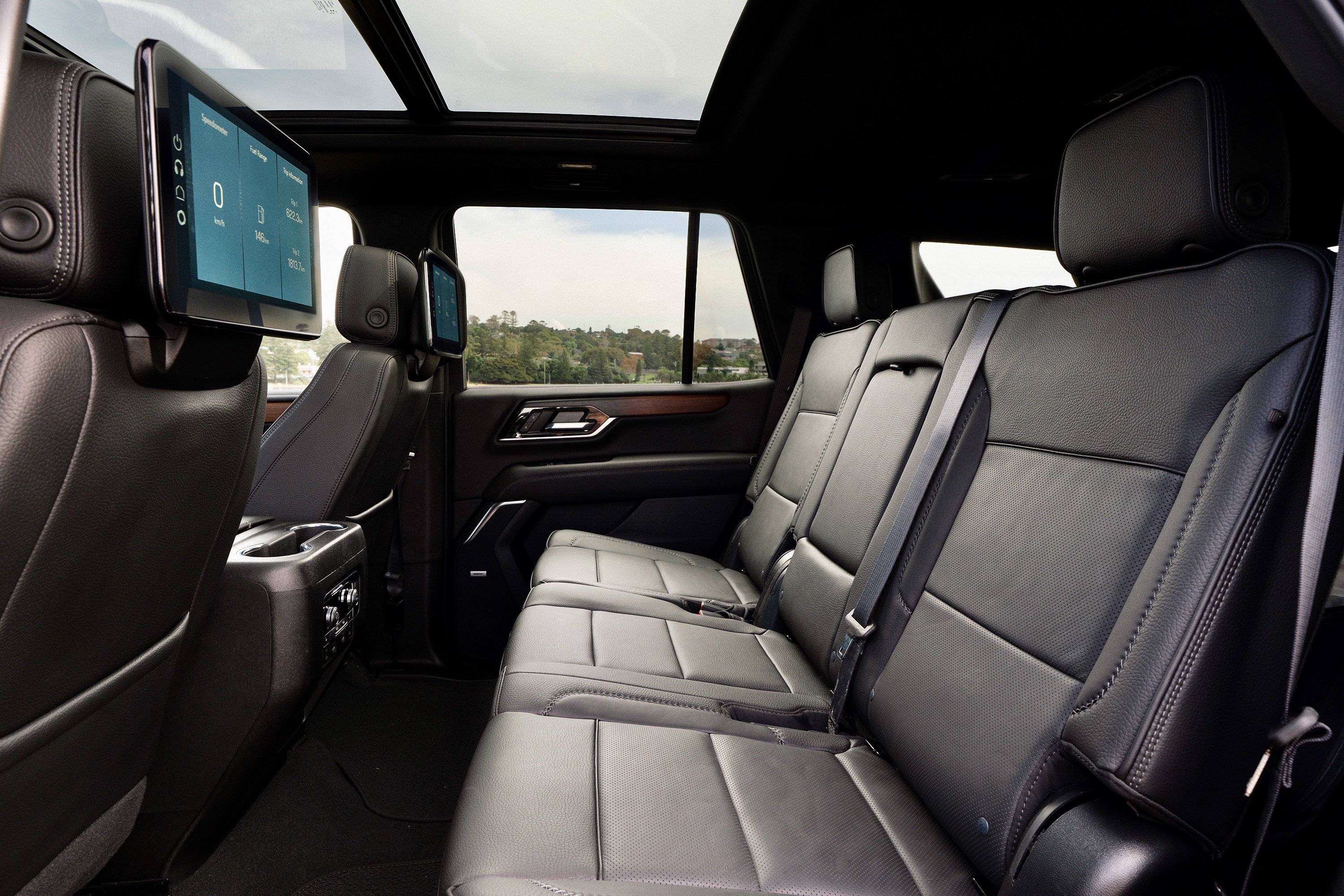
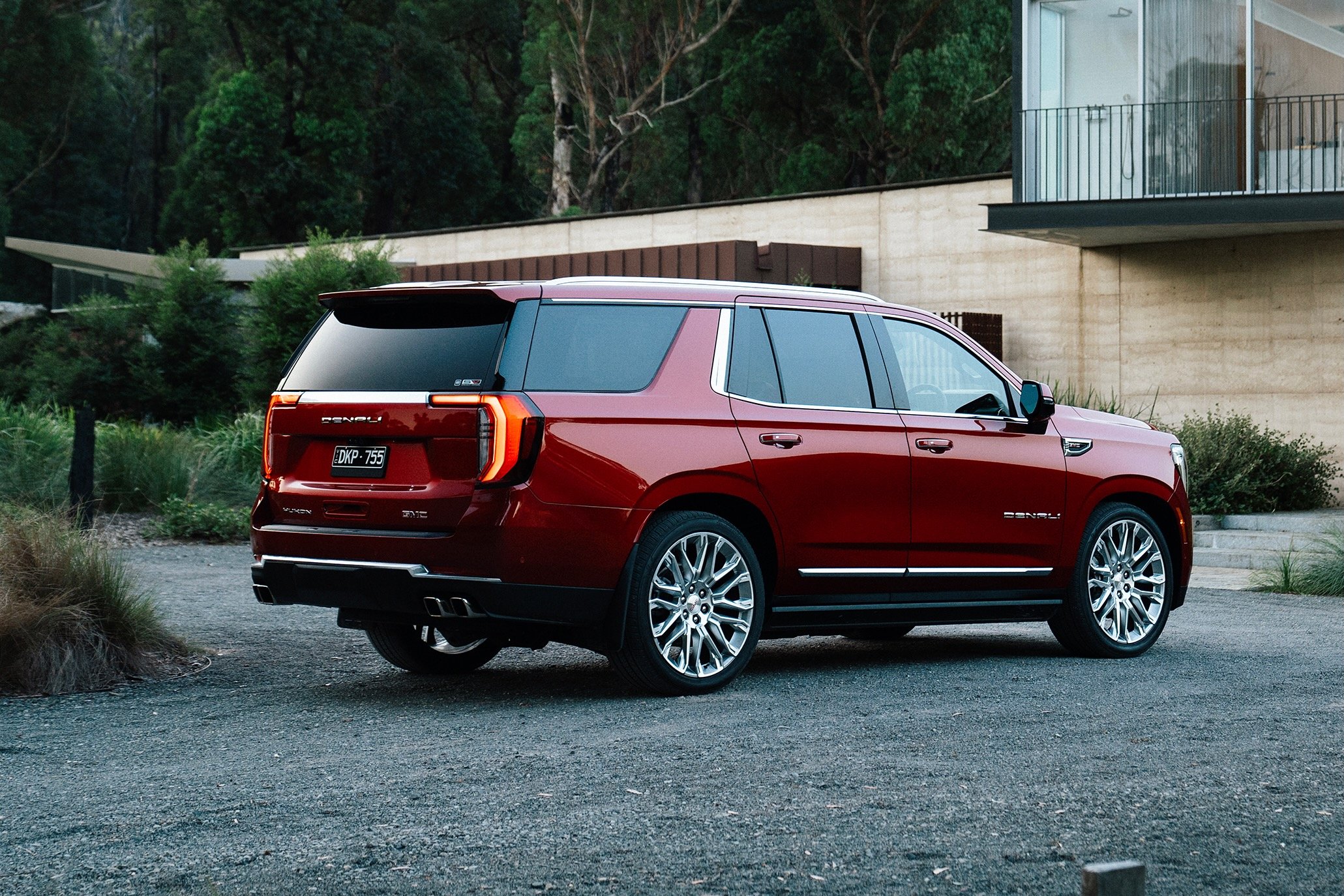
GM Special Vehicles Australia has launched its latest product into local showrooms: the GMC Yukon Denali, which also marks the first time that the GMC brand has been sold locally. Sitting atop the GMSV range in sizing, the Yukon Denali is an eight-seat upper large luxury SUV with a 6.2-litre V8 and a 3628kg braking towing capacity.
Under the bonnet of the Yukon Denali is a 6.2-litre petrol V8 engine, making 313kW of power and 624Nm of torque, which is mated to a 10-speed automatic transmission and a part-time four-wheel-drive system with a low-range transfer case.
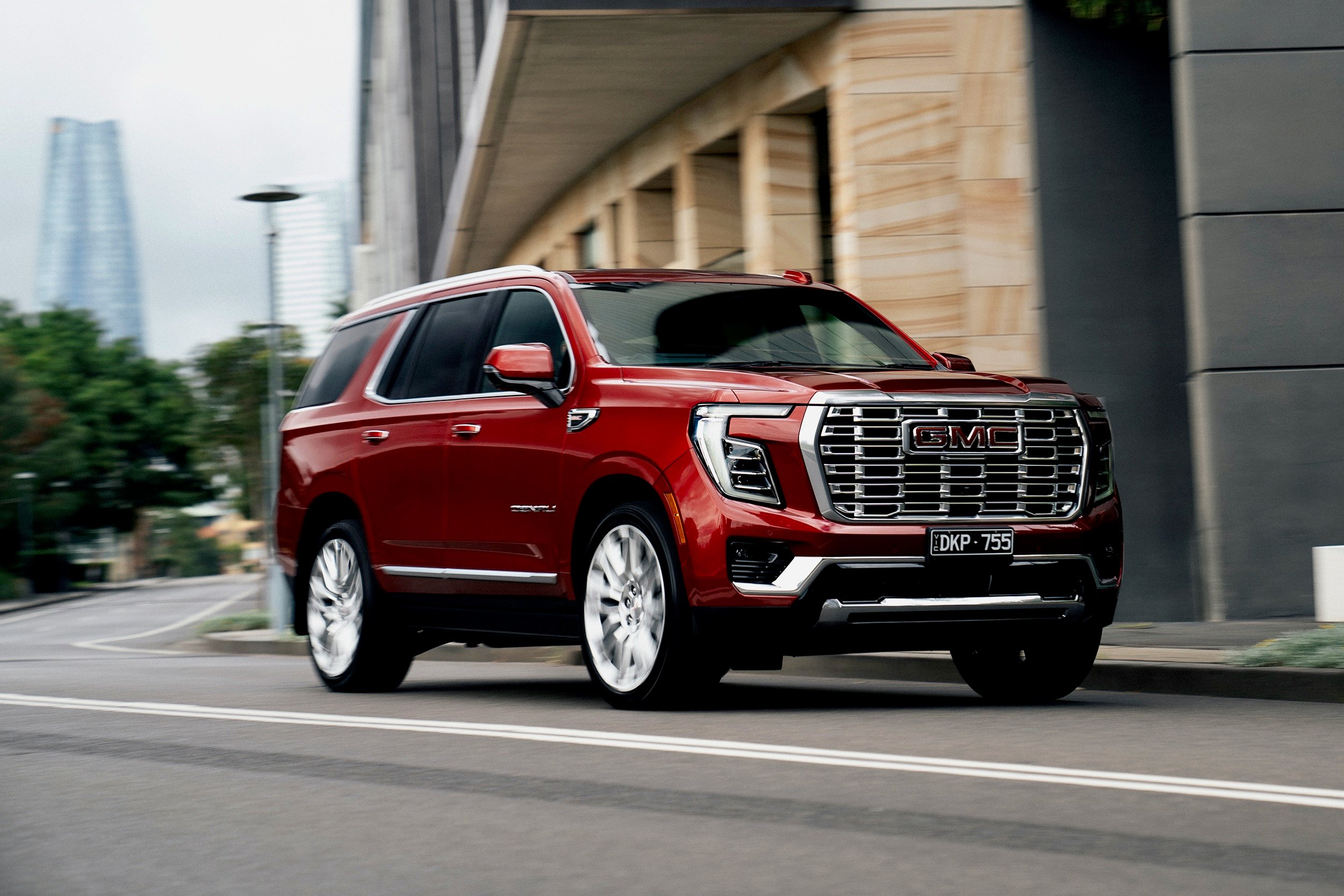
Its claimed fuel consumption is 12.8L/100km on a combined cycle and it needs minimum 95RON premium unleaded fuel to fill its 91-litre fuel tank.
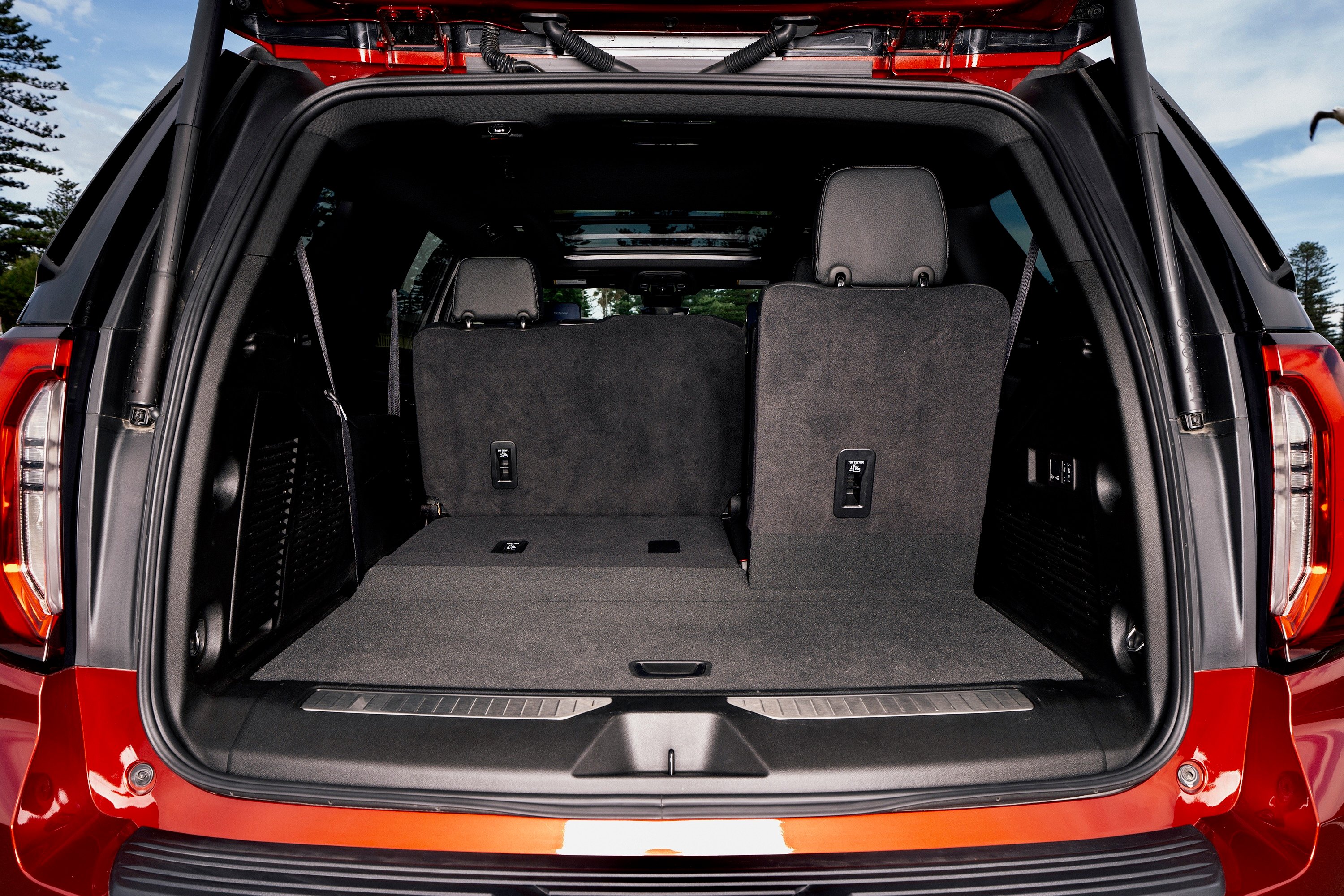
Measuring 5337mm long, 1943mm tall, 2058mm wide and riding on a 3071mm long wheelbase, the Yukon Denali’s maximum boot capacity with all the rear seats folded is 3480-litres. Its kerb weight is 2813kg.
According to GMSV, the Yukon Denali’s 3628kg braking towing capacity is best-in-class, and more than the 3500kg rating of rivals like the Nissan Patrol and Toyota LandCruiser 300 Series.
GMC Yukon Australian pricing (plus on-road costs):
Denali: $174,990
GMC Yukon Denali standard features:
- 24-inch alloy wheels
- Adaptive air suspension with electronic valving shock absorbers
- Dusk- and rain-activated automatic LED exterior lighting
- Rain-sensing automatic wipers
- Keyless entry and push button start
- Hands-free power tailgate
- Acoustic laminated and rear privacy glass
- Heated/auto-folding mirrors
- Power-retractable side steps
- Panoramic sunroof
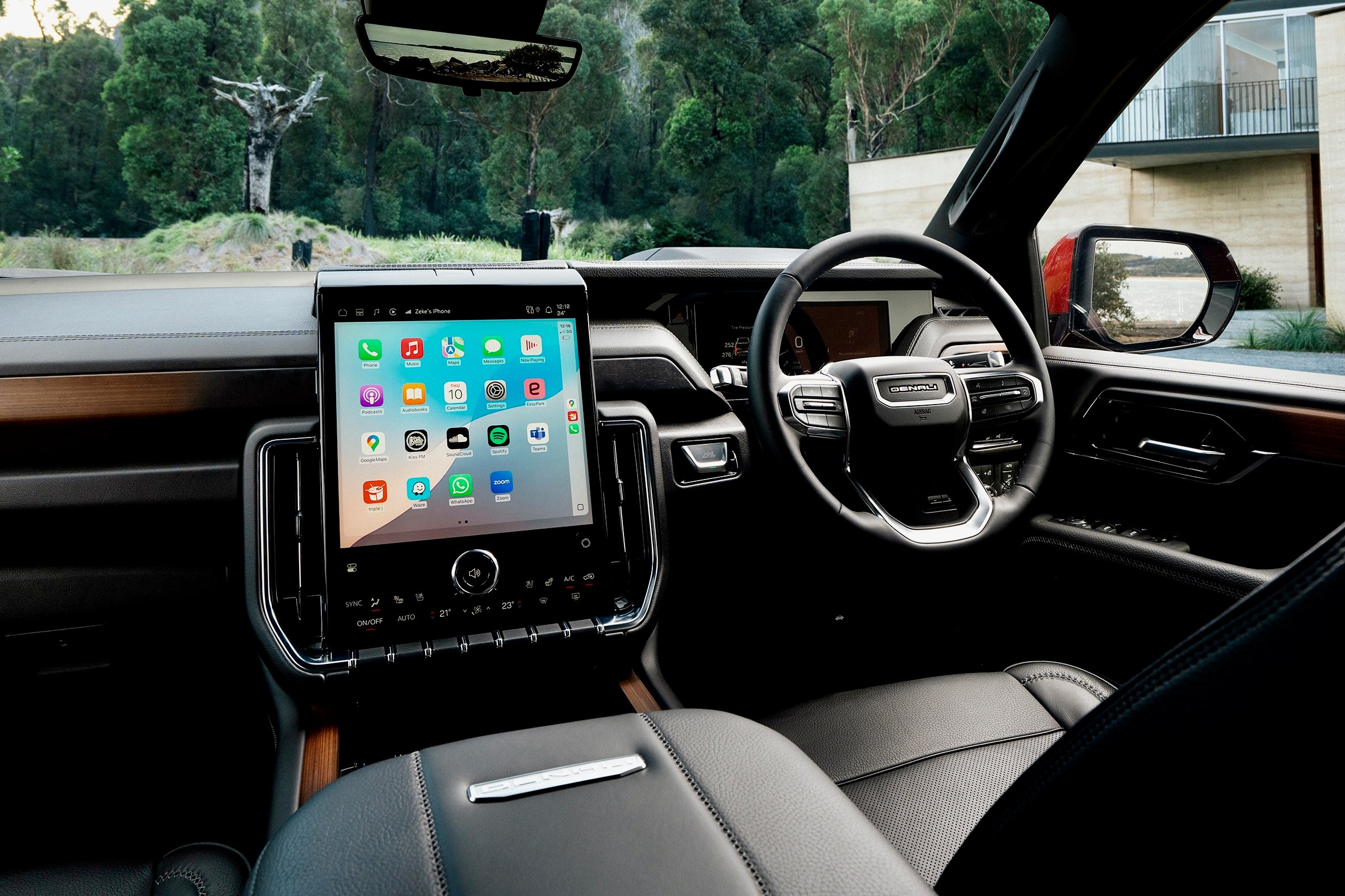
- Heated leather steering wheel with electric steering column adjustment
- Tri-zone automatic climate control
- Leather upholstery
- 12-way electric front seats with driver’s memory functionality
- Front seat heating and ventilation
- Dual 12.6-inch rear entertainment screens
- 11-inch digital driver’s display
- 16.8-inch touchscreen
- Wireless Apple CarPlay and Android Auto
- 14-speaker Bose sound system
- Six airbags
- Autonomous emergency braking (AEB) with pedestrian and intersection assistance
- Adaptive cruise control
- Lane keeping assistance with lane departure warning
- Auto high beam
- Blind-spot monitoring
- Rear cross-traffic and pedestrian alert (with braking)
- Rear automatic braking
- Side cyclist alert
- Front and rear parking sensors
- 360-degree camera
- 15-inch head-up display
- Rear camera mirror
The GMC Yukon Denali is now in local GMSV showrooms, with the first deliveries due to commence soon.
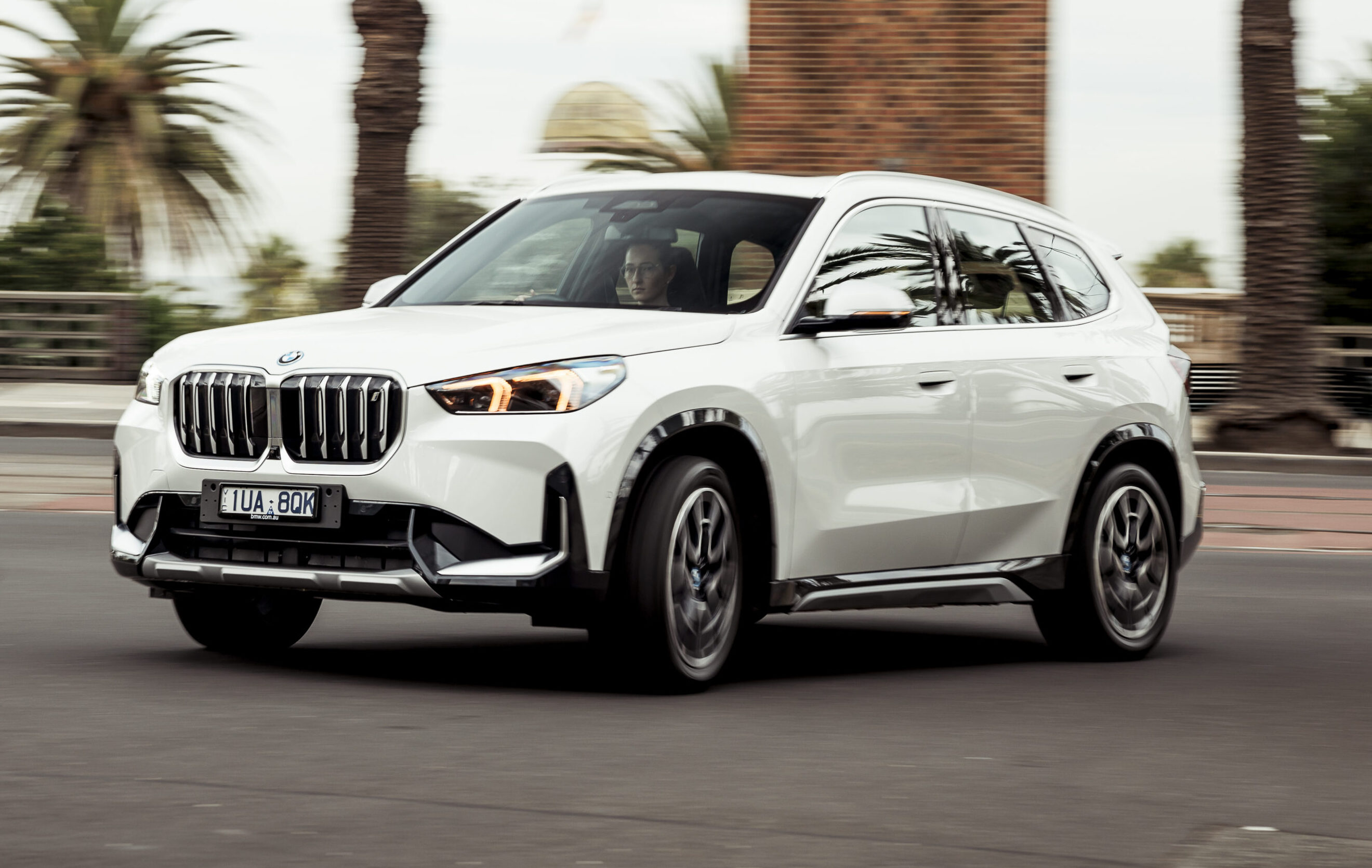
In an innovative collaboration set to reshape novated leasing for those in the market for a new car, leading novated lease provider Smart has joined forces with BMW Financial Services, the finance arm of BMW Group Australia, to streamline and simplify the process for both employees and employers.
For the first time, customers can now complete the entire novated leasing process directly at BMW and MINI dealerships. From selecting a vehicle and arranging finance to signing the lease agreement, every step can now be handled on-site to improve the convenience of the process.
At the heart of the offering is the fully maintained lease, which consolidates all major vehicle running costs – servicing, tyres, registration, insurance, and fuel – into a single, regular payment. Importantly, part of this payment is drawn from the employee’s pre-tax salary, reducing taxable income and unlocking substantial financial savings.
Additional advantages include GST savings on both the vehicle purchase and its running costs, further enhancing affordability.
The benefits are even more compelling for electric vehicle (EV) drivers. Thanks to the current Fringe Benefits Tax (FBT) exemption on eligible EVs priced below the $91,387 luxury car tax threshold, employees can access a cost-effective path to driving electric.
“Today’s customers want simplicity; they want to walk into a dealership and drive away knowing everything, including finance, has been taken care of,” said Sid Jha, Smart’s Group Executive for Novated Leasing & Electric Vehicle Services. “This partnership delivers one of the most affordable ways to own and enjoy a BMW or MINI.”
May Wong, CEO of BMW Financial Services Australia, added: “We’re proud to launch this first-of-its-kind partnership with Smart. By bringing the entire novated leasing process into our dealerships, we’re offering a seamless approach and opening the door for more Australians to enjoy the benefits of BMW and MINI ownership – especially those considering EVs.”
Those considering a novated lease are advised to always seek their own financial advice about their suitability for this form of finance, based on their salary and other financial commitments.
The innovative partnership between Smart and BMW not only enhances convenience but is also designed to encourage smarter, more sustainable vehicle ownership across Australia.
While it’s been closely associated with motor-racing since the days of Jack Heuer, TAG Heuer’s return as the official timekeeper of Formula 1 this season has given it renewed impetus to revisit one of its most popular collections from the 1980s.
Enter the new TAG Heuer Formula 1 Solargraph collection, which debuted recently at the Watches and Wonders fair, with nine new models drawing directly from the styling and colourways of the 1986 originals.
Three of the new timepieces form what TAG Heuer describes as the ‘core’ collection – in classic black and white dial or deep blue, both with a steel bracelet, as well as a bold red. The remaining six models are limited editions combining black and red highlights, black and yellow, blue and black, white and green, white and red, and a green and red edition.
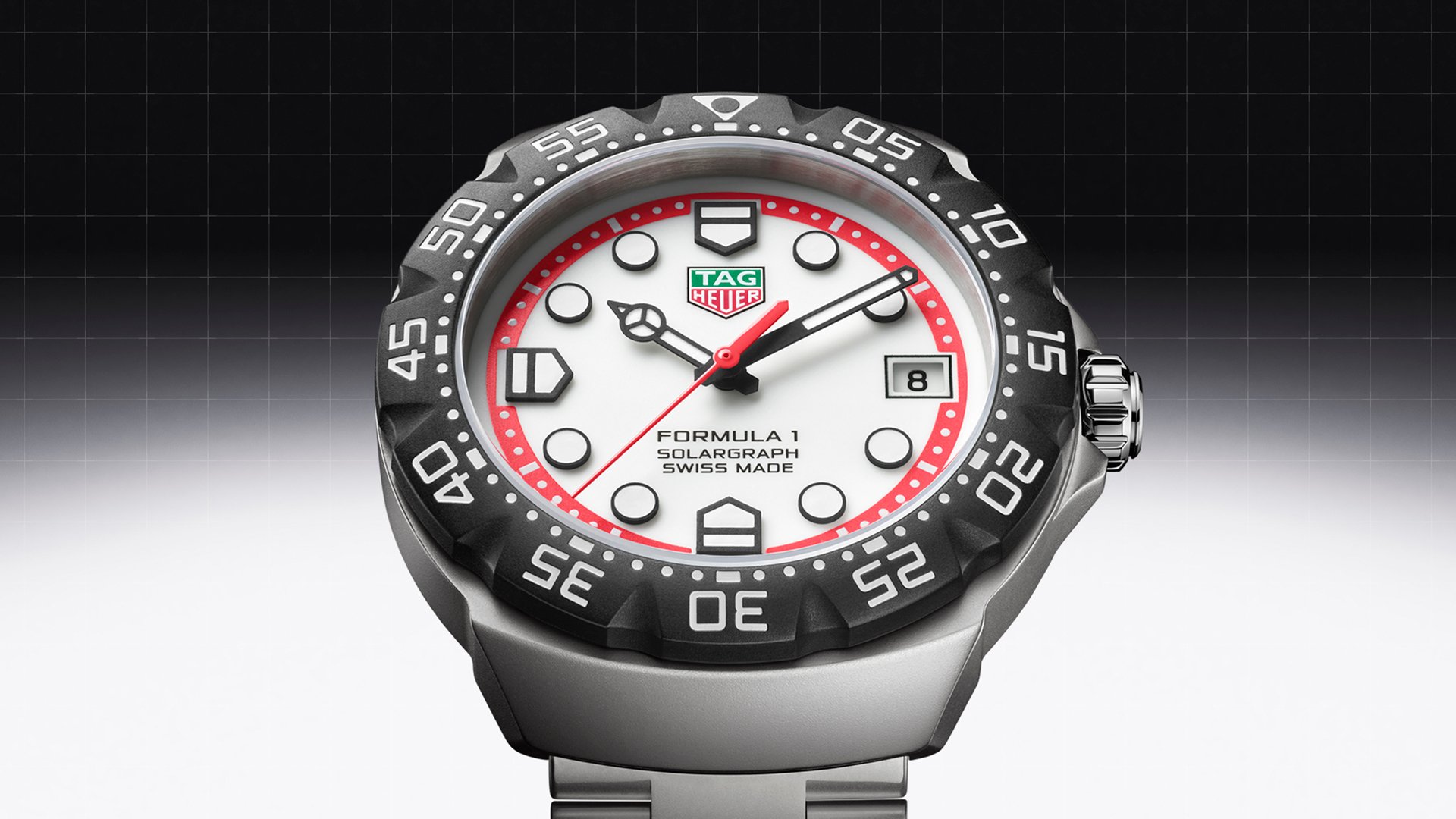
Originally in 35mm cases, the new models grow to 38mm but retain many other design elements. TAG Heuer describes the collection as having distinctive “décroché”, which means it straddles a space between elegance, sportiness and day-in-day-out wearing.
Subtle changes to the original are found on the dial – the hands have been reworked with new finishings to improve legibility. TAG Heuer shield motifs at twelve, six, and nine o’clock are applied and lumed, adding depth and readability to the dial. A printed minutes track reflects the colour scheme of the timepiece, while a date window replaces a shield at 3 o’clock. The distinctive TAG Heuer logo appears under the 12 o’clock index.
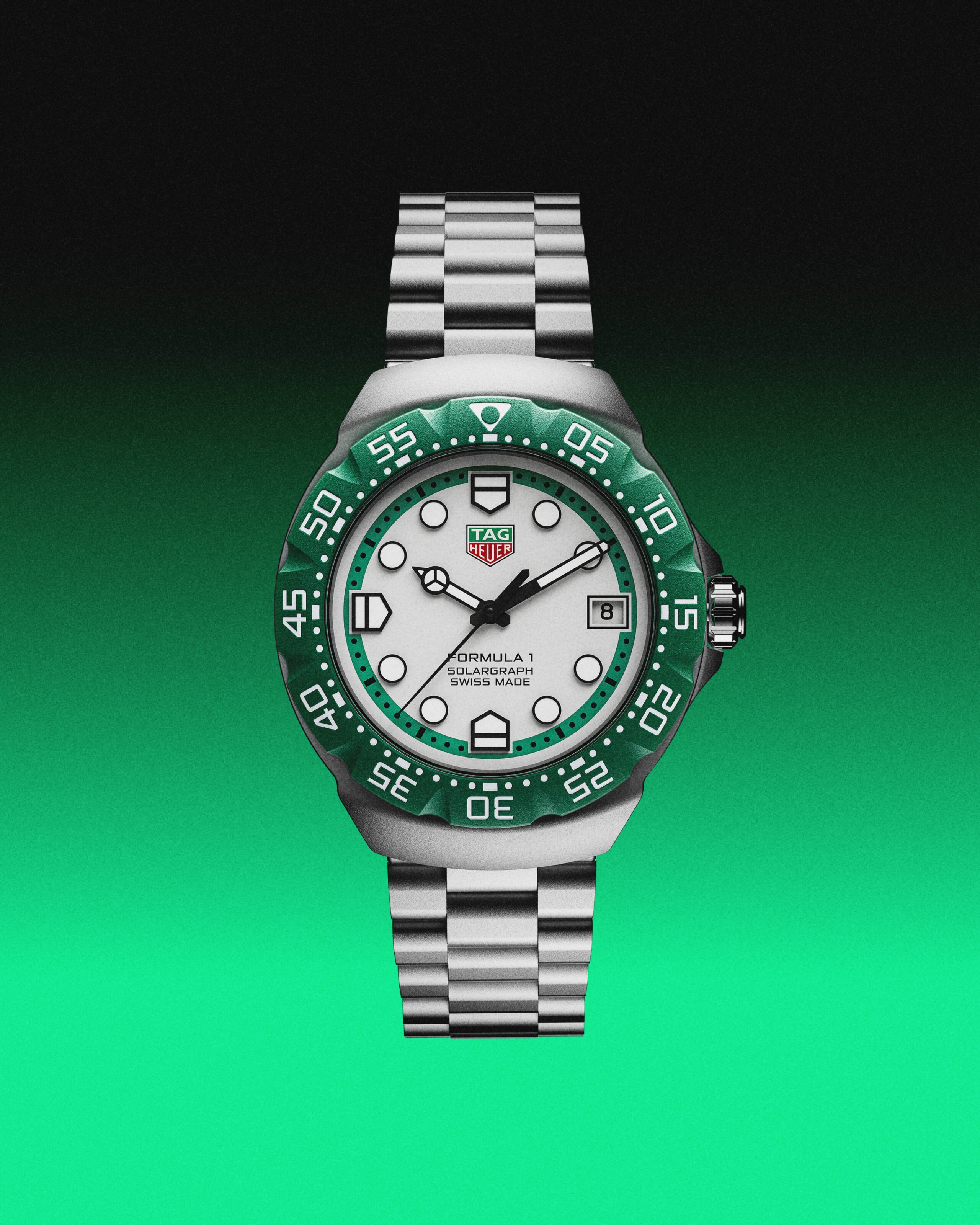
The new collection introduces TH-Polylight, a lightweight and durable new material that can be rendered in almost any colour. The new bidirectional bezel is crafted from the material, the element making a ‘refined’ mechanical sound when rotated.
The text on the dial – the collection’s name, ‘Formula 1’, followed by ‘Swiss Made’ and ‘Solargraph’ – indicates the major change from the 1980s version.
The news timepieces feature the TAG Heuer’s Solargraph cal. TH50-00 caliber, powered by natural or artificial light. The brand says a two-minute exposure to direct sunlight is enough to power the watch for an entire day. And once fully charged, after less than 40 hours in the sun, the watch can run for up to 10 months with no light exposure. If the watch stops, it only needs exposure to any light source for 10 seconds to get it started again. Plus the battery boasts an impressive 15-year lifespan.
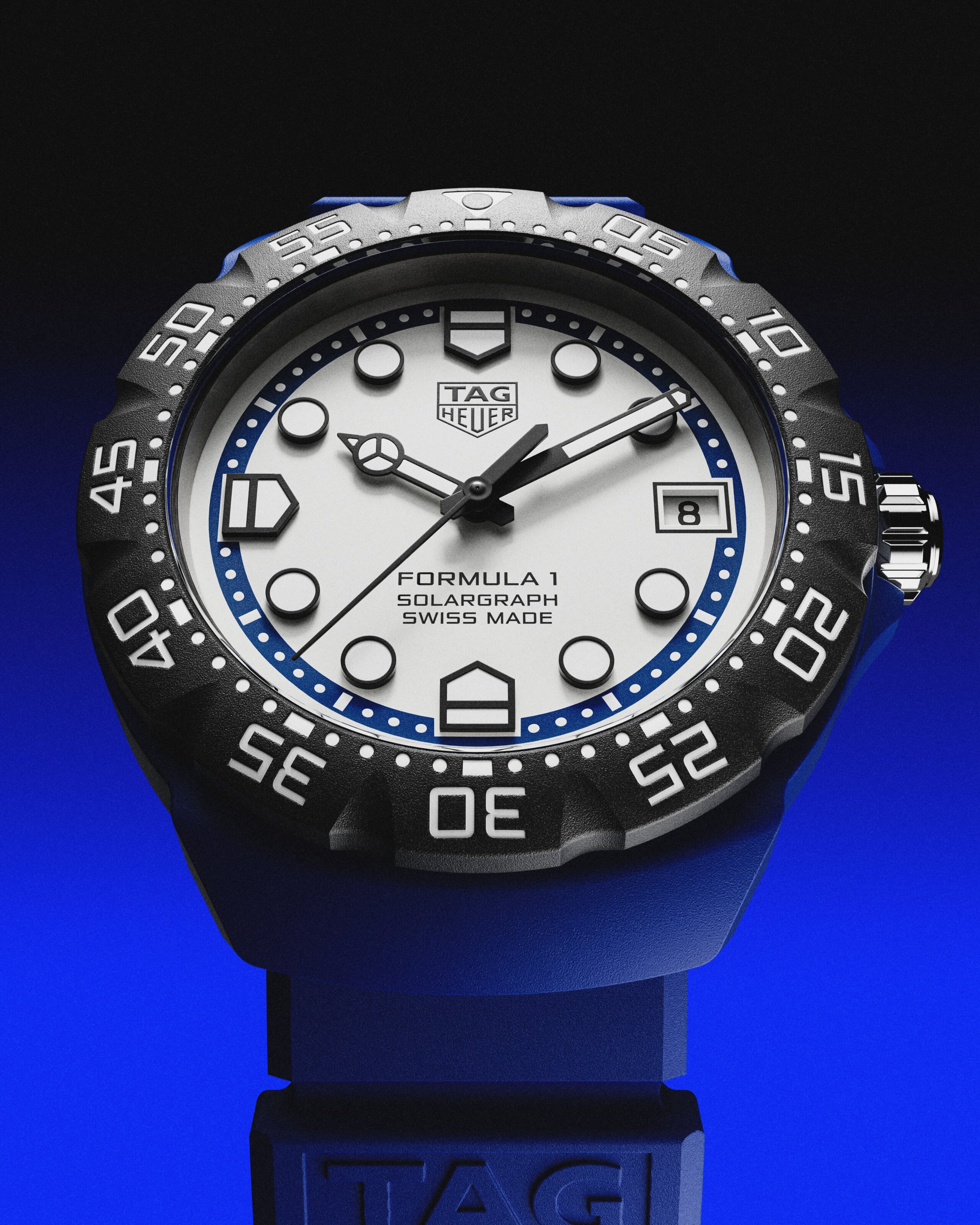
All the models present either on a rubber strap embossed with the TAG Heuer logo, a rubber racing strap or a steel bracelet, offering the versatility at the heart of the new collection. For aficionados of the TAG Heuer back story, or those who just want a durable daily watch that ‘s stylish enough for day or evening wear, and doesn’t require winding or battery replacements, the new Formula 1 Solargraph collection presents plenty of options.
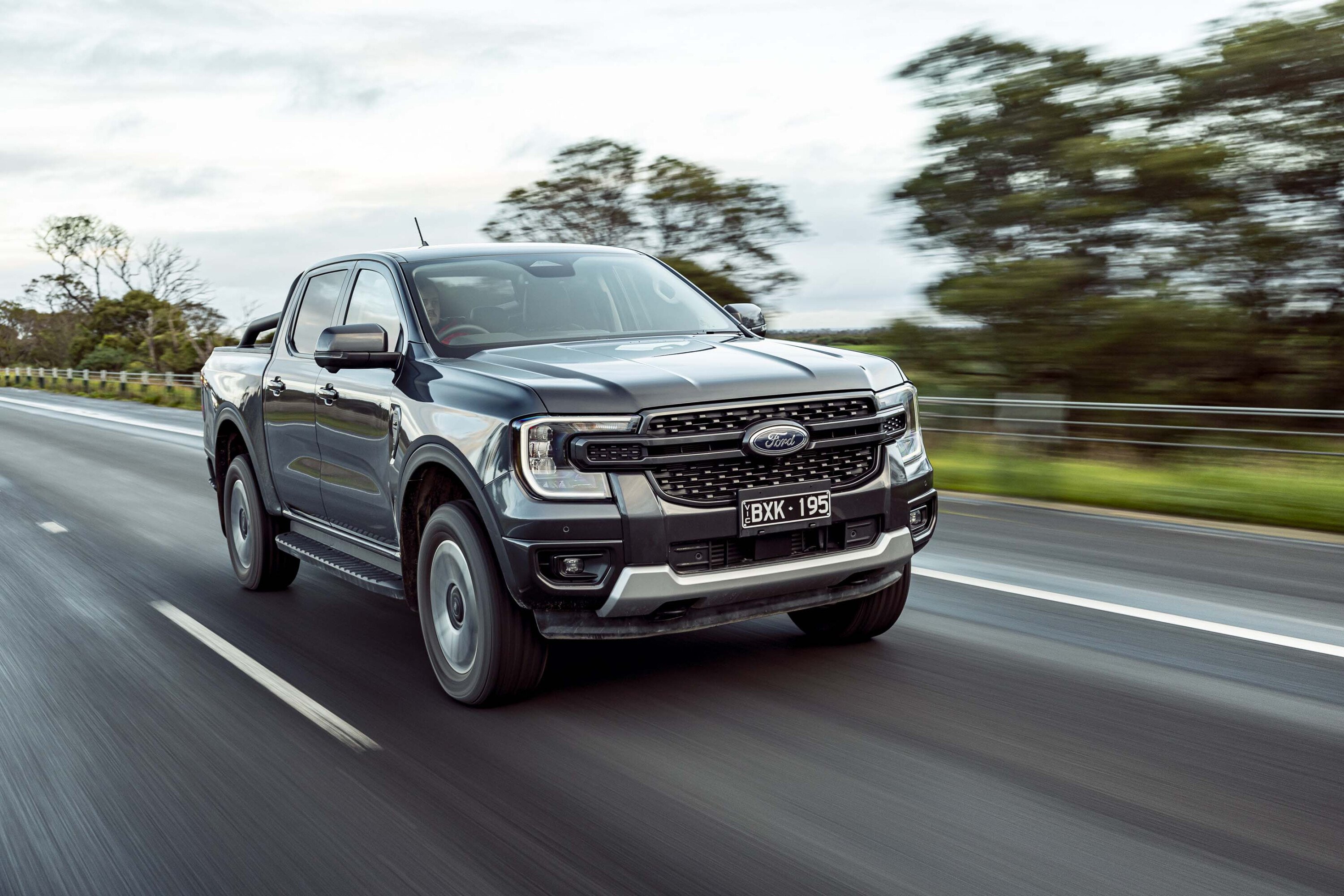
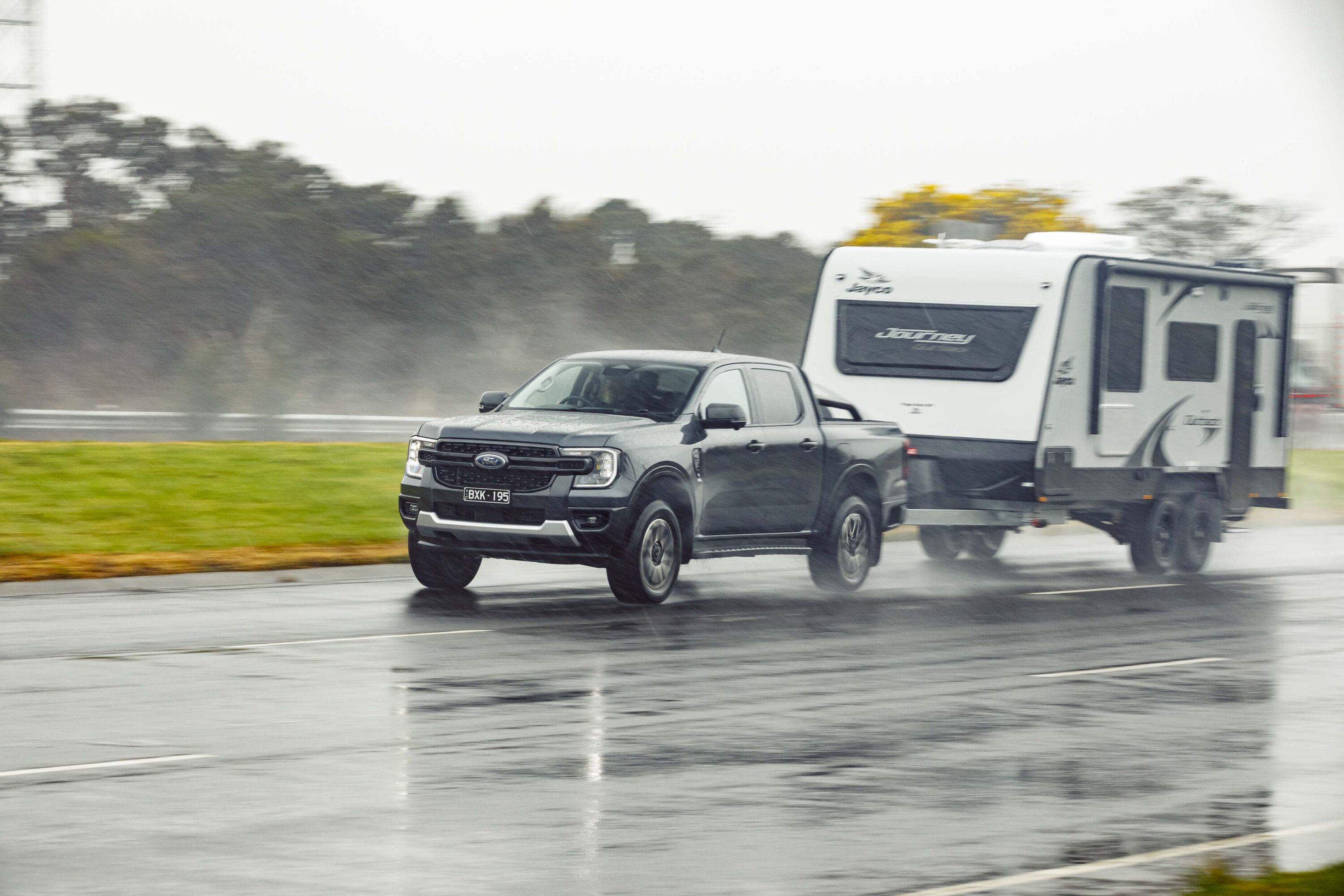
It’s the defining vehicular battle of our times. Just as Ford’s Falcon battled for decades for Australian sales supremacy with the Holden Commodore, its Ranger dual-cab now dons the gloves against the Toyota Hilux.
For many years the Toyota had the upper hand, but the arrival of the RA-series Ranger in 2022 has swung the pendulum back in favour of the Blue Oval.
Despite the current Hilux’s advancing age, it remained Australia’s third-most popular vehicle in 2024, so thousands of buyers are still wondering whether the Ranger or Hilux is the better purchase.
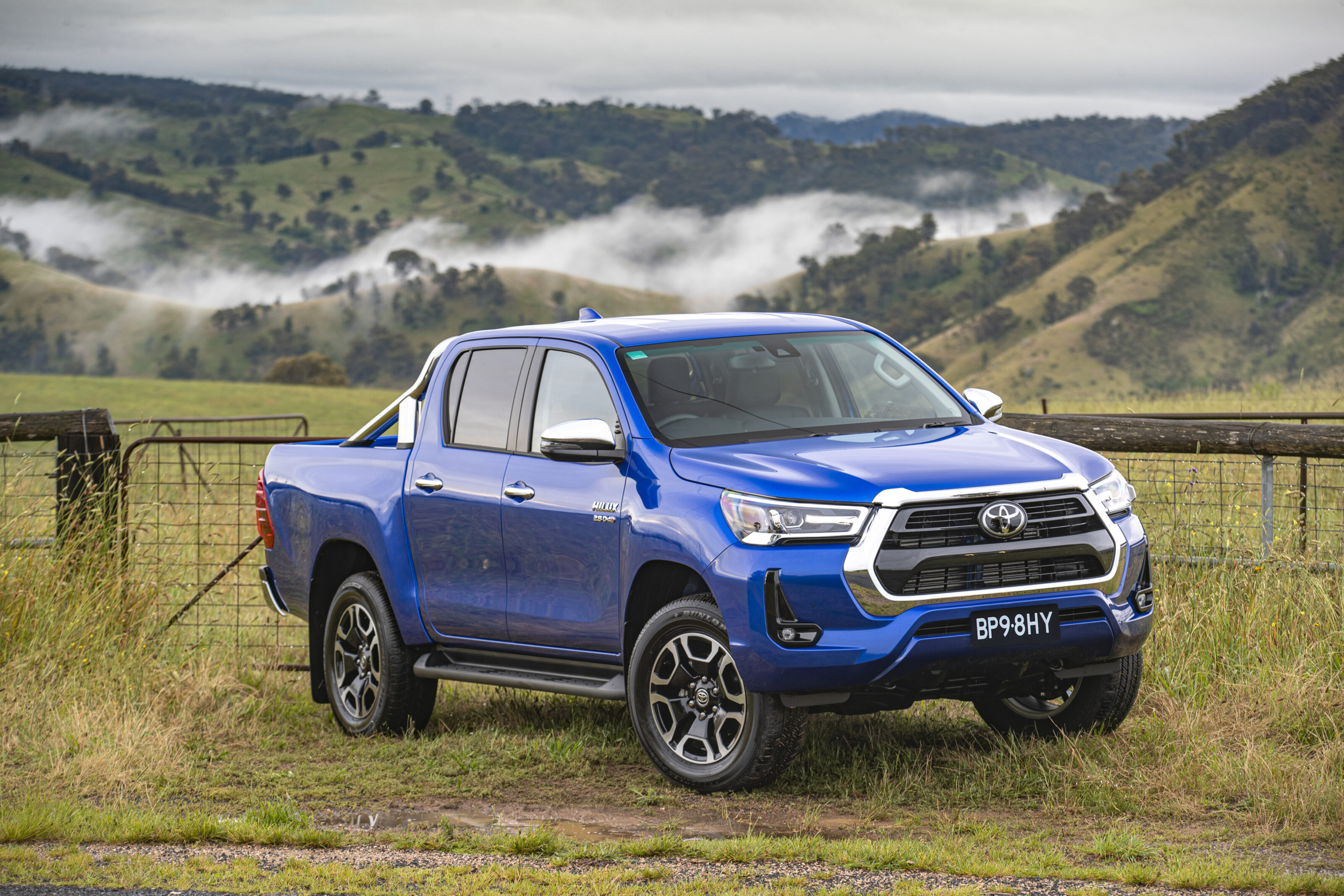
To shed some light on that question, we’re taking a look at the Ford Ranger Sport and Toyota Hilux SR5, variants that sit at the very heart of their respective ranges, to see if one has the upper hand.
Pricing and Features
There are a pair of both the Ford Ranger Sport and Toyota Hilux SR5 to choose from, though the choices don’t mirror one another. On the face of it the Toyota has a decisive price advantage, starting at $60,670 plus on-road costs for the six-speed manual, with the six-speed auto and its 48v mild-hybrid system offered at $63,260 (+ORCs).
However, add the Premium interior (which better matches the Ranger Sport’s specification) and the Hilux costs $65,760 (+ORCs). Like-for-like, the base Ranger Sport auto is $66,140 (+ORCs), but there is also the option of V6 power that comes with a hefty premium at $71,340 (+ORCs).
In Toyota-land, this price tag puts you within a whisker of the Hilux Rogue ($71,530 +ORCs). Conversely, matching the cost of a non-Premium Hilux SR5 only gets you a Ranger XLT, but the ranges of these utes are so diverse and closely matched that this tit-for-tat could go on ad infinitum.
Both manufacturers offer a five-year/unlimited kilometre warranty, but Toyota will add another two years of drivetrain coverage if you service at official dealers. Then again, Ford tops up your roadside assistance with every service while Toyota charges between $99-$139 per annum.
When it comes to servicing, Ford charges either $2550 (2.0) or $2680 (3.0) for the first five visits, required every 12 months or 15,000km, though a prepaid servicing plan is available for $1516. Toyota requests the Hilux gets attention every six months or 10,000km and capped price servicing only applies for the first three years/six visits, so over the first five years/10 visits you’re looking at $4072.46 for the manual or $4074.98 for the automatic.
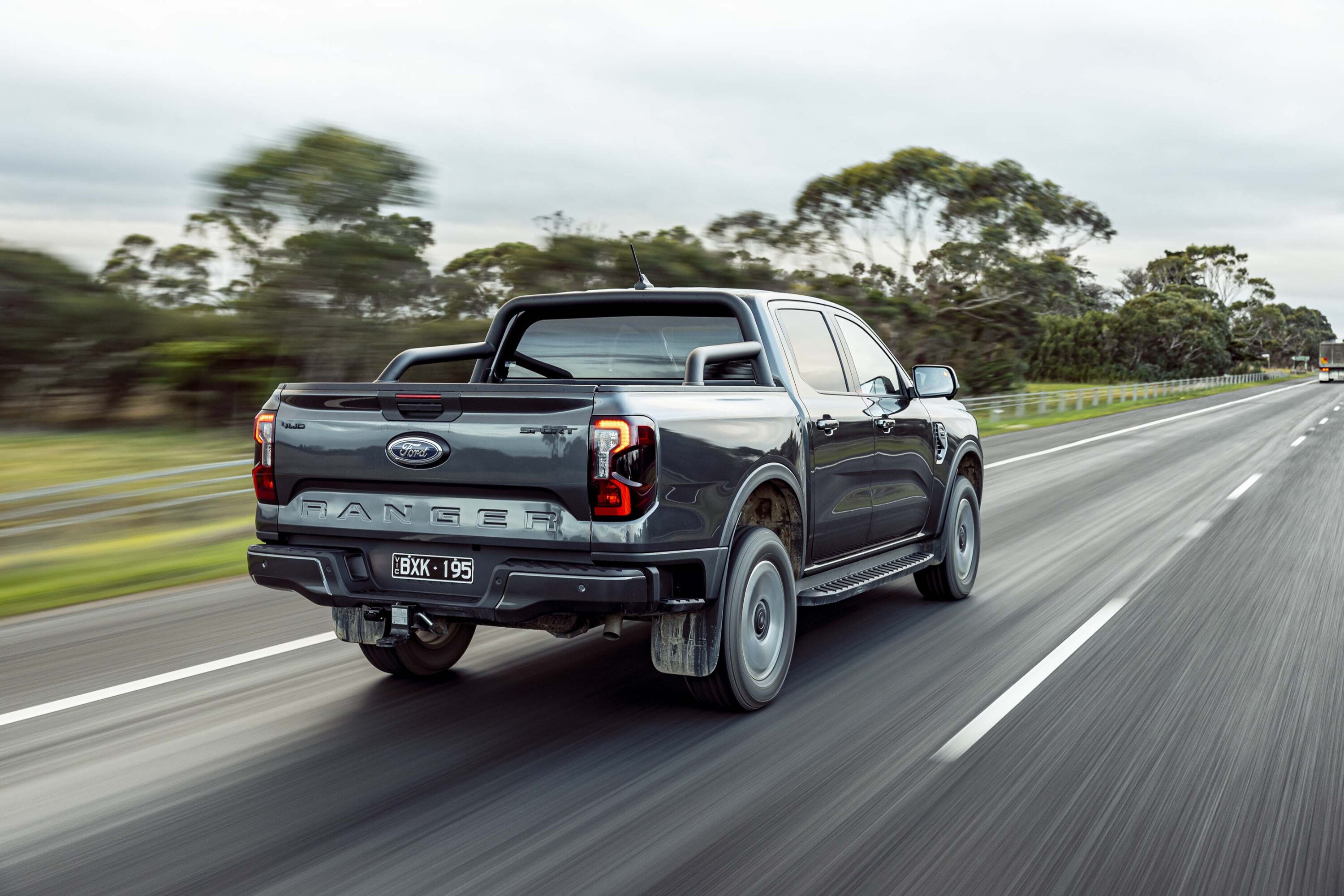
In terms of features, the Ranger Sport has everything you need and a few things you want, without going overboard. Standard are 18-inch wheels, LED lights all around, underbody protection, leather accented upholstery, an eight-way power adjustable driver’s seat, six-way manual passenger seat, dual-zone climate control and wireless phone charging.
Infotainment is handled by a 10.1-inch portrait touchscreen with wireless smartphone mirroring, AM/FM/DAB+ radio, an embedded modem with FordPass app connectivity and there are six speakers.
The optional $1650 Touring Pack is decent value, adding the cargo management system, auxiliary switch bank, 360-degree camera, puddle lamps, zone lighting and Pro Trailer Back Up Assist. Prestige paint – anything but solid white – is $700.
Like the Ranger, the Hilux wears 18-inch wheels and offers (front) LED lighting, dual-zone climate control, wireless phone charging (auto only) and the Premium interior includes leather upholstery and powered driver’s seat, while the Toyota one-ups the Ranger with heated front seats and an air-conditioned cooler box.
An 8.0-inch touchscreen handles the infotainment with wired smartphone mirroring, AM/FM, DAB+ radio, sat-nav and three years complimentary access to Toyota Connected Services, while again there are six speakers. As with the Ford, you’re paying extra for anything other than solid white, in this case $675.

Dimensions
As the table below illustrates, the Ford Ranger is decisively the bigger vehicle, but that might not always be of benefit, especially in terms of width.
The Hilux also has the larger tray, though the Ranger offers an extra 10cm or so between the wheelarches, which may be pivotal depending on what you need to carry.
Ford also gives you more amenities, with a drop-in bedliner, tub lighting and a 400w inverter, whereas the Toyota has just the bare bones with four tie-down points.
Powertrains
As mentioned in the opening section, both the Ford Ranger XLT and Toyota Hilux SR5 come with a pair of engine offerings. The latter features a 2.8-litre four-cylinder turbodiesel that produces 150kW/420Nm in six-speed manual guise.
Selecting the automatic option lifts this to 150kW/500Nm and also adds Toyota’s 48v mild-hybrid technology, reducing claimed combined fuel consumption from the manual’s 8.0L/100km to 7.2L/100km.
In standard guise, the Ford Ranger Sport uses a 2.0-litre bi-turbo four-cylinder diesel producing 154kW/500Nm through a 10-speed automatic, which claims the same 7.2L/100km combined figure as the auto Hilux.
As a V6 this rises to 8.4L/100km, but in our experience both engines use remarkably similar amounts of fuel in the real world due to the larger engine having an easier time of it.
Chassis and Towing
The Ford Ranger is the more modern vehicle – unsurprising given its origins date back to 2022 not 2015, as with the Hilux – with electrically assisted power steering and disc brakes on all wheels. The Hilux makes do with hydraulically assisted steering and rear drum brakes.
Suspension for both is independent double wishbones at the front and leaf-sprung live axles at the rear. In terms of load-carrying capacity, a cursory glance suggests the two are lineball, but it’s worth digging a bit deeper, as the below table shows.
As you can see, while most of the numbers are very similar, the Hilux’s GCM limitation means the Ranger has much more payload flexibility when towing heavy loads.
Off Road
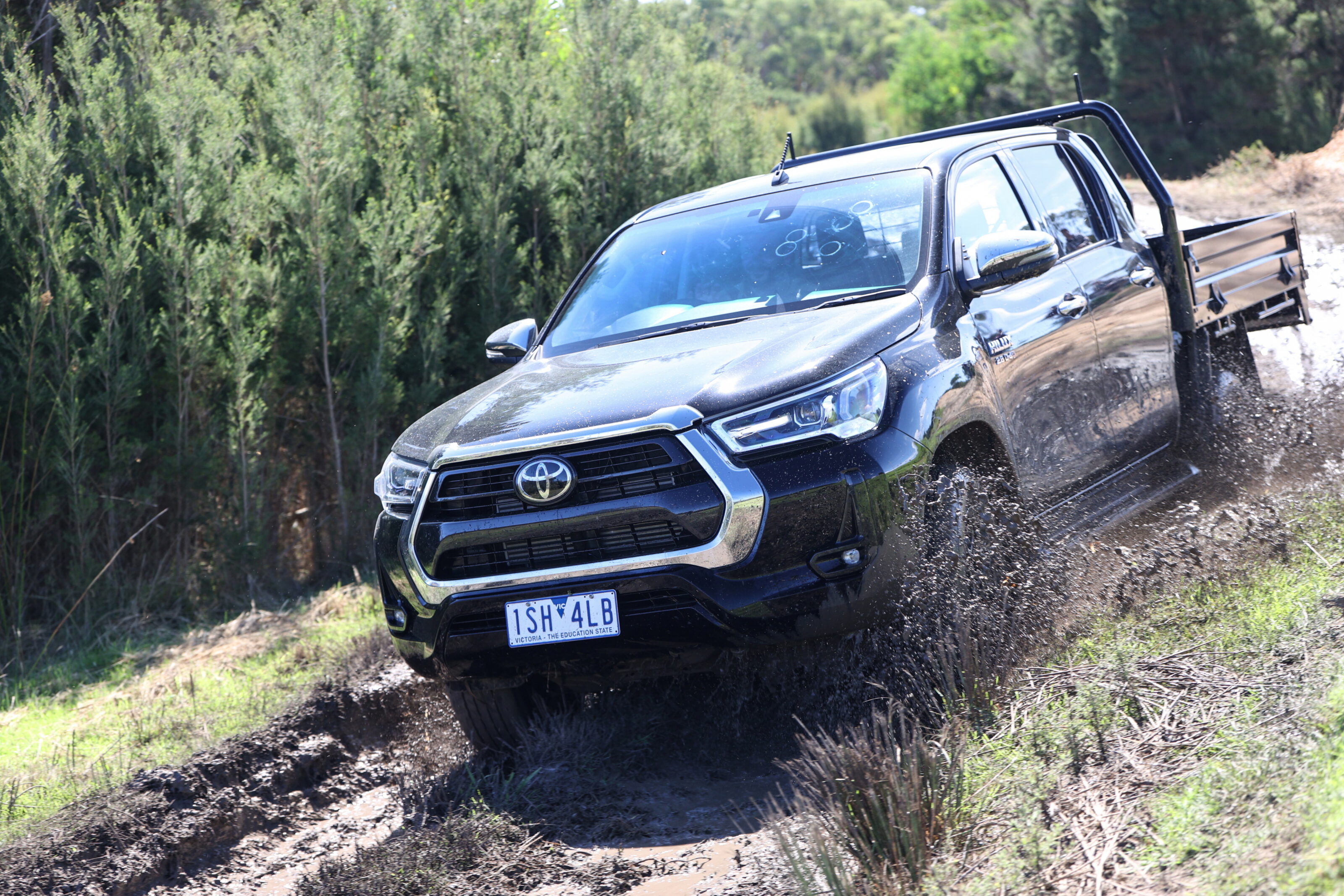
The typical caveats apply here. In standard guise with an appropriate set of tyres, both these utes should conquer anything the majority of owners put in front of them, and anyone needing greater capability will turn to the aftermarket.
Toyota’s traction control system is the benchmark, though Ford’s is very good, and the Ranger has the advantage of retaining the electronics with the rear diff locked. Ironically, the Hilux is less effective with the rear diff locked in most circumstances as the lack of traction control makes it essentially three-wheel drive.
Another useful feature of V6 Rangers – and selected four-cylinder variants like the Wildtrak X and Tremor – is the ability to run in full-time four-wheel drive, even on sealed surfaces. With so much torque and limited rear grip, it adds another layer of confidence.
Safety
The Ford Ranger is as safe as utes get with a five-star ANCAP rating from 2022, thanks to nine airbags and a swathe of well-calibrated driver assist systems like auto-emergency braking (AEB), lane-keep assist, adaptive cruise control with stop-and-go function and much more.
While the Hilux’s five-star ANCAP rating is much older, being from 2019, the Toyota’s safety offering is much more contemporary than the ratings suggest. It has seven airbags, active cruise control, AEB, lane-keep assist, blind-spot monitoring and a panoramic view monitor for parking assistance.
In an effort to find the world’s toughest and most resilient killing machines, the Special Air Service (SAS) subjects candidate soldiers to an horrific series of physical and mental fitness tests, one of which varies in its exact nastiness but goes something like this.
The person is stuffed into a corrugated iron tube, partially submerged in water or somewhere hot, while the exterior is lashed with lengths of heavy chains by huge shouting men. The exercise is designed to disorientate and confuse, and establish the participant’s ability to remain focused on a task and not turn into a shuddering mass of PTSD.
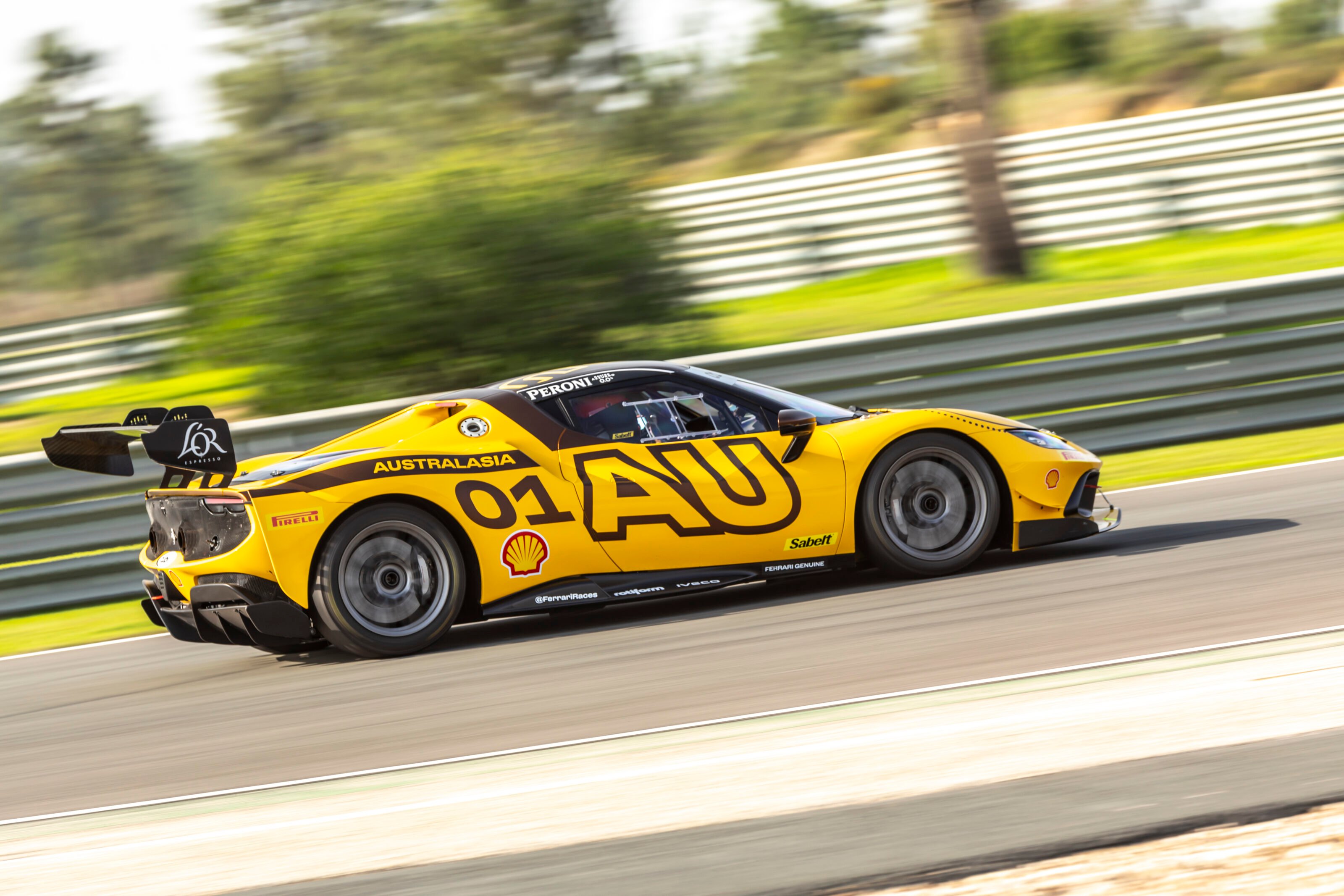
This, I’ve discovered, is a lot like being taken for a lap of the Monteblanco circuit in Ferrari’s new 296 Challenge. The confined space is provided by a scarlet and white onesie, restraints pulled so tight it’s impossible to take a deep breath, and an aluminium-skinned cage that’s being heated by a surprisingly hot Spanish sun. The chains and hollering men? That part of the assault is provided by six cylinders doing 8000 rpm and expelling their breath through two turbos and an un-silenced exhaust system.
That’s how my day in Ferrari’s latest one-make racer started out – with a beating. But as the day unfolded, it turned into one of the most rewarding and addictive four-wheeled experiences money can buy. The best part? You’re more likely to qualify for ownership of Ferrari’s latest track machine than being sworn into one of the most elite special forces on the planet.
Consider that a blessing.
The back story
Few car brands can brag about a greater level of exclusivity than Ferrari. Producing fast, beautiful cars was certainly the kingpin of the early road car formula but deliberately restricting supply to many times less than demand was a strategy that worked brilliantly later in the company’s history.
Today, the number of cars that roll out of the Maranello factory is still capped way below demand and in addition, Ferrari typically reserves its most expensive, advanced and potent models for a select shortlist of the most loyal and longstanding customers. Shelling out a fortune on an invitation-only basis must surely be the greatest definition of exclusivity the retail world has ever seen.
So you’re probably looking at the images of this pared-back, lightened and winged version of Ferrari’s 296 with centre-lock wheels and slick tyres, and thinking it probably comes with a price tag that would have you reaching – not for the mortgage broker’s card – but a dodgy organ trader.
Historically, track-honed Ferraris come with prices to make Russian oligarchs wince, such as the SF90 XX which was a relative bargain at more than $1.5m. Or the 599XX Evo, for which the price wasn’t really ever clear thanks to a weirdly convoluted path to ownership. How about something slightly less exclusive and newer such as a 296 GT3? For this bona fide racer you’d have to shell out about a million so we’re not even close to ‘affordable’, however you choose to define the word.
But this is the new Ferrari Challenge model – based on the 296 – and among its long list of remarkable numbers, perhaps the most surprising is its price. Before we get to that though, it’s important to understand why this car exists at all. After all, with the 296 GT3 looking after the racing market, the GTB and GTS twins catering for the road contingent, and the SF90 XX and F80 created for those who want pretty much the most uncompromising Ferraris available today, regardless of the price, why offer another 296 derivative that’s neither welcome on the public road nor the mainstream circuit? The answer is 32 years old.
There’s never been a shortage of Ferrari owners that want to take their cars to the track and even go bumper to bumper with each other but in 1993, Ferrari brought the road and racing worlds together with the 348 Challenge. The factory off-the-shelf, race-prepped car was just part of the recipe it offered to customers, with a full racing calendar adding the other key component. Finally there was a race car that wore the prancing horse but wouldn’t break the bank… and an equally affordable way to race it.
The Ferrari Challenge was born. Over the next three decades, the company would offer a Challenge version of each mid-engined V8 model. The 355 followed the 348 pioneer, then the 360, and F430, while the more recent 458 and 488 were offered with an Evo version each totalling four Challenge generations.
Not only has the bloodline of Challenge cars grown to eight, the growing popularity of the series prompted Ferrari to expand its global offering and, from that first European championship, North America, Japan and the UK have all since been added.
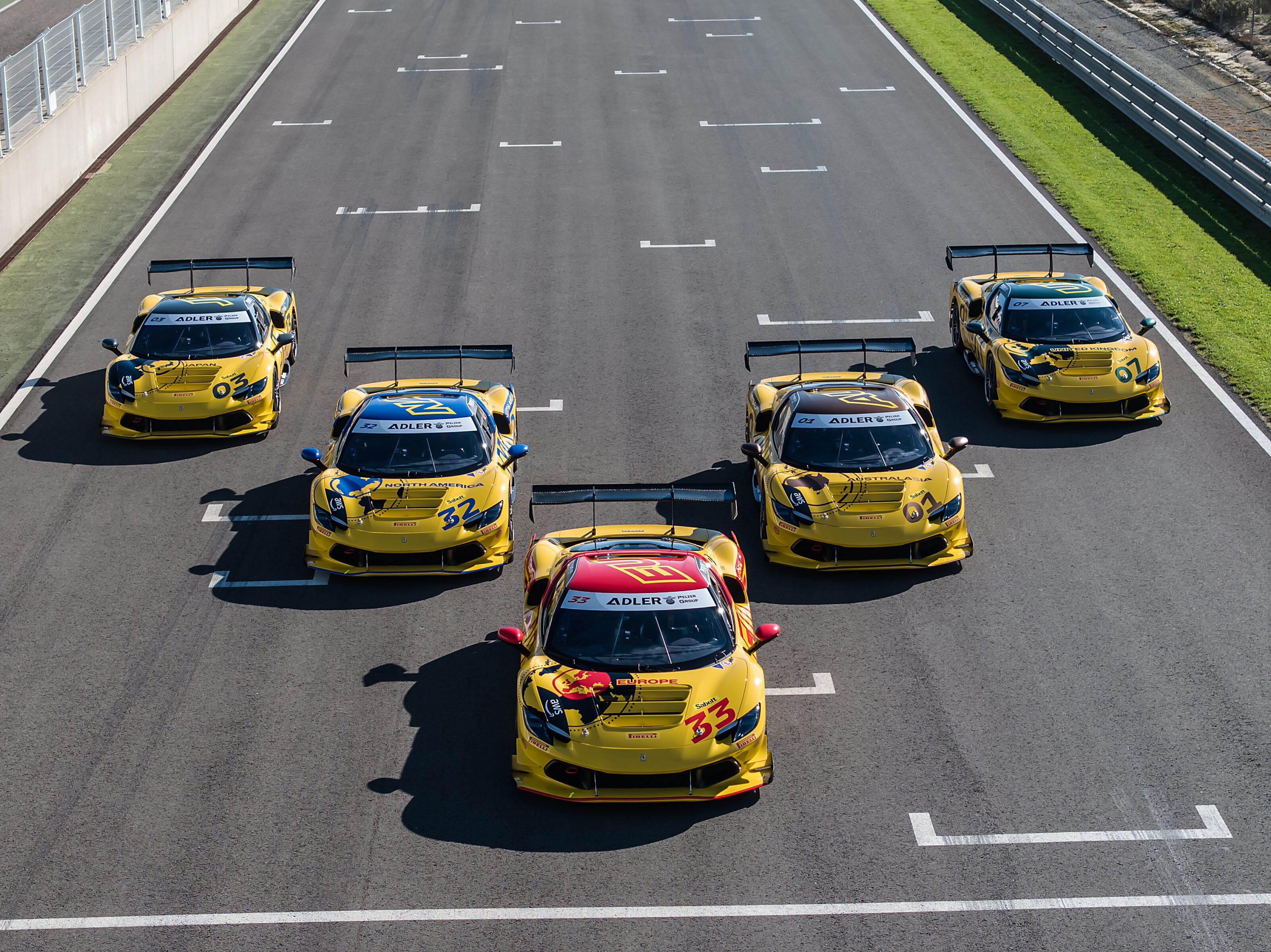
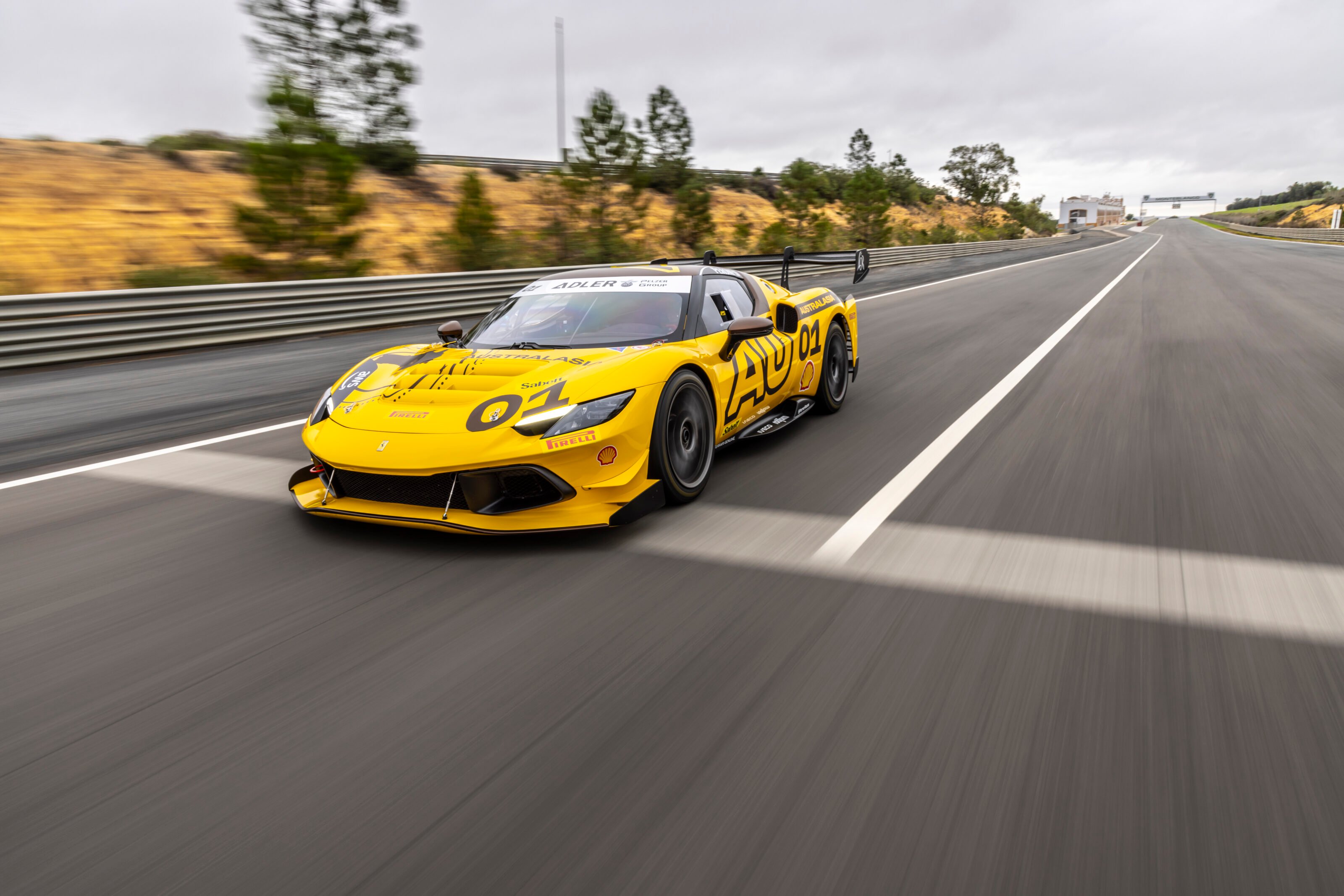
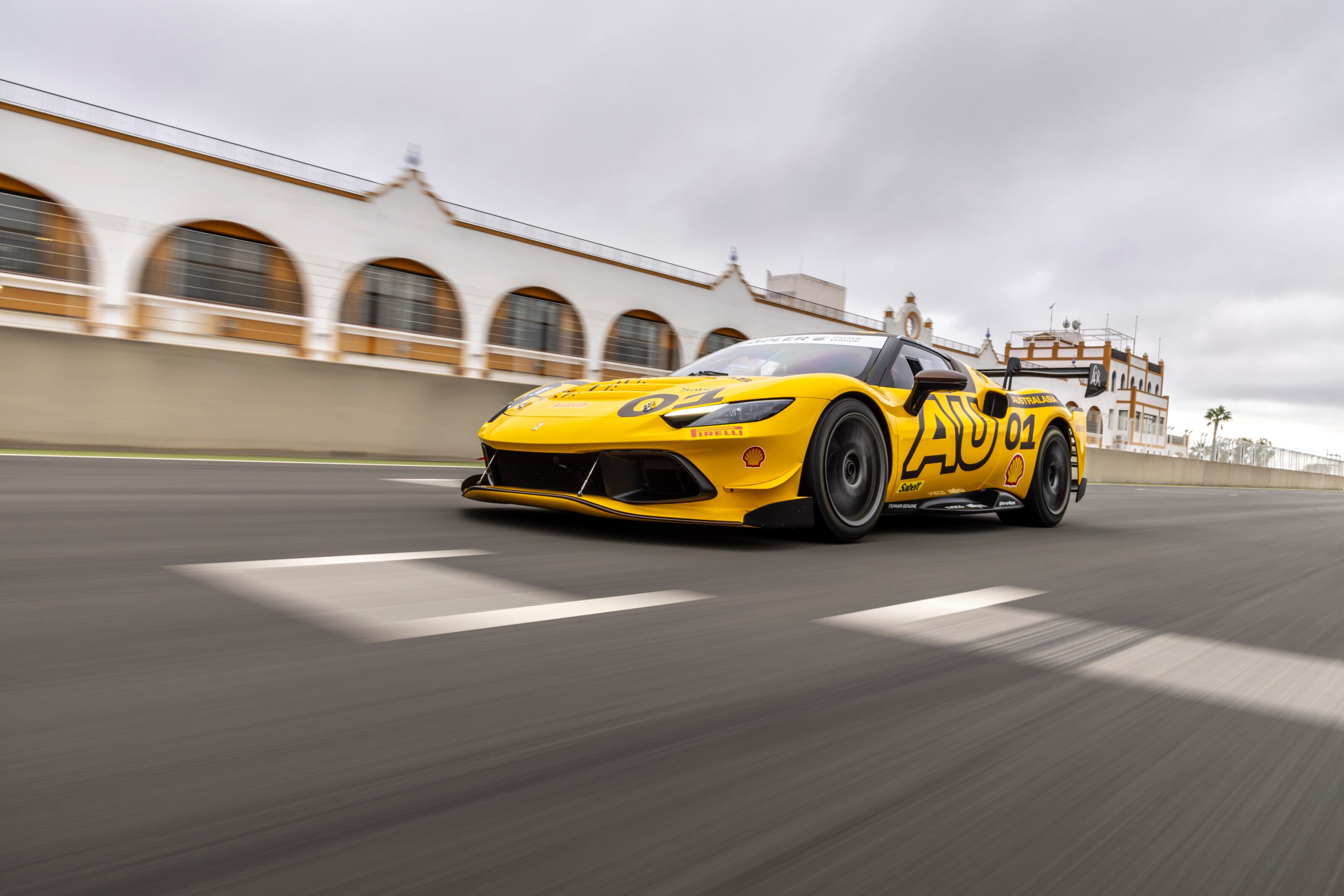
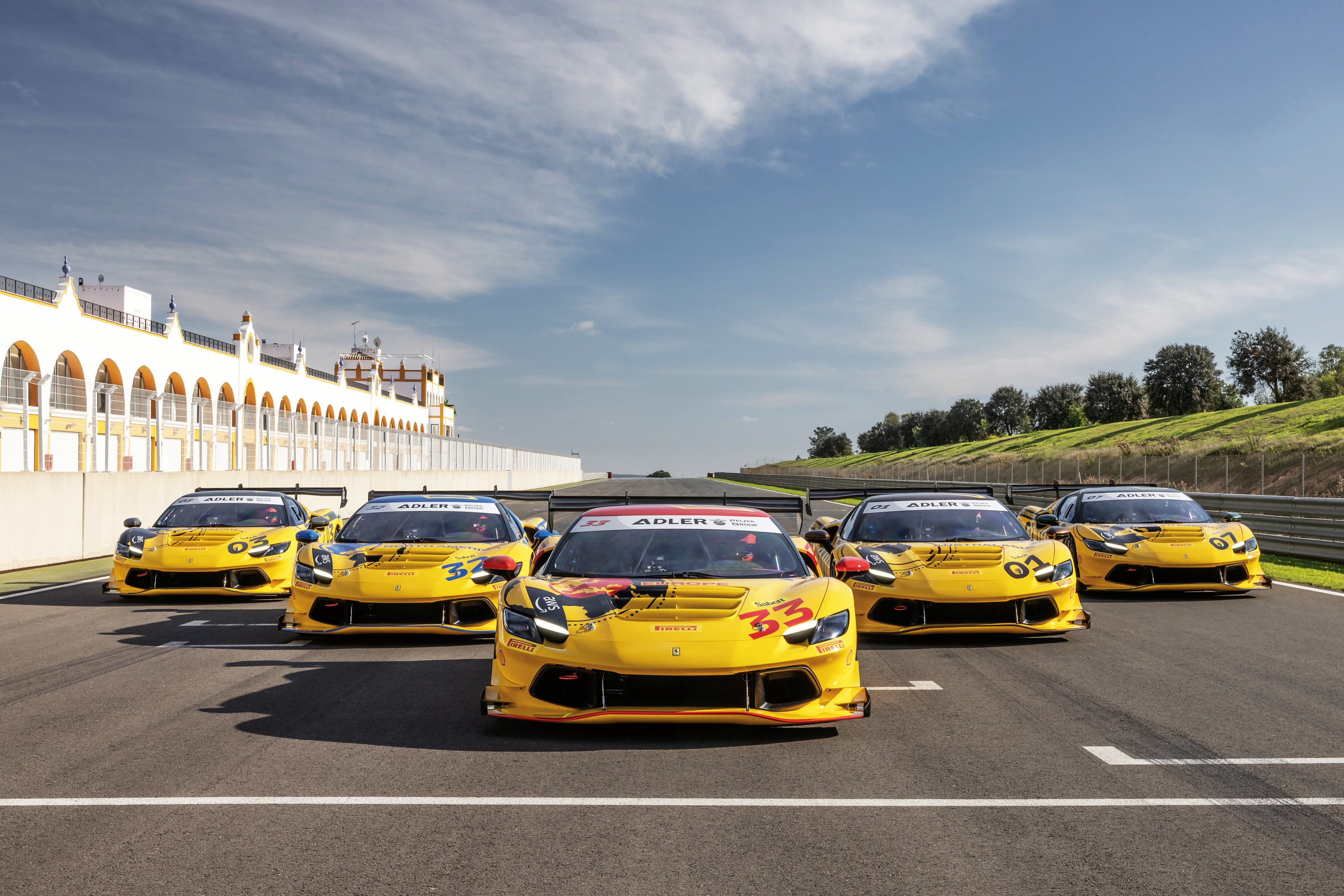
Here’s where it gets really exciting. It should be fairly obvious by now that this story is about the ninth Ferrari Challenge car based on the 296 GTB but while there’s lots to get into about the latest hardware, the other part of the story is hinted at in its livery, which differs slightly on each of the five demo vehicles that rolled out at the Monteblanco circuit in the south of Spain.
Layered on top of base yellow paint, each car denotes the location of a Ferrari Challenge series and how many years it has been held in that region. By the end of 2025, the longest running will be Europe with 33, followed closely by North America a year later – 32. Then there’s the UK series which joined in the fun in 2019 and which will hold seven events before the year’s out, while Japan’s third event is due later in the year.
Australia joins the party
But what’s this? A fifth car wearing the letters AU and the number 01?
While the Ferrari Challenge has occasionally moonlighted with the odd round in the great southern land over the years, 2025 will be the first time Australia hosts a complete series all of its own, with five races planned around the country. The first round accompanied the Bathurst 12 Hour in February.
Had you wanted to fulfil an ambition to pilot a Ferrari around one of Australia’s most iconic circuits this year, one of the only ways previously would have been to achieve great racing success in multiple disciplines over many years before landing a gig at the wheel of a Pro-Am Ferrari 296 GT3, as demonstrated by racing greats Chaz Mostert and Will Brown.
The pair led the number 26 car to a class win, demonstrating why they were the guys for the job. But now, thanks to the Ferrari Challenge, there is another way and it’ll be the same story for the remaining four races around the country. It’s still not a cheap exercise although hitting the track in a Ferrari 296 Challenge is significantly more affordable than a GT3, thanks to a whole heap of engineering differences (and despite the similar exterior appearance).
For a start, many of the panels in carbon fibre on the GT3’s body are swapped out for plastic, slashing the cost of repair if (who are we kidding – when) there’s a little shoulder-to-shoulder action. It still has a carbon ceramic brake rotor in each corner like the GT3, but for the Challenge car, Ferrari developed a special CCR-M Plus recipe derived from Formula 1 and it’s twice as durable but three times as thermally conductive. Braking performance improvements are one quality but longevity is the real bonus, with Ferrari claiming a single set has the potential to last an entire season, significantly reducing the budget.
Speaking of compounds, the specific Pirelli Challenge tyres are now only available in a single compound, further reducing the necessary stock for each team and therefore the outlay for a season. Not only that, the unique tyre is wider at the front and wears at the same rate as the rears, but manages to be sustainable as one of the world’s first FSC (Forest Stewardship Council) certified tyres.
You’d be forgiven for thinking that all this cost saving and sustainability means the Challenge is an impotent cousin to the GT3 but you’d be very wrong. Unbound by strict FIA rules, the 296 Challenge is more powerful and faster in a straight line, with 700 horsepower (515kW) and 740Nm versus the GT3’s 600hp (441kW) and 712Nm. Ferrari wouldn’t be drawn on which would cross the line first in a race at any particular circuit but, for comparison, the new 296 Challenge is a whole two seconds a lap faster than the 488 Challenge Evo at the Mugello circuit. So, no, you’re not looking at some well-dressed charlatan with no lead in its pencil. A fact that becomes clear with the first application of throttle.
After that first familiarisation lap with former Honda Racing F1 test driver Luca Filippi in the hot seat, it’s my go and the 18 turns of the 4.7km Monteblanco circuit await. The first task is to not get lost. With a whopping 26 different configurations, this track is one of the most versatile on the planet. The second task is to not spear off at the first corner on cold tyres and in a fog of jet lag.
Fortunately, the shove of 700 horsepower in a car that weighs just 1330kg dry is like a shot of Thai-strength Red Bull directly into the heart. Perhaps the most significant part of the Challenge conversion is the deletion of the road car’s hybrid system. This, Ferrari will tell you, is not an admission that electric bits aren’t yet good enough for racing, but one of many ‘influences’ from the GT3 car – which also has no hybridisation to comply with FIA rules.
Despite the lack of electric assistance, the 296 Challenge manages an even greater output thanks to a little loosening of the turbine taps. The 120-degree dry sump V6 has a new free flowing exhaust system which goes directly through the space where the hybrid system previously resided and, while it retains the catalytic converters, the particulate filters are gone. The resulting lower back pressure allowed the pair of turbos to be turned up another 10 per cent with each spinning at 180,000 rpm before the waste gates crack open, resulting in 10 percent more boost.
All that, plus some ignition retardation, has liberated 37 more horsepower than the road car and an engine that produces an awesome 234 hp per litre – more than any road or ‘road-derived’ racing Ferrari before it. The power delivery is completely astonishing and the aggressiveness of acceleration belies the engine’s 2.9 litres. Peak power happens at 7500 rpm but the engine note and strength is so intoxicating, finding the discipline to tug the paddle shifter at the right moment is almost impossible before the limiter.
More incredible however, is the braking performance. Savagely efficient deceleration is a common personality trait in race cars but the 296 Challenge goes further. It too will haul up from 230km/h to the first corner with stoic repeatability, but its new ABS Evo Track combined with the special rotor compound and brake-by-wire is a masterpiece. Despite no physical connection between the pedal and master cylinder, the brake feel is solid but requires less pressure to reach lock point. So where an open wheeler might require more than 80kg of weight for full force, the Challenge feels as though it needs about half that while still providing the progressiveness and feel of a pure race car. The new ABS adds the final facet of excellence with a brilliant balance of corner-to-corner brake force distribution in unison with the TC/e-Diff. The result is a car that responds impossibly well to trail braking and, in certain turns, is best when brake pressure is bled off until after the apex.
Of course this is only possible thanks to the weight distribution and transfer of a mid-engined machine and some serious aero. For the new car, downforce was increased with up to 870kg available at 250km/h – but that’s not to say the Challenge is infallible and it’ll still allow you to make mistakes. Give in to the temptation to accelerate too early in a corner and the Ferrari will understeer, get stuck in a bit late, and you’ll have oversteer to deal with. The key point though is that no errors are day-ending unless you really try and the four manettino settings (essentially two for wet and two for dry conditions) plus traction control options allow the car to be tuned to individual ability and confidence.
It takes a couple of sessions to learn the track but time taken to learn the 296 Challenge’s breadth of ability is also time well invested. A few telemetry sessions with Ferrari’s ace team – just part of the service when you sign up as a Challenge driver – and seconds are slashed away on track.
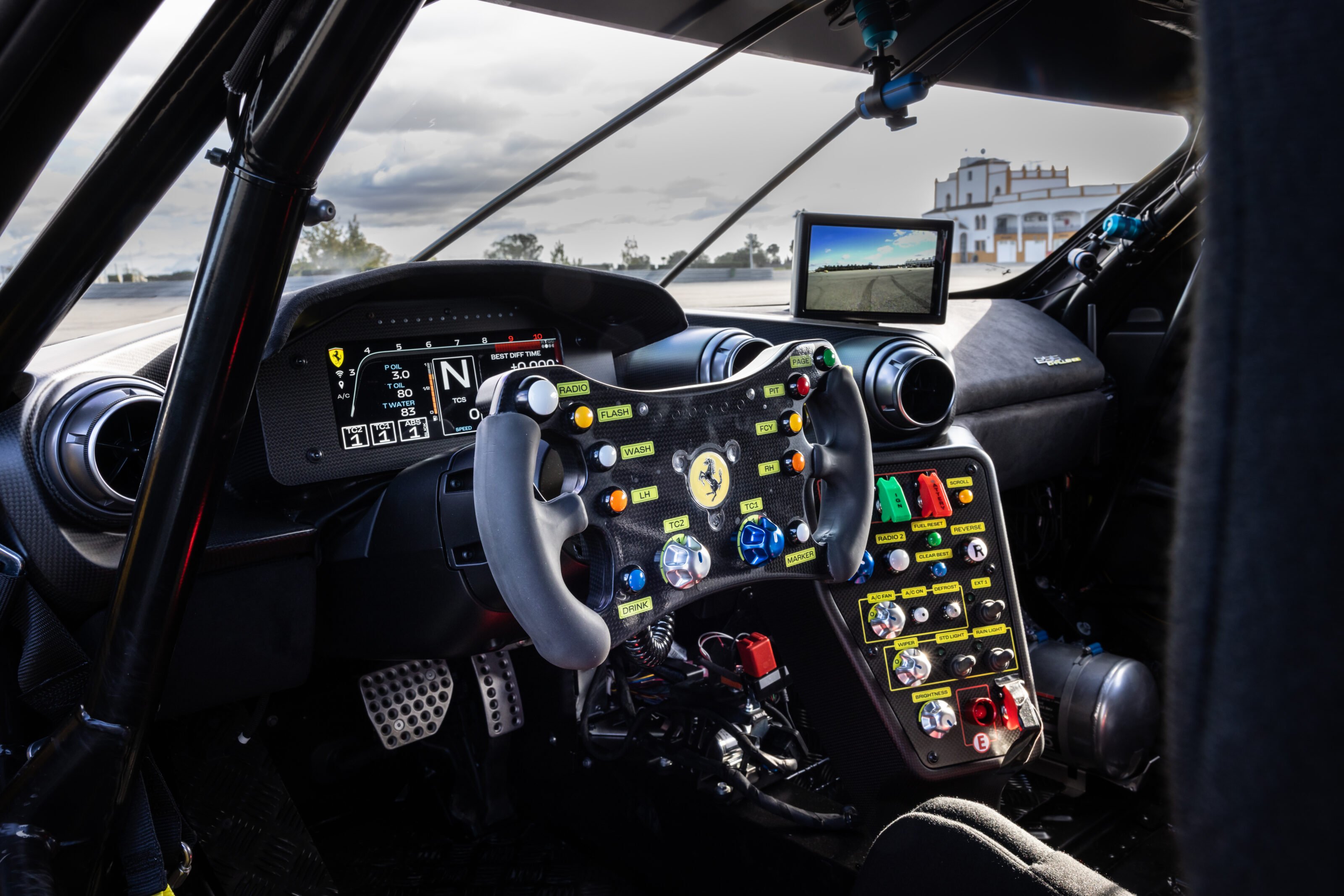
Now the Ferrari is starting to feel like it’s tailor-made-familiar. The seat feels like I’ve been poured in, the steering yoke – unchanged from the 488 Challenge – is perfection, while the air conditioning and good visibility all-round makes the cabin almost as civilised as the road car. But it’s still brutal enough and ever willing to fight back through the controls if I lapse concentration for a second, while the constant soundtrack is utterly intoxicating. It’s unofficial, but Ferrari calls its V6 the ‘piccolo V12’ and its shout from behind has a lot of the appeal of its twofold sibling. Each time the throttle is snapped closed, the pair of turbos go from hissing angrily to gasping through the dump valves like a demonic Sodastream.
So how much does the ultimate track-day Ferrari cost? Obviously, there’s a lot more expense associated if you want to take the 296 Challenge racing because, sorry, no one ever said motorsport was cheap. But putting an example of this racer in your truck will cost you about the same as putting a road-going version of the 296 on your driveway – $568,300 and there are not even ‘on-roads’ to pay the dealer.
The latest generation of Ferrari’s lauded Challenge cars is surprisingly affordable and viciously capable but easily its most impressive attribute is its breadth of appeal. No one would be surprised to see a prancing horse race car going fast in the hands of a Ferrari test driver but when handed over to someone with much less experience and talent such as a gentleman racer or me, the 296 Challenge is still fast and offers a rewarding and educational experience.
The latest addition to the Challenge family is a triumph of circuit car engineering that is neither frightening to the uninitiated nor soft at its fringes for a pro. That is the 296 Challenge’s true genius.
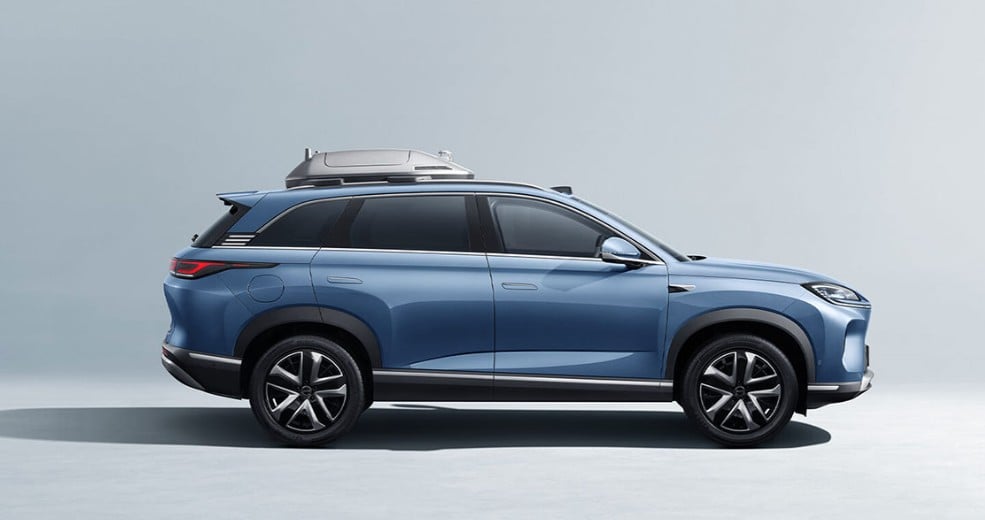
BYD has officially launched the Sealion 07 DM-i, a mid-to-large-size hybrid SUV, in China, the fourth addition to the automaker’s popular Sealion family and a hybrid sibling to the all-electric Sealion 07 EV introduced earlier in May 2024.
The Sealion 07 DM-i comes in three variants – the 150 Pilot edition priced at RMB 169,800 (A$36,570), 150 Pilot plus edition at RMB 179,800 (A$38,725), and 135 Performance radar edition at RMB 205,800 ($A44,325). Built on BYD’s latest fifth-generation DM (Dual Mode) hybrid platform, known as DM 5.0, the vehicle promises enhanced fuel efficiency and improved hybrid performance.
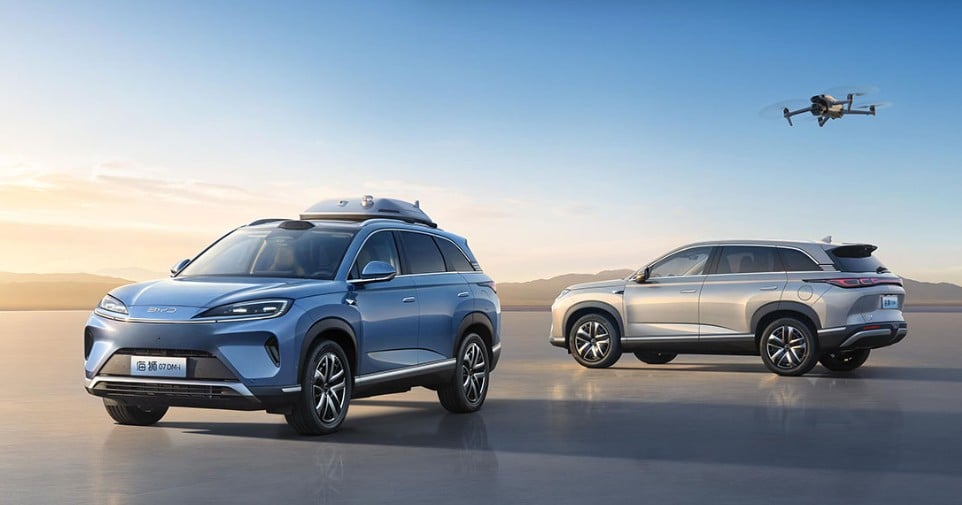
Measuring 4880 mm in length, 1920 mm in width, and 1750 mm in height, with a 2820 mm wheelbase, the SUV is powered by a 1.5T engine delivering 115 kW of peak power and 225 Nm of peak torque. It features a 60-litre fuel tank and a standard 26.6 kWh blade battery, offering a CLTC electric range of up to 150 km. Combined, the hybrid system enables a driving range of up to 1320 km on a full charge and full tank.
The two entry-level models – considered as competitors to cars such as the Tesla Model Y and Toyota Kluger – are front-wheel-drive configurations with 200 kW peak power and 315 Nm of torque, capable of accelerating from 0 to 100 km/h in 7.9 seconds. The top-tier variant adds a 150 kW rear motor and delivers 340 Nm of additional torque, reaching 0–100 km/h in just 4.7 seconds.
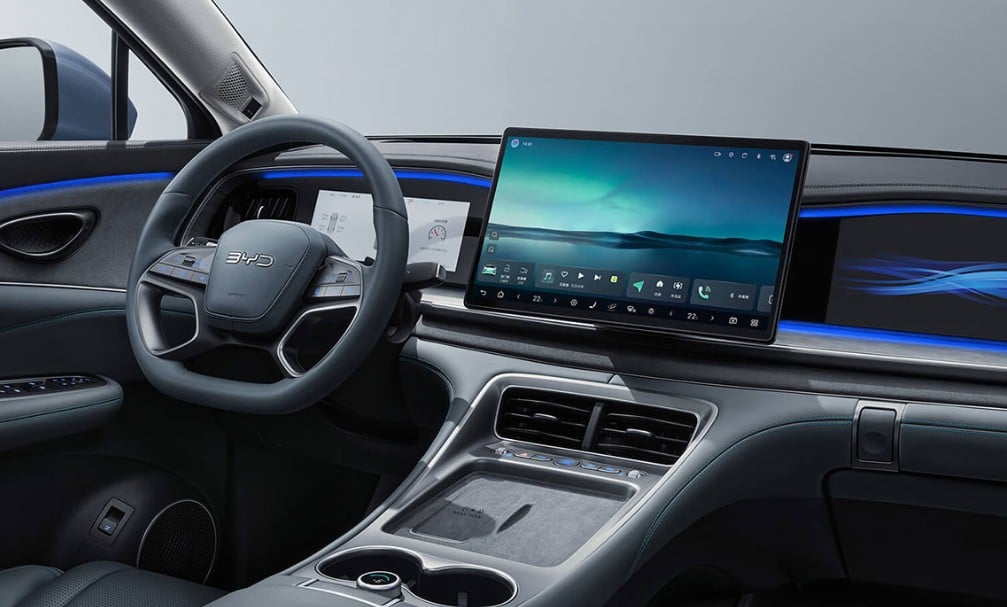
In terms of technology, the lower two variants are equipped with the God’s Eye C driver assistance system and DiPilot 100, supporting highway NOA (Navigate on Autopilot). The premium model features God’s Eye B and DiPilot 300, extending NOA capabilities to urban areas. All versions come with BYD’s DiLink 100 infotainment and an AI voice assistant powered by DeepSeek.
The Sealion 07 DM-i also supports the Ling Yuan drone system, developed in collaboration with DJI.
No word yet on whether the new hybrid will be sold in Australia though BYD’s Chinese executives have indicated global sales are imminent as part of its expansion of the Sealion offering.
It’s a fun game, predicting which cars are likely to become future classics. Of course, if anything becomes old enough and rare enough, it gains a certain curiosity value, but once in a while a car is launched and it becomes instantly and unambiguously apparent that it’s a nailed-on cert for classic status. And not even future classic status – it’s a fixture from launch.
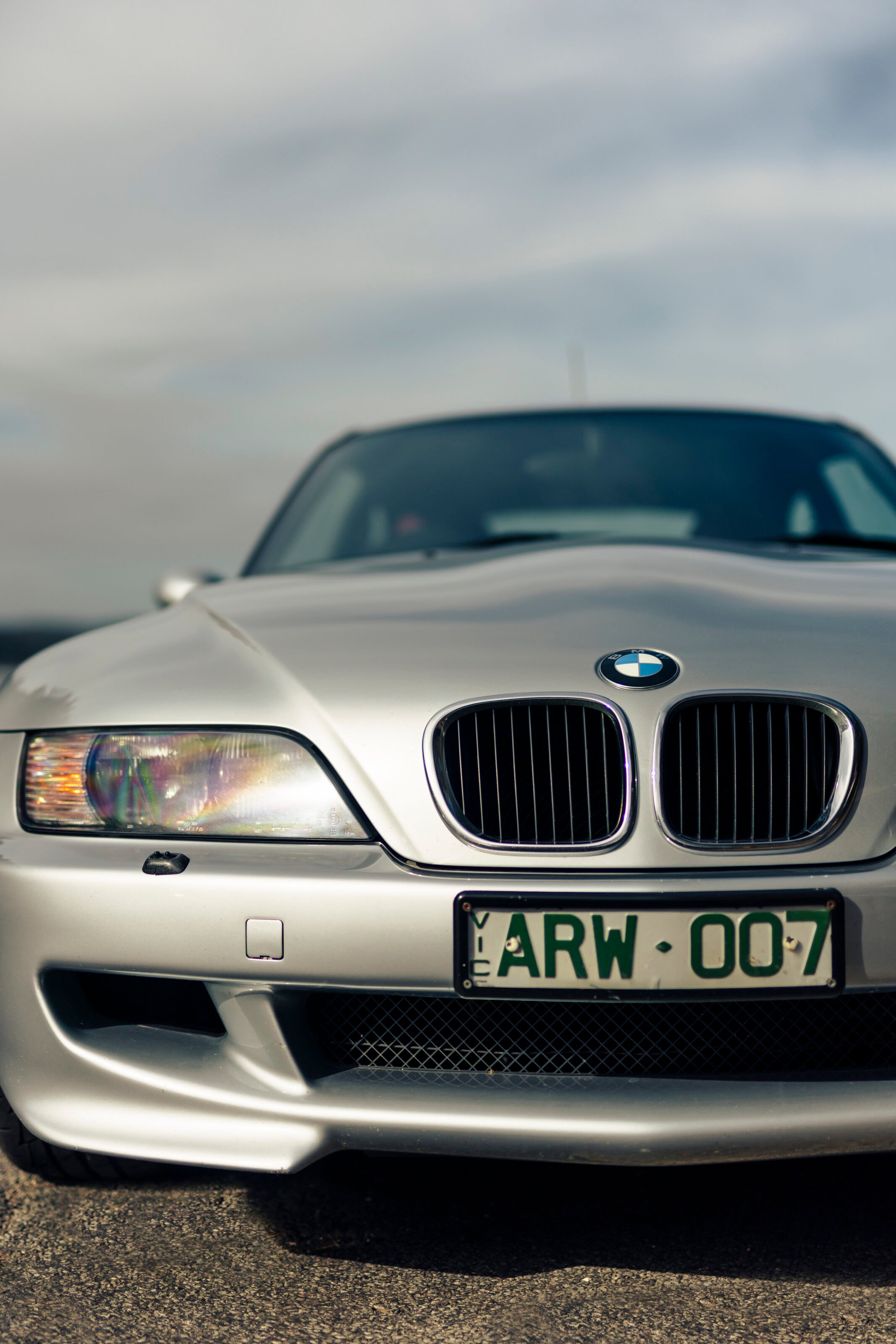
The BMW Z3 M Coupe is just such a car. But as if to undermine the sheer arbitrariness of it all, the car that it was based on – the drop top M Roadster – has often had a lukewarm reaction from car enthusiasts. That’s because so much of what makes the M Coupe special is the way that it looks. True, the more rigid coupe body also delivers better dynamics than the rather wobbly convertible, but the divisive and extreme styling of the M Coupe has always had people either drooling or peering through their fingers in horror. There’s almost no middle ground.
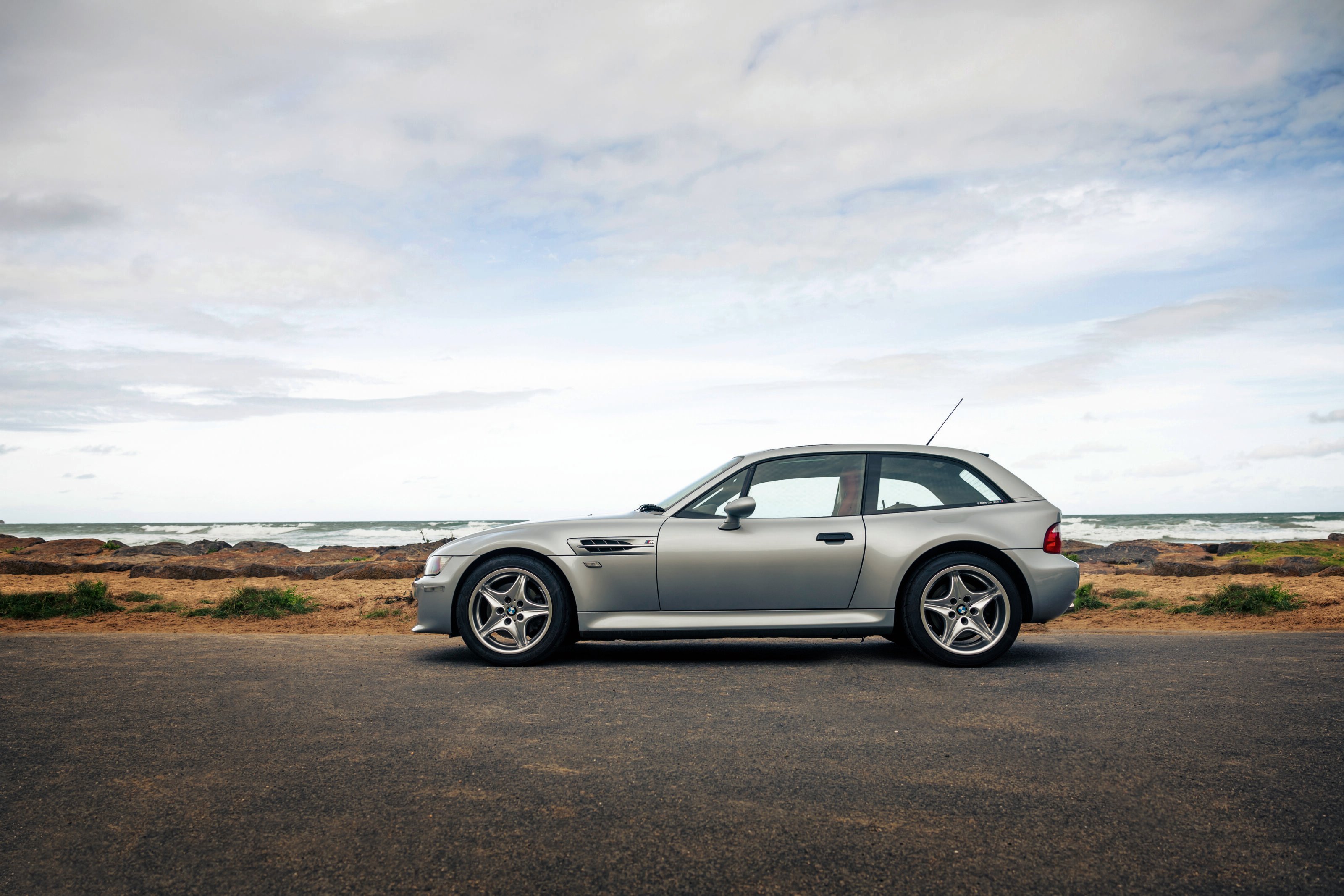
To understand this car is to spool back a long way, firstly to the initial conception of the Z3 family in general. Development of this model began in 1991, partially in response to the runaway success of the Mazda Miata in the US, and also to dovetail with the end of Z1 roadster production. Many lessons were learned from the Z1 project, chiefly around not throwing good money after bad.
Widely – and wrongly – perceived as a parts-bin special, the Harm Lagaay-styled Z1 proved both costly and difficult to build, with a peak build capacity of between 10 and 20 units per day. Only 8000 were built during its 27-month production run and none went to the US. In fact, 6443 units were sold in Germany. Rather belatedly, BMW realised quite how much money it had left on the table.
The name? The PR line is that the Z in Z1 stands for Zukunft, German for ‘future’. The truth is a
little more prosaic. ZT was the internal designation for BMW Technik GmbH, the department run by Dr Ullrich Bez where the Z1 was conceived. All project codes there started with Z. With typically Germanic logic, large projects got the Z code with a single digit following, medium-sized projects had the Z appended by two digits and there were three digits for small projects. So Z1 was simply the first big project that Technik undertook. Once the car was approved for production, it needed an official Entwicklung (development) number. It was assigned the internal designation E30/Z. It was also the very first BMW to use the sophisticated Z-axle rear suspension, more of which later.
BMW realised that the Z1’s successor could not be such a boutique offering. It needed to shift some serious units, and the most cost-effective way to do this, the company reasoned, was to build a factory in the US. Spartanburg, South Carolina was chosen, due to its road and rail infrastructure, plus access to Inland Port Greer. It was a smart choice. There was ample available labour, due to the recent downturn in the region’s textile industry, and Tier 1 suppliers such as Bosch and Michelin were also co-located. The local airport’s runway expansion was part of the deal, as was then-state governor Carroll Campbell’s promised USD$35m in incentives. The deal was inked in June 1992 and the first car to roll out of Spartanburg was a BMW 318i on September 8, 1994. You could say that BMW’s decision was vindicated, as Spartanburg is now quite comfortably its largest production facility.
It was also a brave choice. Having acquired Rover in 1994, BMW knew that the Brits were developing a roadster themselves. It would have made short-term financial sense to piggyback onto the development of what would become the MG F, a far more technically advanced car with a mid-mounted engine and Hydragas suspension. Instead, BMW knew it had to play a longer game.
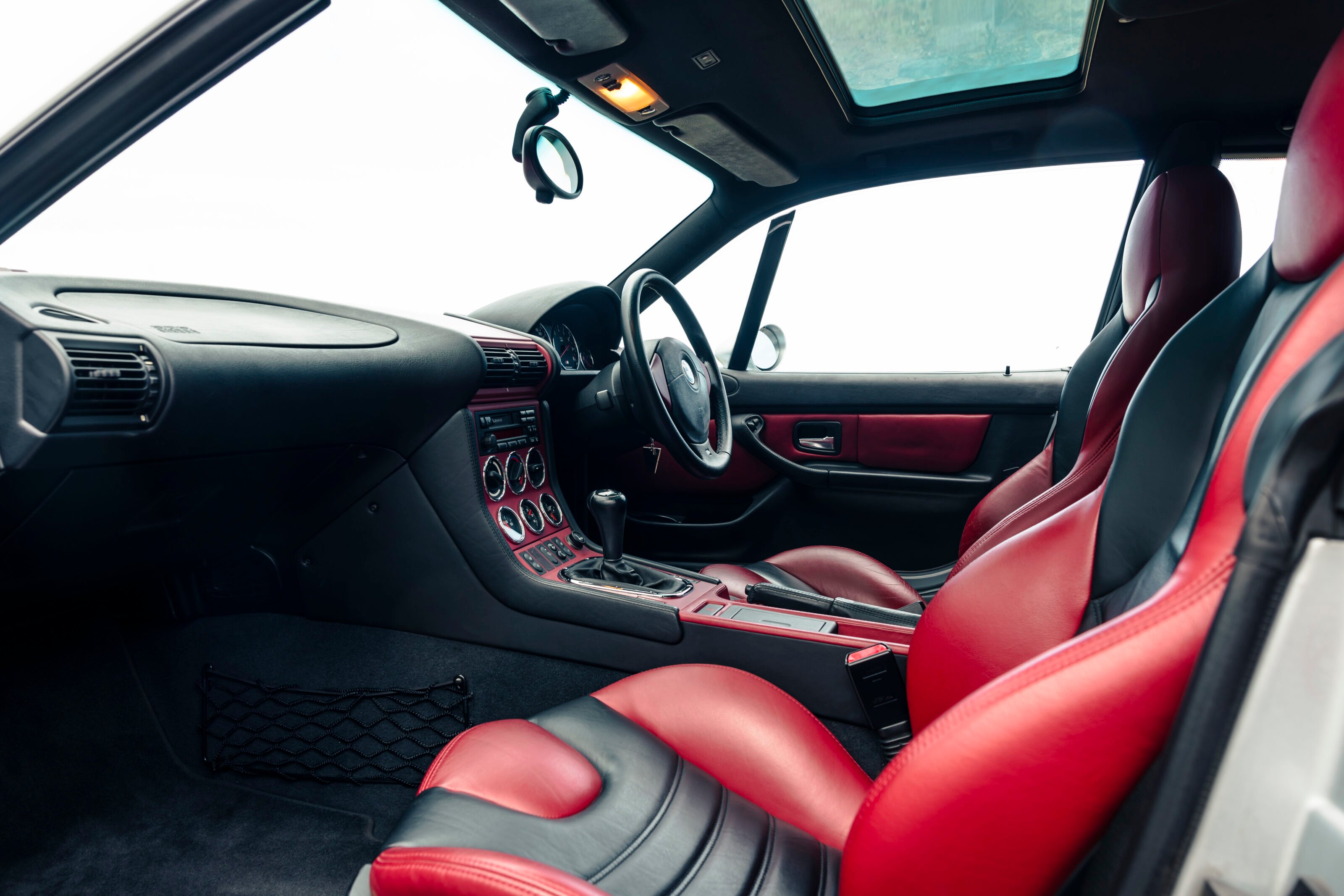
Running on a shortened version of the E36/5 3 Series Compact platform, with a hefty 246mm chopped out of the wheelbase, the Z3 was developed on the cheap. Burkhard Göschel, carrying the job title ‘Project Manager Roadster’, was in charge of the development. He commissioned Joji Nagashima to style the Z3, with the exterior design study approved in July 1992 and final design freeze coming in early 1993. The car was officially announced on June 12, 1995, with production beginning in September of that year. The Z3 featured in the generally rather awful Bond movie GoldenEye in November of that year, with the result that the entire 1996 production run was instantly sold out.
So let’s spool forward to 1997 and the launch of the M Roadster, or E36/7 if you’re an unreconcilable BMW tragic like me. At this point, the Z3 needed some help. To date, the brawny-looking Z3 had been offered with a choice of an 85/87kW M43 1.8-litre four or a 103kW M44 1.9-litre four. The ultimate driving machine it certainly wasn’t.
Cue the sixes. For the masses, the lovely M52B28 137kW 2.8-litre inline six-cylinder engine made its debut. For the M-car enthusiasts, the magnificent S50B32, all 236kW and 3.2 litres of it. Unless, that is, you lived in the US, whereupon you got the slightly less lovely S52B32 inline-six rated at a mere 179kW. For a bit more back story on that, dig out the November 2024 issue of Wheels, and the Modern Classic piece on the E36 M3.
The full-fat M Roadster was a wild and hairy thing. We strapped Peter Robinson into what was at the time the fastest-accelerating production BMW of all time and set him loose at Jerez in the May, 1997 issue.
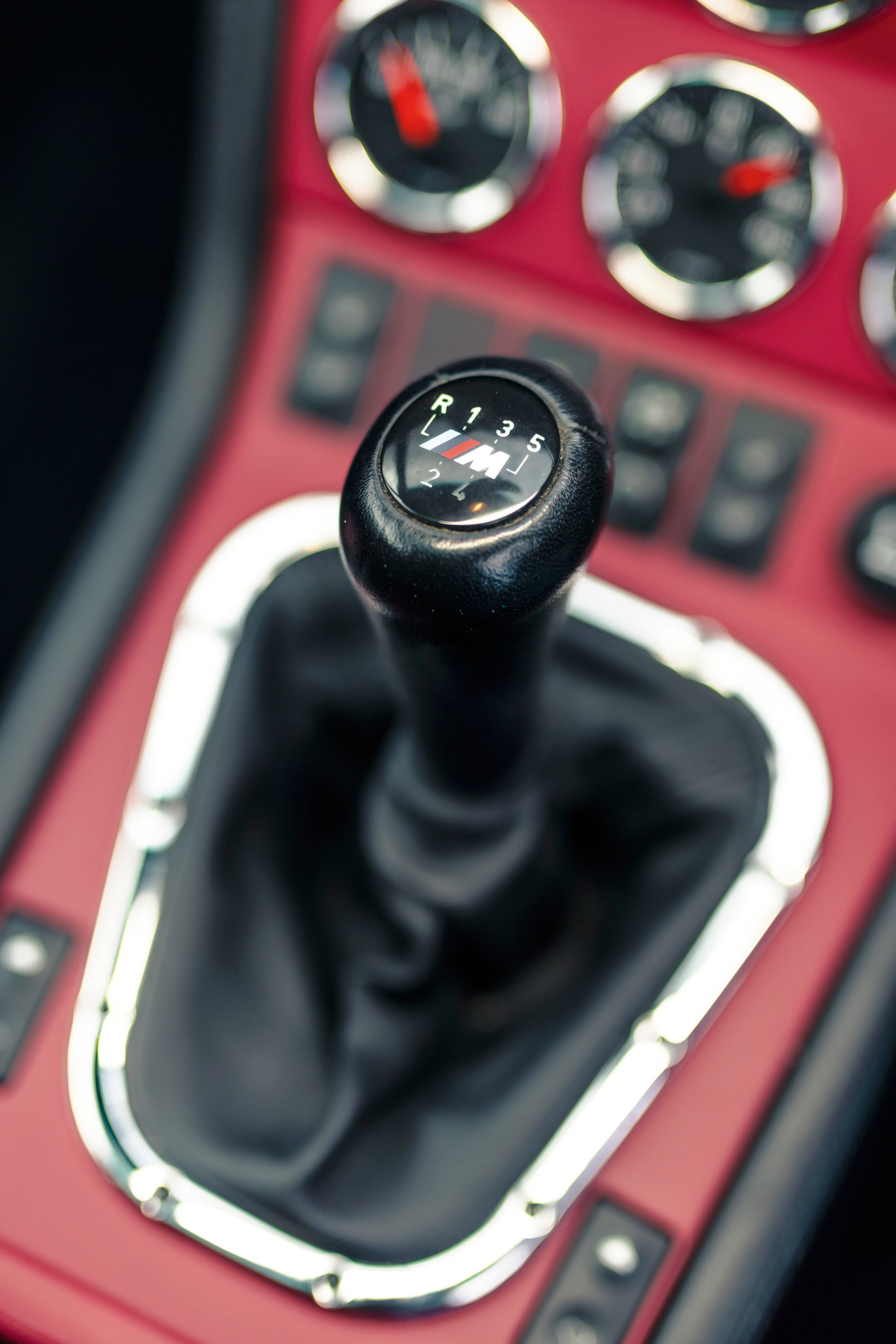
Traction control? That was our man from Glebe’s right boot. With front suspension, brakes and some of the steering from the E36 M3, there was little wrong with the strut front end. It was the rear that was in doubt, the old semi-trailing arm setup from the E36 Compact being beefed up with a rear subframe that was twice as stiff as in other Z3s, and an oil cooler for the differential. Unfortunately, the Z3 floorpan didn’t allow for the fitment of the M3’s six-speed manual, so the more compact five-speed unit had to do. At the time, with that power output it was more a rival for a Porsche 911 than a Mercedes-Benz SLK or Porsche Boxster.
BMW has a long history of what it rather appealingly calls ‘submarine projects’. To us, they’re the sorts of after-hours flights of fancy perpetrated by the most committed and enthusiastic designers, engineers and visionaries within the company. BMW even has a fund for them nowadays.
“That wasn’t planned,” says Burkhard Göschel of the coupe body. “We had several variants and said to ourselves: It looks kind of sharp. But that wasn’t an official plan, and somehow we pushed it through. But there were actually a lot of opponents. The car’s shape is somewhat polarising. But it wasn’t in the plan, and neither was the effort involved. The plan was also to develop and build the Z3 only with a four-cylinder engine. But that traditionally goes wrong at BMW.”
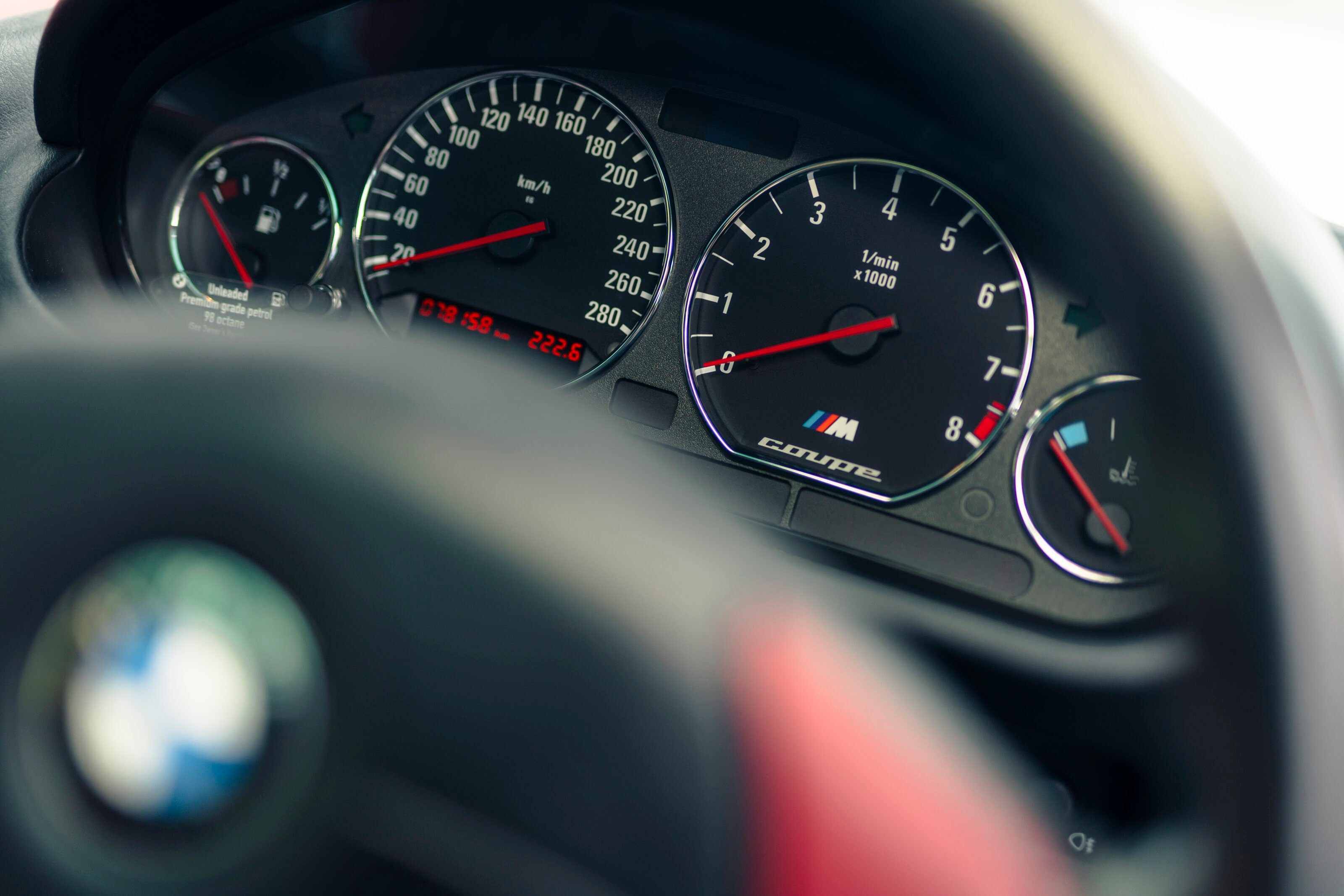
Yep, that’s right, the Z3 body was never originally designed to have a six-pot under that long bonnet
either. “We had to modify the rear end, with the rear axle,” said Göschel. He claims that the tin-top’s
unusual aesthetic created some internal conflict. “The sales were at war with the car,” he noted, claiming that BMW’s Italian sales manager pushed for the vehicle with an argument that it could only be understood with the heart, not the head. Ultimate sign-off responsibility lay with the urbane Wolfgang Reitzle who, we’re told, took quite a bit of convincing.
“So the Coupé slipped through,” chuckles Göschel. “From the construction it was a welded roof. Bodywork totally stiff. I just wanted to say if you built it on the Roadster then you had additional stiffness, but also heavier than the Roadster,” he noted.
It wasn’t by too much though, the Coupe adding a mere 25kg to the Roadster’s 1365kg dry weight.
The M Coupe’s additional stiffness wasn’t just provided by the roof panel. Reinforcing panels were placed around the windscreen, the doors and the subframe. As a result, BMW M claimed that the M Coupe was the stiffest car it had built to date, with a torsional rigidity of 16,400Nm per degree of twist – 2.6 times as torsionally stiff as the M Roadster. Dynamic stiffness was rated at 29.2Hz, the same as the E36 M3 coupe.
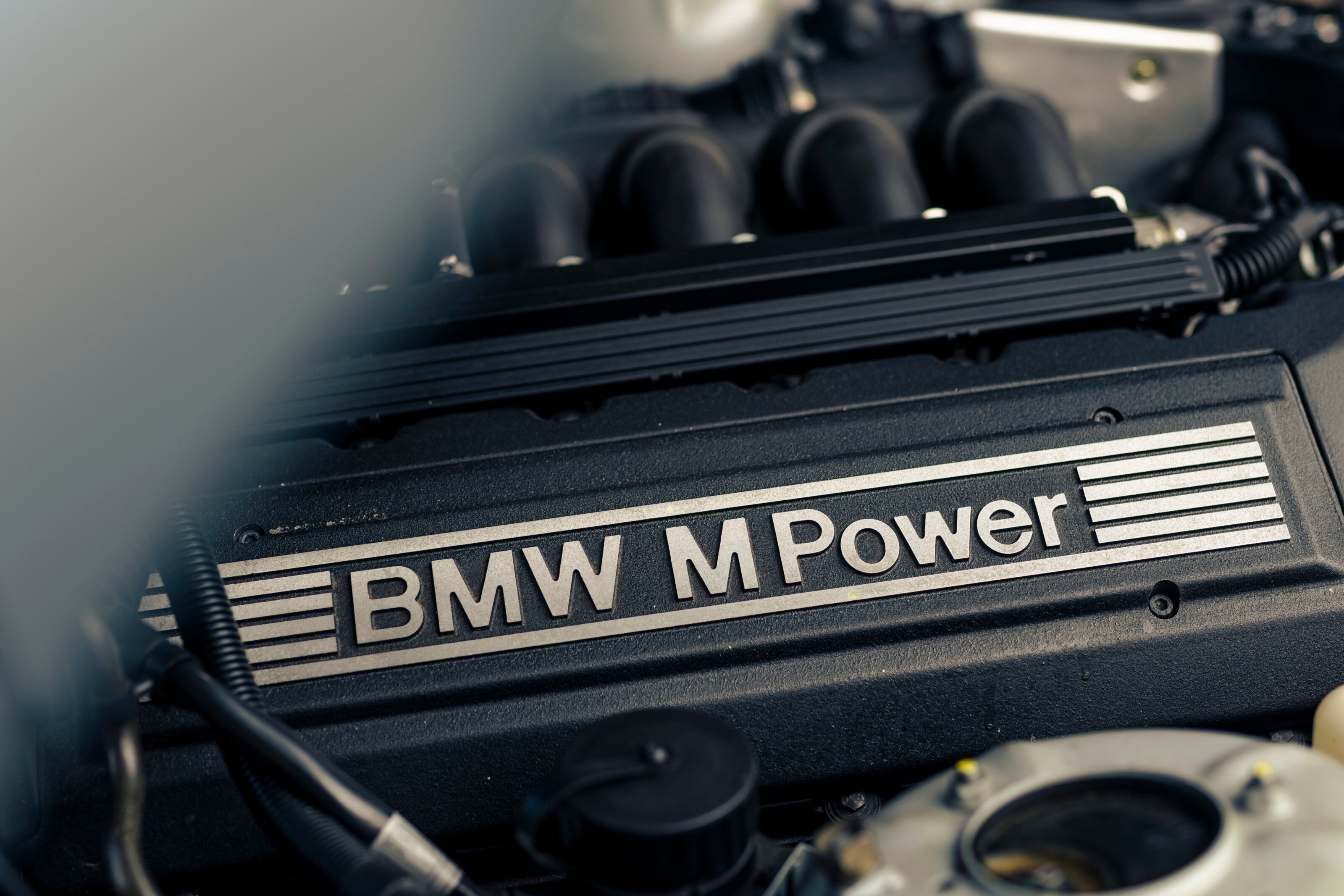
This additional body stiffness gave BMW’s chassis development team more options with suspension tuning, allowing the fitment of firmer springs and dampers versus the Roadster, while retaining the same gauge anti-roll bars. Firming up compression helped negate the noticeable toe change – and thus bump-steer – that afflicted the M Roadster.
Again, there were a couple of engines offered in the M Coupe. Initially, it was a choice of the 236kW S50 for most markets, with the US getting the 179kW S52. To give you some sort of idea as to how US-focused this car was, 2999 units were built with the US-spec S52 engine and a mere 2180 were shipped off overseas with the punchier S50 engine. German market cars had engines that clocked up a bizarre amount of mileage before they ever found owners, as the powerplants were built in Germany, shipped to the US to be mated with the M Coupe body in Spartanburg and then shipped back to Germany for sale.
No fewer than 11 body colours were initially offered on right-hand drive cars, comprising Alpine White III, Imola Red II, Dakar Yellow II, Evergreen, Cosmos Black, Black Sapphire Metallic, Arctic Silver Metallic, Titanium Silver Metallic, Boston Green Metallic, Oxford Green II Metallic and, of course, the hero launch colour, Estoril Blue Metallic, a paint finish that had first appeared on the E36 M3 in 1992.
Peter Robinson was again Wheels’ man on the spot for the first comparison test of the Z3 M Coupe, in this instance in the September 1998 issue where it faced a notably stern test against the then-new Porsche 996 Carrera in the UK. Whereas European markets also got a 2.8-litre six in the Z3 Coupe, Australia only received the flagship M Coupe, priced at $137,000 when it arrived on our shores, versus $183,900 for the entry-level 911. In other words, it already had a significant advantage out of the blocks.
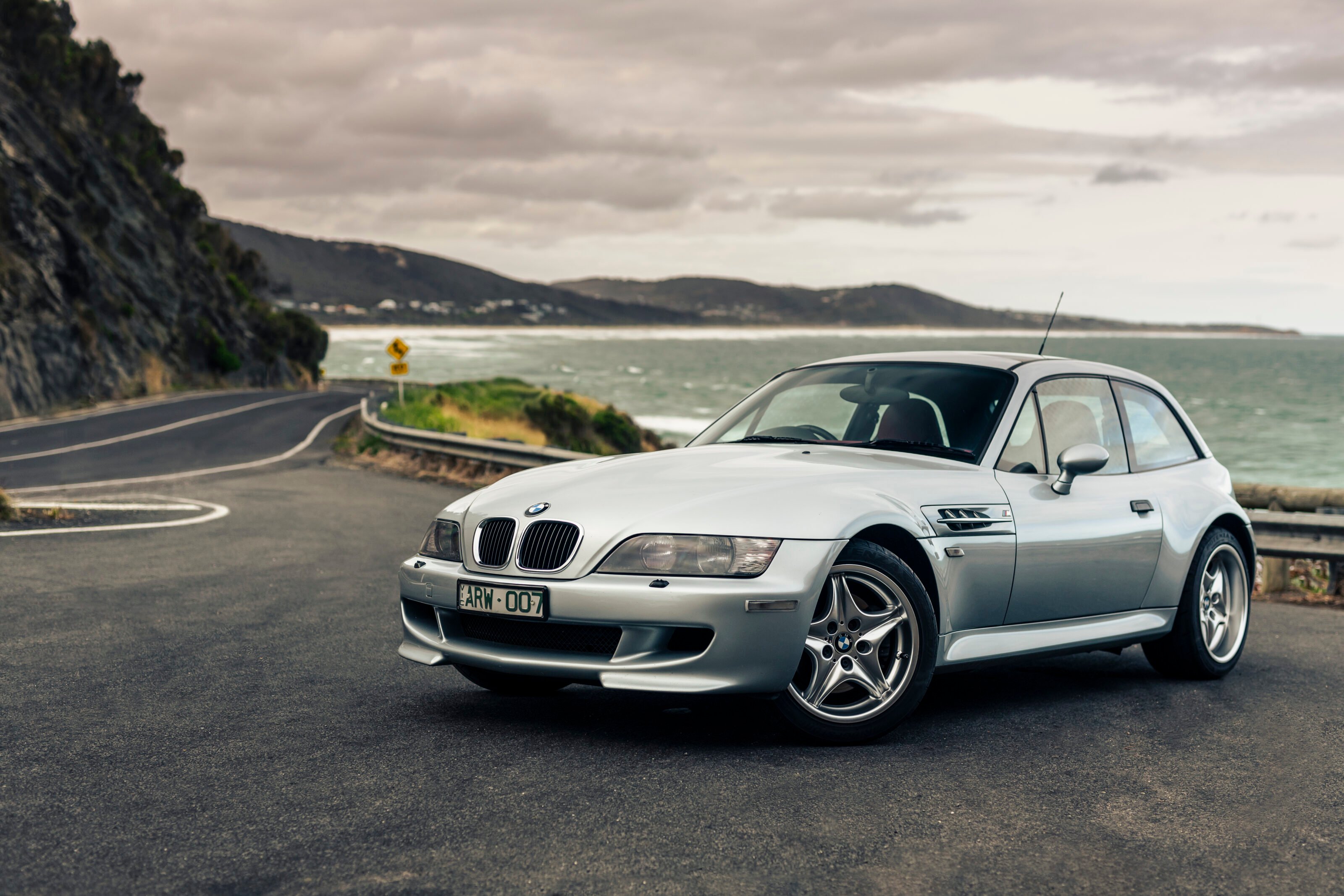
It was quickly clear that the M Coupe was something quite special. Robbo reckoned “the improved suspension control allows for better handling when the road surface is rough. This lends a refinement and a cohesiveness to the driving that’s completely lacking in the Roadster,” he said at the time. “The rawness of all that power can’t be disguised – nor would you want to cloak it any way. Now you can punch out of lumpy second gear corners, lighting up the rear tyres if you insist, the Coupe tracking true and without body shiver. It’s going too far to say the steering is sensitive by ultimate standards – it’s too meaty for that. But this M changes direction more consistently and effortlessly, and is thus far more rewarding; it is also quicker and better riding on any undulating road.”
What it wasn’t was a better all-rounder than the Porsche 911, but while the evergreen Neunelfer was the better overall car, Robinson opined that “there are those, however, who find this newfound refinement excessive, as if some of the desirable 911-ness of character has been engineered out of the new car.
Maybe, in truth, such people were exactly those that the BMW engineers had in mind when they developed the M Coupe. By the standards of the new Porsche, this is a raw beast, loud, aggressive and extroverted.”
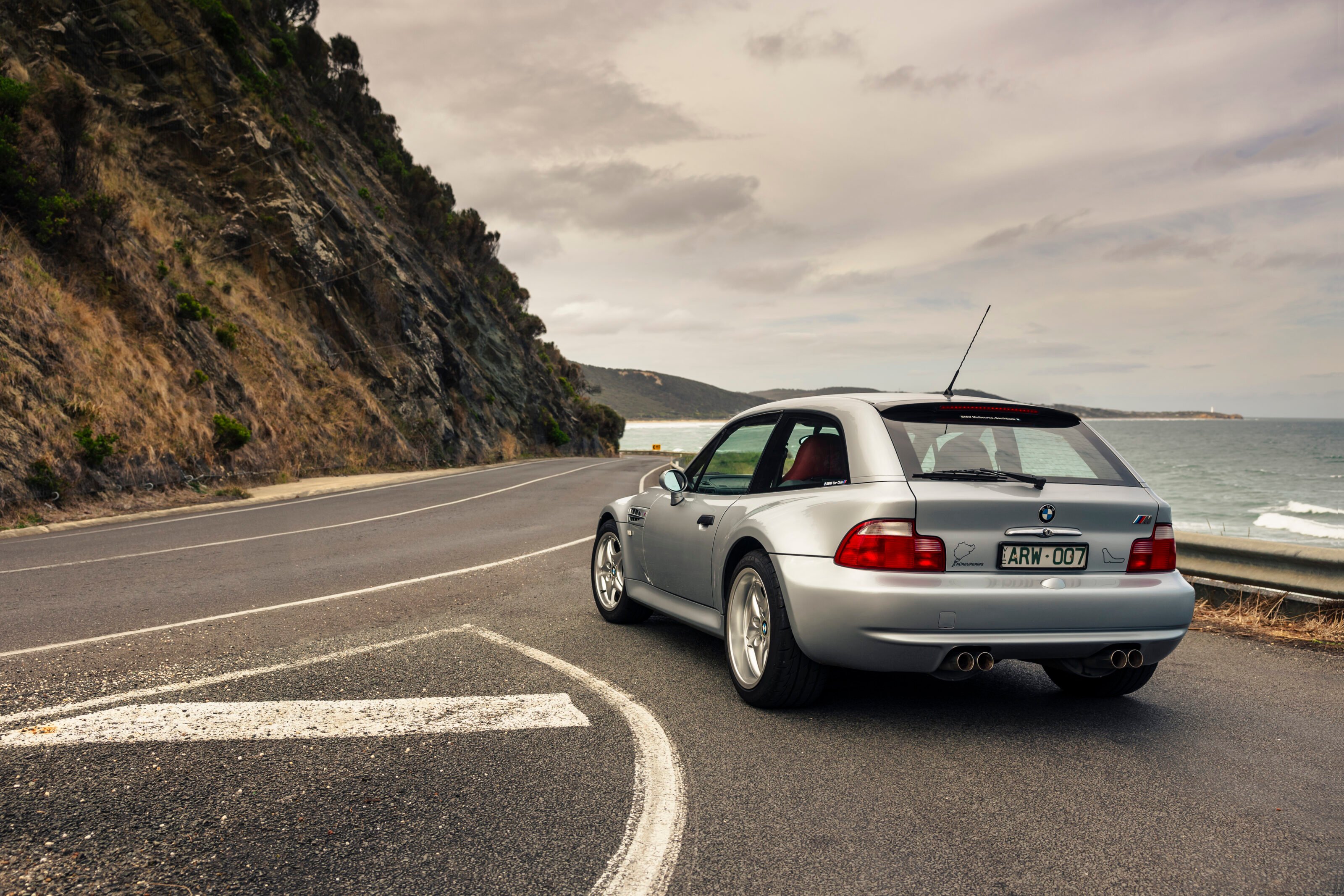
It was a telling point and one that helps explain the lasting appeal of the M Coupe. In a world where cars have become more sanitised and easier to drive, here was a vehicle with huge power and no stability control. Some form of electronic safety net appeared in February 2001 when, after a six-month production hiatus, all M Coupe models got the same BMW S54B32 engine as seen in the BMW E46 M3.
Now good for 252kW/365Nm in most markets (again, the Yanks were dudded), the engine was bored-out compared to the S50, now displacing 3246cc rather than 3201cc. Revised camshafts, finger follower valve actuation, an increased compression ratio, a Siemens MSS54 ECU with electronic throttle control (allowing the fitment of Dynamic Stability Control) were all introduced with the S54 lump.
The colour palette was also subtly revised, the most significant change being the introduction of Laguna Seca Blue. Some modest aesthetic changes, such as revised dials, curved M-badging and a revised rear-view mirror also debuted. A total of 1112 M Coupes were built with the S54, 678 of which stayed in the US. In other words, a right-hand drive S54-engined M Coupe is a rare beast, with only 165 ever built. With an attrition rate of around 25 per cent, there’s probably little over 100 cars still in circulation. The 40 S54-engined cars sent to South Africa were equipped by the importer with AC Schnitzer suspension and exhaust, a short shift kit, a unique gear knob and 18-inch Type III alloys.
Opinions differ as to which is the better installation. Some prefer the analogue throttle action and the rawness of the S50-engined car while others lean towards the extra refinement and broader spread of torque of the S54. BMW also ironed out some of the teething issues with the double-VANOS system with the S54 unit. It also solved the irritating issue with the throttle cable stretching on the S50 engine.
One malady that can affect all vintages of M Coupe is that flex from the differential can pop both the rear cross member welds and the boot floor spot welds. Aftermarket bracing kits fix this and are recommended. You’ll also need to remember that with a 51-litre fuel tank and a fuel thirst that can easily climb above 25L/100km, you’ll have less range than most EVs if you pedal an M Coupe hard.
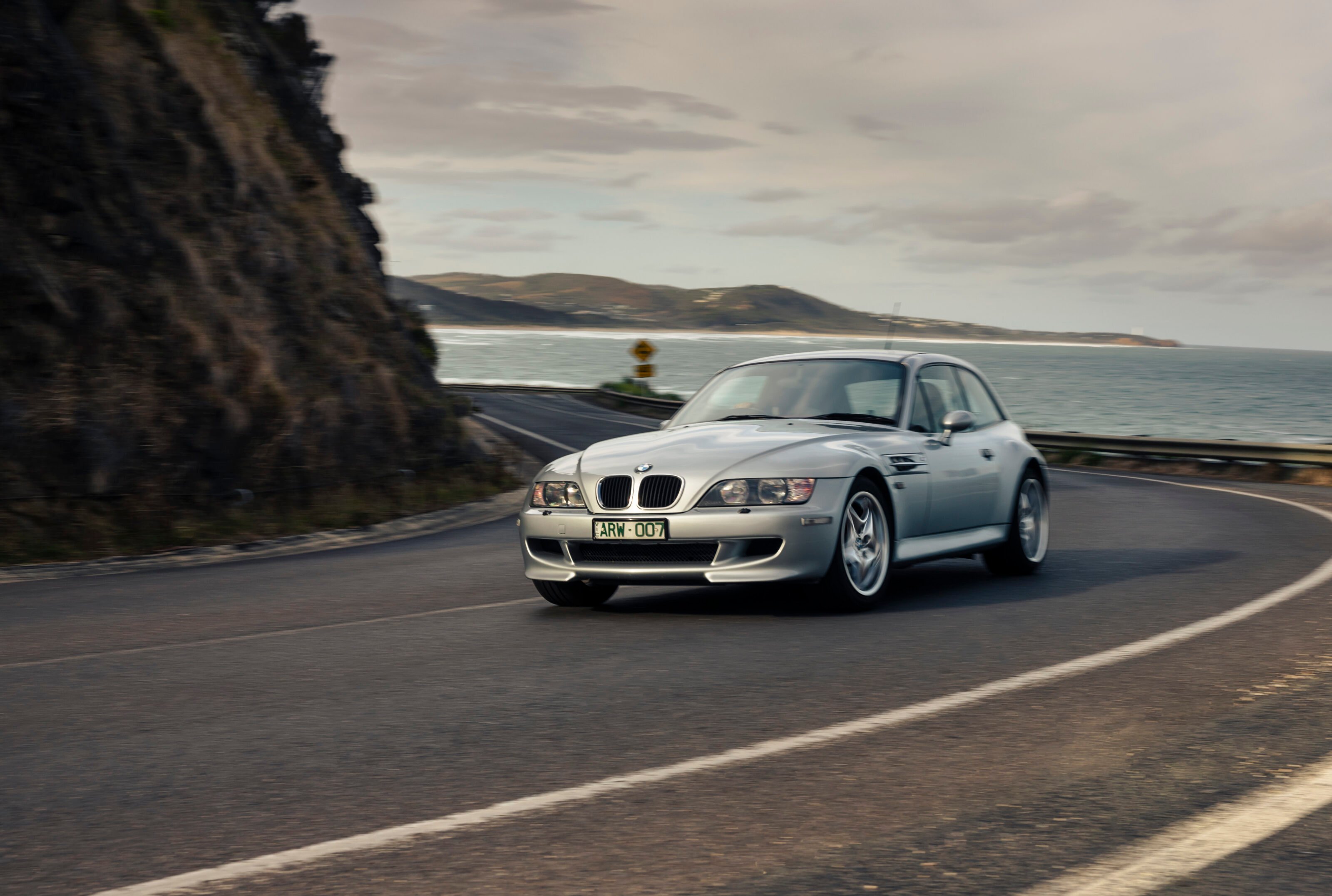
Still, by today’s standards, the Z3 M Coupe isn’t in the senior league of quick cars. At 5.4 seconds to 100km/h, it’s in the same ballpark as a Honda Civic Type R, and it’d take a very skilled and determined driver to keep the Honda in sight on a challenging road. Nevertheless, it’s plenty quick enough to have fun, and it demands a focus and intensity, the cab-back driving position making it always feel an occasion. You feel the rear suspension at work, you have to manage the weight transfers of the car deftly, and the straight-six engine is never anything less than magnificent. Sure, you’ll go quicker in lots of modern cars, but it’s doubtful that many of them are more of an event, in this price bracket at least.
What’s more, everybody wants to talk to you about your ‘clown shoe’, your ‘bread van’ or any one of the many nicknames that the M Coupe has worn over the years. Auto Motor und Sport even dubbed it “a bullfrog with a damaged hip”. Talk about a harsh appraisal. The Z3 M Coupe lasted in production until May 2002, whereupon Z3 manufacture as a whole was ceased.
Today, any version of the Z3 M Coupe is highly collectible. Because of their limited production run, and consequent attrition rate, the law of supply and demand ensures that prices are punchy. The opening price is around $100,000 for higher mileage cars, lifting closer to $150,000 for the very best available. That’s almost double what you’d expect to pay for manual E46 M3s, which are, objectively at least, superior cars.
That’s the magic of the M Coupe. Because it looks so odd, is so rare, and its development backstory is so interesting, it has generated a cult following. These cars don’t happen very often, and they’re increasingly difficult to justify in this day and age. If you hanker for a throwback, the Z3 M Coupe is a very singular choice. It’s cramped, noisy, angry and unapologetically of its era, but it’s hard not to love. And if you do choose one, look after it and drive it. You at least owe us that.
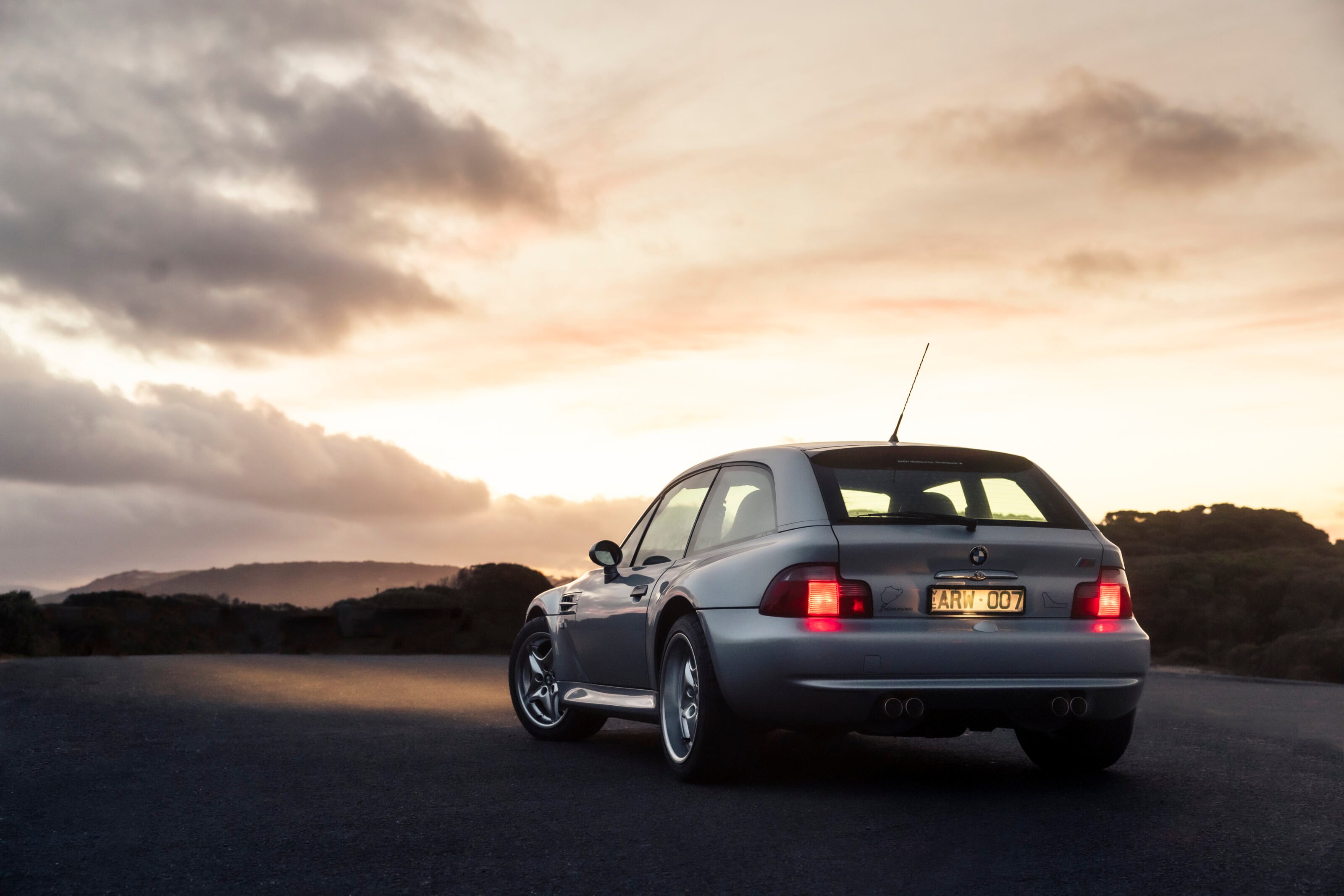
This article originally appeared in the Modern Classic section of the May 2025 issue of Wheels – subscribe here.
