Features
Gallery 1
Tax breaks and local content requirements are a hot topic in the automotive world once again, as car-making countries across Europe and North America look to eke out an advantage against cheaper Chinese competition.
Australia was no different. Years ago, tariff protections meant local assembly was a favourable position, and the more local content you could include, the better the outcome.
The result was some surprising global icons, plucked from their native production lines and put together Down Under.
Volkswagen Beetle
1
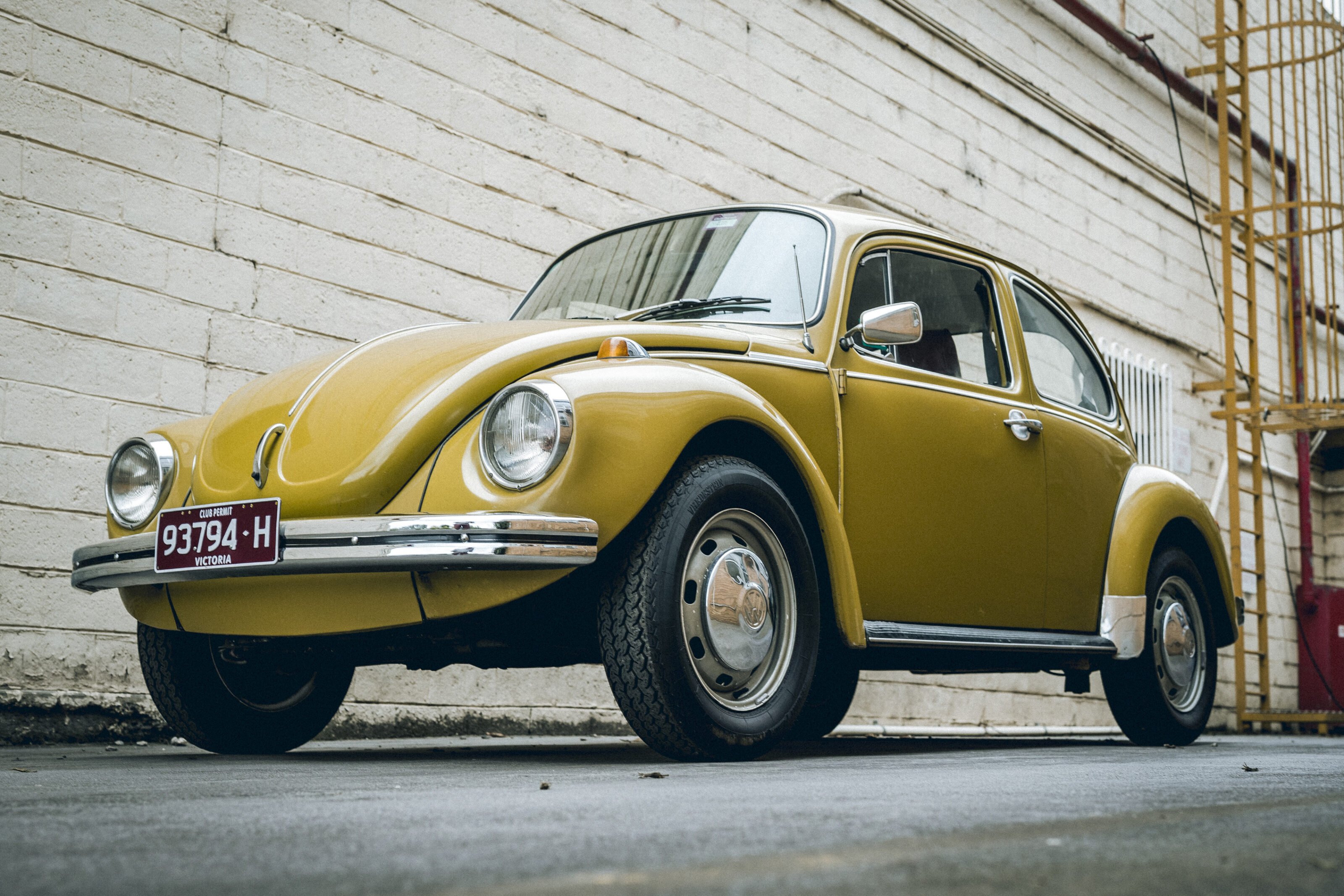
The Volkswagen Beetle may be one of the most recognisable cars on the road, but despite its German origins, Australian-built Beetles featured an incredibly long run. Assembly took place in Clayton, Victoria, starting with imported completely knocked down (CKD) kits and eventually expanding to include local stamping and expanded local components.
CKD production started in 1954, full-scale local production kicked off in 1959, but by 1968 local assembly switched back to welding together imported CKD kits with smaller local contributions. At its peak, the Clayton plant also built Kombis and Type 3s
Mercedes-Benz S-Class
1
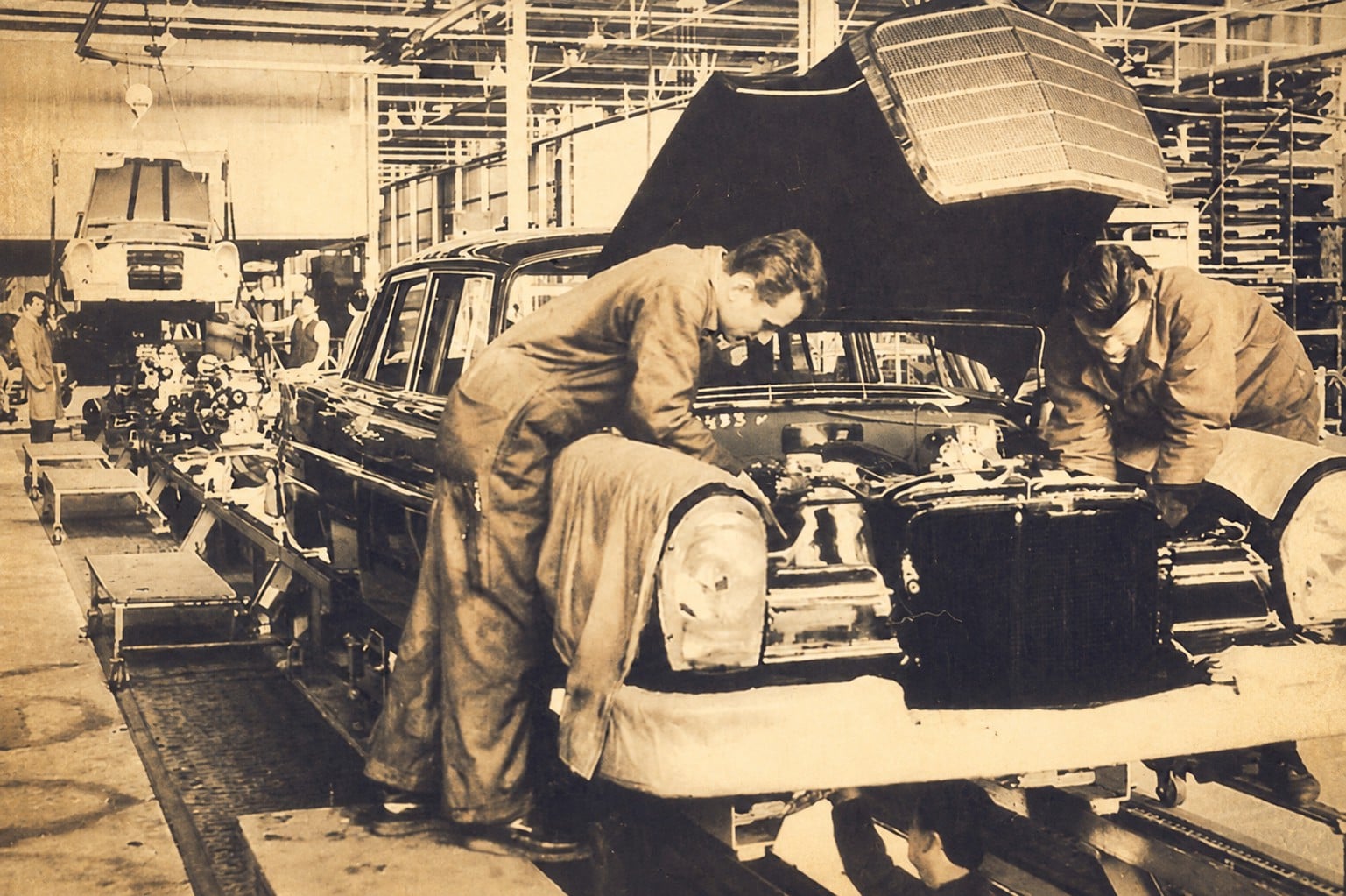
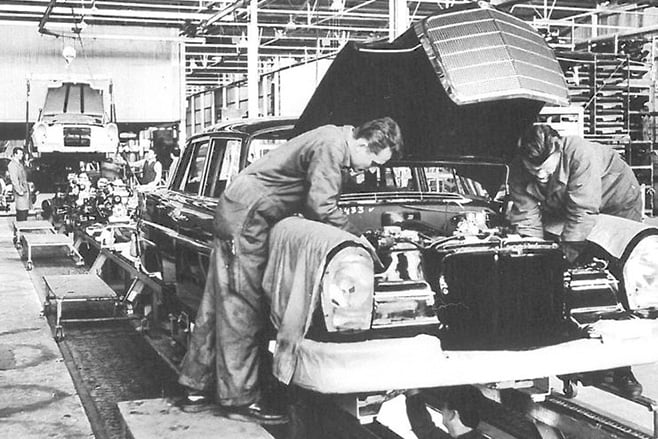
Mercedes-Benz operates a global network of factories today in countries like South Africa, Hungary, China and the USA, among others. In the ‘50s and ‘60s that list also included Port Melbourne.
Mercedes-Benz didn’t just build any car here either, but its flagship of the era, which would later go on to become the S-Class. The W180 was the first locally-assembled model starting in 1959. The later W111 accounted for the bulk of locally-produced models, but by 1965 sourcing switched back to fully-assembled imported models.
Datsun 200B
1
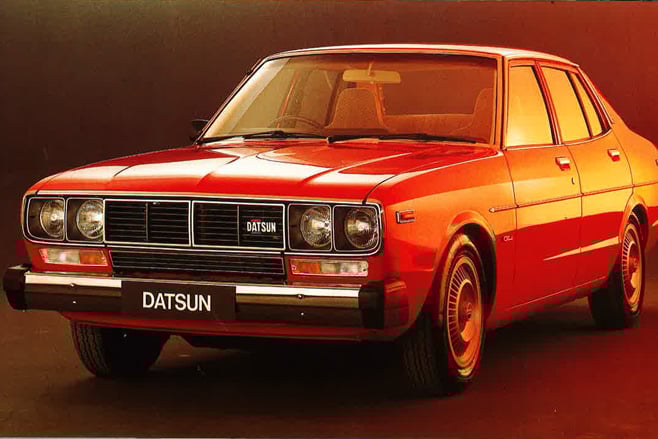
The massive sales growth of Japanese brands in Australia in the 1970s often gets swept into a single ‘from Japan’ category, but some of the biggest successes came from local assembly.
Such was the case for the Datsun 180B and 200B. The 180B sparked sales success in Australia, and the locally-built 200B grew that even further, but changes made to increase local content also saw quality downgraded. Regardless, the 200B became Australia’s top-selling four-cylinder car until the Mitsubishi Sigma defeated it.
Mini Cooper
1
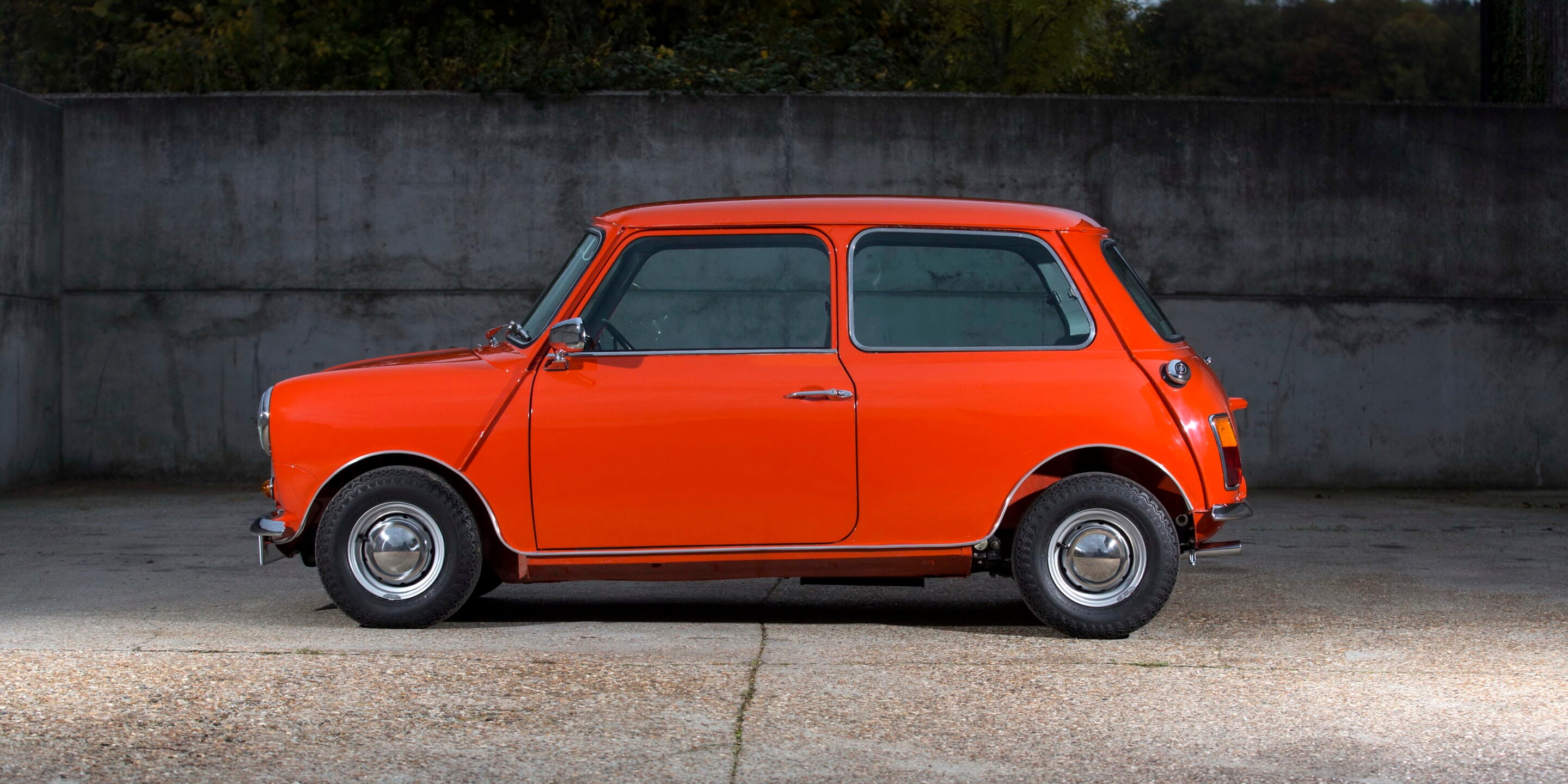
Among the many names worn by the iconic Mini over the years, its Australian production debut saw it released under the Morris 850 banner, built at British Motor Corporation’s Zetland factory starting in 1961.
Aussie Mini production allowed freedom of specification and saw production changes like wind-up windows, introduced on Australian-produced Minis years ahead of their British-built counterparts. Hardtop Mini production ended in 1978, but the Moke was built at Enfield until 1982
Toyota Corona
1
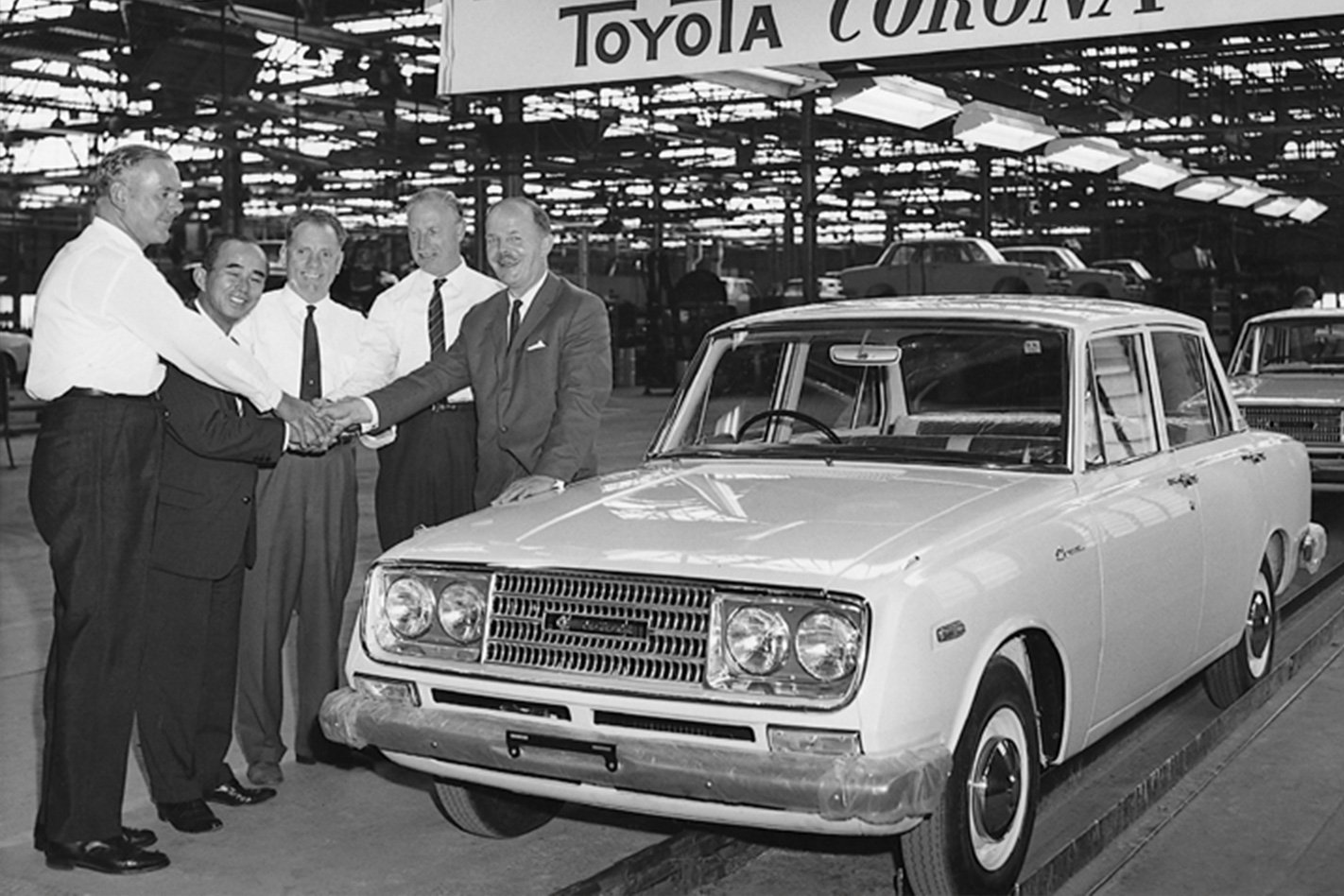
The universal success of the Toyota Camry makes it easy to forget that Toyota started Australian production with the Corona, built in Port Melbourne from 1963 and sold as the Tiara. The name switched back to Corona, and Toyota built six generations of Toyota’s mid-sizer in Australia.
As the Corona moved to a front-drive platform, and Toyota concentrated on making the Camry its star performer for Western markets, Aussie production changed over. The second-generation Camry took off for Toyota Australia, but New Zealand continued Corona assembly until 1996.
Nissan Skyline
1
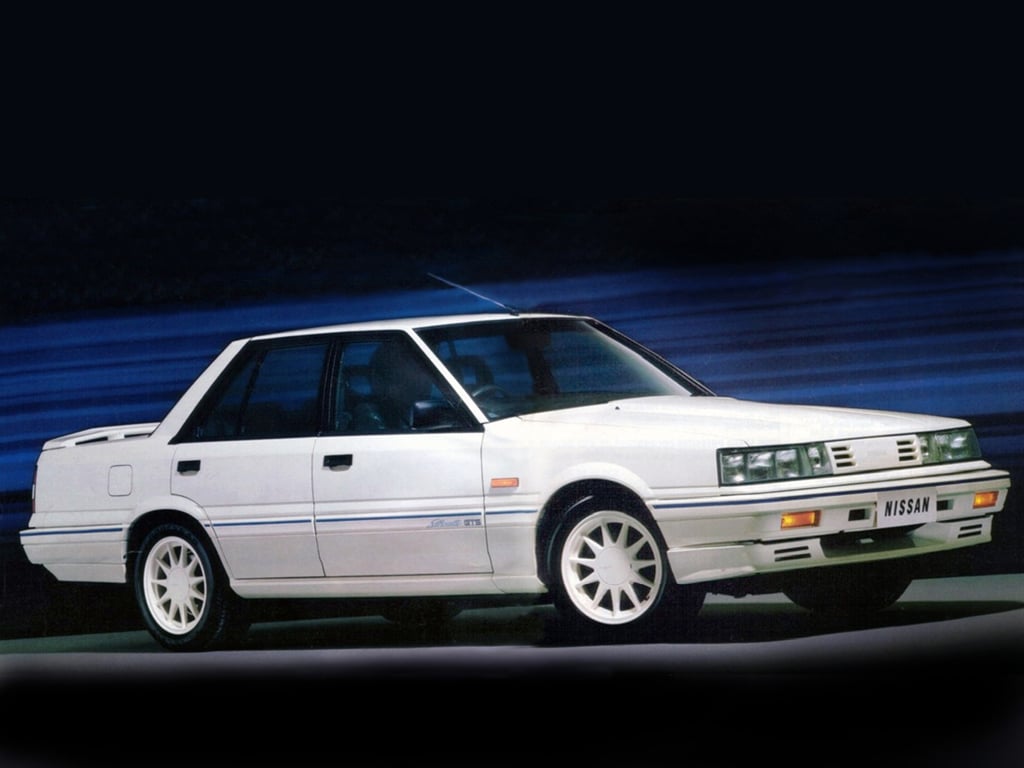
Right before the Nissan Skyline’s legend status cemented itself with the Bathurst-conquering GT-R, the previous generation R31 called Australia home. At least, sedan and wagon versions did, built at Nissan’s Clayton factory.
The Skyline had a brief local-build run from 1986 until 1990, before Nissan focused its attention on the Aussie-made Pintata and Pulsar, which wrapped local production in late 1992. Nissan still manufactures diecast aluminium components in Dandenong, Victoria, for models like the Leaf and Qashqai.
Volvo 240
1
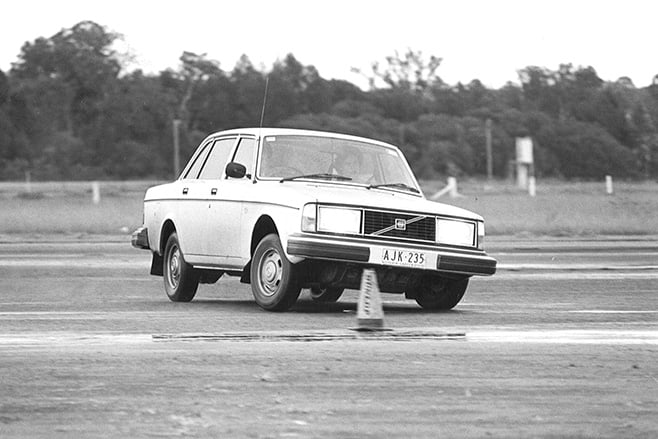
Volvo’s 200-series sedans and wagons often draw unfavourable comparisons to the common housebrick, but the roomy interiors, robust build quality, and large car dimensions also made them a versatile addition to Australia’s new car market.
Production started with the Volvo 140 in 1972, the new-generation 244 sedan and 245 wagon followed in 1975, joined by the more powerful 264 six-cylinder sedan. Their acceptance led to Volvo adding the 242 coupe to its built roster, all assembled at Clayton, Victoria.
As the 200-series made way for the newer 760 range, Australian production followed, but was short-lived. In 1988 local assembly was halted, and Volvo switched to a fully imported line-up
Willys Jeep
1
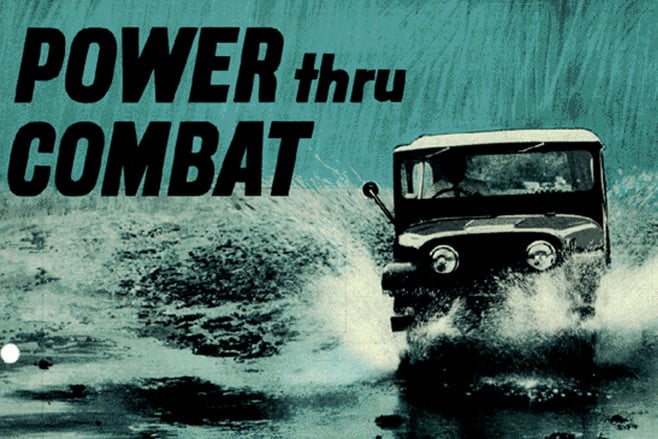
Jeep production stretched to just about every corner of the globe, and Australia was one of a long list of countries that built the civilian-ready Jeep CJ. Local production started in 1958 in Rocklea, Queensland, overseen by Willy Australia, but other low-volume assembly took place around the same time..
In the 1960s, the Jeep CJ5 and CJ6 took on a distinctly Australian flavour, fitted with the inline six-cylinder engine from the Ford Falcon. Over 600 Jeeps were built with Ford engines, with 2.4-litre (144ci), 28.-litre (170ci), and 3.1-litre (188ci) versions offered in a run of just over 600 vehicles.
Range Rover
1
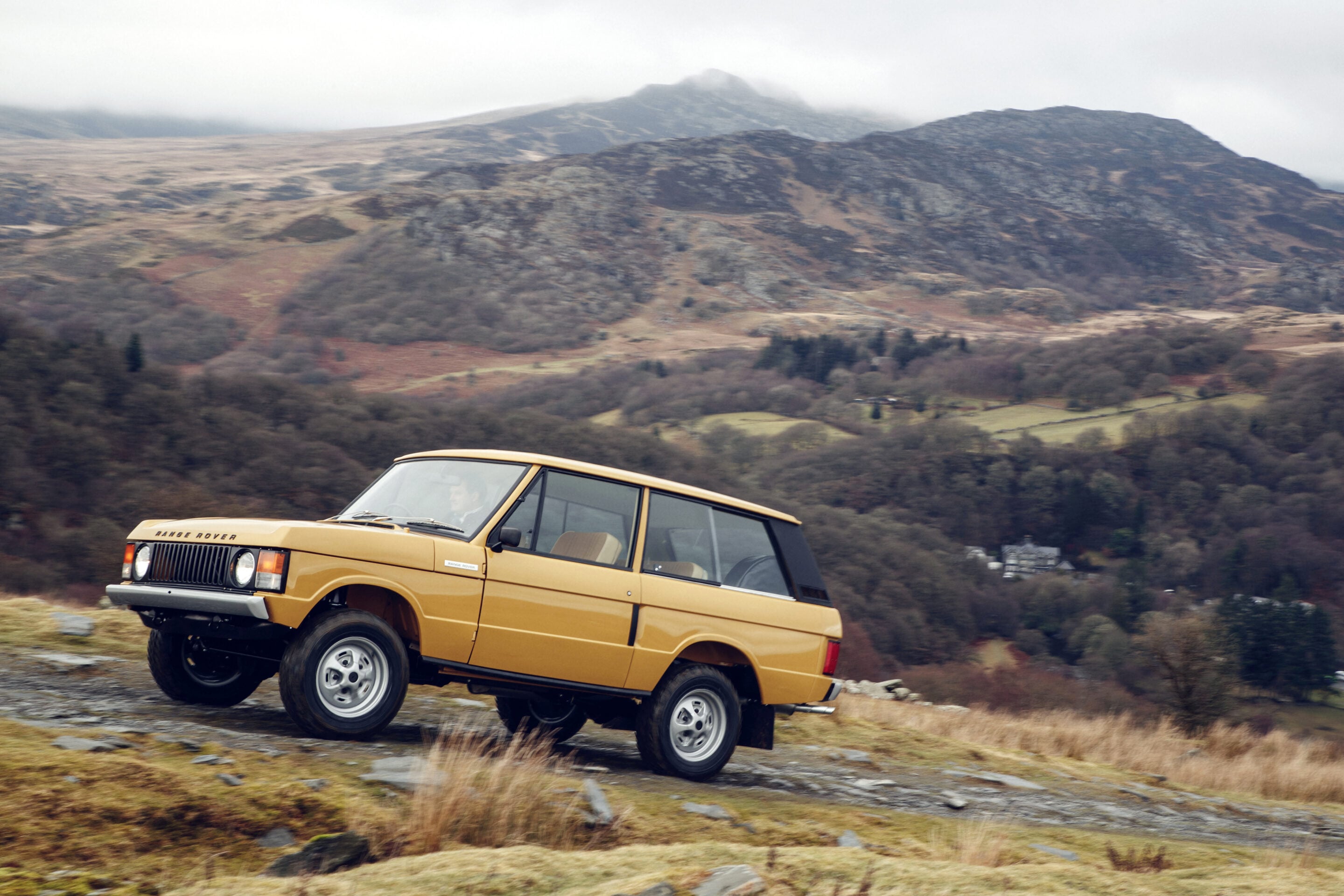
A brief run of first-generation Range Rovers was assembled at Enfield, in Sydney’s west, starting in 1979 but finishing by 1983.
Rather than ramping up to a high level of local componentry, Jaguar-Rover-Australia opted to import CKD kits for local assembly. Production joined the existing Land Rover Defender production, which started with the Series II Land Rover in the 1960s.
Citroën ID 19
1
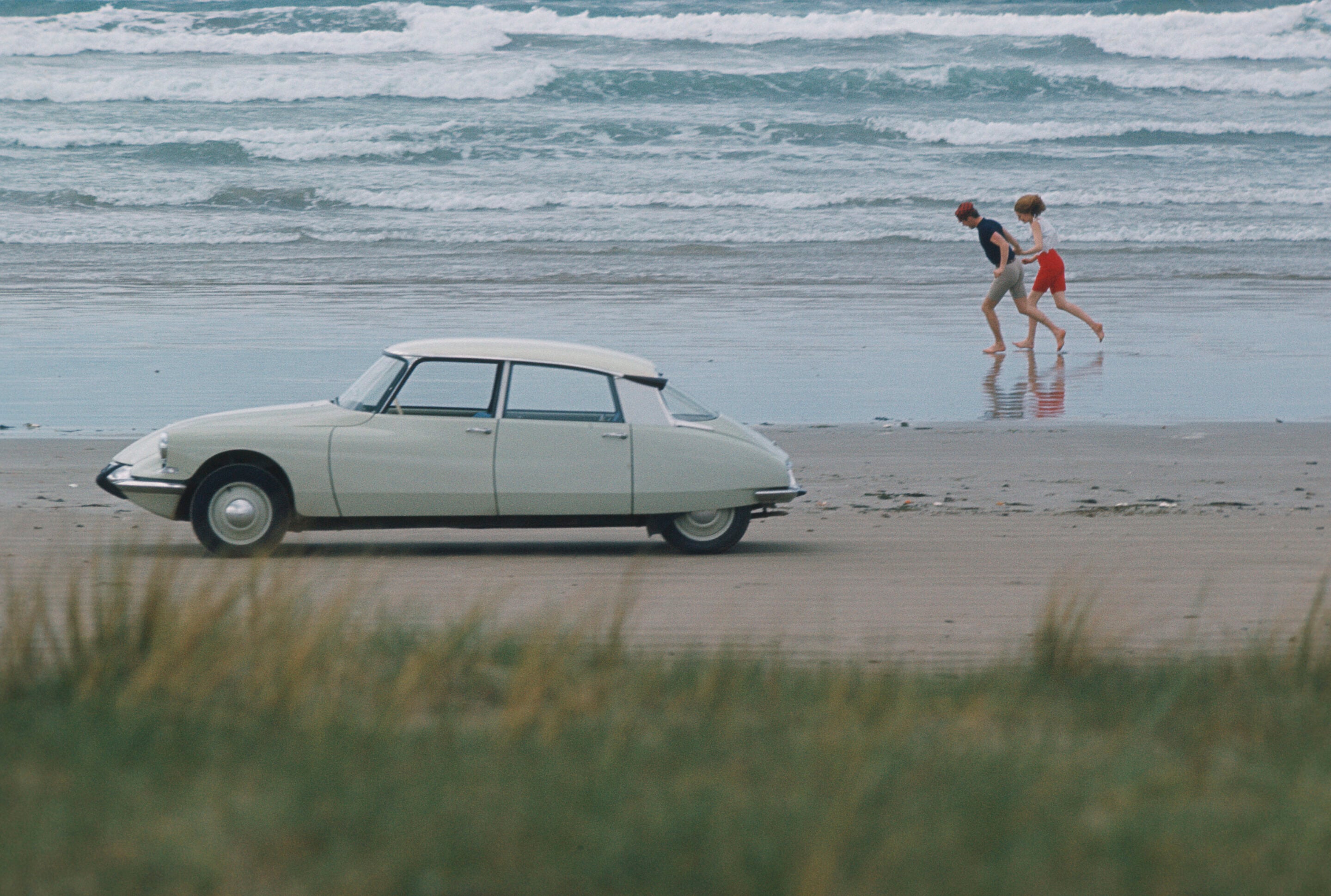
While it might look like the iconic DS, Citroën’s simpler ID line-up was chosen for Australian production. The cheaper ID 19 dialled back the DS’s chrome embellishments, did without power steering, and fitted a traditional manual transmission in place of the hydraulically-assisted semi-automatic.
Assembly took place in Heidelberg, Victoria, on a production line used to assemble Peugeot, Renault, and Studebaker cars, among others. Production ran for six years from 1961, but regulations that favoured increased local content saw the largely CKD-sourced ID 19 revert to import-only status.
Follow WhichCar/Wheels on Google
Click the button below to make WhichCar by Wheels a preferred source for your news.

We recommend
-
 Features
10 Australian cars that rewrote the rules
Australia’s motoring history followed a mostly predictable pattern, but every so often an outlier came along to shake things up.
-
 News
NewsCars every Aussie P-plater wanted – and the ones they had to settle for
The P-plate rite of passage for teens continues to this day, but for Aussies of a certain age, there was a moment in time when P-plate aspirations took a very particular form.
-
 Features
Six-cylinder heroes: The top 10 Aussie 'big sixes'
From turbocharged Falcons to supercharged Toyotas, these overlooked Australian six-cylinder heroes proved V8s were not the only local performance legends ever built for enthusiasts.