
Features

Gallery 1
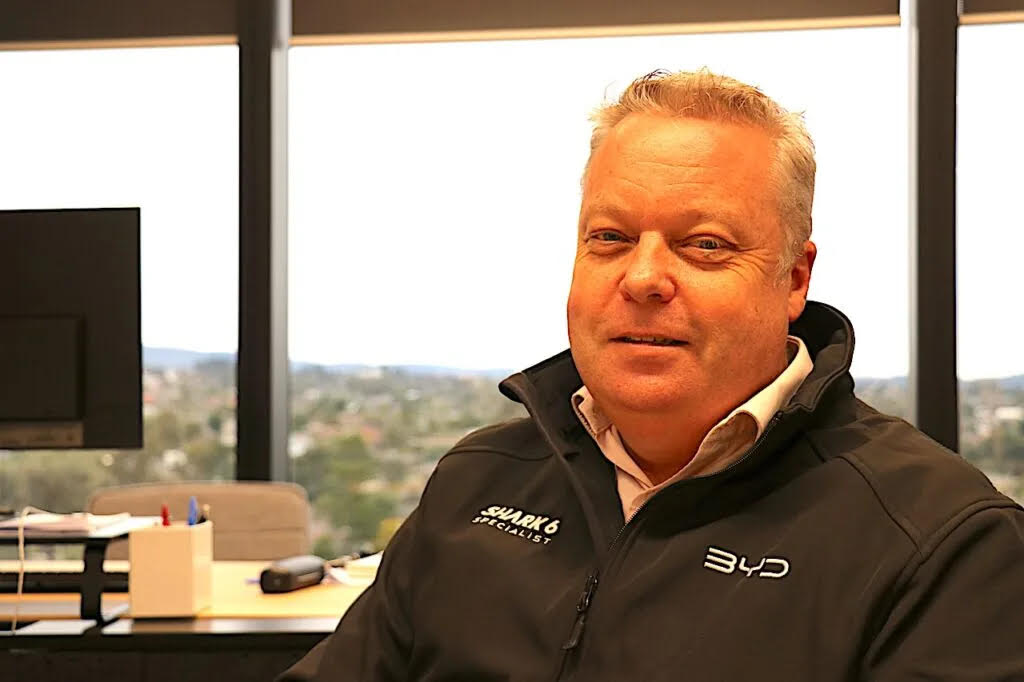
When Stephen Collins joined BYD as chief operating officer in June last year, the business was beginning its stunning run up the sales charts. The numbers were already very healthy – sales figures for that month showed it was the first Chinese brand to break into the top five manufacturers down under, with sales up by a staggering 367.9 per cent compared to the same time in 2024.
However, there was a problem brewing underneath all the success: rapid expansion by newer brands was taxing supply chains for parts to their limits. By June this year, the ABC was reporting that many Aussie EV owners were being left unable to use their vehicles for six eight weeks, and dealerships were sounding the alarm.
8
Fast forward a few months and Collins told WhichCar by Wheels that BYD can get 95 per cent of parts to dealers within 24 hours now that the brand has partnered with logistics giant SF Express. There’s a new centrepiece equipment and distribution centre in Melbourne, with satellite facilities in Perth, Sydney and Brisbane holding more than 580,000 parts in total.
So the sort of problem that could have really got BYD off on the wrong foot down under, despite the obvious popularity of its products, has now become a strength – and Collins puts the turnaround down to anticipating the problem early on. While he wouldn’t confirm the length of the waits customers faced, the COO was unequivocal about how important it was to find a solution, and fast.
“I’d say it was in the top two things that I really had to do when I started,” he said. “What became really clear, particularly as we were taking over as OEM [from EV Direct, which handled distribution until July 2025] was that we really needed to invest heavily in after-sales.
“It was right at the top of the list and we had a really good understanding that good brands that want to become great brands in this country need not just parts and not just service, but training, local development, and the development of people.”
2
Collins doesn’t believe the delays with parts were down to BYD being taken by surprise by the incredible rise in Australian sales. “I don’t think it was linked to that,” he said. “We made the decision before we started up as the OEM that we would have a full parts distribution and logistics system. At basically the same time as we took over as the OEM we partnered with SF Express, so that was a deliberate strategy, not linked to any of the growth that we’ve seen over the last 12 months, which has been pretty enormous.”
Asked if BYD is now out in front of demand in terms of its logistics capabilities, with ample room to rev things up if sales keep climbing at their current rate, he touted the brand’s speed and flexibility: “We can ramp up, we can ramp down, we can flex better than anyone, I think, in the automotive world … I have a pretty extensive experience in strong parts and service ecosystems, so we know where the benchmarks need to be.”
Chief among those benchmarks is Toyota, which in many respects is the gold standard for brands down under. The Japanese old-timer plays a long game, happy to get customers in when they buy used cars, then use its outstanding service and distribution network to make them loyal enough to buy new models down the track. So is that the sort of example BYD wants to follow?
“Yeah, 100 per cent,” Collins said. “Toyota are very, very good for a whole host of reasons, many of which you just listed. For us, we just delivered our 150,000th vehicle in Australia and I’m confident we’ll deliver our 200,000th vehicle in the first quarter of next year, so residuals are really important … Our direction is very much to make sure that from the purchase of the car right throughout the life cycle, and ultimately getting customers back, is the ultimate game.”
7
The massive growth of BYD’s parts and logistics operation is just one facet of its plans to ensure it keeps growing its local sales. Increasing its dealership footprint is another – and that’s happening in areas you might not expect.
“Right now, from memory, we have 120-odd dealers, and virtually all of them are full sales, service and parts,” Collins explained. “By the end of this year we’ll have around 150, and into next year we’re looking to grow it out to 200. At the moment the expansion is mainly in provincial and rural areas.”
Collins believes the numbers BYD are seeing outside the cities put the lie to the argument that EVs struggle to deal with conditions in the bush, and the brand’s PR chief Paul Ellis added that of the 33 dealerships the company planned on opening in the second half of 2026, 24 were either provincial or rural.
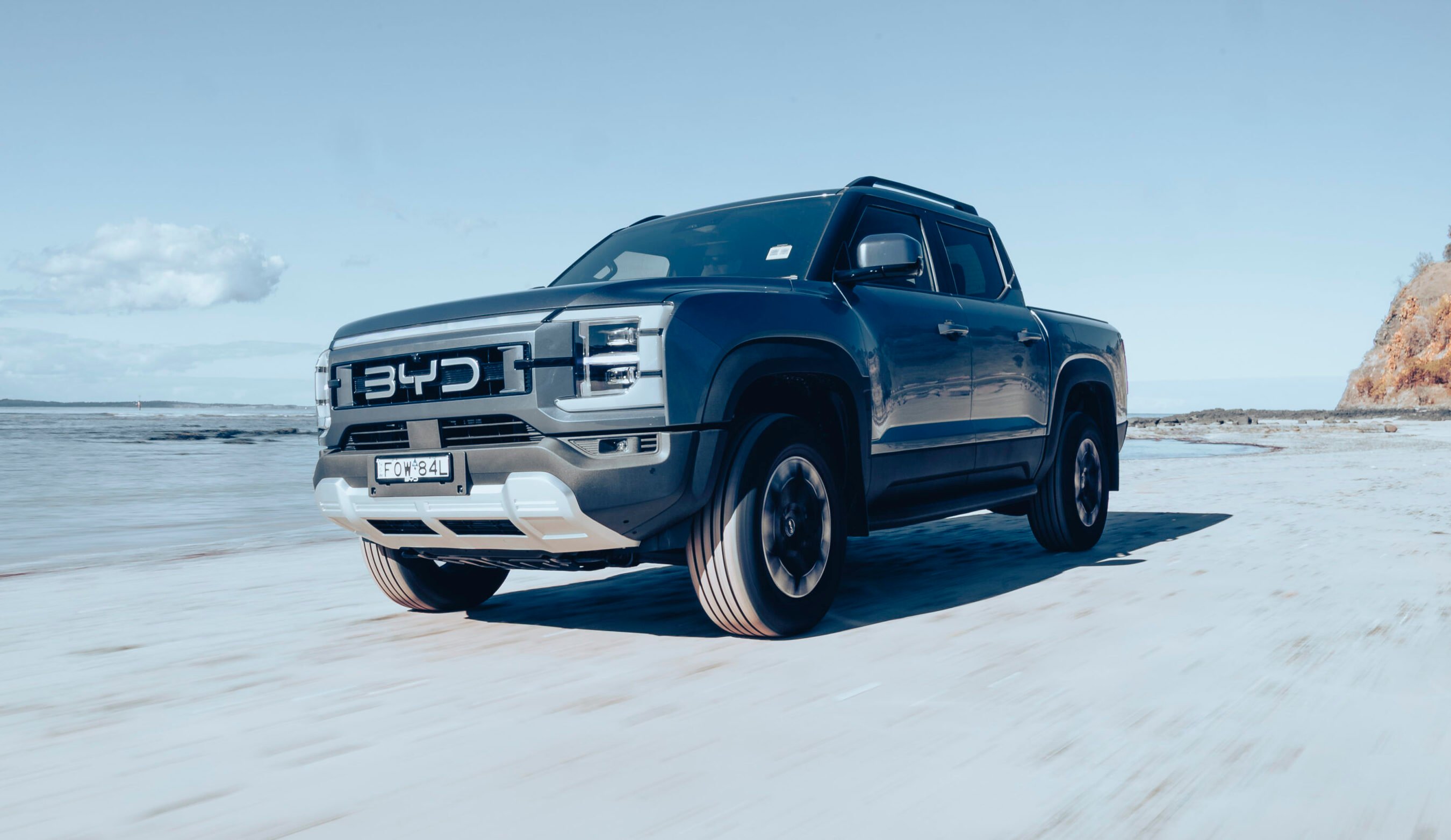
So, with those bases covered, what’s the next big priority? A lot of customers will be keen on BYD’s Aussie arm copying China’s Flash Charging network, but Collins said that is on the company’s radar: “We’ll have more to say about it in the new year.” But he believes the more pressing agenda is fleet sales, where he sees huge opportunities for the brand – and its Shark utes.

7
” I’ve been pretty vocal saying that I think into next year fleet is an area we’re investing really heavily in,” he said, adding that the targets are tradie fleets, rental cars, government fleets and other segments. “I think in general Shark is clearly one of the leading products in that fit-for-purpose workspace, whether it be a tradie or a utility company or maintenance organisation, where fit for purpose is really important. That’s one of the major reasons we introduced the cab chassis version earlier in the year, so we could make it more fit for purpose.
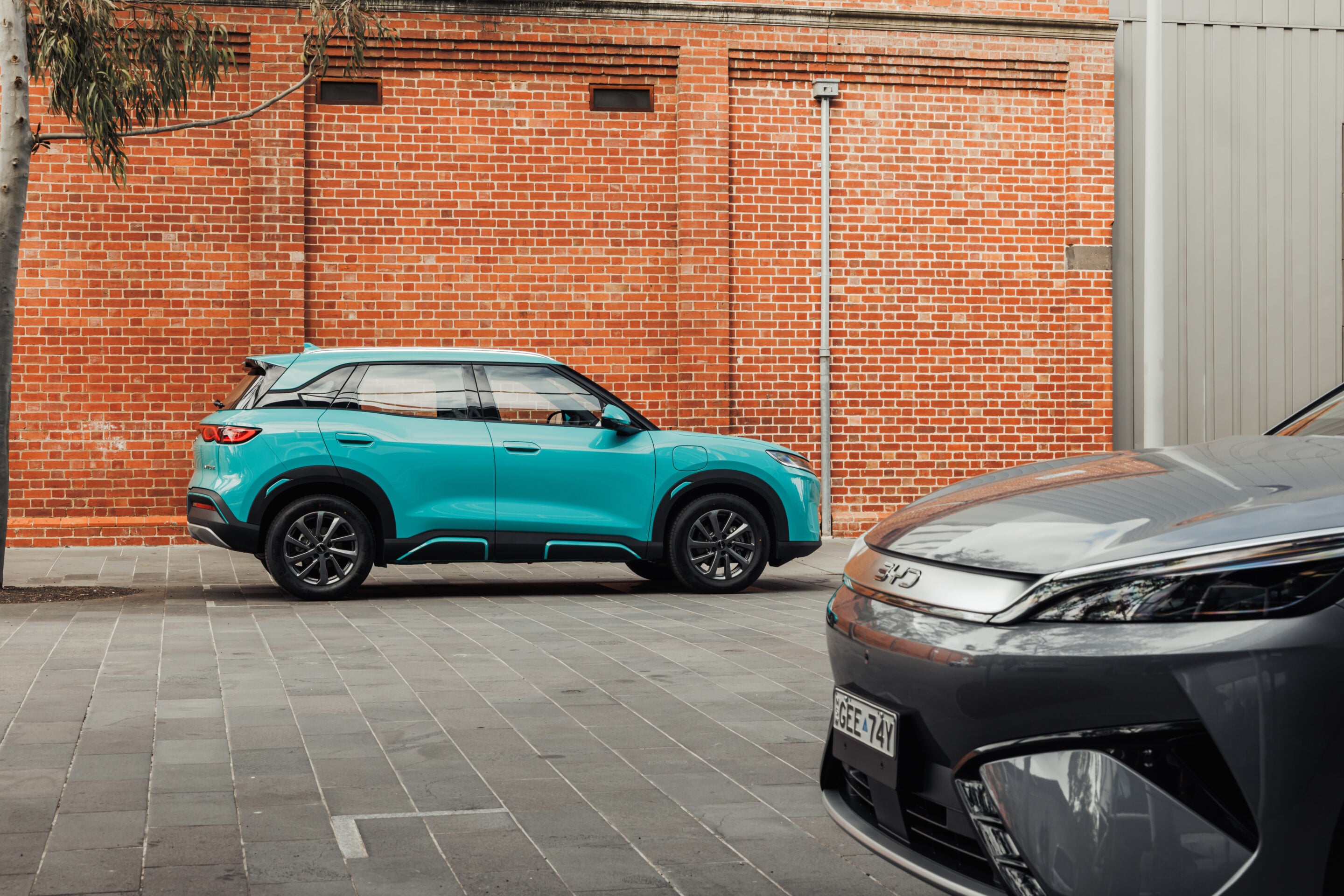
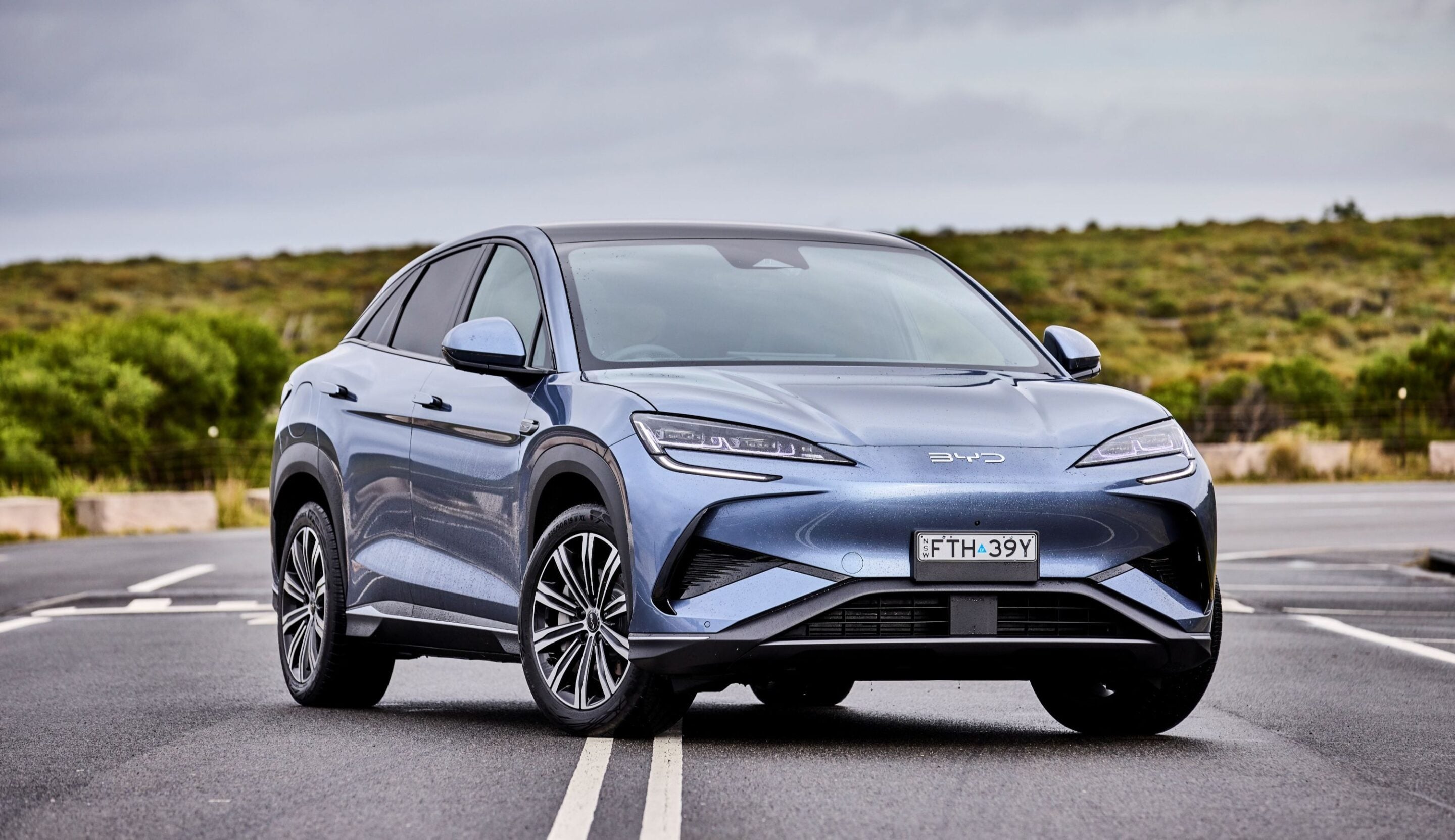
“Shark would be leading the pack in terms of the corporate fleets, certainly Sealion 7, Atto 3 Evo, and even Atto 1 and Atto 2, we’re seeing some good activity there … we’ve worked really hard in the last 12 months to have something suitable – I wouldn’t say for every fleet in the country, but for most.”
Finally, is BYD keen to add more brands to its stable? It has the Denza luxury offshoot, but its rivals are adding more and more nameplates in Australia, with Chery up to nine brands down under at the minute.
“For us, there’s no way we’re looking at having nine brands or anything like that,” Collins said. “For us, it’s two that are critical, BYD and Denza, and we’re really fortunate that we have such support from China.”
Follow WhichCar/Wheels on Google
Click the button below to make WhichCar by Wheels a preferred source for your news.

We recommend
-
 Reviews
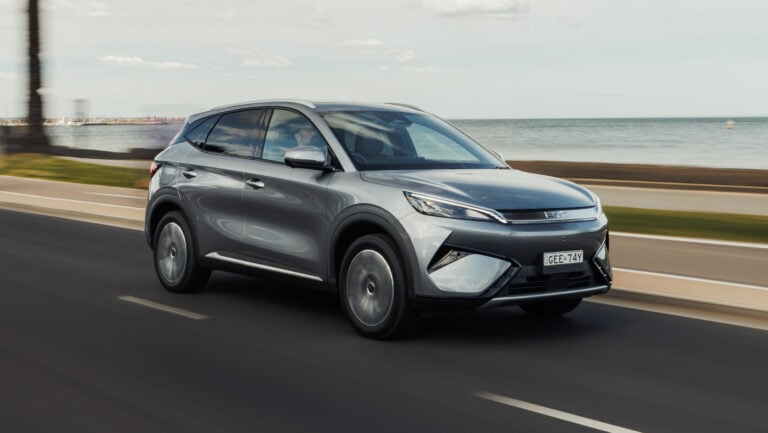
BYD Atto 3 EVO review: The small SUV gets far more than just a facelift as rear-wheel-drive switch pays off
The BYD Atto 3 EVO is far more enjoyable to drive as its evolution goes far beyond cosmetics and some extra gear in the cabin.
-
 News
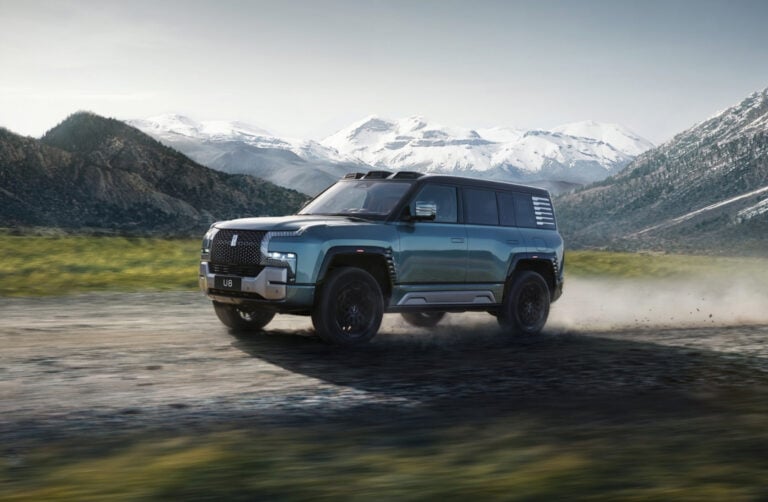
BYD gets green light to sell gigantic ultra-luxurious SUV in Australia – and it should be the brand's most expensive model
The Yangwang U8, the luxurious poster product of BYD, has been given approval to be sold in Australia, potentially giving a clue as to its local release.
