
Features


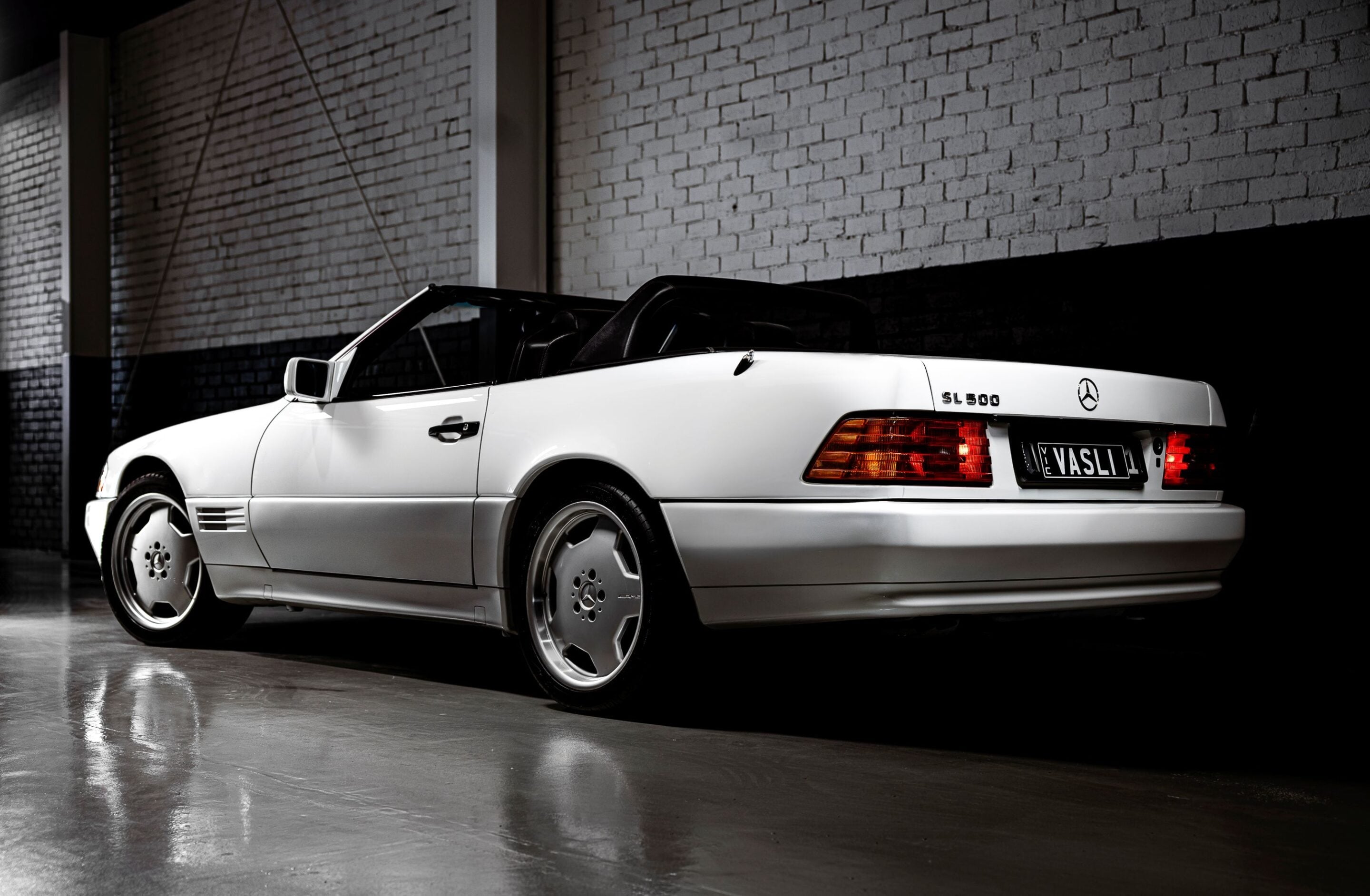
Gallery 1
“The aesthetics of a product can never hope to make up for poor-quality technology.”
You may well think that these words were spoken by an electronics engineer, but you’d be wrong. They were spoken by a car designer. Not just any car designer, but hall-of-famer Bruno Sacco – the head of Mercedes Styling Department who oversaw virtually every Mercedes-Benz shape over the last quarter of the 20th Century.
If you know your Mercedes history, you’ll know that this covered classics like the W201 190, the W126 S-Class, and the W124 E-Class. It also included the car that we feature here, the R129-generation Mercedes-Benz SL. Sacco had no comprehension of form following function. Even in an era of technological upheaval, he knew that “there is no primacy of technology over design or design over technology”.
The R129 had some big boots to fill. Its predecessor, the much-loved R107, was in production from 1971 through to 1989, but the explosive growth in computing power of the late Eighties opened the door to a new kind of luxury roadster. What’s not so well appreciated is that the R129 SL went into design lock as early as 1984.
![White Mercedes-Benz convertible parked in a dim indoor garage with a brick wall behind it and other cars nearby, viewed from a low angle to the front-left side.] ,](https://media.whichcar.com.au/uploads/2026/08/EDewar-240304-Mercedes-R129-SL500-0018-Edit-2880x1920.jpg)
2
The development program actually began in the mid-Seventies. At the start of the 1980s, however, work accelerated, and the first wind-tunnel results were achieved for the body in November 1981, a car with the recognisable Bruno Sacco cleanliness of line. On 17 October 1984, the roadster received approval for its shape, and on 10 December 1985, Mercedes-Benz rubber stamped a date for release: August 1988.
It was to sit on a modified version of the W124 E-Class sedan chassis with 284mm lopped out of its wheelbase. The reason for the freeze on launching the car was that Stuttgart sensibly prioritised the parallel development of the W124 and the W201 190-series sedans – models that would make up the lion’s share of the company’s volume.
What Mercedes-Benz wasn’t to know was that in delaying the launch of the R129, it would ultimately unveil the car just when the Eighties era of excess was being choked by a global recession, which was to last from 1990 to 1993 – a recession which then-Treasurer Paul Keating infamously described as “the recession that Australia had to have” and one which would create the asset price bubble collapse or ‘Lost Decade’ in Japan.
Indeed, Mercedes was bullish about the SL’s prospects when the silks came off at the 1989 Geneva Auto Salon. That was prompted by an avalanche of pre-orders. Even those who thought they’d got in quickly found themselves looking at the tail end of a four-year waiting list, despite Mercedes-Benz claiming it could pump 20,000 SLs a year out of its Bremen plant. As a statement of technical intent, the R129 was a masterstroke.
3
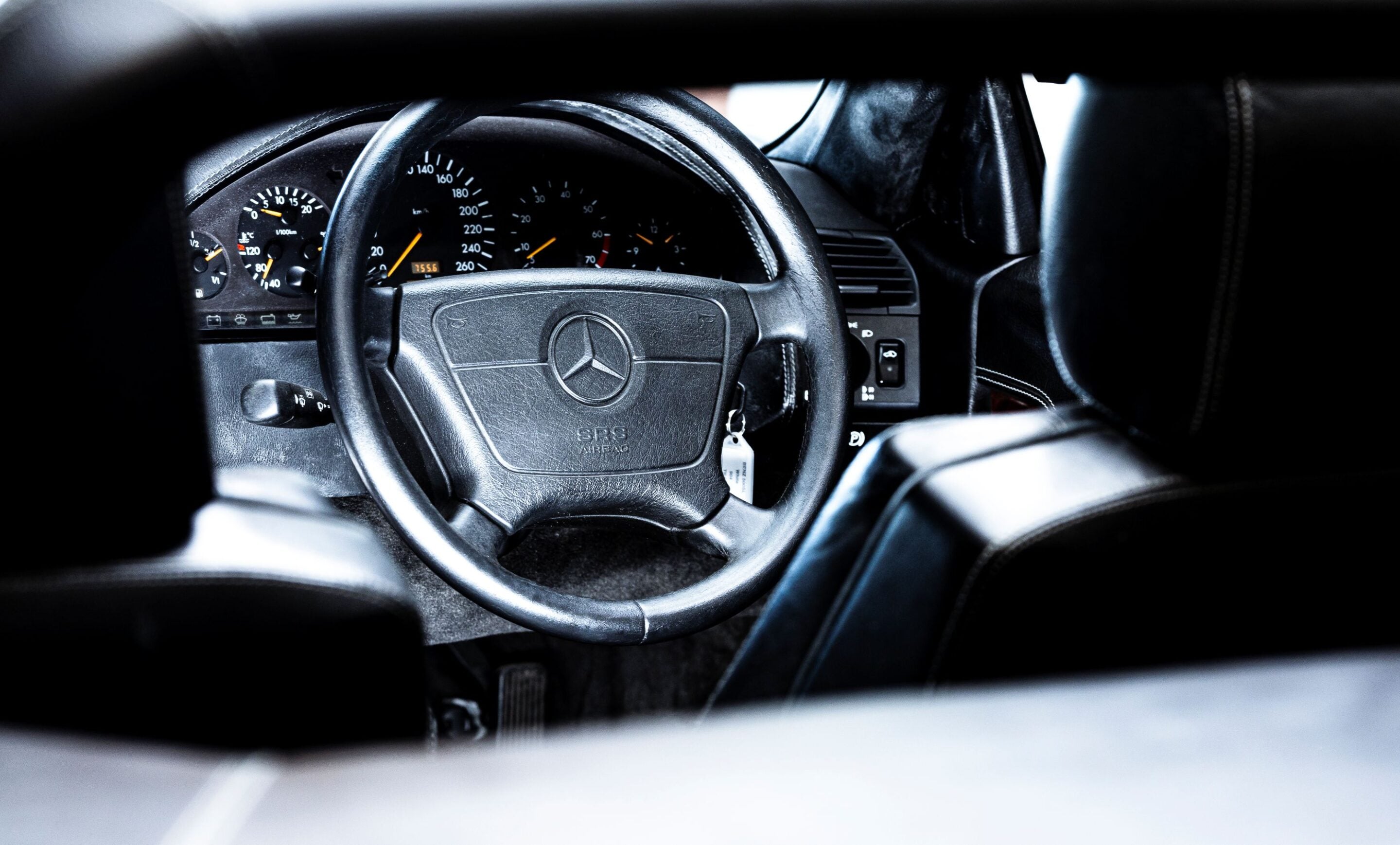
To give you some idea of how Mercedes didn’t quite know when to stop with the gizmos, consider this. A W124 300E sedan weighed 1340kg. By contrast, a 300SL tipped the scales at 1650kg, notwithstanding that missing 284mm of wheelbase. Put simply, Mercedes had spent five years since the exterior design freeze throwing the kitchen sink at this vehicle.
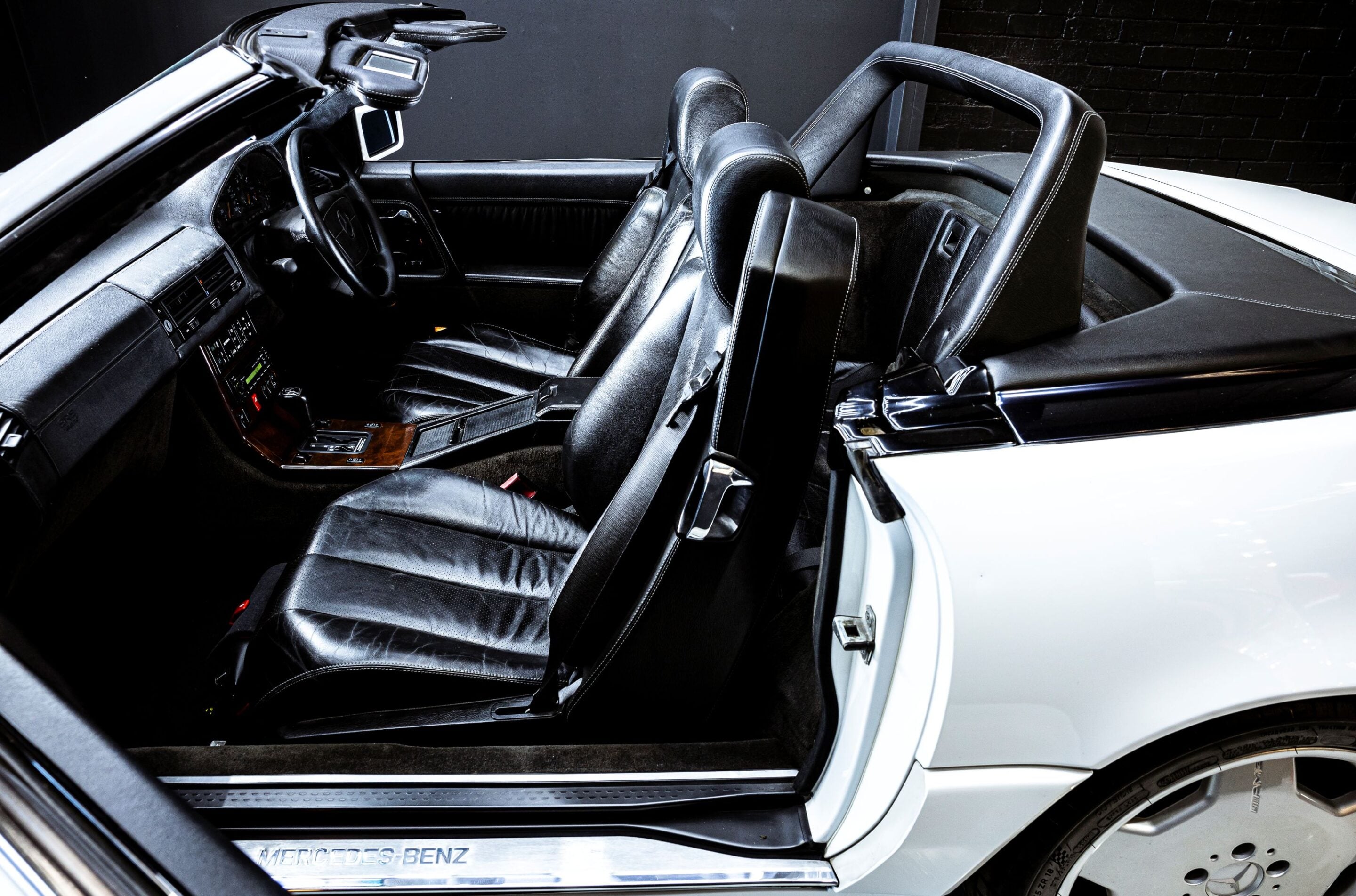
The big-ticket items such as the electrically folding hood, the seat-mounted belts and the pop-up rollover bar, I assume you know about already. Where Mercedes-Benz’s obsession really showed was in the details.
Take the interior mirror, for example. Click the electric mirror switch right or left and it would electrically adjust the door mirrors. So far, so normal. Knock it into the centre position and you could then adjust the interior mirror, a feature the R129 shared with the tank-like W140 S-Class. The logic was that while reaching for the interior mirror to adjust it manually, your eyes are never in the position they would be when driving. That was the claim, in any case.
I suspect Mercedes-Benz did it just because it could – because imbuing a Mercedes vehicle with a recognisably over-engineered identity was one of Sacco’s pet obsessions. Just look at the roof mechanism, which required 17 proximity switches, 15 pressure cylinders, 11 solenoid valves and a hydraulic pump.
At launch, journalists got to drive the base 140kW 300SL and 170kW 300SL-24, both available with a four-speed auto or a five-speed manual, and the auto-only 240kW 500SL flagship. The six-pot couldn’t crack nine seconds to 100km/h – not helped by lazy ratios in both the manual and the auto ’boxes. The 24-valve engine was usefully quicker, but it still had to shift 1770kg of car up the road, and the 100km/h sprint of 6.4 seconds pushed many buyers to look at nothing other than the V8 range-topper.
The 32-valve M119 quad-cam V8 in the 500SL is a decent engine, tough and characterful. What it never managed to do, however, was transform the R129 into a reasonable facsimile of a sports car, despite the car fronting up with 19 more kilowatts than a Ferrari 348. Despite an aluminium head and oil pan, the engine weighed around 250kg, and turn-in is markedly less crisp than the six-cylinder cars.
2
The 500SL could be optioned (at a cost of around $4000) with an adaptive damping system. This featured four discrete damper settings . The car would default to its softest setting and then rely on a suite of sensors to firm the suspension up in milliseconds when required. It also adjusted ride height, lowering the body by 15mm above 120km/h to aid stability, and the body could also be raised by 30mm below 80km/h.
The 500SL carried a massive price tag of $254,985 in Australia, and we were earmarked for just 150 per year. Our first local drive came in June 1990 and Angus Mackenzie, while wowed by the tech, wondered whether the result was somewhat less than the sum of the parts.
“It’s taken two days and 1000km to finally come to terms with the 500SL,” he wrote. “Yes, it’s good. Very, very good. But in a bid to build one of the safest, most sure-footed sports cars in the business, Benz has all but dialled out driver appeal. Microchips and megabytes conspire to ensure you do exactly what the car wants you to do, and no more.”
In order to ease the description of the R129’s model history, think of it in three separate phases. Despite a production life that was nowhere near as long as its predecessor, the R129 nevertheless received two facelifts and considerably more engines than the R107.
The first styling revision came in 1995 which saw the bold two-tone panel finish altered to a more restrained satin body shade. The vents behind the front wheels were also changed, going from three slats to two more elongated apertures. As was the vogue in the 1990s, amber indicator lenses were seen as horribly dated and switched out for clear units.
4
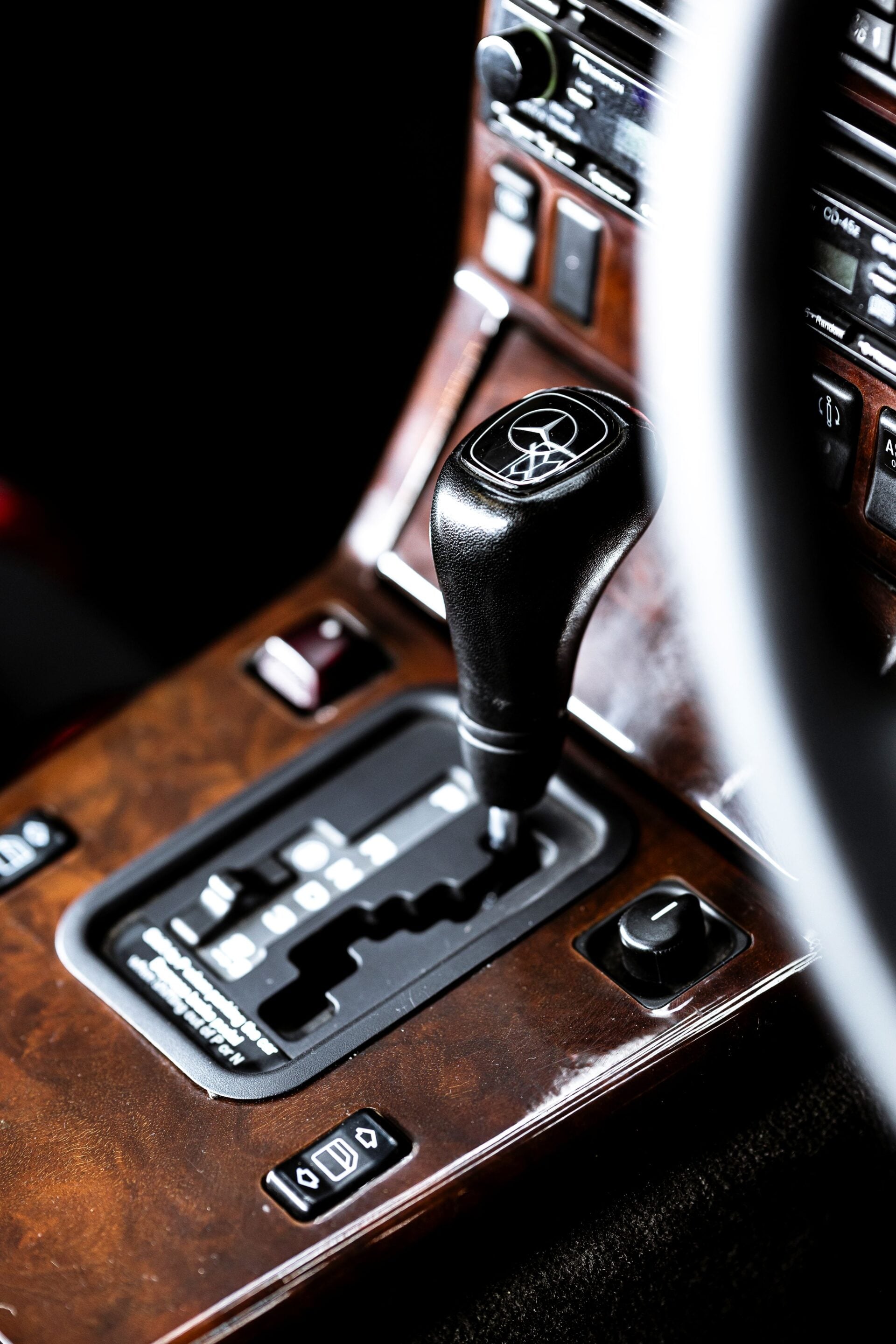
Aside from the excess use of wood finishes inside the early cars, Bruno Sacco himself likes the industrial purity of these early models, although as the R129 went through life, it became mechanically more sophisticated, which buyers seem to prefer. The SL enjoyed its final revision in 1998 which featured a redesign of the front and rear bumpers, and side skirts. At the same time, the straight sixes were replaced by two new and more compact V6 engines.
Another thing to bear in mind is that the R129 came in for a nomenclature change somewhat early in its lifespan. In 1993, Mercedes-Benz not only introduced the new multi-valve M104 straight-six engine to replace the old single-cam M103 unit, but it also tinkered with the name. Whereas before the engine descriptor was followed by the SL indicator, from that point on the reverse was the case, so what was a 500SL became an SL500.
Rewind to 1987 and Mercedes found itself at the blunt end of an arms race. BMW had rather stolen a march on Stuttgart when it introduced the 220kW M70 V12 into its 1987 sedan flagship, the E32 750iL. Three years thereafter, it was slotted into the lovely E31 850i. Mercedes’ response was emphatic. The 6.0-litre 290kW M120 engine arrived in July 1992, mated to an unburstable four-speed automatic transmission. AMG subsequently took up the reins with the V12 (see breakout) to quite devastating effect. Only 38 V12s were ever officially imported to Australia, making them well worth looking out for. Prices are commensurately hefty.
By now, the mental clockwork may well be ticking, with questions arising as to whether the first generation of anything this technically complex is entirely trustworthy. One look at the prices of used R129s would appear to confirm this suspicion. For such a feted design, the asking prices aren’t unreasonable. Genuinely decent examples of the SL500 can be found for $50-$60K – and sometimes less – with those figures being roughly half of what a similar vintage Porsche 993 Carrera Cabriolet would run you.
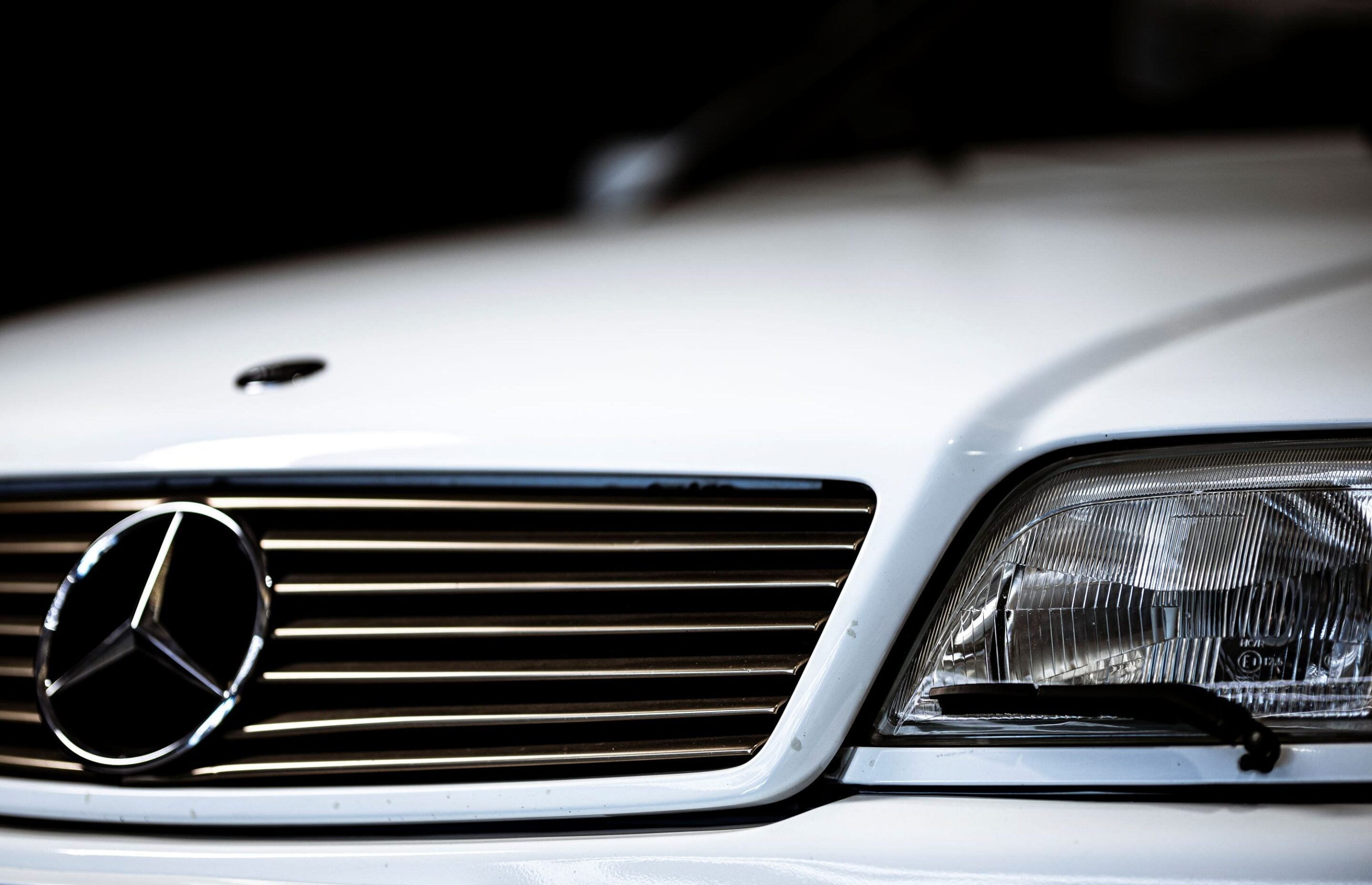
2
So what goes wrong? There’s one bogey issue that you will hear almost any time you start talking about R129s and it’s the infamous biodegradable engine wiring. And yes, it is a thing. Mercedes-Benz used a particular sort of wiring insulation in SLs built between 1991 and 1997 and, to put it bluntly, it doesn’t do particularly well in hot climates, with the wiring becoming brittle, cracking and leading to those sort of intermittent faults that can drive you absolutely berserk. You know them; the ones that manifest at home and then fail to materialise as soon as you get the car in front of an expert. In the worst-case scenarios, a new loom will be required, and though that sounds drastic, it’s not as huge a job that it might at first seem and will save you trouble down the road.
If you’re looking at an SL500, the affected cars are those that used LH-Jetronic injection, introduced in 1993. These engines are more reliable, they idle better and also typically see a 25 percent improvement in fuel economy, so many owners see that as a reasonable exchange of qualities. Welcome to the dastardly bargains you need to make with yourself when it comes to R129 ownership.
The powered hood is another item that doesn’t always play ball and diagnosing electricals and hydraulics can make for a complicated fix. All R129s came with a hard top, in a choice of tin top or optional panoramic glass. The latter is a particularly prized item. Don’t worry too much about weight distribution and just enjoy the more airy feel inside the car. With the metal hard top in place, it feels quite cocooned inside an R129 SL. The roof is a pretty heavy thing to remove, and it’s certainly a two-man job to heave it off and settle it into its cradle. Some owners have improvised a garage-based winch system to perform the task one-handed.
Rust is another issue to keep an eye out for. The rear end can be especially susceptible, with a whole host of nastiness hidden by the rear subframe assembly. Brake lines and control arms are a particular victim.
Transmissions are, by and large, beefy – especially if it’s the four-speed auto ‘box. The 722.5 five-speed transmission (effectively a hydraulic four-speed with an electrically-operated overdrive fifth gear) was an option for the six-cylinder engines, but was replaced in ‘96 by the 722.6 five-speeder. The 722s aren’t quite as bulletproof as the implacable four-ratio ’boxes but they certainly get more from the smaller-capacity engines in terms of response.
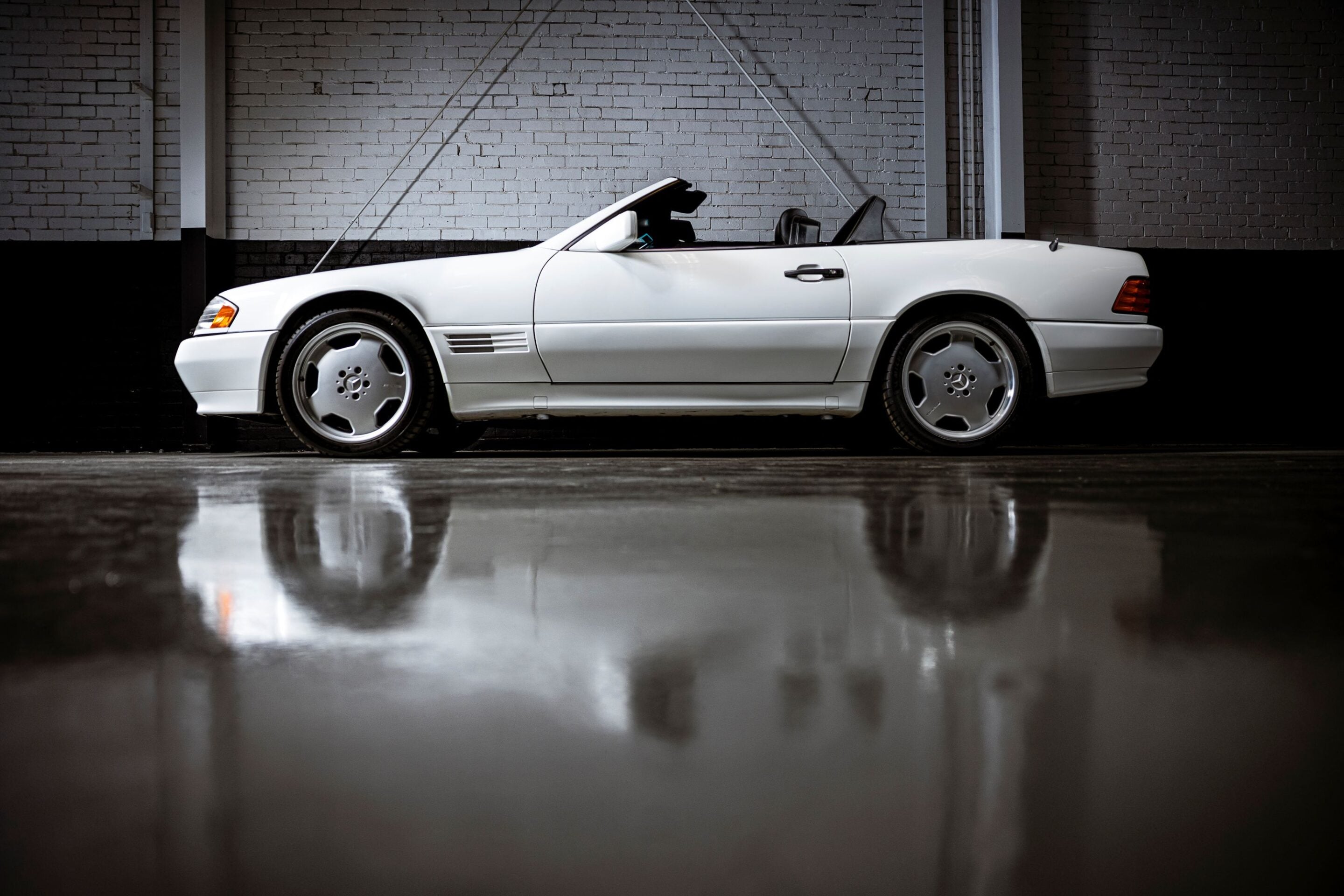
1
The SL600 was fitted as standard with ADS (Adaptive Damping System) suspension. This featured Citroen-style hydraulic spheres, filled in this case with nitrogen and fluid on either side of a diaphragm, such that damping characteristics can be controlled by the ECU. It works beautifully when it works, but spheres and valve bodies do fail, and the fix isn’t cheap.
When looking at at R129, buy cars that display as closely as possible to original specifications. Cosmetically tidy cars can become money pits if they haven’t been regularly serviced and maintained. Check for periods when the car was laid up, as the R129 is one of those vehicles that certainly benefits from regular use. As much as anything, buy on condition. You’ll get a feel from the vendor if they know their stuff or, alternatively, if they’re the sort of buyer who has tried to run a car they can’t afford on a shoestring.
Be realistic with what your annual maintenance budget is likely to be and there’s no reason to be scared of the R129 SL. A good one still feels charismatic, it looks great, the V8 and 12-cylinder cars still feel quick and, for the right cars, prices are on the up. Our picks would be the V8s of any era or, if you just want the SL look and don’t care too much about pace, a later six-pot. Buy carefully and you could end up with a modern classic that’ll pay for itself many times over. For a car that Sacco described as his “most perfect”, it doesn’t get much better than that.
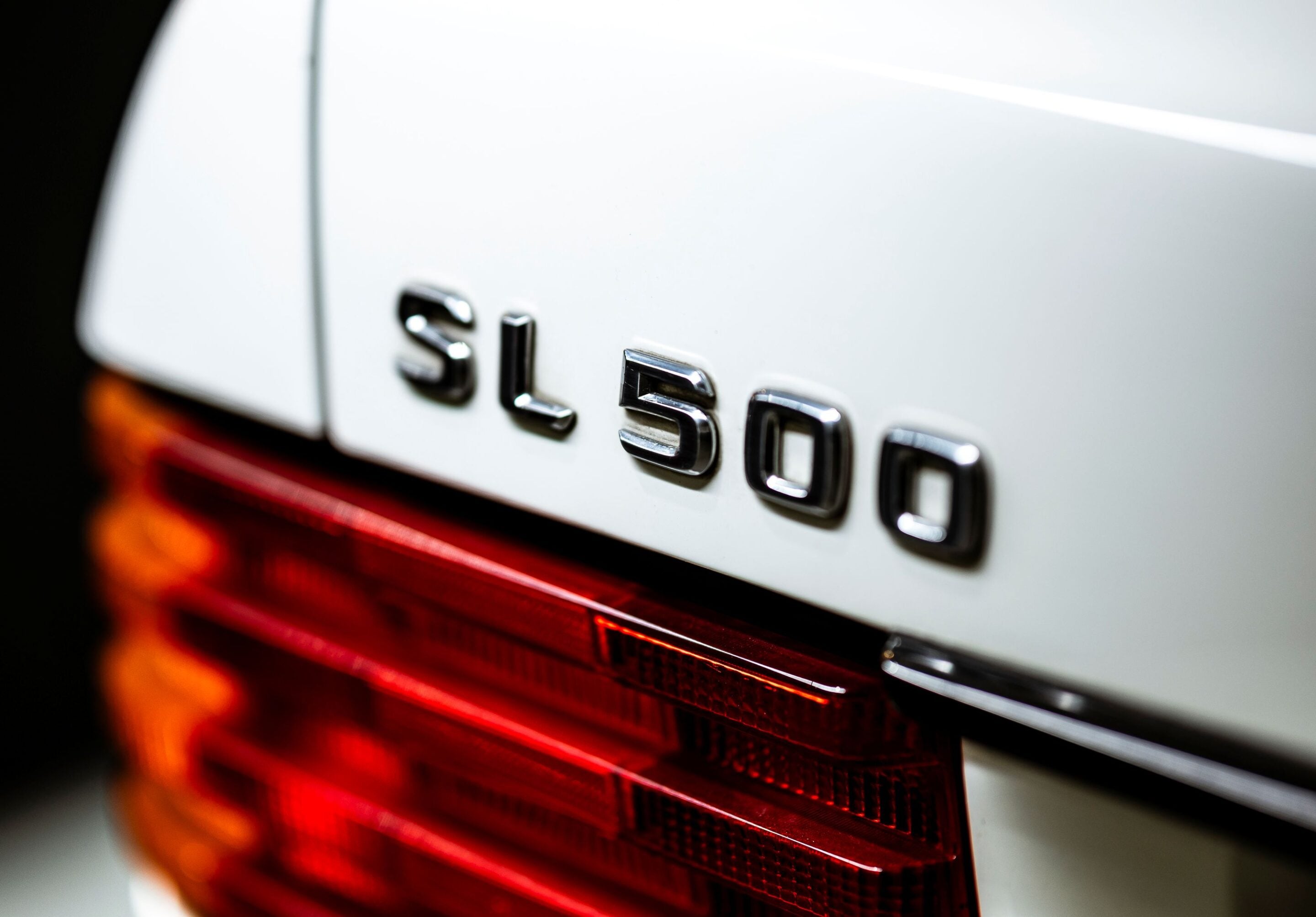
2
Specs
| Model | Mercedes-Benz SL 500 |
|---|---|
| Engine | 4973cc V8 (900), dohc, 32v |
| Max power | 240kW @ 5500rpm |
| Max torque | 450Nm @ 4000rpm |
| Transmission | 4-speed automatic |
| Weight | 1770kg |
| 0-100km/h | 6.4sec |
| Price (now) | from AUD $40,000 |
This story first appeared in the March 2024 issue of Wheels magazine, now on sale. Subscribe here and gain access to 12 issues for $109 plus online access to every Wheels issue since 1953.
Follow WhichCar/Wheels on Google
Click the button below to make WhichCar by Wheels a preferred source for your news.

We recommend
-
 News
NewsMercedes GLB review: Overseas drive finds unique SUV is a huge upgrade on its predecessor
The second-generation Mercedes SUV replaces the current GLB and the EQB, bringing more technology, improved practicality and rapid charging.
-
 News
NewsMercedes reveals price and mile-long list of specs for significantly overhauled S-Class flagship
Mercedes-Benz has spared no expense to give its uber-luxurious saloon a huge, stylish and tech-driven update that goes far beyond a simple facelift.
