News

Gallery 1
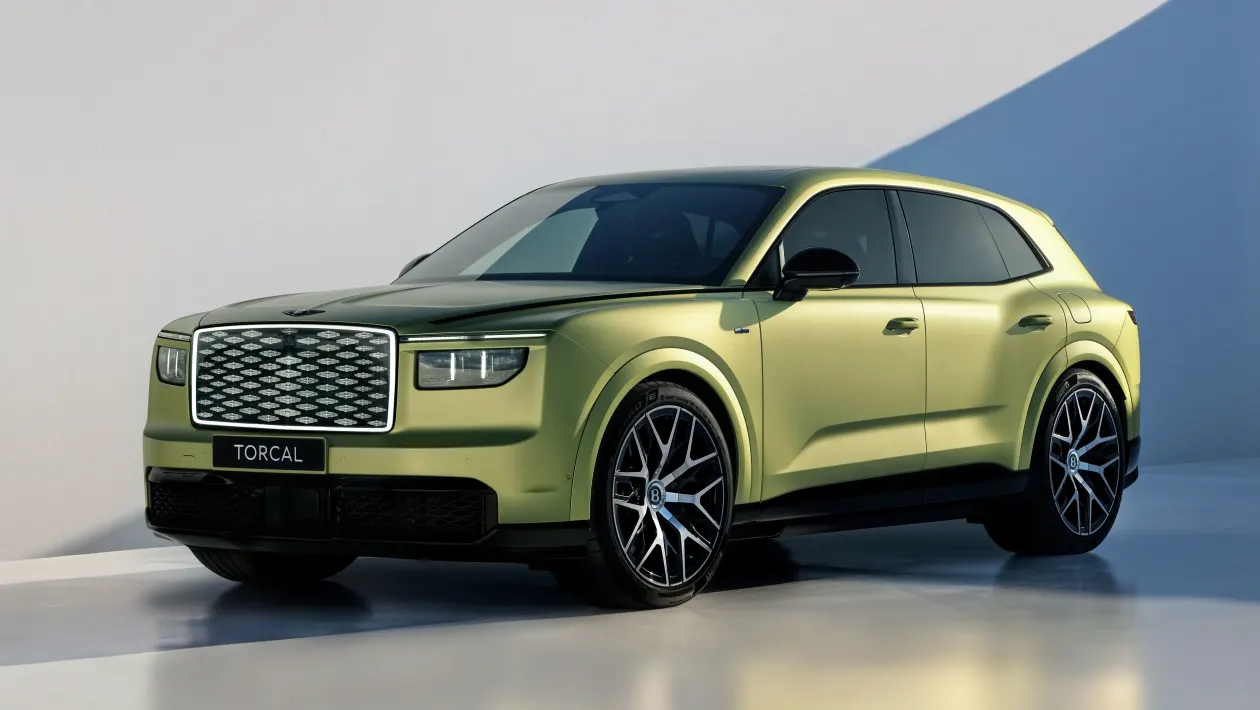
The comfort of a Flying Spur, the handling ability of a Continental GT Speed and enough performance to embarrass plenty of supercars: That’s what Bentley is promising with its first EV, the Torcal, which is also the most powerful and heaviest model the marque has ever produced.
At roughly five metres long, the Torcal will become Bentley’s fourth model line when production begins in Crewe, England, in early 2027. It rides on the Premium Platform Electric architecture also used by the Porsche Cayenne Electric, but Bentley has gone to great lengths to give its EV a distinct personality – right down to a bizarre feature involving a white-gloved hand.
7
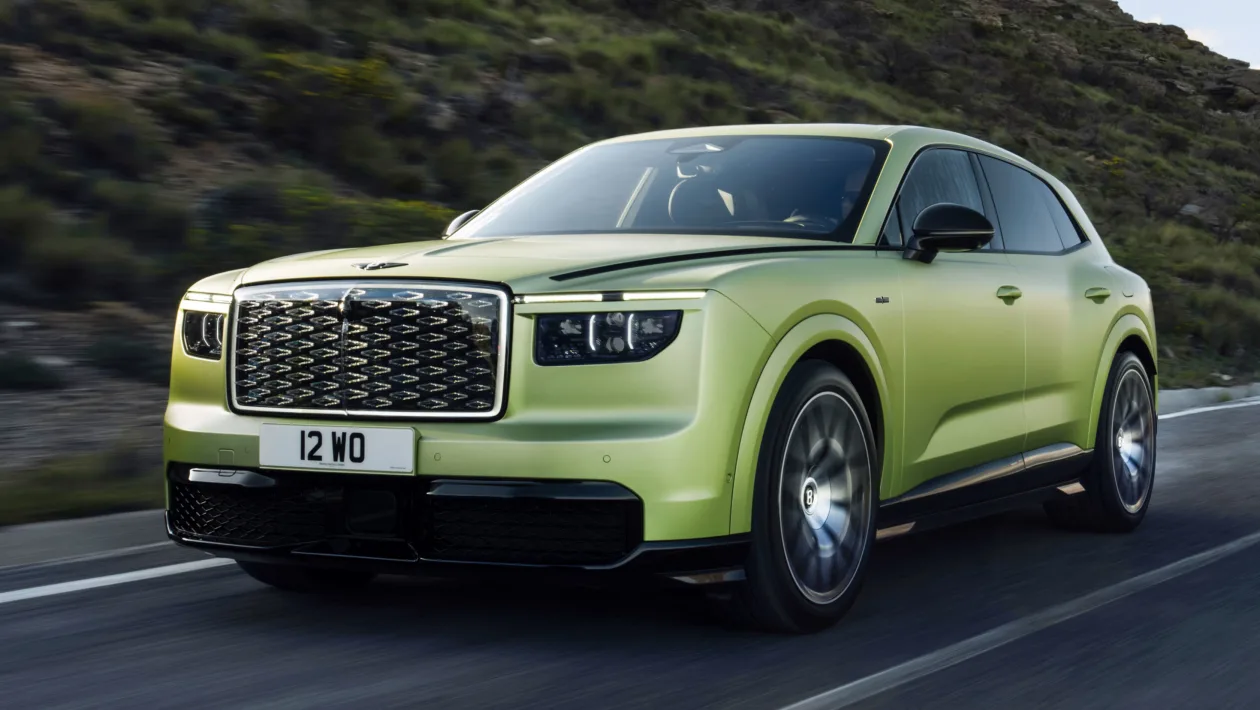
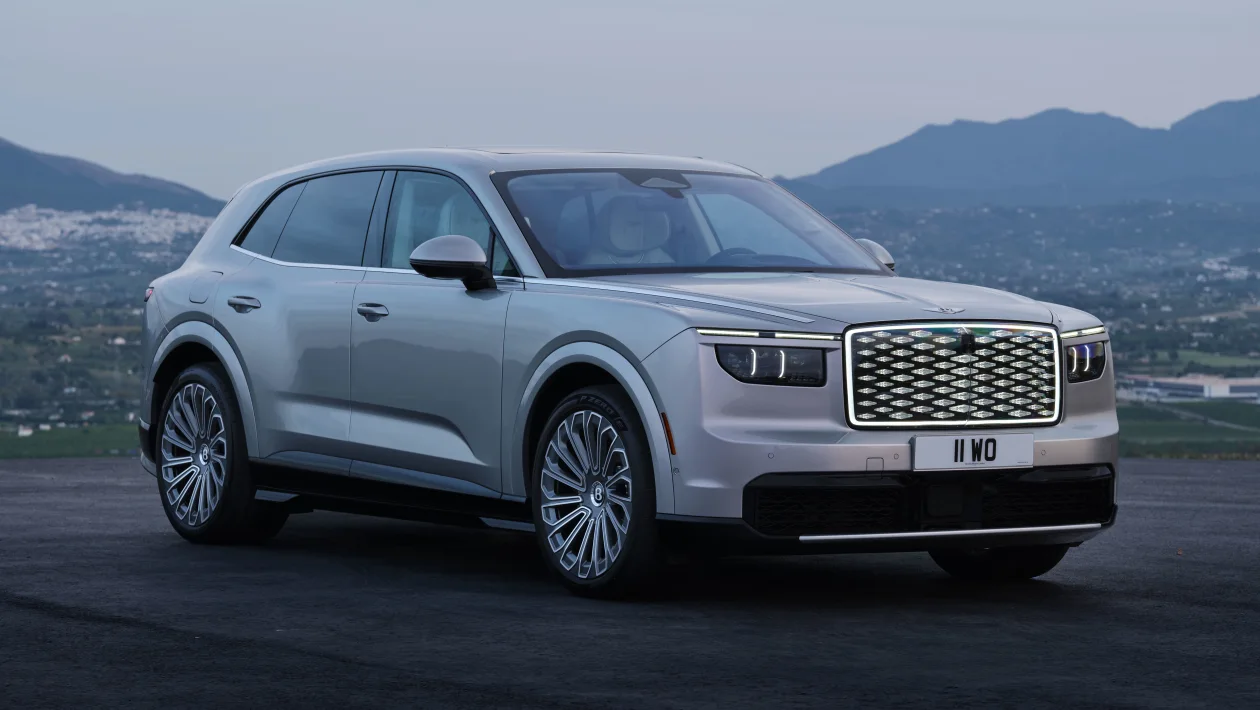
Traditional Bentley cues remain, including the long bonnet, muscular rear haunches and enormous wheels measuring up to 22 inches. However, split headlights and two illuminated grille designs filled with diamond-shaped crystals give the debut EV a more futuristic flavour.
Bentley design director Robin Page said the company questioned whether an EV needed a conventional grille at all, eventually deciding to turn the familiar feature into an illuminated piece of art.
Performance is less mysterious. The standard Torcal uses two electric motors producing 604kW and 1194Nm, allowing it to reach 100km/h in around 3.4 seconds and continue to approximately 250km/h.
The Torcal S turns things up further with 653kW and 1350Nm, slashing the 0-100km/h sprint to about 2.9 seconds. Bentley says going any faster would become “uncomfortable”.
A 113kWh gross-capacity battery provides up to 600km of claimed range, while the 400kW maximum DC charging rate is equally impressive. Bentley says a 15-minute charge can add approximately 400km of range.
Active suspension, rear-wheel steering and sophisticated dampers are intended to give the Torcal Flying Spur-like comfort on the highway while retaining Continental GT-style responses when driven harder.
6
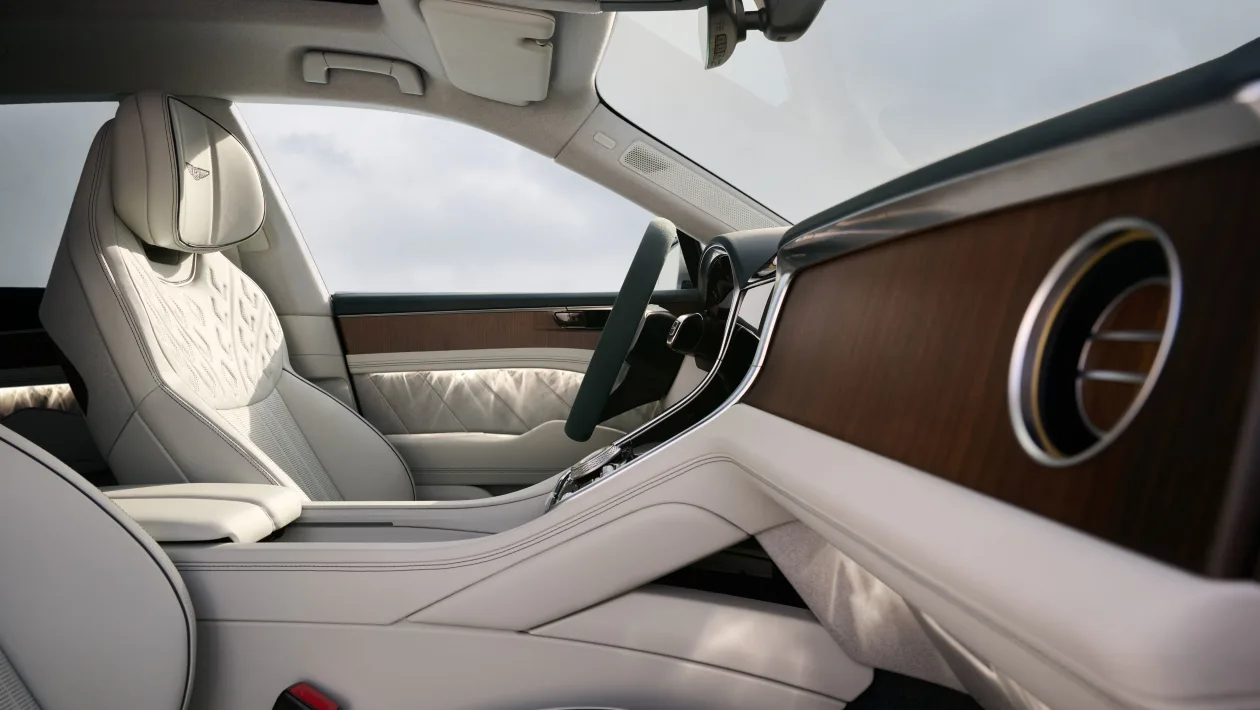
Inside, Bentley has focused heavily on materials and craftsmanship. Buyers can choose from 15 shades of olive-tanned leather and six wood veneers, while 100 per cent Merino wool is used on the doors in what the company claims is an automotive first.
There’s also an aluminium fascia, hand-stitched seats, crystal-inspired ambient lighting and traditional knurled controls for functions including climate control and audio volume. Bentley deliberately resisted fitting a passenger display because it would cover an area better used to showcase the cabin’s expensive materials.
Technology includes powered doors that can close when occupants fasten their seatbelts or when the driver presses the brake. The Torcal can also learn manoeuvres such as a three-point turn on a driveway, autonomously reverse to a passing point on a narrow road and use facial recognition to load driver preferences.
Bentley has even created its own soundtrack. Indicators mimic the sound of a workshop hammer tapping leather, while touchscreen inputs produce a crystal-glass chime. Acceleration is accompanied by a combination of drums, viola and bass guitar inspired by the rhythm of a Bentley V8.
7
Then there’s the touch of weirdness. Every couple of weeks, an animated hand appears in the digital instrument display and resets a crystal circle, resembling the gloved hand of a snooker referee replacing the cue ball. Why? We are at a complete loss.
UK pricing starts at £173,330, equivalent to roughly A$350,000 before taxes and on-road costs, although Aussie pricing has yet to be announced. Bentley has invested roughly $700 million in upgrading its Crewe factory for the electric era, including a new paint shop, wood shop and dedicated EV assembly line, so a lot of hopes are riding on the newcomer.
Follow WhichCar/Wheels on Google
Click the button below to make WhichCar by Wheels a preferred source for your news.