
Reviews

Gallery 1
8.3
/10
Score
Score breakdown
8.3
Safety, value and features
7.9
Comfort and space
8.6
Engine and gearbox
8.8
Ride and handling
8.0
Technology
Things we like
- Impressively polished driving experience
- Supple ride and composed handling
- Significantly more affordable than older model
Not so much
- Overwhelming screen technology
- No spare wheel
- Real-world range well short of claim
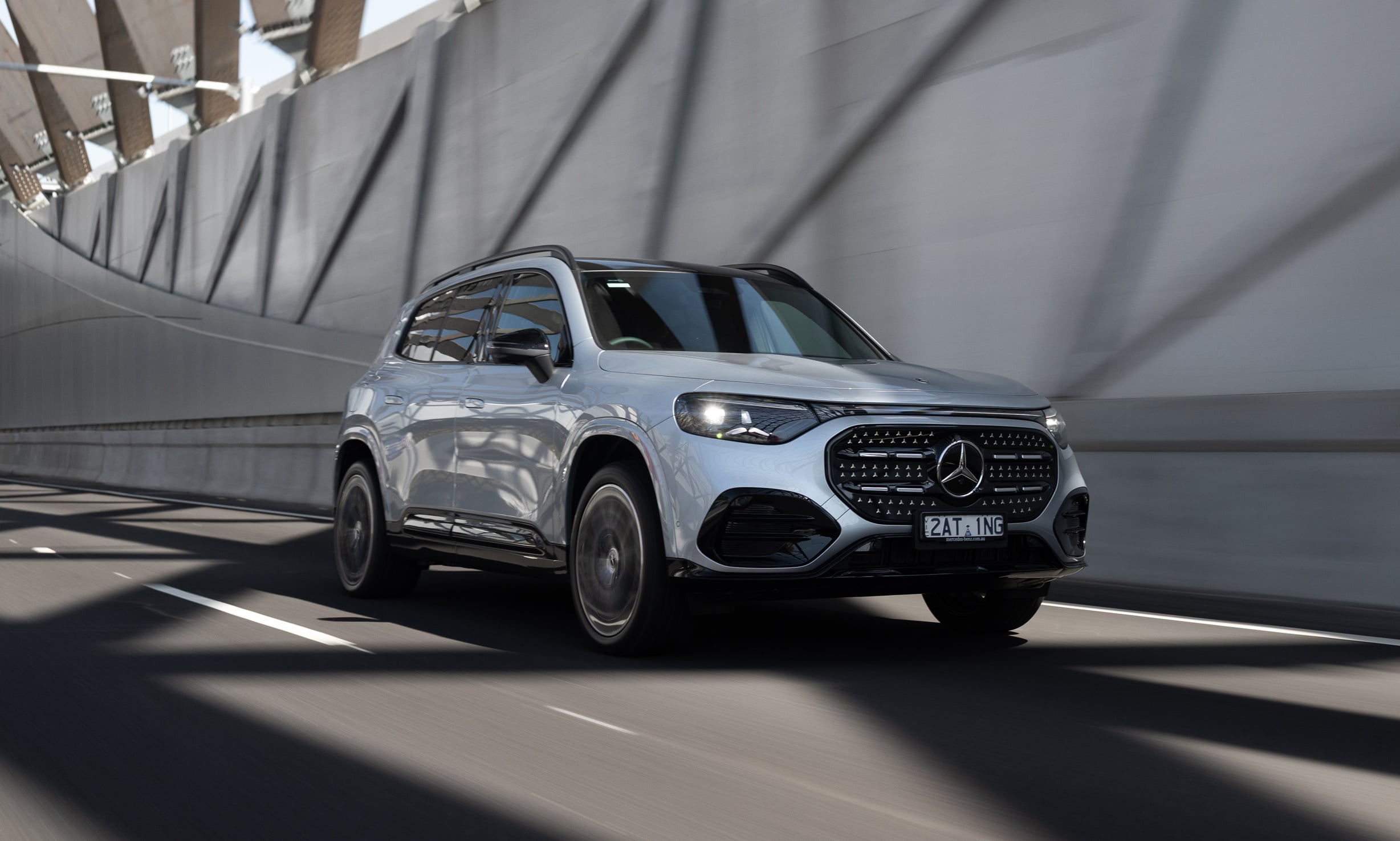
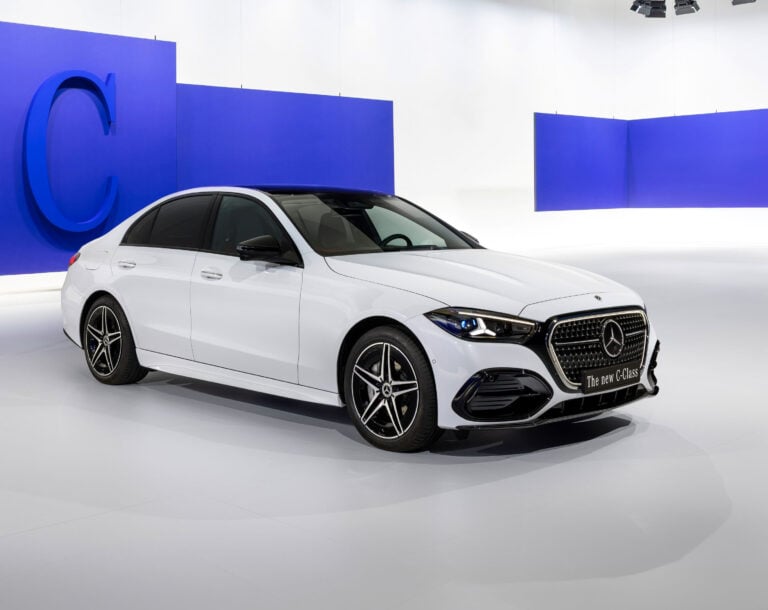
Mercedes-Benz’s electric reinvention is advancing at a rapid pace. We’ve already seen the all-new CLA small sedan on our roads, and Wheels has driven the next-generation GLC electric SUV that is expected here before the end of the year. Then there’s an all-new C-Class waiting in the wings, both petrol and electric models expected to make their way to showrooms next year.
4
Now though, it’s the turn of this second-generation Mercedes-Benz GLB which has landed in local dealerships in both mild-hybrid and battery-electric form.
The GLB is an interesting one, a boxy medium SUV with seating for seven that has been designed as an EV first, petrol-hybrid second. The GLB is not alone in this strategy, the recently-launched CLA adopting a similar engineering philosophy.
No surprises then that the two distinct models – one a sedan, the other a mid-size SUV – share the same MMA (Mercedes Modular Architecture) platform that allows for a range of powertrain choices.
The similarity doesn’t end there, with the new GLB utilising the same powertrains as its CLA not-so-distant cousin. And that means a choice of mild-hybrid petrol engines or electric powertrains.
7
Four variants – two petrol-hybrid and two electric – have made their way to local showrooms. All are competitively priced, in some cases coming in significantly under the previous generation. All have avoided the dreaded Luxury Car Tax too, sliding in under their respective thresholds. Smart move from Mercedes-Benz Australia.
Pricing for petrol models starts at $65,400 for the entry-level GLB 200, before stepping up to $76,200 for the all-wheel drive GLB 220 4Matic.
Both are powered by a turbocharged 1.5-litre four-cylinder petrol engine making either 120kW/250Nm (GLB 200) or 140kW/300Nm (GLB 220 4Matic) and hit 100km/h in either 8.7 seconds (200) or 7.5 (220 4Matic). A 48-volt mild-hybrid system brings an extra 22kW and 200Nm and unlike some 48-volt systems can power the mid-size SUV on electric power alone at low speeds or while coasting. An eight-speed dual-clutch auto sends drive to either the front wheels (GLB 200) or all four wheels (GLB 220).
5
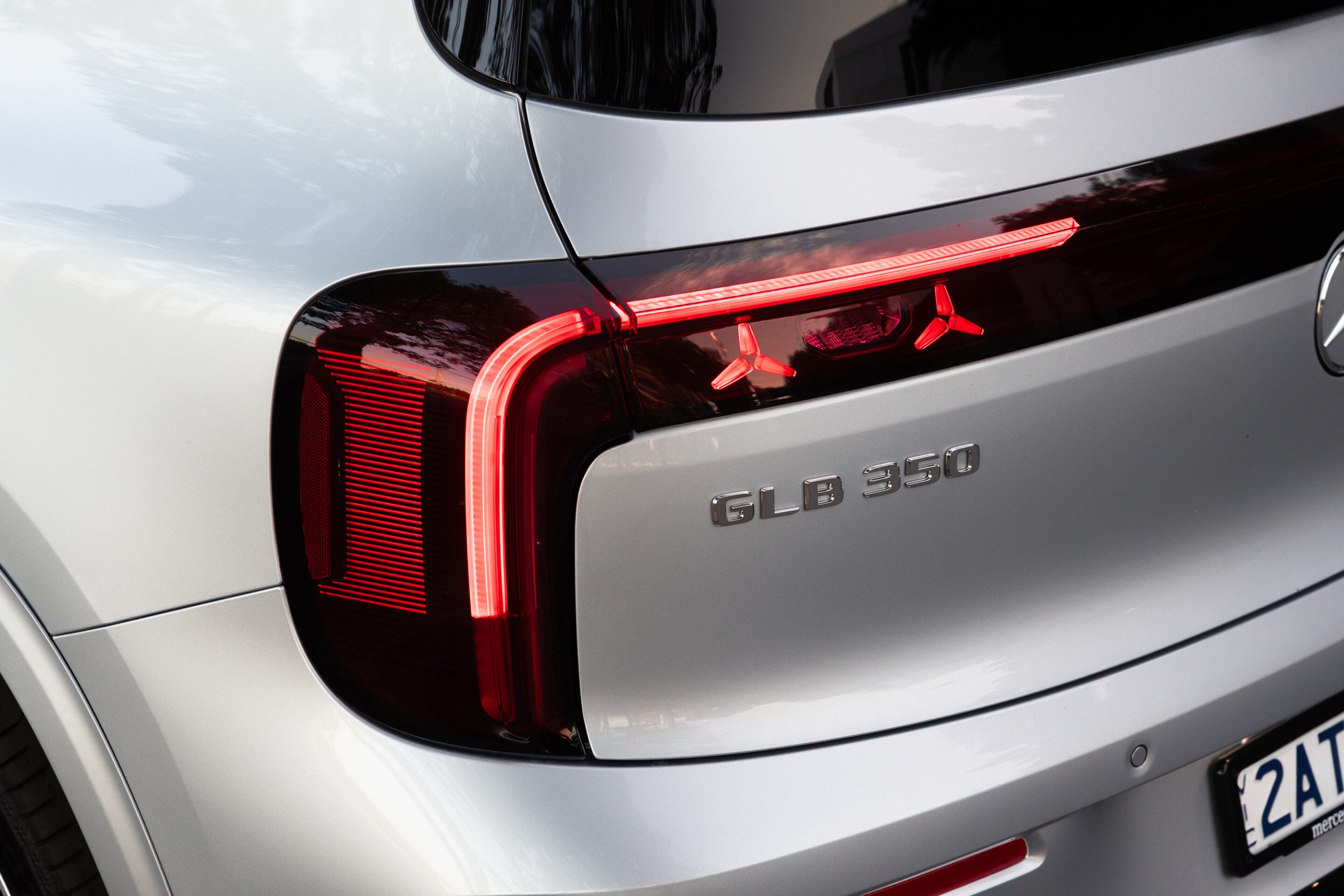
It’s a similar model walk on the battery-electric side of the fence where the GLB 250+ entry point asks for $74,900 and the range-topping GLB 350 4Matic wears a sticker of $86,200. Both models are significantly more affordable than their direct EQB predecessors which were priced at $89,100 and $106,700 respectively.
Motivation for the GLB 250+ comes via an 85kWh Nickel-Managanese-Cobalt (NMC) battery powering a single 200kW/335Nm electric motor driving the rear wheels. Driving range is quoted at 626km (WLTP).
The all-wheel drive GLB 350 4Matic trades a little bit of driving range (609km) for more power and performance, thanks to its two electric motors, one at each axle, combining for total system outputs of 260kW and 515Nm and a scintillating 0-100km/h sprint time of 5.5 seconds. The single-motor 250+ takes a more leisurely approach, stopping the clock at 7.4 seconds.
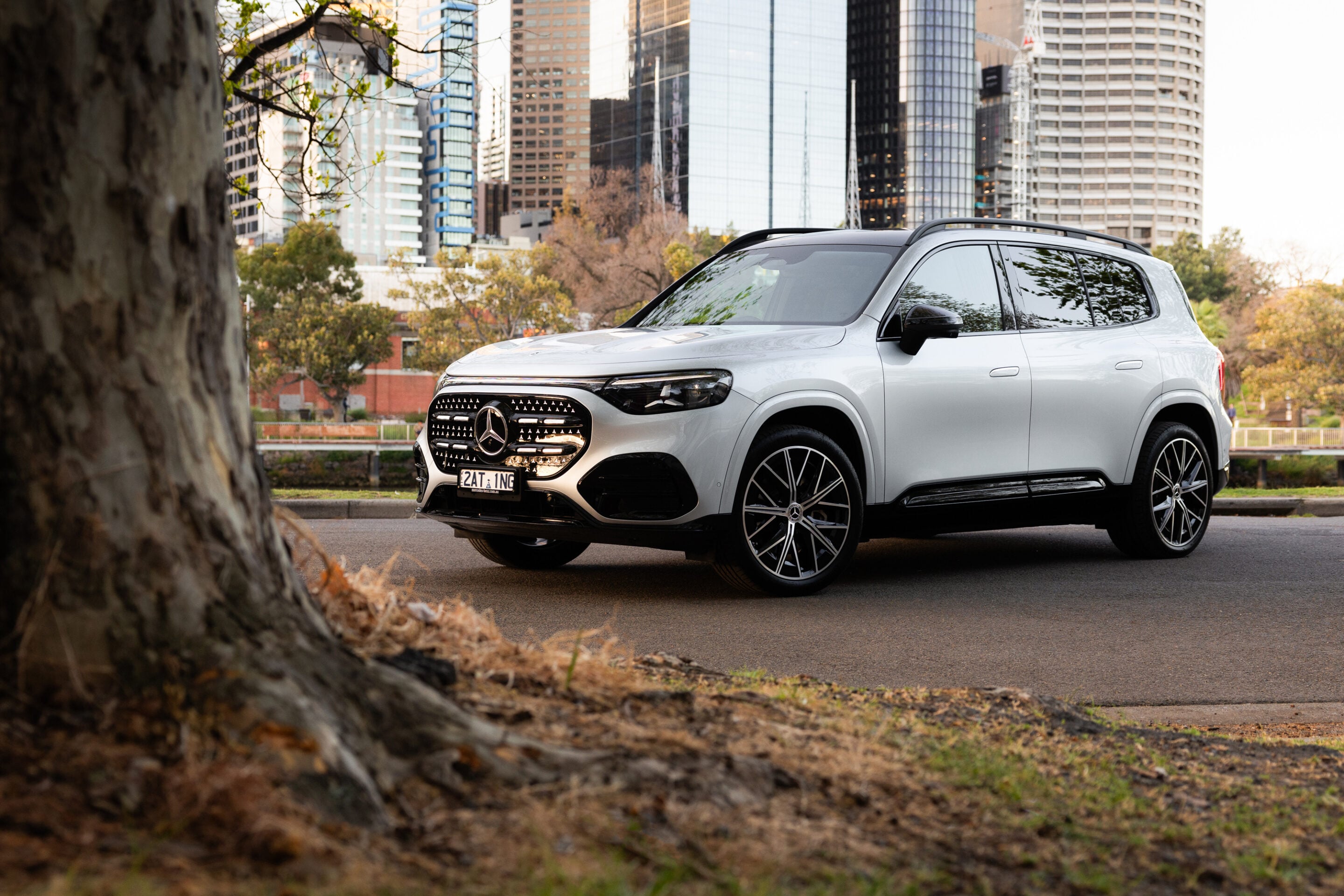
The older generation GLB never quite seemed to grow into its skin. Packaging seven seats into what was a compact mid-size SUV always felt like a bit of a compromise. That’s in the past now, with the new model enjoying a significant growth spurt.
5
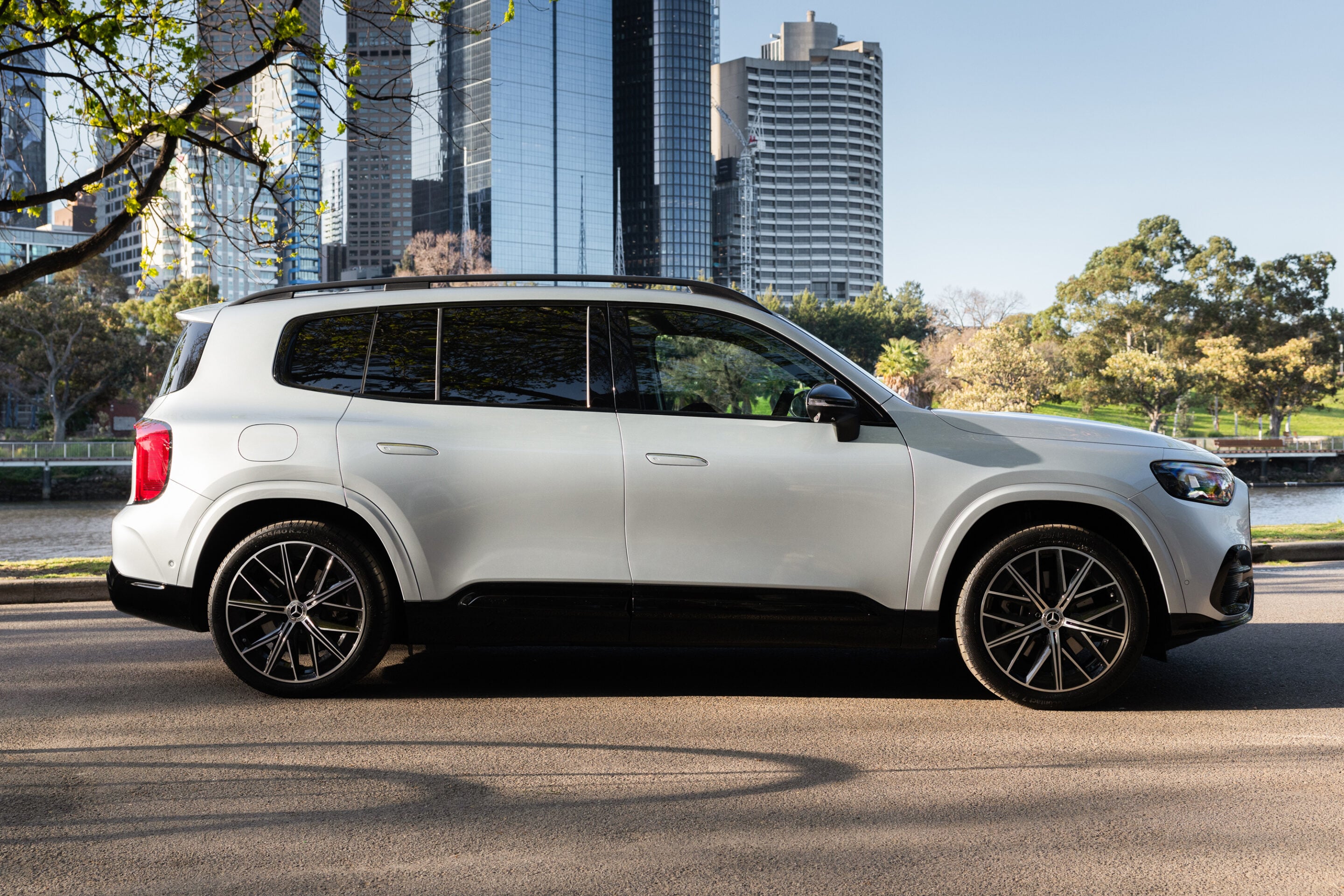
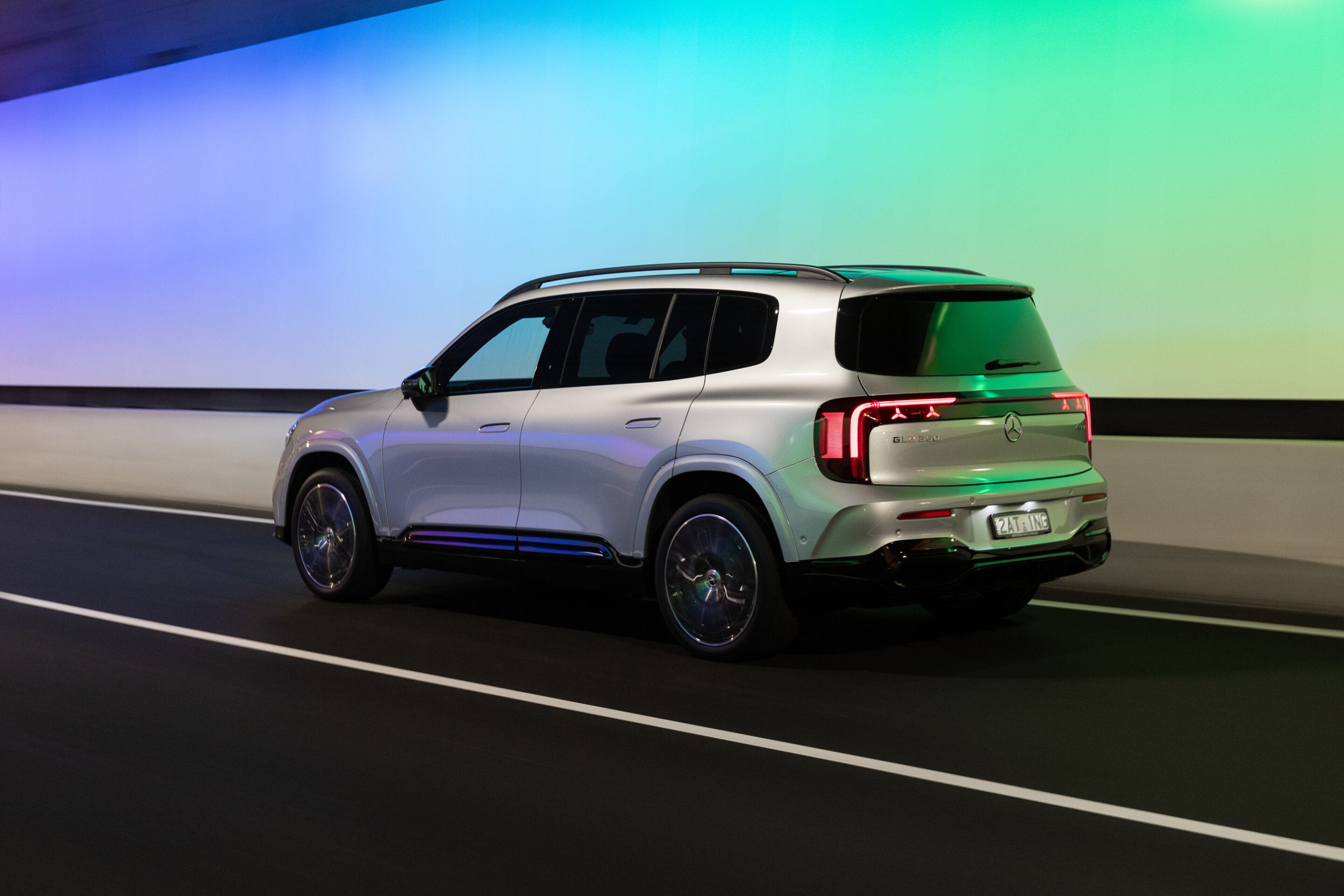
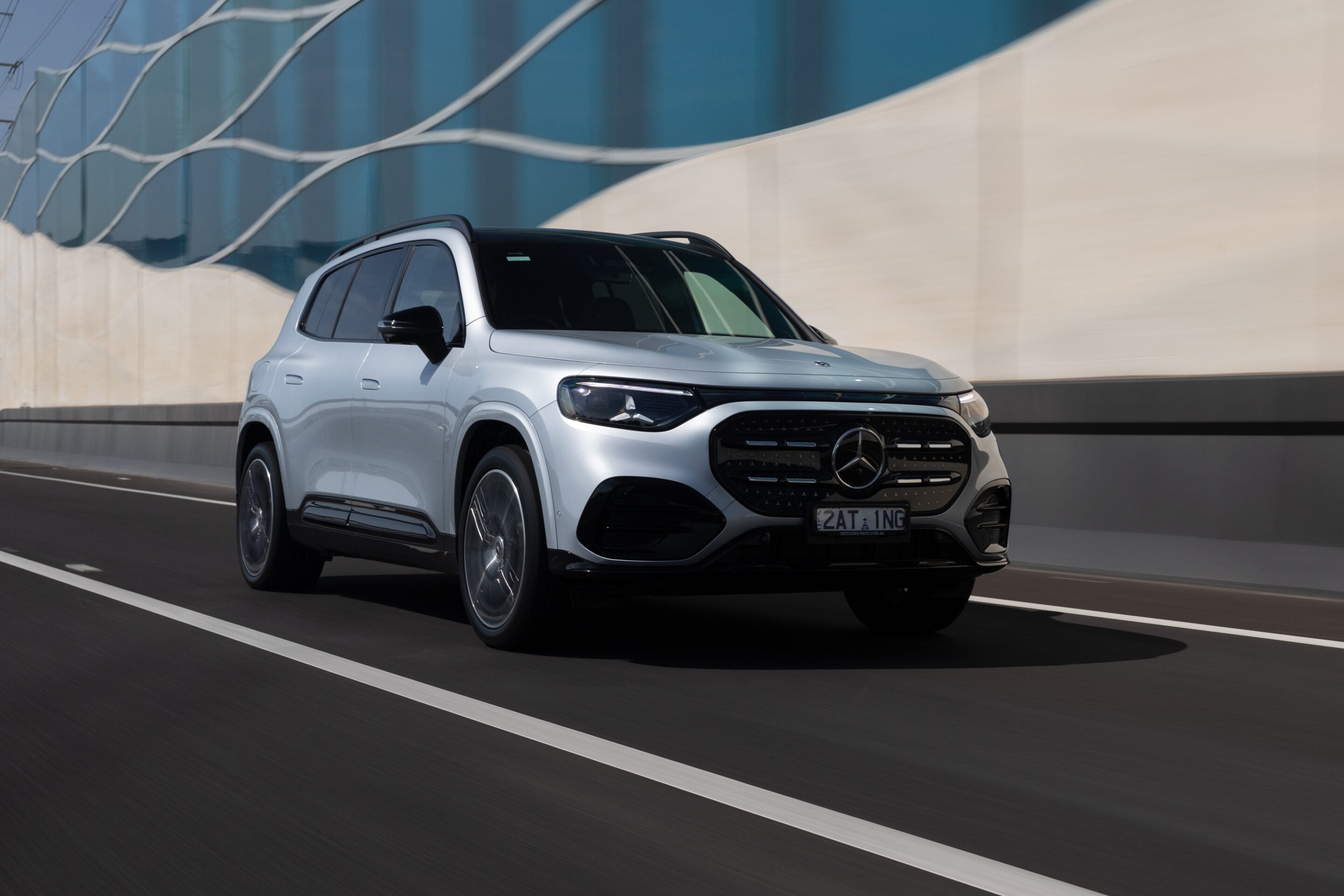
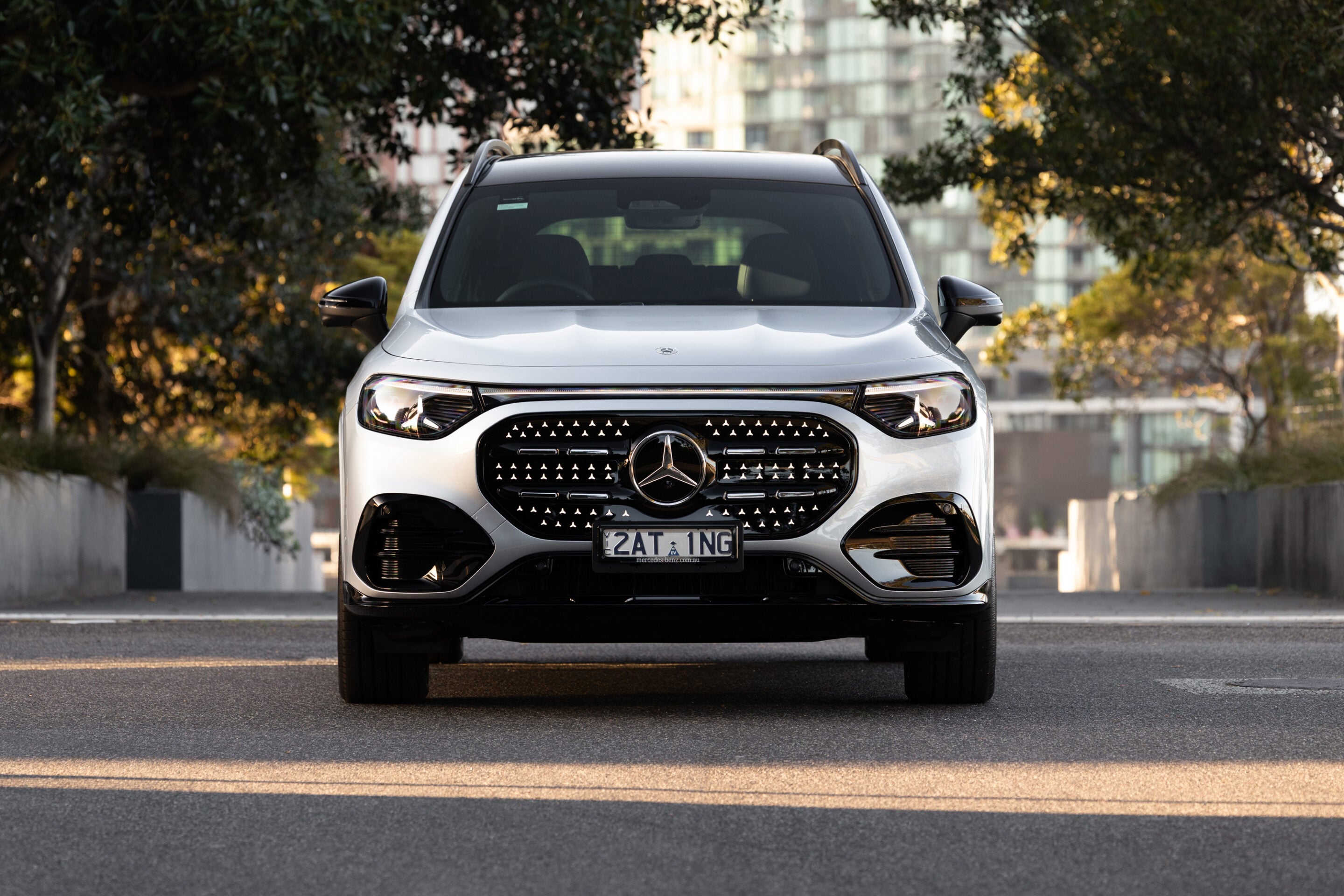
It stops the tape 98mm longer, 27mm wider and sits on a 60mm longer wheelbase compared to the older model. And the benefits are apparent to the naked eye, the new GLB looking not only larger, but also more resolved in its design. It’s not quite handsome (it’s too boxy for that), but it’s definitely a more coherent design.
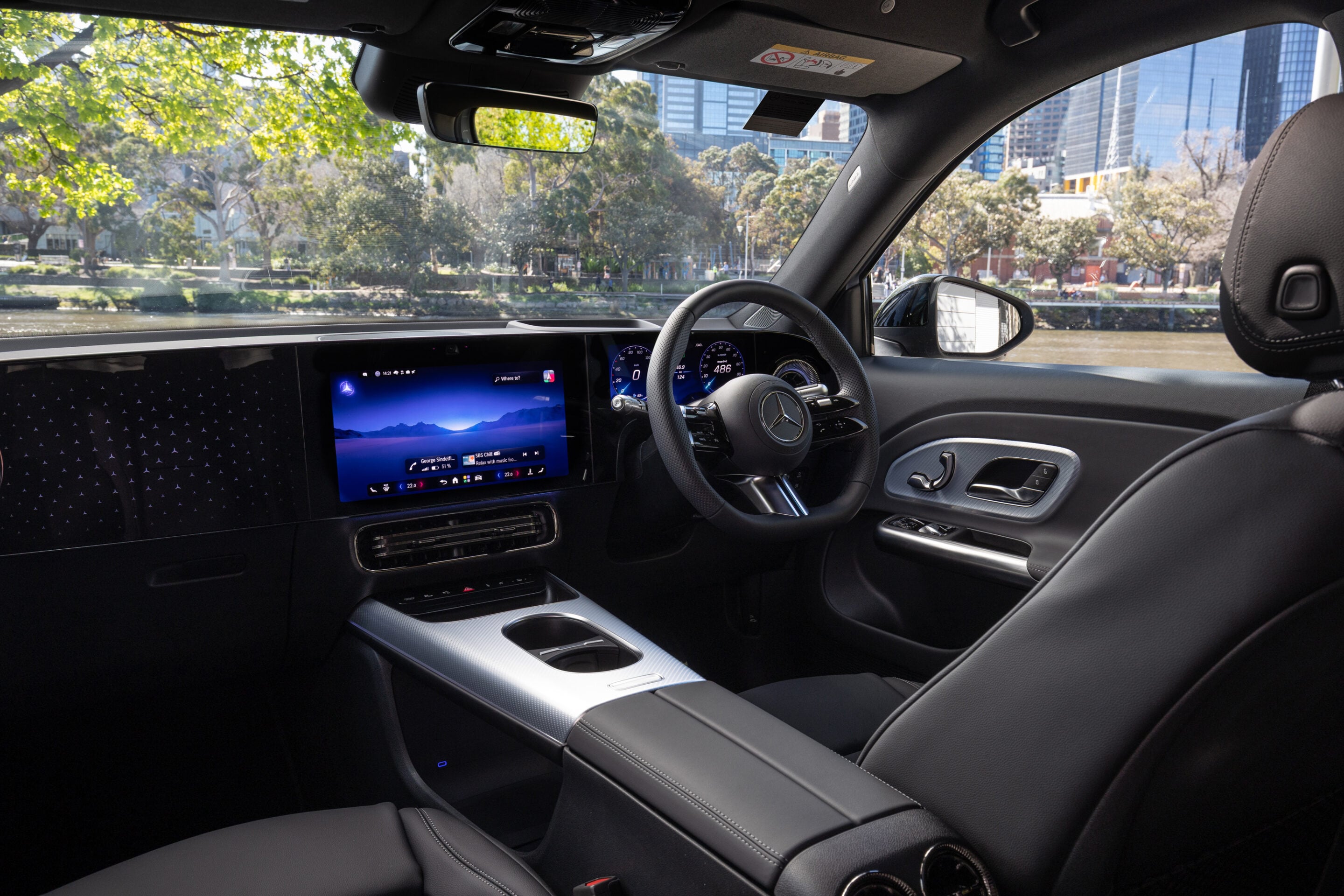
Inside, the GLB strikes a balance between technology and luxury. Material quality, including the Artico artificial leather seats, is first-rate. The seats are nicely cushioned and comfortable across the first two rows but run out of puff in the compromised third row. To be clear, it is possible for larger kids or smaller adults (Mercedes quotes 171cm as a maximum comfortable height for anyone perched in seats six and seven) to squeeze in, but they’ll be hoping the trip is a short one. Still for those with smaller kids, lots of them, the third row is perfectly acceptable. Helpfully, Isofix child seats mounts extend to the third row.
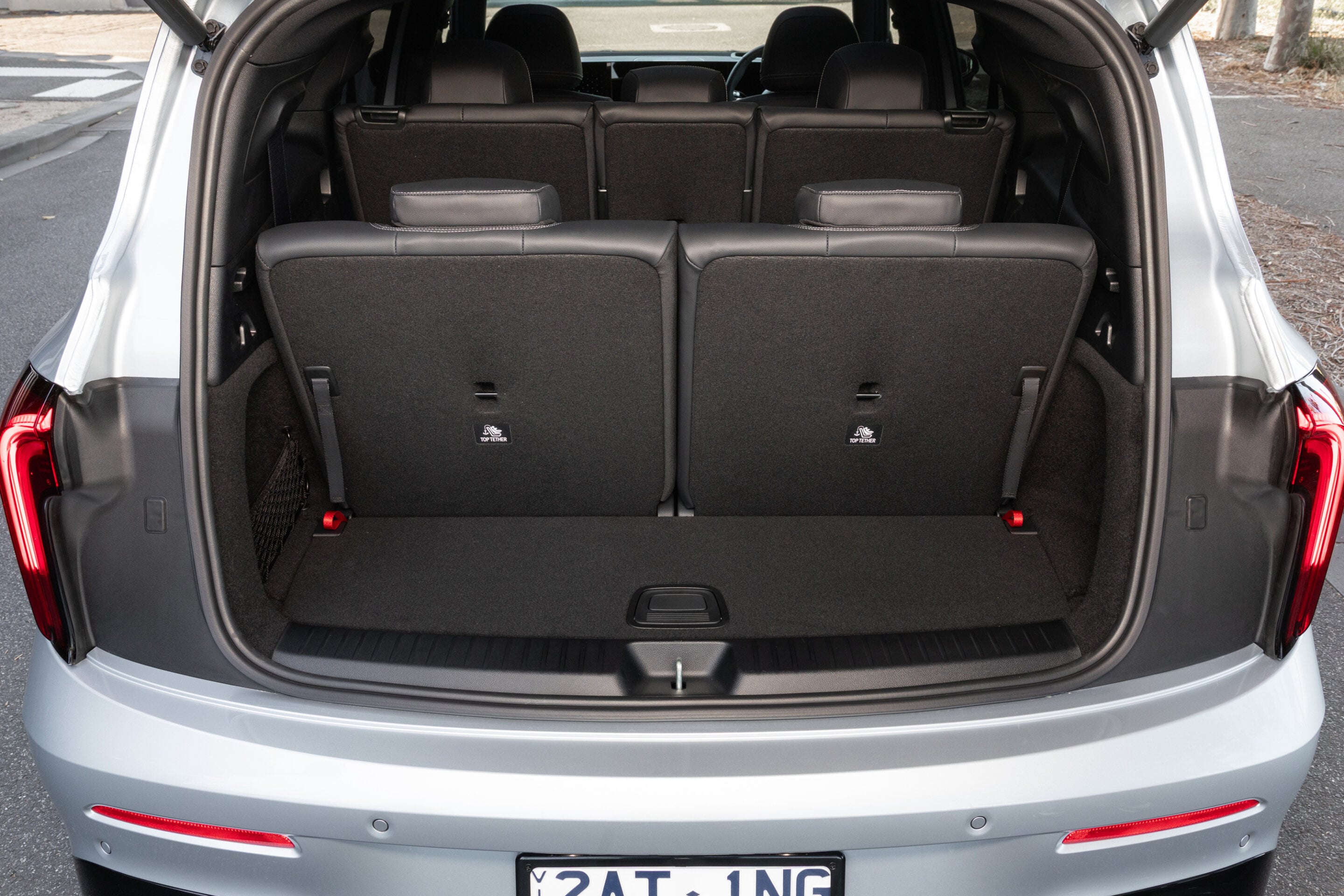
With all three rows in use by people, there isn’t a great deal of luggage space (145L). But evicting the back-row tenants and folding the seats away frees up a decent 480 litres, expanding further to an Ikea-run friendly 1608 litres with row two stowed. Electric models also score a 127 litre ‘frunk’ under the bonnet. Spare tyre? Nope. Tyre inflation kit only.
4
The GLB’s technology suite is becoming familiar now. As it does in its CLA cousin, the dash is overwhelmed by a single-frame wide screen. It hosts two – or three if the passenger screen is optioned – distinct screens, a 14-inch infotainment touchscreen and 10.25-inch instrument display.
It all works crisply enough, although Mercedes’ much-trumpeted AI voice assistants (there’s Google Gemini, ChatGPT and Bing AI) have some learning to do.
Stick to using wireless smartphone mirroring and you’ll be comfortable in a more familiar environment.
Mercedes-Benz made the flagship GLB 350 4Matic electric available at launch and straight away, the word that springs to mind of the drive experience is polished. There’s plenty of mumbo from the combined 260kW and 515Nm available under the right foot, but it’s all delivered in a calm and measured way. No neck-snapping acceleration here, despite that 5.5-second 0-100km/h claim. That’s no bad thing, the GLB taking a more mature and predictable approach to electric motoring. An EV for grown-ups.
4
Electric models feature a trick two-speed transmission which not only improves performance but also maximises energy efficiency. Simply, first gear is the reserve of the majority of driving situations, second gear only kicking in once speeds climb beyond 110km/h. So, never – legally – in Australia then.
Ride quality is excellent, thanks to the presence of adaptive dampers on all models bar the entry-level GLB 200 petrol-hybrid. There’s a suppleness to the way the GLB soaks up everyday lumps and bumps while body control and poise is excellent. Selecting Sport from the drive mode selector does firm things up, but not to the point of discomfort, the boxy SUV remaining composed over patchy surfaces while tightening up the chassis just a fraction and to good effect.
The steering is nice and progressive, offering modicum of feedback through the tiller that imbues the GLB with just a hint of sportiness belying its boxy profile. It’s no cornering wunderkind, but it remains settled enough to enjoy.
6
The GLB’s brakes feel natural, offering a progressive pedal that masks the transition between energy recuperation and friction nicely. There are several levels of energy regeneration, from none to one-pedal and an adaptive mode that sets the tone based on driving conditions.
Mercedes-Benz’s launch route of around 150km, taking in highway stretches, some light urban duties and a smattering of flowing rural backroads served to highlight the all-round nature of the GLB which felt equally at home navigating potholed tarmac as it did silkscreen-smooth motorways.
The 85kWh battery chewed through electrons at the rate of 16kWh/100km which is pretty decent for a boxy SUV tipping the scales at a portly 2345kg tare. That translates to a real-world driving range of around 530km, well shy of the laboratory-tested and quoted 609km, a minor blot on the GLB’s excellent copybook. DC fast charging at up to 320kW will replenish the battery from 10-80 per cent in around 22 minutes.
3
As far as reinventions go, the second-generation GLB electric, at least in this highly-specced flagship trim, is a winner. Its generous growth spurt has measurably improved cabin comfort while Mercedes’ new electric powertrains bring a new-found polish and maturity to the driving experience. That it’s now significantly more affordable than the older generation is just the icing on the cake.
Specs: Mercedes-Benz GLB 350 4Matic electric
| Price | $86,200 plus on-road costs |
|---|---|
| Drivetrain | Dual electric motors |
| Peak power | 260kW |
| Peak torque | 515Nm |
| Transmission | Two-speed automatic, AWD |
| 0-100km/h | 5.5 seconds |
| Top speed | 210km/h |
| Battery | 85kWh (NMC) |
| Range | 609km (WLTP, claimed) |
| Energy consumption | 16.0kWh/100km (as tested) |
| Peak charging speed | 320kW (DC) / 22kW (AC) |
| 10-80% DC charge time (claim) | 22 minutes |
| Dimensions (l/w/h/w-b) | 4735/1861/1689/2899mm |
| Cargo capacity | 145L/480L/1608L + 127L (frunk) |
| Spare wheel | Tyre inflation kit |
| Weight | 2345kg (tare) |
| Warranty | 5yr/unlimited km (vehicle) / 8-year/160,000km (battery) |
| On sale | Now |
8.3
/10
Score
Score breakdown
8.3
Safety, value and features
7.9
Comfort and space
8.6
Engine and gearbox
8.8
Ride and handling
8.0
Technology
Things we like
- Impressively polished driving experience
- Supple ride and composed handling
- Significantly more affordable than older model
Not so much
- Overwhelming screen technology
- No spare wheel
- Real-world range well short of claim
Follow WhichCar/Wheels on Google
Click the button below to make WhichCar by Wheels a preferred source for your news.

We recommend
-
 Reviews
Mercedes-Benz CLA hybrid review: New-gen Baby Benz hits the right notes
New hybrid powertrain and tech-laden cabin underpin third-generation compact sedan.
-
 News
News2027 Mercedes-Benz GLB pricing and specs: Baby seven-seater SUV gets cheaper
The new Mercedes-Benz GLB has launched locally with both mild-hybrid petrol and fully electric variants and an EV range of up to 570km on the WLTP cycle.
-
 News
NewsMercedes-Benz C-Class gets major tech and hybrid overhaul for 2027
Updated petrol-powered C-Class gains fresh styling, AI-driven infotainment and plug-in hybrid range of up to 100km, with an Australian arrival expected in 2027 alongside the new electric model.
