
Reviews
Gallery 1
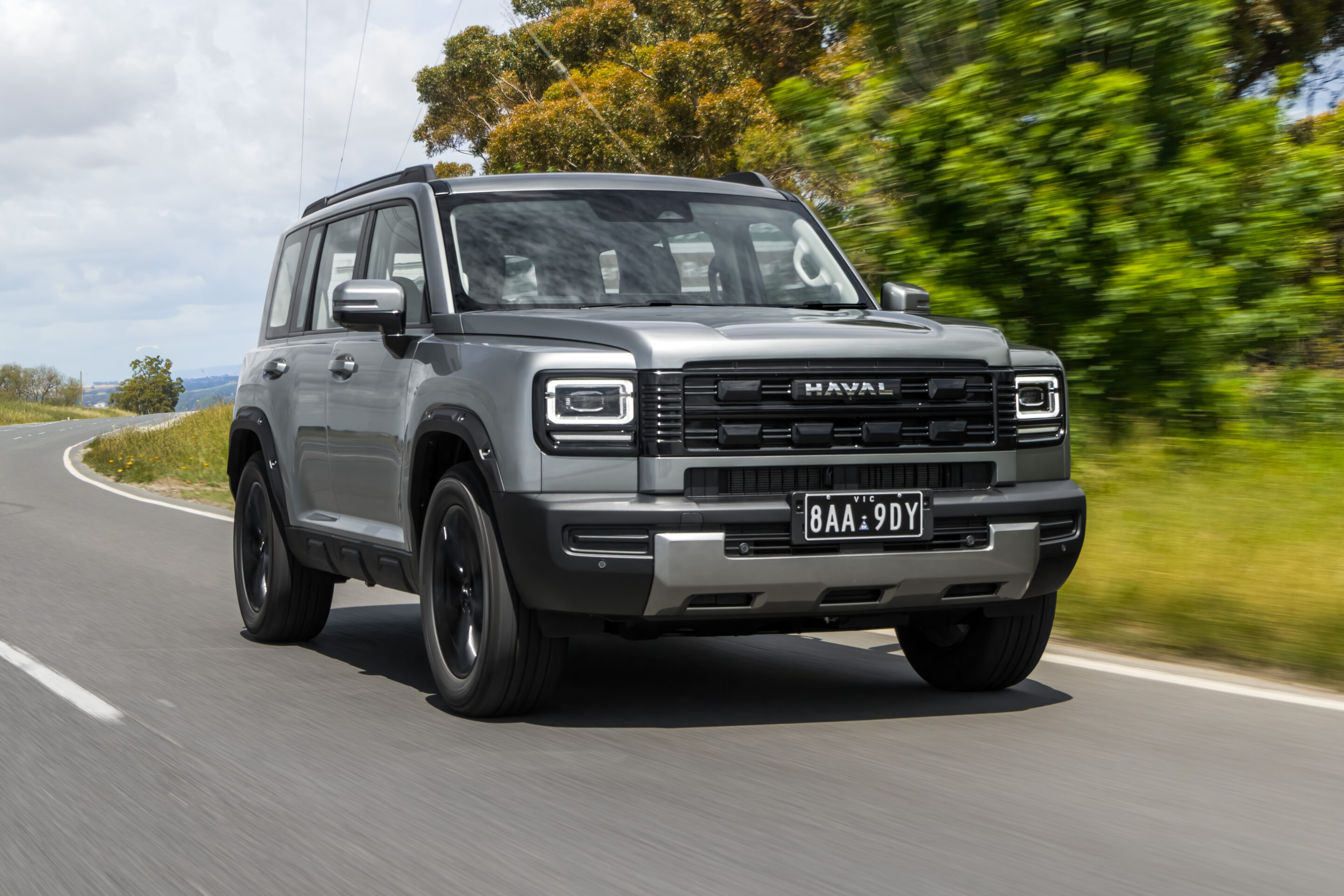
At first glance, GWM’s new Haval H7 looks like the real off-road thing. Handsome – in its own boxy way – and with short front and rear overhangs, plenty of ground clearance and enough Tank 300 visual cues to make an easy subliminal connection, the H7 should be a mountain goat of some sort. And yet…
Proliferation will always breed cultural pixelation, it seems, and the H7 is a great example. While specifying the thing to fit between the Tank 300 and the road-only GWM SUVs, the brand has inevitably blurred the lines between what is all-wheel-drive and four-wheel-drive.
6
There’s the styling, for a start, and then the thrust and torque of two electric motors and a petrol engine, four driven wheels and even hardcore stuff like a mechanically-locking rear differential. But dig deeper and you spot the lack of a driveshaft (meaning this is an electric, not mechanical, four-wheel drive) there’s no two-speed transfer-case and the wading depth is 580mm, which is never going to cut it when attempting Nolan’s Brook on the Old Telegraph Track.
So what the hell is the H7?
That’s kind of up to you, really, but there’s no doubting the H7’s aptitude for ripping along a gravel road or making visits to muddy job sites or slimy boat ramps a lot less daunting. And, regardless of how you want to pigeon-hole it, there’s also this to know: The H7 is actually very good to drive in nearly every important aspect. Which, even in 2026 when connectivity trumps cornering, must still mean something to some of us. Let’s hope so, anyway.
What powertrains are available on the Haval H7?
9
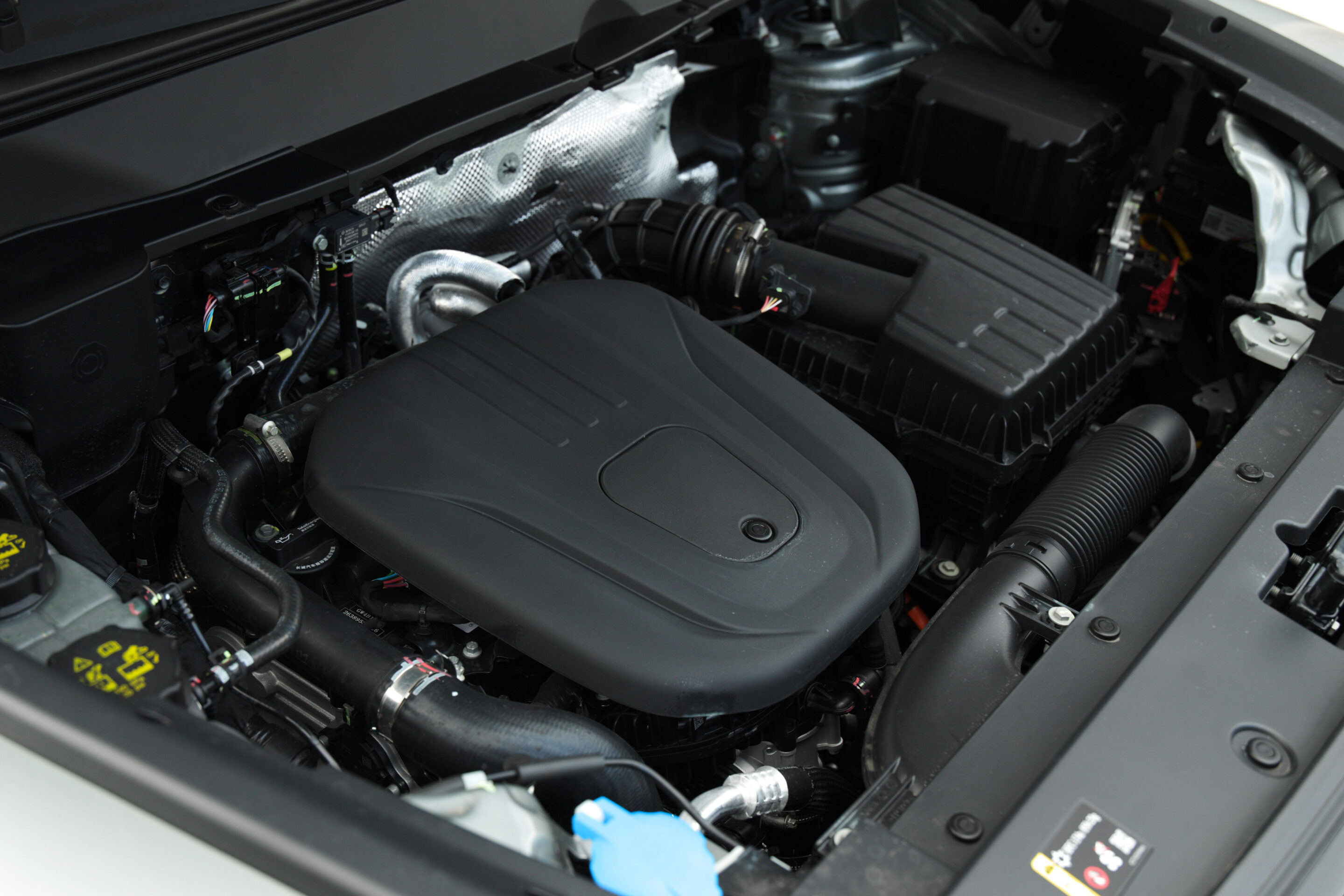
There’s actually quite a bit of mechanical diversity within the H7 line-up, and that starts with the choice of a conventional hybrid driveline or a plug-in hybrid. Opt for the normal hybrid and you’re dealing with a 1.5-litre turbo petrol engine, married to a pair of electric motors (one on each axle) and outputs of 182kW and 670Nm.
Pay up for the PHEV version and that power number leaps to 320kW while the torque figure remains at 670Nm. The extra power is by virtue of a bigger battery (1.53kWh plays 33.7kWh) and more electric motor shunt, but the PHEV also gets vehicle-to-load capacity and an EV-only running range of something like 100km. Plug the PHEV into a fast charger, and the battery should charge from 10 to 80 per cent in under 20 minutes. A Type 2 charge cable is included and there’s a GWM wall-box available as an option.
The other numbers to consider in any comparison are the 0-100 claim of 7.0 seconds for the hybrid and a brisk 4.9 for the PHEV, and the combined fuel consumption number of 7.0 litres per 100km versus 0.9 litres per 100km for the PHEV. Not once you’ve exhausted the PHEV’s battery, of course.
What features does the Haval H7 come with?
6
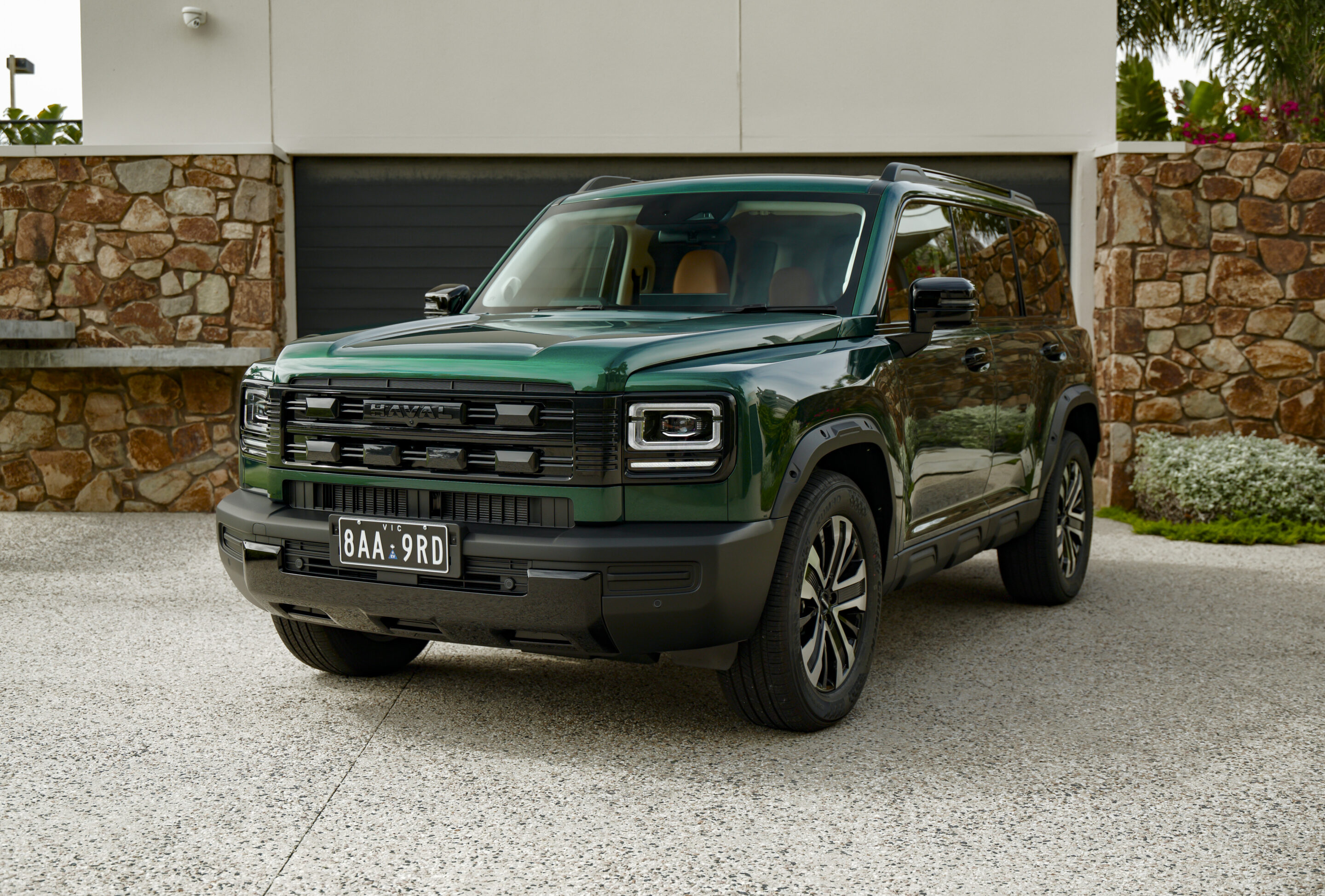
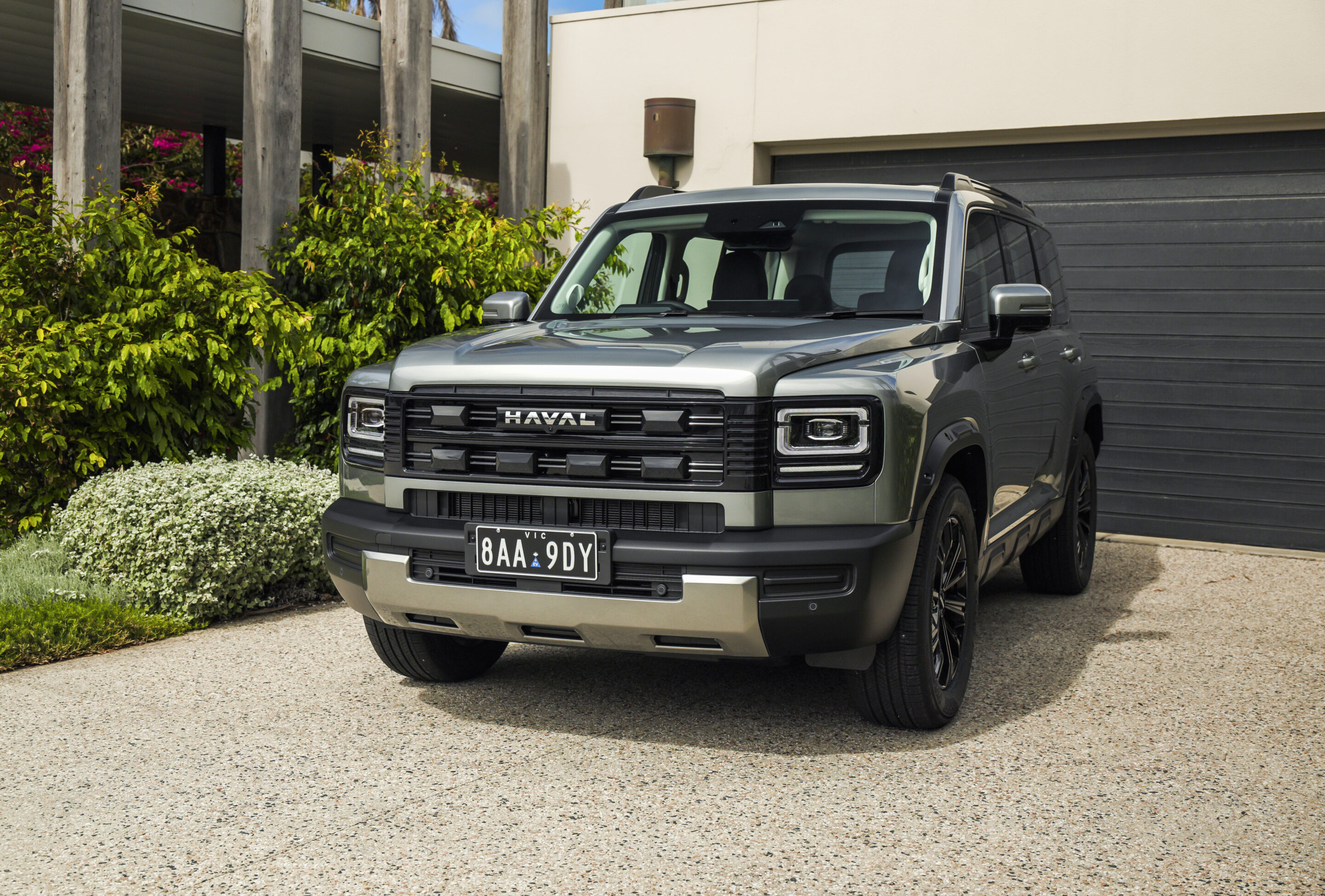
Two specifications are offered, the Lux and the Vanta, both available with either driveline, and the latter distinguished by its blacked-out bits like door handles, badges, bumpers, mirrors and anything else that car-makers once chromed to denote the top-shelf version. Beats us.
The Lux kicks off with a pretty serious specification including leather-look trim, a six-way power-adjustable driver’s chair, wireless phone charging, 12.3-inch digital instrument display, keyless entry and start, active cruise-control, a 15.6-inch centre screen, wireless connectivity, 19-inch alloys, LED lighting, voice command and a full-sized spare tyre.
The Vanta adds a heated steering wheel, rear sun blinds, a powered passenger’s seat, heated and ventilated front pews, head-up display and a premium sound system. With the launch bonus of $1000 off every variant, the range starts with the hybrid Lux at $45,990 driveaway, the hybrid Vanta at $49,990, with the Lux and Vanta versions of the PHEV at $49,990 and $53,990 respectively.
There’s no local crash-test safety rating available for the H7 yet, but GWM says it’s working with ANCAP, so that may change soon. Even so, the list of safety gear is long and includes five cameras and more than a dozen radar inputs. That endows the H7 with functions such as forward collision warning, autonomous emergency braking, lane-keeping assistance, blind-spot monitoring, cross-traffic assistance and traffic sign recognition.
GWM’s tradition of long warranties continues here with the H7 picking up the usual seven-year, unlimited-kilometre warranty, seven years of capped-price servicing (a bargain $460 for the first seven scheduled services) and seven years of roadside assistance. The EV battery is covered for eight years.
What’s the Haval H7’s interior like?
10
Clearly, on paper and at the advertised price, the H7 stacks up pretty darn well. But we’ve seen that before, right?
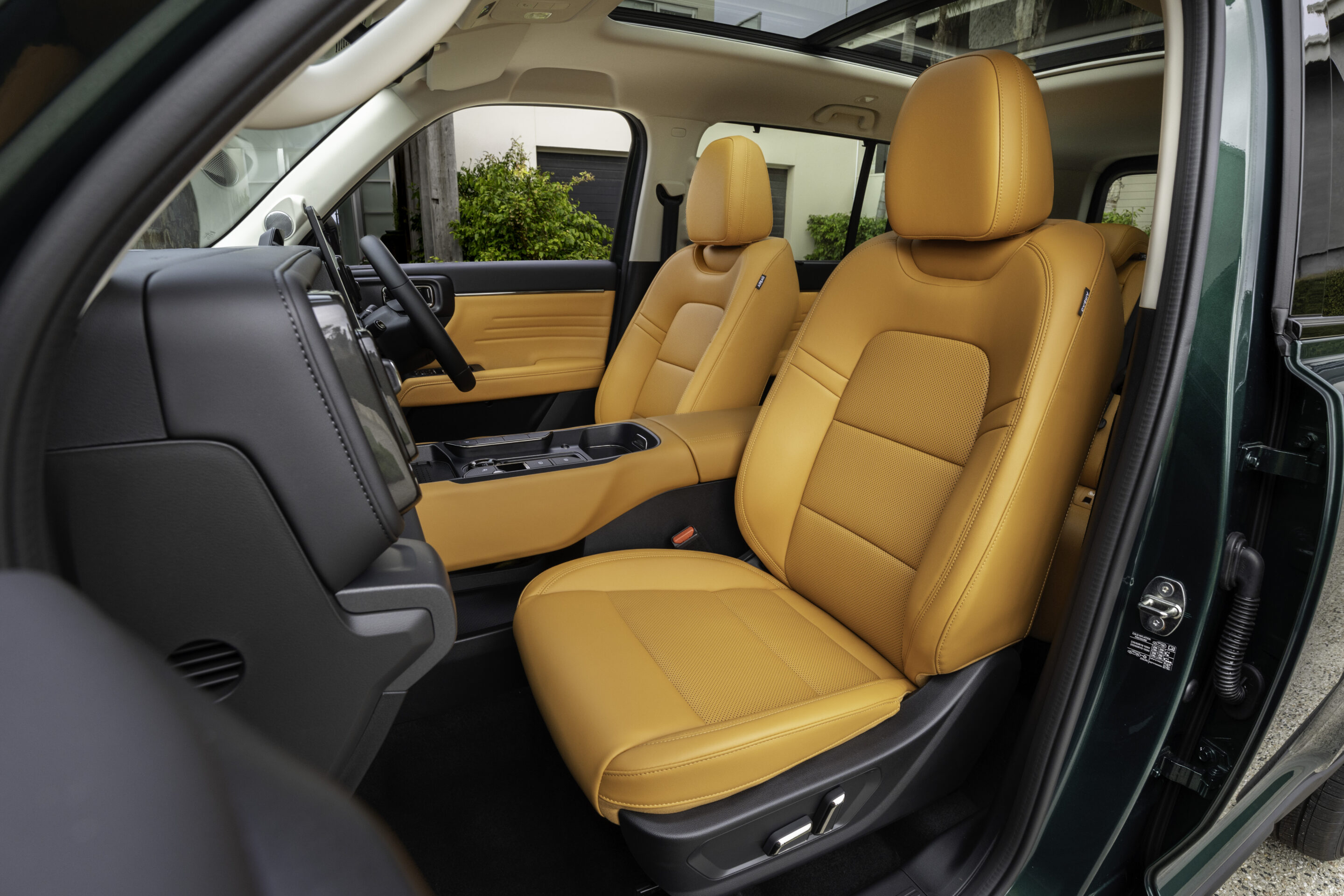
But actually, the cabin is one of the better ones out there. Up front, it’s kind of funky in a modern SUV kind of way with lots of soft-touch surfaces, and a screen layout that makes the most of the tech, a squared-off tiller and enough actual buttons to make living with the thing a bit easier.
In the back seat, the good news continues with lots of room in every direction, pull-down cup-holders in the centre section, a pair of air vents, ditto for USB ports and reading lights, and four grab-handles. Pull-up rear-side sun blinds on the Vanta we drove should be standard. On every car.
The side-hinged tailgate feels solid (and mounts the spare, so it had better be) but the cargo-bay floor is a bit high. But you do get three restraint tethers, one-touch seat tumble and a 240-volt output socket to power your dirty clothes or your dog.
What’s the Haval H7 like to drive?
8
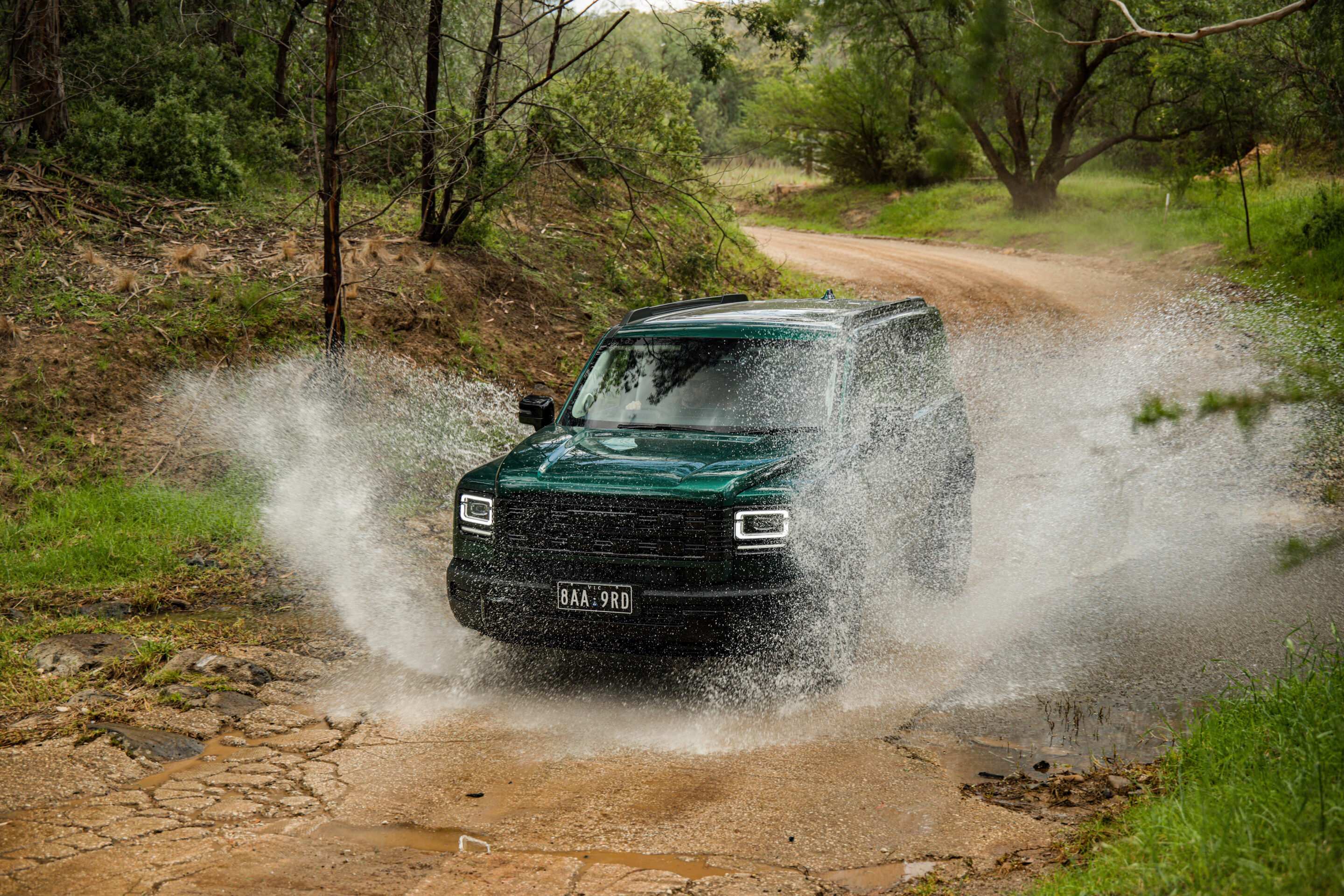
But without a shadow of a doubt, the thing the H7 gets most right is the driving experience. True. Okay, so local input into the steering and suspension usually helps a car’s cause, but there’s almost more to it than that this time. The steering immediately feels well considered in terms of weight and ratio, and the H7’s nose faithfully follows the helm. There also appears to be good separation between steering and suspension inputs and impulses, and that, as much as anything else, gives the H7 its confident stride. Throw in the high driving position and big glass area, and you’re king of the road.
The ride is supple but nicely controlled and when you stand on the throttle, there’s a convincing degree of thrust to be had. To be honest, the extra electric-motor shunt in the PHEV variant better masks the fact that there’s a 1.5-litre engine bullying around a two-tonne (or more) lunchbox, and the normal hybrid version seems to spend more of its time with that petrol engine whirring away with a corresponding reduction of respect from the driver’s seat. Our advice? Buy the PHEV variant.
Dynamically, the biggest buzz-kill (and this will come as no surprise) is a level of unwelcome intervention from the ADAS systems. No, it’s not the worst we’ve driven, but the lane-keeping program is over the top, and that in itself is enough to spoil the effect.
The, again, big question re-emerges when you start to look at the drive modes and other hardcore off-road stuff like that mechanical rear diff lock. Line that up with GWM’s own frank admission that this is an all-wheel-drive, not a four-wheel-drive, and you start to wonder why. Why, for instance, is there a diff lock in the first place? Why are there Sand, Snow and Mud drive modes built into the car? Why did GWM show us a video at the launch of the H7 successfully tackling a gnarly gravel hill?
Okay, maybe some owners will use that functionality, but based on inherent limitations the H7 is no more technically adventurous than a conventional SUV. Or is it? Maybe there’s a cohort out there that will stretch the H7 beyond what an SUV would tackle, but pull up short of river crossings and joining a winch club. Perhaps the spectre of pixelation is extending beyond market segmentation to include buyer expectation and aspirations.
Either way, there will always be buyers who will look at the H7 and wonder how much cheaper it might have been without the off-road fruit. Not to mention: Is this just another faux-wheel-drive? Us included. Until we drove it. At that point, you soon realise that identity crisis aside, this is a decent thing at a great price.
Haval H7 specifications:
| Price | From $45,990 driveaway (launch price) |
|---|---|
| Body | 5-door medium SUV |
| Drivetrain | 1.5-litre turbo-petrol engine, 2 electric motors + 33.7 kWh LFP battery (PHEV) |
| Max power | 182kW (HEV); 320kW (PHEV) |
| Max torque | 670Nm |
| Transmission | 4-speed hybrid transmission |
| Combined claimed fuel consumption | 7.0 litres per 100km (HEV); 0.9 litres per 100km (PHEV) |
| Claimed 0-100km/h time | 7.0 seconds (HEV); 4.9 seconds (PHEV) |
| Dimensions (L/W/H/WB) | 4800/1950/1843/2738mm |
| Boot space | 568L (rear seat up); 1404L (rear seat folded) |
| Warranty | 7 years/unlimited km (car), 8 years/unlimited km (EV battery) |
| 7-year service cost | $460 for the first 7 scheduled services |
| Safety rating | Unrated |
| On sale | Now |
Follow WhichCar/Wheels on Google
Click the button below to make WhichCar by Wheels a preferred source for your news.

We recommend
-
 Reviews
GWM Cannon Alpha 3.0TD review: Supersized engine and off-road chops give newcomer the firepower to fight Ranger and HiLux
GWM takes aim at the established dual-order with a new 3.0-litre turbo-diesel that outmuscles its rivals
-
 News
GWM Cannon PHEV arrives in Australia as cheapest plug-in hybrid ute
Australia’s cheapest plug-in hybrid ute offers 115km of electric range and 3500kg towing, with introductory discounts extended until November.
