Best Small Cars

Gallery 1
Contenders
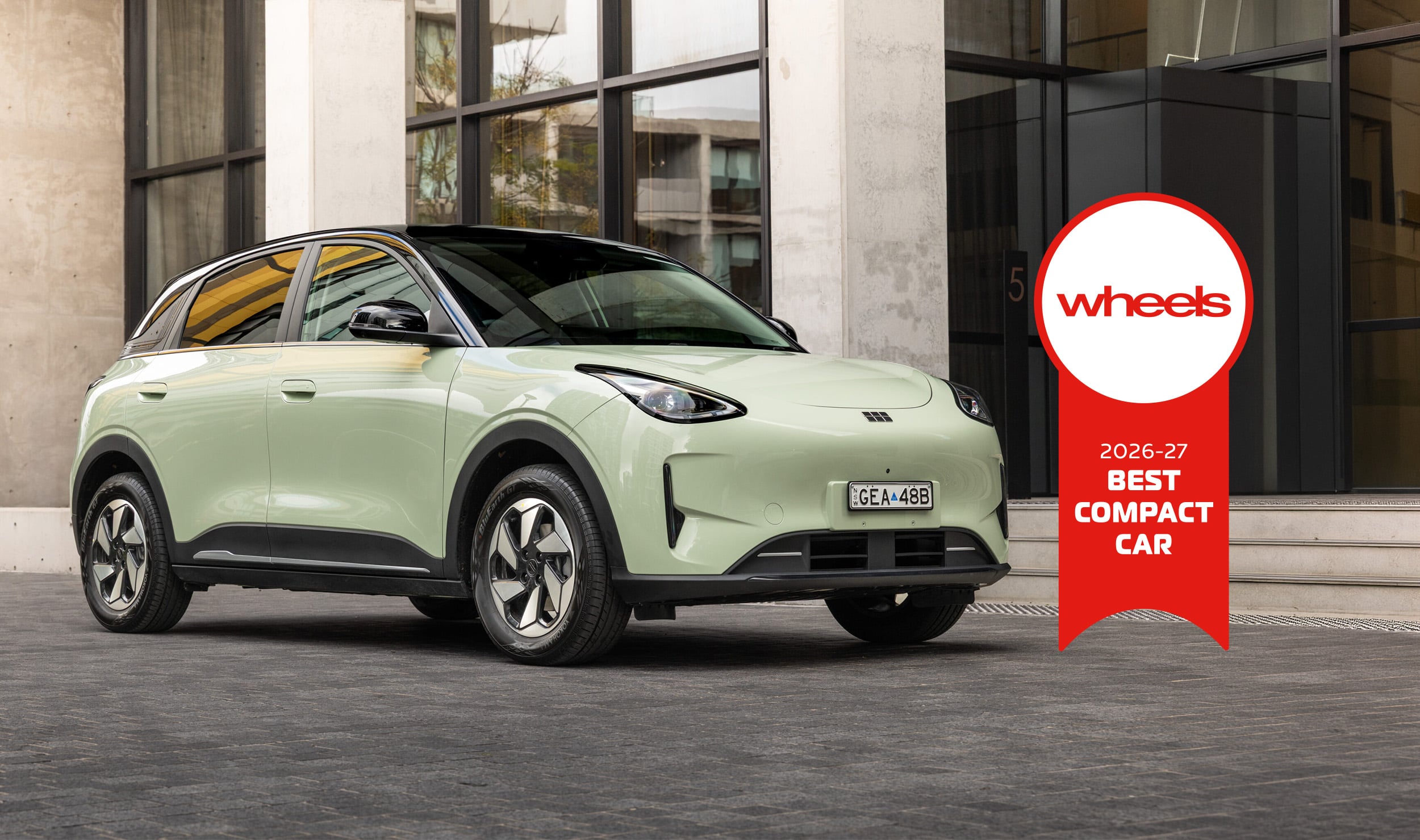
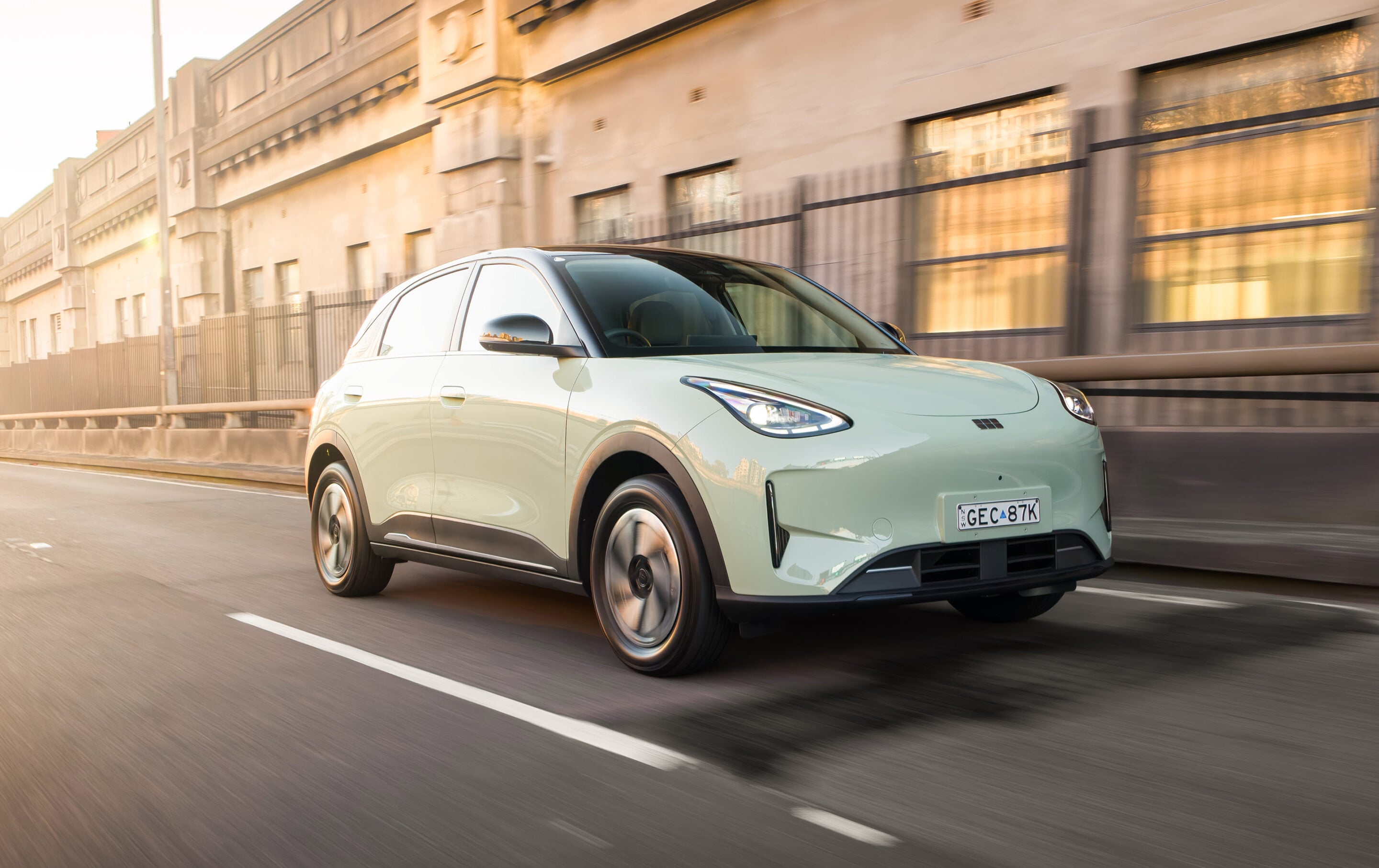
Winner: Geely EX2
11
Price: From $26,490 plus on-road costs (Complete)
Drivetrain: Single-motor electric, single-speed transmission, rear-wheel drive, 35.3kWh (Complete)
or 47.1kWh (Inspire) battery
Outputs: 60kW/150Nm (Complete), 85kW/150Nm (Inspire)
Claimed range (WLTP): 252km (Complete), 345km (Inspire)
Warranty: Seven-year/unlimited km
Five-year service cost: $1487
| Driving | |
| Interior | |
| Practicality | |
| Overall value | |
Strengths
- Sharply priced and well equipped
- Surprisingly spacious cabin
- Refined driving experience
Weaknesses
- Tech interface can take a bit to get used to
- No spare wheel in either model
- Could be a bit more powerful
Thanks to the continued onslaught of SUVs down under, the attraction of being small is getting lost in the new-car market. Even supposedly “compact” models continue to grow in size,
weight and price to appeal to those who want a larger SUV. The Geely EX2 is a refreshing
counterpoint to that movement, and it’s the winner of Wheels Best Compact Car 2026.
What impressed us most about the EX2 is just how much car Geely has squeezed into such a
compact package. At a little over 4.1 metres long, it occupies a small footprint that makes sense in
the city, yet its clever packaging means it doesn’t feel particularly small once you open the door.
There’s great passenger space, particularly in the rear, plenty of useful cabin storage and
enough practicality for the EX2 to comfortably serve as an everyday driver.
Then there’s the pricing. Starting from $26,490 plus on-road costs for the entry-level Complete, the
EX2 is one of Australia’s most affordable EVs and one of Australia’s cheapest new cars, while the
$30,990 +ORC Inspire remains compelling value for money thanks to its extra range, performance
and standard equipment.
Standard features on the Complete include dusk-sensing automatic LED lighting, synthetic leather
trim, an electric driver’s seat, a 14.6-inch touchscreen with wireless Apple CarPlay and Android
Auto and a long list of safety features. Above that, the Inspire then adds alloy wheels, heating for
the front seats and steering wheel, rain-sensing wipers, a 360-degree camera and even an electric
tailgate.
The Complete combines a 35.4kWh battery with a 60kW/150Nm rear-mounted motor to offer
252km of WLTP range and spending extra to jump up to the Inspire increases those figures to
47.1kWh, 85kW/150Nm and 345km respectively. Performance is fine, particularly the instant
torque of the e-motor, though we’d love to see a more powerful variant.
The Complete is a solid package, but we think that it’s the Inspire that really broadens the EX2’s
appeal. A 345km range means this doesn’t have to be a car confined to short urban journeys, yet it
retains all the benefits of an EV when used around town. Smooth, quiet performance, immediate
response and low running costs suit stop-start traffic perfectly, while its compact dimensions and
light controls make it exceptionally easy to place.
Despite its price, the EX2’s cabin presents as thoroughly modern and good quality, while technology is plentiful and the overall experience feels more polished than its price might suggest.
Minor drawbacks are light steering and there’s no spare wheel – but neither undermine the whole package with this car.
The EX2’s impressive achievement is managing to be affordable without feeling bargain-basement, small without being impractical and electric without demanding an enormous price premium or providing a small driving range. It works brilliantly in the environment where compact cars spend most of their lives – around town – yet has enough space, range and maturity to venture beyond it.
The EX2 also makes a strong argument for the compact car itself as it proves that you don’t
necessarily need something bigger, heavier and more expensive to get a great all-round product.
That’s why it’s the clear winner of Wheels Best Compact Car for 2026.
BYD Atto 1

8
Price: From $19,990 driveaway (Essential – $23,990 plus on-road costs after December 15)
Drivetrain: Single-motor electric, single-speed transmission, front-wheel drive, 31kWh (Essential)
or 43.2kWh (Premium) battery
Outputs: 65kW/175Nm (Essential), 115kW/220Nm (Premium)
Claimed range (WLTP): 220km (Essential), 310km (Premium)
Warranty: Six-year/150,000km
Five-year service cost: $1391
| Driving | |
| Interior | |
| Practicality | |
| Overall value | |
Strengths
- It made EV tech and low running costs even more affordable
- Mature to drive and surprisingly punchy
- Spacious inside, despite tiny exterior dimensions
Weaknesses
- Base model Essential could be better equipped
- No blind-spot monitoring, rear cross-traffic alert or even a rear wiper
- Touchscreen is difficult to use at speed
Say what you want about it, but the BYD Atto 1 has changed the conversation around electric
vehicles in Australia. As the country’s cheapest new EV, it proves buyers no longer need to spend
well over $40,000 to ditch internal combustion. Better still, its combination of electric power and
genuinely compact dimensions makes plenty of sense for urban buyers.
Affordability is the key point as it’s currently priced from just $19,990 driveaway in entry-level Essential form (until December 15) but the Atto 1 offers more than a low purchase cost. Even the entry-level Essential features a sharp 10.1-inch infotainment touchscreen with live services and wireless smartphone mirroring, while the cabin feels modern, offers plenty of storage and makes clever use of the car’s tiny footprint.
There’s enough space for four occupants – and only four seatbelts – while the 308-litre boot
features useful under-floor storage. Larger rivals are obviously more practical, but its diminutive dimensions make it easy to squeeze into tight parking spaces, manoeuvre through crowded streets
and generally live with in the city.
That’s also where its electric drivetrain feels most at home. Instant torque makes the Atto 1
responsive in traffic, while light controls and a comfortable ride make urban driving effortless. The
Essential’s 65kW/175Nm motor provides adequate performance, but the Premium’s punchier
115kW/220Nm output makes it surprisingly brisk.
The Essential offers 220km of WLTP range, which should be plenty for many urban drivers, while
the Premium increases that to 310km for greater versatility. Its ride and handling balance is also
surprisingly mature, ensuring the Atto 1 is a good car to drive.
Five years of servicing costs just $1391, or $278 annually, while BYD provides a six-
year/150,000km vehicle warranty, which is short of the best in the industry.
There are compromises. Blind-spot monitoring and rear cross-traffic alert remain unavailable,
there’s bizarrely no rear wiper and the touchscreen can be fiddly on the move. Larger EVs such as
the MG 4 Urban also don’t cost dramatically more, either.
Yet as a compact car, the Atto 1 is very charming. It’s small, inexpensive, cheap to run and perfectly suited to urban driving. Most importantly, it isn’t just cheap for an electric car, it’s cheap for a new car, full stop. All of that makes this tiny BYD easy to justify.
Kia Picanto
6
Price: From $19,190 plus on-road costs (Sport manual)
Drivetrain: 1.25-litre naturally aspirated four-cylinder petrol, five-speed manual or four-speed
automatic, front-wheel drive
Outputs: 62kW/121Nm
Claimed combined fuel consumption: 5.4L/100km (manual) – 6.0L/100km (auto)
Warranty: Seven-year/unlimited km
Five-year service cost: $2079
| Driving | |
| Interior | |
| Practicality | |
| Overall value | |
Strengths
- Despite price rises, still a cheap car
- Easy to use cabin tech
- Perfect sizing for the city
Weaknesses
- Dated and inefficient drivetrain
- Stiff ride quality in GT-Line spec
- Overseas models get more features
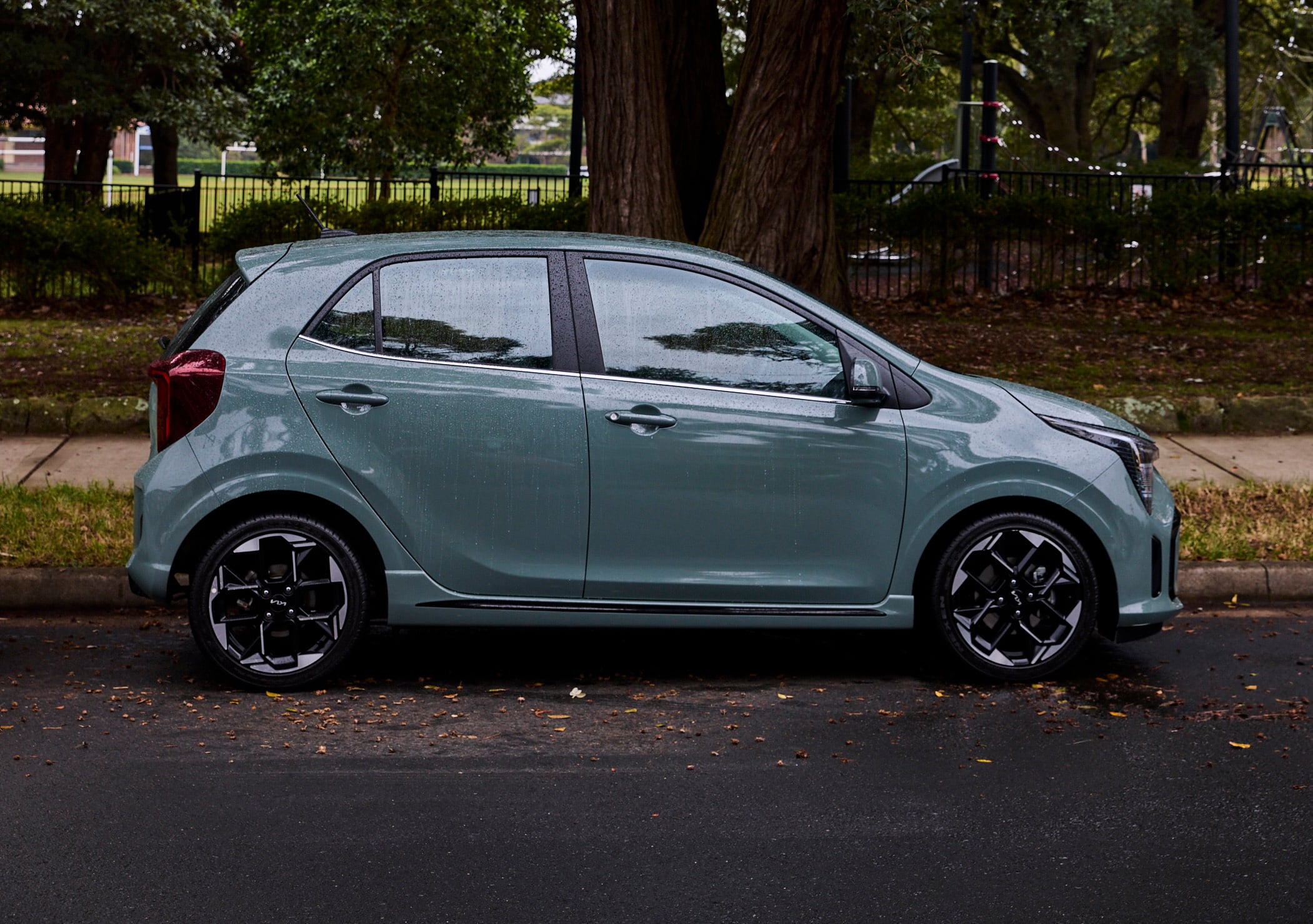
In a market where new cars keep getting bigger and more expensive, the Kia Picanto feels almost
refreshingly old-school. It’s genuinely tiny, genuinely affordable and, priced from below $20,000 in
entry-level Sport manual form, remains one of the most accessible new cars in Australia. Better
still, its compact dimensions make it particularly well suited to life in the city.
Pricing starts at $19,190 plus on-road costs for the Sport manual, with respectable standard
equipment including automatic headlights, air-conditioning, an 8.0-inch touchscreen with wireless
Apple CarPlay and Android Auto, autonomous emergency braking, blind-spot monitoring, rear
cross-traffic alert and a reversing camera.
The automatic-only GT-Line climbs to $22,590 +ORC and adds LED lighting, synthetic leather
upholstery, sportier styling and 16-inch alloy wheels. We’d still like Kia Australia to raid the
overseas options list, however, where features such as newer infotainment, a digital driver’s
display, climate control and heated seats are available.
At just under 3.6 metres long, the Picanto is a properly compact car, and that makes it perfect in
urban environments. It’s easy to thread through narrow streets, requires very little space to park
and offers good visibility, yet its small exterior doesn’t result in an unusably cramped cabin. Two
adults can fit in the rear, while the 255-litre boot expands to a useful 1010 litres with the back seats
folded.
Its locally tuned suspension also gives the Picanto a level of maturity you might not expect from
something so small and inexpensive, with a generally composed ride. The GT-Line is less
convincing, though, as its larger wheels introduce an unnecessary firmness.
The 62kW/122Nm 1.25-litre petrol engine is perfectly adequate for urban duties, but performance
feels modest once speeds rise. The four-speed automatic is also showing its age, while its 6.0L/100km claimed consumption is disappointing when the larger mild-hybrid Suzuki Swift uses around 2.0L/100km less.
Kia’s seven-year/unlimited-kilometre warranty is another strength, although five-year servicing
costs of $2079 are surprisingly high for such a simple, affordable car.
The Picanto isn’t perfect, but as a compact car it gets the fundamentals right. It occupies little road
space without sacrificing everyday usability, is easy to drive and park, comes well equipped and
remains quite affordable. For city dwellers who don’t need an SUV-sized footprint, the Picanto is a
convincing reminder that sometimes smaller really is better.
Mazda2
4
Price: From $27,290 plus on-road costs (G15 Evolve)
Drivetrain: 1.5-litre four-cylinder naturally aspirated petrol, six-speed automatic, front-wheel drive
Outputs: 81kW/142Nm
Claimed combined fuel consumption: 5.0L/100km
Warranty: Five-year/unlimited km
Five-year service cost: $2290
| Driving | |
| Interior | |
| Practicality | |
| Overall value | |
Strengths
- Fun but comfortable driving experience
- Two well equipped model grades and available sedan in GT form
- Well equipped across the range
Weaknesses
- Getting on in age with dated tech
- Far more expensive than it used to be
- Warranty length is average in today’s market
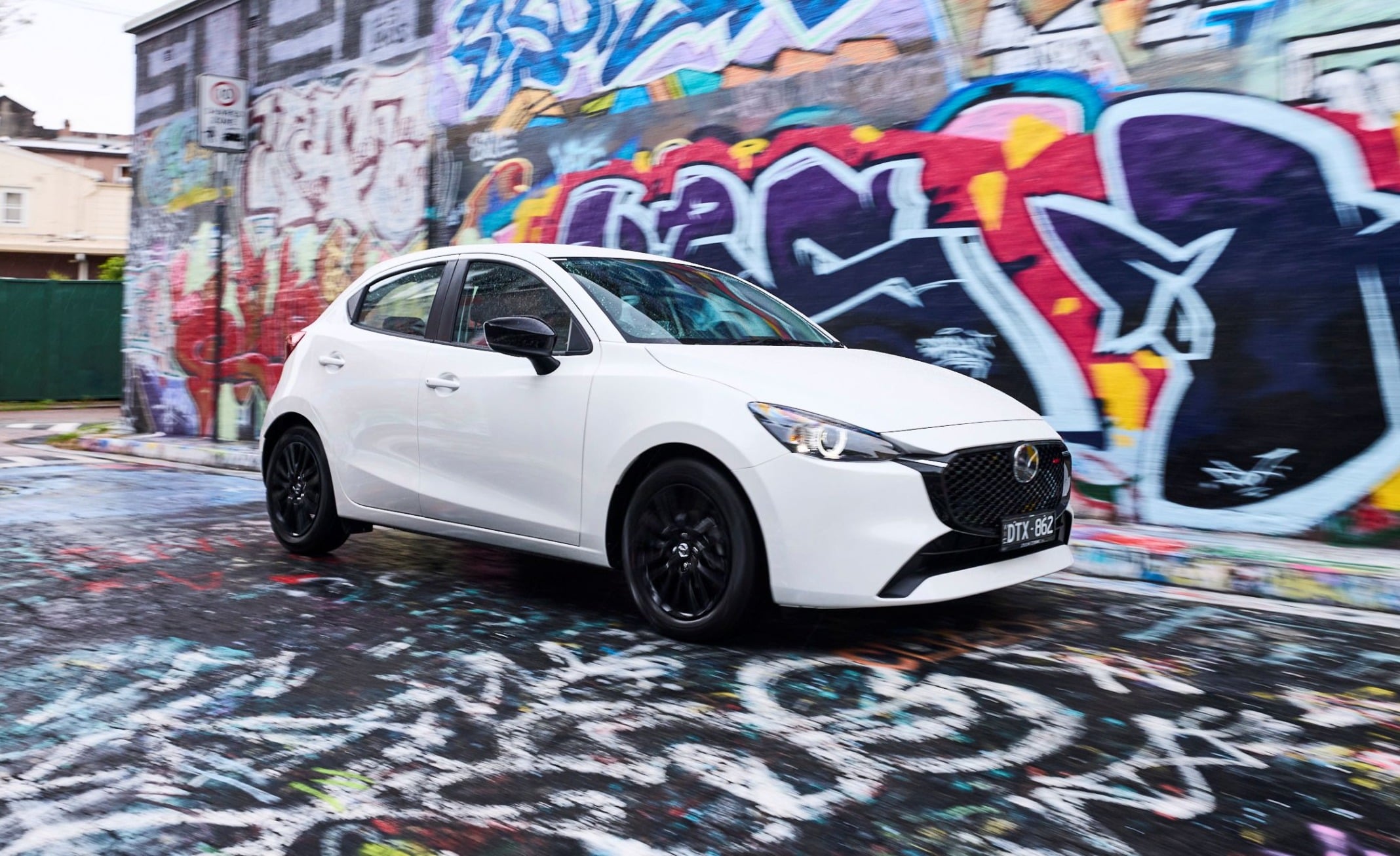
The Mazda2 might be one of the oldest cars in this year’s field – and indeed one of the oldest new
cars still on sale – but there’s something refreshing about its compact, uncomplicated approach.
Continual refinement since its 2014 launch has kept Mazda’s smallest hatchback competitive, even
if newer rivals offer more technology and cleverer packaging.
One of the Mazda2’s greatest strengths is its feeling of solidity. Cabin materials and expensive-
feeling switchgear remain a cut above what you’d normally expect from a small, relatively
affordable hatchback, although age is catching up with its technology. The small and grainy 7.0-
inch touchscreen looks particularly dated in 2026.
Nor does the Mazda2 perform any packaging miracles. Rear-seat room is tight for average-sized
adults and its 250-litre boot is modest, but its compact exterior dimensions are a major advantage
in the city. It’s easy to manoeuvre through tight streets, simple to park and occupies far less space
than the small SUVs increasingly chosen by urban buyers.
At $27,290 plus on-road costs, the entry-level Evolve is considerably more expensive than
Mazda2s once were, although standard equipment is generous. Dusk-sensing automatic LED
headlights, automatic climate control, a head-up display, wired Apple CarPlay and Android Auto, autonomous emergency braking, adaptive cruise control, blind-spot monitoring, rear cross-traffic
alert and a reversing camera are all included.
The Mazda2 also proves that compact cars don’t need to be boring. Its naturally aspirated 1.5-litre
four-cylinder petrol engine isn’t particularly powerful, but it’s smooth and dependable, while
accurate, well-weighted steering and taut yet compliant suspension make the Mazda one of the
more enjoyable cars in its class. It’s agile enough to dart through city traffic but polished enough to
remain entertaining on a winding country road.
Running costs are reasonable rather than outstanding. Five years of servicing costs $2290, while
claimed fuel consumption of 5.0L/100km can’t match a hybrid but remains relatively low. Mazda’s
five-year/unlimited-kilometre warranty is merely average by current standards, though.
The Mazda2 can’t disguise its age, nor can it match newer rivals for interior space or technology.
Yet its compact footprint, quality cabin, generous equipment and enjoyable driving experience
remain compelling. In an era of increasingly large and complicated cars, the Mazda2 is a reminder
of how satisfying a simple, genuinely compact hatchback can be.
MG 3
8
Price: From $19,990 driveaway (Vibe petrol – $20,990 driveaway after September 30)
Drivetrain: 1.5-litre four-cylinder petrol or hybrid, CVT (petrol) or three-speed hybrid (hybrid)
transmission, front-wheel drive
Outputs: 81kW/142Nm (petrol), 155kW/425Nm (hybrid)
Claimed combined fuel consumption: 4.3L/100km (hybrid) – 6.0L/100km (petrol)
Warranty: Seven-year/unlimited km (extendable to 10 years/250,000km with dealer servicing)
Five-year service cost: $1827 (petrol) – $2064 (hybrid)
| Driving | |
| Interior | |
| Practicality | |
| Overall value | |
Strengths
- Well equipped and well priced relative to other hybrids
- Surprisingly punchy hybrid system
- Long standard warranty extendable to 10 years
Weaknesses
- Hybrid+ drivetrain is expensive
- Cabin quality could be better
- No spare wheel in Hybrid+ models
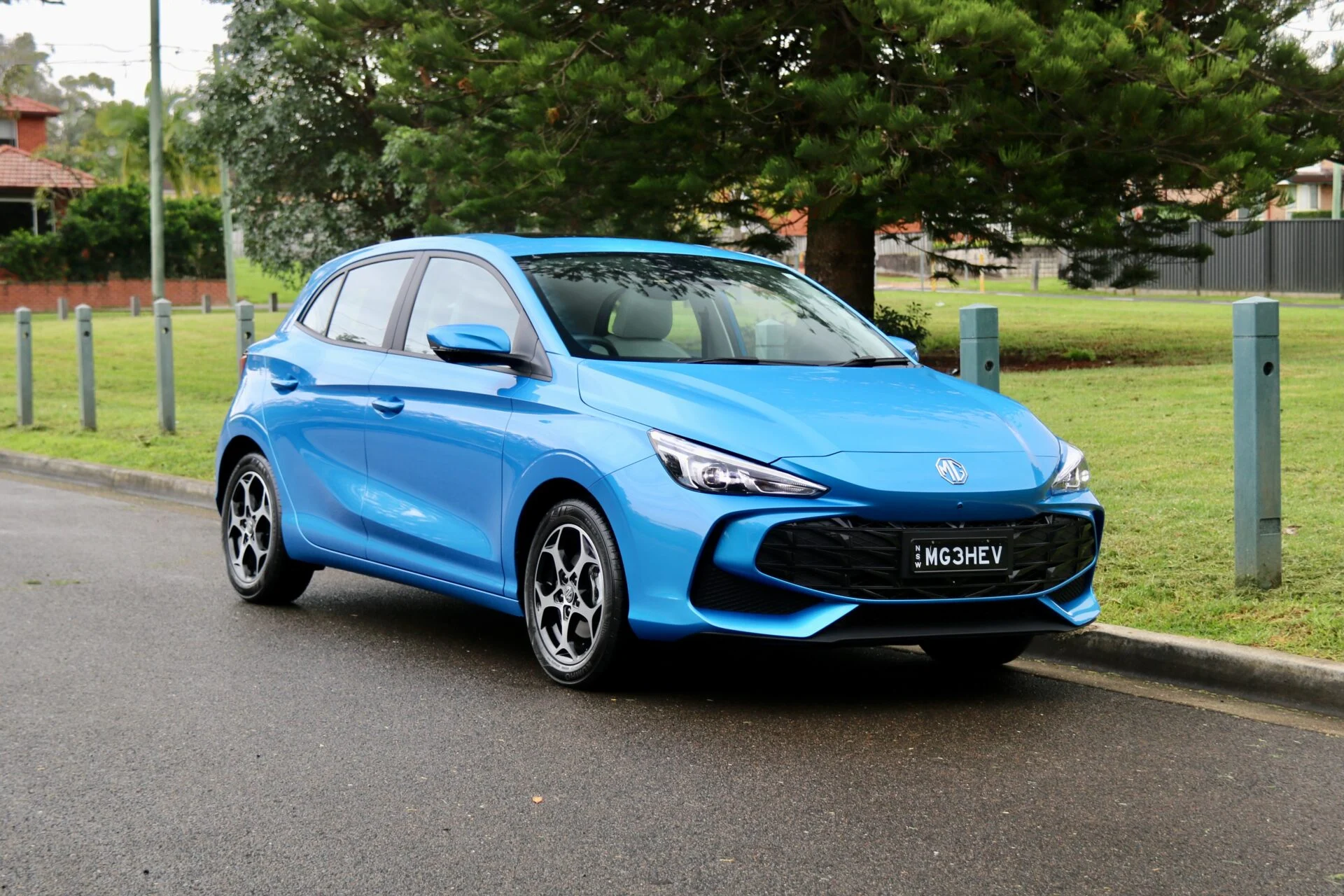
Modern MG’s transformation from maker of bargain-basement specials to competitive cars is
neatly demonstrated by the MG 3. The previous generation was cheap but difficult to recommend;
thankfully, today’s car is vastly more accomplished, while retaining its compact dimensions and
keen pricing that make it appealing to so many buyers.
There’s also more choice, with both petrol and hybrid drivetrains available. The petrol MG 3 is the
more affordable way into the range, using a 1.5-litre four-cylinder engine making 81kW/142Nm
outputs and paired with a CVT. It lacks the punch and efficiency of the hybrid, but its lower
purchase price makes plenty of sense for buyers simply wanting an affordable city runabout.
Pricing for that starts at just $20,990 driveaway, though it’s currently on special from $19,990
driveaway until September 30, making it Australia’s cheapest new car once on-road costs are included.
The Hybrid+ is definitely the more impressive drivetrain. Pricing for that starts at $28,990
driveaway for the Excite and $30,990 driveaway for the Essence, making it one of Australia’s most
affordable hybrids but more expensive than the petrol models. Its 1.5-litre petrol engine and electric
motor produce a substantial 155kW combined, delivering punchy in-gear acceleration while only
using a claimed 4.3L/100km.
Regardless of drivetrain, the MG 3 makes good use of its compact footprint. There’s a reasonable
amount of storage throughout the cabin, comfortable front seats and surprisingly generous rear
accommodation for a light hatchback. Boot capacity is a respectable 293 litres, expanding to 938
litres with the rear seats folded.
Technology is another positive point, with a 10.25-inch touchscreen and 7.0-inch digital instrument
display standard equipment. The Excite also includes automatic climate control, rear parking
sensors, adaptive cruise control and lane-keeping assistance, while the Essence adds LED
headlights, a 360-degree camera, keyless entry, a sunroof and leather-like upholstery.
On the road, the MG 3 feels much more mature than its predecessor, with a planted, solid
character, although its steering could provide more feedback. Its small dimensions make it easy to
manoeuvre and park around town, while the Hybrid+ adds the effortless response that suits stop-
start urban driving particularly well.
Ownership credentials are strong, too. MG’s seven-year/unlimited-kilometre warranty can extend to
10 years/250,000km with eligible dealer servicing, although five-year servicing costs of $1827 for
the petrol and $2064 for the hybrid are higher than expected.
The MG 3 isn’t quite the bargain it once was, but it’s now a far better car. Spacious for its compact
dimensions, well equipped and easy to live with, it offers affordable petrol motoring or a punchy,
efficient hybrid drivetrain. That breadth makes the MG 3 an impressively complete compact-car
proposition.
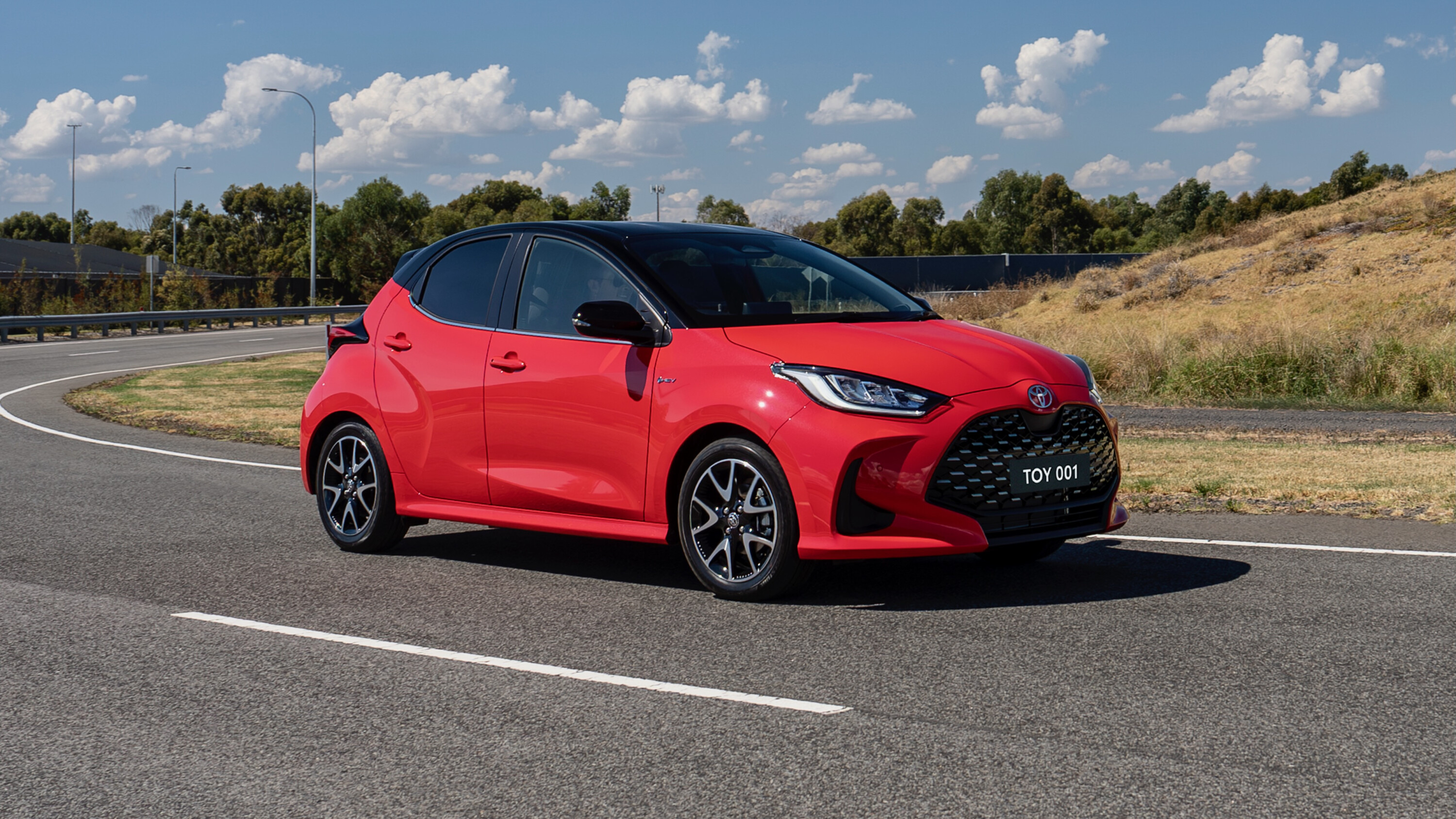
Toyota Yaris
3
Price: From $29,190 plus on-road costs (Ascent Sport)
Drivetrain: 1.5-litre three-cylinder hybrid, e-CVT transmission, front-wheel drive
Outputs: 85kW (no peak torque figure available)
Claimed combined fuel consumption: 3.5L/100km
Warranty: Five-year/unlimited km
Five-year service cost: $1325
| Driving | |
| Interior | |
| Practicality | |
| Overall value | |
Strengths
- Good to drive and comfortable
- Insanely fuel efficient
- Reasonably well equipped
Weaknesses
- Tight interior space
- A lot more expensive than previous Yaris models
- Only the top-spec ZR gets kit like blind-spot monitoring
If you’re looking for the most fuel-efficient plugless car on the Australian market, here it is. The all-
hybrid Toyota Yaris uses just 3.5L/100km on the combined cycle, and combines that remarkable
efficiency with the tiny dimensions, easy manoeuvrability and low running costs that make a
compact car so appealing.
Its hybrid system pairs a 1.5-litre three-cylinder petrol engine with an electric motor for a combined
85kW. That’s more than enough for a car of this size, with the electric motor providing instant
response from a standstill and making the Yaris particularly pleasant in stop-start traffic.
The city is its natural habitat. Compact dimensions, light steering and good visibility make
squeezing through tight streets and into small parking spaces effortless, while the hybrid system
frequently shuts down the petrol engine at low speeds. Toyota’s claimed 3.5L/100km is
outstanding, and sub-4.0L/100km figures are easily achievable in urban driving. Despite a tiny 36-
litre fuel tank, more than 1000km between fills is theoretically possible.
There is a catch, though: price. The range starts at $29,190 before on-road costs for the Ascent
Sport Hybrid, meaning the Yaris is no longer the affordable entry point it once was.
Standard equipment includes keyless entry and start, an 8.0-inch touchscreen with wireless Apple
CarPlay and Android Auto, adaptive cruise control, autonomous emergency braking and adaptive
lane guidance. The SX adds equipment including LED headlights and a 7.0-inch digital driver’s
display, while the flagship ZR gains a head-up display, sports seats, blind-spot monitoring and rear
cross-traffic alert.
But having to buy the almost-$40,000-driveaway ZR to access those latter safety features is
difficult to justify, particularly given the Yaris is already so expensive for such a small car.
Ownership costs claw back some ground. Five years/75,000km of servicing costs just $1325, or
$265 annually, while Toyota’s five-year/unlimited-kilometre warranty can extend to seven years for
the engine and 10 years for the hybrid battery with dealer servicing.
The Toyota Yaris isn’t the bargain it once was, nor the roomiest compact hatchback. But its
diminutive footprint, polished driving experience and exceptional fuel efficiency make it perfectly
suited to city life. For urban buyers willing to pay the premium, the Yaris makes a lot of sense.
Follow WhichCar/Wheels on Google
Click the button below to make WhichCar by Wheels a preferred source for your news.

We recommend
-
 Best Small Cars
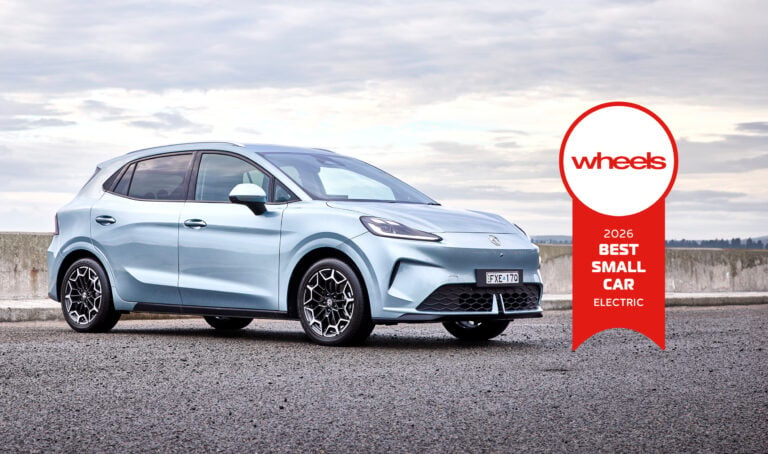
Best Small Cars 2026: Electric
Whether affordable city runabout or premium newcomers, these electric small cars combine impressive range, technology, refinement and everyday usability.
-
 Best Small Cars
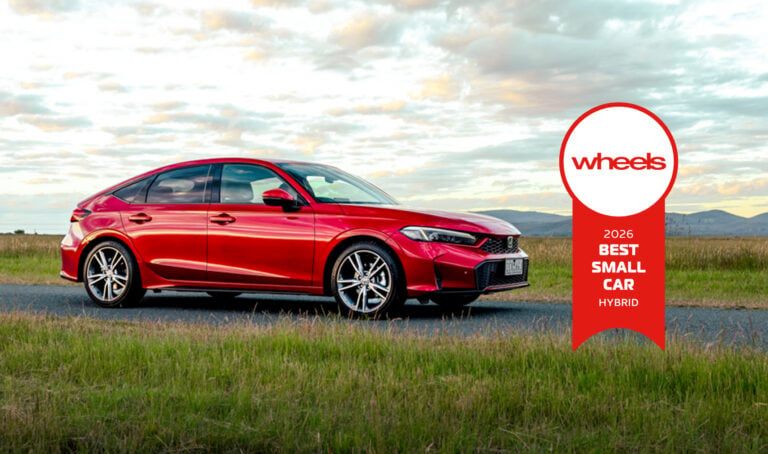
Best Small Cars 2026: Hybrid
At its best, hybrid technology delivers lower fuel bills and easy urban driving, making these electrified contenders smarter choices for fuel-conscious Australian buyers.
-
 Best Small Cars
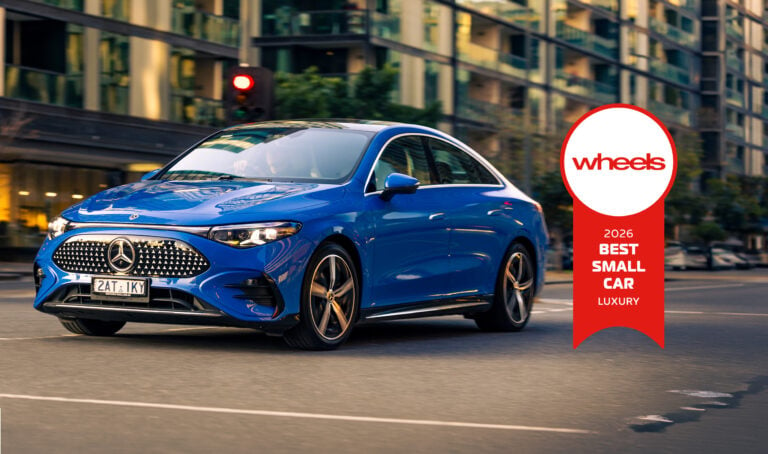
Best Small Cars 2026: Luxury
For buyers seeking compact dimensions without compromising comfort, technology or prestige, these premium small cars deliver luxury features, polished refinement and genuine badge appeal.
-
 Best Small Cars
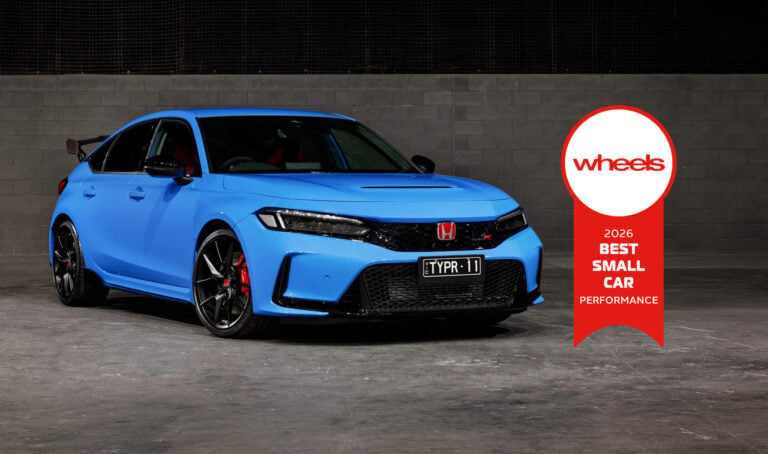
Best Small Cars 2026: Performance
From turbocharged hot hatches to all-wheel-drive rally heroes, these performance-focused small cars prove practicality and pulse-raising driving thrills can happily coexist.