Best Small Cars

Gallery 1
Contenders
Winner: Honda Civic
5
Price: From $49,900 driveaway (e:HEV L)
Drivetrain: 2.0-litre four-cylinder petrol hybrid, e-CVT transmission, front-wheel drive
Outputs: 135kW/315Nm
Claimed combined fuel consumption: 4.2L/100km
Warranty: Five-year/unlimited km (extendable to eight years/unlimited km with dealer servicing until
then)
Five-year service cost: $995
| Driving | |
| Interior | |
| Practicality | |
| Overall value | |
Strengths
- An excellent all-rounder
- Fantastic hybrid drivetrain
- Engaging chassis, comfortable ride
Weaknesses
- It’s not cheap to buy
- No spare wheel is annoying
- A bit loud at highway speeds
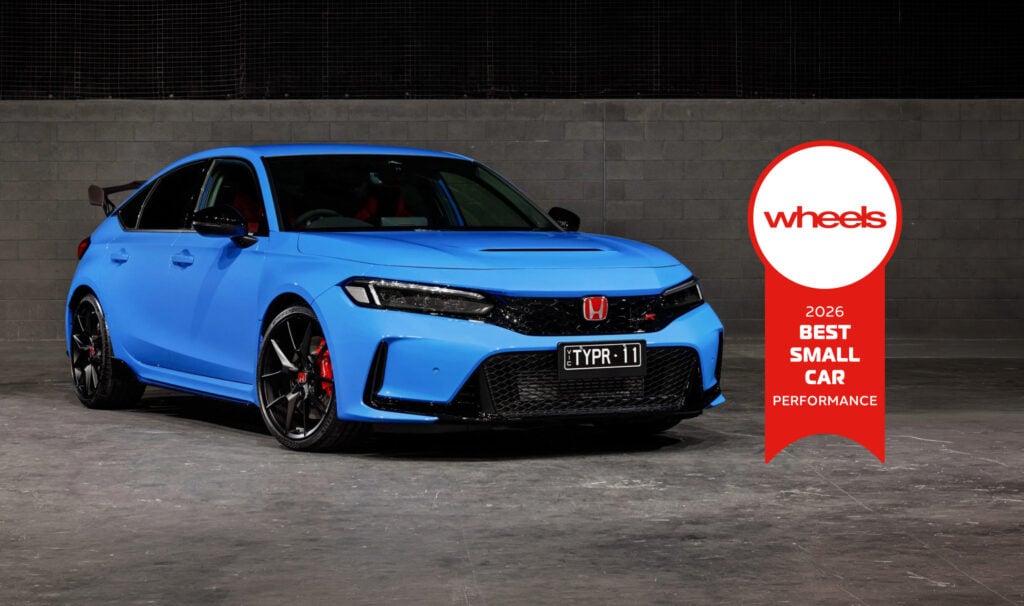
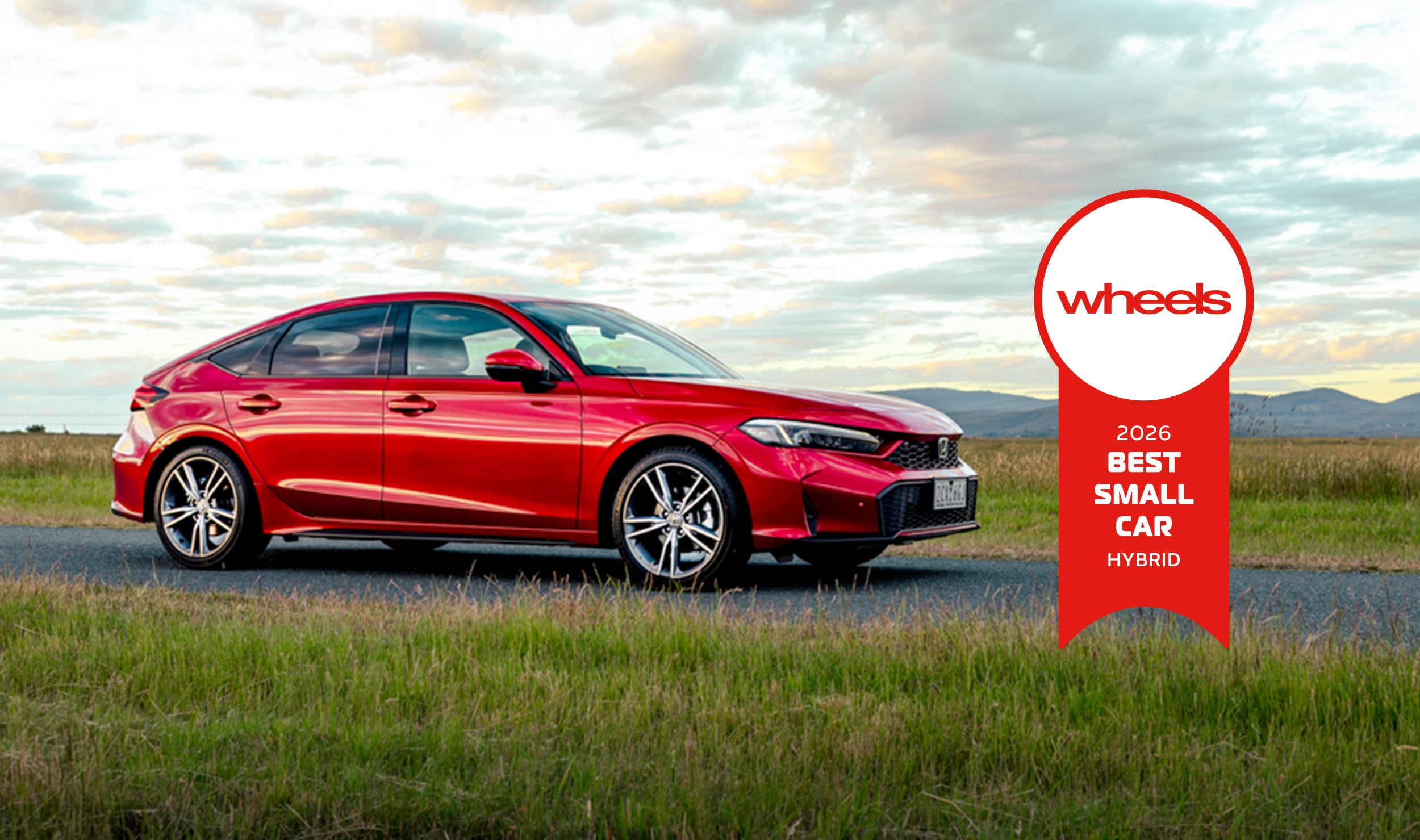
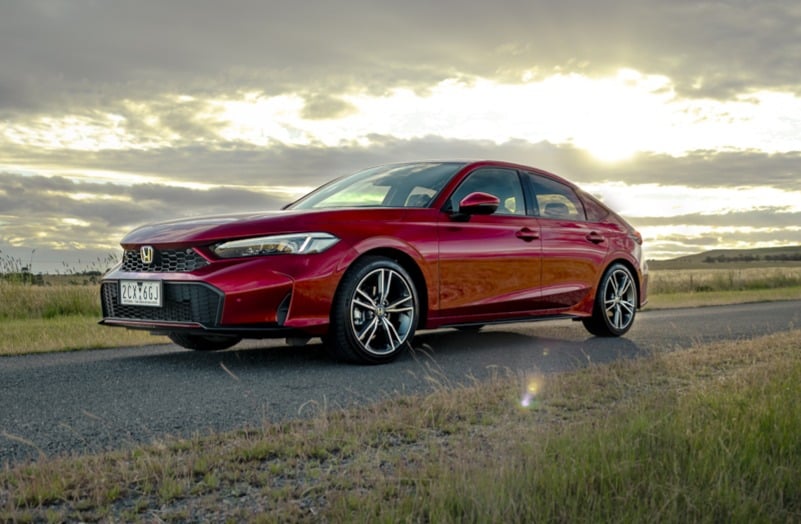
As you may be aware, the Honda Civic was crowned Wheels Car of the Year 2025-26, no small achievement. More than six months on, it continues to demonstrate exactly why it earned that honour and remains one of the world’s most enduring small cars.
While many rivals have shifted their focus towards value pricing or outright sportiness, the Civic is a remarkably polished and mature package. Its engineering, excellent hybrid drivetrain and premium-feeling interior make it one of the segment benchmarks for buyers who value substance over showroom sticker price. Those qualities have now earned it another accolade: Wheels Best Small Car 2026 – Hybrid.
The Civic‘s pricing reflects its upmarket positioning, as it’s certainly not cheap. In Australia, the range starts at $49,900 driveaway for the e:HEV L and rises to $55,900 driveaway for the better-equipped e:HEV LX. That makes it one of the more expensive mainstream small cars on sale, but Honda offsets the higher purchase price with nationwide driveaway pricing and generous standard equipment across the range.
Every Civic includes automatic LED headlights, 18-inch alloy wheels, a 9.0-inch touchscreen with wireless Apple CarPlay and Android Auto, a 10.2-inch digital instrument display, a punchy 12-speaker Bose audio system, dual-zone climate control, a heated steering wheel and the comprehensive Honda Sensing safety suite, including 11 airbags and adaptive lane guidance.
The flagship LX adds a panoramic sunroof, leather upholstery, power-adjustable front seats and a wireless phone charger, creating a genuinely premium ambience. The cabin remains one of the best in the segment, combining excellent ergonomics with plenty of physical controls, high-quality materials and impressive practicality, including a spacious rear seat and a 409-litre boot.
Under the bonnet, every Australian Civic apart from the high-performance Type R is powered by Honda’s outstanding 2.0-litre e:HEV hybrid system. Shared with models such as the ZR-V, it combines a 2.0-litre four-cylinder petrol engine with two electric motors to produce 135kW and 315Nm. Performance is strong, with overseas testing suggesting a 0-100km/h time of around 7.0 seconds. We also like the transmission’s simulated gear shifts under hard acceleration, which give it a more natural feel than many hybrid systems.
Fuel economy is one of the Civic’s greatest strengths. Honda claims combined consumption of just 4.2L/100km and CO₂ emissions of 96g/km, making it one of the most efficient non-plug-in small cars available. Combined with its strong real-world performance, engaging handling and excellent ride comfort, the Civic delivers an impressively broad range of talents.
Honda also offers a competitive ownership package. The Civic is backed by a five-year/unlimited-kilometre warranty that can be extended to eight years with dealer servicing, while the hybrid battery is covered for eight years or 160,000 kilometres. Servicing costs are among the industry’s lowest at just $199 per visit during the standard warranty period, totalling only $995 for the first five years or 50,000km.
Ultimately, the Honda Civic is an outstanding small car with very few weaknesses. It’s expensive to buy, but exceptionally affordable to service and run. It drives beautifully, rides comfortably, feels genuinely premium inside, offers impressive practicality and comes well equipped regardless of the variant. Buyers may pay more upfront than they would for many rivals, but the Civic rewards them with a level of overall polish that few mainstream competitors can match.
Cupra Leon Ve
4
Price: From $62,990
Drivetrain: 1.5-litre turbocharged four-cylinder plug-in hybrid, six-speed dual-clutch transmission,
20kWh battery, front-wheel drive
Outputs: 150kW/350Nm
Claimed combined fuel consumption: 1.4L/100km
Claimed electric driving range: 123km
Warranty: Five-year/unlimited km
Five-year service cost: $1990
| Driving | |
| Interior | |
| Practicality | |
| Overall value | |
Strengths
- Sporty driving experience
- Long electric-only driving range
- Well equipped with standard features
Weaknesses
- Not cheap to buy
- No spare wheel
- Battery takes up space in the boot
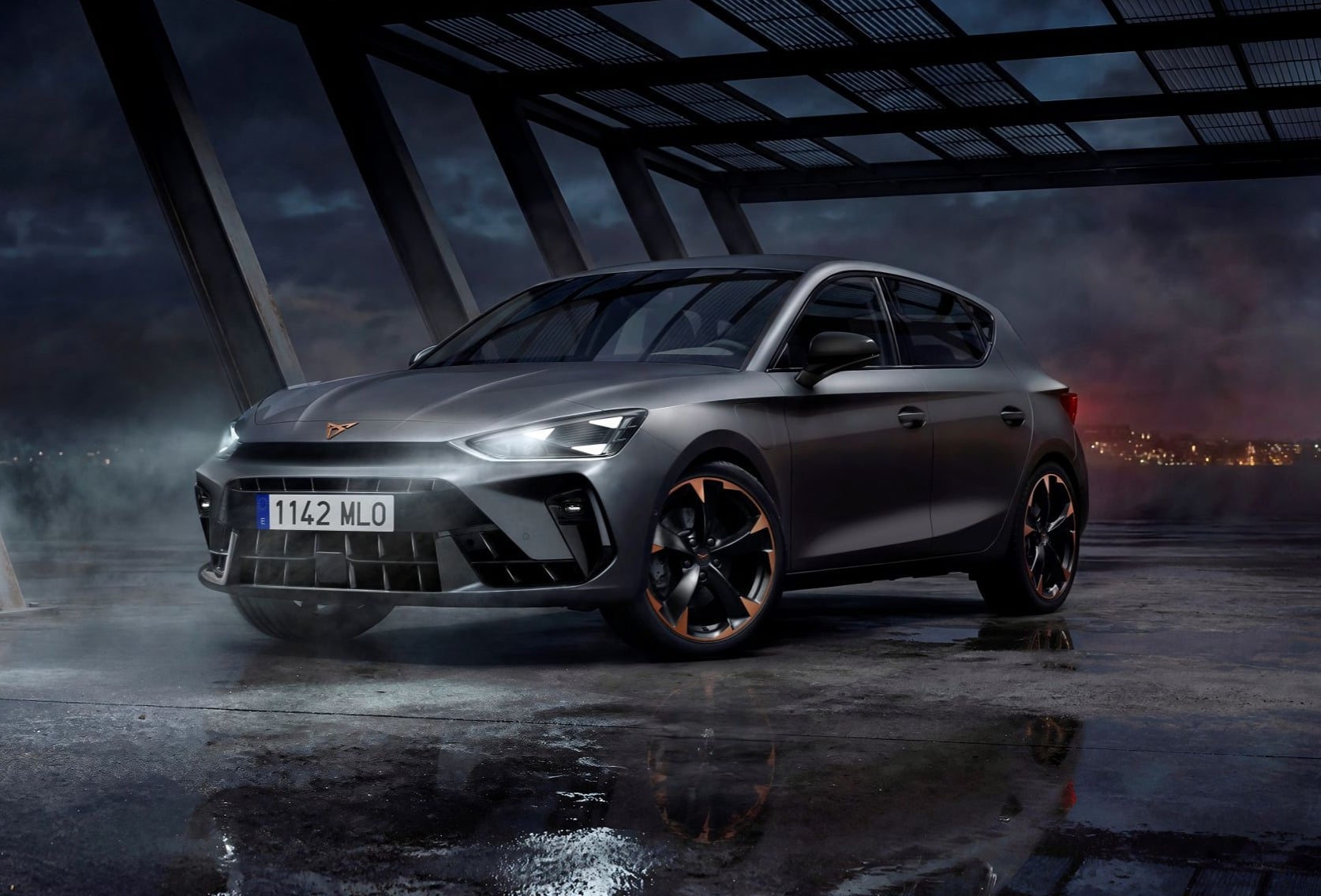
With the automotive industry increasingly focused on electrification and hybrid drivetrains, buyers could be forgiven for thinking driving enjoyment has taken a back seat to efficiency. The Cupra Leon Ve proves otherwise, combining strong performance with impressive fuel economy in a sophisticated, high-quality package. It’s not cheap compared with mainstream rivals, but it rewards buyers with generous standard equipment, a long electric-only driving range and an engaging driving experience.
Pricing places the Leon Ve firmly in premium territory. At $62,990 before on-road costs, it’s significantly more expensive than conventional small hatchbacks and even costs more than some versions of premium rivals such as the Audi A3 and BMW 118.
However, the Leon Ve is unique in this field as the only plug-in hybrid entrant. It combines a turbocharged 1.5-litre petrol engine with an electric motor and a 20kWh battery, delivering a claimed WLTP electric-only range of 123km.
Together, the drivetrain produces a healthy 150kW and 350Nm, driving the front wheels through a six-speed dual-clutch transmission. The claimed 0-100km/h time of 7.7 seconds is among the quickest in this field, while the Leon also impresses with sharp steering, tidy handling and a communicative chassis. Despite its sporty character, it remains an excellent daily driver thanks to its compliant ride and good visibility.
Standard equipment is comprehensive, including 18-inch alloy wheels, LED lighting, a 12.9-inch touchscreen with wireless Apple CarPlay and Android Auto, satellite navigation, a 10.25-inch digital driver’s display, tri-zone climate control, power-adjustable front seats, synthetic leather upholstery and a full suite of active safety features, including adaptive cruise control, autonomous emergency braking, blind-spot monitoring and lane-keeping assist.
Inside, the Leon strikes an appealing balance between sportiness and sophistication. High-quality materials, supportive front seats and understated European styling give it a more premium feel than many mainstream competitors. Rear-seat space is only average, however, while the 270-litre boot is 74 litres smaller than the mild-hybrid Leon because the larger battery is housed beneath the boot floor.
Cupra backs the Leon Ve with a five-year/unlimited-kilometre warranty, while the high-voltage battery is covered for eight years or 160,000km. A prepaid five-year service plan costs $1990, or $398 per year, which is reasonable for a European car with this level of technology.
The Cupra Leon Ve proves that efficiency and driving enjoyment don’t have to be mutually exclusive. It’s genuinely rewarding to drive, demonstrating that choosing a plug-in hybrid with an impressive electric-only range doesn’t mean sacrificing performance. While it’s expensive to buy and its rear seat and boot are relatively modest, it’s well equipped, beautifully finished and highly capable. For buyers seeking a sophisticated electrified small car that’s as enjoyable on a winding road as it is efficient in everyday driving, the Leon Ve is one of the class standouts.
Hyundai i30 Sedan
6
Price: From $33,250 plus on-road costs (i30 Sedan Hybrid)
Drivetrain: 1.6-litre four-cylinder hybrid, six-speed dual-clutch transmission, front-wheel drive
Outputs: 104kW/265Nm
Claimed combined fuel consumption: 3.9L/100km
Warranty: Five-year/unlimited km (extendable to seven years/unlimited km with dealer servicing)
Five-year service cost: $2415
| Driving | |
| Interior | |
| Practicality | |
| Overall value | |
Strengths
- Great value for money
- Solid local ride and handling tune
- Spacious cabin, large boot
Weaknesses
- No top-spec Premium model
- Dated cabin tech
- New model already revealed
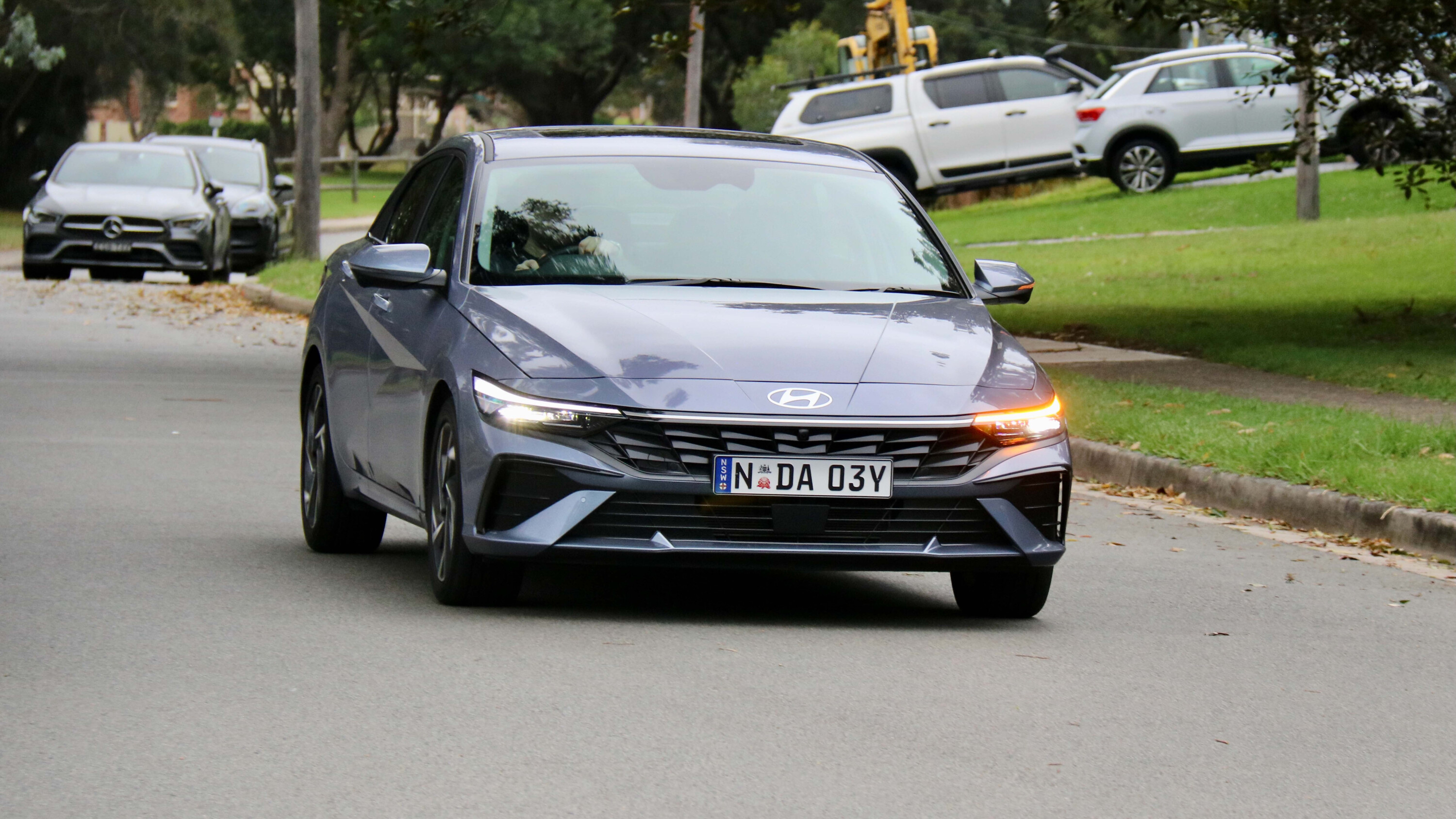
While Hyundai was once known primarily for value for money, its modern products offer much more than that, and the i30 Sedan Hybrid is a perfect example. It not only represents excellent value but also delivers a polished, well-rounded package. While many buyers gravitate towards SUVs such as Hyundai’s own Kona and Tucson, the i30 Sedan Hybrid demonstrates there’s still plenty to like about a traditional passenger car, without sacrificing practicality.
Under the bonnet is Hyundai’s proven hybrid powertrain, pairing a 1.6-litre naturally aspirated four-cylinder petrol engine with an electric motor and a six-speed dual-clutch automatic transmission. Combined outputs of 104kW and 265Nm provide more than enough performance for everyday driving, while the dual-clutch transmission delivers a more natural driving experience than the continuously variable transmissions used by many hybrid rivals.
Fuel efficiency is one of the i30 Sedan Hybrid’s greatest strengths. Hyundai claims combined fuel consumption of just 3.9L/100km, matching the Corolla Hybrid sedan. On the road, it impresses with a comfortable ride, responsive steering and a surprising level of driver enjoyment, although the Corolla remains the sharper handler.
Pricing is another highlight. The range starts at $32,250 plus on-road costs for the Hybrid, while the better-equipped Hybrid Elite is priced from $37,750 plus on-road costs. Those figures position it competitively against rivals such as the Corolla, while also undercutting more expensive alternatives like the Honda Civic.
Even the entry-level Hybrid comes well equipped with LED headlights, 16-inch alloy wheels, dual-zone climate control and an 8.0-inch touchscreen with wireless Apple CarPlay and Android Auto. The Hybrid Elite adds leather-appointed upholstery, keyless entry with push-button start, a larger 10.25-inch touchscreen with connected services, satellite navigation and digital radio.
The cabin is thoughtfully designed, with excellent ergonomics and generous rear-seat accommodation. Material quality is less impressive, however, with hard, scratchy plastics used extensively throughout the interior. The standard 8.0-inch touchscreen is fairly basic, but it performs its functions well.
Every i30 Sedan Hybrid is backed by a five-year/unlimited-kilometre warranty, which can be extended to seven years through dealer servicing, while the hybrid battery is covered for eight years or 160,000km. Servicing isn’t especially cheap, costing $2415 over the first five years, or $483 annually.
Overall, the Hyundai i30 Sedan Hybrid gets the fundamentals right. It’s spacious, comfortable, fuel efficient and well equipped, while remaining competitively priced against its key rivals. A new-generation model with a much more modern cabin has already been revealed, so the current car is nearing the end of its life cycle. Even so, for buyers seeking hybrid efficiency and greater practicality than many rivals, the i30 Sedan Hybrid remains a compelling choice.
Mercedes-Benz CLA
6
Price: From $66,500 plus on-road costs (CLA 180)
Drivetrain: 1.5-litre turbocharged four-cylinder 48-volt mild-hybrid, eight-speed dual-clutch, front- or
all-wheel drive
Outputs: 100kW/200Nm (CLA 180), 120kW/250Nm (CLA 200), 140kW/300Nm (CLA 220 4Matic)
Claimed combined fuel consumption: 5.4L/100km (CLA 180 and CLA 200), 5.8L/100km (CLA 220
4Matic)
Warranty: Five-year/unlimited km
Five-year service cost: $6710
| Driving | |
| Interior | |
| Practicality | |
| Overall value | |
Strengths
- Versatile and effective mild-hybrid powertrain
- Excellent fuel economy
- Commendable ride and handling
Weaknesses
- Dual-clutch transmission a touch hesitant under heavy load
- Headroom in second row compromised for taller folk
- Very expensive service pricing
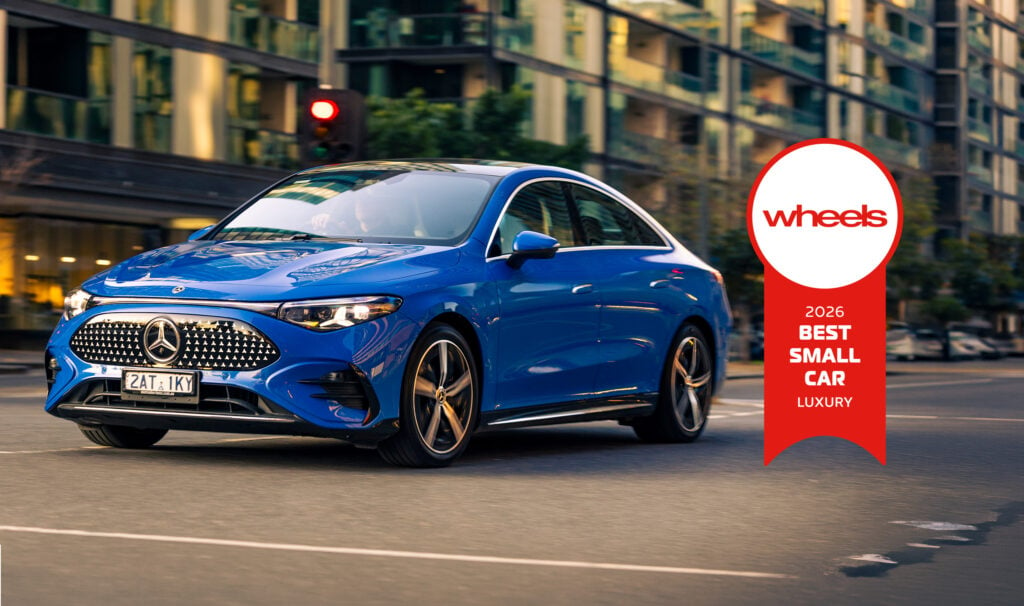
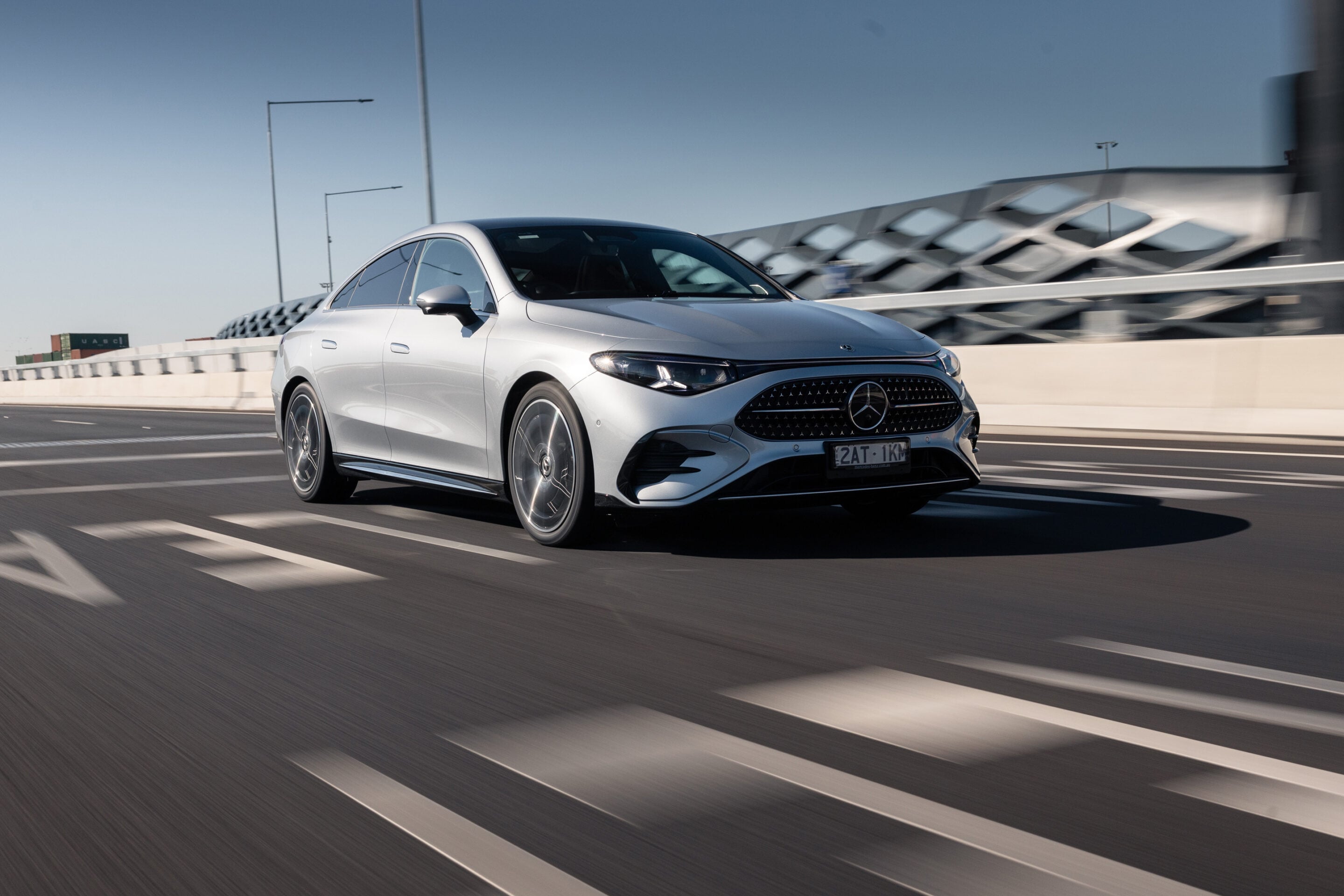
Now in its third generation, the Mercedes-Benz CLA has entered a new era, offering both electric and hybrid powertrains to appeal to a broader range of buyers. To achieve this, Mercedes-Benz developed an all-new platform designed to maximise efficiency, enable ultra-fast charging in EV form and accommodate a new hybrid drivetrain. The result is one of the most technologically advanced small cars on sale – but is it the best?
In Australia, the all-electric range starts from $72,200 plus on-road costs, while the more affordable hybrid line-up opens at $66,500 plus on-road costs for the CLA 180, rising to $68,100 for the CLA 200 and $84,300 plus on-road costs for the flagship CLA 220 4Matic. That places it almost $5000 above the entry-level BMW 2 Series Gran Coupe and nearly $9000 dearer than the base Audi A3 sedan, but the CLA is an all-new model that feels significantly more modern.
Mercedes-Benz has also ensured the CLA is generously equipped. Even the entry-level CLA 180 comes standard with automatic LED lighting, Artico synthetic leather upholstery, wireless smartphone charging, a panoramic glass roof and the brand’s new MB.OS operating system, which integrates Google and Microsoft AI technologies. Interior quality is impressive, while the sleek dashboard and ambient lighting create a futuristic atmosphere. Rear-seat space is only average, although the 405-litre boot is competitive. Buyers needing more practicality will also be able to choose the CLA Shooting Brake, due to arrive in Australia later this year.
The mild-hybrid range is powered by a single 1.5-litre turbocharged four-cylinder engine offered in three outputs: 100kW/200Nm in the CLA 180, 120kW/250Nm in the CLA 200 and 140kW/300Nm in the all-wheel-drive CLA 220 4Matic. Performance is strong throughout the range, with even the CLA 180 reaching 100km/h in less than nine seconds (8.0 seconds for the CLA 200 and 7.1 seconds for the CLA 220 4Matic). The hybrid system also allows the car to operate on electric power alone more often than expected for a mild hybrid.
Fuel efficiency is another highlight. The CLA 180 and CLA 200 are both rated at 5.4L/100km combined, while the more powerful all-wheel-drive CLA 220 4Matic consumes a claimed 5.8L/100km.
Mercedes-Benz Australia backs the CLA with a five-year/unlimited-kilometre warranty, which is competitive for a premium brand, although shorter than many mainstream rivals. Servicing is expensive, however, with a prepaid five-year plan for the mild-hybrid range costing $6710, or $1342 per year. The upside is long 25,000km service intervals.
Regardless of the drivetrain, the new Mercedes-Benz CLA is an impressive effort. Efficient yet punchy powertrains, generous standard equipment, cutting-edge in-car technology and relatively competitive pricing make it a compelling premium small car. Buyers can also choose an all-electric version, while the only real drawbacks are the modest rear-seat space and high servicing costs. Overall, the new CLA sets a high benchmark for premium hybrid small cars.
MG 3 Hybrid+
8
Price: From $28,490 driveaway (Excite)
Drivetrain: 1.5-litre four-cylinder hybrid, three-speed hybrid transmission, front-wheel drive
Outputs: 155kW/425Nm
Claimed combined fuel consumption: 4.3L/100km
Warranty: Seven-year/unlimited km (extendable to 10 years/250,000km with dealer servicing)
Five-year service cost: $2064
| Driving | |
| Interior | |
| Practicality | |
| Overall value | |
Strengths
- Well equipped and well priced relative to other hybrids
- Surprisingly punchy hybrid system
- Long standard warranty extendable to 10 years
Weaknesses
- Expensive compared to other MG 3 drivetrains
- Cabin quality could be better across the range
- No spare wheel
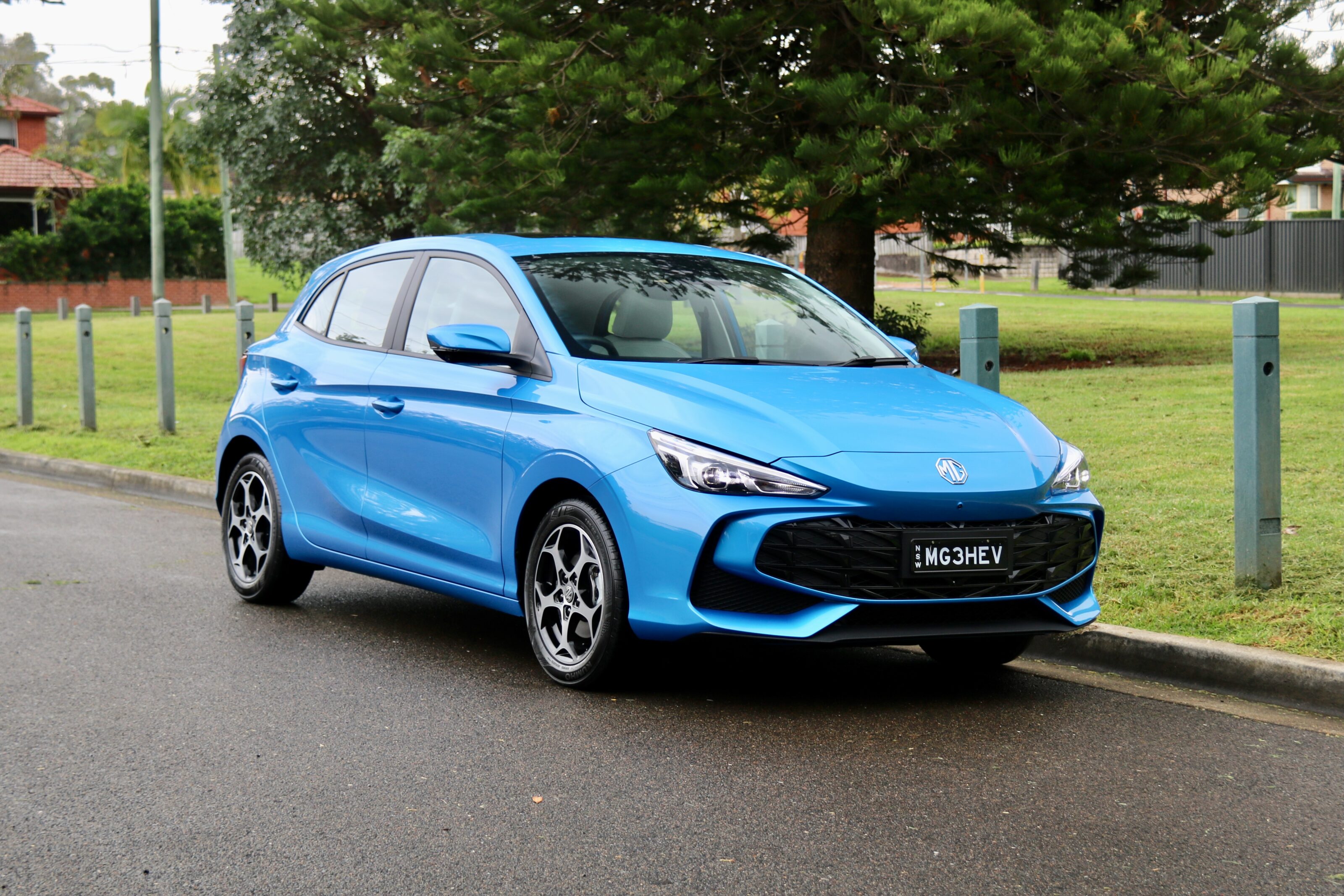
Modern MG‘s transformation from a maker of value-focused bargains into a producer of genuinely capable all-rounders continues, and the MG 3 is one of the best examples of that evolution. The previous model was attractively priced but difficult to recommend. The second-generation MG 3 changes that completely, particularly in Hybrid+ form, delivering a well-rounded package that also happens to represent excellent value.
Pricing remains one of the MG 3 Hybrid+’s biggest strengths. The range starts at $28,490 driveaway for the Excite Hybrid+, while the better-equipped Essence Hybrid+ is priced from $30,490 driveaway. That undercuts many hybrid rivals, making it one of Australia’s most affordable hybrid vehicles.
Despite its keen pricing, the MG 3 Hybrid+ doesn’t feel like a budget offering inside. A 10.25-inch touchscreen with Apple CarPlay and Android Auto is paired with a 7.0-inch digital driver’s display, while the cabin offers plenty of storage and comfortable front seats. Rear-seat accommodation is also generous for a light car, while the 293-litre boot is a useful size. Fold the rear seats and luggage capacity expands to 938 litres.
Standard equipment on the entry-level Excite includes automatic headlights, the 10.25-inch touchscreen, push-button start, automatic climate control, rear parking sensors and MG Pilot active safety technology, including adaptive cruise control, lane-keeping assistance and traffic sign recognition. The Essence adds LED headlights, a 360-degree camera, keyless entry, a sunroof and leather-look upholstery.
Power comes from a hybrid system combining a 1.5-litre naturally aspirated four-cylinder petrol engine with an electric motor to produce a combined 155kW, making the MG 3 Hybrid+ one of the most powerful cars in its class. While the claimed 0-100km/h time of 8.0 seconds isn’t especially quick, its in-gear acceleration is impressive. It also drives with far greater maturity than its predecessor, feeling planted and composed, although the steering could offer more feedback. Claimed combined fuel consumption is just 4.3L/100km.
MG backs the MG 3 Hybrid+ with one of the strongest warranty packages in Australia. Every model is covered by a seven-year/unlimited-kilometre warranty, which can be extended to 10 years or 250,000km if serviced through the dealer network. Servicing costs $2064 over the first five years, or $412 annually, which is higher than expected.
The MG 3 Hybrid+ is a compelling hybrid light car and highlights just how far MG has come. It’s more expensive than the previous MG 3 and, at almost $30,000 driveaway, sits noticeably above petrol-powered alternatives. However, it’s also a vastly more accomplished package, offering an enjoyable driving experience, a punchy and efficient hybrid drivetrain, a spacious and practical cabin, generous equipment and one of the longest warranties on the market. Better still, it continues MG’s reputation for delivering outstanding value for money.
Toyota Corolla
4
Price: From $32,110 plus on-road costs (Ascent Sport hatch), $32,585 +ORC (Ascent Sport sedan)
Drivetrain: 1.8-litre four-cylinder hybrid, e-CVT transmission, front-wheel drive
Outputs: 103kW (no peak torque figure available)
Claimed combined fuel consumption: 3.9L/100km (sedan), 4.0L/100km (hatch)
Warranty: Five-year/unlimited km
Five-year service cost: $1325
| Driving | |
| Interior | |
| Practicality | |
| Overall value | |
Strengths
- Lovely chassis, comfortable ride
- Very fuel efficient in all driving
- Well equipped across the range
Weaknesses
- Hatch’s boot and rear seat are compromised
- Base Ascent Sport misses out on some key safety features
- Equipment variances between hatch and sedan
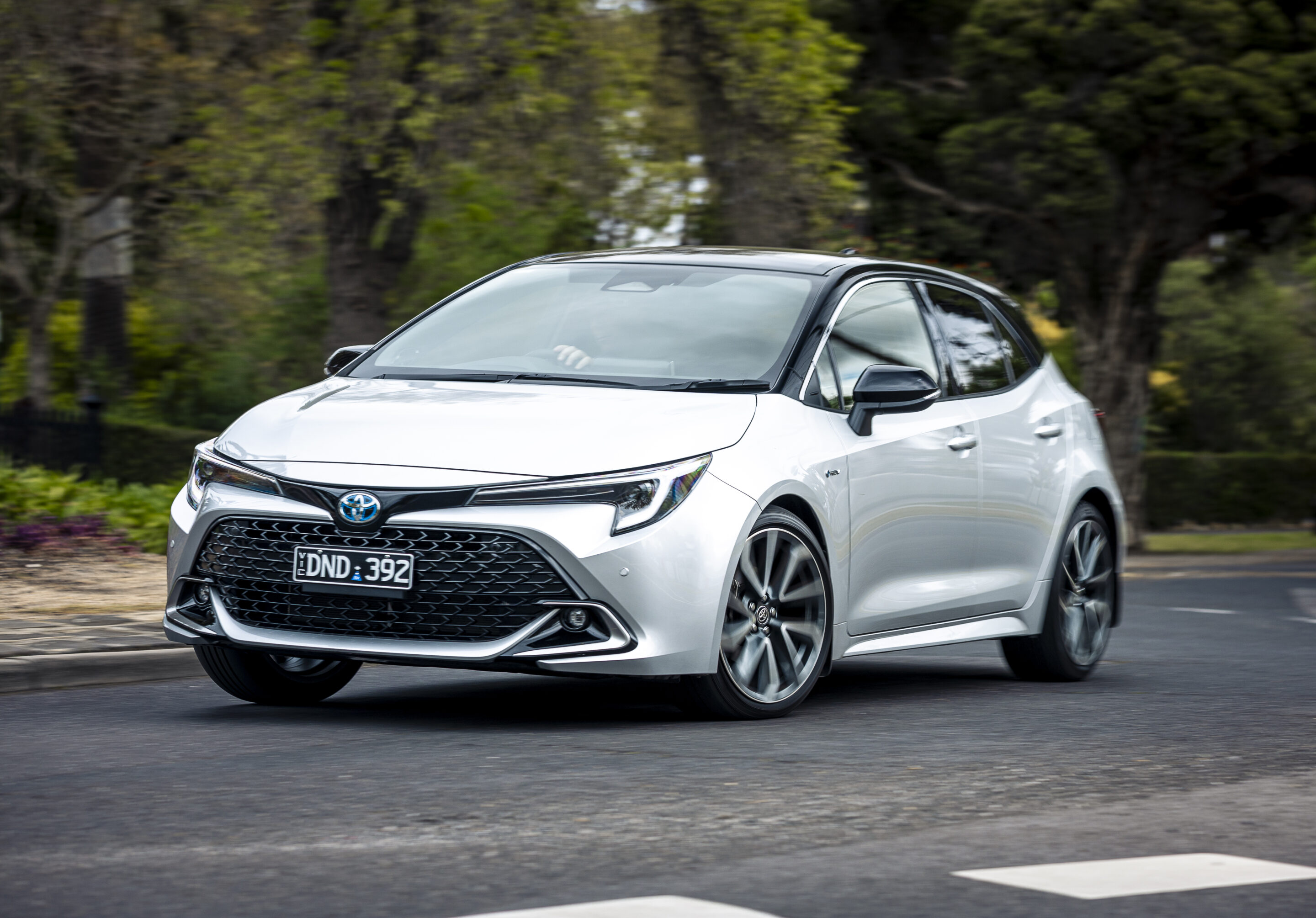
With more than 55 million sold worldwide, the Toyota Corolla is one of the most successful cars ever made, thanks to its reputation for reliability, practicality and durability. But the latest Corolla offers much more than that. It’s stylish, enjoyable to drive, well equipped and, thanks to its hybrid drivetrain, exceptionally inexpensive to run. As a result, it’s one of the easiest small cars to recommend, particularly for buyers seeking a hybrid.
Pricing remains competitive despite Toyota Australia’s 2025 decision to make every locally sold Corolla – along with the Camry, RAV4, Kluger, Corolla Cross and Yaris – hybrid-only. Both sedan and hatchback body styles remain available, with the range opening at $32,110 before on-road costs for the Ascent Sport hatch and $32,585 plus on-road costs for the sedan. Above them sit the SX ($35,185 plus on-road costs for the sedan and $35,260 plus on-road costs for the hatch) and the hatch-only ZR ($39,100 plus on-road costs). While the Corolla no longer sits at the bargain end of the market, it still represents strong value thanks to its standard hybrid drivetrain, comprehensive safety equipment and proven durability.
Equipment levels are generous across the range, although specifications vary between body styles. Even the entry-level Ascent Sport includes LED headlights, automatic climate control (dual-zone in the hatch and single-zone in the sedan), an 8.0-inch touchscreen with wireless Apple CarPlay and Android Auto, a digital driver’s display (12.3 inches in the sedan and ZR hatch, 7.0 inches in the Ascent Sport and SX hatch) and Toyota’s comprehensive Safety Sense suite. Disappointingly, blind-spot monitoring, rear cross-traffic alert and Safe Exit Assist remain part of a $1000 Convenience Package, which we believe should be standard.
The SX adds that package, along with a leather-wrapped steering wheel and gear knob, automatic wipers, rear privacy glass, a wireless phone charger and auto-folding mirrors on the hatch only, somewhat bizarrely. The flagship ZR further adds 18-inch alloy wheels, leather and suede upholstery, heated front seats, a JBL sound system and a head-up display.
Every Corolla is powered by Toyota’s 1.8-litre hybrid system, combining a four-cylinder petrol engine with an electric motor for a total output of 103kW. While outright performance is modest, the hybrid drivetrain delivers smooth acceleration and impressive refinement, particularly around town where it spends more time operating on electric power alone.
Efficiency remains one of the Corolla’s defining strengths. Toyota claims combined fuel consumption of just 3.9L/100km for the sedan and 4.0L/100km for the hatch, making it one of Australia’s most economical petrol-powered cars. Better still, those figures are readily achievable in real-world driving. Combined with low emissions, the Corolla offers meaningful savings at the bowser without requiring owners to plug in or change their driving habits.
The Corolla is backed by a five-year/unlimited-kilometre warranty, which can be extended to up to seven years for the engine and up to 10 years for the hybrid battery through scheduled servicing at Toyota dealerships. Five years of servicing costs $1325, or $265 per year. That’s more than it once was, but it remains very competitive by current standards.
The Corolla remains one of the world’s most popular cars for good reason. It may not be the most exciting small car on sale, but its blend of outstanding efficiency, everyday comfort, excellent safety, proven reliability and low ownership costs continues to make it one of the smartest and easiest recommendations in the segment.
Toyota Yaris
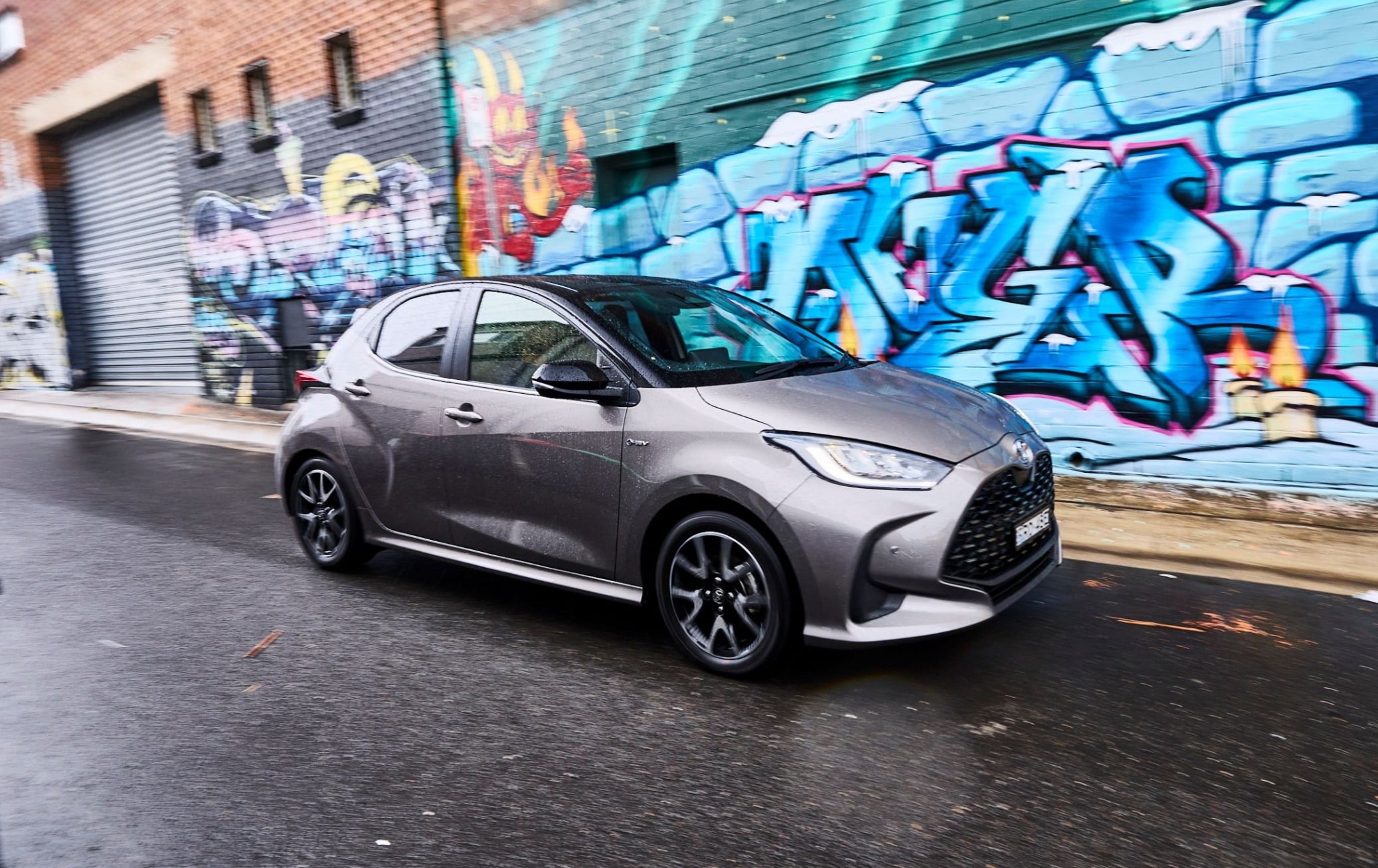
5
Price: From $29,190 plus on-road costs (Ascent Sport)
Drivetrain: 1.5-litre three-cylinder hybrid, e-CVT transmission, front-wheel drive
Outputs: 85kW (no peak torque figure available)
Claimed combined fuel consumption: 3.5L/100km
Warranty: Five-year/unlimited km
Five-year service cost: $1325
| Driving | |
| Interior | |
| Practicality | |
| Overall value | |
Strengths
- Good to drive and comfortable
- Insanely fuel efficient
- Reasonably well equipped
Weaknesses
- Tight interior space
- A lot more expensive than previous Yaris models
- Only the top-spec ZR gets kit like blind-spot monitoring
If you’re looking for the most fuel-efficient non-plug-in car on the market, this is it. The Toyota Yaris, which has been hybrid-only since 2025, is capable of a claimed 3.5L/100km on the combined cycle. Yet it’s neither a plug-in hybrid nor an EV – just an exceptionally efficient light car. It may no longer be the bargain it once was, but buyers willing to justify the price will be rewarded with a refined hybrid drivetrain, an enjoyable driving experience and extremely low running costs.
Toyota‘s hybrid system pairs a 1.5-litre three-cylinder petrol engine with an electric motor for a combined output of 85kW, which is more than adequate for a city-focused hatchback. While outright performance isn’t the priority, the instant torque from the electric motor delivers smooth, responsive acceleration around town. The Yaris also feels perfectly suited to urban driving thanks to its compact dimensions, light steering and excellent visibility.
The Yaris’ pricing reflects its move upmarket. The range starts at $29,190 before on-road costs for the Ascent Sport Hybrid, before progressing to the SX and ZR. While that’s considerably more than many light-car rivals – and significantly more expensive than the previous-generation Yaris – every Australian model comes standard with a hybrid drivetrain, giving buyers exceptional fuel efficiency and a generous level of equipment regardless of variant.
Standard equipment is respectable throughout the range. The entry-level Ascent Sport includes automatic headlights, keyless entry and start, climate control, an 8.0-inch touchscreen with wireless Apple CarPlay and Android Auto, plus Toyota Safety Sense, featuring eight airbags, adaptive cruise control, autonomous emergency braking, adaptive lane guidance, road sign recognition, and cyclist and pedestrian detection.
The mid-spec SX adds alloy wheels, a synthetic leather-wrapped steering wheel, a 7.0-inch digital driver’s display, automatic climate control and LED headlights. The flagship ZR further adds a head-up display, sports front seats and extra safety features including blind-spot monitoring, rear cross-traffic alert and Safe Exit Assist. We think it’s disappointing that buyers must step up to the top-spec model to access those features on what is already an expensive car.
Toyota claims combined fuel consumption of just 3.5L/100km, and achieving less than 4.0L/100km in urban driving is entirely realistic. Despite its modest 36-litre fuel tank, that level of efficiency allows a driving range of more than 1000km between fills.
Every Yaris is backed by a five-year/unlimited-kilometre warranty, which can be extended to up to seven years for the engine and up to 10 years for the hybrid battery through Toyota dealer servicing. Five years or 75,000km of servicing costs $1325, or $265 per year, which is competitive, although curiously identical to the larger Corolla.
Ultimately, the Toyota Yaris is a well-rounded package with outstanding fuel economy, enjoyable driving dynamics, a high-quality cabin, a solid standard equipment list and Toyota’s well-earned reputation for reliability. Its biggest drawbacks are its relatively high purchase price and the fact buyers must choose the top-spec ZR – which costs almost $40,000 driveaway – to gain features such as blind-spot monitoring. However, for buyers who spend most of their time in the city and don’t mind paying a premium, the Yaris is an excellent choice.
Best Small Cars in Australia
Looking to get into a brand-new small car? Our stories below will guide you to the model that best suits your needs:
Follow WhichCar/Wheels on Google
Click the button below to make WhichCar by Wheels a preferred source for your news.